NEWIT HARRIS AND AVIS HOLLEMAN

1. ‘John Harris, of St Saviour’, Southwark, whose Will, proved May 2, 1616 … bequests to ‘Robert Harris, his eldest son, Thomas Harris, his second son; Mary Harris, his underage daughter’ (TNA, Prob.11/127, ff.345v-346r). He m. ‘Ellen (Dryver) Harris, of London, widow’ of the said Robert Harris, stated in her Will, proved March 25, 1631, that she was born in Presteigne, Radnor (Wales)  and bequests to Dorcas Bridges (Bridgers), late wife of Robert Marcklame, now wife of Roger Bridges … Margaret, eldest daughter of her cousin, Isaac Driver, deceased, and his widow Barbara Driver; and their three other unnamed children (TNA, Prob. 11/159, ff. 286v-288v).

These families are recorded here: ‘Release, by Jane Bridges, of the Ley, in the parish of Webley, Co. Heref., and Thomas Bridges, to George Dryver, of Brnngwyn, Co. Radnor, and Maria his wife, of all their right in tenements and lands in Brungwyn, 10 July,1622′ (Sotherby Auction Catalogue. 1820-60).

‘Charles Smythe of Parish of St. Saviour, Southwark, Surry (Eng), grocer appts friend Gyles Driver of Pagan Creek atty, to collect from George Moore and Henry King‘ (B. 1. p. 540) … Thomas King, of St Saviour. Nuncupative will. proved October 15, 1603. Family members named: Elizabeth his wife. His unnamed brother the waterman, to have his boat. Executors: Elizabeth his wife, Richard More and Henry Reynoldes (LMA, Admon fo. 413) … Nicolas Kinge, of Southwark, was the ‘cousin’ of Richard Yearwood (father of Governor George Yearwood); he married Margaret West in 1630, probably of the family who were neighbours of Ralph Yardley and Richard Yearwood in Southwark. Nicholas King’s daughter, by his first wife, married John Harvard’s brother; John Harvard being the brother-in-law of John Sadler, the brother-in-law of Richard Quiney. On November 16, 1635, William Barker als Baker (son-in-law of Sergeant John Harris), John Sadler, Richard Quiney, merchants, and their associates, patented 1250 acres in Charles City County, Virginia.

(It is common enough to pinpoint an English family to a specific location, such as Avening, Gloucestershire, moreso if that family can been proved to have links to another family of that place that were repeated in Virginia. This is a partially sound principle, but one that can be improved by considering families to be of ‘regions’ rather than county-specific locations. Thus, the Driver family of Avening, Gloucestershire (whose Arms impaled those of Bridger (B&G, Arch. Soc., vol. 28, p. 186), have been taken to be the specific family of Driver in Virginia, yet, it would be more pertinent to think of the ‘Dryvers’ of Radnor (who had strong links to Shropshire, see N.A. C 2/JasI/D7/24, Dryver v Mitton), and of Gloucestershire, as being of the same family, of the same Malvern Hills region, from which many families settled in London,engaging in trade, including with the American colonies. The suggested ancestor of Giles Driver of Virginia, Robert, of Avening, does not named Giles in his Will of 1671. Commom devices of suggesting this is because an inheritance has already been given, etc., are used to explain discrepancies in American pedigrees to a degree that invites ridicule).

1.1. Thomas Harris, ‘Thomas Harris, his second son’, born c. 1595, came to Virginia on the Temperance in 1621, as a headright of Sir Geo. Yeardley, of Southwark, London.

1.1.1. Thomas Harris. ‘Thomas Harris, 650 acs. on the N. side of the head of Puscaticon Cr., Lancaster Co., adj. land of Oliver Seger, & opposite an Indian Field, Trans. of 13 pers: Elinr. Harris … Giles Dryver. August 23, 1656. (B.1, p. 392) … January 13, 1663: ‘I John Bond of the Isle of Wight County in Virginia hath bargained sould & delivered unto Thomas Harris of the aforesaid County, one Cornemill standing att the head of the Pagan Creek in the same County of the Isle of Wight … Test. Henry King, Alex Phillips (ibid. p. 549) … John Reynolds, planter, sells to William Boddie, planter, land in the Lower Parish where John Reynolds liveth – to pine on Pagan Creek side – to swamp were Roger Waters did live – and other side of Henry King … 30 November 1668. Test. Wm. Mayo. (ibid. p. 554) … Anthony Fulgham sells to Wm. Goddin 400 acres on Western Branch of Nasnsemond River, part of a pat. to said Fulgham and William Bressie. 12 July 1665. Test. Robert Williamson, Henry King. (ibid. p. 552) … Robert King (son of Henry) receives a conveyance of land from William Bressie of Oxford and signs it back to him. 9 February 1670, Test. Sara King, wife (ibid. p. 561) … Thomas Norsworthy and wife Sussannah sell to Robert King land given to said Thomas by his father, 150 acres on West Side of Great Marsh behind a Island called Long Ponds. 20 July 1670. Test. John Pitt. Thomas Bevan. (ibid. p. 561) … Olive Hardy, dau. of John Hardy named in her father’s 1676 Will as married to Giles Driver of Southwark, London, was thrice married; she m. 1. Giles Driver, issue: Robert, Charles, Giles Jr., John, and dau. Hardy Driver … 2. John Bromfield (of Southwark, London) … They had a dau. Anne Bromfield, identified in her step-father’s, John Pitt’s, Will (B. 1, p. 431 & B. 2, p. 454) … 3. Lt. Col. John Pitt; their female issue inc … Prudence Pitt, m. Charles Driver; Martha Pitt, m. George Norsworthy; Sarah Pitt, m. Tristram Norsworthy (see as follows); their dau., Martha Norsworthy, m. Henry King.

1.1.1.1. Thomas Harris, d. 1688. Thomas Harris, born 1636, who, in 1662, married Dorothy Bassano. He was not just marrying Dorothy, of course, but was ‘marrying’ into those closely connected to her, and to those connected to them. Thus, with Dorothy’s second-cousin marrying ‘Dorothie, dau. of Jo. Hinde of London’, whose father’s Will was witness by Nicholas Kinge, and Peter Newsam, and had as overseer ‘Ralph Yardly of London’, who was the father of Governor Yardley of Virginia (TNA, Prob.11/147, f), the ‘circle’ into which Thomas married is evident.

1.1.1.1.1. Robert Harris.

1.1.1.1.1.1. Robert Harris Jr. 1730: Robert Harris Jr.. and his brother, John Harris (d. 1772), received, by patent from Robert Harris (d.1740) on September 28, 1730; 150 acres of land on the south side of the main Blackwater Swamp and on Barbeque Swamp in Isle of Wight County. This land adj. the lands of Arthur and Joseph Williamson. 1737-8: Edward Boykin of North Carolina to Robert Harris, Jr. of Isle of Wight County, VA, for 5 lbs about 50 acres on south side of Blackwater and bounded on east side by Berbeckew branch, line between Robert Harris, Jr.. and part of paten of 325 acres granted to the said Boykin on 25 August 1731. Witness: John Washington, Arthur Williamson, Joseph Williamson’.

Lease and release, Aug 21-22, 1737, from Edward Boykin of North Carolina, to Thomas Hollyman of IOW, for 5 shillings, about 230 acres on the south side of Blackwater Swamp in IW, bounded by a marked tree of the patent standing in Thos Hollyman’s old line, the patent line, the head of Barbyhew branch, the bounds between the patent & Arthur Williamson’s land, the head of Stake branch, Gregorys branch, the mouth of the line branch, said Hollyman. Said land was part of a patent granted to said Edw’d Boykin for 325 acres dated Aug 25, 1731. Signed – Edward Boykin. Wit – Eth. Taylor, Jos. Wombell, Benj. Bayly. Recorded Nov 28, 1737. D. B. 5, p. 194. Lease and release, Feb 26-27, 1737, from Edward Boykin of North Carolina, to Wm Hollyman of IOW, for 20 pounds, about 260 acres on the north side of Seacock Swamp in IOW. The land is part of 3 patents granted to said Boykin for 685 acres. The first patent is dated Apr 25, 1701 for 200 acres; the second is dated Jun 16, 1714 for 160 acres; the third dated Aug 25, 1731 for 325 acres. The 260 acres is bound between Joseph Wombell’s land, Robert Hart’s and Thomas Hollyman’s lands. Signed – Edward Boykin. Wit – John Dunkley, Eth’d Taylor, John Washington. Recorded Apr. 24, 1738. (ibid., p. 219).

Robert Harris Jr. moved into Granville District … ‘to his son Edmund for love and affection land on the Little Fishing Creek, 160a more or less. Witnesses Thomas Miller, George Norsworthy, Thomas Miller Jr. Warren Co, NC Deed book 7 p. 289 14 July 1779.*Son of Charles Norsworthy and Anne Seagrave, of Isle of Wight County; son of Tristram Norworthy, brother-in-law of Charles Driver, as aforementioned. Thus, Robert Harris is asociated with his kinsman, George Norsworthy.

1.1.1.1.1.1.1. Burwell Harris, died in the Militia Service, m. Elizabeth Holliman, dau. of Edward Holliman, whose Will (28 Jan. 1786; Oct. Ct. 1786) names wife Mary; Sons William and Blake, Extrs.; Dtrs. Elizabeth Harris, Martha Coleman and Nancy Holliman. Land devised to his sons adj. Lewis Patterson and Urbane Nicholson’. Will of Mary Holliman, Nov. Ct. 1803, names ‘all my children: Elizabeth Holliman, William Holliman, Blake Holliman, Pattey Coleman; gr-son Jacob Harris‘.

1.1.1.1.1.1.1.1. 27 Aug. 1849: Henry and wife, Mary E. Pegram of Nash Co., NC to John B. Harris for $35 – all right & title to tract of land which Jacob Harris, father of said Mary E. Pegram , died seized lying on the waters of Little
Fishing Creek in Warren Co., NC – adjoining lands of Anthony Dowtin, Robin E. Harris & others (North Carolina W.B. 16, pp. 139-142.

1.1.1.1.1.1.2. Newit Harris. Robert Harris to his son Newit Harris both of Bute Co., gift of 310a in Bute Co. on n.s.Stone house creek adj, Nicholson and earl of Granville grant dated 11 March 1760: Witnesses: Thomas Miller Jr., Jas. Thompson, Isaac Acree’ (Bute County D.B. 6, P. 368; rec. 30 June 1779).

1.1.1.1.2. John Harris, m. Avis Holleman.
1.

1.1. Robert Pitt, d. bef. 9 Jan. 1675.

1.1.1. Lt. Col. John Pitt, in his Will probated Jan 1703, leaves property to son James Pitt. This property is the 1200 acre patent of Robert Pitt of 1654 … ‘I give to my son James Pitt* all that land whereon the widdow Snowden and widdow Gray and Arthur Murphy now liveth as far into the woods as the main road And as ye road runneth to be ye bounds between him & John Pitt and to bound on the Back Creek. I likewise give my son James Pitt one lott or ½ acres of land lying in the towne of Newport it being the 25th lott whereon is the house with Brick Chimneys to him and his heirs lawfully begotten, forever & for want of heirs then to John Pitt & his heirs forever.” “I give unto my son Henry Pitt** all that tract of land whereon my father Col. Robert Pitt lived and where Mr. Monro now liveth being twelve hundred acres lying on ye Neck between the Chuckatuck Creek & into the woods’.

1.1.1.1. *James Pitt. ‘John Norsworthy, Gent., of Chuckatuck Parish in Nansemond County to Thomas Boyd, Gent. and wife Martha Boyd of the same (late wife of Col. George Norsworthy, decd.) for the Love and Affection he has for his mother the said Martha Boyd … acres in Newport Parish in Isle of Wight County and now in the possession of Benjamin Baldwyn and bounded by the upper side of a place called Horse Hall, Ragged Island Creek and the Nansemond County line. Wit: John Giles, Phillarete Giles, Philarete Giles, Jr., Trus. Norsworthy and James Pitt‘. Rec: 10 Feb. 1706

1.1.1.2. ** Henry Pitt. 1 Oct 1752. Richard Reynolds and Charles Driver witnesses to 15 year lease of Henry Pitt to Giles Driver…”all my land” on the south east side of Jones Creek (except 50 acres known as ‘Hains’). Giles West is mentioned. Recorded 2 November 1752. B. 9, p38, 7 Jun 1754, Deed: Robert Reynolds and his wife Patience Reynolds, to Henry Pitt, 200 acres called ‘the Pocoson Plantation’ adjoining Jordans Mill Swamp, Robert Driver. Signed: Robert Reynolds, Patience (x) Reynolds and Ann (x) Hunt. Witness: Giles Driver. Recorded 7 Nov 1754. (B. 9, p. 289).

1.1.1.2.1. John Pitt. 25 May 1741. ‘Indenture between John Pitt of Isle of Wight of one part and John Batten of the other part. The said John Pitt in consideration of sum 3600 pounds tobacco heretofore paid by John Batten to said Henry Pitt in his lifetime – father of said John Pitt- conveys land in parish of Newport isle of Wight at a place called Pocoson and joining the land formerly belonging to William West deceased and formerly belonging to Mr. John Hardy deceased and now in possession of John Pitt containing 300 acres of land – signed in the presence of Thomas Swann’.

1.2. Thomas Pitt. The ‘Cypress Creek’ patent may date to 1668 … Wm Berkley grants unto Arthur Smith 350 acres land upon Cypress Swamp first granted to John Roe 10 Dec 1640 and by him assigned to Christopher Reynolds and from said Reynolds to Arthur Smith. 21 Mar 1643. George Smith assigns all right in this patent to Christopher Hollimas except 200 acres- 100 given by father Arthur Smith to Arthur Long by will and the other 100 acres sold to Wm Oldis 11 Jan 1661. Endorsed by Christopher Hollyman* and Anne his wife to Thomas Pitt 9 Dec 1668 … Capt. Thomas Pitt made his will April 21, 1687, probated Aug. 9, 1688: ‘Legacies to children Thomas, Henry, Martha, Mary, Elizabeth, Anne, and Patience Pitt; to wife Mary the plantation I live on as far as the cart path that goeth from John Champion’s to Col. Bacon’s plantation up toward the church and so joining on Thomas Gross’. To each of my daughters 5000 lbs. tobacco. Wife Mary executrix … Codicil … ‘I give to Thomas Gross and Francis Gross and their heirs/assignees – all that land where they now live being 130 acres part of Sparke’s patent’… ‘I give and bequeath to Michael Fulgham 50 acres of land part of Sparke’s patent’. Michael Fulgham may have m. a Pitt. Michael Fulgham’s Will, 9 Mar. 1691, was witnessed by James Benn of Southwark, London, associated with Thomas Harris, d. 1672. His son, Michael Fulgham Jr., Will proven February 26, 1727, W.B. 3, P. 59), names dau.  Susanna Fulgham, the wife of Henry West. On September 6, 1722, Henry West of the ‘Precinct of North Carolina’ sold John McMiall 160 acres in the Newport Parish of Isle of Wight County. According to the deed, this tract consisted of lands left by William West to his son Robert West, who in turn bequeathed it to his son Henry West (Proven April 22, 1723). Henry West was living in the Edgecombe Precinct of North Carolina by October 17, 1735, because on that date he patented 640 acres on the North side of Fishing Creek. These Wests were undoubtedly as heretofore given: Nicolas Kinge was the ‘cousin’ of Richard Yearwood ; he married Margaret West in 1630, probably of the family who were neighbours of Ralph Yardley and Richard Yearwood. Nicholas King’s daughter, by his first wife, married John Harvard’s brother.

In 1653, a Christopher Hollman (Holleman) and two Judith Hollimans were brought to Virginia by John Sheerlock. Book I., p. 38. Record 9th August 1665. Know all men by these presents that I George Smyth doe assigne all my right & interest of this Pattent, and also in the behalfe of my wife Anne Smith to Christopher Hollyman hes heires Executors & Assignes for ever, except two hundred acres of land ones sould to Wm Ouldis, and one hundred acres, given to Arthur Long my father, Arthur Smyth as witness of hands thes 9th day of August 1665. George Smyth. Anne Smyth … Know all men by these presents that wee Christopher Holliman and Mary my now wife doth assigne over to Thomas Pitt of full right title & interest of ye within menconed Pattent from us of heires Executors Administrators & Assignes for ever witness of hands the 9th day of December 1668. Christopher Hollyman. Mary Hollyman.

It is not critical to place exactly within this Holleman family the Edward Holleman whose dau. m. Burwell Harris. The general principle is certain: These Harris of Southwark, London,through their maternal Dryver ancestry, were cousins of the Pitt and Norsworthy families, and were strongly connected to other Southwark families, such as the Kings, Smythe/Smiths, and Reynolds, to which can be added the Holman and Sherlock families of St. Olaves, Southwark, which are variously recorded: The Will of William Sherlocke, (had a son named John), Yeoman of Saint Saviour Southwark Surrey. December 10, 1663. Prob. 11/312/487: Bennett v Leake. Plaintiffs: Thomas Bennett. Defendants: Henry Leake, Edward Bromefield,* Richard Holman. Subject: messuage and brewhouse near Battle Bridge in St Olave’s, Southwark, Surrey. 1603-1625: ‘William Holman & Margaret Kelham, June 23, 1617’ (married).*Whose probable grandson was the second husband of Olive Hardy, her third being Lt. Col. John Pitt; whose dau., Prudence Pitt, m. Charles Driver,the Harris cousin. The full details of intermarriages between the Southwark families of this account can not be known, but it is certain that they existed, and that the degree of ‘closeness’ of these families may have been very significant.
1.2.1. Thomas Pitt of Cypress Swamp, who d. c. 1734.

1.2.1.1. Thomas d. 1746 m. Martha (of Jones’ Creek)

1.2.1.2. Henry of Cypress Swamp, d. 1747. A 1744 deed mentions land on Cypress Swamp, ‘adjacent Thomas Pitts’ land now in possession of his son Henry Pitts and Henry Lightfoot’.

1.2.1.2.1. Henry Pitt. A deed of 1752 concerning this same land, then being sold to Bartholomew Lightfoot, calls it, land ‘adjoining Thomas Pitt’s land now in possession of his grandson, Henry Pitt’.

In future clarifications, the family of William Harris, d. 1600, cousin of John Harris, of St Saviour, Southwark, d. 1616, will be considered, as will the likelihood of these cousins also being cousins of Sergeant John Harris.
copyright m stanhope 2015

Posted in Uncategorized | Tagged , | Leave a comment

HARRIS AND DRIVER FAMILIES OF VIRGINIA

This refinement of the associations of the Harris cousins of Southwark, London, in all likelihood gives the lineage of Thomas Harris, d. 1672, and Thomas Harris, d. 1688. This branch of the family had intermarried with the Dryver family of Radnor, Wales, which explains subsequent land transactions in Virginia.

Whether this Harris family were also from Radnor is problematic, as Robert Harris, as follows, may have intermarried into one of the many Welsh families that inhabited Southwark. However, if the Harris family were also of Radnor, then some connection to the following Harris may be likely: ‘Feoffment by Margaret verch Rees ap Rees of the borough of Rayader, co Radnor, spinster, for a certain sum of money, of Robert lloid of the borough of Raiader gentleman, in half a burgage called Tir Margaret verch Richard ap Richard, lying between the road in Raiader called hewl yr hryd hyr (N) and a road called ylon hibw y glees yr Herbert in length, in breadth from the burgage of ap Stephen, abutting on land of Robert lloid; to hold of the chief lords. Witnesses:- William ap Edward, Morall Harrye, ap Griffithe, Thomas ap Gregor, Thomas ap Harry, John ap Howell ap John, Ryddarch ap Lawrence, Morall ap Jevan ap Stephen, Owen ap David, Lewis ap David, Jenkyn David Lloid’ (Shropshire Archives, 894/143. May 3, 1582).

They seem to have followed the sposorship of King/Yearwood kinship group of Southwark, as I have detailed elsewhere:

(Nicolas Kinge was the ‘cousin’ of Richard Yearwood; he married Margaret West in 1630, probably of the family who were neighbours of Ralph Yardley and Richard Yearwood. Nicholas King’s daughter, by his first wife, married John Harvard’s brother … Richard Yearwood, Edward Alleyn (the actor and founder of Dulwich College), Phillip Henslowe (theatre owner), George Payne, and John Treherne purchased “The Blewe House” together to leave in trust for a school in Southwark. As shown, John Treherne Sr. was the fatherin-law of both William Harris (d. 1600) and Edward Griffin; George Payne was the father of John ‘who is nowe beyonde the sea’ … The connection of London merchants to the upper Chippoakes region of Virginia, associated with Sergeant John Harris, derived from the the connections between Governor George Yardley and John Harvard, both of whom being of Southwark: The baptismal records for St Saviour’s Church, Southwark, record that John Harvard, founder of Harvard University, was baptised on November 29, 1607, his parents being Robert Harvard, a butcher in Pepper Alley, and also warden of St Saviour’s, and Katherine Rogers, who remarried twice – to John Elletson and Richard Yearwood, father of Governor George Yearwood of Virginia. John Harvard married a daughter of John Sadler, ‘of St. Stephens, Wallbrook, London, Grocer’, associate of William Baker/Barker, mariner, who married, as his third wife, the dau. of Sergeant John Harris).

This group seems to have included members of the Moore, Reynolds, and Smythe/Smith families of Southwark.

1. John Harris of Southwark, ‘cousin’ of William Harris, fishmonger’, d. 1600: ‘John Harris, of St Saviour’, Southwark, whose Will, proved May 2, 1616, states that he is ‘very sick of body’, and requests ‘burial in St Saviour parish near where his wife is lately buried’; and names Robert Harris,* his eldest son, Thomas Harris, his second son; Mary Harris, his underage daughter, and Margery Catster, his cousin. Others named: Nicholas Wilkinson. John Gattes. Executor: Christopher Olliver, ‘his trusty and wellbeloved friend’. Overseers: William Catster; Robert Maymond. Witnesses: John Grenocke; Robert Maymonde (TNA, Prob.11/127, ff.345v-346r).

*Robert Harris, m. ‘Ellen Harris, of London, widow’ of the said Robert Harris, stated in her Will, proved March 25, 1631, that she was born in Presteigne, Radnor (Wales) on New Years Day (no year given), and she is ‘in good and perfect health of minde and memory’. She asks to be buried in the church of St Olave’s, Southwark, near her late husband, Robert Harris. She made a bequest to the poor children of Christ’s Hospital, and to the Company of Woolwinders of London. Family members named in her Will were: Sarah Harris, her goddaughter, ‘not yet 16 years old, daughter of Robert Harris’; Frances Harris, wife of Richard Harris; Dorcas Bridges, late wife of Robert Marcklame, now wife of Roger Bridges (Bridgers); Sarah Bridges, underage daughter of Dorcas Bridges; Elizabeth Perkins, widow; Margaret, eldest daughter of her cousin, Isaac Driver, deceased, and his widow Barbara Driver; and their three other unnamed children; Sarah Parker, her cousin, and her daughter, Sarah Parker. Executors: Jeffrey Kerby, citizen and grocer; Reginald Parker, citizen and haberdasher. Overseer: William Wilkenson. Witnesses: Richard Greene, scrivener; Thomas Watts; Richard Badowe, servant to Richard Greene (TNA, Prob. 11/159, ff. 286v-288v). ‘Release, by Jane Bridges, of the Ley, in the parish of Webley, Co. Heref., and Thomas Bridges, to George Dryver, of Brnngwyn, Co. Radnor, and Maria his wife, of all their right in tenements and lands in Brungwyn, 10 July,1622′ (Sotherby Auction Catalogue. 1820-60). It is very likely that Ellen Harris was formerly Ellen Dryver, and the following Harris and Dryvers were cousins.

Charles Smythe of Parish of St. Saviour, Southwark, Surry (Eng), grocer appts friend Gyles Driver of Pagan Creek atty, to collect from George Moore and Henry King (D.B. 1. 540).

King, Thomas, of St Saviour. Nuncupative will. proved October 15 1603. Family members named: Elizabeth his wife. His unnamed brother the waterman, to have his boat. Executors: Elizabeth his wife, Richard More and Henry Reynoldes. Witnesses: Roger Swetman; John Sprincklett; Martin Johnson. LMA, Admon fo. 413.

1.1. Thomas Harris, ‘Thomas Harris, his second son’, born c. 1595, came to Virginia on the Temperance in 1621, as a headright of Sir Geo. Yeardley, of Southwark, London . January 13, 1663: ‘I John Bond of the Isle of Wight County in Virginia hath bargained sould & delivered unto Thomas Harris of the aforesaid County, one Cornemill standing att the head of the Pagan Creek in the same County of the Isle of Wight as shee now goeth with all such materialls as thereunto belongeth, with free priveledge to take what Timber the said Harris shall have occasion for to use for the necessary repair of the said Mill work or ffloodgates with free passage to & from the said Mill soe as not any damage or hindreance’ (Wills, Deeds, vol. 2 (1661-1719), pp. 285-86). November 1, 1667: Thomas sold the mill he bought in 1633 to Charles Driver (ibid.). He received a grant of 40 acres in Isle of Wight Aug. 14, 1652, at the head of one of the branches of Pagan Creek, bounded with his own land on the northeast, Francis Smith on the southwest,Thomas Pritchard on the southeast, and John Davis on the northeast. This patent was renewed in 1664:

‘Know all men by these prsents, That I Thomas Harris of the Isle of Wight County in Virginia planter, and Alice my Wife doe for us or Heires Executors administrators make over bargain sell & alienate, unto Major John Bond of the same County gent his Heires Executors or Assignes, One hundred & ninety acres of Land Comprized in two severall pattents, scituated lyeing & being att ye head of the Pagan Creek in the aforesaid County (Vizt) one pattent being in ye name of John Vasser Conteyning one hundred & ffifty acres of Land & bearing date the Eighteenth day of November 1635 and in the Eleaventh year of the reigne of or Soveraigne Lord King Charles the First, and the other pattent conteyning Forty acres of Land and taken in the name of the said Thomas Harris, bearing date ye ffourteenth day of August 1652 the said hundred & ninety acres of Land, to have and to [sic], according to ye bounds expressed in each pattent, with all the cleared grounds, houseinges ffences & Orchards all priveledges & Royaltyes whatsoever thereunto belongeth unto him the said John Bond his Heires Executors or Assignes For ever, with Generall Warranty against the Claymes Tytles or Molestacons of any Pson or persons whatsoever to any ptes or pcell thereof, For all which wee the abovesd Thomas and Alice doe acknowledge or selves Fully paid and sattisfied before the sealing & delivery hereof And For a Full and absolute Confirmacon To all and singular intents and purposes, doe oblidge orselves to acknowledge this our volluntary act & Deed, att the next Court to hould in the Isle of Wight County, witness our hands Seales, This Twentieth day of October 1664. Signed: Thomas Harris, Alce (O) Harris. Witnesses: Henry King, Alce (WW) Phillips. B. 1. p, 39.

‘Thomas Harris, 650 acs. on the N. side of the head of Puscaticon Cr., Lancaster Co., adj. land of Oliver Seger, & opposite an Indian Field, Trans. of 13 pers: Richard Dorman, Alexandr. Lawrence, Peter Tibball, Henry Jones, John Yate, Elenor Ogestor, Elinr. Harris, Law. Davis, Patrick Wishart, Peter Croleham, Dan. Coningham, Giles Dryver. August 23, 1656. (ibid., p. 392).

John Bond sells to Thomas Harris a corn mill at head of Pagan Creek. Test. Henry King, Alex Phillips (ibid., p. 549)

John Reynolds, planter, sells to William Boddie, planter, land in the Lower Parish where John Reynolds liveth – to pine on Pagan Creek side – to swamp were Roger Waters did live – and other side of Henry King … 30 November 1668. Test. Wm. Mayo. (ibid. p. 554).

Anthony Fulgham sells to Wm. Goddin 400 acres on Western Branch of Nasnsemond River, part of a pat. to said Fulgham and William Bressie. 12 July 1665. Test. Robert Williamson, Henry King. (ibid. p. 552).

Robert King receives a conveyance of land from William Bressie of Oxford and signs it back to him. 9 February 1670, Test. Sara King, wife (ibid. p. 561).

Thomas Norsworthy and wife Sussannah sell to Robert King land given to said Thomas by his father, 150 acres on West Side of Great Marsh behind a Island called Long Ponds. 20 July 1670. Test. John Pitt. Thomas Bevan. (ibid. p. 561).

(The Mosely family of St Saviour, Southwark, London – ‘George & Temperance’s son, Francis Yardley, married Sarah Offley, her third husband, she having married (1) Adam Thorowgood. (2) John Gookin. By John Gookin, she had Mary Gookin, who m. (1) William Moseley, and (2) Anthony Lawson. Mary was the niece of Major General Daniel Gookin of MA. (see Jester’s Adventurers of Purse & Person, p. 185, 1964). Elizabeth Yardley, b. 1615, d. 1666 in Bruton Parish, York Co., sister of Francis, m., as first wife, Joseph Croshaw; their daughter, Unity Croshaw, married Colonel John West. Mary Bromfield, d. bef. May 28, 1673, widow of Thomas Bromfield, was Joseph Crowshaw’s fifth wife. Ralph Yardley, father of George, mentions, in his Will, his ‘sister’, Ann Palmer, widow of John Palmer, whose Will names Richard Yearwood and Nicholas Kinge as her cousins. Ann’s daughter, Anne, m. (2) Robert Bromfield, the brother of Edward Bromfield, merchant, and lord Mayor of London, who married Margaret Payne, daughter of John Payne of Southwark, ‘now beyond the seas’.

The son of Mary Gookin and William Mosely, William Moseley Jr., his wife, Susannah, and their sons, William and Arthur Mosely,* were in Lower Norfolk County probably as early as 1649.

The children of *Arthur Moseley are named in Sarah Piggott’s will dated 1 April. 1689, proved 15 May, 1689, to wit: – ‘Grandchildren, Mary Moseley, Susan Moseley, William Moseley and his heirs, Edward Moseley – overseer for grandson Simon, son of William Hancocke’. (Abstracts of Norfolk County Wills,  McIntosh, p. 126). Sarah Piggott was married three times; first to Gilbert Gaye, second to Symon Hancock, third to … Piggott. The children named in her will are those of the union with Symon Hancock. Her daughter, Ann, was the wife of Arthur Moseley.

The Bromfields are shown in this Will as cousins of the Gaye family: Grace Bromfield of St Saviour. Testator is the widow of Thomas Bromfeild of Sevenoaks, Kent, gentleman, deceased. Testator is weak in body. Asks to be buried in St Saviour church. A bequest to the poor of St Saviour. Proved March 14, 1631. Family members named: Robert Bromfeild her son, his wife Ann, and their children Thomas Bromfeild, Elizabeth Bromfeild, John Bromfeild, Esther Bromfeild, and Edward Bromfeild; also Robert’s daughter Sarah Gaye and her husband Richard Gaye. Witness to the codicil: Thomas Eaton. LMA, DW/PA/7/12, ff.63v-66r and DW/PA/5/1631/21.

The Dryver/Harris family of Southwark, London, intermarried with the Bromfields: Olive Hardy, dau. of John Hardy named in her father’s 1676 Will as married to Giles Driver of Southwark, London, was thrice married; she m. 1. Giles Driver, issue: Robert, Charles, Giles Jr., John, and dau. Hardy Driver. Giles Driver’s will was probated on June 9, 1677, wife Olive was sole executrix. His nephew, John Council, and nephew-in-law, Richard Wooten (husband of Lucy Council) appraised Giles’ estate. (B 2, p.146). 2. John Bromfield, in 1677 (B. 1, p. 431 & B. 2, p. 454). They had a dau. Anne Bromfield,  identified in her step-father’s, John Pitt’s, Will (ibid.). 3. Lt. Col. John Pitt, having issue: Anne,* Robert, Sarah, John Jr., Prudence, Henry, Mary,* and James Pitt (Pitt’s will proved January 9, 1703).* married Thomas Calcott. ** m. Arthur Smith 111.

It was not that the Harris family of Southwark were directly related to such as the Pitts, the Moseleys, the Hardys, the Kings, the Smiths, etc, but, as maternally Dryver, they were related to someone related to someone who was; and this is how colonisation proceeded – through chains of familial associations, which undoubtedly continued in Granville Co.

A List of Granville Co. Tithables taken by John Martin for the year 1757:
William Moseley 1
William Mosely Sen’r 2
William Kimbrough 1
John Mosely 1
Giles Driver 1
James Arnold 1

Will of Robert Harris, Granville Co., N.C. Will Book 1, 1772-1787, pp. 519-521. Associated with William Kimbrough.
Will of Hardy Harris, Granville Co., N.C. Will Book 12, 1830-1833, pp. 350-352).

John Smith and Ann Smith bequeath to John Mackmihill 20 acres of land bought from Capt. Wm. Oldis, late of Nansemond and Robert Ruffin of Surry adj. upon Capt. George Norsworthy late of the County of Nansemond and the other side of Mather Tomlin’s land. 9 December 1689. Test. John Browne, Robert Lawrence. (ibid. pp. 602-3)

1.2.1.1.1.1. Thomas Harris, 1636-1688. Thomas Harris m. Dorothy Bessana, of S’ Lawrence Jury, Spr, ab’ 19′. ‘George Bryar & Rich. Lawrence, 3000 acs. Rappa. Co. on Ewd. side of Rappa. Cr., 16 Mar. 1663. Beg. on sd. Cr. side adj. land of Col. More Fantleroy & opposite to the now plantation of Col. Walker, extending along the Cr. side to land of Charles Grimes, dec’d., bounded by same, land of Mr. Jno. Hull & his own to white oak in his Cr. &c. Trans. of 60 pers: … Thomas Harris, Ann Harris, Susan Harris … Mathew Tomlin … Andrew Joyner …’. He was a neighbour of the Ruffins and Tomlins. Mathew Tomlin Jr. m. Mary Watson, dau. of John Watson and Frances Bond, dau. of John Bond and Dorothy Harris, dau. of Sergeant John Harris? If so, John Harris of Southwark, ‘cousin’ of William Harris, fishmonger’, d. 1600, must have had some strong connection to Sergeant Harris.

copyright m stanhope 2015

Posted in Uncategorized | Tagged , , | 1 Comment

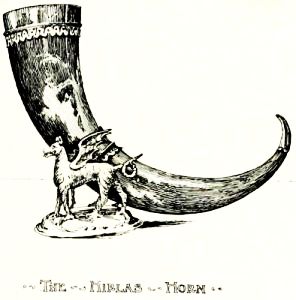
Hirlas Horn (The Long Blue Horn)

ill_042

Owen Cyveilioc

Hirlas Horn (The Long Blue Horne)

Sharon Turner. The History of the Anglo-Saxons. vol iii., p. 333, 1840:

Another princely Bard was Owen Cyveilioc. He flourished between 1150 and 1197. He was the prince of Powys. He was engaged in some intestine conflicts with Howel; he fought with our Henry, and at last excited against himself Owen of Gwynedd, the hero of the poetry of Gwalchmai and Cynddelu. This hero defeated and expelled Owen Cyveilioc in 1166 from Powys, to which, however, he was re-admitted.

The prince was a turbulent warrior, generally fighting with some of his neighbours. His Hirlas, however, shows that he possessed a strong poetic genius, and applied it to celebrate the warriors who accompanied him in his quarrels. The plan of the poem is ingenious and picturesque. He fancies himself surrounded by his chiefs at the festive table, rejoicing in their victory; and he orders his cupbearer to pour out the generous beverage to those whom he intends to celebrate, and whom he selects and describes successively. Two of his accustomed companions,and favourite warriors,were Moreiddig and Tudyr, who had just perished in a preceding battle. In the ardour of his festivity and panegyric, he forgot that they were no more. Therefore, after directing the horn of mead to be sent to his warriors, and after addressing each of them with appropriate praise,he proceeds to send it to Moreiddig and Tudyr. He recites their merit— he turns to greet them — but their place is vacant — he beholds them not— he hears their dying groan — he recollects their fate — his triumphant strains cease—his hilarity flies, and the broken tones of mournful exclamation suddenly burst out. Shall I be pardoned if I disgress awhile to insert the passage in a close translation?

“Fill, cupbearer, seek not death-
Fill the horn of honour at our banquets,
The long blue horn, of high privilege, of ancient silver,
That covers it not sparingly;
Bear to Tudyr, eagle of slaughter,
A prime beverage of florid wine.
Thy head shall be the forfeit if there come not in
The most delicious mead
To the hand of Moreiddig, encourager of songs;
May they become old in fame before they leave us!
Ye blameless brothers of aspiring souls,
Of dauntless ardour that would grasp ev’n fire;
Heroes, what services ye have achieved for me!
Not old disgustingly, but old in skill;
Unwearied, rushing wolves of battle;
First in the crimsoned rank of bleeding pikes,
Brave leaders of the Mochnantians, from Powys,
The prompt ones, in every need,
Who rescue their borders from violence,
Praise is your meed, most amiable pair:
Ha! — the cry of death — And do I miss them —
O Christ!— how I mourn their catastrophe —
O lost Moreiddig — how greatly shall I need thee!“

Posted in Uncategorized | Tagged , | Leave a comment

MAJOR WILLIAM HARRIS AND THE LORDS OF CHIRK

In what follows, I have followed the notes of eminent antiquarians, though not without question, as some genealogies of this time confound one generation with another. This said, I believe the following to be a reasonable outline of the ancestry of Major William Harris.

1. Tudor ap Rhys, fl. 1078-1086 (Bartrum, Welsh Genealogies 300-1400, vol. 12, p. 871). Domesday tenant of Roger de Montgomery in Whittington and the Marches of Wales, paying a rent of of four pounds, five shillings (J. Morris, Shropshire Genealogies, vol. 7, p. 3612). He m. Jane ferch Rhys “Fychan”, dau. of Rhys “Fychan” ap Rhys, of Llanymddyfri, Llandingad, Carmarthenshire.

2. Bleddyn ap Tudur, Lord of Chirk, Nantheudwy, and Maelor Saesneg, m. Annes ferch Llywelyn, dau. of Llywelyn ap Idnerth.

3. Owain ap Bleddyn, Lord of Chirk, Nantheudwy, and Maelor Saesneg, m. Efa ferch Madog “Gôch”, dau. of Madog “Gôch” ap Iorwerth “Gôch”, lord of Sutton.

4. Iorwerth “Yr Hên” ap Owain “Yr Hên”, seneschal to Madog ap Gruffudd, m. Angharad ferch Gruffudd, dau. of Gruffudd ap Meilir “Eutun”, of Eyton, Erbistog, Denbighshire (Bartrum, Welsh Genealogies 300-1400, vol. 12, p. 878).

5. Iorwerth “Foel” ap Iorwerth “Fychan”, lord of Chirk, Maelor Saesneg and Nanheudwy, granted lands by Roger Mortimer, Lord of Chirk, in the townships of Gwen Osbern and Pen-y-Clawdd (Lloyd, History of the Princes, the Lords Marcher and the Ancient Nobility of Powys Fadog, vol. 4, p. 190); m. Gwladus ferch Iorwerth, of Fron-goch, Llanymynech, Shropshire.

6. Ednyfed “Gam” ap Iorwerth “Foel”, m. Gwladus ferch Llywelyn, of Tegeingl cantref, Flintshire, dau. of Llywelyn ap Madog.

7. Iorwerth “Ddû” ap Ednyfed “Gam”, fl. 1332, m. Angharad ferch Adda “Gôch”, of Trefor, Llangollen, Denbighshire (Bartrum, Welsh Genealogies 300-1400, vol. 12, p. 882), dau. of Adda “Gôch” ab Ieuaf, of Traean Trefor, Llangollen, one of the witnesses to the Charter of Richard Arundel, Earl of Arundel, and Lord of Chirk, in 1356. (Lloyd, History of the Princes, the Lords Marcher and the Ancient Nobility of Powys Fadog, vol. 4 p. 109, 137).

8. Adda ab Iorwerth “Ddû, m. Elizabeth or Isabel ferch Gruffudd “Fychan”, of Rhuddallt, Rhiwabon, Denbighshire, dau. of Gruffudd “Fychan” ap Gruffudd “Llwyd”, Baron of Glyndyfrdwy, son of Gruffudd “Llwyd” ap Madog “Fychan”, Steward of Oswestry under Richard FitzAlan, Earl of Arundel, 1347 (Bridgeman, History of the Princes of South Wales, pp. 250-252), and Elizabeth le Strange, of Knockin.’Sir John l’Estrange, Lord of Knockin, brought for his daughter Elizabeth, from Madoc ap Griffith, the marriage of the said Griffith, his son and heir, for which he paid £50 sterling’ (Rot. Parl., vol. 1, p. 306). ‘The First Court called Pengwern, in Chirkland, being part of the possessions of the aforesaid Adda ap Ierwerth Ddu, and Elizabeth his wife, who was daughter of Gruffydd Vychan, ap Gruffydd, of Rhuddallt, which Elizabeth was also sister to Owen Glyndwrdwy (Glendower): she was also the mother of Ievan ap Adda, ap Iorwerth ddu’ (Lewis Dwnn).

9 a. Ieuan ap Adda, d. ante. 1437, of Pengwern (Lloyd, History of the Princes, the Lords Marcher and the Ancient Nobility of Powys Fadog, vol. 6, p. 156), m. Angharad ferch Ednyfed, of Trecastell, Llangoed, Anglesey. He was br. of Rhys ap Adda, Maredudd ap Adda, and Harry ap Adda.

Goronwy, son of Ednyfed Fychan, held Trecastell, Penmynydd and Erddreiniog, all in the commote of Dindaethwy, in the thirteenth century. His grandson, Goronwy ap Tudur similarly held those townships, together with the township of Tregaian. These passed to Tudur Fychan, who is thought to have maintained Trecastell as his principal residence, and he was followed by Ednyfed Fychan ap Tudur in the later fourteenth century. Ednyfed’s daughter, Angharad, heiress of Trecastell, married Ieuan ap Adda ap Iorwerth Du of Pengwern. Ednyfed was the brother of Maredudd ap Tudur, Escheator of Anglesey, fl. 1392-1406, whose son was Owen Tudor (Owain ap Maredudd ap Tudur), who was the second husband of Catherine of Valois (1401–1437), Henry V’s widow. He was the grandfather of Henry VII, founder of the Tudor dynasty, thus:

1. Edmund, Earl of Richmond, m. (1455) Margaret Beaufort, Countess of Richmond.

1.1. King Henry VII., 1485-1509, Earl of Richmond, m. (1486) Elizabeth of York, Plantagenet.

1.1.1. Arthur, Prince of Wales, m. (1501) Catalina of Aragon.

1.1.2. King Henry VIII of England, m. 1. Catalina of Aragon, 2. Anna Boleyn, 3. Jane Seymour, 4. Anna of Cleves, 5. Katharina Howard, 6. Katherine Parr.

10 a. Ieuan “Fychan” ap Ieuan, obit. 1477. He appears in the Minister’s accounts for 26 Henry VI as ‘firmar’ of the ville of Mostyn, at Michaelmas, 1447 (Dwnn, Heraldic Visitations of Wales, vol. 2, p. 125 fn. 4). He was an esquire in the retinue of Thomas FitzAlan, earl of Arundel, and lord of Chirk. He m. Angharad ferch Hywel, dau. of Hywel ap Tudor, of Mostyn, Chwitffordd, Flintshire, and, according to N.L.W. MS. 1557, widow of Edward Stanley. He was a bard and a harpist; on the maternal side he was second-cousin to Edmund, earl of Richmond, and Jasper Tudor, earl of Pembroke. A summary of Ieuan “Fychan” ap Ieuan’s family connections is givwn in ‘Guto’s patrons’, Centre for Advanced Welsh and Celtic Studies, the University of Wales: ‘Ieuan Fychan was descended from a family who had played a prominent role in the administration of Nanheudwy both before the Edwardian conquest and subsequently, when the commote became part of the new lordship of Chirk, Chirkland. His ancestors Iorwerth Hen, Iorwerth Fychan and Iorwerth Foel held key positions in the court of the princes of Powys over three generations. As A.D. Carr (1976: 8) noted: ‘It is … possible that the office of seneschal of Powys Fadog became hereditary in the family of Pengwern, just as the corresponding office of Gwynedd became the preserve of the family of Ednyfed Fychan.’ These were two old and important Welsh families who served the native princes, and it is not surprising that they regarded each other as suitable marriage material: Myfanwy daughter of Iorwerth Ddu (sister of Addaf, Ieuan Fychan’s grandfather) had married Goronwy ap Tudur of Penmynydd, Anglesey. Myfanwy was the young lady from Dinas Brân to whom Hywel ab Einion Lygliw sang a love ode (GGLl poem 1). Ieuan Fychan’s mother, Angharad, was also descended from the same family, being the daughter of Ednyfed ap Tudur of Trecastell (therefore Myfanwy’s sister in law). By referring to Ieuan’s mother as merch Ednyfed naf (106.65), Guto reminds us of this important family connection. Ieuan’s surname ‘Fychan’ probably came from this family, and can be traced back to its effective founder Ednyfed Fychan’.

11 a. John ap Ieuan “Fychan”, d.s.p. of Pengwern, Llangollen, Denbighshire. Younger brother of Hywel of Mostyn. (J. Morris, Shropshire Genealogies, vol. 2, p. 973).

12 a. Roger Baker, alias Roger ap John. See Harl. MSS. 1977, 50, ‘Roger Baker, ap John ap Jeuan Vychan, descended from Llwddocca ap Tudor Trevor’.

13 a. Anne Baker, m. Sir Thomas Leighton, 1443-1519. He m. (1) Elizabeth Devereux, dau. of Walter Devereux, obit. 1485, and Anne Ferrers, dau. and heir of Sir William Ferrers of Chartley, and relict of Sir Richard Corbet, 1451-1493, of Morton Corbet. By Sir Richard Corbet, Elizabeth Devereux had issue: Elizabeth Corbet, wife of Thomas Trentham; by whom she had five daughters: Anne Trentham, who married Ralph Leighton, gentleman, of Cotes, Shropshire; Elizabeth Trentham, who m. Richard Hussey of Albright Hussey, Salop; Katherine, who m. (1) Thomas Hakluyt (d. 1544), esquire, of Eyton in Leominster, Herefordshire, Clerk of the Council in the Marches of Wales; (2) Edmund Foxe (d. 1550) of Ludlow, son and heir of William Foxe of Ludlow. Edmund Fox: educ. Broadgates Hall, Oxf. in Sept. 1531; L. Inn, adm. 28 June 1536. Edmund Foxe and his younger brother Charles obtained in 1537 the reversion to two offices under the council in the marches. ‘Foxe leased from his father the estates of the hospital of St. John in Ludlow, and it was at the hospital’s ‘capital house’ in Ludford that he died. By his will, made when he was ill on 7 Oct. 1550 and proved on the following 27 Nov., he named Reginald Corbet, Richard Cupper and his brother-in-law William Hopton feoffees to a settlement of his property on his father and wife, with remainders to his children and relatives. He provided for the payment to his stepchildren of their legacies under their father’s will, remembered his servant Edward Upton, and appointed Richard Corbet and Edward Hosier amongst others to assist his wife in executing the will. The wardship of his five year-old son Edward was acquired by Nicholas Bacon, and his widow married as her third husband Nicholas Depden’ (Alan Harding, Hist. Parl. Trust, cit. PCC 28 Coode; C142/93/96; CPR, 1550-3, p. 109; 1553, p. 377).

14 a. Margaret Leighton, m. John Parry, alias John ap Harry.

15 a. John Harris of Cruckton, d. c. 1550.

16 a. Richard Harris, m. Eleanor Jenyns, dau. of William Jenyns, of Wallyburne, Salop, evidenced in these deeds: ‘1 Robert Jenyns son of William Jenyns late of Morton Corbett alias Morton Tyret (dec’d) 2 Humphrey Jenyns of the same
1 conveys to 2 all his premises in Moreton, part of which descended to him after the death of William his father’. S/A X322/2/325/9. 11 Oct 1522. ‘Indenture made between Adam Minton, William Jenyns, Robert Dudley, Edmund Collis et al commissioners for assessing of King’s levy in town of Shrewsbury with Roger Barton and other collectors. Names and amounts only, sums raised from 4d to 3.6.8d, total 28.19s.4d’. S.A. XSB/D/2/1/22. 1523-1524. ‘In the term of Thomas Knight and William Jenyns, bailiffs. 28 Oct 9 Hen VIII. Peter Neuton, lately of Petton, Esq., and John Maynwaring, lately of Ightfield, knight, acknowledged his bond to Roger Corbett, son and heir of Robert Corbett, lately of Morton Corbett, knight, deceased’. S.A. X3365/67/64v. 1517-1518.

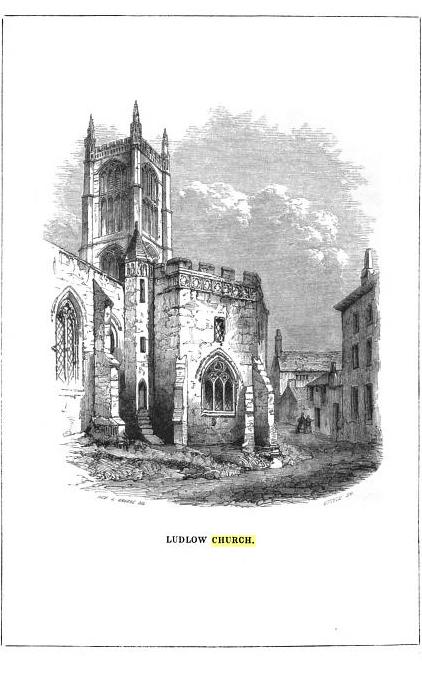
17 a. John Harris of Cruckton, bur. Apr. 12, 1614, burgess of Shrewsbury, m. Eleanor, dau. Thomas Prowde of Sutton, son of John Prowde, tenant of the Onslows, and grandson of ‘Thomas Prowde of Ludlowe’.

18 a. Rowland Harris of Ludlow, obit. 1605, m. Jane Langford, dau. of Thomas Langford, mentioned here: ‘1. William Beck and Edmond Lloyd, Bailiffs of the Corporation of Ludlow 2. Thomas [Langford], Ludlow, Gent 1-2 ‘All that their fourth part and parcel the arable land commonly called the demesne land …’ (boundaries given) Consideration: ‘… third part of all manner of corn and grain …’ S/A. XLB/4/1/157. 19 July 1598.

He was the son of William Langford, as appears here: ‘Indenture: 8 January 4 Edward VI: between William Langford, Warden of the Palmers Gild of Ludlow and the Brethren etc. with the consent of Thomas Blashefield and John Cockes bailiffs of the town of Ludlowe and the Common Councel of the one part and Charles Foxe gent of the other part; Witnesseth that the said Warden etc. have granted to Charles Foxe their cottage with etc. in Corvestrete between the tenement of John Hucke on one side and of William Cleburye on the other side …’. S/A. XLB/5/2/625. 8 Jan 1551. ‘Indenture made 9 April A.R. 3 Edward VI: Between William Langford, Warden of … the Gild of Our Blessed Lady and St. John the Evangelist of Ludlow …. the one part, and Thomas Coxe of the same town of the other part; witnesseth that the Warden and his brethren with one assent and in consideration of good service by the said Thomas done and to be done in the quyre of the parish church of Ludlow have to farm set and demised etc. to the said Thomas one tenement with appurtenances sett in the street called Shewmaker Rewe between the tenement of the said Thomas on one side to the south and a tenement belonging to the said Gild nowe in the tenure of Humfrey Hynton on the west side’.  S.A. XLB/5/2/307. 9 Apr 1549.

19 a. John Harris, bapt. March. 16, 1604, St Lawrence, Ludlow, m. ‘Margaret, d.o. Charles Bough‘ (Baugh), b. January 24, 1613, St. Lawrence, Ludlow, br. of Henry Baugh of Aldon Court, who m. Alice Holland, dau. of William Holland, baptized at Burwarton in 1574, and buried there in 1642 (Will proved P.C.C. 94 Campbell), son of Thomas Holland, bur. at Stottesden in 1612, and Alicia, ‘fil. Thomas Cocke of Pickthorne’ (Will pr. P.C.C. 19 Capell, 1613); styled ‘of Pickthorne’, aunt of Richard Cocke, b. 1597 at Pickthorne, Stottesdon, Shropshire; bapt. December 13, 1597 at Sidbury in Shropshire; obit. Bremo Bluff, Henrico, 1665.

20.a. Major William Harris, b. January 13, 1627/8, St. Larence, Ludlow; neighbour of the Cocke and Baugh families in Virginia.

9 b. Harry ap Adda. (Joseph Morris, Genealogy of Shropshire, vol. 4, p. 1933). See also Treswell’s Vis., Salop, 1623, p. 70, ped. Brome, which wrongly omits Harry ap Richard, but is otherwise correct.

10 b. Richard ap Harry.

11 b. Harry ap Richard.

12 b. John ap Harry, m. Margaret Leighton, dau. of Sir Thomas Leighton and Anne Baker.

13 b. John Harris, obit 1550. His sister, Elizabeth, m. Thomas Brome, son of John Brome and Margaret Corbet, sister of Richard Corbet of Abrighton, and aunt of Thomas Corbet ‘of Longnor’, who m. Jane Burton; their issue inc. Edward Corbet of Longnor (dsp), who m. Katharine Lee, dau of Thomas Lee of Langley.

14 b. Richard Harris, obit. 1543, m. Eleanor Jennyns.

15 b. John Harris of Cruckton, bur. Apr. 12, 1614, burgess of Shrewsbury, m. Eleanor, dau. Thomas Prowde of Sutton, grandson of a namesake given in this deed: ‘William Haye gent have transferred and to farm let to Thomas Prowde of Ludlowe … at Ludelowe 10 September A.R. 2 Henry VII’. S/A. XLB/5/2/490. He was the son of John Prowde, evidenced here: ‘Ralph Lee of Longley, Esq., grants to Edward Gabett of Acton Burnell all his lands and tenements, rents and services in the township and fields of Acton Burnell … of which lands and tenements do John Leighton of [Church] Stretton, Esq.bought one half from the said John Esthop which the said Ralph Lee lately had of the gift of the same John Leighton, but the other half of the lands and tenements to Ralph lately had of the gift of Sybil and Philip, son and heir of the said Roger and Sibil, as appears by deeds made by John Leighton to Ralph. Witnesses: Thomas Acton of Longnor, Richard Lee Esq., William Lyster of Salop, mercer, John Adams of Ponsbury, John Knycght of Cressege, John Prowde of Conde’. S/A. X1514/3/1/3/67. 2 Feb 1470.

16 b. Rowland Harris of Ludlow, obit. 1605, m. Jane Langford. Rowland was the br. of (1) Arthur Harris, Esq. of Prescot, near Baschurch, m. Jane Newton. Their son, Thomas Harris, m. (1632) Alice Holland, dau. of William Holland, baptized at Burwarton in 1574, and buried there in 1642 (Will proved P.C.C. 94 Campbell), son of Thomas Holland, bur. at Stottesden in 1612, and Alicia, ‘fil. Thomas Cocke of Pickthorne’ (Will pr. P.C.C. 19 Capell, 1613); styled ‘of Pickthorne’, aunt of Richard Cocke, b. 1597 at Pickthorn, Stottesdon, Shropshire; bapt. Dec. 13, 1597 at Sidbury in Shropshire; obit. Bremo Bluff, Henrico, 1665.

17 b. John Harris, bapt. March. 16, 1604, St Lawrence, Ludlow.

18 b. Major William Harris, b. January 13, 1627/8, St. Lawrence, Ludlow.

copyright m stanhope 2015

Posted in Uncategorized | Tagged , | Leave a comment

THE ROYAL WELSH ANCESTRY OF MAJOR WILLIAM HARRIS

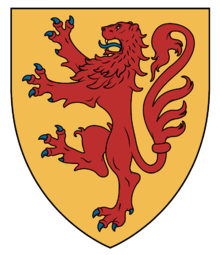
220px-Powys_Wenwynwyn_svg

1. Gwerystan ap Gwaithfoed.
2. Cynfyn ap Gwerystan, m. Angharad, widow of Llywelyn ap Seisyll (d. 1023); an 11th century King of Gwynedd, Powys and Deheubarth.
3. Bleddyn ap Cynfyn, d. 1073; installed by Harold and Tostig Godwinson as king of Gwynedd in 1063 on his father’s death.
4. Maredudd ap Bleddyn, d. February 9, 1132, King of Powys in eastern Wales. He married Hunedd ferch Einudd.
5. Griffith ap Meredith, Lord of Mowddwy, submitted with his father to Henry I. He took an active part in the feuds and warfare of the period, and d. v. p. in 1128, leaving, by Gwerfyl his wife, dau. of Gwrgenas ap Howel, of Caer-a-Chydewin, an only child:
6. Owen Cyfeiliog ap Griffith, Prince of Powys Cyfeiliog, or Higher Powys, to which he s. on the demise of his grandfather, Meredith ap Bleddyn. In 1176, he attended the summons of Henry to a conference with him at Oxford on Welsh affairs. Owen Cyfeiliog, ‘Lord of Mathrafal, the poet and the prince’ (Southey), was a distinguished bard, and among other productions of his muse, which have been transmitted to us, is his Welch ode called ‘Hirlas’, or the ‘Blue Long Horn’. In the year 1170, he founded the Cistercian abbey of Ystrad Marchell (Strata Marcella), and d. in 1197, leaving, by the Princess Gwenllian, his consort, dau. of Owen Gwynedd, Prince of North Wales, an only child:
7. Gwenwynwyn ap Owen Cyfeiliog, Prince of Powys Cyfeiliog; pourtrayed in the ‘Betrothed’ of Sir Walter Scott. In the 2nd of Henry III. (1218) Gwenwynwyn appears to have been dead, his widow Margaret living, and his heirs under age. By Margaret his consort, dau. of Robert Corbet, feudal Baron of Caus, Gwenwynwyn, who resumed the arms of his line, subsequently borne by his descendants, viz., ‘or, a lion rampant, gu‘, had issue:
8. Griffith ap Gwenwynwyn, Prince of Powys-Wenwynwyn. On 15 July, 1223, Ranulph, Earl of Chester, was ordered to see that the constable of Brug (Bridgenorth), Shropshire, do send the sons of Gwnwynwyn to Gloucester; and on the 19th, the king being then at Gloucester, the earl certifies their arrival. As the penalty of disaffection to Llewelyn, Prince of North Wales, Griffith’s country was taken by that monarch; but, temporising, he joined Llewelyn, and, as a test of his sincerity, took and demolished the castle of Mold, then a frontier town. He must still have changed, for it is a matter of complaint on the part of Llewelwyn, that Edward I. of England had received and protected his rebel subject. Griffith m. Hawys, dau. of John le Strange, feudal Lord of Knockyn and Cheswardine, and by her, who had a royal grant of the manor of Stretton-dale, and the wardship of the lands in capite of her grandson, Griffin de la Pole, had issue:
9.William ap Griffith, alias Wilcox, surnamed ‘De la Pole‘, Lord of Mowddwy, which was granted to him by his brother Owen, to be held of himself. This noble, who was living 17th EDwARD I., and dead 9th Edward II. (1315), m. the Lady Eleanor, junior co-heir of the monarchs of South Wales and Powys, 3rd dau. of Thomas ap Llewelyn, Lord of Yscoed, twenty-eight years of age and upwards, Sunday next after the Feast of St. Michael, 2 October, 2nd Edward III. (1328), and sister and co-heir of Owen ap Thomas, Lord of Half Yscoed, Monday next after the Feast of the Exaltation of the Holy Cross, 18th Edward III. (20 September, 1334). By this lady he had,
10. Griffith ap William, son and heir, 12th Edward II., and as ‘Griffin, son of William de la Pole’, Lord of Mowddwy, appointed high sheriff of Merionethshire, 4th Edward III.
11. John ap William, Lord of Mowddwy, under age at the death of his father, 12th Edward II. m. Catherine, only dau. and heir of Sir Foulk Corbet, Knt., of Watlesborough, and had with a son, Fowlk ap John, Lord of Mowddwy, who d.s.p., seized of the manor of Watlesborough, a dau.:
12. Elizabeth ferch John ap William, who as heiress of her brother, succeeded to Mowddwy. She m. Sir Hugh de Burgh, Knt., and with him had seizin of the manor of Watlesborough, 9th Henry VI. (1438), and they held the fourth part of the Barony of Caus, co. Salop, viz., a moiety of the manor of Worthen, and the manors of Over Garthor and Banghaltre.
13. John de Burgh, Knt., son and heir, 9th Henry VI., high sheriff for Shropshire in 1442, d. 9th Edward IV. He m. Johanna, dau. and heir of Sir William Clopton, Knt., of Clopton, co. Warwick, and Radbrooke, co. Gloucester; the latter of whom d. seized of Radbrooke, 7th Henry IV. In 14th Edward IV., the manor of Watlesborough, with other extensive domains, was released and confirmed for life to this lady, as relict of Sir John Burgh.
14. Angharad de Burgh, Lady of Watlesborough and Cardeston, who m. John Leighton of Stretton, co. Salop, jure uxoris Lord of Watlesborough and Cardeston, son of Edward Leighton and Elizabeth Stapleton, and by him, who was thrice high sheriff of Shropshire, was mother of:
15. Sir Thomas Leighton, knight-banneret and knight of the body to Henry VII., M.P. for Shropshire in the reigns of Henry VII. and Henry VIII, who married Elizabeth Devereux, dau. of Sir Walter Devereux, 1st Lord Ferrers (of Chartley) and Anne Ferrers, dau. of Sir William Ferrers, 7th Lord Ferrers (of Chartley), on 26 November 1446. Sir Thomas Leighton m. 2. Anne, dau. of Roger Baker* of Shrewsbury, and by her had issue (1) Thomas Leighton of Rodenhurst, Salop,
(2) Joyce, wife of William Spencer, of Whitton, Salop, (3) Elizabeth, who m. James Leche, of Newtown, Montgom, (4) Margaret, who m. John Parry, alias John ap Harry; their son being John Harrys of Carston (Cardeston), later of Cruckton, d. 1550; the ancestor of of Major William Harris. These were extremely well connected families. *The following authorities give the surname of his second wife as “Baker, 1 Harl. MSS., 1987, 7; 1984, 224; 2146, 7; 1396, 247; 1241, 21, etc. Furthermore Harl. MSS. 1977, 50, gives a Welsh descent for her father, “Roger Baker” (ap John ap Jeuan Vychan, descended from Llwddocca ap Tudor Trevor). By his first wife, Sir Thomas Leighton, was the father of John Leighton, who married, secondly, Joyce Sutton (dau. of Edward Sutton, 2nd Lord Dudley, and Cicely Willoughby), who, on his decease, in 1632, m. Richard Lee, as seen in the case of Hyggons v Lee. S.A. C 1/827/31. 1533-1538. Plaintiffs: Peter Hyggons of Stretton, yeoman. Defendants: Richard Lee, esquire, of Langley, husband of Joyce, late the wife of John Leyghton, esquire, and John Harrys of Carston (Cardeston); the bailiffs of Shrewsbury. Subject: Action on a bond given on behalf of the said Harrys, for redemption of pledges given by the said Joyce. Subpoena and certiorari. Shropshire. 1533-1538. John Leighton was the br. of Richard Leighton, who m. Katherine ap Harry, likely sister of John ap Harry, aforementioned.
16. Margaret Leighton, m. John Parry, alias John ap Harry.
17. John Harris of Cruckton, d. 1550.
18. Richard Harris, m. Eleanor Jenyns, dau. of William Jenyns, of Wallyburne, Shropshire.

19. John Harris of Cruckton, d. 1614, m. Eleanor Prowde, bur. Pontesbury, March 13, 1599/1600, dau of Thomas Prowde.
20. Rowland Harris, obit. 1605, m. (September 14, 1595), Jane Langford (bapt. 0ctober 10, 1567), dau. of Thomas Langford, of Ludlow.
21. John Harris, bapt. March. 16, 1604.
22. Major William Harris, b. January 13, 1627/8.

copyright m stanhope 2015

Posted in Uncategorized | Tagged , | Leave a comment

THE ARNOLD FAMILY OF SOUTHWARK, LONDON, AND HANOVER COUNTY, VIRGINIA

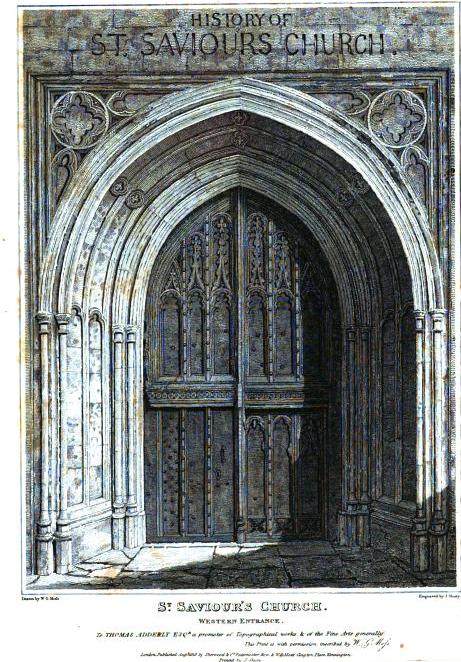
st saviours

The Arnold family of Virginia were inhabitants of Southwark, London.

William Harris, husband of Temperance Overton, was almost certainly of the Harris family of Southwark, London.

The family of Elizabeth (Waters) Overton were of St. Sepulchre, London.

The Overton family were almost certainly of St. Sepulchre, London.

John Arnold. PROB 11/136/408: Will of John Arnold, Dyer of Saint Olave Southwark, Surrey, November 8, 1620. SP 46/22/fo87: Edmund Bowyer and Richard Hutton, M.P.s for Southwark, co. Surrey, to the lord Keeper: certify the appointment of John Arnold of St. Olave’s, dyer, and Anthony Smith of St. Saviour’s, grocer, as collectors of the fifteenth and tenth in the borough; 25 Apr. 1600. Will 1620 mentions brother, Thomas.

Richard Dowdswell, of St Saviour, citizen and grocer of London. Testator is ‘somewhat infirme of bodie’. Asks to be buried in the new chapel of St Saviour church, in ‘the daie tyme and not in the night’. Will proved March 25, 1639.
Family members named: Elizabeth his wife. John Dowdswell his father. Roger Dowdswell his brother, to have the Winchcombe house. Eleanor Kinge his sister, wife of William Kinge his brother-in-law. Walter Dowdswell his brother. Edith Collett his sister, wife of Henry Collett. Jarvis Dowdswell his kinsman, son in law of Daniel Gates. Thomas Canon his brother in law, and Peter Canon. Hannah Watson, daughter of Barnaby Watson his brother-in-law. John Arnold his brother-in-law, and his underage children John, Joseph, and Samuel Arnold. Executor: Elizabeth his wife. Overseers: Joseph Collyer, grocer, and John Humfrey, linendraper, his loving friends and neighbors. Witnesses: John Looker; Thomas Brocket; Steven Tillinghast. TNA, Prob.11/179/554, ff.404v-406r.

Richard Arnold. PROB 11/318/677: Will of Richard Arnold, Gentleman of Southwark, Surrey, December 18, 1665. C 6/120/11: Arnold v Fox. ‘Richard Arnold and Mary Arnold his wife. Defendants: John Fox and John Surman. Subject: property in Southwark, Surrey’. 1653.

Thomas Arnold, by Will dated 14th June 1669, gave to the churchwardens of this parish the sum of £40. By indenture of bargain and sale enrolled, bearing date 13th July 1669, Mathias Terry, and Elizabeth, his wife, in consideration of 306/. to the said Mathias paid by Thomas Arnold, and for a nominal consideration paid by the mayor, &c, conveyed to the use of the mayor, &c, contain tofts, pieces, or parcels of ground, rooms, and places, with their appurtenances, situate in or near Maidenhead-street, otherwise Distaffe-lane, in the parish of St. Margaret Moses, whereon, before the late fire in London, stood two messuages, with their appurtenances, formerly one called the Bell Tavern, and a yard paved with stone, with a little passage out of the said yard into Distaffe-lane, behind one of the said messuages, which said pieces of ground, yard, and premises, contained in length from north to south 76 feet, and in breadth from east to west, at the north front, 27 feet, and in breadth about the middle, 48 feet, and at the south end 22 feet 5 inches; and the said way or passage contained in length from north to south 24 feet 10 inches, and in breadth from east to west 4 feet 7 inches.

By an indenture of bargain and sale enrolled, bearing date 27th July 1669, William Farr and Rebecca, his wife, in consideration of 100/. to the said William paid by Thomas Arnold, and also for a nominal consideration to him paid by the mayor, &c, conveyed to the use of the mayor, &c, a toft, piece, or parcel of ground, rooms, or place, with their appurtenances, situate in  Maidenhead, London, the said Thomas Arnold, were given by him out of a pious and charitable intent, to provide for some of the poor children harboured in the said hospital in the manner thereinafter mentioned — was witnessed that the mayor, &c, covenanted with the said Thomas Arnold, his heirs, and assigns, that the treasurer for the time being of the said hospital should yearly, between Michaelmas and Midsummer-day, expend 20/. for and towards the setting up in some continued. trade or business five or more of the poor children harboured in the hospital who should have faithfully served out the times of their apprenticeships, (fatherless children to be preferred if with convcniency,) each child to have 3/., 41. or 5/-, at the discretion of the governors, so that no one has more than 5/., or less than 3/.; and that the said 20/. should be for ever distributed and declared as the gift of Thomas Arnold.

Hampshire Arch. – Bargain and sale from Sir John Wollaston, John Fowke, James Bunce, William Gibbs, Samuel Avery, Christopher Packe, aldermen of London, Thomas Noell, John Bellamy, Edward Hooker, Thomas Arnold, Richard Glyd, William Hobson, Francis Ashe, John Babington, Lawrence Bromfield, Alexander Jones, Richard Vennar, Stephen Estwicke, Robert Meade and James Storie, citizens of London, trustees for the sale of episcopal lands, at the warrant of Sir William Roberts, Thomas Ayres, Richard Turner, Robert Fenwicke, William Mothwold and Edward Gressett, appointed by ordinance of Parliament to make contracts for sale, 16 November 1646, to Thomas Hussey, Esq. Reference: 5M50/1098. Alresford manor Various signatures.

George Arnold Esq. Thomas Arnold gift is administered by his son, George Arnold Esq. C 6/134/61: Fauntleroy v Arnold. Plaintiffs: Henry Fauntleroy. Defendants: Thomas Arnold and George Arnold. Subject: water supply St Martin Ludgate, London. 1657. Henry Fauntleroy was baptized September 13, 1620, at Hedley, Hampshire. He was buried at Isleworth, London, and was the brother of Col. Moore Fauntleroy, whose son, Col. William Fauntleroy was born in 1650, in Rappahannock Co., VA. He married Katherine Griffin, dau. of Col. Samuel Griffin. She married (2) David Gwyn, (3) David Ridley, before February 6, 1694. In the records of Old Rappahannock County, Vol. 1, p. 33, an account of the Will of Francis Slaughter states: ‘to my brother-in-law, Coll. Moore Fauntleroy, my book entitled Hooker ‘s Ecclesiastical Policy’. Mrs. Margaret Underwood, herein accounted had daughters (probably by her first husband); including: Elizabeth, who married Francis Slaughter, 2nd, Capt. John Catlett; Anne, married James Williamson. John Catlett’s family were associated with the Taliaferro family of St. Olave’s, Southwark. Bartholomew’s son, Francis Taliaferro, married Bennett Haie; their son, Robert Taliaferro, was baptised on November 19, 1626, at Stepney. He married Katherine Dedman, the daughter of Henry Dedman, who was granted 350 acres of land in Rappahannock River on June 27, 1650. After his death, his widow married the Rev. Charles Grymes. A Grymes family are recorded in the registers of St. Olave’s: Edward Grymes was baptised on June 7, 1622, son of christopher Grymes.

‘Cavaliers and Pioneers, Abstracts of Virginia Land Patents and Grants’ by Nell Marion Nugent

Vol. I, p. 4: William Arnall transported as a servant on the ship Seaflower, 1621, headright claimed by Edward Waters, Elizabeth City County.

Vol. I, p. 28: Robt. Arnall, servant, transported 1635, headright claimed by William Spencer, county not named.

Robert Arnold, Age 30, to Va., from the Port of London, in the “Globe” 7 Aug. 1635. Brought over by William Spencer. A Robert Arnold grants to Robert Fristoe, Nov. 2, 1675, a heifer. The intermarried Spencer and Sheppard families of Virginia were of St. Olave’s, Southwark, and are recorded thus: ‘William & Alice Spencer’ (married June 23, 1622), at St. Olave’s, Southwark. William Spencer’s nephew, Nicholas, is recorded in the St. Olave’s registers as being the father of John Spencer: ‘John Spencer 26 September 1641 f. Nicholas Spencer’. William and Alice Spencer had issue: Elizabeth Spencer, who m. (1) Major Robert Sheppard (bef. 1654) of James City, VA. He was very likely a son of ‘Francis Shepheard and Elizabeth Ellis’ (married September 28, 1617), St. Olave’s Southwark. (2) Thomas Warren, of Ripple Court, Kent. Major Robert Sheppard and Elizabeth Spencer had issue: Anne Shephard, who m. (1) Thomas Hart & (2) William Newsome, who was almost certainly of the Nusom family of Southwark, London.

Vol. I, p. 386: Anth. Arnold transported 1658, headright claimed by Thomas Harris, Isle of Wight County.

Nicholas George, along with John Grymsditch, received 300 acres, Isle of Wight Co., on Pagan Creek 20 Feb. 1638. On February 15, 1652, he received 700 acres on North side of the Rappahannock River and East side of Corotoman River. In this patent his wife is named, ‘Marg’. His Will is recorded in Lancaster Co. Will Book, Loose Wills, June 1, 1661. Heirs: son, Nicholas, dau., Grace George (land adjoining John Edwards). Nicholas George witnessed John Arnold’s Will. Nicholas George was the father-in-law of Thomas Harris. A dau of Francis Hobbs married John Harris, son of the said Thomas Harris. Grace George married John Arnold, after 1661. She married (2) Thomas Sampson. Governor George Yearwood, son of Richard Yearwood, was the brother-in-law of Edward Payne, brother of John Payne of Virginia. John Payne of Southwark, ‘who is nowe beyonde the sea’ is seen in this deed as a co-sponsor, with Thomas Griffin and William Newsum, all of St. Olave’s Southwark: ‘William Nesum, Tho. Sax, Miles Battersby & John Payne, 800 acs. called the Island Neck, lieing on N. side of Rappa. Riv. neare Curritomon Riv. mouth, Northumberland Co., 29 Jan. 1649. Same: 550 acs. in same county & same date. On N. side the Rappa. Riv., adj. to the Island Neck, running N. N. W. to Marsh Poynt Cr. Trans. of 11 pers: Richd. Pagget, Richd. Jones, Ja. Richardson, Wm. Horlson, Hugh Griffin, Tho. Griffin, Tho. Grimsditch (C&P, 2, p. 188).

John Payne bought land from Francis Hobbs: ‘John Payne, 653 acs. on N. side of Rappa. Riv., beg. at miles end of his land purchased of Fra. Hobbs. 2 June I657. Trans. of 13 pers’. William Harris, probable br. of Thomas, aforesaid, at St. Olave, Southwark, married (May 25, 1643) Elizabeth Arnell. Anthony Arnell was, as stated, a transportee of Thomas Harris: March 2, 1658: ‘Thomas Harris, 1000 acres, Isle of Wight Co. Upon a swamp running into the W. branch of Nansamond Riv., including 2 Indian fields. Trans. of 20 persons: John Hardy, Alexander Vaughn, Ann Lees, William Todd, Eliz. Jones, Mary Wood, John Davis, John Griffin, Fran. Anderson, Jno. Pew, Ann Greene, Eliza. Nusome, Weltin (Walton) Harris, Anth. Arnold, Sam. Trobury, Alexander Cahill (Nugent, ‘Cavaliers and Pioneers’, vol. 1, p. 386).

William’s son, ‘Wm Harris and wife, Hennerettah‘, of parish of Fredericksville, Louisa, deed to Martin Baker of Hanover, for good causes, thereunto moving, part of tract granted by patent March 24, 1725 unto William Harris, and by said William given said Wm. Harris, his son, in will recorded (prior to 1734) in Hanover Co. (Louisa Co., Va, B. 2, p. 298).

William and Heneretta had issue: ‘William Harris, Junr.: ‘1500 acres, New Land, Hanover Co., adj. Mrs. Arnold and George Woodroof’s lines; on Overton’s fork of Elk Creek (Nugent, C&P, Vol. III, p 303). April 11, 1732). Their issue being: ‘John Harris, 400 acres New Land, Hanover County; adj. Ambrose Joshua Smith, Capt. Thomas Carr* and Ann Arnold; on low side of Great Rockey Creek (ibid. p. 414). John Harris of Cedar Creek, who died before 1745, established the Quaker Meeting with John Stanley in 1721, it being assumed that he married Mary Stanley, John Stanley’s daughter. It has been noted that the Harris of St. Olave  had intermarried with a family of Stanley. William Harris, the grantee of 1725, was ‘William Harris, Gent., 76 acs. (NL), Hanover Co; beg. at James Glen’s corner; to N. side the Little River; on the Newmarket line; 24 Mar. 1725, 10 Shill.’ (ibid. p. 389).

He was also recorded thus: ‘Capt. William Harris, Gent., 266 acs. (NL), Hanover Co; beg. at Thomason’s line on S. side the Little River, at mouth of Byars’ Branch; on New Market lines; Mar. 24, 1725, 30 Shill.’ (ibid., p. 420). Hanover Court Records, 1733-1735, p. 9, record: ‘At a Court held for Hanover Co. 2 Nov. 1733. on petition of James Overton it is ordered that John Kimbro Sen., George Berry, John Henson and John Harris or any three of them being first Sworn do value the buildings, works and Improvements with Regard to expenses on 400 acres of land belonging to the petitioner on branches of the south fork of the Little River in this Co. and that they make Report to the next Court’.

James Overton is recorded thus: ‘James Overton, 400 acs. (new lease), Hanover Co.; on N. side the S. fork of Elk Cr.; on John Raglin’s line; 20 Feb 1723, 40 shill’ (Nugent, C&P, vol. 3, p. 259). A James Overton appears in the Vestry Book of St. Paul’s Parish: ‘At a Vestry held at Mr Wm Harris’s 9br ye 6th 1722 … Mr. James Overton was this day admitted a vestry man for this Parish, and had the usual Oaths Administer’d by Majr Nicho Meriwether one of his Majesty’s Justices of the peace, & likewise signd the Test’.

The convergence of Harris and Overton has led to the very justified contention that James Overton was the father of William Overton, who married his first cousin, Jemima Harris, daughter of Temperance (Overton) Harris and her husband, William Harris, the ‘Captain’, ‘Gent’, aforementioned. Samuel Overton, b. 14 August 1685, br. of Temperance, m … Carr, most likely related to Capt. Thomas Carr, who held land adj. John Harris, aforesaid.

That James Overton was the father of William Overton, who married his first cousin, Jemima Harris, perfectly adheres to the principle of closely associated families marrying within their kinship circle, an almost indubitably followed system in England that American settlers continued. (The Arnold family are an example of this).

To give a unidentified Welsh provenance to this family of Harris, when an overwhelming percentage of people connected to them originated from two parishes of Southwark, London, as the Harris family of whom they undoubtedly descended, is a modern day contrivance, based on groups of people, with non-matching DNA profiles, claiming an ancestry which is incompatible to them sharing the same ancestor. Either, as in the ‘Overton’ case, one or more groups of Harris are not descended from their claimed ancestor. Conversely, those debarred from making a claim, by those who drove their stake in the ground first, may be the true decendants of such as William Harris and Temperance Overton.

Vol. I, p. 403: Anthony Arnold land adjacent Capt. George Lyddall, 1662, near Black Creek, Wanieoake Swamp and Maddicon Path, New Kent County.

Sir William, son of Boniface Peake, who was closely related (I suggest cousin) to Sir Robert Peake (goldsmith of London, whose Will was proven in London, May 26, 1667. (P.C.C. Carr -96), which bequeathed ‘to cousin James Waters, the son of Joseph Waters. L50; to cousin Waters, relict of Samuel Waters, Skinner. decd. L20‘), who gave permission for Sir William Peake, aforesaid, to use his family’s arms. George Lydall was Robert Peak’s nephew by marriage, son of his wife’s sister, Bridget Woodward. In Virginia, George Lydall’s son, John Lyddall, patented land with William Overton, their properties adjoining in New Kent. William’s share eventually went to his daughter, Barbara Overton.

Vol. I, p. 432: James Arnold transported 1663, headright claimed by William Moseley, Rappahannock County.

William Moseley was associated with George Yardley, baptised July 28, 1588, at St. Saviour, Southwark. George & Temperance Yardley’s son, Francis, married Sarah Offley, her third husband, she having married (1) Adam Thorowgood, (2) John Gookin. By John Gookin, she had Mary Gookin, who m. (1) William Moseley.

Adam Thorowgood came to Virginia on the “Charles” in 1621. He was at Elizabeth City for the 1623-4 census, and is shown aged 18 for the 1624-5 census, a servant in the muster of Edward Waters. Anne Thorowgood, Adam’s daughter, m. 1st Job Chandler, having issue: William Chandler, who m. Mary Sewall, Richard Chandler, who m. Elizabeth Burditt, and Anne Chandler who was named in her fathers’s Will as being granddaughter of Sarah (Offley) Yardley.

James Keyes, on April 3, 1678, was granted 2000 acres (1680 of which had been granted to Col. Gerrard Fowke and Richard Heybeard, and when Fowke died, Heybeard sold his share to to Keyes. For the residue of land, he imported 7 persons, among them, Thomas Arnold. Gerrard Fowke was the grandson of Sarah Offley.

Vol. II, p. 134: Eliz. Arnold transported 1673, headright claimed by Henry Batts & Jno. Sturdivant, Charles City County.

William Batte was associated with the Powell family of St. Olave’s, Southwark: In October 1654, William Powell of the Parish of St.Saviour, Southwark, baker, appeared before the Mayor’s Court to tesify that his elder brother William Powell had died in Virginia, without issue, and that his lands and plantations there should therefore descend to him. William, his younger brother … Depositions explain that both William Powells were so named after their godfather(s) and that William Powell the elder was ‘at ye time of this deponent’s birth (William Powell the younger’s birth) was very dangerously sick in so much as his parents and friends did dispare his life, & for these reasons did also name him William’.

As ‘William Batt of Lower Chippoakes’, he sold land, in 1658, at ‘Rich Neck’ (later the home of the Ruffins), to Ralph Jones. The deed recites that 275 acres was formerly patented by William Newsome, on March 3, 1636. On September 6, 1653, Henry Banister deeded to William Batt land which had been left to him by the last Will of William Sheppard, and which was bought from Newsome in 1640 (Surry Deeds and Wills, 1645-72, p. 30.). In May 1666, Wiliam Ruffin and Robert Coleman patented 938 acres of land in Isle of Wight County adjacent to Thomas Harris, d. 1688.

Vol. II, p. 178: Thomas Arnold’s land adjacent to Henry Berry, 1677, between Rappahannock and Potomack Rivers, Stafford County.

Vol. II, p. 181: Thomas Arnold transported 1678, headright claimed by James Keyes, Rappahannock County.

James Keyes m. Elizabeth Holdsworth, dau. John Holdsworth, and sister of Charles Holdsworth: ‘The last will and Testament of Charles Holdsworth, deceased, was presented into court by James Kay, his executor, and on the same day he entered into bond in the sum of £100 Current Money with Richard Elkins and Jeremiah Steward, his securities’ (1735-1752, King George Co VA Deed Book 3, p. 91 … pp. 216-220: Indenture made 16th/17th November 1747 between John Strother, William Whealer & Elizabeth his wife of Parish Washington County Westmoreland Planter of one part and Thomas Turner of Hanover Parish King George County Gent. of other part … land of Christopher Rodgers … one of the main branches of Kays Run … in Henry Berry’s line … a corner of Christopher Rodgers … Capt. Skinker’s line … between Skinker and Charles Holdsworth … Presence Wm. Longmire, John Strother, John Wren, James Scurlock, Wm. Whealer’. William Strothers lived near Thomas Arnold. He married Margaret Thornton, daughter of Francis Thornton, of Southwark, London. (There is a marked connection between Southwark, London,and some of the families associated with the Jones family of Fleet’s Bay).

John Thornton, m. (1614) Mary Ann Deddum, in St. Olave, Hart Street, London. (Robert Taliaferro, of Southwark, m. Katherine Dedman Grymes; their son, Francis Taliaferro, m. Elizabeth Catlett). Their son was William Thornton. July 16, 1675: William Thornton, Sr., filed a deed of gift to his four children: Francis, aforesaid,* Rowland, William and Esther. Rappahannock Co., VA, Deed Book 6, p. 83. 5 Jun 1677: ‘Richard Glover of parish of Farnham & county of Rappahannock for consideration of… paid by Wm. Thornton of the said parish and county, planter…do grant, bargain, sell, alien and enofee & confirm unto the aforesaid Wm Thornton … one parcel of land lying and being on the south side of the Rappahannock River in a creek called or known by the name of Rafe’s Creek … containing 350 acres, being the land formerly of Thomas Pattisin …’ (Old Rappahannock County Deed Book 6, p. 86). 4 Nov 1679: ‘I, William Thornton for the consideration of the acknowledgement … of the dower my wife Elizabeth Thornton, now has or hereafter may have of and to one dividend of 600 acres of land sold to Mr. Waters* and his heirs, have given, granted, bargained, sole, aliened, feeoffeed and confirmed unto my said now wife one mare…”. Witness Rees Evans (Old Rappahannock County Deed Book 6, p. 83).* Francis Thornton, m. (April 13, 1674) Alice Savage, dau. of Anthony Savage. Their three daus.: (1) Sarah Thornton, m. (Aug. 31, 1706) Lawrence Taliaferro, son of Robert Taliaferro, of Southwark, London. (2) Margaret Thornton, m. William Strother, son of William and Dorothy Strother, d. 1726. He was High Sheriff of King George County, Virginia and a vestryman of Handover Parish and was called ‘Captain Strother.’ William, son of William Strother and Margaret Thornton, was burgess for King George county in the assembly of 1727-1734. He had issue: 1. Elizabeth, m. John Frogg. 2. Alice, m. Henry Tyler, clerk of Stafford county. 3. Anne, m. Francis Tyler, brother of Henry. 4. Agatha, m. John Madison, clerk of Augusta county. 5. Jane, m. Thomas Lewis, of Augusta county. 6. Margaret, m. Gabriel Jones, a prominent lawyer. (3) Martha Thornton, m. Thomas Catlett, a son of Col. John Catlett, Jr. and Elizabeth Gaines; he had married, firstly, Elizabeth Taliaferro, dau. of Lt. Col. John ‘The Ranger’ Taliaferro, and Sarah Smith.

*John Waters, son of Samuel and Anne Waters, of St. Sepulchre, London, and brother of Elizabeth (Waters) Overton, settled in Rappahannock: ‘Mr. Robert Yard & Mr. John Waters, 900 acres, on south side of Rappahannock River; on the point of an island; adjoining Mr. John Cox; in a marsh at mouth of Lawson’s Creek, Oct. 25, 1688. Granted to Epaphraditus Lawson,* 22 May 1650, which became the estate of Robert Paine as marrying the daughter of said Lawson; which land was deserted, & now granted by orde r &c.Transportation of 18 persons: Tho. Adams, James Robins, Judeth Morgan, James Bissett , Richd. Jones, Jane Richardson, Sarah Jones, Wm. Young, Jno. Ellis, Jno. Peugh, Richd. Jones , James Rookins, Abraham Bates, Sarah Huberd, Jno. Shrowsberry, Jno. Relfe, Jane Brooks, Ratchell Jones (Cavaliers and Pioneers, 2, 1666-1695, p. 329). *Epaphroditus Lawson d. 1652. In the same year his widow Elizabeth, m (2) William Clapham, Jr., who d. in 1660; Elizabeth then m. (3) Alexander Fleming, who, after her death, m. Joyce, who m. (2) Lawrence Washington, brother of Colonel John Washington.

Vol. II, p. 219: Rich. Arnall transported 1681, headright claimed by William Overton & Evan Jones, New Kent County.

John Overton, of S’ Sepulchre’s, Lond., Stationer, Widr, ab’ 35, & Sara Garrett, of S’ Olave’s, Southwark, Spr, ab’ 28, alleged by John Garrett, of St Olave’s afs, Printer’. 1676. He was a likely close relative of William Overton, who m. Elizabeth Waters, dau. of Samuel and Anne Waters, of St. Sepulchre, London, and sister of John Waters, who bought land fron William Thornton. These Overtons were probably descendants of Richard Overton, Gent, mentioned in the Will of Sir Nicholas Ambrose, as was Thomas Thornton, the ancestor of the Virginia Thorntons.  N/A. C 5/599/42. Coomes v Overton. Plaintiffs: William Coomes (of Southwark), Margaret Coomes, his wife, and another. Defendants: John Overton. Subject: personal estate of Margaret Nevill, widow of London, Middlesex. 1663.

Vol. II, p. 299: Jane Arnold transported 1686, headright claimed by Mathew Tomlin, Isle of Wight County.

Thomas Harris, d. 1688, m. Dorothy Bessana, of S’ Lawrence Jury, Spr, ab’ 19′. ‘George Bryar & Rich. Lawrence, 3000 acs. Rappa. Co. on Ewd. side of Rappa. Cr., 16 Mar. 1663. Beg. on sd. Cr. side adj. land of Col. More Fantleroy & opposite to the now plantation of Col. Walker, extending along the Cr. side to land of Charles Grimes, dec’d., bounded by same, land of Mr. Jno. Hull & his own to white oak in his Cr. &c. Trans. of 60 pers: … Thomas Harris, Ann Harris, Susan Harris … Mathew Tomlin … Andrew Joyner …’.

Vol. III, p. 108: Benja. Arnold, land adjacent John Hurt, 1706, Pamunkey Neck near Lower Herring Creek and Mattapony River, King William County.

John Hurt – 1704 Rent Rolls for King William County, 250 acres. Extracts from King William County Records 1704 – John Yarbrough planter, to William Aylett. Deed. Land sold and exchanged by the Chickahominy Indians with Arnold for other lands, and by said Arnold, of King and Queen, sold to John Hurt of King and Queen (St. Stephen’s Parish). Deed acknowledged in King and Queen Nov. 12, 1691, and by said Hurt sold to Richard Yarbrough, father of the said John, as by deed acknowledged in King and Queen Feb. 12, 1695-6, and by virtue of deed for half interest conveyed from said John’s brother Richard Yarbrough’.

Hurt alias Hart, John, of St Saviour, yeoman, affirmed his will with a mark not a signature. He is sick in body. Asks to be buried in St Saviour church. A bequest to the poor of Clink Liberty ‘where I now dwell’. One of his legacies is a kiln standing beside his house, which is a source of income. Has a lease to grounds in Wapping. Date proved: September 22, 1632. Family members named: Rebecca his wife. Sara and Martha Hurt alias Hart, his daughters. Charles Hurt alias Hart, his brother, who is to manage the kiln. Hanna, his daughter by his wife Rebecca (the phrasing suggests that Sara and Martha have a different mother). Others named: Thomas Butler. Executor: Rebecca his wife. Overseers: Charles Hurt alias Hart; Thomas Butler; Andrew Lucas. Witnesses: Charles Hurt alias Hart; Thomas Butler; Andrew Lucas; Peter Newsam, scrivener. TNA, Prob.11/162, ff.243v-244r.

Vol. III, p. 286: Mrs. Arnold’s land adjacent Ambrose Joshua Smith and Mr. Dickason, Capt. Carr, 1725, near Overton’s fork of Elk Creek, Hanover County.

Vol. III, p. 303: Mrs. Arnold’s land adjacent William Harris and George Woodroof, 1725, on Overton’s Fork of Elk Creek, Hanover County.

Vol. III, p. 414: Ann Arnold land adjacent John Haris, Ambrose Joshua Smith, Thomas Carr, 1732, on Great Rookey Creek, Hanover County.

copyright m stanhope 2015

Posted in Uncategorized | Tagged , , , , | Leave a comment

MAJOR WILLIAM HARRIS OF LUDLOW AND VIRGINIA

ludlow church

THE CHURCH OF ST LAWRENCE, LUDLOW

Mary Harris, daughter of Captain Thomas Harris, found herself in an enclave in Virginia that was peopled by many families from the Malvern Hills area of England, that is, of the counties of Herefordshire, Gloucestershire, Shropshire and Worcestershire. This may seem to suggest, to an American mind, an area of considerable size, which was not the case, as many families within this account lived within a hundred miles of each other, with some, such as the Cocke family of Pickthorne and the Harris family of Ludlow being of considerably nearer acquaintance (10 miles). She married into the circle of families that she found herself among, the Ligons, who were well associated to the said Cocke and Harris families. That she had the same (quite common) surname as that of the Harris family of Ludlow was entirely coincidental, but it has led to a false assumption that her near neighbour on Curles Swamp, Major William Harris, was her brother, when, in fact, any relationship between their families would have been through him marrying such as a sister of Joseph Tanner, who was most likely of the Tanner family of Bishop’s Castle, Shropshire. Several members of the More family of Linley and Larden, intermarried with the Ligons, see as follows, were Bailiffs and M.P.’s of Bishop’s Castle, contemporaries of fellow bailiff, Maurice Tanner.

Major William Harris was baptised, January 13, 1627/8, in St Lawrence Church, Ludlow. His stepfather was Edward Lewis, and his step-brother was William Lewis, who m. (Aug. 21, 1634) Anne Lutley, of Burwarton, Shropshire, dau. of Robert Lutley and Mary Holland, dau. of Francis Holland, b. 1544, in Burwarton, Shropshire, br. of Thomas Holland, who m. Alicia, ‘fil. Thomas Cocke of Pickthorne’, aunt of Richard Cocke of Bremo. It is most likely that this William Lewis was the grandfather of a namesake, son-in-law of Robert Woodson, Sr., of Henrico, who, in 1707, made a deed to his grandsons William and Joseph Lewis, children of his dau., Elizabeth Woodson, and William Lewis. ‘Robert Woodson, Sr. of Henrico Co. For good causes to my loving grandson’s, William & Joseph Lewis, 450 acres patented to me and Richard Farris, Giles Carter, William Harris,* and Roger Cummings, October 21, 1687.*Son of Major Harris. It was such kinship connections that determined the landholdings of Major Harris; other kin of such influence being the Cocke and Baugh families – this latter family almost cerainly being that of his mother. A kinsman of Major Harris, James Baugh, married Elizabeth Ashbrook, daughter of Peter Ashbrook Sr., neighbour of Major Harris.

These are simple examples of English settler families operating within kinship circles. They were essentially English people in a foreign land, who continued with their custom of arranging marriages within a circle of families, so as to protect and promote their interests.

What follows is self explanatory.

Where I have dealt with the false accounts connecting Captain Thomas Harris and Major William Harris, I have attempted to do so sensitively. Having read copies of the original deeds supposedly connecting the two, and not having found any purported English Colonial record naming a son of Captain Harris, it is the kindest thing to say that the taditional narrative is far more than inaccurate, and is obviously an attempt to ‘prove’ a continuation from an ‘ancient planter’, Captain Harris. I do not infer any contrivance by people living, who claim descent from Major William Harris, who have corresponded with me to declare their only interest is the truth.

These notes also give evidence of the connection between Major Harris and a family of Madox. It is such links that are important in understanding how English families organised themselves around their kinship circle. When researching the English ancestries of particular Virginian settlers, it is as important to study those associated with them as it is to study them. Singular family research of a multi-family reality is likely to fail.

1. LEWIS OF BROUGHTON, BALDEN, AND SOUTH MAGNA, SHROPSHIRE
ARMS QUARTERLY 1&4, GULES A GRYPHON SEGREANT OR.
2&3 ARGENT, THREE BOARS’ HEADS COUPED CLOSEE SABLE (LlOYDS OF LUDLOW).
That capitalised is verbatim from the Harl. MS.

1. JOHANNES NANFONT, ARM. UX MATILDA FIL JOHANN’S BROMWICH
1.1. CLEMENCIA UX WILLIMUS LEWIS DE BALDEN IN COM SALOP
1.1.1. MARGARETA UX EDWARDI MOORE DE KAYNHAM IN COM.SALOP (uncle of Thomas Moore who m. Margaret Ligon)
1.1.2. EDWARDUS LEWIS DE SUTTON MAGNA IN COM SALOP UX I. ANNA FIL THOMAS BLASHFIELD
1.1.2.1. THOMAS LEWIS FIL PRIMOGENIT’ AET. 23 ANNO 1623
1.1.2. EDWARDUS LEWIS DE SUTTON MAGNA IN COM SALOP UX 2. JANA* FIL THOMAS LANGFORD DE LUDLOWE IN COM SALOP (*she was the relict of Rowland Harris, and mother of Thomas Harris, b. 1603, Ludlow, and John Harris, b. 1604, Ludlow).
1.1.2.1. William Lewis, m. (Aug. 21, 1634) Anne Lutley, of Burwarton, Shropshire, dau. of Robert Lutley and Mary Holland, dau. of Francis Holland, b. 1544, in Burwarton, Shropshire, br. of Thomas Holland, who m. Alicia, ‘fil. Thomas Cocke of Pickthorne’.
1.1.2.2. WILLELMUS LEWIS
1.1.2.2.1. 2 FILIUS
1.1.3. ELIZABETH UX JOHAN’IS MADOX DE OVER MILCOTE IN COM SALOP
1.1.4. FRANSISCA UX THOMAS GARBETT DE OVER HEIGHTON IN COM. SALOP

EXTRACTS FROM ST LAWRENCE CHURCH REGISTERS, LUDLOW:
1. 1593, Sep. 14. ‘Rowland Harris,& Jane Langford’.
1.1. 1596, June 26. ‘Thomas, s. Rowland Harrys, d.s.p.’.
1.2. 1599, Sep. 10. ‘Richard, s. Rowland Harrys bapt.’.
1.3. 1602, June 27. ‘Katherine, d. Rowland Harries bapt.’.
1.4. 1603 Sep. 4. ‘Thomas, s. Rowland Harries bapt.’.
1.5. 1604. Mar. 5. ‘John, s. Rowland Harris bapt.‘. John Harris died July 12, 1662. It was shortly after this date that Major William Harris is recorded in Virginia.
1.5.1. William Harris, ‘January 13, 1627, William s. of John Harris and Margaret‘.

That is, January 1627/8, a date commonly given as the year of birth of Major William Harris. This William Harris does not appear in the burial notices of 1643-1668. He was almost certainly Major William Harris. His mother, ‘Margaret’ is very likely to have been ‘Margaret, d.o. Charles Bough‘ (Baugh), b. January 24, 1613, St. Lawrence, Ludlow, br. of Henry Baugh of Aldon Court, who m. Alice Holland, dau. of William Holland, baptized at Burwarton in 1574, and buried there in 1642 (Will proved P.C.C. 94 Campbell), son of Thomas Holland, bur. at Stottesden in 1612, and Alicia, ‘fil. Thomas Cocke of Pickthorne’ (Will pr. P.C.C. 19 Capell, 1613); styled ‘of Pickthorne’, aunt of Richard Cocke, b. 1597 at Pickthorne, Stottesdon, Shropshire; bapt. December 13, 1597 at Sidbury in Shropshire; obit. Bremo Bluff, Henrico, 1665. Alice Holland’s br., Thomas, had issue, Alice Holland, who m., in 1632, Thomas Harris, Esq., of Prescot (born December 23, 1604, St. Lawrence, Ludlow), first-cousin of John Harris, born there in 1604. Charles Baugh is recorded thus: S.A. March 17, 1629. 1. Brian Crowther of Knighton, Rad., esq.; Humffrey Biggs of the Stitt, p. Ratlinghope, gent.; Richard Middleton of Hobendred, gent.; Charles Baugh of Aldon, gent.; Edward Williams and Lewis Llello of Hobendred and and Bethouse, yeoman; “With the full assent … of all the Freehoulders of the townships of Hobendred and Pertherhodrie”. 2. Jane Hagley, widow, and Oliver her sonne, of Pertherhordrie, p. Clunn’. A cousin of Thomas Harris, born St. Lawrence, Ludlow, September 4, 1603, William Langford, m. Jane Jordan, of a family that were tenants of the Cressets, who interm. with the Cocke/Holland/Harris kinship network, given as follows. It is highly likely that Richard Cocke’s ‘Couzen Daniell Jordan’ was of this family.

The aforementioned Edward Lewis was the step-father of Thomas and John Harris, as appears thus: ‘Harries v Heath. Plaintiffs: Thomas Harries* an infant, by his guardian and Edward Lewis. Defendants: Richard Heath and Edward Powis. Subject: messuage in Ludlow, Shropshire. Pleadings: 1603-1625. S.A., C 2/JasI/H5/38. *His father, Rowland, d. 1605. Richard Heath and Edward Powis were burgesses of Ludlow, representing that corporation. The guardian of Thomas Harries was very likely to have been his grandfather, Thomas Langford. Thomas Harries is likely to be recorded here: ‘1. Edward Powis and John Aston, Bailiffs of the Corporation of Ludlow 2. Thomas Harries, Ludlow, Yeoman 1-2 ‘All that their little tenement and garden with the appurtenances …’ (boundaries given) Term: 21 years. Rent: 5s. S.A. LB/4/1/493. Sept. 22, 1640.

If William Lewis, husband of Elizabeth Woodson, was of the aforementioned family of Lewis, much about tenurial associations in Virginia would be readily understood. According to his deposition, Robert Woodson was born in 1634. He married Elizabeth, dau. of Richard Ferris. A grant of land, of October 21, 1687, was made to ‘Mr. Robert Woodson, Mr. Richard Ferris, Mr. Giles Carter, William Ferris and Roger Comins for 1785 acres, at White Oak Swamp, on the north side of the James River, in the Parish of Varina. In 1707, Robert Woodson, Sr., of Henrico, made a deed to his grandsons William and Joseph Lewis, children of his dau., Elizabeth Woodson, and William Lewis. ‘Robert Woodson, Sr. of Henrico Co. For good causes to my loving grandson’s, William & Joseph Lewis, 450 acres patented to me and Richard Farris, Giles Carter, William Harris,* and Roger Cummings, 21 Oct 1687, on White Oak Swamp. Dated 30 Arp 1707. (Henrico County Land Deeds (microfilm), no. 21, p. 34).*Son of Major William Harris.

Thomas Lewis, aforementioned, aged 23 in 1623, step-brother of John Harris, b. 1604, is most likely recorded here: Hannah Boyse, daughter and heir of Luke Boyse, late of Henrico, decd., patented in Nov., 1635, 300 acres in Henrico adjoining land of her mother Alice Edlowe; due 50 acres for her personal adventure and 50 acres for the personal adventure of her father, and 200 acres for transportation of servants, viz.: ‘Thomas Lewis, Robert Hollum, Joseph Royall, Edward Holland, and Oliver Allen’ (Virginia Magazine, v., p. 97).

Fellow ‘servant’ Joseph Royall is recorded here: 1. John Harris, obit. 1550, the son of John Parry (‘John ap Harry’) and Margaret Leighton. (See post re Royal Welsh descent). 1.1. Richard Harris, m. Eleanor Jenyns, dau. of William Jenyns, of Wallyburne, Shropshire. 1.1.1. John Harris of Cruckton, Pontesbury (bur. Apr. 12, 1614), burgess of Shrewsbury, m. Eleanor Prowde, dau. of Thomas Prowde, of Sutton, Shropshire. 1.1.1.1. Thomas Harris, Justicar, of Tonge Castle, m. Eleanor Giffard, dau. of Roger Giffard and Frances Rowsley. 1.1.1.2. Rowland Harris, obit. 1605, m. (September 14, 1595), Jane Langford (bapt. 0ctober 10, 1567), dau. of Thomas Langford, of Ludlow; their issue being:’Thomas, John, Anna’. 1.1.1.2.1. Thomas Harris, bapt. September 4, 1603, in St. Lawrence, Ludlow. He was the second son of Rowland Harris of that name; his namesake (d. inf.) was bapt. Jun. 26, 1597.1.1.1.2.1.1. 1.1.1.2.2. John Harris, bapt. March. 16, 1604. 1.1.1.2.2.1. Major William Harris, b. January 13, 1627/8. 1.1.1.3. Arthur Harris, m. Jane Newton, of Prescot, Shropshire. 1.1.1.3.1. Thomas Harris, Esq., of Prescot, m. (1632), Alice Holland, dau. of William Holland, bapt. (1574) at Burwarton, and buried there in 1642 (Will proved P.C.C. 94 Campbell), son of Thomas Holland, bur. (1612) at Stottesden, and Alicia, ‘fil. Thomas Cocke of Pickthorne’ (Will pr. P.C.C. 19 Capell, 1613); styled ‘of Pickthorne’, aunt of Richard Cocke, b. 1597, in Pickthorne, Stottesdon, Shropshire; bapt. December 13, 1597 at Sidbury, Shropshire; obit. Bremo Bluff, Henrico, 1665. 1.1.1.4. Richard Harris, obit. 1631, m. Anna Smallman, obit. 1650, dau. of Thomas Smallman of Wilderhope. 1.1.1.4.1. Mary Harris, Lady Dormer, m. (in 1673, as second wife), Fleetwood Dormer, b. May 21, 1616, bapt. at Quainton, Buckinghamshire, later of Arle Court, died aged 81, August 27, 1696. Fleetwood Dormer was the son of Sir Fleetwood Dormer, of Shipton Lee, Buckinghamshire (obit. February 1, 1638), and Mary Isham, dau. of Sir Euseby Isham, of Braunston. the said Sir Fleetwood Dormer was the son of Peter Dormer, of Shipton Lee, obit. December 3, 1583. Mary Isham was the aunt of Henry Isham, who resided at Bermuda Hundred, Henrico Co., who m. Katherine Banks, relict of Joseph Royal; their issue being: 1. Henry Isham (obit. 1678), 2. Anne Isham, who m. Col. Francis Eppes, 3. Mary Isham, who m. Col. William Randolph, named as a ‘friend’ in the Will of Major William Harris, as was a son of Richard Cocke. Fleetwood Dormer’s first wife was Katherine Ligon, second-cousin of Thomas Ligon, whose son and namesake married Mary Harris, dau. of Captain Thomas Harris. As I have written elsewhere, a branch of the Isham family held land in Shropshire, and intermarried with the Walcots of Ludlow.

(1. Richard Ligon, m. Margaret Greville. 1.1. William Ligon, m. Eleanor Dennys. 1.1.1. Richard Ligon, m. (1) Mary, dau. of Sir Thomas Russell. 1.1.1.1. William Ligon, m. Elizabeth Harwell, dau. of Edward Harwell of Besford. 1.1.1.1.1. William Ligon, the younger, of Madresfield, m. Elizabeth, dau. and coheiress of John Pleydell, Esq. 1.1.1.1.1.1. Margaret Ligon, b. 1614, m. Thomas Moore, son of Richard More of Linley and Larden, d. 1643, Sheriff Shrop. 1619, and Sarah Harris, sister of Sir Thomas Harris, Bart of Boreatton. 1.1.1. Richard Ligon, m. (2) Margaret, dau. of Sir John Talbot, of Salwerpe and Grafton. 1.1.1.1. John Ligon, of Arle, co. Gloucester, b. 1581, d. Sept. 21, 1644, m. his cous., Elizabeth Ligon, dau. of Arnold Lygon. 1.1.1.1.1. Katharine Ligon, m. Fleetwood Dormer, Esq. He m. (2) Mary Harris, niece of Rowland Harris, and first-cousin of John Harris, b. Ludlow, Shropshire, 1604. 1.1.2. Thomas Ligon, m. Frances Dennys (cousin). 1.1.2.1. Thomas Ligon, m. Oct. 10, 1602, Elizabeth Pratt. 1.1.2.1.1. Col. Thomas Ligon, m. Mary Harris).

Richard Cocke of Bremo was born at Sidbury, Shropshire, which is near the Staffordshire border. The leading families of Sidbury, the Purslowes and Cresswells were landowners in Staffordhire, and it seems very likely that they shared this distinction with Richard Cocke, uncle of Richard Cocke of Bremo. It was probably he who was designated ‘Richard Cocke of Stafford‘ in Treswell’s Visitation of Shropshire, 1623. This seems the more likely in that his dau., Joane Cocke, born c. 1595, m. John Rabon. The Rabons were an established Shropshire family. Thomas Rabon’s dau., Dorothy, was baptised on October 9, 1654, at Saint Mary Magdalene, Bridgnorth. The deanery of Bridgnorth is bounded by the county of Stafford on the east. These Rabons are also recorded in the following deed: ‘August 1, 1632. William Rabon s. of Ralphe Rabon of Wem co. Salop miller to Tho’ Maddox departed’ (Transactions of the Shropshire Archaeological and Natural History Society, vol 4, p. 234, 1881).

Major William Harris made his Will on April 20, 1678: ‘Not knowing what the Lord hath ordained or at what tyme he he may take … out this life I doe settle my estate of lands as followeth, I give & bequeath to my sonne Thomas all my land below the Ware to keep the Ware runn for his Bounds till he shall come to ye spring at ye hed & then to follow a bottom on ye lower side of the clearing of John Rabon, to the hundred roade path, and then on a straight roade or course to the land of Potter Ashbrooke but in no case to crosse Perketts path; to my younger sonnes Wm. & Edward Harris I give ye rest of my dividents, Wm. to have the plantason where I now live, & Edward ye land next Ashbrooke, But Wm. to extend Outwards one hundred yards beyond ye clearing of John Rabon on the path called Perkett’s path, & Thomas on a straight course to ye redd watter & Edward the house next to Potter Ashbrooke’s line as alsoe to ye Ashen swamp to them & their Heires; neyther to sell unless the one to ye other & if eyther did (died) without Ishow (issue) the land to come to ye Survivor, my two younger sons to live with their mother till of age of sixteen, if shee marry if not till 19 yeares of age; my will is that my wife live on the plantason during her life but not to hinder my sonne Wm. at the head of ye ward if he come for himselfe & I desyre my friends Mr. Tho. Cocke & Mr. Wm. Randolph to see this my will performed’. Wits: Rich. Lygon, Ann Stewart (‘Colonial Wills’, 1677-92, p.68).The Rabons were cousins of the Cocke family. The association was of long standing: ‘John Sutton Farrar granted administration of estate of Temperance Farrar, dec’d; Edward Stratton and William Cox, security. Richard Rayborn, William Parker, Robert Burton and Abraham Childers to appraise estate’ (ibid. 1737-1781)

Fellow ‘servant’ of Thomas Lewis (step-uncle of Major William Harris), Robert Hollum, patented land for the transportation of 20 persons, all ‘servants’, one of whom was Richard Ferris. The aforesaid Robert Woodson granted to his ‘loving grandson’s, William & Joseph Lewis, 450 acres patented to me and Richard Farris, Giles Carter, William Harris,* and Roger Cummings, 21 Oct 1687, on White Oak Swamp. April 30, 1707. (Henrico County Land Deeds (microfilm), no. 21, p. 34).*Son of Major William Harris.

William Lewis, aforesaid, husband of Anne Lutley, and step-uncle of Major William Harris, was almost certainly the father of a namesake, son-in-law of Robert Woodson.

Major William Harris was a neighbour and kinsman of Richard Cocke: Henrico Co Wills & Dds 1688-1697, p. 386: ‘John Woodson, Sr. of Henrico Co to Edward Lester, land next to Richard Cocke, next to land formerly William Harris’s on Curles Swamp, next to land given by Thomas Harris to his dau Mary Lygon’.

That Major William Harris did not inherit Longfield is evidenced by inspection of microfilmed copies of original deeds in the Virginia State Library which highlight discrepancies in the ‘Harris narrative’. In the case of John Broadnax against William Soane, October 1, 1700, which was to establish ‘title to the land and establish boundaries’. Richard Ligon and John Woodson are mentioned therein as owning land ‘bordering those of the aforesaid Thomas Harris’ (i.e. the Longfield Plantation), he being ‘Captain Thomas Harris’, of the 1638 Longfield patent. Richard Lygon was said to be ‘the executor of his mother’s estate’, she being Mary (Harris) Ligon, wife of Colonel Thomas Ligon.

Major Harris did not inherit the Longfield estate of Captain Thomas Harris – he owned land adjacent to Mary (Harris) Ligon at Curles Swamp.

Deeds mentioning the latter’s land as a gift of Captain Harris do nor refer to the Major’s being such.

There is no record of Major Harris selling Longfield, the claim of him having sold it to Roger Green is based on nothing more than Green being recorded in Curles Neck.

Neither Mary (Harris) Ligon nor Major Harris refer to the family of the other in their Wills.

There is no record of Captain Thomas Harris having a son named William in English Colonial Records.

(Captain Thomas Harris received 400 acres from the Gurganays, and 300 acs. (Longfield) for trans. of 8 pers. B. 1. p. 438. The patent of Robt Craddock and Jno Davis (Aug. 15, 1637, B. 1, pp. 451,452), included ‘300 acres, bounded northerly on a great swamp, southerly toward lands of Alice Edloe widow, westerly the River, easterly into the woods. Called Longfield … assigned by Jno Baugh of Varina planter to Wm Cooke & Richd Carpenter June 13, 1636, by them assigned to Jno Davis & Robt Craddocke of Harihatoxs planters 29 July 1637’. Longfield was actually 240 acres, as evidenced by the Davis/Eppes deed 1696 of March 30, 1696 (HWD 1699-97: 624). It was then given a wrongly abstracted name of ‘Curles’, rather than it being ‘on Curles’. Major William Harris then appears in a fictional account, otherwise known as the ‘Valentine Papers’, as selling some of his Curles ‘inheritance’, this supposedly being 150 acres, which, as when added to the 90 acres he actually owned (which he, not Captain Thomas Harris, sold to Gilbert Platt),  creates a mathmatical fiction.

Although great effort went into the abstraction of deeds, many very difficult to read, gaps between identifiable names and phrases were filled in with traditional perceptions. They need to be fully transcribed. It is also evident that many deeds are false, with such as Captain Thomas Harris re-patenting what he did not own).

John Pleasants was very likely a son of ‘William Pleasance’, who brought a law suit against the Bright family of Shropshire between 1603-1625, probably concerning land bought by William Pleasance, unfortunately all details are missing. Richard Cocke of Bremo was the grandf. of James Cocke, who m. Elizabeth Pleasants, dau. of John Pleasants, whose Will inc. ‘also that plantacon or divident of land by me purchased of Thomas Cocke – father of James, and son of Richard Cocke. Richard Cocke’s Will bequested ‘It. I give & bequeath to my Couzen Daniell Jordan as much manored land as he & his hands shall be able & well manned & with a Hoame during his life or abode in this Country’.

Major William Harris was a neighbour of his kinsman, Thomas Baugh. To all st: Whereas st: Now know yee that I ye sd Sir Will Berkeley knt. st: give and graunt unto Richard Womack foure hundred and fivety acres (half of which Major William Harris purchased) three rood eight po: of land on ye North side of Appomatock River in Henrico Cout extending as ffolloweth (beginning at a small branch of ye Ashen Swampe and running along ye Swampe So: by Ea: 220 po: over a small branch to a Pokicory No: Ea: over ye same branch 26 po: then up ye branch No: Ea: by Ea: 94 po Ea: by No: along ye branch to ye head of it 102 po So: So: Ea: 22 po: to John Puckett his line No: Ea: b Ea 54 po: No: Ea: by No: 130 po: to ye head of ye Spring Run No: Ea: by Ea: 56 po: No: by We: 34 po: No: We: 60 po: to Mr. Baugh his line neigh ye Round Slash No: No: We: 15 po: to Major Harris his cornor We: by So: 380 po: to ye place aforementioned the sd land being due unto ye sd Richard Womack by and for ye transportacon of nine persons into this Collony’. Dated March 15, 1672. This land does not have any connection to the Thomas Harris of the 1638 Longfield patent.

September 7, 1671. Sir William Berkeley granted Maj. William Harris more than 1,200 acres on the north side of the James River in Henrico County, Virginia. This land was next to the land of Thomas Ligon, William Farrar, William Baugh Jr. and the Tanner family. The land was for the transportation of twenty people to Virginia. His neighbour, William Baugh Jr., was the father of Priscilla Baugh who married William Farrar. It was William Farrar who later married Mary (Tanner) Ligon. This land does not have any connection to the Thomas Harris of the 1638 patent.

1. Edward Baugh of Twining, Glocuestershire, deceased before January 19, 1571, m. Margaret Stratford (obit. 1589), dau. of John Stratford, of Farnecott. 1.1. Rowland Baugh, of Twining. 1.1.1. John Baugh. 1.1.1.1. Thomas Baugh, noted as being in Virginia in 1634. 1.1.1.2. John Baugh, m. Eleonor Copely, dau. of Thomas Copely, of Bredon’s Norton. 1.1.1.3. William Baugh (s.l. 1634), m. Mary Wakeman, of Gloucestershire. 1.1.1.3.1. William Baugh, held land next to Major William Harris, on ‘Ware Run’. 1.1.1.3.1.1. William Baugh Jr., m. Jane Hatcher, dau. of William Hatcher Jr., and sister of Henry Hatcher, father of Mary (Hatcher) Tanner. 1.1.1.4. Rowland Baugh, his granddau. Judith Baugh (s.l. 1682), m. (1668) Charles Hancock of Playstow & Twining, b. March 13, 1643, s.l. 1682; 2nd s. of William Hancock of Bredon’s Norton, Worcs., sheriff, Worcs. 1665. 1.2. John Baugh, of ‘Aldencourte’, m. Joanne Dale, dau of John Dale of Langtoll. 1.2.1. Thomas Baugh of Aldon Court, m. Dorothy Parkes, dau of George Parkes, of Bromfield. 1.2.1.1. Henry Baugh of Aldon Court, m. Alice Holland, dau. of William Holland, baptized at Burwarton in 1574, and buried there in 1642 (Will proved P.C.C. 94 Campbell), son of Thomas Holland, bur. at Stottesden in 1612, and Alicia, ‘fil. Thomas Cocke of Pickthorne’ (Will pr. P.C.C. 19 Capell, 1613); styled ‘of Pickthorne’, aunt of Richard Cocke, b. 1597 at Pickthorne, Stottesdon, Shropshire; bapt. December 13, 1597 at Sidbury in Shropshire; obit. Bremo Bluff, Henrico, 1665. 1.2.1.2. Charles Baugh. 1.2.1.2.1. Margaret Baugh, b. January 24, 1613, St. Lawrence, Ludlow, m. John Harris, b. Mar. 5, 1604, St. Lawrence, Ludlow. 1.2.1.2.1.1. Major William Harris, born ‘January 13, 1627/8, St. Lawrence, Ludlow. 1.3.1. Edward Baugh, obit. 1643, m. Mary Jeffries, dau of Leonard Jeffries, of Earls Crome, Worcestershire, son of William Jeffries and Susanna Copley, dau. of Thomas Copley of Bredon’s Norton. Leonard Jeffries was the father of Thomas Jeffries, who m. (by 1602) Elizabeth Hopton, dau. of John Hopton, merchant, of Southampton. These relationships are detailed in Chan. Inq. p.m. (Ser. 2), cliv, 112, and Chan. Inq. p.m. (Ser. 2), ccccliv, 31. Elizabeth Hopton, m. Thomas Jeffries, whose sister, Mary Jeffries, m. Edward Baugh, a cousin of William Baugh, neighbour of Major William Harris in Virginia.

The relationship of John Harris, born 1604, in Ludlow, to his Langford cousins, may inform of a distinct strand of genealogy that reached from Shropshire to Virginia, and Place Major William Harris within its fold:

1. William Langford. 1.1. Thomas Langford, attorney of the Foxe family. 1.1.1.1. Jane Langford, bapt. Oct. 10, 1567, m. (Sept. 14, 1595) Rowland Harris of Ludlow, d. 1605. 1.1.1.1. Thomas Harris, bapt. Sept. 4, 1603.  1.1.1.2. John Harris, bapt. March 5, 1604. 1.1.2.1. Major William Harris, bapt. January 13, 1627/8. (After the death of Rowland Harris, his relict married Edward Lewis). 1.1.1.2. Thomas Langford. 1.1.1.2.1. William Langford, m. Jane Jordan. 1.1.1.2.1.1. Thomas Langford, of New Kent County, Virginia, who appears in this land grant: ‘Robinson, John. September 22, 1682. New Kent County. granted 1,252 acres on the Dragon Swamp and branches thereof. Beginning &c. belonging to the land of Thomas Langford; thence &c. over certain branches of Arracxicoe to a Corner Red Oak by the Mill Path’ (46). 1.2. Richard Langford, burgess of Ludlow. 1.2.1. Edward Langford, tenant of the Foxe family in Mellington. 1.3. Joan Langford, m. Richard Hopton. 1.3.1. William Hopton, of Hopton and Dounton (s.l. 1563), m. Elizabeth Fox, dau. of William Fox, of Ludlow. 1.3.1.1. John Hopton, merchant, of Southampton. 1.3.1.1.1. Elizabeth Hopton, m. Thomas Jeffries, whose sister, Mary Jeffries, m. Edward Baugh, a cousin of William Baugh, neighbour of Major William Harris in Virginia.

Deed declaring the use of a fine levied by Edward Lutwyche: 1. Edward Lutwyche of Lutwyche, Esq. 2. William Jurden* of Felhampton, Thomas Langford of Stone Acton. 3. Edward Jurden of Wooston. Whereas Edward Lutwyche by deed of 30 April 5 Charles I (1629) demised to William Jurden a messuage in Stone Acton and buildings and lands, then or late in the tenure of John Worde (Ward), John Fox and common of pasture for all manner of cattle belonging to the premises. To hold to William Jurden for 99 years if Richard Jurden and Edward Jurden, sons of William Jurden and Jane, daughter of William, so long live at the yearly rent of £4. Whereas Edward Lutwyche by deed of 10 July 21 James I (1623) demised to Thomas Langford, Alice his wife and William their son a house in Stone Acton with buildings and lands belonging in Stone Acton, and common of pasture there. To Thomas Langford, Alice and William for their lives at the rents specified. December 27, 1632.*A tenant of the Cresset family, the connection is obvious:

Thomas Holland, m. Alicia, ‘fil. Thomas Cocke of Pickthorne.’ Richard Cocke of Bremo was baptised in Sidbury, Shropshire, on Dec. 13, 1597; the son of Thomas Cocke of Pickthorn. One of Richard’s sons, Col. Thomas Cocke, named his home ‘Pickthorne Farms’. Thomas Holland’s br., George Holland of Purslow, m. Cecilia Lutley, dau. of Adam Lutley of Bromcroft, by his wife, Elizabeth Cresset, dau. of Robert Cressett, son of Richard Cressett of Upton Cressett, near Bridgnorth, Shropshire, and Jane Wrottesley, dau. of Richard Wrottesley, Esq., Sheriff of Staffordshire, and Dorothy Sutton. Adam Lutley’s sister was Joyce Lutley, who m. John Holland., b. 1535; he being John Holland Sr., enfeoffed in Lamberhurst, Kent, ancestor of Michael Holland of Goochland.

Fleming v Haberley. Plaintiffs: Henry Fleming. Defendants: Edward Haberly. Subject: property in Stone Acton, Shropshire. 1649. Fleming v Wrednall. Plaintiffs: Helen Fleming widow and John Fleming. Defendants: Anne Wrednall widow and others. Subject: property in Stone Acton, Shropshire. 1658.

The lands of Thomas Langford, deceased, were determined in a report dated February 26, 1731 – ‘the line between Wm Bird esq. & Alex Cock cannot be found, Edward Hundley present for Wm Bird, present Henry Hix for Mr. Sam’l Welden, Daniel Patrick, William Harris, Jr. William Harris Jr. was almost certainly the son of Major William Harris, recorded, as his brother, Thomas, with their step-father, George Alves: ‘The lands of Mr. Geo Alves, Nicho. Gentry, Chris Cawthorn, Mr. John Sym & Will’m Harris, Sam’l Gentry, of which Mr. Geo. Alves & Nicho. Gentry were Overseers, who made this return, the within Order comply’d with, by the persons Within namd, or their Order. Geo. Alves, Nicho. Gentry’. ‘The Lands of Mr. Geo Alves, Thos. Harris, Geo. Harris, Rich’d Clough, Geo. Dabney Junr., John Crenshaw & David Crenshaw, of which Mr. Geo Alves and Thos. Harris were Overseers who made this return, the above Order perform’d. Geo. Alves, Tho. Harris’ (Tyler’s Quarterly Hist. & Gen. Magazine, vol. 20, January 20, 1939.).

Thomas Langford, of the grant of 1682, married Elizabeth Jordan as stated in her father’s, Samuel Jordan’s, Will. He died circa 1712, after the purchase of land with John Lewis. Their son, Thomas Langford, married Martha West on February 28, 1700, witnessed by John & Margaret Maddox. Elizabeth Jordan was the dau. of Elizabeth Flemming.

John & Margaret Maddox witnessed the following Langford marriage in New Kent County, on February 28, 1700. Quaker marriage of Thomas Langford and Martha West, dau. of Giles West, ‘at the home of the aforesaid people’, in New Kent, other guests being: Christopher and Elizabeth Clark, Michael and Sarah Johnson, Thomas Stanley, Charles Fleming, Rice Hughes, Robert Hughes, Sarah Hughes, and Susannah Fleming.

The St. Peter’s parish register of New Kent Ct, Virginia records Elizabeth Madox as the daughter of John and Margaret Maddox. She married Joseph Woodson, grandson of Robert Woodson’s brother. Joseph witnesses land sales of the Madox brothers, and puts up security for Michael Madox’s Administration (Book 6, p. 422). Elizabeth and Joseph live next to John Madox, her elder brother. These Madox are undoubtedly decended from John Madox, husband of Elizabeth Lewes, step-aunt of John Harris, father of Major William Harris.

This Samuel Jordan was likely to be of the same family of Shropshire Jordans: Will of Samuel Jordan of New Kent County Virginia, written October 2, 1718, and probated June 11, 1719 – ‘being weak of body … wife Elizabeth, executors wife Elizabeth, friends Charles Fleming, John Fleming, Tarlton Woodson & Thomas Pleasants … It is my will that my beloved friend John Fleming have the plantation of Thomas Langford, dec’d & the management of his estate & the bringing up of his son Thomas Langford as wholely to himself” (From the lawsuit Jordan Vs Freeman filed 15 Jun 1767 and judgment given 1788, Louisa County, Virginia).

Of St Laurence  Church, Ludlow, I can do no better than quote the words of John Corbet Anderson, antiquarian, who, after describing the church as of Saxon origin, continued: ‘In its present shape, St. Laurence’s, Ludlow, was built either in the reign of Edward II., or early in that of Edward III. Formerly there was a chantry in this church, for we read of  “the altar of St. Mary and St. Gabriel, the archangel, in the nave of Ludlow Church”.

Among the Harleian MSS. in the British Museum is a book which, at the end of the 13th century, or beginning of the 14th, belonged to St Laurence’s, Ludlow. The greater portion of the volume is written in the Anglo-Norman language. Its contents are of a mixed theological and literary kind, and illustrate the class of reading then fashionable with a man of taste of the clerical order. At the commencement of the book is a calendar, which informs us that the church of St. Laurence was dedicated on the 13th of February, but the year is not stated. Next follows a copy of the early Anglo-Norman prose version of the Psalms. Thirdly, a metrical Anglo-Norman version of some parts of the Psalms; fourthly, the Bestiaire d’Amours, a poetical description of animals, etc., with curious moralisations; fifthly, the rules given by Robert Grosteste for regulating the household and lands of a nobleman; sixthly, the French version of Turpin’s History of Charlemagne; seventhly, a French treatise on confession; eighthly, various fragments, among which are many charms, and a treatise on chiromancy; ninth, the “Manuel des Peches,” a well-known religious poem, attributed to Robert Grosteste; tenth, an account of St. Patrick’s purgatory, in French verse; eleventh, a French poem, entitled La Pleinte d’Amour; twelfth, various religious matters, in Latin’.

Of the Baughs: Their Arms: gules a fesse vair, three mullets argent; crest, out of a ducal coronet or, a talbot sejant sable. These are the armorials of the Horne, Pulleston, and Hunt families, and show close association to the Hoptons. Hopton. Harl. 1396, fo. 162b. Harl. 1241, fo. 16b. Harl. 615, fo. 265b. S., ff. 107b—108. Arms: Harl. 1396 — Quarterly of six: 1 and 6, Gules, a fesse vair — Horne in Shrewsbury MS.; 2, Sable, a lend between six martlets or — Willascott in Shrewsbury MS.; 3, Argent, a chevron gules between three square buckles sable (Moortown); 4, Azure, a chevron between three water-bougets or — Woodoot in Shrewsbury MS.; 5, Sable, three mullets argent — Pulleston in Shrewsbury MS. The Arms of Horne of Pikesley and Little Ercall are described in The Visitation of Shropshire, 1623: quarterly of six: 1 and 6, Gules, a fesse vair — Horne in Shrewsbury MS. The ancient Arms of Puleston (Sable, three mullets argent) are included in the Quartered Arms of Horne listed in the Shropshire Visitation. The Baugh crest is that of the Hunts of Boreatton Park, Baschurch, Shropshire.

The Worcestershire Archives give notice of the earliest recorded members of the Baugh family (Bawgh) as Crown appointees in Hanley, Malvern Hills District, Worcestershire, which is c. 16 miles distant, connected by a main road, from Ludlow, Shropshire. It was from this stem that the Baughs 0f Twining, Gloucestershire (c. 40 miles from Ludlow, connected by a main road), and Aldon Court, Shropshire, descended; Aldon Court being c. 8 miles from ludlow. The name Baugh is from Old Welsh ‘bach’, a term of endearment for a young man.

The closeness of the Baugh cousins would have also been reinforced by marriages between them, and into the same families; thus, in both geographic and familial terms, Major William Harris would have close affinity to his Baugh neighbours in Virginia; in all likelihood attending the same school as his many cousins.

Indenture: Confirming that William Baugh of Hanley has sold to Richard Wodeward senior of the same vill two tenements lying in Hanley in Roberts End (Robertishend) with all their appurtenances, of which one had been bought by William from the said Richard. 705:134/1531/76/92. 10 March 1487.

Remise and quitclaim by James Walwen, yeoman of the Crown (unus valectorum corone domini regis) and Agnes his wife, for themselves and their heirs in perpetuity: To Roger Frewyn of Forthey, Richard Trigge, William Baugh, William Hanley, John Frewen of Northend, John Baugh, Roger Frewen of Church End, Richard Lechemar, William Seerde, John Cavull and John Grove of Besford, their heirs and assigns, of all possible right and claim in one messuage with a garden adjoining in Hanley. 1. The manor had come into the Crown in 1478, and new people begin to appear in Hanley who are Crown appointees; James Walwen and James Knottesford are examples. Another Walwen, Edward, was to be bailiff of Hanley Hall submanor in 1526, and the Knottesfords, who were officials on the estates of Great Malvern priory, were to be influential in Hanley over the next few decades (Toomey, Medieval Woodland Manor, 176-7). 705:134/1531/76/94. 18 September 1487.

Remise and quitclaim by Ellen Baugh widow of William Baugh, for herself and her heirs and assigns: To John her son of all possible right and claim in that whole messuage which Avice Baugh recently held at Blackmore End (Blakemorend) in the lordship of Hanley, with all appurtenances anciently belonging to the messuage. 705:134/1531/76/105. 20 May 1497.

Remise and quitclaim by Richard Lechemer of Hanley and Joan his wife, for themselves, their heirs and assigns: To Roger Frewen of Le Forthey, his heirs and assigns, of all possible right and claim in one daywork of arable land containing six selions, with its appurtenances, in the field called Wodewellein the lordship of Hanley, between the land of the said Roger on both sides and extending from the land of the said Roger on the east to that of the same Roger on the west. Clause excluding future claims. Warranty clause. Sealing clause. Witnesses dominus) John Hawkyns, chaplain (capellano) of Hanley, James Knottesford, then bailiff, William Baugh, William Seerd, John Baughe and others. Dated at Hanley. 705:134/1531/76/98. 10 July 1490

Confirmation of delivery [of property held in trust] by John Baugh, John Hylle, Edward Bawgh, William Frewen and Edward Cavull: To Roger Frewen of Forthey and Elizabeth his wife : whereas Roger Frewen of Forthey in the parish of Hanley, county Worcester (Wigorn ‘), by a charter dated at Hanley on 29 August 1504, had granted to [the five trustees] all his lands and tenements, rents, reversions, services, hereditaments and possessions with all appurtenances lying in the lordship and fee of Hanley.705:134/1531/77/25. 26 January 1513.

Lease and demise by Edward Baughe, William, Richard Frewen, John Lawton, Edward Cavull and Thomas Frewen of Ombersley: To Roger Frewen, Eleanor his wife and William their son of a meadow called Oughley, with appurtenances, lying in Hanley next to Severn Meadow (Severn medowe), with the lessees to have all lops and crops growing in the meadow; to be held for 80 years from Michaelmas next. 705:134/1531/77/22. 1510 – 1520.

Lease by John Knottesford, William Pynnocke esquire, Edward Baughe, Richard Lechmar gentleman, [and] Roger Frewen and Thomas Frewen yeomen: To Humphrey Hadon of Hanley Castle, one of the yeomen of the guard of the king’s chamber, of their tenement in Church End in Hanley. 705:134/1531/77/70. 18 July 1547.

PULESTON AND OWAIN GLYN DWR

‘The Pulestons derived their name from the vill or manor of Pilston or Puleston, near Newport , Salop , where they were settled in the reign of Henry III , and continued to hold land at least until 1433. Sir Roger de Puleston (d. 1294) is believed to have been the first to establish himself at Emral in Maelor Saesneg; he is described as ‘de Embers-hall’ in 1283; and the following year ‘foresta domini Rogeri de Pyvylston’ occurs as a boundary in a deed of sale of lands in Gwillington (Arch. Camb. , 1888 , 32, 293). On 20 March 1293/4 he was appointed by Edward I the first sheriff of Anglesey (Cal. Welsh Rolls , 283) … In all probability Master Richard de Puleston, who was sheriff of Caernarvonshire , 1284-95 (he was appointed on the same day as Sir Roger), was of the same family, although the pedigrees do not help to establish his exact identity. Robert Puleston, son of Richard Puleston of Emral (alive 1382/3 — B. M. Harley MS. 1971), was a witness in the celebrated Scrope-Grosvenor trial of 1386 , together with Owain Glyn Dwr (q.v.), whose sister Lowry he married. For his part in the rebellion Robert ‘s estates in the counties of Chester, Salop , and Flint were forfeited (Cal. Pat. Rolls, Henry IV , 1399-1401, 370), but were later restored. Robert ‘s grandson, Roger Puleston (d. 1469), whose father, John Puleston (will proved 17 April 1444), had m. Angharad , daughter of Griffith Hanmer and grand-daughter of Tudur ap Gronwy of Anglesey, was a staunch Lancastrian and held Denbigh castle as deputy-constable to his kinsman, Jasper, earl of Pembroke during the campaign of 1460-1’ (Emyr Gwynne Jones, Dictionary of Welsh Biography).

copyright m stanhope 2015

Posted in Uncategorized | Tagged , , | Leave a comment

GENEALOGICAL NOTES

RAGNAR LODBROK

ROBERT DE HERIZ

MALVOISIN DE HERCY

ROBERT DE UMFRAVILLE

WALTER FITZGILBERT DE HAMILTON

ST CLAIR OF ROSLIN

SERGEANT JOHN HARRIS

MAJOR WILLIAM HARRIS

CAPTAIN THOMAS HARRIS OF LONGFIELD

TWO THOMAS HARRISES OF ISLE OF WIGHT COUNTY, VIRGINIA

HISTORY OF THE STANHOPE FAMILY

THE ANCESTRY OF ROBERT JONES OF FLEET’S BAY

MICHAEL HOLLAND OF GOOCHLAND

BARNBURGH, CADEBY, HIGH MELTON, AND WILDETHORP

m stanhope

Posted in Uncategorized | Tagged | Leave a comment

BARNBURGH, CADEBY, HIGH MELTON, AND WILDETHORP

BARNBURGH, CADEBY, HIGH MELTON, AND WILDETHORP

A BRIEF HISTORY

M. Stanhope

Medieval legal deeds seem to be devoid of emotional content. This is far from the case, for every land transaction involving a daughter’s dower was of the utmost importance to the social standing and security of her family; in some cases, to its very survival. Consequently, marriages were arranged, often when the future couple were extremely young, and were highly planned affairs, with many deeds giving minute details of lands (wealth) to be transferred. Moreover, marriage tended to occur within kinship groups of closely-knit families, so as to retain wealth within their group, and to strengthen bonds that afforded protection at times of civil unrest. The resulting degree of inbreeding led to a failure to produce male heirs, and the extinction of many lineages, as witnessed by the many tomes on the subject of extinct baronatages.

Those who held land in the places described herein were of the minor gentry and their yeoman tenants, who assiduously planned advantageous marriage alliances, so as to attain a better position in an endless game of medieval snakes and ladders.

The chronological ordering of this account is intended to aid any reader with a grasp of history to place legal deeds within a historical context; of particular note may be those pertaining to the period of the Black Death in the mid-14th century, with the ensuing massive mortality rate, shortage of labour, acts enforcing low wages at a time of rising food prices, being contributary factors in the Peasant’s Revolt of 1381. These were turbulent times, a comment generally applicable to the 11th-16th Centuries, and the transactions recorded herein may be seen as Darwinist survival tactics; their ‘dry’ content hiding much emotional wrangling.

Barnburgh, Cadeby, and High Melton, at the time of the Norman Conquest (1066), formed three settlements held by Saxon and Scandinavian landowners. Barnburgh (Berneburg) was held by Oswulf, Cadeby (Catebi) and High Melton by Svein, son of Svavi; Ketilbjorn (Chetelber) of Nettleton also had a lesser interest in High Melton, and held the now lost manor of Wildethorp, which occupied the high ground between High Melton and Cadeby. Of these settlements, High Melton was the smallest, being noted at the time of the Domesday Survey (1086) as having 9 households. Its name then was Middeltun, being the middle settlement between Sprotborough and Barnburgh. After 1086, the Norman baron, Roger de Busli, became the overlord of these settlements, as well many others: ‘The following list of places, fifty-five in number, in which Busli had manors in Yorkshire, has been compiled from Domesday: Lastan, Trapu (Thropum), Anestan, Torp, Wales, Hoton, Newhall, Wadeworth, Dadesley, Stanton, Helgebi (Hellaby), Maltby, Wickersley, Brinesford, Tirneslawe (Tinsley), Nortgrave, Gersebrog (Greasebrough), Grimeshov, Denby, Mexbro, Adwick, Barnbro, Wade (Wath), Hoyland, Wambulle (Wombwell), Middleton, Widuntorp, Catebi, Sprotbro’, Seusceuurde (Cusworth ?), Balby, Hallone, Billingley, Bodetone, Marra, Godetorp, Dennescop, Branwat, Barnby, Chiberworde (Kimberworth?), Honepol (Hampole), Frickley, Brodsworth, Haldworth, Ughill, Worrall, Wadsley, Arksey, Beneslaie, Adewiug, Marie, Hallun with its xvi. berewicks, Attercliff, Sheffield, Scawsby, Ecclesfelt. Elsi had lands in Stanton, Helgebi, and Worksop, and perhaps at Elsicar; Godric, in Brinesford and Gersebrog; Ulfac, in Grimesthorpe, Newhall, Mexbro, Aldwark, Hooton, Adwick upon Dearne, &c’ (Jonathan Eastwood. History of the parish of Ecclesfield: in the county of York. p. 55, 1862). High Melton was also known as Melton-le-Heyg (K.I., 3, 9, 10, 233 – 1285-1316); Hegh Melton (P.T. – 1379); and Melton-on-the-Hill.

It was not a case of Conquest era landowners living locally; such as Svein and Ketilbjorn held many estates in Yorkshire and Lincolnshire, and the last named continued to be a prominent landowner after 1086; obviously having pledged loyalty to the Norman invaders.

The dialect of English* spoken in pre-Conquest Yorkshire was likely unintelligible to people from the south of England, the aristocracy was primarily Danish in origin, and the Anglo-Saxon kings exercised a limited amount of power in the shire (William E. Kapelle, The Norman Conquest of the North: The Region and its Transformation 1000–1135, p. 11, 1979). It was the Scandinavian origin of pre-Conquest settlers of Yorkshire that was to prove troublesome to the Normans, who also came from the same stock. The ‘conquerors’ were unable to establish control beyond the Humber, where they continued to meet fierce resistance: Those Scandinavians who had settled in England were unwilling to give up their freedoms lightly. The possibility of such as Svein and Ketilbjorn being Christians can be considered: Such Danish rulers as Cnut had embraced Chistianity (whether for poitical reasons, or not), and such monuments as the Middleton Cross near Pickering, showing a pagan spear on a Christian cross, points to the influence of Christianity. *’Ti brek i two’ (to break in two) and ‘at brekke i tu’ is an example of the similarity between Yorkshire dialect and Danish.

BARNBURGH

‘The seat of Francis Fawkes, Esq. is finely situated in a pleasant and fertile vale, at the distance of six miles from Doncaster. About a mile from the grange is the village of Barnbrough, seated on a gently rising hill, and remarkable for a tradition relative to a singular and fatal contest between a man and a wild cat. The inhabitants say that the fight began in an adjacent wood, and that it was continued from thence into the porch of the church, where it ended fatally to both the combatants, as each ‘there expired of the wounds received in the conflict. ‘A rude representation in the church commemorates the event; and, as in similar traditions, the accidentally natural red tinge of some the stones has been construed into bloody stains, which all the properties of soap and water have not been able to efface’ (John Britten, The beauties of England and Wales, vol. 23, p. 876, 1812).

A rather less romantic explanation of the effigy of a knight with a lion at his feet in St. Peter’s Church, Barnburgh, may be put forward: Percival Cresacre, made his Will Jan. 19, 1476, desiring to be buried in the church of St. Peter at Barnborough, near the tomb of Alice his wife, a daughter of Thomas Mounteney, whose family crest was a wild cat, or Cat-a-Mountain, which was a pun on the Mounteney name. That the Barnburgh effigy seems to depict a lion is due to a Cat-a-Mountain being synonomous with any of various wild felines. It could be considered that Percival Cresacre may have suffered fatal injury in an altercation with a Mounteney (wild cat) in-law, the folk story surrounding his death being an allusion to that.

As to the derivation of Barnburgh; the Berneburg of Domesday: it is not necessarily the borough of Beorn: ‘Old English bern had the meaning of barn, granary. ‘Burgh’ is the same as ‘borough’, meaning a defended place. Neither does the Borough of Beorn theory necessarily imply that Barnburgh was the domain of an an Anglo-Saxon chieftain, as Bjorn (Anglo-Saxon), Björn (Swedish and Icelandic), and Bjørn (Norwegian and Danish), were versions of the same name.

The history of land ownership in Barnburgh is a complicated matter: As noticed by Cresacre More in his Life of Sir Thomas More: ‘Not far from Barnborough is the castle of Coningsborough, the ancient seat of the Earls of Warren. A moiety of Barnborough was held of that castle. Another moiety was held of the castle of Tickhill, a few miles further distant. The two great houses of Newmarch (Conisbrough moiety – M.S.) and FitzWilliam (Tickhill moiety – M.S.) held Barnborough. Both subinfeuded; and the tenants of the FitzWilliams’ moiety was the family of Cresacre.’

‘In Coningesburg habuit Haroldus comes V carucatas terre ad Geldam. Terra est ad V carucatas. Ibi habet nunc Willus de Warenna V carucatas in dominio, & XXI villanos & XI bordarios habentes XI carucatas. Ibi est ecelesia & presbitery & II molendini XXXII solidos valuerunt. Silva pastura I leaga longitudine, & I latitudine. Ad ipsum manerium pertinet soca harum. Ravenesfeld I car. & dimid. Cliftone III car. Bradeuuelle XI car. Barneburg VI car. Holand I car. Bilam I car. Daltone III car. Wilseuuice XV acre Hertil & Ciuetone XIII car. & dimid. Estone VI bovata. Sandale II car. Gresburg III car. Cuzeuuorde III car. Bramelei III car. Actone II bovat. Witestan III car. Wemesforde I car. & VI bovat. Doninitone II car. Anestan II car. Stenforde VI bovat. Bramuuite VI bovat. Fixcale V car. Torne IIII car. Tudeuuorde I car. Hedfeld VIII car. Stirestorp II car. Sandela I car. & III bovat. The modern names of the above places seem to be these. Ravenfield, Clifton, Braithwell, Barnbrough, Hoyland, Bilham, Dalton, Wilsick, Harthill, Kiveton, Aston, Kirk Sandal, Gresbrough, Cusworth, Bramley, Aughton, Whistan, Warmsworth, Dinnington, Anston, Stainforth, Bramwith, Fishlake, Thorne, Tudworth, Hatfield, Stiresthorpe, Sandal’ (John Watson, Memoirs of the Ancient Earls of Warren, vol. 1, p. 24, 1782).

The Conisbrough moiety went to the family of Newmarche, who had a mansion at Bentley, and lands in Sprotburgh and Cusworth, and comprised of lands encircled by Church Lane leading to Harlington, leading to the Crown Inn; this incorporating church lands gifted to Southwell Minster, see as follows. The Tickhill moiety comprised of lands between Hickleton Road and St. Helen’s Lane, bordered by Barnburgh Crags, and Doncaster Road, leading to High Melton. Various tenants held land in both moieties. What gradually developed was a local squirearchy, comprising of intermarried families (such as those of Cresacre, Cressy, Barlay, Bosville, Ellis, Metham, Melton, Mounteney, and Syward), who held parcels of land in Barnburgh, Cadeby, Harlington, High Melton, and Wildethorp; all seeking to remain owners of land rather than workers of land; this latter prospect appearing dreadful to owners at a time when a peasant may have risen at 3am, had a bowl of pottage, before commencing on a day-long toil. The owners in chief chose the clergy, almost invariably from within their family, who unsurprisingly preached that the contrasting lot of owners and workers was God’s will; a natural order of society that should not be opposed; an afterlife even more dreadful than the previous one being the threat to those who did.

It was not a case, however, of medieval peasant being unwilling participants in all aspects of religion. The village Church was the center of the medieval community. A person was baptized, married, and buried there; they confessed their sins to the priest and received the sacraments of Eucharist on Holy Days. Popular medieval religion was imbued with rituals and symbolism. For instance, before slicing bread a woman would tap the sign of the cross on it with her knife. The entire calendar was created with reference to many Holy Days. Yet, the medieval peasant, however immersed in religion, did not necessarily believe everything the village priest told them; they may have had a strong sense of the existence of God, believing that God was directly involved in human affairs, but a belief that God had ordained their position in society may have not been as prevalent as some make out. Hollywood and school history lessons do not dwell on the numerous uprisings against the established order that were brutally suppressed, yet to deny the the medieval peasant the ability to question and dissent is to deny the ability to be human.

Indeed, It is sometimes claimed that feudalism – society based on status and prestige, a society based on the division of orders according to one’s function – was seriously weakened by popular uprisings, such as the French Revolution. This can only be part of the case, however, as feudalism was first challenged by the marriage arrangements of the elite, in which successive generations interbred into the same narrow gene pool, resulting in the failure to produce male heirs. The necessity to marry within your kinship circle was to preserve and acquire wealth; to further bonds that were advantageous to your family; to cultivate relationships that may be of aid in times of political threat. The profuse number of deeds concerning land exchanges and rentals was a product of this exercise in survival – a form of medieval monopoly, in which a wrong move could threaten your family’s footage on the social ladder. When ancestry is uncertain, it may be considered that a family originated from one of the families within the kinship circle they were associated with. The Copleys are perhaps an example of this premise, they being suggested to be of Cressy stock, who may have held Copley within the township of Skircoat of the Honour of Warenne as early as the mid- twelth century., see as follows.

HIGH MELTON

The Cressy family were possessed of great wealth and had various estates in the parishes of Blyth, Gelding, Rampton, Kelham, Weston, East Markham in the county of Nottingham, at Risegate, Braytoft and Exton in Lincolnshire, and at Melton-on-the-Hill in Yorkshire. Branches of this formerly important family were settled at Hodsock, Olcotes, East Markham as well as at Gosberton, Surfleet and Moulton.

‘The Domesday Record contains no mention of this family holding any land or Manors in the County of Lincoln, in fact the first mention we find of the family is of one Roger de Cressy, who in the reign of Henry II. as Lord of Hodsock placed upon the altar of Saint Mary’s, Blyth, an instrument conveying to the monks of that monastery the donation of a bovate of land in Olcotes and a tithe of all his mills in his soc. of Hodsock, in return for which the convent were to give him, his ancestors and successors 4 masses weekly. (Roger de Cressy’s father, Hugh, acquired lands in the Honour of Warenne in Yorkshire through his wife – Keats-Rohan ‘Domesday Descendants’, p. 416, 2002 – M.S.).

This Roger was the son of Avicia de Tani’s sister; Avicia being married to William FitzWilliam; and probably through her became possessed of the lordship of Hodsock as well as other large possessions in the County of Nottingham. He married Cecilia, daughter of Gervase Clifton of Clifton, and died leaving her a widow with one son named William, a minor. The mother and son seem to have had no friendly feeling towards each other. William denied that his mother had been lawfully married and refused to give her dower; this was in the reign of King John and so great was the corruption of the Court at that time that both mother and son gave large bribes to the King, the one that she might be put in possession of her jointure, the other that he might be discharged from paying it. After an appeal had been made to the Archbishop of York, and William de Cressy had offered wager to try the matter by single combat, the dispute was settled in 1204 at Clarendon’ (The South Holland magazine p. 81, 1869). That is, she quit Hoddishat, Gedling, Kelum, Weston, Rampton, and Mareham to William and his heirs for half a knight’s fee in Melton, and five acres of medow in Lokenges for her life (‘Hodsok with the Hamlets’, Thoroton’s History of Nottinghamshire: vol. iii.: Republished with large additions by John Throsby (1796), pp. 414-418). Melton was held in the Honour of Warenne.

Hampole Priory — dedicated to The Virgin Mary. Order of St. Benedict. William de Clarefait, and Avicia de Tani, his wife, founded this house, about the year 1170, for fourteen or fifteen nuns. It afterwards possessed the churches of Aldwick-in-the-Street, given by Albreda de Lizures, and Melton, given by Avicia de Tani, and Sibella de Clarefait. Richard Rolle, hermit, mystic and poet , commonly called Richard de Hampole, was interred here, and many persons resorted to his tomb in pilgrimage. Four ladies of the Cressy family were nuns, probably at Hampole, to the founder of which house William de Clarefait ……. and Avicia his wife, the Cressy’s claimed a connection’ (George Lawton, The Religious Houses of Yorkshire, p. 60, 1863).

The manor of Hampole was held of Roger de Busli by William de Clarefait and Avicia his wife, a daughter of William de Tani. They endowed it with the town of Hampole, the church of Melton-on-the-Hill, and the mills of Melton. William de Clairfait was not synonomous with William FitzGodfric, ancestor of the FitzWilliams, see as follows.

Any sixteenth-century ‘composition’ repeated by Victorian antiquaries should be viewed with caution, especially when a claimed descent involved being either of the family of the Norman dukes, or of the Saxon kings, both connection being claimed for the descendants of Godric:

‘The family of FitzWilliam, notwithstanding the Norman form of the name, is certainly of Anglian or Scandinavian descent. The story of William FitzGodric, cousin to Edward the Confessor, and his son William FitzWilliam, ‘Ambassador at the court of William, Duke of Normandy, and Marshal of the Norman army at Hastings,’ is obviously mythical ……. Bridges, Northants, says that the first William FitzWilliam was a ‘natural son to the Conqueror’! William, son of Godric is , however, a real person, but he flourished a century and more after the Conquest. Godric’s father was named Ketelborn; in a lawsuit in 1211 he is said to have been seised of land at Hopton, not far from Emley, on the day of the death of Henry I, 1 Dec 1135. Godric was probably born about 1110-1115; there is no direct record of him.’ (This can not be the ‘Ketelborn’ who held land in High Melton in 1066, who was probably born circa 1030 – M.S.).

‘William son of Godric was probably born about 1140; he occurs in the Pipe Rolls from 1169-70 to 1179-80, and was dead in 1194. He married, probably about 1169-70, as her third husband, Aubrey, daughter and heir of Robert de Lisures* (son of Fulk de Lisours, the Domesday tenant of Sprotborough and other West Riding manors under Roger de Busli*), who married, about 1129-30, Aubrey, daughter of Robert de Lacy, lord of Pontefract, and in her issue heir of the great Lacy estates on the death of Robert de Lacy II., 1193-4. Aubrey de Lisours was therefore a great heiress through both parents. She married (1) Robert FitzEustace, c. 1150, by whom she had issue John the Constable of Chester (died 1190, from whom the 2nd house of Lacy descended); (2) William de Clairfait (as his second wife – M.S.), circa 1167; and (3) William FitzGodric, circa 1169-70 (Complete Peerage v., pp. 518-9: Note by Mr. W. Paley Balidon, F.S.A.). The following citation is part of the ‘obviously mythical’ ancestry. Sir William FitzWilliam, who was living in 1117, Lord of Elmley and Sprotborough, m. Ella, dau. and co-heir of William, Earl of Warren and Surrey, and had Roger, to whom the Earl of Warren gave the lordship of Gretewell, and Sir William FitzWilliam, an elder son, his successor (Sir Bernard Burke, Dormant, Abeyant, Forfeited and Extinct Peerages, p. 215, 1883). *There is no record of Robert being the son of Fulc de Lisures; he may have been his nephew: ‘Thorold de Lisours, the progenitor of the Nottinghamshire house, was the earliest subinfeudatory of Hodsoke, in that county, part of the Honour of Tickhill. He and his brother Fulk both witness Roger de Busli’s foundation charter of Blyth in 1088, ‘and this is,’ says Thoroton, ‘his last appearance, as far as I am aware, in any public record.’ The Cressys succeeded him at Hodsoke, but he had other estates in the county, and his descendants continued there till late in the fourteenth century (Duch. Cleveland, Battle Abbey Roll, p. 381, 1889).

‘About the middle of the twelfth century we meet with a certain Hugh de Tilly who had three sons Otho, Ralph, and Roger. Otho was a considerable man in South Yorkshire: he was steward of the Earl of Warenne at Conisbro’, and seems to have held property in Doncaster, where he erected the original Otho de Tilly cross. He, or possibly his father, had obtained a considerable estate in the Lacy fee during the reign of Henry I, and in 1166 he was returned as holding three knight’s fees under Henry de Lacy. He was the second witness (preceded only by the Archbishop of York) to the so-called foundation charter of Kirkstall Abbey by Henry de Lacy. But he left no male issue, and at his death his estates passed with his daughter and heiress to the Newmarch family’ (The Publications of the Thoresby Society, vol. 26, part 1, p. 16, 1919).

William FitzRaven, Sheriff of Wakefield (1148-59), married a daughter of Hugh de Boseville, from Beuzeville-la-Giffard, Normandy, who held land in Harthill, Yorks. Their daughter, Mabel FitzRaven (born at Hatfield, circa 1120) married Otho de Tilly, probably of Calvados, Tilly-sur-Seules, Normandy, a tenant of the Honour of Warenne in Barnbrough, Bilham, and elsewhere. Their daughter, Dyonesia de Tilly, married Henry de Novo Mercato (Neufmarche/Newmarche). Their son, Henry came of age in 1172 and died in 1178. He is recorded a holding an interest in Barnburgh (Farrar, E.Y.C., Honour of Warrene, extra series, vol. 6, p. 154, 1949). His son of the same name was a donator of land in Barnburgh to Southwell Cathedral chantry, see as follows.

The Ralf de Tilly who married Sybil, daughter of Avicia de Tani and William de Clairfait, was probably Dyonisia de Tilly’s cousin, a son of Otho de Tilly’s brother, Ralph. Their two sons Ralf and Roger, confirmed gifts of their mother to Hampole …….. ‘cartas Radulphi de Tilli et Rogeri fratris ejus, confirm. donationes Aviciae aviae suae et Sibillae de Clarefait.’

Burton, in the Monasticon Eboracense, has given an alphabetical list of the places where the lands of this monastery lay, with the names of the respective donors. These were: ‘The church of Adwyk or Athewyk given by Albrede de Lisures, and afterwards appropriated; with free warren in Adwyk: the grants of both were confirmed by Ralph, son of Ralph de Tilli, and Roger, his brother, by Sibilla de Clarefait, daughter of William de Clarefait and Avice de Tani, his wife. Free warren in Brampton, near Doncaster. The mill, together with the church of Bretewell, and three oxgangs of land. A moiety of the town of Clayton, held by a rent of the Vescy family. The town of Hanepole, with free warren. A messuage and one oxgang of land in Marr, given by John Bossevill. The church and mills of Melton, by Avicia de Tanai and Sibilla de Claresai. An annuity of a pound from Plomtree, near Scroby.’

Burton, from a Register of Deeds of the Metham family gives the following account of the situation and remains of Hampole in his time, 1758. ‘This nunnery stood in a pleasant vale lying east and west, in a fine country, near to the high-road leading from Wakefield to Doncaster. At present there is an old hall, which seems either to have been part of the priory, or to have been built out of its ruins, on the north side of the village, wherein is an old bow window on the south side, on the top of which are four escutcheons in stone; in one are two hands in chief, two birds in bass, and a crown or heart in the middle; in another a fess between three escallops; and in a third five fusils in fess; the fourth defaced. The Chapel stood on the north side of the hall, betwixt that and the little beck; and the ground is now called Chapel Green.’

The Cressys appear in deeds with other prominent landowners in High Melton, notably the de Berleys (Barlays) of Selby, and the Sywards. De Berley. 32rd Edwd. I. 1303. Richard, son and heir of Robert. de Berley, paid a fine to the king of 40s. for license to make a certain sluice from the water of Ouse, in his fee of Berley (Abb. Rot. Orig. vol. 1, p. 141). This Richard married a lady named Sigreda, and he was dead in the 17th Edward II., 1323. He had taken part on the side of Lancaster, in the baron’s rebellion, and his lands escheated to the crown. They were given into the custody of Walter de Kilvyngton, but dowry was allowed to the wife. In the 29th Edward III., some parts of the manor of Berley had fallen into the hands of William de Grammary, one of the veterans of the Scottish wars. He held in Snayth, Cowyk, Goldall, Hethensall, Berley, and Wek, lands &c., of the value of £9. 5s. 0d. rent by sergeanty, and by the service of bearing the king’s bow in war. Sir Richard de Berley died about 1323 (Abbrev. Rot. Orig., 276), leaving William his son and heir (Reg. Melton, 594 b). I suppose the first de Berley (Thomas) of this account to be Richard’s grandson; the family intermarried with the de Greys, whose arms, impaling those of Clfton are found in the north window of St. James, High Melton.

CADEBY

‘Cadeby, or Cateby, a township, in the parish of Sprotbrough, union of Doncaster, N. division of the wapentake of Strafforth and Tickhill, W. riding of York, 4½ miles (W. S. W.) from Doncaster; containing 153 inhabitants. The priory of Bretton and the establishment at Nostal held lands here; and among the families that have possessed property, occurs that of Metham, who settled at Cadeby about the reign of Edward II., and continued to hold it in the time of Elizabeth. The township is situated in the south part of the parish, and upon the river Don, opposite to Conisbrough, with which place it is connected by the King’s ferry’ (A Topographical Dictionary of England, pp. 467-471, 1848). Cadeby was primarily held of the Newmarche family of the honour of Warenne: In the partition Hickleton and Cadeby (par. Sprotborough), including the advowson of Hickleton, an assignement was made to Ranulf de Newmarch, alias ‘Randulph de Hykilton’, son of William de Newmarche, ‘who confirmed the oxgang of land in Cadeby, or Catabi, given by his father. Adam FitzSwain gave the church of this place. William de Nevil and Amabil his wife confirmed the grants of Adam FitzSwain; and also gave their part of this town. Galfrid de Nevil and Mabil his wife, Adam de Montbegon and Maud his wife, confirmed the grants of Adam FitzSwain, and gave their shares of land in this town; all which was confirmed by Pope Urban the Third, and by John Malherbe and Maud his wife’ (Dodsworth, Monasticon anglicanum: vol. v., p. 132, 1835).

The FitzWilliams also had interest here: John FitzWilliam alias ‘John del Wodhall ‘ was witness (together with his cousin John FitzWilliam) to a settlement dated 25 Jul. 1361: ‘Thomas, son of Sir Thomas of Metham (of Marr – M.S.), to William of Metham of Cadby (his cousin – M.S.), and Margaret, his wife. The manor of Cadby. For their lives, and after their death to their son, John, with remainder to his brother, Richard, and a final remainder to the right heirs of William and Margaret. Witnesses: John FitzWilliam, Robert of Staynton, John del Wodhall, John Frere of Doncaster, William de Eyvill of Biyrland, Edmund of Portyngton, Nicholas Ros Lyn. Given at Cadby. ‘ – Estate Papers of the Copley Family, Baronets of Sprotborough. (The Copleys inherited Sprotborough through the marriage of Sir William Copley and Dorothy FitzWilliam, aunt and co-heiress of William FitzWilliam who died in 1516, last of the male line of the FitzWilliams of Sprotborough). Concerning Hickleton: the earliest mesne lord of whom we have any certain account is Peter de Rotherfield, who held Hickleton at the time of Kirkby’s Inquest. He had William, who left four daughters his coheirs, of whom one married William de Eyvill, who is said by Dodsworth to have had Hickleton.
Exchange: CD/377. 6 Nov. 1435: Katherine de Harum, widow of Walter de Harum, to William de Metham and his wife Margaret. All her lands in Cadeby for her lifetime in exchange for all lands and rents of William and Margaret in Scawsby, Cusworth, Bentley, Arksey and Doncaster, 2/3 of the mill of Scawsby, all their meadow in Bentley and Arksey, and 6s. annual rent from lands in Cadeby, and 30 faggots and sticks for all ploughs and harrows for her manor of Scawsby from their wood of Cadeby for her life, to be taken between Michaelmas (Sep. 29) and Christmas, with free ingress and egress through the wood to her manor of Scawsby. Witnesses: Richard son of Alexander, Thomas de Cresacre, Robert de Pikburne, Alexander de Pikburne, John de Arksay clerk et al. Given at Cadeby. Phillip Metham and William Metham were parties to a fine in 1571, Alexander Metham to a fine in 1572-3, and Dorothy and Jane his daughters and co- heiresses to a fine in 1592 concerning lands in Cadeby (Yorkshire Fines, vol. ii. pp. 9, 28).

BARNBURGH AND HARLINGTON DEEDS AND PERSONAGES

1148-1152. Notification by Elias de Bosville to Roger, archbishop of York, of his gift to Nostell priory of 20 acres of land in the place called Stagaldescroft (? in Barnborough), rendering 2s. yearly to him or his heirs after his return from Jerusalem. ……. Notification by Elias de Bosville to Roger, archbishop of York, of his gift, for the souls of Fulk his brother and William (third) Earl de Warenne, to Nostell Priory of his mill at Harlington, a bovate of land with a toft in Barnborough, and 6 acres of land and a toft there, and of William the miller and his wife and children. 1148 – June 1152. (Farrer, Clay, E.Y.C., cit. Nostell Cart., Cotton MS, Vesp. E xix., fol. 57v.). Elias and Fulc de Bosville were sons of Hugh de Bosville, aforementioned, and thus were uncles of Mabel FitzRaven, who married Otho de Tilly; their daughter, Dyonesia de Tilly, married, as said, Henry de Novo Mercato (Newmarche).

‘Elias de Boseville ……. appears to have been a person much connected with the Newmarches, to which connection the Bosviles owed the five fusils in fesse they bore on their shield, afterwards distinguished by three bears’ heads, or some other figure in chief. Sir John Bosvile, living 1252 and ’54, married the heiress of Darfield. They were afterwards seated at Ardsley and Newhall, Chevet, and Peniston-Coningsburgh, Warmsworth, Braithwell, and Ravenfield, Yorkshire, and Belhouse Grange, Notts. Their vast possessions must have placed them in the very first rank of the gentry of the North. Robert Bosvile was Constable of Pontefract in 1333. Thomas Bosvile, the last male, who died in 1639, desired in his will that he might be buried among his ancestors in the quire of the parish church of Darfield.’ — Hunter’s South Yorkshire. At the east end of the south choir one of their monuments, with effigies of a knight and lady of the time of Richard II.— the knight wearing the collar of SS as a Lancastrian badge— is still to be seen (Duch. Cleveland).

1242-3. ‘Adam de Neufmarche held one fee in Barnborough’ (Thurgarton Cart.).

1260. Inquest Post Mortem. James Cresacre Esq. Selby, August 29, 1418. ‘He held in demesne as a fee the manor of Barnburgh, extending in Barnburgh, Barnthorpe, Harlington, Wombwell, Millhouses, Darfield, Woodhall, Tyers Hill, and Bilham, of John FitzWilliam, as heir of John FitzWilliam, under age in the king’s ward, in socage (Socage was one of the feudal duties and hence land tenure forms in the feudal system. A farmer, for example, held the land in exchange for a clearly defined, fixed payment to be made at specified intervals to his feudal lord, who in turn had his own feudal obligations, to the farmer and to the Crown. In theory this might involve supplying the lord with produce but most usually it meant a straightforward payment of cash, i.e., rent. – M.S), by a rent of 20s. payable at Michaelmas, by a charter shown to the jurors and dated at Barnburgh on 25 July 1260. He died on 10 August 1417. Percival his son and heir is aged 18 and more’ (Calendar of Inquisitions Post Mortem, c. 138/30 no. 12; e. 149/113, no. 4). That is, John Cresacre held land in Barnburgh in 1260.

(William FitzWilliam, son of William FitzGodric, was the father of Sir Thomas FitzWilliam, who to each of his female issue assigned lands for their portions, and the youngest, Albreda, was married to Sir Richard Walleis of Burghwalleis; another daughter, Dyonisia, married Sir Robert de Eyvill of Egmanton, Notts & Adlingfleet, Yorks., who died. aft. May 1242; their issue: John de Eyvill, who married Maud, widow of James D’Audithley, of Audley, Staffs, and Elena de Eyvill, as follows.

Sir Roger FitzWilliam, his second son, ancestor to the family at Woodhall, in Yorkshire, having that manor settled on him by his father, married Maud, daughter of Sir John Bosvile of Erdesley, in Yorkshire, and left John his heir, who by Alice, daughter of William, and sister to Sir Peter Middleton of Stockeld, had ‘John de Woodhall’ aforementioned, his successor, who married Catharine, daughter and coheir to Robert Haringal of Yorkshire, by Margaret his wife, daughter of William St. George, of Hatley St. George, in Cambridgeshire; and had Thomas and Roger, who both died unmarried; Isabel, Catharine, Margaret, and Joan; the three youngest of whom became professed nuns; and the eldest was married to Thomas Barlowe, (or Barley) of Woodsome, Esq; and in her right of Woodhall, who having only two daughters, Margaret the elder carried Woodhall to her husband, John, son of Richard Drax; and Mary, (or Mariota) was first married to John Bosvile, of Erdesley, in the county of York, Esq. whose son Richard, (by her) married Joan, daughter of Thomas Nevil, of Leversedge, and was father of John Bosvile of Gunthwaite, Esq., and secondly to the son of Percival Gresacre, of Barnburgh, Esq. whose son William, by Matildis, daughter of John FitzWilliam, had Thomas Cresacre of Newhall, Esq).

1278. Petitioners: Clemence de Longvillers. Addressees: King and council. Places mentioned: Egmanton, (Nottinghamshire); Barnburgh, (West Riding of Yorkshire). Other people mentioned: John de Eyvill (Deiville); Adam de Eyvill, brother of John de Eyvill; Thomas de Eyvill; John de Eyvill, nephew of John de Eyvill; William, John de Eyvill’s clerk; John de Husthayt; William de Eyvill of Egmanton; Robert de Eyvill of Egmanton. Nature of request: Clemence de Longvillers states that John de Eyvill, Adam his brother, Thomas de Eyvill, John de Eyvill, nephew of John de Eyvill, William, John de Eyvill’s clerk, John de Husthayt, William de Eyvill of Egmanton and Robert de Eyvill of Egmanton came with force and arms to her manors of Egmanton and Barnburgh, carried off her goods and chattels, and inflicted other outrages upon her. She requests justice. Endorsement: She is to take action by a writ of Chancery circ. 1278. By way of explanation, John Eyvill’s father, Robert, aforementioned, obtained land in Barnburgh from the dower of his wife, Denise FitzWilliam. John Eyvill’s sister, Elena, married John de Longvillers (son of Eudes de Longvillers and Clemence de Malherbe); their daughter, Clemence Longvillers, John Eyvill’s niece, exchanged free-warren in Egmanton for the Conisborough moiety of Barnburgh:

‘John de Eyvill, 7 E.1. (1279) by the judgement of the court was to hold to him and his heirs the manor of Egmanton, against Clementia de Lungvillers, to whom he had given the manor of Baneburgh in Yorkeftire, for her life, in exchange. John de Eyvill had free-warren granted here, 9 Jun. 9E.1., who had a fon of the fame name his heir, who married Margaret, who was latter wife (after his deceafe) of Adam de Everingham lord of Laxton, who claimed divers liberties here in her right, 3 E.3, and married his fon Adam de Everingham to Joane de Eyvill her daughter and heir of this manor, which by a fine, 17E.2 between John de Eyvill, and Margaret his wife, and Joane their daughter, querents, and Hugh de Scalton, defoic. was fettled on the faid John and Margaret, and Joane, and the heirs of Margaret, excepting one mill, two hundred and two acres of land, twenty three of meadow, fixty of wood, icos. and sod. rent in the fame manor; to which fine feveral perfons put to their claims, as Thomas de Burton of Egmanton, and Heldreda his wife, and John their fon, William, fon of Lawrence de Wefton, Thomas Deyvill of Egmanton, Robert Fourmery, John Fourmery, Thomas del Celer, William del Celer, and Thomas Trompour, theirs ……… There having fometimes before been fuits about common of pafture in the East Park, Adam de Everingham lord of Egmanton, fold to Henry Deyvill a certain place of wood beneath his park of Egmanton called the East Park, to cut down the wood thereof, according as it was affigned by certain bounds, in which park fir Thomas de Lungvillers, the prior of Newftede, Thomas Deyvill, Henry Deyvill his fon, Robert Formery, and all the commonality of the faid town had common for all manner of cattel, who all, 15 E. 3. agreed that fir Adam could inclofe it with an hedge for three years, in which time they would only common with their horfes after Michaelmas; but after the term of three years the fence to be thrown down, and they to dommon in it as before’ (Robert Thoroton, John Throsby, The antiquities of Nottinghamshire, extracted out of records, Volume 2, p. 217, 1790).

John de Eyvill, in 1282, granted fifteen tofts in Wombwell and Darfield to John de Cresacre, who appears to have acquired all of the Eyvill property in Wombwell, because he was listed as holding a portion of Wombwell of the Honour of Tickhill in Kirkby’s survey of 1284. Hunter related that the lands of Wombwell had been owned by the three Saxon lords (Cheteber, Tori, and Tor) before the Norman conquest. He wrote that Cheteber had owned fourteen bovates, to which were annexed a bovate in Toftes and two bovates in High Melton. Hunter discusses the land that had passed from Tori to Walter Deincourt, who apparently gave part of his land to a family of Saint Mary. At Kirby’s survey, John de Anforth, Stephen de Bellew (Bella Aqua), and William de Appelforth were listed as heirs of Saint Mary, and as holding one knight’s fee in Wombwell and Rawmarsh of Edmund Deincourt.

The kinship network of Barley, Bella Aqua, Bosville, Copely, Cresacre, Cressy, Eyvill, FitzWilliam, Foljambe, Longviliers, Malherb, Metham, Mounteney, Newmarche, Reinville, Vyncent, Wentworth, Westenay, Woodruffe, and Wormely:

‘Bartholomew de Sancta Maria, grandson of Pagan’ (a contemporary of the Conqueror, it is claimed) ‘left three sisters as his coheirs. Sibil, the second, married Jordan de Renevile, one of the subinfeudatories of the Baron of Hallamshire, and holding under him Cowley, and the part of the parish of Ecclesfield abutting upon Kimberworth. She had two daughters and coheirs, Margaret, who married Thomas Mounteney,* by which marriage the Mounteneys acquired Cowley; and Alice who married Thomas de Bella Acqua’ (Hunter’s South Yorkshire). Their son was Stephen de Bella Aqua. ‘Alice de Bella Aqua was childless, and Margaret became sole heir. The name of her husband is wrongly given. He was Sir Robert, the son of Arnold de Monteney, who had married a daughter of Gerard de Furnival and the Louvetot heiress, and held the estate of Shiercliffe of the castle and manor of Sheffield. The Monteneys obtained the King’s license to make a park round their house at Shiercliffe, and enjoyed certain manorial privileges. At their other manor of Cowley they had ‘great woods and abundance of redd deare, and a stately castle-like house moated about, pulled down not long since by the Earl of Salop after he had purchased the land’ (Dodsworth). *Kirkby’s Inquest, 1284: ‘Swynton. Thomas de Monteney tenet medietatem ejusdem villae de Roberto de Tibbethorpe ……. Robertus tenet de castro de Tikehull.’

‘Sir Robert and Margaret de Reineville had two sons, Robert, and Thomas; but in neither case did their line continue for more than another generation. Robert’s son left a daughter called Constance, the wife of John de Bosvile;* and Thomas’s son, another daughter, Joan, married to Thomas, Lord Furnival. It is presumed that she entered into second nuptials. This is certain, that Thomas Lord Furnival, her husband, died without issue; yet in a deed preserved by Dugdale and dated 15 Ric. II. she acknowledges a son John de Monteney, afterwards a knight, and her successor at Cowley and Shiercliffe’ (Hunter’s Hallamshire). The posterity of this John remained in Yorkshire till late in the seventeenth century; his immediate posterity being Thomas Mounteney, whose daughter married Percival Cresacre. *John de Bosvile’s son by a first wife was John Bosvile, who died in 1441, in Clayton, West Riding. He married (1) Mary Barley, daughter of Thomas Barley and Isabel FitzWilliam; (2) Isabel Cresacre, daughter of Percival Cresacre and Alice Mounteney, who died in 1480.

‘With Adam FitzSwayne, the son of Swayne, the male line of this great Saxon family became extinct. He left two daughters, co-heiresses: the family of one of them, Matilda, married to Adam de Montbegon, Lord of Hornby, became settled at Brierley, in possession of what we may call, speaking generally, the eastward portion of her father’s estate. Their son Roger de Montebegon died without issue 12 Henry III. By Matilda’s second husband, John de Malherb, she had two daughters, co-heiresses Clementia, married to Eudo de Longvillers, and Matilda, married to Geoffrey de Neville, ‘de Novavilla’ (C.T.Pratt, A History of Cawthorne, pp. 15-18, 1882).

1. Ilbert de Reinville fl. 1090 (E.Y.C. iii., pp. 248-250). 2. Adam de Reinville (E.Y.C. iii., pp. 248-250). 3. Hervey de Reinville (EYC iii. pp.248-250). 4. Eudes de Longvillers, seneschal of Robert de Lacy (E.Y.C. iii., pp. 304-5), who married Agnes, daughter of Hervey de Reinville of Badsworth. 5. Sir Eudes de Longvillers, d. 1229 (E.Y.C. iii., p. 318) who married Clemence de Malherbe, d.1246. 6. Sir John de Longvilliers d. 1254 (William Brown (1892), Yorkshire Inquisitions, v. 1, p.40). 7. Sir John de Longvilliers, who married Elena daughter of Sir Robert de Eyvill and Denise FitzWilliam. (Elena married, secondly, Sir William Montgomery of Cubley, Derbys. who presented to Badsworth church in right of his wife (W. Brown (ed.) (1904), Register of Archbishop Walter Giffard, Surtees Society Publication 109, p. 101).

Richard Wormeley of Hatfield, died by 1386, married Margaret Cresacre, daughter of Thomas Cresacre of Barnburgh; his son, Richard Wormeley of Hatfield, living in 1416, married a daughter of Thomas Mounteney of Cowley and Hickleton. Walter Gray, Archbishop of York, kept a register of his religious activities from 1215 to 1255. In 1240, he recorded that Henry de Novo Mercato (Newmarche) gave a plot of land in Barnburgh to Southwell Cathedral chantry. Among the witnesses to this who were named in the deeds was Thomas de Wirmele in Balcona (Balne). In 1210, the Curia Regis Roll, vol. 6, p.114, shows Henrici de Novo Mercato agreeing to the appointment by his sub-tenant Robert Mallet of Thomas de Wimerele as the vicar at Bolton-Upon Dearne. The right to choose the vicar was important in medieval society, giving someone the advowson or ‘living’ of a church gave him money, a house, and control in the local community, and suggests Thomas someone connected to the donator’s family, very often being a younger son of that family. A charter of 1228 records that Adam de Newmarch donated St Nicholas’ chapel at Cobcroft, a hamlet in Womersley parish, to be used as a chantry, and money to pay a monk or priest to pray for his soul and the soul of his wife Joanna (Pontefract Chartulary, vol. ii.).

Ralph de Newmarche seems to have settled at Bentley-cum-Arksey in Yorkshire, and to have been the companion of Roger de Busli, founder of the Honour of Tickhill in that county, of which Honour Ralph and his descendants held four knight’s fees in Arksey. We find him to have been one of the witnesses to Roger de Busli’s Charter, or grant of lands, to the Priory of Blythe in Tickhill, 1088. Among his possessions in the county of York were Bentley-cum-Arksey, near Doncaster, where he had his mansion, Bolton, Wymersley, and Barnby-upon-Don, to the rectory of which the Newmarches presented from the earliest period to which the records of the see of York extend down to the reign of Edward III. Adam de Newmarch, who succeeded Ralph, is known as the benefactor of the House of Austin, Canons of Nostell, Co. York, Temp. Henry I. (1100-1135) which was repaired at that time (Camd. Brit., p. 851).

It would appear that Adam married the Lady Adelina of Whatton, Notts, for we find that she made a gift to the Canons of Nostell of lands in Whatton, which another Adam de Newmarch, who from the dates and circumstances was doubtless a grandson of the Adam of whom we are now speaking, confirmed. This Adam may have married a daughter of Hugh de Bosvile; his principal seats were at Bentley and Whatton, which descended to his eldest son Henry. Henry de Newmarche, his son, brother of Adam, was the aforesaid donator of land in Barnburgh to Southwell Cathedral chantry; a similar donation being made by Henry de Newmarche’s tenant, Robert de Lexington: Three of these (chantrys) were founded by Mr. Robert Lexington, canon of this church, the two first at the altar of St. Thomas the martyr, for the health of his own soul and his ancestors, and for the souls of king John, of Brian de Insula, of his father, mother, brothers, sisters, parents, friends, parishioners, all his benefactors, and for all the faithful departed, and also for all the living for whom he was any way obliged to pray, or of whom he had ever received any thing either willingly or against their wills, for the performance whereof he gave the church, and some lands in Barneburgh near Doncaster, which he had of Henry de Novomercato, and were confirmed to him by Adam de Novomercato, brother of the said Henry, to the chapter of Southwell for the augmenting the divine worship in that church, and the sustenance of two priests, two deacons, and two sub-deacons, to minister in their order, and to follow the quire, as vicars according to the order of Walter Grey arch-bishop of York, dated at Orton in the twenty sixth year of his pontificate: and likewise to pay half a mark yearly towards lights, ornaments, and other necessaries for the said altar; and to twenty seven pounds of wax to make one light for the great altar, and thirteen pounds to make two for the said altar of St. Thomas the martyr, to burn on the day of his passion and translation; the remainder to be for the use of that altar as occasion shold require: which advowson and lands were likewise released to the chapter by Thomas, the son of Sir Thomas de Bella Aqua. And the succeeding rectors of Barnburgh did accordingly by the decree of the aforesaid arch-bishop pay quarterly to the said priests forty shillings, to the said deacons twenty, and to the said subdeacons sixteen and eight pence, besides the wax and half mark before mentioned (‘Southwell’, Thoroton’s History of Nottinghamshire: volume 3: Republished with large additions by John Throsby (1796), pp. 71-92).

The Cresacres were established in Barnborough from the thirteenth century, until their extinction in the reign of Henry VIII: 1. John Cresacre of Barnborough, mentioned in deeds (m.i.d.) 12th and 21st Edward I. 1294. DD/FJ/1/194/1. 19 Dec. 1294. Grant: (1) Ingeram Folemfaunt of Addewyck and wife Juliena. 2) Sir Nich. de Leicester. For £7 13s 4d p.a. for life of I.F., (1) to (2) manor of (Adwick) and 11 bovates land and meadow, — wood and 60s. rent in Addewyck, Mekesburg, Swynton, Tankerlay, Schelmarthorp and Raddeburn. Witn: Rob. Tilly, John de Cresacre, Stephen de Bella Aqua, John le Vavasour, John de Wynteworte, Alan Bachin of Wath, Adam de Mekesburg, clerk, etc. At Addewick, Sunday before Xmas, 23 Edw. I.

2. Thomas Cresacre of Barnborough, m.i.d. 17th Edward III. 3. John Cresacre of Barnborough, m.i.d. 24th Edward III, who married Alice, daughter of Robert Wasteneys of Headon. 4. John Cresacre of Barnborough, m.i.d. 20th Richard II., who married Sibil, daughter of — Cranbull. 5. James Cresacre of Barnborough, m.i.d. 21st Henry VI., who married Elizabeth, daughter of John Woodrove (Woodruffe). Elizabeth’s brother, Richard, was married to Beatrice FitzWilliam, daughter of Thomas FitzWilliam and Margaret Dymoke; their daughter, Beatrice Woodrove, married Thomas Wentworth, of Wentworth, Yorkshire. Elizabeth, daughter of John Woodruffe (of Wolley), and successively widow of James Cresacre, of Barnburgh, and Peter de la Hay, of Spaldington. This Will makes several additions to the pedigree of Cresacre, which is given in Mr. Hunter’s South Yorkshire, and suggests one or two alterations in it. The family of Cresacre had been seated at Barnborough from a very early date. The first will of any member of it that has as yet occurred to me is that of John Cresacre, the father-in-law of the testatrix, which is made on the Wednesday after the feast of St. Matthew the Apostle, in 1408. He directs himself to be buried at Barnborough, and mentions Sibil his wife and James his son. The family of Cresacre seems to have had some connection with the parish of Campsall, where the testatrix appears to have passed her widowhood. An inscription, formerly in a window in the church, requested the prayers of the worshippers for the souls of John Cresacre and Elizabeth, his wife, who had piously erected the window which contained the request.

6. Percival Cresacre of Barnborough, who married Alice, daughter of Thomas Mounteney, and by her (who died in 1450, and was buried at Barnborough) had issue, John, his heir. James, died unmarried. Edward, sub-dean of the cathedral church of York. Ambrose, living 8th Edward IV. Isabel, married first to John Bosvile of Ardsley, and secondly, to Henry. Langton. This Percival Cresacre was living as late as 1455, when he was a feoffee of his dau. Isabel Langton, for the foundation of the Bosvile chantry in the church of Cawthorne. By his will, dated on the 19th of January, 1476-7, and which was proved at York on the 2nd of February following, he desires to be buried in the church of St. Peter at Barneburgh, near the tomb of Alice Cresacre his wife. He leaves 40s. to inclose with a stone wall (cum petris) the cemetery of his parish church; and he also leaves five marks to repair the tower of the same edifice. To Catherine Cresacre he bequeaths 20l. towards her marriage; and he makes his sons John and Mr. Edward Cresacre (sub-dean of York) with others, his executors. John Bosvile died 1441. He married (1) Mary Barley, daughter of Thomas Barley and Isabel FitzWilliam. She died before 1420. He married (2) Isabel Cresacre, daughter of Percival Cresacre and Alice Mounteney.

Anna Cresacre, daughter of Mr. Edward Cresacre, aforementioned, the last of that name, married in 1528 at the age of 18 years, John More, son of the famous Saint Sir Thomas More. A brass to the memory of this Anne Cresacre is to be found on the wall of the Cresacre Chapel in Barnburgh Church, which translates as: ‘Anna the only daughter and heiress of Edward Cresacre of Barnburgh near Doncaster in the County of Yorkshire, Esquire, was married to John More, only (son and heir) of Thomas More Knight, formerly Chancellor of England, which Anna departed this life December 2nd 1577 age 67.’

Writ to the Escheator, dated at Westminster, 16 Feb. 1419-20. Inquisition taken at Doncaster, St. Mark’s day, 1420, before Alverey Manston, Escheator, by the oath of Robert de Waddesley, esq., William Clarell of Madhow, Thomas Ripars of Loversale, Thomas Mountford of Kilnhurst, Thomas Worteley of Hardwick, Richard Pykburne of Pykburne, John Cressy of Melton, John de Byrley of Rotherham, John Shepeshanke of Adwick, William Wade of Gilthwaite, Richard Inkershill of the same, and John Dobbeson of Rotherham. William Wastenes (Westeneys) died seised of the manor of Todwick with its members and appurtenances in Todwick, Aughton, Treeton, Ulley, Wales, Waleswood, Brampton-en-le-Morthen and Hardwick with the advowson of the church of Todwick and of a chantry therein; all held of John Talbot, Lord Furnival, and Maud his wife, in her right, by the service of two knights’ fees, as of their manor of Whiston, and by suit at the court of the said manor every three weeks; they are worth yearly 26 marks clear. William died on Saturday after the Conversion of St. Paul last. John, his son and heir, is aged 15 years and more.

Percival Cresacre had a uncle of the same name: Confirmation charter from John FitzWilliam, kt., lord of Sprotborough, with the assent of Sir William Sprotborough, Master of the Hospital, and his associate, Sir Hugh Hankenson. CD/399. 10 Apr. 1404. The houses surrounding the Hospital, the meadow called Ankereng, the croft called Rycroft, 3 acres arable and meadow in Bentley; a messuage, 2 cottages, 2 bovates in Newton; 2 pastures in the common pasture of Sprotborough; a bovate in Scawsby; 2//3 of the tithe of corn from the hall flatt, blythe felde, olde Neuton between the crosses (infra cruces) in Sprotborough and of lands in Netherstrythorn and Venerode, 3 acres on the west of Hytherstrythorn, 6 acres in Stonythwong, and of 4 acres in foillstede; 2 cottages, 2 messuages, 2 bovates in Sprotborough; a piece of wood called le londe; ½ acre wood near tocrofte; a messuage, bovate and 3 roods meadow in le croft in Cusworth; 6 cartloads of coal from the mine at Cortworth. The Hospital to provide chaplains to say masses &c. for the souls of FitzWilliam, his ancestors and heirs at the altar of the Blessed Katherine in the parish church of Sprotbrough, to attend FitzWilliam and his heirs from All Saints to Nativity of St. John the Baptist each year (Nov1 to Jun 24), and to celebrate mass on the Feast of St. Edmund King and Martyr and on the Friday after the Octaves of Epiphany. The Master and Hospital to build a house in their messuage at Sprotborough for a poor man to dwell there forever and to give the poor man a cartload of wood from le londe. FitzWilliam and his heirs will give the poor man a dish of food each Sunday from their kitchen. Witnesses: Percival Cresacre, esq., William Hyckylton,* rector of Sprotborough, John Catys, Richard Dalton, Robert Philipson, Robert Gray, John Hulstok et al. *i.e. Newmarche.

St. Peters: ‘The benefice is a rectory, valued in the Liber regis at Church. £23. Patrons, the prebendaries of Southwell collegiate church, Nottinghamshire. The church, dedicated to St. Peter, is a good edifice, erected in the fourteenth century, consisting of a nave with side aisles, a tower at the west end, and a chancel. The only addition to the original design is in the north chancel, where was probably the chantry of St. Mary. In the east window are some remains of the painted glass with which it was formerly adorned. The north aisle of the chancel has evidently been a private chapel, being separated from the rest of the aisle by screen-work, and containing its piscina. And, as little reason can there be to doubt that it was a chapel of the Cresacres, The north aisle is separated from the chancel by a wall, in which a richly ornamented flat arch is extended over an altar tomb, which thus stands between the two chancels, and 13 equally visible from both. The side towards the chancel has been the most highly wrought. At the crown of the arch is a shield, with the arms of Cresacre; and the side of the tomb is ornamented with seven shields, which once contained the arms of Bosvile, Wombwell, Cresacre, Wastenys, Woodruffe, FitzWilliam, and Wortley, all near connexions of the party intended to be particularly commemorated. On the tomb lie the effigies of Cresacre himself, cut in oak, and therefore far better preserved than if it had been in stone or marble. He is represented in a suit of plate armour, with his arms painted on the shield. The sword which hung to his belt has been removed. He has mustachios, his hands joined, his legs crossed, and a lion at his feet. When looked at from the west, the end of the tomb and arch are so contrived as to assume the form of a cross, on the shaft of which a rich rosary is carved. On the head of the cross is an inscription, indicating whose memory this curious piece of monumental architecture is intended to preserve:— Ora pro anima Parcivalli Cresacre Kt pro anima Alicia Cresacre uxoris ejus. Est Ave Maria proxima via ducere caelum. At the foot of the cross, which is at the same time the west end of the tomb – Specula in corde culpas anima’ (Thomas Allen, A new and complete history of the county of York, vol. i., p. 267, 1831).

1281. John Cresacre confirmed as holding land in Barnburgh.

c.1294. DD/FJ/1/194/66. n.d. (late 13th.c.) (1) Wm. s. of Adam de Herlington of Addewik. (2) Nich. de Leycestre. (1) to (2) all land his father had from Rich. Dun and son Gregory in Helbecholm in Addewik. Witn.: Sir Wm. s. of Thos., kt. Master Wm. de Bella aqua, Stephen his brother, Ingeram Folemfaunt, etc.

1294. To repeat: DD/FJ/1/194/1. 19 Dec. 1294. Grant: (1) Ingeram Folemfaunt of Addewyck and wife Juliena. 2) Sir Nich. de Leicester. For £7 13s 4d p.a. for life of I.F., (1) to (2) manor of (Adwick) and 11 bovates land and meadow, — wood and 60s. rent in Addewyck, Mekesburg, Swynton, Tankerlay, Schelmarthorp and Raddeburn. Witn: Rob. Tilly, John de Cresacre, Stephen de Bella Aqua, John le Vavasour, John de Wynteworte, Alan Bachin of Wath, Adam de Mekesburg, clerk, etc. At Addewick, Sunday before Xmas, 23 Edw. I.

1307. C241/67. Debtor: Richard Tyas (lord of Farnley Tyas, Agbrigg Wapentake, W.R.Yorks). Creditor: Francis Tyas, Thomas de Heaton, and John de Cresacre, executors of Francis Tyas, knight, deceased (of Farnley Tyas, Agbrigg Wapentake, W.R.Yorks). Amount: £29 10s. Before whom: Nicholas de Langton; Edward de York, Clerk; at York.

1316. DD/FJ/10/6/3. 9 July 1316. Licence: (1) Rob. de Raynbergh. (2) Prior and Convent of St. Oswald (Nostell). (1) to (2) to raise woodwork of (2)’s mill dam at Herlington.* Witn.: Stephen de Bella Aqua, John de Cresacre, Wm. le Loverd, Rob. le Taillour, etc. At Addewik, Friday after translation of St. Thos. Martyr. ‘The Bella Aqua from Belleau, or Bella Aqua, in Normandy. In 1165 this family held knight’s fees in Kent, Berks, and York. Gilbert de Bella Aqua witnessed a charter of the Archbishop of York, c. 1140 (Mon. i. 476).— They also held Warmsworth and Barnborough of the Newmarches. That is, they held the Conisborough moiety, and the Cresacres held the Tickhill moiety in 1316. ‘In 23 Edward I. (1305) John de Bella Aqua or Bellew married Laderina, youngest of the four sisters and coheirs of Peter, the last Lord Brus of Skelton; and in her right, upon the partition of that inheritance, had the lordships of Carleton in Balne, Ramlesforth, Thorpe-Arches, Tibthorpe, and certain lands in Sethbarne — all in the county of York. ‘John de Bella Aqua, fon and heir of fir Thomas de Bella Aqua, granted that he, his heirs, or affigns whofoever would hold his manor of Kirtelington, should be obliged to pay every year to the church of St. Mary, and St. James at Wellebek, and the canons there ferving God, fix fhillings of filver for a toft and bovat of land which he held of them, which were fometimes Raph, the prieft’s of Dukmanton. His deed bore date at Kiriclington, the Thursday next after the afcenfion, 1297, where were prefent as witneffes fir Thomas de Furnival, W. de Creffy ……… S. de Bella Aqua, his brother or coufin’ ** (The antiquities of Nottinghamshire, extracted out of records, volume ii., p. 98, 1790). *Harlington; originally a hamlet abutting Barnburgh: Walter W. Skeat (Bosworth Professor of Anglo-Saxon, fellow of Christ’s College, the Place-Names of Bedfordshire, 1906) perhaps gives the most thorough account of the origins of one settlement at various times called Herligtona, Erlintona Herlinton, and Arlington; his comments being applicable to Harlington (W.R.). ‘Herling answers to the A.S. Herlinga ……. as seen in Herlingaham, cited in Kemble’s Index. Herlinga is the genitive of …… Herlingas, i.e. sons or tribe of Herl. But Herl is obviously a much contracted form, and due to some A.S. name beginning with the very common prefix Here- . Almost certainly, Herl here represents Herulf, a common contraction of Herewulf, a well authenticated name. We may conclude that Harlington means the ‘Herewulfings’ down,’ or the down occupied by the family of Herewulf. The A.S. -ing, meaning ‘son of,’ and the pl. -ingas, meaning ‘sons of,’ or ‘ family of,’ are extremely common. There is another Harlington in Middlesex, and an East and West Harling in Norfolk. I explained Harlton in Cambs. as meaning ‘Herela’s town,’ where Herela is a pet-name formed from a name beginning with Here — such as Herebeald or Herefrith.’ **His brother – M.S.

1341. Court held at Barnsley, on Monday before the 1341 feast of Whitsuntide, Fine between Maud, Countess of Cambridge; Percival Cressacre, Esquire; James Cressacre, Esquire; and John Bosvile of New Hall, Esquire; and Isabel, his wife, deforciants of lands in Barnsley, the right of the same James.

1342. DD/FJ/1/194/32. 3 Nov. 1342. (1) Margaret widow of John Miller of Tikhill. (2) Wm. le Loverd of Addewyk. (1) to (2) a place of land called Dauber place in Addewyk. Witn.: Rob. Clarel, Wm. de Herlington, Nich. Dun, Thos. Shepschankes, Thos. Malcus, clerk, etc. At Addewik, Sunday after All Saints.

1344. DD/FJ/4/31/6. 25 June 1344. Fine: (1) John de Bella Aqua. (2) John de Anneslay, kt. Rob. de Anneslay, parson of Holme. (1) to (2) manors of Bolton upon Dyrne, Swynton, Barneburgh, Wildethorp and Hesteley, and 1/3 manor of Rauthemersh, and (2) to (1) and wife Isabella in tail the same. At Westminster, morrow of St. John Baptist.

1345. Westminster. Quindene of Michaelmas, 19 Ed. 1, 1345. John son of William son of Stephen de Herlyngton, quer., Michael Belle of Herlyngton and Qnenilda his wife, def., of one toft, 4 acres of land, and 4 acres of pasture, in Herlyngton: To hold to John and his heirs ; he gave 20 marks. Quitclaim and warranty; the deforciants for themselves and the heirs of Quenilda.

1355. DD/FJ/1/291/5. 11 April 1355: Grant. (1) Walter de Thornton, vicar of Doncaster. 2) Wm. de Farndall, chaplain. Wm. del Wode of Doncaster, King’s serjeant at arms. John de Barneby, chaplain. 1) to (2) 1½ a. late belonging to Sir Thos. de Schepley, late vicar of Whaytelagh, in Whaytelagh. Witn.: John de Barnburgh of Doncaster, John Boteler, etc. At Doncaster, Sat. in Easter week, 29 Edw. III.

1370. Westminster. William de Fyncheden, Henryde Barton, William de Nessefeld, Thomas Thurkell, William Clarel and Thomas de Saltmerskon, complaint by Gerard son of John Salvayn, ‘chivaler,’ that Henry Gramary, ‘chivaler,’ and Joan his wife, John de Barnburgh of Doncastre,Thomas Morehous, John Skelbrok, John Nanson of Skypwyth, John Shepherd of Northduffeld, Alan Ryffan, John Riffan and others entered his manor at Northduffeld and his freewarren there and at Harsewellco,. York, broke his houses and the doors and windows thereof, and his park there,burned timber from the houses, hunted without licence in his warren and park, felled trees growing at Northduffeld and Harsewell.

BARNBURGH: POLL TAX, 1379

Johannes de Agaland & Elizabetha uxor ejus. Robertus Ashebiry & Agnes uxor ejus. Elizabetha de Bernethorp. Ricardus de Bilham & Alicia uxor ejus. Johaunes Boller. Agnes de Bolton. Johanna Bonauntour. Thomas Broune & Agnes uxor ejus. Henricus Bullok & Beatrix uxor ejus. Johannes Campion. Simon Cartwryght & Margareta uxor ejus. Johannes de Cauthorn & Isabella uxor ejus. Johannes Couhird & Isabella uxor ejus. Henricus Couper & Alicia uxor ejus. Johannes de Cressakire & Isabella uxor ejus, ad valorem Militis. Ricardus de Cusseworth. Thomas Dicson & Cecilia uxor ejus. Johannes Dobson & Alicia uxor ejus. Henricus de Dukeworth. Adam Edeson. Ricardus de Elmeshale & Johanna uxor ejus. Robertus de Etkeslay & Emma uxor ejus. Agnes ffox. Ricardus Kirkeman & Matilda uxor ejus. Beatrix de Herlyngton, Huswyf. Thomas de Herlyngton & Johanna uxor ejus, Marchant. Dionisius del Hill & Dionisia uxor ejus. Ricardus Hogh & Juliana uxor ejus. Ricardus Kirkeman & Matilda uxor ejus. Johannes Leche. Johannes de Neusom & Elena uxor ejus. Willelmus Magotson. Hugo de Mattelay & Alicia uxor ejus. Robertus Milner & Agnes uxor ejus. Alicia Palmer. Johannes Parmenter & Alicia uxor ejus. Agnes Pert. Johannes del Pitte & Beatrix uxor ejus. Willelmus Presteman & Isabella uxor ejus. Adam de Pykall & Cecilia uxor ejus. Johannes Pynnyng. Magota de Sallowe. Robertus Shephird & Alicia uxor ejus. Thomas Sissotson & Juliana uxor ejus. Adam Smyth & Agnes uxor ejus. Willelmus Smyth. Thomas Spicer & Matilda uxor ejus. Willelmus de Totehill & Cecilia uxor ejus. Petrus Wabydyke & Alicia uxor ejus. Willelmus Wadyloue & Agnes uxor ejus. Adam de West & Beatrix uxor ejus. Agnes Wormely. Cecilia de Wortelay.

1380. William de Meolton (Melton), knight, now Sheriff of Yorkshire and formerly Escheator of Yorkshire. William de Cauntelow (Cantilupe), Places: Property in Barmbrough, Melton on the Hill, Wath-on-Dearne.

1385. CP. 25/1/278/144, number 3: Two weeks from Easter, 8 Richard II. (16 April 1385). And afterwards one week from St Michael, 10 Richard II. (6 October 1386). Parties: Adam de Balby, the parson of the church of Wermesworth, querent, and Robert Bosevyle of Conyngesburgh and Emma, his wife, deforciants. Property: 2 messuages, 3 bovates and 5 and a half acres of land in Barneburgh.

1400-1425. Petitioners: Anne Lascels (Lascelles). Addressees: King. Places mentioned: Escrick, (East Riding of Yorkshire); Kirkby Lonsdale, (Westmorland); Barnburgh, (West Riding of Yorkshire). Other people mentioned: Ralph Lascels of Escrick, husband of the petitioner; John de Middleton of Kirkby Lonsdale, steward of Ralph Lascels. Nature of request: The petitioner requests remedy against Middleton, her late husband’s steward, who wrongfully deprived her of property.

1421-1522. Ellis of Lepton and Barnburgh (From Harl. MSS. 1571, p. 43; and 1437, p. 230). Arms – Or, on a cross sable 5 crescents arg. in the 1st qu. a crescent gules. Crest – ‘The naked mayden, the more aunciente crest.’ Richard Ellis of Lepton, in the West Riding of Yorkshire, entailed his estates 1421, and had issue: Richard Ellis, s. and h.; John Ellis; Robert Ellis; and William Ellis of Kiddall. Richard had issue: John Ellis of Barnburgh, in the West Riding, who, by a daughter of Sir Langton, knt. had issue: Richard Ellis of Barnburgh, who, by a daughter of Rafe Aunger, had issue, John Ellis of Barnburgh, 13 Hen. VIII.

1422. DD/FJ/1/194/47. 1 April 1422. Release: (1) John Potter of Scolces.(2) Emmota widow of Thos. Palden of Adewyk. (1) to (2) a tenement in Adewyk (1) had from Thos. Palden. Witn.: John Herlyngton, Wm. Yngram, Thos. del Lound, etc. At Adewyk, 10 Hen. V.

1444. KM/109. 13 Jan. 1444. Deeds relating to Clifton: Acquittance from John Melton, knight, William Everyngham of Birkyn, Esquire, Roger Spence, rector of Barnburgh, Richard Rane, rector of Merton, Richard Neele, rector of Rowemersh, and John Coly, vicar of Wath, to Thurstan Banastre, for 18 marks rent of Clifton Manor.

1448. DD/FJ/1/224/5. 17 May 1448. Grant: (1) Adam de Spoforth of Hadylsay. John Myleson. John de Parysshe of Hadylsay. (2) Edmund de la Hugh of Barneburgh and wife Matilda. (1) to (2) in tail all lands had from Sir Hugh de Shyrlay, chaplain, in Middle Hadylsay. Witn.: John de la Hugh, clerk, Rich. Dyghton, Sir Wm. Arosmyth, chaplain. 26 Hen. VI.

1477. DD/FJ/1/224/6. Jan. 1477. Grant: (1) Edmund Hugh of Barnburgh and wife Matilda. 2) Rob. Walker of Sprothburgh. (1) to (2) a tenement on Medilhathilsay (1) had from Adam Spofforth, John Maleson and John Paryssh. At Hathilsay, 17 Edw. IV.

1486. John Dunham, senr., and Elizabeth his wife. Mill with lands in Wildethorp, Barmeburgh, Harlyngton, Mansthorp, and Bolton upon Dern, and the manors of Wildethorp, Barmeburgh, and Harlyngton, except 80 acres of plantation in these manors (‘Yorkshire Fines: 1486-99’, Feet of Fines of the Tudor period (Yorks): part 1: 1486-1571 (1887), pp. 1-14). The 13th of Hen. VIII. John Dunham gives to Godfrey Foljambe, Knt. John Byron, Knt. and John Foljambe, Knt. and James Foljambe, Esq. the manors of Bolton-upon-Derne, Barnburgh, and Wildthorp. These lands were parcell of the lands of FitzWilliam.

1487. William Grene. By his will dated the 20th May, 1487, his body is to be buried in the choir of the church of Rolleston before the image of the Blessed Virgin Mary of pity, and he leaves 20s. to the fabric of Rolleston Church and the same to Barnburgh (Yorks.) church, etc.

1504. ‘March 18, 1504. Edward Cresacre clerk, subdean of ye cathedrall church of York. To be buried w’in the cath. church of York, nere Saynt William tombe. To ye church of Preston, towardes ye fynysshing of ye steple, xiij s. iiijd., and all my tymbre liyng w’out my place at Wyrksope. To one prest, to syng for my saule by ye space of iiij yeres …… and he to have in his speciall memorie and praer my fader and my modyr saullez, and all thos saulles, in generall, that I am most bund to pray for. To Edward Cresacre, my godson, a standyng coppe w’ a coveryng of silver and gilt, a basyn and an ewer of silver parsell gilt; to be keped for him till he be xxj. To doctor Melton, chaunceler of the cath. church of York, the copburd y’ standes in my parlour at York. To Sir Peter Symson, my vicare, my best qwer abett. To Sir Roger Brompton my best surplase. To Robert Twiar xxs., w’a dublett of fence, or a jakkett, whether he will chese; and a batell axe w’ a parre of splenttes. To John Boswell, son of James Boswell, xxli.; and my chaplen, Syr John Fewler, to have ye rewle of hym, and it nott to be dispendyd; and also, yf he be disposed and will be a preist, he to have my Portase, my Mase-bok, and chalice w’ all my othir bokes: yf he be nott desposed, my godson, Edward Cresacre, to have them. To Robert Rokby, to ye mariyng of his yonger doughter, xx s. To ye church of Arxsay a vestment of blak velvett, for a rememorannce, to pray for my soull. To ye church of Barmeburgh a vestment of blak velvett, for a rememerannce, to pray for my soull. To ye house of Wirksope, to have one obett, the Prior v marc, supprior xxd., Sir Thomas Wod xx d.; every othir chanon xij d. John Anne, th’elder, of Frikley, esquier and Wm. Tias of Sprotburght yemon exrs. To John Anne th’ elder, towardes the mariyng of his doughters, xx marc. To Wm. Tias, towardes ye marrying of his daughters, x marc. Supervisor Sir Thomas Wortley knyght, to whome I bequeth one standing pece of sylver, w. ye coveryng, both gilt ………’

The testator was instituted to the rectory of Arksey on Aug. 10. 1469 (Reg. G. Neville, 112 a.), at the presentation of Richard Scrope, esq. On Oct. 1, 1485, he was collated to the stall of Dunnington at York (Reg. Rotherham, 101a), and on Dec. 24, 1490, he was made subdean (Ibid. 104a). He died March 31,1503, and was buried in the nave of York minster, under ‘a blue stone about 2 yards long, whereon is an escocheon charged with three lions salient, and a brass plate.’ (MS. Torre, 162.) The three (purple) lions rampant were the bearing of the ancient family of Cresacre of Barnborough, of which the testator was a cadet. The great-grandfather of the testator, John Cresacre, made his Will ‘die Mercurii post festum S. Matthei Apostoli,’ 1408, desiring to be buried in the church of St. Peter of Barnborough. He leaves the residue of his property to Sybil his wife and James his son, whom he appoints executors. (Reg. Test. ii. 576 a. b.). The father of the testator, Percival Cresacre, made his will Jan. 19, 1476, desiring to be buried in the church of St. Peter at Barnborough, near the tomb of Alice his wife (a daughter of Thomas Mounteney). To mend the tower of the church he leaves five marks. To Catherine Cresacre he gives twenty marks towards her marriage. His executors are John and Mr. Edward Cresacre, his sons. (Pr. Feb. 11 – Reg. Test. v. 12 ). The testator, Edward Cresacre, mentions several of his neighbours at Arksey. His godson, Edward Cresacre, was the last of his name. He left an only daughter, Anne, who became the wife of the only son of the famous Sir Thomas More. The name of Cresacre More preserved the memory of the ancient owners of Barnborough’ (Testamenta Eboracensia: Or, Wills Registered at York , Volume 53, p. 227, 1869).

Montigny, from a place of that name near Falaise, in Normandy. ‘Roger de Montigny gave lands to St. Vigor’s, Cerisy, temp. William I. (Mon. i. 961): and in Henry I.’s reign William de Montigny married a daughter and co-heir of Jordan Briset, a great baron of Essex’ (Mon. ii. 505).

1518-1529. C1/563: Rokeby v Constable. Plaintiffs: Rauf Rokeby, John, his son, and Anne, wife of the said John, and daughter and heir of Edward Cresacre. Defendants: Robert Constable, knight, and Brian Hastynges. Subject: Abduction of the said Anne at Bishop-Burton, and seizure of her rents at Barmbrough, Whitley, and Balne, and of deeds relating to lands in Whitley, Mosseley, and elsewhere.

1522. The 13th of Hen. VIII. John Dunham gives to Godfrey Foljambe, Knt. John Byron, Knt. and John Foljambe, Knt. and James Foljambe, Esq. the manor of Bolton-upon-Derne, Barnburgh, and Wildthorp. These lands were parcell of the lands of Fitzwilliam.(Collectanea topographica et genealogica, p. 357, 1834).

1565. CD/145. 1 Mar 1565. Underlease: Francis Moyre, of Frickley, gent., to William Mote, of Melton, yeoman. Reciting a lease from Thomas Fowler, Controller of the Queen’s Works, to Moyre of the manor of Wildthorpe, part of the inheritance of Vincent Grantham, a Queen’s ward, and heir to Mary Grantham, decd. Manor of Wildthorpe. Term of the minority of Grantham. Annual rent of £5.

1579. The value of the lands which were Godfrey Foljambe’s, Esq. & son of Godfrey brother of Sir James, which, after his death, descended to Godfrey Foljambe, Esq son of Sir James Foljambe, Knt. brother of the said Sir Godfrey the elder, 27th Oct. 21 Eliz. according to an agreement betwixt Thomas Parry, Knt. Master of the Court of Wards, &c. Out of these following to be paid to Sir James Foljambe by Sir Godfrey his brother 5/. 17s. 4d.; and to Mr. John Fitzwilliam 12/. yearly during the life of John and his wife, viz. the manor of Steeton 12/. 13s. 4d. Hollinghall 10/. 3s. Wadworth 23/. 10s. Morthing, Dalton, Tickhill, Stanton, Rotherham, and Barnburgh are 8/. 13s. Copyholds of Slade Hooton 8/.

Henry Foljambe in circa 1500 lists extensive properties in 23 places in Derbyshire (the great majority in Chesterfield and district), 7 in Yorkshire, and 5 in Nottinghamshire, and it is possible that this list is incomplete.Henry’s son and heir, the fourth Sir Godfrey Foljambe, found royal patronage as an esquire of the body to King Henry VIII. An unexecuted will of 1513 in the present collection was made by him when ‘intendyng to go over the see with the kynges grace’. He was at different periods receiver and feodary of Tickhill, in the Duchy of Lancaster, escheator of Nottinghamshire and Derbyshire, and three times sheriff of the combined counties. He again furthered the family fortunes by arranging the marriages of his two sons to the two daughters and co-heiresses of Thomas Fitzwilliam of Aldwark, near Rotherham, Yorkshire, neices of the famous William FitzWilliam, Earl of Southampton. This match brought to the Foljambes extensive estates in south Yorkshire, which the FitzWilliam had in turn inherited from the Clarell family.

The senior male line of the family came to an end with Sir Francis Foljambe, created a baronet in 1622, who, to quote the family chronicler, Dr. Nathaniel Johnston, ‘was a person of great generousness, but of so profuse a temper, and hospitality to excess, that what by reason of the great jointure of the three … ladies, and the contentions about the estate and the less regarding of his interest by reason of his having no issue male, he sold Walton and most of his Derbyshire lands, and much of his Yorkshire lands, and entangled others, that reduced that estate which was so great … to £1000 per annum’.

1582. DD/FJ/1/278/4. Yorkshire Fines: Francis Wortley may alienate to George Woodroffe, manors of Carleton and Swynton with premises there and in Adwicke upon Derne, Barnebrughe, Barnotthorpe, Cadeby, Canonthorpe, Thursco, Ruston and Monke Bretton.

1589. CD/131. 1589. Quitclaim: Thomas de Bosevill to Walter de Harom. A messuage, 86 acres arable, 2 acres meadow, 46 acres wood, and appurtenances in Cadeby, which Walter has by a final concord from William Daniell of Hickleton and his wife Constance, Giles de Hickleton (i.e. Newmarche – M.S.) and his wife Elizabeth, Thomas de Ashburye and his wife Beatrice, and Walter de Apperlay and his wife Katherine.Witnesses: John de Doncastre, Robert Tilly, William de Winteworth Woodhouse, John de Cresacre, Stephen de Kenerthorpe, John Haringell, Richard de Pikburne, Robert de Hunsingdon, Robert de Rainbergh, Ingeram Folenfaunt et al.

1592. 1592. CD/355. 13 Feb 1592. Christopher Frederick, of London, gent., to Christopher Copley, of Sprotbrough, gent. Cottages and appurtenances, 13s. annual rent and 3 roods in Brakenwheate, in Barnbrough, a croft, oxgang, 1½ acre meadow in Cadeby and Mexborough. All part of the lands of the dissolved chantry of the B.V.M. in Barnbrough church. Reciting a grant under the seal of the Duchy of Lancaster to Thomas Coore for 21 years at 60s.6d. annual rent. 15 Jun 1574.

1600-1650. John Vincent was agent of Richard Duke of York for his Yorkshire property. For legal services rendered to the prior and convent of Lewes, he received a grant of a capital messuage called the Over hall in Braithwell. In 1427 John Vyncent was granted permission to build a hall to the west side of this building – Moat Hall. John Vincent (1405-1461) married in 1428 to Agnes Barlow of Barlow, Derbyshire. They had a daughter Allison born at Braithwell in 1432 and a son John born in 1436. John (1405-1461) was killed, with the Duke, at the Battle of Wakefield. John second son of John Vincent and Marjorie Page married, in 1558, at Bradfield, Sheffield, Margaret Hudson of Bradfield. Richard Vincent of Firsby, a student of Gray’s Inn, nephew of John and Margaret, married (23 Sept. 1595) Elizabeth Rokeby, daughter of Thomas Rokeby of Hotham. Richard died in 1617. Their second son was Thomas Vincent of Snaith and Barnburgh, who married Susan Bosville of Warmsworth, daughter and co-heiress of Thomas Wormeley, of Hatfield, widow of Gervase Bosvile, of Warmsworth, and was buried at Conisborough, 10 Dec., 1652.

1608. CM/388. 1608. Exemplification of fine: Thomas Bingley and Edward Box pls. v. Thomas Lowye and Richard Lowye deforcs. 1 messuage, 1 barn, 1 garden, 1 orchard, 6 acres of land, 5 of meadow, for £41 in Barnbrough and Harlington (Yorks) Michaelmas octave.

1635. CD/121-122. 1665. Assignment of a mortgage: Cockin of Arksey, yeoman, and his wife Muriel, executrix of the Will of John Rusbye, late of Thorpe, to Richard Oxeley of Harlington, and Francis Smyth, of Cusworth, yeomen. Reciting an assignment of 20 Jan 1612 of the same mortgage.

1637: ‘I Richard Corbet of Wortley esquire, second son of Robert Corbet of Moreton-Corbett, Salop, have given to Richard Clyve of Huxley, Chester, esquire, and Ralph Clyve of Walford, Salop, esquire, all those my two manors of Carleton and Swinton, with appurtenances in the County of York, and all my messuages, lands, etc: in Adwyk-super-Deorne, Barnburgh, Bernolthorp, Harlington, Cadeby, Canonthorp, Tynneslow, Ruston, Monk-bretton, or elsewhere in the County of York. To hold to the said Richard and Ralph, to the use of me, the aforesaid Richard Corbet and Margaret my wife, and the heirs of the body of me, the aforesaid Richard.’

1665. CD/511. 6 Mar. 1655. Marriage Settlement: On the marriage of Godfrey Copley, of Sprotborough, esq., and Eleanor Walmesley, dau. of Lady Juliana Walmesley. In consideration that a deed to make a tenant to the precipe and a common recovery had been voided since they were lost in a fire at Lady Juliana’s house at Wildthorpe, and the deed (a bargain and sale) not enrolled within six months, and for £1000, Copley conveys to Sir Francis Munckton, of Cavell, kt., Charles Walmesley, of Stanier Hall, near Selby, esq., Richard Roundell, of Cowthorpe, gent., and Adam Boutton, of Dunkenhalghe, co. Lancs., gent., the Whirlpit close in Bentley, 2 cottages in Barnborough, lands in Plumtree and the advowson of Plumtree. To specified uses (very detailed). Reciting also a bargain and sale of 11 Nov 1650 between the same parties relating to the manors of Sprotborough, Wildthorpe, and Skinthorp, half the manor of Barnborough, the advowson of Sprotborough, part of the advowson of Penistone, all Copley’s lands in Sprotborough, Wildthorpe, Skinthorpe, Barnborough and Newton, and the manor of Plumtree.

1667. DD/N/221/16. 20 Dec. 1667: Letter from Wm. Justice to John Vincent of Barnborough Grange informing him of Mr. Peter Levett’s answer to a previous letter of J.V., i.e. that he (P.L.) ‘had it as a donitive’ from Mr. Thos. Vincent & gave ‘it’ back when Mr. Bedforth ‘entered the place’. (Melton-on-the-Hill benefice ?).

1682. Hickleton Deeds. 1682-1700. Hickleton with Bellah Wood, Barnbrough, Aldbrough, Cold Hiendley and Stotfold. The first twelve documents of this section concern the sale of Sir John Jackson’s estates at Hickleton and Barnborough in order to clear his debts. After his death, his trustees received the purchase price of £6425 from John Wentworth in several smaller amounts and used them to discharge specific encumbrances against the property. Jackson’s heirs and creditors then assigned their interest in the estate over to Wentworth.

1682. CD/450. 23 Feb. 1682. Copy of the Settlement (by release) on the marriage of Sir Godfrey Copley and Dame Katherine née Purcell: For £8000, Copley conveys to trustees, Sir George and Henry Cooke, of Wheatley, and John Thornicroft of Gray’s Inn, the manors of Sprotborough, Wildthorpe, and Skinthorpe; the advowson of Sprotborough; a moiety of the manor of Barnborough; a third of the advowson of Penistone; two thirds of the tithes of grain and hay in 250 acres and 20 acres meadow in Sprotborough; the manor of Plumtree; and all his other lands in Sprotborough, Wildthorpe, Skinthorpe, Newton, Cadeby, Cusworth, Bentley, Scawsby, Doncaster, Penistone, Adwick le Street, Arksey & c. and Plumtree, except the manor of Bowthorp. To specified uses (in detail).

1682. BFM/231. Final Concord: Messuage, a barn, garden and orchard and 12 acres of land, 7 acres of meadow and 12 acres of pasture in Arlington. Octave of St. Martin, 34 year of Charles II.

1687 C 5/89/1. Court of Chancery: Six Clerks Office: Markham v Worsley. Plaintiffs: Sir Robert Markham, bart and another. Defendants: Thomas Worsley, Mary Worsley his wife and others. Subject: manors of Harlington and Owston, Yorkshire.

1700. CD/21. 30 May 1700. Lease for possession: Sir Godfrey Copley of Sprotbrough, baronet, to Hugh Boscawen of Tregothnan (co.Cornwall), esquire, privy councillor, Sidney Wortley of Wortley, esquire, Sir Robert Cotton of Hatley St.George (co.Cambs.), knight, and Robert Molesworth of Edlington, esquire. The manors of Sprotbrough, Wildthorpe and Skinthorpe with free fishing in the Dunn and Derne, the advowson of the church of Sprotbrough, the moiety of the manor of Barmbrough, the third part of the advowson of the church of Penniston, two parts of the tithes of corn and hay in Sprotbrough and the manor of Plumtree (co. Notts.). For one year at a peppercorn rent.

1735. DD/N/195/17 & 18. 13 Dec. 1735: Indentures: Marriage Settlement – Articles of Agreement & Counterpart. (1) Geo. Nevile of Thorney esq. as DD/N/195/15 & DD/N/195/16. (2) Catherine Vincent as DD/N/195/15 & DD/N/16. (3) Henry Donston as DD/N/195/15 & DD/N/16. (2) as co-heir of late Thos. Vincent of Barnborough Grange, Yorks., entitled to £925 & tithes of Melton on the Hill, Yorks., & fourth part of estates in Barnborough & Melton on the Hill, has conveyed them to (3) in trust to sell; (2) also has £1375 & reversion in fee of her mother’s jointure (property in Yorks). In consideration of marriage of (1) & (2), agreed (1) to get £2000, (3) to sell estates in Barnborough & Melton, & pay (1) the balance of the £2000 & use the residue to purchase estates in England to be settled on the heirs of (1) & (2). Further agreed that on death of (2)’s mother her share of the jointure to be likewise sold & estates purchased settled on heirs of (1) & (2). Sigs. & seals of (1), (2) & (3). Parch.

John Vincent was agent of Richard Duke of York for his Yorkshire property. For legal services rendered to the prior and convent of Lewes, he received a grant of a capital messuage called the Over hall in Braithwell. He married (1428), Agnes Barlow. (Roche Abbey inscription: Pray for the soul of Agnes Vincent, wife of John Vincent of Braithwell who died 18th of February 1449). Their descendant, Richard Vincent of Firsby, a student of Gray’s Inn, married (1595), Elizabeth Rokeby, daughter of Thomas Rokeby of Hotham. Their second son, Thomas Vincent of Snaith and Barnburgh, married Susan Bosville of Warmsworth, daughter and co-heiress of Thomas Wormeley, of Hatfield, widow of Gervase Bosvile of Warmsworth, and was buried at Conisborough, 10 Dec., 1652.

1736. MHD/14. 13-14 May 1736. Copy of conveyance: Isabella Crompton of Doncaster, widow, Henry Donston of Worksop, esq., and Ann his wife, Robert Dabziel esq., late Earl of Carnwath, Scotland, and Margaret his wife, and George Nevile and Cath. his wife to Thomas Kirby of Westerton, parish of West Ardsley, gent. Mansion House called Barnbrough Grange with appurtenances in occupation of George Mompesson gent. and adjoining cottage; 2 pews in Barnbrough Church lately possessed by Thos. Vincent; 3 parcels of enclosed arable or pasture ground called the Upper Wettacres, the Middle Wettacres and the lower Wettacres containing 18 acres; Six Acres Close containing 6 acres; a close called Cusby Yard or Gooseberry Yard containing 2 acres; Trulove Close containing 6 acres; 2 other closes commonly called the Great Margery Bower and Bull Close containing 16 acres; another close called Little Margery Bower containing 6 acres; Upper Horse Close and Low Horse Close containing 4 acres; Pond Close containing 3 acres; Coal Pit Close containing 6 acres; 2 other closes lying together called Wheat Close and Hatchet Close containing 15 acres; Lime Kiln Close otherwise Twelve Acres Close containing 11 acres; Calf close containing 1 acre; 3 closes called the Ten Acres Boneman, Nine Acres Boneman and Six Acres Boneman otherwise three Bonhams otherwise Bondman Closes adjoining one another and containing 25 acres; and a close called Grainge Field containing 8 acres and 2 roods. All above closes lately in occupation of Geo. Mompesson, John Smith, John Viccars, George Battie, George Wilson, John Challing, William Anty and John Cox. 3 closes called Thistle Crofts containing 10 acres late in occupation of George Harrup. Above lands collectively called Barnbrough Grange Estate. Consideration £4,550.

1744. MHD/17 13-14 Aug 1744. Conveyance: Clement Kynnersley of Uttoxeter, Staffs., esq., and Henry Elmsall of Thornhill, clerk, to Revd. John Fountayne of Melton upon the Hill, clerk. 3 closes called Little Boneman, Great Boneman and Upper Boneman in Barnbrough being part of the Barnbrough Grange Estate. Appointment of trustees. Consideration £150.

1744. MHD/18. 15 Aug 1744. Assignment of mortgage in trust to attend the inheritance: William Bowes of City of York, gent., and Anne his wife, who was the sister and administratrix of Rebecca Allot late of Elmsall, parish of South Kirkby, spin., deceased, to Charles Eyre of Doncaster, Doctor of Physick.3 closes called Ten Acres Boneman, Nine Acres Boneman and Six Acres Boneman part of Barnbrough Grange estate. Consideration £525.

1749. MHD/196/1-2. 29-30 May 1749. Conveyance: Revd. John Roberts of Sheffield, clerk, to Jonathan White of Adwick upon Dearne, miller. Cottage or tenement at Barnborough now in the possession of John Holland, a parcel of land lying near the said house commonly called the croft containing 1 rood also in the possession of John Holland, and Priest Croft in Barnborough containing half an acre. Consideration £91.

1756. SY741/Z1/1. 22 Oct. 1756. Lease: John Clark of Doncaster, butcher, to Joseph Johnson of Barnborough, butcher. The Old Red Lion in the Butchers Shambles, Doncaster, and adjoining messuage. For 1 year. For 5s.

1758. WWM/R/1/123. Sept. 1758: Letter from Lady Charlotte Watson-Wentworth, concerning the death, in action, of Sir John Armytage. Expresses grief for the Farrers of Barnborough. (Mrs Farrer was Sir John’s sister). 3 pages. (Former ref: R1-23).

1771. MHD/198/1-2. 1771. Fines: Plaintiff: John Fountayne, D.D. Deferciants: Jonathan White and Lydia his wife. 1 messuage, 3 cottages, 2 acres of land, 2 acres of meadow, 2 acres of pasture, and common of pasture for all cattle in Barnborough. Consideration £60. 3 weeks of Holy Trinity 11 Geo. III.

1788. CD/351. 15 Jan 1788. Deed to make a tenant to the precipe: Sir Lionel Copley, of Sprotbrough, bart., to Thomas Graham, of Lincoln’s Inn. The manors of Sprotbrough, Wildthorpe, Skinthorpe, Bowthorpe, Newton, Cadeby, and Scawsby; capital mansion at Sprotbrough; a free fishery in the Don and Dearne; Sprotbrough ferry; and all the messuages and lands in those lordships (described in detail). Two-thirds of all the tithes of 250 acres arable and 20 acres meadow in Sprotbrough; moiety of the manor of Barnbrough; a third of the advowson of Penistone; the manor and advowson of Plumtree, and the messuages and lands of the manor (described in detail).

1790. D239 M/T 431-432. 1790: Lease and release by Elizabeth Sidney Griffith, Henrietta Griffith, and Anna Maria Griffith of Barnborough Hall (co. York) spinsters, daughters and co-heirs of Rev. John Griffith deceased, Samuel Haslam of Bonsall gent., Isaac Wilkinson, John Matchitt, and Adam Wolley of Matlock gent., and John Smith of Caldon (co. Stafford) yeoman (trustees for the creditors of Haslam) to John Cooper of Ashbourne esq. of premises as in D239 M/T 429-430, with an assignment by Anthony Lax Maynard on the direction of Haslam and the Griffiths to John Bakewell of Castle Donnington (co. Leicester) gent. of the residue of two mortgage terms in trust for Cooper. Considerations: £2907 11s paid to Henrietta Griffith sen., widow of Rev. John Griffith, £905 5s 2d paid to Wolley and Smith, and £387 3s 10d paid to Cooper upon a security. Dated 23/24 June.

1791. D-AAB/1/2. 25 and 26 Nov. 1791. Lease and release: 1. James Farrer of Barnborough Grange, Yorkshire, Esq (eldest son and heir of James Farrer late of Barnborough Grange aforesaid, Esq. deceased). 2. Walter Fawkes of Farnley, Yorkshire, Esq., Thomas Hewett of Bilham House, Yorkshire, Esq. and John Raistrick of Rawdon, Yorkshire, surgeon (devisees in trust named in the last will and testament of the said James Farrer). 3. John Bentley of Bentleys in Saddleworth, Yorkshire, clothier.4. James Bentley of Blakehey Nook in Saddleworth, Yorkshire, clothier. By 1 and 2 to 3 and 4 of the property called Bentleys.

Ellis of Lepton and Barnburgh. (From Harl. MSS. 1571, p. 43; and 1437, p. 230). Arms – Or, on a cross sable 5 crescents arg. in the 1st qu. a crescent gules. Crest – The naked mayden, the. more aunciente crest.’ Richard Ellis of Lepton, in the West Riding of Yorkshire, entailed his estates 1421, and had issue, Richard Ellis, s. and h.; John Ellis; Robert Ellis; and William Ellis of Kiddall. Richard had issue, John Ellis of Barnburgh, in the West Riding, who, by , d. of Sir Langton, knt. had Richard Ellis of Barnburgh, who, by a daughter of Rafe Aunyer, had issue, John Ellis of Barnburgh, 13 Hen. VIII.; Wm. Ellis, 2d s. a priest; and Anne Ellis, ux. Bryan Allen of Brayton, co. Yorks. John, by his 2d wife Frances, d. of John Fleming of Charlton, near Wakefield, had issue, Anne Ellis, mar. 1st, Robt. Dawson, 2d, John Creekes of Retford, co. Notts.; Elizth. ux. Charles Slingsby, 3d s. of Edw. S. and parson of the rectory of Ripeberne.

1796. Halifax/B1/12/5/1. Dec. 1796: Lease of land in the townfields of Barnbrough and Harlington pa. Barnbrough: Robert Day and Christopher Felton his trustee. Release of the above land 1 Robert Day, 2 Christopher Felton to 3 Thomas Swindle 4 John Danser.

1819. MHD/19. 19-20 Dec. 1819. Conveyance: Joseph Whitaker of Morton, Notts., gent., to Richard Fountayne Wilson of Melton, esq. Parcel of land, part of the commons in the parish of Barnbrough, containing 1 acre, 2 roods and 30 perches (abutments). Consideration £14. 6s. 6d. Sketch of above land by W. Bingley. 12 November, 1819.

1823. Halifax/B1/12/5/2. Aug. 1823. Conveyance of lands in the townfields of Barnbrough and Harlington pa. of Barnbrough: 1. Thomas Swindle. 2. Elizabeth Danser. 3. Godfrey Wentworth. 4. John Lee. Swindle assigns the land and the remainder of the unexpired terms of years to Lee, in trust for Godfrey Wentworth. Includes: Solicitor’s correspondence and the account for the above transaction, with details of the enclosure of the relevant lands in Barnbrough.

1883-1904. MHD/301. 1883-1904: Deeds relating to Church Field Close at Harlington, parish of Barnborough 1883-1904; Bamforth, Goulthorp, Scorah, Faber, White and Nicholson families; Dearne Valley Railway Co.
HIGH MELTON DEEDS AND PERSONAGES

1284. Kirkby’s Inquest, the Inquisitions for the county of York were taken in the thirteenth year of Edward I. (1284-5). The entry for High Melton reads: ‘Melton Le Heyg. Willelmus de Cressy et Willelmus de Sancto Georgio pro Melton le Heg, quam tenent de castro de Tikehull. ‘The de Soham family held the manor of Netherall, in Cambridgeshire, from at least the earliest part of the 13th century. Robert de Soham (fl.1200-1208) was succeeded by his brother, Warin de Soham. In 1235, the manors descended to his son, Ralph de Soham. He was succeeded in 1271 by his daughter and heir Basilia,* who also obtained the dower of Ralph’s widow, Mabel, in 1283. Basilia had married her second husband, Baldwin St George, by 1282. Basilia was dead by 1295, when two of her daughters and coheirs held the manors; one of whom, Margaret, married, by 1282, her step-brother, Sir William St George, son of Baldwin St. George. Sir William St George and Margaret his wife held the manor of Netherhall Wygorns in Soham. Sir William was apparently dead by 7 Edward II. (1314), when ‘Margaret de Sancto Georgio’ granted the manor of Melton-on-the-Hill to Robert Haringel in free marriage with her daughter, Margaret (C143/102/23). *Basilia De Soham, lady of Mepham, in the Isle of Ely. She is called ‘one of the heirs of Tilly’ (The Gentleman’s Magazine, vol. 189, p. 458, 1851). Thus, a connection to the FitzWilliams is established: As herein shown, Sir Roger FitzWilliam married Maud, daughter of Sir John Bosvile, of Erdesley, and left John his heir, whose son, John, married Catharine, daughter and coheir of Robert Haringal, by Margaret, daughter of William St. George, of Hatley St. George in Cambridgeshire.

1331. DD/FJ/1/243/37. 15 March 1331. Grant: (1) Adam Miller of Herlington. (2) Hen. his brother. (1) to (2) a toft in Melton next Cateby. Witn.: Wm. Syward, John de Stelyngflet, Adam Bate, Wm. Kirkeman, etc. Sun. after St. Gregory Pope.

1331. DD/FJ/1/243/36 12 May 1331: Grant. (1) Alissia d. of Ralph Turpin of Melton. (2) Alissia Turpin her mother. (1) to (2) a messuage and 3a. in Hesselhegefildd, Kyrkefild, etc., in Melton. Witn.: Wm. Syward, John de Stelynggeflet, Adam Bate, etc. At Melton, Sun. after Ascension.
Adam FitzSwein, founder of the abbey at Monk Bretton, gave the abbey all his estate at Brampton, then called ‘Brampton juxta Wath’. Adam’s great-granddaughter, as given herein, held land in Barnburgh. It is probable that the Syward family of High Melton were tenants of Adam FitzSweins descendants – 1342: ‘Sciant quod ego Robertus Syward de Brampton dedi Roberto filio Daniel Broune del Abdy totam illam bovatam terraa in villa de Brampton quam habui ex donatione Willelmi filii Simonis Broune et unam rodam terrae quam habui ex donatione.’ (See entry under 1371).

1346. DD/FJ/1/243/38. 20 May 1346. Grant: (1) Hen. Miller of Herlyngton. (2) Wm. Carpenter of Waht. (1) to (2) a toft, etc., in Melton next Cateby. Witn.: Wm. Syward, Wm. de Bernethorp, John Partrik, etc. Sat. after St. Dunstan.

1349. DD/FJ/1/243/39. 11 Aug. 1349. Grant: (1) Agnes widow of Thos. de Hellgby. (2) Rob. her son. (1) to (2) in tail a messuage and 4a. 1r. in Heghemelton. Witn.: Sir Wm. de Stelyngflet, Wm. Syward, Adam Bate, etc. Tues, before Assumption.

1366. Dec. 4, at Westminster. Commission of oyer and terminer to William de Fynchedei. Westminster. Robert de Staynton, chivaler, William de Mirfeld, William de Rilleston and William de Estfeld, on complaint by Robert del Merssh the younger, that Hugh Suward of Melton and others lay in ambush for him at Sprotburgh, co. York, assaulted him with drawn swords took him to York, imprisoned him there until he made fine with then by 60l. for his deliverance, and so threatened him that he dares notgo anywhere to prosecute them or to make his profit.

1369. DD/FJ/1/243/40. 20 July 1369. Grant: (1) Rob. s. of Thos. de Alta Melton. (2) Wm. —- (1) to (2) a messuage and 4a. 3r. in Melton. Witn.: Hugh Syward, Rich. Bate, Rich. Syward, etc. St. Margaret.

1370. Grant. (1) Wm. s. of Thos. of High Melton. (2) Alice widow of Rob. s. of Thos. of High Melton. (1) to (2) for life a messuage and 4a. 3r. in High Melton, remainder in tail to her s. John. Sun. after Exalt. of Holy Cross, 43 Edw. III.

The Copleys of Sprotborough:

1371. DDTA 116. Wed. after Whitestesonenday. 28 May 1371. Grant by John Syward (his family being connected to the Montbegons of Brierley, see as follows – M.S.) to John fil. Willelmi de Esteburn and William fil. Roberti living in Esteburn and John Mason of Collyng of a messuage and 13½ acres of land meadow and waste in Collyng, which he had by grant from William fil. Johannis fil. Matildis de Styveton (Steeton); rent 6sh. 8d. Witn. John fil. Ade de Coppelay, John de Scardburh, Robert de Coppelay, etc. (Adam and Robert de Coppelay were brothers, sons of John Coppelay, whose brother, Adam, married the heiress of Oxenhope – 4 November 1341: Grant by Adam, son of William de Bateley to Adam de Oxenhope, lord of Bateley, and Marjery his wife and their heirs lawfully begotten, of all the messuages, lands and tenements, which had fallen to him by hereditary right after the death of William his father in the vill and territory of Bateley; with the remainder in default of issue to Adam, son of John de Coppelay, his heirs and assigns. Whether John fil. Ade de Coppelay was the father of Sir Richard Copley, Will proved at York, 28 Sept., 1434, is as problematic as assigning a Talvas ancestry to the Copleys (see Thoresby Society Miscellanea viii, vol. 26, 1924 & Miscellanea ix, vol. 28, 1928); which is as fanciful as the one claimed for the FitzWilliams. What does seem certain is that Alvary Copley Esq., of Batley, as follows, was of the stock of the Oxenhope Copleys, as was his namesake of 1621, also as follows, whose family’s kinship group included those once associated with the Honour of Skipton).

‘Malsis, though immediately adjoining to Glusburne, seems to have been considered as the manor-house of. Sutton, for, by inquisition taken 34 Henry VIII. it was found that Alvary Copley was seised of the manor of Sutton, or Malseyes, held of William Vavasour, Esq. as of his manor of Adyngham. Robert le Vavasour held 3 carucates in Sutton as early as the 4th of John. Under the Vavasours the first mesne lords seem to have been the Boyvils, of whom William de Boyvil, by inquisition (33 Edw. I.) was found to hold the manor of Sutton, in Aredale, of Sir William Vavasour; and in the 14th Edw. III. Edmund Boyvil released the said manor to Adam de Copley, whose descendants held it till the year 1621, when Alvary Copley sold it to one Laycock’ (Alvary Copley was a grandson of William Copley, who married a daughter of William FitzWilliam of Sprotborough – M.S.) …….. ‘Glusburne was part of the Colling Fee, though held of the Castle of Skipton, as of the superior fee. taken p. m. I. de Longvillers, he was found to have held the manor of Glusburne of Robert de Stiveton’ (who married Sybil, widow of John de Metham, father of Thomas de Metham – M.S.) …… ‘A principal estate in this manor belonged to the Scarboroughs, of whom John de Scarborough first occurs 43 Edw. III.’ (Whitaker, Hist. Craven, p. 167, 1812). Glusburn and other manors of the Colling Fee were held by Adam FitzSwein, whose daughter, Matilda, married Adam de Montbegon, Lord of Hornby, who became settled at Brierley. Their son Roger de Montebegon died without issue 12 Henry III. By Matilda’s second husband, John Malherbe, she had two daughters, co-heiresses: Clementia, married to Eudo de Longvillers, and Matilda, married to Geoffrey de Neville. (See entry for 1278, re Barnburgh). Robert de Stiveton was the father of his namesake, who held Marr in 1314 (vol. 1. Parl. Writs, Brit. Mus.)., an estate devolving to the aforesaid Thomas de Metham. Eastburn, Collyng as Cowling, and Glusborn were all in the parish of Kildwick, east-division of Staincliffe, 6 miles from Skipton.

The Copely family’s ancestry is very much connected to the Lacys. Between 1170 and 1184, mention is made of Hugh de Coppelei as father of Walter, thus, Hugh can be given a tentative d.o.b. of 1110-1120. His father may have been a tenant of Robert de Lacy, founder of the Priory of St. John at Pontefract. His son, Walter, may have married a sister of Adam FitzPeter de Birkin. What does seem clear is that the Richard de Coppeley of the c. 1197 charter, as follows, was of the same family as the later Copleys, who intermarried with the Batleys – they are linked by a continuum of association with the same kinship group, an integral component of which were the Lacys. Who, then, was the first Hugh de Coppelei of record? If he were synonomous with Hugh de Cressy, then most subsequent associations of the Copleys are readily explained. As stated herein: The Cressys are first found in Nottinghamshire about the middle of the twelfth century, holding of Roger de Busli’s Fee of Tickhill. ‘King Henry II. commanded Hugh de Cressy that his canons of Radeford should hold well and in peace and rightly three bovats in Hermedeston, which Avicia, the daughter of William de Taney, and William de Clerfait, gave, else the steward of Tickhill should see right done.’ — Thoroton’s Notts. This Avicia had been the first wife of William de Clerfait afterwards married to Albreda de Lisours (daughter of Albreda de Lacy, daughter of Robert de Lacy), and her father’s heiress, or rather co-heiress, as it is evident that Hugh was the husband of her sister. His son Roger de Cressy, in the same reign, confirms ‘the above gift, made by his aunt Avicia.’ (ibid.).

1. Peter FitzAsculf m. Emma de Lascelles. 1.1. Adam FitzPeter de Birkin, referred to in the Pipe Rolls (1166) as Adam son of Peter son of Essulf (Asculf). He married (1) Matilda (possible sister of Adam FitzSwein); (2) Matilda, daughter of Robert de Caux. Henry, prior of Pontefract, granted this bovate to Walter, son of Hugh de Coppelei, for 11d. yearly, by charter attested by Adam, son of Peter de Birkin, and therefore of a date before 1185′ (E.Y.C., vol. iii., p. 227). The connection between the Lacys and the priory of Pontefract was a close one, it being founded by Robert de Lacy, whose grandson and namesake’s estates passed to Albreda de Lisours, daughter of Albreda de Lacy and the said Robert de Lacy. Albreda de Lisours married (1) Richard FitzEustace, their grandson, Roger, Hugh de Cressy’s great-nephew, took Lacy as his name, and the probable descendants of Hugh de Coppelei (taken to be Hugh de Cressy) followed in the tenurial wake of the descendants of this Roger de Lacy. Albreda de Lisours, as described herein, by a further marriage, was also the matriarch of the FitzWilliams, into which family the Copleys intermarried.

CH:1/1. (c.1197). From Jordan, son of Peter de Presteley, to Roger, son of Helye de Broo, for his homage and service and money given of 5 perches of land at Popilandewalle, a perch at Nourithorplidate, ½ perch in the west part of (Noryhegrene ?) in ‘my’ south part, a section of land abutting on Heldeley, to be held of Jordan to Roger and his heirs excepting religious, church, chief lords and Jews in Hipperholme, paying 2½d. yearly: witnesses Philip de Fergley, Richard de Hyperum, Richard de Coppeley, Jordan de Rokis, Matthew de Shelf, Adam de Northunerum and others.

The Yorkshire Archaelogical Society, Record Series vol. 29, 1900. Court Rolls of The Manor of Wakefield, vol. i.. 1274-1297, by William Paley Bailon: ‘Hyperum. Thomas (son of Richard de Coppele* – M.S.) the man of Richard de Bateley against John son of Alice de Hyperum, says that on the Nativity of S. John the Baptist (June 24th) he took from him 9 arrows and a pair of gloves, value 4d., within the township of Hyperum, and used insulting words to him, and beat him, and broke his head, to his damage of 2s. John came, and denied everything against Richard de Bateley and his suit. (The plaintiff) claimed judgment because [the defendant] defended ‘against Richard de Bateley,’ and not ‘against Thomas, his man.’ Therefore John must pay Thomas his damages, and is amerced 12d.; pledge, John de Miggeley. ……. Roger of Hyperum complains (against) Thomas son of Richard de Coppele for assault. It is found by an inquisition of the township of Northouerum that Thomas did insult him with evil words, calling him idle and a robber, because the hedge of his (Rogers) court was defective so that the neighbours cattle pastured in his [Thomas] corn Thomas is therefore in mercy (found guilty); pledge John de Haldewvrth fine 2s. …….. Thomas son of Richard de Coppeley gives 12d for license to take a rood of land with a barn in Hyperum, from Thomas son of Thomas doing service and customs pledge William de Astey.’ *Uncle of Robert de Copley, who married the heiress of Batley, and had issue, Adam de Copley, as follows, who was the uncle of Hugh de Copley, who married Anne, daughter of Robert de Cromwellbottom. A Richard de Cromwellbottom was witness to deeds with John de Lacy in 1298 and 1308. Watson (Halifax, p. 307) says, ‘John (Lacy) married Ellen (some say Eleanor) daughter and heiress of Robert de Cromwelbothom; but he gives no evidence.

MD335/15/1/19 (14th century). Hipperholme. Feoffment of two pieces of land: 1. Hugh de Tothill 2. Richard son of Roger de Tothill and heirs Witnesses: Thomas de Lascy, Hugh de Coppeley, Henry de Coldeley, William de Huperum, William de Birstall Feoffment of lands lying in le Mersh, of which one piece lies at the lower boundary of Bru’u’gley on the north side of the high road and the other piece lies on the south side of the high road towards the house of Ivo Textor Seal With calendar by Blanche Tempest.

DD12/II/34/10 (n.d.) Grant: By Alice daughter of John son of Henry de Mixenden to Matthew son of Henry the Smith, Margery his wife and John their son, of a fourth part of a bovate in Illingwrth and a piece of land ‘le Threpcroft’ between Illingwrth and Haldewrth in the territory of Ovenden. Witnesses, Thomas de Thornhill, Thomas de Lasey, Hugh de Coppeley and others (named).

CH:1/2. 15 Apr 1397. Feoffment: From John Wilbe of Hipperholme to William, son of John de Haldeworth, of a tenement called Broghouse in Hipperholme: witnesses John Sayvill, Knt., Henry de Langfeld, John Lascy, Henry de Risseworth, John de Rokes: at Hipperholme in dm. Ram. palm. 1397.

1.1.1. — de Birkin m. Sir Robert le Vavasour.1.1.1.1. Maud le Vavasour. Maud le Vavasour was the daughter of Robert le Vavasour, deputy sheriff of Lancashire, and his first wife, an unnamed daughter of Adam de Birkin. Maud was heiress to properties in Edlington,Yorkshire. 1.1.1.2. Sir John Vavasour. Living 1279; he married Alice, daughter and heiress of Sir Robert de Cockfield, of Cockfield, in the county of Durham, by his wife Nichola, heiress of her brother de Sancto Marion. She confirmed a grant 1295. 1.1.1.2.1. Sir William Vavasour: Robert le Vavasour held 3 carucates in Sutton as early as the 4th of John. Under the Vavasours the first mesne lords seem to have been the Boyvils, of whom William de Boyvil, by inquisition (33 Edw. I.) was found to hold the manor of Sutton, in Aredale, of Sir William Vavasour; and in the 14th Edw. III. Edmund Boyvil released the said manor to Adam de Copley. 1.1.2. John of Birkin, m. Joan de L’Enveise. 1.1.2.1. Isabel de Birkin, m. Robert de Everingham. Asculf had at least 8 sons who took their second name from their place of ownership and principal residence. Here the toponymically derived names from the ownership of estates at Thornhill, Birkin and Tong are given for Essulf. The manor of Shelf, north-east of Halifax was granted to Essulf a predecessor of the Thornhill family of Thornhill. This grant occurred after the 2nd earl Warrene’s (William Placetis, d. 1138) tenure of the manor of Wakefield who had previously been granted the manor of Shelf. In 1316 Shelf (‘Shef’) was held by ‘Johannes de Schorell’ who was probably John de Thornhill. (Nomina Villarum, 1867, p.361). Adam de Everingham was granted free warren in Shelf between 1298 and 1314 (Watson p. 115), and gained some Thornhill lands by marriage of an ancestor to Isabel de Birkin for in the survey of the manor of Wakefield in 1314 Everingham is also described as lord of the vill of Midgley. (Watson, p. 141; Crabtree, History of Halifax, pp. 193-4). 1.1.2.1.1. Sir Adam de Everingham. 1.1.2.1.1.1. Sir Robert de Everingham, m. Alice de la Hyde. 1.1.2.1.1.1.1. Sir Adam de Everingham, m. Clarice de la Warre.

Adam de Everingham, m. Joan de Eyville, granddaughter of Sir Robert de Eyville and Denise FitzWilliam; descendant of Albreda de Lisours.

1. Gilbert de Lacy. An issue dealt with by Clay was that of the identification and ancestry of Gilbert de Lacy, first of the Cromwellbotham family. Gilbert de Lacy’s career, esp. with regard to the lands he held in the lordship of Rochdale, was also dealt with by Farrer in his Lancashire Inquests. Clay wrote: ‘The late Mr. William Farrer, in a note in his Early Yorkshire Charters (iii, 405), has indicated that theancestor from whom this family was actually descended was a certain Gilbert de Lascy, who, at the beginning of the thirteenth century, held a sixth part of the lordship of Rochdale in right of his wife, Agnes de Owram;* and the Lancashire evidence relating to Rochdale seems quite conclusive on this matter. The first point which arises is the parentage of Gilbert. The evidence which is produced below tends to prove that he was an illegitimate son of Robert de Lacy, lord of Pontefract, who died in 1193, the last male representative of the first Lacy house, and who was succeeded in the Lascy fee by Roger de Lascy, the grandson of his first cousin, Albreda de Lisours, from whom the second Lascy line descended. The evidence is not sufficiently conclusive to amount to an actual proof; but its authenticity was accepted by Mr. Farrer. Certainly Gilbert witnessed several of Robert de Lacy’s charters, and was granted land by Robert in Rushton in Bowland. His marriage with Agnes de Owram, through whom he obtained a sixth of Rochdale, was due to Roger de Lacy, who may have had special motives in benefiting an illegitimate son of his predecessor. (See C. T. Clay, The Family of Lacy of Cromwellbottom and Leventhorpe, Miscellanea 28:482, notes 1 and 2). *Owram: It is mentioned in Domesday book as the Terra Ilberta de Lacy. John, son of Thomas de Lacy was lord of this manor, 28 Edward III
1.1. Hugh de Lacy. 1.1.1. Sir John de Lacy of Cromwellbottom. Within and parcel of the manor of South Owram, is a reputed manor called Cromwellbottom, held of the honor of Pontefract, in free and common soccage, by fealty only, for all services; the first mention of which is 30 Edward I. when John Lacy of Cromwellbottom, and Margaret his wife, passed a fine of the manor of Cromwellbottom to the heirs of the said John; this was in consequence of the above grant of Sir Hugh de Eland. 3 Edward II. Margaret, widow of this John Lacy, covenanted with Richard de Tonge, that Thomas, her younger son, should marry Margaret, daughter of the said Richard; the mother to maintain them and their issue during life, or allow them six marks per annum out of the manor of Cromwellbottom. 27 Edward III. John, son of Thomas de Lascy, granted this manor to certain trustees, but the deed to declare the uses is probably lost. William de Mirfield also granted the same to other trustees, 41 Edward III. Oliver Wodrove quit-claimed to Richard Lascy of Cromwellbottom, his right in this manor, 4 Hen. V. John Lacy of Cromwellbottom, 14 Edward IV. enfeoffed certain trustees in this manor, with intent that it should descend to his son Thomas, on condition that he suffered his mother to enjoy her dower without molestation (John Crabtree, A concise history of the parish and vicarage of Halifax, in the county of York p. 368, 1836). 1.1.1.1.Thomas de Lacy, married Margaret de Tong (b. 1303). See MD335/15/1/19, DD12/II/34/10, above. 1.1.1.1.1. Richard Lacy. 1.1.1.1.1.1. John Lacy. 1.1.1.1.1.1.1. John Lacy, Lord of Cromwellbotham. His sister, Alice, m. Sir Robert Tempest.

Copely is in the Township of Skircoat. It is not mentioned in Domesday Book, but was originally granted by the crown to the Earl of Warren; and it appears that John, Earl of Warren, claimed free warren here, 27 Hen. III.

HIGH MELTON, POLL TAX, 1379

Ricardus Anot & Alicia uxor ejus. Willelmus de Athewyk & Cecilia uxor ejus. Ricardus Bate & Johanna uxor ejus. Willelmus de Bele & Agnes uxor ejus. Johannes Bene & Agnes uxor ejus. Willelmus de Bernethorp & Anabella uxor ejus. Willelmus Bette. Willelmus Blome & Matilda uxor ejus. Thomas Campion & Alicia uxor ejus. Henricus Carter & Alicia uxor ejus. Willelmus de Chillam & ffelisia uxor ejus. Johannes Croke & Katerina uxor ejus. Willelmus de Donecastre. Johannes ffrankys & Johanna uxor ejus. Robertus Gibeson & Matilda uxor ejus. Ricardus atte Hall & Magota uxor ejus. Willelmus de Hannelay & Agnes uxor ejus. Willelmus Hobson & Alicia uxor ejus. Johannes de Legh & Johanna uxor ejus. Johannes de Melton & Johanna uxor ejus. Johannes de Merre & Matilda uxor ejus. Rogerus Milner & Johanna uxor ejus. Johannes Palcok & Beatrix uxor ejus. Willelmus filius Ricardi Peryn. Johannes Phiplipson & Cecilia uxor ejus. Johanna Robyndoghter. Willelmus filius Ricardi Peryn. Robertus de Shafton & Agnes uxor ejus. Henricus Smyth & Emma uxor ejus. Thomas Spynk & Alicia uxor ejus. Thomas de Staynburgh. Hugo Syward & Johanna uxor ejus, Marchant de bestes. Adam Thresher & Cecilia uxor ejus. Willelmus Watteson. Ricardus Wolsy & Agnes uxor ejus.

1380. DD/FJ/1/243/1. 24 June 1380: (1) Sir Hugh Kene, rector of Sprotburgh. Hugh Suward of Melton. (2) John de Stelingflet of Hoton. (1) to (2) a messuage in Melton (1) had from Alice Cressy. St. John Baptist, 4 Rich. II.

1380. William de Meolton (Melton), knight, now Sheriff of Yorkshire and formerly Escheator of Yorkshire, William de Cauntelow (Cantilupe), Places: Property in Barmbrough, Melton on the Hill, Wath-on-Dearne.

1382. DD/FJ/1/243/2. 3 May 1382. Grant: (1) John de Stelyngflet of Hoton. (2) Wm. Frankys of Cateby and wife Elena. (1) to (2) a messuage in Melton (1) had from Alice Cressy. Witn.: Wm. de Stelingflet, Rich. Bate, Thos. Blome, etc. Invent. of Holy Cross, 5 Rich. II.

1388. DD/DC/D/885. 6th January 1388. Quitclaim:1 John Wara the younger, of Clayton and Alice his wife. 2 Lord Richard del Screpe, knight, Robert de Hayteseke, Hugh Syward of Melton and William Gaimill the younger Land and tenements in Tubeholme which (1) had received from William le Chase and Elisot his wife, as part of their marriage settlement, and lands in Bentley, which they received after the death of William and Elisot. Given at Bentley.

1392. DD/FJ/1/243/7. 27 Sept. 1392. Grant: (1) Hugh Suward, sen., of Melton. Wm. Hayron. John Benne. (2) Wm. Peryne and wife Jenota. (1) to (2) ½a. in Scabhagholte in Kyrkefeld, Melton. Witn.: Hugh Suward, jun., John Blome, John del Mare. Fri. before St. Michael, 16 Rich. II.

1392. DD/FJ/1/243/5 27 Sept. 1392. Grant: (1) Hugh Suward of Melton. Sir Rich. Belle, chaplain. Thos. Blome. Rich. Bate. Wm. Hayron. Wm. de Hanelay. (2) Sir Wm. de Hikelton, parson of Sproyttburgh. Sir John Gaytes, vicar of Dewsbery. Wm. Philipson (of Cateby). (1) to (2) a messuage in Melton (1) had from John de Stilinflet of Hotone. Witn.: Thos. de Herlington, Rich. Partrike, Wm. de Stelingflet, etc. At Melton, Fri. before St. Michael, 16 Rich. II.

1396. DD/FJ/1/243/42. 29 Sept. 1396. Grant: (1) Hugh Cressy. Thos. Barlay. Lords of High Melton. (2) Hugh Sywerde, jun. Rich. Bate. Rich. Partrik. Wm. Haneley. (1) to (2) a ‘place’ of land on north of cemetary of All Saints Church, High Melton, 1 rose p.a. Witn.: Hugh Sywerde, sen., John Arnald, Thos. Blome, etc. Michaelmas. With note of Thos. Barlay that he sealed the same about 1378 as former charter lost.

1397. DD/FJ/1/243/15. 16 April 1397: Letter of attorney: (1) Sir John de Melton, chaplain. (2) Hugh Suward of Melton.(1) to (2) to receive seisin of 3 messuages, and 4a. 1r. in Melton and Cateby. At London, Mon. before Easter, 20 Rich. II.

1398-1399. John Melton, chaplain, to found a chantry in the parish church of High Melton, and to endow it with messuages and land in High Melton and Cadeby, retaining tenements in High Melton. York.

1402. DD/FJ/1/243/17. 28 Jan. 1402: Grant. (1) Hugh Syward of High Melton. (2) John Melton, chaplain, warden of Hospital of St. Mary Magdalen near Wynchaster. Hugh son of (1). (1) to (2) 13s 4d p.a. from all lands in Cathby, and 6s 8d p.a. from all lands (1) lately had of Rich. Partryke in High Melton. Witn.: Wm. Hayron, Thos. Blome, Wm. and John Peryn, John Trygote, etc. Melton, Sun. after conversion of St. Paul, 4 Hen. IV.

The de Meltons:

1. Thomas FitzWilliam b. 1206, d. bef. 1265, m. Agnes Bertram, eldeft daughter and coheir, with her two sisters, to Roger Bertram, baron of Mitford in Northumberland, who died in 1242. 1.1. William FitzWilliam, d. bef. 1294, m. Agnes Grey. Dodsworth’s Church Notes (Yorks. Arch. Soc. Recs. 34, pp. 118-119, 1904) refers to the arms of Grey of Wilton impaling those of Clifton in the north window of High Melton Church. 1.1.1. William FitzWilliam, d. April 11, 1341, m. Agnes Metham. 1.2. Dyonisia FitzWilliam, m. Robert de Eyville, b. 1205, d. aft. 1242. 1.2.1 John de Eyvill, d. Sept. 1, 1291, m. Maud, d. bef. April 22, 1276; br. of Ellen de Eyvill. 1.2.1.1. John de Eyville, d.1326, m. Margaret ……. d. aft. Feb. 1334. 1.2.1.1.1. Joan de Eyvill, d: 1377, m. Adam de Everingham, d. Feb. 9, 1379. ……. 1.2.1.1.1.1. Elizabeth Everingham, married William de Melton, d. 1399, Sheriff of Yorkshire; great-nephew of Archbishop Melton; according to the Leeds pedigree, William de Melton was the nephew of Margaret de Melton who m. John Mounteney Esq. (George Poulson, William Dade, The history and antiquities of the seigniory of Holderness, p. 199, 1841). The de Meltons were aptly described as ‘an ancient family in Yorkshire. William de Melton was sheriff of York, 1391. 14 Rich. II (Drake, 352), as was Sir John Melton, jun. 1454, ibid, 354 (William Robinson, The History and Antiquities of the Parish of Tottenham, vol. ii., p. 44, 1840). They did not originate in Aston as is sometimes claimed: ‘The manor of Aston, W.R.Y., came into (Archbishop) Melton’s hands in 1332, when Thomas de Aunby passed it over to him (Hunter’s South Yorkshire, ii., 162); nor is there any evidence of them having taken their toponym from West Melton, near Wath-on-Dearne; they were landowners in High Melton, and intermarried into the same circle of families as the Cresacres of that place, so a case for them having been a High Melton family (such as the Sywards) who adopted the de Melton name can be plausibly made.

1404. DD/FJ/1/243/8-9. 14 Sept. 1404. Demise and counterpart: (1) Cecilia d. of Agnes Arnald. (2) Hugh Suward of Melton. (1) to (2) all lands she inherited from mother in Melton and Wildethorpe, for life of (1), 5s p.a. Witn.: John Blome, John Peryn, etc. At Melton, Sun. before St. Matthew, 5 Hen. IV.

1406. DD/FJ/1/243/27. 24 Aug. 1406. Grant: (1) Prioress and Convent of Hampoll. (2) Rich. Belle of Melton, chaplain. John Blome. John Smyth of Melton. (1) to (2) the place of a toft in Melton. Witn.: Hugh Syward of Melton, Wm. Hayron, Thos. de Harlyngton, Rich. Dalton, etc. At Melton, St. Bartholomew, 7 Hen. IV.

1407. DD/FJ/1/243/21. 11 Aug. 1407. Grant: (1) John de Melton, sen., chaplain. (2) Rich. Bell, chaplain. (1) to (2) all premises in Melton, Cadeby, Wyldthorp, Adwyk and Messeburgh. Witn.: Hugh Syward, sen., Wm. Hayron, Hen. Spenser, etc. At Melton, Wed. after St. Laurence, Martyr, 7 Hen. IV.

1407. DD/FJ/1/282/37. 30 Nov. 1407. Grant: (1) Eliz. de Melton, d. and h. of Rich. de M. of Tikhill. (2) Adam Horsford, chaplain of B.V.M. of Tikhill. Nich. Cooke. (1) to (2) 6d p.a. from a messuage in Sundreland (in Tickhill). Witn.: Rob. Vessy, John Cutson, Wm. Cressy, Hugh Cressy bailiff of Sundreland, etc. At Tikhill, St. Andrew, 9 Hen. IV.

1417. DD/FJ/1/243/29. 7 May 1417. Grant: (1) Rich. Peryn, vicar of Bolton. (2) Rich. Bell, chaplain. John Blume. Thos. Staynburght. (1) to (2) a messuage in High Melton.Witn.: Hugh Sewarde, John Smyht, Rich. Snayth, etc. At Melton, St. John of Beverley.

1418. DD/FJ/1/243/30. 25 Dec. 1418. Grant: (1) Hugh Cresse. Thos. Barlow. Lords of High Melton. (2) Rich. Bell chaplain of B.V.M. chantry newly founded in Melton. (1) to (2) and successors a piece of waste on the Grene in Melton. Witn.: Hugh Siverd, John Blome, etc. Christmas Day.

1420. Agreement dated 1420 settled the division of the lands of Isabel (Woodhall) Barley between her grandson William. Bosvile, son of John Bosvile of Ardsley, and her surviving daughter Margaret (Barley) Drax: ‘This agreement made at London in December 1420, in the presence of James Stranwaise, Serjeant of Law of our Lord King (Henry V).Between John Bosville, Esquire, and William his elder son for the one part; and John Drax, Serejeant at Arms of our Lord King, and Margaret his wife for the other part. That is, John Drax and Margaret will have without any liabilities, the Manor of Wodhall, by Wombwell, and also all the lands, tenements, rents and services in Derfeld, Wombwell, Hymlingfeld, Wodhall, Smethley, Wykerburgh, and Bylynglay, which once belonged to Isabell, wife of Thomas de Barlay, and John de Wodhall, father of Isabell. Also, John Drax and Margaret will have all the lands, tenements, rents and services, which the Prior of Monk Bretton holds of the Manor of Wodhall; excepting for one year, afield in Derfeld called Giles Place, which, after one year will revert to John Drax and Margaret, for an annual payment of ten shillings to John Bosville and his heirs begotten by Mary, sometime his wife. And, John Bosville and his aforesaid heirs, will have the Manors of High Melton and Wath, called Thornhall, and all the lands, tenements, rents and services in High Melton, Wath, Little Melton, Brampton, Hickleton, Grisbro, High Burton, Gaytford, Selby and Brayton. John de Woodhall was the grandson of Sir Roger FitzThomas, of Woodhall, younger son of Sir Thomas FitzWilliam of Sprotborough (d. aft 1252) and his wife Agnes Bertram.

1421. Petitioners: John de Drax, king’s serjeant at arms; Margaret de Drax, wife of John de Drax. Addressees: Humphrey, Duke of Gloucester, keeper of England, and all the lords spiritual and temporal in parliament. Places mentioned: Wood Hall, High Melton, Darfield, Wombwell, Gisburn, Burton Leonard, Gateforth, Brayton, Londesborough. Other people mentioned: Humphrey (of Lancaster), Duke of Gloucester; John Bosvyll, esquire; Marie Bosvyll, wife of John Bosvyll. Nature of request: The petitioners request remedy in their dispute with the Bosvylls over lands in Yorkshire. Endorsement: The chancellor is authorised by this parliament of 1 December 8 [sic] Henry V to call the parties and effect a resolution. Note The endorsement gives the regnal year as 8 Henry V, but the reference to the Duke of Gloucester as keeper of England and the date of opening of the parliament, 1 December, indicate that this must date from the parliament of December 1421.

1423. Petitioners: John de Drax, serjeant at arms; Margaret de Drax, wife of John de Drax and daughter and heir of Thomas and Isabel de Barley; William Bosvyll, son of Mary Bosvyll. Addressees: Commons in Parliament. Places mentioned: Darfield, Woodhall, High Melton, Little Houghton. Other people mentioned: Isabel de Barley, widow of Thomas de Barley; Thomas de Barley; Mary Bosvyll, daughter and heir of Thomas and Isabel de Barley; William Shirwode (Sherwood); John Croke (Crook), chaplain; Robert Waterton, squire; Edmund FitzWilliam. Nature of request: The right heirs of Isabel, widow of Thomas de Barley, request that FitzWilliam and Waterton be ordered to appear before the council to be examined on the matter contained within. Isabel, by her charter, enfeoffed Sherwood and Crook in her moiety of the church of Darfield, the manors of Woodhall and High Melton and all her lands in Yorkshire, to the intent that they would re-enfeoff her or her right heirs in the same. After her death Waterton entered certain lands in Darfield and Little Houghton and has taken their profits to his own use, to the great damage of the right heirs, and contrary to Isabel’s last will. Endorsement: It was agreed in this present Parliament in October in the … year of Henry VI, at the special request of the commons at the same Parliament, that this petition be heard by the King’s council who should have power by authority of Parliament to cause FitzWilliam and Waterton to appear before them, and to examine them on the matters contained in the petition, and to ordain remedy to the petitioners in this matter at their discretion, so that the last will of Isabel, widow of Thomas de Barley, can be duly executed and the inheritance restored to her rightful heirs as the petition desires. Covering dates [? 1423 The petition dates to 1423 since the endorsement mentions that it was presented at Parliament in October, and by 1425 the land had been divided between the heirs (C.P.R. 1422-9, p. 279).

1425. DD/FJ/1/243/25, 29 Sept. 1425. Grant: 1) Wm. Tomeson of Exethorp. (2) Rich. Belle, chaplain. Hugh Syward. John Blome. (1) to (2) 1/3 of a messuage and a bovate called Turpynoxgang, and ½a. in Westehallefeld in Melton. Witn.: John and Rich. Smyth, John Stelynflet, etc. Michaelmas.

1429. WWM/D/85. 16 Apr. 1429. Settlement: John de Melton of Normanton, to Robert Fitzwilliam, son of Lord John FitzWilliam, knight. All lands and tenements in Cusseworth, Yorks., once John Watthe’s; all lands and tenements in Derthington, called Walessee, once William of Sprotburgh’s, by gift of Robert de Melton and Thomas de Herlyngton: all lands in Neuton, Bentelay and Doncaster, except for one tenement in Doncaster situated between the tenements once William Worsoppe’s (south), and those once Thomas Bland’s (north) and butting west on Berredyke and east on the King’s highway, and held by grant of John FitzWilliam. To Robert Fitzwilliam and his heirs male, reversion to Sir John FitzWilliam.Witnesses: Edmund FitzWilliam, esq., John Wethelay, rector of Plomtre, William Rylleston, William Wethelay, William Arsmyth, chaplain. At Doncaster.

1430. DD/FJ/1/243/28. 2 Feb. 1430. Demise: (1) Alice Redenes, Prioress, and Convent of Hanepole. (2) Hugh Syward. Rich. Bell, chaplain. John Blome. John Stelyngflete. (1) to (2) a piece of garden, 20′ x 12’ in Melton, for 98 years, 1d p.a. At Hanepole, Purification of B.V.M.

1443. DD/FJ/1/205/6. 25 Dec. 1443. Grant: (1) Hugh Syward of Melton. (2) Rich. Smyth. of Melton. Thos. Wolsy, chaplain. of Melton. (1) to (2) 1½a. in North acres in Willethorp for B.V.M. of Melton. Witn.: John Nelson, John Havelag, Thos Smyth, etc. At Melton, Christmas.

1462. DD/FJ/1/221/2. 5 June 1462. Grant: (1) John Ruston of Swynton and wife Alice. (2) Thos. Wolree of High Melton, chaplain. Rich. Smith. John Nelson of High Melton. (1) to (2) 4d. p.a. from 1½a. in Gylbeke field in Goldthorp. At Goldthorp, Eve of Whit.

1484. DD/FJ/1/243/34. (c.1484). Feoffment: (1) Thos. Nelson, priest. (2) Sir John Stanley of Mekesburgh, priest. Thos. Maior, sen. and jun. Wm. and Geo. Maior. Rob. Reyne. (1) to (2) premises as above for chantry priest of B.V.M. at Melton Uppon Hill, founded by Sir John Melton, priest. Not executed.

1484. DD/FJ/1/243/33 5 Aug. 1484. Grant: (1) Thos. Wlsye, chaplain. (2) Thos. Nelson, chaplain. (1) to (2) all premises (1) had from Rich. Belle, chaplain, in Melton, Cadeby, Wyldthorp, Adwick and Mekesburgh. Witn.: Rob. Mawger, John Truluff, Wm. Drake, etc.

1502. DD/FJ/1/243/35. 18 July, 7 Hen. VII. (1502). Grant: (1) Wm. Strafford, s. and h. of Alice S. (2) Thos. Nelson, chaplain of chantry of St. Mary of Melton. Wm. Mauger, Thos. Tyes, Rich. Bayn and John Hauley. (1) to (2) part of a messuage and 1 rood in Melton.

1549. DD/DC/D/914. 4th February 1549. Lease for 20 years: 1 King Edward VI. 2 Edward Churleley. The former chantry in High Melton parish church and all land belonging to it, namely one croft in 16 acres of land in Melton and Mildeh…, now or later in tenure of George Morley, 5 acres of fields in Bentley, now or late in the tenure of George Morley, hald an acre of woods, 1 messuage in Cadeby with 1 bovate of land now or late in the tenure or occupation of Margaret Foster, 10s rent paid by Henry de Lacie, for messuages and tenements in Adwick le Street, 12s rent paid by William Levet of Melton for 1 messuage called Adwyke Oxgang, 4s rent paid by Francis Frobisere for lands in Mexborough, 4d rent paid by Henry de Colbrand for 1½ acres of land in Goldthorpe, 1 messuage now or late in the tenure of Christopher Marshall of Melton, 1 cottage in the tenure of John Mason, 1 cottage now or late in the tenure of William Bowse, 1 cottage in the tenure of William Levet, 1 dove cote 1 cubiculum and turbary in the tenure of George Cruwm, 1 cubiculum with garden now or lately in the occupation of the former incumbent. All the above are part of the lands of the Duchy of Lancaster. Rent: £6. 12s. 12d per annum.

The Levetts of High Melton:

William Levett, son of William Levett of Normanton and High Melton, Doncaster married Elizabeth Syward; their son, William Levett, married (1) Ann Barby (2) Isabel Bosvile. Their son, William Levet (1500-1577) married Elizabeth Wentworth, daughter of William Wentworth of Sprotborough. Their son Nicholas Levett (1524-1578), was father of Thomas Levett: John Levett, third son of Thomas Levett of Melton, was born circa 1605. He was admitted pensioner at Christ’s College, Cambridge, in 1623. Peile’s Register states that he had studied at Conisbrough and Haughton. He proceeded LL.D. in 1633 {per lit. reg.), and became a somewhat celebrated lawyer at York, but he seems always to have been financially embarrassed. In 1636 he married Mary, daughter and coheir of Emmanuel Mote, who owned the manor of Melton. Through this marriage John Levett acquired a considerable estate, including the manors of Melton and Bentley, cliavged with payments to the sisters of his wife. A collection of abstracts of deeds in Topographer and Genealogist, vol. 3, pp. 519-526 shows that by 1637 John Levett had sold Bentley manor to Sir Arthur Ingram, who in turn sold it to Bryan Cooke of Doncaster. The manor of Melton was offered to Sir John Melton in 1640, but as he failed to complete the purchase it went to Dr. Richard Berry, together with the Levett lands in Bentley and Cadeby, in satisfaction of large sums of money which Dr. Berry had lent to John and Thomas Levett. Hunter’s Deanery of Doncaster (quotes many letters from Dr. Berry. In one of them, dated 7 Dec. 1649, he says tliat a general release has been sealed between him and Levett; and in one dated 4 Mar. 1650 he says that Dr. Levett had promised to remove his wife and children out of Melton Hall and to yield possession, with all the demesne lands. Dr. Berry was the son of Williani Berrie of Waleshy, co. Lincoln, and was B.A. of Lincoln College, Oxford, in 1606, M.A. 1609, and B.Med. 1614.

1587. DD/DC/D/932. 2nd August 1587: 1. Thomas Cartwright, alias Vicars of Scawsby. 2. Leonard Wray of Adwick le Street, gent William. Adams of the same, gent, Thomas Cossbyle of Warmsworth, gent, Alexander Metham of Cadeby, gent, and Robert Mote of Melton, gent. The manor of Scawsby, a capital messuage in Marr called Marr Grange and all (1)’s messuages, cottages, buildings, lands, tenements, orchards, meadows, pasture, woods, court with view of frankpledge, rents, reversions and services in Scawsby, Marr, Arksey, Bentley and Brodsworth. Endorsement: Note of delivery of livery of seisin, 6 March 1588.

1637. CWM/154. 29 May 1637. Release and discharge from an annuity: Edmund Hastings, of Plumtree, co. Notts., esq., and his wife, Mary, to John Levett, LL.D., of York. Discharge from an annuity of £120 issuing from the manor of Bentley, and other lands to be specified in a fine to be levied as 20 messuages, 20 cottages, 20 tofts, 2 water mills, 3 dovecotes, 30 gardens, 20 orchards, 500a. arable, 140a. meadow, 400a. pasture, 100a. wood, 1000a. moor, 1000a. marsh, and £20 rent in Bentley, Arksey, Cusworth, Almholme, Shaftholme, Tilts, Stock Bridge, Langwaithe, Doncaster, Adwick, Barnby, Houghton, Swinton, Bolton, Wickersley, Marr, Melton, Wildthorpe, Scawsby and Tickhill. The annuity had been granted by Levett to Hastings by a deed of 22 Feb. 1635/6, when Levett bought the manor of Bentley from Hastings for £1500; but by a deed of even date with these presents, Levett had granted the annuity to be paid from the manor of Melton on the Hill and lands in Cadeby and Wildthorpe, which he had bought from his brother, Thomas Levett, Emanuel Mote of Melton, gent., and Thomas Lewis, of Marr, esq., and his son, Thomas Lewis. The annuity to be paid at the manor house at Plumtree.

1669. CD/168b. 1 May 1669. Articles of agreement: Sir Godfrey Copley, of Sprotbrough, bart., with Henry Earle and Henry Worrall, both of Cadeby. Earle will sell the ‘Wildthorpyard’ close in Sprotbrough to Copley for £3, whereupon Earle and Worrall will take a lease of it for 21 years at an annual rent of 17s.

1771. MHD/199. 21-22 Jun 1771. Conveyance: Jonathan White of Adwick upon Dearne, miller, and Lydia his wife to John Fountayne of Melton upon the Hill, D.D. and Dean of York. Cottage or tenement in Barnborough with small croft adjoining, in the occupation of Edward Garner; dwellinghouse or tenement (mostly new built) adjoining the above now in the occupation of John Clegg, dwellinghouse now divided into 3 tenements, and Priestcroft Close, all in Barnborough. Consideration £146.

The Fountaynes of Melton:

There is a pedigree of the Fountaynes of Melton on the Hill in J. Hunter’s ‘South Yorkshire’ vol. 1, p. 367, which traces the descent of the family from John Fountayne of Saul, Norfolk, died 4 June, 1671. The Court Rolls of the Manor of Old Hurst, Huntingdonshire, 1668-1689, indicate that John Fountayne and Thomas Fountayne were Lords of the Manor there 1668-1679 and 1681-1689 respectively. In the period 1668-1670 John Fountayne is described as ‘serjeant-at-law’.

The Montagu and Fountayne families were connected by the third marriage of the Very Rev. John Fountayne D.D., Dean of York, with Ann, only daughter of Charles Montagu of Papplewick, who died 12 September, 1786. An account of the descent of the Fountayne family from John Fountayne, Serjeant-at-Law (grandson of Arthur Fountaine of Salle, Norfolk), who died in 1671, the connection of the Fountaynes and Montagus by marriage, and their descendants, is given in Burke’s ‘Landed Gentry’ (1952) pp. 1809-1810.

1765. DD/BW/E7/36. August 1765: Plan of an intended new road from the west end of Melton Sheep Lane to where it meets the old road at Cusworth Lane End near York toll bar and likewise the old road intended to be shut up. Surveyor: J. Colbeck. Scale not given, but a description of the scheme on the plan gives measurements.

1823. Grant MHD/13. 12 Nov. 1823: William Wentworth-Fitzwilliam, Earl Fitzwilliam, and Charles William Wentworth Fitzwilliam, commonly called Viscount Milton, to Richard Fountayne Wilson of Melton on the Hill esq. Fee farm rent of £3. 14s. 6d. issuing from Richard’s lands in Melton on the Hill. Consideration £59. 16s. 8d.

CADEBY/WILDETHORP DEEDS AND PERSONAGES

1300. DD/FJ/1/205/14. (c.1300) Grant: (1) Wm. s. of Rich. Sailwant of Wilthorp. (2) Rob. Fox his bro. and wife Agnes of Wilthorp. (1) to (2) 1a. 1r. in Wilthorp, 1 rose p.a. Witn.: Baudewin de Hercy of Cateby, Rob. de Insula of Cateby, Rob. French, etc. The de Hercy and de Insula families were feudatories of the Honour of Tickhill.

1324. DD/FJ/1/205/15. 6 Dec. 1324. Grant: (1) Hugh s. of Nich. de Cateby. (2) John le Warde and wife Johanna.
(1) to (2) ½a. in Scab Hace Molle in Cateby. Witn.: John Frankis of Cateby, Rob. Frankis,* John Dru, etc. At Catebi, St. Nicholas. *The same as Rob. French, as above noted.

1328. DD/FJ/1/205/16. 28 May 1328. Grant: (1) Custance d. of Baudewin Hercy of Cateby. (2) Thos. s. of Wm. de Schorbon (?) (1) to (2) a selion in Dunfeld abutting on Bencroft and road leading to Conisburgh Ferry. (Cadeby ?) Witn.: John and Rob. Frankys etc. At Cateby, Sat. before Trinity.

1350. DD/FJ/1/205/1. 4 April 1350. Grant. (1) John s. of Rob. Rotour of Catebi. (2) Sir Adam de Melton, chaplain. (1) to (2) land in Willethorp. Witn.: Rich. Frankys, Thos. Broun, Rich. Siward, etc. Sun. after Easter.

1354. DD/FJ/1/205/2. 23 April 1354. Grant: (1) John s. of Rob. Rotur of Cateby. (2) Sir Rich. Bate of Melton, chaplain. (1) to (2) ½ a. in le Medilfeylde of Cateby. Witn.: Wm. de Metham, John le Gray, Wm. Frankys, Rich. Frankys, etc. At Cateby, St. George.

1354. DD/FJ/1/205/3. 14 July 1354. Grant: (1) Rich. Machoun of Cateby and wife Cecilia. (2) Sir Rich. Bell of Melton, chaplain. (1) to (2) a plot of land with house thereon in Cateby. Witn.: Rich. and Wm. Frankys, John le Gray, etc. At Cateby, Mon. after 7 brothers martyrs.

1355. DD/FJ/1/205/4. 25 July 1355. Grant: (1) Thos. s. of Hugh Colyn of Cateby. (2) Sir. Rich. Bate of Melton, chaplain. (1) to (2) 1½ r. in Cateby. Witn.: Wm. de Metham, Rich. and Wm. Frankys, Thos. Broun, etc. At Cateby, St. James.

1357. DD/FJ/1/205/17. 12 Feb. 1357. Grant: (1) Cecilia d. of John de Scharham of Cateby. (2) Wm. s. of Philip de Melton. (1) to (2) all premises inherited from her father in Cateby and Wilthorp. Witn.: Wm. de Metham, Wm. and Rich. Frankys, Rich. Syward, etc. At Cateby, Mon. before St. Valentine.

1360. DD/FJ/1/205/8. 25 Oct. 1360. Grant: (1) Rich. Maychun of Cateby. (2) Rich. Gamyl of Wylthorp. (1) to (2) 1a. in Cateby. Witn.: Wm. and Rich. Frankys, John Gray, etc. At Cateby, Sun. in Octave of St. Luke.

1361. DD/FJ/1/205/10 22 Nov. 1361 Grant. (1) Thos. de Auston of Cateby. (2) Sir Rob. de Sprotteburgh. Sir. Rich. Bell. chaplains. Roger Diyr of Cateby. (1) to (2) all lands in Cateby and Wilethorp, with reversion to (1), wife Alice and heirs in tail. Witn.: Wm. de Metham, Rich. Franceys, Wm. Frankys, John le Gray, etc. At Cateby, St. Cecilia.

1363. DD/FJ/1/205/18. 9 April 1363. Grant: (1) Rich. Machoun of Cateby and wife Cecilia. (2) Rich. s. of Matilda de Wylethorp. (1) to (2) 1½ r. in Lemedil feld in Cateby. At Cateby, Sun. after St. Ambrose.

1364. DD/FJ/1/205/9 16 March 1364. Grant: (1) Wm. Robert, baker, former servant of Deruagold de Doncaster, and wife Margaret. (2) Rich. Gamyll of Wilthorp. (1) to (2) ½ a. messuage and croft in Cateby. Witn.: Wm. and Rich. Frankys, John Gray, etc. At Cateby, 3rd. Sun. in Lent.

1381. DD/FJ/1/205/11. 25 March 1381. Release: (1) John de Auston of Cateby. (2) Wm. Philipson of Cateby and wife Alice. (1) to (2) all lands in Cateby Wm. holds by law of England of (1)’s heritage, so that after death of Wm. they shall not revert to (1) but remain to (2) and heirs. At Cateby, Annunciation.

1413. DD/FJ/1/205/5. 29 Sept. 1413. Grant: (1) Wm. Philipson of Cateby. (2) Rich. Bell, chaplain of royal chapel in Tykhill Castle. John Blome of Melton. (1) to (2) 12d p.a. from 1a. 3r. in Cateby and Wildthorpe. Witn.: Hugh Syward, Rich. Dalton, John Gattys, etc. At Melton, Michaelmas.

1428. CP/25/1/280/156, number 4. The day after St Martin, 7 Henry VI (12 November 1428). Parties: William Dethik’ and Joan, his wife, querents, and John la Zouche, knight, and Margaret, his wife, deforciants. Property: The manor of Wildethorp’ and 40 shillings of rent in Mensthorp’. Action: Plea of covenant. Agreement: John and Margaret have granted to William and Joan the manor [and] rent and have rendered them to them in the same court, to hold to William and Joan, of John and Margaret and the heirs of Margaret for the lives of William and Joan, rendering yearly a rose at the Nativity of St John the Baptist for all service, and doing to the chief lords all other services. And after the decease of William and Joan the manor and rent shall revert to John and Margaret and the heirs of Margaret, quit of the heirs of William and Joan, to hold of the chief lords for ever. Warranty. For this: William and Joan have given them 100 marks of silver.

1484. DD/FJ/1/243/33. 5 Aug. 1484. Grant: (1) Thos. Wlsye, chaplain. (2) Thos. Nelson, chaplain. (1) to (2) all premises (1) had from Rich. Belle, chaplain, in Melton, Cadeby, Wyldthorp, Adwick and Mekesburgh. Witn.: Rob. Mawger, John Truluff, Wm. Drake, etc.

1484. DD/FJ/1/205/7 10 Dec. 1484. Grant. (1) John Philipson of Cadebe. Rich. Milner of Newton. (2) John Frankish of High Melton. Thos. Nelson, chaplain of B.V.M. of Melton. Rob. Mawger of Melton. (1) to (2) 12d p.a. from a tenement in Cadebe late John Graye’s. Witn.: Wm. Metham, Peter Toneclif, John Byrd, etc. At Cadeby.

1504. CD/130 9 Apr. 1504. Feoffment: William Phillipson, of Cadeby, to Richard Milnes, chaplain, and Robert Walker, of Sprotbrough. A messuage and appurtenances in Cadeby and all his other lands and rents in Yorkshire which descended to him by hereditary right. Witnesses: William Metham of Cadeby, Thomas Mauger of High Melton, John Birde of Cadeby et miltis aliis.

1509. DD/FJ/1/205/12. 11 Dec. 1509. Release: (1) Wm. Filipson of Cadebe. (2) Rich. Mauger, chaplain. Thos. Tyes, Rich. Rayner, John Handley, sen., Thos. Mauger, sr., Wm. Mauger, of High Melton. (1) to (2) 10a. in Cadebe and 1a. in Wyldtroth.

1509. DD/FJ/1/205/13. 20 Dec. 1509. Release: (1) John Byrde of Cadebe. (2) Rich. Mauger, chaplain, Thos. Tyes and others. (1) to (2) 1a. in North Field of Wyldtroth.

1560. CD/169. 12 Apr. 1560. Feoffment: Godfrey Fulyambe, of Walton, co. Derbys., esq., to Thomas Foster, of Cadeby, yeoman. A close in the town fields now in the tenure of Foster (location described). For £24.

1565. CD/145. 1 Mar 1565. Underlease: Francis Moyre, of Frickley, gent., to William Mote, of Melton, yeoman. Reciting a lease from Thomas Fowler, Controller of the Queen’s Works, to Moyre of the manor of Wildthorpe, part of the inheritance of Vincent Grantham, a Queen’s ward, and heir to Mary Grantham, decd. Manor of Wildthorpe. Term of the minority of Grantham. Annual rent of £5.

1568. CD/154. 12 Feb. 1568. Exemplification of a common recovery: Thomas Lewis, esq., and Godfrey Copley, esq., pl., v. William Armitage, esq., and Thomas Pearson, gent. Vouchee to warranty: Edward Howse. Manor of Wildthorpe, 3 messuages, 210 acres arable, 72 acres meadow, 130 acres pasture in Wildthorpe, Cadeby, Sprotbrough, Bentley and Skinthorpe.

1568. CD/110. 10 Jun. 1568. Bargain and sale: Richard Turner of Aston and his wife, Elizabeth, to John Rawlynson, of Sprotbrough, Alexander Mettham, of Cadeby, gents., and Henry Cartewright als. Vyckers, of Cadeby, husbandman. A messuage with all buildings, a toft and croft (½ acre), and 1½ acre land all in Cadeby; a cottage, and toft and croft in Cusworth. For £32.

1578. CD/133. 28 Oct. 1578. Feoffment: Ralph Levytt of High Melton, gent., to Richard Rogers of Cadeby, husbandman, and his wife, Joan. A cottage and croft with ½ acre arable in Cadeby (described). Annual rent charge of 2d.

1580. CD/134. 1 Aug 1580. Marriage settlement by way of release: Richard Rogers, of Cadeby, husbandman, and his wife Jennett, to Richard Robinson and Margaret Foster, Jennett’s dau., on the marriage of Robinson and Foster. A holding or mansion house in Cadeby now held by Rogers and formerly belonging to the chantry at High Melton, and 8 acres arable in the fields of Cadeby and Wildthorpe. Term of 10 years. Annual rent charge of 12s.4d.

1583. CD/136-137. 3 Dec. 1583. Feoffment for uses: Alexander Metham of Cadeby, gent., to John Copley, of Sprotbrough, gent., and Thomas Roberts of Barnbrough, yeoman. For a certain sum of money given to Metham by Thomas Jackson, of Cadeby, gent. A close in ‘Admancroft’ called ‘le troughe’, 3 acres arable, ½ rood meadow lying in ‘Doleffeeld’, ‘Myddlefeeld’, ‘Byrkelandes’ and in a close called ‘Stannop ynge’ (described). To the use of Metham for his life; then to the use of Jackson and his wife Dorothy, dau. of Metham, and the heirs of their bodies.

1586. CD/140.20 Oct. 1586. Feoffment: William Helagh, of Cadeby, yeoman, and his wife Jane, to Richard Robartson, of Cadeby, husbandman. 2 acres arable in the fields of Cadeby, of which 1 acre lies in ‘Woodfelde’ in a place called ‘le Midlestigh’, and 1 acre lies in ‘le dolefelde’ in a place called ‘Staynhills’ (described).

1589. CD/93. 29 Sep. 1589. Copy of inquisition post mortem: Of Alexander Metham formerly of Cadeby, gentleman, deceased, taken at York before Henry Thoresbye, eschaetor. It was sworn that he died seised of the manor of Cadebye and of forty four acres of land in Wyldethorpe in the parish of Sprotbrough; that by a deed of 1580 he had conveyed the manor and his capital messuage etc. to trustees to uses to make a settlement for Thomas Jackson and his wife, Dorothy; that by a deed of 1583 he had conveyed various messuages and lands in Cadeby and Sprotbrough to uses to make a settlement for William Helagh and Jane, his wife; that by a deed of 1586 he had conveyed two messuages, a cottage and lands in Cadeby and Wyldthorpe to uses to make a settlement for Susanna Metham; that the manor of Cadeby and other messuages in Cadeby were held by Alexander at the time of his death of William Copley as of the manor of Sprotbrough for an annual rent of 28s. and that property in Wyldethorpe was held of Vincent Grantham, esquire, as of the manor of Wyldethorpe at an annual rent of 6s.8d.; that the manor of Cadeby etc. was valued at £8 and the Wyldthorpe property at 33s.; that Alexander Metham died 27 Aug last, that Dorothy Jackson, Jane Helagh and Susanna Metham were his daughters and co-heiresses and were aged 30 years, 28 years and 15 years.

1592. CD/171. 14 Mar. 1592. Article of agreement: John Foster, of Tickhill, yeoman, with Richard Foster, of Cadeby, yeoman. Reciting a deed of 15 Mar 1587, by which Thomas Foster, decd., of Cadeby, gave to his sons, John and Richard, his messuage in the east end of Cadeby, which he had by gift of his brother, Richard, and also a messuage and 21½ acres arable with 3 closes of meadow called ‘Walkemill closes’. Agreement for the division of these lands.

1594. CD/146. 19 Sep 1594. Feoffment: Thomas Grantham, of Goldthorp, co.Lincs., esq., to Mary Lewys, of Marr, widow. Manor of Wildthorpe, a wood called ‘Scabbey’, a wood called ‘Stubbin’ and all appurtenances in Wildthorpe, High Melton, Sprotbrough and Cadeby. For £540.

1595. CD/147. 9 Oct. 1595. Exemplfication of a final concord: Mary Lewys, widow, p1., v. Thomas Grantham, esq. deforciant. Manor of Wildthorpe, 4 messuages, 4 cottages, 6 tofts, 10 barns, 10 gardens, 10 orchards, 160 acres arable, 60 acres meadow, 60 acres pasture, 100 acres wood, 100 acres moor, 100 acres heath, and 108s.3d. rent in Wildthorpe, Sprotbrough, High Melton, and Cadeby. For £500, Grantham recognised the right of Lewys.

1600. CD/173. 2 Jul. 1600. Feoffment: Ralph Foster, of Cadeby, yeoman, to his brother, Richard Foster, of the same. 7½ acres ½ rood arable and pasture dispersed in the fields of Cadeby and Wildthorpe (location described), which Ralph bought from Robert Sanderson, gent., and which were once the hereditaments of Thomas Blome. For £14.

1611. CD/94. 17 Aug. 1611. Copy of inquisition post mortem: Of Dorothy Jackson formerly of Cadbye, deceased, taken at Doncaster before William Bell, esquire, eschaetor. It was sworn that Dorothy had died seised of a mansion house and land in Cadbie on 6 October last; that the property was held of Godfrey Copley, esquire, as of the manor of Sprotbroughe as 1/200th part of a knight’s fee; that it was valued at 26s.8d. per annum; that Metham Jackson is son and next heir of Dorothy and was aged 29 years at the time of her death Assignment of a lease CD/148 1613 Richard Waterhouse, of High Melton, husbandman, to Godfrey Copley, of Sprotbrough, esq. Reciting a lease of 24 Jun 11 Jas.I (1613) from Thomas Lewis, of Marr, esq., to Waterhouse. Land in Wildthorpe. Remainder of an unexpired term of 21 years.

1615. CD/120. 12 May 1615. Bargain and sale: Matthew Jackson, of Cadeby, gent., to Godfrey Copley, of Sprotbrough, gent. All his messuages and appurtenances in the town fields of Cadeby, Wildthorpe, and High Melton, excepting wood ground called “Scabba”. For £400.

1616. CD/149. 1616. Feoffment: Mary Lewys, of High Melton, widow, widow of John Lewys, to her eldest son, Thomas Lewys, of Marr. Manor of Wildthorpe; a messuage called ‘hoyle’; a croft called ‘Robin yeard’ in High Melton which she bought from Gervase and Thomas Bosseville; a messuage and decayed croft called ‘Tumholme’ als. ‘John Croft’ in Balnin the lordship of Burghwallis and par. Ouston; a toft and croft called ‘Thistle Croft’ in Baln bought from Leonard Style, of Ouston; a croft and toft called ‘Thistle Croft’ in Baln bought from Elizabeth, widow, and Silvester Rowelstone; and all her jointure in High Melton (annual rents of £56.5s.5d.).

1616. CD/152. 16 Apr. 16. Lease: Godfrey Copley, of Sprotbrough, esq., to Thomas Levet, of High Melton, gent. A close of meadow or pasture in the lordship of Wildthorpe called ‘Wildthorpe Moor, between Melton Moor N., Wildthorpe Lane S., Eshe Close W. and Well Close E. Term of 21 years. Annual rent charge of £6.6s.8d.

1616. CD/150. 4 Nov. 1616. Bargain and sale: Thomas Lewis, of Marr, esq., to Godfrey Copley, of Sprotbrough, esq. Manor of Wildthorpe with the woods called ‘Scabbye’ and ‘Stubbing’. For £800.

1619. CD/12-13. 10 May 1619: Post nuptial settlement: Godfrey Copely of Sprotborough, esquire, to William Rowth of Waileswood, esquire. That in consideration of the marriage already had between Dorothy, daughter of William Rowth and William Copley of Sprotburgh, gentleman, he will allow William Rowth and Peter Rowth, gentleman, to enter into several messuages, lands etc. in Sprotburgh which William Copley, deceased father of Godfrey, leased to Richard Beamond, and also in two other messuages now occupied by William, husband of Dorothy, in order that a recovery may be suffered. The uses are to be that they shall be seized of the property to the use of Dorothy for her life in lieu of a jointure (but paying an annual rent to Godfrey and his heirs) and after the decease of Dorothy to the use of Godfrey and the heirs of his body, remainder to William and his male heirs, remainder to Mary Copley, daughter of Alveray Copley, deceased, and the heirs of her body, remainder to Isabel Pinckney, wife of James Pinckney, gentleman, remainder to Ann Mote, wife of Emanuel Mote of High Melton, gentleman, and the heirs of her body, with a final remainder to the right heirs of Godfrey Copley.

1632. Bag C/935. 1 Apr 1632. License to alienate: To Richard Washington, Darcy Washington and Anne his wife to alienate to Ralph Greaves and William (? ). A messuage and two gardens, etc., in Hampshall or Hampole.

1634. CD/155a-b. 1634. Final concord: William Copley, esq., pl., v. Ralph Copley, esq., and his wife Joan, deforciants. Manor of Wildthorpe, 10 messuages, 6 cottages, a dovecote, 6 gardens, 6 orchards, 400 acres arable, 60 acres meadow, 200 acres pasture, 40 acres wood, 400 acres furze and heath, in Wildthorpe, High Melton, Sprotbrough, Cadeby, Arksey, Newton, Skinthorpe, and Bentley. For £320, recognised as the right of William Copley.

1634. CD/153. 21 Jan. 1634. Deed to lead the uses of a fine: Edmund Hastinges, of Sprotbrough, esq., and his wife Mary, to William Copley, of the same, esq. Hastinges to levy a fine with Bartholomew Rolston, of Sutton, gent., and Thomas Copley, of Norton Priory, gent., of all the manor of Wildthorpe; and lands in Bentley late of Sir Samuel Saltonstall, kt.; and certain lands recently mortgaged by William Copley, of Leversall, and Leonard Bray, of Cusworth, esq., to Godfrey Copley, late of Sprotbrough, decd. To the use of Rolston and Thomas Copley. Covenant that a common recovery may be initiated by Thomas Lewis, of Marr, and Godfrey Copley, of Skelbrooke, esq., against Rolston and Thomas Copley, vouching Hastinges to warranty.

1639. CD/123. 1 May 1639. Bargain and sale: William Vickers als. Cartwright, of Bentley, yeoman, to Richard Foster, the elder, of Cadeby, yeoman. 2 yds. x ½ yd. of ground where Foster has built a chimney adjoining his messuage. For 11s.

The Washingtons of Adwick-le-Street:

The Adwick Washingtons have no proved connection with the first President of the USA, George Washington, a decendant of a John Washington who settled in Virginia in 1657. The coat of arms of the Adwick Washingtons was similar to that of George Washington, thus, at least, a common ancestry is suggested. James Washington, son of Darcy Washington, married Elizabeth, dau. of William Copely. James Washington’s sister, Grace, married Thomas Stanhope, who then held land in Hampole. By way of supposition: ‘The Reverend Godfrey Washington (1670–1729) was the great-uncle of the first U.S. President, George Washington. Godfrey Washington was appointed a Fellow of Peterhouse by the College Visitor, the Lord Bishop of Ely, on 8th April 1693, aged 22. He was born on 26th July 1670, a younger son of James Washington, of Adwick-le-Street; his mother was Elizabeth, daughter of William Copley, of Sprotborough. His eldest brother, Richard, died in 1678, aged 39: another brother, Francis, became Rector of Sprotborough’ (Peterhouse, Cambridge).

1642. CD/159. 4 Feb. 1642. Articles of agreement: William Copley, of Sprotbrough, esq., with George and Edward Gill, of Lightwood, par. Norton, co.Derbys., gents. For £500, Copley will sell to the Gills his lands in Wildthorpe and a messuage and farm in Cadeby called ‘Sikes’ farm, amounting to a clear annual value of £65. The Gills covenant to lease the lands for 21 years to James Washingtone, of Adwick le Street, esq., for an annual rent of £50. After the term of 21 years, Copley will recover seisin.

1645. CD/124. 10 Jun. 1645. Marriage settlement: William Vicars on his marriage to Elizabeth, dau. of William Holroyd of Wombwell, nailor, decd., to John Elam, of Wombwell, nailor, and Thomas Hoyland, of Wombwell. A messuage or mansion house with appurtenances and a croft or toft, garden and 3 acres arable (described) in Cadeby. To the use of Vicars for his life; then to the use of his wife, Elizabeth, for her life; then to the heirs of their bodies.

1650. CD/125. 30 Apr 1650. Bargain and sale: Darcy Washington, of Hampole, esq., to Robert Wharam, of the same, yeoman. One flat of land in Hampole in Doncaster Field (described); a bay in ‘Byard’ barn called the West Bay (described); a foldstead next to the barn; the Milne balk (described); part of the old damstead near the Milne Close or Dry Close. For £23.

1650. DD/N/196/3. 24 Aug. 1650. Indenture: Declaration of uses of a recovery. (1) Darcy Washington of Hampall, Yorks., esq. (2) Sir John Routh of Brinley, Kent, Kt., Godfrey Copley of Sprotborough, Yorks., esq. (3) Rev. Richd. Washington of Univ. Coll of Oxford, Geo. Gill of Hasselhurst, Derby, gent. (3) As tenants following the levying of a recovery hold Adwicke Hall, Adwicke Mill & all appurts. & Thurnwaits Cl., Stenen Closes, Hall Croft, Horse Close, Gunhill Croft, Smith’s Cl., Hopgarth, The Roides, Humberheads, Maistor Croft & Milne Closes & 500 arable in Milne Field, 54a. arable in Lowe Field, 43a. arable in Humberhead Field & 16a. meadow in Common Ings & all appurts in Adwicke to use of Eliz. Washington, widow of Jas. W. eldest s. of (1), for life. Rest of Manor of Adwicke & reversion of above to use of (1) & heirs male then to use of Richd. W., s. & h. of late Jas. W. & grandson of (1) & heirs male in tail.

1656. CD/17. 6 Sep. 1656. Pre-nuptial settlement:Godfrey Copley of Sprotbrough, esquire, to Arthur Stanhope of Bretby* (co.Derbys.), esquire, and William Stanhope the younger of Linby (co. Notts.), esquire. An annuity of £100 from the manors of Sprotbrough, Cadeby, Newton and Wildthorpe. For 99 years if Godfrey Copley and Elizabeth Stanhope jointly survive. In trust to the use of Elizabeth during the joint lives of Godfrey and Elizabeth. In consideration of an intended marriage between Godfrey and Elizabeth, daughter of William Stanhope, and of 5s. *Direct ancestor of the compiler of these notes.

1667. CD/99. 9 Feb. 1667. Assignement of goods and surrender of a term: Thomas Sykes of Cadeby, husbandman, to Sir Godfrey Copley of Sprodbrough, baronet. The remaining term in a lease of the manor house called Cadeby Hall, certain crops now growing in fields in Cadeby and Wildthorpe (details) and goods and chattels listed on attached schedule. In consideration of a debt of £60 and rent owing.

1668. CD/165. 1 May 1668. Bargain and sale: Henry Earle, the elder, and Henry Earle, the younger, both of Cadeby, yeoman, to Sir Godfrey Copley, of Sprotbrough, bart. A toft called ‘Wildthorpe Yearde’ (described) late in the tenure of Henry Worrall, in Sprotbrough. For £6.

1668. DD/N/196/4. 10 Aug. 1668. Indenture: Bargain & Sale. (1) Sir Godfrey Copley of Sprotburgh, Yorks., bart., Richd. Washington of Adwicke on the Street, esq., & wife, Eliz. (2) John Vincent of Baronbrough, Yorks., esq. For £1000 (1) to (2) messuage & appurts. in Adwicke in tenure of Geo. Maude, with outbuildings etc. & the Nabbs & Shaftholme Closes; 7a. in the Ings. & 42a.3r. & 37a.3r. arable in Townfields & messuage etc. in occ. of Robt. Crofts, New Close, Landend Close, Crosse Close & all other lands etc. of (1) in Adwicke & 24a. meadow in Hall Leys, Bentlay, & 2 cottages in Adwicke in occ. of John Harrison & Eliz. Manghill & all appurts. Schedule dated 28th July 1668 of above lands attached. Endorsed delivery of seizin.Sig., tag & seal of G.C. (1) Sigs. & tags of R.W. & E.W. (1).

1711. CD/186a. 12 Mar. 1711. Deed of gift: Anne Foster, of Cadeby, widow, to her son in law, Michael Athey and her daus. Gertrude and Mary Foster.

1716. CD/31. 28 Nov. 1716. Exemplification of recovery: Edward Baldwyn, gentleman, v. Jasper Blythman, gentleman. A messuage and land in Cadeby and Sprotbrough. Richard Foster and Margaret, his wife, vouched to warranty.

1733. CD/251. 6 Nov. 1733. Assignment of a mortgage: The mortgagees of Godfrey Copley, of Sprotbrough, esq., son and heir of Godfrey Copley, decd., and the legatees under the will of Lionel Copley, to the Hon. James Johnstone, of Twickenham, co. Middx.,esq. Manors of Plumtree and Cadeby. For £8,000 to the mortgagees.

1748. MHD/3. 28 Oct. 1748. Exchange: Godfrey Copley of Sprotbrough esq. to Revd. John Fountayne, Dean of York. Several parcels of land dispersed in the townfield, closes and grounds at Cadeby, namely 2 lands, 2 roods and 8 perches in North Acres in occupation of John Street (abutments), 3 lands more there 1 rood and 16 perches in occupation of Robert Marshall (abutments), 3 lands more there 1 rood and 16 perches in occupation of Wm. Clay, 8 lands more there 1 acre, 1 rood and 26 perches in occupation of Thos. Vickers (abutments) and 1 piece of land in Shearham Wood containing 1 acre. In exchange, Fountayne to Copley: Several parcels of land dispersed in the fields and territories of Cadeby, namely in North Acres 2 lands 1 rood and 25 perches in occupation of Ezra Hobson (abutments), 1 land more there 2 roods and 37 perches in occupation of Wm. Gilberthorpe (abutments), one land more there 2 roods and 31 perches in occupation of Thomas Hacken (abutments), 2 lands more there 1 acre 1 rood and 4 perches in occupation of John Rayner and Thomas Ranby (abutments), 1 other parcel of land in a place called Barcroft in occupation of Richard Pearson containing 3 roods and 18 perches (abutments). Another parcel of land in a place called Chief Ridding containing 3 roods and 12 perches and 19 perches in occupation of Samuel Howe (abutments).

1750. MHD/4 5-6 Apr. 1750. Conveyance: Elizabeth Tofield of Wilsick, widow and devisee of Thomas Tofield, late of Wilsick esq., deceased, and Thomas Tofield, only son and heir of said Thomas, to Thomas Robinson of Cadeby, parish of Sprotborough, carpenter. A stack garth and garden whereon a meastead formerly stood and 1 acre of arable land lying on the back thereof (abutments), ½ acre of arable land at Cadeby in the Woodfield in a place there called Woodhole (abutments). All above in occupation of Thomas Robinson. Consideration £36. 10s.

1750. MHD/5 14-15 Sep. 1750. Conveyance: Elizabeth Tofield of Wilsick, widow and devisee of Thomas Tofield, and Thomas Tofield only son of said Thomas, deceased, to Thomas Robinson of Cadeby parish of Sprotborough, carpenter. Several parcels of land in Cadeby, namely 3 roods of meadow ground in Bean Croft, 1 acre in Mary Balkfield, ½ acre and 2 roods in Hillfield, and 1 acre in Wood Field (abutments). Consideration £61.

1754. MHD/6. 16 Feb. 1754. Mortgage by way of lease for 500 years: Thomas Robinson of Cadeby, parish of Sprotborough, carpenter, to John Hargrave of Austerfield, yeoman. Meastead at Cadeby or stack garth and garden whereon a meastead formerly stood and whereon a tenement was lately erected, and 1 acre of arable land lying at the back thereof (abutments), ½ acre of arable land at Cadeby at Woodhole in the Woodfield, several parcels of land at Cadeby, namely 3 roods of meadow ground in Beancroft, 1 acre in Mary Balk field, ½ acre in Hill Field, 2 roods in Hill Field, 1 acre in Woodfield (abutments). All in occupation of Thomas Robinson. For securing £60 plus interest at 4½ per cent p.a. with equity of redemption for 6 months.

1756. MHD/7 27-28 Jul. 1756. Conveyance: Thomas Robinson of Cadeby, wheelwright, to Philip Robinson of Melton upon the Hill, yeoman. Messuage in Cadeby with croft adjoining containing ½ acre, a close called Beancroft containing 3 roods, 1 acre in a field in Cadeby called Ashlin Flatt, 1 acre in a field in Cadeby called the Woodfield, 1 acre in the Hill Field in Cadeby, and 1 acre in Marybalk field in Cadeby. Consideration £120.

1757. MHD/11. 5-6 Apr 1757. Conveyance: Thomas Robinson of Cadeby, parish of Sprotborough, carpenter, Mary his wife, and Philip Robinson his father, to Revd. Dr. John Fountayne, Dean of York. A stack garth and garden in Cadeby whereon a meastead formerly stood and whereon a tenement was lately erected, and 1 acre of arable land on the back thereof (abutments), 3 roods of meadow ground in a place called Beancroft, 1 acre in a place called Mary Balkfield, ½ acre in Hillfield and 2 roods more in the same field, and 1 acre in Woodfield (abutments). All above formerly in occupation of Thomas Robinson purchased from Elizabeth Tofeild widow and devisee of Thomas Tofeild late of Wilsick esq. and Thomas Tofeild only son and heir of said Thomas deceased. Consideration £50.

1793. MHD/193. 13-14 Feb 1793. Conveyance: William Egerton of Tatton Park, Cheshire, esq. (mortgagee in fee of the tenements and hereditaments hereby bargained and sold), Robert Parker of Halifax, gent. (a trustee for the sale of the same tenements), Robert Athorpe Athorpe of Dinnington esq. (only acting trustee and executor of John Foljambe late of Rotherham, gent., deceased), and John Foljambe of Rotherham, gent. (eldest son of the said John Foljambe, deceased,) to Joseph Johnson of Goldthorpe, gent. Messuage or farm with buildings and lands situated in Mexborough and Swinton, parish of Mexborough, containing 117 acres, 1 rood and 22 perches, formerly in the tenure of Joseph Morton; messuage or farm with lands and buildings in the parish of Mexborough containing 53 acres, 2 roods and 5 perches, 10 beastgates in the Parish of Mexborough called the Cow Pasture, both formerly in the occupation of Joseph Shepherd; messuage or farm, containing 36 acres and 26 perches, and 9 beastgates in the parish of Mexborough in the occupation of James Elam; messuage or farm in Mexborough containing 16 acres and 10 perches, and 5 beastgates, formerly in the tenure of Thomas Watson; messuage or farm in Mexborough containing 22 acres and 20 perches, and 6 beastgates, formerly in the tenure of Jonathan Cox; messuage or farm in Mexborough containing 32 acres, 1 rood and 31 perches, and 8½ beastgates, formerly in the tenure of William Cox; messuage or farm in Mexborough containing 29 acres, 2 roods and 34 perches; 6 beastgates called Cow Pasture formerly in the tenure of Thomas Tyas; lands in Mexborough containing 22 acres formerly in occupation of Richard Pearson, and messuage or farm usually occupied therewith in Mexborough containing 5 acres and 37 perches; 1 beastgate formerly in occupation of Widow Roberts; messuage or farm and 1 beastgate formerly in occupation of William Pearson; messuage or farm in Mexborough containing 3 acres, 1 rood and 32 perches, 1 beastgate formerly in occupation of John Slack; messuage or farm in Mexborough containing 6 acres, 1 rood and 9 perches, and 1 beastgate formerly in the occupation of Michael Handley; messuage or farm in Mexborough containing 9 acres and 34 perches, and 1 beastgate in the occupation of Richard Wilson; and lands in Mexborough containing 2 acres and 12 perches formerly in the occupation of Robert Fourness. Consideration £6,800.

1810. MHD/36. 2 Nov. 1810. Exchange with map attached: Richard Fountayne Wilson of Melton, Esq., to Sir Joseph Copley of Brook St., Grosvenor Sq., Middlesex, bart., brother of Sir Lionel Copley, late of Sprotborough Hall, deceased. Piece of land in North Acres Field marked no. 3 on map and containing 13 acres and 19 perches; a piece of ancient enclosure marked on the map no. 9; homestead and croft marked no. 40 in occupation of George Kendall containing one rood and 22 perches; a homestead or croft marked no. 42 late in occupation of Margaret South widow, containing 34 perches; a close called Bean Croft marked no. 85 late in occupation of George Kendall containing 2 roods and 22 perches; a close called near Woodda Croft marked no. 111 containing 1 acre 1 rood and 31 perches; a close called Middle Woodda Crofts marked no. 112 containing 1 acre 3 roods and 16 perches; a close called Far Woodda Crofts marked no. 113 and containing 4 acres and 1 perch; parcel of woodland called Madge Wood marked no. 151 containing 5 acres and 3 perches in possession of Richard Fountayne Wilson; Calf close marked on the map no. 97 containing 1 acre and 30 perches. Altogether 27 acres 3 roods and 21 perches situate in Cadeby in parish of Sprotborough. These lands all coloured red on map (abutments). In exchange Copley to Wilson parcel of land in North acres field marked no. 2 on map containing 14 acres and 2 roods; a piece of land called Wildthorpe yard marked no. 4 on map containing 1 acre, 2 roods and 38 perches late in occupation of Wm. Mason; a piece of ancient enclosure marked no. 5 on map being part of Upper Long Close late in occupation of Wm. Mason containing 1 rood and 16 perches; another piece of ancient enclosure marked no. 9(a) on map containing 19 perches late in occupation of Wm. Loxley; a close called Wildthorpe Yard marked no. 11 on plan containing 1 acre, 1 rood and 27 perches late in occupation of John Camm; part of Close called Wildthorpe Yard marked no. 13 on map containing 32 perches late in occupation of Wm. Mason; another close called Wildthorpe Yard marked no. 14 on map containing 1 rood and 7 perches late in occupation of Wm. Mason; Wildthorpe Close marked no. 15 on map containing 2 acres and 19 perches late in occupation of Joseph Naylor; Upper Moor Close marked no. 18 on map containing 6 acres 3 roods and 15 perches late in occupation of Wm. Mason; Lower Moor Close marked no. 19 on map containing 7 acres and 27 perches late in occupation of Wm. Mason; and Brachin Pitts Close marked no. 22 on map containing 6 acres 2 roods and 33 perches. Altogether 42 acres and 22 perches situate in Cadeby, parish of Sprotborough. These lands coloured yellow and purple on map (abutments). Map of Cadeby by R. Rodgers 1811.

copyright. m. stanhope

Posted in Uncategorized | Tagged , , , | Leave a comment

THE NORMAN ELITE

THE NORMAN ELITE – with special notice of the families of Crispin, Heriz, Lacy, Ferrers, and Wormley

Much of the nineteenth-century ‘construction’ of the Crispin family stemmed from the writings of such as Mr. Grimaldi, who borrowed from an utterly discredited earlier source. The aim of most genealogists contemporary to him was to show clear ties of blood between the Norman elite; clear and unbroken lines of descent stemming from the earliest recorded luminary, such as Rollo or Anslech. They glossed over reality by adopting the same technique as the first chroniclers of the Norman dynastic system; that lineage can be accurately ascertained through tenurial inheritance. To some degree this does give insight into family relationships, for land would have ‘stayed in the family’; adjoining neighbours were most likely to be related; and, in another sphere, those donating to a religious foundation were certainly in some way related to its founder; the right to donate was a jealously guarded privilege, and the sequence in which people appear in charters can be suggestive of their ‘closeness’ to the founder’s family. This term in some way sums up the problem facing pedigree-makers, for a person who held land may have done so as a nephew, cousin, or son-in-law of the previous holder; the person donating to a foundation may have been a daughter-in-law’s cousin, etc. That is, a wide-range of relationships defined the Norman elite kinship network, and an association of blood can not always be inferred from succession to land.

It may be added that Orderic Vitalis and Robert de Torigny, writing circa 1120-1140, were propagandists of a ruling establishment of elite families, each of which claimed descent from the Duchess Gunnora or her relatives. They treated tenure and lineage as equivalents when composing their accounts, so as to enhance the veracity of these claims, and promote the concept of a continuity of rule, which was the consequence of Divine Providence, and, thus, unchallengable. Their accounts owe as much to approximation as they do to fact. Where accounts are factual, they may be so by degrees – a great-niece may be designated as a niece, etc., such innacuracy being discerned by the test of chronology.

Regarding the colonisation of Normandy by any distinct ‘nation’ group; on the principle that language adheres to the soil, it is claimed that Scandinavian words are frequently found in Normandy place-names, with affixes indicating settlement, such as ‘bye’ (Danish), proving this. In that we can not be certain of the primitive form of words claimed as Scandinavian, they may also be representatives of the Belgic, Anglian, or Saxon dialects; the latter being spoken by the Otlingua-Saxonica of the Bessin,* who had established themselves on the channel coast centuries before the arrival of Rollo. ‘Scandinavianism’ occurs more probably in proper names, compounds of the name and a French noun, as in Toufreville; yet, again, many of these can not be assigned to a distinctly Scandinavian origin. Given the paucity of tenth-century charters, early spelling is absent, and names appearing in later charters are latinised and influenced by local vernacular. It may be added that the total number of place-names containing the elements ‘bye’ in Normandy is neglgible when compared to the number of them in England. It is questionable reasoning to explain this in terms of Normandy not being settled by ‘ordinary’ Scandinavians, who formed settlements, but by ‘aristocratic’ ones that did not. A less contorted explanation is that Normandy was colonised by Rollo’s ‘birds of many colours’, a coalition of many ‘nationalities’, not by a Scandinavian hegemony.

As shown by Isaac Taylor (Words and Places: Or Etymological Illustrations of History, pp. 94-95, 1873) in the Bessin we find Sassetot (Saxons field), Hermanville, Etreham, or Ouistreham (Westerham), Hambye, Le Ham, Le Hamelet, Cottun (cows’ yard), Ethainus, Heuland (hayland), Plumetot (Blomfield or Flowerfield), and Douvres (the shore). Charlemagne transported into France a vast multitude of Saxons – ‘multitudinem Saxonorum cum mulieribus et infantibus’. After another Saxon conquest he transplanted every third man – tertium hominem – of the vanquished people. Many of the German names in France may be due to these forced emigrations. The area and intensity of this German colonization may conveniently be traced by means of the patronymic village names, of which there are more than 1100 in France. In addition to these names, about five hundred words were introduced into the French language by the German conquerors. Most of them are names of weapons and military terms, such as gonfanon, or guerre, from werra, war.The other words are chiefly the names of articles of dress, of beasts of the chase, and terms belonging to the feudal system. To these must be added the points of the compass, nord, sud, est. As late as the year 812, A.D., the Council of Tours ordained that every French bishop should be able to preach both in the Romance and Teutonic languages. Thus, it is impossible to distinguish between early Saxon settlers and later ones, and it may have been the case that the Saxons of Bayeux joined with later colonisers in a anti-French coalition.

I would propose that a significant part of the early Norman aristocracy were not Danes or Norwegians, either in appearance, custom or manner. They were beardless, short of stature, and dark of skin. The Dane was large of frame, blond, and bearded. The Irish term for the Norman invaders of their country was ‘dark haired Normans’. That a significant part of the early Norman aristocracy were of this ‘dark’ Saxon genotype was suggested by Knopf (The Racial Basis of Civilization: A critique of the Nordic doctrine, 1931), who claimed that ‘the inhabitants of the German Tyrol, who have been declared to represent the true type of the primeval Teuton, have dark or black hair. In short, the most genuine sons of this (Teutonic) race may be black-haired’. ‘Norwegians, Swedes,and Danes certainly came to Normandy -in as much as these modern concepts of statehood have relevance – Bernard the Dane was a companion of William Longsword, son of Rollo, in the early 940s. However, the fact that Bernard’s origins were remarked upon may mean that he belonged to a minority group’ (David Crouch, The Normans: The History of a Dynasty, app. 1., 2006). To which could be added – a disreportianally powerful minority.

A charter of Herfast, brother of Gunnor, wife of Duke Richard I., points to him inheriting, or being given given land by his brother-in-law, which had a distinct Scandinavian antecedent: ‘In nomine Domini. Ego Arefastus notum esse volo omnibus christianis, quia res hereditatis meae Sancto Petro concedo Carnotensi cœnobio, pro salute mea et antecessorum meorum nec non et pro salute comitis Richardi et matris sua Gonnoridis’ … Herfast, ante 1028, gave to St Pere de Chartres the villa of ‘Le Ham’ and a mill at ‘Barneville’, (farmstead of a Scandinavian chief named Björn, Biarn, or Béorn), as well as a third of ‘Torgis Villa (farmstead of a Scandinavian chief named Thorgils), identified as Teurteville-Hague, canton Octeville, by M. Guerard (ed., Cartulaire de I’abbaye de Saint-Pere de Chartres, ed., pp. 108-15, 1840).

A Ragenold mentioned by the annalist Flodoard, who, like Rollo, was called princeps Nortmannorum, was leader of the Loire Vikings. He is noted as being a man of Rollo, who attended the coronation of Rollo’s son, William Longsword, in 931, and was probably of Rollo’s family (Abel Hugo, France Historique, p. 416, 1837). ‘In 924 Ragenold, although he had accepted a grant of lands within the borders of France, laid waste the country of Duke Hugh’ (Reginald Lane Poole, The English Historical Review, p. 16, 1911). Later that year, Ragenold was party to a treaty with Hugues le Grand, in which he relinquished lands he had siezed in Maine (Bulletin de la Société d’agriculture, sciences et arts de la Sarthe, xiii., 1858). Although Ragenold was not Rollo, with whom he has been confounded, he places Rollo within a Scandinavian network.

Another problem facing Norman pedigree making is that can piece together which families intermarried, but, in doing so, bar them having any common ancestor after c. 920; a fact dictated by church laws which outlawed marriages of those related by consanguinity and affinity. Consanguinity is being related by blood within seven prohibited degrees at that time, affinity is relationship through a marriage and followed the same rules of consanguinity while spiritual affinity related to God-parentage. For centuries historians have believed his reasons to be based on consanguinity and that William and Matilda were related through a common ancestor. As it turns out their closest blood relationship is that they were third cousins (once removed). W. H. Blaauw, in ‘Remarks on Matilda, Queen of William the Conqueror and Her Daughter Gundrada’ (Archaeologia, vol. 32, p. 110, 1847), suggests that Matilda’s mother, Adela of France, had been previously married to Richard III, 5th Duke of Normandy, William’s uncle; and although the marriage had probably not been consummated, under canon law a second-degree affinity existed between William and Matilda, which is much closer than third cousins, and an additional impediment to the marriage. For some of the following families, a common ancestor may have been the case between 870-920. It can be added that elite Norman families were usually those from which came bishops, and they may have extended a certain laxity regarding consanguinity and affinity laws to their relatives.

Pedigree making linked to DNA testing is also a perilous proposition when considered against the not infrequent adoption of a stepfather’s name during these early times, and the often unproven nature of a link to a particular pedigree.

THE CRISPINS

Gilbert Crispin I. may have married a niece of Osbern de Crepon, which would answer M. le Prevost’s statement that there was an apparent association between the Crispin and FitzOsborn families, without the basis of that association being known. ‘Nous ignorons à quel titre Gislebert Crespin etait appele à ratifier cette donation; mais nous supposons que ce pouvait être à raison de quelque alliance avec la famille d’Ivri, dont le souvenir est perdu (‘Ordericus Vitalis’, ed. le Prevost et. al., p. 398, 1840). The wife of Gilbert Crispin I. is given as a daughter of Baudry Le Teuton and a niece de Gilbert de Brionne. Thus, she is identified as a sister of Fulk d’Aunou, so named from his fief of Aunou le Faucon, arrondissement of Argentan. I suggest she has been confounded with a sister of Fulk d’Anet.

Baldric the Teuton and his wife had issue a number of renowned sons, all of whom the Conqueror assisted to prosper: 1. Nicholas de Bacqueville. He succeeded to his father’s fief of Bacqueville-en-Caux, Seine-Inf., arr. Dieppe. He married a niece of the Duchess Gunor, wife of Duke Richard I., grandparents of of Duke Robert I. He was the father of William de Martel, Lord of Bacqueville, whose descendants in France bore the name Martel. That this was the case is shown by his grandson, also named William Martel, in 1133, granting to the Abbey of Tyron, ‘by and with the consent of Albreda his wife, Eudo his brother, and Geoffrey and Roger his sons, all his right and title to the Priory of St. Mary de Bacqueville.’ 2. Fulk d’Aunou, so named from his fief of Aunou le Faucon, arrondissement of Argentan. 3. Robert de Courci, the third son of Baldric the Teuton, assumed the name of de Courci from his inheritance of Courci-sur-Dive, and transmitted it to his immediate descendants. His son, Robert de Courci II., took the title of Baron of Courci, with possession of one of the most important baronies in the duchy, which contained 56 fiefs. Another son, Richard de Courci, married a lady named Guadelmodis, and was the Sire de Courci present at Hastings. For his services he received from the Conqueror the barony of Stoke in the county of Somerset, and the manors of Newnham, Setenden, and Foxcote, in Oxfordshire. At least, he held them at the time of Domesday. He was a great friend of Hugh de Grentemesnil I.; some of their children became related in marriage. 4. Richard de Nevil was the first of the famous name of Nevil, derived from his fief of Neuville-sur-Tocque, in the department of the Orne, canton Gacé. The name and parentage of his wife remains unknown; but it is known that he left four sons, Gilbert, Robert, Richard, and Ralph. 5. Baldric de Balgenzais, who took his name from lands he held in Bouquency. 6. Vigerius de Apulensis, was named after his uncle, and was also called Apulensis, having been born, it is presumed, in Apulia.

Why, therefore did the descendants of Gilbert Crispin I. have little or no connection, whether tenurial or otherwise, with their supposed cousins? Conversley, they had a very close relationship with the families connected to that of d’Anet.

KINSHIP CONNECTIONS

1. …

1.1. Harfast. Brother of Gonnor, Duke Richard’s wife. Dudo of Saint-Quentin claimed she was of noble Danish origin, without specifying whether this was a paternal association. Her brother, Herfast, would have been granted land in Normandy by his brother-in-law, Duke Richard, a fief of which was to named Crepon or Crespon; the family did not originate from there. A clue as to their place of origin is given in the orthgography of Herfast; which is a form of Haerfest (OE), Herbist (OHG); Herfst (Dutch). These are Saxon terms meaning harvest, and are seen in the statements ‘god sumer’, ‘god harfest’. They represent a distinctly Saxon form of harvest, being distinguishable from the Scandinavian forms Haust (ON), Hdst (OSw.); Host (OD). It is therefore likely that the family of Crepon were of some Saxon association.

1.1.1. Osborn de Crepon. Guillaume of Jumièges records that a sister married Osmund de Conteville, their son being Foulques d’Anet, the uncle of (mentioned in a charter of 1060 as brothers) William de Reviers, Richard de Reviers, and Baldwin de Reviers, the latter being father of Richard de Reviers, obit. 1107 (Robert Bearman, Charters of the Redvers Family and the Earldom of Devon 1090–1217, Devon and Cornwall Record Society, 1994, pp. 1-2). ‘The earliest mention of a Richard de (Reviers) that I am aware of occurs in the charter of king William I. to Monteburgh in 1080’. (He married Adeliza). ‘This lady it appears from her charter to the Abbey of Monteburgh was a daughter of William Peverel II., of Nottingham, and Adelina, of Lancaster, his wife’ (J. R. Planche, Collectanea Archaeologica, 1862, pp. 282-3). ‘Sa fille Adeliza épousa Richard de Reviers. Sa petite-fille, Marguerite Peverell, porta sa succession dans la famille des Ferrers, comtes de Derby, originaires de notre commune de Ferrières-Saint-Hilaire, Eure’ (Auguste Le Prevost, Mémoires et notes, p. 256, 1862). William Dugdale wrongly identified Richard de Reviers with Richard the son of Baldwin FitzGilbert. The Complete Peerage claimed that Richard de Reviers was the son of William de Vernon,which is problematic. His father may have been Baldwin, one of three Reviers brothers named in a charter of 1060; the other brothers being William, and Richard, who died in that year.

The statement that Osmund de Conteville married a niece of the Duchess Gunnora is contained in the Historia Normannorum, in the 37th chapter of the 8th book. This book is entirely the composition of Robert du Mont, who, when a monk at Bee, re-edited the history of William of Jumieges, which had been brought down to the accession of Duke Robert, eldest son of the Conqueror, and added thereto the life of Henry I, then recently deceased. ‘Et quoniam de sororibus Gunnoris comitissae fecimus mentionem, licet etiam de illis qui secundo gradu consanguinitatis affines eidem fuere prout, ab antiquis accepimus, aliqua dicere. Habuit ergo ex fratre suo Herfasto A-d. 1047. eadem Comitissa nepotem Osbernum de Crepon, patrem videlicet Willelmi Comitis Herefordie, viri per omnia laudabilis. Neptes vero plures predicto Gunnor habuit …Quarta Osmundo de Centumvillis Vicecomiti Vernonii, ex qua natus est primus Fulco de Aneio et plures filia, quarum una mater fuit primi Baldewini de Revers’.

Guillaume of Jumièges records that one of the daughters of ‘Rodulphum’ (Raoul d’Ivri, born c. 950, obit. 1015, uterine brother of Duke Richard I. and his wife ‘Erembergam … natam in quadam villa Calcini territorii … Cavilla’) married ‘Osberno de Crepon de qua natus est Willelmus filius Osberni’. He also recorded that another daughter married ‘Richardus de Bello-fago’ by whom she had ‘Robertum qui ei successit et filias plures, quarum una iuncta est Hugoni de Monte-forti matrimonio’. Erembergam was the first wife of Raoul d’Ivri, by whom he was also father of Hugh, created Bishop of Bayeux c. 1011, obit. October 1049. Raoul d’ Ivri married, secondly, Albereda, and was father of John, Bishop of Avranches, obit 1079. She is named as wife of Raoul by Orderic Vitalis, who says that she built the castle of Ivry, executed the architect Lanfred to prevent him from completing a similar construction elsewhere, and attempted to expel her husband from the castle, but was killed by him.

The name Crepon was likely given to the village of that name in Calvados by Danish settlers; it is a form of the Danish word Kreppe, meaning to crimp (krimp) – to make curly (frisée). Crépon (Calvados) was also known as Crespon ( Albert Dauzat et Charles Rostaing, Dictionnaire étymologique des noms de lieux en France, 1963), of which the nickname Crespin or Crispin is a form; derivatives of crespe (curly). Osborn de Crepon was also referred to as Osborn de Crespon – ‘Osbern de Crespon, gendre de Raoul comte d’Ivry, neveu de la feue duchesse Gonnor …’ (Revue de Rouen et de Normandie, Volume 13, p. 268, 1845). This form of the name was also given to Gilbert Crispin: ‘Ce commandant étoit Guillebert de Crespon , auquel le feu duc Robert avoit confié cette place, et qui, l’ayant munie et approvisionnée, étoit très-disposé à la bien défendre. Mais le jeune duc, cédant au roi comme un pupille à son precepteur, réitéra l’ordre à plusieurs reprises, et Crespon obéit. C’est ainsi que Tillières fut, pour quelques années, séparée du duché de Normandie (André La Fresnaye, et al. Nouvelle histoire de Normandie, p. 110, 1814).

1.1.1.1. William FitzOsborn. In a charter concerning land at Guernanville, ‘Foulques the elder, tainted by corruption, lifted his heart (toward God) and withdrew to Ouche, where he assumed monk’s robes, and gave to St. Evroult the church of Guernanville and its tithes, and other land that Hugh, bishop of Bayeux, had given him in the same place, which he had held a long time under William, son of Osborn, nephew of the prelate. William, son and heir of Foulques confirmed these donations on the altar of Sancti Petri, and accepted in recognition an ounce of gold (which was) given as charity to the monks. This donation was confirmed by Guillaume de Breteuil, Gilbert Crespin I. and his two sons, in the presence of Roger de Clare ……’ We see here that Count Rodolph’s son, Bishop Hugh, gave lands centred around Guernanville to William FitzOsborn, his nephew, and Gilbert Crespin the elder; their subtenant being Foulques de Guernanville, whose gift of his enfeoffment was confirmed by Foulque’s son, with the permission of Guillaume de Breteuil, William FitzOsborn’s son, Gilbert Crespin I., and his sons, Gibert Crespin II. and William Crespin I.; and Roger de Bienfaite (Clare), whose vassal, Geoffroy de Fierville, bore the three hedgehogs of the Heriz family; the Crespin family being ‘hérissée’; which referred to their spiky hair, and would have been a pun on the type of fort held; a Hérissière, which had a pallisade of angled stakes that resembled the spines of a hedgehog (fr. hérisson); un cercle hérissé de pointes. This conjecture would explain in a very simple way, as aforementioned, the tenurial associations between Heriz and Peverel; it was not always a case of common descent, rather a common bond to a framework of cousins, often of the half-blood, an association to which gave opportunity of tenure.

The same grouping of Crespin, FitzOsborn, and Bienfaite (Clare) is seen in a legal dispute between them and Robert, Count of Meulan, who had been granted the castle of Brionne by Robert Curthose, and tried to claim the Abbey of Bec as part of this domesne. William Crespin, son of Gilbert Crespin I., William de Britolio, son of William FitzOsborn, and Roger de Bienfaite (Clare) son of Robert de Bienfaite, were vehemently opposed to this: ‘Tunc forte supervenerunt Willelmus Crispinus, et Willelmus de Britolio, et Rogerius de Benefacta, qui cum causam scissent, magna indignatione commoti, magnis vocibus et terribilibus juramentis protestati sunt, quicquid sui parentes ecclesiie Becci dederant, se auferre, si Comes Mellenti cenobium Beccense in suo dominio quoquo modo haberet …’ (Notitia de Liberate Beccensis Monasterii, 1088-1090). I would suggest that they spoke as a familial group.

Fulk d’Anet and his sister Albreda were among the early benefactors to the abbey of Bec-Hellouin “Ex dono Fulconis de Aneto et homimim suorum manerium de Mesnillo Simonis cum ecclesia et omnibus ecclesiae et manerii pertinentiis. Ex dono Albredae sororis ejusdem Fulconis assensu et voluntate ipsius terram de A.d. 1047. Groselers quae est juxta landam sita cum omnibus pertinentis suis. Mr. Stapleton (Historical memoirs of the house of Vernon, p. 32, 1856), makes a case for Albreda being the mother of (1) Roger de Ivry, the ‘Conqueror’s’ butler, and the founder of a monastery in honour of the Virgin Mary, in the vicinity of his castle of Ivry. His wife was Adelina, daughter of Hugh de Grandmesnil. (2) Hugh of Ivry, also butler of the ‘Conqueror’. ‘Alberada Hugonis et Rogerii mater, dedit, annuentibus ipsis, hoc quod habebat in ecclesia et decima de Hainolvilla (Henouville-en-Caux) et unam acram terrae in eadem villa pro anima sua. Hugo Pincerna supradictae’ (Charter of confirmation for the Abbey of the Holy Trinity of Caen). (3) Robert de Ivry. ‘Contemporary with Hugh and Roger, and, it may be presumed, their brother, was Robert of Ivry, who married the blessed Hildeburgis, daughter of Hervey, Lord of Chateau-Galardon’. Robert d’lvry ended his days in the abbey of Bec, leaving three sons, Ascelin Goel, and William, ‘milites insignes’, and Robert, in holy orders. The eldest of these succeeded to his father’s patrimony, and built thereon the castle of Breval; his wife, Isabella, was daughter of William of Breteuil, who had obtained from Duke Robert and from Roger de Beaumont, (to whom the chatellenie had been given after the exile of Roger Pincerna, and who was now indemnified with the castle of Brionne in exchange) the cession of the Honour of Ivry, which he claimed in right of his descent from Count Ralph, uterine brother of Richard I, Duke of Normandy’ (ibid.). Albreda’s first husband has not been identified.

Clearly, two families have been confounded when the wife of Gilbert Crispin I. was identified. ”There was also in earlier times a Fulk de Aneio, or Aneto; who was of the Vernon family (the son of Osmond de Centumvillis, and one of Gunnor’s sisters), and derived his name from Anet, a little south of Ivry. The two Fulks and their families seem to have been sometimes confounded’ (J.R. Planche).

THE IVRI CONNECTION

1.

1.1. Harfast. Brother of Gonnor, Duke Richard’s wife

1.1.1. Osborn de Crepon, married Emma, daughter of Raoul d’Ivri, born c. 950, obit. 1015, uterine brother of Duke Richard I.

1.1.1.1. William FitzOsborn.

1.1.1.1.1. William de Breteuil. To repeat, Rooul de Ivri’s son, Bishop Hugh, gave lands centred around Guernanville to William FitzOsborn, his nephew, and Gilbert Crespin the elder; their subtenant being Foulques de Guernanville, whose gift of his enfeoffment was confirmed by Foulque’s son, with the permission of Guillaume de Breteuil, William FitzOsborn’s son, Gilbert Crespin I., and his sons, Gibert Crespin II. and William Crespin; and Roger de Bienfaite (Clare), whose vassal, Geoffroy de Fierville, bore the three hedgehogs of the Heriz family. Roger de Bienfate’s sister married ‘Rodolphe de Tillieres’, son of Gilbert Crispin II., Sgnr. de Tillieres (Guillaume de Jumieges, 3. p. 312). Raoul ‘s son, Hugh , Bishop of Bayeux , succeeded him after 1015. According to the chroniclers , he rebelled, circa 1030, against Duke Robert , fortifying the castle of Ivry and attempting to enlist French mercenaries, but the Duke took the castle, and the rest of the vast possessions of Hugh of Bayeux in the region passed to the son of his brother-in-law, Osborn , husband of his sister Emma.
1.1.1.1.1.1. Isabella de Breteuil, m. Ascelin Goel. He succeeded to his father’s patrimony, and built thereon the castle of Breval; his wife, Isabella, was daughter of William of Breteuil, who had obtained from Duke Robert and from Roger de Beaumont (to whom the chatellenie had been given after the exile of Roger Pincerna, and who was now indemnified with the castle of Brionne in exchange) the cession of the Honour of Ivry, which he claimed in right of his descent from Count Ralph, uterine brother of Richard I, Duke of Normandy.

1.1.2. … de Crepon. Guillaume of Jumièges records that a sister married Osmund de Conteville.

1.1.2.1. Foulques d’Anet.

1.1.2.2. Albreda d’Anet, m. … Foulkes d’Anet and his sister Albreda were among the early benefactors to the abbey of Bec-Hellouin: ‘Ex dono Fulconis de Aneto et homimim suorum manerium de Mesnillo Simonis cum ecclesia et omnibus ecclesiae et manerii pertinentiis. Ex dono Albredae sororis ejusdem Fulconis assensu et voluntate ipsius terram de A.d. 1047. Groselers quae est juxta landam sita cum omnibus’. pertinentis suis’. Foulques d’Anet made a gift of the manor of Mesnil Simon, with its church and all churches and manors pertaining to it. Albreda made a gift of the land of Groselers near Landan. The manor of Conteville, its church, and all manors, etc., pertaining to it, was granted by William Malet, husband of Hesilia Crispin, daughter of Gilbert Crispin I. Mesnil-Simon is a commune in the Departement du Calvados, canton de Lisieux, and Les Groisilliers the name of another commune in the same Departement, canton de Cambremer. Liseux was the caput of the Crispin family. A possible connection to Conteville:

(‘Here is a distinct proof that Fulk d’Anet, one of whose sisters is said to have been mother of the first Baldwin de Reviers, had a sister named Albreda, whose mother was one of the nieces of Gunnora, and consequently a cousin of the Conqueror. We know that Arletta, the mother of the Conqueror, married secondly Herluin de Conteville, by whom she had issue Odo bishop of Bayeux,* Robert comte de Mortain, and Emma de Conteville, wife of Richard d’Avranches, progenitor of the earls of Chester. But of Herluin’s family we are in perfect ignorance. Now should this Osmond de Conteville, viscomte de Vernon, of whom we have no other record, and whose existence almost has been denied by the English editor of Ordericus, prove to have been a brother of Herluin de Conteville, the affinity of Albreda to William would be more clearly established’ (J.R. Planche, Collectanea Archæologica, p. 283, 1862).

Herluin de Conteville, burried in Sancta Maria Ecclesia, Normandy. ‘The honour of Sanctae Mariae Ecclesiae,’ writes Mr. Stapleton, ‘had appertained to the comte de Mortain, and been derived to the possessor of that comte through descent from Herluin de Conteville, who, as husband of Herleve or Arlotta, mother of William the Conqueror, was by her, father of Robert comte de Mortain, and of Odo bishop of Bayeux. Within the limits of this chatellerie, Herluin founded the abbey of Sancta Maria de Grestain, in which he lay interred with his spouse. It stood on the bank of the Seine fronting the valley where was a church of Sancta Maria Notre Dame du Val, the proximity of which to the site of this castle gave it the name of Castrum de Sancta Mariae Ecclesiae’ (ibid.).

Now we know from Ordericus Vitalis, his contemporary, that Odo, Bishop of Bayeux, uterine brother of the Conqueror, ‘camali ardore stimulatus, genuit filium nomine Johannem, quem nunc in curia Henrici Regis videmus eloquentia magnaque probitate pollentem’; hence it maybe assumed that Robertus nepos Episcopi, who on the Roll of the Exchequer, 31 Hen. I. 1130, was an ‘accomptant pro placito bisse in Norhamtescira’, had this designation as grandson of Bishop Odo, son of John here named, and that by marriage with the heiress of William du Hommet he acquired her Honour, which thus became united with his own fief of La Riviere’ (Thomas Stapleton, ‘Magni rotuli’, p. 183, 1844).

1.1.2.2.1. Robert d’lvry.

1.1.2.1.1.1. Ascelin Goel, m. Isabella de Breteuil.

1.1.2.3. … d’ Anet, m. …

1.1.2.3.1. Baldwin de Reviers.

1.1.2.3.1.1. Richard de Reviers, m. Adeliza, daughter of William Peverel II. Her sister, Margaret, married Robert Ferrers, 2nd. Earl Derbys., grandson of Henry de Ferrers, who led a charge at Hastings with Gilbert Crispin II. Richard de Reviers and Adeliza Peverel had issue: 1. Baldwin de Reviers, created first Earl of Devon, obit. 1155. 2. William de Vernon, married Lucy de Tancarville, daughter of William de Tancarville and his wife Matilda d’Arques. He inherited Richard’s lands in Normandy. 3. Robert de Sancta Maria Ecclesia. 4. Hubert de Vernon. 5. Hawisia de Reviers, married William de Roumare, Earl of Lincoln, c.1127. Undated charter of ‘Hawisia countess de Rumara, for her soul’s sake and the soul of her lord William ‘Comes de Rumara’, and of her son William de Rumara, she gives to that church all the land which her dear brother, earl Baldwin, gave with her in franc marriage to that noble man her lord William de Rumara, and for the health of William de Rumara her grandson and heir, and of his brother Robert, and for the souls of her father Richard de Reviers and Adeliz her mother, and her noble nephew earl Richard, and for the health of her brothers William de Vernon and Robert de Sancta Maria Ecclesia, and her nephew William de Vernon, and all her ancestors … ‘. William de Roumare was born circ. 1090, he was the son of Roger FitzGerold de Roumare, b. circ 1050, obit. ante July 1098. He witnessed an undated charter of his brother Robert to le Bec, which charter is confirmed by an undated charter of Robert’s nephew William de Roumare, who calls Robert his predecessor. Roger and Robert were sons of Gerold ‘Miles Christi’, who with consent of Robert his son and heir gave to the nuns of St. Amand, Rouen, the church of Roumare for the soul of his wife Aubreye. Among the witnesses are Radulfus frater Geroudi and Osbertus de Novoforo (Neufmarche), who also attest another grant by the same Gerold to St. Amand in the presence of William, King of the English. Gerold, the Seneschal witnessed charters in 1055, 1063, and 1066, and circia 1064 Duke William established Gerold ‘dapifer’ as Castellan of Neufmarche. Gerold de Neufmarche is witness to a charter of William I dated April 1067. The appearance of Osbern de Neufmarche as witness to the two charters of Gerold ‘Miles Christi’ mentioned above is due to his family holding Neufmarche. Orderic , under the year 1064, gives an account of the circumstances under which Duke William disinherited Turketil, lord of Neufmarche, Osborn’s father, and gave it in moieties to Hugh de Grandmesnil, and Gerold the Dapifer. In the charter granted by Duke William (and therefore before 1066) to the Abbey of Bocherville, occur the attestations of Geroldus Dapifer, and Robertus filius ejus – which Robert, by the St. Amand charter already cited, is proved to have been his heir. William de Romara first appears in 1118 as the castellan of Neufmarche. He evidently possessed this place in right of his descent from Gerold, and consequently must have been heir to Robert.There are strong grounds for supposing that Ralph, the brother Of Gerold, one of the witnesses to the preceding charter of St. Amand, was the same as Ralph, the founder of the abbey of Bocherville, and ancestor of the Tancarvilles, Chamberlains of Normandy. If such be the fact, then the name of Gerold de Romara’s father was the same as his own; for Ralph names Gerold as his father in the Bocherville foundation charter.

1.1.2.4. … d’Anet, another of the plures filia, m. Gilbert Crispin I., ‘who because of the shape of his hair was to be known as Crispin. For in his early youth he had hair that was brush-like and stiff and sticking out, and in a manner of speaking bristling like the needles of a pine tree. This gave him the name of Crispin, from ‘crispus pinus, ‘pine hair’. Gilbert Crispin I. was also noted by Milo Crispin as being ‘of renowned origin and nobility … And like the Fabii, or the Anicii or Manlii, carried the tokens of fame (insignia) among the Romans, so the Crispins knew even greater fame among the Normans and the French. (Milo Crispin, How The Holy Virgin Appeared To William Crispin The Elder And On The Origin Of The Crispin Family, ed. Migne, cols. 735-744, 1856).

1.1.2.4.1. Gilbert Crispin II. Led a charge at Hastings with Henry de Ferrers.

1.1.2.4.2. William Crispin I., ‘had a wife named Eve de Montfort who suited him well on account of her origin and manners. Eve de Montfort bore him Gilbert, abbot of Westminster, William Crispin II., and many others ( ibid.). Eve de Montfort died in a fire at Le Bec in 1099, and was buried there, next to her husband. It is recorded of her that she had to do penance for her love of lapdogs (Adolphe Porée, Histoire de L’Abbaye du Bec, 1901). It is thought that Milo was one of the ‘many others’, as possibly was Geoffrey de Fierville.* His family bore the same three hedgehog arms as the Heriz of Notts. and Derbys. This was a rare armorial charge, and those bearing it were most likely related. He may have been the father of Geoffrey de Heriz and Robert de Heriz.

When William Peverel I. founded the Priory of Lenton, in the first decade of the twelfth-century, donators to it were his feudatories in Avranches; ‘les hommes de Guillaume Peverel sont du diocèse d’Avranches’, being ‘Le premier était Avenel, Raoul Malherbe, Norman de Saint Patrice, Geoffroy de Heriz, Adelelme ou Adelée, Robert de Mortain (Société d’archéologie et d’histoire de la Manche, 1992, Identification des notables de l’Avranchin et du Cotentin cités dans le livre noir de l’abbaye de la Lucerne, 1143-1309, p. 56). Geoffroy de Heriz donated to Lenton two-thirds of his tithes in Stapleford (Mon. Anglic. v. 111b). The Heriz family held the fief of La Hérissiere in La Rochelle, situated six miles from Avranches, in the canton of Haye-Pesnel, from whence also came the Paynels, Beauchamps, Earls of Warwick and Worcester, and the family of Subligny, founders of the Abbey of Lucerne. La Hérissiere was a ‘fief de Haubert’, that is, held of the ducal family (D. N. V. XI. P. 379, 1776). It was also called La Rochelle-le-Hericiere (ibid.), and la Rochelle-Ambleville, where Guillaume St. Jean’s tenant in 1162 was Roger Heriz, grandson of Robert de Heriz I. (Dubosc Cart. 5-7). The Heriz family were tenants of Robert de Ferrers in Derbys., son of Henry Ferrers, who was noted at Hastings as leading a charge with Gilbert Crispin II.

1. Robert de Heriz, ob. ante. 1128, who held Stapleford, Tibshelf, Wingfield, and Oxcroft, was mesne tenant of William Peverel I. Robert was Sheriff of Nottingham, 1110-1122. [Judith A. Green, The Government of England under Henry I., p. 221, 1989.] He was a King’s Commissioner who witnessed charters of Robert de Ferrers, 1st. Earl Derbys.2. Ivo de Heriz I married Emma de Bilborough, daughter of [H]erbert de Bilborough, knight of William Peverel I. ‘Erbert, a knight of William Peverel’s, held this Manor (of Gonalston) in the time of King Henry I. and left it to Emma his eldest daughter, and one of his co-heirs, who, marrying to Ivo de Heriz, brought this manor into his family’ (Thomas Cox, Anthony Hall, Robert Morden, Magna Britannia, p. 104, 1738). 3. Robert de Heriz II. Agnes was the daughter and co-heiress of Gilbert Alcher, who held land in Sudbury, Derbyshire, of the Agard family, tenants of the Ferrers. 5. Ivo II de Heriz II., obit. 1225, who married Hawise Briwere, probably closely related to William de Briwere, to whom King John gave the forfeited estates of the Peverel family. 6. John I. de Heriz, whose wife, Sarah de Heriz, married, secondly, Jollan de Neville. 7.John III de Heriz, ob. 1329, (CIPM vii. no. 234) had a daughter, Maud de Heriz, who married Richard de la Reviers; their daughter, Sarah, marrying Robert de Pierpoint.

1.2. Senfria, m. forrester of St. Vaast d’Equiqueville.

1.2.1. Joscelina, m. Hugh de Montgomery.

1.2.1.1. Roger de Montgomery I.

1.3. Duvelina, m. Turulf de Pont Audemer.

1.3.1. Humphrey de Vielles. Au moment où les Normands se débarrassèrent, par le poison, d’Alain, duc de Bretagne, le 1er octobre 1040, le jeune prince avait pour gouverneur Turquetil de Neufmarché.Ce doit être le même personnage, dit le savant annotateur d’ Orderic Vital, que Guillaume de Jumiéges appelle Turold. Peut-être le mot Turquetil n’est-il même qu’un diminutif de Turold, comme Anchetil est un diminutif de Hans. Nous sommes porté à croire aussi que ce Turquetil de Neufmarché pourrait bien être le même que Turquetil, frère d’ Onfroi de Vieilles et père d’Ansquetil de Harcourt. Turquetil eut pour successeur, comme gouverneur de la forteresse de Neufmarché, son fils Geoffroi, qui possédait ce domaine en 1052 (J. E. Decorde, Essai historique et archéologique sur le Canton de Gournay, p. 342, 1861, cit. Orderic Vital., Hist. eccl., tome II, p. 370. Edit. 1840). That the two Turquetils are synonymous was also the suggestion of Le Prevost, who gave what can be described as the ‘Bourgtheroulde hypothesis’ – Bourgtheroulde is first mentioned circa 1025, being the fief of Turold or Théroude, tutor of the duke Guillaume, either held as heritage, or given by the duke Robert, father of his pupil (Le Prévost thought that Théroude was brother of Achard, first lord of Bourgtheroulde. Théroude was one of the principal officer of the court of the duke Robert. In 1031, Théroude, signs a charter of Saint-Wandrille, immediately after Duke Robert, Mauger and Galeran de Meulan. In 1033, his name appears in ba charter of Saint-Wandrille, immediately after the ducal family and the constable Osbern de Crépon, but before Achard, Toustain and Raoul de Tancarville, principal officers of the Duke Robert. Théroude was assassinated about 1040, probably at the same time as Osbern Seneschal. Turquetil and Turold are synonomous, a conjecture supported by Lesceline, daughter of Turquetil inheriting Bourgtheroulde. She married Guillaume, count d’Eu, son of Duke Richard. She died leaving three children: Robert, count d’Eu and lord of Bourgtheroulde, Guillaume, Count de Soissons, and Hugues, Archb. of Lisieux. After Mortemer, Bourgtheroulde, in whole or part, came to Robert d’ Harcourt, son of Anquetil and nephew of Lesceline (Charpillon, Dictionnaire historique, 516-20 , 1868). M. Le Prevost’s conjecture can be challenged on two accounts – chronology, and charter evidence (as given herein), but may be slightly amended at little cost to suggest the two Turquetils were father and son, or uncle and nephew.

If Le Prévost was ‘generally’ correct, then the family of Turold were strongly associated with Ferté-Macé. The charter of foundation of Saint-Georges de Boscherville, given by Guillaume de Tancarville between 1050 and 106O, shows a donation of Dunelme de Pont-Audemer, daughter of Onfroi de Vieilles, of Boscus Achardi. Achard was a friend and vassal of Guillaume I. de Bélesme, and was governor of Domfront, ‘Achardus Divine, miles of Donnifroute.’ Circa 1036, a charter of foundation of the priory of St-Jean Baptiste of the Mont notes his death. It is assumed that Dunelme married his son, Achard de Domfront, alias Achard d’Ambriegrave, He, Henri de Domfront, and Mathew de la Ferté Mace brought eighty men-at-arms from le Passais-Normand to join the forces assembled by Duke William for the conquest of England (“Recherches sur le Domesday”). A Sire de Ferté Mace, either Mathias or William, married a sister of Odo, Bishop of Bayeux, and his son William is described as nephew of that prelate in the charter of an Archbishop of Tours, temp. St. Louis. It is certain that, in 1092, he delivered to Henry I. the fortress of Domfront, of which he held in the name of Roger de Montgomeri ( Bouquet, Hist. of France, t.x., p. 1910).

NEWMARCH

It can not be known if the following Yorkshire family of Newmarch were connected to those aforementioned, though their associations suggest a descendancy from the Norman elite, and the arms they displayed in Womersley church ( a fess fusily) were those of the family of Bernard de Newmarch.

1. Raven, Thane of York.
1.1. William FitzRaven of Hatfield, m. a daughter of Hugonis de Bosville.
1.1.1. Mabel FitzRaven, heiress of Hatfield, m. Otes de Tilly. Carta Henry de Laci, grandson of Ilbert de Laci, cart. Pontefract no. 13, c. 1160. ‘… His testibus, Ottone de Tilli, Jordano Folioth, Ada filio Petri et Thoma fratre suo, Ada de Reinevilla, Reinero clerico, Willelmo de Bulli, Roberto Avenel, Ascetillo de Hardewic, Jordano de Aula, Alano Hasard et aliis’. In another charter of 1160, Henry’s witnesses include ‘Willielmo de Reinevilla et Adam filio suo’ (William’s father was also called Adam, recorded in a charter of Nostel Priory, 1122, William held four knights’ fees of the Laci honour of Pontefract. His son, Adam, was steward of Henry de Laci. Jordan de Reineville, a younger son of Adam de Reineville I, was probably the Jordan who held land in Ecclesfield in 1150-60 and 1171-81, as recorded in charters of Richard de Luvetot and his son William. 1.1.1.1. Denise de Tilli, m 1. Henry de Novo Mercato (buried Hampole). His nephew, Henry, m. (2), in 1218, Frethesenta Paynel, descendant of Ralph Paynel. The Reinevilles first appear as donors of the Chapell of St. Clements, Ilbert having a manor in Campsall. At the time of Domesday Ilbert had obtained Badsworth also, with Upton, Rogerthorp, Womersley, South Elmsall, South Kirkby, Moorthorp, Frickley, and Bramley, a group which continued in his descendants for some generations (Richard Holmes ed., The Chartulary of St John of Pontefract, p. 315, 2013). He is frequently confused with his lord of the same Christian name, Ilbert de Laci. The family derived its origin from Reineville, dept. Calvados, arr. Vire, cant. Conde-sur-Noireau, comm. Lassy, being a hamlet of Lassy. The Reinevilles may have been a cadet of the Lacis.

1. Richard Foliot of Norton, m. … Bardolf, sister of Robert Bardolf of Great Carlton and Hoo. 1. Adam Paynel married Agnes Bardolf, daughter of Hugh Bardolf of Riseholm, and sister of Hugh Bardolf and Robert Bardolf, lords of Castle Carlton, both in Lincolnshire, and of Hoo St. Warburgh, in Kent; and upon the decease of the latter prior to the first day of July, in the ninth year of Henry the Third, 1225, Ralph Paynel did homage for his portion of the lands, which had been those of Robert Bardolf, his uncle (Royal Archaeological Institute of Great Britain and Ireland, Memoirs illustrative of the history and antiquities of the county and city of York, p. 150, 1848). Adam Paynel was also known as Adam de Hamelton. Agnes Paynel and her brother, Hugh Bardolf II., sheriff of Westmorland and Northumberland, were very likely siblings or first cousins of William Bardolf, d. 1200, whose widow was the great-granddaughter of Waldef, thegn of Hepple in Coquetdale, Northumberland, and who remarried to Ivo de Taillebois, Chamberlain to Robert de Vipont, Lord of Westmoreland. 1.1. Walter de Buruden, of Buruden, Coquetdale, fl. 1230. 1.1.1. Sir William de Buruden, witnessed a charter of Peter Haig to Melrose Abbey, between 1260-1270 (Melrose Liber i, no. 304). 1.1.1.1. Gilbert FitzWilliam de Buruden. 1.1.1.1. Walter FitzGilbert de Buruden, his grandson titled himself ‘de Hamelton’. 1.2. Adam de Osgoteby. 1.2.1. Adam de Hamelden/Hamelton. 1.2.1.1. Chancellor Sir William de Hameldon, Dean of York, and chief Chancery officer, who held land from Adam de Newmarch (son of Henry, as appears in Kirby’s Inquest) in Marr, near Hickleton – ‘William de Hamilton holds a moiety from Adam de Nova Merchato and he from Tickhill’.
1.1. Jordan Foliot. There are 3 or 4 deeds of Jordan Foliot to Pontefract Priory, in Duglale’s Monast., tome v. pp. 125-6; by consent of his wife Beatrice, and his father Wm., to which Wm. de Bardolf is a witness. Jordan and Henry Foliot, Henricus Wallensis, Wm. de Vesci, Wm. de Reineville, and others, are witnesses to the confirmation deed of Henry de Lacy, of Wm. de Viller’s* gift of Neuhus, Whitkirk, &c., to the Templars; in Dugdale’s Monast., vii. p, 840. *Obit. 1181.

1.1.1. Richard Foliot of Norton, Fenwick, Grimston and Wellow, obit. 1299, m. Margery de Stuteville, dau of William de Stuteville.

1.1.1.1. Jordan Foliot of Gressenhall and Weasenham, m. Margery de Neumarche, obit 1330, dau of Adam de Newmarche of Womersley. The Chartulary of St. John, 484. c. 1280: ‘I, Adam de Newmarch, son of John de Newmarch*, for the good of my soul and of Joanna my wife, and of my father and all my ancestors and heirs, have granted to God and St. Mary and the Monastery and Cluniac monks of the York diocese, &c., the place of the blessed Nicholas of Cobcroft, with all its appurtenances’ … His testibus: domino Ricardo Foliot, domino Jordano Foliot, domino Roberto de Wilmersly, domino Umfrido de Vilers, militibus, Petro de Santona, Nicholas de Burtona, Petro de Giptona, et multis aliis.

1. …
1.1. Henry de Newmarch, who m. (2), in 1218, Frethesenta Paynel.
1.1.1. Adam de Newmarch. Chancellor ‘William de Hamilton holds a moiety from Adam de Nova Merchato and he from Tickhill’.
1.1.1.1. Robert de Newmarch, held Wymersley (Womersley), witnesses the charter of his second-cousin, Adam de Newmarch, as ‘domino Roberto de Wilmersly’.

(There is a profound difficulty with attempting to construct pedigrees from charters, especially when, say, a single name, such as Adam, is common to many first and second cousins – such is the case with the Newmarch. Mr. Holmes, ed., The Chartulary of St John of Pontefract, pp. 580-1, shows domino Ricardo Foliot, domino Jordano Foliot, domino Roberto de Wilmersly signing in succession, as first witnesses, a charter of Adam de Newmarche to a religious foundation. They would have been invariably closely related. Mr. Holmes, p. 595, gives a brief table which shows that this Adam was the son of John, nephew of Henry. Although no one has successfully identified Robert de Newmarch, G.F. and C.H. Newmarch probably were accurate, though in other instances very much not so, in stating that Adam de Newmarch, 2nd. son of Henry, who held Womersley, seemed to have sons, John, Robert, and Adam (this Adam’s daughter marrying Jordan Foliot). Thus, if this Robert de Newmarch was ‘domino Roberto de Wilmersly’, then his signing of his second-cousin’s charter immediately after Jordan de Foliot makes sense, in that he was the uncle of Jordan de Foliot’s wife. It is claimed that Womersley passed to the son of Adam the grantor, also named Adam, if so, probably by purchase, who married, Elizabeth, daughter of Roger de Mowbray, obit. 1266, and Maud de Beauchamp, obit. 1273. I suggest that Womersley passed to Adam*, son of Adam, brother of Robert de Newmarch (Roberto de Wilmersly). Aug. 30, 1291: ‘To the same Malcolm de Harle, escheator Grantham beyond Trent. Order to cause all the lands that *Adam de Novo Mercato held of the king in chief as of the inheritance of Cecily, his wife, in Redburn, near Hilbaldestowe, which the escheator took into the king’s hands upon Adam’s death, to be relevied to Cecily until the next parliament, so that there may then be done what ought of right to be done’ (Hunter, South Yorkshire II: 228). Adam de Newmarch and Cecily de Neville were the parents of Roger de Newmarch, who held land in Womersley. Robert de Novo Mercato (Newmarch/Wilmersley) was the father of Adam: Aug. 15, 1307: ‘Grant by Adam son of Robert de Novo Marcato to Adam de Pontefracto, of 1 1/2 acre in … , adjoining le Quarel flat on the north; 1 acre abbutting on the croft held by John Cokewald; 1/2 acre at ye Crownest; and 1 plot of land in Hepton, between Longrode and le Welclosys, late held by Michael de Deneby of Cecilia* de Novo Mercato; at a rent of 12d. for the land within the bounds of Mirfield, and 2s. for the land within the bounds of Hepton. John de Sothyll, Sir Wm. de Beston, Knts., John de Lascy’ ( A. S. Ellis, Yorkshire Deeds, YAJ, xii. p. 260). *Cecilia de Neville, of the family of Neville of Redbourne, Lincs. and Mirfield, Yorks, descended from Walter de Neville: 1. Alexander de Crevequer, of Redbourne, co. Lincs.; d. ca. 1165; m. Amabel, daughter and coheiress of Adam FitzSwain, of Appleby, co. Lincs. 1.1. Cecily de Crevequer, heiress of Redbourne, obit. 1218; m. Walter de Neville. It seems certain that John de Wormeley, ob. ante 1373, believed to have married Eleonor Foliot, was a continuator of Roger de Newmarche, with Eleanor being a likely younger daughter of Richard Foliot of Gressenhall and Weasenham, obit. 1325, grandson of Jordan Foliot, who married Margery de Newmarch. Richard Foliot’s eldest daughter, Margery, in 1330, had livery of her purparty of the lands of her grandmother, Margery de Newmarch).

1.2. Adam de Newmarch.
1.2.1. *John de Newmarch.
1.2.1.1. Adam de Newmarch, m. Joanna.
NEWMARCH GENEALOGICAL TABLE

1. Ralph de Newmarche, Domesday tenant of Roger de Bully (Keats-Rohan , D.P., p. 336).

1.1. William de Newmarch, benefactor of Blythe Priory.

1.2. … de Newmarch, m. William de Whatton.
1.2.1. Robert de Watton.

1.2.1.1. Adeline de Whatton, m. William de Heriz: ‘Adelina, the daughter and heir of Robert de Whatton, gave the Church of Whatton to the Abbey of Wellebek, to maintain hospitality thereof, for, the souls of her said father, her mother Beatrix, and William de Heriz her husband, who was living about 10 H. 2. c. but in 22 H. 2. (1176) his brother, Robert de Heriz, who was his heir, was amerced for trespassing on the Forest’ (Thoroton, v. i. 265). Donations to religious houses of William de Heriz and his wife do not mention any living issue. Reginaldus de Aslacton witnessed Adelina de Whatton’s deed, who by the consent of William de Heriz, her husband, gave to the Priory of Lenton, her two men or tenants, Hugh and Henry, with the three bovates of land they held in Aslacton, which gift she and her said husband offered on the high Altar of the Holy Trinity, at Lenton. These were her dower lands that her father held of Robert de Lacy.

1.2.2. Adam de Newmarch. It is claimed (CP ix. 543, citing Yorkshire Archæological Journal, vol. iv, p. 143, and Blythe cartulary, fo. 106) that Adam de Newmarch was the son of William de Watton, an unnamed son of his inheriting land from William de Newmarch, his uncle: Pipe Roll 31 Hen I (1129/30), Northumberland, p. 36., records ‘Wills de Waddona’ accounting for ‘fil suus’ having succeeded to the land of ‘Willi de Novo Mercato avunculi sui’ in Northumberland.

1.2.2.1. Adam de Newmarch, born c. 1146, benefactor of Roche Abbey, 1180. His brother, Henry, m. Denise de Tilli, daughter of Otes de Tilli.
1.2.2.1.1. Henry de Newmarch, who m. (2), in 1218, Frethesenta Paynel. ‘Henry de Novomercato, son of this Sir Adam, confirmed to that Abbey, all their lands and possessions they had in his fee in this Parish of Whatton’ (ibid. 266).
1.2.2.1.1.1. Adam de Newmarch. Chancellor ‘William de Hamilton holds a moiety from Adam de Nova Merchato and he from Tickhill’, c. 1285.
1.2.2.1.1.1.1. Margery de Newmarch, m. Jordan Foliot, son of Richard Foliot and Margery de Stutteville. 1264, The king has committed to Richard Folyot the manors of Adam de Novo Mercato of Womersley (‘son of Adam’) Campsall, Thorp’, Bentley and Archsey in Yorkshire, which the king took into his hand because he (Richard) captured him (Adam) while Adam was resisting the king in hostile manner in the conflict that recently took place at Northampton, to keep for as long as it pleases the king. Richard Foliot’s Yorkshire properties included Norton, near Campsall and Walden Stubbs (‘Stubbs’). The early manor house lay a little to the north of the vill of Walden Stubbs, in the parish of Womersley. To the west, we find a large area of farmland known as Smeaton Leys, through which passes an ancient connecting lane known as Leys Lane. He was a tenant of the de Lacy family of Pontefract (Holt. p. 98). He was also a patron to St. Peter’s Church at Kirk Smeaton, Yorkshire, in 1238-9, 1270-1 and 1289. Richard Foliot Sr. also had a son, William, who died in 1312. He held land in Wisbech, Norfolk. He is the likely grandfather of Eleanor Foliot who married John de Wormely, as follows.
1.2.2.1.1.1.1.1. Richard Foliot, of Gressenhall and Weasenham, Norfolk, b. Dec. 25, 1283, died on the King’s service in Scotland between April 18 and July 23, 1317 (Rot. Pat. 10 Edward II., p.2, m. 20). He m. (1310) Joan, relict of James de Bohun, daughter of Sir William de Brewose, Lord of Bramber and Gower
1.2.2.1.1.1.1.1.1. Margery Foliot, in 1330, had livery of her purparty of the lands of her grandmother, Margery de Newmarch.
1.2.2.1.1.1.1.1.2. Margaret Foliot (Inq. p.m. deceased brother, Richard Foliot, Edward II. file 93, no. 6).
1.2.2.1.1.1.2. Adam de Newmarch, (his lands being escheated in 1264) m. Cecily de Neville, desc. of Walter de Neville (1. Alexander de Crevequer, of Redbourne, co. Lincs.; obit. c. 1165; m. Amabel, daughter and coheiress of Adam FitzSwain, of Appleby, co. Lincs. 1.1. Cecily de Crevequer, heiress of Redbourne, obit. 1218; m. Walter de Neville). Aug. 30, 1291: ‘To the same Malcolm de Harle, escheator Grantham beyond Trent. Order to cause all the lands that Adam de Novo Mercato held of the king in chief as of the inheritance of Cecily, his wife, in Redburn, near Hilbaldestowe, which the escheator took into the king’s hands upon Adam’s death, to be relevied to Cecily until the next parliament, so that there may then be done what ought of right to be done’ (Hunter, South Yorkshire II: 228).
1.2.2.1.1.1.2.1. Roger de Newmarch, held land in Womersley.
1.2.2.1.1.1.2.1.1. John de Wormeley, ob. ante 1373, m. Eleanor Foliot, a likely grandaughter of William Foliot, uncle of Richard Foliot of Gressenhall and Weasenham, son of Jordan Foliot, who married Margery de Newmarch. Richard Foliot’s eldest daughter, Margery, in 1330, had livery of her purparty of the lands of her grandmother, Margery de Newmarch.
1.2.2.1.1.2. Robert de Newmarch, alias ‘domino Roberto de Wilmersly’ (Wormely).
1.2.2.1.1.2.1. Adam de Newmarch. Aug. 15, 1307: ‘Grant by Adam son of Robert de Novo Marcato to Adam de Pontefracto, of 1 1/2 acre in …, adjoining le Quarel flat on the north; 1 acre abbutting on the croft held by John Cokewald; 1/2 acre at ye Crownest; and 1 plot of land in Hepton, between Longrode and le Welclosys, late held by Michael de Deneby of Cecilia de Novo Mercato; at a rent of 12d. for the land within the bounds of Mirfield, and 2s. for the land within the bounds of Hepton. John de Sothyll, Sir Wm. de Beston, Knts., John de Lascy’ (A. S. Ellis, Yorkshire Deeds, YAJ, xii. p. 260).
1.2.2.1.2. Adam de Newmarch.
1.2.2.1.2.1. John de Newmarch.
1.2.2.1.2.1.1. Adam de Newmarch.The Chartulary of St. John, 484. c. 1280: ‘I, Adam de Newmarch, son of John de Newmarch*, for the good of my soul and of Joanna my wife, and of my father and all my ancestors and heirs, have granted to God and St. Mary and the Monastery and Cluniac monks of the York diocese, &c., the place of the blessed Nicholas of Cobcroft, with all its appurtenances’ … His testibus: domino Ricardo Foliot, domino Jordano Foliot, domino Roberto de Wilmersly, domino Umfrido de Vilers, militibus, Petro de Santona, Nicholas de Burtona, Petro de Giptona, et multis aliis.

CRISPIN, WHATTON, AND WORMLEY

I suggest that William de Whatton was of the family of Crispin: Robert d’Armentières, Domesday tenant of Gilbert de Gand, came from d’Armentières, près Verneuil. He appears in a charter of Saint-Père (Cartulaires de France: Cartulaire de l’Abbaye de Saint-Père, vol. 2, no. 150), dated 1101-1120, the preceeding charter (no. 149) is witnessed by Foulques and Fulbert d’Armentières. Robert’s charter sees him donate land in Armentières: ‘Quod Robertus de Ermentariis terciam partem molendini Bussellensium et tantumdem terre et boschi et prati, juxta sitorum, nobis dedit. Harum relatione veridica litterarum certificetur posteritas subsequentium, quod, in Ermentariis, quidam vir extitit, nomine Robertus, qui sui patrimonii sanctum Petrum ejusque monachos, annuentibus fratre ejus et matre, perpetuos fecit heredes … Presentibus his testibus: Alberto forrerio, Rogerio Comite, Rogerio fabro, Christiano, Mainardo’.

Robert d’Armentières held land in England under Hugh d’Avranches, Henry de Ferrers, and Gilbert de Gand. He attested a charter of Gilbert for Abingdon Abbey in 1086 (Chron. Abing. ii, 12-13), and held Whatton of him. Robert was succeeded in England (ante 1127) by a son or nephew, Henry d’Armentières, tenant of the Gand family, the father of David d’Armentières, who, in 1166, held ten knights’ fees of Earl Simon of Northampton, to whom most of the Domesday fief of Gilbert de Gand had descended. His son was Henry: Richard I.: Michaelmas 1190-1198 (Pipe Roll 36-44) ‘Henricus de Armentieres debet c s. pro habendo recto de feodo j militis in Watton’.

This family of Armentières were closely associated with that of Crispin. Gilbert Crispin II., Châtelain de Tillières, who led a charge at Hastings with Henry de Ferrers, of whom Robert d’Armentières held land in England, was the father of Gilbert de Tillieres, who married Hersende de Brezolles, who Paul Bauduin (La Première Normandie) suggests was of the family of Albert Fils-Ribaut, whose family held Armentières; Hersende receiving dower land there. This is confirmed by Gilbert’s donation of land in Armentières to Bec, and the confirmation (1117-1135) of that gift by his son, Gilbert (P. Guerard, ed., ‘Cartulaire’, op. cit. t. i., 27). Given that Robert d’Armentières was a tenant in England of Henry de Ferrers and Gilbert de Gand, and took his name from a fief held by the Crispin family, it is not improbable that his ancestry is as follows:

1. Gilbert Crispin I.
1.1. Gilbert Crispin II., Seigneure de Tillières m. Hersende, and became enfeoffed in Armentières.
1.1.1. Gilbert Crispin III., confirmed father’s gift of land in Armentières to Bec.
1.1.2. Ribaut. 1.1.3. Richard. 1.1.4. Landry. 1.1.4.1. Raoul.
1.2. Raoul de Tillieres. Richard de Bienfaite, son of Gilbert de Brionne, m. Rohaise, dau. of Walter Giffard and Ermengarde Flaitel. A daughter, whose name is unknown, m. Raoul, Sèigneur de Tillières. ‘N … de Clare, épousa Raoul Sèigneur de Tillieres en Normandie, fils de Gilbert, seigneur de Crespin. Guillaume de Jumieges pag. 312’ (Anselme de Sainte-Marie, Histoire de la Maison Royale de France, p. 481, 1726). Raoul was the son-in-law of Richard de Bienfait (born c. 1020), whose son, Gilbert FitzRichard de Clare (born c. 1045), was the father of Richard FitzGilbert de Clare (born c. 1070, obit. 1136), whose daus. were (1) Alice de Clare, who m. William de Percy, Lord of Topcliffe, son of Alan de Percy and Emma de Gand, dau. of Gilbert de Gand, overlord of Whatton, and Alice de Montfort-sur-Risle, * (2) Rohese de Clare, who m. Gilbert de Gand, Earl of Lincoln, grandson of the aforementioned Gilbert, and son of Walter de Gand, ‘a man of great piety and humanity’ (Leland, Collect., vol. i., p. 92). He married Maud of Brittany, daughter of Stephen I, Count of Brittany, and Hawise. Their daughter, Alice de Gand, 1122-1180, married (2) Roger de Mowbray, her first husband being Ilbert de Lacy II., obit. 1141. (Rot. de Dom., 9). *Her half-sister, Adeline de Montfort-sur-Risle, m. William de Breteuil, Seigneur d’Ivry, son of William FitzOsbern, Earl of Hereford, a family closely associated with that of Crispin.
1.2.1. Robert de d’Armentières, held Whatton of Gilbert de Gand.
1.2.1.1. William de Whatton, pogenitor of the families of Newmarch and Wormley.
1.3. William Crispin, alias Colleville.
1.4. Robert Crispin.

HAMILTON

The great antiquarian John Riddell (in ‘Stewartania’, 1843) made the case for a settlement in Scotland of a family of Hamilton prior to that of Walter FitzGilbert, whose grandson was styled de Hameldon.

‘But who, then, was the first Hameldun or Hamelton who actually held lands and had thus settled in Scotland anterior to Walter FitzGilbert de Hameldun, the hitherto earliest discovered founder of the family? This may be a material preliminary to fixing their original ancestry, and, as it happens, is all in statu that we may be enabled to ascertain. The writer believes he can answer the preceding question by adduction of an original quit-claim by ‘Roger de Hameldun’ of his right to a carrucate of land in Oxenham, in Roxburghshire, which held of the Crown of Scotland, to John, Abbot of Whitby, in Yorkshire. It is without date, but must have been between 1245 and 1258, when the latter can be proved to have been Abbot. The preceding we may conclude also to have been the ‘Roger de Hameldun’, who is established by other Whitby deeds to have possessed Geker in ‘Hamelton’, along with the woods of ‘Hamilton’ which formed a manor in Yorkshire and hence must have been the foyer of these Hamiltons.

It hence follows that the first of the surname (for there is no prior notice of it there elsewhere) who had settled and actually held lands of the Crown in Scotland, was the preceding Roger de Hameldun, ‘as proprietor of Oxenham’, in Roxburghshire, between 1243 and 1258; and, singularly, of an English family, who, precisely like the Scottish eventually, had an estate named Hamilton, and who, in Scotch parlance, might be styled the Hamiltons of that Ilk in Yorkshire. In the Chartulary of Melrose, there are two charters, so far back as the reigns of William the Lyon and Alexander II, that is from 1166 to 1214, and from 1214 to 1249, thus far anterior to any Paisley Hamilton notice, which are respectively witnessed – the oldest by ‘Thoma de Homeldun, et Rogero filio ejus’, and the later by ‘Roberto de Hameldun’ and ‘Rogero de Hameldun’.

Hameldun, as has been shewn, is much earlier than the time of the fictitious Sir Gilbert, or true Walter Fitz-Gilbert, being traced through the Chartulary of Melrose from the reign of William the Lyon, down to that of Alexander II, who died in 1249, when we meet with Robert, and Roger de Hameldun. I conceive this Roger may possibly have been the cotemporary of the same name, who figures in this excerpt from Burton’s Monasticon Eboracense, relative to the right of the Abbey of Whitby, Yorkshire, to parts of Oxenham. ‘Oxenham, Alan de Percy II., son of Alan de Perci, gave one carucate here (Gaufrid de Perci, another), confirmed by Malcom, King of Scotland, and by Henry de Perci, brother of Gaufrid, and by David, King of Scotland, and by Philip de Colevile, in Scotland … Roger de Hameldun, quit claimed to John Abbot of Whitby all his right herein. John, Abbot of Whitby, is shewn by the same Monasticon to have been elected Abbot in 1245, that is, in the identical reign of Alexander II, which makes the above Roger de Hameldun a cotemporary with the Roger de Hameldun in the Melrose Chartulary.

The property of Oxenham, afterwards, as can be proved, possessed by the Scotch Colvilles, also mentioned above, lay in Roxburghshire. Indeed it is further coincidental, that the first Melrose charter referred to during King William’s reign, and witnessed by Thomas de Hameldun, and Roger his son, though it does not prove any possessions by them, yet relates to the lands of Clifton and others, in the same county. Thus Hamiltons have been attached to the latter, but more especially by means of the transaction in Burton’s Monasticon, which proves their first possession in Scotland, in the person of Roger de Hameldon, to have been Oxenham, in Roxburghshire, as early as the reign of Alexander II, though he quit-claimed it; the family may have gone afterwards into the interior. But we have now at least got a high antiquity for ‘Hameldun’ with us, honestly come at, much above what has been so contorteously and inadequately strained’.

The following suggestion may account for the origins of these Hamiltons. William Crispin II. was an Anglo-Norman lord who held land in Wheldrake, Goodmanham, Arnodestorp, Dunnington, Elvington, Fyling, Hinderwell, Kirkleatham, Nafferton, Pockthorpe, Sutton upon Derwent, and Warter (Domesday Book, folio 322v.) of William de Percy I., who had taken over a Malet undertenant.

Of his sons were:

1. Philip de Colleville, from whom descended the Lords Colville of Scotland (E. A. Freeman, The Norman People, pp. 405-406, 1874). Philip de Colleville’s son, Philip de Colville, accepted an invitation of King Malcolm IV of Scotland to settle in Scotland, and founded the baronies of Culross and Ochiltree. He was witness to a general confirmation by King Malcolm IV. of all donations made by his predecessors to the monastery of Dunfermline before 1159. He was one of the hostages for the release of King William the Lion from captivity in 1174. The first possessions he obtained in Scotland were Heton and Oxenhame, in the county of Roxburgh.

‘Philippus de Colvill’ donated ‘terre in Hetoun ex dono Galphridi de Percy et Henrici patris sui’ to Dryburgh monastery by undated charter Bannatyne Club (1847) Liber S. Marie de Dryburgh: Registrum Cartarum Abbacie Premonstratensis de Dryburgh. Henry de Percy has granted and by this his charter established, to Whitby Abbey in perpetual alms, those donations by which Alan de Percy II., his brother, gave two ploughgates of land, one in Oxnam (Rox) and the other in Heiton (Rox), and that donation of one ploughgate of land in Oxnam which Geoffrey, his brother, gave to the same church in perpetual alms … Whitby Cart., no. 60, 24 May 1153. These were grandsons of William de Percy I., by his son, Adam de Percy I. : ‘By Emma de Gand,* dau. of Gilbert de Gand, Alan de Percy had issue had seven sons, whose names all appear in the Chartulary of Whitby Abbey, either as benefactors to that foundation, or at least as witnesses to the grants of others of their family. These sons were first, William de Percy, eldest son and heir; second, Walter Percy, surnamed of Rugemond, who was himself a Baron, and his name occurs as such in witness to a charter, which is printed in Selden’s Titles of honour. He or some other Walter de Percy had a son named Robert; third, Alan de Percy, surnamed Le Meschin, or The Younger; fourth, Geoffrey de Percy. These two last obtained considerable possessions in Scotland from King David; out of which they made grants to Whitby Abbey’. *Her niece was Alice de Gand, who married Roger de Mowbray, son of Neil d’Aubigny, overlord of Thomas de Colville.

Phillip de Colville’s son, another Thomas de Colville, obit.1219, constable of Dumfries Castle, was witness to several charters of King William the Lion between 1189 and 1199. ‘Thomas de Colevilla cognomento Scot’ donated ‘quartam partam de Almelidum … Keresban’ to Melrose abbey by charter dated to after 1200 (Melrose Liber, tome i., 192, p. 172). Roll constabul. – Philipp de Mubray,* Willmo de Vallon, Henr. Biset, Thomas de Colville, Adam fil Herb … Chart. Kelso. Thomas de Colville was a witness to several charters of K. William, between the year 1189 and 1199. Chart. Soltre, no. 6; Chart. Arbroth, no. 51. Thomas de Colville had property in Berwickshire. He was succeeded by William de Colville, his son, who granted to the monks of Newbotle the lands which belonged to his father ‘super le Ness.’ Chart. Newbotle, no. 210. William de Colville settled at Morham, in East Lothian, under William, the Lion. *Son of Nigel de Mowbray, son of Roger de Mowbray, who married Galiena, daughter of Waldeve, Earl of Dunbar, and with her acquired considerable property, particularly the Baronies of Barbougle, Dalmeny, and Inverkeithing.

2. Thomas de Colleville, the youngest son of the Anglo-Norman Colvilles, obtained, by gift of his father,Yearsley, also spelt Everley, Ifferley, and Yresley, a name deriving from Efor’s Leigh, meaning field of the wild boar, near York, where he granted lands to Byland Abbey: ‘In the reign of Stephen, Thomas de Colvyle gave pasture in the wood of Eversley (Yearsley) to Byland Abbey’ (Excerpt from The Yorkshire Archeological Journal, vol. xiv. See also Burton, Mon. Ebor., 72). He married Matilda d’Aubigny, who was third witness, after two canons, to a charter in which her husband granted lands to Newburgh Pryory, c. 1150. She was probably a close relative of Roger de Mowbray. ‘Lord Thomas de Colvyle gave to God and the monks all the land which is between the pool of their mill and Thorpe. He gave also all Bersclyve and Bertoft, and the appertenances of the vill of Cuckwald (Coxwold), lying to the north toward Whitaker, to do there with whatsoever they would for ever’ (Excerpt from Foundations of Bylands Abbey, Gentleman’s Magazine, 1843).

He had several sons recognised by posterity, among which were Philip de Colville, who was ancestor of the Colvilles of Yorkshire and Lincolnshire, and the Everlys of Yorkshire. He held land in Thimbleby and Sigston, Yorkshire. He was founder of the Nunnery of St. Stephens, Foukeholm, and of St. James Hospital, Northallerton (William Page, History of the County of York, p. 116, 1974). His son was William de Colville, who held one night’s fee of Robert de Gand, husband of Gunnora d’Albini (Brito),* in the honour of Bourne, Lincolnshire, and 14 others in the same county, who, temp. Richard I., gave land to Whitby Abbey (J. C. Atkinson, ed., Cartularium Abbathiae de Whiteby, 1879). *Her sister, Maud d’Albini (Brito), was the wife of William de Colville, brother-in-law of Robert de Gand. They were daughters of Ralph de Albini Brito. This family were cousins of the Umframvilles of Scotland.

The sons of William de Colville and Maud d’ Albini Brito were (1) Roger de Colville, of Bytham Castle, Lincolnshire, who married Beatrice de Stuteville,* of Brandesburton, East Yorkshire. There son was Walter de Colville, who married Isabella d’ Albini Brito, of Aubourn and Counthorpe, Lincolnshire, daughter of William d’Albini Brito II.**, obit. 1242, son of William d’Albini Brito I. and Matilda, the daughter of Odonel de Umframville. (2) Robert de Colville, who held lands at Thimbleby and Arncliffe. His sons were Walter de Colville, obit. 1277, and Thomas de Colville, who held land in Coxwold, Oulston, and Yearsley. Thomas de Colville’s desmesnes formed one knight’s fee of Roger de Mowbray II. *She was the second-cousin of Nicholas de Stuteville II., of Liddel, Cumberland, who m. Devorguilla of Galloway, daughter of Roland of Galloway and Elena de Morville. Nicholas died in 1218, in Newcastleton, Liddesdale, Scotland. **His brother was Odinel d’Albini Brito. Walter de Colville and Isabella may have had a son, Gilbert, whose son, Walter, assumed the armorial bearings of his Umframville cousins.

Ralph de Albini Brito (- 1191) m. as her third husband, Sybil de Valognes, widow firstly of Robert de Ros,* and secondly of William de Percy, son of Allan de Percy II. and Emma de Gand. Her third marriage is confirmed by the 1181/82 Pipe Roll which records ‘Radulfus de Alben’ accounting for ‘cc. m pro ducenda matre Ebrardi de Ros’ in Yorkshire. Gunnora de Albini Brito married (1) Robert de Gand and (2) Nicholas de Stuteville, as the youngest of the three daughters of Ralph de Albini Brito and his wife. Robert de Gand was a benefactor to the Abbey of Bardney. He died in 1192, leaving issue by his first wife Alice,** the daughter of William Paynel, one daughter the wife of Robert Fitz Harding, by whom she had issue an only son Maurice, who assumed the name of Gaunt. Dying without issue in 1230, the estates reverted to his uncle Gilbert de Gaunt, son of the above Robert by his second wife Gunnora, the neice of Hugh de Gurnay. *Their grandson was Robert de Ros II., who was deputed one of those to escort William the Lion, his father-in-law, into England, to swear fealty to King John. Some years later, Robert de Ros assumed the habit of a monk, whereupon the custody of all his lands and Castle Werke (Wark), in Northumberland, were committed to Philip d’Ulcote, but he soon returned and about a year later he was High Sheriff of Cumberland. In early 1191, in Haddington, East Lothian, Scotland, Ros married Isabella Mac William (Isibéal nic Uilliam), widow of Robert III de Brus. Isabella was the illegitimate daughter of William the Lion, King of Scots by a daughter of Richard Avenel. **Alice Paynell, widow of Richard de Courcy, daughter of William Paynell of Drax & his second wife Avice de Rumilly.

Thomas de Colville was witness to a gift of Roger de Mowbray (whose wife was the cousin of Alan de Percy II., and who was the overlord of Thomas de Colville, who had married Roger’s kinswoman) of land in Stainton which was confirmed by Henry II. (1155-1157). His testibus were Nigelo de Mowbrai (son), Roberto Capellano, Rogeri de Mowbrai (son), Roberto capellano de Helmeslac, fratre Waltero Ruffo de Templo, Roberto de Daivilla, Thoma de Colevilla, Radulfo de Belvere, Helia de Ferlinctuna, Thoma de Hamelduna Thomas de Hameldun took his name from a range of hills known as Black Hambleton’ (William Farrer ed., EYC, vol. iii. Malet Fee, p. 453, repub. 2013). Thomas de Colville’s main residence was Coxwold, eighteen miles north of York, set just on the rise into the Hambleton Hills, with a view over to the ruins of Byland Abbey. Domes. Hameltun, Hameldun, or Hamelton Hill is a specific place in Nidderdale: In the Carta of Roger de Mowbray de recompensatione de Niderdala, in the Register of Fountains Abbey, fol. 148. 6., given in Dugdale, Throstle How is thus mentioned as a point on the boundary of Fountains Earth: ‘et sic usque ad Frostilde hou, et de Frostilde-hou usque ad Hameldon, et inde usque ad Dalhagha et totum Dalhagha (Dallowgill) et inde trans versnm moram deversus Scfoldene’.

Thoma de Hamelduna was probably a younger son of Thomas de Colville, and was he who witnessed the Melrose charter as Thoma de Homeldun (probably c. 1175) with his son Roger de Homeldun, a later Melrose charter being witnessed by ‘Roberto de Hameldun’ (probable son of Roger) and his son ‘Rogero de Hameldun’, who witnessed the gift of Alan de Percy II. to Whitby of lands in Oxenham, given to him by Henry and Geoffrey de Percy, his brothers, their tenant in Hetoun being ‘Philippus de Colvill’. The interwoven nature of these associations is typical of the medieval kinship group, which gave patronage to those within.

The earliest recorded Hamiltons in Scotland were probably of the Colville family, whose historic links to the Percys saw them established in Roxburghshire as both Colville and Hameldun. This is not to say that any subsequent Hamiltons of Scotland were their offspring, yet the probability is there to the open mind.

UMFRAMVILLE

‘Potentum de Northumb. potentiss: Odonellus De Umframvilla ad Castelli sui resartienda tecta indebite exactionibus vicinos suos compellebat,’ &c. He opposed the Scotch Invasion made under Duncan, and was in the Battle when William The Scotch King was made prisoner — Holingshed p. 424. Anno 20 Hy. 2d. his Castle at Harbottel was taken by the Scots— Leland Col. vol. 1, p. 353 — and his Castle of Prudhou besieged. But Robert de Stutevile, then Sheriff of Yorkshire, by the help of some Northern Barons timely relieved it. — Hoveden 308. In 23 Hy. 2d. this Odonel was one of the Witnesses to the arbitrament betwixt Alphonsus, King of Castile, and Sanctius, King of Navarre — Hoveden’s Annals, p. 332 and 538. As to his pious works, first he demised to the Monks of Newminster the Moors of Chyviott, with the Granges of Filtone and Tollard — Mon. Angl. vol. 2, p. 917, viz., Dominus Odonellus De Umframvill qui primus dimisit Nobis ad firmam Moras de Chyviothe et Grangias de Viltone & de Tollard, Will, De Umframvill, Ricardus De Umframville filii dicti Odonelli Gilberttjs De Umframville Matildis. Uxor ejus qui dederunt Nobis pasturam de turfhelle Gilbertus De Umframville filius ejus qui vendidit Nobis dicta loca ex integro cum omnibus pertin et libertatibus suis. … And gave to the Canons of Hexham the Church of Chelverton, with the Chapels of Birteley, Chipchess, Gonewarton, and Swynburne, Little Heton and Colevell.

In the Choir at Hexham, is an ancient and handsome tomb of that warlike family of the Umfrevilles, and figured in token of their having been in the Crusades: his children were Robert, William, Richard, Matilda, and Alicia. Matilda, the daughter to Odonel, married William Albini,* (Brito), and his first Wife by whom she had issue, William de Albini, Son and Heir ye 4th of his name, Odonel Albini, and others — Dugd. Baron. vol. 1, p. 115, a. and b. This Odonel Albini lyes buried near the Chapter house in the Priory of Belvoir, and near him his Mother, Matildis de Umframville, both on the West side. — Mon. Angl, vol. 1, p. 328, b.

*His uncle was Ralph d’Albini Brito, aforementioned, who obtained fifteen knights’ fees from his brother William, in the 12th of Henry II, and in the 28th of the same reign, he gave two hundred marks for license to marry the mother of Evrard de Ross, (whose name was Sibill a de Valoines). This feudal baron, who founded some religious houses, died at Acre, in the Holy Land, in 1190. William, Son of Odonel de Umframville — Dugd. Mon. Angl, vol. 2, 917, a. 9, is cited. And the Arms of gules, 3 cinque foils or, appropriated to him , finding such a coat borne by the name of D’umfrevile in the delineated MSS. of Wingfield, of Crowfield in Suffolk, 1602, reduced into alphabetical order by J. Gibbon, Bluemantle Poursuivant, living 1714, for as omnis additio probat minor italser, so taken to be here; and that his elder brother’s coat was gules, a cinque foil or, the crosses not being as yet added’ (Simon Segar The Umfrevilles: their ancestors and descendants, pp. 8-9, 1855).

Of the ‘de Hamelduns’ of Rutland: Odinel d’Umfraville, one of the barons who captured William the Lion at Alnwick, died seised of land in Normanton and elsewhere in the county of Rutland in 1182 and was succeeded by his son Robert (ob. s.p. about 1195). Hambleton was taken into the king’s hands in 1199 as security for a debt owed by Robert’s brother and heir Richard to Maud daughter of Ralph Vinitor. Richard joined the barons against King John and his lands were forfeited, but were restored in 1217. He was succeeded in 1226 by his son Gilbert, who married Maud, Countess of Angus, aunt and heir of Earl Malcolm, and daughter and heir of Gilechrist, Earl of Angus, by Maud, sister of William the Lion, and became Earl of Angus in her right in 1243. His widow Maud (d. 1261) received the manor of Hambleton in dower in 1245 until the king assigned her full dower. The heir Gilbert, second Earl of Angus, was in possession of Hambleton in 1275. He settled the two manors in 1289 on his eldest son Gilbert III. and his wife, Margaret, daughter of Thomas de Clare.

The institution of Richard de Hameldon to Normanton: ‘Nouverit universitatas vestra, nos, ad presentationem noblis viri Gilberti de Dunfranvil, patroni eclesie de Normanton …’ (Rotuli Roberti Grosseteste, episcopi lincolniensis, A. D. MCCXXXV-MCCLIII). In that granting of church ‘livings’ was usually confined to someone related to the patron, it is reasonable to assume that Richard de Hameldon was of the family of ‘noblis viri Gilberti de Dunfranvill, although this relationship was not necessarily of the blood. Richard de Hamelon was not the first of that name to have been a cleric associated with the Umfravilles – 1238, Adam de Hameldon, Sub-deacon, Market Overton (sponsored) by Dns. Gilbert de Umfraville; in 1252 notice is made of ‘Willielmus de Hameldene’ and the ‘maneria Hameldon’ and Overton in comitatu Botelandiae’, this William being alive in c. 1280. Patronage of the church of Hameldon was of the Bishops of Lincoln from 1232 (R. iii, f. 123., f. 192). The fact that these ‘de Hameldens’ were priests detracts from them having any genealogical significance.

The only evidence for a non-clerical ‘de Hameldon’ occurs in a deed of c. 1280-1300 relating to North Luffenham (Oakham juxta Hameldon), in which place Simon Basset was lord, who had married a daughter of William de Avenel. I assume John Basset to be his son, a younger brother of Ralph Bassett, living 1292, who m. Elizabeth, dau & coheir of Roger lord Colvile, descendant of William de Colville and Maud d’Albini (Brito/Bretoun). This family were cousins of the Umfamvilles of Scotland. Exchange: (i) William son of William of North Luffenham (Oakham), (ii) John Basset, his Lord – 3 rods arable land in North Luffenham (lies in the east field of the town between John’s own land and that of Richard de Hameldon abutting on the garden of Thomas de Cimiterio and 1 rod lies in the north field above the town between ii’s own land and that once Henry Gernet’s stretching over Middilsti); and service of 2d annual rent. In exchange for 1a land in the west field Witnesses: John de Glaston; Richard Toky; Robert Waytesckach; Robert Bretoun; Hugh de Halinton; William the clerk. It is not improbable that the Umfravilles were patrons of their Colville (Hameldon) cousins in Rutland.

Or, in some cases at least, the appelation ‘de Hameldun’ was adopted by a series of clerics – William de Hameldon, ‘rectoris’ was almost certainly the son of Roger de Hameldon, i.e. ‘Roger Bridge of Hambledon’ (‘Rogeri ad pontem de Hamelton’). A ‘Johen ad Pontem’ appears in military writs of Leicester, 1296. It was a toponym adopted by those who settled ‘at the bridge’ in various places.

ROLLS AND REGISTER OF BISHOP SUTTON

Whissendine in Rutland (Wyssenden’). R. William son of Roger Bridge of Hambledon, clerk in minor orders, p. by Sir John of Swinburn, knight, and John, sacristan of Lindores, proctors of the A. and C. of Lindores, to the church of Whissendine vacant by the death of Master Rolandinus and the res. of William of Swinburn who was first presented. The presentation was disputed by Lady Devorguilla de Balliol, Robert Bruce the elder and John of Hastings, who presented another candidate. After litigation, a royal writ directed the bishop to accept the candidate of the abbot of Lindores. (This writ is given in full.) William was therefore given custody of the church August 8, 1289, and ordained subd. and inst. at S. Leonard’s outside Stamford, December 17, 1289. Had letters patent.

Willelmo filio Rogeri ad pontem de Hamelton’ clerico presentato hi minoribus ordinibus per dominum Johannem de Swyneburn’ militem et fratrem Johannem de Lundors sacristam monasterii de Lundors in Scotia procuratores Abbatis et Conventus de Lindores, presentandi ad ecclesiam de Wyssenden’ cum vacaret specialem potestatem habentes, ad eandem ecclesiam de Wyssenden’ vacantem per mortem Magistri Rolandini ultimi rectoris ejusdem, facta prius inquisitione per Decanum de Roteland’ per quam acceptum extitit inter cetera dictam ecclesiam esse litigiosam per oppositionem domine Deverguyle de Balliolo alium clericum presentantis ex adverso et post altercationem aliqualem inter eos in curia domini Regis habitam recepto brevi regio sub hac forma: — E. etc., Sciatis quod cum Abbas de Lundors in curia nostra coram dilecto et fidele nostro Elia de Bekingham justiciario ad hoc assignato arramiasset assisam ultime presentationis die veneris in festo beate Marie Magdalene apud Tyneweir versus Robertum de Brus seniorem , Johannem de Hasting’ et Devergullam de Balliolo de ecclesia de Wyssenden’, iidem Robertus, Johannes et Devergulla venerunt in eadem curia nostra et concesserunt predicto abbati hac vice presentationem suam ad predictam ecclesiam, salvo sibi jure suo cum alias inde loqui voluerint. Ex ideo vobis mandamus quod non obtante reclamatione predictorum Roberti, Johannis et Devergulle , ad presentationem predicti abbatis ad predictam ecclesiam hac vice ydoneam.

LACY

As for the Lacys, little is known, though they may have been related in some way to the FitzOsborns, as it was customary to grant the lands of a disgraced noble to another branch of his family. Upon the rebellion of Roger de Breteuil, son of William FitzOsborn, the Conqueror conferred it upon Walter de Lacy (assumed younger brother of Ilbert), who died on March 27, 1085. Heirs of both families shared in the inheritance of the estates of the family de Lacy in Normandy. The mother of Ilbert was Emma. She and Ilbert are named in a charter by which she granted 22 acres of land at Montmain to the nunnery of St. Amand as ‘Emma, the mother of Ilbert de Lacy’, described as such to distinguish her from the Abbess of St. Amand of the same name. It is speculated that their father’s name may have been Hugh, as they both named a son by this name. Ilbert and Walter were hereditary tenants of Bishop Odo of Bayeux.

The land in question was specifically at Bois l’Evêque (‘Bosci qui vocatur Episcopi, vers 1080’). ‘Ilbert de Laci, et sa mère, Emma, étaient propriétaires du Bois l’Evêque, près Darnetal. Emma de Laci, en prenant le voile à Saint Amand de Rouen, avant 1069, donna à celte abbaye xxii acros terrœ in Bodes (Boos) in montequi vocatur Mainart (peut-être le Mont-Main), qui furent vendus à un moine de la Trinité-du-Mont par l’abbesse’ (Guérard, Delisle, eds. Ord. vit., p. 104, 1855).

I suggest that the identity of Emma may be adduced from the Cartulaire de l’abbaye de Saint-Bertin, 1080: ‘Anno ab incarnatione Domini Mlxxx., ego Ingelrannus, Hilberti filius, concessu domini mei Willelmi, Anglorum regis, et Mathildis reginas, conjugis ejus, filiorumque eorum Rotberti atque Willelmi, dono Sanctae Trinitati, in perpetuum ejus, pro redemptione animae eorundom regis et reginae ac fdiorum, et meae et antecessorum meorum, duas partes decimae, id est duas garbas quae michi attinent, de villa Bosci qui vocatur Episcopi, et tantum terrae ubi grancia et domus granciarii fieri possint, et quantum terrae ipse granciarius habebit; faciens inde hanc cartam Walterio, Sanctae Trinitatis abbati, monachisque suis, tali conventione, ut isto meo clerico, qui in monasterium causa mei modo receptus est, alius ejusdem ordinis clericns pro eo in monasterium ad monachum recipiatur, et iste ordo de recipiendis clericis alius pro alio in reliquum teneatur. Signum Willelmi, regis. Signum Mathildis, reginae. Signum Rotberti, filii regis. Signum Willelmi, fratris ejus. Signum Ingelranni , cujus est donatio. Signum Rotberti, comitis de Moretuil. Signum Vitalis, abbatis. Signum Rainaldi, clerici. Signum Rotberti, filii Giraldi’. (I suggest that this is the origin of the family of Roumare. All that is known of their ancestors is that a Gerald had two wives, Albreda and Emicia, and a son (probably by the first) named Robert, who is presumed to be the Robert FitzGerald of Domesday, and the brother of Roger*, who is said by Peter de Blois and Florence of Worcester to have had an elder brother, William de Roumare.*His son, William de Roumare, was governor of Neuf-Marché).

This is a charter of Enguarrand FitzHilbert. He witnessed a charter of 1073 in which William I confirmed the donation by ‘Nielli filii alterius Nielli’ made by ‘suus pater’ of six churches on Guernsey to the abbey of Marmoutier (Delisle,Pièces justificatives, 33, p. 36, 1867). He also witnessed a charter of 1077 in which William I. granted property to the abbey of Saint-Etienne de Caen (ibid., p. 41). As above noted, he donated property to Sainte-Trinité de Rouen, with the consent of ‘domini mei Willelmi Anglorum regis et Mathildis reginæ coniugis eius, filiorumque eorum Rotberti atque Willelmi’. ‘Eudo de Ria fitz Hubert’ and Enguarrand FitzHilbert witnessed the charter of July 14, 1080 in which William I confirmed the foundation of the abbey of Lessay (ibid., p. 49). Engelram was the brother of Aldbreda, wife of Hubert de Ryes dapifer, parents of Eudo de Ryes dapifer, i.e. ‘Eudo de Ria fitz Hubert’ – Enguarrand was witnessing the charter of his nephew. ‘Nielli filii alterius Nielli’ was Neil de St Sauveur, son of a namesake and Adela de Brionne, daughter of Gilbert de Brionne (grandson of Duke Richard I.). The latter Neil had among other issue: William, Girardo, and Emma: ‘Niellus vicecomes’ donated six churches on Guernsey to the abbey of Marmoutier, for the souls of and with the consent of ‘uxore mea Adila … filiis nostris Rotgerio … et Willelmo, alteroque Willelmo et Girardo … cum sororibus eorum Emma, Bilelde atque Mahelde’, by a charter of c. 1060.

If Enguarrand’s father, Ilbert, was a brother of Hugh, whose children were Ilbert and Walter de Lacy, he witnessed the confirmation of Neil de Saint Sauveur as the brother-in-law of Neil’s daughter, Emma, wife of Hugh. He also gifted to Sanctae Trinitati land in ‘villa Bosci qui vocatur Episcopi’; Emma, mother of Ilbert and Walter de Lacy, having also gifted to Saint Amand de Rouen land in Bois l’Evêque, i.e. ”villa Bosci qui vocatur Episcopi’. Ilbert de Lacy’s son, Hugh, was buried in Sanctae Trinitati. Bois l’Evêque was an inheritance from Robert d’Everux, Archbishop of Rouen.

CRISPIN AND LACY

1. Richard: ‘Vers 980, Richard I, dit le vieux, duc de Normandie, donna à l’un de ses enfants naturels nommé Godefroy, Brionne avec la suzeraineté des domaines voisins … Nous savons que Bonneville et le territoire du Bec dépendaient de ce nouveau Comté … Après la mort de Richard-le-Vieux, un frère de Godefroy, né comme lui d’une concubine, Guillaume, comte d’Exmes, que nous verrons par la suite devenir comte de Brionne, se révolta contre son frère aîné, le duc Richard II, et voulut se rendre indépendant. Raoul d’Ivry, oncle des deux princes, fut chargé de mettre le rebelle à la raison; il l’assiégea dans Exmes, le fit prisonnier et le ramena à Rouen, où il fut enfermé dans une tour et confié à la garde do Turquetil, seigneur très puissant à cotte’ (Charpillon, Dict. Hist., vol. i., p. 584, 1868); ref. Ord. Vit. Thus, Godefroy als Geoffroy d’Eu held ‘la baronnye de Bonneville-sur-le-Bec.’
1.1. Godefroy als Geoffroy d’Eu. Held Bonneville. Cousin of Emma d’Ivri, wife of Osborn de Crepon. Guillaume of Jumièges records that a sister married Osmund de Conteville. Their son was Foulques d’Anet. Gilbert Crispin I. married his daughter.
1.1.1. Heloise, m. Ansgot. Heloise received Bonneville as dower.
1.1.1.1. Herluin de Bec. Educated in the household of Gilbert de Brionne.
1.1.2. Gilbert de Brionne.
1.2. Guillaume d’Eu, m. Lesceline: ‘Soit que Godefroy n’eut possédé le comté d’Eu qu’à titre précaire, soit que son fils fut trop jeune pour lui succéder, le duc Richard disposa de ce comté en faveur de Guillaume, son frère, dont nous avons parlé et lui fit épouser Lesceline, fille de Turquetil, son gardien, seigneur très riche qui est la tige d’une illustre famille normande’ (ibid.). Half-br. of Duke Richard II., who entrusted Tillieres to his nephew, Gilbert Crispin I.
1.2.1. Gilbert Crespin I, m. a daughter of Foulques d’Anet.
1.3. Robert d’Everux, Archbishop of Rouen.
1.3.1. Richard d’Evreux. ‘Ricardus comes Ebroicensis, Rodberti archiepiscopi filius’ m. (after 1040), as her second husband, Godechildis, widow of Roger de Tosny by whom he had ‘Willelmum qui nunc Ebroicensibus principatur’ (Willelmi Gemmetencis Historiæ (Du Chesne, 1619), Liber VII, IV, p. 269).
1.3.1.1. William d’Evreux. Orderic Vitalis names ‘Guillermus Ricardi Ebroicensis comitis filius’ among those who took part in the battle of Hastings.
1.3.1.2. Agnes d’Evreux. Orderic Vitalis records that ‘Radulfus… filius Rogerii de Toenia’ kidnapped ‘Agnetem uterinam sororem suam, Ricardi Ebroicensium comitis filiam’ and married her to ‘Simoni de Monteforti’, brother-in-law of William Crispin, son of Gilbert Crispin I.
1.3.2. Emma d’Evreux (illigitimate daughter), m. Hugh, who held lands in Lassy and Cambeaux. She donated land in ”villa Bosci qui vocatur Episcopi’ to St. Amand. Orderic Vitalis says that “the practice of celibacy among the clergy was so relaxed that even bishops had concubines and openly boasted of their numerous progeny.These rolls could be reversed, with Hugh being an illigitimate son, and Emma being the heiress of Lassy.
1.3.2.1. Ilbert de Lacy.
1.3.2.2. Walter de Lacy.
1.3.2.2.1. ‘Helewysa relicta Willelmi de Ebroys’ donated ‘terram … Hyda, quam Walterus de Lacy dedit ei in matrimonium’ with the consent of ‘rege Henrico seniore … tempore Willelmi abbatis’. Willelmi de Ebroys (Evreux) is a likely son of Simon de Montfort (his sister Eve, wife of William Crispin I., was born in 1009, dying in a fire at le Bec in 1099, aged 90 (see W. Frolich, trsl., The Letters of Anselme of Canterbury, 1990-1994, nos. 22, 98, 118, and 147; Adolphe Porée, Histoire de L’Abbaye du Bec, 1901 ), and Agnes d’Evreux; William taking his mother’s name.
1.3.3. Ilbert d’Evreux (illigitimate son).
1.3.1. Enguarrand FitzHilbert. Donated land in ”villa Bosci qui vocatur Episcopi’ to Sainte-Trinité de Rouen.

1.4. Wevia, m. Osbern de Bolbec. ‘Bolbec, complètement inconnu jusqu’ à la fin du Xe siècle, ne se révèle, à cette époque, que par ses seigneurs Osbern de Bolbec, qui vivait en 992 … épousa la sœur de Gonnor, et devint ainsi beau-frère de Richard I., duc de Normandie … Le petit-fils d’ Osbern, Gautier Giffart’ (Aristide Guilbert. Histoire des villes de France, vol. 5, p. 62, 1853).
1.4.1. A daughter or son unknown. On chronological grounds, Walter Giffard I. can not have been the son of Osbern and a sister Gunnor (b. circ. 950).
1.4.1.1. Walter Giffard I., b. circa 1015, m. Ermengarde Flaitel, b. circa 1030, fille de Gérard Flaitel, un seigneur du Talou. She appears in Domesday, where mention is made of the ‘Terra Rothais uxoris Ricardi filii Gisleberti’, in St. Neots. In 1113, she granted the Manor of St. Neots to the Abbey there.

1.4.1.1.1. Walter Giffard II., Earl of Buckingham, b. circ. 1040, obit. 1102. Orderic confused reports of father and son while Freeman, not realizing that the elder Walter had died in the lifetime of the Conqueror, assumed William Rufus had created the first Walter as earl of Buckingham when in fact it was his son Walter who became the first earl. See: John Parker ed., Records of Buckinghamshire, vol. 8, pp. 289-293, 1903).

1.4.1.1.2. Rohaise Giffard, m. Richard de Bienfaite b. circ. 1025. Their daughter m. Rodolphe (Raoul) de Tillieres, son of Gilbert Crispin II., and possibly the cousin of Geoffrey de Fierville, vassal of Richard de Bienfaite.
1.5. Gunnor, married Duke Richard I., uterine brother of Raoul d’Ivri. Guillaume of Jumièges records that one of the daughters of Rodulphum’ (Raoul d’Ivri) and his wife ‘Erembergam … natam in quadam villa Calcini territorii … Cavilla’ married Osberno de Crepon de qua natus est Willelmus filius Osberni’.

1.5.1. Duke Richard II., m. Judith of Brittany.

1.5.1.1. Eleonora, m. Baudouin IV ‘Barbatus’, Count of Flanders.

Richard I. had illegitimate children by unknown mistresses, inc:

1. Guillaume d’ Eu, m. Leceline de Harcourt, father of Osbern d’Eu, father of Ansfroy. ‘Soit que Godefroy n’eut possédé le comté d’Eu qu’à titre précaire, soit que son fils fut trop jeune pour lui succéder, le duc Richard disposa de ce comté en faveur de Guillaume, son frère, dont nous avons parlé et lui fit épouser Lesceline, fille de Turquetil, son gardien, seigneur très riche qui est la tige d’une illustre famille normande’ (Charpillon, Dict. Hist., vol. i., p. 584, 1868).

2. Godfroy de Brionne, father of Gilbert de Brionne (we are informed by Milo Crespin, that Gilbert de Brionne raised Herluin as if he were his son. Godfroy held ‘la baronnye de Bonneville-sur-le-Bec’ (ibid.). Gilbert de Brionne was the father of Richard de Bienfate, whose dau, of unknown name, married ‘Rodolphe de Tillieres’, son of Gilbert Crispin II., Sgnr. de Tillieres (Guillaume de Jumieges, 3. p. 312).

3. (I suppose) Heloise, m. Ansgot, parents of Herluin de Bec, Odo de Bec, Roger de Bonneville. In a charter of Hellouin, 994-1078, after describing himself as ‘Herluinus filius Ansgoti’, he adds, ‘adstantibus et laudantibus fratibus meis Odone et Rogero. ‘These brothers gave concessions of paternal inheritance to Le Bec, in lieu of which Roger received a horse worth 100 shillings, and Odo placed his son in le Bec. Herluin de Bec founded the Abbey of Bec toward the 37th. year of his life, in 1034. ‘Son père tirait son origine de ces Danois qui les premiers conquirent la Normandie, et sa mère était liée de proche parenté avec les ducs de la Gaule Belgique, que les modernes appellent le pays de Flandre. Son père s’appelait Ansgot, et sa mère Héloïse. Gilbert, comte de Brionne, petit-fils de Richard I., duc de Normandie, par son fils le prince Godefroi, fit élever Herluin auprès de lui, et le chérissait particulièrement entre tous les seigneurs de sa cour’ (Francois Guizot, Collection des mémoires relatifs à l’histoire de France, p. 146, 1826).

Gilbert Crispin I. was the supposed brother of Ralph de Bec, Herliuin de Bec, Odo de Bec, and Roger de Bec; yet neither Gilbert Crispin I. or Ralph de Bec could have been brothers of Herluin, Eudes, and Roger, who received their mother’s dower lands: ‘Ansgot et Héloïse eurent trois autres enfants, savoir: Eudes, Roger et une fille mariée à Balderic de Servaville; ils paraissent leur avoir laissé en héritage, outre le fief de Bonneville, le Petit-Quevilly, le Pré, près de Rouen, Surcy-en-Vexin, Cernay, et un manoir à Malleville (Charpillon, Dict. Hist. vol. i., 1868). Herluin founded Bec in partnership with his mother Heloise, on whose dower lands the abbey was instituted; ‘his mother, Heloise, is said, on what authority it is not very clear, to have been a near kinswoman of the reigning house of Flanders’ (Edward Augustus Freeman, The History of the Norman Conquest, p. 215, 1870). ‘Au commencement du onzième siècle, Bonneville appartenait à un chevalier de race normande, nommé Ansgot, vassal de Gislebert, comte de Brionne, et allié, par sa femme Hellois, aux puissants comtes de Flandres’* (Alfred Canel, Essai historique, archéologique et statistique sur l’arrondissement de Pont-Audemer, p. 314, 1834). *Will. Gem. vi. 9. ‘Mater proximam Ducum Morinorum, quosmoderni Flandros cognominant, consanguinitatem attigit’.

One of the most erroneus and repeated myths of Norman genealogy makes Gilbert Crispin I. synonomous with Gilbert, Count of Brionne. Prévost, in his commentaries on Rom. de Rou, t. ii., in MSAN, 1828-1829, gives the source of this misconception, which should not be necessary if the slightest attention is given to the unlikely event of a governor of the castle of Tillières being also the Count of Brionne.

*De cette circonstance provient, dit-on, le nom des deux communes de Quevilly, étymologie qui me paraît très plausible, et que j’adopte complètement. Du diminitif clavicula, on a fait dans le moyen-âge Cavilla, Kavilla, Kevilla, et en français, Cavilly, Kévilly, Çivilly, chevilles et chiville. On trouve souvent dans les auteurs de cette époque cavilla pedis, pour la cheville du pied (2). La circonstance des pieux chevillés aura fait donner au canton le nom de Quevilly, comme celle des haies, formées de branches entrelacées, a fait donner à tant d’autres lieux la dénomination de Plessis, Plexus. Quelques années plus tard Ansfroy, fils d’Osberne, vicomte d’Eu, nous apprend par une charte en faveur de l’abbaye de la Sainte-Trinitédu-Mont, qu’il y avait déjà deux Quevilly (Hist. de l’abbaye de la Sainte-Trinité, par le même, p. 74).

FERRERS

I would suggest that the name Bec-Vauquelin gives clue to the probable ancestry of the Ferrers family.* Vauquelin de Ferrière, the French name of Walkelin de Ferrers, was lord of Ferrières-Saint-Hilaire, cant. Bernay. His son, Henry de Ferrers, joint leader of a force at Hastings with Gilbert Crispin II., castellan of Tillières, received his Domesday holdings over a period of time, receiving lands in the Appletree Wapentake, circa 1071, on land formerly held by Hugh d’Avranches: ‘Gulielmus primus, anno 1070, Henrico de Ferrariis filio, castrum Stutesburiae, quod Hugo de Abrincis primus tenuerat, concessit’ (Tutbury Cart.). Vauquelin de Ferrière (Walchelin de Ferrers) may have been a younger brother of Gilbert Crispin I., or, at least, a close cousin. Dans le xi. siècle, Drucourt faisant partie du vaste domaine possédé par la famille Crespin dont Livarot était le point central. Vers 1070, Guillaume Crespin II du nom, héritier de l’affection de son père en vers l’abbaye du Bec, lui céda à Drucort l’église avec la dîme, le patronage et autres appartenances; il y joignit ce que tenait de lui Robert Malconvenant (Charpillon, Dictionnaire historique, vol. 1, p .955, 1868). Il convient en conséquence d’identifier Ferrières avec Ferrières-Saint-Hilaire ( Eure, canton de Broglie). A proximité de cette localité, on rencontre Drucourt (Eure, canton de Thiberville), qui était désigné au moyen âge sous la forme Drocourt (Mémoires de la Socit´é historique et archéologique de l’arrondissement de Pontoise et du Vexin, vols. 40-43, p. 183, 1930).

Les Héricé (Hérissé) also bore trois hérissons de sable (P. L. Jacob, L’ancienne France: La chevalerie et les croisades, p. 265, 1866), and they were a family of Mayenne that had also originated in Normandy. Heris (Heriz) is the diminutive of hérisson (Louis-Jérôme Bondil, Introduction à la langue latine, p. 197, 1838). Henry de Herice (Heriz) of Widmerpool, obit. 1273, bore canting arms of or, three hedgehogs sable. The family of Hercé (Hersé, Hersy) of Mayenne, bore d’azur trois herses dor; that is, hersé – a portcullis, or a plank of spikes (Joseph Wilson, A French and English dictionary, p. 258, 1833). The connotation of ‘spiky’ is shared with derivatives of hérisson, but it is not probable that this family of Hercé belonged to the same Norman kinship group.

c. m stanhope 2014

Posted in Uncategorized | Tagged | Leave a comment

FIRST SCOTTISH HAMILTONS

INTRODUCTION

The great antiquarian John Riddell (in ‘Stewartania’, 1843) made the case for a settlement in Scotland of a family of Hamilton prior to that of Walter FitzGilbert de Hamilton.

‘But who, then, was the first Hameldun or Hamelton who actually held lands and had thus settled in Scotland anterior to Walter FitzGilbert de Hamilton, the hitherto earliest discovered founder of the family? This may be a material preliminary to fixing their original ancestry, and, as it happens, is all in statu that we may be enabled to ascertain. The writer believes he can answer the preceding question by adduction of an original quit-claim by ‘Roger de Hameldun’ of his right to a carrucate of land in Oxenham, in Roxburghshire, which held of the Crown of Scotland, to John, Abbot of Whitby, in Yorkshire. It is without date, but must have been between 1245 and 1258, when the latter can be proved to have been Abbot. The preceding we may conclude also to have been the ‘Roger de Hameldun’, who is established by other Whitby deeds to have possessed Geker in ‘Hamelton’, along with the woods of ‘Hamilton’ which formed a manor in Yorkshire and hence must have been the foyer of these Hamiltons.

It hence follows that the first of the surname (for there is no prior notice of it there elsewhere) who had settled and actually held lands of the Crown in Scotland, was the preceding Roger de Hameldun, ‘as proprietor of Oxenham’, in Roxburghshire, between 1243 and 1258; and, singularly, of an English family, who, precisely like the Scottish eventually, had an estate named Hamilton, and who, in Scotch parlance, might be styled the Hamiltons of that Ilk in Yorkshire. In the Chartulary of Melrose, there are two charters, so far back as the reigns of William the Lyon and Alexander II, that is from 1166 to 1214, and from 1214 to 1249, thus far anterior to any Paisley Hamilton notice, which are respectively witnessed – the oldest by ‘Thoma de Homeldun, et Rogero filio ejus’, and the later by ‘Roberto de Hameldun’ and ‘Rogero de Hameldun’.

Hameldun, as has been shewn, is much earlier than the time of the fictitious Sir Gilbert, or true Walter Fitz-Gilbert, being traced through the Chartulary of Melrose from the reign of William the Lyon, down to that of Alexander II, who died in 1249, when we meet with Robert, and Roger de Hamelduns. I conceive this Roger may possibly have been the cotemporary of the same name, who figures in this excerpt from Burton’s Monasticon Eboracense, relative to the right of the Abbey of Whitby, Yorkshire, to parts of Oxenham. ‘Oxenham, Alan de Percy II., son of Alan de Perci, gave one carucate here (Gaufrid de Perci, another), confirmed by Malcom, King of Scotland, and by Henry de Perci, brother of Gaufrid, and by David, King of Scotland, and by Philip de Colevile, in Scotland … Roger de Hameldun, quit claimed to John Abbot of Whitby all his right herein. John, Abbot of Whitby, is shewn by the same Monasticon to have been elected Abbot in 1245, that is, in the identical reign of Alexander II, which makes the above Roger de Hameldun a cotemporary with the Roger de Hameldun in the Melrose Chartulary.

The property of Oxenham, afterwards, as can be proved, possessed by the Scotch Colvilles, also mentioned above, lay in Roxburghshire. Indeed it is further coincidental, that the first Melrose charter referred to during King William’s reign, and witnessed by Thomas de Hameldun, and Roger his son, though it does not prove any possessions by them, yet relates to the lands of Clifton and others, in the same county. Thus Hamiltons have been attached to the latter, but more especially by means of the transaction in Burton’s Monasticon, which proves their first possession in Scotland, in the person of Roger de Hameldon, to have been Oxenham, in Roxburghshire, as early as the reign of Alexander II, though he quit-claimed it; the family may have gone afterwards into the interior. But we have now at least got a high antiquity for ‘Hameldun’ with us, honestly come at, much above what has been so contorteously and inadequately strained’.

The following suggestion may account for the origins of these Hamiltons. William Crispin II. was an Anglo-Norman lord who held land in Wheldrake, Goodmanham, Arnodestorp, Dunnington, Elvington, Fyling, Hinderwell, Kirkleatham, Nafferton, Pockthorpe, Sutton upon Derwent, and Warter (Domesday Book, folio 322v.) of William de Percy I., who had taken over a Malet undertenant.

Of his sons were:

1. Philip de Colleville, from whom descended the Lords Colville of Scotland (E. A. Freeman, The Norman People, pp. 405-406, 1874). Philip de Colleville’s son, Philip de Colville, accepted an invitation of King Malcolm IV. of Scotland to settle in Scotland, and founded the baronies of Culross and Ochiltree. He was witness to a general confirmation by King Malcolm of all donations made by his predecessors to the monastery of Dunfermline before 1159. He was one of the hostages for the release of King William the Lion from captivity in 1174. The first possessions he obtained in Scotland were Heton and Oxenhame, in the county of Roxburgh.

‘Philippus de Colvill’ donated ‘terre in Hetoun ex dono Galphridi de Percy et Henrici patris sui’ to Dryburgh monastery by undated charter Bannatyne Club (1847) Liber S. Marie de Dryburgh: Registrum Cartarum Abbacie Premonstratensis de Dryburgh). Henry de Percy has granted and by this his charter established, to Whitby Abbey in perpetual alms, those donations by which Alan de Percy II., his brother, gave two ploughgates of land, one in Oxnam (ROX) and the other in Heiton (ROX), and that donation of one ploughgate of land in Oxnam which Geoffrey, his brother, gave to the same church in perpetual alms … Whitby Cart., no. 60, 24 May 1153. These were grandsons of William de Percy I., by his son, Adam de Percy I. : ‘By Emma de Gand,* dau. of Gilbert de Gand, Alan de Percy had issue had seven sons, whose names all appear in the Chartulary of Whitby Abbey, either as benefactors to that foundation, or at least as witnesses to the grants of others of their family. These sons were first, William de Percy, eldest son and heir; second, Walter Percy, surnamed of Rugemond, who was himself a Baron, and his name occurs as such in witness to a charter, which is printed in Selden’s Titles of honour. He or some other Walter de Percy had a son named Robert; third, Alan de Percy, surnamed Le Meschin, or The Younger; fourth, Geoffrey de Percy. These two last obtained considerable possessions in Scotland from King David; out of which they made grants to Whitby Abbey’. *Her niece was Alice de Gand, who married Roger de Mowbray, son of Neil d’Aubigny, overlord of Thomas de Colville.

Phillip de Colville’s son, another Thomas de Colville, obit.1219, constable of Dumfries Castle, was witness to several charters of King William the Lion between 1189 and 1199. ‘Thomas de Colevilla cognomento Scot’ donated ‘quartam partam de Almelidum … Keresban’ to Melrose abbey by charter dated to after 1200 (Melrose Liber, tome i., 192, p. 172). Roll constabul. – Philipp de Mubray,* Willmo de Vallon, Henr. Biset, Thomas de Colville, Adam fil Herb … Chart. Kelso. Thomas de Colville was a witness to several charters of K. William, between the year 1189 and 1199. Chart. Soltre, no. 6; Chart. Arbroth, no. 51. Thomas de Colville had property in Berwickshire. He was succeeded by William de Colville, his son, who granted to the monks of Newbotle the lands which belonged to his father ‘super le Ness.’ Chart. Newbotle, no. 210. William de Colville settled at Morham, in East Lothian, under William, the Lion. *Son of Nigel de Mowbray, son of Roger de Mowbray, who married Galiena, daughter of Waldeve, Earl of Dunbar, and with her acquired considerable property, particularly the Baronies of Barbougle, Dalmeny, and Inverkeithing.

2. Thomas de Colleville, the youngest son of the Anglo-Norman Colvilles, obtained, by gift of his father,Yearsley, also spelt Everley, Ifferley, and Yresley, a name deriving from Efor’s Leigh, meaning field of the wild boar, near York, where he granted lands to Byland Abbey: ‘In the reign of Stephen, Thomas de Colvyle gave pasture in the wood of Eversley (Yearsley) to Byland Abbey’ (Excerpt from The Yorkshire Archeological Journal, vol. xiv. See also Burton, Mon. Ebor., 72). He married Matilda d’Aubigny, who was third witness, after two canons, to a charter in which her husband granted lands to Newburgh Pryory, c. 1150. She was probably a close relative of Roger de Mowbray (Aubigny). ‘Lord Thomas de Colvyle gave to God and the monks all the land which is between the pool of their mill and Thorpe. He gave also all Bersclyve and Bertoft, and the appertenances of the vill of Cuckwald (Coxwold), lying to the north toward Whitaker, to do there with whatsoever they would for ever’ (Excerpt from Foundations of Bylands Abbey, Gentleman’s Magazine, 1843).

He had several sons recognised by posterity, among which were Philip de Colville, who was ancestor of the Colvilles of Yorkshire and Lincolnshire, and the Everlys of Yorkshire. He held land in Thimbleby and Sigston, Yorkshire. He was founder of the Nunnery of St. Stephens, Foukeholm, and of St. James Hospital, Northallerton (William Page, History of the County of York, p. 116, 1974). His son was William de Colville, who held one night’s fee of Robert de Gand, husband of Gunnora d’Albini Brito,* in the honour of Bourne, Lincolnshire, and 14 others in the same county, who, temp. Richard I., gave land to Whitby Abbey (J. C. Atkinson, ed., Cartularium Abbathiae de Whiteby, 1879). *Her sister, Maud d’Albini Brito, was the wife of William de Colville, brother-in-law of Robert de Gand. They were the daughters of Ralph de Albini Brito. This family were cousins of the Umfamvilles of Scotland.

The sons of William de Colville and Maud d’ Albini Brito were (1) William de Colville, who married Beatrice de Stuteville.*Their son was

Roger de Colville, of Bytham Castle, Lincolnshire, father of Walter de Colville, who married Isabella d’ Albini Brito, of Aubourn and Counthorpe, Lincolnshire, daughter of William d’Albini Brito II.**, obit. 1242, son of William d’Albini Brito I. and Matilda, the daughter of Odonel de Umframville. (2) Robert de Colville, who held lands at Thimbleby and Arncliffe. His sons were Walter de Colville, obit. 1277, and Thomas de Colville, who held land in Coxwold, Oulston, and Yearsley. Thomas de Colville’s desmesnes formed one knight’s fee of Roger de Mowbray II. *She was the second-cousin of Nicholas de Stuteville II., of Liddel, Cumberland, who m. Devorguilla of Galloway, daughter of Roland of Galloway and Elena de Morville. Nicholas died in 1218, in Newcastleton, Liddesdale, Scotland. **His brother was Odinel d’Albini Brito. Walter de Colville and Isabella may have had a son, Gilbert, whose son, Walter, assumed the armorial bearings of his Umframville cousins.

‘Potentum de Northumb. potentiss: Odonellus De Umframvilla ad Castelli sui resartienda tecta indebite exactionibus vicinos suos compellebat,’ &c. He opposed the Scotch Invasion made under Duncan, and was in the Battle when William The Scotch King was made prisoner — Holingshed p. 424. Anno 20 Hy. 2d. his Castle at Harbottel was taken by the Scots — Leland Col. vol. 1, p. 353 — and his Castle of Prudhou besieged. But Robert de Stutevile, then Sheriff of Yorkshire, by the help of some Northern Barons timely relieved it. — Hoveden 308. In 23 Hy. 2d. this Odonel was one of the Witnesses to the arbitrament betwixt Alphonsus, King of Castile, and Sanctius, King of Navarre — Hoveden’s Annals, p. 332 and 538. As to his pious works, first he demised to the Monks of Newminster the Moors of Chyviott, with the Granges of Filtone and Tollard — Mon. Angl. vol. 2, p. 917, viz., Dominus Odonellus De Umframvill qui primus dimisit Nobis ad firmam Moras de Chyviothe et Grangias de Viltone & de Tollard, Will, De Umframvill, Ricardus De Umframville filii dicti Odonelli Gilberttjs De Umframville Matildis. Uxor ejus qui dederunt Nobis pasturam de turfhelle Gilbertus De Umframville filius ejus qui vendidit Nobis dicta loca ex integro cum omnibus pertin et libertatibus suis. … And gave to the Canons of Hexham the Church of Chelverton, with the Chapels of Birteley, Chipchess, Gonewarton, and Swynburne, Little Heton and Colevell.

In the Choir at Hexham, is an ancient and handsome tomb of that warlike family of the Umfrevilles, and figured in token of their having been in the Crusades: his children were Robert, William, Richard, Matilda, and Alicia. Matilda, the daughter to Odonel, married William Albini,* (Brito), and his first wife by whom she had issue, William de Albini, Son and Heir ye 4th of his name, Odonel Albini, and others — Dugd. Baron. vol. 1, p. 115, a. and b. This Odonel Albini lyes buried near the Chapter house in the Priory of Belvoir, and near him his Mother, Matildis de Umframville, both on the West side.— Mon. Angl, vol. 1, p. 328, b.

*His uncle was Ralph d’Albini Brito, who obtained fifteen knights’ fees from his brother William, in the 12th of Henry II, and in the 28th of the same reign, he gave two hundred marks for license to marry the mother of Evrard de Ross, (whose name was Sibill a de Valoines) This feudal baron, who founded some religious houses, died at Acre, in the Holy Land, in 1190. William, Son of Odonel de Umframville — Dugd. Mon. Angl, vol. 2, 917, a. 9, is cited. And the Arms of gules, 3 cinque foils or, appropriated to him , finding such a coat borne by the name of D’umfrevile in the delineated MSS. of Wingfield, of Crowfield in Suffolk, 1602, reduced into alphabetical order by J. Gibbon, Bluemantle Poursuivant, living 1714, for as omnis additio probat minor italser, so taken to be here; and that his elder brother’s coat was gules, a cinque foil or, the crosses not being as yet added’ (Simon Segar, The Umfrevilles: their ancestors and descendants, pp. 8-9, 1855).

Ralph de Albini Brito (- 1191) m. as her third husband, Sybil de Valognes, widow firstly of Robert de Ros,* and secondly of William de Percy, son of Allan de Percy II. and Emma de Gand. Her third marriage is confirmed by the 1181/82 Pipe Roll which records ‘Radulfus de Alben’ accounting for ‘cc. m pro ducenda matre Ebrardi de Ros’ in Yorkshire. Gunnora de Albini Brito married (1) Robert de Gand and (2) Nicholas de Stuteville I., as the youngest of the three daughters of Ralph de Albini Brito and his wife. Robert de Gand was a benefactor to the Abbey of Bardney. He died in 1192, leaving issue by his first wife Alice,** the dau. of William Paynel, one daughter the wife of Robert Fitz Harding, by whom she had issue an only son Maurice, who assumed the name of Gand. Dying without issue in 1230, the estates reverted to his uncle Gilbert de Gand, son of the above Robert by his second wife Gunnora, the neice of Hugh de Gurnay. *Their grandson was Robert de Ros II., who was deputed one of those to escort William the Lion, his father-in-law, into England, to swear fealty to King John. Some years later, Robert de Ros assumed the habit of a monk, whereupon the custody of all his lands and Castle Werke (Wark), in Northumberland, were committed to Philip d’Ulcote, but he soon returned and about a year later he was High Sheriff of Cumberland. In early 1191, in Haddington, East Lothian, Scotland, Ros m. Isabella MacWilliam (Isibéal nic Uilliam), widow of Robert III de Brus. Isabella was the illegitimate dau. of William the Lion, King of Scots by a daughter of Richard Avenel. **Alice Paynell, widow of Richard de Courcy, daughter of William Paynell of Drax & his second wife Avice de Rumilly.

Thomas de Colville was witness to a gift of Roger de Mowbray I. (whose wife was the cousin of Alan de Percy II., and who was the overlord of Thomas de Colville, who had married Roger’s kinswoman) of land in Stainton which was confirmed by Henry II. (1155-1157). His testibus were Nigelo de Mowbrai (son), Roberto Capellano, Rogeri de Mowbrai (son), Roberto capellano de Helmeslac, fratre Waltero Ruffo de Templo, Roberto de Daivilla, Thoma de Colevilla, Radulfo de Belvere, Helia de Ferlinctuna, Thoma de Hamelduna. Thomas de Hameldun took his name from a range of hills known as Black Hambleton’ (William Farrer ed., EYC, vol. iii. Malet Fee, p. 453, repub. 2013). Thomas de Colville’s main residence was Coxwold, eighteen miles north of York, set just on the rise into the Hambleton Hills, with a view over to the ruins of Byland Abbey. Domes. Hameltun, Hameldun, or Hamelton Hill is a specific place in Nidderdale: In the Carta of Roger de Mowbray de recompensatione de Niderdala, in the Register of Fountains Abbey, fol. 148. 6., given in Dugdale, Throstle How is thus mentioned as a point on the boundary of Fountains Earth: ‘et sic usque ad Frostilde hou, et de Frostilde-hou usque ad Hameldon, et inde usque ad Dalhagha et totum Dalhagha (Dallowgill) et inde trans versnm moram deversus Scfoldene’.

Thoma de Hamelduna was probably a younger son of Thomas de Colville, and was he who witnessed the Melrose charter as Thoma de Homeldun (probably c. 1175) with his son Roger de Homeldun, a later Melrose charter being witnessed by ‘Roberto de Hameldun’ (probable son of Roger) and his son ‘Rogero de Hameldun’, who witnessed the gift of Alan de Percy II. to Whitby of lands in Oxenham, given to him by Henry and Geoffrey de Percy, his brothers, their tenant in Hetoun being ‘Philippus de Colvill’. The interwoven nature of these associations is typical of the medieval kinship group, which gave patronage to those within.

The earliest recorded Hamiltons in Scotland were probably of the Colville family, whose historic links to the Percys saw them established in Roxburghshire as both Colville and Hameldun. This is not to say that any subsequent Hamiltons of Scotland were their offspring, yet the probability is there to the open mind.

Of the ‘de Hamelduns’ of Rutland: Odinel d’Umfraville, one of the barons who captured William the Lion at Alnwick, died seised of land in Normanton and elsewhere in the county of Rutland in 1182 and was succeeded by his son Robert (ob.s.p. about 1195).Hambleton was taken into the king’s hands in 1199 as security for a debt owed by Robert’s brother and heir Richard to Maud, daughter of Ralph Vinitor. Richard joined the barons against King John and his lands were forfeited, but were restored in 1217. He was succeeded in 1226 by his son Gilbert, who married Maud, Countess of Angus, aunt and heir of Earl Malcolm, and daughter and heir of Gilechrist, Earl of Angus, by Maud, sister of William the Lion, and became Earl of Angus in her right in 1243. His widow Maud (d. 1261) received the manor of Hambleton in dower in 1245 until the king assigned her full dower. The heir Gilbert, second Earl of Angus, was in possession of Hambleton in 1275. He settled the two manors in 1289 on his eldest son Gilbert III. and his wife, Margaret, daughter of Thomas de Clare.

The institution of Richard de Hameldon to Normanton: ‘Nouverit universitatas vestra, nos, ad presentationem noblis viri Gilberti de Dunfranvill, patroni eclesie de Normanton …’ (Rotuli Roberti Grosseteste, episcopi lincolniensis, A. D. MCCXXXV-MCCLIII). In that granting of church ‘livings’ was usually confined to someone related to the patron, it is reasonable to assume that Richard de Hameldon was of the family of ‘noblis viri Gilberti de Dunfranvill, although this relationship was not necessarily of the blood (see genealogical table, as follows). Richard de Hameldon was not the first of that name to have been a cleric associated with the Umfravilles – 1238, Adam de Hameldon, Sub-deacon, Market Overton (sponsored) by Dns. Gilbert de Umfraville; in 1252 notice is made of ‘Willielmus de Hameldene’ and the ‘maneria Hameldon’ and Overton in comitatu Botelandiae’, this William being alive in c. 1280. Patronage of the church of Hameldon was of the Bishops of Lincoln from 1232 (R. iii, f. 123., f. 192). The fact that these ‘de Hameldens’ were priests detracts from them having any genealogical significance.

The only evidence for a non-clerical ‘de Hameldon’ occurs in a deed of c. 1280-1300 relating to North Luffenham (Oakham juxta Hameldon), in which place Simon Basset was lord, who had married a daughter of William de Avenel. I assume John Basset to be his son, a younger brother of Ralph Bassett, living 1292, who m. Elizabeth, dau & coheir of Roger Colvile, descendant of William de Colville and Maud d’Albini (Brito/Bretoun). This family were cousins of the Umfamvilles of Scotland. Exchange: (i) William son of William of North Luffenham (Oakham), (ii) John Basset, his Lord – 3 rods arable land in North Luffenham (lies in the east field of the town between John’s own land and that of Richard de Hameldon abutting on the garden of Thomas de Cimiterio and 1 rod lies in the north field above the town between ii’s own land and that once Henry Gernet’s stretching over Middilsti); and service of 2d annual rent. In exchange for 1a land in the west field Witnesses: John de Glaston; Richard Toky; Robert Waytesckach; Robert Bretoun; Hugh de Halinton; William the clerk. It is not improbable that the Umfravilles were patrons of their Colville (Hameldon) cousins in Rutland.

Or, in some cases at least, the appelation ‘de Hameldun’ was adopted by a series of clerics – William de Hameldon, ‘rectoris’ was almost certainly the son of Roger de Hameldon, i.e. ‘Roger Bridge of Hambledon’ (‘Rogeri ad pontem de Hamelton’). A ‘Johen ad Pontem’ appears in military writs of Leicester, 1296. It was a toponym adopted by those who settled ‘at the bridge’ in various places.

ROLLS AND REGISTER OF BISHOP SUTTON

‘Whissendine in Rutland (Wyssenden’). R. William son of Roger Bridge of Hambledon, clerk in minor orders, p. by Sir John of Swinburn, knight, and John, sacristan of Lindores, proctors of the A. and C. of Lindores, to the church of Whissendine vacant by the death of Master Rolandinus and the res. of William of Swinburn who was first presented. The presentation was disputed by Lady Devorguilla de Balliol, Robert Bruce the elder and John of Hastings, who presented another candidate. After litigation, a royal writ directed the bishop to accept the candidate of the abbot of Lindores. (This writ is given in full). William was therefore given custody of the church August 8, 1289, and ordained subd. and inst. at S. Leonard’s outside Stamford, December 17, 1289. Had letters patent.

Willelmo filio Rogeri ad pontem de Hamelton’ clerico presentato hi minoribus ordinibus per dominum Johannem de Swyneburn’ militem et fratrem Johannem de Lundors sacristam monasterii de Lundors in Scotia procuratores Abbatis et Conventus de Lindores, presentandi ad ecclesiam de Wyssenden’ cum vacaret specialem potestatem habentes, ad eandem ecclesiam de Wyssenden’ vacantem per mortem Magistri Rolandini ultimi rectoris ejusdem, facta prius inquisitione per Decanum de Roteland’ per quam acceptum extitit inter cetera dictam ecclesiam esse litigiosam per oppositionem domine Deverguyle de Balliolo alium clericum presentantis ex adverso et post altercationem aliqualem inter eos in curia domini Regis habitam recepto brevi regio sub hac forma: — E. etc., Sciatis quod cum Abbas de Lundors in curia nostra coram dilecto et fidele nostro Elia de Bekingham justiciario ad hoc assignato arramiasset
assisam ultime presentationis die veneris in festo beate Marie Magdalene apud Tyneweir versus Robertum de Brus seniorem, Johannem de Hasting’ et Devergullam de Balliolo de ecclesia de Wyssenden’, idem Robertus, Johannes et Devergulla venerunt in eadem curia nostra et concesserunt predicto abbati hac vice presentationem suam ad predictam ecclesiam, salvo sibi jure suo cum alias inde loqui voluerint. Ex ideo vobis mandamus quod non obtante reclamatione predictorum Roberti, Johannis et Devergulle, ad presentationem predicti abbatis ad predictam ecclesiam hac vice ydoneam’.

A PROPOSED HAMILTON ANCESTRY

A.
1. Gilbert Crispin I.
1.1. William Crispin I. (ob. ante 1084), m. Eve de Montfort.
1.1.1. Wlliam Crispin II. m. Agnes Mauvoisin.
1.1.1.1. Philip de Coleville, of Heton and Oxenhame, in the county of Roxburgh, Scotland.
1.1.1.1.1. Thomas de Colville, obit.1219, Constable of Dumfries Castle, witness to several charters of King William the Lion between 1189 and 1199.
1.1.1.2. Thomas de Coleville, m. Matilda d’Aubigny, probably a close relative of Roger (d’Aubigny) de Mowbray, his overlord.
1.1.1.2.1. Philip de Colville, held land in Thimbleby and Sigston, Yorkshire. At the end of the 12th century Bishop Hugh Pudsey granted the manors of Thimbleby, Ellerbeck and Foxton and Sigston to his seneschal Philip Colville. The land to the east of Thimbleby rises to the Hambleton Hills. The manor of Hallikeld in Sigston was held by Thomas Colville in 1302, of the Bishop of Durham.

1.1.1.2.1.1. William de Colville, m. Maud d’Albini (Brito), dau. of Ralph d’Albini (Brito). William held one night’s fee of Robert de Gand in Lincs., husband of Gunnora d’Albini (Brito), Maud’s sister. Ralph d’Albini (Brito) was the uncle of William Albini I. (Brito), who m. Matilda, the dau. of Odonel de Umframville (grandfather of Gilbert de Umframville) whose family armorial was gules, 3 cinque foils or. William Albini I. and Maud had issue: William de Albini II., obit. 1242, and Odenel d’Albini (Brito), ‘buried near the Chapter house in the Priory of Belvoir, near him his Mother, Matildis de Umframville, both on the West side’ — Mon. Angl, vol. 1, p. 328, b. (At Domesday, Robert de Tosny, lord of Belvoir, held Duxford, Gilbert the bearded being is tenant there (V.C.H. Cambs. i. 381). Belvoir passed through heiresses to the Albini Britos. The Colvilles were tenants by c. 1200 of the Belvoir estate of Temple manor, they also held land in Muston and Normanton, probably obtained through the marriage of William de Colville to Maud, the eldest dau. and eventual coheir of Ralph de Albini (Cf. Pipe R. 1194 (P.R.S. n.s. v), 118; 1202 (P.R.S. N.S. xv), 222–3; Feet of Fines, 7–8 Ric. I (Pipe R. Soc. xx), pp. 99–100). William de Colville died c. 1185, and was succeeded by his son William (Pipe R. 1174 (P.R.S. xxi), 97; 1179 (P.R.S. xxviii), 50–1; cf. Lincs. Eyre, 1218–19 (Selden Soc. liii), 358–9), who died in 1230 (Ex. e Rot. Fin. (Rec. Com.), i. 199; Cur. Reg. R. xiv, pp. 95, 144–6).

1.1.1.2.1.1.1. William de Colville, son and heir, m. Beatrice de Stuteville,* one of the daus. of Roger de Stuteville, sheriff of Northumberland, her sister being Alice, widow of Roger de Merlay, son of Ralph de Merlay, Lord of Morpeth, Northumberland, and Juliana of Dunbar, dau. of Gospatric II. of Dunbar. Roger de Merlay and Alice de Stuteville had issue: Roger de Merlay, who m. Margery de Umframville, dau. of Richard Umframville, and sister of Gilbert de Umframville. Gospatrick II. of Dunbar was the brother of Waltheof of Dunbar. A sister of Juliana m. Gillbride, 2nd Earl of Angus, their son being Gilchrist of Angus, who m. Marjory of Scotland, daughter of Henry de Huntingdon, Earl of Northumberland and Huntingdon, and Ada de Warenne. Their dau. Beatrix of Angus,* m. Sir Walter Fitz Alan le Stewart, High Steward of Scotland. *Second cousin of Nicholas de Stuteville II., of Liddel, Cumberland, who m. Devorguilla of Galloway, dau. of Roland of Galloway and Elena de Morville. *Gilbert de Umframville m. her sister, Maud.
1.1.1.2.1.1.1.1. Roger de Colville, of Bytham Castle, Lincolnshire.
1.1.1.2.1.1.1.1.1. Walter de Colville, born c. 1207, obit. 1277, m. Isabel d’ Albini (Brito), of Aubourn and Counthorpe, Lincs., dau. of Odenel d’ Albini Brito, son of William d’Albini Brito I.* and Matilda, dau of Odonel de Umframville.

There is much general confusion about the wife of Walter de Colville, sometimes given as Isabel or Elizabeth, who should be taken as a dau. of Odenel d’Albini, and distinguishable from Isabel, her cousin, dau. of William d’Albini II., who m. Robert de Ros. A manuscript concerning the foundation of Rievaulx Abbey records: ‘Robertum de Roos’ m. ‘Isabellam hæredem d´Albany’… ‘Robert de Ros and Isabel his wife were granted rights ‘in the manor of Belvoir by all bounds by which William de Albiniaco, father of the said Isabel who is his heiress, held…’ (July 3, 1252). The close affinity of the Colville and Ros family is shown in Muston, Hund. of Framland. In 1200, William Bosco required a guarantee from William Colville for half the land he held in Muston (Ab. Placitor. 98). In 1276, Walter de Colville held it. In 1284, Robert Ros held lands here as a member of Belvoir. In 1314, Edmund de Colville and Margaret, his wife, held the manor extent. In 1345, William Ros held a fee (Inq. post mort. vol. I. 86). Sir Walter de Colville’s lands in Barrow and Thistleton (Rutland) were seized in 1265,but they were restored, and he died holding 2 virgates here of Sir Richard de Seyton by the service of 1 lb. pepper yearly. Cal. Inq. ii, no. 227. A dau. of Robert de Ros and Isabel was Isabel de Ros, who m. Walter de Fauconberg, their granddau., Joan, m. a descendant of Philip de Colville, uncle of Walter de Colville. Both families also intermarried with that of Braose.’Willielmus de Albiniaco tertius’ donated ‘ecclesiam de Redmelina’ to Belvoir monastery, Lincolnshire, for the souls of ‘Agathæ uxoris meæ et…Margeriæ quondam uxoris meæ’, by undated charter witnessed by ‘Willielmo de Albineio quarto, Odinello, Roberto et Nicholao filiis meis’.

1.1.1.2.1.1.1.1.1.1. Gilbert de Colville, kin and vassal of the Umfraville lords of Redesdale. Gilbert was probably heir of the Normanton lands of his father. Normanton was one of the berewicks of the king’s manor of ‘Hameldune’, and in 1183 the sheriff rendered account of 25s. 8d. from Normanton, held by Odinell de Umfraville. Maud, his dau., m. William d’Albini Brito, and he obtained Normanton through her. Early in the 13th century Normanton was subinfeudated. Eustachia, relict of Robert d’Albini Brito, william’s grandson, claimed a third of 20 virgates and 5 acres of land in Normanton against Gilbert de Umfraville in 1237. *William d’Albini Brito I. was the brother of Matilda d’Albini, who m. Gilbert, Earl of Strathearn. A charter dated 1200 records the foundation of Inchaffray Abbey by ‘Gilbertus filius Ferthead … comes de Stradern et … Matilidis filia Willelmi de Aubengni comitissa’ (and his wife, Matilda de Senlis). Their dau., Ethne, m. David de la Haye, 2nd Laird of Erroll, they the parents of Glbert de la Haye, 3rd Laird of Erroll, who m. Idonea Comyn,* of Buchan, dau. of William de Comyn, 1st Earl of Buchan, and Margaret of Buchan, Countess Of Buchan. *Her brother, Alexander, had at least nine children with his wife, Elisabeth, dau. of Roger de Quincy, 2nd Earl of Winchester, including Elisabeth Comyn, who m. Gilbert de Umfraville, 1st Earl of Angus.
1.1.1.2.1.1.1.1.1.1.1. Walter FitzGilbert (de Hamilton).

1. Waltheof, Earl of Dunbar.
1.1. Patrick I, Earl of Dunbar, m. Ada, dau. of King William of Scotland.
1.1.1. Patrick II, Earl of Dunbar, m. Eupheme …
1.1.1.1. Patrick III, Earl of Dunbar, c. 1213 – August 24, 1289, m. (2) Christiana, dau. of Robert de Brus, 5th Lord of Annandale, the ‘Competitor’, 1210–1295, feudal lord of the Colvilles in Engelby and Heslerton.
1.1.1.1.1. Cecily de Dunbar, m. Sir James Stewart, 5th High Steward of Scotland.The earliest record of Walter FitzGilbert (de Hameldun) appears on January 10, 1295 as a witness to a charter by James, High Steward of Scotland, to the monks of Paisley.
1.2. Galiena de Dunbar, m. Philip de Mowbray, son of Nigel de Mowbray, son of Roger de Mowbray (Aubigny), overlord of Thomas de Colville, who m. Maud d’Aubigny.

1.3. Gunnild de Dunbar, m. Uchtred de Galloway.

1.3.1. Roland de Galloway, m. Elena de Morville.

1.3.1.1. Devorguilla de Galloway, m. Nicholas de Stuteville II., whose second-cousin was the wife of William de Colville.

1.1.1.2.1.1.1.2. Philip de Colville, s.l. 1268. m. Engelisa, sister of Robert Ingram, whose family were feudatories of Adam de Brus. Philips father, William, held half a knight’s fee in Engleby juxta Arneciiffe (where twelve carucates made one knight’s fee) of Walter de Fauconberge, Lord of Skelton, given by the Conqueror to Robert de Brus, as parcel of the barony of Skelton, to hold of the King.
1.1.1.2.1.1.1.2.1. William de Colville, fl. 1270.
1.1.1.2.1.1.1.2.1.1. Robert de Colville, in 1302 he held land of the Brus fee in Heslerton, and was lord of Ancroft, in Northumberland — Mackenzie.
1.1.1.2.1.1.1.3. Robert de Colville, held lands at Thimbleby and Arncliffe. His sons were Walter de Colville, and Thomas de Colville, who held land in Coxwold, Oulston, and Yearsley. Thomas de Colville’s desmesnes formed one knight’s fee of Roger de Mowbray II.
1.1.1.2.2. Thomas de Hamelduna. Thomas de Colville was witness to a gift of Roger de Mowbray I. of land in Stainton which was confirmed by Henry II. (1155-1157). His testibus were Nigelo de Mowbrai (son), Roberto Capellano, Rogeri de Mowbrai (son), Roberto capellano de Helmeslac, fratre Waltero Ruffo de Templo, Roberto de Daivilla, Thoma de Colevilla, Radulfo de Belvere, Helia de Ferlinctuna, Thoma de Hamelduna. ‘Thomas de Hameldun took his name from a range of hills known as Black Hambleton’ (William Farrer ed., EYC, vol. iii. Malet Fee, p. 453, repub. 2013). Thomas de Colville’s main residence was Coxwold, eighteen miles north of York, set just on the rise into the Hambleton Hills, with a view over to the ruins of Byland Abbey. Domes. Hameltun, Hameldun, or Hamelton Hill is a specific place in Nidderdale: In the Carta of Roger de Mowbray de recompensatione de Niderdala, in the Register of Fountains Abbey, fol. 148. 6., given in Dugdale, Throstle How is thus mentioned as a point on the boundary of Fountains Earth: ‘et sic usque ad Frostilde hou, et de Frostilde-hou usque ad Hameldon. Thoma de Hamelduna was probably a younger son of Thomas de Colville, and was he who witnessed the Melrose charter as Thoma de Homeldun (probably c. 1175) with his son Roger de Homeldun, a later Melrose charter being witnessed by ‘Roberto de Hameldun’ (probable son of Roger) and his son ‘Rogero de Hameldun’, who witnessed the gift of Alan de Percy II. to Whitby of lands in Oxenham, given to him by Henry and Geoffrey de Percy, his brothers, their tenant in Hetoun being ‘Philippus de Colvill’. The interwoven nature of these associations is typical of the medieval kinship group, which gave patronage to those within.

B.
1. William d’ Albini Brito, of Saint-Aubin-d’Aubigné (Ille-et-Vilaine) m. Cecily Bigod, obit. 1135, dau. of Roger Bigod, I, Earl of East Anglia and Adeliza de Toeni, heiress of Belvoir.
1.1. Ralph d’Albini Brito, obit. 1191 in Acre, Palestine, m. Sybil de Valognes, dau. of Roger de Valognes and Agnes FitzJohn, Abbess of Barking. She m. (2) William de Percy, of Alnwick, Northumberland, obit. 1168; (3) Robert de Ros, 2nd Lord of Hamlake.
1.1.1. Matilda d’Albini Brito, m. William de Colville.

1.1.1.1. William de Colville, m. Beatrice de Stuteville. In 1205-6, William de Colville I. agreed to pay the king a fine of 20 mares and one palfrey, to have seisin of Normanton, co. Leicester, then of his fee, though late parcel of the lands of William de Meynill. Turning next to the Belvoir fees we again find this William de Colville (Testa 343) as undertenant at Auburn, in 1212, and, in 1242, his son, William de Colville II., was undertenant of Walter de Coleville at Muston and Normanton. William de Colville I. left by his Ist marriage, besides Roger his heir, 3 other sons surviving, William, Henry, and Thomas (de Muston).

Quit-claim by Thomas de Muston ‘filius quondam Willelmi de Colevil’ to Sir Walter de de Colevill of a bovate of land in Muston, which he had of the gift of William de Colville, his father. c. 1200 … ‘sit omnibus sancte matris ecclesie filiis tarn futuris quam presentibus quod ego Willelmus de Colevilla pro salute anime mee et uxoris mee et heredum et a ntecessorum meorum dedi et concessi et presenti carta mea confirmavi deo et ecclesie Sancti Andree de Osolvest[ona]* et canonicis ibidem deo servientibus in liberam et perpetuam elemosinam unum de molendinis meis de Mostona scilicet illud quod est apud Seckesbroc cum crofto predicto molendino adjacenti sine aliquo retenemento habendum et tenendum libere et quiete ab omni servicio et seculari exactione Eeddendo annuatim unam marcam argenti Sanctimonialibus de Sancto Michaele d[e] Stanford, ad festum sancti Michaelis, quam marcam Willelmus de Colevilla pater meus concessit eisdem monialibus in eodem molendino. Et quia volo ut hec donacio firma permaneat eam sigilli mei apposicione corroboravi. *July 1268. — Charter of Robert de Ros, lord of Belver, giving, for the weal of his soul and that of Isabel his wife etc., to the church of Osolvestona and its canons all the land of his fee given them by Peter de Lincolnia, knight, in Hungerton’ and Thorp’. In 1276, Walter de Colevill died seised of the manor of Muston, held in capite of Sir Robert de Ros, whose Inquisition Post Mortem (Lincoln and Leicester. Thursday before St. John the Baptist, 13 Edw. I.) itemed: Beuver, the castle and manor, including lands in Wlstorp. Botelisford. A member of the manor of Beuver. Redmyld. A member of the manor of Beuver. Muston. 30d. and 1lb. pepper of rent and guard. Normanton. 13s. 4d. rent and 15¼d. for castle guard. (Unspecified.) From other small fees in co. Leicester for castle guard, 57s. 8½d.From fines, perquisites of courts &c. 40s. yearly. All held of the king in chief, service unknown, and of the inheritance of the said Isabel, who is of full age. Robert and Isabel were the parents of William de Ros, who m. Maud de Vaux, dau. of John de Vaux. In 1291 he was a candidate for the crown of Scotland. He was created 1st Lord de Ros of Helmsley on February 6, 1298. He held the offices of Joint Warden of Northumberland in 1307, and of Joint Lord Warden of Scotland in 1308. Sir Robert de Ros of Gedney, Lincolnshire. John de Ros. Nicholas de Ros, a cleric. Peter de Ros, a cleric. Isabel de Ros, who m. Walter de Fauconberg (a family intermarried with the Colvilles), 2nd Baron Fauconberg. Joan de Ros, who m. John Lovell, 1st Baron Lovell. Mary de Ros, who m. William de Braose, 1st Baron Braose. Roger de Colville, son of Walter de Colville, m. Margaret de Braose, dau. of RIchard de Braose, whose br., William, was the husband of Mary de Ros.

Robert de Stuteville (-1183) married twice; by his first wife, Helewise, he had a son William de Stuteville and two daus.; by the second, Sibilla, sister of Philip de Valognes, a son Eustace. Robert de Stuteville was probably brother of the Roger de Stuteville who was sheriff of Northumberland from 1170 to 1185, and defended Wark Castle against William the Lion in 1174. Roger received charge of Edinburgh Castle in 1177. Robert and Helewise had issue: Nicholas I. de Stuteville who m. Gunnor d’Albini Brito; Osmond de Stuteville, who m. Isabel,* dau. of William FitzRoger of Gressinghall; and Helewise de Stuteville, who m. William II. de Lancaster as her first husband, Hugh de Morville as her second and William Fitz Raulf, Lord of Greystoke as her third husband. It was through this latter Helwise that the Colvilles became enfeoffed in Ayketon, Northumberland: William de Breus was granted wardship on May 8, 1288 of the lands late of Roger de Coleville, son of Walter, as follows, tenant in chief of Bytham and other places in co. Lincoln, reserving to the King the marriage of the heirs during their minority (PRO, Calendar of the Patent Rolls, 1272-1281 p.247). His son, Edmund de Colville died shortly before March 16, 1316 when an inquisition post mortem found his heir to be his son Robert, aged 10 on the feast of St. Michael last (PRO, Calendar of Inquisitions Post Mortems, vol. 5, p. 375). His mother, Margaret, died shortly before May 12, 1335 when an inquisition found she held the manor of Ayketon, Cumberland and that her heir was Robert de Coleville, knight, her kinsman, aged 26 years (PRO, Calendar of Inquisitions Post Mortems, vol. 7, p. 450). *Lord of Mulcaster; According to Farrer, this title would have been one of those granted by Roger de Mowbray, lord of Thomas de Colville, and most likely his kinsman. *Her first husband was William de Huntingfield (son of Roger FitzWilliam de Huntingfield and Alice de Senlis, dau. of Saer de Quincy), father of Alice de Huntingfield, who m. Hugh le Rus, Sheriff of Suffolk. Their son was William le Rus, whose dau., Alice, obit 1301, m. Richard de Braose.

c. 1210. ‘Sciant presentes et futuri quod ego Rogerus de Colevilla dedi et concessi et hac presenti carta mea confirmasse Willelmo de Colevilla fratri meo totam terram meam de Mustona cum omnibus pertinenciis infra villam et extra tenendam et habendam in tota vita sua quamdiu vixerit de me et heredibus meis … Et post decessum dicti Willelmi tota dicta terra cum pertinentiis vertat et descendat Willelmo filio meo et heredibus suis et si dictus Willelmus filius meus obierit sine herede de se tota dicta terra cum pertinenciis vertat et descendat Rogero fratri suo vel propinquiori fratri suorum. Hiis testibus : Henrico de Colevilla,* Thoma de Colevilla (de Muston), militibus; Willelmo de Gretroft; Nicholao filio suo; Rogero de Muston (de Colevilla); Hamone de Lunges; Hugone de Boby; Radulfo de Charneles; Fulcone de Hottot; Andrea de Muston; Ricardo filio suo. *Carta Henrici Colevill de uno tofto in Normanton, concesso prefatis Willielmo & Hesceline, Test’, Rado de Charnel, & aliis’. Easter, 1258. ‘Grant by Amedeus de Morestello, master of the knights of the Temple in England, and his brethren, in chapter at Dynneslet to Henry de Colevile, knight, of a toft and some selions at Normanton, in exchange for other land there. Hiis testibus: fratre Henrico capellano; fratre Ricardo filio Johannis; fratre Raginaldo de Scamelesby; fratre Simone de Clifford; fratre Willelmo de Merden; fratre Ricardo de Thorneton; fratre Roberto de Stratton’.Seal of the Temple.

1.1.1.1.1. Roger de Colville.

1.1.2. Gunnora d’Albini Brito, m. (1) Robert de Gand, (2) Nicholas de Stuteville, second-cousin of Beatrice de Stuteville.
1.2. William d’ Albini Brito II., m. Matilda FitzRobert de Clare, dau. of Robert FitzRichard de Clare and Matilda de St. Liz. The Rotuli de Dominabus of 1185 records ‘Matillis de Sainlis que fuit filia Roberti filii Ricardi et mater Willelmi de Albineio’.
1.2.1. William d’ Albini Brito III., m. Maud de Umframville, dau. of Odinel d’Umfraville, Baron of Prudhoe and Alice de Lucy. Maud was the sister of Richard de Umframville, father of Gilbert de Umframville I., father of Gilbert de Umframville II.
1.2.1.1. Odinel d’ Albini Brito, obit. November 26, 1235, m. Hawise. In 1238, Richard de Waterville received custody of the lands of Odinel at Dalton, Yorkshire, against Roger de Colville, until Odinel’s heir, William, was of age. Odinel is recorded as having four daus. He also held land at Barkstone and Plungar, Leicestershire, gifted by his brother, William. Odinel d’Albini Brito and William de Colville (husband of Beatrice de Stuteville), with William de Preston and William FitzAlured, held one fee in Auburn and Haddington (1211-1212) of William d’Albini Brito III.
1.2.1.1.1. Elizabeth d’ Albini Brito,* m. Walter de Colville, son of Roger de Colville, and grandson of William de Colville and Beatrice de Stuteville, her sister being Alice, who m. Roger de Merlay, son of Ralph de Merlay, Lord of Morpeth, Northumberland, and Juliana of Dunbar, dau. of Gospatric II. of Dunbar. Roger de Merlay and Alice de Stuteville had issue: Roger de Merlay, who m. Margery de Umframville, dau. of Richard Umframville, and sister of Gilbert de Umframville I.

A sister of Juliana m. Gillbride, 2nd Earl of Angus, their son being Gilchrist of Angus, who m. Marjory of Scotland, dau. of Henry de Huntingdon, Earl of Northumberland and Huntingdon, and Ada de Warenne. Their dau. Beatrix of Angus, m. Walter FitzAlan le Stewart, High Steward of Scotland. Gilbert de Umframville I. m. her sister, Maud. *Her cousin m. Robert de Ros, they the parents of William de Ros, lord of Hamlake Castle, and of Trusbut and Wartre. d. 1258. He was an active supporter of the baronial cause, and was taken prisoner at Lincoln. He m. Lucia, dau. of Reginald FitzPiers, Lord of Blewleveny Castle, and had Robert, first Baron Ros by writ, Peter de Ros, and Alice (proposed second-cousin of Walter FitGilbert), wife of John Comyn* (Lincoln Assize Rolls, ‘Lincoln N.& Q.’vol. IX., p. 250), son of Richard Comyn, and grandson of William Comyn, jure uxoris Earl of Buchan. *Justiciar of Galloway, before March 18, 1259 (Rymer I. p 370). On February 8, 1262, he had a confirmation of the grant by David, King of Scotland, to his great-grandfather Richard Comyn, and Hextilde, wife of the latter, of the inheritance of Uchtred, son of Waltheof, her father, in Tindale, viz., Wallwick, Thornton, Staincroft, and Hethingishalt: which gift Henry II had confirmed to Richard and Hextilde (Cart. 46, Hen. 3. m. 4). He had the manor of Ulceby in free-marriage with Alice de Ros (De Banco, Mich. 9, Edw. 3, m. 353). He had m. (1) Eve … possible dau. of Walter Stewart, Steward of Scotland, by whom he had John Comyn, William Comyn, and Alexander Comyn, and daus. m. to Geoffrey de Mowbray, Alexander MacDougall, and Andrew Moray. By Alice de Ros, he also had a son named John, to whom his half-brother, John, key ally and kinsman of the Balliols, gifted lands in Thornton-juxta-Symonburn, Northumberland (1279, Assize Roll, Northumb., 31 Alex. III. m. 4).

1.2.1.1.1.1. Gilbert de Colville, kin and vassal of the Umfraville lords of Redesdale. Gilbert probably inherited the Normanton lands of his father. Normanton was probably one of the berewicks of the king’s manor of ‘Hameldune’, and in 1183 the sheriff rendered account of 25s. 8d. from Normanton, held by Odinell de Umfraville. Maud, his dau., m. William d’Albini Brito, and he obtained Normanton through her. Early in the 13th century Normanton was subinfeudated. Eustachia, relict of Robert d’Albini Brito, William’s grandson, claimed a third of 20 virgates and 5 acres of land in Normanton against Gilbert de Umfraville in 1237.

1.2.1.1.1.1.1. Walter FitzGilbert (de Hamilton). The Colvilles held land in Normanton, ‘near Hamleyton, Hambledon, or Hamilton, Rutlandshire’ (John Walker, Universal Gazetteer, 1798), of their Albini or Umframville kin: ‘Sr Rob. Dumframville, E. of Angus, is overlord of Normanton Manor and advowson, Rut., 8 June 1316 (Inq.), Keeper of Forests N. of Trent 19 Feb. 1315’ (Charles Moor, Knights of Edward I., p. 75, 1932). It does not stretch imagination to suggest the Colvilles were also enfeoffed in ‘Hamleyton’.
1.2.1.2. William d’ Albini Brito IV.
1.2.1.2.1. Isabel d’Albini, heiress of Belvoir, m. Robert de Ros. The close affinity of the Colville and Ros family in Muston, Hund. of Framland, has been given.
1.2.2. Maud d’ Albini Brito, m. Gilbert, 3rd Earl of Strathearn.
1.2.2.1. Ethne de Strathearn, m. David de la Haye, 2nd Laird of Erroll.
1.2.2.1.1. Glbert de la Haye, 3rd Laird of Erroll, m. Idonea Comyn,* of Buchan, dau. of William de Comyn, 1st Earl of Buchan, and Margaret of Buchan, Countess Of Buchan. *Her brother, Alexander Comyn, had at least nine children with his wife, Elisabeth, dau. of Roger de Quincy, 2nd Earl of Winchester, including Elisabeth Comyn, who m. Gilbert de Umfraville II., 1st Earl of Angus.

C.

1. William d’ Albini Brito. 1.1. Ralph d’Albini Brito. 1.1.1. Matilda d’Albini Brito, m. William de Colville. 1.1.1.1. William de Colville, m. Beatrice de Stuteville. He had seisin of Normanton, co. Leicester. Her sister, Alice de Stuteville, m. Roger de Merlay, son of Ralph de Merlay, Lord of Morpeth, Northumberland, and Juliana of Dunbar, dau. of Gospatric II. of Dunbar. Roger de Merlay and Alice de Stuteville had issue: Roger de Merlay, who m. Margery de Umframville, dau. of Richard Umframville, and sister of Gilbert de Umframville I.1.1.1.1.1. Roger de Colville of Bytham Castle, Lincolnshire. 1.1.1.1.1.1. Walter de Colville, m. Isabel d’ Albini Brito, of Aubourn and Counthorpe, Lincs., dau. of Odenel d’ Albini Brito, son of William d’Albini Brito I. and Matilda, dau of Odonel de Umframville. Walter de Colville bore or, a fess gules. Walter was a descendant of the Coxwold Colvilles, who bore or a fess gules charged with three lions rampant argent – the arms of Fauconberg, with which the Colvilles intermarried – a label of five points. (I suppose Walter to be the father of Gilbert de Colville, who may have held there of the Umframvilles, Normanton being juxta Hamilton, and he of Walter FitzGilbert (de Hamilton).

1.2. William d’ Albini Brito II., m. Matilda FitzRobert de Clare, dau. of Robert FitzRichard de Clare and Matilda de St. Liz. 1.2.1. William d’ Albini Brito III., m. Maud de Umframville, dau. of Odinel d’Umfraville, Baron of Prudhoe and Alice de Lucy. Maud was the sister of Richard de Umframville, father of Gilbert de Umframville I., father of Gilbert de Umframville II. 1.2.1.1. Odinel d’ Albini Brito, obit. November 26, 1235, m. Hawise. In 1238, Richard de Waterville received custody of the lands of Odinel at Dalton, Yorkshire, against Roger de Colville, until Odinel’s heir, William, was of age. 1.2.1.1.1. Elizabeth d’ Albini Brito, m. Walter de Colville, Roger’s son. 1.2.1.2. William d’ Albini Brito IV. 1.2.1.2.1. Isabel d’Albini Brito, heiress of Belvoir, m. Robert de Ros. 1.2.1.1.1.1.1. William de Ros. 1.2.1.1.1.1.1.1. Alice de Ros, m. John Comyn (Lincoln Assize Rolls, ‘Lincoln N.& Q.’vol. IX., p. 250), son of Richard Comyn, and grandson of William Comyn, jure uxoris Earl of Buchan, and Margaret of Buchan, Countess Of Buchan. 1.2.1.1.1.1.2. … de Ros, m. Walter de Fauconberg, their granddau., Joan, m. a descendant of Philip de Colville, uncle of Walter de Colville. Walter de Fauconberg was the son of his namesake and Agnes, dau. of Peter de Brus of Skelton. The Colvilles were tenants of the Brus family in Yorkshire.

1.2.2. Maud d’ Albini Brito, m. Gilbert, 3rd Earl of Strathearn. 1.2.2.1. Ethne de Strathearn, m. David de la Haye, 2nd Laird of Erroll. 1.2.2.1.1. Glbert de la Haye, 3rd Laird of Erroll, m. Idonea Comyn,* of Buchan, dau. of William de Comyn, 1st Earl of Buchan, and Margaret of Buchan, Countess Of Buchan. *Her brother, Alexander Comyn, had at least nine children with his wife, Elisabeth, dau. of Roger de Quincy, 2nd Earl of Winchester, including Elisabeth Comyn, who m. Gilbert de Umfraville II., 1st Earl of Angus, and John Comyn – Robert de Brus granted to Walter Fitz-Gilbert the whole tenement of Machan which belonged to John Comyn In 1320. It was a medieval ‘norm’ to give forfeited lands to a member of the ‘disgraced’ family. John Comyn was the cousin of his namesake, husband of Alice de Ros, second-cousin, as suggested, of Walter FitzGilbert.

Saher de Quency (d. 1190) m., in 1162, Asceline, widow of Geoffrey de Waterville, sister and coh. of William Peverel, of Bourn, co. Cambridge (who d. on Crusade, 1147-48), da. of Robert Peverel, of the same, by his wife Adelicia. In 1190, her da. Asceline de Wateville owed 60m. for seisin of the lands of her mother, who was wife of Saher de Quency (Pipe Roll, 2 Ric. I., p. 29; 4 Ric. I., p. 261; cf. Farrer, Feudal Cambridgeshire, p. 160). Ascelina de Waterville was a great benefactresses to the nuns of S. Michael the Archangel by Stanford (Bytham Catle) … ‘For the souls of my father & my mother, & for the fouls of my lords & children, & all my anestors, & for the health of my soul … Witnesses, Hugh the capellan, Thomas de Colevill, Geoffry de Colevill, Ralph de Colevill, Philip de Colevill … & many others. These are the sons and nephews of William de Colville and Maud d’Albini Brito, that is, ‘William le Colevil & Matilda my wife (i. e. Maud d’Albini), have given & granted, & for me & my heirs sold, & by this our present charter confirmed to the monk & his heirs, for his service, one half acre of land to wit, that which lies beyond the land of the church towards North-Witham … witness (his grandson) Thomas son of Ascelina, son of his son Thomas, who predeceased his brother, William, the heir of Bytham. Peck in his ‘History of Stamford’ recites three deeds of gift from Ascelina de Waterville to the nuns of St. Michael’s in Stamford, the first of which was witnessed by William de Colewill. Peck speaks of the first William de Colville as ‘Lord of Bitam’, as early as February, 1171. Quoting from Dugdale, he writes: ‘Richard Humet, Lord of Stamford, at the request of William de Colvile, Baron of Bitam, a person highly respected by him, gave St. Andrew’s Church in Stamford, whereof he was patron, to be appropriated to the nuns of St. Michael’.

1.Saher de Quincy m. (after 1136) Matilda de Saint Liz, relict of Roger FitzGilbert de Clare, and mother of Matilda FitzRobert de Clare, wife of William d’Albini BrIto II., their son marrying Maud de Umframville, their granddau. being the wife of Walter de Colville, as shown. Matilda de Saint Liz was the dau. of Simon de Saint Liz, Earl of Huntingdon and Northampton (obit. 1111) and Maud of Huntingdon, great-niece of William the Conqueror, and dau. of Waltheof, Earl of Huntingdon, who m. (2) King David I. of Scotland. 1.1. Saher de Quincy II., m. (1162) Asceline, relict of Geoffrey de Waterville. 1.1.1. Robert de Quincy, granted the ancient castle of Forfar by his cousin, William I of Scotland, m. Orabella. His half-sister, Asceline, m. Thomas de Colville, br. of William de Colville, who m. Maud d’Albini Brito, niece of William d’Albini Brito II. 1.1.1.1. Saher de Quincy, one of the 25 sureties of the Magna Carta. The arms of Saher de Quincy are described as or, a fesse gules, a file of 11 points azure, which suggest a close affinity to the Colville family. Saher de Quincy m. Margaret de Beaumont, dau. and heir of Robert de Beaumont, 3rd Earl of Leicester. On the death of Margaret’s br. , 1204, Saher de Quincy became coheir to half of the estates of the Honours of Leicester and Grandmesnil. 1.1.1.1.1. Roger de Quincy. 1.1.1.1.1. Elizabeth de Quincey, m. Alexander de Comyn, 6th Earl of Buchan, Constable of Scotland (obit. 1290), son of William Comyn and Margaret, Countess of Buchan. Alexander Comyn was uncle of John Comyn, who m. Isabella de Ros, second-cousin, it may reasonably be assumed, of Walter FitzGilbert. 1.1.1.1.1.1. Elizabeth Comyn, m. Gilbert de Umframville II., Earl of Angus.

MACHAN AND DALSERF

‘Among the lands belonging to the cathedral church of Glasgow at the period of the inquest of Prince David, 1116, was Mecheyn, since called Machan, Machanshire, or Dalserf, being that portion of the haughs of Clyde lying chiefly between the Clyde and Avon — having a gentle slope towards the north.This district was attached to a chapel perhaps originally independent, but certainly dependent on the church of Hamilton from the time of David I. The chapel was dedicated to the Virgin. Robert Bruce granted to Walter Fitz-Gilbert the whole tenement of Machan which belonged to John Comyn In 1320, Walter Fitz-Gilbert presented certain vestments, a chalice, two phials, and a censer of silver, to the altar of the Virgin in the crypts of the cathedral, reserving the use of them for the chapel of Saint Mary of Maychan at the four great feasts of Christmas, Easter, Whitsunday, and the Nativity of the Blessed Virgin, yearly (Origines Parochiales Scotiae, p. 107, 1851).

Alexander Comyn, son of William Comyn and Marjory, Countess of Buchan, is named Alexander Comyn only in a charter by King Alexander to the monks of Lesmahago in 1240, He m. Elizabeth or Isabella, third daughter of Roger de Quincy, Earl of Winton, by his first wife Alianora, dau. and co-heiress of Alan of Galloway, who was hereditary Constable of Scotland. At his death, in 1289, he left several sons and daus., inc. John Comyn, who succeeded him, upwards of thirty years of age at his father’s death. He m. Isabella, dau. of Duncan, Earl of Fife. In 1297, she remained in England managing her husband’s estates in Leicester and Warwick.

Whatever the case of his exact line of descent, given the tenurial connection of the Colville family to the Brus, the establishent of the family in Scotland; their close kinship relationships to the Umframvilles and Comyns, it is at least likely that Walter fitzGilbert was of their stock, and grandson of Walter de Colville.

1. William de Colville, m. Maud d’Albini Brito, dau. of Ralph d’Albini Brito. William held one knight’s fee of Robert de Gand in Lincs., husband of Gunnora d’Albini Brito, Maud’s sister. Ralph d’Albini Brito was the uncle of William Albini Brito I., who m. Matilda, the dau. of Odonel de Umframville (grandfather of Gilbert de Umframville I.), whose family armorial was gules, 3 cinque foils or.

1.1. William de Colville, m. Beatrice de Stuteville, one of the daus. of Roger de Stuteville, sheriff of Northumberland, her sister being Alice de Stuteville, widow of Roger de Merlay, son of Ralph de Merlay, Lord of Morpeth, Northumberland, and Juliana of Dunbar, dau. of Gospatric II. of Dunbar. Roger de Merlay and Alice de Stuteville had issue: Roger de Merlay, who m. Margery de Umframville, dau. of Richard Umframville, and sister of Gilbert de Umframville I. William de Colville agreed to pay the king a fine of 20 mares and one palfrey, to have seisin of Normanton, juxta Hamilton, co. Leicester

1.1.1. Roger de Colville, of Bytham Castle, Lincolnshire.

1.1.1.1. Walter de Colville, born c. 1207, obit. 1277, m. Elizabeth d’ Albini Brito, of Aubourn and Counthorpe, Lincs., dau. of Odenel d’ Albini Brito, son of William d’Albini Brito I. and Matilda, dau of Odonel de Umframville. Elizabeth’s cousin, Isabel, m. Robert de Ros, under whom Walter de Colville held the manor of Muston, and Walter’s uncle, Henry (the Templar), held land in Normanton juxta Hamilton, formerly held by the Umframvilles, which devolved to the Albinis, then to Robert de Ros on his marriage to Isabel d’ Albini. Robert and Isabel had issue: William de Ros,* who m. Maud de Vaux, dau. of John de Vaux. In 1291, he was a candidate for the crown of Scotland, and Mary de Ros, who m. William de Braose, 1st Baron Braose. Roger de Colville, son of Walter de Colville, m. Margaret de Braose, dau. of RIchard de Braose, whose br., William, m. Mary de Ros. William de Ros was the father of Alice de Ros, who m. John Comyn (Lincoln Assize Rolls,’Lincoln N.& Q.’vol. ix., p. 250), whose cousin and namesake’s lands were given to Walter FitGilbert (de Hamilton). Elizabeth d’ Albini’s great-aunt, Maud, m. Gilbert, 3rd Earl of Strathearn, their dau., Ethne de Strathearn, m. David de la Haye, 2nd Laird of Erroll. Their son, Glbert de la Haye, 3rd Laird of Erroll, m. Idonea Comyn,* of Buchan, dau. of William de Comyn, 1st Earl of Buchan, and Margaret of Buchan, Countess Of Buchan. *Her brother, Alexander Comyn, had at least nine children with his wife, Elisabeth, dau. of Roger de Quincy, 2nd Earl of Winchester, including Elisabeth Comyn, who m. Gilbert de Umfraville II., 1st Earl of Angus.

1.1.1.1.1. Roger de Colville. ‘Rogerus de Colevill performing part of military service of Willelmus Bardolf’ (Military Writs, 1277), whose family bore azure, three cinquefoils, or. (B.M. 7132).

1.1.1.1.2. Gilbert de Colville, grandson of a cousin of Gilbert de Umframville I.

1.1.1.1.2.1. Walter FitzGilbert. ‘The earliest representation of the Hamilton arms appears on the Bute Mazer where Gules, three cinquefoils ermine, presumably for Walter FitzGilbert is accompanied by Gules, a chevron ermine between three cinquefoils for brother John (obit. 1328). (A) sensible proposition is that they were kin, or vassals of the Umfraville lords of Redesdale and the earls of Angus’ (Bruce A. McAndrew, Scotland’s Historic Heraldry, p. 235, 2006).

1. Saher de Quincy II., m. (1162) Asceline, relict of Geoffrey de Waterville. 1.1. Robert de Quincy, granted the castle of Forfar by his cousin, William I of Scotland, m. Orabella. His half-sister, Asceline, m. Thomas de Colville, br. of William de Colville, who m. Maud d’Albini Brito. 1.1.1. Saher de Quincy, one of the 25 sureties of the Magna Carta. The arms of Saher de Quincy are described as or, a fesse gules, a file of 11 points azure, which suggest a close affinity to the (or, a fess gules) Colvilles. Saher de Quincy m. Margaret de Beaumont, dau. and heir of Robert de Beaumont, 3rd Earl of Leicester, who bore Gules, a lion rampant queue-fourchee argent (A. C. Fox Davies, The Complete Guide to Heraldry, p. 91, 1969). On the death of Margaret’s br., 1204, Saher de Quincy became coheir to half of the estates of the Honours of Leicester and Grandmesnil. 1.1.1.1. Roger de Quincy. 1.1.1.1. Elizabeth de Quincey, m. Alexander de Comyn, 6th Earl of Buchan, Constable of Scotland (obit. 1290), son of William Comyn and Margaret, Countess of Buchan, and uncle of John Comyn, who m. Isabella de Ros. 1.1.1.1.1.1. Elizabeth Comyn, m. Gilbert de Umframville II., Earl of Angus.

MARRIAGES WITHIN A KINSHIP GROUP

1. Walter Stewart, 3rd High Steward of Scotland, m. Beatrix of Angus, Gilbert de Umframville I. m. her sister, Maud. Gilbert de Umframville’s sister, Margery de Umframville, m. Roger de Merlay, son of Roger de Merlay and Alice de Stuteville, whose sister, Beatrice, m. William de Colville. Their son, Roger, was the father of Walter de Colville, obit. 1277, who m. Isabel d’ Albini Brito, dau. of Odenel d’ Albini Brito, son of William d’Albini Brito I. and Matilda, dau of Odonel de Umframville, Matilda being the aunt of Gilbert de Umframville I.
1.1. Elizabeth Stewart (cousin of Gilbert de Umframville II., who m. Elisabeth Comyn, dau. of Alexander Comyn and Elisabeth, dau. of Roger de Quincy). Elizabeth was the sister of Margaret de Quincy, who m. William Ferrers, 5th. Earl of Derby; their son, William Ferrers of Groby, m. Alianora, dau. of Matthew de Lovaine, and br.-in-law of Alexander Comyn, who subsequently m., as his second wife, William ‘Le Hardi’ Douglas, who was tenant of Gilbert de Umframville II. at Fawndon, Northumberland. Elizabeth was also the cousin of John Comyn, who m. Isabella de Ros, kin of the Colvilles, and sister of John Comyn, whose tenement in Machlan was granted to Walter FitzGilbert by Robert de Brus. The Colvilles were tenants of the Brus in Yorkshire, and held land in Normanton juxta Hamilton, Rutland. Roger de Quincy was kin to the Colvilles, and bore the same arms – or, a fesse gules. Elizabeth Stewart m., as his first wife, William ‘Le Hardi’ Douglas.*
1.2. John Stewart of Bonkyl (cousin of Gilbert de Umframville II., who held land in Normanton juxta Hamilton, Rutland).
1.2.1. Alan Stewart.
1.2.1.1. Elizabeth Stewart, m. John de Hamilton, son of Walter FitzGilbert, whose family armorial – three cinquefoils – was probably that of their Umframville kinsmen.

*The son of William ‘Long-leg’ Douglas, as follows.

In 1207, Richard de Umframville (son of Odinel, and father of Gilbert de Umframville I.), claimed the wardship of Henry Bataille. Although Henry Bataille, the heir of Fawdon, is not mentioned in Testa de Nevill, the name of William Bataille, possibly his uncle, is given, 5th August 1212,in one of the certificates on which that authority is based, as having married one of the four sisters and coheirs of William de Flammavill of Whittingham and Thrunton. It was probably the same William Bataille who, being seised of a rent in Fawdon, granted the same to Gylemin of Wooler for a term of years, and afterwards sold the reversion to William de Douglas, who in 1264 endeavoured to eject Gylemin, though his term was not expired.

He was called “Long-leg”. The surname of his wife, Constance, has not been ascertained, but it is not improbable that she was of the family of Bataille, and heiress of Henry Bataille whose wardship was litigated in 1207 and that it was through her that Douglas obtained Fawdon. Douglas’s acquisition of Fawdon aroused great jealousy in his immediate feudal superior, Gilbert de Umframville.

Walter Bataille held from Gilbert de Umframville, the moiety of Linnshiels by the tenth part of the service of one knight (1. c. p. 393). But previous to this there is mention of the Batailes or Bataills. William de Vescy, the first, who died in the year 1184, had under him in 1168, a Walter Bataile, holding from him (the extent of the fee omitted), on the day when King Henry II. was dead and alive (Liber Niger Scaccarii de Northumberland, 1168, Hodgson’s Hist. Part III. vol. III. p. 306); and he might then be part possessor of Screnwood; and we have in 1182, a Walter Bataille, possibly the same, occupying a position of high trust over the Umframville property. — Ann. 1182, 28 Hen. II.

Walter Bataille, and William, son of Walter, render account of £29 Ts. 4d. from the proceeds of the land of Odinell de Umframville in Northumberland for a half year. In the treasury £22 7s. 4d.; and to Robert de Umframvile, heir of Odinell, 100 shillings to maintain him in the service of the king by the king’s writ, and in clothing of the children of Odinell 40s. by the same writ; and is quit (Pipe Rolls, Hodgson, Part in. vol. III. p. 35). Odinell was incompetent to manage, and Walter Bataille appears to have had the lands and family under his guardianship. it is not improbable that Walter Bataille was the uncle of Odinell’s children, and that the descendants of William “Long-leg” de Douglas were kin of the Albini Brito and Colville families. The Douglas family would most likely have been from within this Norman kinship group, and, if conjecture is worth anything, it may be suggested they were the Norman family of de Glos.

Orderic mentions Gui de Glos, vassal de Roger de Beaumont, and a charter of William de Breteuill mentions his steward, William de Glos. ‘I, William de Breteuil, son of Count William, do give and grant to St. Evroult and his monks, out of the tolls of Glos, one hundred shillings yearly to buy fish at the beginning of Lent, for the repose of the souls of my father and mother, and that of my own; and that their anniversaries and my own may be observed by all the monks as a feast; and that on each of our anniversaries, a portion of meat and drink equal to a monk’s share be given to the poor. During my life also a mass of the Holy Trinity is to be sung for me in the abbey every Sunday. I also grant to the monks one burgess in Breteuil, and whatever my mesne-tenants, Richard Fresnel, William Halis, and Ralph de La Cunelle, and others, have granted to them I also give and confirm. All this I grant by these presents, and I faithfully promise them hereafter my counsel and aid and other privileges. Whoever, after my death, shall take away or diminish the things granted, let him be accursed.” This charter was ratified and witnessed by the signatures of William de Breteuil himself, Ralph his chaplain, William (de Glos) the steward, son of Barno*, Arnold, son of Arnold, and Robert de Louviers. *Steward of Osborn de Crepon (Ordericus Vitalis, M. Guizot, Léopold Delisle, p. 191, 1854).
c. m stanhope 2014

Posted in Uncategorized | Tagged | Leave a comment

PARKER, RISHTON, AND BARLOW

INTRODUCTION

A Parker family of Virginia originated in Odiham, Southampton, England. The notion of ‘continuation of association’ is perfectly exampled when, between 1412 and 1419, Roger Gunter, John Turgys, William Apsle, and Thomas Parker witness the same deeds (para. vi.), and, in 1664, Robert Parker, Thomas Gunter, and John Apsley are named under the terms of William Rishton’s Will. The Gunters, Apsleys and Parkers of the latter period were direct descendants of those of the former. A member of the Turgys family was instrumental in the establishment of the Parkers in Bosham, Sussex. They all lived within a few miles of each other in what could be termed the ‘Lodesworthe Triangle’, an area in West Sussex which was formerly in Hampshire, with its southernmost extremity being a part of the Odiham estate. (The Gunters were not Welsh per se; a son of Roger Gunter, as follows, married a Welsh heiress, a branch of the Gunters being established in Wales).

‘Continuation of association’ was the force behind medieval marriage arrangements. It stipulated that marriages would be arranged within groups of families which formed a kinship network. Inhertitance was passed down lines of cousins. One of my first archive studies of a medieval kinship network showed the same families witnessing deeds between 1170 and 1670. Those whose names appeared directly after each other in deeds were almost invariably closely related, being father and son-in-law, brothers-in-law; cousins and nephews through blood or marriage. It is certain that the early Apsley, Parker, and Gunter families were thus related, see para. vi.

An important point is that stems of a family, derived, say, from two brothers, did not become more ‘distant’ with each generation, for the intermarriages of countless, unrecorded cousins – younger brothers, and sisters of the family heir – reinforced family connections, as did the fact that stems of a family tended to marry into the same families within their broader kinship network. Thus, when Nicholas Rishton married Margaret Radcliffe, he was not marrying, in one sense, a very distant relation of Robert Radcliffe, earl of Sussex, whose relict remarried the lord of the manor of Almodington, Sussex. The various branches of the Radcliffes intermarried with the same families, see paras xx.-xv. .

Overlapping ties of kinship were those of lordship. Families, as tenants of more powerful ones, had opportunities to intermarry with other of their lord’s tenants. In this regard, the powerful families of Arundel, Davenport, Radcliffe, and Trafford were the conduits through which their Cheshire and Lancashire tenants intermarried with their Sussex counterparts.

An important aspect of the colonisation of Virginia was the part played by English kinship groups, which continued to promote marriages within their ‘circle’. Colonisation by a certain class of settler – of minor tenant or tradesman family – was a collaborative enterprise. Failure to grasp this makes many American genealogies highly suspect.

In these notes, I have disregarded accepted notions of the Radcliffe and Barlow pedigrees, the former only being slightly less credible than the latter, which was ‘constructed’ on the notion that William Barlow, Bishop of Chichester, born 1499, was the same as his namesake, who was a prior of Augustinian canons in Essex in 1509. The pedigree is a nonesense. I have consulted original deeds to offer one that I believe to be credible, underpinned by examples of ‘continuation of association’ that lend authority.

The Rishtons of Almodington came into the circle of such families as Andrewe, Bartlot, Burrey, Carpenter, Gunter, More, Mylle, and Vaux, see paras. vii.-ix, thus, two kinship groups became connected, which explains the marriage of George Parker and Abigail Barlow.

These notes are of a type I use to determine associations – given without embellishment, and with bold print depicting such associations; a type I would return to in order to make more intelligible and interesting. The royal horse stud at Odiham is of personal interest, as are links to the Talbots of Bashall and their Stanhope connection; and the everyday lives of ancestors should be given substance, so as not to depict them as a cog in a dry account of who begat who.

PARKER

i. The first four generations of this Parker family where associated with the royal manor of Odiham, the park of which was the site a royal hunting lodge, which was opposite a deer ‘chase’, or hunting course. The park also housed a royal stud of horses. There were many people associated with Odiham styled ‘le Parker’, ranging from the lords of Odiham castle, to the various grades of ‘parker’ they employed. This account is of a specific family of ‘chief parkers’, directly responsible to their lord for the upkeep of Odiham park, who would have been in charge of degrees of ‘under parkers’. This family were of a middle rank, wealthy enough to own and donate land to Winchester Cathedral. From early times, they were at least connected to the Vaux family of Odiham in a tenurial sense.

ii. Robert le Parker, alias Dobbes, a pet form of Robert, donated land in Warnburgh (1 mile from Odiham, Southampton) to Winchester Cathedral. The manor of South Warnborough … ‘Alan, Maurice, and Guy de Craon held the manor in succession. Petronilla, daughter and heiress of the last-named Guy, was first married to William de Longchamp, secondly to Henry de Mara, and thirdly to Oliver de Vaux, and held the manor jointly with her respective husbands until her death in 1280′ (Parishes: South Warnborough, A History of the County of Hampshire: vol. 3 (1908), pp. 378-382). In 1235, Robert was excused a rent of 20s. which he had been accustomed to pay for land in Odiham, because 20 acres of his meadow had been taken by King John for building Odiham Castle, and his mills had been burnt by that king. In rentals of the manor of Odiham, in the reigns of Edward I and Edward III., William Parker is returned as holding half a hide of land and the site of a mill (Parishes: Odiham, A History of the County of Hampshire: vol. 4 (1911), pp. 87-98). 2. Matthew de Odiham, alias le Parker. 3. William de Odiham, alias le Parker. 1292: Grant, for life, to William son of Matthew de Odiham, of the custody of the park of Odiham, after the death of Robert le Parker his grandfather, the present keeper, upon the same terms. 4. Gerard le Parker, fl. 1358, also donated land in Warnburgh to Winchester Cathedral. The manor of Parkers or Gerrards: The manor may have originated in land at Odiham held in the 13th century by Robert the Parker. Lease, Sept. 14, 1358: Nicholas atte Ok’ to Thomas le Bedel of Odiham. A plot of pasture at ‘le Berlondes’ (in Odiham), lying next to the pasture which Henry Touneworth holds of Nicholas. For a term of 11 years. The lease is made for an unspecified sum of money. Given at Odiham (Hampshire). Witnesses: William Fremesworth, John Atte Assh, Gerard Parker, Richard Averyll, Robert de Eston.

iii. The ‘Parkers’, as Dobbes, were associated with the manor of Rye in Odiham, which was later held by Anthony More. The manor, as a messuage and a carucate of land called la Rye, was held in 1377 by William Dobbes of Eleanor Fremelesworth, for his life. Eleanor died in 1392, and part of her estate at Odiham, apparently la Rye, passed to her granddau., Joan, dau. of John Fremelesworth, wife of John Grant. Anthony Moore died in 1583, holding the manor in right of Alice his wife. In 1596, his son Richard Moore granted the manor to John Osborne and Anne his wife, a natural sister of Richard. John Osborn was the son of Peter Osborne – 1579: Licence for Peter Osborne, Robert Creswell and Nicholas Yonge to alienate the manor of Polling and lands in Odiham, Polling, Murrell and Elvetham, Hampshire, to Francis Blythe and Thomas Vaus to the use of Nicholas and his heirs.

iv. Anthony More also held the manor of Polhampton in Overton. In 1553, William Somer died seised of a portion of the manor, leaving as his heirs Alice wife of Anthony More and dau. of Thomas Hill, son of Robert Hill and Christine his wife, the dau. of Richard Savage and Joan. The manorial rights and the greater part of the manor however, to which was subsequently given the name of the manor of Polhampton, seem to have passed to Christine the dau. and heir of Richard Savage and Joan who married (1) Robert Hill and (2) Richard Vaus. She left issue by her first husband, but she evidently settled the manor upon her second husband on her marriage with him, and it consequently passed on his death to Nicholas Vaus, probably his son, who acquired the whole of Robert Frith’s property in Polhampton and Overton in 1556. Nicholas Vaus died seised of the manor of Polhampton in 1560, leaving a son and heir Robert Vaus to whom Henry Smith and Elizabeth his wife quitclaimed their portion of the manor in 1564. Robert died in 1609, leaving a son and heir Richard Vaus, to whom some eighteen years before he had granted a ninety-nine years’ lease of the manor in return for an annual payment of forty couple of rabbits between the months of September and March. Richard Vaus dealt with the manor by fine in 1616, and again in 1618.

v. 5. John le Parker. The manor of Sherfield upon Loddon is not mentioned under that name in the Domesday Survey, as it formed at that time part of the royal manor of Odiham. Grant, Aug. 12, 1367: By John, son and heir of William Cardon of Westschirbourn to Thomas Kay of Westschirbourn of all his lands in Schirbourn. Witnesses: John atte Moure, Richard Zerdere, John Lhude, John le Parker, John le Coupere and others. Overton: Appointment of attorney. Deed, January 16, 1395: By John Parker of Polhampton to William Hayward to deliver seisin to John le Hore of Suthampton near Overton of his lands in Polhampton and Overton. From: Henry le Chapman, son and heir of William le Chapman of ‘la Rye’ To: Nicholas de Quercu; Agnes, wife of Nicholas de Quercu 1 acre of land lying in a field called ‘Burghlinche’ [in or near Odiham] between Nicholas’s land and the land of Martin Dudeman, and between the land which Stephen de Fraxino held and the land of Robert atte Forde. For this Nicholas and Agnes have paid 20s. Late 13th. cent. Witnesses: Robert de la Rye; Robert de la Trouwe; John Colotre; John le Parker; Robert atte Hole; John Hervy; John de Eston. Endorsed ‘carta Odyham’.

vi. 6. Thomas Parker. 7. John Parker. Petworth Estate Deeds, Lodesworthe, March 26, 1412: Grant by Richard Ryndhurst and Margery his wife to Nicholas Faryndone, John atte Felde and William Chyngeford, their heirs and assigns, of all land called Snapelond in Sulham parish. Witnesses: William Taillard, John Strode, William Apsley, Thomas Parker, Robert Rammesfold. Lodesworth, Dec. 20, 1413. ‘Grant by Thomas Porter and Juliana his wife to William atte Felde, Robert Suge, Robert Howyk and William Porter, their heirs and assigns, of all land called Snapelond in Sulham parish. Witnesses: William Taylard, Roger Gunter, John Strode, Robert Rodom, Thomas Porter’. North Chapell, Oct. 28, 1419: Quitclaim by John, son of Thomas Parker to his father Thomas of all right in land in Petworthe and Ludgareshale which John recently acquired from Edith Breyche, and which formerly belonged to Roger Webbe of Fynyng Witnesses: Roger Gunter, John Turgys, William Apsle, Thomas Lucas, John atte Grene. 8. Thomas Parker. Grant, June 18, 1477. ‘By (a) Robert Whyte, citizen of Chichester, to (b) Mr. John Waynflete, Dean, and the Chapter of Chichester … Witnesses: Robert More, mayor of Chichester, Thomas Cresweller, Thomas Parker.

vii. Deed of exchange between (a) Andrew Dautre, lord of the manor of Aldsworth in Westbourne and (b) John Gunter, esq. April 9, 1439. I Parcel of the manor of Aldsworth, namely all those lands, tenements, meadows, pastures, feedings, rents and services lying within a certain hedge on the D. of a lane leading from the church of Racton. Witnesses: Robert Chamberlayne, prior of Boxgrove, Edmund Mile, Richard Dammer, Giles Gunter. … At Up Waltham: Grant by (a) Thomas Benet, clerk, and Nicholas Forster, to (b) William Ochurst of Chichester, John Bartelot, jun., and Nicholas Baldewyne, clerk. Grant, April 1, 1426. All lands, tenements, rents and services, with the advowsons of the churches of Fletching and Up Waltham, which (a) lately had by the gift and feoffment of Alice, wife of John Dawtrey, John Dawtrey, her eldest son, and Joan, his wife, in Petworth, Tolyton Tillington, Sutton Barlavington, Coates, Fittleworth, Alfold co. Surrey, Kirdford, Easebourne, Ludegareshale, Graffham, Suleham Selham, Lodsworth, Bodeketon Burton, Up Waltham, Fletching, Estbourne Eastbourne, (East) Harting and Elsted. Witnesses: Robert Gunter, William Ernele, John Lehe, John Bartelot of Stopham, William Walton.

viii. Grant by (a) John Stanney, Humphrey Sydney, William Skardevyle and William George of Sidlesham, feoffees by the will of John Bartelot, dec’d., son and heir of Edward Bartelot, of all his lands and tenements called Redelonds in the hundred del’ Manwode Manhood, to (b) Joan Mompesson, wife of William Mompesson and lately wife of Edward Bartelot. Grant, January 10, 1502. Lands, tenements, meadows, feedings and pastures, called Redelondes, in West Wittering and Itchenor in the hundred del’ Manwode Manhood, which John Myll now holds to farm, granted by the said John Bartelot to (a), 26 April 1501. (a) Grants to (b) in execution of the Will of the said John Bartelot.

ix. Concord, 27 Feb., 1539. (i) Richard Andrewes, Richard Parsons, Richard Vaux, Richard Walwyn, Maurice Smarte and Henry Milam, querents (ii) John More, deforciant. Final concord for messuages, lands and rents in Sherfeld super Loodon. Terrier of lands and tenements in the common fields and elsewhere, freehold as well as copyhold, in Tangmere, Dec. 24, 1547. Belonging to the heirs of Edmund Lewkenor, taken by Richard Stoughton, William Marckwyke, John Barnard, Nicholas Andrewe, Roger Barnard, John Bennet and William Barneham, copyholders, in the presence of William Stapleton, Edward Bartlot, John Carpenter and Thomas Bett. Crown Grant (Letters Patent) in fee for £100 to the Mayor and Citizens of Chichester, May 14, 1549. John Michell and Hugh Carpenter; two tenements in ‘le Vynetre’ of Chichester, now or late in the several tenures or occupations of Roger Bennett and John Castleman; tenement in the East Street in front of part of a barn lying in the West Lane, now or late in the tenure or occupation of Richard Burrey. Lease for 60 years by Margarett Vaus of Odiham (widow) to John Porter of Long Sutton, yeoman, Dec. 19, 1613. In consideration of £100 paid by John Rivers the elder of Hilside, Odiham, yeoman, to Richard Vaus (son of MV). Final Concord, 1530. (i) Philip Fetyplace esq., John Fetyplace gent., John Wynchecomb, Maurice Smerle, Thomas Benet and Edward Sharpe, querents. (ii) John More and Elizabeth his wife deforciants … for 3 messuages, lands and rents in Shyrfeld super Lodon and Rotherwyke.

x. 9. William Parker. Quit-claim, Mar. 30, 1509. By Joan Tovy, widow, late the wife of John Tovy of Battle, daughter and heir of Agnes, daughter and heir of Thomas Hokestepe sometime of Battle, to Edmond Gunter, gent., Nicholas Morant and Henry Mylle of and in a messuage with garden adjoining in Battle in the Middle Borough between the tenement of William Parker, E. and the tenement of the said Henry Mylle….. the high street there. 10. George Parker. There is a reasonable possibility that he married a sister of Thomas Carpenter, M.P. Chichester, 1547, b. by 1520, o.s. of Philip Carpenter of Mundham. educ. Magdalen, Oxf., BA 1534. m. 1546/50, Agnes, prob. da. of Sir William Shelley of London and Michelgrove, Suss., s.p. suc. fa. 1519 or later. Gent., household of William Fitz Alan, 11th Earl of Arundel by 1539; steward (surveyor), Suss. lands of Henry Fitz Alan, 19th Earl of Arundel, 1545/46; J.P. Suss. 1547-54; commr. sewers 1554-5. Thomas Carpenter’s father was sometime under-steward of Burton abbey lands in Sussex and the lessee of several manors in the vicinity of Chichester from the cathedral chapter. He made his Will July 27, 1565. After several charitable bequests, he gave his wife all his household goods, plate and jewels with the stock of his farms and the lease of Kingsham manor. He left five marks for a dinner for the burgesses of Chichester and remembered many of his friends there and in the neighbourhood, including Lawrence Ardren.* He appointed William Devenish, William Stapleton and William Porter his overseers. *He was an associate of the Trafford and Davenport families, who were legal guardians of his heir, sharing these close links with the Barlow family, as follows; born by 1523, s. of George Ardren of Chester, Cheshire. m. (1) by 1544, Margaret, stepda. of John Lewen of Suss.; (2) Agnes Newton; great-niece of James Barlow, as follows. 11. John Parker. Will, proved Sept. 14, 1612. ‘Item I give to the Cathedral of Winchester 12 shillings … Item I give to five poor men of the town of Winchester the sum of five shillings to be paid Good Friday in the year out of my messuages in the Parish of All Saints within the town of Southampton in the tenure of John Sutton (tenant) … Item I give in Remembrance to my cousin Margerie Carpenter six shillings eight pence’. 12. George Parker. He m. Abigail Barlow, descendant of James Barlow, beforementioned, October 13, 1619, in St. Andrews Church, Southampton, dau. of Edward Barlowe and Joan Rishton. (The family of Gunter already held in Racton by 1327, when Roger Gunter contributed to the subsidy there. In 1511, Racton is referred to as a manor at the death of John Gunter (of Chilworth, Surrey; it was held of Thomas, Earl of Arundel. Under a settlement made in 1503 it was held for life by John’s widow Margaret and then passed to a member of the Welsh branch of the family, part held of Henry, Earl of Arundel, who held Almodington, as of his manor of Stansted, the main portion with all the arable held of William Dawtrey as of his manor of Aldsworth. (Racton’, A History of the County of Sussex: vol. 4: The Rape of Chichester (1953), pp. 113-118).

xi. 13. John Parker. Bosham: Bargain & Sale, Feb. 22, 1588. By Thomas Turges mercer, of Chichester, to William Colnett of Comblie in the Isle of Wight, gent., for £500, of lands called Broadfields containing 27 ac.; Glanfields, 15 ac.; Medelands, 5 ac., all in Bosham, sometime in the several tenures of William Hoskins, Edward Willington, William Hildroppe and Anthonye Wakeforde and all other the lands &c. of the said Thos. Turges in Bosham, Ovinge and Ewell alias Fyshburne co. Sussex, which he purchased of Nicholas Yonge of Odyham co. Southants, gent … Signature of Thomas Turgys. Witnesses:- Richard Keare, John Porter, Wm. Wright. Depositions of witnesses ex parte Thomas Turgis and others, complainants, against Henry, Earl of Northumberland, taken at Petworth before the Commission appointed by Chancery, March 29, 1592. Being the deposition of Hugh Marchall of Storrington, husb., John Aylwyn of Tillington, husb.; Richard Cooper als. Steninge of Lurgashall, yeo.; Bartholomew Stente of Northchapel, husb.; Francis Hunt of Petworth, gent.; John Osborne of Northchapel, wareburner. With the interrogatories administered to the witnesses. A Southampton Probate and Inventory entry for 1571: John Cooper late of Southampton merchant estate praysed by John Manfield, Henry Riston* (Rishton), John Piece (Pierce) and John Parker. John Parker’s Will stating: ‘Item to my sister Margorie Pike and Margaret Peirce to each twelve shillings and four pence a piece and to each of them one of my gowns apiece’. *Very likely of the Rishtons of Almodington.

xii. 14. Robert Parker. Conveyances of land under the Will of William Rishton, March 20, 1664. (a) Robert Anderson of Chichester, esq., Thomas Gunter of Racton, gent., Richard Rishton of Elsted, gent., brother and heir of William Rishton of Almodington in Earnley, gent (b) Mary Rishton of Chichester, widow (c) John Apsley the younger of Petworth, gent (d) William Lelam of London, cordwainer (e) Thomas Palmer of Harting, esq., Richard Mill of Greatham, gent., Robert Parker of Bosham, gent. Capital messuage, brewhouse, dovehouse, malthouse, barns, stables, granaries and outhouses, with Warrenfield (3a.), Hempners (18a.), Ides Marsh (7a.), the Eighteen Acres (12a.), Hempners Star (9a.), Bounfers Mead (5a.), northern part of the Great Marsh (14a.), Gubbets Wood (7a.), messuage, barn, millhouse, outhouses, stables, orchards, and gardens, with 25a. of land, called Gubbets, land [name indecipherable] (3a.), Jelleys Croft (13a.), Wood Field (16a.), Jelleys Coppice and Priests Coppice (5a.), Mallowes or the Teazell Field (4a.), Berryfield and the Packers (10a.), Blacknakers Field (15a.), the Yards and the Little Yards (13a.), the Feavers (15a.), the Old Field (17a.), the Horse Croft (20a.), the Parke, adjoining Earnley Farm (10a.), all in Earnley and Almodington, and in the occupations of Michael Braman and John Warner Recites: Jan. 10, 1658, Will of William Rishton Witnesses: Elizabeth Bickley, John Peachey, Richard Peachey, Stephen Humfrey, William Torles, William Baldwin, Anthony Hilton.

xiii. Robert Parker. Deed poll of quitclaim, July 17, 1667. By (a) Richard Abar alias Albury of Alton, Hants., yeo. to (b) William Lelam, Mary Rishton of Chichester, widow of William, Robert Anderson of Chichester, esq., Thomas Gunter of Racton, gent., John Apsley the younger of Petworth, gent., Richard Rishton of Elsted, gent., Thomas Palmer of Harting, esq., Richard Mill of Greatham, gent., Robert Parker of Bosham, gent. A sum of £50 under the Will of William Rishton of Almodington, gent., and any right or interest in any properties which were his in Earnley or elsewhere in Sussex Witnesses: Edward Perle, Henry Wedge, Joan Randall.

xiv. Robert Parker of Bosham was the son of George Parker, son of John Parker. Bosham Parish Register: ‘Robert Parker sonn of George, baptised ye 13th of December 1621 att St Laurence Church in Southampton. Jane Baxter borne att Meadhurst (West Sussex) ye 16th of maye 1631 married to Robt Parker the 3 daye of Jully 1650 & happening to be of the Kings partie (Civil War) was forsed to fflie, that yeere went into Virginia in regard of the warr & lived thear 8 yeeres with his wife, returned 1658. Robert made a Will probated Aug. 4, 1673 … ‘to eight poor men eight pence apiece in Parish of Bosham. My grandfather John Parker did give 3s 4d to St. Laurence in Southampton ever out of demise in tenure of Mr. Peter Clark where he and my father both lye buryed, to be further continued as it hath been before’. In one sense, the Parker family never left the vicinity of Southampton, in Hampshire, where they resided at Odiham; it was a case of them also being established slightly further afield, such as in Chichester, Sussex, situated 27 miles from Southampton.

xv. Wylliam Tyle, b. Sussex, c. 1500, was probably the father of ‘Robartt Tylls’, who m. (Sept. 15, 1552, in Rye) Als Rods, father of William Tyll, who m. (Nov. 14, 1594, All Saints, Chichester), Mary Tayler, dau. of Richard Tayler and Katherine Rishton, dau. of Robert Rishton, obit. 1623, and Susan, dau. of Alan Cooke of Westburton (i.e. West Burton in Bury). ‘Alan Cooke of Bury, gent., & Katherine Knight of Bersted: surety, Thomas Knight of Shripney’, her father, who m. Katherine Butterwick, who was named in her father’s Will, and was Executrix of her mother’s Will, dau. of Christopher Butterwick, of Bury, Sussex, and Katherine Mascall, whose Will was dated Aug. 3, 1557, and mentions Jane, dau. of cousin Thomas Lewknor (an overseer), and Mr. Richard Lewknor of Buxted (PCC: 73 Noodes). Katherine Mascall was named in the Will of her grandfather Richard Mascall, prob. Oct. 22, 1589 (PCC: 76 Leicester), son of Walter Mascall, of Rye, Will prob. Aug. 27, 1522 (PCC: 27 Maynwarying), son of Richard Mascall, Jr. (fined for 1/4 of the manor of Worth and tenements in Horsted Parva, Framfield and Isfield), alias Richard Michelborne, son of Richard Mascall, Sr., of East Mascalls, Lindfield, Sussex, and Margaret Payne.

xvi. Thomas Cooke of Wickham and Ellinor Barford had issue: 1. John Cooke, who twice served as Sheriff of Sussex, 1493-4 and 1498. His only dau and heiress, Elizabeth, brought the manor of Rustington West Court in marriage dowry to her husband, John Covert of Sullington. Against the south wall of the south chapel of Slaugham church is a large stone monument to Richard Covert. It has three shields of arms of Covert impaling quarterly 1 and 4 a cross for Bohun, 2 and 3, two crescents and a sinister quarter with a bird therein, intended for Cooke. 2. Richard Cooke of Rushington, ancestor of the Cookes of Westburton.

xvii. 1642. Journals of the House of Commons. ‘Ordered, that Sir William Morley, Sir Thomas Bowyer (member for Bram- ber), and Mr. May, and T. Leeds (member for Steyning)., are disabled from sitting in parliament; and that Sir John Morley, Sir Edward Byshop, Robert Anderson (counsellor at law), Nicholas Woolfe, Francis Shallet, Thomas Gunter, John Apsley, … Rishton, Francis Drury, George Gunter, and Edward Osborne, should be forthwith sent for, as delinquents’.

RISHTON

xviii. 1. Henry Rishton, m. Margaret, grandau. of Henry de Clayton: Henry was last of the Claytons of Clayton-le-Moors, having no male issue, and at his death, in 1361, the estate went to two daus., Cecily and Alice, joint heiresses. Cecily, the elder, m. a member of the Grimshaws of Grimshaw. The St. George visitation records Adam Grimshaw, of Grimshaw (temp. Edward III.) m. Cecily, dau. and heir of Henry Clayton of Clayton-super-Mores, Co. Lancaster. Alice m. De Legh; it was her dau. Margaret who m. Henry de Rishton, and conveyed the mother’s share of the manor to the Rishton family. The following is an abstract of a title deed to a record concerning these alliances in the Harlean MSS: ‘Indenture between Henry Grimshaw and Cecily, daughter, and one of the heirs of Henry-de-Clayton, super-Mores upon the one hand, and Henry de Rishton, and Margaret, his wife, grand-daughter, and another of the heirs of the foresaid Henry-de-Clayton, 40th year Edward III, 1366. Witnessed by Henry de Shuttleworth, Richard de Rishton, Henry de Standen, Richard de Rishton, the younger’. 2. Richard Rishton. 3. Henry Rishton, of Dunkenhalgh, fl. 1471, m. Agnes, dau. of Richard Sherborne, of Stonyhurst, fl. 1471. 4. Nicholas Rishton, b. post 1454, obit. May 3, 1508, m. Margaret, dau. of John Radcliffe. According to the inquisition post mortem following the death of John Radcliffe in 1485, he at that time held the manors of Radcliffe, Oswaldtwistle, and a quarter part of Culcheth [Peasfurlong]. William Langton, ed., ‘Abstracts of Inquisitions Post Mortem,’ printed by the Chetham Society in its Remains Historical and Literary Lancaster and Chester, vol. 91 (1876) pp. 120-122. Peasfurlong had descended regularly to John through generations of his ancestors (VCH Lancaster 4, pp. 159-160). His heir was Richard Ratcliffe, esq. who in the 15 Hen. VII. [1499-1500] settled his estates upon his brothers John and Roger and their male issue; remainder over to Robert, son of John Baron Fitzwalter, and his heirs; remainder to Thomas Radcliffe, lord of the manor of Framesdon, in the county of Suffolk, &c. John died without issue; and Roger left another John, who died a minor, 8 or 9 Hen. VIII. [1516 to 18], whereupon the jurors find that Robert son of John Baron Fitzwalter, aged thirty years, is cousin and next heir of John Ratcliffe deceased. Thus the manors of Ratcliffe and Oswaldtwisle became vested in this noble family. Again, by inquisition of lands in Sharpies, taken after the death of Thomas Ratcliffe of Framesdon, it was found that he was son of Sir Geoffrey, son of Henry, oldest son of James Radcliffe of Framesdon, which James had another son John, who had a son John Radcliffe, knight, who married Elizabeth dau. and heiress of Walter Lord FitzWalter. In the next place, this Robert, now becomes Earl of Sussex, and knight of the garter, by will dated 34 Hen. VIII. [1542-3] devised the manor of Oswaldtwisle to Henry Northey, his servant, for the term of fifty years, in trust, for the payment of certain legacies, reversion to Henry his son; and this Henry, then Earl of Sussex, anno 3 Edw. VI. [1549] bargained and sold the reversion to Andrew Barton, of Smethells, esq. Robert, Earl of Sussex, m. 2. by 1 September 1532, Margaret Stanley, the only dau. of Thomas Stanley, 2nd Earl of Derby, and Anne Hastings, the dau. of Edward Hastings, 2nd Baron Hastings, by whom he had two daus., inc. Jane Radcliffe, who m. Anthony Browne, 1st Viscount Montague, the eldest son of Sir Anthony Browne (d. 1548) and Alys his wife, dau. of Sir John Gage. He succeeded his father in 1548, inheriting with other property the estates of Battle Abbey and Cowdray in Sussex. He was M.P. for Guildford, 1542 and 1547, Petersfield, 1553. Robert Radcliffe’s grandsons were Thomas, who m. Elizabeth, dau. of Thomas Wriothesley, 1st Earl of Southampton, and Henry, captain of Portsmouth in May 1557, and its M.P. in 1572.

xix. 5. Richard Rishton, b. 1484, obit. April 30, 1530, m. Anne, dau. of Sir John Talbot. 6a. Henry Rishton. 6b. William Rishton. 7b. William Rishton, gent, of Almodington, near Chichester (arms: a lion passant sable), m. Emma Tyll, dau. of Robert Tyll of Almodington. William died April 25, 1583, after which Emma m. Jasper Gunter of Chichester. William’s I.P.M.: ‘Before the said William Rysheton had any interest in the premisses of Almodingeton the most noble Henry late Earl of Arundell* was seised thereof, and being so seised, by indenture of 15 June 4th and 5th Philip and Mary [1558] he demised the premisses called the demeasnes or farme of Almodington to Robert Tyll father of Emma late the wife of the said William for a term of 50 years from Michaelmas then next following, and Robert Tyll being so seised by his will bequeathed the said lease to the said Emma and afterwards died and Emma being so seised married the said William …’ *Henry FitzAlan, 19th Earl of Arundel, whose second wife was Mary, dau. of Sir John Arundell of a prominent Cornish family, and widow of Robert Radcliffe, 1st Earl of Sussex, whose family were William Rishton’s kin. To repeat: 1571. John Cooper late of Southampton merchant estate praysed by John Manfield, Henry Riston (Rishton), John Piece and John Parker. 9b. Robert Rishton of Almodington. His Will made Jan. 13, 1623 names his sister Joan Barlow, widow of Edward Barlow.

xx. Quitclaim, Nov. 25, 1561: Sir John Atherton of Atherton, and William Rissheton of Barnardes Inn in Holborne, gent. to George Dyamond of London, clothworker … properties of John Bolde seized on plea of £200 debt by Edward Johns of London, merchant tailor. … Sir William Atherton, knight; born 1381; died 1416; his wife was Agnes, sole dau. and heiress of Ralphe Vernon, Baron of Shipbroke. Their third child, Sir William Atherton, m., first, Elizabeth, dau. of Sir John Pilkinton;* by her had Margaret and Sir William Atherton, who m. Margaret, dau. of Sir John Byron, knight, and died in 1441. Among their children was John Atherton, whose son George, born 1487, by first wife, Anne Ashton, had Sir John Atherton, born 1514; died 1513; m., first, Elizabeth, daughter of Sir Alexander Ratcliffe. This marriage was recorded in the Visitation of 1533, where the arms were also entered. *Thus, descendants kin of the Arderne, Bradshaw, Standish, and Gerard families. … Richard de Hulton (a family much connected with the Blackburns alias Rishtons) m. Margery, dau. of Robert de Radclive, of Radclyffe Tower; and hence probably the connection of the Radcliffes with Ordsall. This Richard Hulton’s grandson and namesake was lord of Ordsall and Flixton, 4 Edward III., 1330-31. In the pedigree of Hulton of Hulton, we find no Ranulph or Randle, who it seems held Ordsall prior to 1311; that is, sixty years after David de Hulton had it granted to him, and twenty years prior to this last Richard de Hulton holding it as lord of the manor. Nor can we reconcile this holding by the Hultons with the alleged possession of the manor of Ordsall or Urdsale, by Richard son of John de Radcliffe about 1311. From that period, however, it seems to have been vested in the Radcliffes; for the natural son of this Richard was called Robert Radcliffe, ‘de Ordsall’ (i.e. br. of William de Radcliffe, who m. Margaret, dau. of Adam de Hindley, given in the pedigree herein detailed), and was the first of his name taking this local appellative. He was high sheriff of Lancashire 14 Edward III, [1340-41]. Sir John Radcliffe, de Ordsall, was a knight of the shire in the same year, aud died 32 Edward, 1358-59. He may be regarded as the progenitor of the Radcliffes of Ordsall. His eldest son, John Radcliffe, de Ordsall, dying without issue, the second son, Richard, succeeded; he was steward of Blakeburnshire 28-49 Edward III.,1354-75; he had livery of his manor of Ordsall in the first year of John, Duke of Lancaster, 1361, and was drowned in Rossendale Water 4 Richard II.,1380-81. He was succeeded by his son and heir, Sir John Radcliffe, who was aged 24 years on the death of his father, and who died 9 Henry V., 1421-22. His eldest son and namesake succeeded him, and died about 20 Henry VI., 1441-43. To him succeeded his eldest son, Alexander Radclyffe of Ordshall, ancestor of the Radcliffes of Ordsall, Foxdenton, London, Hitchen, and others. He died i0th July, 15 Edward IV., 1476. His eldest son and successor was William Radcliffe, of Ordsall, who died 13th Henry VII., 1497-98. His son John died before him, 12 Henry VII., 1496-97, leaving a son and heir in the person of Sir Alexander Radcliffe, of Ordsall, who died 3 Edward VI., 1549-50. He was sheriff of the county 1 Edward VI., 1547-48. William Radclyffe, eldest son and heir of Sir Alexander, obit. 1476, was born at Ordsall in 1435. He m. Jane, youngest dau. of Sir Edmund Trafford by his wife, Alice, dau. and co-heir of Sir William Venables of Bollin, thus uniting for the third time the ancient lines of Radclyffe and Trafford. … Acquittance for £80, March 12, 1561: George Dyamond of London, clothworker, to Sir George Stanley — being residue of £160 paid for lands in co. Lancaster late the property of John Bolde, esq.* vis. Lanc. 1. Sir Henry Bold. 1.1. Sir Richard Bold m. Margaret Butler, dau of Sir Thomas Butler, of Bewsey. 1.2.1. *John Bold esq., m. dau. of Sir Richard Atherton, of North Meals. 1.2.2. Dorothy Bold, m. Sir John Holcroft, of Holcroft, cousin of Henry and William Rishton, as herein. 1.2.3. Richard Bold, m. 2. Elizabeth Gerard, dau. of Sir Thomas Gerard of Bryn and Margaret Tafford, dau. of Sir Edmund Trafford. Elizabeth’s br. was Thomas Gerard, whose son and namesake held the office of High Sheriff of Lancashire in 1558. He held the office of Member of Parliament (M.P.) for Lancashire from 1566 to 1567. He was imprisoned in the Tower of London for plotting on behalf of Mary Queen of Scots, forced to make over his Bromley estate to his kinsman Sir Gilbert Gerard. 1.2.4. Anne Bold, m. Sir Nicholas Butler, of Rawcliff. James Boteler, who m. Elizabeth dau. of Sir Thomas Molyneux of Sefton, died in 1504, leaving two sons John and Nicholas, of whom the former proved his age in 1512. This John Boteler recorded a pedigree in 1533, and died in 1534, leaving by his wife Anne Shireburne four daus. as co-heirs, viz. Elizabeth, who m. James Standish of Duxbury; Isabel, who married Thomas Radcliffe of Winmarleigh, and left a dau. Anne, afterwards wife of Sir Gilbert Gerard; whose sponsor as M.P. for Steyning, Sussex, was the earl of Arundel, lord of Almodington, Sussex, who had m. the relict of Robert Radcliffe, earl of Sussex (whose connection to the Rishtons has been explained herein), Eleanor, who m. Henry Rishton of Rishton (‘Townships: Out Rawcliffe’, A History of the County of Lancaster, v. 7 (1912), pp. 273-276). Henry Rishton’s br. was ‘William Rishton of Barnardes Inn’, beforementioned, whose son was almost certainly William Rishton of Almodington. 1.2.5. Maud Bold, m. Sir Richard Sherborne, of Stoneyhurst.

xxi. The Inquisition Post-Mortem of William Rishton: Died; 25 April 1583. Son and Heir; [ ] Rysheton otherwise Russon; age, 4 years 9 months at the time of this inquisition. Inq: at Chichester. 2 September 25th Elizabeth. Before, Thomas Lewkenor esq. and Edward Myddleton gent. feudary. Jurors; Richard Hobson gent. Thomas Murford gent. John Sckardevile John Compton John Newman John Gonwyn John Bennet William Davye John Call . . . John Newe Robert Cobden John Clarke John Saunder Thomas Easte Thomas Stampe Simon Undershyll John Page. William Rysheton otherwise Russon was seised of 2 barns 60 acres of land 20 acres of pasture 40 acres of wood called the demeasnes or farme of Almodyngeton in Almodinton otherwise Almodyton; and of [ ] messuages 14 acres of land 4 acres of wood called Mallardes Tomharrys Parkers Carters and the Parke in Almoditon; and of 20 acre of land in Eartham.The said tenements in Almodyton are held of the Queen as of her manor of Sydlesham formerly part of the possessions of the Bishop of Chichester by fealty and service of the eighth part of a knight’s fee; and are worth £5. The 20 acres in Eartham are held of John Lumleye, knight, Lord Lumleye as of his manor of Eartham by rent of (blank) but by what other services they do not know; and are worth 20. Before the said William Rysheton had any interest in the premisses of Almodingeton the most noble Henry late Earl of Arundell was seised thereof, and being so seised, by indenture of 15 June 4th and 5th Philip and Mary [1558] he demised the premisses called the demeasnes or farme of Almodington to Robert Tyll father of Emma late the wife of the said William for a term of 50 years from Michaelmas then next following, and Robert Tyll being so seised by his will bequeathed the said lease to the said Emma and afterwards died and Emma being so seised married the said William and William Rysheton, being thus in possession, by deed of 28 November 24th Elizabeth [1582] granted all his state interest and term of years then still to come to Randoll Barlowe (Ralph) to hold from the date of the said deed for the whole term of years; and afterwards the most noble Philip Earl of Arondell and William Dyxe esq. being siesed of all the premises of Almoddington otherwise Almoditon and the other premisses there to the said William Rysheton; and aftewards William died after whose death Randoll Barlowe demised all the premisses to the said Emma to hold during the remainder of the term of 50 years aforesaid, by virtue of which grant the said Emma has received all the issues thereof from the time of the said William’s death to the time of this inquisition and also Emma has occupied all the other premisses in Almodyngeton by virtue of a certain copy granted by the said Henry Earl of Arondell to the said William and Emma as appears by copy of the court rolls made 10 August 18th Elizabeth (A Calendar of Post Mortem Inquisitions relating to the county of Sussex. Sussex Record Society, v. 3. pp. 157-158). With acknowledgement to B. T. Shannon in making the immediate lineage of Ralph Barlow widely known.

xxii. Rishton of Dunkenhalgh pedigree (see Hist.of Whalley, 4th. ed., v. ii, 298) shows a younger br. of Richard Rishton, Henry, and that Richard had sons, Henry and William. Significantly, Richard is shown to have a sister, Agnes, m. to a ‘Mr. Holdcroft/Holcroft’. The Holcrofts were of Holcroft Hall, Culcheth, and may have descended from the Culceths. (To Elizabeth, the second dau. of Gilbert de Culcheth, was assigned Peasfurlong. By her husband, Adam de Peasfurlong, she had two daus., Margery and Beatrice, the former of whom carried this quarter of Culcheth to her husband, William son of Richard de Radcliffe of Radcliffe. It descended regularly in this family until the time of Henry VIII, when on a failure of male issue it passed to a junior branch represented by Robert Radcliffe, Lord FitzWalter,created Earl of Sussex). To repeat: Richard Rishton’s son, Henry, m. Ellen Butler, dau. of John Butler and Anne, dau. of Sir Richard Sherburne. Ellen’s sister, Isabel, m. Thomas Radcliffe of Winmarleigh, another sister, Grace, m. Hugh Anderton, Esq. Thomas Radcliffe and Isabel Butler had issue: Ann Radcliffe (who m. Sir Gilbert Gerard), ward of Sir Thomas Holcroft, Gerard’s uncle, who was of Holcroft Hall, and almost certainly a nephew of the ‘Mr Holcroft’ who m. Agnes Rishton.

xxiii. The Ardernes had long been associated with this kinship group: ‘John Arderne of Roxton, co. Bedford, died in 1392; the heirs in 1445-6 were John Bradshaw of Bradshaw, Edward Charnock, Hugh Bradshaw, and Joan, relict of Nicholas Ainsworth, each of whom held a twelfth part of the manor’ (Blackburnshire Future Roll). William son of Robert de Ainsworth, about the end of the reign of Henry III, granted an oxgang of land here to Roger de Barlow; and added another oxgang, as well as a toft, with houses and meadows belonging thereto; Harl. MS. 2112, fol. 171/208. Maud, the sister of William de Ainsworth, released her claim in the 2 oxgangs to the same Roger de Barlow; ibid. … John son of John de Ainsworth and Robert de Pilkington (who had m. the younger John’s dau. Katherine) in 1383 became bound to James de Radcliffe (‘Townships: Ainsworth’, A History of the County of Lancaster: vol. 5 (1911), pp. 180-182).

Sir John de Blackburn, son of Adam de Blackburn (It is probable that this was the Adam son of Henry de Blackburn noticed in the accounts of Clayton-le-Dale and Wiswell), had three co-heirs. Agnes the second dau. in her widowhood passed her third part of the manor of Nether Darwen by fine in 1339 to Thomas de Arderne, son of Robert de Arderne, who had m. Joan the youngest of the three co-heirs. One-third of the manor descended for a few years in the heirs of Alice the eldest of the three co-heirs, who had m. Robert de Shireburne of Aighton, and was living a widow in 1342. Robert de Arderne appears to have been connected with the Ardernes of Rothley, co. Leic., and not with the Cheshire family. He was father of Thomas de Arderne, kt (who) was probably the Thomas de Arderne, kt., of Roxton and Barford (who) died before 1362, and six years later his dau. Joan de Arderne released to her uncle John de Arderne her right in estates in Roxton, co. Beds, and Nether Darwen'(Townships: Lower Darwen’, A History of the County of Lancaster: Volume 6 (1911), pp. 275-278).

xxiv. In 30 Henry III. (1245) Gilbert, son of Henry de Blackburn, had the manor of Ryssheton-juxta-Harwode bestowed upon him by Robert de Praers in free marriage with Margery, sister of the said Robert, when he assumed the name of his estate, and in the “Liber Feodorum” is returned as holding the tenth part of a Knight’s fee in Ruston. His son and heir, Henry, m., in the reign of Edward III., Margaret, a dau. and coheir of the house of Clayton, of Clayton-le-Mores, by whom he had a son, Gilbert, who died 18 Edward I. (1290). The estate descended in direct lineal succession from father to son until the death, without issue, in 1425, of Richard de Rishton, the fifth in descent from Gilbert, who died in 1290, when his younger brother, Roger, was found to be the next heir. This Roger was father of the Richard who inherited the Rishton property.

xxv. In 1349, it was recorded that William de Radcliffe held of the Duke of Lancaster one plough-land in Blackburn for the tenth part of a knight’s fee, the Abbot of Whalley holding the other plough-land in alms. Sir Ralph Radcliffe died in 1406 holding a moiety of the vill of Blackburn of the king. … In 1445–6 his son Sir Ralph Radcliffe held the tenth part of a knight’s fee in Blackburn, and in 1483 Katherine widow of the next Sir Ralph was tenant (‘Townships: Blackburn’, A History of the County of Lancaster: Volume 6 (1911), pp. 244-249).

xxvi. 1. Richard de Radcliffe, held eighth part of a fee in Radcliffe of the Earl of Lancaster Lancs. Inq. and Extents, i, 314. 1.1. William de Radcliffe, m. Margaret, dau. of Adam de Hindley, whose dower was Peasfurlong. De Banco R. 148, m. 71. Gift, Sept 26, 1350. John de Barton, lord of Fryton (2a) William, (1)’s son (2b) Isabel, daughter of William, son of Robert de Radcliffe and wife of (2a). Premises: All his lands in Meadowcroft, Ainsworth, Birtle, Ashworth and Lynales to (2) and their heirs of the body, saving their service and rents to (1). Remainders: To Thomas and John, brothers of (2a) and their male heirs, reversion to the right heirs of (1). Witnesses: Henry de Trafford, kt, Richard de Radcliffe, Richard de Redich, Adam de Hopwood, John de Holt, Thomas de Strangeways, Robert de Hulme. 1.1.1. Richard de Radcliffe, obit. 1409, Add. MS. 32103, fol. 146. In 1344 it appears that Richard de Radcliffe was the husband of Isabel daughter and co-heir of John son of Michael de Harcla; De Banco R. 340, m. 400. 1.1.1.1. Richard de Radcliffe, Lancs., obit. 1442, Inq. p.m. (Chet. Soc), i, 94. 1.1.1.1.1. James Radcliffe, Lancs. Inq. p.m. (Chet. Soc), ii, 120–2. He died in 1409, holding the manor of Radcliffe, the fourth part of Culcheth, and other lands; Richard his son and heir was thirty years of age. 1.1.1.1.1. Richard Radcliffe. He died in or before 1442. 1.1.1.1.1.1. John Radcliffe, obit. 1485. Held Peasfurlong. 1.1.1.1.1.1.1. Richard Radcliffe obit. 1502 Lancs. Inq. p.m. (Chet. Soc), ii, 120–2. 1.1.1.1.1.1.2. John Radcliffe, Duchy of Lanc., obit. 1513, Inq. p.m. iii, 98. 1.1.1.1.1.1.3. Roger Radcliffe. 1.1.1.1.1.1.3.1. John Radcliffe. 1.1.1.1.1.1.4. Margaret Radcliffe, m. Nicholas Rishton, first cousin of Richard Townley, whose sister m. Richard Barlow, esq., great-grandfather of John Barlow, who m. Anne Langford, hereinafter noted. 1.1.1.1.1.1.4.1. Richard Rishton, m. Anne, dau. of Sir John Talbot. 1.1.1.1.1.1.4.1.1. Henry Rishton. 1.1.1.1.1.1.4.1.2. William Rishton. 1.1.1.1.1.1.4.1.2.1. William Rishton, m. Emma Tyll, whose family were tenants in Almodington, Sussex, of Henry FitzAlan, 19th Earl of Arundel, whose second wife was Mary, dau. of Sir John Arundell, and widow of Robert Radcliffe, 1st Earl of Sussex. William died April 25, 1583, after which Emma m. Jasper Gunter of Chichester.

xxvii. 1.2. John Radcliffe, rector of Bury in 1346. 1.3. Ralph Radcliffe, m. Margery Ince, widow of Sir Henry Trafford, mother of another Sir Henry Trafford, who m. Ralph Radcliffe’s dau., Elizabeth. Their son was Sir Edmund Trafford. Assignment, 1457. By Edmund de Trafford Knt., William Honford son of William Honford, and John Mason parson of the church of Normanton to Thomas Knottesford of all the messuages, lands &c. which they had by the enfeoffment of William de Honford of Chorleghe the elder, John Knottesford of Poulyng County Sussex, Benedict Brown, Thomas Barlowe and Henry Hulme in Twemlowe, Newhall and Knottesford County Chester. To have and hold to said Thomas and his heirs for ever. Witnesses:- Robert Grosvenor, John Leghe of Bothes, Esquires, (and others, named). Sir Edmund married Alice daughter and co-heir of Sir William Venables of Bollin, and thus acquired a considerable estate in Cheshire. The Thomas Barlow of this deed was the son of Thomas Barlow, as directly follows. 1.3.1. John Radcliffe of Chaderton. The manor of Chaderton passed with Margaret, daughter of William, and eventually sole heiress of her brothers Richard and Geoffrey de Chaderton, to John Radcliffe of Chaderton, jure uxoris. He witnessed deeds of the Barlow family of Chorlton-cum-Hardy, having married (2) a sister of Robert and Thomas Barlow of that place. 1.1.2. Thomas Radcliffe. Joan widow of Thomas Radcliffe of Winmarleigh occurs in 1410 and 1417; Final Conc, iii, 69, 85. 1.1.2.1. Richard Radcliffe, b. 1379, Wymersley, Lancashire, obit. 1442. His grandson, Thomas Radcliffe of Wymersley, m. Ellena Balderstone, sister of William Balderstone, 1443-1462, as inq. p.m. The Balderstones were intermarried with the Talbots. Richard Radcliffe was the father of his namesake, as follows, and Thomas Radcliffe, father of Thomas, beforementioned, and Joan Radcliffe, who m. Richard Sherburne, of Stonyhurst; Lancs. Inq. p.m. (Chet. Soc), ii. Richard Sherburne’s sister, Isabel, m. John Townley, Henry Rishton’s br.-in-law. Quitclaim, Jan. 14, 1432: (1) John de Pilkington, kt. (2) Richard de Barton of Middleton. Of any ny right in the messuages and lands in Meadowcroft in the Tenure of John del Strete in the vill of Midelton. Witnesses: Richard de Radcliffe, James de Radcliffe, Robert De Langley. 1.1.2.1.1. Margaret Radciffe, m. Sir Ralph Langford b, Oct. 27, 1400, Calwich. Staffs, obit. Feb. 26, 1432. 1.1.2.1.1.1. Anne Langford, m. John Barlow esq. She was the grandau. of Richard Radcliffe, whose br., John, was the great-grandfather of Robert Radcliffe, earl of Sussex, whose widow m. Henry Fitzalan, who held Almodington in Sussex, whose tenants were the Tylls; one of whom m. William Rishton. 1.1.2.1.1.1.1. John Barlow esq. 1.1.2.1.1.1.1. Thomas Barlow. Lease of mills at Overton, co. Hants. Grant: From Richard Foxe, Bishop of Winchester, to Thomas Barlowe of Overton, husb., to hold for 10 yrs., 1515.

xxviii. 1.1.3. James Radcliffe. 1.1.3.1. John Radclyffe, yr. s. of James Radcliffe of Radcliffe, Lancs. and bro. of Richard m. (1) in 1405, Cecily (d. 1423), da. and coh. of Sir Thomas Mortimer (d. bef. 1387), of Newnham, Cambs. and Attleborough, by Mary, da. of Nicholas Park, wid. of Sir John Herling (d. bef. 1403), 1s.; (2) bef. June 1426, Katherine (c.1407-13 Oct. 1452), da. and coh. of Sir Edward Burnell (o.s. of Hugh, Lord Burnell) of Thurning and Billingford, Norf., 1s. Kntd. Aug. 1415; KG 22 Apr. 1429. Radcliffe died on 26 Feb. or 4 Mar. 1441 and was buried in the choir of Attleborough church. Most of his first wife’s estates then passed to her grand daughter Anne, the only child of Sir Robert Herling and already wife of Sir William Chamberlain. His own heir was the son of his second marriage, John (c.1430-1461), who adopted the title of Lord Fitzwalter in right of his wife, but never received a summons to Parliament. From him were descended the Lords Fitzwalter and earls of Sussex. Our MP’s widow married John Ferrers, and survived until 1452 (Hist. Parl. Trust). 1.1.3.1.1. John Radcliffe, married Elizabeth FitzWalter, Baroness FitzWalter, daughter of Walter FitzWalter, 7th Lord FitzWalter and Elizabeth Chidiok, on 27 October 1444. He died on 28 March 1461 at Ferrybridge, killed in action fighting for the Yorkists. He lived at Attleborough, Norfolk. 1.1.3.1.1.1. John Radcliffe, 9th Lord FitzWalter. 1.1.3.1.1.1.1. Robert Radcliffe, 1st Earl of Sussex, b. 1483, d. 27 Nov 1542. Inherited Peasfurlong. A salient point is that Robert Radcliffe, 1st Earl of Sussex, was heir to a line of Radcliffe cousins which he would have assumed responsibility for; this responsibility ‘legitimising’ his inheritance.

BARLOW

xxix. The Sherburne family had owned land in Stonyhurst in Lancashire since at least 1246, when Robert de Sherburne is recorded as living there. Richard de Sherburne (1381-1441), that is, Richard de Bayley of Stonyhurst, son of his namesake, who m. a descendant of Robert de Sherburne; this Richard m. Agnes Stanley, dau. of William Stanley of Hooton, sat in the 1420s parliaments of Henry V. Their only son, Richard Sherburne, who m. Alice Hammerton, dau. of Lawrence Hammerton of Wicklesworth, predeceased his father, but left a son, Robert de Sherburne (1431-1492), who m. Joan Radcliffe (dau. of Sir Thomas Radclffe of Winnersley, Lancs).* Their eldest son, Richard Sherburne ( b. circ. 1455, obit. 1513) built the choir at Mitton church (he m. Joanna Langton, dau. of Henry Langton of Walton) and their son, Hugh Sherburne (obit. 1528; the first to drop the prefix of the surname), made additions to the fourteenth century mansion at Stonyhouse and built the chantry of the church. He m. Anne Talbot dau. of Thomas Talbot of Bashall in 1511. Their eldest son, Thomas (c. 1505-1536), was high sheriff of Lancashire and m. Joan Townley (see Sherborn, A history of the family of Sherborn, pp.1-28). *

xxx. 1. John Townley, 1349-1419. 1.1. Richard Townley. 1.1.1. John Townley, m. Isabel Sherburne, dau. of Richard Sherburne of Stonyhurst and Matilda Hamerton, on April 16, 1445. Isabel was born in 1424 in Stonyhurst. Thus, John Townley and Henry Rishton were brothers-in-law. 1.1.1.1. Richard Townley (first-cousin of Nicholas Rishton, b. post 1454, obit. May 3, 1508, who m. Margaret, dau. of John Radcliffe) m. (Sept. 21, 1472) Joanna Southworth, dau. of Richard Southworth. 1.1.1.1.1. John Towneley. 1.1.1.1.1.1. Nicholas Townley, m. Lettice Talbot, dau. of William Talbot. John son of Edmund Talbot sold his right to Gilbert de la Legh. Gilbert’s son John m. one of the co-heirs of Towneley, and had two sons Gilbert (without issue) and Richard. The latter and his issue succeeded to the whole inheritance of Hapton and Towneley, and having adopted Towneley as his surname, the story of his family is more properly related under that manor (‘Townships: Hapton’, A History of the County of Lancaster: vol. 6 (1911), pp. 507-5120. There were disputes as to the estate between William Talbot and Alice his wife on the one side and Nicholas son of Thomas Legh on the other, and in 1464 they were settled by arbitration, the whole inheritance of Isabel formerly wife of John Legh being assigned to Alice (Raines D. – Chet. Lib.). There was a recovery of the manor in 1482 against William and Alice Talbot (Final Conc. iii, 139). In Sept. 1484, the capital messuage called the Hall of Shuttleworth, a close called Birtwisle, and other lands, &c., were settled on Alice wife of William Talbot, with remainders to Lettice wife of Nicholas Townley, and in default to Isabel wife of Robert Shakerley, Lettice and Isabel being the daus. and co-heirs of Alice (Towneley MS. GG, no. 3126; C 8, 13, L 182; ‘Townships: Hapton’, A History of the County of Lancaster: Volume 6 (1911), pp. 507-512).

xxxi. 1.2. … Townley, m. Richard Barlow, esq., son of Robert Barlow of Chorlton-cum-Hardy, whose elder son, Thomas, by a certificate from Lichfield, bearing date 1397, was sole and exclusive lord of Barlow, and that his father’s name was Robert de Barlow*; that the said Thomas had two sons, of whom the elder was named Roger and the younger Thomas; that the said Roger became in turn sole lord of Barlow after the decease of his father; and that he had a son by name Roger, who succeeded his father as lord of Barlow.* Richard and Thomas Barlow were cousins of John Barlow: In the 14 Richard II. (1390) Robert Collayn gave to John, son of Roger de Barlow, for the term of his life all his messuages, lands, &c., in Barlow. This deed is witnessed by John de Radeliffe de Chaderton. The nephew of the Townley heiress who m. Richard Barlow being John Townley, br.-in-law of Henry Rishton; her great-nephew being Nicholas Rishton, who m. Margaret Radcliffe. *Probably grandson of this Robert de Barlow: Quitclaim, c. 1290: (1) Henry, son of (2) Hugh de Gooden. Premises: All (1)’s right to land in Meadowcroft on Haystishil, which he had by feoffment and charter from (2), his lord. Witnesses: Lord John le Buron, Lord Geoffrey de Bracebrike, Geoffrey de Chadderton, William de Hopwood, Robert de Barlowe, Robert Wutonin. The property afterwards passed to John, son of Roger de Barlow, and subsequently to John the younger. In 1466, Nicholas Barlow conveyed to his son Alexander all his lands, &c., in Withington and elsewhere in Lancashire, formerly belonging to John de Barlow, father of the aforesaid Nicholas, Alexander Barlow was succeeded by his son Roger, who lived in the reign of Henry VI1. He m. a dau. of Ellis Prestwich, Esq., of Hulme, and dying, seized the Barlow estate, transmitted it to his son, Ellis Barlow, so named after his maternal grandfather. Ellis Barlow m. Anne, dau. of Otes Reddish, Esq., of Reddish, and had issue a son, Alexander, his successor, and a dau., Margaret, wife of Edward Stanley, third Earl of Derby. Bond, Feb. 22, 1503: Alexander Barlow, gentleman, Roger Barlowe, his son and heir, Ralph Prestwich, son of Elias Prestwich, esq., and Richard Scotte, to Oto Redych, esq., for the performance of covenants. Bond, Aug. 22, 1525: Katherine Barlow, widow, to John Rediche of Rediche, co. Lanc., esq., to keep an award of Alexander Radcliff, Edmund Trafford, Richard Sneyde and Robert Challoner respecting her claims of dowry after the death of Roger Barlow, her late husband. Of this Barlow family: Lease, April 20, 1576: For 3 lives, by Edmunde Trafford of Trafford (Co. Lanc.), Esq., to John Barlow of Helesbie, husbandman — his messuage or tenement and all houses, barns, stables, lands etc: pertaining in Helesbye now/late in the holding of the said John Barlow; for lives of the said John Barlow, Margaret his wife and Randall Barlow their eldest son, at annual rent of 17/-. Cons. £18. This Edmund Trafford was a close friend of Lawrence Ardren, likewise friend of Thomas Carpenter, whose family were probably intermarried with that of Parker, as beforementioned.

xxxii. Thomas de Barlow Jr. , as shown, was enfeoffed in Cheshire by Sir Edmund de Trafford. He is also mentioned in an earlier enfeoffment in that county: Grant, 1433: By John de Knottesford to William de Honford of Chorlegh the elder, County Chester, John de Knottesford of Poulyng County Sussex, Benedict Brown of Bowdon County Derby, Thomas de Barlowe of Barlowe County Lancaster and Henry de Hulme of Dirram, of all messuages lands &c which I have in the townships of Twemlowe & le Newhall juxta Shibbroke with the reversion of all lands and tenements which Avilla late the wife of Hugh de Knottesford held for the term of her life in Knottesford. Witnesses:- Robert le Grosvenor, John de Davenport of Davenport (& others). His son was James Barlow: Quitclaim, May 10, 1487. Ranulph Davenport, Parson of the Church of Wilmslow, Halfrid Davy, Parson of the Church of Swettenham, Thomas Fiton of Carthyn, Richard Newton of Newton next Mottram [St.] Andrew (all Cheshire), and his sons Humfrid and Robert, feoffees of Laurence Lowe; quitclaim George Lowe, Thomas Lowe, Olyver Blakwall, Rector of the Church of Barton-in-the-Beans (Leics.), Nicholas Blakwall, Vicar of the Church of Beeston (Beston), Richard Newton of Newton next Widford (Ches.), Otiwelle Lowe, William Oldom, Thomas Townesend and Thomas Adenbro’, of all the right and title to lands and tenements lately had of the gift of the said Lawrence, in Ashbourne, Compton, Clifton, Bradley, Fenton and Sturston, (Derbys.). Richard Newton, 1441-1497, was collector of subsidies for Macclesfield, along with Hugh Davenport of Henbury; his son was Humphrey Newton, b. Oct, 4, 1466, a sister of whom m. James Barlow, c. 1485 (Bodl. MS Lat. Misc. 66, fol. 27av). The sister’s name being Margery, Elizabeth, or Joan (BL, Harley MS 1535, fol. 223r). James Barlow thus acquired land in Mottram St. Andrew as his wife’s dower. He later acquired land in Acton, Timperley, Baguley, Northenden, and Kenworthy (Irvine (ed.) A Collection of Lancashire and Cheshire Wills, p. 61; Tatton MS 96, 98, 1185. Timperley, 1510: Release and quitclaim by John Ardron of Timperley and Hamon Ardron, his son, to James Barlow of Northenden and Roger Rile of Sharston. Humphrey Newton postulated that an ancestor might have married a Davenport heiress. His grandfather, Oliver, 1395-1452, had married Jane Lowe, obit 1498, heiress of the Lowe family of Denby, Derbys. If the Sussex Visitation record is correct, then a younger son of James Barlow was Henry Barlow; older sons would appear to have been Thomas Barlow and Edmund Barlow: Northenden, 1539: A testimonial of Thomas Barlow of Siddisbury, Laurence Hardey of Baguley and Richard Kempe of Northenden concerning a piece of land known as the Swallow howle. Didsbury, 1539: Power of attorney of Robert Tatton of Withenshaw, gent., for Richard Legh of Baguley, Esq., and Hugh Haryson of Northenden, chaplain, to receive possession from Edmund Barlow and John Janny. According to the Visitations, Henry Barlow was the father of another Henry Barlow, herein mentioned: Indenture, May 19, 1545: Parties: 1. Roger Downes of Shrigley com. Cestr. Esq. 2. Master Geoffrey Downes, DD, chancellor of the Cathedral of York; John Arderen of Harden com. Cestr. Esq, Lawrence Downes of Ryddyngker Gent, Christopher Downes clerk in Com. Cantibrigie, Richard Downes Gent. Witnesses: John Davenport of Henburie Esq. … Feoffment de capitalibus dominis with Warranty contra omnes gentes … witnesses Hugh Byron, Lawrence Holey, Thomas Davenport, Henry Barlow. Deed (with attached Letter of Attorney, October 20, 1548),18 March 1552 … Warrant for Entry and Possession to effect livery of seisin in a water mill called Potshriley Mylne lately had from Thomas Denton Esq by Edmund Sutton and to be conveyed to Roger Downes of Shrigley or his attorney. Endorsed; certificate of livery of seisin to Roger Downes February 27, 1549 witnesses – Lawrence Downes of Ryddyngker Gent, Richard T…. wynd chaplain, Ralph Ranshaw chaplain, Robert Smale of Pott Shrygley, Nicholas Andrew, miller, Richard Jepson, Henry Barlow of Mottram Andrew. Deed, Oct. 4, 1550. Parties: 1. John Davenport of Henbury co Cestrie Esq, and Thomas Stapleton. 2. Roger Downes Esq. Release of an estate created by Fine levied by the sd Roger Downes to the sd John Davenport and Thomas Stapleton in the County Court of Chester … witnesses – Richard Thrylwynd, Ralph Renshaw of Pott chaplain, John Blacshaw, Hugh Wodd, Henry Barlow. Indenture, March 30, 1551. Parties: 1. Roger Downes of Potshrigley co. Cestr’ Esq, Robert Downes his son and heir. 2. William Davenport Kt, John Ardron Esq., John Ward of Capestorne Gent, and John Davenport Gent. Signed and sealed; Wyllyam Davenporte K. John Davenport and two crosses.Witnesses of sealing and delivery (endorsed). Sir Richard Thrilwynd and Sir Rauf Renshaw chaplains, Humphrey Blacshaw, John Blacshaw, Henry Barlow. In that there is no record of an earlier Henry Barlow, it may be suspected that the latter’s father was the beforementioned Thomas or Edmund. His son was Ralph Barlow,* father of Edward Barlow, who m. Joan Rishton. Ralph ‘Mr. Barlow’ ….. In a State paper, dated November 4, 1585, occurs the following: ‘Note of certain words uttered by one Mr. Barlowe, of Chichester, to Roger Androwe, at Racton, in Sussex, making a jest of Her Majesty’s commission for impressing carts and timber for the works at Portsmouth’; and a statement is added, that Mr. Gounter had illegally tried to cause Androwe to take up the timber elsewhere. The Gunter family were almost certainly kin of the Parker family of Odiham. To repeat – North Chapell: Quitclaim, Oct. 28, 1419. By John, son of Thomas Parker to his father Thomas of all right in land in Petworthe and Ludgareshale which John recently acquired from Edith Breyche, and which formerly belonged to Roger Webbe of Fynyng. Witnesses: Roger Gunter, John Turgys, William Apsley. *According to the Harleian MSS. an inquisition was taken in 1559 in regard to the extent of the Borough of East Grinstead … it was a Liberty of itself, without any intermeddling of ye hundred, or vice versa ; is within ye parish of East Grinstead, within ye Dutchy of Lancaster and ye liberty of ye same. This boro’… boundeth to ye lands of John Duffield, called Browning’s Cross, and to ye glebe land of ye Parsonage of north part ; to Love Lane of ye east part ; to ye lands of John Duffield the elder, and lands late John Leedes of ye south; of ye Queen’s highway leading from said boro’ …… and it is to be remembered that there is on ye common or heath one little piece of ground called the Windmill Place, wch Henry Duffield purchased to him and his heirs of King Henry VII., with one tenement and a piece of ground lying west of ye said common and called Ye New House, wch Edw. Duffield now hath and holdeth. The Duffields were long resident in East Grinstead and one of them named Thomas, a yeoman, became M.P. in 1554; his Will (1579) was witnessed by John Duffield, the ironmaster, probably his brother. The steward of the duchys lands in Sussex was the 19th Earl Arundel, lord of Almodington. (I will not labour the Rishton connection). Ralph Barlow’s wife, Juliana Duffield, was almost certainly of this family of Duffield. June 4, 1577: ‘Randall Barlow’ married ‘Julia Duffel’ in Edburton, Sussex, near Earnley. On October 3, 1596, Matthew Vaux of London, gent. married Juliana Barlow of Chichester, widow. He was very likely of the Vaux family described herein.

xxxiii. 1.2.1. John Barlow, esq. m. Marianne, dau. of Thomas Sherburne, who may have been a br. of Richard Sherburne alias Bayley. 1.2.1.1. John Barlow esq. , m. Anne, dau. of Sir Ralph Langford b, Oct. 27, 1400, Calwich. Staffs, obit 26 Feb, 1432. and Margaret Radcliffe, dau. of Sir Richard Radcliffe of Wymersley, Lancs, obit. Sept 4, 1431. He was the son of Richard Radcliffe, beforementioned, obit. 1442. 1.2.1.2. John Barlow esq. 1.2.1.2.1. Thomas Barlow. Lease of mills at Overton, co. Hants., 1515. From Richard Foxe, Bishop of Winchester, to Thomas Barlowe of Overton, husb., to hold for 10 yrs (Somerset Archive and Record Service). The manor of Overton belonged to the bishopric of Winchester from an early date, and was confirmed to Frithstan, Bishop of Winchester, by King Edward the Elder in 909. The Domesday Survey states that ‘the bishop himself holds Overton in demesne; it always belonged to the bishopric,’ assessing it at 41 hides with a rateable value of £50. The Bishops of Winchester continued to hold the manor among the other possessions of the see until 1649. Four mills of the annual value of £3 2s. 6d. belonged to the manor of Overton at the time of the Domesday Survey. In 1446 the mills of the vill and La Lynch with a fishery were let to Walter Milleward and William Egerton for a rent of £9 6s. 8d. There was also an empty plot called New Mill, but the mill itself had not yet been built. This had been done at the beginning of the 16th century, the fulling mill called New Mill with a fishery being let at 8s. a year. By the reign of Henry VIII £10 a year was paid for the farm of three mills, of which two were under one roof called Lynch Mills, £1 for the New Mill, while the fishery was let separately for 6s. 8d. a year and the payment of a dish of fishes, value 8d., to the bishop’s officer at every tourn held at Overton. The manor of Polhampton in Overton: In 1553 William Somer died seised of a portion of the manor, leaving as his heirs Alice wife of Anthony More … see para iv.

xxxiv. 1.2.1.2.2. William Barlow, Bishop of Chichester. 1.2.1..2.2.1. William Barlow. Depositum Gulielmi Barlowe, Arcdiaconi Sarisburiensis, Prebendarii Ecclesia’ Cath. Winton. & Rectoris Ecclesise Easton; qui cum sedulam per ann. 52 fediticationi corporis Christi navasset operum, ad iucliorein vitam migravit, Muii 25, anno doinini 1025. — Biographical Dictionary. 1.2.1.2.2.2. Elizabeth Barlow, m. William Day, Bishop of Winchester. What is known of Barlow, before his promotion to a Bishopric, is briefly this — that he was born in 1499 (being 60 years old in 1559 – Tab. of Consecr. in De Antiq. Br. Eccl. William Barlow, supposed by Tanner, Newcourt, and others, to be the same with the Bp. of St. David’s, was Prior of the Aug. Canons at Blackmore, Essex, May 25, 1509 – Reg. Fitzjames ap. Dugd., p. 552 — at Tiptree in the same county from July 18, 1509, until 1515 – Reg. Tunstall ap. Dugd. ibid. p. 554, Tanner, and Wood,— at Lighes or Lees Parva in same county from July 18, 1515 until his resign. Sept. 14, 1524 — Reg. Tunst. ap. Dugd. ibid. p. 552, Newcourt, ii. 386, and Wood,— at Bromehill or Bromewell, in Norfolk, and Rector of Cressingham in the same county, in 1525 and 1527, the Convent being suppressed for Wolsey’s Coll. at Ipswich, May 14, 1528 – Dugd. ibid. p. 569, naming him ‘Barlow alias Finch’, and Tanner. The dates seem to prove these entries to relate to one person; and the earliest date compared with Bishop Barlow’s age, and history as above given, that he is not that person. Bishop Barlow had no ties to Essex or Oxford. His wife, Agatha Wellesbourne, died in 1595. There is a memorial to her in Easton Church, Hampshire.

CAPTAIN WILLIAM PARKER

xxxv. Captain William Parker was of the Parker family of Odiham, Southampton. They came to hold land of the Petworth estate (probably by intermarriage with such families as the Gunters and Apsleys – established tennants there), owned by the Percy family. It was the marriage of their overlords with the FitAlans that shaped future alliances. Henry FitzAlan, the owner of Almodington, where the Rishtons were tennants, was the only son of William FitzAlan, earl of Arundel, by his second wife, Lady Anne Percy, dau. of Henry Percy, fourth earl of Northumberland. The said Henry FitzAlan’s second wife was the relict of Robert Radcliffe, 1st. Earl Sussex, hence the patronage of the Rishton family, as explained. The lady in question was Mary, the dau. of John Arundel of Lanherne and Catherine, dau. of Sir Thomas Granville, whose sisters were Philippa, m. to Francis Harris of Hayne, and Mary, who m. (2) Thomas St. Aubyn. The salient point is that the Parkers were acquainted with a lordship grouping of prominent families of Devon and Cornwall, which included that of the Kempes of Lavethan, who intermarried with the Pomeroys.

xxxvi. 1. Sir Thomas Browne of Beechworth Castle, Sheriff of Kent (fl. 1450), m. Eleanor FitzAlan , dau. of Sir Thomas FitzAlan of Beechwood. 1.1. Sir Robert Browne (it is alleged) m. Mary Mallet, dau. of Sir William Mallet. However, this open to some doubt as Robert Browne left a Will dated December 9, 1509 in which he names his wife, Anne, and dau., Eleanor, and requests burial in Faversham Abbey, Kent, ‘before the rood of pity’; it may be the case that he married twice. 1.1.1. Eleanor Browne, m. Sir William Kempe of Olantye, son of Sir Thomas Kempe of Olantye,* as follows. 1.2. Sir Anthony Browne, Governor of Queenborough Castle, m. Lucy Neville, dau. of Sir John Nevill, Earl of Northumberland. 1.2.1. Sir Anthony Browne, obit.1548, m. (1) Alice Gage, dau of Sir John Gage. 1.2.1.1. Sir Anthony Browne of Battle Abbey and Cowdray Park, Sheriff of Surrey and Sussex, obit. 1592, m. (1) Jane Ratcliffe (obit. 1552, dau of Robert Ratcliffe, 1st Earl of Sussex … William Rishton, m. Emma Tyll, whose family were tenants in Almodington, Sussex, of Henry FitzAlan, 19th Earl of Arundel, whose second wife was Mary, dau. of Sir John Arundell, and widow of Robert Radcliffe, 1st Earl of Sussex. William died April 25, 1583, after which Emma m. Jasper Gunter of Chichester.

xxxvii. 1. Richard Kempe of Lavethan, Cornwall (35 mls. from Plymouth), grandson of Edmund Kempe, citizen of London, third son of *Sir Thomas Kempe of Olanteigh, aforesaid, m. Grace, fifth dau. of John Boscawen, esq. of Tregothnan. 1.1. William Kempe esq., m. (n.b) a dau. of Thomas St. Aubyn, esq. of Clowance,* by Zenobia, his wife, dau. of John Mallet, esq. of Volley, Devon.*Grandson of Thomas St. Aubyn and Mary Granville. 1.1.1. Thomas Kempe esq., m. Catherine, dau. of Laurence Courtenay esq., of Lostwithiel, grandson of Sir Edmund Courtenay of Deviock, fourth son of Sir Philip Courtenay, of Powderham Castle, who m. Elizabeth, dau. of Walter, Lord Hungerford. Catherine, a sister of Laurence Courtenay, m. 2. Sir St. Clare Pomeroy, son of Henry Pomeroy, 1413-1481, who settled the mannor Stockleigh Pomeroy (Douglas Richardson, Plantagenet Ancestry, pp. 595, 696). Sir Henry de la Pomeray, aged 30 and more at his father’s death, and 40 and more at his mother’s death, m. Alice, dau. of John Raleigh of Fardell, Devon, and by her had six children; m. (2) Anna Cammel, dau. of Robert Cammel of Tittleford, Dorset, who died s. p. by him, although she had a dau. Johanna Barrett, by a previous marriage, who m. William Kelloway of Dorset. Children of Sir Henry de la Pomeray and Alice Raleigh: Sir St. Clare, son and heir, d. s. p., John, Agnes, Elizabeth, Sir Richard, second son, and heir to his brother, Sir St. Clare, and Thomas. Sir St. Clare, son and heir, d. v. p. s. p. May 31, 1471. Inquest p. m. 12 Edward IV.; m. Katharine, dau of Sir Philip Courtenay of Powderham; n.b. relict of Thomas Rogers. She afterward m. Sir William Huddesfield, vide Courtenay; obit. Jan. 12, 1515, at Spillingford. Inquest p. m. 7 Henry VIII. George Rogers, her son and heir, aged thirty years and more. The descent noted in these generations is recited in the inquest taken on the death of Katherine Huddesfield, who was widow of Sir St. Clare Pomeroy, 7 Henry VIII. 1.1.1.1. Humphrey Kempe, who m. Anne, only dau. of Thomas Peyton, esq. of St. Edmundsbury, customer of Plymouth, by Cecilia, his wife, dau. of John Bourchier, earl of Bath.; Cecilia’s brother, Henry, m. a dau. of Edward Seymour, Duke of Somerset. 1.1.1.1.1. William Kempe, obit. 1629. 1.1.1.1.1.1. William Kempe. 1.1.1.2. John Kempe, m. Winifred Penkivil, Sept. 29, 1572. Humphrey Kempe had numerous descendants.

Here lyeth the bodye of Humphrey, sonne and Heyre to Thomas Kempe of Lavethan, Esquire, who departed this life the tenth daye of November Anno Domini 1624 and married Jane, the daughter of Thomas Peytonne, Esquire, Customer of Plymouth and Cornwall. No sweeter comfort dothe betide mankinde Then to depart this life with a quiet minde, F’irme confidence, pure conscience unmolested By Guiltiness of sinne or vice detested; Such hap I hope, such Grace had I the rather Because I dyde a husband and a father. Dyde, no vent hence, for they that leave posterite Live in their offspringes, dye not properly’. Will was proved in 1630 (P.C, 61 Pile). It commences with: ‘1 Humphrey Kempe intending God Willing some long Voyage wherefore have thought it expedient to leave for lynds {? lines) to be executed by my mother Mrs. Jane Kempe and Cecilie my sister,’ and proceeds to bequeath £10 in the hands of his brother to the sister Cecilie, and £20 to his sister Grace, £2 each to his brother’s ‘four children’, and the residue of his effects to his mother, with whom, he adds, he was then living. He was probably a sailor. His mother was the dau. of Thomas Peyton, he being son of Christopher Peyton, of Bury St. Edmunds. Frances, sister to Thomas Peyton, m. John Hart, of Highgate, Middlesex, and left a son. Sir Eustace Harte, whose half brother, Henry Harte, is frequently mentioned as a relative connected with the sale of Lavethan.

xxxviii. WILLIAM LOVE, 9 October 1493, of the parish of Goutherst [Goudhurst]. To be buried in the church under the herse (sub hersie) and for my burial 6s. 8d. To the light of the Herse there 12d. To the high cross 4d. To the Light of the Blessed Mary 4d. To painting the new work there 10 marcs. To the Light of St. Christopher 4d. To Dom. Walter Zeynden, priest, to celebrate in the church for the health of my soul and of my parents 10 marcs.To Thomas Leede 6s. 8d. To Thomesin my sister 6s. 8d. To Richard Leede my godson 6s. 8d. To each of the doughters of the said Thomas Leede 6s. 8d. To James Rolf my godson 6s. 8d. To William Paintor my confilio 6s. 8d. To John son of Thomas Roberth my confilio 6s. 8d. To William son of Thomas Love my confilio 3s. 4d. To Eomund son of John Roberth 6s. 8d. To William Jenkyn of Haukeherst 6s. 8d. To his wife 6s. 8d. To his son 6s. 8d. To William Baytop 6s. 8d. To his son my confilio 3s. 4d. To John Fowzenden 6s. 8d. Executrix Elizabeth my wife and Nicholas Smyth and I ordain John Roberth my supervisor. Residue to John my son … My feoffers shall suffer Elizabeth my wif to have the profitts of my messuage that I duell yn forthewith the shop at the churche gate vnto John my son come to the age of 20 yeres. My wife to have the profitt of my messuage called Brewton all the term of her lif. Also my shoppe of mercery she paying £10 to Thomas Astyn of Merden.To the mariage of Elizabeth and Johan my doughters £20, and my wife to have the keping of my children and have 40s. for euery child yerely.To John my son my lands &e not assigned when 20 and at 24 to have a lawfull estate in all my said lands. After decease of my wife 50 marks to a sute (i.e. of vestments) for the churche of Goutherst [Goudhurst] as goodly as can be had by the advise of John Roberth and other my feoffees and 20 marks to a wele disposed prest to syng yn the church of Goutherst [Goudhurst] for my soule my fadre and modre and all my frends soules by the space of two yeres and to be at the divine service songyng and seid in the seid churche. Also I ordeyn 10 marks to the sufficient makyng of the way in the nether strete and that wel doon the residue to be bestowed at barke and beneth Thomas Lovys gate. To my brother Thomas of the sale of my seid lands 20 marks.To Thomas Leede 13s. 4d., to his wife 40s., to Richard his son 10 marks and to euery of his doughters 40s. To the mariage of 10 pouer maydens within the parish of Goutherst [Goudhurst] 6s. 8d. To Thomas Love 40s. To John Love 40s. To Mergary Smeth 40s. and to William Baytop 40s. Residue in deds of charite. A yerely obit for me in the church of Goutherst 20 yeres, bestowing euery yere 3s. 4d. To my seruaunt Alice Spryngat 40s. if she fulfill her covenaunt. To Stephen Page my godson if he dwell with my wif till he be of the age of 18 yeres, 40s. To Harry Lymden and his wife 20s. in forme abouesaid as vnto my other kynnesmen. Proved at Maydeston (Maidstone). December 31, 1493(P.C.C. 18 Vox).

xxxix. Feoffment. July 1, 1484. John Rode of Goudhurst & William Comden of the same to William Love of Goudhurst, & John at Hale of Halden, Thos. Robard of Brenchly, & John at Stone of Goudhurst; Feoffment of land called Homefield aforesd. Grant. Apr. 11, 1493. Alexander Culpeper, esq, to Robert Bysshoppynden of Goudhurst in Kent 6a of wood in a place [lately] called Payselwode on the den of Paysell in Goudhurst (E: highway from Goudhurst to Rysden; S: highway from Goudhurst to Hopemell; W: John Mugge’s land; N: William Love’s land). W: John Haddis, gent, Edward Horden, Richard Basden, John Love, Thomas Love; at Goudhurst. Feoffment. March 20, 1501. Henry atte Welle, Richd. Mugge & Nicholas Smyth, to James Rolf & Thomas Love Senr.; Feoffment of land called Paysell & Hothfield aforesd. Feoffment. March 22, 1501. James Rolf, & Thos. Love Senr., to Nicholas Smyth & John Burgeys; Feoffment of last mentioned lands. Release. August 2, 1510. John Love, Son & heir of Willm. Love of Goudhurst deced.; Release of right in 4 pieces of land on the dens of Paysell & Rysebrigge, called Hothfield, Colbemcroft & Paysell. Sale. June 9, 1512. Thomas Bexisbeche of Goudhurst, to William Roger, William Love & John Love, son of John Love Senr.; Sale of Lands in Goudhurst had from John B. his bror. as by charter of Dec 22 H.7 Feoffment. May 2, 1514. William Mugge of Horsemonden to Thomas Love, Alexr. Sabbe, John Love, son of Thomas Love & John Wylmyshurst, Son of Thomas Wylmyshurst, of Goudhurst; Feoffment of a piece of land called Tropendenfield in Goudhurst Grant. Feb. 1, 1534. By Robert Mede of Battle, yoman, to John Love senr., by way of Mortgage, – for £25 – of a messuage with garden adjoining, in which the said John (sic) was dwelling, situate in Battle in the Middle Borough there to the messuage and lands of William Dowell and Margaret his wife, late of William Parker, S., to the messuage and lands of the said Robert in which he was dwelling, N. and extending from the king’s street there, W. as far as the Little Park of the lord abbot there … Witnesses to deed and livery of seisin – Henry Bennet, Christopher Pye, John Wyllyamson, John Parys. (See Parker ped. no. 9 – William Parker. Quit-claim, Mar. 30, 1509. By Joan Tovy, widow, late the wife of John Tovy of Battle, dau. and heir of Agnes, dau. and heir of Thomas Hokestepe, sometime of Battle, to Edmond Gunter, gent., Nicholas Morant and Henry Mylle of and in a messuage with garden adjoining in Battle in the Middle Borough between the tenement of William Parker, E. and the tenement of the said Henry Mylle….. the high street there). Release. July 7, 1571. James Love of Brenchley, Clothier, to John Horsemanden of Goudhurst, Scythesmith; Release of right in the said last mentioned lands.Release. Oct. 19, 1572. Thomas Love, son of John Love of Goudhurst, deced., to John Horsemanden of Goudhurst; Release of right in two pieces of land called Tromborne & Homefield in Goudhurst. Release. Jan. 19, 1573. Agnes Love, widow of James Love of Brenchley deced. to John Love of Winchelsey, Co. Sussex, Merchant; Release of right in two pieces of land, called Paysell & Hothefield. Release. Apr. 1, 1610. Nicholas St. John, Gent., Son of Oliver St. John Esq., & Margaret his wife, da. of John Love of Winchelsey, Co. Sussex, Merchant deced., to Thomas Risbye of Brenchley, Scythesmith; Release of right in lands in Goudhurst. Settlement, c 1615. By Richd. Besbeech concerning the descent of the lands last mentioned.

xxxx. Chamberlain calls him ‘Oliver St. John of Wiltshire’. He was therefore in all probability of the Lydiard stock, and, on turning to the pedigree of that branch of St. John, recorded in the Heralds’ College, we find that John St.John of Lydiard had two sons, John, the grandfather of Oliver who became Lord Grandison, and Oliver, who had a son of his own name, described as ‘son and heir’. The elder Oliver is stated by Edmonson, iv. 328, to have married Margaret, dau. and coheir of Love, of Winchelsea, and to have had three sons: Oliver, Nicholas, and John. This statement is confirmed by the following document among the title-deeds of an estate called Troppinden, in Sussex. ‘Sir Edward Randy and Dame Anne his wife, by Ind’re 10 May, 6 Jas. did sell unto Thomas Risly of Brenchley the moiety of all these lands and tenements. The preamble of the said Indenture is as follows: Between Sir Edward Randill, of Albury, co. Surry, Knt. and dame Anne his wife, sole dau’r and heir of Anne Morgan, decd, late wife of Sir John Morgan, Knt. and one of the dau’s and heirs of John Love, late of Winchelsey, co. Sussex, Gent. Olyver St. John, Esq. by Ind’re same date, did sell the other moiety to said Thomas Risley. The preamble of the said Indenture is as follows: Nicholas St.John, Gent, one of the sons of Olyver St.John, Esq. and of Margaret his wife, one of the dau’rs of John Love, decd, late of Winchelsey, Merchant.Thomas Risly, by Will, Feb. 6, 1612, gives all sd lands to Symon Bynyor, who sold the same to Stephen Ballard and Richard Besbeech, the latter’s son being a partner of John Harris, who was almost certainly closely related to Thomas Harris, who died in Virginia in 1688.

xxxxi. 1. Henry Morgan of Pencoid (Pencoyd), Monmouthshire m. Katherine Gunter, obit. 1526, dau/heir of John Gunter of Chilworth, Surrey, by his wife Elizabeth, the dau. and heiress of William Attworth. In 1511, Racton is referred to as a manor at the death of John Gunter of Chilworth, Surrey, held of Thomas, Earl of Arundel; n.b Henry FitzAlan’s grandfather. The Racton family and the Chilworth one were from the same root. She m. 2. Sir Edmund Walsingham, by whom he had four sons and four daughters, including his heir, Sir Thomas Walsingham (d. 15 January 1584), father of Christopher Marlowe’s patron, Sir Thomas Walsingham; a dau., Mary, who m. Sir Thomas Barnardison, and a dau., Alice, who m. Sir Thomas Saunders (obit.1565), third but eldest surviving son of Nicholas Saunders of Charlwood, Surrey, by Alice Hungate. Edmund Walsingham m., secondly, Anne Jerningham, the dau. of Sir Edward Jerningham of Somerleyton, Suffolk, by his first wife, Margaret Bedingfield.

xxxxii. See Parker ped. nos. 6 $ 7 – Petworth Estate Deeds, Lodesworthe, March 26, 1412: Grant by Richard Ryndhurst and Margery his wife to Nicholas Faryndone, John atte Felde and William Chyngeford, their heirs and assigns, of all land called Snapelond in Sulham parish. Witnesses: William Taillard, John Strode, William Apsley, Thomas Parker, Robert Rammesfold. Lodesworth, Dec. 20, 1413. Grant by Thomas Porter and Juliana his wife to William atte Felde, Robert Suge, Robert Howyk and William Porter, their heirs and assigns, of all land called Snapelond in Sulham parish. Witnesses: William Taylard, Roger Gunter, John Strode, Robert Rodom, Thomas Porter. North Chapell, Oct. 28, 1419: Quitclaim by John, son of Thomas Parker to his father Thomas of all right in land in Petworthe and Ludgareshale which John recently acquired from Edith Breyche, and which formerly belonged to Roger Webbe of Fynyng Witnesses: Roger Gunter, John Turgys, William Apsle, Thomas Lucas, John atte Grene. 8. Thomas Parker. Grant, June 18, 1477. ‘By (a) Robert Whyte, citizen of Chichester, to (b) Mr. John Waynflete, Dean, and the Chapter of Chichester … Witnesses: Robert More, mayor of Chichester, Thomas Cresweller, Thomas Parker. As suggested, there is a strong possibility that the families of Parker and Gunter were intermarried; it may also be of interest that: 1.Thomas Bowyer, of Knypersley, co. Stafford, came into Sussex, temp. Hen. IV. 1410. 1.1. Richard Bowyer, m. Jane, d. of Roger Gunter of Petworth. The family of Gunter held in Racton by 1327, when Roger Gunter contributed to the subsidy there; in 1428 Roger Gunter was a landowner there. At his death in 1437 he held (a) land in Racton in chief of the king by service of two white capons ‘when the king shall come into the district’ (‘Racton’, A History of the County of Sussex: Volume 4: The Rape of Chichester (1953), pp. 113-118). 1.1. Richard Morgan of Chelworth, Surrey m. Jone Wintersull, dau of Robert Wintersull of Wintersull. 1.1.1. William Morgan of Chelworth m 2. Elizabeth Thatcher (dau of John Thatcher of Priesthawes). 1.1.1.1. Sir John Morgan of Chelworth, obit. 1621, m. Anne Love, dau/coheir of John Love of Winchelsey. The Love family’s connection to the Thatchers is something held in common with the Sussex ancestors of Thomas Harris, who died in Virginia, 1688.

xxxxiii. William Parker, obit 1617, captain and Privateer, and also mayor of Plymouth. Captain Parker was of the same ‘circle’ as the family of Love, beforementioned; these families having both intermarried with the Gunters. March 25, 1612. Lease for 99 years. 1 William Parker of Plymouth, gent. 2 Thomas Love of Plymouth, merchant. Messuage in the Borough of Plymouth. Rent: 10s pa.

xxxxiv. Captain Parker’s grandson, Captain Nicholas Parker, m. (Sept. 8, 1657), Sarah Kempe, dau. of David Kempe and Alice Evans of St. Katherine by the Tower, London. They married in the London parish where either David Kempe or the Evans family conducted business. Pedigree showing descendants of Nicholas Hele of South Hele, Devon, 3rd son of William Hele of Hale in Copney Wood, Devon, down to Warwick Hele Tonkin, descended from Agnes wife of Richard Evans of Plymouth, married in 1638. Agnes was sister to Joan wife of Nicholas Bennett; both were daus. of William Hele (youngest son of Nicholas Hele by his second wife Margery Dunne) and Anne his wife, the dau. of Stephen Treville of Rame (Plymouth and West Devon Record Office, 369/1). Richard Evans was a prosperous merchant. Nicholas Hele of South-Hele, third son of William Hele of South-Hele, m., first a dau. of Walter Woodley of Tedburn St. Mary, and had issue William, John, and Joan m. to John Cholwich, of Rowden in Revelstock, and after to John Browning: secondly he m. Margery, dau. of Richard Dunne of Holsworthy, and had issue Thomas, Hugh, Walter, John, William, Thomasin, m. to John Luxton, and Elizabeth unmarried. Sir John Hele, of Wembury, knight, sergeant-at-law, fourth son of Nicholas by his second wife, m. Mary, dau. and coheir of Ellis Warwick of Batsborough, the other was m. to Chubb of Holbeton, and had issue Sir Warwick, John sans issue, Sir Francis, Nicholas, Walter, George, Ellis, Benjamin, Thomas sans issue, and Philippa m. to Sir Reginald Mohun, of Hall in Cornwall. Sir Warwick Hele, of Wembury, sheriff of Devon 1618 and 1619, m. Mary, dau. of Halse of Efford, the relict of William Hawkins, of Plymouth, esq., Mayor of Plymouth; secondly he m. Margaret, dau. of Sir William Courtenay,* of Powderham, sheriff of Devon (by Elizabeth Manners; he m.(2) the relict of Sir Francis Drake), and died sans issue January 16th, 1625. Sir Francis Hele, m. Jane, dau. of Rogers, of Canington in Somerset, esq., and had issue John and one dau., and died 1622. *He was the son of his namesake and Elizabeth Paulet, dau. of John Paulet, 2nd Marq. Winchester, son of another namesake, br. of Edmund Courtenay of Deviock, beforementioned; hence the link to the Kempes and Pomeroys.

xxxxv. The Love or Lovys family associated with land in Sussex that had been held by William Parker was almost certainly of Arlington in Devon, the old Raleigh manor. It can be noticed that william Love’s Will mentions ‘William Paintor’; a family of that name also being associated with Arlington. Most significantly, the link between Arlington and the Courtenays is clearly established. Arlington: Sept. 2, 1495. Feoffment and Grant of advowson. John Sapcote, Amias Paulet, knights, Robert Cary, John More, John Speccote, Fulk Prydeaux, Arthur Cokworthy, Lewis Pollard’, and John Pearde – to Richard Chechester, esq., and Elizabeth, his wife Manors of Alryngton’, and of Rokysford,with all their appurtenances, and also the advowson of the church of St. Peter of Alryngton. Witnesses: Richard Pollard, John Ackeland, and William Lovys, with many others. … Arlington. July 6, 1497. Lease. Richard Chechester, esq., and Elizabeth, his wife – to Nicholas Paynter, and Agnes, his wife. Lands and tenements in the manor of Alryngton. Rent 13s 4d. Witnesses: John Bury, of Alryngton, Richard Cutcliff, of Northcote, Thomas Cornewall. Sir John Chichester (obit. 1537) of Raleigh, the son and heir of Nicholas Chichester (d.pre-1496) and heir to his grandfather, m. firstly in about 1490, Margaret Beaumont (obit.1507), dau. and co-heiress of Hugh Beaumont of Shirwell by his wife Thomasine Wise, and the heir to Raleigh and the other principal family estates was Sir John Chichester (obit. 1569), (grandson), son of Edward Chichester, obit.1522, second and eldest surviving son of Sir John Chichester, obit. 1537. Sir John Chichester (obit. 1537) m. secondly to Joan Brett, sister of Robert Brett (obit.1540), lord of the manor of Pilland in the parish of Pilton, and the last steward of Pilton Priory before its dissolution and widow of John Courtenay (obit.1510) of Molland; she survived her husband and remarried Henry Fortescue. His will was witnessed by his brother-in-law Robert Brett. Sir Philip Courtenay who Elizabeth Hungerford,beforementioned, had issue Sir Philip I Courtenay, obit. 1489, of Molland, MP, Sheriff of Devon in 1470,father of John Courtenay (obit.1510) of Molland, beforementioned. Anne Courtenay, who m. Sir Thomas Grenville. Katherine Courtenay (obit. January 12, 1515), who married thrice: firstly St. Clare Pomeroy. … February 7, 1307. Pallyngeston, Thursday after S. Lawrence, 1 Edward II. Grant with warranty. Peter, Abbot of Bucfestr’ and Convent to Thomas Lov’ Land and appurtenances at Esse (Aish) which Richard le Schynn’ once held and 2 acres of demesne of Esse above the grange of Esse between the rocks by the way from Esse to Bolahorneston to hold to Thomas and his heirs by hereditary right for ever.Rent 3s. payable at 3 principal terms for all services except annual suit of court of Brent and (suit of) mill and 3 free boon works at at Esse, i.e. 3 reapings, Thomas to have common pasture in more and other easements as other free men of manor, 4s. for relief and for best beast of dead man. Witnesses, Henry de Noreys, William de Oulecombe, Henry son of Stephen, John de Marigg’, William de Corndon. 14th cent. Grant in tail with warranty. William, Abbot of Bucfestr’ and Convent to Richard Lov’ (A William Giffard was confirmed Abbot June 6, 1333). Land at Esse which Thomas Lov’ his father held, to hold to him and legitimate heirs of his body, with common of pasture in more and other easements.Rent 3s. of silver payable at terms usual in manor of Brenta, suit of court of Brent, suit of mill, 3 free boonworks at ‘pultura’ at Esse i.e. at reaping in autumn, 4s. for relief and best beast. Reversion to Abbot and convent on failure of heirs. Witnesses, John de Coteleforde, John de Pynatone, William Barlecombe, Robert de Dountestorre, John de Corndone

xxxxvi. 1608. Surrender by William Parker, gentlemen, of lease given to John Blythman, and re-grant of the plot in the old cawse, with 40 feet on north side of the cawse, for his sole use … Letter of John Blythman, merchant of Plymouth to Andrew Fursland, merchant at Reme [Rame, Cornwall], concerning pilchard fishing, c. 1589. Thomas Sherwill of Plymouth, b. c.1571,1st s. of Thomas Sheirwell (admon. July 3, 1582) of Plymouth, mariner and a dau. of John Blythman of Plymouth, merchant, m. Sept. 29, 1591, Elizabeth Ryland of Plymouth, 11s. (8 d.v.p.) 7da. (4 d.v.p.), bur. Aug. 16, 1631, sig. Thomas Sherwill. Freeman, Plymouth 1592, mayor 1608-9, 1617-18, 1626-7 … Agreement and counterpart between the Mayor and Commonalty of Plymouth and Mathias Nicholls. By indenture dated Aug. 28 in the 18th year of the present King’s reign, the said Mayor and Commonalty granted to George Chudleighe of Streshleighe, Sampson Hele of Gnaton, and Fraunces Drake of Buckland Monachorum, esquires, the presentation to the vicarage of Plymouth following on the death or retirement of the present vicar, Henry Wallis … Agreement to defray the expenses of an action to be brought against the Customs officials for demanding exorbitant fees:— Signed by all the leading Plymouth merchants of the day: John Blytheman, John Waddon, John Trelawny, Robert Trelawny, Thomas Sherwill, Thomas Fownes, Jo. Battersby, Jno Clement, John Fowell, Wm. Cary, Tho. Reynardson, Abraham Colmer, William Brevys, Leonard Pomerey, Jn. Madocke,Thomas Wolridge, Richard Breamton, Nicholas Sherwill, Robert Rawlyn, John Bound, William Hele, Phido Thomas, John Jope, Moyses Goodyeare, Rich. Raddon, Jerome Roch, Ric. Gayer, John Paige, Thomas Crampporne, Philip Andrew, Johis Harris, Water Carkett, Richard Morhowse. 4 Jan. 1613 … Sir John Hele, Recorder of Plymouth, to the Mayor and Aldermen; the writer yields the place of Recorder to his cousin John Hele, who is a resident of Plymouth.1 Sept. 1606. … The Mayor and Aldermen of Plymouth to Sir John Hele. They acknowledge Sir John’s goodness in offering to relinquish the recordership in his cousin’s interest; but insist that the election must be made in the usual way by a majority of voices, so that no precedent be afforded tending to deprive the burgesses of an important privilege,and cause future recorders to imagine they might appoint their successors. 5 Nov. 1606 … Letter from John Blytheman, Mayor of Plymouth and his brethren, introducing the bearer, Mathew Boys, to John Hele, esq, serjeant-at-law,* who is entreated to aid him in his mission to obtain adequate security for Plymouth in respect to the bequests made by the late Sir John Hawkyns to the poor of the town. 27 Jan., 1598. John Hele, b. c. 1582, 1st s. of Walter Hele of Gnaton and Elizabeth, da. of William Strode of Newnham, Devon.1 educ. Broadgates Hall, Oxf. May 1597, aged 15, m. by 1614, Joan, da. of John Glanville of Kilworthy, j.c.p. 1598-d., 8s. (2 d.v.p.) 5da. (2 d.v.p.). suc. fa. 1609, admon. Dec. 4, 1655. 4 sig. inc. Sampson Hele, John Hele’s br.. … 1620: Thomson’s 6,000 acre Piscataqua Plantation was underwritten, in part, by three Plymouth merchants: Abraham Colmer, Nicolas Sherwill and Leonard Pomeroy, who were each given 1/3rd an interest in 1/4th of the plantation as payment for their assistance. Leonard Pomeroy, a merchant of Plymouth, was the financial backer of Edward Hilton; Pomeroy owned the ship “Providence” in which the Hilton colonists came over. Leonard Pomeroy had no children, but named his four nephews in his will 1628; William, Abraham, John and Thomas. William, the eldest, also had four sons. Leonard Pomeroy was the son William Pommeroy. Will dated Aug. 13, 1580. Proved Jan. 21, 1580-1. To be buried in the Churchyard of St. Andrews Plymouth. To the mawdlyn of Plymouth xijd. To my son William Pomeroy a horse, and all thereunto belonging, and xxs.To my daughter Tamsin Pomeroy iiijl. and my best myddel penne of brasse. To my wife Jane to have the house which I do hold by lease of the deyme of Chapter (etc) and after her death to my sonnes William and Lynnard. To Elizabeth, wife of John Rowe sx. The rest to my wife Jone Pomeroy. sole exectrix. Nicholas Kanne and Thomas Pomeroy my dear friends to be my overseers. Wittnesses John Raw, Will Peryman, Robert Coyming.

xxxxvii. It would be perverse by the emphasis placed on ‘continuation of association’ at this time if David Kempe was not of the Kempes of Lavethan, intermarried with the Pomeroys (one such marrying Thomas Love of Plymouth), and Alice Evans, his wife, was not a sister of Richard Evans of Plymouth. People of the class of English society which I have described moved within an orbit determined by the twin forces of kinship and lordship. The former gave possibility to whom you married; the latter to how and where you made a living.

c. m stanhope 2014

Posted in Uncategorized | Tagged , , | Leave a comment

SCROGGS FAMILY OF SCOTLAND

SCROGGS FAMILY OF SCOTLAND

I believe it has been too infrequently asked why Robert de Scroggs was associated with the de Lynes; the relationship may have been based on familial associations; which was mostly the case when land (in this instance, Scroggs in co. Peebles) was granted by one family to another.

1. Turstin de Bastenbourg. Auguste Le Prevost described Turstin as the father of Hugues-à-la-Barbe; “supposé fils de Anslech” (Mémoires et Notes). An apt note of caution. ‘Anslech eut, dit-on, pour fils Toustain de Bastembourg, — et de ce même Toustain naquirent: Guillaume Bertrand, chef de la maison de Briquebec, et Hugues-le-Barbu, tige de celle des Comtes de Montfort. Le nom de Bertrand est d’origine Gothique ou Tudesque; il s’écrivait primitivement Berthe-Chramne; le poète Fortunat, en le latinisant, l’a encore décomposé ainsi’ (Venant. Fortun. oper. fid. Brower, p. 88, etc.). ‘Les racines Saxones analogues paraissent signifier Brillant Combat, ou Brillant dans le combat’ (M.S.A.N., v 10, 1837). Perhaps a generation is missing from this account, as in this reflection by Palgrave: ‘Briquebec.— This was Oslac’s castle; Guillaume Bertram who held it, the son of Oslac, or perhaps the grandson, passed over with the Conqueror. From the Bertrams in the female line, descended the earls of Huntley and Dudley. From them also the Stutevilles’ (Palgrave, Hist. Norm., p. 650, 1864).

1.1. Hugh I. de Montfort-sur-Risle. Guillaume de Jumièges names ‘Bertrand et Hugues de Montfort dit le Barbu’ as sons of ‘Toustain de Bastenbourg.’

1.2. Richard Turstin; Turstin a name common to the family of Montfort-sur-Risle. (See Freeman, ‘Norman people’ for this proposed lineage). He was also known as Halduc ou Haldup. He founded Lessay: ‘L’abbaye de Lessay est fondée en 1056 (ou 1064) par Richard Turstin Haldup et sa femme Anna (Charte de fondation (Arch. dép. Manche, H 4601). According to Ordericus Vitalis, who in the third book of his history, (Duchesne, Script. Norm. p. 489), says, that Ernald of Echaufour, son of William Geroie, married Emma daughter of Turstin Halduc; that, after the death of Ernald by poison, she withdrew with her orphan children to her brother Eudo, Normannici Ducis dapiferum, who held the first rank for power and wealth amongst the chief lords of the Cotentin, in which district Lithare is situated. Echaufour is in the immediate neighbourhood of St. Evroul, and Orderic was thoroughly acquainted with the history of its Lords, The charter of foundation of the cell of Boxgrave, the gift of Robert de Haia to the monastery of Lessay, founded by Turstin-Halduc and his son Eudo, in Normandy; printed in the Gallia Christiana, vol. xi. instr. col. 233. It bears date Anno Domini 1115, and in it Robert de Haie is thus described — Robertus de Haia filius Radulphi senescalli, scilicet, Roberti Comitis Moritonii, ‘nepos Hudonis Dapiferi.’ Robert, son of Ralph de la Haie, Dapifer to Robert Count of Mortain, mar. Muriel, the dau. and heir of Eudo, according to some interpretations.

Richard Turstin: Baron de La Haye du Puits et le Plessis (Fresne) et Appeville: A clue to his origins is given in the latter holding: The family of Appeville were the family of Montfort-sur-Rille; ‘La famille d’Appeville doit tirer son origine de l’une des trois paroisses de ce nom, situées en Normandie, 1° Appeville (depuis Annebaut), canton de Montfort-sur-Rille, arrondissement de Pont-Audemer (Eure); — 2° Appeville* (Seine-Inférieure), arrondissement de Dieppe, canton d’Offranville; — 3° Appeville-la-Haye (Manche), arrondissement de Coutances, canton de la Haye-du-Puits’ (‘Liber censualis’, p. 191, 1842).

1. ‘Radulphi senescalli, scilicet, Roberti Comitis Moritonii.’ Who, then, was he? The world of cyber genealogy is the ‘heir’ to nineteenth-century musings about uncharted (literally) genealogical waters. In this spirit, it is suggested that ‘Radulphi senascalli’ was synonomous with Ralph, a s/o Herluin de Conteville by his second marriage to Fredesend. Ralph was, thus, half-brother to Odo of Bayeux and Robert of Mortain; and, as the latter’s seneschal would have undoubtedly been a family member, Ralph, s/o Herluin, seems a most probable candidate. He mar. Olive, d/o William d’Albini II. Pincerna; s/o William d’Albini and a s/o Grimoult de Plessis. These d’Albinis were to have strong familial ties to the Heriz of Notts. On a similarly speculative note is the suggestion that Herluin de Conteville was synonomous with Herluin de Bec, founder of Bec Abbey, who left Gilbert de Brionne’s service in 1031. (See ‘Heriz’). Conteville: Eure, arr. Pont-Audemer, cant. Beuzeville. ‘Conteville serait Comitisvilla, le domaine du comte. Robert, comte de Mortain, mourut en 1090, et il fut inhumé dans l’abbaye de Grestain (founded by Herluin de Conteville, 1040 – M. S.) dont il avait été le bienfaiteur; il laissait trois filles et un fils nommé Guillaume, comte de Mortain et de Conteville’ (Charpillon, D. H. 838). ‘L’abbaye du Bec possédait de son coté un domaine à Conteville, qui lui provenait d’une donation que lui avait faite, en 1121, Guillaume Mallet’ (ibid.). Thus, by some means, the Crespin family (William Mallet I. mar. Helise Crespin, d/o Gilbert Crespin I. – who was not Gilbert de Brionne) were associated with Conteville. These are among many suppositions; Robert de Haie is seen as a paternal grandson of Richard Turstin by some historians; see John Le Patourel, Feudal empires: Norman and Plantagenet, p.34, 1984.

1.1. Robert de la Haye, mar. Muriel of Lincoln. Colswein of Lincoln . mar —. Colswein & his wife had one child: Picot; ‘Picotus filius Colwani.’ A charter of King Henry II. records donations to York St Mary, including the donation of land ‘in Lincoln ecclesiam sancti Petr’ by ‘Picotus.’ A charter of King Henry II. records donations to York St Mary, including the donation of land ‘in Lincolnia … et le Hevedland’ by ‘Picotus filius Colsuanni.’ He mar. Beatrice, dau of —. Picot & his wife had one child: Muriel. Her parentage and marriage are confirmed by a charter dated May 1111. Henry I. which confirmed the possessions of Holy Trinity, Lessay, including the donations by ‘Robertus de Haia, Ricardus et Eudonis nepos.’ Henry II. confirmed the possessions of the abbey of Lessai, including donations by ‘Turstini Haldup et Eudonis filii eius’ confirmed by ‘Roberti de Haia et Murielis uxoris sue et Richardi et Radulfi filiorum eorum’, by charter dated 1185-1188. Muriel mar. (as his second wife) Robert de la Haye.

1.1.1. Richard, baron de la Haye-du-Puits et de Varenquebec, ob. 1186. The barony was to later pass to the descendant of the Crispin family of Neaufles. ‘Richard de la Haie, sénéchal de Normandie, sous le roi Henri II, et sa femme Mathilde de Vernon,* dame de Varenguec’ (Annuaire du Département de la Manche, Volume 11). *Dau. of William de Vernon* and Lucy de Tancarville. Richard de la Haie and Mathilde de Vernon had issue: Nichola de la Haye (b. 1150), mar. Gerard de Camville. *Brother of Hadevise de Vernon, mar. William de Roumare.

1.1.2. Cecily de la Haye, mar. Roger St. John.

1.1.2.1. Muriel St. John, mar. Reginald d’Orval.

1.1.2.1.1. Mabel de Orval, mar. Adam de Porte. Adam de Porte mar., firstly, Sybilla de Newmarche, d/o Bernard de Newmarche, and relict of Milo, Earl of Hereford; who by this wife was father of Bertha de Newmarche, who mar. William de Braose II. Odo Radulphus de Fraxineto witnessed numerous Braose charters, often as principal witness. He witnessed a charter of William II. de Braose, most probably his nephew, as ‘Radulphus de St. Andre’ (Cart. Blanc, f. xix.). This clearly identifies him with the family of Fresnay (Fraxineto, par Le Prevost) of canton St. Andre, near Briouze, arr. Evreux.

1.1.2.1.1.1. William de Porte, als St. John, mar. Godchelda de Paynel (Mon. Ang. i., pp. 594-596).

1.1.3. (I suggest) William de Haya, mar. Juliana de Soulis, sister to Ranulf de Soules (Reg. of Coupar, ii. 284. Referenced in Balfour 1906; pp. 555-7). The Haies of Erroll came from the small seigneurie of La Haie-Hue. Soules was the manor bordering on the Haie fiefs of La Haie-Hue. La Haie-Hue: D’arg., à 3 écussons de gules. La Haye du Puits: à 3 écussons d’argent (Mémoires lus à l’Académie de Caen, p. 39, 1828), which suggests them to be of the family suggested.

1.1.3.1. Robert de Haya (See Paul, James Balfour, The Scots Peerage); I suggest, was synonomous with Robert de Scroggs, who it is said was killed in the service of David de Lyne, s/o Robert de Lyne – ‘David de lyne fili Robti’ (Chart. Neubotle, p. 10). This assertion was an attempt to give reason for the Lynes grant of land to the ‘Scroggs’; a familial basis for it being unknown.

David 1. granted a piece of land to the church of St. Kentigern, at Locherworth, for the accommodation of the parson: David de Lyne, the lord of the manor, granted to the same church an acre, and a perticate, or fourth of land, ‘juxta aquam currentem sub pomerto ejusdem ecclesia’, in exchange for the piece of land, which David gave, for his messuage, where his house stood. This transaction was confirmed by the diocesan (Chart. Scone, 43).

1.1.3.1.1. Sir John de Haya, mar. Margaret, d/o Robert de Lyne, and acquired by her the lands of ‘Locherwort’ (T. S .P. Erroll, B. P. 1934, Erroll).

1.1.3.1.1.1. William de Haye. Confirmation by ‘Willi de Haya; fili Johis de Haya, miles et dns de lochqwerwer’ (Chart. Neubotle, pp. 12, 56-7, 91). Thus, Robert de Haya perhaps named himself Robert de Scroggs after the land granted him (i.e. Scroggs, in co. Peebles) by either his son’s father-in-law or brother-in-law; Simon de Scroggs, Robert’s son, was confirmed of these gifts, 1208,1211. Scroggs was, thus, an habitational name.

This is a specific Scottish family. Adam del Skrogges, burgess de Haddington, and William del Skrogges of Peeblesshire, both recorded in the Ragman Rolls of 1296, would have been of the same family as the Skrogges of Peeblesshire, part of an administrative elite that went where their work demanded. It is open to question whether they are connected to the Scroggs families of England that were recorded in sixteenth-century coats of arms; although the following may suggest it: ‘The assessable area of the manor was rather more than half that of Albury. About a century after the Conquest, the Bishop of London sold it, and the later possessors were the Baards, de la Lees, Barleys, and Scroggs’ (Hert. Arch. Soc., Transactions vol. ii., p. 238, 1903). Adam, son of Simon Scroggs, aforementioned, had lands in the Parish of Middleton St. George, Durham, held of the de Baard family. 1. Richard Baard, 1st lord of Loftus, fl. 1130. 1.1. Galfridus Baard, 2nd of Loftus, lord of Nether Middleton or Middleton St. George, ob. 1185/6. c. 1202. Ebor. CLXIV. – An agreement between Rad. Baard and Gilbert de Aytoun (a branche of the Francey family), his tenant in Newton, in which other tenants are named …. Ricardus filius Fran’ (i.e. Richard Franceys*) in which tenants military obligations to their lord are made explicit. *He of the family recorded in Haddingtonshire, circa 1200.

c. m stanhope 2011

Posted in Uncategorized | Tagged | Leave a comment

HOLLANDS OF WEARE GIFFARD

HOLLANDS OF ENGLAND

It is commonly suggested by antiquaries, on what evidence is not known, that the Hollands of Weare Giffard, Shipwash, and Upcott Avenel, in Devon, descended from the marriage of John de Holland (a younger son of Robert, Baron Holland, and Maude de la Zouche, co-heiress of Alan de la Zouche of Ashby and Eleanor de Segrave), with Elinor, daughter and heiress of Sir Andrew Metsted, Lord of Skipwash. Thus:

1. John de Holland, m. Elinor de Metsted, d. o. Sir John Andrew de Metsted, of Upcott Avenel, and Margaret de Bathe, d. o. Augustine de Bath, who held the manors of Bathe in North Tawton, Colebrooke, Sheepwashe, and Weare in Topsham, and dying left two daughters his coheirs, Margaret, wife of Sir Andrew de Metstead, and Elinor, wife of Walter de Horton. This Augustine de Bathe appears to have had a brother Walter de Bathe, who was Sheriff of Devon in 1290, and again in 1324, whose son, Thomas de Bathe, in the year 1350, lost a suit at law respecting Sheepwash with Elinor, wife of John Holland, daughter and heir of Sir Andrew Metstead. Prince, in his Worthies of Devon, on the authority of Pole and Risdon, says Sir Henry de Bathe, Chief Justice of the King’s Bench in 1217, was a brother of Sir Walter de Bathe, the second mentioned above; but Mr. Foss, in his Judges of England, shows that this Sir Henry was son or nephew and heir to Hugh de Bathonia, who was an officer of the King’s Wardrobe 1215, Sheriff of Bucks, 1222; of Berks, 1226, and died about 1236. This Sir Henry the Judge, died early in the year 1261; his wife Aliva was of kindred to the Bassets and Samfords, and after his death married Nicholas de Yattingdon. His grandson John had an only child Joan, married to John de Bohun. Arms of Bathe of North Tawton — Gules, a chevron argent between three plates

1.1. Thomas Holland of Upcott Avenel, fl. 1410, m. Lucy Holsworthy, d. o. John de Holsworthy (The Thorne family were of Holsworthy). 1.1.1. Thomas Holland, m. Thomazine de Appledore. 1.1.1.1. John Holland, fl. 1500, m. a d. o. William Yeo of Hampton.

[1. Sir Theobald Gorges of Wraxall, Somersetshire, m. (1) Jane Hankeford alias Hansford or Hanchford. 1.1. Elizabeth Gorges (cousin of John Harris of Radford, ob. ante 16/10/1485), m. (1/1/1453) Sir Thomas Grenville, ob. ante 1486, son of William Genville and Phillippa Bonville. 1.1.1. Ellen Grenville, m. William Yeo of Hampton. 1.1.1.1. —— Yeo, m. John Holland. 1.1.1.2. Robert Yeo, m. Alice Walrond. 1.1.2. Sir Thomas Grenville, ob. 18/3/1513, m. (1) Elizabeth Gilbert, (2) Jane Hill, (3) Joan Towse. 1.1.2.1. Katherine Grenville, d. o. first wife, sp. Sir John Arundel. 1.1.2.2. Philippa Grenville, d. o. first wife, m. Francis Harris* – son of John Harris, above; and cousin of William Harris of Hayne, who m. Mary Greville. 1. Sir Theobald Gorges, m. (2) Joan Beauchamp. 1.1. Thomasine Gorges, m. Thomas Grenville, Sheriff of Gloucester, ob. ante 21/1/1453].

1.1.1.1.1. Nicholas Holland, m. a d. o. “Brett of Somerset”, of the family of John Brett Esq., ob. 1532, of South Petherton; the family holding of the Daubeneys – his Will, dated 24/4/1531, bequests to Sir Henry Daubeney, Earl of Bridgewater, Richard Chamberlayne, and, to John Walrond, ‘200 sheep in White Staunton.’ His overseer was William Portman Esq., ancestor of Captain Paulet’s wife. Sir Henry Daubeney was the son of Sir Giles Daubeney and Elizabeth Arundel, d. o. Sir John Arundel of Lanherne, com Cornwall, and Katherine Chidiock. Elizabeth Arundel was the sister of Margaret Arundel, espoused to Sir William Capel, Lord Mayor of London; their daughter, Elizabeth, espousing Sir William Paulet, Marquess of Winchester. 1.1.1.1.1.1. John Holland, m. —– Hillersdon. 1.1.1.1.1.1.1. William Holland, m. Elizabeth Halse, d. o. Richard Halse, of Keneddon Farm, Sherford, and Joan Esse. Richard Halse was the son of John Hales, Justice of the Common Pleas; by 1423/1424 made Justice of the King’s Bench, and nephew of Lord Bishop John Hales, Dean of Exeter; Provost of Oriel College; Bishop of Lichfield and Coventry on 25/11/1459 (Vivian’s Visitations of Devon 1620, 1895 edition – Hals of Kenedon, pp. 439-440). Elizabeth Halse was the sister of Richard Halse, who m. Margery Latimer, see below.

1. Thomas Tregarthen, Member of Parliament for Liskeard 1448; Sheriff of Cornwall 1492, m. Margaret de Hendower. 1.1. Margaret Tregarthen Of “Court in Brannel Manor”, Creed, Cornwall, obit. 7/7/1558 in the “Manor of Ashford”, near Burlscombe, Devon, m. (1) Richard Whitely of Efford, near Plymouth, Devon.1.1.1. Margaret Whitely, of Efford; died in “Kilkhampton Manor”, Kilkhampton, Cornwall, m. Roger Grenville, s. o. Thomas Grenville, 1477-7/7/1524, of “Kilkhampton Manor”, and Isabella Gilbert. 1.1.1.1. Diggory Grenville. 1.1.2. Joane Whitely of “Kennedon Farm”, Sherford, Devon, m. Richard Halse, son of Richard Halse and Margery Latimer; Richard Halse being Andrew Holland’s cousin, see below. 1.2. John Tregarthen, m. Jane Trethurffe, d. o. John Trethurffe and Elizabeth Courtenay, d. o. Hugh Courtenay, obit. 4/5/1471 in Battle of Tewkesbury, and Margaret Carminow. Hugh Courtenay was the son of Hugh Courtenay of Bauncton, Cornwall, and Matilda Beaumont of Shirwell, Devon, d. o. John de Beaumont of Shirwell and Eleanor Plantagenet, born in Grismond Castle, Monmouthshire, Wales , g.g. grandaughter of King Henry III. 1.2.1. Joan Tregarthen, m. John Wadham, ob, ante 15/3/1578, Of Merifield Manor near Ilminster, Somerset, and “Edge Barton”, Branscombe, Devon; s. o. Nicholas Wadham and Joan Hill. Branscombe Church, Devon: “Here Lieth intomb’d the Body of a virtuous and antient Gentlewoman, descended of the antient House of the Plantagenets, sometime of Cornwall, namely Joan one of the daughters and Heirs unto John Tregarthin in the County of Cornwall, Esq; She was first married unto John Kelleway, Esq; who had by her much issue; After his Death she was married to John Wadham of Meryfeild in the County of Somersetshire, Esq; and by him had – – – Children. She lived a virtuous and godly Life, and died in an honourable Age, Sept. – – – in the Year of Christ 1581.” 1.2.1.1a Agnes Kelway, m. Thomas Pomeroy, g. grandfather of Elizabeth Pomeroy, wife of Sir Thomas Harris of Cornworthy. 1.2.1.1.b Margaret Wadham of Merifield Manor near Ilminster, m. Sir Nicholas Martyn, ob. 1595, of Athelhampton, Dorset, son of Robert Martyn and Elizabeth Kelway. Four Martyn daughters inherited equal shares. The elder married Henry Browne, ancestor of the Prideaux-Brownes of Cornwall. 1.2.2. Mary Tregarthen, m. Diggory Grenville, as above. 1.2.2.1. Richard Grenville, of “Penheale Manor”, Egloskerry, Cornwall, m. Florence Kelway, d. o. John Kelway and Joan Tregarthen, as above. 1.2.3. Margaret Tregarthen Of “Court in Brannel Manor”, Parish of Creed, Co Cornwall, obit. 7/7/1558 in the “Manor of Ashford”, near Burlscombe, Devon, m. (2) George Tanner of Collumpton, Devon, who died in “Court” Manor in Brannel, Cornwall. She married (3) Nicholas Ashford, son of William Ashford, ob. 10/6/1557, of the “Manor of Ashford”, Burlscombe, Devon. 1.2.3.1. George Tanner, b. ante 1533, of “Court” Manor in Brannel. (Vivian’s Visitations of Devon 1620, 1895 edition – Hals of Kenedon, pp. 439-440; Prince’s Worthies of Devon – Halse, pp. 455-457; Vivian’s Visitation of Cornwall 1620, 1874 edition – Grenvile, pp. 84-86).

The family of Tanner, one of some antiquity, in the counties of Somerset, Devon, and Cornwall, was represented by George Tanner, esq. of Columbton, in Devonshire, who m. Margaret, third daughter and coheir of John Tregarthyn, esq. of Tregnrthyn, (son of Thomas Tregarthyn, esq. of Tregarthyn, M.P. for Cornwall, 7th Henry VII. by Margaret, his wife, only daughter and heiress of Richard Hendower) and by her acquired the manor of Branell. A son of this marriage was George Tanner, b. ante 1533, of “Court” Manor in Brannel; to whom Thomas Tanner; to whom John Tanner, to whom: John Tanner, esq. of Court in Brannel, M.P. for Grampound, 1643, espoused Catherine, daughter of Thomas Roscarrock, esq. of Roscarrock, in Cornwall, and left a son, Anthony Tanner, esq. of Court, in Brannel, who m. Dorothy, daughter and heir of Zachary Arundell, esq. of Carvynick, by Anne, his wife, daughter and co-heir of George Willoughby, esq. of Carvynick, and granddaughter of Sampson Tremayne, esq. of Heligan. Mr. Tanner was s. by his son, Anthony Tanner, esq. of Carvynick, who m. Grace, daughter and heir of Thomas Carthew, esq. of Cannaliggy, and had, with other issue, Grace, fifth daughter and co-heir, who m. Thomas Penwame, esq. and Juliana, sixth daughter and coheir, who wedded to —— Taunton.

The barton of Carvynick was a feat of the Willoughbys, a Dorsetshire family (associated with that of Weeks; Lord Willououby de Broke – his son, Christopher Willoughby, esq. of Odyeme, in the county of Wilts, wedded Elizabeth, daughter of Nicholas Weekes, esq. of Doddington, in Gloucestershire), whose coheiress brought it to a branch of the Arundells of Lanherne. The heiress of Zach. Arundell married Anthony Tanner, a younger son of the Tanners of Court in Brannell, which belonged to Walter Borlase of Sithney (1539-1601). His son William sold it to Sir William Godolphin, kt., who granted it to John Coke. The latter’s son, Edward Coke of St. Allen, gent., on 17 February, 1641 sold Carvynick etc. to Anthony Tanner of St. Enoder, gent. Anthony Tanner already had a life interest in the estate through his marriage to Dorothy Arundell, whose father Zachary Arundell himself held the property by a sub lease from his father-in-law, George Willoughby.

Carvynick was in moieties, one belonging to the Courtenay family, the other to the Vyvyans of Trelowarren. In 1659, Sir Peter Courtenay of Trethurffe, Kt., sold his moiety to Anthony Tanner Jr. Both properties formed the basis of the settlement on the marriage of his son, also Anthony Tanner, and Honor Silly in 1704. On this Anthony Tanner’s death in 1747, the properties went to his nephew Nathaniel who would appear to have given his sister Dorothy Betty an interest in them in his will. Dorothy Betty’s will proved in 1793 (Archdeaconry of Cornwall Probate Records).

Joan Tregarthen, above mentioned, married (2) John Kelway, son of Sir William Kelway and Johanna Barret.

John Kelway, son of Thomas and Joan Bingham, died about 1467/8, as is shown in the following records: Inq. post mortem, John Caleway, esquire. Inquisiton taken at Shyrborn, Dorset, Nov 4 (1468) – he had no lands or tenements of the King or any other on the day he died, namely ’10 March last past.’ John Caleway is his son and next heir, aged 19 years and upward. Joan Bingham m. (2) Roger Wyke (Weeks), who continued as patron of Sutton Bingham until his death. His first presentation was in 1422 when he had married Joan Kelway, nee Joan Bingham.

Joan Bingham/Kelway/Wyke had a son, named John, by her first husband, Thomas Kelway. This son John Kelway and his wife, Joan, also had a son named Sir John Kelway “of Rockborne”, who was to be the heir to Sutton Bingham when his father died. This suggests that Joan Bingham/Kelway/Wyke was still living at this date, thus was probably the mother of Roger Wyke’s first son, John Wyke, who married Joan Camill. This family of Weeks can be associated with the ‘New World’, as such as George Weekes was,in all probability, of a junior branch of the family of Roger Wykes, of Bindon, Axmouth, then Sutton Bingham, who left England after October of 1636, at which date he signed a will. Sir John Kelway of Rockborne had a son, Sir William Kelway, as above, married to Johanna Barret, who on 29/7/1505, presented William Tanner with the curacy of Sutton Bingham. This William Tanner was very likely the father of the George Tanner who married Margaret Tregarthen, sister of —— etc. etc.; thus, leaving aside familial intricacies, the Hollands were very much of this kinship network. Sir William Kelway, sold Sutton Bingham to George Sydenham. When his father, Sir William, died in 1508, Sir John Kelway, received license of entry ‘without proof of age’ as tenant in chief on the manor of Rockborne, 5 cottages called Gorleigh, a tenement in Devyses, Wilts, a messuage called Westworth & a messuage in the parish of St Leonard’s, Exeter, Devon. Lora Kelway of Rockbourne married (1503) Sir Amyas Paulet, Sheriff of Somerset, in Hinton St. George, Somerset. She can reasonably be presumed to have been a sister of Sir William Kelway, as above.

1.1.1.1.1.1.1.1. Andrew Holland of Weare Giffard, m. Anne Wooton, d. o. John Wooton of Bugleborne. 1.1.1.1.1.1.1.1.1. William Holland of Upcott Avenel, m. Elizabeth Thorne, d. o. Bartholomew Thorne, of Thorne in Holsworthy, and a d. o. Henry Rolle, of Heanton Sackville, whose wife’s mother was sister to Captain Paulet. 1.1.1.1.1.1.1.2. William Holland. William Holland may have married a sister of Richard Merryman of Southminster, will dated 29/5/1587, another sister may have married Benjamin Kinge; William Holland and Benjamin King, both of Southminster, were named as overseers who had the power to sell lands in Southminster willed to Richard Merryman’s daughters, Judith and Sarah, “if both die before 21 without issue” – presumably the benefit accruing to Richard Meryman’s son, Richard Merryman Jnr. Benjamin King of Southminster can reasonably be presumed to be related to his nearby contemporaries Richard Kinge of Bocking, and William Kinge of Malden, whose will, dated 2/9/1599:

‘King, William, of Malden, Essex, 2 Sept., 1599. To poor 5 marks. To son Benjamin (under 21) my copy lands in Southminster & Brightlingsea and to his heirs, in default to son Peter (under 21) and his heirs. To son Peter & his heirs lands in Althorne. To son James (under 21) lands in Canewdon and to his heirs in default to son William (under 21) & his heirs. To son William and his heirs lands in Paglesham in default to son James & his heirs. Should all sons die without issue then all the freehold lands to my daughter Dorothy (under 21) & her heirs, in default to my daughter Elizabeth (under 21) & her heirs; and all the copyhold lands vice versa. The child my wife goeth with. Various moneys to children. Household stuff one half to wife (not named) rest to two daughters. My cousin Lees and her children. My wife’s sisters (not named). My brother Benjamin Harris (brother-in-law) and his children Benjamin & Dorothy. Overseers: My brothers Thomas King Benjamin Harris & Mr. Hanworthe, and they to “sett forthe the accompte thereof for everie yeare in the Christmas holidays.” Resid: & Ex: son Benjamin King. Witnesses not mentioned. Proved 18 May, 1602, by Thomas King & Christopher Hanworth supervisors named, they to administer during minority of Benjamin the son. Proved 18 June, 1605, by Benjamin King, son and Executor, he having attained his full age.’ (P. C. C. 48 Montague).

1.1.1.1.1.1.1.3. Thomas Holland. Thomas Holland witnessed the will of John Parker, his brother-in-law, in 1572, the executors of which were Thomas Tanner and John Mynot of Saffron Walden; where Thomas Holland also held – Know that we George Nicolls of Walden in the county of Essex Esquire and Thomas Adam of Walden Esquire have granted and by this our present Deed confirmed to John Sharpe, gentleman and William Runham (1) All that Capital messuage with a garden adjoining, Six tenements belonging to and adjoining the same messuage with their appurtenances. Of which three are situated on the west of the said messuage and three are situated and lie together on the eastern side in the town of Walden in a street there called Danells lane or Fullers streat. And further we have granted and by this our present deed confirmed to the aforesaid John Sharpe gentleman and William Robham all and singular other our messuages, lands, tenements, rents, reversions, services and other all and singular our hereditaments whatsoever situated, lying and existing in the parishes and fields of Wymbishe, Thaxted, Thunderlie and Walden aforesaid in the County aforesaid which we or any of us, with others deceased had by deed of confirmation of William Strachie the elder, James Wodall, Thomas Harridaunce, Richard Goodwyn, Thomas Marten, John Pomfrett, John Tottenham, Thomas Pomfrett, William Boyton, Anthony Calton, Thomas Nicolls, William Calton and John Bateman and of Thomas Holland of Wymbishe in the County of Essex yeoman, as more fully appears by their deed thereupon executed to us George Nicolls esquire and Thomas Adam esquire with other now deceased, bearing date the seventeenth day of September A.D. 1582. John Mynot may reasonably be deemed a close relation of Thomas Minot, Esq., of Saffron-Walden, grandfather of Capt. John Minot, of Dorchester, Mass., b. April 2, 1626.

1.1.1.1.1.1.1.3.1. Richard Holland, m. Winifred Pierce. 1.1.1.1.1.1.1.3.1.1. Margery Holland, m. John Bassett, 17/5/1589 (Heyshott, Sussex) -15/2/1652 (New Haven, New Haven, CT). 1.1.1.1.1.1.1.3.1.1.1. —— Bassett, married (1) John Biggs; married (2) Captain John Minot (Genealogical Dictionary of New England Settlers, Volume I.). 1.1.1.1.1.1.1.4. Joseph Holland, “the antiquarian”, of the “Manor of Weare”, m. (1) Angela Bassano, d. o. John Baptist Bessano, the Elizabethan court musician. Angela’s sister was the poetess, Emilia Bessano, mistress of Henry Cary, Lord Hunsdon, and reputedly the “dark lady”, subject of Shakespeare’s Sonnet 127. 1.1.1.1.1.1.1.4.1. Philip Holland, b. 14/3/1576. 1.1.1.1.1.1.1.4. Joseph Holland of the “Manor of Weare”, m. (2) Sarah Hewett, d. o. Lawrence Hewett of London. 1.1.1.1.1.1.1.5. Joan Holland, m. John Parker. 1.1.1.1.1.1.1.6. Zachary Holland (Vivian’s Visitations of Devon 1620, 1895 edition – Holland of Weare, pp. 475-476. Visitation of the County of Devon in the Year 1620. Publications of the Harleian Society, Ed. by F.T. Colby, Vol. VI [6], Taylor & Co., London, 1872, Supplement, Holland, pp. 345-347. (Amended – M.S).

(1. George Rolle, originally of London, later of Stevenstone, Devonshire, m (2). Eleanor Dacres, d. o. Henry Dacres of London . 1.1. John Rolle of Stevenstone, m. Margaret Ford, d. o. John Ford of Ashburton. 1.1. Sir Henry Rolle of Stevenstone, m (1) Elizabeth Watts of Somerset. 1.1.1. Sir Henry Rolle, m. Anne Dennis, d. o. Sir Thomas Dennis of Bickton and Holcomb and Anne Paulet, sister of Captain Paulet. Sir Thomas Dennis was the son of Sir Robert Dennys, Recorder of Exeter, 1576, his position on resignation going to William Harris of Hayne. 1.1.1.1. —– Rolle m. Bartholomew Thorne of Thorne. 1.1.1.1.1. Elizabeth Thorne m. William Holland of Upcott Avenel. 1.2. Honor Rolle m. Thomas Pomeroy of Berry Pomeroy. 1.1. Sir Henry Rolle of Stevenstone, m (2) Jane Fortescue, d. o. —- Fortescue of Fallowpit, relict of Halse of Rowden.

c. M. Stanhope 2010/2013

Posted in Uncategorized | Tagged | Leave a comment

MICHAEL HOLLAND OF GOOCHLAND

 THE SUGGESTED ANCESTRY OF MICHAEL HOLLAND OF GOOCHLAND, DIED 1746

1. ‘Willimus Holland.’ 1.1. Thomas Holland, mar. Elizabeth Wall, d/o ‘Will. Wawll’ (Wahull) of Wheathill. Shropshire. This Elizabeth can be taken to have been of a young age at marriage, having children over a 19 year period; not uncommon at this time. 1.1.1. William Holland, 1518-1590, mar. 1538, Alice Ditton of Doddington, b. 1523, d/o John Ditton of Doddington and Anna Broughton, s/o Robert Ditton of Doddington and Benedicta Morgan, d/o William Morgan of Shropshire (Vis. Shrop. 1623, p. 250). In 1557, there was a Writ of the Court of Queen’s Bench in a suit between William Holland, of Burwarton, Robert Ditton and Thomas Smythe, as to the manor and lands of Wheathill, Egerton and Bromdon, and the advowson of Wheathill. The said William Holland bought a moiety of Ditton manor in 1561; his grandson, also William, ob. 1642, reunited the manor through purchase. Thus Ditton manor became the seat of these Hollands, descending from father to son, the following being lords: Thomas, William, d. 1699, Thomas, d. 1722 (‘Ditton Priors’, A History of the County of Shropshire: Volume 10: Munslow Hundred (part), The Liberty and Borough of Wenlock (1998), pp. 300-320).

1.1.1.1. Francis Holland, b. 1544, in Burwarton, Shropshire, mar. Thomasine Russel ‘fil. Roberti Russel.’ 1.1.1.1.1. Francis Holland, mar. Dorothy Barker, of the Barker family of ‘Wollerton, Coulshurst, and Haughmond.’

1.1.1.2. Thomas Holland, mar. Alicia, ‘fil. Thomas Cocke of Pickthorne.’ It has been contended that Richard Cocke of Bremo was he who was baptised in Sidbury, Shropshire, on Dec. 13, 1597; the son of Thomas Cocke of Pickthorn. One of Richard’s sons, Col. Thomas Cocke, named his home ‘Pickthorne Farms.’ 1.1.1.2.1. Michael Holland de Pickthorne, mar. Jane, ‘fil. Adam Detton de Detton.’ 1.1.1.3. George Holland of Purslow, mar. Cecilia Lutley, d/o Adam Lutley of Bromcroft, by his wife, Elizabeth Cresset, d/o Robert Cressett, s/o Richard Cressett of Upton Cressett, near Bridgnorth, Shropshire, and Jane Wrottesley, d/o Richard Wrottesley, Esq., Sheriff of Staffordshire, and Dorothy Sutton. Adam Lutley’s sister was Joyce Lutley. Cecilia Lutley’s br., Robert Lutley, mar. Mary, d/o Francis Holland, aforesaid, she mar. (2) Sir Charles Baldwin (d. aft. 1623); issue: Timothy Baldwin, bapt. Sept. 28, 1619, mar. Ellen Owen of Condover, Shropshire, b. May 21, 1622, relict of Sir George Norton, d/o Sir William Owen of Condover, s/o Sir Thomas Owen of Condover (J. Morris, Shropshire Genealogies, vol. 3, p. 1251). Returning to Richard Cressett, mar. to Jane Wrottesley; his sister was Johan Cressett, who mar. Thomas Whitton of Lamberhurst, Kent, most likely connected to the Whittons of Whitton, Salop.Thomas Whitton mar. (2) Mary, d/o William Finch of the Mote, near Canterbury, Sheriff of Kent, s/o Sir Thomas Finch, who mar. Catherine Moyle, d/o Sir Thomas Moyle of Eastwell. Catherine’s sister, Anne Moyle, mar. Sir Thomas Kempe, of Wye, sheriff of Kent in 1548, 1549, and 1563. He had mar. (1) Cecily Cheney; their dau., Alice, mar. Sir James Hales (See – ‘Parishes: Eastwell’, The History and Topographical Survey of the County of Kent: Volume 7 (1798), pp. 398-412). As in ‘Longfield’, these Hales were descendants of Isabel Harris, and much interconnected to the Honywood and Woodward families. The Harris family held under the Moyles, who held land in Aylesbury, Bucks. Thomas Whitton, aforesaid, was the f/o Henry Whitton, f/o Henry Whitton: ‘Margaret, wife of Arthur Bassano of this parish, gent., 26th October, 1620, aged 66, leaving behind her three sons and three daughters; also Camela, eldest daughter of Arthur and Margaret Bassano, wife of Henry Whitton of Lamberhurst, Kent, gent., 11th May, 1622, aged about 46 years. This memorial placed 10th April, 1623’ (‘Memorials in the church: Brasses’, Survey of London: volume 15: All Hallows, Barking-by-the-Tower, pt. II (1934), pp. 58-75). This Henry Whitton being the br, of Mary Whitton, who mar. William Fowle, gent: He mar. (2) Mary Whitton, on Jan. 13, 1606, in Frant, Sussex. By his first wife, Elizabeth Pankhurst, William Fowle was the f/o Helen Fowle, who mar. (1622) David Barham of Wadhurst; youngest s/o John Barham and Mary Courthope; br./o Mary Barham, who mar. (1) John Holland Jr. of Lamberhurst, on Jun. 20, 1603, in Tonbridge, Kent. Thus were the Hollands enfeoffed in Wadurst.

1.1.2 John Holland., b. 1535, mar. Joyce Lutley, aforesaid; he being John Holland Sr., enfeoffed in Lamberhurst, Kent. 1.1.2.1. John Holland Jr., of Lamberhurst, mar. Mary Barham, aforesaid.

(5460/3/11. Jan. 23, 1605. ‘1. Jn. Lutley of Bromecroft, gent., Nich. Leighton of the Cotes, gent., Hen. Whitton of Lamberhurst, Kent, gent., Fras. Holland of Burwardyne, gent. and Thomasyn his wife 2. Fras. Cressett of Upton Cressett, esq., and Edw. Cressett, gent., son and heir apparent of Fras. Cressett. A fine was levied (5460/3/10) for settling the manors and property to Fras. Cressett for his life, remainder to Edw. Cressett and his heirs forever, i. e. – the Manor of Upton alias Upton Cressett and lands and houses, etc. and the patronages in Upton Cressett, and all rights, etc. belonging to the Manor, late the property of Rd. Cressett, esq. decd. The capital messuage in Upton Cressett in which Fras. Cressett now lives, with lands belonging; Signed: John Lutley, Nycholas Leyghton, Henry Whitton, F. Holland, mark of Tomasin Holland’).

The Manor of Upton Cressett was the ancient home of the de Upton and Cressett families. The de Uptons were Verderers of the Royal Forest of Morfe, and the last of their line mar. into the Cressett family in the 14th century. In the mid-15th century, Hugh Cressett, a Lancastrian, was a Royal Commissioner along the Welsh March, Constable of Mortimer Castle, and Sheriff of Shropshire. His son, Robert, a Yorkist, played an active part in the Wars of the Roses, being pardoned in 1459 for rebellion after the Yorkists were defeated at Ludlow. Robert Cressett’s son, Thomas, was imprisoned by Henry VII in the Marshalsea, probably for conspiracy, but escaped in 1503, and was pardoned in 1505. He supplied soldiers for Henry VIII’s French Wars of 1512-13.

The ancestor of the Lutleys, Philip de Lutley, was a Commissioner to survey Bridgnorth Castle in 1341; a bailiff of Sir John de Aston, the sheriff, 1345; verderer of Kinver forest; Wool Commissioner, 1347; J. P. and Commissioner of Array, 1352. While Coroner he was slain in 1352 by Sir Hugh de Wrottesley on Dunston Heath, when levying a distraint for the sheriff. He mar. Katherine, d/o John de Perton.’The family of Perton was seated at Perton in Staffordshire, where it held lands by serjeantry from an early period. The Lord of Perton and Trescot was bound to attend the King in any Welsh expedition with two horses, for eight days at his own cost, and if he remained longer, then at the King’s cost. Ranulph de Perton, who thus held Perton in 1211, was deceased on Sept. 26, 1241, when John, his son and heir, obtained livery of his inheritance at Perton’ (Robert William Eyton, Antiq. Shrop., p. 122, 1859).

1.1.2.1.1. David Holland. Prerogative Court of Canterbury; Probate Jul. 3, 1617. Joyce Holland of Lamberhurst, widow, will dated Mar. 10, 1616: ‘Unto the poore people of the parish of Lamberhurst 10 shillings to be distibuted among them at the discretion of my executor on the daye of my buryall unto John, David & Mary Holland, the sonnes & daughter of John Holland my sonne, 5 pounds each, when 21 …….’ . ……. AMS/5813/11. Feb. 2, 1669: ‘John Saunders gent (son of Thomas Saunders deceased), David Holland gent, and Richard Weston junior (son of R. W. yeoman) surviving feoffees to John Barham of Butts gent, John Saunders of Pell gent (son of Nicholas Saunders of Pell gent deceased) all of Wadhurst. Dwelling houses and annuity in AMS5813/5. W: Joseph Dunmoll, William Fowle, John Welles.’ ……. (William Perkins mar. Elizabeth Wells; issue: William Perkins, who mar. Isabella Christian; issue: William Perkins, b. c. 1730, in New Kent Co.; d. 1813 in Patrick Co.; mar. (Feb. 23, 1756, in Goochland) Susannah Holland, d/o Michael Holland). ……. Deed Book 2, p.114. Jul. 15, 1735: ‘To William Adkinson for 200 acres north side James River on branch of Licking Hole Creek, being part of survey by Adams, the other to Michael Holland bounded by Thomas Sanders, Francis Coley, Robert Adams and Michael Holland wit: Thomas Sanders, Richard Parke, Jno Bowie.’ ……. DYK/530. Jan. 22, 1636: ‘Marye Ballard of Lamberhurst, Kent, widow, to Thomas Sanders of Wadhurst, gent, Water corn mill called Pepper Mill, and grubland 25 acres in Lamberhurst, Sussex. Messuages called Carters, Rowneden and Rowneden Meade (52 a.) in Lamberhurst and Wadhurst ……’ ……. ‘I Richard Ballard of Lamberhurst in the countie of Kent ………. Item I give to my loving ffather (in-law) Mr Alexander Thomas …… to my loving mother Mrs. Ann Ballard ……. to my loving brothers Mr Richard Thomas; Mr William Thomas; Mr Samuel Maplesden.’ ……. Richard Ballard mar. Mary Courthope;* her aunt, also Mary, was w/o John Barham; their son, also John, bur. Wadhurst, mar. Mary Saunders of Great Pell, sister of the said John Saunders. Either William Ballard or his br., Richard, would seem to be the f/o Thomas Ballard, who mar. Anne Thomas; their son, William Ballard, mar. Anne Moorman.’ *Thus, cousin of Mary Barham, w/o John Holland Jr. of Lamberhurst, great-grandf. of John and Edward Holland …….’ ……. On October 12, 1712, Elizabeth Thomas of Isle of Wight sold to Robert Sanders of the U. P. of Nansemond for 1800 lbs. tbco. 137 acres given to said Elizabeth by will of her deceased father Richard Thomas, dated April 8, 1687, part of a dividend of 550 acres divided between her brothers and sisters, from a patent of 1650 acres granted to Jonathan Robinson, Richard Thomas, and John Sanders, April 3, 1681.’ ……. Thomas Butcher of Madhurst, County Sussex, gent. Will pr. Sep. 15, 1646: ‘To my neices Marie and Elizabeth Butcher, daughters of my deceased brother John Butcher ……. To my sister Elmott, wife of Walter Monde ……… 40 each out of my lands at Bennenden in Kent …….. to her two former sons Abell and Thomas Bridge ……. To Marie, wife of William Lucke of Durgates ……… then to Thomas Luck her second son; if he should die before my neice, then to Marie his mother, then to his brother Richard, then to his Brother Edward, then to his sister Mary. To my neice Ann, wife of David Holland. (‘David Holland of Wadhurst, mercer, & Anne Burton of same, maiden: sureties, said 1. H. and William Lucke of same, husbandman, Wadhurst.’) ……. then to her second son, then to her daughter Ann ……… To Anne and Elizabeth Delton, daughters of my uncle William Delton ……. To Margaret their sister, wife of Mr. Thomas Swanne, now resident in Virginia …….. Witnesses: Peter Braviour, Clericus, Thomas Saunders, William Brian.’

Thomas Swanne’s first wife was Margaret Delton, d/o the said William Delton, s/o Richard Delton. They mar. Jan. 13, 1639. Thomas Swanne was granted a headright claim on Feb. 7, 1655 for her arrival in Virginia, as part of a land patent claim for 900 acres. William Delton, her father, had mar. Francis Bassett (May 21, 1611) at St. Dunstan, Stepney. Colonel Thomas Swanne mar. fifthly, Dec. 20, 1668, Mary Mansfield, s/o George Mansfield of Surry, merchant, who made his will in London, dated May 21, 1670. Probate was granted Jul. 27, 1670 (Virginia Historical Magazine, 11, p. 311). He describes himself as ‘Of Virginia in parts beyond the seas, Merchant, but now at London.’ He bequeathed legacies to his sister Mary, wife of Colonel Thomas Swanne, £10; sister Anne Sumner, wife of Francis Sumner £10; sister Margaret, wife of William Oldis of Surry, £10; cousin Elizabeth Tanner, widow, £10; uncle John Beale, citizen and grocer of London, £20. He gave all his lands and goods in Virginia to his nephew, Francis, s/o Francis and Anne Summer. One of the witnesses was a Charles Barham, also David Gryer and Phillip Peirson (Penn 92, 1670).

The children of Colonel Thomas Swanne and his fifth wife inc. Mary Swanne, b. Oct. 5, 1669, who mar. Richard Bland of Jordan’s Point, s/o Theodoric Bland and Anne Bennett, d/o Colonel Richard Bennett. Anne’s sister, Elizabeth, mar. Col Charles Scarborough. Their dau. Ann Scarborough, mar. Maj George Parker of Accomac, who bought lands in Accomac county called ‘Poplar Grove.’ (See the will of Governor Bennett (Colonel Richard), also that of his son Richard Bennett, who mention George Parker and Ann Scarborough and their children, and also the children of Charles Scarborough and Theoderic Bland). ‘George Parker, 1300 acs. Northampton Co., 26 Sept. 1661, p. 313, (431). At Anancock Cr., beg. at land of Mr. Wm. Waters. Trans. of 26 pers: Peter Mills, 17 Negroes, Judeth Barber, An Barber, Henry Wms. (Williams), Stephen Norgrove, Wm. Hart, An Stone, Wm. Norton, Mary Jones.’ Waters mar. the widow of George Clarke, mentioned as a friend in the will of Edward Baker.

Richard Cocke mar. Mary Aston, d/o Col. Walter Aston, who was mentioned in the will of Francis Potts, who had mar. Susanna Baker, d/o John Baker. Mrs. Aston lived on Turkey Island, adjacent to Joseph Royall, Captain Edward Hill, Daniel Lewellin, Lt. Robert Craddock, Francis Eppes, and Sergeant Harris. Richard Cocke lived adjacent to Captain Thomas Harris. Daniel Lewellin patented his land adjacent to Mrs. Aston near Turkey Island, and in 1654 purchased the land of John Baker, from his wife, Dorothy Harris. Francis Potts, husband of Susanna Baker, had also mentioned Mrs. Aston in his will. Lewellin claimed several head rights (1650 and 1656) for Susanna’s brother, mariner Edward Baker. *Colonel Richard Bennett’s son, Richard Bennett, mar Henrietta Neale, whose br., Anthony, mar. Mary Digges, d/o Edward Digges.

SAS-RF/3/143. Jan. 26, 1625: Between William Bryan (one of the sons of Wm. Bryan late of Wadhurst, gent. decd.) (1) Thomas Bryan (another son of the said Wm. Bryan decd.) (2) and John Lawrence of Southwark, Surrey, grocer (3), to lead the use of a Recovery to be suffered to the said John Lawrence of a capital messuage or tenement in Wadhurst near Sparrowes Green, wherein Wm. Bryan the father lately dwelt with lands &c. belonging containing 48 acres Also the Wyndmill feilds and Smythfeilds containing 33 acres And a woodland (theretofore part of Hardstone Wood) containing 24 acres And a lane leading from Sparrowes Greene to Hardstone Wood All the said premises being in Wadhurst And also all other lands tenements and heredits in Wadhurst theretofore purchased by the said Wm. Bryan decd. of Wm. Fowle gent. And also the said messuage and lands called the Frith containing 30 acres, part of the tenement called the Frith Set in Heathfeild als Heighfeild And also the 10 acres of land called Vinall and the several pieces of land called the Frith containing 70 acres, purchased by Wm. Bryan decd. of John Holman (see Nos. SAS-RF/3/141, 142, ante). Signatures, William Bryan, John Lawrence. Witnesses:- Tho. Houghton, Will Ovenden.’ Thus, William Bryan Sr. had purchased land from William Fowle, whose dau, as said, mar. Daid Barham, br.-in-law of John Holland Jr. It is not improbable that these Bryans had mar. into this kinship network.

AMS5813/9. Feb. 2, 1647: ‘Thomas Saunders of Wadhurst gent and Richard Weston of Wadhurst yeoman to William Bryan gent, Edward Short gent, John Saunders (son of T. S.) gent, John Barham of Shoesmyth gent, David Holland mercer, and Richard Weston (son of R. W.) of Ryseden yeoman, all of Wadhurst. Annuity in AMS5813/5: Acknowledged by T. S. before Edmund Rede and enrolled in chancery, Feb. 5, 1647 W.: as AMS5813/7, except R. L. Deed AMS/5813/11, as above quoted, was for the assignment of new trustees concerning deed AMS5813/9.

AMS5729/101. Jan. 11, 1656: ‘William Bryan of Rotherfield, clerk (son and heir of William Bryan of Wadhurst gent deceased) to Edward Fisher of Burwash weaver (brother and heir of Robert Fisher of Wadhurst, barber, deceased). Land called Terrys Field (3a. now divided) (lately occupied by W. B. deceased) with a newly-built house in two dwellings lately occupied by John Swasland and John Roots; E: land of George Courthope gent; W: land late W. B. called Pettfield; S.: Sparrows Green – Wadhurst Town highway; N.: land late W. B. called Church Field and Yew Tree Field. Recites mortgage for £100, W. B. deceased to R. F. deceased, Aug. 20, 1650. W: James Nokes, Samuel Dawe.’ AMS5729/102. Dec. 15, 1697: Related information , for a conveyance by W. B. for the benefit of Creditors of the above (identified as part of Faircrouch manor), Sept. 9, 1708: ‘William Benge of Wadhurst gent to Henry Weller of Frant gent ……. E: William Bryan’s land called Burnt Barn Field and Baylies Field …….. E: land part of Weekwood lately Nicholas Saunders gent.’ Quitclaim by mortgagor for £3 4s 6d – AMS5729/103. May 7, 1705: ‘Thomas Baldock of Wadhurst, yeoman, to William Bray of Wadhurst yeoman four pieces of land (20 a.) in Wadhurst lately occupied by T. B. ; E: highway from TB’s house to Barkley Mill; S: T. B’s land and land of the heirs of William Ballard gent; W, N: land of Thomas Markwick’s heirs; N: William Baldock’s land. Mortgaged by T. B. to John Wyble of Marden, Kent, yeoman, for £110, Oct. 2, 1655; endorsed: Brays and Baldocks W.: George Hooper, John Wells Luck.’ ‘Henry Sanders, Apr. 26, 1698, grantee 118 acres near King Sale. Adjoining the land of Thomas Parker, Edward Felwell, and John Bryan, in Isle of Wight County.’ In 1717, Elias Ballard patented (patents 10, p. 359) land in Nansemond; ‘Elias Ballard Nansemond County, Jan. 24, 1717, 400 acres being near Sumerton in the Upper Parish of Nansemond County ……. a corner tree of Elias Ballard in John Holland’s line ……. to a pine in John Bryant’s line’ ……. Elias Ballard claiming Samuel Woodward as a headright.
James Bryan was the grandson of Edward Bryan and Christina Council; the son of their son, John Bryan Sr. On Apr. 20, 1731, James Bryan and wife Joan deeded to Walter Bryan 200 acres adjacent Hodges Council, willed by Council to daughter ‘Christina, wife of Edward Bryan.’ John Bryan, Sr., willed the same to said James Bryan (Isle of Wight Deed Book 4, p. 104). The said Hodges Council having connection to the Harris and Woodward families, as described in ‘Longfield.’

1.1.2.1.1.1. John Holland. PAR/498/37/14. Oct. 23, 1654: ‘John Baker of Mayfield, Esq., lord of the manor of Mayfield, to Gregory Dyne, Joseph Dunmoll, gent, Richard Lucke yeoman, David Holland mercer, John Barham of Shoesmiths gent, John Lucke (son and heir apparent of Richard Lucke), John Holland (son and heir apparent of David Holland) …….’ John Holland’s Will, proved May 17, 1675, mentions sons John and Edward. He had mar. Anne Burton; the overseer of his Will was Edward Burton, his br.-in-law, and Gregory Dyne (Dene). Marriages of Goochland Co., 1733-1815 (Williams), p. 12, Nov. 2, 1763: ‘Charles Burton and Mary Holland, dau. of George Holland. Sur. George Holland and Michael Holland. Wit: John Miller and George West.’

AMS/1994. Mar. 10, 1682: ‘Edward Luck of Wadhurst, gent, to John Wells otherwise Atwells of Wadhurst, butcher, and his daughter Elizabeth Wells of Wadhurst, spinster; E. L. to marry E. W. Lease of part of the above to James Bellingham for 11 years from 29 Sep 1680 at £5, 20 Jan 1681; E. L. covenants to bequeath £100 to E. W. as jointure, and her father J. W. covenants to bequeath £100 to E. W. after the death of his wife Mary Wells. W: Richard Playsted, Edward Holland, Thomas Shorte.’

1.1.2.1.1.1. Michael Holland of Goochland, it is suggested. Thus, the kinship associations of these Hollands were replicated in Virginia; when such replication exists, ancestry is more certain, for people of these times were members of kinship groups; marriages within which enabled the gaining and preservation of wealth and security. Many proposed American pedigrees of English origin are ‘attached’ to ones appearing in genealogical tomes, and are completely devoid of any ‘continuation of association.’

To repeat: Henry Whitton being the br, of Mary Whitton, who mar. William Fowle, gent: He mar. (2) Mary Whitton, on Jan. 13, 1606, in Frant, Sussex. Frant is on the road leading to Lamberhurst, 5 miles hence. Joyce Holland only mentions John Holland Jr. as her son; it is highly likely that this Edward Holland is of near kin: ‘Feb. 11, 1616, Richard Tayler of Fraunt, cordwainer, & Elizabeth Burges of Tunbridge, widow: sureties, said R. T. and Edward Holland of Fraunt, yeoman’ (S. M. L.). There was a close link between a Harris family of Kent and that of Boyse: From ‘Longfield’ – ‘Richard Harris, mar. (Apr. 25, 1580; St. Paul, Cant.) Anne Boys; d/o John Boys of Goodnestone and Dorothy Pawley, mar. 1558; br/o Thomas Boys Esq., of Eythorne, who mar. Mary Denne, relict of John Coppin, s/o Catherine Denne, mar. to John Gookin. ……. Thomas Boys was the f/o Luke Boyse; bapt. Eythorne May 29, 1579; aged 44 in 1624 Muster.’ C. & P. 1., p. 41: ‘Hannah Boyse, daughter & heire of Luke Boyse late of Henrico, 300 acs. in sd. Co., Nov. 11, 1635. Bounded upon the river N. W. & joyning upon the land of Alice Edloe her mother E. 50 acs. due in right of her father for his per. adv., 50 acs. for her owne per. adv. & 200 acs. for trans. of 4 servts., by her sd. father: Tho. Lewis, Robert Hallum, Joseph Ryall (Royal), Edward Holland, Oliver Allen.’ There is a possibility that a collateral branch of the Lamberhurst Hollands established itself in Virginia in the 1630’s; in this regard: ‘Cheney Boyse, last of May 1636, 1550 acres, Charles City County, transportation of 29 persons including William Holland.’ The Hollands of Goochland, it is suggested, were members of a complex kinship group that retained associations established in Shropshire, Kent, and Sussex.

The association between the aforementioned Harris family and Michael Holland of Goochland can be considered: The relict of Major William Harris mar. George Alves. Goochland County Wills and Deeds: Aug. 17, 1730: ‘Samuel Burk of St. James Parish, Goochland Co., to Michal Holland of Hanover Co., for 100 pounds, 400 acres on north side of James River on Licking Hole Cr., above Treasurers Run, bounded by Scott’s line. Wit: R. Napier, George Alves. Signed Sam’ll Burk.’ Recorded Aug. 17, 1730.

It is not improbable that George Alves, aforesaid, was of this Alvey family associated with the Liddells: Calendar of state papers; Domestic series; Reign of Charles I …, Volume 6, 1633, March 11: ‘Master and Society of Trinity House, Newcastle-upon-Tyne, Trinity House, to the Council. There are divers quays and staithes whereon the ballast of ships coming for coals is cast, below Newcastle Bridge, and adjoining the Tyne. These are in the possession respectively of Sir Robert Heath, Sir Peter Riddell, Arthur Alvey, Thomas Liddell,* Ralph Cole, the Mayor and Aldermen of Newcastle, and the servants or assigns of Sir Robert Mansell, employed in the glass house.’

1. … 1.1. … 1.2. Robert Honywood, s/o John Honywood, of Charing, and Alice Barnes, mar. Mary (1527-1620), d/o Robert Waters, of Lenham, Kent, when she was sixteen years of age. He mar. (2) Dorothy Brooke, Jul. 3. 1569, as aforesaid. 1.2.1. Robert Honywood of Charing mar. (1) Dorothy Crooke, d/o John Crooke. 1.2.1.1. Sir Robert Honywood of Pett in Charing, mar. Alice Barnham, d/o Sir Martin Barnham of Hollingbourne. 1.2.1.1.1. Robert Honywood, mar., Apr. 3, 1642, Frances Vane, d/o Sir Henry Vane of Fairlawn and Frances Darcy, d/o Thomas Darcy of Tolleshurst Darcy. Of Vane’s daus., Margaret mar. Sir Thomas Pelham; Frances, as said, mar. Sir Robert Honeywood of Pett; Anne mar. *Sir Thomas Liddell of Ravensworth,* Durham; Elizabeth mar. Sir Francis Vincent of Stoke d’Abernon, Surrey. *He mar. Isabell Anderson; their son was George Liddel, b. 1615, whose son, George Liddel, was bapt. in Lamesely, 1634; synonomous with, it is suggested, ‘George Lydall, gentleman’, as follows. 1.2.1. … 1.2.2. Anne Honeywood, mar. Charles Hales. 1.2.1.1. Anne Hales, mar. Rowland Argall, brother of Richard Argall, who mar. Mary Scott, d. o. Sir Reginald Scott and Mary Tuke; their issue including: Samuel Argall, Deputy-Governor of Virginia, April 1617 to April 1619, etc. 1.2.3. Elizabeth Honeywood, ‘spinster, of the City of London,’ (1561-1631), mar., December 9 1579, George Woodward. The mar. license of George Woodward, ‘gent.,’ and Elizabeth Honywood, spinster, of the City of London,’ was granted December 9, 1579. 1.2.3.1. Martha Woodward, mar. (1) James Bacon. (2) Sir Robert Peake, citizen and goldsmith of London. In his will dated May 15, 1666, P. C. C. Carr, 96, abstracted in New England Hist, and Geneal. Register, Vol. XXXVII., names ‘cousins’ James Waters son of Joseph Waters, his cousin Waters relict of Samuel Waters, skinner, and George Lydall, gentleman, ‘sometime servant’, of Virginia; undoubtedly related to Sir Thomas Liddel, aforesaid. Samuel Waters mar. Ann ——- ; her will (Sep. 7, 1697) names dau. Elizabeth Overton ‘now in Virginia.’ Elizabeth had mar. William Overton; issue: Mary Elizabeth Overton, 1673-1735, mar. Robert Anderson; Temperance Overton, 1679-1716, mar. William Harris.

A PROPOSED LINEAGE OF MICHAEL HOLLAND OF GOOCHLAND

‘The waste of Denton is here taken at 240 of the old Lancashire acres, equivalent to nearly 389 statute acres. This waste seems to have been held by the lord of the manor with five other partakers or sharers. Alexander Shoresworth was of the old local family of that name, of Shoresworth, an estate in the township of Pendlebury. Sir William Holland of Denton, a younger brother of Sir Robert de Holland knight (created by Edward II. lord Holland, he being Chief Justice of Chester), married Margaret, daughter and heiress of John de Shoresworth, by Margaret, daughter and heiress of Sir Alexander Denton knight. Their son was Thurstan Holland. By a deed of 1335, Thurstan, son of Sir William de Holland knight, gives to Margaret my mother, all my burgages, lands and tenements in Mamecestre, which I had of the gift of William de Holland, to have to the said Margaret for life, &c. By an earlier deed (1317) Robert de Holland remits to Sir W. Holland knight for his life, and to Thurstan, son of Margaret Shoresworth’ (John Harland, Chetham Society, vol. 56, p. 352, 1861). Thurstan de Holland had a large family. By his first wife, besides his son and heir, Sir Robert, he had a son William, afterwards Sir William de Holland, from whom the family of Denton sprang. In the 20 Edward III. (1346) one Moston makes a grant of lands in Denton to Thurstan de Holland; and in the 1 Henry IV. (1399) Richard Holland is found seised of the manor of Denton, which he holds of Nicholas Longford by military service’ (Chetham miscellanies, Volume ii., p. 15, 1856).

The family of Mosley possessed considerable sstates in (Denton) in the reign of Edward IV. and John Mosley Gent, of Didsbury, was living in 1480, having a son, James, also of Didsbury, in the 6th Henry VII. His grandson, Sir Nicholas Mosley, was a successful London and Manchester merchant, and having been Lord Mayor of the former city, died December 10th 1612, aged eighty-five, and was buried in Didsbury Chapel (ibid.).

1. Sir William de Holland, mar. Margaret, dau. and heiress of Sir Alexander Denton of Denton. 1.1. Sir Thurstan de Holland of Denton, Lancashire (bore quarterly: azure, a lion rampant guardant between six fleurs-de-lis); mar. Mary Collyer, d/o John Collyer. 1.1.1. William de Holland. In 1346, William, son of Thurstan de Holland, and Roger, s/o Richard de Tyldesley, held one plough-land in Clifton by a rent of 8s. Shortly afterwards William de Holland had possession of the whole. He was succeeded by his son Otes; and by another Otes living about 1440. This last had a son and heir William, who died in 1498. and his son Ralph being childless Clifton passed to a cousin, William Holland,* son of Thomas, son of Otes. Lancs. Inq. p.m. (Chet. Soc.), ii, 134–7; Dep. Keeper’s Rep. xxxix, App. 539. The succession is stated also in Pal. of Lanc. Plea R. 119, m. 11. *Probably he who mar. Alice Werden. 1.1.2. Sir Richard Holland of Denton and Kenyon, d. 1402, mar. Almerica de Kenyon. Adam de Kenyon, 2nd son of the 2nd Adam de Kenyon and Margaret is called Sir Adam de Kenyon, Knight, in one of the Holland pedigrees. He became Lord of Kenyon on the death of his brother John, and was living 42 Edward 3 (1369). He mar. Matilda, d/o Robert Hesketh, who was living 20 Edw. 3 (1346), and they had an only dau. and heiress, Almerica. 1.1.2.1. Thurstan Holland of Denton, d. 1423, mar. Agnes, fl. 1438. 1.1.2.1.1. Thurstan Holland of Denton. 1.1.1.1.1.1. Richard Holland of Denton, d 1483, mar. Agnes ——. 1.1.1.1.1.1.1. Richard Holland of Denton, fl. 1500, mar. a d/o —– Harrington of Hornby. 1.1.2.1.1.1.2. Thurstan Holland of Denton, d. 1508, mar. Joan Arderne, d/o John Arderne. (The connection between the family of ‘Willimus Holland’ and the families of Wrottesley and Arderne was an extremely close one, and gives a high level of probability to this proposed lineage: (1. Isobel de Arderne, b 1348, Aldford, Cheshire, mar. Hugh Wrottesley, d. 1381, Staffordshire. 1.1. John Wrottesley, b. 1370, mar. Elizabeth Standish, of Lancashire. 1.1.1. Hugh Wrottesley, b. Sept. 14, 1400, mar. Thomasine Gresley, b. 1410, in Gresely, Derbyshire, d. Dec. 25, 1480, in Drakelow, Derbyshire. 1.1.1.1.1 Walter Wrottesley, 1426-1463, mar. Joan Baron, of Reading, Berkshire. 1.1.1.1.1.1. Joan Wrottesley, b. 1471, mar. Richard Cressett). 1.1.2.1.1.1.3. ‘Willimus Holland.’ His family bore the arms of Thurstan de Holland, living 1339. (‘Holland (Burwarton, Charlecot, and Pickthorne, co. Salop: Az. a lion ramp, guard, ar. Crest — A demi lion ramp, guard, grasping a fleur-de-lis az.; Burke’s ‘General Armory’, p. 500, 2009). 1.1.2.1.1.1.3.1. Thomas Holland, mar. Elizabeth Wall, d/o ‘Will. Wawll’ (Wahull) of Wheathill. Shropshire. 1.1.2.1.1.1.3.1.1. John Holland., b. 1535, mar. Joyce Lutley; he being John Holland Sr., enfeoffed in Lamberhurst, Kent. 1.1.2.1.1.1.3.1.1.1. John Holland Jr., of Lamberhurst, mar. Mary Barham. 1.1.2.1.1.1.3.1.1.1.1. David Holland. 1.2.1.1.1.3.1.1.1.1.1. John Holland, son and heir apparent of David Holland. John Holland’s Will, proved May 17, 1675, mentions sons John and Edward. He had mar. Anne Burton; the overseer of his Will was Edward Burton, his br.-in-law. Marriages of Goochland Co., 1733-1815 (Williams), p. 12, Nov. 2, 1763: ‘Charles Burton and Mary Holland, dau. of George Holland. Sur. George Holland and Michael Holland.’ 1.1.2.1.1.1.3.1.1.1.1.1.1. Michael Holland of Goochland.

c. m. stanhope 2012

Posted in Uncategorized | Tagged , | Leave a comment

MALVOISIN DE HERCY

MALVOISIN DE HERCY

FORWARD

What follows is my view on the most likely ancestry of “Malvoisin de Hercy”; he who married Théophanie Pont de l´Arche, daughter and coheir of Gilbert de Pont de l´Arche (C.M. Lesaulnier, ed.,”Recherches sur la Domesday”, p. 200. 1842), who held two knights’ fees of the honour of Tickhill in 1203 (Red Book, p. 182). Théophanie’s sister, Isabelle, married William Rufus. Essentially, this brief account shows the Mauvoisin family to have “originated” in Serquigny (wherein a family of “Arches”); to be donators to the Abbey of St. Evroult, at a time when such donation was a jealously guarded privilege, confined to those related to the “founder”; to be likely ancestors of a family of Rufus. Thus, the marriage of “Malvoisin de Hercy” and William Rufus to daughters of “Gilbert de Archis” is explained in the context of a kinship network that enhanced and its economic wellbeing by marriages within its confines; the concept of marriage as business.

Such a concept offers a far greater insight than orthography as to who people were. The vast number of different spellings of names in medieval times confuses research. Families were often given names of similar spelling; thus Hersin for Hercy, a variation of spelling, rather than families so named being synonomous. What also confuses research is “Victorian certitude” – the need of some genealogists of that era to provide “links” between branches of the same family. Whilst I believe “Malvoisin de Hercy” may have been linked to other other families of “Hercy”, and most certainly to other families of Mauvoisin in England, these links are not known to any degree of exactness.

MALUS VICINUS

The Mauvoisin family are an important component in the genealogy of that branch of the Crispins from which the Stanhopes descended. According to Mathieu – Reserches Sur Les Premiers Comtes de Dammartin, 19, 60, 1996 – a probable wife of William Crispin 11. was Agnes Mauvoisin, who was the daughter of Eustachia Dammartin; daughter of Manasser, Count of Dammartin, and Constance Capetien, daughter of Robert II., 972-1031, King of France. She married Raoul (Radulphus or Ralph) Mauvoisin, “le Barbu”, Seigneur of Rosny, and Viscount of Mantes. It is claimed he was a part of the Hastings invasion force, before becoming a monk at Gassicourt, dying, by some accounts, in 1074. An act of Agnes, daughter of Eustachia, daughter of Count Manasser, granted tithes at Rosny ‘for the souls of her mother and husband, William. Raoul Mauvoisin donated land at Lommoye to Saint-Evroult in 1060; the abbey founded by the Giroie family. (The relevance of this donation will be explored hereafter).

Mauvoisin lineage can not be determined by name, which is a sobriquet; Fr. mauvais voisin, lat. malus vicinus, “a bad neighbour”, which in the sense of these times can be taken to mean “a relentless encroacher”; the manner in which it was applied to such as Hugh Lupus. Mauvoisin territory was on the disputed border (the Vexin; of which, as his father, William Crispin II. was Vicomte), between Normandy and France, which readily explains the sobriquet. This sobriquet was used, without recourse to personal names when signing charters; “Mauvoisin de Rosel” being but one example of the sobriquet followed by the name of a holding or family association. The ‘Mauvoisins’ were closely connected to powerful families of Normandy and Bretagne. ‘Mauvoisin’ appeared in any number of forms; Malvoisin, Malveysin, as examples. It may also be of interest that the Mauvoisin family controlled commercial traffic along a portion of the Seine; exemping the Abbey of Bec from taxes on goods destined for them.

DAMMARTIN

1. Count Hilduin I. of Montdidier, possible son of Roger de Ponthieu, sp. Hersende de Ramarapt-Roucy.

1.1. Count Manasses de Dammartin, sp. “Constance”* (possibly de Capetian). Count Manasses was killed in battle at Ornel, near Etain, Bar-le-Duc, 15th October 1037.*(Mon. Germ. Script., viii).

1.1.1. Count Hugh I. de Dammartin, sp. Rohais de Bulles; of the various hypothesese regarding her, perhaps the most substantial makes her synonomous with Rohais d’Hérouville;* lands owned by her devolving to the Dammartins. Count Hugh is named as brother of Count Hilduin III., Comte de Ramarapt-Roucy. (Bouquet, Historiens de France, x., p. 626). *Hérouville désigné habituellement sous le nom d’Hérouville-St-Clair, Hérulfivilla, Herolvilla.

1.1.1.1. Adela de Dammartin, sp. Aubrey I de Mello, Chamberlain of France.

1.1.2. Eustachia Dammartin, sp. Raoul de Mauvoisin.

1.1.2.1. Agnes de Mauvoisin, sp. William Crispin 11.

MANTES LA JOLIE

The following account is not an exhaustive one. It does not cover the post-Conquest holdings in England, including associations to Nottinghamshire; nor gives detail of ‘early’ family associations as detailed in charters – Raoul II. de Mauvoisin’s brother, Gui, witnessed charters of Roger de Percy’s family; other donations to religious foundations were confirmed by the Bertrands – instead, it concentrates on links to who was described in French antiquarian accounts as “Malvoisin de Hercy”; he who married Théophanie de Pont-de-l’Arche. I will endeavour to show why this “Malvoisin” was known as “of Hercy.”

1. Raoul Mauvoisin, “le Barbu”. Donator to St. Evroult.

1.1. Raoul II. de Mauvoisin, vicomte de Mantes. It is he who occurs as ‘Malusvicinus’ in Suffolk, 1086. Donator to St. Evroult.

1.1.1. Raul III. de Mauvoisin, seigneur de Rosny, “Le Barbu.”

1.1.1.1. Raul IV. de Mauvoisin, s. a. 1177, seigneur de Rosny, “Le Barbu”, sp. Agnès d’Aulnay, d. o. Gautier II d’Aunay, Sénéchal de Dammartin.

1.1.1.1.1. Guillaume II. Mauvoisin, s. a. 1200, seigneur de Rosny, sp. 1171, Adeline de Maudétour.

1.1.1.1.1.1. Gui III. Mauvoisin, seigneur de Rosny (1201), sp. Aélis de Porhoët.

THE DUKES OF BRETAGNE

The immediate ancestor of the Dukes of Bretagne and the Counts of Porhoët appears to have been Conan “le Tort”, Count of Rennes, who, by Ermengarde of Anjou, had, 1st, Geoffry, Duke of Bretagne (from whom that dukedom descended by heirs female, to the house of Dreux) : and 2dly, Juhael, Count of Porhoët, the father of Guethenoc, Viscount of Chateau Tro, near la Triniti, and Count of Porhoët. This gentleman built a castle, and was buried in the abbey of Redon in 1040, being succeeded by his son Jossclin, who called the castle built by his father the Chateau de Josselin, and was himself also buried there; he was succeeded by his son, Eudo, and he by his son, Geoffroy, from whom the family of Zouche descended.

1. Guethenoc, Vicomte de Château Tro-en-Porhoët, Vicomte de Château Tro-en-Porhoët, 1008-1021.

1.1. Josselin, Vicomte de Bretagne et de Rennes, s. a 1074.

1.1.1. Eudon I., Vicomte de Porhoët et de Rennes, 1066–1092; sp. Emme de Léon, s. a. 1092.

1.1.1.1. Geoffroy, Vicomte de Porhoët.

1.1.1.1.1. Eudon II., Comte de Porhoët, 1148-1156, Vicomte de Bretagne, sp. Berthe de Cornouaille, d. o. Duke Conan III., (house Cornouaille), widow of Alain Fergant de Bretagne (house of Rennes); Ist Earl of Richmond. Berthe de Cornouaille held the county of Nantes in 1155, Geoffrey, the younger brother of Henry II. was made Count of Nantes under her. Nantes was strategically important, controlling the mouth of the Loire.

1.1.1.1.1.1. Eudon III., Comte de Porhoët, s. a. 1234.

1.1.1.1.1.1.1. Mathilde de Porhoët, Vicomtesse de Porhoët; sp. William de Fougères, s. o. Geoffroi, Comte de Fougères, s. o. William de Fougères and Agatha du Hommet;* s. o. Raoul de Fougères, ob. 1194, and Jeanne of Dol, d. o. Geldouin I, Seigneur of Dol. *She married, firstly, Foulques II. Paynel. She was the aunt of Jourdain du Hommet, connétable de Normandie, see as follows. Her daughter, Clementia, married Alan de Vitré, seigneur de Dinan.

1.1.1.1.1.1.2. Aliénor de Porhoët, Dame de La Chèze, sp. Alain V. de Rohan, Vicomte de Rohan.

1.1.1.1.1.1.3. Jeanne de Porhoët, sp. Olivier de Montauban.

1.1.1.1.1.1.4. Aélis de Porhoët, s. a. 1235, sp. Gui III. de Mauvoisin.

1.1.1.1.2. Alain I. de La Zouche, sp. Alice de Beaumetz, d. o. Philippe de Beaumetz and Mahaut le Meschin.

1.1.1.1.3. Amicie de Porhoët, sp. Guillaume I. de Montfort.

(Detlev Schwennicke: Europäische Stammtafeln Band X (1986) Tafel 13ff).

It is important to view the the Mauvoisin connections to the leading families of Bretagne in a political context; they, with their Fougères and Vitré cousins, were a part of Henry II’s “marcher barons” in Bretagne. Duke Conan IV. continued to exercise ducal authority in Bretagne as vassal of Henry; a charter of Raoul de Fougères, as above, mentions “Conani comitis”, whose power centred on Nantes. Near to Nantes is the ancient parish of Saint-Herblain; one of its main communes was Hérissière; the site of a mill was Hercy. The two are most likely connected, for, just as in the example of Hérissière, canton Haye-Paynel, Avranches, synonomous with Héricière, and from which sprang the Heriz alias Heris or Herice family of Notts., Hercy is most likely another contraction of Hérissière or Héricière, which, as I have mentioned elsewhere, derived from the specific Crispin family of Gilbert Crispin I., nicknamed Hérissée on account of their spikey hair (Adolphe André Porée (abbé); Impr. de C. Hérissey; Histoire de l’abbaye du Bec, p.178, 1901).

NANTES AND HERISSIERE

The commune of Hérissière near Nantes probably gave rise to the Hérisson or Hériçon family of Bretagne, arms d’ argent trois hérissons de sable (Charles; Dictionnaire Héraldique, p. 464); the same, in effect, as the Heriz of Notts. I do not propose that a Mauvoisin derived his toponym of Hercy of Saint-Herblain from a Porhoët connection, notwithstanding their connection to Nantes, but, rather, from the following marriage to a descendant of Gilbert Crispin I.

1.1.1.1.1.1.1. Gui IV. Mauvoisin, s. a. 1252, seigneur de Rosny, cousin of Raoul, baron de Fougères, sp. Julienne, dame de Tillières-sur-Avre, d. o. Gilbert V. Crispin, seigneur de Tillières-sur-Avre, Damville et Bourth, and Aliénor de Vitré. Gilbert Crispin was a direct descendant of Gilbert Crispin I. He was a great-grandson of Gilbert Crispin II., whose brother, William Crispin I. (my ancestor) was father of the William noted above, who married Agnes Mauvoisin.

(Aliénor de Vitré was married four times: Guillaume III. Paynel, seigneur de Hambye et de Drax, baron de Marcey ép. Aliénor de Vitré, fille de Robert III de Vitré et Emma de Dinan (parents also of Alan de Vitré, as above); veuve, elle ép. (2) Gilbert de Tillières; (3) William de Salisbury; après 1196, Gilbert de Malesmains. She died 12 Aug 1233, and was buried at the Abbaye de St-Martin Mondaye* at the request of Guillaume Pont-de-l’Arche, Bishop of Lisieux (Madelaine, Essai historique sur l’Abbaye de Mondaye, 1874). Aliénor de Vitré made a donation for her daughter Julienne’s soul at the abbey of St Martin at Mondaye. Joan, Aliénor’s younger daughter, married Thomas Malmains (Eleanor de Vitre’s stepson by her fourth husband). King John granted the manor of Burton Latimer to Thomas Malmains in the right of Joan his wife on 29 Aug 1216 (Rot. Pat. ed. T. D Hardy 1835 p.195; M. Jackson Crispin, Falaise Roll, p. 188; VCH Northants, v. 3, p.181/182). * Built on waste ground on land donated by the Percy and Vesci families.

1.1.1.1.1.1.1.1. Gui V Mauvoisin, seigneur de Rosny, sp. Isabelle de Mello, fille de Dreu II. de Mello, seigneur de Saint-Bris et de la Villehardouin,* et Helvise de Montbard, dame d’Epoisse, Givry et Château-Chinon; soeur de Dreu, seigneur de Saint-Bris et de Château-Chinon; veuve de Richard d’Harcourt, seigneur de Boissey-Le-Châtel. Armorial général de Bretagne, p. 136, 1844, shows that the Bretagne families of Hérisson or Hériçon were intermarried with the family of de Mello, and bore d’argent, à trois hérissons de sable, synonomous with the Heriz of Notts. and the Héricy of Normandy; they were the same family, divided by geography and different interpretations of contractions of the same name; descendants of Gilbert Crispin I. These ‘contractions’ took on ‘a life of their own’, resulting in variations of armorial devise. * “Famille de Ville-Hardouin vient d’un village du comté de Champagne, assis au diocèse de Troies, à demi-lieue de la rivière d’Aube, entre Bar et Arcis” (Jean Alexandre, Recherches, vol. II., p. 17, 1811).

1.1.1.1.1.1.2. Guillaume de Mauvoisin. ‘It is possible that the William Mauvoisin who received Serquigny in 1204 was the brother, not son, of Guy Mauvoisin’ (Daniel Power, The Norman frontier in the twelfth and early thirteenth centuries. p. 556, 2004). William Mauvoisin, fl. 1204-35, Lord Of Serquigny, and of St-Clair-d’Arcey, cant. and arr. de Bernay, from whence a branch of the family of Arques/Arches derived (Ctl. Beaumont, no. xxxv; Ctl. Vaux-en-Cernay, no. clxxx). Serquigny and St-Clair-d’Arcey are situated near Beaumont-le-Roger, caput of the Beaumont family in Normandy.

“While the composition of Henry’s assemblies in Noremandy is poorly documented, we are quite wll informed about two of his Christmas courts there. At Bur-le-Roi in 1170, just before the murder of Thomas Becket, Henry was attended by, among others, Earl Robert III. of Leicester, William de Mandeville, the Anglo-Norman lord Engulger de Bohun, the English baron and official Saher de Quency, Richard du Hommet, and the French baron William Mauvoisin, who was purportedly a kinsman of Count Eudo of Brittany” (Christopher Harper-Bill, Nicholas Vincent Henry II: new interpretations, p. 119, 2007). “In 1174 William de Mauvoisin, lord of Rosny near Mantes received English lands” from Henry II. in the honour of Peverel (ibid. p. 116).

1.1.1.1.1.1.3. Robert de Mauvoisin, sp. Elizabeth Morhier, d. o. Garnier de Morhier.

The Mauvoisin family most likely came to possess the mill of Hercy near Hérissière in Saint-Herblain as a result of the Bretagne connections of the families they married into, especially that of “Crispin le Hérissée.”

THE BRETAGNE CONNECTIONS OF MAUVOISIN

Hugues III du Maine. “Hugo Cenomannensis comes” donated property to the abbey of Mont-Saint-Michel by charter dated 1014, witnessed by “Roscelini vicecomitis, Hameli de Leido Castello,* Haymonis de Medano, Herberti fratris comitis, Droci filii Milonis, Odilarii Drudi (Le Mans Saint-Victeur IV, p. 5.) *Hameli de Leido Castello was Hamon de Chateau-du-Loir, brother-in-law of William Talvas, de Belleme. He was not the same person as Haymonis de Medano, alias Hamo de Mayenne, who was the father of Geoffrey de Mayenne, who held land in Chartres (Carte St. Michel de l’Abbayette, no. 5), as well as Maine. Haymonis de Medano is suggested by Bachrach (“Enforcement of the formal fidelitatis”, no. 65) to have been a fidelis of Fulk Nerra, thus gaining the lordship of Mayenne in nortwestern Maine. Faced by the Norman advance into Maine, Geoffrey de Mayenne called on the assistance of Geoffrey of Anjou and Count Eudo of Bretagne. In an ensuing battle, Geoffrey was captured and held prisoner by William II. de Belleme. Giroye, in spite of his attachment in Bellêrne, lined up on this occasion on the side of Geoffroy. Giroye interceded for the prisoner and requested he be set free. William II. de Belleme only agreed to this on the condition that Giroye gave up the castle of Montaigu, held of the lord de Mayenne, who compensated Giroye by building for him the castle of Saint-Céneri. It is a strong possibility that Giroie had chosen to side with his Bretagne kinship network.

1. Juhael Comte de Rennes.

1.1. Conan de Rennes. The Chronicle of Nantes names “Conano filio Judicael Berengarii Redonensi comite”, m (973) Ermengarde d’Anjou, daughter of Geoffrey (Gaufrid) I “Grisegonelle” Comte d’Anjou & his first wife Adela de Meaux, d. o. Robert of Vermandois and Adelais de Vergy. Ermengard d’Anjou’s brother was Fulk Nerra (a notoriously volatile character) who came into conflict with the Counts of Rennes, he conquered and slew his brother-in-law Conan I of Rennes at the Battle of Conquereuil on 27 June 992. He then extended his power over the Counties of Maine and Touraine.

(The family of Vitré were descended in the male line from Martin de Rennes, a younger brother of Conan de Rennes, Duke of Bretagne, who died in 992; and Aliénor Countess of Salisbury was through her mother first-cousin to Duke Conan le Jeune. Again, Andre de Vitré, brother to the Countess of Salisbury, married a cousin-german of the same Conan; and Andre de Vitré, his son, who was slain at Mansoura, married Catharine, granddaughter of Conan, and half-sister to the unfortunate Prince Arthur).

1.1.1. Geoffrey de Bretagne. “Gaufridus Dux Britanniæ filius Conani filii Juhelli Berengarii” died in 1008. Guillaume de Jumièges names Hadvise, wife of “Geoffroi comte des Bretons”, as the second of the three daughters of Duke Richard and Gunnora.

1.1.1.1. Eudes de Bretagne. A charter dated 1008 records that, after the death of “Gaufrido comite Britanniæ”, “filii eius Alanus et Eudo cum matre eorum Hadeguisia” restored the abbey of Saint-Méen

1.1.1.1.1. Étienne de Bretagne, Comte de Penthièvre, Baron of Richmond; sp. “comitissa Hadewisa.”

1.1.1.1.1.1. Agnorie de Penthièvre, sp. Oliver II de Dinan.

1.1.1.1.1.1.1. Emma de Dinan, sp. Robert III de Vitré.

1.1.1.1.1.1.1.1. Aliénor de Vitré, sp. (1) Guillaume III. Paynel, seigneur de Hambye et de Drax; (2) Gilbert de Tillières; (3) William Fitz Patrick 2nd Earl of Salisbury, son of Patrick de Salisbury 1st Earl of Salisbury and Adela de Tavas (Belleme); great-grandaughter of William II. de Belleme. William Fitz Patrick was the brother of Sibyl de Salisbury, sp. John FitzGilbert, “the Marshal”, son of Gilbert “the Marshal.” The Malvoisins served the Marshal/Warenne family network:

(1. Gilbert “the Marshal.”

1.1. John fitz Gilbert, “the Marshal”, sp. Sibyl de Salesberia; she was the aunt of William FitzPatrick, earl of Salisbury, who m. Eleanor de Vitre, whose second husband was Gilbert de Tillières; they the parents of Julienne, dame de Tillières, sp. Gui IV. Mauvoisin. *Of Gilbert Crispin’s family.

1.1.1. William Marshal, Earl of Pembroke, sp. Isabel de Clare.

1.1.1.1. Maude Marshal, sp. William, Earl of Warenne. He was the son of Hameline (Plantagenet) de Warenne and Isabel de Warenne, heiress of Warenne, d. o. William III. de Warenne, s. o. William II. de Warenne, whose sister, Edith, was the great-great grandmother of Isabeau de Mello, sp. Gui V. Mauvoisin.

1.1.1.1.1. Maude de Warenne, sp. Henry II. of Hastings.

1.1.1.1.1.1. Lady Alice of Eu Countess of Eu, whose seneschal was Malvesin de “Hersin” (Hercy or Hersy)

1.1.2. Matilda Marshal, sp. Robert de Arches; of the Arches family of Grove.

Grant – Alice countess of Eu and Stephen de Segrave. n.d. (early thirteenth-century). Alice has granted to Stephen her mill of Turnewod and her holding of Forda with all the rents and services pertaining to it, the homage and service of Richard de Ottelaio for the holding which he holds of Alice at Friebec (4s. 8d. a year), the homage and service of Alsic son of Roger in the same vill (14d. a year) and the homage and service of Thomas de Odestorp in the same vill (5s. 6d. a year); to hold by the service of a sparrowhawk or 2s. a year. Witnesses: William, earl of Warenne, Simon de Echingeham, William de Moncellis, Malvesin de Hersin, now Alice’s seneschal, William de Clarevall, Hellebold de Fanencort, Hugh de Aut, Alice’s clerk

Alice countess of Eu had tenurial connections to the family of Tilly – Grant by Alice countess of Eu (Augi), widow, to William, earl Warenne, of the manor of Gretewell, rendering a sparrowhawk yearly to Philippa de Tilly. Witnesses:- John de Bassingburn, Nicholas de Kenet, and others (named): [Linc.] 1219-1240.

“Upton was for the major Part Soc to Dunham, of which Grove was part, the King’s great Manor. It was held by Ralph Tilly, and Sibyl his Mother, yet Philippa Tilly held of the Countess of Ewe,* a Knight’s Fee of the old Feoffment, and six Bovats of Land, with Meadow belonging to it in this Place” (Magna Britannia Antiqua & Nova: Nottinghamshire). Philippa Tilly was of the same branch of the family as Otho de Tilly, who held three knights’ fees of Henry de Lacy in Yorkshire. Otho de Tilly was the Seneschal or Steward of Coningsburgh Castle under Hameline Earl Warenne during the reigns of Stephen and Henry II. This Otho is a witness of the foundation charter of Kirkstall, 17 Stephen. These Tillys were an “ancienne race de la province de Normandie, près Bayeux”, “descendu du sang des Danois, natus Umfremus de spermate Danorum.” Ernaud, ou Arnaud, sire de Tilly, capitaine du château de Hastings, en Angleterre, l’an 1098, épouse Alix de Grentmesnil, fille de Robert, sire de Grentemesnil, and Hadvise Giroye. The Tillys were noted in the defence of their chateau of Umfrainville in 1213 (Chronique du Normandie), most obviously the vil of Humphrey or Onfroi, their progenitor.

*Ralph de Lusignan was a younger son of Hugh le Brun, Earl of Marche. In May 1214 the honour of Tickhill was granted to Ralph de Lusignan, husband of the claimant, Alice, countess of Eu (Rot Litt. Claus. I. 147).’The Counts of Eu, sometime Lords of the Honour of Tickhill’ (Yorkshire Archaeological Journal, ix. (1886), 292-3). Thus, the honour of Tickhill was granted to Ralph de Lusignan in right of his wife’s claim to it as descendant of Beatrice de Busli, d. o. of Roger de Busli II, and William, Count of Eu.

The Hersins alias Hercys alias Hersys also occur within this family network thus: Deeds relating to Kirklees – Confirmation by William, Earl Warren (ob. 1240), of the grant by Reinerus Flandrensis, son of William Flandrensis, to Kirklees Nunnery, of lands, etc. Witnesses, Osbert Giffard, Auker de Freschenvill, Willam de Albo Monasterio, Richard de Mednar, Baldwin de Hersin, Thomas de Horbir, Seneschal of Earl Warrenne, William de Livet, Jordan de Heton, John de Pleiz, clerk).

Witnesses to a deed from Alice, Countess of Eu, formerly wife of Ralph de Isondon, Earl of Eu, who confirmed the site of Roche Abbey to the monks. The deed was executed at Tickhill, and the witnesses were William Earl Warenne her uncle, Philip Ulecote, William de Cressi, Mauvesyn de Hercy, Baldwin his brother, and Matthew de Shepleie, all knights. (1219).

Omnibus Christi fidelibus, ad quos presens carta pervenerit, Willelmus Comes Warren, salutem in Domino. Sciatis me concessisse et hac presenti carta mea confirmasse Deo, et beate Marie et Monachis de Rupe, pro salute anime meo et antecessorum meorum totam terram de Cumbrewode cum messuagiis, et omnibus pertinenciis quam Matheus de Schepelay, eis debit et cartis suis confirmavit tenendum in perpetuam, elemosinam secundum tenore carte Mathei. Hiis testibus Willielmo filio Willielmi, Malveisimo de Hersy, Rico, de Memers, Baldewino de Hersy, Roberto de Brettvile, Radulfo de Eccleshale, Johe de Wakling, clerico, Johe Wkefeld, clerico.

1.1.1.1.1.1.1.1.1. Julienne, dame de Tillières, sp. Gui IV. Mauvoisin.

1.1.1.1.1.2. Olive de Penthièvre, ob. ante 1187, Henry de Fougeres.

1.1.1.1.1.2.1. Raoul II. de Fougeres, sp. Jeanne de Dol, d. o. Geldouin I de Dol. Thus, Raoul II. de Fougeres was cousin of Conan IV. of Bretagne, “parent de la famille de la Saint-Jean dans l’Avranchin.”

1.1.1.1.1.2.1.1. Guillaume de Fougeres, sp. Agatha du Hommet.

1.1.1.1.1.2.1.1.1. Geoffroi de Fougeres, sp. Maud de Porhoët, whose sister, Aélis de Porhoët, s. a. 1235, sp. Gui III. de Mauvoisin.

1.1.2. Judith de Bretagne, ob. ante 16 Jun 1017, m. Mont Saint-Michel (1000) as his first wife, Richard II Comte de Normandie, son of Duke Richard and Gunnora.

1. Hugues, Vicomte de Châteaudun, sp. (the sister or cousin of Hugues III du Maine), Hildegarde, grandaughter* of Hugues I Comte du Maine, *As conjectured by Christian Settipani: “Les comtes d’Anjou et leurs alliances aux Xe et XIe siècles” (pp. 211-267). It is likely that Comte Hugues II du Maine (father of Huguea III.) was the son of Comte Hugues I. Comte Hugues I was the son of Roger (Rotger), son of — Comte du Maine 897; ob. ante I Nov 900; sp. [890], Rothildis, d. o. Emperor Charles II “le Chauve”, King of the West Franks, & his second wife Richildis de Provence, 871-928.

1.1. Rotrou de Châteaudun, Vicomte de Châteaudun, Comte de Corbon (Mortagne) in 1058, sp. Adelise de Bellême, d. o. Guerin (Warinus) de Bellême, d. o. William II. Bellême.

1.1. Geoffroy de Châteaudun, Comte de Corbon (Mortagne), ob. 1100, bur. Nogent-le-Rotrou, sp. Beatrix de Ramerupt, d. o. Hilduin IV. (Herluin) de Montdidier and Ramerupt, Comte de Roucy, and Adelaide de Roucy, s.a. 1129.

1.1.1. Margaret de Châteaudun (Perche), sp. Henry de Beaumont, s. o. Roger de Beaumont and Adeline de Meulan.

1. Hilduin IV.(Herluin) de Montdidier.

1.1. Ebles de Ramerupt; the Chronicle of Alberic de Trois-Fontaines names “Ebalus…de Roceio et Andreas de Ramerut et Arceis comites” as the two sons of “Hilduinus de Ramerut” and his wife Adelaide; sp. Sibyl de Apulia, d. o. Robert “Guiscard”, Duke of Apulia. Sibyl’s sister, Mabel, married William de Grentmesnil, s. o. Hugh de Grentmesnil and Alice, d. o. Ivo, Count of Beaumont; Hugh being s. o. Robert de Grentmesnil and Hawise de Giroie, d. o. Guillaume Giroie and Gisela de Montfort-sur-Risle.

1.2. Manasses, Count of Dammartin, sp. Constance de Capetian, d. o. Robert II., 972-1031, King of France.

1.2.1. Eustachia Dammartin, sp. Raoul de Mauvoisin; “le Barbu” donator to St. Evroult, founded by Guillaume Giroie and two Grentmesnil grandsons, whose family held the chatelanie of Mantes under the Beaumonts.

1.2.1. Agnes de Mauvoisin, sp. William Crispin 11.

1. Toustain de Montfort.

1.1. Gisela de Montfort-sur-Risle,* sp. Guillaume Giroie (Gérouin); seigneur de Montreuil-L’Argillé et d’Echauffour, fils d’Ernaud de Courcerault.** Guillaume de Jumièges records the marriage of Giroie and Gisela daughter of “Toustain de Montfort.” * Sister of Hugh “le Barbu” de Montfort-sur-Risle.

1.1.1. Eremburge Giroie, sp. Vauquelin de Pont-Echanfray. Eremburge Giroie’s sister, Hawise Giroie, married Robert de Grentmesnil; from Grentmesnil, in the arrondissement of Lisieux.

1.1.1.1. Raoul du Pont-Echanfray. (Noted with his brother, Guillaume, fighting alongside Robert de Hauteville (i.e. Guiscard = “the wise”) in Calabria).

1.1.1.2. Guillaume du Pont-Echanfray.

1.1.4.1.2.1. Ralf Rufus. A household knight of Henry I. was Ralf Rufus (Ralph “le Rouge”) of Pont-Echanfray, “who came from a family of benefactors of St. Evroult. “He was probably a grandson* of Eremburge and Giroie” (Matthew Strickland, ‘Anglo-Norman warfare’, p. 112, 1992). *I would suggest great-grandson.

LISIEUX CONNECTIONS

Some comment regarding Guillaume de Arches would seem appropriate, as it was into his family that “Malvoisin de Hercy” married. He, as was the custom of these times, was a political appointee to the bishopric of Lisieux. Lisieux was the ancestral lands of the Crispins; Milo Crispin recounts how William Crispin III., son of Agnes de Mauvoisin, was taken prisoner by the French on his way back from Lisieux; his last request, which was granted, was to be buried next to his grandmother (Eve de Montfort, who he admired with ‘ fitting love’) at le Bec (Milo Crispin, How The Holy Virgin Appeared To William Crispin The Elder And On The Origin Of The Crispin Family, ed. Migne, cols. 735-744, 1856). William’s father (“of outstanding manners” – ibid.) was an Anglo-Norman lord who held land in Wetherby, Wheldrake, Coxwold, and Goodmanham in Yorkshire, and in Ancroft in Northumberland, as mesne-tenant of William de Percy.

William Crispin III. nearly killed Henry I. at the Battle of Bremule. He repeatedly fought against Henry, alongside his cousin, Amaury de Montfort, in his sphere of influence around L’Aigle and Gisors – fortress areas near Neaufles. He also fought with his cousin against the French who sought to usurp Amaury de Montfort’s lands. He married Joanna de Trèves (Ctl. St. Aubin, ii, no. DCCCCXXXI, 1114). Their son, Joscelin Crispin, married Isabella de Dangu, daughter of Robert de Dangu (BN, ms. lat. 18369, pp. 55-57). They had issue: William Crispin IV., vivant en 1223, Baron du Bec-Crespin, who married Eve de Harcourt, daughter of William de Harcourt (Le Prevost, 11, 6-8, 1862-1869). Their son was Maréchel Guillaume Crispin V., vivant en 1225, who married Amice de Roye (Actes de Philippe Auguste, iii.. no. 1376). His son was Guillaume Crispin VI., seigneur du Bec Crepin, de Varenguebec, de Neaufle, de Dangu et d’Etrepagni, “de connétable héréditaire de Normandie, et de maréchal de France” (Hist, génial. t. VI, p. 631). He married Jeanne, “fille et héritière de Robert de Mortemer” (Voy. M. de Gerville, Rech, sur les anc. châteaux de l’arrond. de Contonees, p.18); whose mother was Jeanne de Mortemer, “fille et héritière de Jourdain du Hommet, connétable de Normandie (Voy. le même. Rech, sur les anc. chat, de arr. de Saint-Lo, p. 95).

The previous Bishop of Lisieux to Guillaume de Arches was Jourdain du Hommet, uncle of Jourdain du Hommet, as above. Guillaume de Arches was succeeded by a member of the D’Astin family, vassals of old of the family of Gilbert Crispin II. (Cart. St. Ettiene). It is reasonable to assume that Guillaume de Arches was part of the ‘Crispin circle.’

ARCHES

William de Arques — i.e. de Arcis or Arches and his relations have been shown to be very much connected to the Bec of Caux family, certainly in terms of overlordship. Hi name was derived from Arques, a bourg in Offranville, in the vicinity of Dieppe; it adjoins Bourg-Dun. He was son of Godfridus, vicomte of Arques, and grandson of Gozelin, also vicomte of Arques, and afterwards of Rouen. Gozelin was his grandfather by the mother’s side, as Osbern de Bolbec, husband of one of the sisters of the duchess Gunnora, wife of Duke Richard I., is reputed to have been his paternal grandfather. We a find a carta from Robert de Caux in Derbyshire and Notts, with fifteen tenants, all holding under “de Arches.” This Arches family were settled at Grove in Notts, and at Mendham in Suffolk. In 1166, the wife of Robert de Arches held “2 men” under this Robert “de Chauz”, so there certainly must have been some family connection. Further, Robert de Chauz held in 1161 under Piperel i.e. Peveril; in 1194 under Tickhill (The Antiquary v. 38, p. 215, 1889).

William de Arques had a brother called Osbern, known variously as “Osbern de Archis”, “Osbern de Arches”, and “Osbern the Sheriff.” At Domesday he held 66 manors in Yorkshire, including Newton Kyme. Osbern’s youngest son was Gilbert de Arches, who was the father of Herbert de Arches., who held land at Coniston, near the boundary of Kettlewell. His nephew was Simon, son of the Saxon Thane Uctred de Hebden (descendant of Uctred, Earl of Northumberland, son of Waltheof Earl of Bernicia and Judith of Lens, daughter of Lambert II, Count of Lens and Adelaide of Normandy, sister of William the Conqueror; Uctred, Earl of Northumberland married Bethoc; daughter of Donald III, King of Scotland); brother of Henry of Coniston (Bradford Antiquary, p. 420, 1905). Herbert had married Uctred’s sister, Ingoldina.

It appears from the Domesday record that the men of Borchescire wapentake affirm that four oxgangs of land in Monechetone (Monkton) of the land of Merlesuen which Osbern de Arches held, belong to Ralph Paganel. A descendant (probably grandson) of this Osbern de Arches was William de Arches, who with Ivetta his wife, founded about a.d. 1150 the Priory of Benedictine Nuns at Monkton, which they very liberally endowed, and which their daughter Matilda afterwards joined as a nun. Her sister, Juetta, married Adam de Brus, 2nd Lord of Skelton; their daughter, Isabel, married Henry de Percy. William de Arches and Ivetta were also the parents of the above mentioned Robert de Arches.

Robert de Arches, s. a. 1196. Military fee certifications in the Red Book of the Exchequer, in 1166, record that “uxor Roberti de Archis” held two knights´ fees from “Roberti de Chauz” in Nottinghamshire, sp. Matilda Marshal, daughter of John Marshal and his second wife, Sibyl of Salisbury, the aunt of William Fitz Patrick, Earl of Salisbury, whose wife, as shown, by her second husband, Gilbert de Tillières, was the mother of Julienne, dame de Tillières, sp. Gui IV. Mauvoisin. Robert de Arches ewas the father of William de Arches, who I take to be the father of the Bishop of Lisieux; the Bishop’s father being recorded as a certain William.

Herbert de Arches, probable cousin of William, paid, the twenty-second year of the reign of Henri II, ten marcs for fines (Rot. pip. 22, Henri II). In 1166, “Herbert de Arches” held two knights’ fees under Henry de Lacy, founder of Kirkstall Abbey, 1147; son of Robert de Lacy, the son of Ilbert de Lacy. Henry de Lacy married the sister of William de Vesci, recorder of Berwick. Domesday Book does not name a mesne lord of Ryhill in 1086, but states that it was a berewick of Shafton. The manor of Shafton and Carlton (in Staincross wapentake) was then held by Alric and ——- as mesne tenants of Ilbert de Lacy. Ryhill may have been the tenure of one rather than both of them. Its subsequent tenurial history suggests that it was probably held by Alric, and, in 1166, by William de Neville. Either Adam, son of Sveinn, son of Alric, or Adam de Montbegan enfeoffed Herbert de Arches with an undertenancy in Craven, but it seems to have included land in Ryhill as in the first half of the thirteenth century Alexander de Neville confirmed to the canons of Nostell rent from Midle Hirst in Ryhill. The Lacy family were overlords of the Heriz.

Herbert was the father of Gilbert de Arches; he paid, in the twenty-eighth year of the same prince, fifty marcs and two palfreys, to retain the possession of his father (Pip. 28, Henry II.). He gave the church of Weston to the Priory of Blythe, Nottinghamshire.

His son, Gilbert de Arches succeeded to him in the parishes of Weston and Grove, and confirmed the donation made by his father with the monks of Blythe, and also gave his tenement at Oledtorp to the abbey of St-Jacques de Welbeck. He died without male posterity, leaving two girls, Théophanie, married to Malvoisin de Hercy, constable of Tickhill Castle in 1221, and Isabelle, who married William Rufus.

EARLS OF SALISBURY

1. “Comes Patricius Sarum” m secondly as her second husband, Ela de Ponthieu, widow of William de Warenne Earl of Surrey, daughter of Guillaume I. “Talvas” Comte d’Alençon & his wife Hélie de Bourgogne (Capet).

1.1. William FitzPatrick succeeded his father in 1168 as Earl of Wiltshire, but was always styled Earl of Salisbury. The Red Book of the Exchequer refers to “Willelmus filius comitis Patricii in Wiltshire in 1171. Willielmus comes Sarum” donated property to Bradenstoke priory, for the souls of “Alianoræ de Viterio comitissæ meæ.”

1.2. Sibyl de Salesberia, married before 1144, as his second wife, John FitzGilbert, “the Marshal”, son of Gilbert “the Marshal.”

1.2.1. Matilda Marshal, sp. Robert de Pont de l´Arche, as above.

Malvoisin de Hercy’s ancestry can only be conjectured, yet, I believe, with a reasonable degree of probability. One clue as to Mauvoisin lineage is gleaned from the fact that from the remotest of times they were associated with Cerquigny or Serquigny, canton and arr. de Bernay. “La famille Mauvoisin paraît avoir été propriétaire de Cerquigny dès une époque fort reculée (MSAN, 4, 412, 1828).

SERQUIGNY

The earliest record of Serquigny dates to the tenth-century Latin name “Sarchinneium”, suggesting the existence of a vil that belonged to a certain “Sarcho”, a name of Germanic origin. It is next recorded as a gift to Conan “le Tort’s” daughter, Judith, on her marriage to Richard II, ‘Duke’ of Normandy. Judith founded the abbey of Bernay on this land, which held Cerquigny for a short time, it being given to Onfroi, seigneur de Pont-Audemer, probably as an inducement to secure his loyalty to the “ducal” family. Onfroi (de Vieilles) divided Sequigny, he retaining one half, the other being given to Anquetil, seigneur d’Harcourt, about whom it is best to say, given the “legendary” status of genealogies of this time, was a close relative. Anquetil’s portion of Cerquigny was called Maubuisson, which remained under Harcourt control. Whatever the near ancestry of Anquetil, it would seem he married Anceline de Montfort-sur-Risle. The portion of Cerquigny that was Onfroi’s came to the Beaumonts (again, comment regarding the relationship between the Beaumonts and Harcourts would be speculative): “The Mauvoisin family were noted to be in the service of the comtes de Meulan and Beaumont at the beginning of the twelfth-century” (Bull. Mon., p. 541, 1881). This relationship went back further; to repeat: “La famille Mauvoisin paraît avoir été propriétaire de Cerqujgny dès une époque fort reculée”; the ancient nature of this association is shown by the succession of the Vicomtes de Mantes:
1. Hellouin II. brother of Galeran I de Meulan.

2. Raoul Mauvoisin.

3. Hellouin III., nephew of Galeran I de Meulan.

(“Bulletin Historique”, p. 120, 1898).

MONTFORT-SUR-RISLE

1. Heriulfr Turstain.

1.1. Anslech de Bastembourg.

1.1.1. Thurstan de Bastembourg. Guillaume de Jumièges names “Bertrand et Hugues de Montfort dit le Barbu” as sons of “Toustain de Bastenbourg” (WJ VII. 38, p. 232).

1.1.1.1. Guillaume Bertran de Briquebec, sp. ——– Beauf(f)ou, fille de Richard.

1.1.1.1.1. Robert “Le Tort” Bertran de Bricquebec, vicomte dans le Cotentin, sp. Suzanne d’Espagne.

1.1.1.1.1.1. Robert II “Le Tort” Bertran de Bricquebec, sp. Adelise d’Aumale, fille d’Etienne de Blois-Champagne, et de Havise de Mortemer, who m. (2) Enjuger de Bohon.

1.1.1.1.1.1.1. Guillaume Bertran, sp. Marguerite de Fougères, fille de Raoul II. de Fougères; who m. (2), 25/11/1179, Waleran V, comte de Meulan.

1.1.1.2. Hugh “cum barba” de Montfort-sur-Risle.

1.1.1.2.1. Hugh II. de Montfort-sur-Risle. Guillaume de Jumièges names “Hugues le second” as son of “Hugues de Montfort dit “le Barbu”, recording that he later became a monk at Bec (ibid.).

1.1.1.2.2. Raoul or Radulph Montfort-sur-Risle. “Hugo de Monteforti” founded Saint-Ymer-en-Auge for the souls of “patris mei Hugonis et matris meæ et uxoris mea et … fratrum meorum Radulphi ac Roberti atque filiorum” by charter dated to 1066/67 (Cart.Saint-Ymer-en-Auge I, p. 1).

1.1.1.3. Anceline de Montfort-sur-Risle.* Elle épouse Turquetil de Neufmarché, seigneur de Tourville et Turqueraye dit d’Harcourt; nommé vers l’an 1001 dans plusieurs Chartes des Abbayes de Fécamp & de Bernay (D.N. 283, 1868). *She is given in some accounts as sister of Thurstan de Bastembourg, in others, as given here; a more chronologically feasible assumption.

1.1.1.3.1. Anquetil, seigneur d’Harcourt, seigneur de Maubuisson. “Donna 40 acres de terre à l’Abbaye de Fécamp, & fut présent en 1024, avec son père à la confirmation des fondations de celle de Bernay, par Judith de Bretagne, Duchesse de Normandie.” (ibid.).

1.1.1.4. Gisela de Montfort-sur-Risle, sp. Guillaume Giroie (Gérouin); seigneur de Montreuil-L’Argillé et d’Echauffour, fils d’Ernaud de Courcerault. Guillaume de Jumièges records the marriage of Giroie and Gisela daughter of “Toustain de Montfort.”

1.1.1.4.1. Eremburge Giroie, sp. Vauquelin de Pont-Echanfray. Eremburge Giroie’s sister, Hawise Giroie, married Robert de Grentmesnil; from Grentmesnil, in the arrondissement of Lisieux. Giroie, founded St. Evroult in 1050 with two Grentmesnil grandsons.

1.1.1.4.1.1. Raoul du Pont-Echanfray. (Noted with his brother, Guillaume, fighting alongside Robert de Hauteville; i.e. Guiscard = “the wise”, in Calabria).

1.1.1.4.1.2. Guillaume du Pont-Echanfray.

1.1.1.4.1.2.1. Ralf Rufus. A household knight of Henry I. was Ralf Rufus (Ralph “le Rouge”) of Pont-Echanfray, “who came from a family of benefactors of St. Evroult. He was probably a grandson of Eremburge and Giroie” (Matthew Strickland, ‘Anglo-Norman warfare’, p. 112, 1992).
Ralph Rufus and his brother, Walkelin, are first mentioned in a charter of St. Evroult in 1100 (Matthew Strickland, ‘Anglo-Norman warfare’, p. 85, 1992). Ralf Rufus was a man of Eustace de Breteuil, and died in the wreck of the White Ship, 1120. He married the only daughter of Ascelin Gael, seigneur d’Ivry, and Isabel, the illegitimate daughter of William of Breteuil, son of Earl William FitzOsbern and Adeliza de Tosny. Ascelin Gael’s sons were Robert d’Ivry and William d’Ivry, the latter joined the rebellion of his brother-in-law, Waleran of Meulan, in 1123 (Hollister, p. 293); escaped from the battle of Bourgtheroulde, 26 March 1124, and made peace with King Henry I., receiving grants of land after 1124. He had married Maud de Beaumont, d. o. Robert de Beaumont, Earl of Leicester and Count of Meulan, and Isabel of Vermandois. Their son was Waleran d’Ivry; his son being Robert d’Ivry; members of the Mauvoisin family standing surety for him (pledging their land) in his promise to render the castle of Ivry to king Philippe-Auguste:

“Manassès Mauvoisin était oncle et feudataire de Gui Mauvoisin, seigneur dominant à Mantes, avec lequel et un autre de ses neveux, Pierre Mauvoisin, il garantit, au mois de juillet 1200, la promesse faite par Robert d’Ivry au roi Philippe-Auguste de lui livrer les forteresses d’Ivry et d’Avrilly (L. Delisle, Cat. des actes de Phil.-Aug., n° 632). Le Nécrologe de Notre-Dame, qui qualifie Manassès Mauvoisin de nobilis genere et slrenuus amis, donne son obit sous la date du 12 des calendes de novembre. La famille Mauvoisin s’étendait sur toute la partie du Vexin français, située aux environs de Mantes. Deux de ses membres, Pierre et Guillaume, figurent comme témoins dans un acte de Geoffroy de Neauphle* (a. 1213); un autre, appelé Robert, avait épousé Cécile, sœur de Gui de Chevreuse (1208), et un quatrième était beau-frère de Guillaume Morhier, seigneur de Villiers (1209). (Cart. des Vaux-de-Cernay, p. 162, 113, 189, 197, 203.) Vers la fin de 1204 ou le commencement de 1205, Philippe-Auguste confirma le bail que Gui Mauvoisin avait fait des deux tiers de la coutume de Rosny à la communauté des hommes de Mantes. Vers 1201, le même roi donne à Pierre Mauvoisin la ville de Nonancourt, et, au mois de juillet 1213, le village de Saint-André, diocèse d’Evreux. (Voir, pour ces pièces et d’autres relatives à cette famille, L. Delisle, Cat. des actes de Phil.-Aug., nos 511, 512, 599, 693 A, 869, 897 960 et 1455). *Descendant of Gilbert Crispin I.

1.1.4.2. Hawise Giroie, sp. Robert de Grentemesnil.

1.1.4.2.1. Hugh de Grentemesnil, sp. Adeliza, d. o. Ivo, count of Beaumont-sur-l’Oise.

1.1.4.2.1.1. William de Grentemesnil, sp. Mabel, d. o. Robert “Guiscard”, as above.

It is reasonable to assume that Raoul or Radulph du Pont-Echanfray was synonomous with Raoul or Radulph Mauvoisin, and that he may have held of his “kinsmen” in Maubuisson, before taking up duties in the Vexin and Calabria; with his sobriquet being punned from Maubuisson; a very common Norman practice. Raoul Mauvoisin being known, as his sons, as “le Barbu” is also highly suggestive of the Montfort-sur-Risle clan. This appellation was most unusual at a time when priests often refused to officiate at the funerals of those whose facial hair was not shaven; a sign of “unholiness”; thus, to defy the convention meant that you were of a family powerful enough to do so, who were perhaps making a statement of their independence of the Church. That Raoul Mauvoisin’s family’s gifts to religious foundations were confirmed by the Bertrand family, a point I have not laboured, also supports a ‘Montfort-sur-Risle’ hypothesis. His donations to St. Evroult most certainly suggest a close Giroie connection, as do the aforementioned Mauvoisin marriages with the descendants of the Counts of Rennes.

As to the parentage of “Malvoisin de Hercy”, I can only suggest that he was closely associated with Aliénor de Vitré, so perhaps a son of Gui III. de Mauvoisin, named Robert, after his brother; or a son of the same Robert; or a son of another brother, Guillaume de Malvoisin, lord of Serquigny. Malvoisin de Hercy’s first son was named Robert. These Hercys seem to be of the same kinship network as the Hercys of Pillerton Hercy, who seem to have intermarried with the Heriz family:

1. ————- 1.1. Thurstan Bassett of Colston, Nottinghamshire. 1.1.1. Richard Basset of Wallingford, Berkshire.1.1.1.1. Thurstan Bassett of Letcombe Basset, Oxfordshire. 1.1.1.1.1. Isabel Basset, b. c. 1175, of Clapham, Bedfordshire, sp. Robert Mauduit, son of William Mauduit and Isabel de St. Liz. William Mauduit was the brother of Robert Mauduit, as herein mentioned, whose daughter, Constance, married Guillaume de Pont de l´Arche, whose connection to the Mauvoisins is shown herein. 1.2. Thomas Bassett. 1.2.1 Gilbert, Baron of Hedendon, sp.Egeline, d. o. Reginald de Courtney. 1.2.1.1. Thomas Bassett, ob. 1220, who had the Barony of Hedendon, sp. Philippa, daughter and heir of William de Malbanc. “John de Hersy”, son of “Hugh de Hersy” of Nether Pillerton, was under age and in ward to Thomas Basset in 1211.

From previous notes:

“Ivo de Heriz I., who was Sheriff of Nottingham and Derbyshire, 1127-1129 (W. A. Morris, The Medieval English Sheriff to 1300, p. 82, 1927). This Ivo also held land in Lower Pillerton, Warwickshire, under Hugh de Grentemesnil II., son of Hugh de Grentemesnil I. and Adeliza de Beaumont-sur-Oise, descendant of Radulpus de Beaumont, who held it of Henry de Beaumont, Earl of Warwick (Pipe Roll, 30 Hen. I).”

“It can be reasonably be proposed that William de Heriz (son of Ivo de Heriz I) had firstly married a member of the Loudham family. Eustace de Loudham was under-sheriff of Notts. in 1213, and sheriff of Yorkshire in 1224-26, and sheriff of Notts in 1233 (CPR, 1216-1225, p. 524). He held land of John de Lacy, Constable of Chester. Walter, his son, was steward of the Lacy barony of Pontefract (EYC. VIII., p. 197). Walter, ob. 1272, was given joint custody and marriage of the heir of Hugh de Hercy II. in 1268. This Walter had a daughter called Alice or Maud, who shortly after Walter’s death married John de Heriz II.”

DUNHAM

The Bassett family (also intermarried with the Heriz) also occur in the following link between Gilbert de Arches, his son-in-law, William Rufus, and the Mauvoisin family:

Some part in Grove, as before is noted in Hedune, was ancient demesne of the Soc of Dunham; but the principal part was of the fee of Roger de Busli, viz. that which be fore his coming, was the freehold of Alwin and Osmund, and paid for four bovats and an half to the common taxation of those times (‘Grove’, Thoroton’s History of Nottinghamshire: volume 3: Republished with large additions by John Throsby (1796), pp. 260-264).

In 1216, Henry III., then only nine years of age, gave land in Dunham to “Rad Plucket”, “who gave to the monks of Rufford, for the souls of his father and mother and ancestors, one toft in Dunham; the witnesses were Gilbert de Arches, Swain de Hoiland, Robert de Draiton, William de Draiton, Richard de Laxton, Thomas, Clerk of Headon.” (Thoroton).

In 1218, the King granted the Manor of Dunham to Reginald de Dammartin. In 1223, Henry III. was declared old enough to govern, and all who held manors belonging to the King were to surrender them on pain of excommunication. In 1227, he gave it to Ralph Fitz-Nicholas. “Grant to Ralph son of Nicholas and his heirs of the Manor of Dunham, to be held as Reginald de Dammartin late Count of Boulogne held it. This gift was witnessed by William Rufus, son-in-law of Gilbert de Archis, and brother-in-law of Malvoisin de Hercy.

1. Manasses de Montdidier, Count of Dammartin, ob. 15 Dec 1037; sp. Constance of France, d. o. Robert II, King of France, and Constance of Provence.

1.1. Eustachia Dammartin, sp. Raoul de Mauvoisin.

1.1.1. Agnes de Mauvoisin, sp. William Crispin 11.

1.2. Hugh I de Montdidier, Count of Dammartin, sp. Rohese de Clare, d. o. Sir Richard Fitz Gilbert, Lord of Clare and Tonbridge, and Rohese Giffard.

1.2.1. Eudes de Dammartin, held in Norton and Mendlesham, Suffolk

1.2.1.1. Alberic I de Dammartin, Count of Dammartin, sp. (1) Mathilde; (2) Joan Basset, d. o. Gilbert Basset, Baron of Hedendon, sp. Egeline, d. o. Reginald de Courtney; their son, Thomas Bassett, ob. 1220, having the wardship of “John de Hersy”, son of “Hugh de Hersy” of Nether Pillerton in 1211.

1.2.1.1.1. Alberic II de Dammartin, sp. Maud de Clermont, d. o. Count Renaud II of Clermont, and Clemence de Barre.

1.2.1.1.1.1. Reginald de Dammartin.

1. ————-

1.1. Gilbert II. de Mello, s. a. 1083.

1.1.1. Dreux de Mello, sp. Richilde de Creil, d. o. Hugues, Count of Clermont.

1.1.1.1. Dreux de Mello, sp. Edith de Warenne, d. o. William de Warenne, Earl of Surrey.

1.1.1.1.1. Dreux de Mello, sp. Ermengarde de Mouchy.

1.1.1.1.1.1. Guillaume ‘le Jeune’ de Mello.

1.1.1.1.1.1.1. Dreux de Mello, seigneur de Saint-Bris, sp. Helvise de Montbard, dame d’Epoisse, Givry et Château-Chinon; soeur de Dreu, seigneur de Saint-Bris et de Château-Chinon; veuve de Richard d’Harcourt, seigneur de Boissey-Le-Châtel.

1.1.1.1.1.1.1.1. Isabeau de Mello, sp. Gui V. Mauvoisin.

1.1.2. Aubrey de Mello, sp. Aelis de Dammartin, d. o. Hugues, Count of Dammartin.

1.1.2.1. Alberic I de Mello, Count of Dammartin, 1110-1183, sp. Joan Basset, d. o. Gilbert Basset.

1.1.2.1.1. Alberic II, Count of Dammartin, sp. Maud de Ponthieu.

1.1.2.1.1.1. Reginald de Dammartin.

OTHER MAUVOISINS

From The Shropshire Gazetteer of 1824:

“In the northern, but fruitful district of the Isle de France, situate on the confines of the Gastinnis, and not very far from the banks of the Seine, sometime stood one of these awful bulwarks, from which it is presumed the neighbouring and illustrious Lords of Rosny first assumed the name of Malvoisin, a name standing proudly conspicuous in the ancient French records of feudal grandeur, and which may be traced amongst the nations of Europe in the succeeding ages, by various acts of munificent piety and romantick valour. Of this family was Sampson Manvisin, archbishop of Rheims, and the renowned Sir Guy Mauvoisin, who fought under the banner of St. Louis, against the Saracens of Egypt; but the head of this house in the eleventh century was that venerable chief Raoul Manvoisin surnamed Le Barbu, living in 1080, at the seigniory of Rosny near the city of Mantes, and who ranking amongst the names of his sons, Robert and Hugo, and of his grandsons William who fell in battle, may remind us of the same favourite and distinguished names so familiar in the pedigree of our Anglo Norman line at Ridware in Staffordshire.

Having braved all the dangers and therefore having a right to share the spoils of victory, Malvesyn would be eager to fix his residence on some of the conquered lands; and we are assured by uniform tradition that his valour was rewarded with the grant of the lordship of Rideware, which was probably held by this Norman knight under the Montgomerys, Norman Earls of Shrewsbury (as he or his son presently held it, under Fitz-Alans and the castle of Oswaldester) by the knightly tenure of bearing arms against the Welsh. But there were other lands of which he got possession seemingly at the same early period, and which were held likewise under the same barony, by the same Military service. Among these was the Lordship of Berwicke, (Juxta Attingham) in Shropshire; and as the leading branch of this family, gave their name to the Seigniory of Mauvesin Rosny in France; so these two younger branches communicated the same name to their respective Lordships of Manvesin Ridware and Manvesin Berwick in England, which became their principal places of abode, and where they long continued to flourish in the Jays of our Henrys and Edwards, a knightly gallant race in an age of gallantry; foremost, like their Norman kindred in deeds of arms, and works of piety.

Henry Malveysin must have been born in the conqueror’s reign, being of sufficient age in the year 1100, the last of William Rufus, (or 1110, 1 Henry the first, as Mr. Nasmith contends) to attest the foundation grant of William Fitz-Alan (Fitz-Flaald) to the abbey of Haghmon, in Shropshire; test. Henrico Malevicino, Ric. de Constantino, Helia de Hedingeham, Galfr. de Ver, &c. (The Fitz-Alans were of the nobility of Bretagne, connected to the house of Dol, M.S).

I take it to be the former Henry Malveysin, who is named with Peter Malveysin, in an extent of lands belonging to the Monastery of Burton, in the first year of Abbot Geoffrey, 14 Henry the first, where it is said they ought to join with others in the inclosure of a certain hay of Bromlegh (Abots) “debent claude certain hayam de Brom,” a manor adjoining immediately to the Malveysins manor of Rideware, and to their demesne lands in Blythburg. If then, he could retire from his Lord’s castle in Shropshire, possibly he had now fixed his residence either in Bromlegh, or Blythburgh, for in each of these the “Malveysins” appear to have settled very early. It has been presumed that he had issue, Hugo, Henry, and Nicholas, all living in the reign of Henry the second, and holding their lands under that very house of Fitz-Alan, with which this Henry has been shewn to have connexion; it is likely therefore that some of these possessions descended from him, in right of blood to one or more of the three following. Hugo Malveysin, was Lord of Rideware, and held one knight’s fee, under Fitz-Alan, in Salopshire, temp. Henry II., Henry Malveysin was Lord of Berwicke, and appears along with Hugo as holding one manor under Fitz-Alan in the same county.

He attests with Herbert his son, Hugo’s grant in Rideware to his son Hugo mentioned hereafter. Also in company with the strangers Fitz Noel, and other marchers of note; he (Henricus Malvisin) attests William (fil William) Fitz Alan’s grant to the Abbey of Buildewas, in Shropshire. With theconsentof A veline his wife, he bestowed the tenth of his lordship of Berewicke, (deca dini sui de B) on the Abbey Church of the blessed Mary of Lilleshull, in that county; his son Herbert de Mavesyn, was Lord of Berewicke and Haghmon, by deed Sans date, holding half a knight’s fee in the former, regno Henry 3, and gave all the Arable Lands of Locksey, to the same Abbey, when his brother William became a Monk there. Nicholas Malveisin was Lord of Potes, (Juxta Stafford,) whence he is sometimes named Nicholas de Potes, which he held regno Henry 2, under Fitz Alan, as Saer Malveisin also held it, regno Henry 3, by the service of guarding the Castle of Oswaldstre, during the wars between England and Wales. This Nicholas Malveisin was a benefactor to the priory of Saint Thomas the Martyr, near Stafford; and 1 take him to be the same Nicholas Malveisin who gave the Ville of Sallington, in that county, to the priory of Stone, which was confirmed by Henry the second, and also afterwards by Nicholas’s nephew and heir Herbertus Malusvicinus, before-mentioned, and whose descendants of the male line continued lords of Berwick Malvesyn, (the name it still bears) till the reign of Henry the fourth.”

However events may be, the Mauvosin lineage as portrayed above is a wonderful one, enfused with the noblest blood of Normandy and Bretagne; a lineage of which any claiming connection to it can be justifiably proud.

GIROIE

1. Abbo “le Breton”

1.1. Arnold “le Gros”. Orderic Vitalis names “Ernaldi Grossi de Corte Sedaldi Abonii Britonis filii filio” m —. The name of Arnold’s wife is not known. Arnold & his wife had (three) children:

1.1.1. Giroie. Guillaume de Jumièges records that Giroie was “issu de deux nobles familles de Francs et de Bretons” and went with Guillaume de Bellême to the court of Duke Richard who granted him the castles of Montreuil et d’Echauffour. Guillaume de Jumièges records that in 1050 Giroie founded the monastery of Saint-Evroult with his grandsons Robert and Hugues de Grantmesnil. Giroie married Gisela de Montfort-sur-Risle; her family carrying the epithet “le Barbu.”

1.1.1.1. Eremburge Giroie, sp. Vauquelin de Pont-Echanfray. Eremburge Giroie’s sister, Hawise Giroie, married Robert de Grentmesnil; from Grentmesnil, in the arrondissement of Lisieux.

1.1.1.1.1. Raoul du Pont-Echanfray. (Noted with his brother, Guillaume, fighting alongside Robert de Hauteville (i.e. Guiscard = “the wise”) in Calabria. I take him to be synonomous with Raoul de Mauvoisin (“le Barbu”), donator to Saint-Evroult, sp. Eustachia Dammartin, d. o. Count Manasses de Dammartin, and “Constance” (possibly de Capetian).

1.1.1.1.1.1. Raoul II. de Mauvoisin, vicomte de Mantes. It is he who occurs as ‘Malusvicinus’ in Suffolk, 1086. Donator to St. Evroult.

1.1.1.1.1.1.1. Raul III. de Mauvoisin, seigneur de Rosny, “Le Barbu.”

1.1.1.1.1.1.1. Raul IV. de Mauvoisin, s. a. 1177, seigneur de Rosny, “Le Barbu”, sp. Agnès d’Aulnay, d. o. Gautier II d’Aunay, Sénéchal de Dammartin.

1.1.1.1.1.1.1.1. Guillaume II. Mauvoisin, s. a. 1200, seigneur de Rosny, sp. 1171, Adeline de Maudétour.

1.1.1.1.1.1.1.1.1. Gui III. Mauvoisin, seigneur de Rosny (1201), sp. Aélis de Porhoët.

1.1.1.1.1.1.1.1.1.1. Gui IV. Mauvoisin, s. a. 1252, seigneur de Rosny, cousin of Raoul, baron de Fougères, sp. Julienne, dame de Tillières-sur-Avre, d. o. Gilbert V. Crispin, seigneur de Tillières-sur-Avre, Damville et Bourth, and Aliénor de Vitré. Gilbert Crispin was a great-grandson of Gilbert Crispin II., whose brother, William Crispin I. (my ancestor) was father of the William noted above, who married Agnes Mauvoisin. Aliénor de Vitré was married four times: Guillaume III. Paynel, seigneur de Hambye et de Drax, baron de Marcey ép. Aliénor de Vitré, fille de Robert III de Vitré et Emma de Dinan (parents also of Alan de Vitré, as above); veuve, elle ép. ( 2) Gilbert de Tillières; (3) William de Salisbury; après 1196, Gilbert de Malesmains. She died 12 Aug 1233, and was buried at the Abbaye de St-Martin Mondaye* at the request of Guillaume Pont-de-l’Arche, Bishop of Lisieux (Madelaine, Essai historique sur l’Abbaye de Mondaye, 1874).

1.1.1.1.1.1.1.1.1.2. “Malvoisin de Hercy” (A reasonable conjecture), sp. Théophanie Pont de l´Arche, daughter and coheir of Gilbert de Pont de l´Arche (C.M. Lesaulnier, ed.,”Recherches sur la Domesday”, p. 200. 1842).

1.1.1.1.2. Guillaume du Pont-Echanfray.

1.1.I.1.2.1. Ralf Rufus. (Ralph “le Rouge”) of Pont-Echanfray, “who came from a family of benefactors of St. Evroult. He was probably a grandson of Eremburge and Giroie”, as noted above. It seems reasonable to assume that a descendant of his was Malvoisin de Hercy’s brother-in-law.

copywrite Michael Stanhope 2010

Posted in Uncategorized | Tagged | Leave a comment

ROBERT DE UMFRAVILLE

THE POSSIBLE ORIGINS OF ROBERT DE UMFRAVILLE

Although this account concerns Robert de Umfraville, alias Umframville, known without foundation as “Robert with-the-beard”, who was mentioned in 1207 by his supposed great-grandson, Richard, when claiming the wardship of Henry Batail by reason of the feoffment which Robert made to Gilbert Batail, Henry Batail’s ancestor, it must necessarily commence with some notice of the subtly connected network of the Crispin family of Normandy, for, the case will be made that Robert de Umfraville was of their stock. People were less ‘isolated’ at this time; their ties of kinship determining who they married, where they held land, which lord they served; these factors being interdependent, and any understanding of them can only be gleaned through consideration of their complex associations.

The castle of the Bec was located 10 miles from Le Havre, in a valley crossed by the Lézarde river, which outlets into the ocean at Honfleur. The castle was variously called Bec-Vauquelin, Bec-de-Mortimer, and Bec-Créspin, with these names overlapping in the first decades of the eleventh-century. The lordship of Bec was held by Gilbert Crispin I. whose family’s sobriquet was “hérissée” (Milo Crispin, How The Holy Virgin Appeared To William Crispin The Elder And On The Origin Of The Crispin Family, ed. Migne, cols. 735-744, 1856). I would suggest that the name Bec-Vauquelin gives clue to the probable ancestry of the Ferrers family. Vauquelin de Ferrière, the French name of Walkelin de Ferrers, was lord of Ferrières-Saint-Hilaire, cant. Bernay. His son, Henry de Ferrers, joint leader of a force at Hastings with Gilbert Crispin II., castellan of Tillières, received his Domesday holdings over a period of time, receiving lands in the Appletree Wapentake, circa 1071,on land formerly held by Hugh d’Avranches: “Gulielmus primus, anno 1070, Henrico Gualchelini de Ferrariis filio, castrum Stutesburiae, quod Hugo de Abrincis primus tenuerat, concessit” (Tutbury Cart.).

The significance of Hugh d’Avranches to this account will be made evident; suffice for now to mention that he was the son of “Richard fils de Toustain” (WJ. VII.6, p. 174), with Toustain being “Toustain surnommé Goz, fils d’Ansfroi le Danois” (ibid.). “Ansfroi le Danois” in this instance refers to the son of someone identically named, who was also the father of Osmund de Goz. Toustain’s brother is identified (Recherches sur la Domesday) as Wimund d’Avranches “Vuitmundus vicecomes”, who witnessed the charter dated Aug. 1027 under which Richard II. Duke of Normandy donated property to the abbey of Bernay. Wimund was the father of (1) Robert d’Avranches, who married as her first husband, Maude, daughter of Ranulf Avenel and his wife Alice, and (2) William d’Avranches, sp. Emma FitzGilbert de Brionne, daughter of Baldwin FitzGilbert de Brionne de Meules and Albreda le Goz d’Avranches, daughter of the above mentioned Osmond de Goz. Baldwin FitzGilbert was the son of Gilbert de Brionne, overlord, as will be shown, of the children os Gilbert Crispin I. These two Gilberts are often wrongly shown to be synonomous. Gilbert de Brionne’s niece was the wife of “Baldric the Teuton”; their daughter marrying Gilbert Crispin I. I will make the case that these connections to Baldric have direct bearing on the ancestry of Robert de Umfraville.

William and Emma FitzGilbert de Brionne had issue (see notes on Macey, as follows): 1. Lesceline d’Avranches, who married William Paynel, lord of Moutiers, near Lisieux, the caput of the Crispin family. Their son, Raoul Paynel, Sheriff of Yorkshire, was, a man of Ilbert de Lacey. 2. Robert d’ Avranches , who held the fief of Macey, south of Avranches (Loyd, ‘Origins’, pp. 11-12); who married, firstly, a daughter of Gelduin de Dol, and, secondly, Maud de Monville, daughter of William d’Arques and Beatrix Malet, daughter of William Malet and Hesilia Crispin. By either he was the father of Denise d’Avranches, who married Hasculphe de Subligny, from Subligny, in canton Haye-Pesnel, held by Hugh d’Avranches as ‘tenant-in-chief’ (Keats-Rohan; the Prosopography, p. 11).

THE CRISPIN KINSHIP NETWORK – A PARTIAL ACCOUNT

1. Crispin de Bec (Crespin Ansgothus*), sp. Heloise de Guines. *Derived from ON Asgautr; OD Asgut; Angot and Ansgot being common derivatives. The name equates to “divine Goth.”

1.1. Hellouin de Bec. Hellouin founded the Abbey of Bec toward the 37th. year of his life, i.e. 1034. ‘Son père tirait son origine de ces Danois qui les premiers conquirent la Normandie, et sa mère était liée de proche parenté avec les ducs de la Gaule Belgique, que les modernes appellent le pays de Flandre. Son père s’appelait Ansgot, et sa mère Héloïse. Gilbert, comte de Brionne, petit-fils de Richard I., duc de Normandie, par son fils le prince Godefroi, fit élever Herluin auprès de lui, et le chérissait particulièrement entre tous les seigneurs de sa cour’ (Francois Guizot, Collection des mémoires relatifs à l’histoire de France, p. 146, 1826). A notion of the some of the fiefs held by Hellouin’s family is given in the following text: ‘Bonneville sur le Bec, Eure, est dans le canton Montfort-sur-Risle. Nous avons le texte de la charte de donation (Lanfr. op., Docum, t. ii., p. 350, Oxford, 1844). Hellouin y donne, en présence et de l’aveu de se deux frères, le tiers qui lui appartenait de la terre de Bonneville et de se dépendances, les terres du Petit-Quevilli, Seine-Inférieure, et de Surci, Eure, ainsi que la terre de Cernai-sur-Orbec, Calvados. Cette charte ne peut remonter moins haut que les premiers mois de 1035. cf. w. Genet,. dans D. Bouquet, t. xi,. p. 35’ (Charles Remusat, Saint Anselme de Cantobéry, p. 27, 1856).

That Hellouin was seen by some to have descended from his knightly position in Gilbert de Brionne’s household, to which he had been fostered by his father, is represented by the following text: ‘In the wooded valley of the Rille, not far from Rouen. A rude old soldier, named Herluin, had with some trouble obtained permission of his feudal lord to devote himself and his patrimony to religion; and had retired to this spot with his mother and a few companions, over whom he presided as superior. All day long he was employed in building: most of the night he spent in learning to read, and in getting the Psalter by heart; his mother baked for the monks, washed their clothes, and performed all the menial offices of the house. Herluin was with his own hands building the bakehouse of the monastery (Richard William Church, Essays and reviews, p. 138, 1834).

In a charter of Hellouin, after describing himself as ‘Herluinus filius Ansgoti’, he adds,’adstantibus et laudantibus fratibus meis Odone et Rogero.’ These brothers gave concessions of paternal inheritance to Le Bec, in lieu of which Roger received a horse worth 100 shillings, and Odo placed his son in le Bec (G. R. Evans, The works of Gilbert Crispin, Abbot of Westminster, p. 190, 1986).

cont.

1.2. Roger de Bec.

1.3. Odone de Bec.

1.4. Gilbert Crispin I., sp. Gunnor d’Anjou, second-cousin of William the Conqueror. Gunnor d’Anjou was the daughter of Baldric the Teuton, Lord of Bacqueville-en-Caux, great-grandson of Robert de Vermandois, and Alix de Brionne, niece of Gilbert de Brionne, as above mentioned (W. Pickering, Histories of Noble British Families, vol. ii. 1846). Gilbert Crispin – ‘who because of the shape of his hair was to be known as Crispin. For in his early youth he had hair that was brush-like and stiff and sticking out (“hérissée”), and in a manner of speaking bristling like the needles of a pine tree. This gave him the name of Crispin, from ‘crispus pinus, ‘pine hair’. Gilbert Crispin I. was also noted by Milo Crispin as being ‘of renowned origin and nobility’ (Milo Crispin, ibid.). Duke Robert I. established Gilbert Crispin at Tillières to defend this important border castle.

1.4.1.1. Hesilia Crispin; held in Suffolk as a widow 1071-1086, sp. William Malet; held on Yorkshire and East Anglia, fl. 1061-1071 (Harper-Bill, Anglo-Norman Studies, p. 162, 1996). See ‘Alternative View’, as follows.

1.4.1.1.1. Beatrix Malet, fl. 1079-1092, sp. William, Vicomte de Arques (Vivien Brown, Eye Priory Cartulary, p. 6, 1992); great-uncle of William de Roumare, the patron of Walter II de Bec in Lincolnshire, and the nephew of Walter Giffard I.(The third of Gunnor’s sisters became the wife of Osborn de Bolebec, by whom he had the first Walter Giffard, and Geoffrey, the father of William de Arques).

In 1166, Godfrey “de Dun” (“Duna”) held four knights’ fees of the new feoffment of William de Roumare, who, prior to that date, held in Bourg-Dun, arr. Dieppe, cant. Offranville (Loyd, ‘Origins’, p. 38). Bourg-Dun had more anciently been the fief of Baldric the Teuton (Cal. Docs. France, 87 and 88); the father-in-law, as stated, of Gilbert Crispin I. Offranville is situated 7 miles from Bacqueville.

Dalbury is described in the Doomsday Survey as a hamlet of Mickleover, belonging to the abbot of Burton, and was part of the lands of Henry de Ferrers; held of him by Robert “de Dun”, whose likely descendant, Robert “de Dun”, was lord of Dalbury in the time of Henry II. (Glover, Hist. Derby, v. ii, p. 337, 1829). This family of Dun remained in the service of the Earls de Ferrars for several generations. The manor of Breadsal, which they held, came to the Curzons through the marriage of an heiress, but the younger branches of the family long remained in Derbyshire. In 31 Henry IIL (Rolls called Tower Records, but properly forming part of the Coram Rege and Assize Rolls) there was an assize to enquire whether Sampson le Dun (the latter Robert’s son) and Galf de Skefington had disseized Earl Robert de Ferrars of 15 tofts, 2 carucates, and 24 bovates, 2 mills and 4 acres of wood, and IS. and one pound pepper rent in Breadsal, which he claimed to hold of the feoffment of Jacobus de Audeley. A general principle is, thus, established: the ‘Crispin’ family had strong connections to Offranville, also known as Offramville. It is the ‘Crispin’family that provides the likely ancestry of Robert “de Dun”, as will be explained.

COMMUNES DE OFFRANVILLE (OFFRAMVILLE)

Ambrumesnil, Appeville-le-Petit,* Arques-la-Bataille, Aubermesnil-Beaumais, Le Bourg-Dun, Colmesnil, Manneville, Hautot-sur-Mer, Longueil, Offranville, Ouville-la-Rivière, Quiberville, Rouxmesnil,** Saint-Aubin-sur-Scie, Saint-Denis-d’Aclon, Sainte-Marguerite-sur-Mer, Sauqueville, Tourville-sur-Arques, Varengeville-sur-Mer. *In 1086, Walter de Appeville held land in Kent of William de Arques. Appeville is 4 miles north-west of Arques. **Propriétaire et maître était un guerrier Scandinave, nommé Rou ou Rollon. A fief of Rouxmesnil is also to be found in Bec-aux-Cauchois (Yvetot); the caput of Ralph (Rou ou Rollon) de Bec; I suggest he held in both places, and that the various descendants of Crispin de Bec had intertwined tenurial associations.

BACQUEVILLE

Situé en partie sur une hauteur qu’environne une vaste campagae, et en partie dans une charmante vallée qu’arrose la rivière que l’on appelle la Vienne, le bourg de Bacqueville se trouve, au milieu d’une contrée fertile, à 4 lieues 1/2 (sud-est) de Dieppe. Son ancien nom était Bacqueville-la-Martel; quelques chartes latines des XIe et XIIe siècles portent Baconis Villa; dès l’époque Carlovingienne, on disait Bascheryvilla. Ce dernier nom, qui est le plus vieux, paraît être le véritable. Il doit venir de Basquer ou Baucher, que l’on retrouve également dans celui de Boscherville (Bacherivilla).

cont.

1.4.1.1.1.1. Emma de Arques, sp. (1) Nigel de Monville (Archaeologia, v. xxxi., pp. 216-237). (Emma de Arques, sp.(2) Manasses, Count of Guines.

1.4.1.1.1.1.1. Matilda de Monville, sp. Rualon d’Avranches, sheriff of Kent in 1130. By Michaelmas 1102 at the latest Rualon d’Avranches had been granted the manor of Stanton Harcourt in Oxfordshire (BRAN ii. 528); perhaps in custody.

1.4.1.1.1.2. Maud de Arques, sp. William de Tancarville.

1.4.1.2. William Crispin I., who, according to his likely nephew, Milo Crispin, was ‘of outstanding manners, the best known of all; with military fame he rose above almost all his contemporaries. His famous prowess made many envious. William, duke of the Normans, called William Crispin to the castle of Neaufles and gave him, and his son after him, the castle and the vicomte of the Vexin. There William established his home to ward off French invasions. He revisited, however, the land he held elsewhwere in Normandy in the district of Lisieux’ (Milo Crispin, ibid.. William Crispin I. had a wife named Eve de Montfort, 1009-1099, ‘who suited him well on account of her origin and manners. Eve de Montfort bore him Gilbert, abbot of Westminster, William Crispin II., and many others.’ Eve de Montfort died in a fire at Le Bec in 1099, aged 90, and was buried there, next to her husband. It is recorded of her that she had to do penance for her love of lapdogs! (Adolphe Porée, Histoire de L’Abbaye du Bec, 1901) Eve de Montfort was the sister of Norman frontier lord Simon de Montfort, 1020-1087 (W. Frolich, trsl., The Letters of Anselme of Canterbury, 1990-1994, nos. 22, 98, 118, and 147).

1.1.2.1. William Crispin II., sp. Agnes de Mauvoisin (Mathieu – Reserches Sur Les Premiers Comtes De Dammartin, 19, 60, 1996). William Crispin II., 1050-1133, Vicomte of the Vexin. He is reported in some accounts as being present at the Battle of Hastings, 1066, as a young squire. He was alive in 1132, being noted in charters as holding Colleville as tenant of Ranulph of Chester, his distant kinsman. He was an Anglo-Norman lord who held land in Wetherby, Wheldrake, Coxwold, and Goodmanham in Yorkshire, and in Ancroft in Northumberland, as mesne-tenant of William de Percy. ‘William Crispin the younger gave the tithe of the mill and of his desmene which he had in Le Mesnil-Hubert, the church and tithe of Druicort, what Robert Malcovernant held of him, one house in Livarot with all its customs, half of the church and tithe of Bournainville’ (David Bates, ed., Regum Anglo-Normannorum, the Acta of William I, 1066-1087, 1998).

1.1.2.1.1. Manasser Crispin.

1.5. Ralph (Rollo)de Bec. Ralph’s family held two lordships; Bec-aux-Cauchois and Bec-de-Mortagne,* both fiefs of the ducal domain of Fecamp, held by the bailiff of Caux, which was a Giffard prerogative. Walter II Giffard was the leading magnate in the pays de Caux (his grandmother was a sister of the Duchess Gunnora), and Ralph’s family held under him (Medieval prosopography, Volumes 24-25, p. 176, Medieval Institute Publications, Western Michigan University, 2003). *In canton Goderville; Goderville, Angerville-Bailleul, Annouville , Amberville-Ia.Rénault, Baigneville, Bec-de-Mortagne, Benarville, Bornambuse, Bretteville, Bréauté, Cretot, Daubeuf-le-Sec, Ecrainville, Emalleville, Goderville, Gonfreville-Caillot, Grainville-l’Alouette, le Hertelay, Houquetot, Saint-Maclou, Manneville, Manteville, Mirville, Sauseusemare, Saint-Sauveur, Serville, Tennemare, Tocqueville, Vattetot sous Beaumont, Vilmesnil, Virville, Ymauville.

BEC-DE-MORTAGNE

1.5.1. William de Bec. He held Bec-aux-Cauchois of Walter Giffard II.

1.5.1.1. Robert de Bec-Mortagne (“Rotbertus de Moritania filius Willelmi de Becco”) ordered the building of La Vieille-Tour, the fortress of Bec-Mortagne, in 1088; his vil was Vieux-Chatel (Bul. de la Soc. des Ant. de Norm., tome iii. p. 75). Robert de Bec-Mortagne was still living in 1131.

1.5.2. Mathew de Mortagne, tenant in chief of 6 counties, and lord of Bec-Mortagne; he was also known as “Maci de Moretania.” He nominated his nephew, Robert, son of William de Bec, who held Bec-aux-Cauchois, to be his successor.

1.5.3. Ralph de Bec. He returned to Holy Trinity of Rouen in 1091 the tithes of Amfreville he had appropriated, an act witnessed by (his cousin) Gilbert Crispin II.; “through Amfreville (Amfreville-la-mi-Voie, Rouen; M.S) and Blosseville he can be linked to Walter; they were probably brothers” (Med. Pros. v. 24-5, p. 192, 2003).

1.5.4. Turstin de Bec, alias Turstin Goz. From Bec-aux-Cauchois. Tenant of Walter Giffard II.(Domesday). “Thurstin, son of Rollo” (Ralph) de Bec, benefactor of the Abbey of Boscherville (Reg. II., 1012). “To summarise, Walter de Bec and Turstin son of Rolf were brothers from Bec-aux-Cauchois, where their overlord was Walter Giffard II., who also became their most important benefactor in England” (ibid.).

1.5.5. Walter de Bec-aux-Cauchois. Tenant of Walter Giffard II.(Domesday). Donated lands in Gueuteville (Amfreville-Gueuteville; Yvetot), with Turstin de Bec, to Boscherville (a Tankerville foundation) in c. 1050 (R.A.D.N. 197). He expanded his territory from Buckinghamshire into Norfolk, where he married into the family of Grandcourt, whose patron was William de Warenne. Walter married a daughter of Hugh de Grandcourt, a contemporary of William II. count of Eu,* sp.(2) Helisende, d. o. Richard le Goz, vicomte d’Avranches, and sister of Hugh d’Avranches, Earl of Chester. The family of Richard le Gois** were the hereditary holders of Haye-Pesnel, in which was Herissiere. Grandcourt was a fief of the counts of Eu. *Hugh de Grandcourt was most likely the brother or cousin of William II., Count of Eu, that is, either the son of Robert, comte d’Eu (1. Richard I., duke of Normandy. 1.1. William I. count of Eu; sp. Lesceline, d. o. Turketil and Adeline de Montfort-sur-Risle. 1.1.1. Robert I., Count of Eu, founded Treport, 1060; or of Gautier de Grandcourt (dit “le Barbu”), noted as signatory to donations of Robert I., Count of Eu, in 1037, and, pobably, Robert’s brother. His sobriquet reflected a Montfort-sur-Risle connection. His descendants, as Deyville, established themselves in Nottinghamshire.** His niece, Dyonisia, married Hasculphe de Subligny (who held in Haye-Pesnel); their daughter, Lesceline, married Foulques Paynel II.

1.5.5.1. Mabel de Bec, sp. Stephen de Cameis, lord of Flockthorpe, Norfolk. (ibid. p. 181).

1.5.5.1.1. Walter “de Amfreville,”* from which it may be assumed that he held lands at Amfreville, near Rouen, and that these lands were the dower of his mother. In c. 1123, “Walt de Amfrauilla” witnessed a deed of Walter de Gloucester, probably the conqueror of South Monmouthshire. He appears in 1130 and 1140 under the same name as holding lands in Suffolk, Essex and Cornwall. *A branch of the Umfreville familly remained in Normandy, descended from Walter de Amfreville, who was at the battle of Gisors 1097 (Ord. Vitalis, 767). A branch of the Umfreville familly is a phrase that is accurate, no doubt, yet consider that Walter de Amfreville’s uncle, Robert, as follows, may well have held Bourg-Dun in Offranville; a very plausible source of Umfraville, and he may have been synonomous with a ‘first’ Robert de Umfraville.

1.5.5.2. Robert de Bec-aux-Cauchois. Held of the Peverels (Stapleford, 2 carucates, six bovates), and Henry Ferrers in Derbyshire, and Herissiere, Haye-Pesnel, of the Peverels, under Hugh d’Avranches, in Avranches. Another patron of Robert’s in 1080 was Walter Giffard II. (Neustria Pia, p. 402).

1.5.5.2.1. Robert de Heriz I. Robert de Heriz I., ob. ante. 1128, who held Stapleford, Tibshelf, Wingfield, and Oxcroft, was mesne tenant of William Peverel. Robert was Sheriff of Nottingham, 1110-1122 (Judith A. Green, The Government of England under Henry I., p. 221, 1989). He was a King’s Commissioner who witnessed charters of Robert de Ferrers, 1st. Earl Derbys. He was “probably son of the Domesday tenant” (“Robert”), who held Tibshelf and Stapleford (Notts.) under William Peverel (G. Turbutt, A history of Ogston, p. 226, 1975).

(Roger le Poer, Bishop of Salisbury, ob. 11 Dec 1139. He was originally priest of a small chapel near Caen in Normandy. He was called “Roger, priest of the church of Avranches” in his notification of election to the bishopric.

A chief minister in Henry I’s reign, he was elected to the see of Salisbury in 1102 and became a leading figure in royal government. Roger built the castles at Devizes, Malmesbury and Sherborne, as well as at Kidwelly. Following the death of Hywel ap Goronwy in 1106 Roger secured control of SW Wales and duly reorganized this as the marcher lordship of Kidwelly. The foundation of Kidwelly Priory was part of the Norman process of conquest and consolidation – castle, borough and monastery.

Roger reformed and reorganized royal government and may have been responsible for the inaugration of the Pipe Rolls (Kemp). Following Henry’s death in 1135 Roger supported the new king, Stephen, and he and his family were rewarded for their loyalty. But c. 1138 they fell from royal favour when it was alleged that they planned to renounce their fealty to Stephen and support the Empress. Roger died soon thereafter of a quartan fever, caused by his recent maltreatment. But many who resented his rise to power saw his decline as Divine justice.

His concubine was Matilde de Ramsbury.

“Les Heriz descendaient par les femmes de Roger de Pauvre” (Société d’archéologie, ‘Revue de l’Avranchin’, p. 388, 1934) “Le Sieur de Heriz a construit le château Hérissière (la Rochelle)” (ibid.). Arms: d’argent, à la bande d’azur, chargée de trois molettes d’éperon d’or, à la bordure engrêlée de gueules (ibid.). Dictionnaire héraldique de Charles de Grandmaison – “Heris, d’argent, à la bande d’azur, chargée de trois molettes d’éperon d’or, à la bordure engrêlée de gueules.” The later Vicomtes de Caudebec bore: “de gueules à la bande d’argent accompagnée de trois molettes d’éperon de même 3, 2 et 1.” (D.N.).

I can only conclude that Robert I. de Heriz married a daughter of Roger le Poer, alias Roger de Pauvre, or Poor; as shown hereinafter, this may not have been his only wife).

1.5.5.2.2. Geoffrey de Heriz. When William Peverel I. founded the Priory of Lenton, in the first decade of the twelfth-century, donators to it were his feudatories in Avranches; “les hommes de Guillaume Peverel sont du diocèse d’Avranches”, being “Le premier était Avenel,* Raoul Malherbe, Norman de Saint Patrice, Geoffroy de Heriz, Adelelme ou Adelée, Robert de Mortain (Société d’archéologie et d’histoire de la Manche, 1992, Identification des notables de l’Avranchin et du Cotentin cités dans le livre noir de l’abbaye de la Lucerne, 1143-1309, p. 56). Geoffroy de Heriz donated to Lenton two-thirds of his tithes in Stapleford (Mon. Anglic. v. 111b). The Heriz family held the fief of La Hérissiere in La Rochelle, situated six miles from Avranches, in the canton of Haye-Pesnel, from whence also came the Paynels, Beauchamps, Earls of Warwick and Worcester, and the family of Subligny, founders of the Abbey of Lucerne. La Hérissiere was a ‘fief de Haubert’, that is, held of the ducal family (D.N. V. XI. P. 379, 1776). It was also called La Rochelle-le-Hericiere (ibid.), and “la Rochelle-Ambleville”, where Guillaume St. Jean’s tenant in 1162 was Roger Heriz (Dubosc Cart. 5-7). 1162: Charter l’abbaye de la Luserne Le seigneur de St-Jean combla ce monastère de ses bienfaits … Robert Heriz (grandson of Robert de Heriz I.) et son fils Roger firent des dons considérables dans la paroisse de la Rochelle … Robert Heriz … “épouse Agnès” … Robert de Heriz II., obit. 1198, Sherriff of Nottingham, who paid relief in 1181 to obtain his brother William’s lands. married Agnes Alcher. Agnes, the daughter and co-heiress of Gilbert Alcher, who held land in Sudbury, Derbyshire.

1.5.5.3. Walter de Bec II.

HAYE-PESNEL

It is highly probable that the Robert of Domesday was synonomous with the “Robert” who was Domesday tenant of Henry de Ferrers of the manor of Hilton (Appletree Wapentake), which “was afterwards in the family of de Bec” (Dugdale’s Monasticon, vol. ii. p. 622): Ernald de Bec was enfeoffed of half a knight’s fee by Robert de Ferrers, Ist. Earl Derbys between 1135-1139 (RB 338). Ernald was still living in 1177 (P.R. 23, Henry II. 61). His son, Geoffrey de Bec gave notice to his lord, William de Ferrers, Earl of Derby, that he has given one carucate of land in Hatton (adjoining Hilton) in Marston upon Dove, Derbys., to William Calchon, date 1177-1195 (The Publications of the Northamptonshire Record Society, volume 15, p. 144, 1950).

The Robert of Domesday was also styled “Robert de Dun”, as mentioned above, noted as donator in the foundation charter of Tutbury Priory (founded by Henry Ferrers), and in subsequent charters of that house. The Robert of Domesday was also likely to have been Robert de Bec (aux-Cauchois), whose family, through Baldric the Teuton, were connected with Offranville. A part of the Norman honour of the Ferrers was near St-Aubin-sur-Mer, Seine-Inf., arr. Yvetot, cant. Fontaine-de-Dun (Le Prevost, Mem. et Notes … de Eure, ii. 100). Bourg-Dun is 2 miles south-east of St. Aubin. It is probable that “Robert de Dun” was Henry de Ferrer’s tenant in Normandy, and held Hilton and Stapleford of him in England, and was the father of Robert de Heriz I., whose family held Herissiere in Avranches under the overlordship of Hugh d’Avranches, of whom the Becs (Cauchois) had links through the Grandcourts.

OFFRANVILLE (OFFRAMVILLE)

This is not a corruption of Amfreville, as at first might seem the case.* (As mentioned above, Walter de Bec donated lands in Amfreville-Gueudeville with Turstin de Bec to Boscherville. It has also been shown that Walter had connections to another Amfreville (Amfreville-la-mi-voie); thus, general principles are suggested: that the families of Gilbert Crispin and Ralph de Bec had various connections to fiefs called Amfreville, and that their great-uncle, “Ansfred the Dane”, for Amfreville is synonomous with Ansfredivilla (Ernest Negre, Toponymie Generale de la France, v. 2, p. 1019, 1996), was the chieftain who had held them. It may be that “Ansfred” was the true father of Crispin de Bec, for it is not known on what information the French historians D’Anisy and de Sainte-Marie based their account of Crispin de Bec being the son of Ansfred’s supposed brother, William. Certainly, Gilbert Crispin I. and his brother, Ralph de Bec, being cousins of “Richard fils de Toustain” would make more robust sense of the associations above mentioned). *”Situé dans une plaine fort agréable, à peu de distance de la belle vallée qu’arrosent les eaux de la rivière de Scie, le bourg d’Offranville se trouve à 1 lieue 1/2 (sud-sud-ouest) de Dieppe, et 12 lieues 1/2 (nord) de Rouen. Dans le XIIe siècle, on appelait ce lieu Wulfranville, en latin Vulfranni villa. Les titres des âges postérieurs disent successivement Oulfrannlle, Ouffrenville, Oufrainville, et enfin Offranville (Alexandre Guilmeth, Histoire des environs de Dieppe, p. 101, 1842).

The suggestion of Offranville (Offramville) being the cradle of Robert de Umfraville is not new: “It has been stated that the evidence linking the English Umfrevilles with Offramville near Dieppe might have seemed too weak had the place-name been commoner’ (A. R. Wagner English Genealogy, p. 55, 1960). Thus, the orthographical case for the Umfravilles (Umframvilles) being ‘Offramvilles’ is strong. People were simultaneously known by array of names at this time, reflecting the ever-changing holding of fiefs under successive lords, and I suggest that rather than the various Amfrevilles being the cradle of the Umfravilles, Offranville (Offramville etc.) offers a sounder alternative; the tenurial closeness of the Umfravilles of Hambleton to the Ferrers, then lords of adjoining Oakham, who were closely associated with the family of (Bourg) Dun of Offranville, lends support to this notion.

UMFRAVILLE AND HAMBLETON

The early records concerning the family of Umfraville are a mixture of plain forgery and creative thinking. The contention that William I. granted Hambleton to Robert de Umfraville is a product of the latter; the charter of 1076, which names him as “lord of Tours in Vian”, belongs to the former; see J. H. Round, Peerage and Pedigree, i. 296-8, 1910. Robert, as Robert “with-the-beard”, is mentioned firstly in 1207. Certainly, a Robert de Umfraville is mentioned in charters of King David I.; the first at Huntingdon in 1124, with Gilbert de Umfraville; their connection being unknown (Barrow, Regesta Regum Scottorum, i., 1960), and equally certainly a Robert de Umfraville was granted the barony of Prudhoe by Henry I. for two and a half knights’ fees (Book of Fees, i. 1198-1242). In order to accomodate an ‘earlier’ Robert, historians, such as Hodgson, argued for there being two Roberts, for which clear evidence does not exist, only the circumstantial one that Redesdale was likely to have been granted to a Umfraville in the last decade of the eleventh-century, at the same time as Teesdale was granted to Guy de Balliol; that is at the time of the creation of the “free zone.” This seems to be a reasonable supposition. I would suggest that the Umfravilles acquired Hambleton at a time matching Ralph de Freney’s tenancy of Clipsham.

Hambleton was an Ancient Parish held by Queen Edith in 1066 as part of her dowry of ‘Roteland’, to pass on her death to Westminster Abbey. Although the church, and its daughter in Stamford, passed to Westminster Abbey, William I did not allow the grant to take full effect. He or William II granted the central manor to William Barba (de Barbes), predecessor of the Umfraville family in which the manor and one of the outliers, Normanton, descended: the Red Book of the Exchequer (Hall, ii. p. 534); Rotuli Hundredorum, ii. p. 49; VCH Rutland, ii. pp. 67-68. This is the source of Robert de Umfraville being designated “with-the-beard”; named as such in a charter of Richard de Umfraville, who claimed to be his great-grandson. There is no known connection between “William Barba” and the Umfravilles, who acquired Hambleton at the same time as acquiring the outlying estate of Normanton (Feudal Aids, iv. pp. 206-207; VCH Rutland, ii. p. 86). Normanton was formerly a part of Edith Weston, which preserved the name of the T.R.E. holder Queen Edith. It was given by Henry I to his chamberlain, William de Tankerville, who himself gave it to the Abbey of St George de Boscherville which he founded in Normandy (Book of Fees, p. 1151; Rotuli Hundredorum, ii. p. 49; Feudal Aids, iv. p. 207; VCH Rutland, i. p. 163, ii. p. 362). William de Tankerville, as stated above, married Maud de Arques, daughter of Beatrix Malet, daughter of Hesilia Crispin and William de Arques (Vivien Brown, Eye Priory Cartulary, p. 6, 1992); great-uncle of William de Roumare (who held Offranville, as shown); the patron of Walter II de Bec in Lincolnshire, nephew of Walter Giffard I.; cousin of Walter Giffard II., whose family were the main patrons of the Bec (Cauchois) family. Hambleton adjoined Oakham, and Braunston, another outlying estate of Hambleton, was later attached to Oakham, and was held by Walchelin de Ferrers in 1167 (Feudal Aids, iv. pp. 206-207; VCH Rutland, ii. p. 33). Walchelin was the son of Henry de Ferrers, fl. 1136, Lord of Oakham, grandson of the Henry de Ferrers who was lord of “Robert de Bourg-Dun” of Offranville in Normandy, whom I have attempted to identify by his various appellations.

NORMANTON AND RICHARD DE HAMELDON

The institution of Richard de Hameldon to Normanton: “Nouverit universitatas vestra, nos, ad presentationem noblis viri Gilberti de Dunfranvill, patroni eclesie de Normanton ….” (Rotuli Roberti Grosseteste, episcopi lincolniensis, A. D. MCCXXXV-MCCLIII). In that granting of church ‘livings’ was usually confined to someone related to the patron, it is reasonable to assume that Richard de Hameldon was of the family of “noblis viri Gilberti de Dunfranvill”; fl. c. 1250. The first record of an Umfraville in Normanton was of Odinell de Umfraville in 1183; Normanton was probably acquired by the Umfravilles at an early date, and in 1183 the sheriff rendered account of 25s. 8d. from Normanton, the land of Odinell de Umfraville (Pipe R. 29 Hen. II, m. 4 d.). Odinell was recorded as Dunfranvill or similar in various deeds. It would not require a too generous degree of assumption to equate “Walter fiz Gilbert de Hameldone” of Scotland with the Hameldons (Umfravilles) of Normanton, especially when considering “Gilberti de Dunfranvill’s” connection to Angus; although, as I suggest elsewhere, another possibility, connected less directly to these Umfravilles, could also be considered.

ANGUS

Gilberti de Dunfranvill is noted in the Fine Rolls of 1226/7: “The king has taken the homage of Gilbert de Umfraville for the lands and fees that Richard de Umfraville,* his father, held of the King … Because Gilbert has given the king surety by W. earl of Ferrers** for rendering £100 to the king for his relief …… It is written in the same manner to the sheriff of Rutland for the same.” *Son of Gilbert, son of Robert, son of Odinell, as above, son of who is tentatively identified as Robert II. de Umfraville. **William, Earl of Derby, by his first wife, Sybilla, daughter and coheir of William Marshall, Earl of Pembroke, by his first wife, Sybilla, daughter and coheir of William Marshall, Earl of Pembroke, had as third daughter, Maud, the spouse of William de Kyme; the family of which the Umfravilles were to marry into.

Angus was an earldom created by writ of summons to parliament, the 25 Edward I., in the person of Gilbert de Umfraville, and though the name of a Scotch title, yet the said Gilbert, and his successors, were all summoned to parliament as English earls, and named as such with the other earls of the realm.

Gilbert de Umfraville who married Matildis, the daughter and heiress of Malcolm, earl of Angus, in Scotland, was one of the most illustrious among the English barons, as recited by Dugdale, citing Matthew Paris, and was lord of Herbottil, Prudhoe, &c. the county of Northumberland. He was married in 1243, and deceased shortly after in 1245, leaving the countess Matildis surviving, and Gilbert his son and heir, of very tender years. This Gilbert de Umfraville on attaining his majority became a person of very considerable note, and in the 51 of Hen. III. obtained a grant for a weekly market, and a yearly fair at Overton in the county of Rutland, in which grant he is styled earl of Angus (Cart. 51, H3).

In 1252 notice is made of “Willielmus de Hameldene” and the “maneria Hameldon’ and Overton in comitatu Botelandiae”, this William being alive in c. 1280. Hambleton (Hameldon) and Overton in later times are described as villages in the parish in Oakham. It is easily perceived that a family of Hamilton may have descended from this stock.

ARCHES

William de Arques — i.e. de Arcis or Arches and his relations have been shown to be very much connected to the Bec of Caux family, certainly in terms of overlordship. Hi name was derived from Arques, a bourg in Offranville, in the vicinity of Dieppe; it adjoins Bourg-Dun. He was son of Godfridus, vicomte of Arques, and grandson of Gozelin, also vicomte of Arques, and afterwards of Rouen. Gozelin was his grandfather by the mother’s side, as Osbern de Bolbec, husband of one of the sisters of the duchess Gunnora, wife of Duke Richard I., is reputed to have been his paternal grandfather. We a find a carta from Robert de Caux* in Derbyshire and Notts, with fifteen tenants, all holding under “de Arches.” This Arches family were settled at Grove in Notts, and at Mendham in Suffolk. In 1166, the wife of Robert de Arches held “2 men” under this Robert “de Chauz”, so there certainly must have been some family connection. Further, Robert de Chauz held in 1161 under Piperel i.e. Peveril; in 1194 under Tickhill (The Antiquary v. 38, p. 215, 1889).

William de Arques had a brother called Osbern, known variously as “Osbern de Archis”, “Osbern de Arches”, and “Osbern the Sheriff.” At Domesday he held 66 manors in Yorkshire, including Newton Kyme. Osbern’s youngest son was Gilbert de Arches, who was the father of Herbert de Arches I., who held land at Coniston, near the boundary of Kettlewell. His nephew was Simon, son of the Saxon Thane Uctred de Hebden (descendant of Uctred, Earl of Northumberland, son of Waltheof Earl of Bernicia and Judith of Lens, daughter of Lambert II, Count of Lens and Adelaide of Normandy, sister of William the Conqueror; Uctred, Earl of Northumberland married Bethoc; daughter of Donald III, King of Scotland); brother of Henry of Coniston (Bradford Antiquary, p. 420, 1905). Herbert had married Uctred’s sister, Ingoldina. *Robert de Caux was the grandson of the Robert I take to be of Bourg-Dun, and synonomous with the father of Robert de Heriz I.

CAUX

A contention of old was that the Heriz family stemmed from a certain “Alselin.” The following account gives the basis of this assumption; that antiquaries wrongly deduced Heriz descent by confounding them with a closely associated family: At the time of the survey of Domesday, Goisfridus Alselin was lord of Shelford, and in several entries mention is made of Ralph, his nephew, and before the year 1108, 8th Henry I. this barony of the Domesday tenant was in moieties between Robert de Caux, and a second Geoffrey Halselin, the son of Ralph, as appears by this entry in a record of that date. “Rodbertus de Chalz et Goffridus Halselinus in Wragebi 4 carrucatas, et 5 bovatas, et tertiam partem unius bovate, under Jerburc wapentacha.” It is commonly and wrongly ascerted that Robert de Caux had married the daughter and heiress of Geoffrey Aselin, and the barony descended in moieties to each of these representatives of the two tenants in Domesday (De Antiquis Legibus liber, p. 94, 1846). To borrow from Mr. Yeatman (‘Lost certificates of Knight’s fees’) “It would seem from the expression, “Robert de Calz received this land with his mother,” that he obtained her marriage and dower (twelve and half fees being exactly one-third of Goisfred Hanselin’s fees), and this fee, notwithstanding its illegality, remained in the possession of the family of de Calz. It is nearly certain from this that this lady was the widow of Goisfred Hanselin. But Robert de Cauz was probably her son by her second husband, who was probably Robert de Caucis, the witness of Lenton Priory”; ipso facto a tenant of William Peverel. Thus, Robert de Caux was the father of another Robert de Caux, who was not the son of “Ralph” as is commonly and wrongly given, from confusion stemming from legacies of Ralph, nephew of Goisfridus Alselin. Robert de Caux, the second so named, married Isabel de Ferrers,* daughter of Robert de Ferrers (son of Henry de Ferrers) and Hawise de Vitre, daughter of Andre de Vitre and Agnes de Mortain, daughter of Robert, Count of Mortagne, the Conqueror’s half-brother, and Maud de Montgomery. *Her sister married Ralph Paynel of Dudley; their daughter, Hawise, married John de Somery; their son, Ralph de Somery, married Margaret Marshall, daughter of John FitzGilbert, Mareschal of England. Robert de Caux and Isabel de Ferrers had issue, another Robert, married to Matilda Basset: In 4 John (R.C.R. No. 17), Matilda, widow of “Robert de Caus” , as appears by the Lady’s Roll of 33 Henry II., who was the daughter of Richard Basset, Chief Justice of England.

Goisfridus Alselin was closely linked with Henry de Ferrers (as noted, closely associated with Gilbert Crispin II. at Senlac; Gilbert being the second-cousin of Robert de Bec-aux-Cauchois); being a tenant of his in Scropton and Thulston, Derbys. It has been noted that Goisfridus was possibly related to the Halselin who was a knight of William de Braose in Sussex (Keats-Rohan, Domesday People, 24).

Robert and Geoffrey de Heriz donated to William Peverel’s foundation of Lenton; Robert de Heriz gave two parts of the tithes of his demesne lands in Ashbourn and Oxcroft, in Derbyshire. Geoffrey de Heriz gifted of two parts of the tithes of his demesne lands in Stapleford and land in Herissiere, Avranches. They were probably brothers ……. “as elsewhere suggested (see p. 84), the Robert named in the Domesday survey (who held Edensor of Henry de Ferrers – M.S), as holding lands in Tibshelf and South Wingfield, may have been the father of that Robert de Heriz whose name appears in the foundation charter of Lenton Priory, there is no difficulty in the matter, for he and the above-named Geoffrey de Heriz would probably in that case be brothers (J. T. Godfrey, History of the Parish and Priory of Lenton, 1884).

Bec-aux-Cauchois was synonomous with Bec-de-Caux (Toussaint Du Plessis, ‘Description géographique’, p. 325, 1740). There seems little doubt that Robert “de Caux” was the “Robert of Domesday”, known also as Robert “de Dun”, who held Edensor of Henry de Ferrers, and Bourg-Dun in Offranville, Dieppe, of the same lord, and that his son was synonomous with Robert de Heriz I., who also held Edensor; who donated to Lenton under various tenurial appellations, and who, as herein noted, married several times.

MACEY

We obviously know that a family of Macey originated in Avranches. We have seen how Robert d’ Avranches, who held the fief of Macey, south of Avranches (Loyd, ‘Origins’, pp. 11-12), was the father of Rualon d’Avranches, and that Robert d’Avranches was a degree of cousin of Hugh Lupus. When Hugh’s nephew, Ranulf, was confirming gifts to his uncle’s foundation, the representatives of the Macey family were Robert and Simon de Macey (Robert being Ruallon II. (as aforementioned; “Inter Simonem de Avranches petentem per Roelland. fratrem suum”; Archaeol. Cant. vol. ii. p. 265); grandsons of Ruallon de Avranches.

1. Ansfroi le Danois

1.1. Ansfroi le Danois (WJ, VII.6, pp. 173-4). The first Viscount of Hiesmes that is on record, and his descendants inherited this dignity, as well as his surname of Le Gotz or Gois.

1.1.1. Toustain le Goz (“Turstin vicecomes”) (ibid.) Witnessed the charter dated to c. 1047 under which Guillaume II Duke of Normandy confirmed the donation by “Adelelmi…Beatricis uxor eius ……. Rotberti filius eius” to the abbey of Mont-Saint-Michel; witnessing immediately after “Gisleberti Crispini, fratris eius Guillelmi.”

1.1.1.1. Richard “le Goz” (“Richard fils de Toustain”) (ibid.).

1.1.1.1.1. Hugh d’Avranches or Abrincis (“Lupus”) (Orderic Vitalis, Vol. II, Book IV, p. 261).

1.1.2. Wimund d’Avranches “Vuitmundus vicecomes”

1.1.2.1. William d’Avranches, sp. Emma FitzGilbert de Brionne. “Guillaume fils de Guimond donne toutes ses vavassories du Luot en 1066” (Cartulaire du Mont-Saint-Michel, n° 70, f° 83v, 84); Fulk Paynel II. in 1158 “confirmer une donation taile par ses ancêtres” of “la donation du Luot.” Luot is in canton Haye-Paynel. This is not to say that William Paynel was a son of William d’Avranches, but the possibility can reasonably be considered, meaning that William Paynel did not come into his holdings in Avranches through marrying a daughter of William d’Avranches, as is a common conjecture, but through paternal inheritance. Consider the degree of ‘confusion’ that surrounds the Paynel pedigree:

1.1.1.2.1. Robert d’Avranches, alias Maci or Abrincis, who held the fief of Macey, south of Avranches (Loyd, ‘Origins’, pp. 11-12); who married, firstly, a daughter of Gelduin de Dol. The author of the ‘Norman People’ made Ruallon a younger brother of Hugh Lupus. Had there been a younger brother, he or his children would naturally have succeeded to the Earldom, rather than his sister’s son. Neither can Rualon have been a son of William FitzWimund d’Avranches, in that Williams son, Robert, married Matilda Avenel. The Fundationis et Fundatorum Historia of Ford Abbey records that domina Alicia uxor domini Randolphi Avenell filia sua…unicam filiam…Matildam married Roberto filio regis Henrici primi notho after the death of her first husband Roberto de Abrincis id est de Averinges (Dugdale Monasticon V, Ford Abbey, Devonshire I, p. 378).

1.1.1.2.1.1. Rualon d’Avranches; named after Gelduin de Dol’s grandfather, Rualon de Dol. It was this Rualon d’Avranches who married Maud de Monville, daughter of William d’Arques and Beatrix Malet, daughter of William Malet and Hesilia Crispin. She was not the second wife of Robert d’ Avranches; neither was Robert also known as Rualon.

1.1.1.2.1.1.1. William d’ Avranches. “This Kentish family held the great barony of Folkestone, brought in dower by the grand-daughter of William de Arques, its first Norman Lord, Maud de Monneville, who was given in marriage to Riwallon or Ruallon d’Avranches, by Henry I. Their son William is said to have founded the church upon its present site, about 1138. The line had ended with another William, fourth of the name, before 1235. His sister Maud, styled “the great heiress of Folkestone,” conveyed the barony to Hamon de Crevecoeur” (Cleveland).

1.1.1.2.1.1.1.1. Simon d’Avranches.

1.1.1.2.1.1.1.2. Robert or “Ruallon” d’Avranches, alias Maci.

RIULF

Dudo told the story of a local lord named Riulf who challenged William Longsword’s control over the province. For the rebellion of Riulf, see De moribus, iii. 43-46 (187-191); the account is retold by William of Malmsbury, contemporary with Orderic, but generally acknowledged as a much greater historian. The salient points:

“In his fourth year, that is, in the year of our Lord nine hundred and forty-four,’ William the son of Rollo, duke of Normandy, was treacherously killed in France, which old writers relate as having been done with some degree of justice. Riulf, one of the Norman nobility, owing William a grudge from some unknown cause, harassed him with perpetual aggressions. His son Anschetil (le Preux) who served under the earl, to gratify his lord, ventured to offer violence to nature; for taking his father in battle …….. In consequence ……. (William Longsword) ……. was met, under the pretence of a conference, as they assert, and killed by Balzo in the middle of the river Seine.”

Balzo is of considerable interest, in that Sir Francis Palgrave (Hist. Normandy, vol. ii., p. 63, 1857) identifies him as a nephew of Riulf, with Balzo also called “Balduinus”, a son of the “Count of Cambrai.” “Therefore Riulph was either the brother-in-law or brother of that Count; but Balzo as we have ascertained from the most incontestable of evidence, a royal charter, was related in blood equally to the family of Charles the Simple, and to Arnoul, Count of Flanders, in whose household he held the office of Chamberlain, so that Riulph, Balzo’s uncle, must have been connected with both of them.” Thus:

1. Baudouin, Count of Flanders, m. Judith, widow firstly of Aethelwulf, King of Wessex, and secondly of Aethelbald, King of Wessex, daughter of Charles II. “le Chauve” King of the West Franks & his first wife Ermentrude d’Orléans. She is named as wife of Baldwin in the list of counts of Flanders recorded in the Cartulaire de Saint-Bertin, which also names her parents and her three sons.

(Through their descendant, Matilda of Flanders, who married William the Conqueror, the line of the Anglo-Norman Kings of England can be traced; Sir Francis Palgrave, The History of the Anglo-Saxons, 1831).

1.1. Baudouin II. He is named as second of the three sons of Baudouin and his wife Judith in the list of counts of Flanders recorded in the Cartulaire de Saint-Bertin. He succeeded his father in 879 as Baudoin “le Chauve” Count of Flanders. He m. Aelfthryth of Wessex, in 899, daughter of Alfred King of Wessex & his wife Ealhswith of the Gainas.

1.1.1. Arnoul “le Grand”, b. 889, Count of Flanders. After agreeing to meet Guillaume Longsword in 942 in order to settle the dispute over Montreuil, Guillaume was murdered, presumably at Count Arnoul’s instigation. He m. Adele de Vermandois.

(Crispin de Bec alias Crespin-Ansgot, grandson of Heriulfr (par Léchaude d’Anisy), married Heloise de Guines, daughter of Siegfried, Count of Guines, and Elftrude de Flandre, great- grandaughter of King Alfred, and daughter of the above mentioned Arnoul “le Grand” and Adele de Vermandois – W. H. Turton, The Plantagenet Ancestry, 1928).

1.1.2. Aethelwulf de Flanders. The Cartulaire de Saint-Bertin specifies that he succeeded his father in 918 as Comte de Boulogne-sur-Mer, de Thérouanne.

1.1.3. “Ealhswid” is named as daughter of Count Baudouin and his wife Aelfthryth in the Chronicle of Aethelweard.

1.1.4. “Earmentruth” is named as daughter of Count Baudouin and his wife Aelfthryth in the Chronicle of Aethelweard.

1.2. “Rodolphus Cameracensis comes”, Comte de Cambrai, is named as third of the three sons of Baudouin and his wife Judith in the list of counts of Flanders recorded in the Cartulaire de Saint-Bertin. The Annales Vedastini name “Balduinus…comes et Rodulfus frater eius nec non Ragnerus.”

1.2.1. Baudouin (Balzo). Named by H. Pirrene (Histoire de Belgique, vol. i. tab. vii.) as the son of Rodolphus or Raoul de Cambrai.

Sir Francis Palgrave allowed the term “nepos” to literally mean nephew, wherehas it may possibly indicate a more remote blood relationship. It can be deduced from the above that Baudoin II. and his brother, “Rodolphus Cameracensis comes”, were born circa 855, with any sister being of similar birth date, therefore not a wife the Riulf of 944. Any wife of Riulf connected to Baudouin (Balzo) would have to be of the next generation, such as his cousins, “Ealhswid” and “Earmentruth”, daughters of Baudouin II. and Aelfthryth of Wessex, daughter of Alfred King of Wessex & his wife Ealhswith of the Gainas.

If Riulf was Heriulf, the chieftain whose fief (Herulfcort) the Harcourts came to possess, and Anschetil (le Preux) was Anschetil de Briquebec, given as son of Heriulf by such antiquaries as Léchaude d’Anisy, and who is noted as one of the few barons to have remained loyal to William Longsword immediately after the death of Rollo, then it is entirely possible that Heriulf married a grandaughter of King Alfred, and the appellation of “le Goz” given to descendants was a consequence of this association.

Like all things Norman, their written chronicles are a mixture of propaganda woven around kernels of truth or probability; of oral history passed to successive generations. We know little as fact in terms of the earliest genealogies; thus, the suggestion I give above is in the same category as the ancestry of the Harcourts as gleaned by La Roque from sixteenth-century ballads – possible, verging on the probable, given d’Anisy’s conjecture. Thus, Heriulf or Heriulfr (known commonly as Hrolf Torsten) would have followed the custom of his time and culture, having several wives, one being Gerlotte de Blois; another of the blood royal of Saxon England; the offsring of this latter alliance being the “le Goz” element of the Crispin family; the term pertaining to “darker-skinned Saxon nobility” as I have explained elsewhere.

Heriulf is taken to be the father of Ansfrid the Dane, who I suggest is the more likely father of Crispin de Bec than his supposed brother, Guillaume.

HERIZ AND COLDHAM

As Mr William Smith Ellis wisely said: ……. “bearing constantly in mind the fact, hitherto not sufficiently considered in compiling genealogies, that, in the early Norman reigns, the same person, as we have seen in Domesday, was often described by half a dozen different designations.” The quote is from ‘Hurstpierpoint’ in which Mr. Ellis attempts to account for the origins of the Ellis family. He does so by giving a “Geoffrey le Marshal” (described as “de Bec” and of the Crispin family) two daughters, one of whom he marries to “Gilbert le Marshal”, thus accounting for the assumed similarity of the coats of arms of the Crispin and Marshal families. Mr. Ellis was following the path of other Victorian antiquaries, who, sharing the heraldic arguement, also made much of the Crispin family’s military pre-eminence among the Normans. However this may be, Mr Ellis did not always follow his same-person-many-names observation; he identifies the father of “Gilbert le Marshal” as “Normannus”, without giving credence to the possibility that “Normannus” was “Geoffrey le Marshal”, alias de Bec. Who was this Geoffrey de Bec? He is stated to be “probably of the same family” as Walter de Bec-aux-Cauchois by the authors of ‘Medieval Prosopography’, vol. 24-5, p. 192, who, as Mr. Ellis, also believe him to have not left heirs; a point which may be challenged on the basis of his likely “half a dozen different designations” not being known. I will make the case that Geoffrey de Bec was the ancestor of a family of Coldham, sharing close ancestral ties with the (Heriz)descendants of Walter de Bec-aux-Cauchois, Geoffreys likely brother. Throughout, I will quote from Mr. Ellis’s treatise on “Normannus”, with gratitude and admiration for this gentleman’s scholarly achievements, without which present-day research would be much bereft.

1. “Normannus” – a sobriquet; Ducange derived “Normannus” from Norma, and gave its meaning as ” famulus” a servant. It was probably a soubriquet meaning “dapifer.” Mr. Ellis thankfully spares his readers by not giving him the wholly fictitious name of Eustace, as given by less scrupulous contemporaries. “As under-tenant, he had lands in Berks, Somersetshire, Devonshire, Leicestershire, Yorkshire, Suffolk, Cambridgeshire, Bedfordshire, Northamptonshire, and Shropshire; and as tenant in capite, in Yorkshire. In one entry in Suffolk, he is styled “Vicecomes ” (sheriff), and in the same county, as well as in Kent, Sussex, and Surrey, he is said to have held manors temp. Edward the Confessor: and in one entry in Sussex, a manor is mentioned, of which “Normannus tenuit et tenet modo” of William (II.) de Eu.” We have already seen that Walter de Bec-aux-Cauchois, son of Ralph de Bec, married a daughter of Hugh de Grandcourt, a contemporary, and highly likely close relation, of William II. de Eu, sp. (2) Helisende, d. o. Richard le Goz, vicomte d’Avranches, and sister of Hugh Lupus, Earl of Chester.

(The following pedigree of Montalt is a construction from reputable sources, though I am aware that such constructions are, at best, reasonable reflections of reality; the following may be one generation too few).

1.1. “Ralph the Dapifer” (of Hugh Lupus – M.S), was living 1093 and 1119, and was brother of Hugh Fitz-Norman.” In 1119 he witness Hugh Fitz-Norman’s grant of Gostrey and Lawton to Chester Abbey; and he afterwards, as Radulphus Dapifer, follows the Earl’s brother, William Meschines, and the Baron of Halton, as a witness to the Charter of Ranulph to the same.

1.1.1. Robert de Montalt. “Mr. Ormerod, in his Miscellanea Palatina, gives a well-authenticated pedigree of the baronial family of Montalt, derived from Robert Dapifer de Montalt, alias Robert Fitz-Ralph Fitz-Norman, mentioned in the Pipe Roll of 31 Henry I., and living in 1162.” Of “Normannus” Mr. Ormerod does not profess to know anything, but considers the name of “Norman” a sobriquet.” Robert de Montalt came to hold Coddington. Robert de Montalt, sp. Leucha, highly likely of the Barons of Halton, given her dower of Neston, the church of which was bestowed upon the Monastery of St. Werburg, about the year 1180.

1.1.1.1. Robert de Montalt.

1.1.1.1.1. Roger de Montalt. Seneschal and Justice of Chester. Roger de Montalt, died 1260, having been Chief Justice of Chester, from the year 1257. This Roger de Montalt, we take to be the same personage who married Cecily, fourth daughter of William, Earl of Sussex,* sister and co-heir to Earl Hugh, who died in the 27th of King Henry III.; to whom the township and castle of Rising, in Norfolk, was assigned in her right, who made it his chief seat and place of residence. He held this lordship in her right.

*William de Aubigny, Earl of Sussex, son of William d’Aubigny Pincerna, and Maud Bigod, d. o. Roger Bigod, 1st Earl of Norfolk.* William de Aubigny probably married Mabel, d. o. Hugh ‘Keveliok’ de Meschines, Earl of Chester. Roger Bigod was succeeded by his eldest son, William Bigod, and, after he drowned in the sinking of the White Ship, by his second son, Hugh Bigod, who later became Earl of Norfolk. Roger Bigod’s daughter, Gunnora, married Robert, Lord of Rayleigh.

(William Marshall, Earl of Pembroke, son of John,* son of Gilbert le Marshal, who bore a bend fusilly, which were also those of the family of Raleigh (this coat was no doubt derived from Geoffrey le Marshal, or de Bec, of the family of Crispin, who bore lozengy), married Isabel de Clare, daughter and heir of Richard, son of Gilbert de Clare, surnamed “Strongbow”, who was created Earl of Pembroke in 1138. Their daughter, Maud, married 1st, Hugh Bigod, Earl of Norfolk. *A charter of John, son of Gilbert le Marshal, gives to Hugh de Raleigh (probably his brother) the manor of Nettlecombe, in Somersethire (S.R.O., DD/WO 1; 62/9).

1. Roger Bigod, Earl of Norfolk.

1.1. Maud Bigod, sp. William d’Aubigny Pincerna.

1.1.1. William de Aubigny, Earl of Sussex, sp. Mabel, d. o. Hugh ‘Keveliok’ de Meschines, Earl of Chester.

1.1.1.1. Cecily de Aubigny, sp. Roger de Montalt, who held the township and castle of Rising, in Norfolk, in her right.

1.1.1.1.1. Simon de Montalt.

1.1.1.2. Hugh de Aubigny, 5th Earl of Arundel, sp. Isabel de Warren, d. o. William (Plantagenet) de Warren, Earl of Warren and Surrey.

1.1.1.3. Isabel de Aubigny, sp. John FitzAlan, lord of Oswestry, Sheriff of Shropshire.

1.1.1.4. Nicola de Aubigny, sp. Roger de Somerie, lord of Dudley.

1.2. Hugh Bigod, Earl of Norfolk, sp. Maud Marshal, d. o. William Marshall, Earl of Pembroke, son of John, son of Gilbert “le Marshal.”

1.2.1 Roger Bigod, Earl of Norfolk, sp. Isabel, d. o. William “the Lion” of Scotland. Roger held the Manor of Coldham-Hall, Suffolk, held of the Bigods by Simon de Coldham.

1.3. Gunnora Bigod, sp. Robert, Lord of Rayleigh, of the family of Gilbert “le Marshal.”

cont.

1.1.1.1.1.1. John de Montalt, Seneschal of Chester, sp. (1) Elene, widow of Robert de Stockport; (2) Milicent, d. o. William de Cantilupe, but dying without male issue, was s. by his brother, Robert.

1.1.1.1.1.1.1. Ellen de Montalt. Feudal Aids (6:21,23) refers to ‘Elienora de Zuche’ as holding the manor of Bingley of her mother ‘Milisenta de Monte Alto’ in 1284-5; Rev. C Moor, ‘Knights of Edward I’ – ” That quote leads me to think that Ellen was a daughter of Milicent and John de Montalt and was “adopted” by 2nd husband Eudo la Zouche. Her mother Milicent held the manor of Bingley in the name of Monte Alto for her daughter by her first marriage. Eleanor married Sir John de Harcourt of Stanton Harcourt, son of Sir Richard de Harcourt and Margaret Beke, d. o John Beke, Baron Beke of Eresby.

1.1.1.1.1.2. Robert de Montalt, the “Black Steward of Chester”; he married, circa 1261, Joan, daughter of Roger de Mowbray by Maud, sister and eventually coheir of Simon de Beauchamp, 1st daughter of William de Beauchamp, Baron of Bedford. He died shortly before 16 September 1275. His widow’s dower was assigned October 1275. She was dead in 8 Edward II. He had two sons, Roger, and Robert, and was s. by the elder.

(I assume John de Montalt to have had several younger brothers, whose names appear in two lists of Crusaders who obtained the King’s letters of protection during their absence from England in 1270/1. The general list contains Simon de Montalt, whilst the letters of protection for the following: 20 February, include in total “Henricus de Allemannia, nepos regis. Adam de Montalt. Walterus de Wygeton. Johannes de Montalt. Petrus de Chaumpayne. Elyas de Rabeyn. Simon de Montalt. Willielmus Belet. Eustachius de Balliolo. Bertramus de Draycot” (Samuel Bentley, Excerpta historica, p. 271, 1831). It is reasonable to assume Adam and Simon de Montalt to be other younger brothers of John de Montalt (Johannes de Montalt), who accompanied him on the Crusade. (This Simon was not the Simon of the “lesser” family of Montalts who had died previous to this time without male heirs).

1.1.1.1.1.2.1. Roger de Montalt. He was one of the barons in rebellion against Henry III., but returning to his allegiance, he subsequently defended Cambridge for the king. In the reign of Edward I., he was in the wars of Gascony, and was summoned to parliament as a Baron, on the 23rd June, 1296, he m. Julian, daughter of Roger de Clifford, but dying without issue, in 1297, the barony expired — his lands devolved, however, upon his brother. Roger de Montalt granted to Hugh de Brickhull, the Manor of Bretton. Hugh de Brickhill was many times mayor of Chester between 1272 and 1312 (Orm. i. 207-8). The family doubtless came from Brickhill in Buckinghamshire, which had belonged to the earls of Chester from the Conquest (DB, i. 147). Roger de Montalt is noted in many charters with “Hugh de Brickhull.”

1.1.1.1.1.2.2. Isabel de Montalt, m. Sir William de Morley, 1st Baron Morley of Roydon, son of Robert de Morley of Roydon.

1.1.1.1.1.2.2.1. Robert de Morley. He married, firstly, Hawise, sister and coheir of John Marshal of Hingham, Norfolk, and daughter of William Marshal, 1st Lord Marshal, by Christian, daughter of Robert FitzWalter, 1st Lord FitzWalter, hereditary Marshal of Ireland, who, as Robert’s feudal superior, of the Barony of Rye, had been his guardian. A family of Coldham became established at the Morley fief of Swanton Morley, as evidenced by these later records: “Couldham, George, Swanton Morley (Norfolk) 1596”; “Couldham, John, senior, yeoman, of Swanton Morley, 1617”, NCC will register, Trotter, 3; “Couldham, John, of Swanton, 1561-1564”, ANW will register, Ayer, fo. 68.

1.1.1.1.1.2.3. Robert de Montalt. He was born 25 March 1274. He married by royal license 25 January 1300/1 Emma, widow of Sir Richard FitzJohn, who died shortly before 5 August 1297.

(The name Brickell is from – Bow Brickhill – In 1086 two manors in this parish belonged to Walter Giffard, patron of the Bec family. From one or both of the tenants of the two manors of Walter Giffard in 1086, of whom Ralph held 5 hides and Robert 4 (V.C.H. Bucks. i, 252) a manor of Bow Brickhill came eventually to the Chaunceys, i.e. (Cauceis, le Cauchois); possibly Roger Chauncey, living in 1174 (Pipe R. 21 Hen. II (Pipe R. Soc., 53), was one of the early lords. Caldecott Manor is not mentioned in 1086, but was probably included in Bow Brickhill Manor. Colour to the supposition that this small manor was comprised within the larger at the Domesday Survey is lent by the fact that the Chaunceys, lords of Bow Brickhill, were also lords of Caldecott (‘Parishes: Bow Brickhill’, A History of the County of Buckingham: Volume 4 (1927), pp. 289-293). Hence, the Brickell family may have stemmed from that of Bec-aux-Cauchois).

Roger de Montalt, held two knights’ fees in Carlton and Kessingland of the honour of Chester (Testa de Nevill, p. 291). Carlton was held by Roger de Colville: “There is a charter extant (Brit. Mus.) which shows the vast estate possessed by this family in Carlton and its neighbourhood, by which Roger de Colville grants to Robert his son, his manor of Coldham, with lands in Huggechall, Frostenden, Wangeford, Reydone, Estone, Wenhaston, Thuriton, Northale, Henstede, Wrentham, Wiligham, Elech, Soterle, Magna Wirlingham, Parva Wirlingham, North Cove (the Jernegan manor), Beccles, Endegate, Barsham, Riggesfield, Redesham, Branthorne, Schadenfield, Westhal, and Stovene, in the county of Suffolk, and Giligham, in Norfolk. The Colvilles retained estates in Carlton long after they had alienated the manor; for by an inquisition, taken on Monday after the feast of the decollation of St. John the Baptist, in the second of Richard II., it was found by the jury, that Roger Colville, Knt., held in Carlton and Petoughe one knight’s fee, belonging to the castle and manor of Rising in Norfolk (Blomefield). Sir Roger de Colville obtained a license from the Crown to hold a market and fair in Carlton in the fifty-first of Henry III. In the following year (1267) this Sir Roger was Sheriff of Norfolk and Suffolk, and received of Robert de Kelling twenty shillings for not being a knight. He married Galiena Walpole” (‘Carlton Colville’, The History and Antiquities of the County of Suffolk: volume 1 (1846), pp. 237-243). The Montalt and Colleville families were of the same “Crispin” stock, as will be shown, and it is highly likely that Roger de Colville’s holding under the the castle and manor of Rising came about through intermarriage with the Montalts; Roger de Montalt, Seneschal and Justice of Chester, above mentioned, holding this lordship in right of his wife. I would suggest that Simon de Montalt, above mentioned, married a daughter of Roger de Colville, and held an interest in Coldham (Suffolk) as Simon de Coldham under his brother-in-law, Robert de Colville. The Manor of Coldham-Hall (Suffolk) was held of the Earls of Norfolk, and to which the moiety of the advowson belonged, till sold from it. In 1239, Warine de Redenhall, lord of it, impleaded Roger Bigod Earl of Norfolk* (kin of the Montalts, as shown) to permit him to enjoy certain liberties belonging to this manor which he held of him. In 1303, Simon de Coldham of Redenhall and Emma his wife, sold the moiety of the advowson which belonged to it, and the manor (except an hundred shillings, land, and some rents, afterwards called Merks manor,) to Sir William de Burgis’ (‘Hundred of Earsham: Redenhall’, An Essay towards a Topographical History of the County of Norfolk: volume 5 (1806), pp. 358-372). I submit that “Simon de Coldham” held of the Bigods as kin; he being a Montalt. *Roger Bigod was 4th Earl of Norfolk and Marshal of England. He was the son of Hugh Bigod, and Matilda, a daughter of William Marshal, Earl of Pembroke and Marshal of England, son of John FitzGilbert the Marshal.

This is not to suggest that Simon de Coldham was the ancestor of all named Coldham, for there were other Coldhams, and those who took their title from them at earlier times; what I do suggest is that any named Coldham associated with families such as Heriz are likely of the Simon de Coldham line, given, of course, the correctness of Simon being as postulated.

BURNHAM AND WALTER DE BEC

Daniel Gurney in his memoires of his family: “It seems likely that Philip de Burnham, or de Warenne, who held the manors of Burnham and Harpley in the reign of Stephen, was a younger son, or grandson by a younger son, of the first Earl Warren; and his wife having part of the Harpley manor, as appears hy the deed of William Fitz-Philip, leads me to think she was heiress of “Walter”, who held these manors at the survey.” ……. “Philip de Burnham, with the consent of Emma his wife, and William his son and heir, gave to the monks of Castle-acre his mill in Fyncham.”

The “Walter” in question was Walter de Bec: “Walter de Bec-aux-Cauchois …….. He expanded his territory from Buckinghamshire into Norfolk, where he married into the family of Grandcourt, whose patron was William de Warenne. Walter married a daughter of Hugh de Grandcourt.”

1. Walter de Bec-aux-Cauchois, m. d. o. Hugh de Grandcourt.

2. Walter de Bec II.

3. Emma de Bec, m. Philip de Burnham, or de Warenne, likely son of Reginald de Warenne I.

4. William de Burnham.

5. Philip de Burnham, lord of this manor, in the 36th of Henry II., and was succeeded by:

6. Philip de Burnham, his son, who married Emma, daughter and coheir of Sir Ralph L’Estrange.

7. Margery de Burnham m. Walter de Grandcourt.

Temp. Henry IV. Sir Robert de Morley, and others, who farmed, or were trustees of this lordship (Burnham), kept their first court in the 11th of the said. King, on Thursday next after the feast of St. Simon and St. Jude ……. List of pieces of land in Burnham Thorpe (Norfolk, location specified) held by Roger de Coldham and Thomas Gygges. Court of Wards circa 1433 …… John Swalne v. Roger Coldham, feoffee: Lands in Burnham (Brunham): Norfolk. Covering dates 1433 ……. Burnham Thorpe manor, cum membris, viz. Coldham’s and Hayward’s. It would appear that Roger de Coldham married into the family of Gygges. It is reasonable to perceive a connection beteen Simon de Montalt (de Coldham?) and Roger de Coldham, given familial connections to Morley, and equally reasonable that the following John de Coldham was of this lineage, given familial connections to Audley:

1. James de Audley, Justiciar of Ireland, m. Ela Longespee, d.o. Sir William II Longespee, Earl of Salisbury,and Idonea de Camville, second-cousin of Isabel de Camville, wife of Sir Robert de Harcourt, they the ancestors of Sir Richard de Harcourt, married to Ellen de Montalt, as above noted.

1.1. Nicholas de Audley, m. Catherine Giffard, d. o. Sir John Giffard and Maud de Clifford, cousin of Juliane de Clifford, married to Sir Roger de Montalt, as above noted.

1.2. Sir Hugh de Audley, Baron of Audley, b 1267.

1.2.1. Sir Hugh de Audley, Earl of Gloucester, m. Isabel, sister and coheir of Gilbert de Clare (‘Hundred of South Erpingham: Little-Berningham’, An Essay towards a Topographical History of the County of Norfolk: volume 6, pp. 316-320, 1807.

“Grant by John son of Alice de Coldham of Norfolk and Suffolk: Particulars of account for the Manors of Hugh d’Audley, Jun., namely Desning with Cavenham, Little Barningham, Wells with Warham, Wiston and Crimplesham. Covering dates 14-15 Edw. II 1321-2.” It may have been the case that this John de Coldham held in Barningham, as, in 1390, Richard de Coldham and his wife Emma are mentioned in a court action of Richard Lytylker, parson of the church of “Parva Bernyngham” concerning land in “Bernyngham” (Feet Fines Norf.). “Bernyngham” being noted as the manor of “Hugonis de Audele Comitis Gloucestrise” (Rerum Britannicarum, 215). John de Coldham may have neen the son of John de Coldham, and related to Radulphus de Coldham, as – 1321. Jan. 25. Norfolk. “Thomas Mariot and Richer, his son, and Simon atte Westminster, atte (sic) Heythe of Plumpstede, tenants, put themselves against John son of John de Coldham, demandant, concerning a messuage, four acres of land and two acres of heath in Little Bemyngham, which John claims against the said tenants by writ of right, unless duel have been waged, as the tenants have placed themselves upon the grand assize” (Supplementary Close Rolls). “John de Goyst v, Radulphus de Coldham, by Adam de Weston, in Parva Bernyngham” (Feet Fines Norf., 1303).

Release by John Everard of Bryston and Roger Bulwer of Wooddallynge to John Dawet of Bryston and Thomas Matthew of Eggefeld, tenements in Bryston and Corpusty formerly belonging to Walter atte Chirche of Folsham which above feoffors held jointly with Thomas Brygge of Eggefeld gent., Simon Everard of Geystwheyt and Thomas Everard of Folsham deceased, by enfeoffment of John Gygge of Wyghton, William Walkelayne, parson of church of Holt, and John Grycke of Langham, 26 February 1444; witnesses: John Bryston, Robert Braunche esqs., Simon Coldham of Bryston, Clement Ace, William Bawet” (Feet Fines Norf.). This Simon de Coldham was of the subsequent generation to the Simon whom I propose married a daughter of Roger de Colville.

BRYSTON

The Earl Warenne had also a lordship by grant of the Conqueror. The ancient family of de Briston, were lords of it. In the 4th of Henry III., Roger de Leonibus, or Lions, impleaded Ralph de Briston for 2 parts of a fee in this town. This Roger was son of Jeffrey de Lions, who married Matilda, daughter and coheir of William de Lions, who lived in the reign of Henry II. and left also 2 other daughters and coheirs, Hawise and Beatrice, and they dying s.p. he claimed it as heir. William de Grandcourt, lord of Fulmodeston, proving that Jeffrey de Lions had levied a fine of the same to his ancestor, William de Grandcourt, Briston held his possession.———– In the 9th of Edward II. John de Briston was lord, and in the 17th a fine was levied between John, and Joan his wife, querents, John le Poure, &c. deforcients, whereby lands here were settled on John de Briston, remainder to Peter and John his sons; and in the 6lh of Edward III. this lordship was settled on the said John and Joan for life; remainder to John, Roger, Adam, Nicholas, &c. his sons, in tail. The arms of this family was quarterly, argent, and sable, a bend over all, or. John de Birston in the 20th of that King, held half a fee of the Calthorps (as was found), and they of the Earl Warenne. Thus, Briston, as Burnham, was a Warenne holding connected to the families of Grandcourt (and, thus, Bec), which a member of that kinship group, as suggested as Montalto vide Coldham, became associated with.

COLDHAM CONNECTIONS

These Couldhams of Norfolk bore az. a mullet ar. pierced gu., which suggests intermarriage with the Harpden or Harpenden family of Senges, who bore but a slight difference, ar. a mullet, pierced, gu. Of Senges, it followed the pattern of both Burnham and Bernyngham in being eventually held in mesne by the Calthorps. William de Noiers at the survey was steward of a lordship in this town. This was granted by King William II. to William de Albini Pincerna. The genealogy of the Harpdens is lost within a Norfolk maze, yet it is certain that Sir John Harpenden married into the family of de la Pole, who held an interest in Senges. Sir John de la Pole, son of William de la Pole and Margaret Peverel (whose grandfather, Ralph Basset, was the brother of Maud Basset, wife of William de Heriz), married into a very important Kentish family, the Cobhams, his wife Joan being the daughter of John de Cobham, third Baron Cobham (obit. 1367), and his wife Margaret (obit. 1395), the daughter of Hugh Courtenay, the second Earl of Devonshire. Sir John and Lady Joan had one daughter, also Joan, who, as heir to John of Cobham, was to become known as Lady of Cobham. She had five husbands, three of whom are commemorated with brasses: Sir Reginald Braybrooke (obit. 1405) and Sir Nicholas Hawberk (obit. 1407), both at Cobham, Kent; and Sir John Harpenden (obit.1438) in Westminster Abbey. She and both her grandparents, John de Cobham and his wife Margaret also have brasses in the Cobham church. It was probably such connections which enabled the Coldham diaspora.

“Edmund, son of Sir Robert Peverel, of Castle Ashby in Northamptonshire, by Alice his wife, sister to Bishop Langton, was his cousin and heir, aged 14, at his uncle’s death. By the escheat rolls, in the 5th of Edward III. Edmund was found to die seized of (Langton’s) Coldham manor, containing 312 acres of land, 8 of meadow, 2 parts of a windmill, and John was his son and heir, by Elizabeth his wife, who dying s. p. Margaret his sister and heir, brought it by marriage, to Sir William de la Pole, son and heir of Sir Richard, by Helen his wife, and Sir John was his son and heir.” ……… “Sir William and Margaret his wife, held this lordship, with those of Aspale, Debenham, Grimston, Trimley, and Assington, in Suffolk, in the 26th of Edward III. and in the said year, settled on Sir William his uncle, 4 marks annuity, out of this lordship, and that of Creshale in Essex; and in the 36th on Sir John Mowbray, the manor of Ashby-Davy, in Northamptonshire, and on John Lord Cobham, an annuity out of his manors of Sything in Norfolk, and of Grimston in Suffolk” (from Blomefield, p. 410).

The tomb of Sir John Harpenden: “The inscription is entirely rased from this tomb; but it still retains four shields of arms: two at the head of the slab, and two about the middle of the monument. The first, at the dexter corner, bears, Argent, a mullet of six points, pierced, and charged in the centre with a martlet, gules, for Harpeden, impaling, quarterly, first and fourth, Barry, of Six, or and azure, on a chief of the first, two pallets between two squares, based dexter and sinister, of the second, an inescutcheon, argent, Mortimer, second and third, or, a cross, gules, Ulster. The second shield, at the sinister corner of the slab, bears the coat of Harpeden, impaling, Gules, on a chevron, or, three estoiles, sable, Cobham, of Starborough, in Surrey. The third shield, on the dexter side, is charged with Harpeden, as before, impaling, Gules, on a chevron, or, three lions rampant, sable, Cobham, of Cobham, in Kent. The fourth shield, on the sinister side, bears Harpeden alone; viz. – a mullet, as before described. The molette, or mullet, borne by Sir John Harpeden, is one of the most common badges of chivalry; but in the earlier representations of the charge it is never found pierced, and very probably had, originally, reference to a meteor, as described by Guillim, in his ” Display of Heraldry,” chap. 5: but the arms of Harpeden, a mullet of six points, pierced, seems evidently an allusion to the spur rowel, from whence modern heralds derive the bearing. The French, our prototypes in the heraldic art, admit six points to the mullet, although we usually allow only five” (G. P. Harding, Antiquities in Westminster Abbey, p. 25, 1825).

CORNWORTHY

The castle of Totnes, together with Cornworthy and Loddeswell, was given to Henry, son of earl Reginald (Pipe Rolls, 11 John; Testa, 1373, p. 195a, in Trans, xxxvii. 424), but on Henry’s rebellion in 1219 they were restored to Reginald de Braiose (Rot. Lit. Claus., 3 Hen. III. m. 13), the third son of William de Braiose, together with the Honour of Totton. This Reginald died before 9 June, 1228 (Gibbs’ Complete Peerage, I. 22), and his son William 2 May, 1230. In 1234 William’s widow, Eva, held the castle and Honour (Testa, 1382, p. 195a). On her death before 1246 they passed to her daughter Eva, wife of William de Cantilupe the younger. William de Cantilupe died 25 September, 1254 (A.-D. Inq. 38 Hen. III. No. 46; Cal. Gen. 61), leaving an only son, George, and two daughters, Joan and Milisent. George died without issue 18 October, 1273 (A.-D. Inq. 1 Ed. I. No. 16; Gibbs’ Complete Peerage, 23), whereupon his two sisters were left co-heiresses. The Honour of Totton fell to the share of Milicent, who married (1) Eudo or Ivo de la Zouche (Trans, xii. 197; Dugdale, Bar. I. 690; Oliver, Mon. 239 n.), and after his death (2) John de Montalt (Dugdale, I. 527). Her sister Joan married Sir Henry Hastings (Gibbs’ Complete Peerage, I. 23). As stated, the order of Milicent’s marriages should perhaps be reversed.

(The arms of William Harris of Cornworthy impaled those of Montalt, and also “a dragon’s head”, similar to an early crest of Coldham. It may be reasonable to assume a familial connection between this family of Harris and that of Simon de Montalt, who I have suggested to be synonomous with Simon de Coldham).

Cornworthy was one of Juhel’s lordship manors which when the barony was divided in 1205 went to William Braiose. On William Braiose’s outlawry in 1208 it was given to Henry, son of earl Reginald (Testa, 1373, p. 195a, in Trans, xxxvii. 424), but on Henry’s rebellion in 1219 it was restored to Reginald, the third and only surviving son of William de Braiose. On his death in 1221 it passed with the Honour of Totton to William, son of Reginald de Braiose, and on his death in 1229 to William’s heiress, Eva, wife of William de Cantilupe. In 1384 William la Zouche of Haringworth died seised of it (A.-D. Inq. 5 Ric. II. No. 62). At some date after 1205 and before 1238 the priory of St. Mary was founded at Cornworthy for seven religious women by some member of the Braiose family and endowed with the manor of Cornworthy (Oliver, Mon. 236). Most probably the foundation took place after the death of William de Braiose in 1229, his widow and daughter being the founders. The advowson was held of the King as a member of Totnes barony (A.-D. Inq. 1 Ed. I. No. 17). The prioress continued to hold the manor until the dissolution.

Totnes at the time of the survey was the estate of Juhel. Before 1123 Henry I. had given the castle and borough of Totnes ,a to Roger de Nonant, and at the division of the barony in 1205 the castle and borough fell to William de Braiose. On his outlawry they were given to Henry, son of earl Reginald (Testa, 1373, p. 195a), and on Henry’s rebellion in 1219 were restored to Reginald and descended with his daughter to William de Cantilupe. With Milicent, Cantilupe’s daughter, they passed to Ivo de la Zouche. William la Zouche held them in 1316 (Feud. Aids, 378), and they continued in his family till the attainder of lord Zouche in 1486 (Trans, xii. 162).

cont.

1.2. Hugh Fitz-Norman. Hugh Fitz-Norman adds to Earl Hugh’s grants to St. Werburgh’s in 1093, lands in Lostock, Coddington, and Lea, in which “Radulfus frater ejus” joins, and he witnesses the Charter of that date as Hugh Fitz-Norman. It is certain that antiquaries confounded Hugh FitzNorman with Hugh de Mara; on the death or forfeiture of the latter his lands were escheated to Hugh Lupus, as is shown by deeds of the next grantee, Robert FitzSerlo.

1.2.1. William Fitz-Hugh-Fitz-Norman. “Hugh had a son, mentioned in the Pipe Roll of 31 Henry I.”

1.3. William Fitz-Norman, whom Mr. Ellis associates with the family of Ellis, occurs in Domesday as a Sussex proprietor, also in other counties.

(The suppositions of Mr. Ellis might lead to a conclusion of the William de Frene noted in 1166 being William Fitz-Norman’s grandson).

1.4. Gilbert FitzNorman, or le Marshal. The arms borne by the Marshalls Earls of Pembroke, sons of John, son of Gilbert le Marshall were no doubt derived from Geoffrey le Marshall, or de Bec, of the family of Crispin. Gilbert FitzNorman died in 1130; this date would just accord with the date of the death of Gilbert le Marshall.

1.4.1. John Fitz-Gilbert. This John’s son John, and his brother and heir, William, created Earl of Pembroke, were successively sheriffs for the united counties of Surrey and Sussex, in which latter county they owned considerable property

1.4.1.1. William le Marshal

1.4.1.1.1. Maud Marshal, sp. Hugh Bigod, Earl of Norfolk. His sister was the grandmother of the wife of Roger de Montalt.

1.4.1.1.1.1. Roger Bigod, Earl of Norfolk; second-cousin of Roger’s wife; third-cousin of Simon de Montalt, alias Coldham?

A SIMPLE SUMMARY

1. Crispin de Bec.

1.1. Gilbert Crispin.

1.1.1. Gilbert and William Crispin (alias de Colville).

1.2. Ralph de Bec.

1.2.1 Walter de Bec.

1.2.1.1. Robert de Bec.

1.2.1.1.1. Robert de Heriz.

1.2.2. Geoffrey de Bec (alias Normannus).

1.2.2.1. Ralph de Montalt.

1.2.2.1.1. Robert de Montalt.

1.2.2.1.1.1. Robert de Montalt.

1.2.2.1.1.1.1. Roger de Montalt.

1.2.2.1.1.1.1.1. Simon de Montalt (alias de Coldham).

1.2.2.2. William Fitz-Norman (alias Ellis).

1.2.2.2.1. William Fitz-Norman.

1.2.2.3. Gilbert le Marshal.
DOUGLAS

The account that the two candidates for the Scottish Crown descended from Margaret and Isabella, daughters of David, Earl of Huntingdon, brother of William I. (the Lion), is purely mythical. John Baliol was, it was claimed, through his mother, Devorgoil, the grandson of the elder daughter, Margaret; while Robert Brus was the son of the younger daughter, Isabella.

The claim that the 1st Earl of Douglas claimed the crown in oppsition to Robert II (1370) in right of “Dornagilla Comyn”, “heiress of Marjory Baliol”, John Baliol’s sister, is equally mythical. There is positive evidence to disprove the genealogy. The Red Convyn’s great grandson and lineal heir, David, earl of Athole, was then alive, and in him any claim of Baliol representation that could be supposed to come through the Comyns must have vested. The mother of the Earl of Douglas, instead of being the fabled Dornagilla, was Beatrice, daughter of Sir David Lindsay of Crawford, and ancestress, through her second husband, of the house of Erskine. Wyntoun viii. c. 3. It must be stated that neither John Baliol, Robert Brus, or the 1st Earl of Douglas made any such claims; the claims were assumed for them by such as Hume of Godscroft (1664), in order to construct flattering genealogies that at least sounded plausible.

The 1st Earl of Douglas would have claimed the Crown by some connection to David, Earl of Huntingdon, or his brother, William I. of Scotland; a connection now lost to us. John le Scot, son of David, Earl of Huntingdon, died in 1237 and the Coppingford overlordship was inherited by Devorgilla, daughter of his sister Margaret Galloway, who married firstly Nicholas de Stuteville and secondly John de Balliol (Farrer, op. cit. 358). This apparant union gave rise to an attempt to construct a genealogy of Douglas around it. We are asked to believe that Theobald le Fleming’s father married a “Miss de Stutteville”; a fictitious sister of Nicholas de Stutteville; they the fictitious parents of William Douglas. This myth was very alluring, in that we are invited to believe “Michael le Fleming was a near kinsman of William the Conqueror, and one of the commanders of the victorious army at the battle of Hastings.” It would not be charitable to comment. Theobald le Fleming’s lands did not form a part of the later Douglas barony. The name Theobald does not appear in the Douglas family.

What, then, could have been the genuine claims of the 1st Earl of Douglas?

1. Gilbert le Marshal (Gilbert Norman), ob. c. 1130.

1.1. John FitzGilbert le Marshal, a minor Anglo-Norman nobleman during the reign of King Stephen, who fought in the 12th century civil war on the side of the Empress Matilda. Since at least 1130, he had been the royal marshal to Henry I.

1.1.1. John le Marshal; John’s eldest son by Sybilla of Salisbury (died 1194), inherited the title of Marshal, which he held until his death. The title was then granted by King Richard to his brother William, who made the name and title famous.

1.1.1.1. William Douglas? The name Douglas first appears when William Douglas witnesses a charter of Bishop Jocelyn of Glasgow in 1174, and five years later he is recorded as Lord of Douglas.

1.1.2. William Marshal, m. Isabel de Clare.

1.1.2.1. Maud Marshal, 1194–1248, m.Hugh Bigod, 3rd Earl of Norfolk.

1.1.2.1.1. Roger Bigod, Earl of Norfolk, m. Isabel, d. o. William I. of Scotland; sister of Alexander II.

1.1.2.2. Gilbert Marshal, 4th Earl of Pembroke, 1197–1241, married Marjorie, youngest daughter of King William I of Scotland, sister of Alexander II.

1.1.2.3. Isabel Marshal, 9/10/1200–17/1/1240, m. (1) Gilbert de Clare, 5th Earl of Hertford, whose daughter Isabel de Clare m. Robert Brus, 5th Lord of Annandale, the grandfather of Robert the Brus.

This suggestion is as plausible as any.

copyright . m. Stanhope 2010.

Posted in Uncategorized | Tagged | Leave a comment

HISTORY OF THE STANHOPE FAMILY

THE HISTORY OF THE STANHOPE FAMILY

By Michael Stanhope

Dedicated to the memory of Philip Henry Stanhope, 1805-1875

INTRODUCTION

I commenced this history of the Stanhope family in 2005, many years from when my curiosity about the origin of my family name was first kindled. On rare occasions, when visiting my paternal grandmother’s very small cottage, I was amazed to see very large oil paintings of people dressed in ancient ways. There was also the puzzle of the sixteenth-century furniture, and the enormous horse brasses that so dominated the small hearth. More intriguing still was the little mentioned story of the great hall where these anomalies originated, and of my family’s connection to it.

However great my interest in the history of the Stanhope family, I must echo the words of an earlier Stanhope chronicler, and admit this to be a work of limited interest, intended only to appeal to the Stanhope and related families; that they might feel a sense of continuity in a changing world, and a sense of pride in their Northern roots. For it seems fitting for descendants of the Norman Race that the lineage and deeds of their forefathers would be of interest to them, and would always be kept in memory: Our children are taught all manner of foreign culture, without trouble taken to make them familiar with their own people.

What of these people? Dudo of Saint-Quentin, in the Historia Normannorum, tells of a dream supposedly had by Rollo, first ruler of the Norman state, which reflected the Normans’ view of their origins … ‘on top of the mountain, he saw about the base of it many thousands of birds of different kinds’. This metaphor is an acceptance of a mixed race of Scandinavian and Frankish allies, at the centre of which may have been a dominant core of Danish settlers.

I in no way wish to serve up a dry account, an arid and meaningless catalogue of unexplained events; one which simply states who begat who. The aim of any history, even a small one as this, should be to stir interest and appreciation, for without that all study of the past is dead and labour lost. Where possible, I will give information about people, both men and women, and their deeds and motives, so that those mentioned may leave a permanent mark in our mind. To this end, this account commences with a genealogical history of the Stanhope and associated families, then concludes by puting ‘flesh’ on these ‘dry bones’ in an additional notes section.

THE CRISPINS

1. Gilbert Crispin I., ‘who because of the shape of his hair was to be known as Crispin. For in his early youth he had hair that was brush-like and stiff and sticking out, and in a manner of speaking bristling like the needles of a pine tree. This gave him the name of Crispin, from ‘crispus pinus, ‘pine hair’. Gilbert Crispin I. was also noted by Milo Crispin as being ‘of renowned origin and nobility’ (Milo Crispin, How The Holy Virgin Appeared To William Crispin The Elder And On The Origin Of The Crispin Family, ed. Migne, cols. 735-744, 185). Duke Robert I. established Gilbert Crispin at Tillières to defend this important border castle for him.

2. Gilbert Crispin I. and Gunnor, had issue, cousins to the nobility of Normandy: 1. Gilbert Crispin II., Castellan of Tillières, who distinguished himself at the Battle of Hastings, jointly leading a large company with Henry de Ferrers. 2. William Crispin I., who died in Abbot Herluin’s time, before 1079, and was Vicomte of the Vexin (Milo Crispin, ibid.). 3. Robert Crispin, ‘the youngest brother, having left Normandy wandered through many provinces until he arrived at Constantinople where he was welcomed with honour by the Emperor and made a name for himself with all, and where also, as is said, died of poison due to the envy of the Greeks’ (ibid). Robert Crispin was a Norman mercenary. He was the leader of a band of his countrymen, stationed at Edessa, under the command of the Byzantine general, Isaac Komnenos, Duke of Antioch. He fought against the invading Seljuk Turks, and was poisoned shortly after the Battle of Manzikert (C. Gravett, and D. Nicolle, The Normans: Warrior Knights and their Castles, 2006). Robert did not choose a roving life – ‘Robert du Bec-Crespin, expulsé de la Normandie par Guillaume le Conquérant’ (A. T. Barabé, Recherches Historiques, p. 223, 1863). 4. Emma Crispin, who married Pierre de Condé. Emma’s descendants, who bore the name of Condie or Cundet, inherited ‘various estates in Lincolnshire’ (Memoirs Illustrative of the County and City of Lincolnshire, Archeological Institute of Great Britain and Ireland, p. 255, 1850). 5. Hesilia Crispin, the wife of William Malet.*

3. 1069: ‘In this year, before the Nativity of St. Mary (September 8), Harold and Cnut, sons of Suane, king of the Danes, and their uncle, earl Osbern, and their bishop, Christian, and earl Turkill, coming with two hundred and forty ships from Denmark, landed at the mouth of the river Humber. There they were met by Eadgar Atheling, Earl Walthev, and Marlesswein, and many others, with a fleet which they had provided. Earl Cospatric was there also, with the whole strength of the Northumbrians, who all assembled with one consent against the Normans. At the approach of all these, Aldred, archbishop of York, becoming very timid, fell into great weakness, and in the tenth year of his episcopate, on Friday, the third of the ides of September (11th Sept.), ended his life, as he had besought God, and was buried in the church of St. Peter. On the eighth day after this, namely on Saturday, the thirteenth of the kalends of October (September 19), the Normans who garrisoned the castles, fearing lest the houses which adjoined the castles might be of use to the Danes in filling up the moats, commenced setting them on fire. The conflagration increasing exceedingly, seized on the whole of the city, and with it consumed the monastery of St. Peter. But this was speedily and severely visited upon them by the divine vengeance. For before the whole city was burnt, the Danish fleet arrived on the Monday, and the Danes assailing the castles on one side, the Northumbrians on the other, they took them by storm the same day. And more than three thousand of the Normans being slaughtered, and *William Malet, who then held the office of sheriff, with his wife and two children, and Gilbert de Gand, and a very few others being preserved alive, the Danes returned to their ships with untold spoils, and the Northumbrians to their abodes’ (Simeon of Durham’s, History of the Kings).

4. Hesilia Crispin and William Malet had issue: 1. Robert Malet is mentioned in a charter of Henry, Duke of Normandy, and Comte Anjou, dated at Devizes in 1152, which granted to Ranulf, Earl of Chester, ‘totum honorem de Eia, sicut Robertus Malet avunculus matris suae melius et plenius unquam tenuit. Et foeudum Alani de Lincalia ei decli quit fuit avunculus matris suae, et foedum Ernisii de Burun sicut hereditatem.’ Alani de Lincalia, alias Alan of Lincoln, may have been the son of Hesilia Crispin by a second husband, being recognised as of the Crispin lineage (Rot. Magn. Scacc., 31 Hen. I.). 2. Gilbert Malet, whose son was William Malet II. (See: Two Cartularies of the Benedictine Abbeys of Muchelney and Athelney, ed. E. H. Bates, Somerset Rec. Soc. 14, 1899; Subsidiary Indices i., ii. 3. Beatrix Malet, who married William, Vicomte Arques, and had issue, Emma d’Arques, who married (1) Nigel de Monville; they founded Folkestone Priory. (2) Manasser, Count of Guines (Vivien Brown, Eye Priory Cartulary, p. 6, 1992).

5. Robert Malet founded the Priory of Eye in 1089, as a sister-house of the Abbey of Bernay. Bernay was a stronghold of the Crispin family, with Gibert Crispin I. witnessing the Abbey of Bernay’s foundation charter in 1025 (Fauroux, Recueil, no. 35). 4. Lucy Malet. She was the wife of Ivo de Tailbois. In a charter of her husband, dated 1085, she gave the church of Spalding to the Priory of St. Nicholas of Angers. Ivo de Tailbois, obit. 1114, was buried in the Priory Church of Spalding (Memoires Illustrative of the County and City of Lincoln, Arch. Inst. GB&I, 1848). ‘A strong confirmation of the consanguinity of Lucy to the house of Malet is the circumstances that the manor of Aulkborough, co. Lincoln, belonging to Ivo de Tailbois at the Domesday Survey, had previously belonged to William Malet; and the severance of it from the barony of his son can only be explained by a gift in frank-marriage by the father in his lifetime’ (J. Gough Nichols, The Topographer and Genealogist, p. 15, 1846). Lucy Malet and Ivo de Tailbois had issue: Beatrix de Tailbois, who married Ribald of Middleham, brother of Alan, Earl of Richmond. Matilda de Tailbois, wife of Hugh Fitz-Ranulph, brother of Ranulph, Earl of Chester. Lucy de Tailbois, Countess of Chester, who m. (1) Roger de Romara, (2) Ranulph, Earl of Chester. Issue by Roger de Romara: William, Earl of Lincoln. Issue by Ranulph, Earl of Chester: (1) Ranulph de Gernons, Earl of Chester, who in 1152, as aforementioned, obtained the inheritance of two ‘uncles of his mother’, namely Robert Malet and Alan de Lincoln. He was poisoned to death in the following year by William Peverell III., who had designs on the Earl’s wife The result was a forfeitsure of the Peverell estates to the Crown. William, Earl of Cambridge. (2) Alice, wife of Richard Fitz-Gilbert, descendant of Gilbert de Brionne, ancestor of the Clares, Earls of Gloucester and Hertford. (3) Agnes, the wife of Robert de Grentemesnil.

6. William Crispin I., the middle brother, was ‘of outstanding manners, the best known of all; with military fame he rose above almost all his contemporaries. His famous prowess made many envious. William, duke of the Normans, called William Crispin to the castle of Neaufles and gave him, and his son after him, the castle and the vicomte of the Vexin. There William established his home to ward off French invasions. He revisited, however, the land he held elsewhwere in Normandy in the district of Lisieux’ (Milo Crispin, ibid.).

7. ‘The Norman and French forces met at Mortemer (before Lent, February 6, 1054). The Normans were led by Count Robert of Eu, assisted by Hugh of Gournay, Hugh of Montfort, Walter Giffard, William Crispin, Roger of Mortemer … There at dawn battle was instantly joined and continued on both sides with bloodshed until noon. Finally, the defeated French took to flight including their standard-bearer, Odo, the King’s brother. In this battle, the greater part of the French nobility was slain; the remainder were kept in custody throughout various Norman villages’ (Excerpt from Obert, Count of Eu. By his wife, Countess Lescelina).

8. The military prowess of the Crispins was well esteemed: ‘And like the Fabii, or the Anicii or Manlii, carried the tokens of fame (insignia) among the Romans, so the Crispins knew even greater fame among the Normans and the French’ (Milo Crispin, ibid.). William Crispin I. had a wife named Eve de Montfort,* 1009-1099, ‘who suited him well on account of her origin and manners. Eve de Montfort bore him Gilbert, abbot of Westminster, William Crispin II., and many others’ (ibid.). Eve de Montfort died in a fire at Le Bec in 1099, and was buried there, next to her husband. It is recorded of her that she had to do penance for her love of lapdogs (Adolphe Porée, Histoire de L’Abbaye du Bec, 1901). Eve de Montfort was the sister of Norman frontier lord Simon de Montfort (W. Frolich, trsl., The Letters of Anselme of Canterbury, 1990-1994, nos. 22, 98, 118, and 147). They were the children of Amauri 1 de Montfort, obit. 1031, and Bertrade de Gometz. Amauri was the possible son of William de Hainault (Marjorie Chibnall, ed. & trans., The Ecclesiastical History of Orderic Vitalis, vol. iv., 1969-80). William de Hainault was contemporary to Regnier IV. de Hainault, who, in 985, recovered Mons and Hainault. and married. Hadwige, daughter of Hugh Capet, King of France; by whom he had issue Regnier V. who died in 1033, leaving by his wife, Maud of Lorrain, a dau., Richildis, heiress of Hainault, Brabant, Mons, and Valenciennes; which possessions she conveyed to the Counts of Flanders, marrying Count Baldwin V., brother of King William the Conqueror’s wife. Gilbert de Gand’s mother is stated to be Gisele, a sister of Otgiva, wife of Baldwin IV. count of Flanders (Europaische Stammtafeln (ES, 6:128, 1978). The same authority (ES 2:5, 1984) has 1012 for Otgiva’s marriage date, as does K. F. Werner’s ‘Die Nachkommen Karls des Grossen’, in Karl der Grosse, ed. W. Braunfels, vol. 4, 1967. Thus, given Gilbert de Gand’s estimated birthdate of 1040-2, there is a thirty year age difference between Gisele and Otgiva, and a relationship of niece/aunt would be more supportable, making Gilbert de Gand a second-cousin of both King William’s wife and Baldwin V., whose wife, as shown, was the granddau. of Regnier IV. de Hainault; who was likely closely related to William de Hainault, grandfather of William Crispin’s wife. This would be a typical example of the concept of ‘foedus inter consobinos heredes’ – inheritance passing down non-consanguineous lines of cousins, or kinfolk. At the time of the Conquest, marriages between those of close blood were disallowed. The later Middle Ages witnessed a complete reversal of this policy, and marriages between cousins and second-cousins were commonplace, leading to a ‘genetic’ collapse of many families.

9. William Crispin II. was an Anglo-Norman lord who held land in Yorkshire in Wetherby, Wheldrake, Coxwold, Goodmanham, Arnodestorp, Burnby, Clifton, Dunnington, Easthorpe in Londesborough, Elvington, Fyling, Grimston in Dunnington, Hayton, Hinderwell, Ianulfestrop, Kirkleatham, Kipling, Marshe-by-the-Sea, Nafferton, Pockthorpe, Scoreby, Sutton upon Derwent, and Warter (Domesday Book, folio 322). He also held land in Ancroft in Northumberland, as mesne-tenant of William de Percy. Goodmanham (Godmundin) is a small village situated 2 miles to the north-east of Market Weighton. It was the main pagan site of worship in the north of England, housing the Temple of Delgovine, the place of God’s image, dedicated to Odin. He also held land in Normandy: ‘William Crispin the younger gave the tithe of the mill and of his desmene which he had in Le Mesnil-Hubert, the church and tithe of Druicort, what Robert Malcovernant held of him, one house in Livarot with all its customs, half of the church and tithe of Bournainville’ (David Bates, ed., Regum Anglo-Normannorum, the Acta of William I, 1066-1087, 1998). Other Crispin holdings mentioned in the ‘Acta’ were situate in Damville, La Pavée, Le Theil-Nogent, St. Hillaire de Tillières, and Plainville.

10. According to Mathieu (Reserches Sur Les Premiers Comtes De Dammartin, 19, 60, 1996), a probable wife of William Crispin II. was Agnes Mauvoisin, daughter of Eustachia Dammartin, daughter of Manasses, Count of Dammartin, and Constance Capetien, daughter of Robert II., King of France. Eustachia married Raoul Mauvoisin, Seigneur of Rosny, and Viscount of Mantes. He was a part of the Hastings invasion force, before becoming a monk at Gassicourt, dying in 1074. An act of Agnes, daughter of Eustachia, daughter of Count Manasses, granted tithes at Rosny ‘for the souls of her mother and husband, William’.The association of Rosny and the name Manasser strongly suggests a connection with the Mauvoisins of Rosny. The Mauvoisins were the most powerful family in the marches of Francia, between Vernon and Mantes. Eustachia Dammartin’s brother, Hugh II. de Dammartin, married Rohesia de Clare, daughter of Richard FitzGilbert, and Rohese Giffard. Richard Fitzgilbert was a direct descendant of Gilbert de Brionne.

11. 1. Manasses de Dammartin, obit. December 15, 1037, married Constance of France. ‘Manasses épouse s’appelait Constance, et il y a de fortes chances qu’elle ait été une fille du roi Robert II et de Constance d’Arles’ (Paris et Ile-de-France; mémoires, vol. 47, issue 1, 1996). In support of this thesis, also given in Europäische Stammtafeln, vol. III, p. 676, the king and the queen are present in a donation by ‘Manasses comes’ (February 4, 1031), who, it is assumed, acquired the county of Dammartin as a result of his marriage. Furthermore, Robert and Constance had a daughter, Adèle de France, who married (1026), Richard III. duke of Normandy, and, secondly, Baudouin V. de Flandres, by who she was the mother of Mathilde, Queen of England. The close relationship between the ducal house and the Crispins may be seen as a reason for William II. Crispin’s marriage with a grandaughter of Manasses de Dammartin; a Norman/French ‘peace treaty’.

12. ‘Hilduin III, comte de Montdidier, d’Arcis-sur-Aube et de Rameru, mort en 1033. Suivant Du Cange, le P. Anselme et M. de Beauvillé, il n’aurait eu de son mariage avec Lesceline d’Harcourt,* veuve de Guillaume, comte d’Eu, que deux enfants: Hilduin IV, qui lui succéda, et Isabelle, mariée en premières noces à Bouchard II, comte de Corbeil, et en secondes noces, à Gui de Montlhéry, comte de Rochefort. Nous voyons par notre charte qu’il eut un second fils nommé Manassès’ (Histoire de Montdidier, par M. de Beauvillé, t. i., p. 53). *’La sœur d’Anquetil’ (Annales de Normandie, vol. 52, issues 1-3, p. 133, 2002). Lesceline – ‘Lezscelinam … filiam …Turchetilli’ (Willelmi Gemmetencis Historiæ (Du Chesne, 1619), Liber v., iii., p. 250), married William d’Eu, whose brother, Robert, was the father of William d’Eu, Lord of Hastings, s.l. 1095. He married (1) Beatrice de Busli, sister of the Domesday magnate, Roger de Busli, founder of Blythe Priory. (2) Helisende d’Avranches, daughter of Richard ‘le Goz’, Vicomte d’Avranches. Her marriage is referred to by Orderic Vitalis, who says that she was the sister of Hugh, Earl of Chester, but does not give her name (Orderic Vitalis (Chibnall), vol. iv, B. viii., p. 285), and of Judith d’Avranches, who married Richer de l’Aigle, Seigneur de l’Aigle, grandparents of Richer de l’Aigle, whose daughter, Juliana, obit. 1156, in Tilly-sur-Seulles, married Gilbert Crispin, Seigneur de Tillières (Véronique Gazeau, Normannia monastica, vol. 1).

13. 1.1. Hughes I de Dammartin, obit. c. 1100, married Rohais de Clair, dau of Richard fitz Gilbert, lord of Clair, (obit. May 1089), and Rohais Giffard, relict of Eudo Dapifer (Keats-Rohan, Family Trees and the Roots of Politics, pp. 430-431, 1997). 1.1.1. Eudes de Dammartin, of Norton and Mendlesham, Suffolk, obit. 1131, married Basilie, who paid sixty marks of silver for the possession of her dower in the 31st Henry I (1131). She might possibly, from her name, have been a daughter of Hugh de Gournay and Basilia Flaitel. Odo de Dammartin, her son, in the same year, rendered account of 100 marks of silver for his father’s lands. Manasses de Dammartin, mentioned in the Liber Niger in the passage quoted, was apparently another son of Basilia, and enfeoffed Walter de Gournay of the quarter of a knight’s fee. 1.1.1.1. Alberic, obit 1181, married … (1st wife), who was living in 1147. 1.1.2. Eustachie Dammartin, who married Raoul Mauvoisin, Seigneur of Rosny, and Viscount of Mantes. 1.1.2.1. Agnes Mauvoisin, married William Crispin II.

COXWOLD AND YEARSLEY

14. William Crispin 11. and Agnes de Mauvoison had six sons: (1) Philip de Colleville, from whom descended the Lords Colville of Scotland (E. A. Freeman, ‘The Norman People’, pp. 405-406, 1874). Philip de Colleville’s son, Philip de Colville, accepted an invitation of King Malcolm IV. to settle in Scotland, and founded the baronies of Culross and Ochiltree. He was witness to a general confirmation by King Malcolm IV. of all donations made by his predecessors to the monastery of Dunfermline before 1159. He was one of the hostages for the release of King William the Lion from captivity in 1174. The first possessions he obtained in Scotland were Heton and Oxenhame, in the county of Roxburgh. He also acquired lands in Ayrshire. His son, Thomas de Colville, constable of Dumfries Castle, was witness to several charters of King William the Lion between 1189 and 1199. In 1210, being unjustly suspected of a conspiracy against that monarch, he was imprisoned in Edinburgh Castle, but was released in 6 months. By Amabilis, his wife, he had a son, William de Colville, who granted to the monks of Newbattle the lands that belonged to his father. He settled in Morham. He was the proprietor of the barony of Kinaird in Stirlingshire, as confirmed by a lease granted by him to the abbot and convent of Holyrood House, dated 1228. It would seem to have been his daughter, Eustacia, the wife of Sir Reginald Chene, who was, according to Nisbett’s Heraldry, ‘the heir of the principal house of Colvill’. Sir John de Colevyle, how nearly related we are not informed, held Oxnam (Oxenham) in Roxburghshire, and Uchiltree or Ochiltree in Ayrshire, in the time of Alexander III. (1249-1285); and his descendants were styled, first of the former, and afterwards of the latter place. In 1449, Sir Richard de Colville set upon James Auchinlech, with whom he had a private feud, and slew him and several of his retainers. Auchinlech had been ‘a near friend’ to the powerful Earl of Douglas, and the Earl solemnly swore to be revenged. Collecting his followers, he ravaged Colville’s lands, laid siege to his castle, captured and plundered it, and put all that it contained – its lord included – to the sword.

15. It is sometimes wrongly stated that the Colvilles who settled in Scotland were descended from Gilbert Crispin II. His family was primarily Norman, although holding lands in England, where his daughter, Eleanor Crispin, married Robert de Hatton of Cheshire. Gilbert’s great-great-grandson, Gilbert Crispin V., married Eleanor de Vitré, 1158-1232. He was her second husband, her first being William D’Evreux; her third being William Fitzpatrick, second Earl of Salisbury, grandson of Sybil de Chaworth, whose family are mentioned later in this account. Gilbert Crispin V. died during the Siege of Acre, Palestine. His daughter by Eleanor de Vitré was Joan Crispin, who married Thomas Malmains. Their son was Nicholas Malmains, Sheriff of Suffolk. Gilbert Crispin V. was probably the ancestor of the Colvilles of Carshalton, Surrey, where, temp. John I., Maud de Colville held land with her husband, William of Flanders. Gilbert Crispin I. confirmed to the abbey of St-Evroult, with his sons, and William de Breteuil, lands originally belonging to Raoul, Comte de Ivri, suggesting a relationship to this powerful lord. He donated the entire fief of Hauville to the monks of Jumieges for the salvation of the souls of ‘the great prince Richard I., of my glorious master William, duke of Normandy, of my father and my mother, my wife and children’ (Jackson and Macary, ‘Falaise Roll’, p. 137, 1994).

16. 1. Gilbert Crispin I. 1.1. Gilbert Crispin II., Seigneure de Tillières. 1.1.1. Gilbert Crispin III., married Hersende de Brezolles, kinswoman of Albert Ribaut, and became enfeoffed in Armentières. Albert Ribaud, gave the church of Brezolles (Eure-et-Loir, cant. Dreux) to the monastery of Saint-Pere of Chartres; the same monastery receiving donations from the Armentières family of Verneuil. ‘Deux chartes du cartulaire de Saint-Père font mention de Foulques et de Fulbert d’Armentières’ ( Charpillon, Anatole Caresme, ‘Dictionnaire historique’, p. 143, 1868).The Tillières branch of the Crispin family had a share in seigneurial revenues at Brezolles (Daniel Power, The Norman Frontier, pp. 246-247, 2005). 1.1.2. Ribaut. 1.1.3. Richard. 1.1.4. Landry. 1.1.4.1. Raoul de Tillières. He confirmed his father’s gift of land in Armentières to the Abbey of Bec. Richard FitzGilbert de Clare, son of Gilbert de Brionne, married Rohaise, dau. of Walter Giffard and Ermengarde Flaitel. ‘A daughter, whose name is unknown, married Raoul, seigneur de Tillières’ (Archaeologia Cambrensis, p. 12, 1859). As shown, another daughter of Richard FitzGilbert married Hugh II. Dammartin, uncle William Crispin’s wife. Richard FitzGilbert’s son, Gilbert FitzRichard de Clare, was the father of Richard FitzGilbert de Clare (obit. 1136), whose daus. were (1) Alice de Clare, who married William de Percy, Lord of Topcliffe, son of Alan de Percy and Emma de Gand, daughter of Gilbert de Gand (and Alice de Montfort-sur-Risle*), overlord of Whatton; (2) Rohese de Clare, who married Gilbert de Gand, Earl of Lincoln, grandson of the aforementioned Gilbert (Rot. de Dom., 9). *Her half-sister, Adeline de Montfort-sur-Risle, married William de Breteuil, Seigneur d’Ivry, son of William FitzOsbern, Earl of Hereford, a family closely associated with that of Crispin. Robert de d’Armentières, held Whatton of Gilbert de Gand. I have elsewhere made the case for Robert being a brother of William Crispin II. 1.2. William Crispin I. 1.2.1. William Crispin II. 1.2.1.1. William Crispin III.

17. Thomas de Colville, the aforementioned constable of Dumfries Castle, gave land in Galloway to Vaudey Abbey, to pray for the souls of dead Scottish Kings.The fact that a Lincolnshire Abbey received land in Galloway for the souls of Scottish Kings is only explicable because of the existence of an aristocratic family with members in both kingdoms (G. Barrow, The Anglo-Norman Era in Scottish History, 1980). The network of relations was vitally important, providing support in times of need, and promotion when influence permitted. The family of de Colville, although geographically dispersed, was a powerful political entity.

18. (2) William Crispin III., who, in 1119, nearly killed Henry 1. at the Battle of Bremule, striking him with his sword. ‘The French van, consisting of eighty men, led by Crispin, gallantly charged Henry’s footmen … Crispin, who bore the king a deadly personal hate, cut his way to him, and struck him a furious blow’ (Sir James Ramsey, The Scholar’s History of England, p. 287, 1898). ‘In those days the generals themselves always fought amongst the foremost.* William Crispin, a gallant knight, attacked King Henry personally, dealing him two strokes with the sword, which, though repelled by the temper of the royal helmet, yet beat the metal flat on his head by main force, and caused the blood to gush from nose and mouth’ (Sir Walter Scott, Waverley Novels, vol. 27, p. 139, 1839). *A requirement that should be re-instated. Roger FitzRichard de Clare struck William Crispin from his horse and on to the ground, took him prisoner, and then flung himself over William’s body to save him from the vengeance of Henry’s friends (see Reginald Allen Brown, ‘Proceedings’, p. 100, 1980).

19. Henry of Huntingdon calls Bremule the battle of Noyon, on account of this place being Henry’s head quarters. The central point of the battle appears to have been at the farm of Bremule, three leagues distant. Hence we read in the history of Ordericus Vitalis, that ‘the French having reached the neighbourhood of Noyon, set fire to a granary belonging to the monks of Boucheron, the smoke of which was visible to the English as it rose in the air. Near Mount Verclive there is an open ground and vast plain, called by the inhabitants of the country Bremule. King Henry descended to it with five hundred cavalry, the warlike hero having put on his armour and skilfully disposed his mailed troops. Of the Normans, there were Baldric de Brai, William Crispin, and some others in the ranks of the French army. All these assembled at Bremule, swelling with pride, and ready to encounter the Normans’. Duchesne’s text calls the place Brenneville; but the original manuscript gives the correct name as Brenmula.

20. William Crispin III. repeatedly fought against Henry I., alongside his cousin, Amaury de Montfort, in his sphere of influence around L’Aigle and Gisors – fortress areas near Neaufles. He also fought with his cousin against the French, who sought to usurp Amaury de Montfort’s lands. Milo Crispin noted that William Crispin III. admired his grandmother, Eve Crispin, ‘with fitting love’. He also records his death in French captivity, and the granting of his wish to be buried at Le Bec, situated between Le Havre and Rouen, in the Risle valley. He married Joanna de Trèves (Ctl. St. Aubin, ii, no. DCCCCXXXI, 1114). Their son, Joscelin Crispin, who held the guardianship of Emma Languetot, and her lands in Huntingdonshire, married Isabella de Dangu, daughter of Robert de Dangu (BN, ms. lat. 18369, pp. 55-57). They had issue: William Crispin IV., fl. 1223, Baron du Bec-Crespin, who married Eve de Harcourt, daughter of William de Harcourt (Le Prevost, 11, 6-8, 1862-1869). Their son was Maréchel Guillaume Crispin V., fl.1225, who married Amice de Roye (Actes de Philippe Auguste, iii.. no. 1376). Robert Crispin, who married Agnes de Rouvray. Eustachia Crispin. Emelina Crispin. Eve Crispin, who married Robert de Harcourt II., obit. 1208. Agnes Crispin, who married Geol de Baudemont.

21. (3) Amaury Crispin, Seigneur de Champtoceaux. He married the heiress Warmasia de Champtoceaux (Regest III, no. 729. Ctl. St. Aubin, i., no. cxiv.). (4) Simon Crispin. (5) Manasser Crispin. (6) Thomas de Colleville, the youngest son of this Anglo-Norman family, obtained, by gift of his father,Yearsley, also spelt Everley, Ifferley, and Yresley, a name deriving from Efor’s Leigh, meaning field of the wild boar, near York, where he granted lands to Byland Abbey: ‘In the reign of Stephen, Thomas de Colvyle gave pasture in the wood of Eversley (Yearsley) to Byland Abbey’ (Excerpt from The Yorkshire Archeological Journal, vol. xiv. See also Burton, Mon. Ebor., 72). He married Matilda d’Aubigny, who was third witness, after two canons, to a charter in which her husband granted lands to Newburgh Pryory, c.1150. She was probably a close relative of Roger de Mowbray, her husband’s lord, perhaps his cousin or half-sister, a sister of Sampson d’Aubigny (Institute of Historical Research, Fasti Ecclesiae Anglicanae, 1036-1300, vol. vi., pp. 87-89, 1999). A Pipe Roll, Henry II., c.1170, states that ‘Matilda de Colleville renders account of £ …. that her sons may secure the inheritance of their father’s lands, She has paid it into the treasury. And she is quit’. (For ‘Dominus Thomas de Colevyle’ – see Mowbray Charters nos. 202, 236, 302, 356).

22. Thomas de Colleville had two sons: Firstly, Philip de Colville, who was ancestor of the Colvilles of Yorkshire and Lincolnshire, and the Everlys of Yorkshire. He held land in Thimbleby and Sigston, Yorkshire. He was founder of the Nunnery of St. Stephens, Foukeholm, and of St. James Hospital, Northallerton (William Page, History of the County of York, p. 116, 1974). Philip de Colville also owned land in Lutton, Lincolnshire, Ancroft, Northumberland, and St. Helen Auckland, Durham, which is located quite near to Stanhope. Their son was William de Colville, who held one knights’ fee of Robert de Gand, in the honour of Bourne, Lincolnshire, and 14 others in the same county, who, temp. Richard I., gave land to Whitby Abbey (J. C. Atkinson, ed., Cartularium Abbathiae de Whiteby, 1879, 1881). He acquired land at Muston and Waddington, near Lincoln (F. R. Lees, Templars, pp. 105-110, 1869). He was also Lord of Bytham, which was near the site of Vaudey Abbey. In the next reign, he was in arms with the barons against the King, and excommunicated by the Pope; and in 1216 taken prisoner at Lincoln. ‘Whereupon Maud, his Wife, being sollicitous for his Redemption, obtain’d Letters of Safe-conduct to come to the King, for treating with him to that purpose; and thereby making his Composition, had the King’s Precept to William Earl of Albemarle, to render his Castle of Bitham, in Com. Lincoln, which had been seised for that Transgression’ (E. Kingsly, Baronial Wars, p. 112, 1804).

23. William Colville’s wife was Maud d’Albini, dau. of Ralph d’Albini (Brito). William held one night’s fee of Robert de Gand in Lincs., husband of Gunnora d’Albini, Maud’s sister. Ralph d’Albini was the uncle of William Albini I., who married Matilda, daughter of Odonel de Umframville (grandfather of Gilbert de Umframville), whose family armorial was gules, 3 cinque foils or. William Albini I. and Maud had issue: William de Albini II., obit. 1242, and Odenel d’Albini, ‘buried near the Chapter house in the Priory of Belvoir, near him his mother, Matildis de Umframville, both on the West side’ (Mon. Angl, vol. 1, p. 328, b.). At Domesday, Robert de Tosny, lord of Belvoir, held Duxford, ‘Gilbert the bearded’ being is tenant there (V.C.H. Cambs. i. 381). Belvoir passed through heiresses to the Albinis. The Colvilles were tenants by c. 1200 of the Belvoir estate of Temple manor, they also held land in Muston and Normanton, probably obtained through the marriage of William de Colville to Maud, the eldest dau. and eventual coheir of Ralph de Albini (Cf. Pipe R. 1194 (P.R.S. n.s. v), 118; 1202 (P.R.S. N.S. xv), 222–3; Feet of Fines, 7–8 Ric. I (Pipe R. Soc. xx), pp. 99–100). William de Colville died c. 1185, and was succeeded by his son, William (Pipe R. 1174 (P.R.S. xxi), 97; 1179 (P.R.S. xxviii), 50–1; cf. Lincs. Eyre, 1218–19 (Selden Soc. liii), 358–9), who died in 1230 (Ex. e Rot. Fin. (Rec. Com.), i. 199; Cur. Reg. R. xiv, pp. 95, 144–6).

24. William Colville and Maud d’Albini left issue: 1. William de Colville, son and heir, who married Beatrice de Stuteville,* one of the daughters of Roger de Stuteville, sheriff of Northumberland, her sister being Alice, widow of Roger de Merlay, son of Ralph de Merlay, Lord of Morpeth, Northumberland, and Juliana of Dunbar, dau. of Gospatric II. of Dunbar. Roger de Merlay and Alice de Stuteville had issue: Roger de Merlay, who married Margery de Umframville, granddaughter of Odonel de Umframville. Gospatrick II. of Dunbar was the brother of Waltheof of Dunbar. A sister of Juliana married Gillbride, 2nd Earl of Angus, their son being Gilchrist of Angus, who married Marjory of Scotland, daughter of Henry de Huntingdon, Earl of Northumberland and Huntingdon, and Ada de Warenne. Their dau. Beatrix of Angus,** married Sir Walter FitzAlan le Stewart, High Steward of Scotland. *Second cousin of Nicholas de Stuteville II., of Liddel, Cumberland, who married Devorguilla of Galloway, daughter of Roland of Galloway and Elena de Morville. **Gilbert de Umframville I. married her sister, Maud. 1.1. Roger de Colville, of Bytham Castle, Lincolnshire. 1.1.1 Walter de Colville,* born c. 1207, obit. 1277, married. Isabel d’ Albini, of Aubourn and Counthorpe, Lincs., dau. of Odonel d’ Albini Brito, son of William d’Albini I. and Matilda, dau of Odonel de Umframville. 1.1.1.1. Philip de Colville, s.l. 1268. married Engelisa, sister of Robert Ingram, whose family were feudatories of Adam de Brus. Philips father, William, held half a knight’s fee in Engleby juxta Arneciiffe (where twelve carucates made one knight’s fee) of Walter de Fauconberge, Lord of Skelton, given by the Conqueror to Robert de Brus, as parcel of the barony of Skelton, to hold of the King. 1.1.1.1.1. William de Colville, fl. 1270. 1.1.1.1.1.1. Robert de Colville, in 1302 he held land of the Brus fee in Heslerton, and was lord of Ancroft, in Northumberland. *I make the case elsewhere for Walter de Colville to be the grandfather of Walter FitzGilbert (de Hamilton), whose family bore the armorial of the Umframville family.

25.The younger son of William de Colville and Maud d’Albini was Robert de Colville, who held lands at Thimbleby and Arncliffe. His sons were Walter de Colville, and Thomas de Colville, who held land in Coxwold, Oulston, and Yearsley. Thomas de Colville’s desmesnes formed one knight’s fee of Roger de Mowbray II. He had two sons, William Colville, and Sir Robert Colville. A son of the former first styled himself Everleigh or Everly; progenitor of the Everlys of Yorkshire. A son of the latter, Sir Robert Colville, married Elizabeth Conyers, and was ancestor of the Colvilles of Yorkshire (Yorkshire Archeological Journal, vol. xiv., 1898. See also: C. E Heley, Early Yorkshire Assize Rolls, 1895).

26. ‘Robert de Colville of Thimbleby and Arncliffe, as his father, also sided with the barons, and had been sent by them, with Roger de Jarponville, to sue for peace with the King. He was taken prisoner by Fulk de Breant; and the next heir, Walter, of no less turbulent spirit, again rose in rebellion, and was imprisoned, as his father and grandfather had been before him. He was one of the fiery-spirited men that fought under the banner of Simon de Montfort; but surrendered at Kenilworth, and was allowed to compound for his lands. He died in 1276, and with him the vicissitudes of his family were brought to a close. His grandson, Edmund, acquired Weston-Colville in Cambridgeshire, through Margaret de Ufford, his wife; and his great grandson, Robert, who served in Edward III.’s French wars, was a baron by writ in 1342. This barony expired with Robert’s grandson, at whose death no nearer heirs were to be found to his estate than the descendants of Robert’s great aunts, the two sisters of Edmund de Colville. Elizabeth, the eldest, was represented by Ralph Basset; and Alice, by John Gernon.

27. Though the barony had thus come to an end, there was still a collateral branch of the house ‘of great antiquity in Cambridgeshire. Sir Henry de Colville was Sheriff of Hunts and Cambridge, 35 Henry III. ‘Philip de Colville defended the castle of Gloucester against that King’s son, and had a pardon the same year’ (Blomfield’s Norfolk). They had been early enfeoffed of Carlton Colville, in Suffolk; and Sir Henry’s son, Sir Roger, who first assumed the lion rampant since borne by the family, obtained a market and fair there in 1267. He had been Sheriff of Norfolk and Suffolk the preceding year. He was a person of tyrannical and arbitrary character. Upon the return of Edward I. from the Holy Land, he was charged with an undue exercise of his right of free-warren, raising a weir in the river, and appropriating it to his own use, extorting money, etc.. There is a charter extant which shows the vast estate possessed by this family in Carlton and its neighbourhood. Carlton Hall passed away from them early in the 14th. century, when they retired to estates obtained by marriage with the heiress of de Marisco in West Norfolk and Cambridgeshire. This Desiderata de Marisco was the wife of the next Sir Roger, styled ‘the rapacious knight’ of Caxton in Cambridgeshire, to whom she also brought Newton Colville in Norfolk, which became the principal residence of their descendants for nearly five hundred years. One of them was killed in France in the wars of Edward III.; another, a devoted loyalist in the Great Rebellion, was one of the intended knights of the Royal Oak. Like most Cavalier families, they probably suffered in purse what they gained in reputation. At last, in 1792, Robert Colville sold the old place in Norfolk that had been so long their homestead; and Newton Hall was pulled down. His son, Sir Charles, married a Derbyshire heiress, who brought him Duffield Hall and Lullington, near Burton-on-Trent’ (Duchess of Cleveland, née Stanhope, niece of Lady Hester Stanhope, The Battle Abbey Roll, vol. 1, p. 203, 1889).

28. Secondly, Richard de Ifferley, who is mentioned in the Boldon Book of 1183 as holding lands in Stanhope, Durham: ‘Richard de Ifferley holds 48 acres, and renders 8s. for his life, and his heir after him shall render 10s.’ Richard de Ifferley held lands at Stanhope from the See of Durham, with the office of Seneschal (E. A. Freeman, ibid.). He married Emma de Longvilliers, daughter of Eudo de Longvilliers I., Seneschal to the de Lacy family, and Agnes de Neville. E. A. Freeman, for whom genealogy was a distraction from his academic work, identified Richard de Ifferley’s son as Bernard de Ifferley, who may well have been the ‘Bernardus Magistratus’ often mentioned as witness to charters concerning land grants in Durham, c. 1220. He married Margaret de Chaworth. She was the sister of Ellen de Chaworth, who was married to Bernard’s cousin, John de Longvilliers I., obit. 1254. These family connections are later detailed.

29. Professor Freeman used court evidence (Rot. Orig. Cur. Scac. i. 86), to identify that a son of Bernard de Ifferley was called William de Stanhope. He made the assumption that Bernard’s grandson, Richard de Stanhope, was the son of this William. This does not agree with the lineage given by 5th. Earl Stanhope, better known as Lord Mahon, also an eminent historian, who, in 1835, was Under Secretary for Foreign Affairs. He was interested in antiquities, being a trustee of the British Museum, and in 1869 founded the Historical Manuscripts Commission. His works continue to be of great importance on account of his unique access to antiquarian manuscripts. I have every faith in the accuracy of what he reports. He worked closely with his friend, the eminent academic and antiquary, Sir Henry Ellis. 5th. Earl Stanhope (Notices of The Stanhopes As Esquires And Knights and Until Their First Peerages In 1605 And 1616, 1855), quotes from The History of Durham by William Hutchinson, 1794, vol. iii. p. 295, to state that: ‘The first of the name Stanhope we find holding lands in Stanhope was Richard de Stanhope, the son of Walter de Stanhope, who died seised of a messuage of 22 acres of land in the fifth year of Bishop Bury, 1338-1339, charged with a mark yearly to Peter de Stanford. In the ninth year of Bishop Hatfield, 1354, one of this family, William, died seised of 24 acres of land and 15 acres he had acquired of Robert Featherstonhalgh, and left a daughter, Margaret de Stanhope, his heir, after which period we do not find any of the Stanhopes named in the records.’

30. The combined detection of Freeman and Mahon suggests that Bernard had two sons, Walter de Stanhope, and William de Stanhope. Walter de Stanhope married his second-cousin, Margaret de Longvilliers. Walter’s son was Richard de Stanhope, obit. 1338. He married Ellota de Longvilliers, who was obviously his mother’s kinswoman. They had issue: Sir Richard de Stanhope, 1300-1370; dates as inquis. post mortem, Robert de Stanhope, 1303-1349, who both fought against the Scots at Berwick in 1334 and 1335, and William de Stanhope, 1305-1354.

31. William de Stanhope may have been the father of John Stanhope: A charter made in London, February 12, 1372, shows a quitclaim by John de Stanhope son of John de Stanhope of Newcastle-on-Tyne to Thomas de Gildeford, of Castre, and Matilda his wife, of all the lands, tenements, chattels and goods in Castre, and elsewhere in “Naso Burg” which he had by grant from the same Thomas and Matilda.

32. That Walter de Stanhope was the progenitor of those decribed hereafter is affirmed in a letter from Charles, Lord Stanhope, to his sister, Lady Tollemache, dated October 12,1608. This letter was accompanied by an emblazoned pedigree of the Stanhopes, from Walter de Stanhope, father of Richard, who died in 1338, to James, first Lord Stanhope of Elvaston (Harl. MSS. no. 1555.

33. These Stanhopes and their descendants continued to bear the arms of Colville, viz. a cross, until the 15th. century, when the present modification was adopted. These were obviously not large landowners. ‘The conjecture of Stanhope being the possession of that family is not supported by any evidence come to our knowledge, save only the small portions of property after mentioned to be held by those of the name Stanhope’ (Hutchinson, vol. iii. p. 292).

34. The Bolden Book was a work commisioned by Bishop Hugh Pudsey, to whom Richard de Ifferley was Senechal. Hugh de Pudsey (Puiset) was a cousin of King Stephen, both being of the aforementioned family of de Blois. The celebrated Domesday Book had stopped short of the Tees, and the Boldon Book gives an invaluable insight into land ownership and life in the Palatinate in the late 12th century. We find cartloads of venison being transported between Stanhope and Durham. ‘Moreover, all the villans make at the great hunts a kitchen, and larder, and a kennel, and they find a settle in the hall, and in the chapel and in the chamber, and carry all the Bishops carrody from Wolsingham to the Lodges.’ Some of the personal names are fascinating. We find a Richard the ruddy holding 20 acres, and Ralph the crafty holding 12 acres ‘for as long as it pleases the Bishop.’

35. ‘In Stanhope are 20 villans, of whom each one holds one oxgang and renders 2s., and works 16 days with one man between Pentecost and the feast of St. Martin, and carries corn 4 days with one cart, and makes 4 precations, and mows the meadows 2 days with the Bishop’s corrody, and makes the hay and leads it, and when he leads hay each one has a loaf, and when he carries corn in like manner, and each one makes cartloads and horse-journeys between Stanhope and Wolsingham, and carries venison to Durham and Aukland. Moreover all the villans make at the great hunts a kitchen, and larder, and a kennel, and they find a settle in the hall, and in the chapel and in the chamber, and carry all the Bishop’s corrody from Wolsingham to the lodges. Richard de Ifferley holds 48 acres, and renders 8s. for his life, and his heir after him shall render 10s. The sons of Gamel de Rogerley hold 60 acres, and render 18s., and find one man in the forest 40 days in the fawn season, and 40 days in rutting time, and they go on errands. Bernulf de Pec 60 acres, and renders half a marc for his life, and his heir after him one marc, and he does forestservice as much as the sons of Gamel, and goes on errands. Richard, son of Turkil, and Gamel, son of Godric, hold in like manner 60 acres, and render one mark, and do forestservice as the sons of Gamel, and go on errands. Alan, Russell, and Thore 60 acres, and render 20s., and make 4 precations in autumn with all their men, except the housewives, and their own houses’ (Boldon Buke: A Survey of the Possessions of the See of Durham). Differing manuscript traditions of Boldon Book have ‘Ifferley’ as ‘Yrseley’.

36.This period of history was characterised by a high volume of serious crime. (What changes?) The justices who visited Lincoln in 1202 found 114 cases of homicide, 89 of robbery, usually with violence, 65 of wounding, 49 of rape, and a great many others. Moreover, most crimes never came before the court, for unwillingness to lay charges.

37. The place-name Stanhope comes from two Old English elements, stan or stone, and hop, or valley, thus it means the stone-sided valley. The name was originally given to the valley of the Stanhope Burn which enters the river Wear at this point, but then became transferred to the settlement which grew up at the junction. The place-name Stanhope is first mentioned about 1170 in a charter relating to the family of Bishop Hugh de Pudsey. Stanhope Park occurs in many medieval documents as one of the Bishop of Durham’s hunting preserves.

38. Sir Richard Stanhope, 1300-1370, son of Richard, and grandson of Walter, fixed his residence at Newcastle-upon Tyne. He possessed ‘ample’ estates in Northern England (MS. Veel, p. 973). He was chosen mayor of that town in 1364, and obtained, in 1350, a grant of the third part of the village and fishery of Paxton on the Tweed, in consideration for services against the Scots. Sir Richard married the heiress, Alice de Houghton. Houghton lies between Clumber and East Retford, and formed part of the domain of the Longvilliers, being initially called Houghton Longvilliers, and more recently called Haughton. They had two sons:

39. Firstly, Sir John Stanhope, M.P. for Newcastle in 1359, and its mayor in 1366. He was also Escheator for Notts. and Derbyshire in 1365, and Sheriff of Notts. and Derbyshire in 1373. He gained, post May 30,1369, Rampton, Notts., by marriage (1366) to the heiress Elizabeth Maulovel. In 1350, he is mentioned in a list of persons who had the King’s permission to travel to Rome: ‘Johannes de Stanhope, cum uno garcione et uno equo’ (Rymer’s Foedera, vol. v. p. 683, 1704-1735). Sir John Stanhope and Elizabeth Maulovel had issue: (1) Margaret Stanhope. (2) John Stanhope, 1367-1432. (3) Richard Stanhope, 1368-1436. (4) Stephen Stanhope. (5) Robert Stanhope. (6) Ralph Stanhope. John Stanhope first succeeded his father. He was twice married, firstly to Elizabeth de Cuily, daughter of Thomas de Cuily of Oxton; and, secondly, to Elizabeth Pierrepoint, daughter of Sir Edmund Pierrepoint of Holme Pierrepoint. He had no issue by either.

40. Secondly, Sir Richard Stanhope, 1330-1380, dates as inquis. post mortem, MP. for Newcastle-on Tyne, who Earl Stanhope, see ‘Notices’, makes out as Lord of Elstwyke (Northumberland), and Usworth (Durham), not his father. He married Alice de Moderby, heiress, through her brother and sister, of lands in Great and Little Usworth. He had a son, named John de Stanhope, aged 24 in 1380. His lands appear to have passed away to a son of his wife by another marriage (Robert Surtees, History of Durham, vol. ii. p.46. 1816-1840).

41. The second son of Sir John Stanhope and Elizabeth Maulovel, and his heir, on the decease of his elder brother, Sir Richard Stanhope, was Knight of the Bath at the coronation of Henry IV., 1399, and also M P. for Nottingham. He was also Sheriff of that county and of Derbyshire. He died on Easter Monday, 1436, seised of the manors of Rampton, Egmanton, Skegby, South Cotham; the third part of the manor of Tuxford, and the manor of Ansty, Warwick.

42. Sir Richard Stanhope had two wives: firstly, Johanna de Staly, 1370-1410, daughter of Robert de Staly: Inscript. Rampton Chuch, as recorded c. 1850: ‘Hic jacet Ric. Stanhop Miles et Johanna uxor ejus quae fuit filia Rob. de Staly qui obiit primo die Aprilis Anno Domini MCCCC … et predicta Johanna obiit … die Septembe Anno Domini Mccccx, quo …’

43. These Stalys had anciently been important Anglo Saxon thegns, and had regained their lands through a marriage between Adam de Staly and Alice de Percy, daughter of William de Percy of Kildale. Adam de Staly’s ancestor, Uctred, was a tenant of Roger de Mowbray, and, as such, would have been well known to Thomas de Colleville. The name of the family is given as Staley or Stalley in the Herald’s Visitation of Nottinghamshire, MS. Brit. Mus., 1614.

44. Sir Richard Stanhope and Johanna de Staly had issue: Sir Richard Stanhope, obit. March 2, 1432. (2) Robert Stanhope. He married Adela Markham, half-sister of Elizabeth Markham, see as follows. (3) Thomas Stanhope. (4) James Stanhope. (5) Elizabeth Stanhope. (6) Agnes Stanhope, who married Robert Strelley, son of Sir Nicholas, descendant of the family of Heriz.

45. He married, secondly, Maud, sister and heir to Ralph, Lord Cromwell, of Tattershall Castle in Lincolnshire, Treasurer of England from 1433 to 1443, who had secured his inheritance of Heriz estates. By her he had one son, Henry, who died young, and two daughters, who, in right of their mother, held great fortunes. The elder, Joan Stanhope, obit.1481, not 1490, as is often wrongly stated, married, 1446, Humphrey Bourchier, 1425-1471, a cousin of Edward IV., and third son of Henry Bourchier, 1st. Earl of Essex, 1404-1483, and Isabella Plantagenet, 1409-1484. Isabella Plantagenet, born in Conisbrough Castle, was the daughter of Richard Plantagenet of Conisbrough, 1376-1415, who was beheaded for plotting against Henry V. He was the son of Edmund Plantagenet, 1341-1402, 1st. Duke of York, and Isabella of Castilla, 1355-1393. Edmund Plantagenet was the son of King Edward III., 1312-1377, and Phillippa of Hainault, 1311-1369.

46. The younger daughter of Sir Richard Stanhope and Maud Cromwell, Maud Stanhope, 1420-1497, married (1) Lord Willoughby de Eresby, that is, Robert Willoughby, 6th. baron. They had issue a sole daughter and heiress, Joan, who married Sir Richard Welles, son and heir apparent of Leo, Lord Welles. The Willoughby family had obtained Eresby through marriage to Alice, daughter of John Bec, Lord of Eresby. (2) Sir Thomas Neville, son of Sir Richard de Neville, 5th. Earl of Salisbury. (3) Gervase Clifton. She was buried in Tattershall Church.

47. A deed of gift, of January 4, 1412, reflects these relationships; being a gift of Ralph de Cromwell to Sir Thomas de Chaworth, Sir John Heron, and Benedict de Goteham, rector of Lambley, of all his manors and lands in co. Derbys. and Notts., viz: Dronfield, Bleasby, Caunton, Tuxford, and Markham; witnessed by Sir Ralph de Cromwell, ‘Sir Richard Stanhopp’, Sir ‘Nicholas Strellay’, William de Leek, esq., William Assurby, esq., et al. It may be of interest that this deed was written in Anglo-Norman.

48. Sir Richard Stanhope, who died before him, married Elizabeth Markham, daughter of Sir John Markham, the younger, Chief Justice of the King’s Bench, and Margaret Leeke, daughter and coheir of Simon Leeke of Cotham, Notts (Throsby’s edition of Thoroton’s History of Notts, vol. iii. pp. 226-233, 1797). Sir Richard Stanhope was buried in Tuxford Church.

49. The two manors of Markham, anciently written Marcham, both near Tuxford, West and East Markham, were the property of the above Sir John Markham. The Markham family were originally of the family of de Lizours. Roger de Lizours was a mesne-tenant of the great Norman magnate Roger de Busli, and was probably in some way related to him, witnessing many of his charters, and holding land of him in East Markham. He had gained this tenantship by marrying the heiress of a local Saxon thegn called Ulchel. Roger’s son was Fulc de Lizours. A charter of 1110 states that Fulc ‘gave to the monastery of St. Mary of Blithe and the monks there a toft’. He assumed the name of his place of residence, calling himself Fullc de Marcham. His son was Sir Alexander de Marcham, Castellan of Nottingham Castle.

50. The marriages between the families of Chaworth, Lexington, Longvilliers, Markham, Maulovel, and Stanhope are of a complex nature. A little understanding of them, however, throws much light on the kinship networks that permeated medieval society, which provided the connections that made advantageous marriages possible.

51. Sir Alexander de Marcham’s son, Sir William Markham, who inherited the estates of his father, married the heiress Cecilia de Lexington, one of six children of Richard de Lexington, and Matilda de Cauz. Their son, Robert Markham, married Sarah Snitterton, heiress of Jordan de Snitterton, in the county of Derby. Their daughter, Bertha Markham, married William de Longvilliers, 1250-1281, Lord of Gargrave, date as inquis. post mortem. The Longvilliers acquired a third part of Tuxford by this marriage with Bertha Markham, who had inherited it from her grandmother.

52. William de Longvilliers and Bertha Markham had issue, among which were: Ellota de Longvilliers, who married, as said, Richard de Stanhope, and Thomas de Longviliers, 1279-1349, Baron of the Realm, who married Maud de Creting. Their daughter was the Longvilliers heiress Petronilla Longvilliers, 1307-1341. Her name is given as Petronilla, not Elizabeth, in an inquisition of 1341, and also in the Subsidy Roll of 1327. She married Robert Maulovel, descendant of Nigelus of Rampton, mesne-tenant of Roger de Busli (Rev. Daniel Lysons, vol v. Magna Britannia, 1817). Their son was Stephen Maulovel, who married Frances de Mering, 1330-1360, dates as inquis. post mortem. Stephen Maulovel was cousin and heir of John Longvilliers V., who was the son of John Longviliers IV., the brother of Petronilla Longviliers.

53. Both Robert and Petronilla died while Stephen Maulovel was a minor, and so the estates were held by the King. Stephen was of age in 1346, and in that year did homage of the lord of Tickhill, paying one knight’s fee and one quarter knight’s fee. He was the father of Elizabeth Maulovel, wife, as shown, of Sir John Stanhope ‘the elder’.

54 1. Gilbert Crispin I. m. Gunnor …
2. William Crispin I. m. Eve de Montfort 1009-1099.
3. Wlliam Crispin II. m. Agnes Mauvoisin.
4. Thomas de Colleville m. Matilda d’Albini.
5. Richard de Ifferley m. Emma de Longvilliers.
6. Bernard de Ifferley m. Margaret de Chaworth.
7. Walter de Stanhope m. Margaret de Longvilliers.
8. Richard de Stanhope m. Ellota de Longvilliers.
9. Sir Richard de Stanhope m. Alice de Houghton.
10. Sir John Stanhope m. Elizabeth Maulovel.
11. Sir Richard Stanhope m. Johanna de Staly.
12. Sir Richard Stanhope m. Elizabeth Markham.

55. Eudo de Longvilliers I. m. Agnes de Neville.
Eudo de Longvilliers II. m. Clemencia Malhart.
John de Longvilliers I. m. Ellen de Chaworth.
John de Longvilliers II. m. Alice Pennington.
William de Longvilliers m. Bertha Markham.

56. Sir William Markham m. Cecilia de Lexington.
Robert Markham m. Sarah Snitterton.
Bertha Markham m. William de Longvilliers.
Thomas de Longvilliers m. Maud de Creting.
Petronilla Longvilliers m. Robert Maulovel.
Stephen Maulovel m. Frances de Mering.
Elizabeth Maulovel m. Sir John Stanhope.

57. Sir Richard Stanhope and Elizabeth Markham had three sons, Sir John Stanhope, Nicholas Stanhope, William Stanhope, and one daughter, Joan Stanhope. Sir John Stanhope, 1412-1473, dates as inquis. post mortem, not to be confused with his cousin so named, was many years M.P. for Notts., and thrice was the Sheriff of Nottingham and Derby. He succeeded his grandfather in 1436. In the civil wars of the time, he took part with the House of Lancaster. He married, firstly, Catherine, daughter of Richard Molineaux, and widow of Sir Robert Ratcliffe, by whom he had no issue. He married, secondly, Elizabeth Talbot, daughter of Sir Thomas Talbot, grandson of Sir Gilbert Talbot and Petronella Butler, of Bashall, in the county of York, parish Mitton Magna, and Alice Tempest, daughter of Sir John Tempest of Bracewell. See ‘Notices’. The ancestor of these Talbots first obtained the manor of Bashall in 1256, by grant from Edmund Lacy, Constable of Chester. They became extinct in the male line temp. Charles I. (Dr. Whitaker, History of Whalley, p. 402, 1801).

58. Earl Stanhope observed that Sir John Stanhope had erected ‘a tombstone on the south side of the chancel of Rampton church, to the memory of his wife’. It read: ‘Hic Jacet Elizebetha … filia Thos Talbot Milit de Bashall … Septemb. Anno Domini mccccli … Cujus animae propitietur Deus. Amen’. She was of the ancient family of Tailbois, tenants of William Malet in Normandy. Sir Thomas Talbot and Alice Tempest also had issue: Sir Thomas Talbot, and Edmund Talbot, implicated in the betrayal of Henry VI.

59. Sir John Stanhope is shown in a deed (May 4, 1467), of Sir William Chaworth, who grants Sir Robert Markham, ‘John Stanhap’, Gervase Clifton, et al. the manor of Medburne (Leics.), all lands in Weston on Welland, Sutton, Dyngley and Assheley (Northants.), a close called Great Edwode in the manor of Bulwick, and a part of the manor of Blatherwick, Northants.; the deed being witnessed by ‘Rob. Strilley’, ‘Henry Perpoynt’, and ‘Rich. Byngham’.

60. Sir John Stanhope and Elizabeth Talbot had issue: Henry Stanhope. Sir Thomas Stanhope. Randolph Stanhope. Robert Stanhope. William Stanhope. Elinore Stanhope. Elizabeth Stanhope. Margaret Stanhope. Anna Stanhope.

61. Henry Stanhope married Joan Rochford of Stoke Rochford, in the county of Lincoln. Their only son, Edmund, was buried in the chapel at Houghton, which was a burial-place of the Stanhopes while they lived at Rampton, although some of them are interred at Tuxford and at Rampton. Edmund’s daughter and heir, by Alice his wife, was Margaret Stanhope, obit. 1539, who married Thomas Skeffington, of Skeffington, Leicestershire. Their son and heir was William Skeffington, 1518-1571, who married Mary Cave, obit. 1558. On the decease of Margaret Stanhope, Thomas Skeffington inherited part of the manor of West Markham, and lands in Little Darlington, Ryton, and Stoke Rochford.

62. As late as 1850, according to Earl Stanhope’s account, the tomb of Joan Stanhope was preserved at Houghton Church. The gravestone has a large cross engraved upon it, with the words in large Gothic letters – ‘Jesu Mercye Lady Helpe’.

63. Sir John Stanhope’s son, Sir Thomas Stanhope, ob. ante 1493, of Rampton, was in 4 Edward IV., 1475, ‘retained by indenture to attend the king in person in his wars with France, with one man-at-arms and ten archers, receiving £20 19s. 6d. in band towards his wages on that account’ (Rymer’s Foedera, vol xi. p. 844, 1704-1735). It is only too easy to mention that so-and-so fought in such-and-such a battle, without pausing to consider what that really meant. The warfare between France and England, engaged in by Sir Thomas Stanhope, witnessed the increasing use of new weapons, which meant that the ruling classes were losing their traditional superiority on the field of battle. Time after time, armoured aristocrats, such as Sir Thomas Stanhope, were slaughtered by peasants and urban militia using longbows, crossbows, pikes, and gunpowder. Thomas was a brave man, then, whatever your view about the rights or wrongs of his cause. Stop and try to imagine the horrors he faced in battle. It is as almost impossible to do so as to imagine wars taking place if those who perpetrated them had to do the fighting themselves.

64. Sir Thomas married Mary Jerningham, daughter of John Jerningham of Somerleyton, in Suffolk. Their elder son, Sir Edward Stanhope, obit. 1511, of Rampton and Houghton, was a principal commander of the army that beat Simnel’s followers, at Stoke, in 1487. Ten years later, Sir Edward Stanhope fought against the Cornish rebels at Blackheath, and was knighted on the field of battle. In 1502, he was Steward of Wakefield and Constable of Sandale Castle, in the county of York. Like his predecessors, he was also Sheriff of Nottinghamshire and Derbyshire. On the 4th. October, 1509, he ‘imparked 240 acres at Houghton by enclosing them with a paling for the purpose of rearing wild animals’ (Nottingham Enclosures Commission, 1517).

65. From John Stanhope, a younger brother of this Sir Edward Stanhope, are descended the Stanhopes of Horsforth, who became settled at Cannon Hall, Cawthorne, West Yorkshire. John Stanhope’s descendants were: (1) John Stanhope of Lancashire. (2) John Stanhope of Horsforth. (In 1565, a branch of the Stanhopes came from Lancashire into Yorkshire, and eventually settled at Horsforth, Low Hall, near Calverley Bridge). (3) Walter Stanhope of Horsforth. (4) John Stanhope of Horsforth. (5) John Stanhope of Horsforth. (6) John Stanhope of Horsforth, who married Margaret Lowther, daughter of Sir William Lowther of Swillington. (7) Walter Stanhope, of Horsforth, who married Anne Spencer, heiress of William Spencer of Cannon Hall, Barnsley, Yorks. They had an only son, Walter Spencer-Stanhope, 1749-1821, of Horsforth and Cannon Hall, who assumed, by sign manual, 1776, the additional surname and arms of Spencer, as heir to his uncle, John Spencer. John Spencer was a huntsman, a bold rider, a hard drinker with a violent temper and speech, but open and warm hearted, with good manners, and a paternalistic approach. He was scholarly and possessed a large library. He was never interested in politics, but became a racehorse owner and ran cockfights on Sunday in Cawthorne Park.

66. Walter Spencer-Stanhope inherited the Horsforth estates from his uncle John Stanhope, Esq., of Horsforth, barrister-at-law, familiarly known as ‘Lawyer Stanhope,’ obit. 1769. Walter Spencer-Stanhope was educated at Bradford Grammar School, the University College, Oxford, and studied law at the Middle Temple. He took an active part in politics, and. through his family connection with the Lowthers of Lowther Castle, and was elected Member for Carlisle in 1774. ‘He spoke frequently in the House, and with much humour’. He was a close supporter of William Pitt the Younger, and William Wilberforce, the Yorkshire anti-slavery campaigner. He was also the commanding officer of the local Volunteer Corps known as the ‘Staincross Volunteers’. He married, 1783, Mary Winifred Pulleine, obit.1850, of Carlton Hall, Richmond, Yorks; daughter of Thomas Babington Pulleine Esq., and his wife Winifred, daughter of Edward Collingwood, of Dissington Hall, Esq., by Mary his wife, daughter and co-heir of John Roddam Esq., of Roddam; from whence the family of Hilary Clinton.

67. By his second wife, Elizabeth Bourchier, daughter of Foulk Bourchier, Lord Fitz-Waren, and great-great granddaughter of King Edward III., Sir Edward Stanhope was father of Anne Stanhope, Duchess of Somerset, 1497-1587, the wife of Protector Somerset, 1500-1552. (Foulk Bourchier’s wife, Anne, was sole heir of Thomas Plantagenet of Woodstock, Duke of Gloucester, younger son of Edward III.). Elizabeth Bourchier married (2) Sir Richard Page of Beechwood, Hertfordshire, who ‘shared with Sir Michael Stanhope the supervision of the King’ (Stephen Alford, Kingship and Politics in the Reign of Edward VI., p. 89, 2002).

68. Sir Edward Stanhop’s first wife was Adelina Clifton, Mary Jerningham’s second-cousin, daughter of Sir Gervase Clifton, obit. 1491, of Rolleston, Nottinghamshire, esquire to King Edward IV. and Knight of the Bath at the Coronation of King Richard III, and Alice de Neville, widow of Richard Thurland; daughter of Thomas de Neville, 1405-1485, and (n.b.) Elizabeth Babington (Thoroton’s original History of Notts, p. 392, 1677). Sir Gervase Clifton was the son of Robert Clifton, obit. 1478, of Clifton, Notts., and Alice Booth. Robert Clifton’s brother, also called Gervase, was the father of Isabella Clifton, wife, as said, of John Jerningham. The ancestor of these Cliftons was Sir Robert Clifton, of Clifton, Notts., obit. 1327 (Esch. i. Edward III. nos. 33). He married Emma Moton, daughter of Sir William Moton (Herald’s Visitations of Nottinghamshire, MS. Brit. Mus., 1614.

69. Sir Edward Stanhope and Adelina Clifton had issue: (1) Richard Stanhope, obit. 1528, of Rampton, who died without male issue. He married Elizabeth Strelley, not her sister Anne (see Collectanea Topographica et Genealogica, vol. viii. pp. 264-273, 1843, which quotes from an epitaph in the old church of Kingston-upon-Soar, Nottinghamshire). Elizabeth Strelley was one of the four daughters and co-heirs of John Strelley. By this marriage, the Stanhope family became connected to the families of Somerville and Shipley. Richard Stanhope and Elizabeth Strelley had issue: Saunchia Stanhope, who married John Babington of Dethick. It is recorded that ‘the Stanhopes received the name of Saunchia by descent from the Strelleys, who had inherited it from the house of Willoughby’ (Collectanea, vol. viii. p. 343). Saunchia was born May 10th, 1513. Her father died on January 21st, 1528, when she was 15 years old, but before his death he had arranged for Saunchia’s wedding to John Babbington, a younger son of Anthony Babbington, of Kingston-on-Soar. This agreement was made on February 10th., 1520. She was then seven years old (Rev. H Chadwick, The History of the Manor of Rampton in Nottinghamshire, Transactions of the Thoroton Society, 24, 1920. See also Harl. MS. 1180). By way of Saunchias marriage, Rampton passed out of Stanhope ownership. By way of amusement, it can be added that this branch of the Stanhopes appeared to be fond of unusual names, for Saunchia and her husband christened their eldest child, for here the name affords no clue as to gender, Original Babbington! He married … Galley. A sister married … Horsley. Another sister married … Legat (Thorot., vol. ii., p. 220). (2) John Stanhope. (3) Elizabeth Stanhope. (4) Marianne Stanhope. (5) Sir Michael Stanhope, born c. 1496.

70. Sir Michael Stanhope, obit. Feb. 26, 1552, succeeded to the family estates on the decease of his brother, and was placed on the Commission of Peace for Notts. in 1537. On the dissolution of the monasteries, that is, the forced taking and redistribution of the vast and valuable lands of the Catholic Church, Michael Stanhope was granted Shelford priory, rectory, and manor; and also the priory of Lenton, together with the rectories of Gedlyng, Burton Jorze, and North Muskham, in the county of Nottingham; Rouceby and Westburgh, in the county of Lincoln, and Elvaston and Okbrook in Derbyshire. As a child, I was taught, and did not question, that this redistribution of wealth sprang from Henry VIII. not being allowed to divorce by the Catholic Church. Behind all such propaganda lurks motives of naked greed. Any understanding of Henry VIII. and his courtiers shows them to be people not the least part troubled by moral concerns, and every way deeply concerned with how to acquire the land and wealth of others.

71. Sir Michael Stanhope’s widow, Anne Rawson, 1516-1587, was the daughter of Nicholas Rawson of Avely, more anciently written Alveley, a small village near Purfleet on the Thames. ‘Alured Rawson, citizen of London, and merchant of the Staple of Calais, was Lord of this Manor of Aveley in 1509. His son, Nicholas Rawson, of Giddy Hall, Romford, Essex, married Beatrix Cooke, obit. 1554, daughter of Philip Cooke, and Elizabeth Belnap, and left one daughter and heir, named Anne, who was married to Sir Michael Stanhope’ (The History of Essex, Rev. Philip Morant, pp. 76-78, 1768. See also Thoroton’s Notts., Throsby, vol. 1., p. 290). Alured, alias Avery, Rawson was the son of Richard Rawson, obit. 1484, citizen and mercer of London, and Sheriff of London in 1478 and 1483, and Isabella Craford, obit. 1497 (Wills Perogative Office). They were buried at St. Mary Magdalen’s, Old Fish Street. Richard Rawson was the son of Richard Rawson of Fryston and Cicely Paulden, alias Baldein. Richard Rawson of Fryston was the son of Robert Rawson of Fryston, who lived temp. Rich. II., and Agnes Mares, daughter of Thomas Mares. The origin of the family can very probably be traced to the Saxon Ravenchil, later Ravenchild, who held three carucates of land in Shipley The later Rawsons were strongly connected to Shipley (The Gentleman’s Magazine, p. 179, 1790).

72. Anne Stanhope was allowed to retain the priory of Shelford, during her life, for the judicial murder of her husband was not personal, but ‘business’. She was buried in Shelford Church. ‘Lady Anne Stanhope lived widow 35 years, in which time she brought up all her younger children in virtue and learning, In her life-time she kept continually a worshipful house, relieved the poor daily, spent the most time of her latter days in prayer and using the church where God’s word was preached. She died in the faith of Christ, in hope of a joyful resurrection’ (Inscription on the monument of Sir Michael Stanhope, elder of the name, in Shelford Church, as existing in 1841).

73. In Memoriam: Anne Rawson – ‘By Sir Michael she had these children: Sir Thomas Stanhope, of Shelford, in the county of Nottingham, Knight; Eleanor, married to Thomas Cowper, of Thurgarton, in the county of Notts, Esq.; Edward Stanhope, Esq., one of her Majesty’s counsel in the law in the north parts of England; Julian, married to John Hotham, of Scarborough, in the county of York Esq.; John Stanhope, Esq., one of the gentlemen of the privy chamber to our most dear sovereign lady Queen Elizabeth; and Jane, married to Sir Roger Townsend, of Rayham, in the county of Norfolk, Knight; Edward Stanhope, doctor of the civil law, one of the masters of her Majesty’s high court of Chancery; Michael Stanhope, Esq., one of the privy chamber to Queen Elizabeth; besides Margaret, Wytten, and Edward, who died in their infancy. The said Lady Anne Stanhope lived widow 35 years, in which time she brought up all her younger children in virtue and learning, whereby they were preferred to the marriage and calling before-written. In her life-time she kept continually a worshipful house, relieved the poor daily, gave good coun tenance and comfort to the preachers of God’s word, spent the most time of her latter days in prayer and using the church where God’s word was preached. She being … years old, died the 20th of February, 1587, in the 30th year of the Queen’s reign aforesaid, in the faith of Christ, in hope of a joyful resurrection’.

74. Her three daughters: 1. Eleanor Stanhope, who married Thomas Cowper of Thurgarton, mentioned in his father’s Will of 1550: ‘William Cowper. I bequeath gownes to twentte poor men and twetitie poore women in Thurgarton and there abouts, and that … shalbo given yerelye to twentle poore men twentye shillinge, and to xx poore women twentie shillinge oute of my lande of Thurgarton in the countie of Nottingham, and out of the parke there for ever. To William Cowper, second sonne, the copiehold in Upton in the said countie; and for lacke of issue to Richard Cowper and heires of bis bodye. To Richard Cowper my son my manor of Lawligau in the countie of Mongomerie in Wales, and for lacke of yssue to William my seconde sonne. To Richard my sonne all my … in the monetayns in Wales, one annuitie of l which 1 have yerely oute of the treasorers office of the cowrte of Agmentacions. To my eldest sonne Thomas all my lande in Thurgarton after the death of Cicele my wyf, and for lacka of issue male to William my sonne, and for lacke of issue male to Richard Conper, and for lacke heyrs to Olyfe Cowper my doughter, provided that if it fortune either William, Richarde, or Thomas to have issue female, … the landes do dyssend to Olyfe, then I will my doughter shall give to every of the said douters one hundred marke. Also 1 will that whero my wyfe Cycile ys joyned purchaser with me of all my landes in Thurgarton, that she shall have the same duringe her lyfe yf … and unmarried, she to give unto Thomas … ponnds by yere until he be maried, and then … marke, and to fynde his wyfe and chyldren, and he … kepe his lernynge, were my wife hath promysid faithfilly never to take husbande after my decease, and for the great payne she bath susteyned with me I will that she have the custodye of all my liousehold stuff at Thurgarton, and if my wyfe do fortune to marry, than I will my goodes shalbe devyded in three partes, and that my sonne Thomas shall have two partes and my wyfe the thirde parte. And I will that my wyf shall have the keping of all my plate of silver and two … of gold, and if she … to marrye the plate shalba devyded, my wyf to have one parte, my sonne Thomaa the second, and the tbirde to he devyded betwixt my sonnes Richard and William and my douter Olyfe … I make myne ext. Thomas Alen, parson, John Langloy of London, goldsmyth, and Sir Richard Sackevile and Sir Arthur Darcye, knightes, my supervisors’. Court of Wards – ‘The like to Arthur Darcy, knight, of an annuity of 5 marks from the 28 Nov. rent of 10 ac. wood in Thurgarton, Notts, and the custody and marriage of Thomas Cowper, son and heir of William Cowper, gentleman, deceased’. It is very likely that ‘Cicele my wyf’ was Arthur’s sister.

75. 2. Juliana Stanhope, unhapilly married to her mother’s ward, John Hotham of Scarborough, sheriff of Yorkshire in 1584. He and Juliana Stanhope had issue: Elizabeth Hotham, Jane Hotham, and Juliana Hotham.

76. 3. Jane Stanhope, 1536-1617, who married Sir Roger Townshend of Raynham in Norfolk; from them descended the Viscounts Townshend. Their son was John Townshend of Raynham. In 1596, he accompanied the Earl of Essex on his expedition against Spain, and was at the taking of Cadiz, where he was knighted by the earl. He and Sir Matthew Browne, who had also been knighted at Cadiz, fought a duel on Hounslow Heath. They both died, Sir Matthew on the spot, Sir John Townshend a liitle later, on August 2,1603. He had married Anne Bacon, obit. 1630, daughter and heiress of Sir Nathaniel Bacon of Stiffkey. They had issue: Sir Roger Townshend, created a Baronet in 1617, Stanhope Townshend, who died in London of a wound received in a duel in the Low-countries, and Anne Townshend, wife of John Spelman, Esq. (George John Gray, Athenae Cantab., p. 355, 1861).

77. Her five sons: (1) Sir Thomas Stanhope, 1532-1596, Sheriff of Nottinghamshire and Derbyshire in 4 Eliz., and Nottingham alone in 16 Eliz.; who died at Stoke, and from whom the later peers of the Stanhope family are descended. Sir Thomas Stanhope was the eldest of eight surviving children. He was determined that his family would regain and then maintain their status. He was knighted by Queen Elizabeth in one of her stately progresses at Kenilworth Castle in 1575. A peerage from James I. ranked no higher, for she was ‘Queen Elizabeth of famous memorie, that ever carried a sparing hand in the bestowing of honour’ (Extract from the monument to Sir George Hart, in the Church at Lullingstone, in Kent). Sir Thomas Stanhope increased his wealth by purchasing the manors of Whatton, Bingham, and Toveton, and, significantly, by marrying the heiress Margaret Porte, 1542-1597, daughter of Sir John Porte of Etwall and Cubely, one of the Justices of the King’s Bench, and Dorothy Montgomery, second of three daughters and coheirs of Sir John Montgomery, obit 1513, of Cubely in Derbyshire. By this way, the Earls of Chesterfield became Lord of the Manor and patron of the Rectory of Cubley, the ancient seat of the Montgomery family. It was for a time the seat of the Stanhopes. Margaret Porte’s sisters, Elizabeth and Dorothy, were married respectively to Sir Thomas Gerard of Kingsley and Bryn, 1552-1601, Sheriff of Lancashire, and George Hastings, Earl of Huntingdon, see anon (Rev. Daniel Lysons, Derbyshire, being vol. v. of Magna Britannia, London, 1817).

78. Sir Thomas Stanhope and Margaret Porte had issue: Firstly, Sir John Stanhope of Shelford. An Oxford University entry, Col. Magd., dated June 20, 1574, states ‘John Stanhopp arm. fil. in com. Not. nat. an. 15’. Secondly, Edward Stanhope, 1562-1630. The same entry states ‘Edwardus Stanhopp arm. fil. in com. Not. nat. an. 12’. Thirdly, Thomas Stanhope, 1564-1618. Fourthly, Anne Stanhope, 1576-1651, married to John Holles, 1st. Earl of Clare, 1564-1637. John Holles was the son of Danzell Holles and Anne Sheffield. He was raised to the peerage in 1616, as Baron Houghton, and, in 1624, paid £10,000 for the Earlship of Clare. He married Anne Stanhope, ‘beautiful in her fardingales and antiquarian headgear’ – much to the ire of the Shrewsburys of Worksop. He had been bespoken to one of their daughters. The ensuing hostilities are well worth reading about! According to the inquis. post mortem taken on the decease of her father, Margaret Porte was 14 years of age, in 1556, when she married Sir Thomas Stanhope. This was not an exceptionally young age at which to marry.

79. Sir Thomas Stanhope’s most hated enemy was Gilbert Talbot, 7th Earl of Shrewsbury. The earl’s wife claimed that Sir Thomas’s wickedness had caused him to become ‘more ugly in shape than the ugliest toad in the world’. She hoped that all ‘plagues and miseries’ would befall him and that he would ‘be damned perpetually in hell fire’. He did have a tender side, though, naturally not mentioned by his enemies, which is shown in a letter to Lord Burghley, addressed as his ‘cousin’, High Treasurer of England, dated July 15, 1590. He says of his daughter Anne: ‘I love her very well, and have given her education accordingly’. Sir Thomas was interred in Shelford Church on September 26, 1596.

80. (2) Sir Edward Stanhope, 1538-1603, the elder, represented successively Notts. and Yorkshire in Parliament, where his seats were Edlington and Grimston. He was treasurer of Gray’s Inn, recorder of Doncaster, and a member of the Council of the North. He was buried at Kirby Warffe in Yorkshire. He married, in 1578, Susan Coleshill, daughter of Thomas Coleshill, of Chigwell, in the Isle of Axholme, Lincolnshire, and had issue, four sons, and two daughters:

81. Firstly, Sir Edward Stanhope of Grimston, 1578-1655, who married Margaret Constable, 1590-1662, daughter of Sir Henry Constable, 1555-1607, of Burton Constable, Sheriff of Yorkshire, and Margaret Dormer, 1570-1637 (note later family connection). Sir Henry Constable was the son of Sir John Constable, 1526-1579, of Burton Constable, Holderness, and Kirkby Knowle, and Margaret Scrope, 1534-1572, daughter of John le Scrope, 1504-1549, Lord of Bolton. The Scropes had close family ties with the Percys and Nevilles. There were also strong ties between the family of Constable and the families of Hotham, Tempest, and Radcliffe. His marriage settlement, dated June 2, 1605, brought Sir Edward manors of and all property in Edlington, Stainton and Maltbye, rectories of Swinefleet and Readnesse; witnessed by Tho. Fairfax, Bry. Metcalfe, Willfr. Kettlewell, Tho. Kelde, John Sidgwicke, Wm. Marshall. A deed of April 6, 1608, shows him holding property in Sibthorpe, Hawksworth, Carcolston, Flyntham, East Stoke, Thorpe, Elston, Syerston and Kneeton, purchased by his father, Sir Edward Stanhope of Gray’s Inn, from Richard Whaley of Screveton, esq.

82. Secondly, Sir John Stanhope, 1580-1627, of Mellwood in the Isle of Axholme, who married Mary Halley, 1585-1650, daughter of William Halley of Stotfold, York; their daughters were Margaret Stanhope, who married Robert Dynely, see Harl. Soc., vol. xxxix, and Ursula Stanhope, obit. 1654. She married George Walker, obit. 1677. He died at Kilmore, N. Ireland, and is buried there. Their children, all born in England, were: (1) George Walker, Governor of Londonderry. He was the ‘hero of the Siege of Londonderry’. ‘About the tenth of April, information was received, by Rev. George Walker, that the Irish army were approaching Londonderry, and he immediately communicated this intelligence to Lundy. Mr. Walker was Rector of the parishes of Donoughmore and Erigal Keeroge, in the county of Tyrone, and, although at an advanced age, entered with true Christian zeal into the contest, and, girding on the sword, placed himself at the head of a regiment which he had raised’ (Edward Lutwyche Parker, History of Londonderry, p. 15, 1851). (2) Godfrey Walker. (3) Gervase Walker. (4) Margaret Walker. (5) Anne Walker.

83. In the reign of James I., High Melwood had become the property of Sir John Stanhope, of Stotfold, in the county of York. John Stanhope, the son of Sir John, and Darcy the grandson, seem to have resided principally at High Melwood, as they are both buried in Owston Church. John Stanhope, the son of Darcy, also resided here, and was buried in Owston Church in the twenty ninth year of his age. He married Elizabeth,* daughter of Mr. Robert Farmery of High Burnham, by whom he acquired that property. This Sir John Stanhope and his wife were buried in that part of the Church of Hooton Pagnel which is called the Stotfold Choir. Stotfold is a single house in the parish of Hooton, similar to High Melwood in the parish of Owston, a distinct lordship to itself, and one of the old gentle-hommeries of England. They left issue two daughters, Elizabeth and Isabella. Elizabeth married Mr. Richard Acklom, by which marriage High Melwood came into that family, and then into the family of Earl Spencer, who married the great-grandaughter of Mr. Acklom, and who sold High Melwood to the Rev. Thomas Skipworth, of Belton. The house was a large stone building, surrounded by a moat, pleasantly situated on the side of the hill, with a southwest aspect. Not a vestige of it remains. When the property came into the family of Acklom it was disparked, and converted into an arable farm. John Stanhope and Mary Halley also had issue: Thomas Stanhope, born 1616, buried at Hooten Pagnall. He married, secondly, Grace, daughter of Darcy Washington of Hampole. Their daughter, Elizabeth, married Dr. Edmund Yarborough of Doncaster. Darcy Stanhope had a sister, Elizabeth, married to John Pindar.

84. *’A Petition of Eliz. Stanhope, Widow and Administratrix of John Stanhope, late of Melwood Hall, in the County of Lincoln, Esquire, and Mother and Guardian of Elizaheth Stanhope and Isabella Stanhope, Infants, Daughters and Coheirs of the said John Stanhope, in behalf of the said Infants, was presented to the House, and. read; setting forth, that the said John Stanhope, besides a considerable Estate, settled on his Marriage with the Petitioner, died seised in Fee of certain Lands in Stockwith, of £.IOO per Annnm, and other Lands in Lincolnshirc, all which were liable to Mortgages, and lncumbrances, by him made for £.2,000 That his Daughters are Heirs at Law to the said Lands, and by reason of Taxes, and other Contingencies, the yearly Rent of Stockwith will not pay the growing Interest of the said Incumbrances; but, if sold, as it now stands, will pay off the same, and then the settled Estate, and other Fee simple Lands, will remain clear to the Family: And praying, that Leave be given to bring in a Bill, to sell the Lands at Stockwilh, for payment o the Debts of the said John Stanhope, and for preserving the Overplus of the Money (if any) for the Benefit of the said Infants’ (Journals of the House of Commons, volume 15, p. 64, 1705).

85. Thirdly, George Stanhope, 1582-1655, D.D, who was chaplain to King James 1 and King Charles 1. We are told that he underwent ‘grievous distresses’ for his loyalty to King Charles, being deprived of his living of the rectory of Wheldrake. His son, the Rev. Thomas Stanhope, 1620-1680, was Rector of Hartshorne, Derbyshire, and chaplain to his kinsman, the Earl of Chesterfield. He married Barbara Allestrye, daughter of George Allestrye, Esquire. Their son was George Stanhope, 1660-1728, the renowned theologian, and Dean of Canterbury. Fourthly, Thomas Stanhope, 1583-1600. Fifthly, Jane Stanhope, who married Sir Percival Hart. Sixthly, Frances Stanhope, who married Patrick Maule, 1585-1661, Sheriff of Forfar, Earl of Panmure (Joseph Hunter, John William Clay, Famillae Minoum Gentium, pp. 986-988, 1894).

86. (3) Sir John Stanhope, obit. 1621, 1st. Baron Stanhope of Harrington, in the county of Northampton. He fulfilled various offices for Queen Elizabeth, who conferred the honour of knighthood on him, and of whom he was a great favourite: ‘During Raleigh’s absence, Elizabeth turned the beams of her favour on Sir John Stanhope, who could not remain two days from court without being enquired for’ (James Augustus St. John, Life of Sir Walter Raleigh, 2005). He was raised to the peerage by King James I. in 1605. He was brought up at Shelford, and, on entering public life, was thrice returned to Parliament, for Marlborough, Truro, and Rochester. As Treasurer of the Chamber, he was instructed to pay a certain William Shakespeare and company the sum of 21s. for their services. He married (1) Joan Knollys, daughter of Wm. Knollys, by whom he had no issue; (2) Margaret MacWilliams, obit. 1611, daughter of Henry MacWilliams of Stanborne, by whom he had one surviving son – see Harleian MSS. 15891, f. 119 – Charles Stanhope, obit. 1675, inheritor of Edward the younger’s estate at Caldecott, who succeeded as second baron, but died without issue, when the title became extinct. He had also two daughters: Catherine Stanhope, obit. 1657, who married Robert Cholmondeley, obit. 1659, Viscount Cholmondeley, afterwards Earl of Leinster. Elizabeth Stanhope, obit. 1643, who married Sir Lionel Talmash, obit. 1640, ancestor of the Earls of Dysart. Sir John Stanhope, temp. Elizabeth I., leased, from Gilbert of Gaunt, the Manor and Rectory of Bridlington, on condition of paying a salary of £8 a year to a priest. He was also a signatory to the Proclamation of the Succession of King James I.

87. (4) Sir Edward Stanhope, M.A, LL.D, 1547-1608, the younger, one of the Queen’s Counsel in the High Court of York, who is buried in St. Paul’s Cathedral, near the great north door; his epitaph being drawn up by William Camden, the antiquary. He was successively, from 1560 to 1569, scholar, minor fellow, and major fellow of Trinity College, Cambridge. He received, in 1600, together with his younger brother, Michael, a grant from the Crown of the Manor of Hucknall Torkard. He was knighted at Whitehall in 1603. He was Chancellor of the Diocese of London, Vicar-General of the Province of Canterbury; member of a commission to authorise what books could be legally printed, and Rector of Terrington in Norfolk, a post held under the patronage of his nephew, William Cowper. His will showed a strong affection for all his family, as well as bequeathing his large gold chain, weighing 37 ounces, and all his plate not gifted to his family, to Mrs. Elizabeth Blackwell, wife of the Registrar of the Court of Arches, and daughter of Thomas Wilford, Chamberlain of London.

88. (5) Sir Michael Stanhope, 1548-1625, of Sudbourne, near Woodbridge, in Suffolk, not Sudbury, as Collins and others make it. He was knighted in the first year of King James 1. He married Anne Read, daughter of Sir William Read of Osterley, Middlesex, and by her had three daughters, his co-heirs: Bridget Stanhope, married to George Fielding.* Jane Stanhope, who married Viscount Henry F. Fitzwater, son and heir of the Earl of Sussex. Elizabeth Stanhope, who married Lord George Berkley, of Berkley Castle, in the county of Gloucester; this George being the xxi. baron by descent.

89. ‘In 1614, George Lord Berkeley, obit.1658, son of Thomas de Berkeley and Elizabeth Carey and grandson and heir of Henry Lord Berkeley, married Elizabeth, daughter and coheir of Sir Michael Stanhope of Sudbourne (Suff.), who died in 1621. Although he seems to have sold most of the lands of her inheritance, a few charters remain in Berkeley Castle. Most are concerned with the manor of Culpho, with its appurtenances in Tuddenham, Grundisburgh and Playford, which was the inheritance of the Wachesham family in the 13th and 14th centuries but which Stanhope had acquired by 1609; the rest are concerned with other lands which he acquired in Suffolk and with lands in Middlesex. Sir Michael was a younger son of Sir Michael Stanhope of Shelford (beheaded in 1552), and the younger brother of John, first Lord Stanhope of Harrington (d. 1621). Jane Stanhope, sister of John and Michael, had married Henry Lord Berkeley as his second wife; it was in the year following Henry’s death that his grandson and heir married Elizabeth Stanhope’ (GEC ii. 138-90). ‘George’s mother, Elizabeth Carey, had brought manors in Suffolk to the Berkeleys in 1603, but they passed to her daughter, Theophila Berkeley, and her husband, Sir Robert Coke, and Elizabeth Stanhope’s son George, the first earl, sold the Stanhope lands in Suffolk in 1669’ (Copinger, Suffolk, ii. 39, 105). ‘Sir Michael Stanhope acquired much other land in the south-east corner of Suffolk, between Culpho and the coast. A survey of his lands in the area was made by John Norden in 1609: it included lands in the parishes of Staverton, Eyke, Bromeswell, Wantisden, Chillesford, Sudbourne, Orford and Dunningworth; he also had the manor of Blythford In Middlesex, the manor of Heston had come to Sir Michael with his wife Anne, daughter and heir of Sir Thomas Read, and was divided between their three daughters, while the manor of East Bedfont was granted to Sir Michael by Queen Elizabeth and passed to Elizabeth Berkeley’ (VCH Middx. iii. 109). ‘All three portions of Heston were sold to Sir William Waller in 1655. Sir Michael’s wife is also described as Anne daughter and heir of Sir William Reade of Osterley, Middx.’ (GEC ii. 139).

90. *George Fielding was created, in 1622, Lord Fielding of Lecaghe and Viscount Callan, in the peerage of Ireland, and also Earl of Desmond, after the death of Sir Richard Preston, then enjoying the latter dignity, which Richard, Earl of Desmond, was drowned on his passage from Dublin to England in 1628, and leaving only a daughter. Fielding, Lord Callan, succeeded to the earldom. His lordship married Bridget Stanhope, daughter and coheir of Sir Michael Stanhope, knt., by whom he had issue: (1) William Fielding, second Earl of Desmond, who inherited as third Earl of Denbigh. (2) George Fielding, of St. Edmundsbury, who married a daughter of Sir John Lee. (3) Sir Charles Fielding, an officer of rank in the army, and a privy councillor in Ireland. (4) John Fielding,* in holy orders, D.D., Canon of Salisbury and Chaplain to King William III., who married Dorothy Cockayne, daughter of Scipio Cockayne, esq., of the county of Somerset, and had three sons and three daughters, of whom the youngest son, Lieutenant-General Edmund Fielding, married, firstly, Sarah Gould, daughter of Sir Henry Gould, knt., and had, with other issue, Henry Fielding,** the celebrated author of Tom Jones.

91. *No record of John’s marriage has been found. It is certain however that his wife’s name was Dorothy Cockayne, and probable that she was the daughter of Scipio and Dorothy Cockayne, residing at Wendy cum Shingay, Cambridgeshire, only a few miles distant of Cockayne Hatley, Bedfordshire, which had been the principal seat of the family from as early as 1417. That her name was Dorothy is shown in the parish registers of Puddletown, Dorset, which identify her as the mother of Dorothy and Edmund Fielding, and from the records of the court of chancery (PRO CC. 41. 37. 406). That she was a member of the Cockayne family is clear from the Will of George Cockayne of the Cursitors office, Middlesex, gent, who mentions as his sisters, ‘Dorothy Feilding, Elizabeth Godwyn, Anne Rives and Katherine Bernard (PRO PCC. 1718).

92. His second son was George Fielding, obit. 1738, buried in St George’s Chapel, Windsor. He was Lt. Col. of the Royal Regiment of Blues, and Groom of the Bedchamber to Queen Anne and George I. He married Ann Sherman, 1682-1755, daughter of Bazaleel Sherman of Mitcham, Surrey, who dealt in coffee and other such luxury items, and Anne Norton. Their only child was Sarah Fielding, obit. 1795, who married, 1733, John Willis, the third son of the Right Reverend Richard Willis, Bishop of Gloucester (1714), Salisbury (1722), and Winchester (1723-24); baptized at Ribbesford, Worcestershire, on February 16, 1664, the son of William Willis, variously reported as a journeyman tanner and a maker of woollen caps, and his wife, Susanna. He was educated at Bewdley Free Grammar School, and matriculated at Wadham College, Oxford, on December 5, 1684, where he graduated BA in 1688.

93. Their second son was Richard Willis,1739-1802, of Churchford Hall, Capel St Mary, Suffolk, who married Anne Barnham. Their eldest son was Richard Willis, 1766-1842, who married Anne Apperley, obit. 1853, daughter of Thomas Apperley and Esther Partridge. Their daughter was Sarah Anne Willis, born 1801, in Monmouth, Wales. She married John Joseph Kane, 1796-1876, of Lincolnshire, captain of the 4th. Regiment of Foot and the Monmouthshire Militia, eldest son of John Daniel Kane, Lt. Col., 4th. Regiment of Foot, of Dublin, and Louisa Phillips.

94. He served in the American war, of 1812, at the battle of New Orleans. His son was Edward Kane, who married Mora Bellini, their daughter being Blanche Irene Kane, who had a daughter, Blanche Elmo Kane, by an unknown father. Blanche married Francis Joseph Ryan. Their son was Francis Albert Ryan, who married Patricia Aikens; their son being John Francis Ryan, who married Anne Young. Their daughter is Kate Ryan, married to Jason Wingrove, to whom I am indebted for the above lineage, and specific information regarding Dorothy Cockayne.

95. **’Henry Fielding, the Cervantes of England’, resided occasionally during the last mournful year of his life at Fordhook, situated on the Uxbridge road, at the distance of about a mile from the village of Acton, at the eastern extremity of Ealing. Fielding, whose pen had been the source of so much heartfelt mirth, was now oppressed by a complication of disorders which threw a cloud over his fancy, and would have subjugated the whole powers of a mind less vivacious and elastic. As a last and forlorn hope, he was advised to seek the mild climate of Lisbon. He passed the night before the commence- ment of his voyage at his country retirement near Ealing, in the society of his children; and the feelings of such a man, in so touching an. hour as that of a departure from his family, demand the topographer’s attention, while pausing over the spot on which the trial of fortitude occurred. The following are his own words, proceeding warmly from the closest recess of his bosom, as he slowly sailed towards the port whence he was never to return: — Wednesday, June 26, 1754. — ‘On this day the most melancholy sun I had ever beheld arose, and found me awake at my house at Fordhook; by the light of this sun, I was in my own opinion last to behold, and take leave of some of those creatures on whom I doated with a mother-like fondness, guided by nature and passion, and uncured and unhardened by all the doctrine of that philosophical school, where I had learnt to bear pains and to despise death. In this situation, as I could not conquor nature I submitted entirely to her ; and she made as great a fool of me as she had ever done of any woman whatsoever, under pretence of giving me leave to enjoy, she drew me in to suffer the company of my little ones during eight hours; and I doubt not whether, in that time, I did not undergo more than in all my distemper’ (Thomas Faulkner, Hist. Brentford, Ealing, and Chiswick, p. 266, 1845).

96. Earl Stanhope, see ‘Notices’, remarked of Sir Michael Stanhope of Sudbourne: ‘There was once a magnificent monument to him in Sudbourne church, the more magnificent, perhaps, because it was erected in his own lifetime by himself’. (It did not mention his daughter Bridget. He had disinherited and disowned her as a result of a dispute over land she had inherited from her mother. Here is its text: ‘Here resteth, in assured hope to rise in Christ, Sir Michael Stanhope, Knight, who served at the feet of Queen Elizabeth of most happy and famous memory, in her privy chamber xx. years, and of our sovereign King James, in the same place, the rest of his days, who married Anne, daughter to Sir William Read, of Osterley in the county of Mddlesex, Knight, by whom he had 2 daughters, Jane married to Henry Viscount F. Fitzwater, sonn and heire-apparent to the Earle of Sussex; and Elizabeth, married to Lord George Berkley Mowbray Seagrave and Bruce, of Berkley Castle, in the county of Gloucester, this George being the xxi Baron by descent. All honor, glory, praise, and thanks be unto thee, O glorious Trinitie. Christ Jesus came into the world to save sinners, of whom I am chief. 1 Tim. i. 15. Thou has redeemed me , O Lord God of Truth. Psalm xxxi. 5. I desire to be dissolved, and to be with Christ. Phil. i. 23. Death is to me advantage. Phil i. 21. I will take the cup of salvation, and call upon ye name of the Lord. Psalm cxvi. 13. He that glorieth, let him glory in the Lord. 1 Cor. i. 31’.

97. As shown, Sir Thomas Stanhope was the father of Sir John Stanhope, 1559-1611, dates as inquis post mortem, who on meeting King James in his way to Belvoir castle, on his first coming into England, had the honour of knighthood granted him, on the payment of £10,000! He was twice married. By his first wife, Cordelia Alington, he had one son, Sir Philip Stanhope, born 1584, his successor. He had other children by Cordelia Alington, none of whom survived, as shown in this example – Thomas Stanhope, born 1584, twin of Philip. An Oxford University entry, dated 1598, states ‘Thomas Stanhope equitis fil. aetatis 14’.

98. Cordelia Alington was the granddaughter of Sir Giles Alington, and Ursula Drury, who was the daughter of Sir Ralph Drury, and Ann Jerningham, cousin of Sir Edward Stanhope, being the daughter of Edward Jerningham, of Somerleyton, who was the brother of Mary Jerningham, wife of Sir Thomas Stanhope. Cordelia Alington was the daughter and co-heir of Richard Alington, and Jane Cordell, obit. 1602, daughter of John Cordell, and sister of Sir William Cordell, Master of the Rolls. The Alington family obtained the Manor of Wymondeley near Hitchin, from the Argentines, by the marriage of Sir William Alington, 1392-1450, of Botisham, Cambridgeshire, with Elizabeth de Argentine, 1401-1463, eldest sister and co-heir of Sir John de Argentine. Their descendant, Richard Alington, as shown, married Jane Cordell. By this lady he had three daughters, of whom, the second, Cordelia, married Sir John Stanhope. The Argentines were a very ancient and eminent family. They held the lordship of Wymondeley by Grand Serjeanty, that is to say, it came with the duty of serving the monarch with ‘their first cup upon the day of solemn Coronation’ (Clutterbuck’s History of Hertfordshire, vol. ii., p. 542, 1821).

EARLS HARRINGTON

99. (Sir John Stanhope’s second wife was Catherine Trentham, daughter of Thomas Trentham of Roseter, Staffordshire. For the Trentham pedigree, see Harl. MSS., 1,077, f. 15b, and 1,173, f.14b. By her he had a large family of sons and daughters, the latter being: (1) Cordelia Stanhope, who married, firstly, Sir Roger Aston, and, secondly, John, Baron Mohun of Okehampton, obit. 1641. ‘Sir William Mohun, Knight, married first Joan Horsey, and after her death Anne, relict of Sir John Trelawney – his heir, Reginald Mohun, of Boconnoc, esq. was created a baronet by James I. At the time of Carew’s Survey, he was ‘a widower of two wifes’, the first a daughter of Sir Henry Killigrew, the second, Philippa, daughter of John Hele, esq., Serjeant at law. Sir Reginald was one of the deputy Lieutenants of Cornwall, a justice of peace, and commanded six companies of local forces of one hundred men each. He was succeeded by his son, Sir John Mohun, second baronet of his family, who was elevated to the peerage, by patent bearing date April 15, 1628, by the title of Baron Mohun of Okehampton. His lordship, who became one of the chief cavalier commanders in the west, and did essential service to the royal cause, married Cordelia Stanhope, relict of Sir Roger Ashton, by whom he had issue; John, who succeeded to the title and estates; Warwick, heir to his brother; Sir Charles Mohun, and three daughters. John, second Lord Mohun, died without issue, and was succeeded by his brother Warwick, third baron; this nobleman married Catherine Willes, of Brember, in the county of Southampton, and dying in 1665, was succeeded by Charles, fourth Baron Mohun of Okehampton ; who espoused the Lady Philippa, one of the six daughters of Arthur Annesley, first Earl of Anglesea, at that time Lord Privy Seal, and had issue a son of his own name, who inherited the title on his death, sometime before 1682. Charles Mohun, fifth and last lord, was of a vehement and passionate temper, which led him into many excesses in his youth, and subjected him to be twice arraigned for murder, but he was on both occasions honorably acquitted. Having had a dispute with James, Duke of Brandon and Hamilton, — regarding an estate (Sandon Hall), left him by the Earl of Macclesfield, whose niece Lord Mohun had married, he challenged that nobleman, and a duel ensued in Hyde Park on the 15th Nov. 1712, wherein both the combatants were slain.* His lordship married, first, Charlotte the daughter of — Mainwaring, Esq., by Lady Charlotte Gerard, sister of Charles, Earl of Macclesfield ; and secondly, Elizabeth Lawrence, widow of Colonel Griffeth, but had no issue, in consequence of which the Barony of IMohun of Okehampton, at his decease, became extinct. *Lord Mohun fell by the duke’s fire, the death of Hamilton was attributed by some to treachery on the part of General MaCartney, lord Mohun’s second’ (William Bridges, et al. ‘Okehampton’, p. 87, 1889′). (2) Anne Stanhope. (3) Lady Catherine Stanhope, 1592-1694, who became the second wife of the close friend of King Charles I., Sir Thomas Hutchinson of Owthorpe, and step-mother of the famous Colonel John Hutchinson, Governor of Nottingham for Cromwell’s Parliament. Lady Catherine survived to the great age of 102, and was buried, as was her husband, at St. Paul’s, Covent-Garden. The Rev. Julius Hutchinson, one of her descendants, and editor of her memoirs, 1808, writes, in his preface, that during her later years ‘this lady dwelt in splendour in Nottingham’. (4) Dorothy Stanhope. (5) Jane Stanhope, who married, firstly, Sir Peter Courtenay, and, secondly, Sir Francis Annesley, Viscount of Valentia, and Baron Mountnorris, of Mountnorris, in the county of Armagh. He was the son of Robert Annesley and Beatrice Cornwall of Moor Park. Robert Annesley was the son George Annesley, Esq., of Newport Pagnell, and Elizabeth Dove. George Annesley was the son of Robert Annesley of Newport Pagnell, and Joan Cloville of Coldhall, Essex. The family of Annesley were very closely connected to the families of Babington and Clifton. (6) Frances Stanhope.

100. Of seven sons of this marriage, five died young, the exceptions being: (1) William Stanhope, who left three sons, who all died without issue. (2) Sir John Stanhope of Elvaston, ancestor of the Earls of Harrington. Sir John Stanhope of Elvaston, 1586-1638, the eldest surviving of Sir John Stanhope’s sons by Catherine Trentham, married: firstly Olivia Beresford, of the Beresfords of Bentley: Thomas Beresford, a younger son of the family of that name in Staffordshire, married the heiress of Hassall in Cheshire, and settled at Bentley in the 15th. century. The elder line of this branch became extinct in the reign of James I. by the death of Thomas Beresford, whose heiress married the representative of the Staffordshire branch; the heiress of this elder branch married Sir John Stanhope of Elvaston, by whom she had a daughter and heir married to Charles Cotton. Hugh, a younger son of Thomas Beresford, who first settled at Bentley, seated himself at Newton-Grange, in the parish of Ashborne, at which place they had resided for five generations, in 1611. The Newton-Grange estate was sold by Richard Beresford, father of John Beresford, Esq., of Compton, near Ashborne.

101. Sir John Stanhope married secondly Mary Radclyffe, 1605-1675, daughter of Sir John Radclyffe of Orsdal. Sir John Stanhope was knighted in 1607; elected Knight of the Shire of Derbyshire temp. 18 James I., and also in the first parliament of Charles I. He was Sheriff of Derbyshire in 1629. His daughter, Anne Stanhope, married Thomas Ellys. Bart., of Wyham, Lincolnshire.

102. His son was John Stanhope, the elder, of Elvaston, 1620-1662, who married Jane Curzon, 1625-1652, daughter of Sir John Curzon, 1st. Bart. of Keddlestone. Their son was John Stanhope, the younger, of Elvaston, 1642-1684, who married Dorothy Agard, 1657-1705, daughter of Charles Agard of Foston. Their third son was William Stanhope, 1681-1756, who, in 1729, was created Lord Harrington, Co. Northampton, and, in 1742, 1st. Earl of Harrington, and Viscount Petersham, County Surrey. He married Anne Griffith, 1695-1719, daughter of Col. Edward Griffith. William Stanhope was a British statesman and diplomat. Educated at Eton, he joined the army and served in Spain during the War of the Spanish Succession. When peace was made between England and Spain, in 1720, Stanhope became British ambassador to the latter country. He was Lord Lieutenant of Ireland from 1747 to 1751.

103. His son, General William Stanhope, 2nd Earl of Harrington, 1719–1779, was an English politician and soldier. He took up a military career, joining the Foot Guards in 1741. He was wounded at the Battle of Fontenoy, and shortly after was appointed Colonel of the Second Troop of the Grenadier Guards, an appointment he held for the remainder of his life. In 1747, he became MP. for Bury St Edmunds, and, in 1755, was promoted to major-general. He succeeded to the Earldom in 1756, and was promoted to lieutenant-general in 1758, and general in 1770. He married Lady Caroline FitzRoy, 1722–1784, daughter of Charles FitzRoy, 2nd Duke of Grafton, on August 11, 1746. They had seven children:

104. (1) Lady Caroline Stanhope, 1747-1767, who married Kenneth Mackenzie, 1st Earl of Seaforth. (2) Lady Isabella Stanhope, 1748–1819, who married Charles Molyneux, 1st Earl of Sefton. (3) Lady Amelia Stanhope, 1749-1780. She married Richard Barry, 6th Earl of Barrymore. (4) Charles Stanhope, 3rd Earl of Harrington, 1753–1829.

105. Abridged from The Gentleman’s Magazine, vol. 146, pp. 365-368, 1829: ‘Sept. 15. At Brighton, aged 76, the Right Hon. Charles Stanhope, third Earl of Harrington, Viscount Petersham, and Baron Harrington, co. Northampton, a Knight Grand Cross of the illustrious Guelphic Order, a Privy Councillor in England and Ireland, a General in the Army, Colonel of the 1st regiment of Life-Guards, and Constable of Windsor Castle, a Member of the Consolidated Board of General Officers, and a Commissioner of the Royal Military College, and of the Royal Military Asylum, and F.S.A.

106. The Earl of Harrington was born March 20, 1753, the elder son of Charles the second Earl (who was also a General in the Army, and Colonel of the 2d Horse Guards, by the Right Hon. Lady Caroline Fitzroy, eldest daughter of Charles, second Duke of Grafton, K. G. His Lordship entered the army as Ensign in the Coldstream Guards, with the rank of Lieutenant, Nov. 3, 1769. He obtained a company in the 29 foot in 1773, and, having joined that regiment on its return from America at the close of that year, bad the command of the light company.

107. In 1774, Lord Petersham was returned to Parliament to a vacancy for the borough of Thetford, but the Parliament was dissolved immediately after. In 1776, Lord Petersham was elected for Westminster. He was raised to the House of Peers April 1,1779. In 1776, Lord Petersham exchanged his light company for the grenadier company of the 29th, which regiment embarked for Quebec in February of that year; and, on their arrival, were immediately ordered to land, which they effected, though cannonaded from the battery erected by the Americans on Point Levy. During this active campaign, Lord Petersham acted as an Aide-de-Camp to Gen. Burgoyne. After tbe disastrous issue of the campaign, Lord Petersham was sent to England with Gen. Burgoyne’s dispatches, by the way of New York.His Lordship married Jane, daughter and coheiress of Sir John Fleming, of Brompton Park, co. Middlesex, Bart.

108. It being evident that the French meditated an attack on our West India possessions, letters of service were issued to raise a number of new regiments, one of which was given to his Lordship, who soon completed it as the 85th, and shortly after embarked with it for Jamaica, as Lieut.-Colonel Commandant. The great mortality which prevails more or less in the West indies, particularly in the time of war, soon reduced the gallant corps sent from England to a small number. The 80th, one of the finest ever landed on any of our tropical islands, suffered severely; and his Lordship’s health, from his great military exertions, being injured, he returned to England, accompanied by Lady Harrington, who had voluntarily insisted on sharing the fortunes of her husband amidst the dangers of the sea, the perils of war, and the unhealthiness of the West Indies. On Lord Harrington’s return to England he met with a most gracious reception from his Majesty, who was pleased to nominate him, Nov. 1782, one of his Aids-de-Camps, which gave him the rank of Colonel in the army.

109. Lord Harrington was appointed, March 13, 1783, to the command of the 65th. regiment, which he immediately joined, and embarked with it for Ireland. In January, 1788, Lieut.-Gen. Tryon, Colonel of the 39th reg. died, the first notice of which his Lordship received by an express from Sir George Yonge, Secretary-at-War, notifying that his Majesty had been pleased to appoint him (Jan. 38, 1788,) Colonel of tbe 39th, as he knew it was what his Lordship much wished for. This very flattering attention of his Royal master originated from Lord Harrington having asked for the 39th some years before, on the death of its then Colonel, Lieut.-Gen. Evelyn.

110. A few weeks after his appointment his Lordship went down to Worcester to see bis regiment, which had returned from America in the November preceding. The joyful reception he experienced from his old friends on that occasion was equally pleasing and honourable to him. During the period of Lord Harrington’s command of this regiment the nation was at peace; and it continued for three years together in garrison at Windsor; a circumstance which contributed to the continuance and increase of that notice with which the noble Colonel had been honoured by the Royal family. In tbe summer of 1793 a camp was formed on Bagshot heath, consisting of the 3rd,14th, and 39th regiments of infantry, a detachment of artillery, and two regiments of light dragoons. The infantry was formed into two brigades, tbe first commanded bv Lord Harrington, and the second by Colonel (afterwards General) Fox; both these officers had tbe temporary rank of Brigadier-General. Gen. The Duke of Richmond commanded the whole.

111. The 5th of December, 1793, his Majesty was pleased to confer an additional mark of his regard on tbe Earl of Harrington, by appointing him Colonel of the 1st regiment of Life Guards. The 13th of Oct. 1793, his Lordship received the brevet of Major-General.

112. In the spring of 1806, the Earl of Harrington was sent to the Court of Berlin immediately after Lord Harrowby, and both returned nearly at the same time re infecta, his Prussian Majesty having evinced a determination to adopt the politics of St. Cloud. Soon after, in the same year, the Earl was sent to Ireland as Commander-in-Chief of the forces in that part of the empire, of which his grandfather had been twice Viceroy, in 1747 and 1749.

113. Lord Harrington was 11th in lineal descent from George Duke of Clarence, brother to King Edward IV. through the honourable and distinguished houses of Pole Lord Montacute, Hastings Earl of Huntingdon, Somerset Duke of Beaufort, and Fitzroy Duke of Grafton. But Lord Harrington was one of the last men who stood in need of borrowing merit from the dead. In every relation of life, public as well as private, he stood forward unexceptionable as pre-eminent. As a Lord of Parliament, a Privy Councillor, and a General Officer, he was zealous as efficient in the discbarge of every important duty which be owed to his king and country; nor was he deficient in the milder virtues of the Christian, the husband, the parent, and the friend. He lived honoured with the cordial personal intimacy of his two successive sovereigns, whilst his society was eagerly sought after and highly prized by all that there was of noble, of great, of good among his equals. His charities were widely spread, liberally dispensed, and unostentatiously secret.

114. His death was a splendid instance of euthanasia. Nine of his children surrounded his couch, and in affectionate anguish watched bis last-drawn breath. He was attended to the grave by his seven sons, and a numerous tenantry to whom he had ever stood in loco parentis. As his memory will be embalmed, may his example be copied by bis successors, and long, very long, At Elvaston may British bounty stand, And Justice linger ere she quit the land’.

115. (5) Capt. Hon. Henry Fitzroy Stanhope, 1754-1828, who married Elizabeth Falconer. (6) Lady Henrietta Stanhope, 1756-1781, the wife of Thomas Foley, 2nd Baron Foley. (7) Lady Anna Maria Stanhope, 1760-1834, who married, firstly, Thomas Pelham-Clinton, 3rd Duke of Newcastle, and, secondly, Gen. Sir Charles Crawford.

116. Charles Stanhope, 3rd. Earl of Harrington, and Jane Fleming, 1760-1820, daughter of Sir John Fleming, 1st Baronet Fleming, had issue ten children: (1) Charlotte Augusta Stanhope, 1777-1859, who married Augustus Frederick FitzGerald, 3rd Duke of Leinster. They were parents to Charles William FitzGerald, 4th Duke of Leinster, and another three children. (2) Caroline Anne Stanhope, 1778-1853, wife of Edward Ayshford Sanford. (3) Charles Stanhope, 4th Earl of Harrington, 1780–1851, who married Maria Foote, 1792-1867, a celebrated actress, daughter of Samuel Foote. He was better known throughout the Regency period as Lord Petersham, as he did not succeed to the earldom until 1829. Tall and handsome in appearance, he was a popular character in society. Renowned as an eccentric – he dressed like the French King Henry IV., and had other personal peculiarities – dandy, connoisseur of snuff and tea, he was also a liberal patron of the opera and theatre. He designed the Petersham overcoat. When he died without leaving a male heir, the title went to his brother, see below. (4) Lincoln Edwin Robert Stanhope, 1781-1840. (5) Anna Maria Stanhope, Duchess of Bedford, 1783-1857, the originator of the afternoon tea ritual in England. She married Francis Russell, 7th Duke of Bedford. (6) Leicester FitzGerald Charles Stanhope, 5th Earl of Harrington, 1784-1862. He married Elizabeth Green, 1805-1898, daughter of William Green and Ann Rose Hall. His parents-in-law were residents of Jamaica. He was a soldier and politician who held radical views. He worked with Lord Byron in the cause of Greek independence, though often at odds with his friend. He wrote A Sketch of the History and Influence of the Press in British India and Greece, in 1823, drawing attention to propaganda disguised as impartial news reporting. His son was Sydney Seymour Hyde, 6th Earl of Harrington, 1845-1866, who died unmarried, the title passing to his cousin, see below. (7) FitzRoy Henry Richard Stanhope, 1787-1864, Dean of St Buryan, Cornwall, and Anglican Rector of Catton, and of Wressle in Yorkshire. He married Caroline Wyndham, 1793-1876, illegitimate daughter of the Hon. Charles Wyndham. They were parents of Charles Wyndham Stanhope, 7th Earl of Harrington, and of several other children. (8) Sir Francis Charles Stanhope, 1788-1862. He had three children by Hannah Wilson, 1797-1863, daughter of James Wilson of Parsonstown Manor, County Meath. (9) Henry William Stanhope, 1790-1872, Anglican Rector of Gawsworth. (10) Augustus Stanhope, 1794–1831, MP.

117. Charles Wyndam Stanhope, 1809-1881, married Elizabeth Still de Pearsall, daughter of Robert Lucas de Pearsall. They had issue: Charles Augustus Stanhope, 8th Earl of Harrington, 1844-1917, who married Hon. Eva Elizabeth Carrington Smith, daughter of Robert John Carrington, 2nd Baron Carrington of Upton and Hon. Charlotte Augusta Annabella Drummond-Willoughby. He held the office of Deputy Lieutenant of Derbyshire, and was Aide-de-Camp to HM. King Edward VII. between 1907 and 1910. He died without issue.

118. Dudley Henry Eden Stanhope, 9th Earl of Harrington, 1859-1928. was a younger son of Charles Wyndham Stanhope and Elizabeth Still de Pearsall. He married Kathleen Wood, daughter of Joseph Carter Wood. Their son, Charles Joseph Leicester Stanhope, 10th Earl of Harrington, 1887-1929, married Margaret Trelawney Seaton, daughter of Major H. H. D. Seaton. He gained the ranks of Captain in the service of the 15th Hussars, Reserve of Officers, and of Brevet Major. He was decorated with the award of Military Cross. His son, William Henry Leicester Stanhope, 11th Earl of Harrington, married, firstly, Eileen Foley Grey, daughter of Sir John Foley Grey, 8th Bt. and Jean Jessie May de Sales la Terrière. He was educated at Eton College. He fought in the Second World War and gained the rank of Captain in the service of the 15th/19th King’s Royal Hussar (Royal Armoured Corps). Charles Henry Leicester Stanhope, 12th Earl of Harrington, his son by his first marriage, married, firstly, Virginia Alleyne Freeman-Jackson, daughter of Captain Harry Freeman-Jackson and Dorothy Alleyne d’Aubigny d’Engelbronner. Their daughter was Hon. Serena Alleyne Stanhope, who married David Albert Charles Armstrong-Jones, Viscount Linley, son of Antony Charles Robert Armstrong-Jones, 1st Earl of Snowdon and Margaret Rose Windsor, Princess Margaret).

119. As said, Sir John Stanhope was the father of Philip Stanhope, 1584-1656, created, in 1628, first Earl of Chesterfield, who died as a prisoner of Cromwell’s Parliament. In the Civil War, he and his family supported the King. As a result, his estates were sequestered, and, in 1645, he petitioned the House of Lords for maintenance. He was granted £5 per week, and fined £8,698 for having chosen the wrong side. He died in London on the 12th. September, and was buried in the church of Saint-Giles-In-The-Fields. He married, firstly, his second cousin, Catherine Hastings, 1586-1636, daughter of Francis Hastings, Lord Hastings, obit.1595, of Huntingdon, Berwick, and Sarah Harington, of Exton, Rutlandshire. Francis Hastings was the eldest son of George Hastings, obit. 1604, 4th. Earl of Huntingdon, and Dorothy Porte, obit. 1607, sister of Margaret Porte, who was the wife of the aforementioned Sir Thomas Stanhope. Sarah Harington was the daughter of James Harington, and Lucy Sidney, of Penshurst, Kent. The above is the old spelling of Harrington.

120. 13. Sir John Stanhope m. Elizabeth Talbot.
14. Thomas Stanhope m. Mary Jerningham.
15. Sir Edward Stanhope m. Adelina Clifton.
16. Michael Stanhope m. Anne Rawson.
17. Sir Thomas Stanhope m. Margaret Porte.
18. Sir John Stanhope m. (1) Cordelia Alington.
19. Sir Philip Stanhope m. (1) Catherine Hastings.

121. 18. Sir John Stanhope m (2) Catherine Trentham.
19. Sir John Stanhope of Elvaston m. (2) Mary Radclyffe.
20. John Stanhope of Elvaston m. Jane Curzon.
21. John Stanhope of Elvaston m. Dorothy Agard.
22. William Stanhope m. Anne Griffith.
23. William Stanhope m. Caroline FitzRoy.
24. Charles Stanhope m. Jane Fleming.
25. Charles Stanhope m. Maria Foote.

THE FIRST EARL’S FAMILY

122. Philip Stanhope and Catherine Hastings had issue: (1) John Stanhope. (2) Henry Lord Stanhope. He was knighted in 1626, and was MP. for Notts. and East Retford. Henry Stanhope married, 1628, Katherine Wotton, obit. 1660, governess to Princess Mary, eldest daughter of Charles I.; created Countess of Chesterfield for life by Charles II., daughter of Thomas Wotton, obit. 1630, 2nd Baron Wotton of Marley, and Mary Throckmorton, obit. 1658. They had issue: Wotten Stanhope. Mary Stanhope. Elizabeth Stanhope. Catherine Stanhope, obit. 1662. Catherine Stanhope married William Alington, 3rd Baron Alington of Killard, son of William Alington, 1st Baron Alington of Killard, and Elizabeth Tollemache. She died in childbirth. She was buried on December 4,, 1662, in Horseheath, Cambridgeshire. Philip Stanhope, 1634-1713, 2nd Earl of Chesterfield. (3) Charles Stanhope. He married, but died without issue. (4) Edward Stanhope. (5) William Stanhope. (6) Thomas Stanhope. (7) Michael Stanhope. (8) George Stanhope. (9) Ferdinando Stanhope, obit. 1643. He was MP. for Tamworth in 1640. He was also colonel of horse in the army of King Charles 1. He was killed, in 1643, at the Battle of Bridgford, Nottinghamshire, where he fought on the Royalist side, ‘while doing a charitable office … in quenching an house there on fire’. He married his step-sister, Lettice Ferrers, daughter of Sir Humphrey Ferrers of Tamworth, and Anne Pakington. Their daughter was Anne Stanhope. (10) Hon. Philip Stanhope, obit. 1645, who was killed while commanding the garrison at Shelford. The defences were stormed by Parliamentary forces. Colonel Hutchinson, Governor of Nottingham, wrote a letter to him to persuade him to surrender on honourable terms. ‘Stanhope returned a very scornful, huffing reply, in which one of his expressions was that he should lay Nottingham Castle as flat as a pancake’ (Mrs. Hutchinson’s Memoirs, 1794). (11) Colonel Michael Stanhope, 1624-1648. Colonel Michael Stanhope was one of three Stanhope brothers killed in the war. His body his buried in the north aisle of Willoughby Church, as recorded on a small brass plate reading: ‘Here lyes the body of Collonell Michael Stanhope who was slayne in Willoughby Feild in the Month of Iuly 1648 in the 24th Yeare of his age being a souldier for King Charles the first’. Tradition as it that his armour was brought to Shelford Church after the Battle of Willoughby Field. (12) Arthur Stanhope. He was the youngest son of the first marriage, and MP. for Notts in the first Parliament of King Charles 11. He was the ancestor of Philip, 5th. Earl of Chesterfield. He married Anne Salisbury, daughter of Sir Henry Salisbury, 1st. Baronet Llewenny, and Elizabeth Vaughan of Golden Grove, Caermarthinshire. Their children were: Philip Stanhope. Henry Stanhope. Charles Stanhope,* 1655-1712. Catherine Stanhope.

123. Philip Stanhope and Catherine Hastings also had issue two daughters: Lady Sarah Stanhope, obit. 1699, who married Sir Richard Houghton, 3rd. Bart., and Lady Elizabeth Stanhope, who married Edward d’Arcy of Newhall. Lady Sarah Stanhope and Sir Richard Hoghton had issue: (1) Sir Charles Hoghton, who married Hon. Mary Skeffington, their issue being: Sir Henry Hoghton. Cordelia Hoghton, obit. 1768, who married Robert Davis of York. Margaret Hoghton, obit. 1775, who married Samuel Watson. Lucy Hoghton, obit. 1780, who married, 1705, Thomas Lutwidge, obit. 1747, of Whitehaven. Elizabeth Hoghton, who married, 1715, Thomas Fenton of Hunslet, co. Yorks. Philip Hoghton, who married, firstly, Elizabeth Slater, obit. 1731, and, secondly, Margaret Rigby, obit. 1795. (2) Lucy Hoghton, obit. 1689, who married Tellstone Bruen, of Bruen, Stapleford, Cheshire. Their daughter was Sarah Bruen, who married, 1695, Ralph Assheton of Downham and Coverdale, Lancs. Their son was Ralph Assheton, who married, 1716, Mary Lister, obit. 1728. They had issue: Ralph Assheton, who married, 1750, Rebecca Hulls, obit. 1812. Rev. Richard Assheton, D.D., Rector of Middleton, Warden of Manchester, who married Mary Hulls. Ralph Assheton and Rebecca Hulls had issue: William Assheton, who married, 1784, Lettice Brooke, obit. 1834. Elizabeth Assheton, who married, 1784, Sir James Whalley-Smythe-Gardiner, Bart., 1768-1805. Rebecca Assheton, who married Francis Penyston of Cornwall. Ann Assheton, who married Rt. Rev. William Cleaver, D.D., Bishop of Chester.

124. Lady Elizabeth Stanhope and Edward d’Arcy had issue: Katherine d’Arcy, who married, 1660, Sir Erasmus Phillipps, 3rd. Bart., of Picton. They had issue: Sir John Phillipps, 4th. Bart., 1662-1737, who married Mary Smith. They had issue: Sir Erasmus Phillipps, 5th. Bart. Sir John Phillipps, 6th. Bart., who married, 1725, Elizabeth Sheppard. Their son was Sir Richard Phillipps, 7th. Bart., Lord Milford, 1743-1803. Bulkely Phillipps of Abercover, who married Philippa Adams, Their daughter, Mary Philippa Artemisia Phillipps, married James Child of Bigelly House, Pembroke. Elizabeth Phillipps, who married John Sholter of Bybrook, Kent. Their daughters being: Catherine Shorter, who married, 1700, Robert Walpole, 1676-1745, 1st. Earl Orford, and Charlotte Shorter, obit. 1734, who married, 1718, Francis, 1st. Lord Conway, 1679-1732.

125. Charles Stanhope married Frances Toppe, daughter of Sir Francis Toppe. Their issue were: (1) Francis Stanhope, who died unmarried. (2) Reverend Michael Stanhope, 1681-1738, Canon of Windsor, who married Penelope Lovell, daughter of Sir Salathiel Lovell. (3) Henry Stanhope. He was married to a Miss Jackson of Nottingham. Their daughter was Charlotte Stanhope. (4) Toppe Stanhope, who died young. (5) Charles Stanhope, 1693-1759, ancestor of the 9th. Earl of Chesterfield: ‘Charles Stanhope, esq, married Cecilia, daughter of Dutton Stede, esq. of Stede Hill, in the county of Kent: and dying in 1759, left an only son, Edwin Francis Stanhope, esq. This gentleman married Catherine, widow of William-Berkeley Lyon, esq. and eldest daughter and co-heiress of John Brydges, Marquees of Caernarvon (son of James, first duke of Chandos), by whom he left, at his decease, in 1807, a daughter, Catherine Stanhope, who married Sir Hungerford Hoskyns*, and a son, Henry-Edwin Stanhope, esq. who, having distinguished himself as a naval officer, and attained the rank of admiral of the blue, was created a baronet on 13th November, 1807. Sir Henry married Margaret, daughter of Francis Malbone, esq. of Newport, Rhode Island, by whom he left issue: Edwin-Francis Stanhope. Catherine Stanhope. Anne-Eliza Stanhope, obit. 1819. (6) Gertrude Stanhope. (7) Mary Theophilia Stanhope. (8) Catherine Stanhope, who married a Mr. Wogan of Wales. (9) Elizabeth Stanhope, who married a Mr. Aspinwall of Lancashire.

126. *Catherine Stanhope and Sir Hungerford Hoskyns were the parents of Maria Jane Hoskyns, who married George Compton Reade. Their son was John Stanhope Reade, who married Lovica Walton, who was born in New York. They were married in 1836, and settled in Michigan, U.S.A. Their daughter, Catherine Reade, born in 1841 in Canada, married John Askworth, born in 1825 in England. Their daughter, Emma Louisa Asquith, born in 1864 in the U.S.A., married William Barrett; their son being John Stanhope Reade Barrett, grandfather of Sylvia Horning, to whom I am indebted for this lineage.

127. Sir Hungerford Hoskyns, Bart., and Catherine, daughter of Edwin Francis Stanhope, Esq., and the Rt. Hon. Lady Catherine Stanhope, were married at Stanwell, December, 14th, 1774. Sir Hungerford Hoskyn’s lineage being:
1.. John Hoskyns, Esq., serjeant-at-law, youngest son of John Hoskyns, esq., M.P. for the city of Hereford, married Benedicta, dau. of Robert Moyle, Esq. of Buckwell, co. Kent, by whom he had one son and a daughter. Mr. Serjeant Hoskyns was at one time committed to the Tower for alluding, in his place in parliament, to mercenary or Scottish favourites. He was a man of sarcastic wit, considerable talents, and much humour. The learned serjeant was succeeded in his estates by his only son:
2. Bennet Hoskyns, Esq., M.P. for the co. Hereford, who was created a Baronet on Dec. 18, 1676, and married Anne, dau. of Sir John Bingley, of Temple Combe, co. Somerset, by whom he had two sons, John and William, and was succeeded by the elder:
3. Sir John Hoskyns, M.P. for Hereford, and one of the Masters in Chancery, who was knighted in the lifetime of his father. He married Jane, dau. of Sir Gabriel Low (who was maternally descended from Walter, Lord Hungerford, a knight of the Garter in the reign of Henry VI.), and had issue, his two immediate successors, and two other children. He was succeeded by his eldest son:
4. Sir Bennet Hoskyns, who married Gertrude, dau. of Lord Arundel of Trerice, but died without issue, when the title devolved upon his brother: 1.1.1.1.1. Sir Hungersord Hoskyns, M.P. for Hereford; who married Mary, dau. of Theophilus Leigh, Esq. of Addlestrop, co. Gloucester, and niece, maternally, of the Duke of Chandos, by whom he had two sons and two daus. He died in 1766, and was succeeded by his elder son:
5. Sir Chandos Hoskyns, who married Rebecca, dau. of Joseph May, Esq. of London; and dying in 1773, left (with a dau. Jane, wife of Sir John Reade, Bart.), a son:
6. Sir Hungerford Hoskins, sheriff of Herefordshire in the 26th year of George III.; who married, in 1774, Catherine, sister of Sir Edwyn-Francis Stanhope, Bart. of Stanwell House, co. Middlesex, and had issue:
7a. Sir Hungerford Hoskyns, 7th Bart.
7b. Catharine Hoskyns, who married, 1809, George Reade, esq. brother of Sir John-Chandos Reade, and died 1857.
7c. Caroline Rebecca Hoskyns.
7d. Chandos Hoskyns, who married, 1837, Theodosia Anna Martha, daughter of Christopher Robert Wren, of Wroxhall Abbey, co. Warwick, esq. and thereupon took the surname and arms of Wren in addition, and in virtue of a royal sign manual dated 15th of the same month.
7e. Bennet Hoskyns, in holy orders, who married, 1815, Amelia, daughter of Admiral Chamberlain, of Crickhowell.
7f. John Hoskyns.
7g. Maria Jane Hoskyns, who married, 1809, her cousin, George Compton Reade, esq., who was the son of Sir John Reade, 6th Baronet of Barton, and brother of Sir John Chandos Reade, 7th Baronet. Due to the lack of subsequent children in the lineage of John Chandos, George Compton Reade’s grandson, Chandos Stanhope Reade, eventually inherited the title. George Compton Reade died on Christmas Eve 1866, aged 78, having had issue:
7g1. John Stanhope Reade, obit. 1883, who married Lovica Walton; they being the ancestors of Sylvia Horning.

128. Reverend Michael Stanhope and Penelope Lovell had issue: (1) Arthur Charles Stanhope, 1715-1770. (2) Sir Thomas Stanhope, 1717-1770, Col. of Marines. (3) Ferdinand Stanhope, 1719-1790, buried in Beverley Minster, ancestor of the 8th. Earl of Chesterfield. (4) Lovell Stanhope, 1721-1783, so named from the old Maulovels, who was Under Secretary of State. He died unmarried.

129. Arthur Charles Stanhope* married, 1740, firstly, Mary Thornaugh, obit. 1748, daughter of Sir Andrew Thornaugh, of Obberton, Notts. They had no issue. Secondly, Margaret Headlam, 1730-1764, daughter of Charles Headlam of Kerby, Yorkshire, esq. They had issue: (1) Margaret Stanhope, 1754-1811, who married, 1776, the Rev. William Smelt. He was the son of William Smelt and Ursula Hankin; son of William Smelt of Leases and Miss Cayley, the sister of the Recorder of Hull, and sister to the Russian Consul at Petersburg in the time of the Empress Catherine, with whom he was a great favourite. Their daughter married Count Pooggenpohl, and their daughter married the Rev. John Courtney. William Smelt of Leases and Miss Cayley were also the parents of Ann Smelt, who married William Metcalf, esq., Cornelius Smelt, who was Lieutenant-Governor of the Isle of Man; he married Miss Offley; Mary Smelt, who married J. Courtney of Beverley, and Dorothy Smelt, who married Sir Thomas Frankland, Bart., of Thirkleby Park, in Yorkshire (Notes and Queries, vol. vii., p. 154, 1859). (2) Philip Stanhope, 5th Earl of Chesterfield, 1755-1815. *Arthur Charles Stanhope married, thirdly, Frances Broade, who survived him, and re-married the Rev. Thomas Bigsby.

130. The 1st Earl Chesterfield married, secondly, Anne Pakington, who had firstly married Sir Humphrey Ferrers. Their only son, Alexander Stanhope, married Catherine Burghill. Their son, General James Stanhope, became 1st. Earl Stanhope in 1718. The title became extinct upon the death of the 7th. Earl in 1967. The Earls Stanhope bore the subsiduary titles of Viscount Stanhope, and Baron Stanhope.With the extinction of the Earldom, these titles passed to the Earl of Harrington.

THE EARLS STANHOPE

131. James Stanhope was commander-in chief of British forces in Spain in 1708, and was an advocate of offensive tacticts. Perhaps as a result of this prediliction, he was captured, and was a prisoner in Spain for a year. On his return, in 1712, he abandoned the army for politics, and played a major role in establishing the House of Hanover on the throne. He masterminded the defeat of the Jacobite rebellion of 1715. He was principal minister of King George I. He married Lucy Pitt, daughter of Thomas Pitt, Governor of Madras. Their eldest son, Philip Stanhope, 2nd. Earl Stanhope, was a mathematician and a fellow of the Royal Society. He married Grizel Hamilton, sister of Thomas Hamilton, 7th Earl Haddington, and daughter of Charles Hamilton, lord Binning, and Rachel Baillie, daughter of George Baillie of Jerviswood. Their son, Charles Stanhope, 3rd Earl Stanhope, 1753-1816, married (2) Louisa Grenville, daughter and sole heiress of the Hon. Henry Grenville, Governor of Barbados. He was educated at Eton and the University of Geneva, where he devoted himself to the study of mathematics, and acquired from Switzerland an intense love of liberty. He is sometimes confused with a contemporary of his, the 3rd Earl of Harrington. He was a supporter William Pitt the Younger, whose sister, Lady Hester Pitt, he married on December 19, 1774. He was the chairman of the Revolution Society, whose members expressed their sympathy with the aims of the French Revolution. Indeed, Earl Stanhope referred to himself as ‘Citizen Stanhope!’. In 1795, he introduced into the Lords a motion opposing any interference with the internal affairs of France. He was in a “minority of one” – a sobriquet which stuck to him throughout life. He was elected a fellow of the Royal Society in 1772, and spent much of his income conducting experiments in science. He invented a method of securing buildings from fire, a printing press, the lens which bears his name, and two calculating machines. By his first wife, he had three daughters, one of whom was Lady Hester Stanhope. It is said of her that when she arrived in Athens, the poet, Lord Byron, dived into the sea to greet her!

132. Substance of Earl Stanhope’s Speech: ‘Delivered from the Chair, at a Meeting of Citizens, at the Crown and Anchor, on the 4th of February 1795. To Celebrate the Happy Event of the Late Trials, for Supposed High Treason … Together with an Appendix, by Earl Stanhope, Respecting the Trial by Jury’ – “Citizens, Notwithstanding the haughty self-importance of certain Aristocrats in this Country, I solemnly declare, that I would rather Undergo a long and close Imprisonment, similar to that of the worthy Citizens, who lately have been tried; and suffer all the hardships they have experienced: I would rather also, bear all the obloquy, which Malice, and a spirit of Calumny, and slander have heaped upon them: in short, I would much rather be one of those honest and ” acquitted Felons”, and enjoy their quiet Conscience, and their tranquil Peace of Mind: than, for one single, dismal hour, be tormented with the unquiet, and disturbed Reflections of some of their Accusers. Citizens, Would you really believe, that one of their supposed Offences was stated to have been, that, when those Men happened to address each other, they were (even) so abominably wicked., as to call one another “Citizen?”. It was seriously termed a kind of Indication of an EVIL Intent!’. He removed the Stanhope coat-of-arms from the gates of Chevening, Kent, which he renamed ‘Democracy Hall’.

133. ‘Dec. 15, 1816. Died, at Chevening, Kent, in his 64th year, Charles Stanhope, Earl Stanhope. Though we did not coincide with the political principles of this distinguished Nobleman, we admired his talents, and hesitate not to admit the eulogy of a partial friend. His death is justly considered as a public Ioss. He had indeed eccentricities in public, and peculiarities in private life; but his claims on public gratitude on the score of services are, perhaps, as rare, as those powers of intellect with which he was unquestionably endowed. He uniformly and zealously promoted the extension of human knowledge, by devoting a large portion of his ample fortune, and a yet larger portion of his time and thoughts, to experiments in Science and Philosophy. He maintained, daring a long political life, those principles of freedom which be had imbibed from his education, and inherited from his paternal and maternal ancestors, without the slightest desire of office, emolument, or dignity, or the most distant imputation of any interested motive; and yet, with an ardour which is now but seldom excited, unless by the personal passions of ambition, avarice, pride, or resentment. If his objects in public were sometime impracticable, they were neither sordid nor selfish. If he occasionally resorted to unusual methods for rendering others subservient to his views, those views, were at least directed exclusively to some end, which was, in his judgment, beneficial to his fellow-citizens, and useful to mankind. His public speeches were full of matter, ingenious in argument, perspicuous in arrangement aud language; and if his delivery was not graceful, and his illustrations not elegant, they were not deficient in force, spirit, or effect, it is true they were neither persuasive nor judicious. It was often more difficult to answer, than easy to agree with them; for he seldom adapted his views to the state of public opinions or parties, and the forms of his reasoning were in themselves more scholastic and subtle than practical or convincing. When, however, questions arose which required a practical-knowledge of the exact sciences and their application, he was, if not the only, at leant the foremost and ablest man in our Legislature, to expound, discuss, aad decide them. On such occasions lie acted with judgment; on all, his conduct was regulated by a strict sense of public duty , and it may be questioned whether he has left behind him a man more sincerely atttached to the principles of popular government, or more deeply imbued with hatred of every thing that savours of tyranny or superstition. It cannot be forgotten, also, that though from connexion he was one of the earliest friends of Mr. Pitt, when he conceived he had discovered that the system adopted by that Minister would be ruinous to the Country, he ever after as strenuously opposed the system, as he at first supported the man.

134. His loss will, on many accounts, make a chasm in public life, which will not be easily supplied. The great and useful work, for which he was peculiarly qualified, and to which he had for a long time applied the most earnest attention, will, we fear, now fall to the ground: we allude to a Digest of all the Statutes — a work of such stupendous labour, as well as information, that few persons can be expected to set about it with vigour, unless, like Lord Stanhope, they had acquired a sort of parental fondness for the subject, by brooding over it for years.

135. The various mechanic inventions and improvements which he brought forth or countenanced, have justly raised his name as a man of genius and a patriot: he not only cultivated the amelioration of the useful arts, as Architecture, Navigation, and Printing, but suggested some improvements in the more refined and elagant science of Musick. His plain, unaffected, aud amiable manners conciliated as much affection, as his extensive and unimpeachable integrity commanded a spect from all who knew and observed him. He was a kind landlord; and a liberal benefactor to the poor.

136. His Lordsliip was born Aug. 3, 1753; and received his education at Geneva, which gave, it is supposed, its tincture to his politics; succeeded his father Philip, the late Earl, March 7, 1786; and married, in Dec. 1774, Hester Pitt, eldest daughter of William, first Earl of Chatham, sister of the present Earl and of the late Right Hon. William Pitt; by whom he had issue: Lady Hester Lucy Stanhope*, March 12, 1776-June 23, 1839. Griselda Stanhope, married to John Tickell, esq. of Hambledon, Hants; and Lucy Rachael, married to Thomas Taylor, esq. of Sevenoaks, Kent, since dead. His Lordship married, secondly, in 1791, Louisa, only daughter of Henry Grenville, esq. late Governor of Barbados, and uncle to George, first Marquis of Buckingham, by whom he had issue Philip Henry Stanhope, 4th. Earl Stanhope’ (The Gentleman’s Magazine, vol. 86, pt. 2, p. 563, 1816).

137. Philip Henry Stanhope, 4th Earl Stanhope, married Catherine Lucy Smith, 1785-1843, daughter of Lord Carrington. They were the parents of Philip Henry Stanhope, 5th. Earl Stanhope, 1805-1875, who married Emily Harriet Kerrison, 1815-1873. He was the eminent historian, researcher, and writer of the ‘Notices’, to whom this account is dedicated.

138. *She had been hostess to her uncle, British Prime Minister, William Pitt the Younger; ‘Lady Hester was doomed to witness the rapid decline of Mr. Pitt’s health, and finally to sustain the dreadful shock of his loss, which carried with it the utter reverse and extinction of all her comforts, prospects, and aspirations in thii world. Such a prostration of all her hopes and expectations, at an early period of her life, may be received as reasonably accounting for the eccentricities of her subsequent conduct’ (The Gentleman’s Magazine, vol. 166 p. 442, 1839). Thus, the Establishment explained her independence of mind as resulting from financial uncertainty, rather than a rejection of the accepted role of women in society, in the same way as her father had been dubbed ‘eccentric’ for challenging other norms of society. Eventually, she settled in the Lebanon, where she lived out the remainder of her life’ (ibid.).

THE EARLS STANHOPE

139. 19. Philip Stanhope m. (2) Anne Pakington.
20. Alexander Stanhope m. Catherine Burghill.
21. James Stanhope m. Lucy Pitt.
22. Philip Stanhope m. Grizel Hamilton.
23. Charles Stanhope m. [2] Louisa Grenville.
24. Philip Henry Stanhope m. Catherine Lucy Smith.
25. Philip Henry Stanhope m. Emily Harriet Kerrison.
140. Philip Stanhope, 2nd. Earl of Chesterfield, inherited the title of Earl of Chesterfield upon his grandfather’s death in 1656, and enjoyed royal patronage, for his family supporting the monarchy, after its restoration in 1660. Chesterfield and something of a rogue; notorious for drinking, gambling and an exceeding wild nature. We learn, from the memoir prefixed to his Printed Correspondence, that he fought three duels, disarming and wounding his first and second antagonists, and killing the third. The name of the unfortunate gentleman who fell on this occasion was Woolly. Lord Chesterfield, absconding, went to Breda, where he obtained the royal pardon from Charles II. He had been committed to the Tower for two weeks for an earlier duel, which were illegal. He acted a busy part in the eventful times in which he lived, and was remarkable for his steady adherence to the Stuarts.

141. Before proceeding, it may be worth inserting the following quote, so as to gain a sense of the flavour of the post-restoration times, which obviously contrasted sharply with the austere regime of Cromwell. These times were: ‘A strange effeminate age when men strive to imitate women in their apparel, viz, long periwigs, patches in their faces, short wide breeches like petticoats, muffs, and their clothes highly scented, bedecked with ribbons of all colours’ (Anthony Wood, 1663). Philip Stanhope’s first marriage, perhaps dressed as above, was to Lady Anne Percy, daughter of Algernon Percy, Earl of Northumberland. A son of this marriage, Algernon Stanhope, died in his infancy. Following her death, a marriage had been arranged between him and Mary, daughter of Lord Fairfax. Despite the fact the banns had been read twice, Mary jilted Chesterfield for the Duke of Buckingham. Chesterfield subsequently married Elizabeth Butler, daughter of James Butler, 1st Duke of Ormonde, and Elizabeth Preston, Baroness Dingwall.

142. According to Pepys, he neglected this second wife, and banished her to Derbyshire, so she should be removed from the Duke of York’s attentions. Nevertheless, Philip Stanhope and Elizabeth Butler had a daughter, Lady Elizabeth Stanhope, 1665-1723.

143. Philip Stanhope, 2nd Earl of Chesterfield, married, thirdly, Lady Elizabeth Dormer, eldest daughter of Charles, the second Earl of Carnarvon. Their children were: (1) Lady Elizabeth Stanhope, 1663-1723, who married John, 4th. Earl of Strathmore, 1665-1712. (2) Philip Stanhope, 3rd Earl of Chesterfield, 1672-1726. (3) Lady Mary Stanhope, who married the Rt. Hon. Thomas Coke, of Melbourne, Derbyshire. Their daughter was Mary Coke, who married, 1729, Thomas, Lord Southwell, 1698-1766, their son being Thomas, 1st. Viscount Southwell, 1723-1780, who married, 1741, Margaret Hamilton, 1722-1802. Their son was Thomas Arthur, Viscount Southwell, 1742-1796, who married Countess Maria Josepha Walsh de Serrant, 1757- 1796. They had issue: Hon. Margaret Southwell, who married, 1794, Jenico, 12th. Viscount Gormanston. Thomas Anthony, 3rd. Viscount Southwell, who married, 1794, Jane Berkeley, obit. 1853. Hon. Paulina Southwell, who married, 1806, Richard O’Farrall-Caddell, of Harbourstown. Hon. Arthur Francis Southwell, who married, 1834, Anne Agnes Dillon, obit. 1851. (4) Lady Catherine Stanhope, obit. 1728, who married Godfrey Clarke of Chilcot, Derbyshire. (5) Charles Stanhope, who inherited the estate of the Wottons, took on that name; married Jane Thacker of Repton, obit. 1744, but died without issue. Jane Thacker married (2) Thomas Stanhope, elder brother to Charles, father of William, Earl of Harrington.

144. *Lady Elizabeth Stanhope is a direct ancestor of the present Royal Family of Great Britain and Northern Ireland. She married, 1691, John Lyon, 4th Earl of Strathmore 1663-1712. He was the son of Patrick Lyon, 3rd Earl of Strathmore, and Helen Middleton.

145. Philip Stanhope, 3rd Earl of Chesterfield, married Lady Elizabeth Saville, daughter of George Saville, 1st Viscount Halifax, and Lady Dorothy Spencer. They had issue: (1) Philip Dormer Stanhope, 4th Earl of Chesterfield, 1694-1773, who was known as Lord Stanhope until his father’s death in 1726, was a British statesman and man of letters. He was educated at Cambridge and then went on the Grand Tour of the Continent. He acquired a competent knowledge in Geometry and Architecture, a field of interest of many later Stanhopes. His relative, James Stanhope, the favourite minister of George I., procured him the position of gentleman of the bedchamber to the Prince of Wales. In 1715, he entered the House of Commons as Lord Stanhope of Shelford. A noted wit and orator, his long public career included an ambassadorship to The Hague, 1728-32, and a tenure as lord lieutenant of Ireland 1745-46. According to Horace Walpole, Philip Dormer Stanhope, as Embassador to Holland, ‘courted the good opinion of that economical people by losing immense sums at play’.

146. His literary fame rests upon his letters to his illegitimate son, Philip Stanhope, first published in 1774, designed for the education of a young man. Here is an excerpt from this work, which shows his keen insight into human nature: ‘As kings are begotten and born like other men, it is to be presumed that they are of the human species; and perhaps, had they the same education, they might prove like other men. But, flattered from their cradles, their hearts are corrupted, and their heads are turned, so that they seem to be a species by themselves …. Flattery cannot be too strong for them; drunk with it from their infancy, like old drinkers, they require dreams’.

147. Chesterfield was writing from first-hand acquaintance with George I. and II. This small quote does not give full justice to the remarkably penerative insights offered by Philip Dormer Stanhope. His work is more than worth reading, though, at the time of publication, it caused quite a moral outrage. For the record, Chesterfield’s illegitimate son, Philip Stanhope, secretly married an illigitimate daughter of an Irish gentleman, Eugenia Peters, who was described as ‘plain’ but accomplished. They had two sons, provided for in Chesterfield’s Will. It was Eugenia Stanhope, not so provided for, who published Chesterfield’s letters.

148. Chesterfield’s letters are more worthy than his treatment of family heirlooms, which he treated with contempt. Towards the year 1750, as Horace Walpole tells us, he had ‘placed among the portraits of his ancestors two old heads, inscribed Adam de Stanhope and Eve de Stanhope’.

149. Philip Dormer Stanhope died without leaving a male heir. When his son, also named Philip Stanhope, died prematurely in 1768, his title went to his kinsman and godson, Philip Stanhope, 1755-1815, 5th Earl of Chesterfield, who was the direct descendant of the first Earl of Chesterfield’s youngest son, Arthur Stanhope, aforementioned. He had already publicly declared he would treat his godson as a grandchild, and always took an active interest in his upbringing, although he was not an orphan.

150. (2) Gertrude Stanhope, obit. 1775. She married Sir Charles Hotham, of Scarborough, 5th. Bart. Their son was Sir Charles Hotham, 6th. Bart. (3) Elizabeth Stanhope, obit. 1727, who married Samuel Hill Esq., of Shenstone, Stafford.
(5) Sir William Stanhope, 1702-1772, Knight of the Bath. He married, 1721, Susanna Rudge, 1699-1740. Their daughter was Elizabeth Stanhope, 1724-1761, who died in Tylney Hall, Hampshire; who married, 1747, Welbore Ellis Esq., 1713-1802, afterwards created Lord Mendip. (6) John Stanhope, 1704-1748. He was a Lord of the Admiralty. (7) Charles Stanhope, 1708-1736.

EARLS CHESTERFIELD A

151. 19. Sir Philip Stanhope m. (1) Catherine Hastings.
20. Sir Henry Stanhope m. Catherine Wotton.
21. Philip Stanhope m. Lady Elizabeth Dormer.
22. Philip Stanhope m. Lady Elizabeth Saville.
23. Philip Dormer Stanhope 4th Earl of Chesterfield.

EARLS CHESTERFIELD B

152. 19. Sir Philip Stanhope m. (1) Catherine Hastings.
20. Arthur Stanhope m. Anne Salisbury.
21. Charles Stanhope m. Frances Toppe.
22. Reverend Michael Stanhope m. Penelope Lovel.
23. Arthur Charles Stanhope m. Margaret Headlam.
24. Philip Stanhope m. Lady Henrietta Thynne.
25. George Augustus Frederick Stanhope m. Elizabeth Weld-Forester.
26. George Philip Cecil Arthur Stanhope.

153. After succeeding to the title, Philip Stanhope, 5th Earl of Chesterfield, was made ambassador to Madrid in 1784, but never took up the post, resigning in 1787; he was also appointed to the Privy Council in 1784, and held the positions of Master of the Mint and Master of the Horse. He lived at Bretby Hall. Bretby Hall, Derbyshire. The name Bretby means ‘dwelling place of Britons’. The fifth Earl demolished the mansion and built the present Hall to a design by Sir Jeffry Wyatville. He also followed the lamentable trend set by his celebrated predecessor, and removed all the older family pictures. To this can be added the disregard for old family records. In this he did little more, perhaps, than follow the common taste of his time. Philip Stanhope, 5th Earl of Chesterfield, married firstly, 1777, Anne Thistlewayte, daughter of Reverend Robert Thistlewayte D.D., of Norman Court, Hants. They had issue, Harriet Stanhope, 1788-1803. He married, secondly, 1799, Lady Henrietta Thynne, 1783-1813, daughter of Sir Thomas Thynne, 1st Marquiss of Bath, and Lady Elizabeth Cavendish-Bentinck, eldest daughter of William Bentinck, 2nd.Duke of Portland, and sister of William Henry Cavendish-Bentinck, 3rd. Duke of Portland (British Prime Minister); great-great-great grandfather of Queen Elizabeth II.

154. They had issue: (1) Elizabeth Stanhope, 1802-1821. (2) Lady Georgiana Stanhope, 1802-1824, who married, 1820, Frederick West Esq., only son of Frederick, son of John, second Earl de la Warr. (3) George Augustus Frederick Stanhope, 6th Earl of Chesterfield, 1805-1866. The sixth Earl, known as the ‘Racing Earl’, loved cricket and shooting; he built a cricket pitch and raised game birds on his estate at Bretby. His politics were Tory, though he was a consistent supporter of Catholic emancipation. Between 1828 and 1830, he held the post of Lord of the Bedchamber. He was known as being a man of fashion and extravagance. Having succeeded to his fortune during his minority, he managed to lose nearly half of it. He married Elizabeth Weld Forester, 1802-1885, daughter of Cecil Weld Forester, 1st. Baron Forester of Willey Park, and Lady Katherine Mary Manners, daughter of Charles Manners, 4th. Duke of Rutland. Their son was George Philip Cecil Arthur Stanhope, 7th Earl of Chesterfield, 1831-1871, about whom it can be mentioned that he had the distinction of making a top score in first class cricket of 65. He was the last Earl of his line.

155. The Earldom went to the descendants of the previously mentioned Ferdinand Stanhope, son of the Reverend Michael Stanhope. Ferdinand Stanhope, 1718-1790, married, 1742, Mary Phillips, 1720-1785. They had issue: (1) John Stanhope, 1744-1800, Rear Admiral of the Blue; buried in the Parish Church of St. Thomas in Salisbury. (2) Charles Stanhope, 1745-1767, an officer in the army. (3) Mary Stanhope, b. March 1746. (4) Thomas Stanhope, b. 1748, died in infancy. (5) Michael Stanhope, 1750-1790. (6) Arthur Stanhope, b. October 1752. (7) John Stanhope, married, 1784, Caroline Dent, 1755-1830, daughter of Digby Dent, of naval fame. Their children were: Philip Stanhope, 1786-1830. Lt. Colonel. Henry Stanhope, 1790-1865. Captain Charles George Stanhope, 1789-1833, who married Jane Galbraith, 1800-1873, daughter of Sir James Galbraith, Bart. Caroline Stanhope, 1790-1866, who married, 1807, Jonathon Stackhouse Rashleigh. Eliza Stanhope, 1792-1855, who married Maj. Gen. Hassel Richard Moor. The son of Charles George Stanhope was George Philip Stanhope, 8th Earl of Chesterfield, 1822-1883, who was the last Earl of his line. He obtained the rank of Ensign in 1841, in the service of the 29th. Foot, and in the following year was promoted to lieutenant. On his decease, the Earldom was conferred on a descendant of a brother of the Reverend Michael Stanhope, the previously mentioned Charles Stanhope. This line and the title of Earl of Chesterfield ended in 1967.

156. 1871-1872. The Chesterfield title: Two letters from Henry Scudamore Stanhope, a relative on his mother’s side, at 18 Sumner Place, Onslow Square and Holme Lacy to ‘dear Mr Shirley’ subsequent to letters from General Stanhope and T. Stanhope at Penrhyn Castle, Bangor, to Henry, all written in December 1871, on the death without issue of the 7th Earl of Chesterfield, the disreputable life of his heir, a cousin, George Philip Stanhope, and the fear of a local false claimant. Bretby Hall and the estate have now been separated from the title. Complete Peerage states that George Philip Stanhope was admitted to the Peerage in 1873. In April 1872, Mary Stanhope wrote to Mrs Shirley to inform her that G.P.S. was to receive £2000 p.a. from the Dowager Countess of Chesterfield and Lady Carnarvon for life.

EARLS CHESTERFIELD C

157. 20. Arthur Stanhope m. Anne Salisbury.
21. Charles Stanhope m. Frances Toppe.
22. Reverend Michael Stanhope m. Penelope Lovel.
23. Ferdinand Stanhope m. Mary Phillips.
24. John Stanhope m. Caroline Dent.
25. Charles George Stanhope m. Jane Galbraith.
26. George Philip Stanhope.

158. Here this partial genealogical account of the Stanhope and related families ends. It may seem that it has been a chronicle of the rich and powerful, yet, when Richard de Ifferley held 48 acres in Stanhope, this was not the case. It was the old story – younger sons of the rich were successively left less and less land. There had to be some spark of indignation in his descendants, fueled by a knowledge of their family history, that made them fashion out a new dynasty for themselves. They advanced through meticulous planning of marriages, bravery in battle, and the intelligence to to survive in dangerous times.

159. This account has served some personal purpose, as most accounts of genealogy do. My son, Adam Stanhope, grandson, Dylan Stanhope, and grandaughter, Charlotte Ada Stanhope, will now have a clearer notion of their ancestry. They will see that my account ends with the death of George Philip Stanhope, 8th Earl of Chesterfield, who, according to my paternal grandmother, and papers once in the possession of an uncle, was the father of a natural son, her husband, George Stanhope. His story was not remarkable by the standards of his time: As little wanted as the illigitimate son of Philip Dormer Stanhope, he was registered as the son of an earlier ‘natural’ Stanhope, and was raised as a member of his family. His inheritance amounted to those items mentioned in my introduction, and a substantial amount of gold coinage. His more lasting inheritance was a sense of bitterness against a system he saw as profoundly unfair, a trait he unfortunately shared with my own father, Henry Stanhope.

160 But more than this being a personal history, I have attempted to give a sense of pride in their ancestry to all those Stanhope and associated families, that they might feel a sense of continuity in a changing world; that they may look back on the deeds of their ancestors, those great people from whom we sprang, and by this gain the strength to combat the battles of their own age, for battles there will surely be. If I have left even a small mark upon the mind of any reader, and a sense of lasting admiration for those mentioned, then labour has not been lost.

ADDITIONAL NOTES

161. The Crispins held large tracts of land around Livarot and Drucort and from the earlist of times were associated with the familly of Ferrers: ‘Les Crespin étaient d’origine normande, peut-être des environs de Livarot où ils avaient d’immenses domaines; ils tenaient ce surnom de leur chevelure crépue et hérissée comme un pin, crispus pinus, si différente des longs cheveux plats des autres Normands’ (Adolphe André Porée, Histoire de l’abbaye du Bec, p. 178, 1901). ‘Dans le xi. siècle, Drucourt faisant partie du vaste domaine possédé par la famille Crespin dont Livarot était le point central. Vers 1070, Guillaume Crespin II. du nom, héritier de l’affection de son père en vers l’abbaye du Bec, lui céda à Drucort l’église avec la dîme, le patronage et autres appartenances; il y joignit ce que tenait de lui Robert Malconvenant’ (Charpillon, Dictionnaire historique, vol. 1, p .955, 1868). ‘Il convient en conséquence d’identifier Ferrières avec Ferrières-Saint-Hilaire (Eure, canton de Broglie). A proximité de cette localité, on rencontre Drucourt (Eure, canton de Thiberville), qui était désigné au moyen âge sous la forme Drocourt’ (Mémoires de la Socité historique et archéologique de l’arrondissement de Pontoise et du Vexin, vols. 40-43, p. 183, 1930).

162. Gilbert Crispin I. may have married a niece of Osbern de Crepon, which would answer M. le Prevost’s statement that there was an apparent association between the Crispin and FitzOsborn families, distinct from the one mentioned herein, without the basis of that association being known. ‘Nous ignorons à quel titre Gislebert Crespin etait appele à ratifier cette donation; mais nous supposons que ce pouvait être à raison de quelque alliance avec la famille d’Ivri, dont le souvenir est perdu (‘Ordericus Vitalis’, ed. le Prevost et. al., p. 398, 1840). The wife of Gilbert Crispin I. is given as a daughter of Baudry Le Teuton and a niece de Gilbert de Brionne. Thus, she is identified as a sister of Fulk d’Aunou, so named from his fief of Aunou le Faucon, arrondissement of Argentan. I suggest she has been confounded with a sister of Fulk d’Anet.

163. Why did the descendants of Gilbert Crispin I. have little or no connection, whether tenurial or otherwise, with their supposed cousins? Conversley, they had a very close relationship with the families connected to that of d’Anet.

164. 1.1.1. Osborn de Crepon. Guillaume of Jumièges records that a sister married Osmund de Conteville, their son being Foulques d’Anet, the uncle of (mentioned in a charter of 1060 as brothers), William de Reviers, Richard de Reviers, and Baldwin de Reviers, the latter being father of Richard de Reviers, obit. 1107 (Robert Bearman, Charters of the Redvers Family and the Earldom of Devon 1090–1217, Devon and Cornwall Record Society, 1994, pp. 1-2). 1.1.1.1. William FitzOsborn. To repeat, in a charter concerning land at Guernanville, ‘Foulques the elder, tainted by corruption, lifted his heart (toward God) and withdrew to Ouche, where he assumed monk’s robes, and gave to St. Evroult the church of Guernanville and its tithes, and other land that Hugh, bishop of Bayeux, had given him in the same place, which he had held a long time under William, son of Osborn, nephew of the prelate. William, son and heir of Foulques confirmed these donations on the altar of Sancti Petri, and accepted in recognition an ounce of gold (which was) given as charity to the monks. This donation was confirmed by Guillaume de Breteuil, Gilbert Crespin I. and his two sons, in the presence of Roger de Clare …’ We see here that Count Rodolph’s son, Bishop Hugh, gave lands centred around Guernanville to William FitzOsborn, his nephew, and Gilbert Crespin the elder; their subtenant being Foulques de Guernanville, whose gift of his enfeoffment was confirmed by Foulque’s son, with the permission of Guillaume de Breteuil, William FitzOsborn’s son, Gilbert Crespin I., and his sons, Gibert Crespin II. and William Crespin I.; and Roger de Bienfaite (Clair),

165. 1.1.2. … de Crepon. Guillaume of Jumièges records that a sister married Osmund de Conteville. 1.1.2.1. Foulques d’Anet. 1.1.2.2. Albreda d’Anet. 1.1.2.3. Foulkes d’Anet and his sister Albreda were among the early benefactors to the abbey of Bec-Hellouin: ‘Ex dono Fulconis de Aneto et homimim suorum manerium de Mesnillo Simonis cum ecclesia et omnibus ecclesiae et manerii pertinentiis. Ex dono Albredae sororis ejusdem Fulconis assensu et voluntate ipsius terram anno 1047. Groselers quae est juxta landam sita cum omnibus pertinentis suis’. Foulques d’Anet made a gift of the manor of Mesnil Simon, with its church and all churches and manors pertaining to it. Albreda made a gift of the land of Groselers near Landan. The manor of Conteville, its church, and all manors pertaining to it, were granted by William Malet, husband of Hesilia Crispin, daughter of Gilbert Crispin I. 1.1.2.4. … d’Anet, one of the ‘plures filia’ of Osmund de Conteville, married, I suggest, Gilbert Crispin I. 1.1.2.4.1. Gilbert Crispin II., who led a charge at Hastings with Henry de Ferrers. 1.1.2.4.2. William Crispin I., ‘had a wife named Eve de Montfort who suited him well on account of her origin and manners. Eve de Montfort bore him Gilbert, abbot of Westminster, William Crispin II., and many others’ (Milo Crispin, ibid.).

166. Gilbert Crispin I. was the supposed brother of Ralph de Bec, Herliuin de Bec, Odo de Bec, and Roger de Bec; yet neither Gilbert Crispin I. nor Ralph de Bec could have been brothers of Herluin, Eudes, and Roger, who received their mother’s dower lands: ‘Ansgot et Héloïse eurent trois autres enfants, savoir: Eudes, Roger et une fille mariée à Balderic de Servaville; ils paraissent leur avoir laissé en héritage, outre le fief de Bonneville, le Petit-Quevilly, le Pré, près de Rouen, Surcy-en-Vexin, Cernay, et un manoir à Malleville (Charpillon, Dict. Hist. vol. i., 1868). Herluin founded Bec in partnership with his mother, Heloise, on whose dower lands the abbey was instituted; ‘his mother, Heloise, is said, on what authority it is not very clear, to have been a near kinswoman of the reigning house of Flanders’ (Edward Augustus Freeman, The History of the Norman Conquest, p. 215, 1870). ‘Au commencement du onzième siècle, Bonneville appartenait à un chevalier de race normande, nommé Ansgot, vassal de Gislebert, comte de Brionne, et allié, par sa femme Hellois, aux puissants comtes de Flandres’* (Alfred Canel, Essai historique, archéologique et statistique sur l’arrondissement de Pont-Audemer, p. 314, 1834). *Will. Gem. vi. 9. ‘Mater proximam Ducum Morinorum, quosmoderni Flandros cognominant, consanguinitatem attigit’.

167. In a charter, Herluin, after describing himself as ‘Herluinus filius Ansgoti’, adds, ‘adstantibus et laudantibus fratibus meis Odone et Rogero.’ These brothers gave concessions of paternal inheritance to Le Bec, in lieu of which Roger received a horse worth 100 shillings, and Odo placed his son in le Bec (G. R. Evans, The works of Gilbert Crispin, Abbot of Westminster, p. 190, 1986). Herluin de Bec founded the Abbey of Bec toward the 37th. year of his life, in 1034. ‘Son père tirait son origine de ces Danois qui les premiers conquirent la Normandie, et sa mère était liée de proche parenté avec les ducs de la Gaule Belgique, que les modernes appellent le pays de Flandre. Son père s’appelait Ansgot, et sa mère Héloïse. Gilbert, comte de Brionne, petit-fils de Richard I., duc de Normandie, par son fils le prince Godefroi, fit élever Herluin auprès de lui, et le chérissait particulièrement entre tous les seigneurs de sa cour’ (Francois Guizot, Collection des mémoires relatifs à l’histoire de France, p. 146, 1826). A feasible scenario is for Heloise to have been a sister of Gilbert de Brionne. The proposition that she was the mother of children that were not included in her dower gifts is obviously flawed.

168. 1. Richard: ‘Vers 980, Richard I, dit le vieux, duc de Normandie, donna à l’un de ses enfants naturels nommé Godefroy, Brionne avec la suzeraineté des domaines voisins … Nous savons que Bonneville et le territoire du Bec dépendaient de ce nouveau Comté … Après la mort de Richard-le-Vieux, un frère de Godefroy, né comme lui d’une concubine, Guillaume, comte d’Exmes, que nous verrons par la suite devenir comte de Brionne, se révolta contre son frère aîné, le duc Richard II, et voulut se rendre indépendant. Raoul d’Ivry, oncle des deux princes, fut chargé de mettre le rebelle à la raison; il l’assiégea dans Exmes, le fit prisonnier et le ramena à Rouen, où il fut enfermé dans une tour et confié à la garde do Turquetil, seigneur très puissant à cotte’ (Charpillon, Dict. Hist., vol. i., p. 584, 1868). Thus, Godefroy als Geoffroy d’Eu held ‘la baronnye de Bonneville-sur-le-Bec’. 1.1. Godefroy, alias Geoffroy d’Eu, held Bonneville; cousin of Emma d’Ivri, wife of Osborn de Crepon. 1.1.1. Heloise, married Ansgot. Heloise received Bonneville as dower. 1.1.1.1. Herluin de Bec. Educated in the household of Gilbert de Brionne. 1.1.2. Gilbert de Brionne.

169. One of the most erroneus and repeated myths of Norman genealogy makes Gilbert Crispin I. synonomous with Gilbert, Count of Brionne. Prévost, in his commentaries on Rom. de Rou, t. ii., in MSAN, 1828-1829, gives the source of this misconception, which should not be necessary if the slightest attention is given to the unlikely event of a governor of the castle of Tillières being also the Count of Brionne.

170. Regarding the colonisation of Normandy by any distinct group; on the principle that language adheres to the soil, it is claimed that Scandinavian words are frequently found in Normandy place-names, with affixes indicating settlement, such as ‘bye’ (Danish), proving this. In that we can not be certain of the primitive form of words claimed as Scandinavian, they may also be representatives of the Belgic, Anglian, or Saxon dialects; the latter being spoken by the Otlingua-Saxonica* of the Bessin, who had established themselves on the channel coast centuries before the arrival of Rollo. ‘Scandinavianism’ occurs more probably in proper names, compounds of the name and a French noun, as in Toufreville; yet, again, many of these can not be assigned to a distinctly Scandinavian origin. Given the paucity of tenth-century charters, early spelling is absent, and names appearing in later charters are latinised and influenced by local vernacular. It may be added that the total number of place-names containing the elements ‘bye’ in Normandy is neglgible when compared to the number of them in England. It is questionable reasoning to explain this in terms of Normandy not being settled by ‘ordinary’ Scandinavians, who formed settlements, but by ‘aristocratic’ ones that did not. A less contorted explanation is that Normandy was colonised by Rollo’s ‘birds of many colours’, not by a Scandinavian hegemony. When Dudo (De moribus et actis, iv. 63), tells of William Longsword’s son, Richard, being sent to Bayeux to learn his ancestral language, it is nothing more than an assumption that this language was Danish, despite the fact that toponymic study of the Bessin shows it to have been lightly settled by Scandinavians.

171. *This Saxon settlement dates from the third-century. In this neighbourhood we find Sassetot (Saxons field), Hermanville, Etreham, or Ouistreham (Westerham), Hambye, Le Ham,* Le Hamelet, Cottun (cows’ yard), Ethainus, Heuland (hayland), Plumetot (Blomfield or Flowerfield), and Douvres (the shore). Charlemagne transported into France a vast multitude of Saxons – ‘multitudinem Saxonorum cum mulieribus et infantibus’. After another Saxon conquest he transplanted every third man – tertium hominem – of the vanquished people. Many of the German names in France may be due to these forced emigrations. The area and intensity of this German colonization may conveniently be traced by means of the patronymic village names, of which there are more than 1100 in France. *Herfast, as follows, gave to St Pere de Chartres the villa of ‘Le Ham’.

172. In addition to these names, about five hundred words were introduced into the French language by the German conquerors. Most of them are names of weapons and military terms, such as gonfanon, or guerre, from werra, war.The other words are chiefly the names of articles of dress, of beasts of the chase, and terms belonging to the feudal system. To these must be added the points of the compass, nord, sud, est. German was spoken in France more or less for some 400 years after the Teutonic conquest. So late as the year 812, A.D., the Council of Tours ordained that every bishop should be able to preach both in the Romance and Teutonic languages.

173.Thus, it is impossible to distinguish between early Saxon settlers and later ones, and it may have been the case that the Saxons of Bayeux joined with later colonisers in a anti-French coalitions.

174. I would propose that a significant part of the early Norman aristocracy were not Danes or Norwegians, either in appearance, custom or manner. They were beardless, short of stature, and dark of skin. The Dane was large of frame, blond, and bearded. The Irish term for the Norman invaders of their country was ‘dark haired Normans’. That a significant part of the early Norman aristocracy were of this ‘dark’ Saxon genotype was suggested by Knopf (The Racial Basis of Civilization: A critique of the Nordic doctrine, 1931), who claimed that ‘the inhabitants of the German Tyrol, who have been declared to represent the true type of the primeval Teuton, have dark or black hair. In short, the most genuine sons of this (Teutonic) race may be black-haired’. ‘Danes certainly came to Normandy: Bernard the Dane was a companion of Count William Longsword in the early 940s. However, the fact that Bernard’s origins were remarked upon may mean that he belonged to a minority group’ (David Crouch, The Normans: The History of a Dynasty, app. 1., 2006).

175. ‘In nomine Domini. Ego Arefastus notum esse volo omnibus christianis, quia res hereditatis meae Sancto Petro concedo Carnotensi cœnobio, pro salute mea et antecessorum meorum nec non et pro salute comitis Richardi et matris sua Gonnoridis’ … Herfast, ante 1028, gave to St Pere de Chartres the villa of ‘Le Ham’ and a mill at ‘Barneville’, as well as a third of ‘Torgis Villa, identified as Teurteville-Hague, canton Octeville, by M. Guerard, ed., Cartulaire de I’abbaye de Saint-Pere de Chartres, pp. 108-15, 1840. It is possible that the term used to describe his gift, res hereditas meae, means freehold, and that Herfast acquired the lands from his brother-in-law, Duke Richard. M. Guerard’s interpretation of Torgis Villa is uncertain. Knut Gjerson (History of the Norwegian People, vol. 1, p. 151, 1915) claimed that Teurteville was a newer form of Torquetelvilla. André de Mandach (ed. Naissance et développement de la chanson de geste en Europe, vol. 5, 1987, p. 78), claimed ‘le nom normand de Turgis ou Torgis …origine du norrois thor-geirr, la lance de Thor’.

176. The invaders of Normandy were referred to as ‘Marchmen’, describing an origin between the Elbe and Eyder, that is, of ‘the march’, the boundary between Germany and Denmark. A term for the invaders was Nordalbingian (Adam of Bremen), which meant a person from beyond the Elbe. ‘These Norsemen, now Normans, were Teutons, and spoke a Teutonic dialect; but, when they settled in France, they learned in course of time to speak French’ (John Miller Dow Meiklejohn, The English Language, p. 466, 1920). The name of the first leader of the Normans, Rollo* or Rou, is a derivative of Rudolf, a Germanic name, as were the names of the early ‘dukes’ of Normandy. When it is claimed that the Scandinavian element of the Norman Aristocracy adopted names of Germanic origin, it is done so on the a priori assumption that the Norman Aristocracy were not largely of Germanic origin. *Rollo is the latinised form of Roul, the OFr. version of Rolf. ‘Roul remonte au nom germanique Hrodulf (H. Jacobsson, Études d’anthroponymie lorraine: les bans de Tréfonds … p. 120, 1955). Hrodulf (Rudolf) was the name given to Duke Richard’s uterine half-brother, ‘Rodolphus uterinus frater ducis’, who may have been named after his grandfather.

177. That a distinct Danish or Norwegian ancestry is claimed for the Normans rests on twin pillars of deception, the first being accounts influenced by Nationalistic propaganda (either Danish or Norwegian); the second being a belief in these accounts based on a need to give certainty to genealogies when none can exist.

178. The Danish side of ‘the march’ was controlled by the family of Gorm the Old, a king in southern Denmark, that is, Jutland. He was the son of someone identified by Adam of Bremen as ‘Hardegon filius Suein’, that is, Harthaknutr, son of Svein. There were intermarriages between the leading families of both sides of ‘the march’ by way of peace treaties, as recorded since the time of Wittikind. Some of the colonisers of Normandy were of this mixed blood, from which Herfast probably came; a group within the thousands of birds in Rollo’s dream.

179. Much of the nineteenth-century ‘construction’ of the Bec-Crespin family stemmed from the writings of such as Mr. Grimaldi, who borrowed from an utterly discredited earlier source. The aim of most genealogists contemporary to him was to show clear ties of blood between the Norman elite; clear and unbroken lines of descent stemming from the earliest recorded luminary, such as Rollo or Anslech. They glossed over reality by adopting the same technique as the first chroniclers of the Norman dynastic system; that lineage can be accurately ascertained through tenurial inheritance. To some degree this does give insight into family relationships, for land would have ‘stayed in the family’; adjoining neighbours were most likely to be related; and, in another sphere, those donating to a religious foundation were certainly in some way related to its founder; the right to donate was a jealously guarded privilege, and the sequence in which people appear in charters can be suggestive of their closeness to the founder’s family. The term in some way sums up the problem facing pedigree-makers, for a person who held land may have done so as a nephew, cousin, or son-in-law of the previous holder; the person donating to a foundation may have been a daughter-in-law’s cousin, etc. That is, a wide-range of relationships defined the kinship network, and an association of blood can not always be inferred from succession to land.

180. It became the custom of Norman landowners to change their name to that of the new lands they acquired. It was not always a case of a complete change of name, though, for, in many cases, families simply acquired an additional name. In fact, many poweful families had a stock of names, and would use any one of them at the same time. This was even more confusing after The Norman Conquest, when families used both their Norman and English names to signify their various landholdings. We have already mentioned that the Crispin family were entrusted with the fortresses of Tillières and Neaufles. They soon gained substantial property in surrounding lands, including the border castle of Damville, and land in Colleville-sur-Mer, situated close to Graville-Sainte-Honorine, the centre of Malet power in Normandy. This latter acquisition being granted to them after the Battle of Mortemer, 1054. They held Colleville as tenants of William Malet, Sire de Graville, who came from Graville-Sainte-Honorine, between Le Havre and Harfleur.

181. The Malet Castle at Graville-Sainte-Honorine had an important strategic location, at the mouth of the Seine. The territorial associations in Normandy, between various families and the Malets, were continued in England after the Conquest. The Suffolk tenements which Gilbert Crispin held of Robert Malet, his nephew, are still called Carlton Colville and Weston Colville. Gilbert Crispin II. and William Crispin I. acquired the name Colleville (Colville) from their Norman tenantship of Colleville. In the lists published of the Companions of Duke William, the brothers Gilbert and William are sometimes surnamed Crispin, sometimes de Colleville, and sometimes appear under both surnames on the same list. It can be noted that the tenurial relationship between the Crispins and the Malets was not one sided – Robert Malet held land of Gilbert Crispin in Normandy at Le Mesnil-Josselin.

182. Other tenants of William Malet also accompanied him to England (David C. Douglas, William the Conqueror: The Norman Impact upon England, 1967), one such being Walter Claville, who seems to have acquired holdings in Suffolk and Devon under William’s son, Robert Malet. His home domain in Normandy was at Claville-en-Caux, in the Seine-Maritime region. It is important to make the distinction between people who took their name from Colleville and those whose name can be traced to other communes of Rouen. Colleville is situated in the canton of Valmont. It is distinct from other such communes as Cléville, canton Fauville-en-Caux, Cleuville, canton Ourville-en-Caux, Claville, canton Cleres, Cailleville, canton Caux, and Cauville, canton Montvilliers. It is often wrongly stated that people whose names derive from these communes originated in Colleville, with scribes simply misspelling Colleville in a multitude of ways. Walter Claville would have certainly known the Crispin brothers, but it is equally certain that he and others from communes other than Colleville were not of their direct family, as other examples may illustrate: The family which held lands at Cleuville were the Tailbois (Talebot), ancestors of the Talbot family. Hugh and Richard Talebot received much land in Herefordshire, and other parts of England and Wales, after 1066 (G. Andrews Moriarty, Royal Descent of a New England Settler, 1925). Thus, any family who settled in England, after 1066, with the name Cleuville, were either a branch of the Talebot family, or a family who were their tenants in Cleuville. Likewise, the family of du Hommet, hereditary Constables of Normandy, held land at Cléville, as mesne tenants of Roger de Beaumont, Lord of Hommet, and a branch of that family, or a family who were their tenants, settled in Devon after the Conquest, calling themselves Cleville, or some near variation, after the land they held in the Seine-Maritime region. The Essex Review, An Illustrated Quarterly Record of Everything of Permanent Interest in the County, various eds., p. 118, 1957, strongly makes the point that the Clovilles of Essex were synonomous with the family of Cleville. Early charters record a William de Cleville holding land in the county in 1115. He would appear to have been the son or grandson of ‘un Sire de Cléville’ who fought at Hastings (Joseph Prudent Bunel, Géographie du départment de la Seine-Inférieure, p. 169, 1857). Cailleville was held by the family of de Harcourt (Sir Maurice Powicke, The Loss of Normandy 1189-1204: Studies in the History of the Angevin Empire, 1913).

183. On another subject requiring clarifcation, the origin of the name Colleville is often wrongly given. In the tenth-century, it was known as Koli Villa, signifying that it was a settlement of a Danish chieftain named Koli. His name also survives in places such as Kolby in Denmark, Colby in Cumbria, England, and Coleby in Lincolnshire, England (The Princeton Encyclopedia of Classical Sites, Ed. Richard Stillwell, 1976).

184. William Crispin I., alias William de Colleville, was primarily a mercenary who fought for Duke William at the Battle of Hastings in return for promises of land. In the sense that William de Colleville and his fellow nobles were mercenaries, they were not vassals of the Conqueror, in fact he was as much their vassal as they were his. They were a very formidable economic and military force whose interests had to be taken into account. All subsequent Kings and Queens of England were subject to the interests of this elite, rather like a present-day mafia boss who has to keep enough of his most powerful captains on his side so as not to risk being usurped. Monarchs did not make any decisions in their own right. They were the most public face of a ruling elite. If William Malet was a captain in this scheme of things, then his tenant in his Yorkshire desmesnes, William de Colleville, was a leutenant, much involved in the enforcement of the new order. Future centuries witnessed monarchs and Parliament as smoke-screens for the rule of factions of nobles. William de Colleville’s son, William Crispin II., lived in a harsh world. He was, as said, Lord of Colleville, held from Ranulph of Chester, Bishop of Bayeux, the ‘Conqueror’s’ half-brother.

185. William the Conqueror’s original intention had been to govern England by giving a prominant role to the Anglo-Saxon nobility. Indeed, immediately after the Conquest, there had not been a mass confiscation of land. William’s charters of 1068/1069 show there to have been many English landowners, churchmen and royal officials. This policy was thwarted by the actions of those William had tried to help. The English nobility allied themselves with Irish, Welsh, Scots; assortments of Scandinavians, disaffected Normans and French, in a series of revolts, as in the above mentioned assault on York.

186. The Norman response was the ‘The Harrying of the North’, which supposedly had a devastating effect upon the inhabitants north of the Humber. Simon of Durham wrote: ‘It was shocking to see the houses, the streets, and highways, human carcases swarming with worms, disolving in putridity and emitting a most horrid stench; nor were there any left alive to cover them with earth, all having perished by sword or famine, or stimulated by hunger had abandoned their native land. During the space of nine years the country lay totally uncultivated. Between York and Durham not a home was inhabited, all was a lonely wilderness, the retreat of wild beasts and robbers and the terror of travelers’.

187. The above account is the received version of history. That the Domesday Book (1086) described much of the land north of the Humber as ‘waste’ is to do with large areas of that region not being under secure Norman control. Norman scribes simply gave an account more pallatable to their masters by describing the North as ‘waste’ as a result of Norman power. English chroniclers, for their part, describing events after 1066, naturally sought to vilify the Normans. These northern regions had been settled by Scandinavian invaders for centuries, who had escaped the tyrannies of their former homelands, and were not easily subjected to any new ones. That the Norman invaders were fiercely resisted is shown by the imposition of the Murdrum tax, which levied a fine on an entire community if a Norman was found murdered within their boundary. We can know little of the personality of William Crispin II., other than it must have been to some degree as harsh as the world he lived in. He was, as his father and grandfather before him, a defender of Norman frontier lands, and would of necessity have been accomplished in warfare and maintaining stern discipline among his vassals.

188. William the Conqueror finally abandoned his policy of including the English aristocracy in government in 1075. He had given the earldom of Northumbria to Waltheof in 1072, but, three years later, Waltheof plotted with two of William’s barons to overthrow him. William was so disappointed that he had Waltheof executed. This was a painful decision, for William, despite what propagandists of later years said, was opposed in principle to capital punishment. The abandonment of William’s policy of inclusion meant that there was not much integration between races at the highest level. With the exception of when it was in their interest to marry a Saxon heiress, the Norman elite continued to marry into their own circle. This was as true for a Colville in England as it was for a Brus in Scotland. That Hollywood paints a picture of clearly defined nation states taking each other on in battle is also not the stuff of history. Kings of Scotland appeared ‘French in race, manners, language, and culture’ (Barnwell Abbey Chronicle, 13th. Century).

189. It would be idle to pretend that the English folk were happy under the regime of William the Conqueror. He caused great misery by turning large tracts of cultivated land into hunting forests. His code of punishments were barbarously cruel. Yet, it would be equally false to say that the plight of the ordinary Saxon was any worse than what they had been used to. William did not introduce what has been called feudalism to England, a term which was invented by historians to describe a hierarchy of land ownership and associated obligations, and which did not appear in print until 1614. Under this system, the king was at the head as the owner of all the land. He granted large estates to nobles and barons, who were called tenants-in-chief, who were bound by these grants to fight for the king. The tenants-in-chief, in their turn, granted part of their estates to their followers, who were then called mesne-tenants, i.e. intermediate tenants, who were bound in their turn to obey the tenants-in-chief. Mesne-tenants could regrant part of their estates. And below these classes of free tenants were vast numbers of serfs, who had very small holdings, and had in return for this to work upon the lord’s land. Thus, although particulars change, a universal constant of history is the subservient relationship of the many to the few; not such a remarkable fact when considered against the brutal suppression of popular uprisings, and the tendency of many to believe a slice of bread is preferable to none. In its simplest format, feudalism was regular; in practice it was confused and disorderly, for men owed all sorts of duties to many different persons. For example, the same man might hold some land from the king, some from the church, and some from a baron.

190. English society, pre-1066, was also based on a sort of pyramid; from king to slave. Life at the very bottom of the Anglo-Saxon pyramid suggests that the pre-Conquest period was not some golden age of liberty, for, unlike the Normans, the English ruling class engaged in the slave trade. One example of this was them selling their female servants, when pregnant by them, either to public prostitution or to foreign slavery.

191. William invaded England at the head of a European army, which, with Pope Hildebrand’s blessing, sought to reimpose the tax paid to his church – called Peter’s Pence. He fought under a papal banner, and carried into battle a string of papal relics round his neck. However, when becoming King, he refused to give the Pope fealty. To chronicle history is to lay bare human nature.

192. The conquered Anglo-Saxons were not a nation unified against a foreign foe. Archbishop Wulfstan’s ‘Sermon of the Wolf’, 1014, tells the story of “wavering loyalties among men”. He said that “too often a kinsman does not protect a kinsman any more than a stranger”; that there was “a heedless acceptance of alien modes of conduct”. Wulfstan’s comments concerned the Danish occupancy of much of England and the payment of Danegeld to them, £48,000 in 1012, to not encroach any further. “But all the insults we often suffer we repay with honouring those who insult us; we pay them continually and they humiliate us daily”.

193. Harold Godwinson did not command the support of the majority of the English nobility. The haste in which he acted after ‘the Confessor’ died in claiming the throne indicates the weakness of his position. Other Ealdormen, apart from his brothers, did not attend his coronation. He married the sister of the two most important absentees, Edwin and Morcar, but this did not influence them enough to fight with him. Like Duke William, the men he led at Senlac were almost all mercenaries. Ties of kinship counted nought when pitted against a very small likelihood of success.

194. ‘Soon after the Conquest the family of Colville was seated in Coxwold. ‘The Colvilles are enumerated among the benefactors to Newburgh Priory, and also to Byland Abbey; and from them was descended the Fifeshire family of the same name. We are not aware either how or when their connection with Coxwold was severed, but their old hall remains, though vastly changed since they left it’ (Excerpt from Bulmers Directory, 1890).

195. ‘Lord Thomas de Colvyle gave to God and the monks all the land which is between the pool of their mill and Thorpe.* He gave also all Bersclyve and Bertoft, and the appertenances of the vill of Cuckwald (Coxwold), lying to the north toward Whitaker, to do there with whatsoever they would for ever’ (Excerpt from Foundations of Bylands Abbey, Gentleman’s Magazine, 1843). *Thorpe le Willows (Thorpe Grange).

196. The land held by Roger de Mowbray, and his mesne-tenant, Thomas de Colville, centred around Coxwold, was in the centre of a hostile wappentake, a name given to Viking districts. For example, the village of Sadberge, between Stockton and Darlington, was once the capital or Wappentake of the Viking area north of the Tees known as the Earldom of Sadberge, which stretched from Hartlepool to Teesdale. Wappentakes were found in those parts of England settled by Scandinavian settlers, and continued to be important administrative centres in medieval times.Coxwold was situated in the Wappentake of Northallerton, in North Yorkshire. The word wappentake literally means Weapon Taking, and refers to the way in which land was held in return for military service to a chief.

197. Thomas de Colville, as his father, lived in a harsh world. William the Conqueror’s son, Henry 1, died in 1135 without legitimate male issue, his only legitimate son drowned in 1120. With the death of Henry I., a civil war erupted over the question of who would succeed to the throne. Their were two claimants: Firstly, Matilda, daughter of Henry I., and designated heiress; her husband was Geoffrey Plantagenet, count of Anjou; their son was Henry Plantagenet, destined to become Henry II. This Geoffrey is the direct descendant of Eve de Montfort’s niece, Bertrade de Montfort. She was assisted in her campaign by Robert of Gloucester, her half-brother, eldest bastard son of Henry I., and her uncle, David of Scotland. Secondly, Stephen of Blois, Count of Boulogne and Mortain, and son of William the Conqueror’s daughter, Adela. The result was supposed anarchy between 1139 and 1153. The disputants bid for the loyalty of the barons, and many of the barons shifted allegiance as it suited their family interests.

198. The Peterborough version of The Anglo-Saxon Chronicle describes a dreadful period of chaos: ‘The land was left untilled, and the impliments of husbandry abandoned. Torture, murder, pillage, fire, slavery, were the weapons the fired soldiery fought with, and the castles were the homes of licensed robbers. Abbeys were converted into fortresses, and the soldiery, secure within their moats, set all law and justice aside’.

199. This was almost certainly a great distortion of events, one which has been taught to generations of schoolchildren, and cited as an example of what happens when government breaks down. Peterborough was one of the few areas where government had ceased to be effective. Somewhat paradoxically, after the description of chaos is a lengthy account of how prosperous Peterborough Abbey was during this period! The fact is that what little fighting took place in the ‘civil war’ was in Wiltshire and Gloucestershire, in the middle of Stephen’s reign. It was not that the English had experienced anarchy, but rather that they had come too close to it for comfort. Future historians engaged in re-writing history to suit the purposes of governments who could cite a dreadful example of an alternative to their rule. Again, little changes, except the mediums of propaganda.

200. More factually, King David of Scotland’s army invaded England in 1138. David’s forces were defeated at the Battle of the Standard, in Northalerton, by the levies of Yorkshire, inspired by a wagon that bore on its mast the standards of theYorkshire saints – St. Peter of York, St. Wilfred of Ripon, St. John of Beverley, and St.Cuthbert of Durham. Thomas de Colville and Roger de Mowbray were a part of this victorious army. Roger was noted as having performed with valour (Aelred of Rievaulx). Two miles on the road to Darlington a stone obelisk once marked the site of the battle.

201. Home-life was also troublesome. In this period, the centre of life in castles and manors was the great hall, a large chamber safely built upon the second floor. These halls were poorly lit, due to the need for massive walls, with small windows for defense from attack. There were no chimneys, and the fireplace was in the middle of the hall. Smoke escaped by the way of louvres in the roof.

202. There were compensations. The upper class enjoyed a varied diet. Meat, fish, pastries, and all manner of vegetables were common, as well as fresh bread, cheese, and fruit. Spitted boar, roast swan, or peacock might be added at a feast. Weak ale was the most common drink, as water was often the source of disease, and was drunk soon after brewing. Meat was cut with daggers, and all eating was done with the fingers from trenchers, or hollowed out husks of bread. One trencher was used by two people, and one drinking cup. (Communicable diseases were rife, but acts of God, of course). Scraps were thrown on the floor for the dogs to finish.

203. Wives of noble status supervised officials, who, in turn, directed the rest of the staff. In this period, however, the influence of the Church and its teaching led to women being considered more or less the source of physical temptation. The relevailles ceremony, a religious ceremony in which a priest blesses a woman after childbirth, is very revealing in this respect, as it shows that the woman alone was considered to be tainted.

204. By contrast to the nobleman and his lady, peasant families lived in rough huts on dirt floors, with no chimneys or windows. Often, one end of the hut was given over to storing livestock. Furnishings were sparse; three legged stools, a trestle table, beds on the floor, softened with straw or leaves. The peasant diet was mainly porridge, cheese, black bread, and a few home-grown vegetables. This diet may now have been replaced by the cheapest offers at the local supermarket, but the central issue is the demarcation between rich and poor.

205. The Stanhopes lived through one of the most turbulent times of English history. In 1349, a devastating plague called the Black Death arrived in England from the Continent. It began with a swelling in the armpits, high fever, violent spasms, and vomiting of blood. Black spots broke out over the body. Death was almost inevitable. One third of the entire population died. Whole villages stood empty. To say that labour was scarce is far below the mark. In places it was not to be had for love or money. The rate of wages soared. The very existence of the class that Sir Richard Stanhope represented was threatened. They passed a law – the Labourers’ Statute – stating that wages must remain at pre-plague rates. They might as well have tried to stop the wind from blowing. England was in a revolutionary condition. Priests in the pulpit took the people’s side. One in particular, a priest of Kent, John Ball, preached a theory of a new and startling kind: ‘All men were equal. Society as it stood was rotten. That the rich man should parade in his velvet and his ermine, while the poor man shivered in his frieze, was against the laws nature, justice, and God’. (In more modern times, John Ball would have been vilified in the press owned by those he critisised).

206. The Black Death had followed hard on the heels of what has been called a little Ice Age. There were great floods between 1315 and 1317. Temperatures plunged. There were sheep and cattle plagues. Crops failed. We are told in the Annals of Bermondsey that in 1348 the poor ate dogs, cats, the dung of doves, and their own children.

207. The train was ready for the great explosion. It needed now but some sudden spark to fire it. In 1377, a poll tax was levied to pay for the costly wars with France. Three years later, this unpopular levy was repeated – a shilling per head from every family in England. A shilling was equivalent to a weeks wages. The people’s blood was up, and in a moment they were up in arms. Essex was first; Kent followed, and Canterbury was overrun with revolutionary mobs. Risings in the north and west were slow, but the home counties were soon in a blaze. There was no standing army, no regular police, and the upper classes were forced to take refuge in the woods. (A thought difficult to contemplate in a modern context – Old Etonians hiding in Epping Forest!). Halls were burnt and looted, and monasteries attacked. In London, a mob attacked the Savoy Palace, home to John of Gaunt, uncle to the King, and the best hated man in all the land. Prisons were attacked, and prisoners released. The mob surrounded the Tower, where the young King and his court took refuge.That the rebels leader, Wat Tyler, was slain as he addressed the Royal Court the following day at Smithfield Market, and that the rebels were made false promises of reform by the young king, is well known. What is not is that orders were given for a terrible revenge. Peasants were everywhere arrested, tried, hung, quartered, disemboweled by dozens at a time. Hollywood never made a film of this, and, tellingly, never will.

208. What can we know of Elizabeth Markham and the life of the other medieval ladies herein mentioned? Why should we know of them? I repeat what was said by way of introduction: The aim of any history, even a small one as this, should be to stir interest and appreciation, for without that all study of the past is dead and labour lost.

209. We often picture a medieval woman as young and beautiful, who was charming to men, and waited for her knight to rescue her from the tower. This could not be further from the truth. In medieval society, women gained their status through advantageous marriages. Women from wealthy families were normally engaged to be married by their fathers while they were still in their cradles. A girl was held capable of consenting to marriage at the age of seven, and could have her first child by the age of thirteen.

210. The girl’s father was the sole person who selected a suitable husband. If he died before she was married, he would have made sure to have left her a suitable dowry, to either wed her or put her into a nunnery. Many girls of wealthy families were educated by being sent to nunneries. Young girls were taught to read and write, tell stories, read romances, and learn of ladies fashion and of manners.

211. Such girls were also sent to the households of great ladies; this way they could learn the etiquette of refined society. Some fathers thought it was more important for a girl to be better equipped with proper manners than intellect. A woman of high status could be a land owner. The woman who owned land was considered a person of importance. When such woman married, everything she owned became her husbands for the duration of her marriage. After the death of a husband, she could claim one third of her properties, and, if she chose to re-marry, they would remain hers.

212. Wives had to be able to take their husbands places at all times. This was very hard work. She had to be capable of taking her husband’s place during his absences. She had to look after the manor, collect rents, and supervise the farming. She had to know about law, in case her lord’s rights were ever violated. She had to be able to plan expenses wisely. In a very large manor, several small rooms were set up to accommodate the making of consumable goods. Ale was brewed in the brew-house. Bread was baked in the bake house. Butter and cheese were made in the dairy.

213. The lady of the manor’s duties also included governing the house at all times. She monitored daily duties and distributed functions, only going into town herself to buy the finest fish, best wines, and exotic spices from local merchants; thus she also had to know how to bargain. She had to have knowledge of gardening, and be able to hire help to assist her. She could draw up wills and make contracts. She could sue or be sued.

214. Henry VIII’s confiscation of Catholic lands was no easy gain. When heads of monastic houses refused bribes of pensions to give up their estates, they were often imprisoned, tortured, or hanged. This was the basis of Sir Michael Stanhope’s wealth. He was a courtier and parasite of the king, one of those who surrounded him, like vultures, gorging themselves on the fallen carcase of the Catholic Church. The result of such redistribution of wealth was mass poverty and homelessness, for many relied on the monastries for their living. The new land-grabbing Protestant aristocracy were hated. Riots, especially in the North, severely threatened the power of the regime, whose response was drastic. Defeated rioters were hanged and disemboweled, their bodies being left to hang as crow-bait in their villages as a warning to others.

215. The rioters hatred did not abate, for such as Sir Michael Stanhope were the allies of one of the most despotic rulers that ever lived. To merely disagree with Henry VIII. was to invite unpleasant death. Sir Walter Raleigh said: ‘If all the patterns of a mercilless tyrant had been lost to the world, they might have been found in this prince’. He was the first King of England that brought women to the block, and caused them to be tortured and burned. He was the only king who sought consolation for the imagined offences of his wives by plundering their relatives of their money. Not content with this, as any true tyrant, he sought to control opinions. He declared that the Bible should not be read in public, and could only be read in private by people of noble or gentle birth. It was to this regime that many owed their ascendency. This is not to pass judgement. There is always the case that people should be judged by the standard of their times, and, in this sense, many believed in a natural order in society: ‘In London the rich disdaineth the poor. The courtier the citizen. One occupation disdaineth another. The merchant the retailer. The retailer the craftsman. The better sort of craftsman the baser. The shoemaker the cobler’ (Thomas Nashe, 16th. century poet). To succeed by the demise of others is the easiest and basest form of survival.

216. Michael Stanhope’s career had begun in the household of Thomas Manners, Earl of Rutland, and he became, after two years in the royal stables, esquire to Henry VIII. Soon after the accession of Edward VI., Michael Stanhope was knighted, serving in Parliament as one of the knights of the county of Nottingham; appointed Lieutenant of Hull, keeper of the royal parks in Nottinghamshire, Suffolk, and Surrey; chief gentleman of the Privy Chamber, and deputy to his brother-in-law, Edward Seymour, the Protector Somerset, in the guardianship of the king. The young king, Edward VI., was the son of Henry VIII., and his third wife, Jane Seymour, Edward Seymour’s sister, and was like a shuttlecock in a game of rival courtiers. Thomas Seymour, Edward’s younger brother, cited precedent for dividing power more equally between the leading men of the kingdom when the monarch was not of age to rule alone. For this, and encouraging senior courtiers to intercede on his behalf, he was beheaded. Kindred counted nought.

217. Michael Stanhope was the link between Edward Seymour and the court. He controlled the royal purse. He also controlled access to the king: Michael Stanhope had ‘issued a commaundment that if eny man shuld knock at the dore (of the king’s chambers) thei shuld call hym up and waken hym before thei did open the dore’ (Cecil Papers. Hatfield House Library). He did this on the command of his brother-in-law. He also, in 1547 and 1548, took items from the king’s rooms in Whitehall Palace, and sent them to the chambers and houses of Edward and Anne Seymour.

218. All such power was lost on the Protector’s fall. On the 16th of October, 1551, Somerset was arrested, and on the following day, Sir Michael Stanhope and other adherents were sent to the Tower, on a charge of conspiring against the life of Dudley, Earl of Warwick.

219. Again, it is important to look behind the official reasons given for this charge. Dispite the acquisition of Church lands, the treasury was empty. The currency had been debased, and all over the country, especially in the Eastern and Midland counties, there was seething discontent on the issue of enclosures. Not content with stealing land, and attracted by the profits to be made by the sale of wool, the aristocracy were turning ploughland into pasture; and as sheep needed less labour than tillage, there was an army of unemployed, some of whom took up the trade of brigandage. Riots followed. The most serious of these was in the Eastern counties, where a squire named Robert Ket took the lead of a mob which pulled down enclosures and tried unpopular landlords. Somerset hesitated to move against them, resulting in the rebellion becoming more dangerous. This made him the enemy of very powerful people. The rebellion was only dispersed through the ruthless action of Dudley, Earl of Warwick, Somerset’s chief rival in the Council. An example of how worried the ruling class were at this time is given in a sermon preached in all English Churches in 1547:

220. ‘ALmighty God hath created and appointed all things in heaven, earth, and waters, in a most excellent and perfect order. In heaven he hath appointed distinct or several orders and slates of archangels and angels. In earth he hath aligned and appointed kings, princes, with other governors under thern, in all good and necessary order. The water above is kept and raineth down in due time an season. The sun, moon, stars, rainbow, thunder, lightning, clouds, and all birds of the air, do keep their order. The earth, trees, seeds, plants, herbs, corn, grass, and all manner of beasts, keep themselves in their order: all the parts of the whole year, as winter, summer, months, nights, and days, continue in their order: all kinds of fish in the sea, rivers, and waters, with all fountains, springs, yea, the seas themselves, keep their comely curfew and order: and man himself also hath all his parts both within and without, as soul, heart, mind, memory, understanding, reason, speech, with all and singular corporal members of his body, in a profiltable, necessary, and pleasant order: every degree of people in their vocation, calling, and office, hath appointed to them their duty and order: some are in high degree, some inlow, some kings and princes, some inferiors and subjectgs, priests and laymen, masters and servants, fathers and children, husands and wives, rich and poor; and every one hath need of other; so that in all things is to be lauded and praised the goodly order of God, without the which no house, no city, no commonwealth can continue and endure, or last. For where there is no right order, there reigneth all abuse, carnal liberty, enormity, sin, and Babylonical confusion. Take away kings, princes, rulers, magistrates, judges and such estates of God’s order, no man shall ride or go by the highway unrobbed, no man shall sleap in his own house or bed unkilled, no man shall keep his wife, children, and possessions in quietness, all things shall be common; and there must needs follow all mlschief and utter destruction both of souls, bodies, goods, and commonwealth’ (An Exhortation Concerning Good Order, and Obedience to Rulers and Magistrates). It may be asked, to what level of the human condition does the directive to be as orderly as a beast appeal to?

221. Sir Michael was tried on a charge of felony, condemned at a mock trial, and sentenced to be hanged, and on the commutation of this sentence, in a act of supreme mercy, he was beheaded on Tower Hill, murdered with three other knights, Sir Thomas Arundel, Sir Miles Partridge, and Sir Ralph Vane. The warrant for his execution was dated February 25, 1552 (Rymer’s Collection, vol. xv., 1704-1735). He was beheaded the next day, strongly protesting his innocence. In modern terms, he was the victim of a mafia family power struggle. Both Somerset and Dudley were ruthless and grasping people. Somerset ruled through a group of carefully chosen administrators, of lesser social standing, including his brother-in law, Sir Michael Stanhope. Somerset was ‘looked down upon by everybody as a dry, sour, opinionated man’ (Van der Delft, Dutch Embassador, 1547). Dudley’s ascendency cost him dearly, and readily condemned Michael Stanhope, his all too enthusiastic supporter, with him.

222. Dudley’s ascendency was, however, short-lived. He realised his position was insecure. To make it safe, he contrived to have a sovereign under his influence. For that purpose, he chose Lady Jane Grey to be the successor of her cousin, Edward VI. He married her to his son, Guildford Dudley. The young king was persuaded to make a Will in her favour, and this was scarcely made when Edward died, it is assumed of natural causes. Lady Jane, a gentle and learned girl of 16, was declared queen on July 10th., 1553. Her father-in-law and other members of the Protestant nobility were, however, shocked to discover that Mary, a staunchly Catholic daughter of Henry VIII., had the support of both the old Catholic nobility and that of the new Protestant nobility who feared Dudley. Mary marched to London with an army to claim the throne; Lady Jane was deposed without a struggle, and imprisoned on July 19th. Dudley and many of his kind renounced Protestantism. This did not save Dudley from the scaffold. Protestant Bishops, such as Hooper, Ridley, Cramner, and Latimer, were burnt at the stake, “lighting that day,” as Latimer bravely said, “a candle that would not be put out”. Three hundred humbler victims were also murdered in the fires of Smithfield. The story of these people was enshrined in Foxe’s Book of Martyrs, 1563, which became a common possession of the English people, and made ‘Bloody Mary’ an unforgettable name.

223. Lady Jane was also murdered at about 10 o’clock on the morning of February 12th., 1554, Jane watched from her window in the Tower as her husband was led on his way to Tower Hill. She was still watching when his body was brought back into the Tower, his head wrapped in bandage at his side. Those in her company reported later that she wept openly at the sight, and was heard to utter his name.

224. Jane then made her way to the scaffold. Yeoman of the Guard surrounded the wooden structure that had been built the day before. At the scaffold, Jane was joined by several Tower chaplains. She said to one of them: “God grant you all your desires and accept my own hearty thanks for all your attention to me. Although indeed, those attentions have tried me more than death can now terrify me”. She then climbed the stairs, ‘nothing at all abashed …. neither her eyes moistened with tears, although her two gentlewomen … wonderfully wept’.

225. She recited the fifty-first psalm in English. “Have mercy upon me, O God, according to thy loving kindness: according unto the multitude of thy tender mercies blot out my transgressions …”. She then gave her gloves and handkerchief to her lady-in-waiting, Mrs Ellen, who helped her to remove her headdress and neckerchief, and dispense with her heavy outer garment. The executioner then knelt and asked for Jane’s forgiveness, which she gave “most willingly”. There followed a five minute silence, whereby officials awaited a last-minute reprieve from Mary.

226. The executioner then told Jane where to stand. She replied, “I pray you despatch me quickly”. She began to kneel, then hesitated and said, “Will you take it off before I lay me down?” The executioner answered, “No madame”. Jane then tied the handkerchief around her eyes. Unable to locate the block, she became anxious, asking in a faltering voice “Where is it? What shall I do? Where is it”? Those who stood upon the scaffold seemed unsure of what to do. Someone climbed the scaffold and helped her to the block. Her last words were, “Lord, into thy hands I commend my spirit”. According to tradition, her head was then held aloft with the words, “So perish all the Queen’s enemies. Behold, the head of a traitor”.

227. Michael Stanhope’s half-sister, Anne Duchess of Somerset, was kept a prisoner in the tower until July, 1553, not being released until the accession of Queen Mary, her great friend. She died Easter-day, April 16, 1587. Earl Stanhope, in his ‘Notices’, wrote: ‘Anne of Somerset is said by some writers to have had much pride and arrogance of temper; which may the rather be believed, since it appears that, during the Protectorate of the Duke, she was engaged in some dispute for precedence with the Queen Dowager, Katherine Parr. Something of the same spirit might be imputed to the first line of her epitaph: ‘A Princess descended of noble lignage’. She married, secondly, Francis Newdigate of Hanworth, steward of her late husband (Hampton Court Rolls, 1583).

228. This brief account of the careers of of Sir Michael Stanhope’s sons shows them to be, as him, servants of the Establishment, but whereas previous generations of Stanhope men had carried out this service in battle, they, as him, confined their fighting to the law courts. Whether sitting on commissions that decided what books could legally be published, or feigning admiration for Queen Elizabeth, the evident aim of these men was to enrich themselves through unquestioning and flattering service to their overlords in the social order. Many years ago, whilst sitting behind a small wooden desk, listening to history being dispensed by ‘gods’ in the guise of teachers, I was told about the golden days of Elizabethan England. The tales were full of heroes who fought the Spanish and robbed them of their gold. These heroes were the stuff of Hollywood films, and were all, or so it seemed, played by Erol Flynn wearing tights. Evidently, my teachers had not consulted the archives of the Tower, the State Paper Office; the journals of the Lords and Commons; the rolls of Parliament, and the mass of original letters that survived, when forming their opinions. They taught history as if it were a romantic story. The historian Lingard gives an all too different account:

229. ‘The nation was divided into opposite parties – the oppressors and the oppressed. Many ancient and honourable families had been ground to the dust; new families had sprung up in their places; and these, as they shared the plunder, naturally eulogised the system to which they owed their wealth and their ascendancy. But their prosperity was not the prosperity of the nation, it was that of one half obtained at the expense of the other’ (J. Lingard, A History of England from the First Invasion of The Romans to the Accession of William and Mary, 1855).

230. Without going into detail, the Elizabethan Council had used religion as an excuse to enrich its members and their followers, who professed to be Protestant, by appropriating the property of rich Catholics. Catholic martyrs went to their death in Elizabethan times for sheltering Catholic priests, who were seen as potential traitors during a time of hostility between England and ‘Catholic’ Spain.

231. Divisions in Elizabethan society were, however, not solely decided by religious allegiance. There was only a small proportion of Protestant society who could afford to wear the starched ruffs, padded doublets, and farthingales – framed hoops worn under the skirt – as featured in Hollywood history. Violence was part of everyday life. Armed gangs were as common as murders.

232. Sir Edward Stanhope, obit. 1608. A comment on the arms that Edward Stanhope bore, abridged from the Proceedings of the Society of Antiquaries of London, vol. 3, p. 262, 1866: ‘The first coat, Quarterly ermine and gules, is presumed to have been the ancient arms of the family of Stanhope of Northumberland; and is stated by Collins to be found in an old MS. roll of the time of Edward III. with the name John de Stanhope. I have not, however, been able to find it in any printed roll of arms. It is remarkable, however, that in the armorial roll formerly in the possession of Sir Richard St. George, and lately edited by Mr. Perceval for the Archaeologia, the following coat is attributed to ‘Robert de Stanhowe’, Quarterly ermine with gules fretty or (Archaeologia, vol. xxxix. p 434). That the name of Stanhope might well appear under this form is shown by the fact that in the same roll the arms of Cantelupe are given as those of George de Cantelow. The arms so blazoned evidently exhibit a community of origin with those of Despenser,* and may possibly be the ancient form of the present coat of Stanhope. This ancient form of arms had been disused by the family in the 15th century, a grant of Sir Richard Stanhope made in the fourth year of Henry V. being sealed with the single coat of a bend between six cross crosslets, the third quartering in the present escocheon, and the same arms having been placed on the monument of his son Richard Stanhope, Esquire, who died in the 10th year of Henry VI., and was buried at Tuxford in Nottinghamshire. Thoroton observes that the coat of Longvilers ‘was most constantly used by this family whilst they continued lords of Rampton for their paternal coat, perhaps sometimes counterchanging the colours, notwithstanding in a window of the church of Tuxford there is on the surcoat of John Stanhope, Azure, a cross moline or’,** and that he ‘had not seen the arms of the present earl of Chesterfield borne by any but the posterity of Sir Michael Stanhope’ (Thoroton’s History of Notts, vol. iii. p. 245, ed. 1797). *Through the Stanhope connection to the Chaworths. **Thus, little differenced from that of ‘Colvyles of Ochiltry’, Scotland.

233. ‘The second coat in the quarterly shield, Vert, three wolves passant or, is attributed to the ancient family of Maulovel. It was in consequence of their alliance with the heiress of this family, about the middle of the 14th century, that the Stanhopes were transplanted from the remote North to the richer regions of Nottinghamshire and Derbyshire, in which they became so eminent for their wealth and influence.

234. Some account of the family of Maulovel, commencing as early as the reign of Richard I., may be found in Thoroton’s ‘Nottinghamshire’. I cannot discover any mention of the arms with the wolves in any of the early published rolls of arms. In the Return of Lords of Manors, 1316, known as Nomina Villarum, the heir of Stephen Maulovel is certified to be lord or lady of the town of Rampton in Nottinghamshire; and it is shown by ancient records cited by Dugdale and Thoroton, that John de Stanhope, living in the time of Edward III. and who in 1373 was denominated as of Rampton, co. Notts, son of Sir Richard Stanhope of Northumberland, married Elizabeth daughter and heir of Stephen Maulovel. It was by the same marriage, which thus appears to have immediately brought increased wealth to the Stanhopes, that they became in the next generation the representatives of the families of Longvilliers, Markham, and Lexinton.

235. The third coat quartered by Sir Michael Stanhope is that of the family of Longvilliers, Sable, a bend between six cross-crosslets argent. This coat of arms is found in the roll known as that of Boroughbridge, 1321, of ‘le Sire Thomas de Longwilers’. In the 22nd year of Richard II. Richard Stanhope was found ‘cousin’ and heir to Agnes, wife of Sir Reginald de Everingham, knight, which Agnes was daughter and heir to Sir John de Longvilliers, whose sister Elizabeth was mother of Stephen Maulovel, father of Elizabeth, mother of the said Richard Stanhope. This Agnes de Everingham was probably the same as Agnes who, in 1374, was sister and heir of Thomas de Longvilliers, and wife of Robert de Cromwell.

236. The last coat which is quartered with that of Stanhope, Argent, three saltires engrailed sable, is attributed to the family of Lexinton, from which the family of Longvilers derived their manor of Tuxford, which passed to the Stanhopes upon the death of Agnes de Everingham and her husband Sir Reginald. This family was of great importance in the reign of Henry III., when Sir John de Lexinton, a baron of the realm, who died in 1257, was keeper of the Great Seal of England, and his brother and heir Henry de Lexinton was Bishop of Lincoln. The bishop appears to have died in the year following the death of his brother, leaving the descendants of two sisters his co-heirs. One sister, Cecily, was married to William de Markham, the other, Alice, to Roland de Sutton; and it was through the Markhams that the representation of one branch of this baronial family passed to Longvilers, and so ultimately to Stanhope’.

237. What of the life of these Stanhopes? Hunting was a favorite pastime for rich people. Queen Elizabeth loved to hunt. The hunt allowed the rich nobles to show off their fine horses, hawks, clothing, and weapons. The most popular Elizabethan entertainment for all classes was the theatre. The public theatre came to London around 1576. The earliest theatres resembled the innyards from which they had evolved. The theatres were built around courtyards, with three-story galleries facing the stage. People from every social class, from workers to aristocrats, attended the theatre. The aristocrats sat in the galleries, while the commoners stood on the ground around the stage, with a few young men often sitting on the stage. Elizabethans also loved to listen to music. For the most part, people made their own music. Labourers and craftsmen often sang while they worked; common people sang after a meal, and the well-bred people of society often played or sang a piece by rote during recitals.

238. Dancing, another popular activity, provided a great opportunity for interaction between unmarried people. The preferred type of dancing varied according to social class, with those of higher social position favoring the courtly dances, imported from Italy and other European countries, and the ordinary people preferring ‘country’ dances. The European courtly dances were mostly performed by couples and involved intricate and subtle footwork, while the English country dances were danced by couples in round, square, or rectangular sets, with much simpler form and footwork. Queen Elizabeth herself encouraged country dances among the aristocracy.

239. Too often history recounts the deeds of men without explaining how the deeds of women were curtailed by prevailing attitudes. Because women were thought to be man’s inferior in intellect and virtue, women were held to be subordinate and inferior to their husbands, who were considered to be superior partners in marriage. Common law vested control of property in the man, though dower, inheritance, and settlements, gave many wives in the propertied classes some safeguards. A good deal of mutual affection existed in most marriages, with wives occupying a separate but subordinate sphere in the family economy. Though marriage was an unequal partnership, it was less unequal than we might imagine.

240. Attitudes toward women varied, of course, but the more extreme Protestant views enjoyed popular support: ‘Women degenerate from the use they were framed unto, by leading a proud, lazie, and idle life, to the great hinderance of their poor husbands … For commonly women are the most part of the forenoon painting themselves, and frizzing their hairs, and prying in their glass like Apes, to pranck up themselves in their gawdies, like Poppets, or like the Spider which weaves a fine web to hang the fly’ (Joseph Swetnam, The Arraignment of Lewd, Idle, Forward, and Unconstant Women, 1615). ‘Nature, I say, doth paint them forth to be weak, frail, impatient, feeble, and foolish, and experience hath declared them to be unconstant, variable, cruel, and lacking the spirit of counsel and regiment. And these notable faults have men in all ages espied in that kind, for the which not only they have removed women from rule and auhority, but also some have thought that men subject to the counsel or empire of their wives were unworthy of all public office’ (John Knox, The First Blast of the Trumpet Against the Monstrous Regiment of Women, 1558).

241. The more learned and enlightened classes countered such views: see Sir Thomas Elyot, The Defence of Good Women,1545; Thomas Bentley, The Monument of Matronness, 1572.

242. For what cause had Philip Stanhope and three of his sons faired so ill? As ever, the chief cause concerned money. Of course, it is true that other reasons could be cited, but men tend to put up with a great deal if their pockets are full and someone is not trying to empty them. King James was such a pick-pocket. He was continually short of money. He wished to raise the rate of customs duty, payable to himself, but was thwarted by a Parliament whose members had a strong merchant interest. He suspended Parliament in 1611 and used people who had bought titles from him to run the country. Sir John Stanhope, who had bought his knighthood for £10,000, was one of those new class of men who held wealth and power under the direct patronage of the monarch. This caused great offence and jealousy. Such as Sir John Stanhope had allied themselves with a monarch who showed delusions of grandeur:

243. ‘Kings are justly called gods for that they exercise a manner or resemblance of divine power upon earth. For if you will consider the attributes to God, you shall see how they agree in the person of a king. God has power to create, or destroy, make, or unmake at his pleasure, to give life, or send death, to judge all, and to be judged nor accountable to none; to raise low things, and to make high things low at his pleasure, and to God are both soul and body due. And the like power have kings. They make and unmake their subjects; they have power of raising and casting down, of life and of death; judges over all their subjects, and in all cases, and yet accountable to none but God only. They have power to exalt low things and abase high things, and make of their subjects like men at the chess: a pawn to take a bishop or a knight, and to cry up or down any of their subjects, as they do their money. And to the king is due both the affection of the soul and the service of the body of his subjects’ (King James I, A speech to the Lords and Commons of the Parliament at Whitehall, Mach 21, 1610). Charles I. had witnessed the relationship between his father and Parliament, and considered that Parliament was entirely at fault. He also found it difficult to believe that a king could be wrong. His conceit and arrogance were eventually to lead to his execution.

245. From 1625 to 1629, Charles argued with parliament over most issues, but money was the most common cause of argument. In 1629, Charles copied his father. He refused to let Parliament meet. Members of Parliament arrived at Westminster to find that the doors had been locked with large chains and padlocks. They were locked out for eleven years – a period they called the Eleven Years Tyranny.

246. Charles ruled by using the Court of Star Chamber. To raise money for the king, the Court heavily fined those brought before it. Rich men were persuaded to buy titles. This was how the Earldom of Chesterfield came about. If they refused to do so, they were fined the same sum of money it would have cost for a title!

247. In 1635, Charles ordered that everyone in the country should pay Ship Money – historically a tax paid by coastal towns and villages to pay for the upkeep of the navy. His proposals further enraged those whose commercial interests he threatened. They would plan his downfall, and with it those, such as the Stanhopes, whose patronage and wealth they envied. This envy was inflamed by the the despotic way in which Charles and his officials acted. They repressed all opposition. The pamphleteer, William Prynne, had his ears cut off in 1634, and was put in the pillory, for a book that seemed to reflect badly on the queen. The regime became offensive to many of the lesser nobility and merchants. Their anger was ignited by the new taxes levied on them and the worsening economic climate, and the result was the ensuing Civil War. This was not a war between the rich and the poor – it was a war between the rich and the not quite so rich, who could both afford to support an army of followers drawn from the lower social orders. The radical ideas for changing society that some of these foot-soldiers held were hated by all people of property.
THE EARLY CRISPINS

248. 1. It is not known, and will never be known, who was the father of Harfast de Crepon. Conjecture on this subject is, in equal measures, both understandable and futile.
1.1. Harfast, brother of Gunnor, Duke Richard’s wife. Dudo of Saint-Quentin claimed she was of noble Danish* origin, without specifying whether this was a paternal association. *Not literally meaning ‘Danish’, the connotation being ‘Scandinavian’. Herfast, ante 1028, gave to St Pere de Chartres the villa of ‘Le Ham’ and a mill at ‘Barneville’, as well as a third of ‘Torgis Villa, identified as Teurteville-Hague, canton Octeville by M. Guerard, ed., Cartulaire de I’abbaye de Saint-Pere de Chartres, ed., pp. 108-15, 1840. Herfast, would have been granted land in Normandy by his brother-in-law, Duke Richard, a fief of which was named Crepon or Crespon; the family did not originate from there. A clue as to their place of origin is given in the orthgography of Herfast; which is a form of Haerfest (OE), Herbist (OHG); Herfst (Dutch).These are Saxon terms meaning harvest, and are seen in the statements ‘god sumer’, ‘god harfest’. They represent a distinctly Saxon form of harvest, being distinguishable from the Scandinavian forms Haust (ON), Hdst (OSw.); Host (OD). It is therefore likely that the family of Herfast were of Saxon association. Nothing is known of the contrary, in that three of Herfast’s sisters are solely known by their adopted Frankish names: Sainsfrida. Wevia and Duvelina. His other sister, Gunnor, was also known by her adopted Frankish name of Albereda (Auberie).
1.1.1. Osborn de Crepon. Guillaume of Jumièges records that a sister married Osmund de Conteville, their son being Foulques d’Anet. The manor of Conteville, its church, and all manors pertaining to it, were granted to the Abbey of Bec by William Malet, husband of Hesilia Crispin, dau. of Gilbert Crispin I. (See Collectanea Archaeologica, p. 283, 1862). The most reasonable suggestion for this gift is that Conteville was Hesilia’s dower lands.
1.1.1.1. William FitzOsborn. Count Rodolph’s son, Bishop Hugh, gave lands centred around Guernanville to William FitzOsborn, his nephew, and Gilbert CrIspin I.; their subtenant being Foulques de Guernanville, whose gift of his enfeoffment was confirmed by Foulque’s son, with the permission of Guillaume de Breteuil, William FitzOsborn’s son, Gilbert Crespin I., and his sons, Gibert Crespin II. and William Crespin I., and Roger de Clare, son of Richard FitzGilbert de Clare. William FitzOsborn m. Alice, dau. of Roger de Tosny I. Alice de Tosni was the cousin of Adeliza de Tosni, heiress of Belvoir, dau. of Robert de Tosni I. and Eve de Montfort’s niece, Isabel de Montfort. Eve de Montfort being the wife of William Crispin I., as follows. Adeliza de Tosni m. Roger Bigod, earl of East Anglia. Their daughter, Cecily, obit. 1135, married William d’ Albini Brito, of Saint-Aubin-d’Aubigné, Bretagne. The Armenters, Clare, Crispin (de Colville), and Gand families continuously intermarried into the Albini kinship network, as I document elsewhere.

249. 1.1.2. … de Crepon, m. Osmund de Conteville.
1.1.2.1. Foulques d’Anet.
1.1.2.2. … d’Anet, m., I suggest, Gilbert Crispin I. The descendants of Gilbert Crispin I. had little or no connection, whether tenurial or otherwise, with their supposed d’Anou cousins. Conversley, they had a very close relationship with the families connected to that of d’Anet; the mistake made in the construction of Crispin affiliations seems obvious.
1.1.2.2.1. Gilbert Crispin II. (de Colville), castelan of Tillieres.
1.1.2.2.1.1. Gilbert Crispin III., m. Hersende de Brezolles, kinswoman of Albert Ribaut, and became enfeoffed in Armentières. Albert Ribaud, gave the church of Brezolles (Eure-et-Loir, cant. Dreux) to the monastery of Saint-Pere of Chartres; the same monastery receiving donations from the Armentières family of Verneuil. ‘Deux chartes du cartulaire de Saint-Père font mention de Foulques et de Fulbert d’Armentières’ (Charpillon, Anatole Caresme, ‘Dictionnaire historique’, p. 143, 1868).The Tillières branch of the Crispin family had a share in seigneurial revenues at Brezolles (Daniel Power, The Norman Frontier, pp. 246-247, 2005).
1.1.2.2.1.2. Raoul de Tillieres, m. a dau. of Richard FitzGilbert de Clare, son of Gilbert de Brionne, and Rohaise, dau. of Walter Giffard and Ermengarde Flaitel. ‘A daughter, whose name is unknown, married Raoul, seigneur de Tillières’ (see Archaeologia Cambrensis, p. 12, 1859; Dictionnaire de la noblesse, p. 583, 1772).
1.1.2.2.2. William Crispin I. (de Colville). He m. Eve de Montfort, a sister of Simon I de Montfort L’Amaury (W. Frolich, trsl., The Letters of Anselme of Canterbury, 1990-1994, nos. 22, 98, 118, and 147). They were the children of Amauri de Montfort, obit. 1031, and Bertrade de Gometz. According to Orderic (OV. vii., vol. 4), Amauri was the son of William de Hainault (Marjorie Chibnall, ed. & trans., The Ecclesiastical History of Orderic Vitalis, vol. iv., 1969-80). ‘Eve de Montfort bore him Gilbert, abbot of Westminster, William Crispin II., and many others’ (Milo Crispin, How The Holy Virgin Appeared To William Crispin The Elder And On The Origin Of The Crispin Family, ed. Migne, cols. 735-744, 185. It is not certain whether William de Hainault had any connection to the counts of Hainaut, yet, CP. 7, 708, note (f), suggests that Amauri’s grandson may have rejected his wife, a dau. of the Count of Hainault, because of consanguinity. William de Hainault was contemporary to Regnier IV. de Hainault, who, in 985, recovered Mons and Hainault. and m. Hadwige, dau. of Hugh Capet, King of France; by whom he had issue Regnier V. who died in 1033, leaving by his wife, Maud of Lorrain, a dau., Richildis, heiress of Hainault, Brabant, Mons, and Valenciennes; which possessions she conveyed to the Counts of Flanders, marrying Count Baldwin V., brother of King William the Conqueror’s wife. Gilbert de Gand’s mother is stated to be Gisele, a sister of Otgiva, wife of Baldwin IV. count of Flanders (Europaische Stammtafeln (ES, 6:128, 1978). The same authority (ES 2:5, 1984) has 1012 for Otgiva’s marriage date, as does K. F. Werner’s ‘Die Nachkommen Karls des Grossen’, in Karl der Grosse, ed. W. Braunfels, vol. 4, 1967. Thus, given Gilbert de Gand’s estimated birthdate of 1040-2, there is a thirty year age difference between Gisele and Otgiva, and a relationship of niece/aunt would be more supportable, making Gilbert de Gand a second-cousin of both King William’s wife and Baldwin V., whose wife, as shown, was the granddau. of Regnier IV. de Hainault; who was likely closely related to William de Hainault, grandfather of William Crispin’s wife. This would be a typical example of the concept of ‘foedus inter consobinos heredes’.
1.1.2.2.2.1. William Crispin II. According to Mathieu (Reserches Sur Les Premiers Comtes De Dammartin, 19, 60, 1996), a probable wife of William Crispin II. was Agnes Mauvoisin, daughter of Eustachia Dammartin, daughter of Manasses, Count of Dammartin, and Constance Capetien, dau. of Robert II., King of France.
1.1.2.2.2.1.1. Thomas de Colville, m. Matilda d’Aubigny.

THE DESCENDANTS OF THOMAS DE COLVILLE 

250. 1. Richard de Ifferley, m. Emma de Longvilliers, dau. of Eudo de Longvilliers I., Seneschal to the de Lacy family, and Agnes de Neville.
2. Bernard de Ifferley, m. Margaret de Chaworth, sister of Ellen de Chaworth, who was married to Bernard’s cousin, John de Longvilliers I., obit. 1254.
3. Walter de Stanhope, m. Margaret de Longvilliers.
4. Richard de Stanhope, m. Ellota de Longvilliers.
5. Sir Richard de Stanhope, m. Alice de Houghton. Houghton lies between Clumber and East Retford, and formed part of the domain of the Longvilliers.
6. Sir John Stanhope, m. Elizabeth Maulovel, of the closely intermarried Chaworth, Longvilliers, Markam, Maulovel, and Lexington kinship group.
7. Sir Richard Stanhope, m. Johanna de Staly, descended from an important family of Anglo Saxon thegns, who had intermarried with the Percys of Kildale.
8. Sir Richard Stanhope, m. Elizabeth Markham, dau. of Sir John Markham, the younger, Chief Justice of the King’s Bench, and Margaret Leeke, daughter and coheir of Simon Leeke of Cotham, Notts
9. Sir John Stanhope, m. Elizabeth Talbot, dau. of Sir Thomas Talbot, grandson of Sir Gilbert Talbot and Petronella Butler, of Bashall, York.
10. Thomas Stanhope, m. Mary Jerningham, dau. of John Jerningham of Somerleyton, in Suffolk.

251.11. Sir Edward Stanhope, married Adelina Clifton, Mary Jerningham’s second-cousin, dau. of Sir Gervase Clifton, of Rolleston, Nottinghamshire, esquire to King Edward IV. and Knight of the Bath at the Coronation of King Richard III, and Alice de Neville, dau. of Thomas de Neville, 1405-1485, and Elizabeth Babington. By his second wife, Elizabeth Bourchier, daughter of Foulk Bourchier, Lord Fitz-Waren, and great-great granddaughter of King Edward III., Sir Edward Stanhope was father of Anne Stanhope, Duchess of Somerset, 1497-1587, the wife of Protector Somerset, 1500-1552. Foulk Bourchier’s wife, Anne, was sole heir of Thomas Plantagenet of Woodstock, Duke of Gloucester, younger son of Edward III. From John Stanhope, a younger brother of this Sir Edward Stanhope, are descended the Stanhopes of Horsforth, who became settled at Cannon Hall, Cawthorne, West Yorkshire.
12. Michael Stanhope, m. Anne Rawson, the dau. of Nicholas Rawson of Avely, a small village near Purfleet on the Thames. ‘Alured Rawson, citizen of London, and merchant of the Staple of Calais, was Lord of this Manor of Aveley in 1509. His son, Nicholas Rawson, of Giddy Hall, Romford, Essex, m. Beatrix Cooke, obit. 1554, dau. of Philip Cooke, and Elizabeth Belnap, and left one dau.r and heir, named Anne, who was married to Sir Michael Stanhope.
13. Sir Thomas Stanhope m. Margaret Porte, dau. of Sir John Porte of Etwall and Cubely, one of the Justices of the King’s Bench, and Dorothy Montgomery, second of three daughters and coheirs of Sir John Montgomery, obit 1513, of Cubely in Derbyshire. Sir Thomas Stanhope was the brother of Sir Edward Stanhope, 1538-1603, the elder, who represented successively Notts. and Yorkshire in Parliament, where his seats were Edlington and Grimston. He was treasurer of Gray’s Inn, recorder of Doncaster, and a member of the Council of the North. He m., in 1578, Susan Coleshill, dau. of Thomas Coleshill, of Chigwell, in the Isle of Axholme, Lincolnshire. Their son was Sir John Stanhope, 1580-1627, of Mellwood in the Isle of Axholme, who m. Mary Halley, 1585-1650, dau. of William Halley of Stotfold, York; their dau., Ursula Stanhope, obit. 1654. m. George Walker, obit. 1677, who died at Kilmore, N. Ireland. His son was George Walker, Governor of Londonderry, known as the ‘hero of the Siege of Londonderry’. Another brother of Sir Thomas Stanhope was Sir Michael Stanhope, 1548-1625, of Sudbourne, near Woodbridge, in Suffolk. He m. Anne Read, dau. of Sir William Read of Osterley, Middlesex, and had issue including Bridget Stanhope, m. to George Fielding, Lord Fielding of Lecaghe and Viscount Callan. Their son, John Fielding, in holy orders, D.D., Canon of Salisbury and Chaplain to King William III., m. Dorothy Cockayne, dau, of Scipio Cockayne, esq., of the county of Somerset. Their second son was George Fielding, obit. 1738, buried in St George’s Chapel, Windsor. He was Lt. Col. of the Royal Regiment of Blues, and Groom of the Bedchamber to Queen Anne and George I. He m. Ann Sherman, 1682-1755, dau. of Bazaleel Sherman of Mitcham, Surrey, who dealt in coffee and other such luxury items, and Anne Norton. Their only child was Sarah Fielding, obit. 1795, who m., 1733, John Willis, the third son of the Right Reverend Richard Willis, Bishop of Gloucester (1714), Salisbury (1722), and Winchester (1723-24); baptized at Ribbesford, Worcestershire, on February 16, 1664, the son of William Willis, variously reported as a journeyman tanner and a maker of woollen caps, and his wife, Susanna. Their second son was Richard Willis,1739-1802, of Churchford Hall, Capel St Mary, Suffolk, who m. Anne Barnham. Their eldest son was Richard Willis, 1766-1842, who m. Anne Apperley, obit. 1853, dau. of Thomas Apperley and Esther Partridge. Their dau. was Sarah Anne Willis, born 1801, in Monmouth, Wales, who m. John Joseph Kane, 1796-1876, of Lincolnshire, captain of the 4th. Regiment of Foot and the Monmouthshire Militia, eldest son of John Daniel Kane, Lt. Col., 4th. Regiment of Foot, of Dublin, and Louisa Phillips. He was the ancestor, as decribed herein, of Kate Ryan, to whom I am indebted for the above lineage, and specific information regarding Dorothy Cockayne.

252. 14. Sir John Stanhope m. (1) Cordelia Alington, granddau. of Sir Giles Alington, and Ursula Drury, dau. of Sir Ralph Drury, and Ann Jerningham, cousin of Sir Edward Stanhope, being the dau. of Edward Jerningham, of Somerleyton, who was the brother of Mary Jerningham, wife of Sir Thomas Stanhope. Cordelia Alington was the dau. and co-heir of Richard Alington, and Jane Cordell, obit. 1602, dau. of John Cordell, and sister of Sir William Cordell, Master of the Rolls. The Alington family obtained the Manor of Wymondeley near Hitchin, from the Argentines, by the marriage of Sir William Alington, 1392-1450, of Botisham, Cambridgeshire, with Elizabeth de Argentine, 1401-1463, eldest sister and co-heir of Sir John de Argentine.
15. Sir Philip Stanhope m. (1) Catherine Hastings , 1586-1636, his second cousin, dau. of Francis Hastings, Lord Hastings, obit.1595, of Huntingdon, Berwick, and Sarah Harington, of Exton, Rutlandshire. Francis Hastings was the eldest son of George Hastings, obit. 1604, 4th. Earl Huntingdon, and Dorothy Porte, obit. 1607, sister of Margaret Porte, who was the wife of the aforementioned Sir Thomas Stanhope. Sarah Harington was the dau. of James Harington, and Lucy Sidney, of Penshurst, Kent. This is the old spelling of Harrington.
16. Sir Henry Stanhope, m. Catherine Wotten, obit. 1660, governess to Princess Mary, eldest dau. of Charles I.; created Countess of Chesterfield for life by Charles II., dau. of Thomas Wotton, obit. 1630, 2nd Baron Wotton of Marley, and Mary Throckmorton, obit. 1658.
17. Philip Stanhope, m. Lady Elizabeth Dormer.
18. Philip Stanhope, m. Lady Elizabeth Saville.
19. Philip Dormer Stanhope, 4th Earl Chesterfield. His timelessly apt insight into royalty bears mention: ‘George the first was an honest, dull, German gentleman, as unfit as unwilling to act the part of a king, which is to shine and to oppress. Lazy and inactive even in his pleasures, which were therefore lowly sensual. He was coolly intrepid, and indolently benevolent. He was diffident of his own parts, which made him speak little in public, and prefer in his social, which were his favourite, hours the company of wags and buffoons. Even his mistress, the duchess of Kendal, with whom he passed most of his time, and who had all influence over him, was very little above an idiot’.

253. 14. Sir John Stanhope, m (2) Catherine Trentham, dau. of Thomas Trentham of Roseter, Staffordshire.
15. Sir John Stanhope of Elvaston, m. (2) Mary Radclyffe, dau. of Sir John Radclyffe of Orsdal.
16. John Stanhope of Elvaston, m. Jane Curzon, 1625-1652, dau. of Sir John Curzon, 1st. Bart. of Keddlestone.
17. John Stanhope of Elvaston, m. Dorothy Agard, 1657-1705, dau. of Charles Agard of Foston.
18. William Stanhope, 1st Earl Harrington, m. Anne Griffith, 1695-1719, dau. of Col. Edward Griffith. William Stanhope was a British statesman and diplomat. Educated at Eton, he joined the army and served in Spain during the War of the Spanish Succession.
19. William Stanhope, 2nd Earl Harrington, m. Caroline FitzRoy, 1722–1784, dau. of Charles FitzRoy, 2nd Duke of Grafton.
20. Charles Stanhope, 3rd Earl Harrington, m. Jane Fleming, 1760-1820, dau. of Sir John Fleming, 1st Baronet Fleming.
21. Charles Stanhope, 4th Earl Harrington, m. Maria Foote, a celebrated actress, dau. of Samuel Foote. Charles Stanhope was renowned as an eccentric – he dressed like the French King Henry IV. Charles Stanhope was the br. of (1) Anna Maria Stanhope, Duchess of Bedford, 1783-1857, the originator of the afternoon tea ritual in England. She married Francis Russell, 7th Duke of Bedford. (2) Leicester FitzGerald Charles Stanhope, 5th Earl of Harrington, 1784-1862, who m. Elizabeth Green, 1805-1898, dau. of William Green and Ann Rose Hall. He was a soldier and politician who held radical views. He worked with Lord Byron in the cause of Greek independence, though often at odds with his friend. He wrote A Sketch of the History and Influence of the Press in British India and Greece, in 1823, drawing attention to propaganda disguised as impartial news reporting. His son was Sydney Seymour Hyde Stanhope, 6th Earl of Harrington, 1845-1866, who died unmarried, the title passing to his cousin, Charles Wyndham Stanhope, 7th Earl of Harrington, son of FitzRoy Henry Richard Stanhope, 1787-1864, Dean of St Buryan, Cornwall, and Anglican Rector of Catton, and of Wressle in Yorkshire, Caroline Wyndham, 1793-1876, illegitimate dau, of the Hon. Charles Wyndham. Charles Wyndam Stanhope was the ancestor of Charles Henry Leicester Stanhope, 12th Earl of Harrington, who m., firstly, Virginia Alleyne Freeman-Jackson, dau. of Captain Harry Freeman-Jackson and Dorothy Alleyne d’Aubigny d’Engelbronner. Their dau., Hon. Serena Alleyne Stanhope, m. David Albert Charles Armstrong-Jones, Viscount Linley, son of Antony Charles Robert Armstrong-Jones, 1st Earl of Snowdon and Margaret Rose Windsor, Princess Margaret.

254. 15. Sir Philip Stanhope, m. (1) Catherine Hastings.
16. Arthur Stanhope, ancestor of Philip, 5th. Earl of Chesterfield, m. Anne Salisbury, dau. of Sir Henry Salisbury, 1st. Baronet Llewenny, and Elizabeth Vaughan of Golden Grove, Caermarthinshire.
17. Charles Stanhope, m. Frances Toppe, dau. of Sir Francis Toppe.
18. Reverend Michael Stanhope, m. Penelope Lovel, dau. of Sir Salathiel Lovell. Reverend Michael Stanhope’s br. was Charles Stanhope, 1693-1759, ancestor of the 9th. Earl of Chesterfield: ‘Charles Stanhope, esq, m. Cecilia, daughter of Dutton Stede, esq. of Stede Hill, in the county of Kent: and dying in 1759, left an only son, Edwin Francis Stanhope, esq. This gentleman m. Catherine, widow of William-Berkeley Lyon, esq. and eldest dau. and co-heiress of John Brydges, Marquees of Caernarvon (son of James, first duke of Chandos), by whom he left, at his decease, in 1807, a dau., Catherine Stanhope, who m. Sir Hungerford Hoskyns, sheriff of herefordshire in the 26th year of George III. Their dau. was Maria Jane Hoskyns, who m. George Compton Reade. Their son, John Stanhope Reade, m. Lovica Walton, who was born in New York. They were married in 1836, and settled in Michigan, U.S.A. The 1880 U.S census indicated their two oldest children were born in Canada. Their dau., Catherine Reade, m. John Askworth. Their dau., Emma Louisa Asquith, m. William Barrett; their son being John Stanhope Reade Barrett, grandfather of Sylvia Horning, to whom I am indebted for this lineage.
19. Arthur Charles Stanhope, m. Margaret Headlam.
20. Philip Stanhope, m. (as his second wife, May 2, 1799), Lady Henrietta Thynne, 3rd dau. of Thomas, 1st Marquis of Bath.
21. George Augustus Frederick Stanhope, 6th Earl Chesterfield, m. Elizabeth Weld-Forester, eldest daughter of Cecil-Weld, 1st Lord Forester
22. George Philip Cecil Arthur Stanhope, 7th Earl Chesterfield. MP. for Nottinghamshire South. First President of Derbyshire Cricket Club. Achieved a top score in first-class cricket of 65.
18. Reverend Michael Stanhope, m. Penelope Lovel, dau. of Sir Salathiel Lovel, one of the barons of the Exchequer.
19. Ferdinand Stanhope, m. Mary Phillips, of Chippenham, Wiltshire.
20. John Stanhope, Rear-Admiral, baptised at St. Peter’s Church, Nottingham, m. Caroline Dent, dau. of Digby Dent: ‘The said John died on or about the seventh day of December 1800, having been married on or about the twenty-seventh day of September 1784 to Caroline, daughter of Digby Dent, Esquire, by whom he had issue male three sons, Philip John his eldest son, and Henry, both of whom died without issue, and Charles George Your Petitioner’s father’ (Journals of the House of Lords, vol. 104, p. 554, 1872).
21. Charles George Stanhope, m. (November 4, 1820), Jane Galbraith, dau. of Sir James Galbraith, who was created a Baronet in 1813, and Rebecca-Dorothea, dau. and co-heir of John Hamilton, esq. of Castlefin, by Jane Hamilton, of Brown Hall, in the county of Donegal.
22. George Philip Stanhope, November 29, 1822-October 19, 1883, 8th Earl of Chesterfield. He m. (1) Marianne Roche, dau. of William Roche, on April 8, 1856. (2) Catherine Jane Jarvis Bond, dau. of John Hildebrand Bond, on March 7, 1877. (3) Agnes Payne, dau. of James Payne, on December 7, 1882. In 1841, he gained the rank of Ensign in the 29th (Worcestershire) Regiment of Foot, and was promoted Lieutenant in April 1842. He succeeded to his title on July 7, 1873, after the death of his third-cousin. He came to live at Rockwood, Strabane, County Tyrone, Ireland, and died at Killendarragh, Lifford, County Donegal, leaving an estate of less than £4,500, and no legitimate issue.

255. 15. Sir Philip Stanhope, m. (2) Anne Pakington , relict of Sir Humphrey Ferrers.
16. Alexander Stanhope, m. Catherine Burghill. He was gentleman usher to Catherine of Portugal, queen to Charles II., and sent by king William to Spain as envoy extraordinary; thence he went to the States General in the same capacity, in which he was continued by queen Anne, until recalled by his own desire, in November, 1706. Mr. Stanhope died in England, September 20th, 1767. By Catherine, dau. of Arnold Burghill, of King-hill-parva, in Herefordshire, esq., he had a gallant progeny, who were deservedly dear to England.
17. James Stanhope, Ist Earl Stanhope, m. Lucy Pitt, dau. of Thomas Pitt, Governor of Madras. Lucy Pitt was half the age of her hard-drinking husband.
18. Philip Stanhope, 2nd Earl Stanhope, m. Grizel Hamilton. He was a mathematician and a fellow of the Royal Society.
19. Charles Stanhope, 3rd Earl Stanhope. He was educated at Eton and the University of Geneva, where he devoted himself to the study of mathematics, and acquired from Switzerland an intense love of liberty. He is sometimes confused with a contemporary of his, the 3rd Earl of Harrington. He was a supporter William Pitt the Younger, whose sister, Lady Hester Pitt, he m. on December 19, 1774. He was the chairman of the Revolution Society, whose members expressed their sympathy with the aims of the French Revolution. Indeed, Earl Stanhope referred to himself as ‘Citizen Stanhope’. In 1795, he introduced into the Lords a motion opposing any interference with the internal affairs of France. He was in a “minority of one” – a sobriquet which stuck to him throughout life. He was elected a fellow of the Royal Society in 1772, and spent much of his income conducting experiments in science. He invented a method of securing buildings from fire, a printing press, the lens which bears his name, and two calculating machines. By his first wife, he had three daus., one of whom was Lady Hester Stanhope. It is said of her that when she arrived in Athens, the poet, Lord Byron, dived into the sea to greet her! He m. (2) Louisa Grenville, dau. and sole heiress of the Hon. Henry Grenville, Governor of Barbados.
20. Philip Henry Stanhope, m. (November 19, 1803), Catherine Lucy Smith (obit. October 1, 1843), 2nd dau. of Robert Smith, 1st Baron Carrington, by his wife Anne Boldero-Barnard, 1st dau. of Lewyns Boldero-Barnard, of Cave Castle, co. York. Philip Henry Stanhope was the br. of (1) Maj. Hon. Charles Banks Stanhope (b. June 3, 1785; d. at the Battle of Corunna, January 16, 1809. (2) Lt. Col. Hon. James Hamilton Stanhope (September 7, 1788 – March 5, 1825), who m. (July 9, 1820), Lady Frederica Louisa Murray (obit. September 14, 1823), 1st dau. of David William Murray, 3rd Earl of Mansfield, and had issue: James Banks Stanhope (May 13, 1821 – January 18, 1904), of Revesby Abbey, co. Lincoln, MP. for North Lincolnshire, 1851-68.
21. Philip Henry Stanhope, the eminent historian, researcher, and writer of the ‘Notices’, to whom this account is dedicated. He m. Emily Harriet Kerrison (September 10, 1815 – December 31, 1873), 2nd dau. of Gen Sir Edward Kerrison, 1st Bt. GCH KCB, by his wife Mary Ellice, dau. of Alexander Ellice, of Pittencrieff, co. Fife. Philip Henry Stanhope was the br. of (1) Hon. George Joseph Stanhope (March 17, 1806 – November 25, 1828). (2) Lady Catherine Lucy Wilhelmina Stanhope (June 1, 1819 – May 18, 1901), who m. firstly (September 20, 1843), Hon. Archibald Primrose MP, styled Lord Dalmeny, 1st son and heir by his first wife of Archibald John Primrose, 4th Earl of Rosebery; and secondly (August 2, 1854), Harry George Vane, later Powlett, 4th Duke of Cleveland, and had issue by her first husband. The Duchess of Cleveland is remembered as the author of The Battle Abbey Roll, 1889, an account of Norman lineages.

256. 22. Arthur Philip Stanhope, 6th Earl Stanhope (September 13, 1838 – April 10, 1905), m. (March 2, 1869), Evelyn Henrietta Pennefather (obit. December 8, 1923), only dau. of Richard Pennefather, of Knockeevan, co. Tipperary, by his wife Lady Emily Arabella Georgiana Butler, 3rd dau. of Richard Butler, 1st Earl of Glengall. Arthur Philip Stanhope was the br. of (1) Lady Mary Catherine Stanhope, obit. June 30, 1876, who m. (February 18, 1868), Frederick Lygon, 6th Earl Beauchamp, son of General Henry Beauchamp Lygon, 4th Earl Beauchamp and Lady Susan Caroline Eliot. According to Lady St. Helier, she was “a remarkable woman, clever, accomplished, well educated, with a great deal of her father’s gift of conversation, and love of Society”. (2) Hon. Henry Augustus Stanhope (December 4, 1845 – June 17, 1933), m. (November 2, 1878), Hon. Mildred Venables-Vernon, dau. of Augustus Henry Venables-Vernon, 6th Baron Vernon and Lady Harriet Frances Maria Anson. He lived at Ashe Warren, Overton, Hampshire. (3) Philip James Stanhope, 1st Baron (December 8, 1847 – March 1, 1923), m. Alexandra Kankrin, dau. of Count … Kankrin and a dau. of … von Stael Holstein. He was commissioned in 1861 with the rank of Naval Cadet in the Royal Navy. He held the office of M.P. (Liberal) for Burnley between 1893 and 1900, and Leicestershire, Harborough Division, between 1904 and 1905. He was president of the Inter-Parliament Union in 1906. He was created 1st Baron Weardale of Stanhope, co. Durham on January 10, 1906.
23. Captain Hon. Richard Philip Stanhope, m. (May 18, 1914), Lady Beryl Franziska Kathleen Bianca Le Poer Trench, dau. of William Frederick Le Poer Trench, 5th Earl of Clancarty and Maude Penrice Bilton. He died on September 15, 1916, killed in action.
23. Hon. James Richard Stanhope, 7th Earl Stanhope (November 11, 1880 – August 15, 1967), m. Lady Eileen Agatha Browne, dau. of George Ulick Browne, 6th Marquess of Sligo and Agatha Stewart Hodgson. He succeeded to the titles of 7th Baron Stanhope of Elvaston, co. Derby, 7th Viscount Stanhope of Mahon, and 7th Earl Stanhope on April 19, 1905. He joined Grenadier Guards 1901, in South African War 1902, Lieut. 1904, ADC to General Officer commanding London District 1906-08, Capt 1908, Maj 1909; Member of LCC for Lewisham 1910-13; served in World War I, 1914-18, Capt. 1914-15, Maj. and temp Lt. Col. 1916; MC 1916; DSO 1917; Parliamentary Secretary to the War Office 1918-19; Civil Lord of the Admiralty 1924-29; Privy Councillor 1929; Trustee of the National Portrait Gallery 1930; Parliamentary and Financial Secretary to the Admiralty 1931; Under-Secretary of State for War and Vice President of the Army Council 1931-34; Knight of the Garter 1934; Under-Secretary of State for Foreign Affairs 1934-36; Member of the Council of the Duchy of Lancaster 1935-37; First Commissioner of Works 1936-37; President of the Board of Education 1937-38; First Lord of the Admiralty 1938-39; Leader of the House of Lords 1938-40; Lord President of the Council 1939-40; suc. On the death of the 7th Earl Stanhope the Earldoms of Stanhope and Chesterfield and the Barony of Stanhope, previously held by the Earls of Chesterfield, became extinct. The Viscountcy of Stanhope of Mahon and the Barony of Stanhope of Elvaston, which had previously been held by the Earls Stanhope, passed in accordance with their special remainders to his kinsman, William Henry Leicester Stanhope, 11th Earl of Harrington.

THE GILBERTINES

1. Rollo, one Scandinavian leader among several who vied for outright control of the relatively small amount of territory ceded to them, around Rouen, by Charles III., King of France, in return for providing protection against fellow Scandinavian raiders, and giving feudal allegiance to the king. Although history tends to be written as if evolves around the actions of individuals, making it easy for people to identify with and understand, these leaders would have had the essential support of other powerful men.

1.1. William Longsword. ‘William first appears as the leader of the Normans in the year 933 [‘Willelmus, princeps Nordmannorum, eidem regi se committit; cui etiam rex dat terram Brittonum in ora maritima sitam].’ Flodoard, Annales, s.a. 933, 55; van Houts [2000, 45], having succeeded his father Rollo sometime in or after 928 [Rollo’s last known appearance in the records, see Flodoard, Annales, s.a. 928, 41; ibid.]In (probably) 942, he was treacherously killed at the instigation of Arnulf I of Flanders [‘Arnulfus comes Willelmum, Nordmannorum principem, ad colloquium evocatum dolo perimi fecit.” Flodoard, Annales, s.a. 943, 86; supra, 47]. Shortly thereafter, an anonymous poet wrote the Planctus, a poem lamenting his death’ (Stewart Baldwin). Flodoard states that William’s mother was a ‘concubina Brittanna’, which, in the context of the Planctus, which states his mother was from ‘overseas’, might mean Britain, and, specifically, the Irish Sea (Hibernian) region associated with Viking piracy.

1.1.1. Richard I., ‘duke’ of Normandy, born 933, died November 20, 996.

1.1.1.1. Goisfred, born circa 958, died 1010, assassinated.

1.1.1.1.1. Gilbert de Brionne. He was named as ‘Gislebertus Brionensis Comes primi Ricardi Normannorum ducis nepos, ex filio Consule Godefrido’, in the foundation charter of Bec, circa 1034. He was born circa 980, and most modern historians state that he was assassinated in 1040 or 1041, after he had become tutor of the young Duke William.

1.1.1.1.1.1. Richard FitzGilbert (de Bienfait), s.l. 1088, from the town (St. Martin de Bienfait) of that name near Liseux, the caput of the Crispin family. A popular fallacy is that he was born circa 1035, this being based on an incorrect date being given for the death of his father, i.e. 1035. His son, Roger, was a justicar of England in 1075.

1.1.1.1.1.2. Glbert Crispin I. His sobriquet derives from OFr crespin, a derivative of crespe ‘curly’ – he had ‘capillos crispos et rigidos, atque sursum erectos, et ut ita dicam, rebursos ad modum pini ramorum, qui sepe tendunt sursum’. Hence the name of ‘Crispinus, quasi crispus pinus’ (Milo Crispin, How The Holy Virgin Appeared To William Crispin The Elder And On The Origin Of The Crispin Family, ed. Migne, cols. 735-744, 185). The same source notes that he was ‘of renowned origin and nobility’, without revealing detail! He was also known as ‘Gilbertus de Teuleriis’, Castellan (1041) of Tillieres, arrondissement of Evreux, and was probably a son of a concubine. That he was not the same person as Gilbert de Brionne has been recognised in academic sources for nearly 200 years – Aug. Le Provost, Rom. Rou, t. II, p. 232 and 238; Mem. League of Antiqe de Normandy,1828-1829, p. 419; Mabillon ‘Life of St. Hellouin’, Gall. Christ., vol. xi. – as detailed in MSAN, pp. 110-112, 1837. Unfortunately, the beam of knowledge has not illuminated many ‘internet histories’, which have an ageing Gilbert, Count of Brionne, being a commander of a border fort, presumably in between his tutoring duties. Gilbert Crispin 1. was also given command of Damville, dioc. d’Evreux, another fort on the ‘frontière normande’. Gilbert’s son, also Gilbert, inherited the command of Tillieres, his brother, William, was given the command of Neaufles, another important border fort. The Crispin brothers were to become known as ‘de Colville’, the name of another fort and land (at Colleville-sur-Mer), they were given by Duke William prior to the Conquest.

1.1.1.1.1.3. William Crispin 1., ancestor of the Stanhope family.

1.1.1.1.1.2.1. Gilbert Crispin II. He donated a moiety of Damville to Bec in 1070, a gift witnessed by Richard FitzGilbert (de Bienfait), ‘Ricardi filii Gisleberti comitis’. The heir of this line continued to be called Gilbert for several more generations; Gilbert VI. died at Acre before March 25, 1191.

copywrite m stanhope 2005, 2014.

Posted in Uncategorized | Tagged , | 2 Comments

RAGNAR LODBROK

INTRODUCTION

Descendants of Ragnar is an extract from my essay on the history of the Stanhope family, which will attempt to show that such chieftains in Normandy as Hrolf Turstain and Bernard the Dane were descendants of Ragnar Lodbrok, alias Reginheri, the leader of the Viking attack on Paris in 845, who may have been the prototype for the semi-legendary Ragnar Lodbrok. They are proposed grandsons of Ragnar Lodbrok by his son, Ivar, nicknamed ‘beinlauss’, wrongly interpreted as ‘boneless’, reflecting a misunderstanding of the written source of exosus [cruel], which was abbreviated to exos [boneless], hence stories invented to explain this strange epithet. Exosus accords well with Adam of Bremen’s description of Ivarr as crudelissimusis [J. de Vries, ‘Die westnordische Tradition der Sage von Ragnar Lodbrok, Zeitschrift für deutsche Philologie 53, 257-302, 1928]. Ivar is taken to be Imhar, the Viking king of Dublin, who, according to the Annals of Ulster, died in 873.

These proposed associations do not arise from pre-conceived notions, nor are they presented as facts: There is scant evidence from this epoch about which genealogies can be adduced with any certainty, and those presented as fact are anything but that; constructions usually reflecting the constructor’s preference of ancestors.

This account commences with Eystein Halfdansson, who is claimed to have been Jarl of Vestfold, Ringerike, Hadeland, and the Opplands in Norway, who married Hild Ericsdottir, daughter of Eric Agnarsson, Jarl of the Vend district of Vestfold; such information being from Norse sagas, as collected by Snorri Sturluson [Heimskringla, or The Chronicle of the Kings of Norway, c. 1225, English translation by Samuel Laing, 1844].

One point of view is that the sagas are not accurate accounts of history, and contain their fair share of exaggeration. An alternative view is that the sagas accurately portray historical events, being passed from generation to generation in verse before being later committed to parchment without any alteration. [Knut Liestol, Origin of the Icelandic Family Sagas, 1930]. I would expect the truth to lay between thes two extremes, perhaps on the side of their accuracy, for one of the most remarkable features of these sagas is that they offer a consistent account of the families and events associated with them. They can be best viewed as historical novels – embellished, especially when speeches are assigned to leading characters, but not without some historical substance.

THE HALF-DANES

I. Eystein Halfdansson and Hild had issue: 1. Siegfried Eysteinsson, who, according to the Dano-Norwegian theories of Professor P. A. Munch, may be identified with the Sigfridi regis Danorum mentioned in the Annales Fuldenses, 782. Professor Munch postulated that early Norwegian chieftains conquered lands in Denmark [Det Norske Folks Hist., German trans., pt. iv. pp. 134-154, 1857]. The case of Siegfried Eysteinsson’s grandfather is quoted by adherents to this theory. He is identified in the Norse Sagas as the Norwegian jarl Halfdane Olafsson, whose very name suggests a partly Danish ancestry, and whose name does not fit into the stylistic pattern characteristic of Norwegian kings, a point made by Kendrick: ‘His ancestry is quite dubious, for his name constitutes a break in the alliterative series of names in the Yngling [Norwegian] royal stem – Egil, Ottar, Adils, Eystein, Yngvar, Anund, Ingjald, Olav, Halfdane’ [Thomas D. Kendrick, A History of the Vikings, p. 106, 2004]. 2. Halfdane Eysteinsson, as his father, claimed to be Jarl of Vestfold, Ringerike, Hadeland, and the Opplands. He was apparently born in Vestfold at a place called Holtar, the present Holtan in Borre, and is buried under a mound there. He married Hlif Dagsdottir, whose name derived from the Old Norse Hilfar, meaning shield. 3. Harald Eysteinsson, assumed by Schwennicke to have succeeded his brother as King of Hedeby in 798, and killed in a battle in the Irish Sea in 804. The same source has him married to Imhild Von Engern, daughter of Warnechin Graf von Engern and Kunhilde von Rügen, and having issue: Halfdane Haraldsson, killed in battle in 810. Harald Haraldsson, who was murdered in 804. Holger Haraldsson, killed in battle in 807. [Detlev Schwennicke, The Europäische Stammtafeln: Stammtafeln zur Geschichte der Europäischen Staaten, 1978].

II. It can be noted that the concept of distinct nation states, which led some to either strongly endorse or vehemently deny Munch’s hypothesis, is relatively modern, and those under discussion were more bound by ties of kinship than notions of national sovereignty. There were certainly marriages between Danish and Norwegian elites by the end of the ninth-century, symbolic of peace treaties, and it is difficult to dismiss the imperative for them at earlier times, and that they did not result in gains of land as dowry, albeit not to any the degree suggested by Munch.

III. Halfdan and Hlif had issue: I. Gudrod The Magnificent Halfdansson, who, according to Munch, was synonomous with Godefrid Halfdannson, who succeeded his uncle as Godefrid, King of the Danes, that is, as ruler in Hedeby, a modern spelling of the runic Heiðabý(r), which was an important trading settlement in the Danish-German borderland, located towards the southern end of the Jutland Peninsula. 2. Sigurd Halfdenesson, killed in battle in 810. King Godefrid’s brother is assumed to be Sigurd by Schwennicke. 3. Eystein Halfdansson, see below. 4. Ivar Halfdansson, Jarl of the Opplands. He married Solveig Eysteinsdottir, daughter of Eystein Hognasson, Jarl of Trondheim. Their son was Eystein Ivarsson, who married Aseda Ragnvaldsdottir. They had issue: Ragnvald Eysteinsson, the falsely supposed father of Rollo of Normandy.

IV. Concerning Halfdane Haraldsson, an extract from Henry H. Howorth’s treatise – published in Transactions of the Royal Historical Society [New Series], Volume I., Issue 01, March 1883, pp 18-61 – may be helpful, though, throughout, the use of the word doubtless is doubtlessly contestable; it is better to consider the following as reasonable supposition: ‘There is a passage in one of the Frankish annals which has not received the attention which it deserves, and which I believe throws a great deal of light on the history of the Danish revolutions of the early part of the ninth century. Written in verse by a Low Saxon monk some time during the reign of Arnulph, who died in 899. Under the year 807 we read that a Norman chief named Alfdeni, accompanied by a great following, submitted to Charlemagne, and made a perpetual pact with him [Pertz, I, 263]. He was in all probability escaping from the dominant chief of Denmark at this time, namely, Godfred.

V. In my former paper I argued that Godfred was the Gudrod the Magnificent of Snorri, and that he was a stranger and a conqueror in Denmark. He first appears as king there in 804. What more probable, therefore, than that Halfdene was the King of Denmark, or rather, perhaps, of Jutland, who was dispossessed by Godfred? This view also explains some very crooked parts of the history of this period. Halfdane was doubtless the same Halfdane who was sent to the Emperor as an envoy with Osmund by the Danish king Sigfred in the year 782. It is not improbable, as I shall show presently, that on submitting to the Emperor in 807 he received the grant of an appanage, was allowed to settle in Friesland, and Godfred’s campaign in Friesland in 810 was perhaps decided against him.

VI. Under the year 808 we read that in a fight with the Obotriti there fell Reginold, the nephew of Godfred, ” who was the first after him in the kingdom” (Einhardt, Pertz, I, 195; Chron. Moiss. id. 2, 258). Godfred, as we know, left a number of sons behind him; how then was his nephew called the next after him in the kingdom, unless the succession among the Norsemen was the same as in many Eastern nations, where brother succeeded brother until those of the same generation were extinct, when the succession went back to the descendants of the eldest? This I believe was the case, and Reginold was perhaps the son of Godfred’s brother Eystein, who is mentioned by Snorri. [As an alternative to this theory of succession, it may be worth considering the concept of Righdomhua – ones eligible for election as leader – applied by the Dublin Vikings, that is, succession may pass from father to son on condition of the son’s proven suitability to rule, and if he attracted the support of his most powerful peers within his kinship network – M.S].

VII. On the death of Godfred his sons fled as I have mentioned; one of them apparently succeeded to his father’s dominions in Vestfold, namely Olaf [an interesting mention of Danish holdings in Norway – M.S]. In Jutland, however, he was succeeded by his brother’s son Hemming [Einhardt, Pertz, I, 197, 198; Kruse, 54]. He was doubtless a brother of the Reginold just named.

VIII. The new king came to terms with the empire, and in a treaty made between them in 811 the Eyder was accepted as the frontier between the two kingdoms [Helmold Kruse, 58], and thus the border district occupied by the Transalbingian Saxons, and the Obotriti of Wagrien, over which Godfred had enacted a kind of suzerainty, was surrendered to the Franks.

IX. It is remarkable that no mention is made here of Godfred’s sons [in the treaty – M.S], although Hemming’s brothers are named; showing his hostile title [Hist, des Car. 2, 210]. Hemming died in the early part of the year 812. The very suspicious narrative of Saxo makes him be buried at Lethra. The Frankish chronicles introduce us on his death to a fierce struggle for the vacant throne, and we are told that this struggle took place between Sigfried, the nephew of Godfred, and Anulo, “the nephew or grandson of Harald who was formerly king.” This Sigfred, or Sigurd, was doubtless a brother of Reginold and Hemming already named, who succeeded them naturally.

X. Saxo’s conversion of Anulo into Ringo is probably only one of his ingeniously perverse blunders, for the word is not Anulus in the nominative, but Anulo, and is conjugated Anulo, Anulonis. It is probably a form of some Norse name [see Hilda Roderick Ellis Davidson’s comment, para. xvii.] and has nothing to do with [the semi-legendary] Sigurd Ring.

XI. A great deal of difficulty is created in these inquiries by trying to make the semi-fabulous early Sagas fit into the pages of genuine history by forced explanations, and if any good is ever to come from a comparison of them with more reliable documents, we must construct our story at first entirely apart from them. [It could be suggested that Mr. Howorth is open to the same charge; yet I suspect he would have made a distinction between what he would have identified as reasonable supposition and supposition that was ingeniously perverse – M.S].

XII. Who then was Anulo? He was clearly a pretender to the throne, and fought on more than equal terms with Sigfred, Godfred’s nephew. Now, I have argued that there was at this very time a rival family to Godfred’s, namely, that of Halfdene. It is possible then that Anulo was a son of Halfdene. This is my view, and I believe it reconciles much difficulty, and is supported by other evidence. As we read the story then, on the death of Hemming a struggle for the throne took place between his brother Sigfred or Sigurd and Anulo of the rival family of Halfdene.

XIII. In this battle both Sigurd and Anulo we are told were killed; but the side of the latter won the day, and his brothers Harald and Reginfred made themselves kings. According to Einhardt, 10,940 men perished in the struggle [Pertz, i, 199, see also Annals of Fulda. id. I, 355].

XIV. The battle which gained them the throne was fought in 812, and we are told that in the same year they sent envoys to make a pact with the Emperor, and to ask him to send them back or to release their brother Hemming [Einhardt Pertz i, 199; Kruse 66] the same person, I believe, who died in Walcheren, as I shall show presently, many years later, and is then distintcly called the son of Halfdaene. [An 837 entry in the Annales Fuldensis calls Hemming a son of Halfdene. This is the only mention of their father in a primary source. The identification relies on the assumption that the Hemming mentioned in 837 was the same Hemming mentioned in chronicle entries from two decades before. We are told that the same year, i.e. in 813, Godfred’s sons returned from exile, and were apparently welcomed by a large number of their father’s folk, and fought against the two kings, and drove them and their brother Hemming ou, or that such marriages did not bring about changes in land ownership.’ (Einhardt, Pertz I, 200; Chron. Moiss., id. 1,311, 2,259; Kruse 69, 71].

XV. Halfdan Haraldsson’s children were: Hemming Halfdansson, who was killed in the Battle of Walcheren, 837. Harald Halfdansson, nicknamed Klak, meaning complainer, who was was killed in the Battle of Walcheren, 844. He was also known by the appelations of Hericus, Heriold, and Heriolt. Reginfred Halfdannson, who briefly shared joint regency of Denmark with his brother, Harald. He was killed in battle in 814. Anulo Halfdansson, killed in battle in 812 [“Anulo nepos Herioldi” – Royal Frankish Annals]. Nepos can be translated as both “nephew” or “grandson”, making Anulo and his siblings nephews or grandsons of Harald Eysteinsson, with the former status being favoured by Howorth’s political analysis. Rorik Halfdansson. He was granted Dorstad by Emperor Lothar in 850, having previously been expelled from this fief. He undertook to protect this part of Frisia from further Viking attack, but lacked the military power to fulfill this obligation. In 857, three years after the accession of Horik II., he gained land around Hedeby, and held most of Northern Frisia. It is often claimed that he was the founder of the Russian State [N. T. Belaiew, Saga-book of Viking Society, x., pt. ii., p. 267, 1925-7]. According to the Annales Bertiniani, Roric was a ‘nephew’ of Harald].

XVI. As said, a great deal of difficulty is created in these inquiries by trying to make the semi-fabulous early Sagas fit into the pages of genuine history by forced explanations. This should be considered when speculating over the parentage of Regner, alias Reginheri, the leader of the Viking attack on Paris in 845, possible prototype for Ragnar loðbrók, and moreso considered when assessing arguments concerning his possible decendants. As the celebrated academic, Hilda Roderick Ellis Davidson wrote in her commentary on Saxo: ‘In Icelandic sources Regner is the son of Sigurd Hringr [thus attempts to equate Anulo with this name], yet Saxo evidently thinks of his Regner as the son of Sigfried [as above] mentioned by Adam of Bremen [1. 15]. His cousin, Anulo, said by Adam to contend with Sigfried for the rule of Denmark may have been Ali, but Saxo takes the name as equivalent to Anulus’ [Hilda Roderick Ellis Davidson, Peter Fisher, trans., The history of the Danes, books I-IX, by Saxo, p. 150, 1998]. I would suggest that this was by way of trying to make history fit too improbably into the pages of the Sagas. More recent ingeniously perverse attempts to achieve the same ends include supposing that Sigfried and Anulo to be the same person, the latter being a nickname of the former.

SONS OF RAGNER

XVII. The following extracts are taken from Professor McTurk’s paper, Kings and kingship in Viking Northumbria. He discusses the above mentioned Ragnar, and the possibility that a number of sons can be assigned to him. Of particular importance to this account is the identification of one of these as Ivar, and of his possible identification with Ireland:

XIII. ‘The Anglo-Saxon Chronicle records the death in Devon in 878 of ‘the brother of Inwære and Healfdene’. This shows clearly that Inwære [whose name corresponds to Ivar] and Healfdene were brothers, and there are good reasons for thinking that the unnamed third brother was Hubba, who appears in the late tenth-century Passio Sancti Eadmundi by Abbo of Fleury as a close associate of Hinguar [= Inwære], and as his brother in the Annals of St Neots and in the accounts of Gaimar and Geoffrey of Wells, all from the twelfth century. There are also good reasons for doubting the accuracy of Æthelweard’s late tenth-century account of the events in Devon in 878, which appears to contradict that of the Anglo-Saxon Chronicle with regard to the identity of the brother who died in that year; and also for dismissing Æthelweard’s information that Iuuar (= Inwære, Ívarr) died in 869, shortly after the slaying of King Edmund of East Anglia; if this information can indeed be dismissed, then Inwære/Ívarr may safely be identified with Imhar, the Viking king of Dublin, who according to the Annals of Ulster died in 873, rex Nordmannorum totius Hiberniae et Britanniae.

XIX. The Healfdene mentioned in the Anglo-Saxon Chronicle seems to be identical with one Albann, who according to the Annals of Ulster died in Ireland at Strangford Lough in 877; and the twelfth-century Irish Cogadh Gaedhel re Gallaibh appears to speak of this Albann, ‘king of the dark heathens’, as the son of Ragnall,* a name which corresponds, albeit loosely, to Ragnarr. If the identification of this Ragnall with Ragnarr can be accepted, then it may argued that Inwære/Ívarr/Imhar [Inguar] and Healfdene, and perhaps Hubba also, had a father named Ragnarr.

XX. It may further be noted that Adam of Bremen, writing in c. 1076, speaks of what appears to be this same Inwære/Ívarr/Imhar as Inguar filius Lodparchi, clearly seeing him as the son of someone with a name corresponding loosely to loðbrók; and that William of Jumièges, writing c. 1070, refers to a certain Bier Costae ferreae [‘Ironside’] as Lotbroci regis filio, as the son, that is, of a king whose name corresponds to loðbrók very closely. This Bier, whose name, nickname and parentage clearly link him with Björn járnsíða [‘Ironside’], who appears in Ragnars saga as a son of Ragnarr loðbrók, seems to have shared with that Björn a historical prototype in the Viking leader Berno, who, according to the contemporary and near-contemporary Annales Bertiniani and Chronicon Fontanellense respectively, was active on the Seine in the eight-fifties.

XXI. The Albann/Healfdene of the Annals of Ulster and the Anglo-Saxon Chronicle, mentioned above, may also be identified with an Halbdeni mentioned in the Annales Fuldenses for 873 as the brother of the Danish king Sigifridus and as active on the European continent [in Metz] in that year. The case for the identification is strengthened by the fact that 873 is one of the years in which the Anglo-Saxon Chronicle does not indicate that Healfdene was active in England. If this identification can be established, then Sigifridus, the brother of this Halbdeni (= Healfdene = Albann), son of Ragnall/Ragnarr, may be regarded as historically a brother of Inwære/Ívarr/Imhar (= Inguar, filius Lodparchi), and perhaps also of Hubba, as well as of Berno, Lotbroci regis filius. This same Sigifridus may then reasonably be taken as the historical prototype of Sigurðr ormr-í-auga (‘Snake-in-eye’), who appears in Ragnars saga as a son of Ragnarr loðbrók.

XXII. There is thus a case for saying that Inwære, Healfdene, Hubba, Berno and Sigifridus, all of them active in the second half of the ninth century, the first two and the fifth of them as kings, if the relevant identifications can be accepted), were brothers. Of the five, Healfdene is the only one not to appear as a son of Ragnarr loðbrók in Scandinavian tradition; the others appear to have been the historical prototypes of, respectively, his sons Ívarr, Ubbo, Björn and Sigurðr, of whom Ubbo [who appears, like the other three, as a son of Regnerus Lothbrog in Book IX of Saxo’s Gesta Danorum] seems to be the only one who was known exclusively to East Norse tradition. It may be noted that, in the contemporary and as nearly as possible contemporary sources adduced above, only one, the twelfth-century Irish Cogadh Gaedhel re Gallaibh, provides any evidence for these brothers having had a father named Ragnarr, and that only Adam of Bremen and William of Jumièges, both from the second half of the eleventh century, provide evidence for their having been sons of someone named Loðbrók. None of these sources gives any indication of an awareness of the two names Ragnarr and Loðbrók being used in combination for the same person. The first recorded instance of the names being so used is Ari Þorgilsson’s reference to Ívarr Ragnarssonr loðbrókar in his Íslendingabók, written between 1120 and 1133 [McTurk, 1991a, Studies in Ragnars saga loðbrókar and its major Scandinavian analogues (Medium Ævum monographs, new series, 15). Oxford: The Society for the Study of Mediæval Languages and Literature].

XXIII. In writing earlier on this topic I have, I now suspect, exaggerated the difficulties in the way of identifying Reginheri, the leader of the Viking attack on Paris in 845, as the father of the brothers Halbdeni and Sigifridus. These difficulties have to do with the question of whether or not Reginheri was a member of the family of the Danish king Godofridus I. (d. 810), all members of which, with the exception of one boy, Horicus II, appear to have been wiped out in a battle in 854, to judge from the account given in the Annales Fuldenses for that year. If this is to be believed, and if Reginheri, who died in all probability in 845, was indeed a member of that family, then Halbdeni and Sigifridus and any brothers they may have had cannot have been his sons, since the only surviving members of the family after 854 would have been Horicus II and his progeny. I would now acknowledge, however, more emphatically than I did in 1976 [McTurk, R.W. ‘Ragnarr loðbrók in the Irish annals?’ In Bo Almqvist and David Greene (eds) Proceedings of the Seventh Viking Congress, Dublin 15-21 August 1973. Dublin: Royal Irish Academy, 93-123], the possibility that the Fulda annalist has here presented the succeeding survivor of this royal family as its sole survivor, and that other members of the family may in fact have survived. At the same time I would emphasise that in seeking, as I am now doing, to establish the parentage of the five brothers under discussion, it is by no means essential to regard Reginheri as having been a member of the house of Godofridus I.

XXIV. On the admittedly bold assumption that we are dealing here with full brothers rather than half-brothers, I would suggest that the father of Inwære, Healfdene, Hubba, Berno and Sigifridus was Reginheri, the leader of the Viking attack on Paris in 845’.

XXV. The ‘historicity’ of Ragnar is not a new topic: ” His real name was Ragenfrid or Regnier [Reginheri], who became a sea-king on being expelled from his dominions in the time of Harald Klak” [Andrew Crichton, Henry Wheaton Scandinavia, Ancient and Modern iii., 1841]. This theme was developesd by Professor Steenstrup [Normannerne, 1876-1882], who also equated Ragnar with Reginheri. Neither is the controvery of Ivar of Dublin being equated with the Ivar who commanded the Great Heathen Army in England in 869 new; yet ‘the reputation of Iomhar [Ivar] of Dublin as a ruler with aspirations to rule over a wide area was certainly recognised by contemporaries. When the Annals of Ulster recorded his death in 873, it was claimed that Iomhar was King of all the Norse of all Ireland and Britain [Pauline Stafford, Companion to the Middle Ages, p. 202, 2009]. Such a wide-spread sphere of influence might suggest Iomhar and Ivar to be synonomous.

XXVI. In an Irish context, Iomhar held sway over both “dark heathens” [Danes] and the “fair heathens” [Norwegians], divisions of Norse invaders given in the Irish annals for uncertain reasons [Thomas Bartlett, Keith Jeffrey, A Military History of Ireland, p. 47, 1997]. One suggested reason might be that the “dark heathens” had intermarried with the Saxon nobility situated on their borderlands, a theme that will be discussed anon, and they contained numbers of “dark-haired heathens.” However this may be, it seems certain that some Norse war-bands that attacked Ireland were of mixed Dano-Norwegian composition, paralleling those that were to later establish themselves in Normandy; mercenaries for the most part, led by a closely related hierarchy.

THE IRISH CONNECTION

XXVII. What follows is based on Irish texts such as Cogadh Gaedhel re Gallaibh, written in the reign of Muirchertach Ó Briain [1086-1119], with some later additions, which offer genealogical information which is distinct from that given by later medieval re-interpretations, as found in the history of Gruufud ap Cynan. This chronicle tends to agree with Irish annals up c. 917-927, then faithfully copies the medieval pseudo- history found in the Sagas.

XXVIII. Traditionally, Ivar has been assigned two sons, viz. Sitric [Sigtryggr]; and Godfrey [so called in Cod. Clarendon, tom. 47], alias Guthfrith or Guthred. Sitric is not known to have left any descendants; thus Godfrey is assumed to have had had four sons, Anlaf, Godfrey, also alias Guthfrith or Guthred; Ragnal alias Ragenold [Old Norse Rögnvaldr], and Sitric II. I would consider it more reasonable that, as a son was rarely named after his father in this period, Sitric I. was the father of Godfrey II., and Godfrey I. was father of Sitric II.; a view partly supported by Adam of Bremen, who identifies only Ragnal and Sitric as the sons of Godfrey, on the authority of a work not now known to exist, intitled Gesta Anglorum. Godfrey I. ascended to the lordship of Dublin in 883. I would suggest that Ivar was also the possible father of Guthrum, Osketil, and Geirmund alias Gerlo – of these, more later.

XXIX. The original war-band that Sitric and Godfrey represented seems to have been expelled from Ireland, yet in 910 a fresh band of “Gentiles” arrived, establishing themselves in Waterford, which they fortified the following year, having been reinforced by a large body of their countrymen. In 915, the two brothers, Sitric II. and Ragnall, alias Ragenold, the sons of Godfrey, and grandsons of Ivar, landed, one in Kildare, the other in “Waterford, and assumed a joint command. Dublin was not recovered till 918, when it passed into the possession of Godfrey II. [“the most cruel of the Northmen”]; cousin of Sitric II. and Ragnal. According to the contemporary Annals of Ulster, this latter Godfrey is described as “Lord of the Gentiles” and his cousin, Ragnall, on his death in 921, as “king of the fair foreigners and the dark foreigners”; thus Ragnall was given the same title as his grandfather. Godfrey II. assisted his cousin, Sitric II., in his fight in 927 against his brother-in-law, Athelstan of England. Both Sitric II. [925] and Ragnall [923] had briefly ruled in Northumberland, as Godfrey, and were given the ua Imhar patronymic [Benjamin T. Hudson, Prophecy of Berchán, Irish and Scottish high-kings of the early Middle Ages, p. 144, 1996]. It can be noted that the historian E. A. Freeman lamented the absence of Sitric II. in Norman accounts of their history, thus, he suggested, casting doubts on its accuracy.

XXX. In the Irish annals, this entire grouping are specifically referred to as ua Imair [descendants of Ivar], or Clann Imair [kindred of Ivar]; referring, I believe, to both sons and grandsons of Ivar.

THE INFLUENCE OF BJORN JARNSIDA.

XXXI. Ivar may not have been the only son of Ragnar represented in Ireland, as his brother, Björn járnsíða [‘Ironside’], is assumed to have links there – a descendant of his son, Asleik, is named as a chieftain in Cogadh Gaedhel re Gallaibh [Louis Lemoine, Abrégé de l’histoire de Suède, p. 60, 1844]. Other sons of Björn were Refil and Erik, the latter taking over his father’s realms in Sweden. Bjorn’s son Eric may be of some interest. His nephew was Styrbjorn [Bjorn the Strong], who married Thyra, daughter of King Harald Gormsson. It is said [Knýtlinga saga] that Styrbjorn was Harald’s overlord. His son was Thorgils, father of Gytha, who married Earl Godwin; they were the parents of King Harald Godwinson and Edith, married to Edward the Confessor. It was through this lineage that the Saxon Kings of England traced their ancestry to Gorm the Old, through his grandaughter, Thyra, and to ‘Biœrn à la Côte-de-Fer, through his grandson, Styrbjorn. Such dynastic links gave legitimacy to rule. William the Conqueror was merely stating his right to rule England as a fellow descendant of this dynastic conglomerate, not because of the marriage of a female relative to a Saxon king; that was the result shared ancestry, not the cause of it. [Edward the Confessor married Edith to secure a link to the ruling Danish dynasty. Dynastic links were extremely interwoven: Gytha’s brother was Ulf; he married Astrith, sister of Cnut the Great, son of Svein Haraldsson, son of Harald Gormsson, son of Gorm the Old].

XXXII. Björn járnsíða’s role in the establishment of Viking defenses in France prior to the establishment of Normandy is little known: ‘It is certain that that warrior, scouring the coasts of La Manche in 845, in his way to Bretagne, visited and laid waste Valognes, Bruchamp, Port-Paillart, and various other places in the environs of Barneville and Briquebec [Daru, Hist, de Bret. i. p. 204]. He is thought to have afterwards fortified himself along the whole line of the Hague-Dyke, extending from Osmonville to Port-Paillart, situated over against Portbail and Carteret, which borders immediately upon Barneville; and the traces of this fortified encampment yet remain’ [Seguin, Mil. Hist, des Bocains, 1816]. When occupying Normandy, between 918 and 930, Björn’s kinsmen built a series of mottes circulaires, circular wooden forts that again strengthened the Hague-Dyke. These were places of original abode, held before families moved to other estates. Some of these mottes circulaires were at Barneville-la-Bertran, held by the Briquebec family of Hrolf Turstain; Varenquebec, from where originated the early Harcourt, Evreux, and Rivers families, who held under Hrolf Turstain, baron of Varenquebec [Francis Turner Palgrave, The History of Normandy, p. 652, 1854]; and Saint-Sauveur-le-Vicomte; the home of the related Cavalcamp and Saint-Saveur families. Björn járnsíða’s involvement in France would seem to suggest that younger members of his family, such as the sons of Ivar, were “following in his footsteps” when being involved in the foundind of Normandy.

DESCENDANTS OF HELGI ALIAS HULC.

XXXIII. The person shortly to be identified as Helgi or Hulc [commonly known to us as Malahulc or Malahule] married Maude de St. Pol; of whom, as I have argued elsewhere, chronologies suggest her to be the probable daughter of Hernequin de Boulogne et St. Pol and Bertha de Ponthieu. Helgi and Maude were the parents of 1. Richard de St. Saveur, ob. 933, who took his name from one of the family fiefs in Normandy. Another family fief was that of Perci, near Villedieu. Richard de St. Saveur’s son was 2. Neil 1 de St Saveur, who married Sporte La Danoise, not Espriota de Senlis; a fabricated attempt to enhance genealogy. Neil 1 de St Saveur and Sporte La Danoise had a son named 3. Roger de St. Saveur, who married a daughter of ……. de Porte. [Portes is 5 miles from Conches, the effective caput of the Tosni family.] Their sons were 4a. Neil II. de St. Saveur, and 4b. a younger son, name unknown, who lived in the fief of Perci, though it was owned by his brother. This younger son was the father of 5b. Baron William de Percy, ancestor of the Percy family in England. This genealogy is recorded in the cartulary of the Abbaye Saint-Martin de Mondaye, of which the family of St. Saveur were benafactors [L. Delisle, Histoire du château et des sires de Saint-Sauveur-le-Vicomte, 1867].

XXXIV. Another son of Helgi was Hugh de Cavalcamp: Hugh de Calvacamp was the father of – 1. Hugh, Archbishop of Rouen from 942 to 989, appointed to that see by William I., surnamed Longsword, the son of Rollo; and of, 2. Randolph, on whom his brother, the Archbishop, bestowed the fief of Todiniacum, or Toeni, alienating it from the patrimony of the see. [Ada Arcliiepp. Rothomag., by a monk of St. Ouen, temp. Pap. Greg. VIL, ap. Mabillon, Vett. Analecta, p. 223.] Randolph was the father of Randolph, Sire de Tosny [Charter of Rich. 11.], father of Roger de Toeni, surnamed the Spaniard [Charter of Foundation of the Abbey of Conches, ap. Gallia Christiana, torn. xi., Instrumenta, col. 128.; and Gui. Gemet., lib. v. cap. 10., ap. Duchcsne, Script. Norm., p. 253.], who rebelled on the accession of William the Bastard, Duke of Normandy [Gui. Gemet., lib. vii. cap. 3., ap. Duchesne, p. 268.]; and of whose sons- Randolph, the eldest survivor, acquired large property in England at the Conquest, and became ancestor of the Lords de Tosni. It may be added that Roger de Tosni, ‘the Spaniard’, is described by William of Jumieges as ‘de stirpe Malahulcii, qul Rollonis patruus fuerat, et cuni eo Francos atterens, Normanniarn fortiter acquisierat,’ i. e. he was of the stock of Malahule, by female descent.

XXXV. The Saint-Saveurs were claimed to be the premier Barons of Normandy. Their lineage “merged into the Tessons” [Palgrave, ibid.] – one assumes by marriage alliance. Tesson signifies ” badger,” and it is said that the family acquired this name from always burrowing their way under ground so cleverly and cunningly that they acquired one-third of Normandy. The Harcourt family of Bernard the Dane held Thurry Harcourt, which passed to the Tessons in 1047, with some French antiquaries taking this to mean the Tessons were in some way related to the Harcourts. However this may be, one of the divisions of the Harcourt family in Normandy was that of Heriz or Hericé; the two names representing a further division; that of the Heriz of Notts., and the Hericé or Hericy of Normandy. The Norman Hericy arms – az. three hedgehogs gu. – contained the same rare charge as those of their English couterparts. Richard de Hericy, fl. 1110-1160, would have been closely related to Robert I. de Heriz of Notts. He was a contemporary of Raoul or Radulphus de Hericy; their exact degree of relationship is not known [Bib. Nat., MS. 3676, sec. Cherin]. What is known is that they were vassals of the Tesson family, and also in some way related, as they were witnesses to Tesson charters concerning the Tesson foundation of Fontenay Abbey, a privilege almost exclusively conferred on relatives of the founder.

SONS OF IVAR.

XXXVI. In 869, Ivar was leader of the Great Army in East Anglia; his brother Healfdene taking command in 871. Healfdene and his brother Sigifridus [Sigurðr ormr-í-auga] were ‘kings’ in Denmark in 873. In this year, Hedeby, and thus the fortress of Hochburg, was controlled by Sigifridus, who negotiated its trade with King Ludwig of Germany [Angelo Forte, Richard D. Oram, Frederik Pedersen, Viking Empires, p. 46, 2005]. According to the testimony of Svein II. Estridsen, Sigfrid was succeeded as a king in Denmark by Helgi, probably after the battle on the Dyle in 891 [Gwyn Jones, A History of the Vikings, p. 111, 2001].

XXXVII. Two commanders of Sigifridus and Healfdene were Hals and Vurm, called Helgi and Gorm in the Ragnarssona pattr, and mentioned in the Annales Fuldenses for 882. Hals is a similar name to Hulci in its genitive form, so it is reasonable to equate Hals with Hulci and Helgi. Vurm is [cas. obl.] Vurmon, or Gormond, which equates with the Anglo-Saxon name Guthrum, ‘the name of a prince who was of Sigfrid’s family.’ He certainly received a part of the tax levied on Emperor Charles – ‘Sigifridio etiam Vermoni illorumque complicibus’ [Hincmar]. This “prince” may well have been Guthrum Aethelstan: As will be shown, the mythos of Rollo’s early career is largely built around the exploits of the Danish chieftain Guthred, whose name, as said, equates with both Guthfrith and Godfrey. This Guthred had a brother [vide Hincmar] called Vurm [Guthrum]; and Dudo makes Rollo an associate of Guthrum Aethelstan [Lappenberg, A History of England, p. 8, 1857]. For Rollo read Guthred – see paragraphs – thus, Guthred becomes an associate of Guthrum Aethelstan; his brother?, who was: ‘The fabulous Gormo of Saxo Grammat. lib. ix. and ” Gorm hin Enske” (Gorm Engelaender), who is baptized in England, in the ” Chronic. Erici Regis ap. Langebek Scriptt. Rer. Danic.” I. p. 158, Gurmund in Will. Malmesb. II. 121, and Alberic, and Guaramund in the “Chron. Rich.” is, without doubt, one and the same person. The Anglo-Saxon form of the name is Guthrum, but I have adopted, as Kemble has done, the pure northern form: Gutorm, that is, battleworm’ [Reinhold Pauli, The life of king Alfred, p. 188. 1852].

XXXVIII. From these associations I would tentatively suggest that Helgi was a son of Sigifridus [Sigurðr ormr-í-auga], who succeeded his father as ruler of Hedeby. I would further suggest that Helgi was the father of Gorm the Old [Gorm den Gamle], who is mentioned in the work called Cogadh Gall fri Gaedh-alaibh under the name of Tamar Mac Elgi. In the copy of that work preserved in the Library of Trinity College, Dublin, H. 2, 17, p. 359, he is said to have come with a royal great fleet, some time after the death of the monarch Niall Glun-dubh, who was slain in the year 915, and to have put in at Inis Sibtond, at Limerick. This is evidently the Tamar mac Elgi of H. 2, 17, the “earl of the strangers in Limerick.” “Tomar = Gormo Gamle, called by the Irish Tomar” [Great Britain. Public Record Office Rerum Britannicarum Medii Ævi Scriptores: Or, Chronicles and Memorials of Great Britain and Ireland During the Middle Ages, p. 264, 1965].

XXXIX. Thus, by these calculations, Gorm hin Enske and Gorm the Old were second cousins; their relationship often being the subject of conjecture. I would suggest that the name Helgi may have been a cognomen, stemming from Old Norse heilagr meaning holy, and may have pertained to someone who was a chieftain/priest of his clan. His real name may have been Hardegon, as in Ragnarssona þáttr, son of Sigifridus [Sigurðr ormr-í-auga]. Although this apparently contradicts Adam of Bremen’s account of Gorm being the grandson of someone called Svend, this is not the case. Adam mentions two people who are called Hardegon, Hardegon Urm, with Urm being from the Old Norse Ormr, as in Sigurðr ormr-í-auga, and Hardegon son of Svend. He does not state that they are the same person; a much copied assumption, as is equating the name Hardegon with Hardeknud. Early texts do not mention any variation of Hardegon, and neither does it equate with Hardeknut; the somewhat strained explanation given by those who support the Hardegon/Hardeknud thesis is that Adam must have misheard what he was told.

XXXX. I would further suggest that it was Sigifridus [Sigurðr ormr-í-auga] and Guthred who led the attack on Paris in 885 [called Sigifridus in a poem by Abbo of St. Germain, written between 888-9]. On the assumption that Guthred was one and the same as Godfrey alias Guthfrith, a case can be made for Ivar being the father of both Guthred and Guthrum [brothers par Hincmar], with Guthred assisting his uncle in the siege of Paris. Another commander at this siege was Osketil [Depping, tom. ii. pp. 23]. Osketil was a commander of the Great Army in England in 874. Notably perhaps, after Healfdene’s defeat at Edington, he came with Guthrum with reinforcements from the Continent. That Guthred and Osketil were also close companions, and probably not sons of Healfdene, is shown by the fact that when Healfdene’s army divided into two sections in 874, one half was commanded by Guthred and Osketil – a joint command, suggesting parity of status. Viking armies were composed of “sodalitates” – “bands of companions” or “brotherhoods” – distinct groupings whose leaders usually shared close familial ties. That Osketil was of the “brotherhood” of both Guthrum and Guthred is shown in him being of their “sodalitas” – I would suggest he was brother to both; and that, after Healfdene’s death s. a. 878, both he and Guthred [Godfrey] fought with their ” brotherhood” under the command of their uncle, Sigifridus.

XXXXII. Of Osketil [a compound name comprising of the elements os* and ketil]; if he can be the same Ketil that was said by Richer of Reims [Historia, i, 28 (vol. 1, p. 62] to be the father of Rollo [‘filio Catilli’], then Rollo is closely related to the Dano-Hibernian family of the Ui Imair. This identification of Rollo’s father is supported by David Crouch [The Normans: the history of a dynasty, pp. 297-300, 2002]. Professor Crouch also suggests that Rollo’s uncle was probably someone called Malahulc, identified by Orderic Vitalis c. 1113 [GND, ii., 94-5, Musset, 1977, 48-9], but not known from any other source, whom I would equate with the above mentioned Helgi alias Hulci.

XXXXIII. I would further suggest that Guthred alias Guthfrith is one and the same as the Godfrey, the Danish Viking leader who had probably been with the Great Army [led by Sigifridus, 882-6], which descended on the Continent. He became a vassal of the Emperor Charles III., after that ruler sued for peace, giving Godfrey most of Frisia to rule. Charles also gave him Gisela [865-908], illegitimate daughter of King Lothair II. [839-869], as his wife.

XXXXIV. In 885, he was summoned to Lobith for a meeting after being accused of complicity with Hugh, Duke of Alsace [855-895], illegitimate son of Lothair II, in an insurrection. In an act of treachery, he was killed by a group of Frisian and Saxon nobles at the connivance of Henry Duke of Franconia and Count of Saxony. The local count Gerulff III, one of the conspirators, took over the West Frisian coastline from the Danes after the murder. Hugh was blinded, spendind the rest of his life in the Monastery of St. Boniface [Eduard Hlawitschka, Lotharingien und das Reich, pp. 17-19, 1968].

XXXXV. By this analysis, the Great Army had a very dynamic leadership, with its commanders constantly moving from one front to another – we have the example of Osketil arriving from the Continent to assist the defeated Healfdene in England. The leadership did not settle in the lands they acquired, often leaving them to be controlled by subordinates, as they constantly sought new gains, whilst having to be ready to defend old ones. It was not a case of numerous chieftains holding sway over various lands, but rather that a small number, who were ‘replicated’ by variations of their name, controlled these lands through the process of delegation.

XXXXVI. That Guthfrith of the ua Himair was Guthred alias Godfrey, the associate of Sigifridus and Osketil, is not precluded by evidence from the Irish Annals, for they are inconsistent in their accounts of him; he is either killed by or kills his brother in 888 – a mistake based on a later entry of 917, casting doubts as to their overall accuracy. Godfrey’s murder in June of 885 may also have been an act that spurred Sigifridus to attack Paris in November of that year.

XXXXVII. Godfrey and Gisela had issue: Reginhilde de Friesland, alias Rheinghildin de Frise, wife of Count Theoderic of Ringelheim, alias Dietrich/Dietricus of Ringelheim, a direct descendant of Duke Wittikind. Their issue were: Frederune of Ringelheim, who married King Charles III. of France. Mathilda of Ringelheim, wife of Henry the Fowler, 876-2/7/936, alias Henry I., King of Germany. Almalrad of Ringelheim, who married Everard, Count of Hameland, a domain of Wickman de Hameland. Sigfrid, Count of Ringelheim: ‘Henry the Fowler bestowed the government [of Brandenburg] on Sigfrid, Count of Ringelheim'[Robert Beatson, A Political index to the histories of Great Britain and Northern Ireland, p. 494, 1806]. It was this Sigfrid who was to become known as Sigfrid de Guines, who held Brandenburg simultaneously [J. Dhondt, Recherches sur l’histoire Boulonnais, ix., x., in Memoires de l’Academie d’Arras, 4th. series, pp. 1-35, 1941/42].

XXXXVIII. I will later propose that Godfrey was, by an earlier wife, the father of both Sitric II. and a Danish chieftain named Heriolfr, whom I will equate with Hrolf Turstain of Normandy. This Hrolf’s grandson, Crispin de Bec, married, by this analysis, his second-cousin, Heloise de Guines, daughter of the above mentioned Sigfrid de Guines. I suggest that this may be significant in identifying Godfrey as the father of Heriolfr, and Heriolfr as being synonomous with Hrolf, for at this time marriages and tenurial relationships were almost invariably the result of previous family connections. This process kept wealth within a network of closely interconnected families, making marriages between various degrees of cousins commonplace, and the subject of church epistles against them. Another reason for such marriages was to give each family an insurance policy against ducal or monarchial authority, for, if you fell out of favour, powerful family connections might be the means of preserving land and life. They were also the conduit through which individuals advanced in life, with extended family members being expected to assist their kinsfolk to gain important positions or grants of land. In this way, it is best to view these families as members of a kinship group.

XXXXIX. At the risk of labouring this point, I will comment further on the issue of endogamous marriages, as it is sometimes said, I believe naievly so, that such marriages would have been agaist ecclesiastical law, and therefore prohibited. Several points can be made: During the early years of Normandy, the elite were mainly of Scandinavian origin, originating from remote settlements, inbreeding was unavoidable, and marriages between first cousins were commonplace – they still were in sixteenth-century Iceland, despite church condemnation. The view that the Viking settlers of Normandy rapidly embraced church doctrine and assimilated into Frankish society en masse is a palpable myth, written by church historians seeking to proclaim the convertional power of their faith; it is ignorant of such fact as the young Duke Richard being educated in Bayeux so as to give him a sense of his family’s Scandinavian language and customs, which certainly included the custom of chieftains having any number of concubines.

L. Noble families were primarily interested in preserving property within their family rather than seeing it dispersed to outsiders, and many scholars now accept that there were two seperate “models” of marriage that developed in the late tenth and eleventh centuries – the ecclesiastical and the noble; the nobles preferring endogamous unions which preserved property. It can also be noted that most leadind clergy were brothers and cousins of nobles, and were inclined toward their interests. There were, of course, nobles whose antipathy to close consanguinity was based on church teachings, just as there nobles who objected to such marriages that did not serve their interest, and who expediently involved the church in their disputes; yet it is equally clear that such unions continued. To claim they did not on the basis of well-documented cases involving the contesting of unions between those of 6th. or 7th. degree of consangunity is to be ignorant of charter evidence; it is to repeat the propaganda of church historians who would have us believe that their that their tenets were rigorously adhered to. Marriages between two sets of siblings were also commom enough. Church strictures against what they considered to be far worse forms of sexual deviance were also flagrantly flouted during this period. People no more conformed to theoretical codes of conduct than is the case today.

A DANISH CONTEXT.

LI. In order to show that the exploits of Rollo were based on those of his uncle Godfrey [Guthred], I will borrow again from Mr. Howorth, whose essay ‘A Criticism of the Life of Rollo, as told by Dudo de St. Quentin,’ appeared in the ‘Archaelogia’, vol. xlv., 1880: ‘The story of Rollo depends mainly upon the testimony of the biographer and panegyrist of his grandson Richard the First, Dudo of St. Quentin, who had access to the sons of those who were Rollo’s actual contemporaries and companions, yet he given us such a false and unsubstantial account. Where the annals say Guthfred or Sigfred, he retains the exploit, but assigns it boldly to his hero. On leaving England Rollo, according to Dudo, sailed to the country of the Walgri, i. e., Walcheren. Here he is made to enter into a sustained struggle with Ragner Longi Collis, count of Hainault, and Radbod, Duke of the Frisians. The name of Hagner Longi Collis, which is well known in the annals of this period, has been found in a document dated as early as 877, and a Radbod “comes in Lake et Ysella,” occurs in the year 875. This, pro tanto, supports Dudo’s account; yet it is strange that the chroniclers of the period, Hincmar, Heginon, and Frodoard, who describe in some detail the ravages of the pirates on the Frisian coast, should not have a word about Hollo’s exploits there. When we say that Hincmar, Heginon, and the rest do not name Hollo in Frisia, we do not mean that they do not mention the ravages of the pirates there. They mention them frequently, and in detail, but they were Danes, and their leaders were Sigfred and Guthred.

LII. Hincmar’s annals close in 885, so that we are here on ground quite familiar to him, yet he breathes not the name of Rollo. Nor is he mentioned in any contemporary annals of this period so far as I know, the well-known passages in ” Asser’s Life of Alfred ” having been shown to be interpolations. (Vide Mon. Hist. Britt. 479 note, and M. le Prevost ” Notes pour servir a 1’Histoirc de Normandie,” 1st part, in the Annuaire de Normandie, i. 40, note 2.

LIII. Dudo makes Rollo advance upon Rouen and there have an interview with its bishop, Franco; but, as has long been pointed out, Franco was not made bishop until the year 909, and it is clear that if the incidents of the story are reliable, the date 876 is utterly inadmissible.

LIV. The aforementioned Siege of Paris: There Dudo gives the leadership to Rollo, were, in fact, the leaders of it were Sigfried and Guthred. None of the annalists of the time say a word about Rollo. The whole account is distorted, and is another instance of the way in which Dudo has converted to the honour of Rollo deeds with which he had nothing to do.

LV. We have now arrived at the end of the ninth century. The history of France during the ten years from 900 to 910 is hid in almost impenetrable mists. There is a huge gap in the Annals they all fail us here the reason being no doubt the terribly disturbed state of Gaul and Germany and the ravages of the Danes. As these Annals fail, so does Dudo most consistently. Having no material to transform, he creates none. He has not handed us even a tradition, but makes a clean jump over the chaotic interval; and when we emerge from the blank it is generally supposed that we come upon undoubted, independent evidence of the existence of Rollo; that the Frodoard Annals mention the treaty he made with Charles the Simple at St. Clair-sur-Epte in 911; and that this date is the first one at which we have independent evidence of the presence of Rollo in France. That Rollo married Gisela, daughter of Charles the Simple, as one of the terms of the treaty of St. Clair-sur-Epte, has been accepted by historians with, I believe, almost unvarying credulity.

LVI. Let me collect the evidence. Charles the Simple was born in the year 879, and on the feast of St. Lambert (i.e. the 17th of September), as he tells us in one of his charters (Recueil des Historiens de France, ix. 531, “quoted by Licquet 82). The treaty of St. Clair sur Epte was made, according to Dudo and his copyists, at the end of the year 911, and put in force at the beginning of 912, so that Charles must then have been 32 or at most 33 years of age

LVII. The two wives of Charles the Simple of whom we know something were, Frederune, the sister of Boso, Bishop of Chalons, whom he married in 907 (Mabillon, de Re Diplomatica, 558). She died about ten years after, and was buried in the church of St. Remi. His second wife was Edgifa, or, as the French write it, Ogiva, daughter of Edward the Elder, and sister of Athelstane. It is clearly impossible that he could have had a marriageable daughter by either of these wives at the date of the treaty

LVIII. These facts make it very nearly certain that Charles the Simple could not have had a daughter of marriageable age in 911 ; and is the story then wholly false? By no means. Here, again, and this only makes the contention the stronger, he has merely robbed Guthred of another incident in his life. Reginon, Abbot of Prune, whose chronicle closes in the year 906, has sub ann. 882 the following notice : “Novissime rex Godfridus Normannorum ea conditione christianum se fieri pollicetur, si ei, munere regis, Frisia provincia concedcretur, et Gisela filia Lotharii in uxorem daretur.”

LIX. As M. Licquet says : Here we have a Charles (the emperor Charles the Fat) giving away a province (Frisia) with a Gisla or Gisela to a Norman chief, on condition of his being baptized. We have in fact the very circumstances assigned to Rollo in one of the clauses of the treaty of St. Clair-sur-Epte. The parallelism of the stories is so complete that we are driven to the conclusion that one has been borrowed. Now, Reginon, who was a contemporary of the events he relates, and who with his own hands cut off the hair of Hugh, the brother of Gisela, when he entered a monastery a few years later, and knew the family intimately, is not likely to have been mistaken We are forced to one conclusion only, namely, that, as before, Dudo has transferred from the annals an adventure of Guthred and assigned it to Rollo.’

LX. Mr. Howorth clearly gives Rollo an identity based on the recorded exploits a Danish chieftain, not one based on the pseudo-history of Norwegian sagas. He also places Rollo [I believe correctly] in a later generation than is assumed by these sagas: ‘Dudo dates the treaty of St. Clair-sur-Epte in 911 and 912. I believe it to be utterly wrong. In the passage from his History of Rheims, Flodoard says that Rouen, with certain other districts attached to it, were made over to the Norsemen after the war which Robert fought against the Carnutenses. This clearly refers to the treaty with Rollo. Now, this extract is a portion of the chapter in which Frodoard describes the good acts of Heriveus, the arch-bishop of Rheims, how he laboured to relieve the awful ravages of the Normans, &c. Heriveus did not become archbishop until 920. On turning to Richer’s Annals ……. next to Frodoard ……. the most reliable authority for this period of any of the chroniclers ……. we find under the year 921 the following sentence ” Dum haec gerebantur Rotbertus Celticae Galliae dux piratas acriter impetebat. Irruperant enim duce Rollone filio Catilli intra Neustria repentini jamque Ligerim classe transmiserat ac finibus illius indemnes potiebantur.” This is absolutely the first mention of Rollo in any chronicle, so far as I know. [Rollo might have been named as Rollon in a charter of Charles III., 14/3/918, which referred to him and his followers as Northmen of the Seine [Charter of Charles the Simple, ap. Bouquet, ix., p. 536 – M.S]. I believe most firmly that this is the year in which Rollo really settled on the Seine. To me it seems incredible that the annals should bristle with the names of Norse leaders, Sigfred, Gurm, Ingo, Hunedeus, Hasting, Ragnald, Godfred, &c., &c., and yet that they should keep a rigid silence in regard to one of the most famous of them, Rollo, the grantee of the Seine valley, so near to St. Vedast and to Rheims ; so near too to Paris. The only explanation of their not mentioning him that satisfies a reasonable criticism is, that he was not there.

LXI. Dudo makes his hero, overwhelmed by age and infirmity, lay down his power and resign it to his son William. And here again Dudo stands alone, and is virtually contradicted by the Annals ; but in this case the Annals are not quite consistent. Richer tells us that Rollo was killed at the capture and sack of Eu in 925. I am disposed to think that Richer was mistaken. The Frodoard Annals do not mention Rollo’s being there. Two years later, that is in 927, we find according to all authorities that William son of Rollo did homage to the French king for his possessions. In Frodoard’s History of Rheims it is thus described: “Herebertus Karolum de custodia in qua eum detincbat ejecit et ad Sanctum Quintinum deduxit indeque cum eodem Karolo Nordmannorum colloquium expetiit. Ubi se Willelmus filius Rollonis principis Nordmannorum Karolo commendavit et amicitiam cum Hereberto confirmavit.” There is no mention here or elsewhere in the Annals of any resignation by Rollo and of his surviving for five years. The name of Rollo disappears entirely from their pages.’

HARALD OF BAYEUX.

LXII. Returning to the Ui Imair: Sitric II. was the father of Anlaf and Harald; ‘Aralt [great] grandson of Ivar and son of Sitric lord of the foreigners of Limerick’ [Four M.]. Harald was also known as Harald ua Imair, proposed as synonomous with Harald of Bayeux, noted ally of Rollo’s family, who came to hold land between Bayeux and Coutances, possibly connected to the family of the Duchess Gunnor, and the person called on for assistance by Bernard the Dane when the Scandinavian colonists came under attack by Frankish forces [Hudson, Viking Pirates, p. 65, 2005]. Dudo refers to duke Richard I as being related to a “king of Dacia” named Haigrold [Dudo iv, 84-88 (pp. 114-20 passim)], who must have been the Viking raider of France of that name [Flodoard’s Annals, s.a. 945: MGH SS 3, 392, van Houts (2000), 51], and not king Harald “Bluetooth” of Denmark].

HERIOLFR.

LXIII. Anlaf was the father of Dubhgall, ‘grandson of Sitric II., commander of the Danes of Dublin’ [Four M.]. Dubhgall was one of a few princes of the foreigners being noted as dying in battle in the Gaedhel re Gallaibh. He died alongside Dunchadh ua-Herulf, the grandson of Heriolfr [Hrolf].

LXIV. Thus, this Heriolfr is placed in the same generation as Sitric II., being born circa 885, and is specifically mentioned in the same context as Sitric II.; their grandchildren were companions and Righdomhua – ones eligible for election as leader – suggesting that Heriolfr and Sitric II. were members of the same ruling family.

A HIBERNO-SCANDINAVIAN CONTEXT.

LXV. Both Ragnall and his cousin Guthfrith II. campaigned in Scotland [Pictish Annals], and Guthfrith’s son, Olaf, married a daughter of King Constantine of the Scots [David W. Rollason, Northumbria, 500-1100, p. 263, 2003]. [Constantine mac Aeda, king of Scots, 900-43]. Thus, this family are placed in the same Hiberno-Scandinavian mode which ‘Rollo’ is assigned to: ‘While in Scotland he [Rollo] married a Christian woman and by her he had a daughter named Kathleen’ [Caðlín, daughter of Gongu-Hrólfr who became the wife of Beolan – OI. 1: 66-7]. ‘Rollo probably joined raids on Scotland, Ireland and England’ [Bradbury, Medieval Warfare, p. 83, 2004]. Writing a generation after Rollo, Flodoard describes Rollo’s son, William Longsword, slain 17/12/942, as having a mother who was “concubina Brittana” – the contemporary frankish eulogy, “Lament for William” seems to suggest Brittana equates to Britain, rather than Brittany, and that William and Caðlín were of the same mother. “Landnamabok” states that Caðlín’s husband was Beollan, son of the Ciarmac, King of Meath. Beollan’s Norse connections are shown in the Annals of Inisfallen, in which he is given the Old Norse nickname of litil; little. Beollan’s daughters by Caðlín, Deichter and Nithbeorg are recorded in the Banshenchas, in which their father is called the “king of south Meath, of the treacherous Vikings.” Thus, Rollo’s family had strong ties to the Irish sea region.

ROLLO RELATED TO RAGNALL.

LXVI. What of Ragnall alias Ragenold, son of Godfrey. The annalist Flodoard mentioned a Viking named Ragenold, like Rollo, called princeps Nortmannorum, leader of the Loire Vikings, who were regarded as a menace, especially to Brittany. He is noted as being a man of Rollo, who attended the coronation of Rollo’s son, William Longsword, in 931, and was probably of Rollo’s family [A. Hugo, France Historique, p. 416, 1837]. ‘In 924 Ragenold, although he had accepted a grant of lands within the borders of France, laid waste the country of Duke Hugh’ [Reginald Lane Poole, The English Historical Review, p. 16, 1911]. Later that year, Ragenold was party to a treaty with Hugues le Grand, in which he relinquished lands he had siezed in Maine [Bulletin de la Société d’agriculture, sciences et arts de la Sarthe, xiii., 1858]. Although Ragenold was not Rollo, with whom he has been confounded, he places Rollo within the Hiberno-Norse kinship network as the ui Imhair.

HROLF AND BERNARD.

LXVII. I would now like to offer some thoughts on the possible ancestry of those sometimes called Hrolf Turstain and Bernard the Dane, who, according to La Roque, was ancestor of the family of Harcourt. Harcourt is the latinised form of a fief that was originally named after a Danish chieftain called Heriolfr or Heriulfr, of which Hrolf is a contraction: ‘Les autres croient ce nom personnel, et l’expliquent par plusieurs racines Scandinaves, dont la principale, Har ou Her, se traduit par éminent fort ou guerrier. — Les chroniqueurs du moyen âge le latinisaient en Harulfi Corte, ce qui fournirait d’autres inductions’ [La Rocque, Histre. de la M. d’Harc., p. xiii. , etc., cit. MSAN, 1837; Larchey, Recherche Etymologique, p. cxxxii, 1880].

LXIII. Harcourt was not the only domain of this chieftain: Herufivilla ou ‘Hérouville, désigné habituellement sous le nom d’Hérouville-Saint-Clair, Herulfivilla, Herolvilla, est situé sur les bords le l’ancien lit de l’Orne, à 4 kil. N. de Caen’ ……. ‘Celle de Saint-Clair qui était également fort ancienne’ [ADC., 1837]. The family of Mondeville held the vil here of Amundevilla, Mondevilla.

LXIX. In that land owned by Hrolf Turstain devolved to Torf le Riche, proposed son of Bernard the Dane, after his marriage to Hrolf’s grandaughter, Ertemberge de Briquebec, it is reasonable to suggest that Hrolf was the Heriolfr who held Harulfi Corte, and this Heriolfr was the contemporary of Sitric II., as noted above. It can also be noted that Torf le Riche was not of Pont-Audemer, as such, for Pont-Audemer is a more recent name for Trigge[villa]. Although the name of the chieftain whose vil this was is not obvious, it is reasonable to suggest he was an important man, who controlled a strategic location, and would have had some connection to the ruling dynasty, and, as such, the suggestion of him being Sigtryggr [Sitric II.] deserves consideration.

LXX. Thus, a possible ancestry of Bernard the Dane would place him as a brother of Heriolfr and Sigtryggr, whose son, Torf le Riche, inherited fiefs in Triggevilla and Harulfi Corte, which devolved from his two uncles; a conjecture which is as reasonable, I submit, as the ones offered by Professor Munch, Mr. Howorth, and Professor McTurk, yet no more than that. For, we are discussing shadowy figures about whom there is little or no substantial fact, subjects for reasonable conjecture only.

LXXI. The following text points to some of the possessions of Torf the Rich in Normandy: ‘Torf, surnomme le Riche, souche commune des illustres maisons de Beaumont et de Harcourt, qui donna son nom à quantité’ de Seigneuries qu’il posse’dait en Normandie, et qu’on reconnaît encore aujourd’hui; telles que celles de Torchi, Torci, Tourni, Tourville, Tourli, Ponteau-Torf, ou Ponteau-Torf, etc. Enfin Torf est regardé comme fils de Bernard le Danois, descendu de la maison de Saxe-Danemarck, lequel accompagna le duc Rou’ [L’art de vérifier, François Dantine et al. p. 150, 1818].

LXXII. This gives clues as to families descended from him. The principal tenants of Count Robert de Meulan in Normandy were the families of Tourville and Thibouville. They also became, along with the Harcourts, his principal tenants in Leicestershire. The connections are obvious, especially if we take a closer look at the family of Thibouville. The clue is Tourni. Torf came to hold land in the hamlet of Tournai in the commune of Harcourt et Thibouville, near Bec, on land owned by the Crispin family. In this instance, Torf is closely associated with someone called Thibaut, who must have had Crispin connections. It can be recalled that Herolfr Turstain married Gerlotte de Blois, whose father was Thibaud de Blois. Thus, the descendant of Bernard, Robert de Meulan, placed much emphasis on the Blois link established by Heriolfr.

LXXIII. Thibaut was to marry the widow of Duke William, Luitgarde, the daughter of Herbert II. Count of Vermandois, the sister of whom married Heriolfr’s son, Guillaume Crispin. Thibaut’s marriage represented an attempt to become leader of the Norman Vikings, but the ruling elite chose William’s son, Richard, to succeed him. Thibaut and Luitgarde had issue: Odo [Eudes] de Blois, who married Bertha de Bourgoyne, daughter of Mathilde de France, who was daughter of Gerberge and Louis IV d’Outre-Mer, Roi de France, son of Charles III, Roi de France [the Simple] and Eadgifu, daughter of Eadweard I, King of Wessex. Gerberge was the daughter of Henry the Fowler [Heinrich I von Sachsen, Holy Roman Emperor] and Mathilde de Ringelheim. As shown, Mathilde was the daughter of Reginhilde de Friesland and Count Theoderic of Ringelheim [who were also the parents of Sigfrid de Guines, whose daughter married Guillaume Crispin’s son]; Reginhilde being the daughter of the above mentioned Godfrey and Gisela [Jirí Louda and Michael MacLagan, Lines of Succession: Heraldry of the Royal Families of Europe, 2nd edition, 1999, p. 223, 1999; John Morby, Dynasties of the World: a chronological and genealogical handbook, p. 122, 1989].
LXXIV. [Robert-le-Fort, duc de France et de Bourgogne, comte de Paris, d’Orléans, de Poitiers, de Chartres et de Blois, etc. épousé Béatrix, fille de Pépin I, comte de Vermandois. Il eut d’elle:

i° Hugues-le-Grand.

2° Emme, mariée à Raoul, duc de Bourgogne, ensuite roi de France.

3° Hildebrande , épouse d’Herbert II, comte de Vermandois].

LXXV. Clearly, Count Robert de Meulan favoured the Thibouville family as if they were of his own close blood. Their holdings under him in Normandy were second to none. In England, they were hardly less so, including those of the Harcourts. I would suggest that Torf was a nephew of Heriolfr Turstain and Gerlotte de Blois, and this close relationship was reflected in the very considerable estates that he received as a result of marrying his second-cousin, more considerable, perhaps, than would have been the case if he were not of this family.

LXXVI. I would also propose that the association between Heriolfr and Bernard and the family of Blois is much closer than is generally assumed. Gerlo, the “near relation” of Rollo, is described [par Richer] as a son of Ingo. This name is a form of Ingor or Ingar and is related to the Normano-Russian Inguar or Ingwar, that is, to someone who might also be known as Ivar. Gerlo is [par Gautries] a form of Geiri, its root being geirr = Old Norse spear, and is represented in Normandy by the name Gerville. A common form of this name was Geirmund, the second element pertaining to a hill, and it is perhaps interesting that the name is represented in the Parisian village of Montgero [near Boissey]. I suggest that Gerlo was also a son of Ivar, and a cousin [“near relation”] of Rollo, and uncle to Heriolfr and Bernard, who were, thus, cousins of Thibaut, with Heriolfr marrying his second cousin, a practice, as said, wholly common to these times. It is my opinion that Robert de Meulan was also acknowledging these deeper links.

LXXVII. To conclude: Most things genealogical of the time under discussion can only be based on assumptions that are reasonable, not so forced as to be incredulous. I would not place the views of Professor Munch in the incredulous category. Although not accepting any large scale invasion and colonisation of Norway by Danes, I think it feasible that there was an assimilation between elites, with, very possibly, one ruler being known by different names – representing both Danish and Norwegian tradition – who had a large degree of authority over the region. I also believe that Mr. Howorth and Professor McTurk offer quite reasonable insights as to what might have been the case, and I would hope that my assumptions as to the relationships between people fit into this category.

GENEALOGICAL SUMMARY

1. Sigfrid – alias Sigurd, the nephew of Godefrid, King of the Danes, or, perhaps more accurately, as ruler in Hedeby, a modern spelling of the runic Heiðabý(r), which was an important trading settlement in the Danish-German borderland, located towards the southern end of the Jutland Peninsula. Sigfrid was the brother of Reginold and Hemming. Hemming died in the early part of the year 812. The Frankish chronicles introduce us on his death to a fierce struggle for the vacant throne, and we are told that this struggle took place between Sigfrid and Anulo, “the nephew or grandson of Harald who was formerly king.” “This Sigfred, or Sigurd, was doubtless a brother of Reginold and Hemming already named, who succeeded them naturally” [Henry H. Howorth’s treatise – published in Transactions of the Royal Historical Society [New Series], Volume I., Issue 01, March, pp. 18-61, 1883].

1.1. Reginheri – alias Ragnar Lodbrok, the leader of the Viking attack on Paris in 845. The first recorded instance of the names being so used [Ragnar + Lodbrok] is Ari Þorgilsson’s reference to Ívarr Ragnarssonr loðbrókar in his Íslendingabók, written between 1120 and 1133 [McTurk, 1991a, Studies in Ragnars saga loðbrókar and its major Scandinavian analogues (Medium Ævum monographs, new series, 15). Oxford: The Society for the Study of Mediæval Languages and Literature].
1.1.1. Ivar – alias Ivarr Ragnarssonr loðbrókar, with many variations, including Inguar/Hinguar/Ingar, which seem to be variants of the Norse name Ingharr, literally meaning the chieftain’s army, from the adjective element ing, meaning the first one/ahead of all others. His nickname, ‘beinlauss’, is wrongly interpreted as ‘boneless’, reflecting a misunderstanding of the written source of exosus [cruel], which was abbreviated to exos [boneless], hence stories invented to explain this strange epithet. Exosus accords well with Adam of Bremen’s description of Ivarr as crudelissimusis [J. de Vries, ‘Die westnordische Tradition der Sage von Ragnar Lodbrok’. Zeitschrift für deutsche Philologie 53, 257-302, 1928].

1.1.1.1. Guthrum – alias “Gorm hin Enske” [Gorm Engelaender]. “Their general [of the Danes of Carlingford – M.S] Horm, Gorm, or Gonno, may have been possibly the same who was surnamed Enske or Anglicus, because he was horn in England. This Gormo was ultimately converted to Christianity, which renders it the more probable that he may have suggested on this occasion the invocation of St. Patrick” [James Henthorn Todd, Cogadh Gaedhel re Gallaibh: The war of the Gaedhil with The Gaill, or, The invasions of Ireland by the Danes and other Norsemen, P. 64, 1867]. Also – ‘The fabulous Gormo of Saxo Grammat. lib. ix. and ” Gorm hin Enske” (Gorm Engelaender), who is baptized in England, in the ” Chronic. Erici Regis ap. Langebek Scriptt. Rer. Danic.” I. p. 158, Gurmund in Will. Malmesb. II. 121, and Alberic, and Guaramund in the “Chron. Rich.” is, without doubt, one and the same person. The Anglo-Saxon form of the name is Guthrum, but I have adopted, as Kemble has done, the pure northern form: Gutorm, that is, battleworm’ [Reinhold Pauli, The life of king Alfred, p. 188. 1852].

1.1.1.2. Godfrey Ivarsson – alias Guthfrith or Guthred, “Duke of Frisia” and ruler in Dublin [883]. The Danish Viking leader who had probably been with the Great Heathen Army [led by Sigifridus, 882-6], which descended on the Continent. He became a vassal of the Emperor Charles III., after that ruler sued for peace, giving Godfrey most of Frisia to rule. Charles also gave him Gisela [865-908], illegitimate daughter of King Lothair II. [839-869], as his wife.

1.1.1.2.1. Reginhilde de Frise, wife of Count Theoderic of Ringelheim, a direct descendant of Duke Wittikind* [ principal progenitor of the Dukes of Saxony] and Geva Eysteinsdottir, sister of [1.] Sigfrid – alias Sigurd, the nephew of Godefrid, King of the Danes. Their daughter was Hasala von Wettin, who married Duke Bruno II. of Saxony. Their son was Duke Bruno III. of Saxony, who married Susanna de Montfort-sur-Risle. They had issue: Count Ludolf I. of East Saxony, who married Oda of Thuringia. Their daughter was Luitgarde of Saxony, who married King Louis II. of France, 846-879 – son of King Charles II. of France, 823-877, and Ermentrude de Orléans, 823-869 – their son being King Charles III. of France, 879-929. Through these connections, it is possible to summise that [1.1.1.2.3.] Bernard the Dane was termed “Bernard of the blood-royal of Saxony” [Patronymica Britannica, Mark Antony Lower, p. 147, 1860], in that his father may have firstly married a Saxon princess of Theoderic of Ringelheim’s family, thus establishing the links for Reginhilde’s marriage into the blood-royal of Saxony. Certainly [par La Roque] Bernard had a daughter named Mathildis de Pont-Audemer; her name being common to the descendants of Wittikind. [She married Jean d’ Ache, their son being Richard d’Ache, who married Perrette de Ferrières. Their son was Robert d’Ache, who married Havoise de l’ Aigle. Their son was Dreux, seigneur de Boves [Somme], father of Enguerrand, seigneur de Boves, Coucy, la Fève-en-Tardenois, et Marle. Endgerrand became “sieur de Coucy” and Count of Amiens by marriage to Adele de Coucy, daughter of Alberic de Coucy and Adele d’Amiens; daughter of Count Dreux of the Vexin and Princess Goda of England. Goda was the daughter of Ethelred the Unready and Emma of Normandy; daughter of [1.1.1.3.1.1.1.] ‘Duke’ Richard and Gunnor de Crepon, whose sister, Duvelina, married [1.1.1.2.3.1.1.] Turold de Pont-Audemer, eldest son of [1.1.1.2.3.1.] Torf the Rich, and nephew of Mathildis. Frankish charters mention a ruling elite in Normandy called Marchmen, who came from the Shleswig-Jutland borderlands. This suggests continued intermarriage between Danish and Saxon elites. The script they used was certainly of this region. Following the lead of Sir Fancis Palgrave, various historians have suggested the term applied to both a place of origin and to a linked [dark] physical appearance. Certainly, descendants of [1.1.1.2.2.] Heriolfr Turstain carried the appelation “le Goz” [Goth] – reflected in a name of one of their fiefs – which seemingly pertained to their “dark” appearance. The Irish term for the Norman invaders of their country was “dark haired Normans.” The prevalence of dark colour among the members of the most genuine old Germanic nobility is well noted [Alfred A. Knopf, The Racial Basis of Civilization: A critique of the Nordic doctrine, 1931]. * Witikind = Witbert [+ Bruno] = Wolpert = Reginhart = Theoderic, whose mother was called Mathildis.

1.1.1.2.1.1. Sigfrid de Guines – alias Sigfrid, Count of Ringelheim – brother of Frederune of Ringelheim, who married King Charles III. of France. Mathilda of Ringelheim, wife of Henry the Fowler, 876-2/7/936, alias Henry I., King of Germany. Almalrad of Ringelheim, who married Everard, Count of Hameland, a domain of Wickman de Hameland.

1.1.1.2.1.1.1. Heloise de Guines, married [1.1.1.2.2.2.1.] Crispin de Bec. She was the daughter of Sigfrid, Count of Guines, and Elstrude de Flandre, g.g. grandaughter of King Alfred, and daughter of Arnulf the elder [Count of Flanders] and Adele de Vermandois. [W. H. Turton, The Plantagenet Ancestry, 1928]. Elstrude’s sister, Luitgarde, married Wicman de Gand, and, thus, Heloise was cousin to Theoderic de Gand, count of West Friesland and Ghent.

1.1.1.2.2. Heriolfr Turstain – Lord of Varenquebec, original abode of the Harcourts – placed in the same generation as Sitric II., being born circa 885, and is specifically mentioned in the same context as [1.1.1.2.5.] Sitric II.; their grandchildren were companions and Righdomhua – ones eligible for election as leader – suggesting that Heriolfr and Sitric II. were members of the same ruling family.

1.1.1.2.2.1. Anslech de Briquebec – alias Oslac de Briquebec, a powerful baron, associated with [1.1.1.2.3] in the administration of Normandy – tutor to ‘Duke’ Richard of Normandy. He married Gillette de Beaumont -unknown pedigree. In the rebellion of Richard de St. Saveur, son of [1.1.3.1.] Helgi against [1.1.1.3.1.1.] ‘Duke’ William Longsword, in 933, Anslech is mentioned by Wace as one of the three Barons who alone remained faithful to the Duke, his second cousin, by rendering him military service at the seige of Rouen.

1.1.1.2.2.1.1. Ertemburge de Briquebec, married her second-cousin [1.1.1.2.3.1.] Torf the Rich – conveyed Crispin lands to him as maritagium.

1.1.1.2.2.2. Guillaume Crispin – great-grandfather of William Crispin, alias de Colleville – ‘of outstanding manners, the best known of all; with military fame he rose above almost all his contemporaries. His famous prowess made many envious. William, duke of the Normans, called William Crispin to the castle of Neaufles and gave him, and his son after him, the castle and the vicomte of the Vexin. There William established his home to ward off French invasions. He revisited, however, the land he held elsewhwere in Normandy in the district of Lisieux.’ [Milo Crispin]. The Stanhope family descend diretly from this lineage.

1.1.1.2.2.2.1. Crispin de Bec [Ansgothus], also an important administrator of Normandy, married[1.1.1.2.1.1.1.] Heloise de Guines.

1.1.1.2.3. Bernard the Dane – claimed to be the ancestor of the Harcourts by Gilles-André de La Roque [Histoire généalogique de la maison de Harcourt, 1663]. Little is known of him: His early career in the 930s was concerned with supressing revolts by factions opposed to the ruling hierarchy in the emerging state of Normandy. After the assassination of William Longsword, Bernard became a regent of the ‘duchy’ of Normandy in December 942, charged with the protection of the the young ‘Duke’ Richard, together with, among others, [1.1.1.2.2.1.] Anslech de Briquebec.

1.1.1.2.3.1. Torf the Rich – lord of Tournai in the commune of Harcourt et Thibouville, near Bec, on land owned by the Crispin family. In this instance, Torf is closely associated with someone called Thibaut, who must have had Crispin connections. It can be recalled that [1.1.1.2.2.] Herolfr Turstain married Gerlotte de Blois, whose father was Thibaud de Blois. Torf also held land in Triggevilla [Pont-Audemer] and Harulfi Corte [Harcourt] through his marriage to his second-cousin [1.1.1.2.2.1.1.] Ertemburge de Biquebec. Triggevilla was the possible fief of Ertemburge’s great-uncle [1.1.1.2.5.] Sitric II. – Harulfi Corte [Harcourt] was the fief of her grandfather [1.1.1.2.2.] Heriolfr Turstain.

1.1.1.2.3.1.1. Turold of Pont-Audemer. According to Robert of Torigny [GND, viii. c. 37], Torf and Ertemberga were the parents of Turold alias Turulf, and Turchetil [see also OV ii. 12]; the latter being Seigneur de Turqueville et de Tanqueraye, who married Anceline de Bertrande, daughter of Ansfrid the Dane and Helloe de Beulac. Ansfrid was another son of [1.1.1.2.2.] Heriolfr Turstain. It is wrongly assumed that this Turchetil was a forefather of the Harcourts; he died childless, passing his estate to his great-nephew [cart. Preaux, fol. 97v; CP xi. Instr., col. 201 a. d., Du Monstier, Neustria Pia, p. 522, 1663]. Turold married Duvelina de Crepon, sister of Gunnor, the wife of [1.1.1.3.1.1.1.] ‘Duke’ Richard; they were ancestors of the Beaumont family of Pont-Audemer, and, according to Auguste le Prevost, of the Harcourts, with Turold and Duvelina being the parents of both [1.1.1.2.3.1.1.2.] Onfroi de Vieilles [GND vii. 1. 3.], and [1.1.1.2.3.1.2.] Turchetil de Neufmarche [Ordericus, ed. Prevost, vol. i., p. 180; ii. pp. 14, 369, 370; iii. pp. 42, 229].

1.1.1.2.3.1.1.1 Radulphus de Beaumont, administrator of Bernay Abbey, titled de Beaumont before his family came to possess the fief of Beaumont near Pont-Audemer, leading to speculation that he was synonomous with Radulphus de Beaumont of Maine. Supporting this notion, members of the Normandy and Maine Beaumont families jointly witnessed charters.

1.1.1.2.3.1.1.2. Onfroi de Vieilles – alias Vetulis or Vaux, lord of Vieilles, a small commune in the canton of Beaumont, arrondissement of Bernay; a centre of Crispin family influence, and of Vaux-sur-Seine, canton Meulan. Onfroi married Auberée de la Haye, obit. 28/12/1045.

1.1.1.2.3.1.1.2.1. Roger de Beaumont – alias Belomonte, Baron de Beaumesnil, who married Adeline, sister of Huges II., Comte de Meulan. Waleran, the first recorded Comte de Meulan, was believed to be a decendant of 1.1.1.2.3. [La Roque]. Roger became a monk at St. Pierre de Préaux, which was founded by his father on his own domains, which became known as Beaumont-le-Roger. This abbey was in the diocese of Lisieux, caput of the Crispin family.

1.1.1.2.3.1.1.2.2. Josseline of Pont-Audemer. She married Hugh de Montgomery, of Mont Gomeri, near Lisieux, around which the Crispin family held vast tracts of land; suggesting the Montgomery family to be closely connected to the Crispins. Their son was Roger de Montgomery, Earl of Shrewsbury, Arundel, and Chichester, who held Orbec in Normandy [L. C. Loyd, Origins of some Anglo-Norman Families, pp. 68-9, 1975].

1.1.1.2.3.1.1.2.3. Emma de Vieilles. She married Rudolf de Varennes, who held considerable lands on the Seine above Rouen, and in the Pays de Caux, who took is name from Varenne, a hamlet on the River Varenne, near Dieppe. Emma de Harcourt and Rudolf de Varennes were the parents of Rudolf II. de Varennes, and William de Varennes, a.k.a. William de Warren, Earl of Surrey, who first came to prominence in the Battle of Mortemer, 1054, after which he received the castle so named from Duke William, forfeited by his kinsman, Roger de Mortimer. He also received Bellencombre, caput of the Warenne family in Normandy [John Le Patourel, Feudal Empires: Norman and Plantagenet, p. 9, 1984].

1.1.1.2.3.1.2. Turchetil de Neufmarche. To quote from Orderic: ‘It is now my intention to give some account of the origin of the lords of Aufay ……. Gilbert, surnamed the Advocate of St. Valeri, married a daughter [Papia] of Duke Richard [as above], by whom he had Bernard, father of Walter de St. Valery, and Richard de Heugleville’ [Thomas Forester, transl. p. 226, 1854]. This Richard had married Ada, the widow of Herluin de Heugleville, and their daughter, Ada, married Geoffrey, the son of Turchetil de Neufmarche. Gilbert was the son of Bernard, Count of Guines, and lord of Gamaches, near Rouen; the son of William de Ponthieu and Alice, sister of Hugh Capet. William was the son of Count Herluin of Ponthieu [Montreuil], who ‘épouse en 910 Agnès, héritière de Ponthieu, et de cette union sortent les maisons d’Eu, de St.-Valery et de Gamaches’ [Bulletins de la Société des antiquaires de Picardie, p. 300, 1859].

1.1.1.2.3.1.2.1. Ansketil de Harcourt. He is mentioned as ‘filius Turchetil’ in the cartulary of Bernay [Faroux, nos. 35. 128], and the continuing relationship between the Beaumonts [as overlords] and the Harcourts can be explained by this shared ancestry. Anchetil de Harcourt was assumed to have married Eve de Boessy-le-Chastel; an assumption based on later Harcourts holding Boessy-le-Chastel. Eve was more correctly known as Eve de Tillly, whose family were the seigneurie de Boessy-le-Chastel. This Tilly family were the lords of St. Germain, descendants of [1.1.1.2.2.2.1.] Heriolfr Turstain.

1.1.1.2.3.1.2.1.1. Robert the Strong de Harcourt – ancestor of the Norman branch of the Harcourts.

1.1.1.2.3.1.2.1.2. John de Harcourt – brother of the above, par Yeatman, a Derbyshire tenant of the Ferrers family of Ferrieres-St-Hilaire, near Bernay, Normandy, who, through this holding can be assumed to have close connections to the family of Gilbert Crispin I., son of [1.1.1.2.2.2.1.] Crespin Ansgothus, whose influence was centred in Bernay. This close association was confirmed by Gilbert Crispin II. and Henry de Ferrers jointly leading a charge of the English forces at Senlac. Henry de Ferrers married Bertha de L’Aigle; their son, Robert de Ferrers, 1st. Earl Derbys., married Margaret Peverel, daughter of William Peverel I. of Nottingham, par Dugdale.

1.1.1.2.4. Ragnall – like [1.1.1.3.1.] Rollo, called princeps Nortmannorum, leader of the Loire Vikings – noted as being a man of Rollo – attended the coronation of Rollo’s son, William Longsword, in 931, and was probably of Rollo’s family [A. Hugo, France Historique, p. 416, 1837]. I would determine him to be Rollo’s second-cousin. Both Ragnall and his cousin Guthfrith II. campaigned in Scotland [Pictish Annals], amd Guthfrith’s son, Olaf, married a daughter of King Constantine of the Scots [David W. Rollason, Northumbria, 500-1100, p. 263, 2003]. [Constantine mac Aeda, king of Scots, 900-43]. Thus, this family are placed in the same Hiberno-Scandinavian mode which ‘Rollo’ is assigned to. ‘While in Scotland he [Rollo] married a Christian woman and by her he had a daughter named Kathleen’ [Caðlín, daughter of Gongu-Hrólfr who became the wife of Beolan – OI. 1: 66-7]. ‘Rollo probably joined raids on Scotland, Ireland and England’ [Bradbury, Medieval Warfare, p. 83, 2004]. Writing a generation after Rollo, Flodoard describes Rollo’s son, William Longsword, slain 17/12/942, as having a mother who was “concubina Brittana” – the contemporary Frankish eulogy, “Lament for William” seems to suggest Brittana equates to Britain, rather than Brittany, and that William and Caðlín were of the same mother. “Landnamabok” states that Caðlín’s husband was Beollan, son of the Ciarmac, King of Meath. Beollan’s Norse connections are shown in the Annals of Inisfallen, in which he is given the Old Norse nickname of litil; little. Beollan’s daughters by Caðlín, Deichter and Nithbeorg are recorded in the Banshenchas, in which their father is called the “king of south Meath, of the treacherous Vikings.” Thus, Rollo’s family had strong ties to the Irish sea region.

1.1.1.2.5. Sitric II. – father of Anlaf and Harald; ‘Aralt [great] grandson of Ivar and son of Sitric lord of the foreigners of Limerick’ [Four M.]. Harald was also known as Harald ua Imair, proposed as synonomous with Harald of Bayeux, noted ally of Rollo’s family, who came to hold land between Bayeux and Coutances, possibly connected to the family of the Duchess Gunnor, and the person called on for assistance by [1.1.1.2.3.] Bernard the Dane when the Scandinavian colonists came under attack by Frankish forces [Hudson, Viking Pirates, p. 65, 2005].

1.1.2. Healfdene – The Albann/Healfdene of the Annals of Ulster and the Anglo-Saxon Chronicle, mentioned above, may also be identified with an Halbdeni mentioned in the Annales Fuldenses for 873 as the brother of the Danish king Sigifridus and as active on the European continent [in Metz] in that year.

1.1.1.3. Osketil – if he can be the same Ketil that was said by Richer of Reims [Historia, i, 28 (vol. 1, p. 62] to be the father of Rollo [‘filio Catilli’], then [1.1.2.1.1.] Rollo is closely related to the Dano-Hibernian family of the Ui Imair. This identification of Rollo’s father is supported by David Crouch [The Normans: the history of a dynasty, pp. 297-300, 2002]. Professor Crouch also suggests that Rollo’s uncle was probably someone called Malahulc, identified by Orderic Vitalis c. 1113 [GND, ii., 94-5, Musset, 1977, 48-9], but not known from any other source, whom I would equate with [1.1.3.1.] Helgi, alias Hulci.

1.1.1.3.1. Rollo – one Scandinavian leader among several who vied for outright control of the relatively small amount of territory ceded to them, around Rouen, by Charles III., King of France, in return for providing protection against fellow Scandinavian raiders, and giving feudal allegiance to the king. Although history tends to be written as if evolves around the actions of individuals – making it easy for people to identify with and understand – these leaders would have had the essential support of other powerful men.

1.1.1.3.1.1. William Longsword – his life is as obscure as his death, which is the subject of conflicting accounts. However, it is certain that he and his followers put an end to rival Scandinavian incursions into the territories they controlled, and posed a threat to the hegemony of the French kings.

1.1.1.3.1.1.1. ‘Duke’ Richard I. of Normandy – Anceline de Bertrande, niece of [1.1.1.2.2.2.] Guillaume Crispin, married Turketil de Harcourt, brother of [1.1.1.2.3.1.1.] Turold of Pont-Audemer. Their daughter was Leceline de Harcourt. She married Godfrey de Brionne. He was the son of ‘Duke’ Richard I. of Normandy, 933-20/11/996, and Gonnor de Crepon. Godfrey and Leceline had a son, Gilbert de Brionne [Elizabeth Van Houts, The Normans in Europe, p. 69, 2000 ;Ordericus Vitalis,The Ecclesiastical History of England and Normandy, trsl. Thomas Forester, vol. i., p. 149, 1853]. n.b. He is often confused with Gilbert Crispin, son of [1.1.1.2.2.2.1.] Crispin de Bec. In the foundation charter of Bec Abbey, he describes himself as ‘Gislebertus Brionensis Comes, primi Ricardi Normannorium ducis nepos, ex filio Consule Godefrido.’ i.e., grandson of Duke Richard I. of Normandy, by his son, the magistrate, Godfrey [Francisque Michel, Gesta regnum Britanniae, p. 77, 1862]. The ancestry of Godfrey’s mother is unknown, albeit supposed pedigrees were composed over proceeding centuries, with the earliest sources solely reporting her to be of royal Scandinavian ancestry. That Godfrey was variously titled Crispin was instrumental in the confusion surrounding his son, Gilbert. It may also suggest that Godfrey’s mother was of the Crispin family.

1.1.1.4. Gerlo “close relation” of [1.1.1.3.1.] Rollo.

1.1.1.4.1. Thibaut de Blois – cousin of [1.1.1.2.2.] Heriolfr Turstain and [1.1.1.2.3.] Bernard the Dane. He married Luitgarde de Vermandois, widow of [1.1.1.3.1.1.] William Longsword.

1.1.1.4.1.1. Odo de Blois – alias Eudes, married a decendant of [1.1.1.2.] Godfrey Ivarsson.

1.1.3. Sigifridus Ragnarsson – alias Sigurðr ormr-í-auga – ‘king’ in Denmark in 873. In this year, Hedeby, and thus the fortress of Hochburg, was controlled by Sigifridus, who negotiated its trade with King Ludwig of Germany [Angelo Forte, Richard D. Oram, Frederik Pedersen, Viking Empires, p. 46, 2005]. According to the testimony of Svein II. Estridsen, Sigfrid was succeeded as a king in Denmark by [1.1.3.1.] Helgi, probably after the battle on the Dyle in 891 [Gwyn Jones, A History of the Vikings, p. 111, 2001].

1.1.3.1. Helgi – a son of [1.1.3] Sigifridus [Sigurðr ormr-í-auga], who succeeded his father as ruler of Hedeby. I would further suggest that Helgi was the father of Gorm the Old [Gorm den Gamle], who is mentioned in the work called Cogadh Gall fri Gaedh-alaibh under the name of Tamar Mac Elgi. In the copy of that work preserved in the Library of Trinity College, Dublin, H. 2, 17, p. 359, he is said to have come with a royal great fleet, some time after the death of the monarch Niall Glun-dubh, who was slain in the year 915, and to have put in at Inis Sibtond, at Limerick. This is evidently the Tamar mac Elgi of H. 2, 17, the “earl of the strangers in Limerick.” “Tomar = Gormo Gamle, called by the Irish Tomar” [Great Britain. Public Record Office Rerum Britannicarum Medii Ævi Scriptores: Or, Chronicles and Memorials of Great Britain and Ireland During the Middle Ages, p. 264, 1965].

1.1.3.1.1. Gorm den Gamle – alias Gorm the Old – ruler in Jutland – father of King Harald Gormsson [Bluetooth] – Bjorn járnsíða’s son Eric may be of some interest. His nephew was Styrbjorn [Bjorn the Strong], who married Thyra, daughter of King Harald Gormsson. It is said [Knýtlinga saga] that Styrbjorn was Harald’s overlord. Styrbjorn’s son was Thorgils, father of Gytha, who married Earl Godwin; they were the parents of King Harald Godwinson and Edith, married to Edward the Confessor. It was through this lineage that the Saxon Kings of England traced their ancestry to Gorm the Old, through his grandaughter, Thyra, and to Bjorn járnsíða’, through his grandson, Styrbjorn. Such dynastic links gave legitimacy to rule. William the Conqueror was merely stating his right to rule England as a fellow descendant of this dynastic conglomerate, not because of the marriage of a female relative to a Saxon king; that was the result shared ancestry, not the cause of it. King Gorm felt himself strong enough to cross the Eider and invade Nordalbingia (Holstein), then a province of the duchy of Saxony. The Danes were defeated, and Henry I. the Fowler, established the March or margraviate of Schleswig, between the Eider and the Schlei – which for nearly a century remained the battleground of the hostile Danish and Saxon borderers. Otho the Great crossed the Dannevirke in 970, overran all Jutland, and forced King Harald Bluetooth, the son of Gorm, to be baptized, and grant the monks the liberty to convert his subjects throughout the kingdom.

copywrite Michael Stanhope 2009

Posted in Uncategorized | Tagged | Leave a comment

ROBERT DE HERIZ

Reading Mr. Yeatman* is like opening a box of chocolates, people just pick out the chocolate that is most attractive to their tastebuds. He offered chocolates to suit all prejudice. If he were with us now, he would not, as an inteligent person, have opined that the Heriz took their toponym from Hericourt; an ‘out-of-the-top-of-the-head’ orthological projection, if presented with facts to the contrary: The Heriz family held la (Héris)siere, Haye-Pesnel, Avranches, of the Peverels, under Hugh d’Avranches (obit. July 27, 1101). Geoffrey de Heriz is recorded in Avranches with ‘les hommes de Guillaume Peverel sont du diocèse d’Avranches’ (Société d’archéologie et d’histoire de la Manche, 1992, Identification des notables de l’Avranchin et du Cotentin cités dans le livre noir de l’abbaye de la Lucerne, 1143-1309, p. 56). Hence the Heriz armorial of three hedgehogs, a pun on a contraction of their toponym (Heris), with Le Hérisson being an hedgehog. This has long since been known: ‘Le sire de Heriz fit construire son château de la Hérissière, dont les soubassements servent an château actuel'(Revue de l’Avranchin et du pays de Granville, vols. 27-28). Heris, the contraction of Hérissière, was a common spelling in official documents: ‘Hugo de Heris tenet Stapilford … Robertus de Heris, militem … Willelmus de Heris, milit …’ (R.B.E). Hérissiere was also called La Rochelle-le-Hericiere (D.N., v. xi., p. 379, 1776), and another common spelling of Heriz was Herice, a contraction of Hericiere. *John Pym Yeatman. Lost certificates of Knight’s fees for the counties of Nottingham and Derby.

What can not be proved is that Geoffrey Alselin’s son was Geoffrey de Heriz, aforesaid.

Of the Alselins, much as been conjectured by antiquarians as to how the fee of Geoffrey Alselin was transmitted to descendants of his family. I see no good reasion why the verdict of ‘The inquest taken at Shelford on Friday next before the feast of St. Luke the Evangelist, 16th Oct., 1304’, given as follows, should be considered inferior to any other interpretation. Supposition about the Alselin family seems to be bedevilled by a person of one generation being confounded with a namesake of the next, a not uncommon problem.

Geoffrey Alselin was a tenant at Domesday in Lincolnhire, where King William gave ‘to Allan Rufus, Earl of Britain and Richmond, 101 lordships. Odo, Bishop of Bayeux and Earl of Kent, 76. Waltheof, Earl of Northumberland, 2. Judith, Countess of Northumberland. 17. Robert Vesci 7. William Mallet, 1. Nigil de Albini, 12. Robert de Stafford, 20. William de Percy, 32. Walter D’Eincourt, 17. Guy de Creon or Crown, 61, Goisfred Hanselin, 15. Ranulph de St. Valery, 6. William le Blound or Blunt, 6. Robert de Todenes,’32.’ Ralph de Mortimer, 7. Henry de Ferrers, 2. Norman d’Arcie, 33. Alured de Lincoln, 51. Walter Bee, 1. Ralph Paganel, 15. Ernisius Burun, 28. Gilbert de Gondavo or Gaunt, grandson of Baldwin, Earl of Flanders, 113′(Hist. Of Lincoln, Drury and sons, 1816).

Geoffrey Alselin also held in Nottingham: ‘The next fact, however, that we arrive at is, that at the time of the compilation of Domesday Book (1080-1086), William Peverel held one hundred and sixty-two manors in England; and possessed in Nottingham alone, fortyeight merchants’ or traders’ houses, thirteen knights’ houses, and eight bondsmen’s cottages; besides ten acres of land granted to him by the king to make an orchard; and the churches of St. Mary, St. Peter, and St. Nicholas; all three of which we find he gave, with their land, tythe, and appurtenances, by his charter, to the piiory of Lenton. Goisfred de Alseline, or Hanselin, lord of Shelford, the next great proprietor in Nottingham, had twenty-one houses; Ralph de Burun, thirteen knights’ houses; and Robert de Busli, eleven’ (British Arch. Assoc. vol 8, p. 196, 1853).

He must have been born circa 1035, as he held jointly with a nephew in 1086: ‘Ruskington, an extensive parish in the hundred of Flaxwell, parts of Kesteven, Lincolnshire, is described in Domesday under the heading Terra Goisfredi Alselin, Laxewelle Wapentacha, by the uame of Rescliintone, and at that time was in the joint tenure of Goisfred Alselin and his nephew Ralph, save six bovates of land, which Drogo de Bevrere, (La Beuvriere, canton de Bethune, arrondissement de Bethune, departement du Pas de Calais,) held. Attached to it were three berewicks, Amwick, Bransewell, and Evedon, and an extensive make. The Priory of Haverholme was within the limits of this parish, on an island of 300 acres, formed by two branches of the Sleaford river, and having been relinquished by the Cistercian monks of the abbey of Fountains, who repaired to Louth Park, Alexander Bishop of Lincoln. by charter, in the year 1139, bestowed this site upon a monastery of the order of Sempringham; at which date the parish was of the joint tenure of Ralph Hanselin and Robert de Calz, to whom the Bishop gave a mill in exchange for their shares. Cam Soc. 34, cxxiii., 1846.

A reading of De antiquis legibus liber; Cronica maiorum et vicecomitum Londoniarum (lxxxvii – xci) informs that as early as the 8th year of Henry I., 1108, the barony of Geoffrey Alselin had been divided between his nephew’s son, Robert de Caux, and Geoffrey Halselin-, his own son, the relevant section being given as follows:

‘Sir John Bardolf was summoned as a baron to attend Parliament from 8th March, 27th Edw. I. 1299, to 29th Sept. 30th Edw. I. 1302, and was the twenty-second peer who subscribed the letter to the pope at Lincoln, 12th Feb. 1300, 29th Edw. I. by the style and title of Dominus de Wirmegeye. The earliest inquisition taken after his decease is dated at Bures on Tuesday the morrow of St. Matthew the Apostle, 22nd Sept. 1304, which manor was of the inheritance of his wife, and held of the king in capite by the service of the fifth part of one knight’s fief, and he will have died in that month. Under the heading Extenta terrarum et tenementorum que fuerunt Hugonis Bardolf defuncti, we have this summary of their value. Norfolcia, Manerium de Wyrmegay cum Rungeton, Fyncham, Stowe et Well, Quynbergh, Cantley, Castreet Strumpshagh. Summa clxviili vis. iiid.* Bedeford. Redditus in Houtone, ix.s. i.d. Nottingham. Shelford

(William de Wormegai) assumed the local surname from this residence, a proof that he was a younger brother of Henry de Ferrariis, baron of Ferrieres in Normandy. In 1168, William de Wormegai held in capite of the king fourteen knight’s fiefs and a half, all of whom had been enfeoffed in the time of King Henry I., except Richard, son of Wace, whom his father had enfeoffed of his demesne afterwards, whereof he did the service of the fourth part of a knight. Of the see of Norwich he also held ten knight’s fiefs. The inquisition on the death of Hugh Bardolf describes Wormegey cum membris, Rungeton, Fincham, Stowe et Welle et Quynberg as held by barony, and the render of eight shillings each month towards the custody of the castle of the king at Norwich. Of the foundation of the family of Warren, was a priory of canons of the order of Saint Augustine, dedicated to the Virgin Mary, the Holy Cross, and St. John the Evangelist, who were patrons of the parish church under the invocation of St. Michael, which curacy has been described by Ecton and Willis as that of the Holy Cross. Cantley and Caistor were parcel of the inheritance of Juliana de Gournay, and Strumpshaw was an acquisition from Sir Stephen de Strumpshaw, who in the fourth year of the reign Edw. I., 1276, enfeoffed William Bardolf and Juliana de Gournay, his wife, of this manor, with its appurtenances, and was held of Sir John de Wauton by the service of half an ounce of silk or muslin annually, or 6d. at Michaelmas. * Houghton, near Dunstaple, com. Bedf., Bledlow, Wendover, and Hulcott, com. Bucks, and Birling, near Eastbourne, com. Sussex, were all of the barony of Gournay, and Shelford com. Notts was the caput of the barony of Ralph Hanselyn. The inquest taken at Shelford on Friday next before the feast of St. Luke the Evangelist, 16th Oct., 1304, describes the lands in Shelford to be held with other lands in divers counties of the lord the King in capite by the service of the moiety of one barony. The same jury say that Thomas Bardolf is the next heir of the said Hugh, and is of the age of 22 years and more, and that the court then was worth annually xiiis, iiiid. Sum of the whole extent xli. xviiid. ob. quad. Stoke Bardolf was also part of the same moiety, owing the service of one knight’s fief, and valued at xvili. vis. ob. As early as the 8th year of Henry I., 1108, the barony of Geoffrey Alselin had been divided between his nephew’s son, Robert de Caux, and Geoffrey Halselin, his own son, as appears by this entry in Jerbure wapentake containing the amount of land held by each tenant in capite at that date, Cotton. MS. Claudius C. v. Rodbertus de Chalz et Goffridus Halselinus in Wragebi iiii carucatas, et v bovataset tertiam partem unius bovate. At the time of Domesday survey, Geoffrey Alselin was tenant of Wrawby, and Ralph, his nephew, held it under Geoffrey, as also of a berewick and soke of this manor in Elsham and Kettleby, which descended to their heirs. In 1131, Ralph Halselin rendered account of 200 marks of silver, and one mark of gold, for the relief of the land of his father, Geoffrey, in Nottinghamshire and Derbyshire. In the last named county Ockbrook was of the inheritance of Ralph Alselin, and was held by William and Hugh Bardolf, for half a knight’s fief, as part of the barony of Shelford.

The Patronymic Alselin:
1. Alselin, ‘a knight of William de Braose’ (Briouze, Orne). ‘A west Norman origin is probable for this  family’ (Keats-Rohan, D.P.).
1.1. Geoffrey Alselin, c. 1035-1108; d. before 1109, when Robert son of Henry I. was created Earl of Gloucester.
1.1.1. Geoffrey Alselinus (Geoffrey de Heriz?), d. by 1129; witnessed a conventio of Henry de Ferrer’s son, Robert, circa 1125.
1.1.1.1. Ralph Alselinus ‘In 1131, Ralph Alselin rendered account of 200 marks of silver, and one mark of gold, for the relief of the land of his father, Geoffrey’.
1.1.2. The Domesday tenant (‘Robert’), who held Tibshelf and Stapleford (Notts.) under William Peverel? (G. Turbutt, A history of Ogston, p. 226, 1975); synonomous with Robert de Heriz?, Sheriff of Nottingham, 1110-1122 (Judith A. Green, The Government of England under Henry I., p. 221, 1989), and tenant of the Ferrers, whose son, Ivo, was also Sheriff of Nottingham. The first mention of a family of Heriz occurs c. 1105, at the foundation of Lenton priory, by William Peverel I.; donators being Geoffrey and Robert de Heriz I. Was the said Robert also ‘Robert de Dun’?, noted as donator in the foundation charter of Tutbury Priory, founded by Henry Ferrers. A part of the Norman honour of the Ferrers was near St-Aubin-sur-Mer, Seine-Inf., arr. Yvetot, cant. Fontaine-de-Dun (Le Prevost, Mem. et Notes … de Eure, ii. 100). Bourg-Dun is 2 miles south-east of St. Aubin. It is probable that ‘Robert de Dun’ was Henry de Ferrer’s tenant in Normandy, and held Hilton and Stapleford of him in England. People were simultaneously known by array of names at this time, reflecting the ever-changing holding of fiefs under successive lords. Dun: ‘Le nom de la localité est attesté sous les formes Dunus en 876 et vers 1023, Burgo Duni en 1236 et 1244’ (François de Beaurepaire (préf. Marianne Mulon), Les Noms des communes et anciennes paroisses de la Seine-Maritime, p. 180, 1979). Dun représente un hydronyme, c’est-à-dire le nom de la rivière qui coule à cet endroit le Dun, qui s’est fixé comme toponyme selon un processus fréquemment observé en Seine-Maritime, cf. Dieppe, Eu, Fécamp, etc.,(ibid.). Le Dun est cité dès le VIII siècle (en 735 – 743) dans un texte rédigé en latin: super fluvio Duno (ibid.), sur la rivière Dun. Le Bourg-Dun est situé à 5 km de Luneray, à 7 km de Fontaine-le-Dun, à 13 km d’Offranville, à 14 km de Saint-Valery-en-Caux et à 19 km de Dieppe. It was the site of a fortress.
1.2. Brother, name not known. Geoffrey Alselin ‘appears to have been established with a brother and co-parcenor, but by 1086 the brother had been succeeded by his son Ralph de Calz’ (Keats-Rohan, D.P.).
1.2.1. Ralph de Cauz b. circa 1060, ‘Ralph de Chalz is very likely* to be named from La Chaux, Orne, not far from Briouze’ (Keats-Rohan, D.P. La Chaux, Orne, arr. Alencon c. de Ferte Mace. He was listed in Domesday as holding land of his uncle, Geoffrey, various manors in Lincoln, of the barony of Henry de Ferrers. See: Alselin (Goisfridus), T. E. C. [Northamptonshire, folios 219, 227; Leicestershire, folio 235 B; Derbyshire, 276 B; Nottinghamshire, 280, 289; Yorkshire, 326; Lincolnshire, 336, 369 B; Clamores Ebor., 373 B, 374; Yorkshire, 379. *Alternatively, he may have been named after a fief in the Pays de Caux, in the district of Dieppe; more anciently Pays de Calz, and Cauz.

Keats-Rohan’s supposition is solely based on an assumed relationship between ‘Alselin, a knight of William de Braose’, and Geoffrey Alselin, which would have more merit if successive Alselins had connections to the Braose, which they did not. There was no ‘continuation of association’, which was a feature of Norman ‘feudal’ relationships. Also, if the grounds for ‘Alselin’ being the father of Geoffrey are solely based on the appearance of ‘Hauselinus’ in a charter (of 1080) of St. Florent (an abbey to which William de Braose was a large grantee), then this proposition is not very robust. Charte de confirmation de Guillaume le Conquerant. Cartulaire-Blanc de l’abbaye de St.-Florent: ‘In veneris die id est sexta feria que tunc temporis tercia erat ante Purificationem sancte Marie in sancti Georgii ecclesia de Baucaravilla annuit et confirmavit Guillelmus rex Anglorum hanc meam elemosinam et Mathildis regina uxor sua eorumque filii ad hanc annuitionem et confirmationem fuerunt hii: Odo consul (probablement l’évêque de Bayeux, fait comte de Kent), Hugo consul de Cestra (Hugues d’Avranches, fils de Richard Goz, fait comte de Chester en 1071); Alanus Rufus, Galterius de Meduana. Henricus de Bellomonte, Odo Gamelini filius, Guillelmus Purellus, Guillelmus de Falesia, Bigotus, Unfridus de Bohon, Richard usque ejus filii, Heunnus vicecomes, Radulfus Terrerii filius, Hauselinus, Willelmus monachus, Romellisque () archiepiscopus, Reginaldus regis capellanus, Bernardus Uspachi filius’.

Temp. Will. I. Letter of William de Braiosa, son of Philip, to his son (Philippi filius filio suo (fn. 3) ) and all his lieges. He notifies to his dearest son and them, that for his soul and [those of] his relatives living and dead, he grants and presents (tribuo) to St. Gervase of Braiosa and St. Florent and his monks the manor (mansio) of Armigetone, (fn. 4) after his decease; and he desires his son and all who love him, to grant it. Testes sunt: Robertus frater meus; He[r]bertus canonicus; Primaldus capellanus meus; Robertus Silvatinus (sic) (fn. 5); Radulphus de Vivo Monastero; Willelmus Normanni filius (fn. 6); Bernardus; Willelmus Magni (sic) filius (fn. 7); Radulfus de Boceio; Hauselinus; Hausardus; Gaufredus Silvaticus; Robertus Mallet.

Charter of William de Braiosa. For the soul of Ralf, son of Waldulf and of Ralf his son [and of Geoffrey] (fn. 10), and for the forgiveness of his sins, and for the souls of his father and mother, and for Philip, his only son, who willingly allows [the gift], and for William king of the English and queen Mathildis his wife, and for the souls of their fathers and mothers, and for their sons and daughters, [in order] that they may confirm this gift and compel anyone who would impair it to make amends, he cheerfully gives to the church of St. Gervase and St. Protaise, most blessed martyrs, all his tithe, excepting his demesne profit from the mills of Briouze (Braiosa

Testes sunt: Herbertus Gunduini filius; Odo Rufus de Fraxineto; Willelmus Godelini filius; Radulfus Tostini filius; Halselinus; Rogerius Ponherius: Hubertus Bonitus; Ricardus de Molinellis; Raginaldus cocus; Unsel Mansellus de Punctello; Alarius de Ponte Aldemeri; Gaufridus de Falesia Ameline filius; Guasbertus Bertranni gener; Algherus ejusdem Bertranni filius; Albericus faber; Randulfus Landrici de Boceio filius; Albericus S[ancti] Florentii famulus. Hoc autem factum est Radulfo, Albaudo, Goscelino de Haia, S. Florentii monachis presentibus.

Keats-Rohan’s theory is one of several; the 19th century antiquarian, Léchaudé D’Anisie, proposed a Dinan ancestry of the Alselins, but, again, association between these families is barely noticeable. Of those associated in this account, a pertinent question might be: who were Ferrers known by other names?; a question unlikely to ever be answered.

1.2.1.1. Robert de Cauz, b. circa 1085.
1.2.1.1.1. Robert de Cauz, d. 1186. Either he or his father held Sempringham in joint tenure with Ralph Alselin. He and Roger de Beningworth were tenanants of the fee of William de Roumare in 1166. (As were a multitude of others).
1.2.1.1.2. Walter de Cauz (Lat. Calce), named in the Roll of the Sheriff of Nottingham in 1130 – William Peverell the younger, who had succeeded Ivo de Heriz.

There were common associations between the Heriz and Alselins: The Register of Derley-Abbey, British Museum, fol. 58. b., states that ‘Walkelin de Derby and Goda his wife gave the mansion in which they dwelt, and which Walkelin had purchased of William Alsin'(grandson of Ralph de Cauz, b. circa 1060); Walkelin de Ferrers (son of Robert de Ferrers and Margaret Peverel, son of Henry de Ferrers), married Godeheut de Toeni.In Carta Regis Henrici Secundí (Vide Cart. 57 Hen. III. m. 26. Et Pat. 8 Ric. 11. p. 2, m. 3.) par Dugdale, Henry II. confirms donations to Darley Abbey (founded by Robert de Ferrers),’Sciatis me concessisse et prœsenti confirmâsse ecclesiœ sanctie Marias de Derlega’, and ratifies gifts by Ex dono Willielmi de Heriz et Walchellini de Derbeya et Gode uxoris suœ, totam tenuram prœdicti Willielmi de Derbeia, infra burgum et extra, in mansuris …’, which, in the sense of habitacula villicorum, the lord’s chief dwelling house within his fee, suggests that a case can be made for ‘Willielmi de Heriz’ (son of Ivo) and ‘William Alsin’ being different appelations of the same man, signifying common ancestry.

To repeat: What can not be proved is that Geoffrey Alselin’s son was Geoffrey de Heriz, aforesaid. This, though, is not improbable. Yet, what that entails is an unknown ancestry, which is not the preferred ‘chocolate’ of many. The large Domesday fee of Geoffrey Alselin, and his relative obscurity, may suggest his marriage to an heiress of a family of considerable rank – the usual path to rapid advancement.

Of the Dunnes: In Braideshale, Siward had, before the general survey, a manor, rated to the geld at five carucates, and the arable land was five carucates … In the time of king Edward the Confessor, and at the time of the survey, the value was £4.; and at the latter period, Robert held it, of the fee of Henry de Ferriers … In the reign of Edward the Confessor, it was possessed by Siward; and after the Conquest, by Earl Ferrers. At an early period the family of Dunne possessed it, of which family was Robertus de Dunne, who at or soon after the foundation of the Priory of Tutbury, was a considerable benefactor thereto, as appears by the confirmation Charter of Robert, the younger Earl Ferrers, his master. This Robertus de Dunne held two knights’ fees in the county of Derby, of the family of Ferrers, in the time of Hen. I.; as did his son, in 12 Hen. II. … This Hugh, who probably was the eldest son of Robert, had a daughter and heiress, Johanna, who carried one moiety of this manor, in marriage, to the family of Curzon, in which family it continued. Curzon: Richard de Curzon, second son of Giraline, held four Knights fees in Croxhal, Kedleston, Twyford and Edinghall, in com. Derb. in the time of H. I. He bore for his Arms, Vairy, Or and Gules, on a Chief Azure, three Horseshoes. Argent Vairy or and gules: the blason of William de Ferrers, 5th Earl Derbys.; the horseshoes also being emblematic of the Ferrers.

copyright  m stanhope 2015

Posted in Uncategorized | Tagged | Leave a comment