DESCENDANTS OF RICHARD MERIWETHER (MERYWEDDER)

It is simple enough to show the kinship connections between the Bathursts and Meriwethers of Virginia:

1. Richard Merywedder, m. … Wright.

1.1. John Merywedder.

1.2. Roger Merywedder: Roger Merywedder v. John Nykkyne: answer and replication. (Nat. Arch., ref. C 4/38/3. Post 1 Jan. 1501).

1.2.1. John Meriwether: Millar v Meriwether. Plaintiffs: Thomas Millar. Defendants: John Meriwether. Subject of decree: Moiety of two messuages and 40 acres of land in Sibertswold, Kent. (Nat. Arch., ref. C 78/2/35. 30 May 1543). Merywedder v Merywedder. Plaintiffs: John, grandson of Richard Merywedder. Defendants: John Merywedder the elder, his uncle. Subject: Messuage and land in Barfreston and Shepherdswell formerly of Henry Wright, father-in-law of the said Richard. (Nat. Arch., ref. C 1/1038/28-30. 1538-1544). Edward Hasted, The History and Topographical Survey of the County of Kent, vol. 4, p. 4., 1799: ‘Shepherdswell: Butter-Street Farm, with the mansion called the Place-house, and the lands belonging to it, being the principal farm in this parish, was formerly part of the demesnes of the manor of Upton-court above-mentioned, and was held of the abbot of St. Augustine, and passed in like sort as the manor itself into the family of Boys, from which it was in queen Elizabeth’s time alienated to Mr. John Merriweather, who afterwards resided here; by one of whose descendants the present mansion was built. In which family, who bore for their arms, Or, three martlets, sable, on a chief, azure, a sun, or, this estate continued, till at length it was carried by Anne, sole sister and heir of Mr. Richard Merriweather, who died unmarried in 1720. The Parkers resided here in king James the 1st.’s reign, as tenants to Sir John Boys, who held it of the archbishop; which family of Parker bore for their arms, Ermine, Six escallops, gules, three, two, and one; confirmed to John Parker, gent. of Sybertswold, by Robert Cooke, clarencieux, in 1588, anno 30 Elizabeth.

1.2.1.1. Edward Meriwether: Myller v Merywether. Plaintiffs: Thomas Myller, husbandman. Defendants: Edward, son of John Merywether, deceased. Subject: Lands in Shepherdswell late of Thomas Myller of Nonington, deceased, grandfather of complainant. Kent. (Nat. Arch., ref. C 1/1369/95-96. 1553-1555).

1.2.1.1.1. Richard Merywether: Plaintiff: Wm Knight exor of … Harryson farm of rect. Orgarswick; defendant: Rich(ard) Merywether (of) Shepherdswell, exor of Edw. M(erywether). (Canterbury Cathedral Archives, ref. DCb/J/J/1/86. 16 Sept. 1595).

1.2.1.1.1.1. John Merewether: Merewether, John, of “Shepersdwolde,” g., and Mary Fillmer, s. p., V. Giles Golding of Bethersden, g., bonds. Feb. 21, 1590. She was the sister of Sir Edward Filmer, who m. (1585) Elizabeth Argall, da. of Richard Argall and Mary Scott, da. of Sir Reginald Scott, of Scott’s Hall, in Kent, br. of Sir Thomas Scott, as follows.

(1. Randolph Bathurst, m. Katherine Argall, da. of Richard Argall and Mary Scott. The Will of Henry Bathurst of Horton Kirby, co. Kent, gent., dated 1 March 1619, mentions Catherine, wife of brother Randolph Bathurst Esq. 1.1. Lancelot Bathurst, Alderman of St Mary Botolph, London, d. 26 Sept. 1596 (Drake 84). 1.1.1.  George Bathurst, 1587-1650, lived at Hothorpe in Northamptonshire, as dower of his wife Elizabeth Villiers (m. 1610), da. of Edward Villiers. This large royalist family suffered greatly in the Civil War, with six of their sons being killed. (Andrew Pyle (editor), Dictionary of Seventeenth Century British Philosophers (2000), pp. 74–75).  1.1.1.1. Sir Edward Bathurst, born 1608/9. 1.1.1.1.1. Lancelot Bathurst, Esq. (of Virginia) :- ‘Articles of agreement for inclosure between the freeholders of Hothorpe co. Northants (the manor of George Bathurst and his descendants), viz. (1) Launcelott Bathurst Esq. (6) Edward Marston and Mary Marston his mother'(East Sussex Record Office (ESRO), ref. Sus/A/YO606, 14 May 1666). The same tenements were associated with Edward Meriwether: ‘Edward Meriwether, plaintiff, Edward Marston, gent. and Mary, his wife, Thomas Burton and Elizabeth, his wife and Robert Wickenden otherwise Wiggenden, deforciants’ (ESRO, ref. Sus/A/U908/T35/8, 1657). Similar articles of agreement concerned Lancelot’s brothers, Henry (Northamptonshire Record Office (NRO), ref. YO 161, 20 March 1649; and Ralph, jointly with Lancelot (NRO, ref. YO 174, 1 April 1662).  1.1.1.1.1.1.  Mary Bathurst, m. Francis Meriwether, whose estate was admin. by Bartholomew Owen).

1.2.1.1.1.1.1. John Meriweather: Meriweather, John, of Shepherdswell, g., and Alice Crayford of Great Mongeham, v. At Great Mongeham. Jan. 7, 1613.

1.2.1.1.1.2. Edward Meriwether: Merriwether, Edward, of Shepherdswell, g., and Ursula Shrubsall of Faversham, v. Anthony Deale of Faversham, g., bonds. Oct. 1, 1593.

1.2.1.1.1.2.1. Edward Meriwether Gent, b. 1598, bur. 18 May 1647, Barfrestone, Kent (Tyler Index to Parish Registers).

1.2.1.1.1.2.1.1. Edward Meriwether; tenant of his kinsman, Lawrence Bathurst, in Hothorpe co. Northants.

1.2.1.1.1.2.1.2. Nicholas Meriwether of Virginia, I suggest.

1.2.1.1.1.2.1.2.1. Francis Meriwether, m. his kinswoman, Mary Bathurst.

1.2.1.1.2. William Merywether.

1.2.1.1.2.1. William Merywether: Merywether, William, of Sibertiswell, g., and Elizabeth Knatchbull of Mersham, v. At St. Paul’s, Cant. John Merywether of Sibertiswell, g., bonds. May 28, 1605: ‘Here lyeth The Body of Richard Knatchbull of Mersham Esq. who died ye 20th of January 1590 being of the age of 36 Yeares. He was the eldest sonne of that Richard Knatchbull who lieth at the Entrance of this Chancell, who had 2 Wives; the first was Joanne Sheafe, by whome he had two sonnes, this Richard, and John; and fowre daughters, Alice, Anne, Elizabeth and Katherine. The Second was Susan Greene, by whome he had Fowre Sonnes, Norton, Thomas, John and George; and two daughters, Ursula, and Marie. The Issue Male by Joanne Sheafe were thus matched. This Richard married Ann Scott, the second daughter of Sr. Thomas Scott, Knt. by whome he had Thomas Knatchbull; and, John married Eisabeth Scott, the fowrthe daughter of the sayd Sr. Thomas Scott, who died without Issue.

1.2.1.1.2.1.1. John Merewether, Esq., m. Dorothy Petit, dau. and coheir of William Petit of Shalmesford Bridge, in  Chartham, co. Kent, relict of William Master; m. 3. … Parker. Within Chartham is the manor of Densted about the 3d year of king Edward VI. alienated his interest in it to Richard Argall, whose descendant John Argall sold it, about the beginning of king James I.’s reign, to Sir John Collimore, of Canterbury, who in 1620, conveyed it to trustees, to be sold for the payment of his debts; and they conveyed it to Thomas Steed, esq. who in the reign of king Charles I. passed it away to Sir Thomas Swan, of Southfleet. The manor of Shalmsford Bridge was another manor of Chartham. William de Shalmelesford, who possessed it in the beginning of the reign of Edward II. leaving an only daughter and heir Anne, she carried it in marriage to John Petit, who resided here, and died before the 20th year of the next reign of king Edward III. bearing for his arms, Gules, a chevron, between three leopards faces, argent. In his descendants, who resided at Shalmesford, this manor continued down to Thomas Petit, esq. of Canterbury, who died possessed of it in 1625, leaving his three sisters his coheirs, who became entitled to this manor in undivided thirds. They were married afterwards, Catherine to Michael Belke; Elizabeth to Giles Master, of Woodchurch; and Dorothy first to William Master, secondly to John Merryweather, and thirdly to Parker, of Northfleet.

1.2.1.1.2.1.1.1. William Merewether: Merewether v Parker. Plaintiffs: William Merewether. Defendants: Dorothy Parker. Subject: property in Sibertswold, Kent. Nat. Arch., ref. C 3/453/127. 1642-1660.

The Bathursts had strong association with Oriel College. A reason suggested by by Jacob Price (Perry of London, a Family and a Firm on the Seaborne Frontier, p. 19, 2010) for the association of Micajah Perry and his partner, Thomas Lane, is a common acquantance with Dr. Richard Owen of Oriel College, who married Thomas Lane and Mary Puckle in St. Swithins, in 1679. Thomas Lane’s uncle was a Fellow of Oriel College, as was Cadwaladr Owen, father of Dr. Richard Owen. Micajah Perry m. Anne Owen, da. of Dr. Richard Owen.

These Owens were a common thread in the weave of these families. Ipso facto, Bartholomew Owen was also a member of this family of Owen, perhaps a nephew of Dr. Richard Owen.

OWEN OF RHIWSAESON.

Quarterly 1 and 4 gules, a lion rampant reguardant or.

1. Richard ap Morris Owen, of Rhiwsaeson, Sheriff in 1579, who married Elen Lloyd, da. of John Vaughan ab Rhydderch of Glanlery.
1.1. Morris Owen Esq., of Rhiwsaeson, fl. 1612 (Dwnn), m. (1) Lucy BLayney, da. of David Lloyd Blayney, c. 1515-1595, and Elizabeth Gwyn, d. 1590; da. of Lewis Gwyn, Constable of Bishop’s Castle. (2) Mary verch Howell Vaughn ap Howell ap Griffith Jenkyns, relict of Hugh ap Evan, Esq., descended in the 12th generation from Guiddno Garamir, lord of Merioneth, and Ystradwen verch Cadell Deyrnllyg, King of Powis (ibid.). She was the mother of Sir Lewis ap Hugh, vicar of Llanbrynmair, in the township of Rhiwsaeson, and John ap Hugh, who m. Catherine verch Sir Richard Herbert, of Montgomery, by his last wife, (ibid.), br. of Matthew Herbert of Dolguog, as follows. ‘Morris Owen of Rhiwsaeson, was on the Grand Jury for the first time in 39 Elizabeth (1597), and on the roll of magistrates in 41 Elizabeth (1599), and subsequent years, but his name does not appear after 1613. He was Sheriff in 1612. He m. Lucy, da. of David Lloyd Blaeney of Gregynog, by whom he had six sons Athelstan (who succeeded him), Randle (of Gellidywyll), David, Richard, M.A., Rowland, Cadwalader, Lewis, and Henry; also a da., Elen, who married William Pryce ap John Pryce of Peniarth.
1.1.1. Athelstan Owen, deputy sheriff of Mont., noted here: Owen v Herbert. Plaintiffs: Morris Owen. Defendants: Margaret Herbert and Athelstan Owen. Subject: messuages and lands in the parish of Llanbrynmair, Montgomeryshire. (Nat. Arch. ref. 2/JasI/O2/19. 1603-1612.
1.1.2. Randle Owen, second son of Maurice Owen of Rhiwsaeson, m. Elen Wyn, da. and heiress of Humphrey Wynne of Gellidywyll, son of Thomas ap Humphrey ap David ap Howell ap Owen ap Griffith, of Rhiwsaeson.
1.1.2.1. Andrew Owen, of Gellidywyll (on Grand Jury 1661, 1663, and 1668), who m. Ursula, da. of Evan Glyn of Glyn Clywedog, in the parish of Llanidloes (marriage settlement dated 8th July 1652).
1.1.2.1.1. Thomas Owen, bapt. 7th April 1665.
1.1.4. David Owen.
1.1.2. Richard Owen, M.A.
1.1.3. Rowland Owen. Matthew Herbert,* lessee of Penrhos Mill, bought a suit in the Exchequer against Rowland Owen and Hugh ap Ieuan Lloyd, being freeholders within the lordship of Cyfeiliog, owners of Melin Y Garth (Garth Mill) and Y Felin Newydd (New Mill on the Gwydol River), and who had withdrawn their own suit of mill called Penrhos Mill.
1.1.4. Cadwaladr Owen, 1562-1617, proposed by the Herberts as vicar of Llanbrynmair, matriculated at Jesus College, Oxford, Nov. 24, 1581; graduated B.A. in 1583, M.A. in 1588, and B.D. in 1603; and was elected fellow of Oriel College in 1585; m. Blanch, the da. of John Roberts, Esq., younger brother to Lewis Anwyl Esq., of Park, in com. Merion, father of William Lewis Anwyl, as follows.
1.1.4.1. Dr. Richard Owen.
1.1.5. Lewis Owen.
1.1.6. Henry Owen, Will dated 18th November 1641 (from St. Asaph Registry); names Sister-in-law, Mrs. Elizabeth Owen, Rhiwsaeson ; nephew, Richard Owen, of Rhiwsaeson; dear and wellbeloved mother, Luce Owen, widow; brother, Randle Owen; his eldest son, Morris; his brother Rowland he forgives all reckonings, and gives three pounds; cozen Elizabeth Blayney, Widow, ten shillings; cozen John ap Richard Watkin. Brother Cadwalader and Richard John, his sureties.
1.2. Edward Owen, m. Ellin Wynne, da. of Morris ap Robert Wynne, Esq., of Glynn, and Agnes, da. of Robert ap Richard, of Llecheiddior, in Carnarvonshire. Ellin Wynne was the sister of William Wynne Esq., of Glynn, who m. Katherine, da. of William Lewis Anwyl, Esq. of Park, in Merionethshire, and sister of Lewis Anwyl, Esq., whose da., Katherine, married to William Owen, esq. of Porkington, son of the royalist commander, Sir John Owen.

HERBERT

1. Sir Richard Herbert of Colebrooke, d. 27 July 1469, m. Margaret, da. of Sir Thomas ap Griffith ap Nicholas of Carmarthena, and Elizabeth, da. of Sir John Griffith.
1.1. Sir Richard Herbert of Ewyas, d. 1510 (an illigitimate son of that Yorkist Earl of Pembroke who had been killed at Banbury fighting against Warwick the Kingmaker), m. Margaret Cradock, da. of Sir Matthew Cradock, of Swansea.
1.1.1. Sir William Herbert, 1st Earl of Pembroke, d. 1569, m. 1. Anne Parr, d. 1551, da. of Sir Thomas Parr, of Kendal.
1.1.2. George Herbert, 1494-1570, of Swansea, , 1st s. of Richard Herbert of Ewyas, Herefs. by Margaret, da. and h. of Sir Matthew Cradock of Swansea; bro. of William Herbert, m. (1) by 1531, Elizabeth, da. of Sir Thomas Berkeley of The Vyne, Hants, 3s. inc. William Herbert, 3da.; (2) Grace Bewring, wid. of Geoffrey Newton. suc. fa. 1510. Kntd. 12 Mar./18 Apr. 1543. George Herbert’s career was patterned on, although it did not rival, that of his younger brother William, 1st Earl of Pembroke. Until about 1540 he made his way in South Wales under the aegis of his kinsmen the 5th Lord Bergavenny and the 1st and 2nd Earls of Worcester, but his position was transformed by his brother’s ascendancy at court and the King’s marriage to William Herbert’s sister-in-law Catherine Parr. Established at Swansea, where he built his mansion Plas Newydd. Following the disclosure that he owed the crown £1,200, almost certainly money collected by his son Matthew as receiver for South Wales and not delivered to the augmentations before Matthew’s death, his goods were distrained but within two years his heir and grandson William was able to enter upon an estate free from debt. Grace Bewring survived him but in later legal proceedings the heir alleged that Herbert had never lawfully been married to her. (The History of Parliament: the House of Commons 1509-1558, ed. S.T. Bindoff, 1982).
1.1.2.1. Matthew Herbert.
1.1.2.1.1. Sir John Herbert, b. c. 1533, 2nd s. of Matthew Herbert (d. bet. 1549 and 1554) of Swansea, and Mary, da. of Sir Thomas Gamage of Coity, Glam.; bro. of William and Nicholas. educ. Christ Church, Oxf. 1554, BA 1558, MA 1561, BCL 1565; Doctors’ Commons 1573; DCL 1587; G. Inn 1592. m. by 1579, Margaret (d. 1625), da. of Watkin ap Watkin Morgan of Penclawdd, Llantilio Pertholey, Mon., 1 da. kntd. bef. 2 Oct. 1601; suc. bro. 1609. d. bet. 5/7 July 1617. sig. J[ohn] Herbert. Herbert was descended from Richard Herbert of Ewyas, whose son, George, established the family’s fortunes around Swansea during the early sixteenth century. His father apparently died young, leaving Herbert’s elder brother, William, to administer the Glamorganshire estates. Herbert himself was born around 1533, as his funeral monument makes plain (rather than in the mid-1550s as an edition of Glamorgan pedigrees suggests); he attended Christ Church, Oxford from 1554.
1.1.2.1.2. Sir William Herbert, d. 1610.
1.1.2.1.3. Anne Herbert, m. (her kinsman) Matthew Herbert, of Coldbrook.
1.2.1.3.1. William Herbert, Esq., of colebrook.
1.2.1.3.1.1. *Matthew Herbert, of Coldbrook; named as son in Chancery proceedings, Eliz., H.h.8, no. 45).
1.2. Sir Richard Herbert of Colebrooke and Tefaldwyn, Montgomery, d. 1539, m. 2. Anne, da. of David ap Ifan ap Llywelyn Fychan of Trefeglwy.
1.2.1. Edward Herbert, of Montgomery Castle, m. Elizabeth Pryce, da. of Matthew Pryce, of Newton. He was an agent to the 1st Earl of Worcester and steward of the crown lordships of Montgomery, Kerry and Kedewain, Arwystli and Cyfeiliog, the chief pillar of the Tudor settlement of PowiS.
1.2.1.1. Matthew Herbert of Dolguog, b. c. 1563, 2nd s. of Edward Herbert, and bro. of Richard Herbert. educ. I. Temple 1582; Lincoln, Oxf. 1589. m. Margaret, da. of Charles Foxe of Bromfield, Salop, 2s. 2da. J.p. Mont. from c.1594, Merion. from c. 1596; sheriff, Merion. 1598-9, 1609-10. Although his elder brother, Richard Herbert, was the principal heir, Matthew was well provided for on his father’s death in 1593. He inherited lands in Cyfeiliog and Machynlleth in Montgomeryshire, and his father’s mill, toll and fishing interests in the Dovey in Merioneth. He also took over the tithes of Llanegryn rectory in that county. In 1599 Herbert was described as a man of ‘great wealth and kinship’ in Merioneth.
1.2.1.1.1. Elizabeth Herbert, m. Athelstan Owen, of Rhiwsaeson, who first appears on the roll of magistrates in 1622, and the last time in 1638. As given heretofore, her third cousin married Margaret, da. of Watkin ap Watkin Morgan of Penclawdd, Llantilio Pertholey, Mon.
1.2.1.2. Richard Herbert.
1.2.1.2.1. John Herbert.
1.2.1.2.1.1. Edward Herbert.
1.2.1.2.1.1.1. Elizabeth Herbert, m. William Lewis Anwyl of Park, Sherif of Merionethshire.

copyright m stanhope 2016

Posted in Uncategorized | Leave a comment

LANCELOT BATHURST OF VIRGINIA REVEALED


547297_3c920580

HOTHORPE HILLS

As the Norse Sagas of old, a certain caution must be attached to the writings of bygone genealogists, who tended to copy the works of each other. One of their genre, Mr. Collins, sent letters to the gentry, kindly asking them to supply details of their ancestry. This less than secure practice followed on one in which heralds were bribed to invent or massage pedigrees so as to make them more grandiose. The doyen of genealogical malpractice was Mr. Burke, who supplied more ancestors stemming from ‘companions of the Conqueror’ than actually fought at Hastings. The uncertainties of genealogical enquiry can not be made to be more accurate by couching pedigrees in a pseudo- academic format, that is, by referencing them with dubious ‘authorities’. Not all that was once written is false, and it is important ‘not to throw the baby out with the bathwater’, but in so many cases such ‘babies’ were conjectures. Many researchers of the modern era do attempt to consult original source material, yet many are also content to quote ancient authorities; a matter of writing in an academic form which is bereft of academic substance.

Mr. Burke offered his conjecture that the Lancelot Bathurst of Virginia was of the Bathursts of Lechlade, Gloucestershire, on the basis that a Lancelot Bathurst of that place was of age to be he noted in Virginia; although his familial associations in England were not evident in Virginia, wherehas those of a Lancelot Bathurst of Northamptonshire most certainly were. This could have been discovered by research, something that the genealogical copyists of old neither had the the time nor inclination for.

What follows, in part, is nothing more than my own conjecture, but it is at least based on a reality that marked the period under consideration – that families within an English kinship network continued to intermarry over successive generations, and if their familial associations in England were not evident in Virginia then it is almost certain that a wrong origin of Virginia families has been ascribed.

Also, what follows is nothing more than a skimming of the genealogical surface. Any enquiry of depth into the families mentioned in this account would have to consider such obscurities as manorial records, written in obscure hands, and generally a hurdle too far for the average enquirer. It is with this caveat that what follows is offered as anything remotely substantive.

THE TRUE ORIGINS OF LAWRENCE BATHURST OF VIRGINIA (I suggest).

1. Lawrence Bathurst, d. 1549.
1.1. Edward Bathurst, b. before 1513, d. after 1558.
1.1.1. Launcelot Bathurst, b. 1529, Staplehurst, Kent, ob. Sept. 27, 1594, St. Mary Bathow, London, m. Judith Randolph, da. of Bernard Randolph, and sister of John Randolph, who m. (April 3, 1570) Isabella Lunsford, born 1553, in Wileigh, Ticehurst. Her Will, pr. October 7, 1585. John Randolph had issue: Bernard Randolph, born 1568, of Biddenden, Kent, gent., whose Will was pr. May 27, 1628, requesting ‘To my daughter Elizabeth, wife of Robert Perry, having already advanced her at her marriage with a competent portion, twenty shillings and no greater legacy’.

(The said Robert Perry was the br. of Richard Perry, 1580-1649, who m. Dunes Hicks; they being the parents of Richard Perry, collector of customs and excise, in Glasgow, 1656, and a merchant in Clonmell, Ireland, in 1657, where he had family connections, being cousin of William Perry, of Limerick, who maintained a house in Stepney. Richard’s son was Micajah Perry, Oct. 10, 1641-1721: Micajah Perry of the parish of Mary-le-Bow, London, ‘haberdasher’, received a license on Oct. 20, 1663 to marry ‘Ann Owen of the parish of St Swithin, London, spinster’; her father being Dr. Richard Owen, a distinguished clergyman, son of Cadwaladr Owen, (1562–1617), by Blanche, da. of John Roberts, younger br. to Lewis Anwyl of Park, Merionethshire. (For Owen pedigree, see footnote 1).

Isabella’s br., John Lunsford, m. Anne Apsley; their son, Thomas Lunsford, born circ. 1575 (son of Sir Thomas Lunsford and his first wife, Barbara Lewknor) m. 1. Katherine Fludd, March 7, 1598, in Greenwich, St. Alphage, Kent, their son being Sir Thomas Lunsford, about whom it was said that he had a reputation as a swaggering ruffian “who neither fears God nor man”. He witnessed the land purchase of fellow royalist emigrant, Sir Fleetwood Dormer, on 26 Dec. 1649.

Katherine Fludd was the aunt of Colonel John Fludd, b. 1603 in Chichester, Sussex, d. 1658 in Surry Co. Virginia, who m. 2. Margaret Finch, widow of William Finch, in 1624, 3. Fortune Jordan, who subsequently m. James Mills (Miles). John Flood Jr. (by a first marriage) was listed as age 44 in 1659 when he testified he was living at Thomas Gray’s house; his dau., Jane, m. Thomas Lane, son of Thomas Lane, 1635-1708, of Surry Co., who m. (1661) Elizabeth Jones, widow of Fulk Jones.

Thomas Lane Sr. was almost certainly the son of a younger brother of William Lane of Horton, Northamponshire, who appeared in the Muster of Mr. Edward Waters, Elizabeth City Co., as aged 30, who came to Virginia in the Bona Nova in 1620. William Lane m. Ann Isham, dau. of John Isham of Pitchley, and cousin of Mary Isham, wife of Sir Fleetwood Dormer.

In relation to the Lanes connection to the Perrys, Jacob Price (see hereinafter) makes a subsiduary point – many landed families of Northamptonshire, such as the Lanes, Ishams, and Washingtons, dispatched their younger sons to Virginia, in the hope of reviving family fortune. An overarching theme was that of the Civil War, in which many ‘royalist’ families sought refuge overseas.

Fortune (Jordan) Mills (Miles), a relative of Capt. George Jordan, stated, in a deposition of Sept. 1660, that “Bartholomew Owens had several times, in her hearing, spoken disparaging and scandalous words against the Commissioners and wholly against Capt. Jordan, saying he never would have justice. “Bartholomew jumped up in court, saying “I’ll say as I like to those foxes.” The commissioners advised him to “desist from these scandelous and malicious words, that he durst not say those things in the presence of these gentlemen”, but Owen answered them with “fearful oaths” to their faces and would not stop.

In March, 1661, Bartholomew Owen bought 200 acres of land from Christopher Lewis (who was probably the son of Richard Lewis and Frances Miles), which is suggestive of a kinship relationship, if the propositions that Bartholomew Owen was  kin of the Coetmors is allowed; see hereinafter. This lady was contemporary with Rowland Coetmore, mariner, who m. 2. 28 Mar. 1594, at St. Mary, Whitchapel, Dorothy, da. of Dorothy Lane, relict of William Harris, of Wapping, mariner; 3. Katherine Miles, widow of Thomas Gray of Harwich. Lowry Coetmore was probably one of Rowland’s seven sisters.

Rowland Coetmore is described as ‘of Coetmor in Llechwedd Uchaf, co. Caernarvon’, and as a son (of six) of William Coetmore and Jane Williams, and grandson of William Coetmor and Elin Pulleston. (David Faris Plantagenet Ancestry of 17th Century Colonists, pp. 73-75, 1996).

Elin Pulleston was the relict of Morris ap Ellis of Clenennau, and, therefore, ancestress of a family  of Owen, see hereinafter.

Rowland Coetmor was employed by the East India Company, being master of the ‘Royal James’, trading out of Bombay in 1618, when he and other mariners made a contribution towards the building of a new chapel at Wapping, in the parish of Stepney, London. He was warden of this chappel in 1622; a plaque there commemorates him. His Will was proved 24 Nov. 1626 (P.C.C., 125 Hele).

Such a convergence of names associated in one generation and repeated in following ones almost invariably points to the continuation of associations of an English kinship network.

In 1677, Bartholomew Owen sold his neighbour, Nicholas Meriweather, perhaps his nephew, 100 acres of land, also making him his attorney. On 31 Jan. 1677, Johanna, Bartholomew’s wife, was made administrator of his estate. Four children were named: Robert, Katherine, William, and Thomas. The Will of Christopher Lewis, dated 1 Sept. 1673, makes small bequests Godchildren: Solomon Davis, Luke Measell, and Katherine Owen).

1.1.1.1. Randolph Bathurst, m. Katherine Argall, da. of Richard Argall and Mary Scott. The Will of Henry Bathurst of Horton Kirby, co. Kent, gent., dated 1 March 1619, mentions Catherine, wife of brother Randolph Bathurst Esq.; brother Lancelot Bathurst; uncle Paule Bathurst Esq.; uncle Timothy Bathurst; cousins Samuel, Timothy, James, and Martha, ch. of uncle Timothy Bathurst; uncle Robert Bathurst; Martha ‘now wife of Thomas Browne of Horton Kirby, Esq.’, and his daughters, Martha Browne and Maryon Browne; cousin Thomas Venables and his wife; Edward Small and Joan his wife, and Martha their daughter; Brother Edward Bathurst and his son Thomas, ‘my god-son’; sister Mary, wife of brother Edward Bathurst; brother Edward ‘my diamond ring’, and his wife Mary, ‘my watch’. He bequsted to ‘the poor of Horton Kirby and S’ Mary Boshawe’, London. (P.C.C., 29 Soame).

1.1.1.1.1. Lancelot Bathurst, Alderman of St Mary Botolph, London, d. 26 Sept. 1596 (Drake 84), in the fourth generation from the first Laurence Bathurst, was the Bathurst who built a house in the parish of Bathurst, Horton Kirby, Kent, called Franks, which descended to his eldest son, Randolph. He m. Judith, da. of Barnard Randolph of London; who remar. to Sir Edward Kinaston of Otley.

THE BATHURSTS OF NORTHAMPTONSHIRE

1.1.1.1.1.1. George Bathurst, 1587-1651, lived at Hothorpe in Northamptonshire, as dower of his wife, Elizabeth Villiers (m. 1610); da. of Edward Villiers. This large royalist family suffered greatly in the Civil War, with six of their sons being killed. (Andrew Pyle (editor), Dictionary of Seventeenth Century British Philosophers (2000), pp. 74–75).

1.1.1.1.1.1.1. Sir Edward Bathurst, born 1608/9.

1.1.1.1.1.1.1.1. Sir Thomas Bathurst of Franks, born 1628; Will proved Jan. 1689-90. (P.C.C., Exton, 29).

1.1.1.1.1.1.1.1.1. Francis Bathurst, of Franks, Esq., born 1667; bur. at Horton Kirby, 8 March 1738. Will proved May 1739. (P.C.C., Henchman, 93); son Lancelot died s.p.; bur. 1 Aug. 1720. Franks was a manor in Horton Kirby, Kent, where Sir Thomas Walsingham had a mansion, and where the family of Lane had a residence.

1.1.1.1.1.1.1.2. Lancelot Bathurst, Esq. :- ‘Articles of agreement for inclosure between the freeholders of Hothorpe co. Northants (the manor of George Bathurst and his descendants), viz. (1) Launcelott Bathurst Esq. (6) Edward Marston and Mary Marston his mother'(East Sussex Record Office (ESRO), ref. Sus/A/YO606, 14 May 1666). The same tenements were associated with Edward Meriwether: ‘Edward Meriwether, plaintiff, Edward Marston, gent. and Mary, his wife, Thomas Burton and Elizabeth, his wife and Robert Wickenden otherwise Wiggenden, deforciants’ (ESRO, ref. Sus/A/U908/T35/8, 1657). Similar articles of agreement concerned Lancelot’s brothers, Henry (Northamptonshire Record Office (NRO), ref. YO 161, 20 March 1649; and Ralph, jointly with Lancelot (NRO, ref. YO 174, 1 April 1662).

1.1.1.1.1.1.1.2.1. Mary Bathurst, m. Francis Meriwether, whose estate was admin. by Bartholomew Owen.

(1. Edward Meriwether, June 28, 1564 – October 22, 1621, of Barfreystone juxta Shepherdswell, m. (October 15, 1593) Ursula Shrubsole.
1.1. Edward Meriwether Gent, b. 1598, bur. 18 May 1647, Barfrestone, Kent (Tyler Index to Parish Registers).
1.1.1. Edward Meriwether.
1.1.2. Nicholas Meriwether of Virginia, I suggest, m. Elizabeth (Owen?).
1.1.2.1. Francis Meriwether, m. Mary Bathurst.
1.1.2.2. Nicholas Meriwether).

PERRY AND PYRANT

(The said Francis Merriwether was the brother of he who was associated with the family of Pyrant (Perient), given here: Lands of St. Pauls Parish made into precincts Sept. 24, 1708. ‘The lands of Maj. Nicholas Meriwether, James Pyrant, John Pyrant, and Jno. Giles made one precinct of which the said Nicho. Meriweather and Jno. Giles were appointed overseers. The dividing line between George Thomas, Nicholas Meriwether & James Pyrant’s land was processioned by us. James Pirant and John Pirant was present. John Pyrants land was not near the others‘ … ‘Samuel Rather of St. Paul’s Parish, Hanover Co to Richard Tyree of St. Peter’s Parish, James City Co, for 60 lbs, 200 acres in St. Paul’s Parish (Hanover) binding the lands of John Anderson Gent, late dec’d, and George Thomas late of this county, now in possession of Dannet Abney and the land formerly of Nicholas Merriweather now in the possession of James Pyrant'(1734).

James Pyrant’s sister m. William Easley, c. 1725. The Perrys intermarried with the Easleys: William Easley, Robertson Co., TN, Deed Book X, p. 233, 7 March 1828 – ‘Joseph Perry to Jane Easley, his daughter, tract on east side of Big Buzzard. 200 acres. Not to be subject to any indebtedness of Jane Easley’s husband, William Easley. Robertson Co., TN, Deed Book 7, p. 451, Jan. 9, 1851, recorded Oct. 11, 1852 – ‘William Easley and Jane his wife, Joseph P. Easley, Pleasant Easley, G. W. Easley and his wife, Nancy Easley, Louisa Easley, William J. Easley, Jr., M. Easley, John G. Easley, R. B. Easley, H. T. Easley, all of County of Macoupin, State of Illinois, to Calvin Hart of Robertson County, TN. Consideration $100 for land on east side of Big Buzzard Creek. 100 acres. William Pyrant Easley’.

The said Joseph Perry, who emigrated from Ireland, most likely had strong family connections to Micajah and Philip Perry, and Thomas Lane (the continuators of ‘Perry and Lane’, and kin of the descendants of John Perry of Woodrooff, co. Tipperary), allowing the reasonable suggestion that Joseph Perry was the son of John Perry of Cork, who, in the 1750’s, was trading extensively with the West Indies, Boston, Philadelphia, and New York).

1.1.1.1.1.1.1.3. Ralph Bathurst, a distingushed wit, according to Collins, studied divinity at Oriel Coll, Oxf., but later became a ‘Doctor of physic’, only to return to his former calling after the Restoration, becoming the King’s chaplain and President of Trinity Coll. in 1664; where he was bur. 24 June 1704, aet. 80.

RELIGION/POLITICS AS A GENEALOGICAL CONNECTOR

The Bathursts had strong association with Oriel College. A reason suggested by by Jacob Price (Perry of London, a Family and a Firm on the Seaborne Frontier, p. 19, 2010) for the association of Micajah Perry and his partner, Thomas Lane, is a common acquantance with Dr. Richard Owen of Oriel College, who married Thomas Lane and Mary Puckle in St. Swithins, in 1679. Thomas Lane’s uncle was a Fellow of Oriel College, as was Cadwaladr Owen, father of Dr. Richard Owen.

These Owens were a common thread in the weave of these families. Ipso facto, Bartholomew Owen was also a member of this family of Owen.

Thomas Lane was a younger son of Thomas Lane of Dodford, Northamptonshire, a descendant of Ralph Lane of Hogshaw & Horton, d. 1540, and Maud Parr, da. of William Parr, Lord of Horton, and kin of Sir William Lane of Glendon and Horton, d. 1615, who m. Mary Andrews, da. of Sir Thomas Andrew of Charwelton. The connection between the Bathurst and Andrews family is evidenced in an indenture counterpart of assignment between (1) Ralph Bathurst and ‘Launcellot Bathurst of London, merchant‘, and (2) George Andrews of Hothorpe, yeoman, and William Payne of Sibbertoft, yeoman, and Thomas Towers of West Haddon, yeoman, reciting that 20 June 1649 Henry Bathurst of Hothorpe, gent., did by statute Staple acknowledge a debt to George Bathurst of Hothorpe, Esq., deceased, late father of the said Henry, of £7000 payable on the feast of St James following. (NRO, ref. YO 603. 1 April 1662.

As given, Micajah Perry’s partner, Thomas Lane, m. Mary Puckle, and the Edward Bathurst who m. Mary’s sis., Susanna, was almost certainly of this branch of the Bathurst family. He was an agent for Micajah Perry in Maryland, in 1704. (Am. Col. 1st Ser.59. Lane’s Will, pr. Nov. 10, 1710, states: ‘If my wife marry again, I give her sister Susanna Bathurst and her daughter Susanna £200 apiece’. ‘Thomas Lane of St. Catherine, Coleman, London bachelor, 40, and Mary Puckle of St. Catherine Creechurch, London, spinster 20, her parents dead and she at the disposal of her uncle Gray, of same, who consents … at St. Swithin. (Wm. & Mary Col. Quar. xviii., pp. 104-105). Edward Bathurst is evidenced in Bathurst v Puckle. Nat. Arch. ref. C 9/436/15. 1697.

Micajah Perry m. Anne Owen, da. of Dr. Richard Owen.

1.1.1.1.1.1.1.4. George Bathurst, B.D., d. 1644, Fellow of Trinity Coll., 1634.

1.1.1.1.1.1.1.5. Benjamin Bathurst, Governor of the East India Co., 1668-1689, d. 27 April, 1704.

1.1.1.1.1.1.2. Launcelott Bathurst, 1610-1677 (P.C.C., Reeve, 10), m. 1. Anne Blatwight ‘in the parish of Wilmington Mar. 28 1637 Lanslelott Bathurst of Horton and Anne Blatwight of Willmington, maryed by Lycence from my lord of Cant’; 2. Ann Gamon: ‘Lancelot Bathurst, of Wilmington, Kent, gent, widower, and Anne Gamon of St Mary le Strand, alias Savoy, Middlesex, spinster, 27, daughter of Richard Gamon of same who consents – at St Mary, Savoy, aforesaid. 14 July 1669’.(LML).

Wilmington (par. church St Michael and All Angels) is 6 mls fr. Eltham, and 5 mls fr. S. Mary Cray. St Michael and All Angels and S. Mary Cray are in the diocese of Rochester. It is certain that this Lancelot Bathurst would have listened to sermons of Dr. Richard Owen, the renowned theologian and royalist ‘martyr’, of Eltham.

Will of Lancelot Bathurst of Barnend in the parish of Willmington, co. Kent. Dated 30 May 1672. Buried in the Church of Willmington under the same stone as beloved wife Mrs. Anne Bathurst. Leaves his capital messuage or mansion house called Barnend, with barns, stables, dove-house, cart-houses, gardens, cherry orchards, etc., to his wife Mrs Anne Bathurst, daughter of Richard Gamon, gent., for life. Failing any issue to himself and wife then the property is to go to Francis Bathurst, Esq., eldest son of his nephew Sir Thomas Bathurst of Franks in the parish of Horton Kirby, Knight, and for default of such issue then it is to go to his brother Samuel Bathurst and his heirs. Mentions brother and sister
Ward. Sister Walters and her daughter Elizabeth Dormer. Mentions his brother, Sir Edward Bathurst. Proved on London 8 Feb. 1677. (P.C.C., 10, Reeve). Where the Bathursts kin of Fleetwood Dormer?

The Will of Sir Thomas Bathurst, of Franks, in the parish of Horton Kirby, co. Kent, dated 15 May 1686, bequests his mother £20 p.a. for her lifetime out of lands, &c, in ‘Swanlie’, co. Kent; and mentions his ‘loving wife Dame Mary Bathurst’ … sons Francis Bathurst and Lancelot Bathurst, ‘and if these die without issue to his wife Mary for her life and then to the heirs male of the body of my uncle George Bathurst, deceased, and failing issue to him then to my honored cousin Sir Benjamin Bathurst and his heirs male’. Proved in London, 20 March 1687. (P.C.C., 29, Exton).

1.1.1.1.2. Edward Bathurst.

1.2.2. Paul Bathurst, Clothier, m. (1568) Elizabeth, da.. of Sir Edward Horden, bur. at Goudhurst in 1594. They had seven sons and four daughters.

1.2.2.1. William Bathurst, probably m. a sister of Robert Lunsford of Hollington, whose Will was pr. January 24, 1611. He was of the same family as Thomas Lunsford (‘of Wylie’), who m. Katherine Fludd, and very probably a cousin of John Lunsford, born 1551. (See footnote 2.).

Footnote 1.

OWEN

The received Owen pedigree is chronological problematic, with John Owen, Walsingham’s secretary, in some accounts, being made the father of Sir John Owen, loyalist commander, by a dau. or granddau. of Sir William Morris; he being b. Apr. 1542, 1st s. of Morris ap Ellis of Clenennau and Elin, da. of Sir John Puleston, (she m. 2., as given, William Coetmor); who m. (1) 28 Sept. 1556, Margaret (d. 17 Feb. 1572), da. and h. of John Wyn Lacon of Llanddyn, Llangollen, Denb. and Brogyntyn, Salop 6s. d.v.p. 3da. (1 d.v.p.); 2. 22 Aug. 1575, Elin, da. and coh. of Hugh ap Llewelyn ap Meredith of Brynddu, Llanfechell, Anglesey, wid. of John Lewis* of Chwaen Wen, Llantrisant, Anglesey, s.p.; (3) 1605, Jane, da. and h. of Rowland Puleston of Caernarvon, wid. of Sir Thomas Jones of Abermarlais, Carm., s.p. suc. fa. 1575; kntd. 23 July 1603. d. 10 Aug. 1622. sig. Will[ia]m Maurice. (History of Parliament: the House of Commons 1604-1629, ed. Andrew Thrush and John P. Ferris, 2010). *Perhaps of some relevance to the ancestry of Christopher Lewis of Virginia.

Walsingham took up his position in 1573, and any secretary would normally be 30 years of age, at least. John Venn (Alumni Cantabrigiensis) records a son of Robert Owen of Bodsilin, John Owen, being being born in 1543 and matriculating at Christ’s Coll., Easter 1560, and being bur. 21 March 1592. The same record clearly show his son to be John 0wen, bapt. 13 Nov. 1580.; MA from Jesus Coll. 1600, DD 1617. Chaplain of Charles I. Bishop of St Asaph, 1629-1651; impeached by Parliament for High Treason. This is at variance with the heraldic account, which has the Bishop of St Asaph being a son of Robert Owen’s br., Owen Owen. Robert Owen m., secondly, Lowry Coetmor, and a son by this marriage was likely to have been the father of Sir John Owen.

Whatever the case, such considerations are not directly relevant to the ancestry of Bartholomew Owen, yet analysis of the heraldic account of the Owens of Bodsilin places him within their context.

THE OWENS OF BODSILIN AND CLENENNAU

1. John ap Meyrick, of Bodsilin in Malltraeth, Llanfeirian, co. Carnarvon, m. Angharad, da. of Gruffydd ap Howel ap Madog ap Ieuan ap Einion, of Lleyn.
1.1. Robert Owen, of Bodsilin, m. Gwenhwyfer, da. of William ap Meredydd ap Rev. Rowland Hughes of Brynis. (See  Owen v Owen. Plaintiffs: Robert Owen, student of Lyon’s Inn, London. Defendants: Morris, Owen and Hugh ap John ap Meyricke. Subject: Life-interest of Gwenhover, late the wife of Robert ap John ap Meyryke, in messuages and lands in Trevenigan and Trewillmet. Anglesey. (Nat. Arch. ref. C 1/1458/38. 1556-1558).
1.1.1. Owen Owen of Bodsilin, m. Angharad, da. of David ap William ap Griffith, of Cochwillan.
1.1.1.1. Robert Owen of Bodsilin, fl. 1588, m 1. Anne Wynn, da. of John Wynn, of Hirdrefaig.
1.1.1.1.1. John Owen, of Bodsilin, b. 1543, matric Christ’s Col, Easter 1560, bur. 21 March 1592.
1.1.1.1. Robert Owen of Bodsilin, m. 2. Lowry Coetmor, da. of William Coetmor.
1.1.1.1.2. Robert Owen, m. Judith Holland, da. of Edward Holland.
1.1.1.1.3. William Owen of Glyn, Dwygyfylchi & Trwyn y Wylfa, m. Catherine Williams.
1.1.1.1.4. John Owen, d. 1611-2, secretary of Lord Walsingham, m. Ellen, da. of William Wynne Morris of Clenneney, she m 2. Sir Francis Eure, of Porkington.
1.1.1.1.3.1. Sir John Owen of Clenneneu, d 1666, Gocernor of Conway Castle, m. Janet Vaughan, da. of Griffith Vaughan, of Corsygedol.
1.1.1.1.3.1.1. William Owen, of Porkington and Clenneney m., in 1648, Catherine Anwill, da. of Lewis Anwill, of Park.
1.1.1.2. William Owen, fl. 1605, rector of Heneglwys.
1.1.1.3. Owen Owen, d. 1592, Archdeacon of Anglesey, rector of Burton Latimer, Northamptonshire, m. Jane Griffith, da. of Robert Griffith, Constable of Carnarvon Castle. As given, he is suggested by some to be the father of John Owen, Bishop of St. Asaphs, bapt. 13 Nov. 1580, d. 16 Oct. 1651, who m. 1. Sarah Hodelow, of Burton Latimer (Northamptonshire), 2. Elizabeth Gray; 3. Elin, da. of Robert Wyn of Conway. As his uncle or father, he was described as ‘Clerk and Parson’ when he became rector of Burton Latimer in 1608, having succeeded his brother-in-law, Edward Puleston. He and his first two wives, Sarah Hodilow of Cambridge and Elizabeth Gray, had nine children baptised at Burton Latimer, four of whom died and are buried there.
1.1.1.3.1. Margaret Owen, m. Edward Puleston, of Llwyn Cnotiau.

Cambrian Quarterly, 1831: ‘Robert Owen, of Bodsilin, he was a stranger by birth in this comot, and held but very little lands from Evan Llwyd, and what he held he had from Mali, the daughter of Evan Llwyd, who was married to Llewelyn Llwyd ab Hwlcyn, who had issue Meuric, who had issue John, who had issue Robert, who had issue Owen, who had issue Robert Owen, supra, who did dwell at Bodsilin, by reason his mother had Trergd for terme of life; by reason he was secondly married to Lowry Coetmor, who once settled at Bodsilin (being but a small tenement, and an uncouth habitation) would not remove hence to Trergd, so far from her friends, though it was a better dwelling. But the most land that Robert Owen had in Uchaled was the third part of the lands of David ab William, ab Gryffydd, ab Robin, which came unto him from his mother Angharad, the daughter and coheir of David ab William, who was co-partner with her sisters Jane and Agnes, of which land Sir John Bodvil, knight, had the parte belonging unto Jane, and David Lloyd the parte belonging to Agnes. By these branches, above mentioned, every understanding man may know how many honourable and worthy personages, in the county of Caernarvon, and counties adjoining, are descended from Jarddur, and so from Helig ab Glanawg. Robert Owen’s arms quartered Jardur.

DISTINCT FAMILIES OF OWEN AS KIN

1. John Puleston, m. Catherine Stanley.
1.1. Eleanor Puleston, m. William Coetmor, fl. 1568.
1.1.1. William Coetmor, m. Jane Williams.
1.1.1.1. Rowland Coetmor, as given heretofore.
1.1.1.2. Grace Coetmor, m. Robert Vaughan.
1.1.1.2.1. Elizabeth Vaughan, m. William Owen, Rector of Llanfachreth, d. 1645.
1.1.1.3. Robert Coetmor, m. Lumley Lloyd.
1.1.1.3.1. Richard Coetmor, Mabli Anwyl, da. of William Lewis Anwyl, of Park, and Elizabeth Herbert, of Cenmaes, da. of Edward Herbert, of Cemmaes.
1.1.1.4. Lowry Coetmor, m. Robert Owen.
1.1.2. Edward Coetmor, m. Margaret Roberts, of Castellmarch, Llanbedrog, Lleyn.
1.1.2.1. Jane Coetmor, m. John Owen, Rector Of Llangybni.

ANWYL

1. Robert ap Morys, of Park, fourth son of Morris ap John ap Meredydd of Rhiwaedog, whose exploits are recorded in the History of the Gwydir Family by Sir John Wynn, fl. 1544, m. Lowry, da. of Lewis ap Ifan ap Dafydd, of Pengwern.
1.1. Lewis Anwyl, of Park, Llanfrother, d. 1605, m 1. Elizabeth, da. of Morys ap Ifan ap Sion.
1.1.1. William Lewis Anwyl, of Park, Sherif of Merionethshire, fl. 1611, m. Elizabeth Herbert, da. of Edward Herbert of Cemmaes.
1.1.1.1. Lewis Anwyl of Park, b 1596, m 1. Frances Jones, 1603-1633, da. of Sir William Jones, of Castellmarch.
1.1.1.1.1. Catherine Anwill, d. 1685, m. William Owen of Porkington and Clenennau.
1.1.1.2. Robert Anwyl, of Park, Sheriff of Merionethshire, d. 1653, m. Catherine Owen, da. of Sir John Owen of Clenennau, sister of William Owen, of Porkington.
1.2. John Roberts Esq.
1.2.1. Blanch Roberts, m. Cadwalader Owen, A. M., vicar of Llanbrynmair, and rector of Lianfechar, com. Montgomery
1.2.1.1. Dr. Richard Owen, of more anon.

The Anwyl family trace their descent from Owain Gwynedd, King of Gwynedd, 1137-70, through his sixth son, Rhodri ap Owain Gwynedd, d. 1195.

THE OWENS OF RHIWSAESON

1. David Lloyd Blayney, c. 1515-1595, m. Elizabeth Gwyn, d. 1590; da. of Lewis Gwyn (Jones), Constable of Bishop’s Castle; that is: Lewis Gwyn ap Jenkin ap Llewelyn ap Gwylim ap Rees Lloyd ap Adam (of Brecknock) ap Howell ap Einion Sai.

1.1. Lucy BLayney, m. Maurice Owen, Esq., of Rhiwsaeson, fl. 1612; that is: Morris Owen ap Richard ap Morris ap Owen. (See Mervyn Archall, A.M., The Peerage of Ireland: Or, A Genealogical History of the Present Nobility of that Kingdom, 1789). Maurice Owen was the eldest son of Richard Morris. of Rhiwsaeson, Sheriff in 1579.

1.1.1. Athelstan Owen, deputy sheriff, noted here: Owen v Herbert. Plaintiffs: Morris Owen. Defendants: Margaret Herbert and Athelstan Owen. Subject: messuages and lands in the parish of Llanbrynmair, Montgomeryshire. (Nat. Arch. ref. 2/JasI/O2/19. 1603-1612.

1.1.2. Richard Owen, M.A.

1.1.3. Rowland Owen. About 1609, Matthew Herbert, lessee of Penrhos Mill (also known as Y Felingerrig), bought a suit in the Exchequer against Rowland Owen and Hugh ap Ieuan Lloyd, being freeholders within the lordship of Cyfeiliog, owners of Melin Y Garth (Garth Mill) and Y Felin Newydd (New Mill on the Gwydol River), and who had withdrawn their own suit of mill called Penrhos Mill. Matthew Herbert was the first Herbert to live at Dolguog. His great uncle William, he first earl of Pembroke, was one of the influential members of the King’s Council of State on the accession of Edward IV. William held numerous offices which, in effect, gave in supreme control over the south and parts of North Wales. He was eventually granted the stewardship of castles, lordships and manors in Carmarthen, Cardigan, Brecknock, Pembroke and Merioneth. Matthew Herbert’s brother was Richard Herbert of Mongomery Castle who was father to the famous poet George Herbert (1593-1633) and the famous philosopher, historian and diplomatist Edward. Lord of Chirbury (1583-1648). Matthew Herbert’s father, Edward Herbert of Montgomery, was sheriff of Montgomeryshire in 1557 and 1568.

1.1.4. Cadwaladr Owen, 1562-1617, proposed by the Herberts as vicar of Llanbrynmair, matriculated at Jesus College, Oxford, Nov. 24, 1581; graduated B.A. in 1583, M.A. in 1588, and B.D. in 1603; and was elected fellow of Oriel College in 1585. In 1597, he was acting as Sir Robert Harley’s tutor at Oriel College. He was appointed to the rectory of Llanfechain in Montgomeryshire in 1601, made vicar of Llanbrynmair in the same county in 1608, and sinecure rector of the same place in 1610. He was buried at Llanfechain on 6 April 1617 (Parish Register). He is said to have been a great disputant. Wood says that he had ‘heard he was a writer,’ but knew nothing of his works.

1.1.4.1. ‘Dr. Richard Owen, son of Cadwallader Owen, sometime fellow of Oriel Coll., afterwards minister of Llanvechen in Mon meshire, was born in that county, entred into the said coll. an. 1620, aged 15 years, or thereabouts, and made fellow thereof in 1627, he being then bach. of arts. Afterwards he proceeded in that faculty, took holy orders, and in 1635 he was presented by the university of Oxon to the vicaridge of Eltham in Kent. In 1638, he resigned his fellowship, and the same year took the degree of bach. of divinity, being at that time the rector of S. Swithin‘s, London. In the beginning of the civil wars he adhered to his majesty, and was therefore thrown out of his livings, that of S. Swithins being lost in 1644-8, or thereabouts, and suffered much, for about 17 years time, for the royal cause. After the return of king Charles II. he was restored to what he had lost, became minister of S. Mary Cray in Kent, and was actually created doct. of div. of this university, and in high esteem for his holy life and conversation, for is orthodoxness in judgment, conformity to the true, ancient doctrine and discipline of the church of England, and in the former revolutions for his loyalty to his sacred majesty. He hath also translated into English all, or most of, the satyrs of Juvenal, which I have not yet seen, and hath written something of controversy. He dyed about the latter end of January in sixteen hundred and eighty and two, and was buried in the chancel of the church at Eltham before-mentioned, having had some dignity in the church.

Richard Owen was the son of Cadwalader Owen A. M. vicar of Llanbrynmair, and rector of Lianfechar, com. Montgomery, by his wife Blanch, the da. of John Roberts esq. younger brother to Lewis Anwyl of Park in com. Merion. esq. This Cadwalader Owen, who, as I think, was of Oriel coll., was in his time reputed a great disputant, and generally called by the name of sic docco. He was instituted to the sine cura of Llanbrynmair Febr. 10, 1610, being vicar before of the same place. He was also rector of Llanfechan, and (as Lewis Dwn in his herald’s visitation sayth) was a justice of the peace in com. Montgomery. He dyed in 1617. I have heard he was a writer, but what he writ, I know not. He published a Latin sermon called Paulus Multifirmis, on 1. Car. 9. 22. and perhaps others. He had some lands of inheritance from his ancestors in the parish of Tracefynydd, com. Merionith, which he sold to Sir Thomas Middleton of Chirk’. (Athenæ Oxonienses, vol. 4, Anthony Wood/Phillip Bliss, 1820). Tracefynydd is Trawsfynydd, in which land was held by the Anwyl family.

Dr. Richard Owen married, firstly, Anne, ‘his virtuous and dear wife’, who died giving birth to her tenth child on 12 March 1652; secondly, Amy Kidwell, widow of Eltham, articles of marriage dated 4 Feb. 1653, being father by her of Thomas and Amy Owen. Robert Kidwell gent., of Eltham, prob. 12 Jan. 1636 (Pile 4), relict Anne. (Index of Kent Wills). He was of Bkackheath, Bromley, and Dartford, Kent. (Nat. Arch. refs. E 115/236/105, E 115/234/3). He worked in the Royal Household.

Lyson – Inscription written by Dr. Owen.—- M. C. ‘In the middle of this chancel doe rest, waiting for the last trump, Ann the virtuous dear wife of Dr. Richard Owen, who died in childbed of their 10th, March 12, 1652-3; Richard, their eldest son, a year old, buried Mar. 24, 1641-2; Charles, their third, carried from the womb to the tomb, July 5, 1648; Edward, their fourth, who lived 27 years, grew to be a learned man, Master of Arts, Fellow of Magdalen College, in Oxford, took holy orders, a solid preacher, died of a consumption, and was buried July 15, 1678; James, their fifth, the mother’s sorrow, buried, fix months old, Sep. 27, 1653; Mary, their second daughter, buried in her 31st year, Oct. 7, 1675; Jane, their fourth, taken off in her prime, aged 20, buried Mar. 11, 1663-4, Blainch, their fifth, buried in the third year of her age, Nov. 8, 1649; Thomas, his third son by his second wife, Amy, now living, (George, the elder by her, being lost at sea in the year 1674, the great hope, joy, and grief of the parents, beloved of all, aged 23, buried April 26, 1679’.

Thus, Sir John Owen and Cadwaladr Owen were both connected to the Anwyls; ipso facto, they were of the same kinship group, and had ties in common to such as the Coetmors.

BARTHOLOMEW OWEN

Bartholomew Owen, a notorious disputant, noted in Virginia in the mid 1650’s, coinciding with the Royalist defeat in the English Civil War, and the harsh treatment of such as Sir John Owen, may have descended from a br. of Cadwaladr Owen, but was more likely to have been a nephew of Dr. Richard Owen, whose sermons he very likely attended, as the Bathursts, Lanes, and Perrys.

1. Maurice Owen, Esq., of Rhiwsaeson, fl. 1612; that is: Morris Owen ap Richard ap Morris ap Owen, m. Lucy Blayney, da. of  David Lloyd Blayney, and Elizabeth Gwyn; da. of Lewis Gwyn (Jones), Constable of Bishop’s Castle; that is: Lewis Gwyn ap Jenkin ap Llewelyn ap Gwylim ap Rees Lloyd ap Adam (of Brecknock) ap Howell ap Einion Sai.
1.1. Cadwaladr Owen, vicar of Llanbrynmair, matriculated at Jesus College, Oxford, Nov. 24, 1581; graduated B.A. in 1583, M.A. in 1588, and B.D. in 1603; and was elected fellow of Oriel College in 1585; m. Blanch, the da. of John Roberts, Esq., younger brother to Lewis Anwyl Esq., of Park, in com. Merion.
1.1.1. Dr. Richard Owen, fellow of Oriel College.
1.1.1.1. Ann Owen, m. Micajah Perry, whose partner, Thomas Lane, was married by Dr. Richard Owen.
1.1.2. … Owen.
1.1.2.1. Bartholomew Owen, who administered the estate of Francis Meriwether, husband of Mary Bathurst, niece of Ralph Bathurst, of Oriel College.

Footnote 2.

LUNSFORD

To repeat and continue:

Bernard Randolph had issue John Randolph, who m. (April 3, 1570) Isabella Lunsford, born 1553, in Wileigh, Ticehurst, East Sussex. Her Will, pr. October 7, 1585, mentions Launcelott Bathurste as an executor ‘of my late father in law Barnard Randolphe deceased’. Isabella’s br., John Lunsford, b. 1551, m. Anne Apsley; their son, Thomas Lunsford, of Wyleigh, born circ. 1575, m. (1) Katherine Fludd, March 7, 1598, in Greenwich, St. Alphage, Kent, son of Sir Thomas Lunsford and his first Barbara Lewknor.

John Lunsford and Anne Apsley were the parents of Herbert Lunsford, b. February 5, 1591 in Wileigh. Deed. August 28, 1630: Anthony Apsley, aforesd. & John his eldest son to Herbert Lunsford of East Hoadly Co. Sussex, esq. (later knighted) & William Muddle of Ewehurst Co. Sussex, esq.; Deed for the settlement of the manors aforesd. & providing portions for younger children.

Herbert Randolphe’s br., Bernard Randolphe, had issue: Edmond Randolphe, mentioned thus in the Will (pr. March 21, 1625) of Samuel Argall, who ‘beinge now preste to seme his Maiestie in a voyage intended by sea, … to my niece Katherine Barham’s son, my godson … I give and bequeath unto my loving brother in law Edmond Randolf Esq. the sum of twenty pounds to be paid unto him within six months next after my decease’. The said Bernard’s Will bequesting: ‘To my daughter Elizabeth, wife of Robert Perry, having already advanced her at her marriage with a competent portion, twenty shillings and no greater legacy’ (Barnard Randolph of Biddenden, Kent, gent., Will May 2, 1628, pr. May 27, 1628).

John Lunsford, b. 1551, was the probable cousin of Robert Lunsford of Hollington, whose Will was proved January 24, 1611. He was mentioned in the Will of the said Herbert Lunsford, pr. September 28, 1604: ‘my loving brother-in-law Anthony Apsley … my manor of Filsham (n.b.) in Sussex … and Judith Apsley his wife, my very loving sister … lately devised to Robert Lunsforde of Hollington, yeoman …’. Hollington is situate 17 miles from Wyleigh, in East Hoathly. Robert Lunsford of Hollington instructed: ‘To my sonne William Lunsford, £100, to be paid at the age of one and twenty years … William Bathurst of the Castle (i.e. Hastings, 20 miles from Goudhurst) shall have the bringinge of him upp … to my sonne Robert Lunsford* … reversion of my lands called Chaney … parishe of St. Mihills ( i.e. St. Michael’s parish, Lewes) after my father’s decease … to my sonne Harbert Lunsford,** my farm(s) called Harely and Filsome’.

*Robert Lunsford Jr. was the father of John Lunsford, noticed in this deed: (a) Edward Drew of Tystroffe in West Hoathly yeo. and Ann his wife (b) Samuel Creed of St Clements in Hastings, Clerk and Margaret his wife (c) John Lunsford of St Clements in Hastings, mercer and Mary his wife. (d) Richard Ellis of All Saints in Hastings and Sarah his wife (the wives all being daus. of John Taylor, late of East Grinstead gent. dec’d.).

**Harbert Lunsford had issue: (1) *Robert Lunsford, bapt. April 7, 1622 in Hollington, bur. July 14, 1698, whose son, John Lunsford, born c. 1648, m. Mary Atkins in 1678. (2) John Lunsford, who m. Sarah Avery, in 1646, dau. of Lawrence Avery: ‘Avery, Laurence, of Westfield, Sussex, March 3, 1647-8. Will (105 Pembroke) pr. July 2nd. by dau. Sarah, and her husband John Lunsford (of Hollington)’. She was entitled to a moiety of the properties bought in 1606 and 1613, presumably by descent from Margaret Swanne, her mother (Deeds of Property in Hooe and Bexhill).

*‘Robert Lunsford of Hollington leaves to his wife Mary, and son, John Lunsford, ‘Freeholds and Coppyhold’; his Will pr. July 30, 1698. In her will of September 12, 1695, Sarah (Avery) Lunsford of Hollington, widow, bequeathed her messuage and lands in Hooe to her ‘son Robert for life with remainder to his daughters Sarah, Mary and Ann, subject to an annuity of £5’.

The said Mary Atkins was the dau. of John Atkins junr., ‘To the poor of Brightling (where Micaiah Perry and Thomas Lane held property), 20s. To three daughters, Mary the wife of John Lunsford (m. February 22, 1678; surety  J. Jones of Crowhurst and St. Michael’s’), Ann Adkin (sic) and Elizabeth Adkin, all the testator’s share of the … lands and premises in Crowhurst, co. Sussex, which were devised to him by John Marten of Crowhurst, gent., his father-in-law. To son John Adkin … lands … in Brightling and Battell. To sons Thomas Atkin (sic) and Edward Atkin … lands &c. in Eastgrinsted … settled upon testator by Thomas Dyne of Eastgrinsted, gent., his grandfather’.

This connection to the Averys is likey repeated here: ‘Richard Jordan, Jr. 260 a Johnchecokuck Swamp … being part of Mr. (Bartholomew) Owen’s dividend … for transp. of six persons Mary Hoskins, Jon. Avery, Jon. Cooke, Geo. Miller, Tho. Bernard (Virginia Patent B. 7, p. 369).

B. T. Shannon states – ‘Christopher Lewis bequested to Katherine, dau. of Bartholomew Owen, and to the orphan of the Thomas Harris who d. 1668. Katherine Owen’s brothers, William and Thomas Owen, migrated to Goochland about the same time as Michael Holland and others. Later, William Owen* and some of his circle moved to a part of Halifax that became Pittsylvania. Among them were William Atkins/Atkinson, who married Elizabeth Parker, whose son William Atkinson married William Owen’s daughter, Lydia. Another son of William Owen was Lansford Owen. Elizabeth Cartwright, da. of Robert Cartwright, d. 1676 was under the guardianship of Hezekiah Bunnill, who, on Nov. 4, 1679, presented Walter Flood and Richard Avery (d. December 7, 1685, Surry), as securities for her estate (O.B. 1671-90, p. 273). Elizabeth m. William Rogers, who seems to have m. (1) a dau of Bartholomew Owen. Wm. Rogers lived in the household of widow Joanna Owen, recorded as titheables in 1678; and he was associated with Joshua Proctor, a known son-in-law of Bartholomew Owen. At the same court in which William Rogers receipted for the property of his second wife, Elizabeth Cartwright, Sept. 7, 1686, Robert Owen chose Roger Potter as his guardian instead of William Rogers’ (O.B. 1671-90, p. 528).

William Owen’s wife was very likely a daughter of John Lunsford and Mary Atkin, aforementioned.

This account, although only remotely substantive because of its generality; its lack of consulting the most basic of records, is at least consistent with the nature of kinship associations of this time, and, thus, is likely to be substantially true.

The true importance of the families under consideration is not their genealogical record, but one of the nature of the forces which shaped it – kinship associations overlaid by religious and political ones.

Genealogy of this time is nothing much more than a record of the poltics of survival couched in different terms; a universal constant. It was not always the case that people believed the religious and political doctrines they espoused, but if survival and advancement depended on being ‘The Vicar of Bray’, then so it was.
copyright m stanhope 2016

Posted in Uncategorized | Tagged , | Leave a comment

COUNCIL/COUNSELL OF VIRGINIA

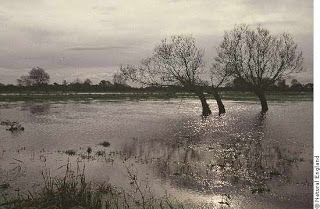
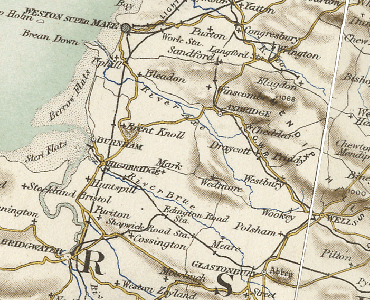
The Hodges and Lancasters were wealthy and armigerous families, and the aim of their tenants was an intermarriage with them. A route to this would be to intermarry with such as the Counsells. The Harris family were yeomen tenants of the Hodges, in Wedmore, and the Lancasters (and/or Hodges), in nearby Cheddar. They would have been cattle farmers, who lived in a swampy, misty place. The Counsells were tenants of the Hodges. In the chancel of St Mary, Wedmore, against the north wall is a small stone monument commemorating George Hodges, Esq. On a grave stone in the nave floor: ‘To the pious memory of William Counsel, of East-Stoughton in the parish of Wedmore, who died June 4, 1671’. It was a mark of some status to be buried within the church.

COUNCIL. The standard parish register entry reads Cowncell, and in the majority of deeds, Counsell.
1.
1.1. William Counsell.
1.1.1. George Counsell, bapt. 15 July 1584, m. 2 July 1607, Margery Wyke. The relationship betw. Margery Wyke and Edward Wiche, who m. Sara Chapman, 9 Feb. 1640, in Bridgwater (St Mary), 16 mls fr. Wedmore, can not be known. As I have noted elsewhere, Edward Wiche was the ancestor of Abigail Wyche, who m. George Brewer (4 March 1734), son of George Brewer and Sarah Lanier, half-sister of Sampson Lanier Sr., who m. Elizabeth Washington; their son, Thomas Lanier, m. Anne Maclin, dau. of William Maclin Sr. and Katherine Brewer.
1.2. John Cownsell, m. (1) Margaret Browninge, 28 April 1567; (2) Joan Thurston, 13 Aug. 1573, relict of Thomas Hayne, m. 24 May 1565.
1.2.1. Richard Cownsell, bapt. 4 Apr. 1568 (of Westham, parish of Wedmore). PROB 11/104/18, 4 May 1604.
1.2.2. John Counsell, bapt. 25 Dec. 1569. Francis & Blanche James to John Counsell, lease. Somerset Heritage Centre (S.H.C.), ref. DD\GB/83/1. 1613.
1.2.2.1. Alice Cownsell, bapt. 18 Feb. 1588, m. Thomas Huchens, 14 Oct. 1605.
1.3.1. John Cownsell, bapt. 28 Jan. 1599.
1.3.2. Richard Cownsell, bapt. Feb. 2. 1601.
1.3.3. William Cownsell, bapt. 28 Jan. 1604. (Westham). Counsell v Tibbett. Plaintiffs: Matilda Counsell widow and Elizabeth Norvell spinster. Defendants: Benjamin Tibbett, Magdalen Tibbett his wife and John Hellier. Subject: property in Barrow, Somerset, nr. Wedmore. (Nat. Arch. (N.A.) ref. C 6/110/17. 1650).

1.4. John Cownsell, bapt. 1573.
1.4.1. John Cownsell, bapt 28 Nov. 1601, ‘f. Joannis Counsell’, m. Mary Coomer, 26 Nov 1631; the sister of Agnes Coomer, who m. John Harris in the adj. parish of Cheddar, 4. Feb. 1635. Their granddau. m. a member of the Hix family, stewards of the Lancasters. The vastly intertwined nature of family associations is evidenced through the Coomers. Mary and Agnes Coomer were daughters of a John Coomer, sisters of John Coomer, and aunt of his issue: John Coomer (father of another John), William Coomer Sr., Thomas Coomer, and Mary Coomer, who m. John Gardner, 24 Oct. 1664, in Cheddar; br. of Joel Gardner, father of Jane Gardner, who m. James Counsell, likely br. of Hodges Counsell, 12 Jun. 1682, in Cheddar. (See Presentments of churchwardens, etc. Cheddar (Peculiar, etc.). 1662-1701. Marriage Bond: James Counsell of Burrington, husbandman, and Jane Gardner, daughter of Joel Gardner of Cheddar. (S.H.C./ DD\SAS/C795/PR/150).

Jane Gardner was the sister of Elizabeth Gardner, who m. George Tibbits, May 1678, in Cheddar, sister of Hester Tibbits, who m. Thomas Harris, 24 Apr. 1679, in Cheddar; this Thomas I presume to be a son of the aforesaid John Harris and Mary Coomer. The Tibbets were not insubstantial; George Tibbits Jr. leased land from Thomas and Mary Tillam (the relict of William Rose), 28 Oct. 1728 (S.H.C./DD\WCL/33(a). George Tibbits Sr. was the br. of Henry and John, who leased the same land from Mary Rose, da. of John Lancaster, lord of the manor (S.H.C./DD\WCL/20). William and Mary Rose also leased land to John Coomer, the third so mentioned above, 15 Dec. 1698 (S.H.C./DD\WCL/13a). The Tibbit brs. were the sons of John Tibbit, who was admitted to the manor of Cheddar, 14 Nov. 1671, at the manorial court of Edward Lancaster, father of John, receiving ‘for their lives in survivorship of the cottage of Old Auster and stable and orchard adjourning in Dolebridge Street in Cheddar’. (S.H.C./DD\WCL/5). The da. of Mary Lancaster/Rose/Tillam, Mary Tillam, leased to ‘George Marshall of Chedder yeoman … a pasture commonly called Violetts containing 3 acres within the mannor and parish of Cheddar … ‘heretofore in the tenure of Thomas Comer deceased’. (S.H.C./DD\WCL/37). Mary Tillam also leased to William Counsell, yeoman (probable nephew of Hodges Counsell, ‘all that ½-acre of Arrable land lying at a place called Innock’, 20 Jan. 1720. (S.H.C./DD\WCL/25). The Gardners were intermarried with the Marshalls, Elizabeth Gardner m. William Marshall, 21 Dec 1696.

Will of John Comer of Cheddar, yeoman. 24 Jan 1716. Bequeathing (a) to his son, John Comer, all that tenement late Adams, all his ground at Cowhams in Chedder, 2 acres of pasture, late Roses, lying at Holwell in Chedder; (b) to his daughter, Sarah Comer, all his ground at Locking and £150 to be paid to her within half-a-year of his decease; (c) to his daughter, Anne Comer, all his ground at Loxton, and £150 to be paid with half-a-year of his decease on her delivering up to her brothers a Bond she has and forgiving what interest there may be due on it; (d) to his son, James Comer, all his Leaseholds, i.e. late Jefferys of Chesbrook and 2 acres of arrable ground in the Common feild late Roses in Cheddar; and all the rest of his mortgages, goods and chattles not before mentioned and given, he gives to his sons James and John Comer equally between them. Probate granted 20 Oct. 1722. (S.H.C./DD\WCL/23a).

I have laboured these details so as to evidence the kinship nature of the associations of Virginia colonists, who were as much subject to events in England as those in England were subject to events in Virginia. A ‘good’ marriage in one place reverberated to the other. Colonists and English kin were seperated by an ocean; only a slowing of cause and effect. Many colonists intended to return to England, having made their fortune, migration being a temporary expedient. It is such considerations, surely, that are pertinent to understanding colonisation as a social enterprise, as a part of a method of promoting the interests of families through their kinship connections; as part of the method of genealogical enquiry.

1.4.2. Johanna Cownsell, bapt. 28 Nov. 1601 (twin), m. (1) Philip Lawrence, 20 Aug. 1618, (2) John Chapman, 26 April 1624.
1.4.2. Edward Cownsell, bapt. 6 June 1609.
1.4.3. William Cownsell, bapt. 5 Aug. 1610, m. Mary Hayne.
1.4.4. Richard Cownsell, bapt. 3 Sept. 1613 (Blackford vill. par. Wedmore), m. (1) Joan Taylor, 12 Aug. 1640, (2) Elizabeth Hix, 12 Aug. 1647, dau. of William Hix and Grace Morton, m. 23 Jan. 1625, and niece of Margaret Hix, who m. Simon Day, 14 Jan. 1632. Lease: Margery Hodges of Heathhouse, Wedmore, widow, to Richard Counsell of Wedmore, husbandman and Joan his wife. Wiltshire and Swindon History Centre. ref. 2667/1/36/2. 1648. Sale: 15a. land occ. by Thos. Brooke, 2a. land occ. by Hy.Symes,* mess. and ten. and 40a. land occ. by Rich. Council, all in Wedmore, sold by co-heirs of Geo. Hodges to Wm. Prowse of Compton Bishop. Somerset Heritage Centre, ref. DD\FD/10. 1665. *Uncle of Richard Symes, father of Adam Symes (See N&Q, 1890), father of George Sims, of Brunswick Co.; d. Sept. 1763; who bought land from his br. John Sims, on 5 Nov. 1747,father of Adam Sims, who m. Elizabeth Walton, da. of George Walton of Brunswick Co., and who was, thus, the br.-in-law of Nathan Harris, grandson of Thomas Harris, d. 1688, and br. of West Harris.
1.4.4.1. Hodges Council, the very likely son of Richard Council, by either his first or second wife. Richard Counsell was the br.-in-law of Susan Lancaster, and Hodges Counsell may have received his Christian name after her husband, William Hodges, a member of the very influential Hodges family, squires of Wedmore, who was probably his Godfather.

Hodges Council, d. bef. 9 Aug. 1699, was named as the husband of Lucy Hardy in the Will of John Hardy, who had married Alice Bennett (B. 2, p. 419); of the Bennett family of Wivelscombe, Somerset, intermarried with the Harris family of Wedmore/Cheddar. It may be of interest to record that Hodges Council, as follows, was a probable br. of 1. Joseph Council, who married into the same Thatcher family as did the Harris: James Thatcher of Barrington, yeoman, to Joseph Counsell of Cocklake in parish of Wedmore, husbandman: in cons of marriage shortly to be solemnized between Counsell and Thatcher’s daughter Joane: Signed: Joseph Counsell. Seal: merchants. Bristol Record Office, ref. 21789/5. 18 May 1681. 2. William Counsell. Lease: By William Rose of Cheddar and Mary his wife one of the daughters and coheirs of John Lancaster of Milverton Esqr. deceased to Samuel Leonard of Wedmore … ½-acre in Stoneshill the land of William Counsell on the East side … the land of Edward Counsell in the West side … All which … are parcell of the Manor of Cheddar Fitzwaters. Somerset Heritage Centre, ref. 12. 10 May 1698. 3. Edward Counsell. 4. James Counsell, as given.

1.4.4.1.1. Hodges Council, inherited land on Blackwater. IOW, B 10, p. 205: John Council of Isle of Wight County and Province of Virginia sold to James Council of said county and his heirs forever, “my plantation whereon I now dwell only excepting my life in plantation” on Blackwater (River) 100 acres more or less joining Benjamin Darden and Samuel Vaughn. Part of “Patien” granted Hodges Council (the 2d) and by his will to his son John Councill and now by said John Councill to his son James Councill, to him & his heirs forever to have & hold. Sig. John Council. Wit. John Benteen, Nathan Council. Rec. 2 May 1756. Richard Worrell and wife Patience to James Kitching, dated 8 Apr. 1756, 174 acres on the south side of the Blackwater Swamp adj. William Harris, Thomas Gray, and John Barnes (part of a patent to Lewis Bryan for 345 acres who sold to Robert Tayler and was sold to sd. Richard), S: Richard Worrell and Patience Worrell. W: Joseph Denson, John Johnson, and Nathan Council. (Southampton Co., B. 2, 1753-1760, p. 97). William Harris to Nathan Council of IOW Co., dated 8 Apr. 1756, 100 acres adj. Bridgman Joyner Jr. S: William Harris, W: Jesse Jones, Sarah King, and James Kitchen. (ibid. pp. 97-98).
Joseph Willis of Halifax to Jos. Daniel of same, 6 Sep. 1777, £8, 30a on E sd Rockey Sw, adj. Thomas Wright. wit Isham Rosser, Nathan council. Rec. Nov. 1778.
1.4.4.1.2. John Council, inherited from his father ‘the land I bought of Robert Lawrence’; likely the son of Philip Lawrence, who m. Joan Council, 20 Aug. 1618, Wedmore, the probable great- aunt of Hodges Council Sr. John Council d. bef. 1747, m. Josie Willis. John Council of Newport Parish to John Mackall of the same, 300 acres in Newport Parish (being land John Hardy of the lower parish willed to his dau. Lucy Council, who was the mother of the said John Council), on the southeast side of John Fulgram’s Swamp, adjoining William Westray and William Joyner. Wit. William Greene, Henry Pitt and John Council. Rec. 26 Feb. 1710.
1.4.4.1.3. Christian Council, m. Edward Bryan. (ibid. p. 409).
1.4.4.1.4. Hardy Council, d. 1750, m. Susannah Pope. Executor: son, Charles; Witnesses: Robert Johnson, Hardy Lawrence, and Jacob Dickinson. Hardy Council, Gent. to Richard Wooten and wife, Lucy Wooten, and their son, William Wooten, as consideation of a law suit over trepass, 500 acres on Beaver Dam Swamp. Wit: Barnaby Kearney, Christopher Reynolds, Hardy Council, John Pitt. (B. 4, p. 98. Rec. 22 Mar. 1730).
1.4.4.1.4.1. Charles Council.
1.4.4.1.4.2. Mary m. Phillip Brantley.
1.4.4.1.4.3. Ann, m. Robert Lawrence.
1.4.4.1.4.4. Martha m. William Fowler.
1.4.4.1.4.5. Christian, m. William Daughtrey.
1.4.4.1.5. Lucy (Council) Wooten.
1.4.4.1.6. Robert Council, d. 1 June 1730, IOW, m. Katherine Johnson. James Harris of Halifax Co. (see as follows), m. Elizabeth Norfleet, whose grandfather held land adj. Robert Council and Thomas Turner.

The aforementioned John Harris, husband of Agnes Coomer, sister of Mary Coomer, the likely aunt of Hodges Council, was the uncle of:

1. Thomas Harris.
1.1. Thomas Harris, bapt. 31 Dec. 1637, Cheddar, ‘son of Thomas’, probably he who d. in 1688, in Virginia. Thomas Harris: Leg.-son Edward; son John; son Thomas; son Robert; daughter Jane Jones; daughter Ann; son Robert to live with John Fulgham; son George with John Turner; son Martin with his brother; son William with Bridgman Joyner; pr. 9 Oct. 1688.
1.1.1. Robert Harris, m. Anne Fulgham, da. of Michael Fulgham, of Pitminster, Somerset. Susannah Fulgham, Anne’s sister, m. Hardy Council, son of Hodges Council and Lucy Hardy. Hardy Council was the br. of Hodges Council Jr., who m. Rebecca Pope.
1.1.2. Edward Harris, Will pr. 25 March 1734.
1.1.2.1. James Harris, d. 1749, br.-in-law of Matthew Joyner.
1.1.2.1.1. James Harris. (Thomas Norfleet (m. Ruth Blount) bought adjoining land from Robert Council (NC. Edg. Co. D.B. 1., p. 204), and was mentioned as a neighbour of Robert Council and Thomas Turner (J. Bryan Grimes, Abstracts of North Carolina Wills, p. 17). His son was Marmaduke Norfleet, father of Elizabeth Norfleet, who m. James Harris in Halifax Co, NC., son of: James Harris. 10 Jan. 1749. Feb. Court, 1749. Sons: James (‘my plantation’), Eli. Wife and Executrix: Cheary (sister of Mathew Joyner*). Executor: Mathew Joyner. Witnesses: Wm. Skinner, John Blount, John Crumpton. (ibid, p. 153). Henry Turner: Jan. 20, 1748. Feb. Court, 1748: Executor: Matthew Joyner. Witnesses: Matthew Joyner, James Harris, Marmaduke Norfleet. (ibid. p. 382). *Son of Thomas Joyner, Will dated 13 April 1740; the son of Thomas Joyner (br. of Bridgeman Joyner, the guardian of an orphan of Thomas Harris, d. 1688).
1.1.2.1.1.1. James Harris m. 1. Temperance Williams: Martha Joyner witnessed the will of Temperance Williams, wife of James.
1.1.3. George Harris.
1.1.3.1. William Harris. William Harris and wife Charity of Halifax County, North Carolina to John Council, dated 11 Oct, 1764, 1. 100 acres on the north side of Black Creek adj. Capt. Joseph Godwins old line and Gum Branch (patent to Barnaby McInnie who sold it to George Harris who gave it to his son William, 2. 113 acres adj. Long Branch ; part of patent to Joseph Godwin on 25 Jul. 1746 who sold to John Bowin who sold to sd. William). S: William Harris and Charity Harris. W: Henry Pope, Simon Harris, and William Kitchen. Halifax County, vol. 1, 1758-1774, pp. 304-306. I William Harris … lend to my daughter Prudence Pope who is now living in Virginia my negroe girl slave named Jeney during her natural life and after her death she & her increase to be equally divided amongst the rest of my children. May Court 1772. (ibid. p. 317). Prudence (Harris) Pope was the sister-in-law of John Pope: I Henery Pope … to my loving wife Tabitha Pope one Negroe named Joe and all my household furniture, all my livestock and all my debts due to me … to my oldest son Burrel Pope one plantation … 209 acres & also one negroe Girl named Patt … my younger sons Willis, John, Henry Austin and Wiley Pope all ye rest of my lands & negroes not bequeathed before. April Court 1764. (ibid. p. 144). Paul Heinegg (‘Free African Americans’, vol i., p. 554), shows that ‘Edward Gowen in Virginia, taxable in 1761 in his father’s household in the list of Robert Harris. In 1767 he was head of his own household, one Black male, in John Pope’s list. It might seem reasonable to suggest that Robert Harris was a son of William Harris, br. of Simon, and one of ‘the rest of my children’.
1.1.3.1.1. Simon Harris. William Harris to son Simon Harris, dated 4 Apr. 1764, Sells slave, S: William Harris, W: Henry Pope, Hardy Pope, and Salathel Lewis (ibid., p. 331). To Salathel Lewis, dated 10 Oct. 1764, 74 acres adj. Francis Denson and Boone Branch (patent to John Denson the elder who sold to John Sikes and by Joshua his son sold to Hodges Council). S: John Council (grandson of Hodges Council Jr.) and Selah (Worrel) Council, W: Henry Pope, William Joyner, William Joyner, and Daniel Doyle. (ibid., pp. 324-325).
1.1.3.1.1. Robert Harris.

In a very real sense, the continuation of associations between English families in Virginia brought stability, and continued to strengthen bonds in England, which was of no little importance within the squirearchy/tenant system. The bonds between these families was likely to have been closer than can be gleaned; hidden in a Somerset marsh fog.

copyright m stanhope 2016

Posted in Uncategorized | Tagged , , , , , | Leave a comment

VIRGINIA COLONISATION AND BARRIERS OF LANGUAGE

images

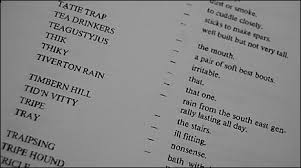
James Jennings (Observations on some of the dialects in the west of England, 1827) made the point that the spoken English of Chaucer treated syllables in the same way as occured in the Somerset dialect north east of the River Parret, which made “two syllables of words which are monosyllables in our polished dialect. And thus the words air, both, fair, fire, stairs, sure, &c. become ayer, booath, feyer, vier, stayers, shower, &c. And thus, 1 have no doubt, they were formerly very generally pronounced, as Chaucer gives many of them as dissyllables”.

He also drew other parallels: “There is also as strong a tendency to pleonasm in some instances, as to contraction and elision in others. Thus we have alost for lost, agone for gone, abought for bought, abrought for brought, &c. Exemplifications of these prefixes will be found in abundance in Chaucer; but he very often uses the y instead of a, as ylost”.

He defended this Somerset dialect agaist charges of inferiority: “Notwithstanding there is an impression very generally entertained, I believe, that this dialect of the west is a very rough and inharmonious one; except in the frequent and unpleasant use of Z for S and V for F, I do not think it will be found so deficient in agreeable sounds as it has been commonly supposed”.

Importantly, he was a student of pronounciation, and “conveyed in letters the nearest to the sound of the words” several poems written in this dialect. He explained his method: “Where I have used the circumflex over the letter a it is to be understood that the sound of the letter is to be exactly like the a in father. I might have adopted the same plan with respect to the vowel o, for the long sound of it, as heard in the words no, gold, &c.; which is, for the most part, like aw in the word awful, but, as it is very easy to convey this sound by an additional letter, I have preferred the latter mode”.

That listening was central to his methodology is evidenced in his comments about book-driven lexicography: “Too many of our lexicographers have fallen, in compiling a dictionary from a living language. They have depended too much upon books, and too little upon the use and accepted meaning of words as they are current in the every-day transactions of life. Hence it sometimes happens, that the meaning in a dictionary is at variance with the use of the word in society; and it has happened, too, that many words are current in society, which no lexicographer has arrested, but which are nevertheless useful words. Books are not, in fact, the only sources whence information of this kind should be derived”. He further commented: conjectural etymologies are, in too many instances, calculated to mislead”.

He makes a point that can be expanded: “It is remarkable that few, if any, dictionaries of our language are to be obtained which were published from the invention of the art of printing in the middle of the fifteenth century and during the whole of the sixteenth, a period of about one hundred and fifty years. These dictionaries would, no doubt, throw considerable light on our early literature and provincial words. It is true some scarce copies of such works are to be found, I understand, in the cabinets of the curious, but they are not accessible to the general reader”.

Dictionaries, plays, and Classical literature were freely available to the university educated, “which were published from the invention of the art of printing in the middle of the fifteenth century and during the whole of the sixteenth”. The salient point being that such publications as replications aided the standardisation of Elizabethan English among the social/intellectual elite.

When historians refer to the English people of this time as an homogenous entity, united in a common opposition to Spain, or enjoying the plays of Shakespeare, they but refer to a ruling elite. The dispossed Catholic half of the country prayed for a Spanish invasion; the vast majority of people would not have understood much spoken by Queen Elizabeth (rallying a homogenous English army!), or, for that matter, anything spoken in a play of Shakespeare; for the general public did not have access to or understanding of the written word, and were thus excluded from the process of the harmonisation of the English language. They lived in idiosyncratic and remote islands of dialect, and, when migrating to London, tended to live in single-dialect communities, much the same as in modern cities.

Idiosincracy was a key key element in distinguishing the English of the elite from that of the masses, for not only were the sounds of various English dialects almost alien to each other, these dialects also contained words which were not shared: Dialects differed in substance as well as form, with area-specific words reflecting ancient colonisations by different ethnic groups.

It is one thing in the luxury of time to reflect on the common origin of words, and another to suppose in the instance of their delivery that they would be understood by all.

Mr. Jennings entreats: “To a person, therefore, acquainted with this dialect, who has leisure, and who should feel disposed to go through a course of study amongst our old writers, and who has an opportunity of examining our old MSS., an abundant harvest offers, from which an amusing book might be made, illustrative of many of our provincial words and of our ancient manners. But such leisure, whatever may be my disposition, does not fall to my share; the compilation of such a work must be left to some more fortunate individual than myself. I must be contented with having thus far elucidated the language of my native county”.

He provides a valuable glossary of words (extracts of which are given), which can be compared and contrasted with Chaucer, and those of other regional dialects:

GLOSSARY OF WORDS COMMONLY USED IN THE COUNTY OF SOMERSET; BUT WHICH ARE NOT ACCEPTED AS LEGITIMATE WORDS OF THE ENGLISH LANGUAGE;OR WORDS WHICH, ALTHOUGH ONCE USED GENERALLY, ABE NOW BECOME PROVINCIAL.

A. adv. Yes. A is also frequently used instead of the pronoun he: as a zed a’d do it; he said he’d do it.
Abrood’. adv. When a hen is sitting on her eggs she is said to be abrood.
Agoo’. I Ago; agoo, Chaucer; from the verb to goo, i. e. to go; he is up and agoo; he is up and gone.
Aller. s. The alder tree.
Anby’. adv. Some time hence; in the evening.
Apast’. part. and prep. Past; apast, Chaucer.
To Ar’gufy. v. n. To hold an argument; to argue.
Assu’e. adj. When a cow is let up in order that she may calve, she is said to be assue — having no milk.

To Ballirag. v. a. To abuse with foul words; to scold.
To Bane. v. a. To afflict with a mortal disease: applied to sheep.
Barrow-pig. s. A gelt pig.
Be’edy. s. A chick.
Befbr’n. prep. Before.
Begrum’pled. part. Soured; offended.
To Belg. v. n. To cry aloud; to bellow.
To Belsh. v. a. To cut off dung, &c. from the tails of sheep.
To Bethink’. v. a. To grudge.
Bettermost. adj. The best of the better; not quite amounting to the best.
To Biv’er. v. n. To quiver; to shake.
Blanker. s. A spark of fire.
Bleachy. adj. Brackish; saltish: applied to water.
Booath. pron. Both. “Boo’ath o’ ye;” both of you.
Brock. s. An irregular piece of peat dried for fuel.
Bullen, adj. Wanting the bull.
To Bunt. v. a. To separate flour from the bran.
Bur’cot. s. A load.
Buss. s. half-grown calf.

Chaity. adj. Careful; nice; delicate.
To Cham. v. a. To chew.
Chamer. s. A chamber,
Change. s. A shift; the garment worn by females.
Chit’terlins. s. pi. The frills around the bosom of a shirt.
Choor. A job; any dirty household work.
To Claps. v. a. To clasp.
Clavy. s. A mantel-piece.
Clinker-bell. s. An icicle.
Clint. v. a. To clench; to finish; to complete.
Clear-and-sheer. adv. Completely; totally.
Cock-lawt. A garret; cock-loft.
Cock-and-Mwile. s. A jail.
Colley. s. A blackbird.
Cow-baby. s. A coward; a timid person.
Creem. s. Sudden shivering.
Croom. A crumb; a small bit.
Crow’sty. adj. Crusty, snappish, surly.
Cutty. adj. Small; diminutive.

To Daver. v. n. To fade; to fall down; to droop.
Dibs. pl. Money.
To Dout. v. a. To extinguish; to put out.
To Downarg. v. a. To contradict; to contend with.
Drang. s. A narrow path. To Drash. v. a. To thresh.
To Drean. v. n. To drawl in reading or speaking. (A feature of this Somerset dialect).
Drode. part. Thrown.
To Drool. v. n. To drivel.
Drove. s. A road leading to fields, and sometimes from one village to another.
To Druck. v. a. To thrust down; to cram.
Drubbin. s. A beating.
To Dud’der. v. a. To deafen with noise; to render the head confused.
Duds. s. Dirty cloaths.

Emmet-batch, s. An ant-hill.
En. pron. Him; a zid en; he saw him.
Few. adj. More commonly pronounced veo.
Fil’try. s. Filth; nastiness; rubbish.
Flap-jack. A fried cake made of batter, apples, &c.; a fritter.
To Frump, v. a. To trump up.
To Fur. v. a. To throw.
Fur’cum. s. The bottom; the whole.

To G’auf. v. n. To go off.
To G’ auver. v. n. To go over.
To G’ in. v. n. To go in.
To G’ on. v.n. To go on.
To G’ out. v. n. To go out.
To G’ under. v. n.. To go under.
To G’ up. v. n. To go up.
Ginnin. Beginning.
G’lore. adv. In plenty.
Graint’ed. adj. Fixed in the grain; difficult to be removed.
Grammer. s. Grandmother.
Grithle. s. A young apple-tree raised from seed.
To Gud’dle. v. n. To drink much and greedily.

To Hain. v. a. To exclude cattle from a field in order that the grass may grow, so that it may be mowed.
Ham. s. A pasture generally rich, and also unsheltered.
Hard. adj. Full grown. Hard people, adults.
To Have. v. n. To behave.
Hay’ty-tayty. Interj. What’s here!
Heft. s. Weight.
To Hell. v. a. To pour. To hell in, to pour in;
Herence, adv. From this place; hence.
Hereright, adv. Directly; in this place.
Het, pron. It.
Het o’nt, it will not.
To Hick. v. n. To hop on one leg.
To Hike off. v. n. To go away; to go off.
Hollardy-day. Holy-rood day; the third of May.
Huck’muck. s. A strainer placed before the faucet in the mashing-tub.
Hum’drum. s. A small low three-wheeled cart, drawn usually by one horse; used occasionally in agriculture.

To Jee. v. n. To go on well together.
Jod. s. The letter J.

Keffel. s. A bad and worn out horse.
To Kern. v. n. To turn from blossom to fruit.
Kexies. As dry. as a kexy is a common simile.
Knot’tlins. s. pi. The guts of a pig or calf prepared for food by being tied in knots and afterwards boiled.

Lai’ter. s. The thing laid; the whole quantity of eggs which a hen lays successively.
Lam’iger. adj. Lame; crippled; laid up.
Larks-leers. s. pi. Arable land not in use; such is much frequented by larks; any land which is poor and bare of grass.
Lat’itat. s. A noise; a scolding.
Leathern-mouse. A bat.
Leer. adj. Empty.
Leer. s. The flank.
Lighting-stock. s. A horse-block; a graduated place of wood or stone, made to ascend and descend from a horse.
To Line. v. n. To lean; to incline towards or against something.

Lin’ny. An open shed, attached to bams, outhouses, &c.
Lock. s. A small quantity; as a lock of hay, a lock of straw.
Lockyzee! interj. Look, behold! Look you, see.
Lug. s. A heavy pole; a pole, a long rod.

Mang-hangle. adj. Mixed in a wild and confused manner.
To Meech. v. n. To play truant; to absent from school.
Messin. The act of serving cattle with hay.
Min. A low word, implying contempt, addressed to the person to whom we speak, instead of Sir. I’ll do it, min.
Mom’met. s. A scarecrow; something dressed.
To Moot. v. a. To root up.

Nan. interjec. Used in reply, in conversation or address, the same as Sir, in polite company, when you do not understand.
Nap. s. A small rising; a hillock.
Nawl-cut. s. A piece cut out at the navel: a term used by butchers.
Nestle Tripe. s. The weakest and poorest bird in the nest; applied, also, to the last-born, and usually the weakest child of a family;any young, weak, and puny child, or bird.
Nora’tion. Rumour; clamour.
Nor’thering. adj. Wild, incoherent, foolish.
Not-sheep. s. A sheep without horns.
Num’met. A short meal between breakfast and dinner
Nuncle. s. An uncle.
To Nuncle. v. a. To cheat.
Nuth’er. adv. Neither.

To Onlight. v. n. To alight; to get off a horse.
Ont. Will not. This expression is used in almost all the persons, as ont, he ont, we ont.
Oten. adv. Often.
Ourn. pron. Ours.
To Overget. v. a. To overtake.
To Overlook. v. a. To bewitch.
Overs. s. pi. The perpendicular edge, usually covered with grass, on the sides of salt-water rivers, is called overs.
Parfitly. adv. Perfectly.
Par’rick. s. A paddock.
To Payze. v. a. To force, or raise up, with a lever.
To Peach. v. a. To inform against; to impeach.
Peel. s. A pillow, or bolster.
To Peer. v. n. To appear.
Pigs-looze. s. A pigsty.
Pill-coal. v. A kind of peat, dug most commonly out of rivers: peat obtained at a great depth, beneath a stratum of clay.
To Pitch. v. a. To lay unhewn and unshaped stones together, so as to make a road or way.
To Pixy. crop is taken in; to glean, applied to an orchard only.
Pla’zen. s. pi. Places.
Plough. The cattle or horses used for ploughing; also a waggon and horses, or waggon and oxen.
To Pray. v. a. To drive all the cattle into one herd in a moor; to pray the moor, to search for lost cattle.
Pud. s. The hand; the fist.
Pulk. s. A small, shallow-place, containing water.
Put. s. A two-wheeled cart used in husbandry, and so constructed as to be turned up at the axle to discharge the load.
Pux’ie. s. A place on which you cannot tread without danger of sinking into it: applied most commonly to places in roads or fields where springs break out.
Pwint. s. Point.
Pwine-end. The sharp-pointed end of a house.

To Quar. v. a. To raise stones from a quarry.
Quar-man. A man who works in a quarry.
Quine. s. Coin, money.
To Quine. v. a. To coin.
Quine. A corner.

Rames. s. pl. The dead stalks of potatoes.
Ram’ping. part. Distracted, obstreperous: ramping mad, outrageously mad.
Raught. part.
To Rawn. v. a. To devour greedily.
Re’balling. s. The catching of eels with earthworms attached to a ball of lead, suspended by a string from a pole.
Remlet. s. A remnant.
Rev’el. s. A wake.
Rud’derish. adj. Hasty, rude, without care.
Rum’pus. s. A great noise.

The sound of S is very often converted into the sound of Z.

Sand-tot. A sandhill.
To Sar. v. a. To serve.
Seed-lip. s. A vessel of a particular construction in which the sower carries the seed.
Sel’times. adv. Not often; seldom.
Shatt’n. Shalt not.
Shil’lith. A shilling’s worth.
Shord. A sherd; a gap in a hedge. A stop.
To Shroud; to cut off wood from trees generally.
To Sim. v. n. To seem, to appear. This verb is used with almost all the persons.
To Skag. To give an accidental blow, so as to tear either the cloaths or the flesh; to wound slightly.
To Skeer. v. a. To mow lightly over: applied to pastures which have been summer-eaten, never to meadows.
Skeer’ings. s. pl. Hay made from pasture land.
Skent’in. adj. When cattle, although well fed, do not become fat, they are called skentin.
Skiff-handed. adj. Left-handed, awkward. Chaucer, Second Merchant’s Tale. Skram-handed.
Slait. An accustomed run for sheep; hence the place to which a person is accustomed.
Slipper-slopper. adj. Having shoes or slippers down at the heel; loose.
To Slitter. v. n. To slide.
To Slock. v. a. To obtain clandestinely.
To Slock’ster. v. a. To waste.
Slom’aking. adj. Untidy; slatternly: applied to females.
Snead. s. The crooked handle of a mowing scythe.
Snock. s. A knock; a smart blow.
Snowl. s. The head.
Squot. A bruise, by some blow or compression; a squeeze.
Stake-Hang. s. Sometimes called only a hang. A kind of circular hedge made of stakes, forced into the sea-shore, and standing about 6 feet above it, for the purpose of catching salmon, and other fish.
Stang. A long pole.
Stefinin. A ford made with stones at the bottom of a river.
Stitch. s. Ten sheaves of corn set up on end in the field after it is cut; a shock of corn.
To Stive. v. a. To keep close and warm.
To Stiv’er. v. n. To stand up in a wild manner like hair; to tremble.
Stomachy. adj. Obstinate, proud; haughty.
Su’ent. adj. Even, smooth, plain.
To Sulsh. v. a. To soil; to dirty.
Sweetortin. Courtship.

Ta’e’ty. A potatoe.
To Tang. v. a. To tie.
Tee’ry. adj. Faint, weak.
Than. adv. Then.
Thauf. conj. Though, although.
The’rence. adv. From that place.
Thic. pron. That. Thilk, Chaucer.
To Tine. v. a. To shut, to close; as, tine the door; shut the door. To inclose; to tine in the moor, is to divide it into several allotments.
Tite, s. Weight. The tite of a pin, the weight of a pin.
Touse. s. A blow on some part of the head.
Towards. prep. is, in Somersetshire, invariably pronounced as a dissyllable, with the accent on the last: to-ward’s. Our polite pronunciation, tordz, is clearly a corruption.
Tut-work. Work done by the piece or contract; not work by the day.
To Twick. v. a. To twist or jerk suddenly.
Twily. adj. Restless; wearisome.

Unk’et. adj. Dreary, dismal, lonely.
To Unray’. v. a. To undress
Up’pin-stock. s. A horse-block.
Utch’y. pron. I. This word is not used in the Western or Eastern, but only in the Southern parts of the County of Somerset. It is, manifestly, a corrupt pronunciation of Ich, or Iche, pronounced as two syllables, the Anglo Saxon word for I. What shall utchy do?

I think Chaucer sometimes uses iche as a dissyllable; vide his Poems passim. Ch’am, is I am, that is, ich am; ch’ill, is I will, ich will. See Shakespeare’s King Lear, Act. IV. Scene VI. What is very remarkable, and which confirms me greatly in the opinion which I here state, upon examining the first folio edition of Shakespeare, at the London Institution, I find that ch is printed, in one instance, with a mark of elision before it thus, ‘ch, a proof that the i in iche was sometimes dropped in a common and rapid pronunciation. In short, this mark of elision ought always so to have been printed, which would, most probably, have prevented the conjectures which have been hazarded upon the origin of the meaning of such words as chud, chill, and cham. It is singular enough that Shakespeare has the ch for iche I, and Ise for I, within the distance of a few lines in the passage above alluded to, in King Lear. But, perhaps, not more singular than that in Somersetshire may, at the present time, be heard for the pronoun I, Itchy, or iche, and Ise. In the Western parts of Somersetshire, as well as in Devonshire, Ise is now used very generally for I. … which is the sound we give to frozen water, ice.

To Vang. v. a. To receive; to earn.
Vare. s. A species of weasel.
To Vare. v. n. To bring forth young: applied to pigs and some other animals.
Var’mint. s. A vermin.
Vell. s. The salted stomach of a calf used for making cheese.
Vier. s. Fire. Some of our old writers make this word two syllables: “Fy-er.”
Vin’ned. adj. Mouldy; humoursome; affected.
Vit’ty. adv. Properly, aptly.
Vollier. s. Something which follows; a follower.
Vooath. adv. Forth; out. To goo vooath, is to go out.
To Vooase. v. a. To force.

To Wam’mel. v. n. To move to and fro in an irregular and awkward manner.
Weepy, adj. Abounding with springs; moist.
Well-apaid. adj. Appeased; satisfied.
Wetshod. adj. Wet in the feet.Wev’et. A spider’s web.
Whatsomiver. pron. Whatsoever!
Wimmin-dust. Chaff.
Win’dor. s. A window.
With’er. pron. Other.
With’erguess. adj. Different.

Yalhouse. s. An ale-house.
Yarm. s. Arm.
Yarth. s. Earth.
Yel. An eel.

Z. See the observations which precede the letter S, relative to the change of that letter to Z.

Zam’zodden. Time in a low heat so as to be in part spoiled, is said to be zamzodden.
Zel. pron. Self.
Zog. s. Soft, boggy land; moist land.
Zull. s. The instrument used for ploughing land; a plough.
Zunz. adv. Since.

THE MAN OF MORK.

Awa wi’ all yer tales o’ grief
An dismal storry writin
A ma-be zumthin I ma zing
Ool be as much delightin.

Zumtime agoo, bevaur tha moors war tin’d in
lived at Mork one Jerry Nutty.

Iz vather in a little cot liv’d, auver-right tha moor
An thaw a kipt a vlock o’ geese
A war a thoughted poor.

A niver teach’d tha cris-cross-lain
Ta any of his bways
An Jerry, mangst the rest o’m did
Not much appruv his ways.

Vor Jerry zumtimes went ta church
Ta hire tha Pason preach
An thawt what pity that ta read
Izzel a cood’n teach.

Vor than, a zunday aternoon
Tha Bible, or good book
Would be companion vit vor’m all
Who choos’d therein ta look.

Bit Jerry than tha naise o’ geese
Bit little moor could hire
An daly goose-aggs ta pick up
Droo-out tha moor did tire.

A dten look’d upon tha hills
An stickle mountains roun
An wish’d izzel upon ther taps
What zights a ood be boun!

Bit what did mooast iz fancy strick
War Glassenberry Torr
A always zeed it when tha zun
Gleam’d wi’ tha mornin stor.

O’ Well’s grate church a oten hired
Iz fancy war awake
An zaw a thawt that zoon a ood
A journey to it make.

An Glassenberry’s Torr, an Thorn
The hawly blowth of which
A hired vrom one and tother too
Tha like war niver jitch!

Bit moor o’ this I need not za
Vor off went Jerry Nutty
In hiz right hon a wakin stick
An in hiz qut a tutty.

Now, lock-y-zee! in whimly dress
Trudg’d chearful Jerry on
Bit on tha moor not vur a went
A made a zudden ston.

Which wa ta goo a cood not thenk
Vor there war many a wa
A put upright iz walking stick
A vall’d ta tha zon o’ da.

Ta tha suthard than iz wa a took
Athert tha turfy moors
An zoon o’ blissom Cuzziton
A pass’d tha cottage doors.

Tha maidens o’ tha cottages
Not us’d strange vawk to zee
Com’d vooath and stood avaur tha door
Jer wonder’d what cood be.

Zum smil’d, zum whecker’d, zum o’m blish’d
“Od dang it!  Jerry zed
What do tha thenk that I be like?”
An nodded to’m iz head.

“Which is tha wa to Glassenberry?
I’ve hired tha hawly thorn
War zet there by zum hawly hons
Zoon ater Christ war born”.

“An how can you, a seely man
Jitch seely journey make?
What! dwont ye knaw that now about
It is the midst o’ June?
Tha hawly thorn at Kirsmas blaws —
You be zix months too zoon”.

“Goo whim again, yea gawky! goo!
Zaw zed a damsel vair
As dewy mornin late in Ma
An Jerry wide did stare.”

“Lord Miss!” zed he, I niver thawt
O’ Kirsmas! — while I’ve shoes
To goo back now I be zet out
Is what I sholl not choose.”

“Ih zee the Torr an hawly thorn
An Glassenberry too
An, nif you’ll put me in tha wa
I’ll gee grate thanks ta you.”

“Goo droo thic veel an up thic lane
An take tha lift hon path
Than droo Miss Crossman’s backzid strait
Ool bring ye up ta Wrath.”

Now mine, whaur you da turn again
At vanner Veal’s long yacker
Clooase whaur Jan Lide, tha cobler  lives
Who makes tha best o’ tacker.”

“You mist turn short behine tha house
An goo right droo tha shord
An than you’ll pass a zummer lodge
A builded by tha lord.”

“Tha turnpick than is jist belaw
An Cock-hill strait avaur ye.”
Za Jerry doff’d his hat an bow’d,
An thank’d to vor er storry.

Bit moor o’ this I need not za,
Vor off went Jerry Nutty;
In hiz right hon-a waktn stick
An in hiz qut a tutty.

Compare this with the “clipped” Yorkshire dialect, and ask whether those of different regions and not party to a university education had any chance of understanding each others’ words in the instance of their delivery. Apart from stark differences in pronounciation, no one outside Somerset would know what was meant by emmet-batch, etc.

COLONIAL SETTLERS OF VIRGINIA LIVED IN COMMUNITIES OF THE KINSHIP OF THE LIKE-TONGUED. (Utch’y zay).

“ON ILKLA MOOAR BAHT ‘AT”.

Wheear ‘ast tha bin sin’ ah saw thee, ah saw thee?
On Ilkla Mooar baht ‘at
Wheear ‘ast tha bin sin’ ah saw thee, ah saw thee?
Wheear ‘ast tha bin sin’ ah saw thee?
On Ilkla Mooar baht ‘at
Tha’s been a cooartin’ Mary Jane
Tha’s bahn’ to catch thy deeath o’ cowd
Then us’ll ha’ to bury thee
Then t’worms’ll come an’ eyt thee up
Then t’ducks’ll come an’ eyt up t’worms
Then us’ll go an’ eyt up t’ducks
Then us’ll all ha’ etten thee
That’s wheear we get us ooan back

Where have you been since I saw you, I saw you?
On Ilkley Moor without a hat
Where have you been since I saw you, I saw you?
Where have you been since I saw you?
On Ilkley Moor without a hat
You’ve been courting Mary Jane
You’re going to catch your death of cold
Then we will have to bury you
Then the worms will come and eat you up
Then the ducks will come and eat up the worms
Then we will go and eat up the ducks
Then we will all have eaten you
That’s where we get our own back

copyright m stanhope 2016

Posted in Uncategorized | Tagged , | Leave a comment

DARWIN HARRIS

somerset-tadmoor-flooded-field

Although the determinants of family alliances in the 17th century appear to the continuing intermarriages within kinship groups; the desire to intermarry into families of a higher social strata (very often, the squirearchy); and the attraction of alliances with the prosperous merchant class, such simple description hides what inner need those determinants served, which was that of survival.

In an overarching sense, the English kinship group of the middling order was a “Darwinian species”, within which individual members combined to promote their survival, and to adapt to their challenging environment. They feared being reduced to the ranks of the landless poor, with the attendant stigma, and the draconian “mercies” of the English Poor Law.

In the harsh world of the Somerset levels, which will be considered anon, the choice of a son-in-law was of vital importance – in families with a preponderance of daughters, they were surrogate sons, who would be expected to assist in times of need and disaster.

A Harris family were established in the Somerset levels, especially in the Wedmore/Cheddar region, which can be decribed in order to gain an understanding of the difficulties they faced.

Wedmore is a Somerset village and parish, situated on slightly raised ground (called a “burtle”) in the Somerset Levels, between the Rivers Axe and Brue, thus being known as the Isle of Wedmore. The parish consists of main villages, such as Allerton, Blackford, and Wedmore, and 14 circling hamlets. It is located 4 miles south of Cheddar, 7 miles west of Wells, and 7 miles north west of Glastonbury. These distances are somewhat misleading as to the geographic nearness of families, in that those living in a nothern hamlet of Wedmore parish looked across an hedgerow to see Cheddar.

Immediately south of Wedmore are the peat-based Tealham and Tadham Moors, part of an extensive grazing marsh, the water table of which is high throughout the the year, with winter flooding being an annual feature of the overflowing of the River Brue. Generally, the whole area is prone to fresh water (and occasional salt water) inundation, the worst recorded example of which was the Bristol Channel floods of 1607, which resulted in the drowning of over 2,000 people, with houses and villages swept away, and an estimated 200 square miles of farmland flooded, and livestock destroyed. In 2013, this area also experienced ruinous levels of flooding.

This area is an important feeding ground for birds, and includes 32 Sites of Special Scientific Interest, which supports a growing tourism industry.

Agriculturally, about 70 per cent is used as grassland. Willow and teazel are grown commercially and peat is extracted.

Historically, Wedmore was a Saxon royal estate. Asser, in his “Life of Alfred”, described how Guthrum, the defeated Viking leader, celebrated his baptism in Wedmore.

The village of Blackford is bisected by a a tributary of the River Cam. Recent works to the riverbanks haved made flooding rarer than previously experienced. Being higher on the water-course, it was an area that supported sheep farming. By 1606 the principal farmers in Blackford were John Andrews and Richard Perry (of the West Country family of Micajah Perry of London), whose family intermarried with that of Symes. (See footnote 1.). In the Domesday Book, the manor is recorded as held by Turstin FitzRolf.

The village of Allerton (“Aelfweard’s settlement”) is situated a few miles southwest of Cheddar.

mapserv

The burial records of Wedmore parish show the Harris to be the neighbours in Allerton of the families of Hodges (1569), Hutchins (1578), Millard (1606), and George (1610). In Wedmore village, they were the neighbours of the Counsells (1583) and Hobbes (1595); and, in Blackford, were neighbours of the Lancasters.

The association of Thomas Harris, deceased in Virginia in 1688, who requested his orphan to be in the care of Hodges Counsell, stemmed from such associations.  The Hodges, Lancaster, and Symes family were the armigerous local squirearchy, around which local tenant families circled, hoping to form a familial alliance.
1. Sir John Symes, lived at Mells, m. Amy, da. of Thomas Horner esq., of Mells. 1.1. John Symes. 1.1.1. Thomas Symes Jr., evidenced here: Symes v Horner. Plaintiffs, Thomas Symes and Merrill Symes his wife. Defendants, Samuel Horner and Philip Horner. Subject: property in Mells, Somerset. (Nat. Arch., ref. C 5/64/111 1672). 1.1.1.1. ‘John Symes late of Montserrat, West Indies’.1.1.1.1.1. Elizabeth Symes (da., not sister), m. a kinsman, Samuel Perry. (See Nat. Arch., ref. C 11/750/12, 1714). 1.1.1.1.1.1. Symes Perry. 1.1.2. Richard Symes (See N&Q, 1890). 1.1.2.1. Adam Symes. 1.1.2.1.1. George Sims, of Brunswick Co.; d. Sept. 1763. He bought land from his brother John Sims, on 5 November 1747, witnessed by Micajah Perry, a cousin. 1.1.2.1.1.1. Adam Sims, m. Elizabeth Walton, da. of George Walton of Brunswick Co., and who was, thus, the br.-in-law of Nathan Harris, grandson of Thomas Harris, d. 1688, and br. of West Harris. (See Horner/Symes); (Somerset Families in Virginia).

It was not always the case of emigrants to Virginia wishing to sever their English connections; many sought to prosper in Virginia so as to return home to be on a more equal footing with their former lanlords.

The following genealogical tables are not constructions; the various registers consulted clearly state, in the majority of cases, the father, and, often, the mother, of the baptised.

They pose a problem of perception, in that familial associations of one branch of a family were “shared” with other relatives, a case in point being the marriage of Richard Harris and Elianor Bennett, at Wivelscombe, sister of Edward Bennett, of Lawne’s Creek; the benefits of this assciation being shared by close kin.

THE DESCENDANTS OF DARWIN HARRIS (THE TRUE HARRIS PROGENITOR REVEALED!).

1. Darwin Harris.
1.1. Thomas Harrys of Mells, carpenter, b. 1494.
1.1.1. John Harris, witnessed a deed concerning Mells in 1555.
1.1.1.1. John Harris, d. 1616, m. Alice, d. 1599, Mells.
1.1.1.1.1. John Harris, bapt. 17 Feb 1587, in Mells (St Andrew), m. 1. Grace Haine, in 1608, in Mells; 2. Mary Tomlin, 9 Nov. 1620, and was bur. 18 Oct. 1636, in Mells.
1.1.1.1.1.1. Thomas Harris, m. Alice West, Oct. 1635, in Nunney (juxta Mells), d. in Charles City in 1677.
At a court held Sept. 13, 1677, administration of the estate of Thomas Harris, deceased, was granted to John Echols and John Hardaway, probable brs.-in-law of the said Thomas Harris. At a court held at Westover, on 17 Feb. 1678, John Hardaway and John Echols, on behalf of the orphans of Thomas Harris, deceased, brought suit against John Bland for 700 pounds of tobacco owed for an ox, which debt Mrs. Sarah Bland confessed to Maj. John Stith, guardian. (Ibid., p. 353).
Alice West was probably she who was bapt. 16 Sept. 1615, in Bath (St Michael), 12 miles from Nunney, and probable dau. of William West, who m. Katharin Pearce, 23 May 1608, in Bath (St Michael).
1.1.1.1.1.1.1. Thomas Harris, bapt. 14 Aug. 1636, in Nunney. A Thomas Harris, on 3 March 1690, petitioned that John Echols be summoned to the next court (ibid., p. 338). This seems to be he who made a deposition in 1692 that he was 25 years old (B. 1, p. 52), and was the son of Thomas Harris, d. 1672, and his second wife, Alice Newman. He m. Judith Edwards, da. of Robert Edwards and Mary Hunt.* He died in 1712, his estate being appraised by Reuben Proctor, John Harrison, Philip Wheadon, and James Wilson, and was signed by Judith Harris on 23 Mar. 1712. (B. 2, p. 556). After his death his widow married … Clark. Was the Thomas Harris, bapt. 14 Aug. 1636, he who deceased in 1672?, and his son, the petitioner of 1690, the grandson of the Thomas Harris who deceased in 1677?; the potential son of Sergeant John Harris. *It may be of some significance that Nicholas Hunt married Edith Wheadon, on 23 Oct. 1593, in Milborne Port (St John the Evangelist), 20 mls fr. Nunney.
1.1.1.1.2. Elizabeth Harris, bapt 25 Oct. 1590, Mells, m. George Hill, 27 Jan. 1619, Mells.
1.1.1.2.2.1. Nicholas Hill, who, on 30 Sept. 1664, patented 750 ac. in the Upper Parish, part of the estate of Edward Bennett, of Wivelscombe, Somerset, and St Olave, London.
1.1.1.1.3. Anne Harris, bapt. 29 Apr. 1593, m. William Clarke, 3 Jun. 1616, Mells. .
1.1.1.1.4 William Harris, bapt. 3 Oct. 1602, bur. 5 Sep. 1662, Mells.
1.1.1.1.4.1. William Harris, bapt. 12 Jan. 1637, Mells, m. Mary Short, second-cousin of William Short, whose son and dau., John and Mary, m., respectively, Elizabeth Echols and Isaac Echols.
1.1.1.1.4.1.1. William Harris, probably m. a dau. of Nicholas Thompson, who witnessed a deed of Carter Crafford, of Lawnes Creek Parish, with Samuel Lancaster (see as follows), recorded 2 Nov. 1708. (B. 5, p. 401).
1.1.1.1.4.1.1.1. In 1756, Thompson Harris, of Bedford Co., ‘sells to William Heath’, who was a grandson of this William Heath: ‘Indenture between Wm. Lea & his wife Alice, and Wm. Heath, planter, of Southwarke Par., Surry Co., for a parcel of land, 150 acres, formerly Thos. Felton’s deceased, and lyeing and being in Southwarke Parish in the County of Surry in Virginia commonly called Upper Chippoakes in the woodes joyneing upon the lands which was (Sergeant) John Harryes (Surry B. I, 1652-1672, p. 161). If Sergeant John Harris of Virginia was synonomous with he bapt. 17 Feb 1587, in Mells, he had remarried shortly after his second marriage, and had returned to England before his death. The connection of a Tomlin family in Virginia to the Fulghams of Pitminster, Somerset, and Virginia (see Matthew Tomlin’s Will, pr. 9 Dec. 1686), and Matthew Tomlin’s son, Matthew, holding land bounded by ‘Thomas Harris’ Corner Tree’ (B. 2, pp. 570, 571), might lend some credibility to this proposition. Furthermore, if John Harris, as ‘Sergeant’, had a son by Grace Haine, born circa 1609-1612, it is possible that he was apprenticed at the time of his father’s arrival in Virginia, and did not accompany him, and this apprenticeship was in St Olave, Southwark, London (home of the Felton family), where an influential kinsman, Edward Bennett, of Wivelscombe, Somerset, and Virginia, had established himself.
Maj. William Rookings, son of William and Jane Rookings, who had patented Flying Point, on the Upper Chippokes, in 1638, was sentenced to death in 1677. His Will mentions his cousin, Mary Short’s children. Overseers and guardians were his brother-in-law, Capt. Nicholas Wyatt, of Charles City, and neighbours William Simmons and John King, of Upper Chippokes, all Bacon’s supporters. Mary Short was the wife of William Short, of Charles city Co., and grandmother of Mary Short, wife of the aforesaid William Harris. 1. William Short Sr., d. 1676, Charles City Co., m. Elizabeth Simmons, d. 1676. 1.1. William Short. Originally lived in Charles City Co., on the south side of the James River (later Prince George County); he repatented 1100 acres of land ‘above the head of Chippokes Creek about one and one-half miles up the western most branche’, identifying himself as ‘the son and heir of William Shorts’. The land had been granted to Robert Moseley on Jan. 7, 1649, and then assigned to William Short Sr., on Oct. 28, 1657. (See Tidewater Families of Virginia, p. 544). This was the land identified as adjoining that of Sergeant John Harris:
‘William Lea and Alice (Feltham), his wife, to William Heath, 150 acres … formerly Thomas Ffelton’s deceased, and lyeing and being in Southwarke Parish in the County of Surry in Virginia commonly called Upper Chippoakes in the woodes joyneing upon the lands which was John Harryes and neere unto the plantation which was formerly Robert Moseleys, adjoining to a great swamp which divides Surry Co. from Charles Cittie County … one hundred and fifteen acres of said land lyeth in Charles Cittie County adjoining unto the rest of the divident which lyeth in said surry County … Witnesses: Robert Spencer, John Gittings’. (Dated, Oct. 4, 1660. Surry Co. Court Records, R. 10 November 1660. 1.1.1. William Short. The Will of William Short was pr. Sept., 1741, in Surry Co., naming his wife, Susannah (Heath), his sons William and Thomas Short, grandchildren William, Sarah, Martha (ch. of William Short); granddau. Susanne (dau. of Thomas Short); da. Mary Harris; son-in-law William Harris; William and Thomas Harris (grandsons). He also mentions kinsman, Benjamin Heath, to whom he left two cows and calves. Peter and Sarah Vincent were the administrators. The witnesses were William Heath, Richard Jones, and Richard Bullock. The appraisers included John Mason, Christopher Tatum, and William Heath.
1.1.1.1.4.1.1.2. Thomas Harris, and wife, Sarah (Lane) Harris, Mary Lane and Faith Lane, sell ‘110 acres within the main Swamp and bounded by Col. John Allen’ (1741); daus. of Thomas Lane, d. in 1721 in Surry Co., father-in-law of William Harris.
1.1.1.2. Margery Harris m. John Allen, 8 Jun. 1567, Mells.
1.1.1.3. Elizabeth Harris, m. 1. John Bygges, 22 Sep. 1588, 2. Thomas Baylie, 3 May 1589.
1.1.1.4. Mary Harris, m. John Young, 21 Oct. 1588, Mells.

1.2. John Harris, of Wedmore (Allerton), m. 1. Joanna, d. 1579, 2. Alicia, d. 1585.
1.2.1. William Harris, m. Dorothy West, 31 Aug. 1562, Wivelscombe.
1.2.1.1. Richard Harris, m. Elianor Bennett, at Wivelscombe, sister of Edward Bennett, of Lawne’s Creek.

(1. Thomas Bennett, d. 1616, Wivelscombe, A br. of the afors. Elianor and Edward Bennett. 1.1. Thomas Bennett, claimed in 1635 as a headright by his uncle, Governor Richard Bennett. 1.1.1. Alice Bennett, m. John Hardy. Nugent, C&P vol. 1, p. 569: Mr. John Hardie 1150 acres IOW Co., 5 June 1666. Beginning at upper corner tree of Mathew Tomlin’s old land, running SSE by Wm. Westwrayer’s land &c. SW on Mathew Tomlin’s new land. John Hardy m. 2. Alice Tucker, widow of Arthur Allen. Her daus. were Katherine Allen, who m. Robert Johnson, and Joan Allen, who m. Dr Robert Williamson, John Burnett, and Reuben Proctor.
1.1.1.1. Lucy Hardy, m. Hodges Counsell, of Wedmore. 1.2. … Bennett, m. Richard Jackson, who patented 450 acres in IOW adjacent to Justinian Cooper. 1.2.1. Mary Jackson, m. Capt. George Hardy, who patented 500 acres on July 17, 1648 ‘lying on east side of Lawne’s Creek extending to main river and along the great river to the creek dividing the same from land of Alice Bennett’. On 19 June 1666, he made a deed to land which belonged to his wife Mary whom he refers to as the ‘daughter of Richard Jackson, dec.’. Her sister, Sarah Jackson, m. Col. Arthur Smith II. George Hardy was an appraiser of the estate of Edward Harris, d. 1677. 1.3. Richard Bennett. He lived at Blackwater, in the vicinity of the plantation of Justinian Cooper. In 1669, Thomas Wood, son of Arthur Wood and Sarah Wooten, his mother, ‘relict of Arthur deceased’, deeded him land as ‘Richard Bennett of Blackwater’. In 1666, Colonel Arthur Smith made a deed to land at ‘Blackwater’ inherited by his wife, Sarah Jackson, from her ‘grandmother Alice Bennett’. Richard Bennett’s first wife was Anne, who was Charles Barham’s sister (see Douglas Richardson, ‘Plantagenet Ancestry’). Mr. Charles Barham Ex., Thomas Harris (d. 1672) and Thomas Tuke overseers, were officers of the will of William Ridley, who was probably the br. of Elizabeth Ridley, Charles Barham’s wife
1.
1.1. William Tucke, m. Christian Holman, 18 July 1571, at Barwick, St Mary Magdalene, Som.; 22 mls fr. West Pennard, 27 mls fr. Wedmore; 40 mls fr. Wivelscombe. Margery Holman m. John Carter, 13 Aug. 1573, at West Pennard. 1.1.1. Thomas Tucke, m. Mary Collins, 26 Jan. 1604, Barwick. 1.1.1.1. James Tooke. December 1634, William Lacey leased James Tooke 500 acres on the east side of Lawne’s Creek; 26 October 1646, James Tooke to Robert Harris, all my right and title to this lease. Will of James Tooke: Leg: Son Thomas, the tract on which I live being a Patent of 800 acres, also a patent called White Marsh and my seal signet ring to daughter Dorothy, the wife of John Harvey (Gov. NC) who are now at Southward; son William. Executor: Son Thomas. R. 2 Feb. 1662. Witnesses: Thomas Carter, Thomas Gwaltney. 1.1.1.2. Thomas Tooke, b. c. 1610, m. 1. Avis Mascoll, 7 June 1634, Barwick; 2. Mary … He witnessed the Will of William Ridley, with Thomas Harris, d. 1672. 1.1.1.3. William Tooke. 1.1.1.3. Elizabeth Tooke, m. Michael Ezell. 1.1.1.3.1. Elizabeth Ezell, m. John Atkinson Jr, son of John Atkinson and Ann Holliman. John Atkinson was the br. of James Atkinson, d. in IOW after 28 July 1723, who m. Mary Holman. John and James Atkinson were stepsons of Thomas Pitman, born of his third wife, Martha … by her first husb., Thomas Atkinson. Thomas Pitman’s dau, Elizabeth Pitman, m. Robert Lancaster Jr. In the list of tithables in 1702, Thomas was listed on the plantation of Richard Holman, who may have been his father-in-law, he having firstly m. Mary Holman. 1.1.2. Joane Tucke, m. William Penny, 22 Sept. 1588, Barwick. 1.1.2.1. Dorothy Penny, m. William Pitman, 10 Sep 1609 Horsington (St John); 15 mls fr. Barwick. 1.1.2.1.1. Thomas Pitman, of Virginia, b. c. 1614, by his deposition).

1.2.1.1.1. Thomas Harris, m. Judith Blake, 20 Nov. 1623, Wivelscombe. He was the second-cousin of (1) Anne Bennett, b. 1641, who m., 1st, Theodorick Bland of Westover; their son, Theodorick Bland (born 1663) m. Margaret Mann; their son, John Bland (born 8 Dec. 1698), m. Ann West; (2) Elizabeth Bennett, sister-in-law of Matilda Scarborough, who m. Lt. Col. John West. Margaret Mann was probably a da. of Thomas Mann, who, with his wife, Elizabeth, sold 150 acres on Blackwater River to Theophilus Joyner, adjoining property owned by William Mayo and (his br.-in-law) Bridgeman Joyner. (Will of Thomas Harris, d. 1688: ‘my sonne William Harris to live with Bridgeman Joyner seven years).

1.2.1.1.1.1. John Harris, d. 1687, m. Unity …
1.2.1.1.1.1.1. Elizabeth Harris, m. Samuel, son of Robert Lancaster Sr. and Sarah, widow of 2nd husband Richard Bennett Sr., d. 1710. B. 5, p. 224: Henry Baker deceased, estate dated 27 April 1701. Witnesses: Robert Lancaster Sr., Nicholas Sessoms, whose da. was Mary Blake, wife of William Blake; the Lancasters being intermarried with the Counsell family, of Wedmore.

1.2.2. John Harris, m. Joan Stubbs, 10 Feb. 1569, Wedmore (Blackford), bur. 27 Jan 1596, Servant of Robert Sherwell.
1.2.2.1. John Harris, of Wedmore (Allerton), bur. 31 Jul. 1599.
1.2.2.1.1. John Harris, bur. 21 Feb. 1624, m. Agnes, bur. 10 Aug. 1637.
1.2.2.1.1.1. John Harris, of Wedmore (Allerton), bapt. 13 Dec. 1612, bur. 16 Jan. 1626.
1.2.2.1.1.2. William Harris, bapt. 7 Dec. 1617, Wedmore.
1.2.2.1.1.3. Christian Harris, bapt. 7 Dec. 1617, m. James Collins, 9 Oct. 1637, in Cheddar, juxta Wedmore.
1.2.2.1.1.4. Penelope Harris, bapt. 1 Nov. 1620, m. William Meade, 18 Jan. 1650, Wedmore; the Meades being intermarried with sich families as Coomer, Lancaster, Lane, Millard, and Simms.
1.2.2.1.1.5. Cybell Harris, bur. 22 Dec. 1626, Wedmore.
1.2.2.1.2. Robert Harris. He was probably this Robert Harris: December 1634, William Lacey leased James Tooke 500 acres on the east side of Lawne’s Creek; 26 Oct. 1646, James Tooke to Robert Harris, all my right and title to this lease.
1.2.2.1.2.1. Edward Harris, bapt. 8 Aug. 1624, probably he who d. in 1677, in Virginia.

1.2.2.1.3. Benjamin Harris, of Wedmore (Blackford).
1.2.2.1.3.1. Adrian Harris, m. 1. Francis (2. Jean, bur. 13 Apr. 1684).
1.2.2.1.3.1.1. Joseph Harris, of Wedmore (Blackford), bapt. 6 Nov 1649.
1.2.2.1.3.1.2. Mary Harris, m. John Cutler, 7 Jun. 1669, Wedmore; the Cutlers being intermarried with the Andrews.
1.2.2.1.3.1.3. Elizabeth Harris, bapt. 15 May 1652.
1.2.2.1.3.1.4. Francis Harris, bapt. 26 Mar. 1655.
1.2.2.1.3.1.5. Benjamin Harris, bapt. 27 Dec. 1658, bur. 14 Jun 1660, Wedmore.
1.2.2.1.3.1.6. Susanna Harris, bapt. 8 Jul. 1661, m. Robert Carter, 16 Feb. 1681, Wedmore.
1.2.2.1.3.2. Joane Harris, m. Robert Lide, 4 May 1652, Wedmore.
1.2.2.1.3.3. Susan Harris, bapt.6 Feb. 1619.
1.2.2.1.3.4. Joanna Harris, bapt. 4 Oct. 1623.
1.2.2.1.3.5. Elizabetha Harris, bapt. 23 Aug. 1635.
1.2.2.1.3.6. Benjamin Harris, bapt. 8 Jul. 1638
1.2.2.1.3.7. Julian Harris, m. George Lilly, 1 Jun. 1659.

1.2.2.1.4. George Harris, m. Joan Webb, 28 Apr 1623, Wedmore; the Webbs being intermarried with the Brownings, Coomers, Martins, Millards, and Haywards.
1.2.2.1.4.1. Mary Harris, m. Thomas Haine, 13 Oct. 1655, Wedmore; the Haines being intermarried with the Cookes, Lanes, Stokes, Stones, and Pitts.
1.2.2.1.4.2. William Harris, m. Anstice Kirby, 20 Jun. 1660, Wedmore; the Kirbys being intermarried with the James.
1.2.2.1.4.3. John Harris, bur. 7 Nov. 1696, m. Dorothy, bur. 17 May 1687, Wedmore.
1.2.2.1.4.3.1. John Harris, bapt. 27 Apr. 1679, bur. 1 May 1740, Wedmore.
1.2.2.1.4.3.1.1. John Harris, bur. 22 Nov 1761, m. Mary Rogers, 26 Dec. 1723, Wedmore, the Rogers being intermarried with the Coles.
1.2.2.1.4.3.1.1.1. John Harris, bapt. 12 Dec. 1731, Wedmore.
1.2.2.1.4.3.2. Sarah Harris, m. James Hunt, 4 Aug. 1715, Wedmore.
1.2.2.1.4.3.3. Hannah Harris, m. Sammuel Trott, 21 May 1716, Wedmore.

1.2.2.1.5. Thomas Harris, m. 1 Joane. (2. Hester, bur. 24 Nov 1679), Cheddar.
1.2.2.1.5.1. Thomas Harris, bapt. 31 Dec. 1637, Cheddar, probably he who d. in 1688, in Virginia.
1.2.2.2.5.1.1. Robert Harris, m. Anne Fulgham, da. of Michael Fulgham, of Pitminster, Somerset. Susannah Fulgham, Anne’s sister, m. Hardy Council, son of Hodges Counsell and Lucy Hardy. The continuation of the family of Thomas Harris, d. 1688, is decidedly problematic, with the “curtain of charity” being the kindest of responses. It is almost certainly the case that a number of his near kin followed him to Virginia, with their offspring being mistaken for his.

1.2.2.1.6. John Harris, m. Agnes Coomer, 4 Feb. 1635, Cheddar
(1. John Counsell, bapt. 1573. 1.1. John Counsell, bapt 28 Nov. 1601,’ f. Joannis Counsell‘, m. Mary Coomer, 26 Nov 1631; the sister of Agnes Coomer, who m. John Harris in the adj. parish of Cheddar, 4. Feb. 1635; uncle of Thomas Harris, bapt. 31 Dec. 1637, Cheddar. 1.2. William Counsell, bapt. 5 Aug. 1610, m. Mary Hayne. 1.3. Richard Counsell, bapt. 3 Sept. 1613 (fr. Blackford), m. (1) Joan Taylor, 12 Aug. 1640, (2) Elizabeth Hix, 12 Aug. 1647, dau. of William Hix and Grace Morton, m. 23 Jan. 1625, and niece of Margaret Hix, who m. Simon Day, 14 Jan. 1632. 1.3.1. Hodges Counsell. He was the very likely son of Richard Counsell, by either his first or second wife. Richard Counsell was the br.-in-law of Susan Lancaster, and Hodges Counsell may have received his Christian name after her husband, William Hodges (a member of the very influential Hodges family, squires of Wedmore), who was probably his Godfather).  (See Hickes/Hix – From Somerset to Brunswick County).
1.2.2.1.6.1. Arthur Harris, Cheddar.
1.2.2.1.6.1.1. Arthur Harris, bapt. 23 Jun. 1663, Cheddar.
1.2.2.1.6.1.1.1. Robert Harris, m. Mary Hill, 29 Jun. 1695, Cheddar.
1.2.2.1.6.2. Anthony Harris, m. Martha, bur. 13 Apr. 1662, Cheddar.
1.2.2.1.6.2.1. Anthony Harris, bur. 2 Apr. 1708, Cheddar.
1.2.2.1.6.2.1.1. Caleb Harris, bapt. 21 Mar 1679, Cheddar.
1.2.2.1.6.2.1.2. Samuel Harris, bapt. 2 Jan. 1686, bur. 11 Oct. 1712, m. Hannah, Cheddar.
1.2.2.1.6.2.1.2.1. James Harris, bapt. 5 Oct. 1707, bur. 27 Dec 1767, m. Anne Carde, 11 May 1731, Cheddar.
1.2.2.1.6.2.1.2.1.1. Samuel Harris, bapt. 3 Apr. 1737, m. Lydia Maine, 17 Aug. 1769, bur. 2 Sep. 1772, Cheddar.
1.2.2.1.6.2.1.2.1.1.1. James Harris, bapt. 23 Sep. 1770, Cheddar.
1.2.2.1.6.2.1.2.1.2. Hannah Harris, m. James Maine, 9 May 1768, Cheddar.
1.2.2.1.6.2.1.2.2. John Harris, bapt. 15 Jul. 1711, Cheddar.
1.2.2.1.6.2.1.3. Martha Harris, bur. 13 Jul. 1708, Cheddar.
1.2.2.1.6.3.1.4. James Harris, bapt. 21 Mar 1690, m. Hannah Marshal, Cheddar.
1.2.2.1.6.3.1.5. Samuel Harris, bapt. 24 Jan. 1696, bur. 29 May 1729, Cheddar.
1.2.2.1.6.3.1.6. Caleb Harris, bapt. 6 Oct. 1700, m. Susannah Martin, 7 Apr. 1729, Cheddar.
1.2.2.1.6.3.1.6.1. Caleb Harris, bapt. 27 Jan. 1744, Cheddar.
1.2.2.1.6.3.1.7. Edith Harris, m. Nimrod Martin, 10 Aug. 1732, Cheddar.
1.2.2.1.6.2.2. Thomas Harris, m. Anne, Cheddar.
1.2.2.1.6.2.2.1. Caleb Harris, bapt. 23 Mar 1689, bur. 26 Sep. 1728, Cheddar.
1.2.2.1.6.2.2.2. Thomas Harris, bapt. 12 Jun. 1698, m. Anne Ball, 12 Aug. 1731, Cheddar.
1.2.2.1.6.2.3. Isaac Harris, bapt. 27 Feb. 1663, m. Dorothy Hayland, Apr. 1703, Cheddar.
1.2.2.1.6.2.3.1. Isaac Harris, bapt. 2 Nov. 1690, m. Mary, Cheddar.
1.2.2.1.6.2.3.1.1. William Harris, bapt. 4 Feb. 1721, m. Jane White, 13 Jan. 1741, Cheddar.
1.2.2.1.6.2.3.1.2. Jacob Harris, bapt. 25 Dec. 1731, m. Mary Meades, 2 Jun. 1756, Cheddar.
1.2.2.1.6.2.3.1.2.1. William Harris, bapt. 1 May 1758, Cheddar.
1.2.2.1.6.2.3.1.3. Jeffrey Harris, m. Mary Mary Star, 13 Dec. 1762, Cheddar.
1.2.2.1.6.2.3.1.3.1. Jeffrey Harris, Cheddar.
1.2.2.1.6.2.3.1.3.1.1. Jesse Harris, bapt. 20 Aug. 1797, Cheddar.
1.2.2.1.6.2.3.1.3.1.2. William Harris, bapt. 16 Jun. 1799, Cheddar.
1.2.2.1.6.2.3.1.4. Caleb Harris, bapt. 2 Apr 1735, bur. 29 Nov. 1778, Cheddar.
1.2.2.1.6.2.3.1.5. Joan Harris, m. George Thomas, 4 Feb. 1760, Cheddar.
1.2.2.1.6.2.3.2. Joseph Harris, bapt. 15 Nov. 1690, Cheddar.
1.2.2.1.6.2.3.3. Robert Harris, bapt. 3 Jan. 1692, Cheddar.
1.2.2.1.6.2.3.4. Anthony Harris, bapt. 2 Apr. 1710, Cheddar.
1.2.2.1.6.2.3.5. Isaac Harris, bapt. 29 Mar. 1724, m. Joanna, Cheddar.
1.2.2.1.6.2.3.5.1. James Harris, bapt. 14 Jan. 1757, Cheddar.
1.2.2.1.6.2.3.6.2. Francis Harris, m. Mary Wall, 1798, Cheddar. (See Wall and Rowe in Kinship Context).

Dancers of jigs, eaters of unpasteurised milk and cheese, drinkers of strong cider; talkers of a strange dialect; a social entity now despised.

copyright m stanhope 2016

Posted in Uncategorized | Tagged , , , , | Leave a comment

BLOOD FROM MONEY – HARRIS OF HANOVER

One of the great difficulties in tracing ancestries with the commercial hub of 17th century Southwark is seperating the components of ‘blood’ from ‘money’, that is, people who shared a surname and not ancestry would often be associated with the same merchants, falsely leading to suppositions of kinship.

These brief notes attempt to seperate these components, leaving a bare outline of a Harris family and their kin, who, by the principle of ‘continuation of association’, the principle feature of the English kinship system, were almost certainly they to be found in Hanover County, Virginia.

They are a seperate strand of Harris from those emanating from the marshes of Somerset or the rolling hills of Shropshire. There was no single family of Harris. This myth was passed down the generations as a cherished family heirloom, and is understabably difficult to part with, although of absolutely no value.

Those interested in this particular family might wish to persue any links between such as the Garretts and Peakes.

Where I have used the term ‘likely to be related’ and such like, an accuracy can be suggested, as the families covered were not numerous within St Olave.

St Olave or St Olave’s, Hart Street, Southwark,is one of the few surviving medieval buildings in London and the burial place of Samuel Pepys. It is a place of peace: John Betjeman described St Olave’s as “a country church in the world of Seething Lane”. It is first recorded in the 13th century as St Olave-towards-the-Tower, as a stone building. The present building dates from circa 1450. On the east side of St Olave’s, there is a stained glass window depicting Queen Elizabeth I standing with two tall bells at her feet. She held a thanksgiving service at St Olave’s on Trinity Sunday, May 15, 1554, while she was still Princess Elizabeth, to celebrate her release from the Tower of London.

1. Roberte Harris, bur. 22 Mar. 1626 (in the margin “chancel”) m. Margarite Haynes, 15 May 1570, likely to be related to Katherin Haynes, who m. Richard Ballarde, 18 Nov. 1577. To be buried in the chancel implies a high degree of status.
1.1. John Harris.
1.1.1. Thomas Harris, bapt. 26 Dec. 1597, ‘f John’.
1.1.2. Emma Harris, m. John Webb, 9 Feb. 1614. Anthonie Webb, who m. Susan Garrett, 25 Oct. 1604, very likely related to John Garrett, who m. Katharine Revell, 14 Nov 1626. Anthonie Webb was very likely related to Martha Webb, who m. Thomas Peake, 15 Nov. 1660, and Thomas Webb, who m. Sarah Thomas, 19 May 1667. She was likely to be related to Richard Thomas, who m. Elizabeth Bathurst, Oct. 1654, the equally likely parents of Francis Thomas, who m. Catherine …, parents of James Thomas, bapt. 5 Aug 1692.
1.1.3. Edward Harris, bur. 11 Jan. 1635 (in the margin “church”), m. Elizabeth …
1.1.3.1. Elizabeth Harris, bapt. 22 Dec. 1635.
1.2. William Harris, bur. 17 Apr. 1634 (in the margin “Churcheyarde”), m. Elizabeth Stanlie, 20 Feb. 1602. She was probably related to the William Stanley, who was a defendant in the case of Garland v. Stanley, regarding ‘money matters’, in London, in 1647). The same families were also involved in the case of Mary Garlande widow v. William Stanley and others in 1651, also concerning ‘money matters’ (Nat. Arch., ref. C 5/2/38). ‘William Garland, brewer’ who was the overseer of the Will of ‘Nicholas Hicks of St Saviour, yeoman’, proved January 21, 1603, in which he named Elizabeth Hickes his wife; George Hicks his brother; Katherine his sister, wife of Robert Willson, dwelling at Elmley Castle in Worcestershire; Audrey, his wife’s sister, the likely husband of William Garland (TNA, Prob.11/103, ff.58v-59r.).
1.2.1. Robert Harris, m. Margaret Garland, 8 April 1627.
1.2.1.1. John Harrris, m. Margaret Keene, July 1654.
1.2.2. William Harris, Elizabeth Arnell (Arnold), May 25, 1643.
1.2.2.1. John Harris, m. Hester Hankin, 26 Jan. 1664.
1.2.2.1.1. ‘Wm Harris and wife, Hennerettah, of parish of Fredericksville, Louisa, deed to Martin Baker of Hanover, for good causes, thereunto moving, part of tract granted by patent March 24, 1725 unto William Harris, and by said William given said Wm. Harris, his son, in will recorded (prior to 1734) in Hanover Co. (Louisa Co., Va, B. 2, p. 298).
1.2.2.1.1.1. ‘William Harris, Junr., m. Temperance Overton: ‘1500 acres, New Land, Hanover Co., adj. Mrs. Arnold and George Woodroof’s lines; on Overton’s fork of Elk Creek. April 11, 1732. (Nugent, C&P, vol. iii., p. 303, April 11, 1732).

William Harris Jr. was ‘Captain William Harris‘, and ‘William Harris, Gent., 76 acs. (NL), Hanover Co; beg. at James Glen’s corner; to N. side the Little River; on the Newmarket line; 24 Mar. 1725, 10 Shill.’ (ibid. p. 414). James Overton is recorded thus: ‘James Overton, 400 acs. (new lease), Hanover Co.; on N. side the S. fork of Elk Cr.; on John Raglin’s line; 20 Feb 1723, 40 shill’ (ibid. p. 389). Hanover County, 1706-1786, Vestry Book of St. Paul’s Parish (VBSPP), p. 107. At a Vestry being appointed at ye upper Church ye 7th of April 1724 being Easter Tuesday there was present: ‘Capt Peter Garland; Mr. John Anderson; Capt. William Harris; Mr. John White; Mr. Joseph Baughon; Mr. Jas. Overton – Church Warden. Register’d Jno Fitsgerrald Clk Vestry’. VBSPP, p. 116: At a Vestry held Lower Church in Saint Pauls Parish, January the Second 1726 – ‘Thomas Anderson and Charles Hudson were elected and appoint’d Vestry men in room of William Harris & James Overton having both first Subscribed the Test’. William Harris was the probable son-in-law of James Overton.
1.2.2.1.1.1.1. ‘John Harris, 400 acres New Land, Hanover County; adj. Ambrose Joshua Smith, Capt. Thomas Carr and Ann Arnold; on low side of Great Rockey Creek (See Griffiths, pp. 309-11). John Harris of Cedar Creek, who died before 1745, established the Quaker Meeting with John Stanley in 1721, it being assumed that he married Mary Stanley, John Stanley’s daughter, or niece.
1.2.2.1.1.1.1.1. Robert Harris and wife Lemenda, to Stephan Ragland, October 16, 1742, 60lbs for 230 acres. Robert Harris late of Hanover County Virgina, now of Bertie, land on Roanoak River adj. to Ragland at Turbevills Run. Witn. P. Smith, Nathaneil Hill, Jn., Arnold Brown, May court 1741.
1.2.2.1.1.1.1.1.1. Lemander Harris married Ephraim Hampton, the son of Andrew Hampton. Taxables for Granville Co, NC. 1754: Andrew Hampton and son, Ephraim. 1764: Andrew Hampton, sons John, Joseph, Ezekiel, and Ephraim. They were all taken by Robert Harris. Ezekiel Hampton was the father of Bridget Hampton, who married William Gutridge Garland. There issue included: 1. John William Garland, born September 4, 1785, in Washington Co., TN; died October 24, 1863,in Mitchell Co., NC; who married Rebecca Stanley, born January 27, 1795. 2. Bridget Garland, who married Swinfield Stanley, born 1797, died 1866. 3. Samuel Gutridge Garland, born 1795, died 1873, in Limestone Cove, Carter Co. (now Unicoi Co.) TN., who married Mary Stanley, born 1803, died 1878. 4. Telithia Garland, born May 22, 1798, died April 17, 1881, who married William Stanley, born February 17, 1798, died March 29, 1883.
1.2.2.1.1.1.2. Jemima Harris, m. William Overton, son of James Overton.
1.2.2.1.1.1.3. Robert Harris, m. Mourning Glenn (Will pr. 1776, Albemarle County; John Rodes and William Shelton, executors). She was probably the daughter of James Glenn. Book A, p. 486, November 27, 1752: ‘I, Robert Harris of Fredericksville Par., Louisa Co. For natural love and affection to my son-in-law, Willaim Shelton of afsd. Par. two mulatto slaves called Sherwood and Moses. Sig. Robert Harris. wit. Tyree Harris, Ben. Brown, Jr., Robert Wilson’.
1.2.2.1.1.1.3.1. Christopher Harris. VBSPP, p. 266: ‘The lands of Edw’d. Garland, Jas. Overton, Xpher. Harris, Jno. Glenn, Sam’l. Reynolds, Henry Farmer, Rob’t. Jennings & Abra. Venable being one precinct of which Edw’d. Garland and Jas. Overton were Overseers who made this return, the within Order executed in presence of James Glenn, Sam’l Reynolds, Abra. Venable, Henry Farmer, Mr. Robt. Jennings did not appear for his Land and Sam’l. Reynolds is all in one pattent and no Division’.

Addenda

1. ‘John Overton, of S’ Sepulchre’s, Lond., Stationer, Widr, ab’ 35, & Sara Garrett, of S’ Olave’s, Southwark, Spr, ab’ 28, alleged by John Garrett, of St Olave’s afs, Printer’, 1676. He was a likely close relative of the William Overton who married Elizabeth Waters, daughter of Samuel and Anne Waters, of St. Sepulchre, London, and sister of John Waters, who bought land from William Thornton, whose family were of St Olave’s. John Overton purchased pints from Stent that had been in the possession of William Peake (d.1639); brother of Sir Robert Peake (1592–1667), printseller, who died in 1667, and was buried in St. Sepulchre’s Church, London. As ‘Robert Peake goldsmith‘, he is entered in a subsidy roll for the Holborn Cross Precinct of St Sepulchre’s parish of 1641. The Will of Sir Robert Peake, citizen and Goldsmith of London, proved, London, July 26, 1667, bequeathed to to ‘my cousin and sometime servant, George Lyddall, of Virginia, gentleman, £300. George Lydall’s son, John Lyddall, patented land with William Overton, their properties adjoining, in New Kent. John Overton died in 1713. His will, signed in 1711, shows that he, his wife, and two of their children (Henry and Sarah), were all living in the White Horse. His bequests amounted to over £1,500 – a very large sum – and included capital sums to two other sons, Philip and James, to enable them to set up in trade; a fourth son Thomas had last been heard of in America in 1702.
1.1. James Overton, son of John Overton, the printer, was likely to be Captain James Overton. The fictitious birth and marriage records relating to the early Overtons of St Peters/St Pauls parish, Hanover, can be left without comment. Temperance Overton, on chronological grounds, was most likely a daughter or niece of James Overton. She married William Harris, descended from the Harris family of St Olave,Southwark, London.

1. Robert Peake, the Elder (c. 1551–1619).
1.1. William Peake (c. 1580–1639), painter and printseller, freeman of the Goldsmiths. William Webb (active 1628-45), print publisher, re-issued some sets of half-length women: the Four Complexions, the Seven Deadly Sins, and the Seven Liberal Arts (24). The first of these went to William Peake (d.1639); the last to Stent, and from Stent to John Overton, aforsaid (‘of S’ Sepulchre’s, Lond., Stationer’). John Overton’s father-in-law, James Garrett, would have known his fellow parishioner and printseller, Robert Peake.
1.2. Sir Robert Peake (1592–1667), died in 1667, and was buried in St. Sepulchre’s Church

1. Thomas Thornton. He is named in the Will of Sir Ambrose Nicholas Kt. Citizen and Alderman (Nat. Arch. ref. C 5/377/207), touching the ‘disposition of his twelve small tenements in Mugwell Street, St. Olave within Crepulgate, one named occupant being Richard Overton, Gent.
1.1. John Thornton, married (1614), Mary Ann Deddum (Dedman), in St. Olave, Hart Street.
1.1.1. William Thornton: he sold 600 ac. of land (‘the dower my wife Elizabeth’) to John Waters (Rappa. D.B. 6, p. 83, Nov. 4, 1679), son of Samuel and Anne Waters, of St. Sepulchre, London, and brother of Elizabeth (Waters) Overton.
1.1.1.1.Francis Thornton, m. (April 13, 1674), Alice Savage, daughter of Anthony Savage.
1.1.1.1.1. Francis Thornton; he bequested in his Will, dated 9 September 9, 1714, ‘To son John, the land lying on the branch of the Naull and Massaponax Rivers, about seven hundred and fifty acres, and two lots in Fredericksburg’. William Hampton, wool merchant, of London, was born May 28, 1592. He shipped wool from Virginia to his brother, Laurence Hampton, of London, a merchant tailor, who was the father of Thomas Hampton, whose Will (February 8, 1689), was witnessed by John Thornton (Boddie, p. 603).

copyright m stanhope 2016

Posted in Uncategorized | Tagged , , , | Leave a comment

WALL AND ROWE IN KINSHIP CONTEXT

Bath is abt. 25 mls fr. Wedmore/Cheddar, where the Hickes interm. with the likes of the Cowncell family, and were, thus, of some status. The Chapmans were an influential and long established family of Bath. (See Transcript of indenture of lease between (1) Henry VIII and (2) Richard Chapman of Bathe, Somerset, clothier: of property in Somerset. (Nat. Arch. ref. LR 15/136).

Bath, Church of Saint Peter and Saint Paul, i.e. Bath Abbey:

1. Thomas Chapman/Elizabeth Kinge, 28 Jul. 1573.
1.1. William Chapman, bapt. 28 Sept. 1577.
1.1.1. William Chapman, Glover, m. Margaret …
1.1.1.1. John Chapman, bapt. 4 Feb. 1615, m. Edith Hickes, 14 Apr. 1645.
1.1.1.2. Katherine Chapman, bapt. 17 Nov. 1611, m. Richard Mayo, 19 Oct. 1640.
1.1.1.3. William Chapman, bapt. 7 Sept. 1609.
1.1.1.3.1. Anne Chapman, bapt. 27 Jul. 1647, m. Walter Hickes, 4 Feb. 1676.
1.1.1.3.1.1. Robert Hickes, bapt.13 Mar. 1683. 6 March 1738. Will of Robert Hicks: I, Robert Hicks, Gentleman of Brunswick. To my son Charles Hicks … To my wife Frances Hicks … To my son John Hicks … To my son James Hicks … To my son-in-law Richard Ransom … To my grandson Benjamin Hicks … To my son George Hicks … To my daughter Martha Beddingfield … To my daughter Frances Ransom … To my daughter Elizabeth Hicks … To my daughter Rachel Hicks … To my son Charles Hicks … To my grandson John Beddingfield … To my two daughters Mary and Tabitha. Executrix: my wife Frances Hicks. Wit. Ann Poythress, Charles Ross, John Chapman. (ibid.). Indenture, 28 July 1744, betw. Abigail Mayo of Brunswick, St. Andrews Par., and Michael Wall of same, £5, s side of falling Run, 100a, granted by pat. to James Mayo, 18 Feb. 1722. Signed Abbigail Mayo. Witnesses: Nathaniel Edwards, George Hicks, Rebecca Chapman, Thomas Rose. Indenture and memorandum proved by oath of George Hicks, gent, and Rebeccca Chapman, widow. (B. 3, p. 3).
1.1.1.3.1.2. Mr. John Hickes,  b. c. 1684, m. 1. Mary … Will of  John Hicks, dated the 30th day of September, 1728, and proved 20 Aug.1729. … Item, I give & devise unto my son Robt. Hicks & his heirs forever the tract of land I now live on & my wearing clothes & my will & desire is that my son Robt. shall goe and live with my son-in-law Edward Tatum until he comes to ye age of 18 years. Item I givwe & devise unto my two sons Jno. Hicks & Dan’l Hicks and their heirs forever my tract of land which I took up on Stevenss’ branch in Brunswick Co. to be divided between them & my will & desire is that my son John Hicks go and live with my son-in-law John Rose.
1.1.1.3.1.2.1. John Hickes, bapt. 24 Jan. 1706.
1.1.1.3.1.2.2. James Hickes, bapt. 17 Feb. 1713.
1.1.1.3.1.2. Mr. John Hickes, m. 2. …
1.1.1.3.1.2.1. Daniel Hickes,  b. c. 1720. Indenture made 25 Jan. 1745, between Thomas Hicks of the Province of North Carolina and Nathaniel Edwards of Brunswick Co., £40, 250a, is the lower part of a tract of land containing about 400 acs. whereon Daniel Hicks late of Brunswick Co. aforesd. at the time of his death did dwell & which said 250 acres of land the said Daniel Hicks by his last will & Testament dated 17 Dec. 1734 did devise to the said Thomas Hicks as by the said last will & Testament of the said Daniel Hicks duly proved and recorded in the County Court of Brunswick. Signed Thomas Hicks. Witnesses: John Wall, Jr., George Hicks, James Hicks, Jr. (son of George), John Irby, Jr. Henry Bedingfield, Francis Price. Court 6 Feb. 1745. (ibid. p. 141)
1.1.1.3.1.2.2. Abigail Hickes, m. John Rose.

1. …
1.1. Edward Wiche, m. Sara Chepman, 9 Feb. 1640, Bridgwater (St Mary). 16 mls fr. Wedmore.
1.2. Henry Wiche, m. Joanna Craftman, 5 Jun. 1645, Bridgwater.
1.2.1. Henry Wiche, bapt. 16 Jul 1664, Bridgwater (reg. f. Henry, mother Joan).
1.2.1.1. Henry Wyche.
1.1.1.1.1. Abigail Wyche, m. George Brewer (4 March 1734), son of George Brewer and Sarah Lanier, half-sister of Sampson Lanier Sr., who m. Elizabeth Washington; their son, Thomas Lanier, m. Anne Maclin, dau. of William Maclin Sr. and Katherine Brewer.

i.
1. Thomas Howse, m. ‘Susana Hixe‘, 28 May 1638, in Compton Martin, Somerset (St Michael the Archangel).
1.1. Thomas House, m. Francis Millard on 29 May 1664, in Compton Martin, she bapt. 10 June 1628, da. of Henry Millard and ‘Alison Hickes‘, who m. on 16 Apr. 1621. The Millard and Hix families were of the many threads that bound a densely-woven kinship network, including those of Harris, Hodges and Cowncell, which inhabited the swampy lands near Wedmore, Somerset. It is not an exaggeration to state that everyone was a cousin of sorts of everyone else.
1.1.1. James House, bapt. 1 Sept. 1666, Compton Martin. John Duke and John Taylor Duke witnessed the will of James House in Brunswick, 9 Feb. 1735.
1.1.1.1. Thomas House, bapt. 19 Mar. 1692, Compton Martin; f. James & Sarah.
1.1.1.2. James House, bapt. 13 Mar. 1697, in Compton Martin, f. James & Sarah.
1.1.1.2.1. Isaac House. Indenture made 5 June 1746 between Isaac House of St. Andrews Parish, Brunswick Co., and Richard Ramsom of same, £35, North side of the three Creeks, 84a. Signed Isaac House. Witnesses: John Wall, Junr., James Maclin, son of William Maclin.

John Wall/Elizabeth Rowe, 5 Apr. 1627, Wedmore (St Mary).

4 Feb. 1664. Prob. of will of Capt Jno. Wall decd. to Elizabeth Wall the relict. Will proved by oaths of Capt Fran. Grey & Richard Price.

Feb. 1694. Ordered that Henry Wyche and John Wall view a tobacco house built by John King for Edward Chilton and report how they find it at next court.

4 Mar. 1694. Order of last court for Henry Wyche and John Wall to view a house built by Henry King for Edward Chilton is recorded.

Sarah Wall m. George Wyche of Sussex Co.

John Wall, 970 acs., Brunswick Co.; on S. side of Maherin River; adj. John Carrell; Leadbetters Path; David Crawley; & George Walton’s land; 31 Oct. 1726. 200 acs. part granted him, 11 July 1719.

15 June 1744. To John Wall & William Macklin three thousand acres lying on Terrible Creek being a Branch of Staunton River in Brunswick beginning at John Walls upper Camp on the said Creek thence up & down for Quantity.

Will. 7 May 1744. I, Frances Hicks of B, being sick and weak but in perfect senses I order that no appraisement be made of my estate. Signed Frances Hicks. Wit. John Wall, Henry Beddingfeild, William Beddingfeild. At a Court held for B 5 Jul 1744, this will of Frances Hicks, widow deced, was presented in court by James Hicks, one of the executors, and the same was proved by the oaths of John Wall, Gent, and Henry Beddinfeild, two of the witnesses.

5 June 1746. From Isaac House of St Andrewís Parish in Brunswick, to Richard Ransom of same, for £35, one certain tract of about 84 acres of land on the north side of the three Creeks in Brunswick, and bounded by the creek a little above the Mill. Signed Isaac House. Wit John Wall Jr., James Maclin.

Inventory and appraisement of the estate of John Irby deced. Per Court order, we appraised the estate of Dr. John Irby. Ann Irby, Exíx. Signed Nathaniel Edwards, George Hicks, John Wall Jr. Returned to Brunswick Court on 3 Sep. 1747.

Inventory and appraisement of the estate of Richard Ransom decd, Brunswick Court order, we appraised the estate. Signed 26 Jan. 1748, John Wall Jr., Benja Seawell, George Wyche.

The Walls and Rowes  are, thus, identified.

copyright m stanhope 2016

Posted in Uncategorized | Tagged , , | 1 Comment

WALTONS OF BRUNSWICK COUNTY

fig55

The Walton family of Brunswick County, Virginia, resided in the Glastonbury area of Somerset, England. They took their name from the village of Walton, which is 3¼ miles (N. W. by W.) from Glastonbury. Immediately west of Glastonbury are the villages of High Ham, Shapwick, and Meare, the first being 9 miles from the last, with Shapwick being between them, on a north/south axis. The Waltons lived at Low Ham Court, being present there until 1666, and were neighbours of William Balche, gentleman, and Sir Edward Hext, lord of the manor, 1596-1624, who the Waltons were related to by marriage. John Walton, auditor of Glastonbury abbey, who died in 1540, held ½-virgate freehold in High Ham manor in 1515. His brother, William, was also auditor of Glastonbury abbey in 1535, bailiff of Whitley hundred in 1538-9, and coroner in 1555. John’s son, Thomas, who died in 1576, purchased Shapwick manor in 1557.

Their various intermarriages also connected them to such families as the Carys and Paulets. They were of the upper echelons of the Somerset landed gentry, alongside such as the Hodges, Lancasters, Symes (Simms) and Wiches. A lesser member of the latter family, Edward Wiche, who married Sara Chapman, 9 Feb. 1640, in Bridgwater, 10 miles from High Ham, was the ancestor of Abigail Wyche, as I have shown elsewhere, who married George Brewer, 4 March 1734, son of George Brewer and Sarah Lanier, half-sister of Sampson Lanier Sr., who married Elizabeth Washington; their son, Thomas Lanier, m. Anne Maclin, dau. of William Maclin Sr. and Katherine Brewer. The connection to these families of such as the Harris family of Cheddar (15 miles from High Ham) was based on a shared locality, and a desire of the tenants of the landed gentry to marry into their families. As it was in England, so it continued in colonial America.

1. Thomas Walton, of High Ham, Somerset.
1.1. John Walton. Oct. 17, 1549, Proved by Thomas Walton, May 4, 1551. (14 Bucke). Buried in the Church of High Ham, in the Chauncell, between Mr Dyer, sometime Parson of the same Church, and my two wives. To the Cathedral Church of Wells, 6 d. To the mayntenance of Goddis Dyvyne Service in the Church of Netherham, six good wether sheepe. … To my son Alexander Walton, my purchase in West Monckton, with appurtenances. To my son Andrew Walton & his heirs, all my lands in Langport Easton, Langport Weston, Som’ … To my daughter Joane Walton, £40, and ‘oon flate pece with a cover of silver parcel gilted, and oon bedde with appurtenances’, she to be ordered in her marriage by Sir Thomas Dyer, Kt, and William & Thomas Walton, her brothers. To my daughter Elisabeth Walton, £40, & the same to my daughter Agnes Walton. To my cousin Richard Walton, son of my brother William Walton,* the elder, my wood knyfe. 12d to the poor people of two Alms houses in Glastonbury. Residue to my son Thomas Walton, Exr. My brother Walton, & my gossip Uppham, overseers. ‘And I beseche the Lyvyn God Recyve my soule unto His endless mercy’.
1.1.1. William Walton.
1.1.2. Thomas Walton, d. 1576, purchased Shapwick manor in 1557.
1.1.2.1. Thomas Walton, d. 1622. His sister, Anne, married Edward Hext, 2 Apr. 1578, High Ham.
1.1.2.1.1. Francis Walton, conveyed Shapwick in 1622 to Abraham Burrell.
1.1.2.1.2. William Walton, bapt. 12 Jan. 1572, High Ham.
1.1.2.1.2.1. Edward Walton, bapt. 22 Mar. 1598, Glastonbury (St John), ‘f. William’, married 1. Francis …
1.1.2.1.2.1.1. Edward Walton, bapt. 22 Feb. 1620, Meare (St Mary), ‘f. Edward’.
1.1.2.1.2.1.2. Francis Walton. bapt. Aug. 1623, Meare, ‘f. Edward’.
1.1.2.1.2.1.3. George Walton, bapt. 11 May 1626, Meare, ‘f. Edward’. (dvp).
1.1.2.1.2.1.4. Mary Walton, bapt. 16 Apr 1629, Meare, ‘f. Edward’, m. George Cooper, 28 Sep. 1654, Meare.
1.1.2.1.2.1.5. Elizabeth Walton, bapt. 15 Nov. 1632, Meare, ‘f. Edward’.
1.1.2.1.2.1. Edward Walton married 2. Mary …
1.1.2.1.2.1.1. William Walton, bapt. 14 Aug. 1642, Meare, ‘f. Edward and Mary’.
1.1.2.1.2.1.2. George Walton, bapt. 9 Mar. 1657, Meare, ‘f. Edward and Mary’.
1.1.2.1.2.1.2.1. George Walton, gent, b. c. 1682, d. 31 Oct. 1766, m. Elizabeth Rowe, d. 1785, in Brunswick Co.
1.1.2.1.2.1.2.1.1. Isaac Rowe Walton, d. 22 Oct. 1770, in Menherrin Parish, Brunswick Co., married Elizabeth Ledbetter.
1.1.2.1.2.1.2.1.1.1. David Walton, born in 1760 in Brunswick Co. died 9 May 1848, married (28 Feb. 1778) Rebecca Wyche.
1.1.2.1.2.1.2.1.1.2. Henry walton, married (1775), Rebecca Brewer.
1.1.2.1.2.1.2.1.1.3. Nancy walton, married (1804) Nathaniel Peebles (Peeples).
1.1.2.1.2.1.2.1.2. Mary Walton, born 1711 in Brunswick Co., died 17 July 1779, married Richard Ledbetter.
1.1.2.1.2.1.2.1.3. Elizabeth Walton, born in 1727, in Brunswick Co., died 7 July 1764, in Greensville Co, married (1741) Adam Simms.
1.1.2.1.2.1.2.1.4. Catherine Walton, born circa 1728, died 20 June 1812 in Brunswick Co, married (1747) Nathaniel Harris. They had sons: Walton, Nathan, Howell, Isaac, Hubbard, and David; daughters: Jane Williams, and Elizabeth Allen; grandchildren; Elizabeth Hoard, Harris Coleman, Catherine Coleman, Polly Hargrove, John Coleman, and Thomas Camp Harris, and Peter and John Harris, grandsons of deceased son, David; names as in order in the Will of Nathan Harris (Will Book 1, pages 236-238, Greenville County, 1793).
1.2. *William Walton, m. 1. Joan, dau. of Legh, of the Isle of Wight. His sister, Dorothy Walton, married John Hawley Esq., of Aller, Somerset; their grandson, Francis, was the father of Sir Henry Hawley, of Wiveliescombe, Somerset (neighbour of the intermarried Bennett and Harris families of that place), who married Elizabeth, sister of Sir John Paulet, afterwards Lord Paulet.
1.2.1. Dunston Walton. P.C.C., last will and testament, proved 29 March 1572, of Dunstan Walton (d. 19 March 1572), brother-in-law of the poet, Thomas Watson (d. 1592). The testator leaves bequests to his wife’s brother, John Watson (d. 19 Dec. 1574)and sister, Anne (nee Watson) Ducke (d. 18 October 1574) and her daughter, Blanche. Ann Walton had firstly m. Thomas Watson, and, secondly, Thomas Ducke. Dunston Walton was one of the largest exporters of broadcloths.
1.2.2. Richard Walton, leasee of Shapwick, see Cal. Pat. 1553-4, 89, married Elizabeth, daughter of John Cary of Cade Kabeare, Devon, son of Robert Cary and Jane Carew, the son of Sir William Cary and Elizabeth, daughter of Sir William Paulet, of Hinton St. George, Somerset. Cary, of Castle-Cary in Somerset — Arms.— Gules a chevron between three swans, arg. Crest.— On a wreath a swan proper. Jane Carew was the daughter of Sir Nicholas Carew, Baron of Carew-Castle in Pembrokeshire.
1.2.2.1. Richard Walton, of Shapwick, Som. Esqr. Feb. 8, 1609. Admn. to Jane Worth, alias Walton, daughter of deceased.
1.2.2.1.1. Francis Walton, bapt. 28 May 1561, Baltonsborough (St Dunstan), ‘f. Richard’.
1.2.2.1.1.1. Thomas Walton, armiger, born circa 1586.
1.2.2.1.1.1.1. Francis Walton, bapt. 1 May 1614, Shapwick (St Mary), ‘f Thomas, armiger’.
1.2.2.1.1.1.2. John Walton, armiger, bapt. 19 Jul. 1612, Shapwick, ‘f Thomas, armiger’, m. Katherine …
1.2.2.1.1.1.2.1. Andrew Walton, bapt. 1 Sep. 1636, High Ham, ‘f. John and Katherine’.
1.2.2.1.1.1.2.2. Robert Walton, bapt. 7 Jan. 1645, High Ham, ‘f. John and Katherine’.
1.2.2.1.1.1.2.2.1. Robert Walton, served as Clerk of the St. Peter’s Parish Vestry from 1723 to 1734.
1.2.2.1.1.1.2.2.1.1. Robert Walton, born 1716, married Sally Hughes.
1.2.2.1.1.1.2.2.1.2. Sherwood Walton, born 10 July 1728. Wm. Goode to examine Anne Walton for dower relinquishment, 6 Jan.1762 (Halifax Co. Deed Books 2-6, 1759-1767, p. 35). 1  June 1762, Cornelius Cargill, Lydall Bacon, Mathew Marabel, & Wm. Goode Gent. or any two of them, ordered to examine Anne (Goode), wife of Sherwood Walton and receive relinquishment of right of dower in 170 acres. Signed: Mat Marable, Wm Goode (ibid.). Sherwood Walton was the brother-in-law of William Harris: 1 Dec. 1761: William Harris of Lunenburg Co. to John Smith of Amelia Co. 500 a. both sides middle fork of Bluestone Creek.Wit: Abram Crowder; Peter Hamlin; Benjamin Ragsdale; Frances (Goode), wife of William Harris rel. dower. (Land in St. James Parish, which became Mecklenburg). John Smiths land in Mecklinburg was bounded by that of Daniel Coleman, born 1731, father of Daniel Coleman, son-in-law of Nathaniel Harris. (Meck. B. 3, pp. 177-178).
1.2.2.1.1.1.2.3. Thomas Walton, bapt. 28 Oct. 1653, High Ham.
1.2.2.1.1.1.3. Katharina Walton, married John Tucker, 28 Sep. 1626, High Ham.
1.2.2.1.1.1.4. Anna Walton, married Samuel Balch, 1 Mar 1630, High Ham.
1.2.2.1.1.1.3. Andrew Walton, married Isotta Pople (Peeple/People), 1637, High Ham. The Peeple/People family were neighbours of the Walton family in Meare. The earliest mentioned in the registers is James People, who married Edith Abbot, 7 Oct. 1596, in Meare (St. Mary). Their son was Richard People, baptised 15 Jun. 1597, father of 1. James, father of James, bapt. 19 0ct. 1654; Edward, bapt. 17 Jan. 1657. 2. Thomas, father of John, bapt. 26 Feb. 1662. Their relationship (if any) to Daniel People, who married Ann Burge, 7 Nov. 1695, in Middlezoy (Holy Cross) can not be known. Middlezoy is 11 miles from Meare, and 7 miles from High Ham. Middlezoy manor was purchased by Edward Dyer in 1570. The fee-farm rent for Middlezoy manor was granted to Lady Denise Hext before 1633 and used by her to endow an almshouse in Somerton. (S.R.S. xxviii. 85; li, p. 260; V.C.H. Som. iii. 153).
1.2.2.2. Thomas Walton, of Shapwick, Som, Esqr. March 6, 1610. Proved April 29, 1611. (34 Wood) To be buried near my wife in the Chancel of Shapwick Church. To Richard, my son, my lands, &c, in Butleigh Wooton, Compton Dundon, Streate, Langporte Eston, Langport Weston, Weeke Perham, Curry Rivell, Drayton, &c, & elsewhere, to him & his heirs. In default, to my said daughter. Residue of my goods to my son Richard Walton, Exr. My friends, John Maye, Esqr, my brother William Walton, & Richard Hadley, clerk, overseers, to each £6. 13. 4. Proved by William Walton, brother, one of the overseers, during the minority of Richard Walton, son.
1.2.2.3. William Walton.
1.2. William Walton, m. 2. Isabell, daughter of Richard Long, of Glastonbury. See Weaver’s Visitations of the County of Somerset, p. 134, 1885.
1.2.1. Francis Walton,
1.2.2. Henry Walton
1.2.3. Robert Walton.

Ad.

There are two people that I can identify as using the Walton toponym at an early period:

Final Concord: (i) Stephen de Walton, plaintiff, (ii) John de Bourbath, chaplain, and William de Wythele, chaplain, deforciants. 1 messuage, 1 acre of plough land, 6 acres of meadow land, and 20 acres of pasture land with appurtenances in Barton David (county of Somerset). (Isle of Wight Record Office, ref. AC95/32.21. 14 June 1338).

Alan de Walton died by 1364.

The following are more certainly of the family of Thomas Walton, deceased by 1514:

Letter of Attorney. (i) Edith, wife of John Walton of Barton, (ii) John Gyan. To put Joanna, daughter of John Russsell in full possession of lands and tenements in Doneford, Stogumber, Assholte, Carselake and elsewhere in the county of Somerset
Seal. (Isle of Wight Record Office, ref. AC95/32.48. 7 Sep. 1406). In the records of Glastonbury Abbey Assholte  is mentioned in conjunction with Walton, Street, and Buddelegh in matters of rights of common. John Walton may have married Edith Russell.

Grant with warranty. (i) Thomas Walton, son and heir of John Walton, of the age of 22, (ii) John Russell and Oliver his son. Rent of 1 messuage, 20 acres of land and 6 acres of meadowland with appurtenances in Carselake in parish of Stogumber (Somerset); and the rent of a messuage, 24 acres of land and 2 acres of meadow land in Assholte, Somerset. Seal. (Isle of Wight Record Office, ref. AC95/32.52. 1 October 1413).

Thomas Walton may have been the father of:

1. William Walton: Power of Attorney. By William Carent, John Carent, Wm. Walton and Jo. Barter for livery of seisin to William Weston, of all their lands in Bruton, Bruham, Hengrove, Milton, Castlecary and Thorne, Co.Som. (Somerset Heritage Centre, ref. DD\WHh/640. 30 March 1469). The later Waltons intermarried with the Carys of Catlecary. Grant and counterpart. By William Carent, John Carent, jun. esquires, William Walton and Robert Barter to Roger Weston, of the manor of Begbury al. Presteley, to hold to him and his heirs in tail, and on failure of heir, to William Weston his brother, and his heirs in tail. (Somerset Heritage Centre, ref. DD\WHh/909-910. 30 March 1469).

2. Thomas Walton. Gyfforde v Walton. Plaintiffs: William Gyfforde, of Bristol, merchant. Defendants: William Walton, of Netherham, gentleman. Subject: Detention of deeds relating to a messuage and land in Keinton Mandeville, claimed by defendant as son and heir of Thomas Walton. Somerset. (Nat. Arch., ref. C 1/316/4 1504-1515). Lease of wood, for term of three years. Sir John Arundell, knight = (1) Thomas Walton of Netherham, Thomas Davy of Lamporte and John Hayne of Paradyse = (2)-(4). Consideration: 18 marks, payable £4 already, £4 next Easter and £4 at the following Michaelmas, to John Belde, (1)’s receiver. (1), through his surveyor William Belde, to (2)-(4), all his wood at Pytney called Pytneywode (Somerset); (2)-(4) shall have 3 years for felling and carrying the wood, starting at 1st Nov. (‘all halwon’) next; they shall fully coppice and enclose (‘close’) the wood during that term. 3 seals of (2)-(4), presumably. Pytneywode = Pitney Wood, Somerset, Netherham, probably = Low Ham, near Pitney Wood, Lamporte, near Pitney, presumably. Paradyse = Paradise, near Pitney Wood. (Cornwall Record Office, ref. AR/4/2117. 2 October 1498).

The earliest armorial of these Waltons was a fleur de lys gules, a mullet for a difference.

copyright m stanhope 2016

Posted in Uncategorized | Tagged , , , , | 1 Comment

DUCHESS GUNNOR


viking_princess_ii_by_pegasusandco-d7i3qbf

1. Sigfrid – alias Sigurd, the nephew of Godefrid, King of the Danes, or, perhaps more accurately, as ruler in Hedeby, a modern spelling of the runic Heiðabý(r), which was an important trading settlement in the Danish-German borderland, located towards the southern end of the Jutland Peninsula.
1.1. Reginheri – alias Ragnar Lodbrok, the leader of the Viking attack on Paris in 845. The first recorded instance of the names being so used [Ragnar + Lodbrok] is Ari Þorgilsson’s reference to Ívarr Ragnarssonr loðbrókar in his Íslendingabók, written between 1120 and 1133 (McTurk, 1991a, Studies in Ragnars saga loðbrókar and its major Scandinavian analogues. Medium Ævum monographs, new series, 15. Oxford: The Society for the Study of Mediæval Languages and Literature).
1.1.1. Ivar – alias Ivarr Ragnarssonr loðbrókar, with many variations, including Inguar/Hinguar/Ingar, which seem to be variants of the Norse name Ingharr, literally meaning the chieftain’s army, from the adjective element ing, meaning the first one/ahead of all others. His nickname, ‘beinlauss’, is wrongly interpreted as ‘boneless’, reflecting a misunderstanding of the written source of exosus (cruel), which was abbreviated to exos (boneless), hence stories invented to explain this strange epithet. Exosus accords well with Adam of Bremen’s description of Ivarr as crudelissimusis. (See J. de Vries, ‘Die westnordische Tradition der Sage von Ragnar Lodbrok’. Zeitschrift für deutsche Philologie 53, 257-302, 1928). Traditionally, Ivar has been assigned two sons, viz. Sitric (Sigtryggr); and Godfrey (so called in Cod. Clarendon, tom. 47), alias Guthfrith. Sitric I. is not known to have left any descendants; thus Guthfrith is assumed to have had had four sons, Anlaf, Guthfrith; Ragnal alias Ragenold, and Sitric II. I would consider it more reasonable that, as a son was rarely named after his father in this period, Sitric I. was the father of Guthfrith II., and Guthfrith I. was father of Sitric II.
1.1.1.1. Sitric 1 (Sigtryggr).
1.1.1.1.1. Guthfrith, Gofraid ua Ímair, king of York in 927; died 934. The first report of Guthfrith is in 918, when he accompanied Ragnall’s expedition to Northumbria.
1.1.1.1.1.1. Olaf Guthfrithson/Óláfr Guðfriðarson/Ánláf King of Dublin from 934 to 941, the year of his death. He married the daughter of king Constantine II. of Scotland. In 939, he invaded York, forcing Athelstan’s successor, Edmund, into a treaty which ceded Northumbria and part of Mercia TO Olaf. His battle troop carried the raven emblem.
1.1.1.1.1.1.1. Amlaíb mac Guthfrithson, joint ruler of York in 941.
1.1.1.1.1.2. Ragnall Guthfrithson (Old Norse: Røgnvaldr Guðrøðsson; Old Irish: Ragnall mac Gofraid), also known as Ragnall ua Ímair. ‘The identity between the Ragnall of the Irish Sea and Ragnald of northern Britain is no longer in doubt’ (Downham, Viking Kings, p. 94, 2007). I equate him with this Ragnall: The annalist Flodoard mentioned a Viking named Ragenold, like Rollo, called princeps Nortmannorum, leader of the Loire Vikings, who were regarded as a menace, especially to Brittany. He is noted as being a man of Rollo, who attended the coronation of Rollo’s son, William Longsword, in 931, and was probably of Rollo’s family. (A. Hugo, France Historique, p. 416, 1837). ‘In 924 Ragenold, although he had accepted a grant of lands within the borders of France, laid waste the country of Duke Hugh’ (Reginald Lane Poole, The English Historical Review, p. 16, 1911). Later that year, Ragenold was party to a treaty with Hugues le Grand, in which he relinquished lands he had siezed in Maine. (Bulletin de la Société d’agriculture, sciences et arts de la Sarthe, xiii., 1858). Although Ragenold was not Rollo, with whom he has been confounded, he places Rollo within the Hiberno-Norse kinship network of the ui Imhair.
1.1.1.1.1.3. Albann, killed in battle against Muirchertach mac Néill in 926. (Downham, p. 29).
1.1.1.1.1.4. Blácaire, ruler of Dublin in 939.
1.1.1.2. Guthfrith Ivarsson – alias Guthfrith, ‘Duke of Frisia’ and ruler in Dublin in 883. The Danish Viking leader who had probably been with the Great Heathen Army (led by Sigifridus, 882-6), which descended on the Continent. He became a vassal of the Emperor Charles III., after that ruler sued for peace, giving Godfrey most of Frisia to rule. Charles also gave him Gisela (865-908), illegitimate daughter of King Lothair II. (839-869), as his wife.
1.1.1.2.1. Sitric II. He commanded Viking forces in the Battle of Confey. the Annals of Ulster records the arrival of two viking fleets in Ireland in 917, one led by Ragnall ua Ímair and the other by Sitric, both of the House of Ivar. Sitric ruled Northumbria until his death in 927. The Anglo-Saxon Chronicle records his marriage to King Æthelstan’s sister at Tamworth on 30 January 926. William of Malmesbury claimed she was Æthelstan’s full sister, daughter of Edward the Elder and his first wife, Ecgwynn. This was an example of a peace-weaving alliance.
1.1.1.2.1.1. Harald: ‘Aralt great-grandson of Ivar and son of Sitric lord of the foreigners of Limerick’ (Four M.). Harald was also known as Harald ua Imair. He died in 940.
1.1.1.2.1.2. Gofraid, Old Norse Guðrøðr Sigtryggsson, also known as Gothfrith, Guthfrith, and Godfrey, ruler of Dublin after the death of his cousin Blácaire mac Gofrithson in a battle against Congalach mac Máel Mithig, the High King of Ireland, in 948. he died in 951.
1.1.1.2.1.3. Amlaíb mac Sitric, Old Norse Óláfr Sigtryggsson. He became co-ruler of York in 941, following the death of his kinsman, Amlaíb mac Guthfrithson. He was probably born c. 910. Among his wives were Dúnlaith, daughter of Muirchertach mac Néill, and Gormflaith, daughter of Murchad mac Finn, King of Leinster. Muirchertach was the son of Niall Glúndub and Gormlaith, thus his father and both of his grandfathers had been High King of Ireland.
1.1.1.2.2.3.1. Harald/Aralt, proposed as synonomous with Harald of Bayeux, noted ally of Rollo’s family, who came to hold land between Bayeux and Coutances, possibly connected to the family of the Duchess Gunnor, and the person called on for assistance by Bernard the Dane when the Scandinavian colonists came under attack by Hugh the Great, duke of the Franks, in conjunction with King Louis IV. d’Outremer. Professor Eleanor Searle (‘Facts and Patterns in heroic poetry’, 1984), wrote of the besieged colonists being reinforced by a new wave of Norsemen in the 960’s, and Richard (‘dux pyratorum’) took as a wife Gunnor, the daughter of one of their leaders, in a ‘peace-weaving’ marriage. The Normans pressed for the marriage of Richard and Gunnor, ‘so that from a Danish father and a Danish mother may be bore the heir of this land, and will be its defender and advocate’ (Dudo, 4.125). Accepting Searle’s hypothesis, and on chronological grounds, it is possible that Óláfr Sigtryggsson, by any of his wives/concubines, was also the father of:
1.1.1.2.2.3.2. Herfast.
1.1.1.2.2.3.3. Gunnor.
1.1.1.2.2.3.4. Duvelina .
1.1.1.2.2.3.5. Wevia.

They were most likely to have been half-siblings.

‘Whereas Gunnor and her brother Herfast have recognisable Scandinavian names, their sisters Sainsfrida, Wevia and Duvelina (or Dunelina) have Germanic names. In my discussion of Robert’s genealogies I suggested that the three sisters discarded their Scandinavian names upon marriage to Frankish men and in accordance with a well established practice accepted Frankish ones instead. Gunnor herself had done so, for she can occasionally be encountered under her adopted Frankish name of Albereda’. (Elizabeth Van Houts, Collegium Medievale, p. 9, 1999).

Posted in Uncategorized | Tagged | Leave a comment

NATHAN HARRIS OF GREENVILLE – HIS ASSOCIATIONS

Will of Nathan Harris; Will Book 1, pages 236-238, Greenville County, Virginia:

“In the name of God, Amen, I, Nathan Harris of the County of Greenville, in the State of Virginia, etc. First: It is my will and desire my executors hereafter mentioned, should out of my estate liquidate and pay all my just debts. Secondly: I give and bequeath unto my sons, Walton, Nathan and Howell Harris, ten shillings each to them and their heirs. Thirdly: I give and bequeath to my son Isaac Harris after the death of his mother, Catherine Harris, one Negro man Sharper to him and his heirs forever. Fourthly: I give and bequeath to my grandchildren, Elizabeth Hoard, Harris Coleman, Catherine Coleman, Polly Hargroe, and John Coleman, all the claim, right and title I have to a Negro Woman named Sarah and all her increase, it being the Negro woman of which my son-in-law Daniel Coleman was in possession of at his death, etc. Fifthly: I give and bequeath to my daughter Jane Williams, one Negro woman named Doll. Sixthly: I give and bequeath unto my daughter Elizabeth Allen all the claim and right I have to a Negro named Cyrus, etc. Seventhly: I give and bequeath unto my daughter Anna and John Patrick two Negroes, named Will and Peggy, etc. Eighthly: I give and bequeath unto my son Hubbard Harris one Negro named Bob, also my still, one feather bed and furniture, two cows and calves, Etc. Ninthly: I give and bequeath unto my grandson Thomas Camp Harris, two Negroes named Archerand Woodley (that is to say) provided that he should arrive to the age of 21 years, or should my grandson Thomas Camp Harris intermarry under the age of 21 years and die leaving lawful issue that then his heirs shall forever enjoy the aforesaid Negroes, provided never-the-less the said Thomas Camp Harris is hereby debarred from commencing or causing to be commenced and suit of law or equity at law against Anna Patrick or John Patrick husband of Anna Patrick for to recover Will, a Negro man herein before bequeathed to said Anna and John Patrick, under forfeiture of the two Negroes herein bequeathed to him; etc. Tenthly: It is my express will and desire that the two Negroes Archer and Wood ley heretofore bequeathed to my grandson Thomas Camp Harris, should be hired out annually for him, etc. Eleventhly: I give and bequeath to my two grandsons orphans of David Harris, deceased, namely, Peter and John Harris, all the claim, right and title I have to a Negro man named Cruff, of which David Harris was possessed of at his death, etc. Twelfthly: I give and bequeath unto my wife Catherine Harris three Negroes, named Boston, Sue, and Lucy, also one bed and furniture, and I lend to her during her natural life one Negro man Sharper, heretofore bequeathed to Isaac Harris, also her mare and saddle she usually rides, I also lend to her during her natural life one Negro girl named Rhoda. Thirteenthly: It is my will and desire that the aforementioned legacies are dispensed with or taken and paid out of my estate, that all the residue and remainder of my estate of every dimension, whatsoever shall be sold by my executors and the money arising therefrom shall be equally divided amongst all my then living children. Fourteenthly: And lastly I do nominate and appoint Howell Harris, Hubbard Harris, and William Vaughan of Brunswick my whole and sole executors of this my last Will and Testament. In witness hereof I have hereunto set my hand and seal this 13 day of April one thousand seven hundred and ninety three. Nathan Harris (Seal).

Signed sealed and devivered in presence of us Ceciley Roper, Bolling (Long)Bottom. At Court of Greenville County Virginia, October Term 1793,this will was proven according to law by the Oaths of Bolling (Long)Bottom and Rebecca (Long)Bottom,* witnesses thereto and ordered to be recorded, and on the motion of Howell Harris one of the executors therein named who made oath thereto according to law and together with Braxton Robinson and Daniel Walton, his secureties entered into and acknowledged their bond in the penalty of one thousand pounds, etc. Teste P. Pelham, Clerk of Court.

*Children of William longbottom. November 21, 1749: William Longbottom of Albemarle Parish and Jones Longbottom of the same to John Rochelle of the same for 30 pounds … 2 acres in Albemarle Parish on south side of Nottoway River adjoining Roberts (being land that was surveyed for William Longbottom, decd., and given in his will to William Longbottom and Jones Longbottoms. Wit: John Curtis, James Chappell, Jr. and Charles Briggs. (Surry County Deed Book 6, page 21).

“In the name of God, Amen. I, William Longbottom of the county of Sussex being sick & weak in body but a sound mind and disposing memory do make and ordain this to be my last will and testament first and principally and I recommend my soul to God who gave it and my body to the earth to be buried at the discretion of my Executors hereafter named. Imprimis my will and desire is that my wife Rebecah Long Bottom do have the full use of the plantation whereon I now live containing one hundred and twenty five acres during her natural Life. I likewise lend all of my said wife all my personal Estate during her life except so much thereof as I shall hereafter give to my children. ItemI give to my son Jones Long Bottom one gray mare to him and his heirs forever also the Land whereon I now live at his Mother’s Death to him and his heirs..Item I give to my sons Samuel & Bolling Long Bottom and Martha Seat, Rebecca Pare and Amey Stokes the sum of five shillings to them and their heirs. Item I give to my sons Harwood and Jones Long Bottom all the personal estate that I have heretofore Lent my wife to be evenly divided between them and if it shall be hereafter that either of them shud die without Heirs before there Mother my desire is that the other to have the hole. And lastly I do nominate and appoint Harwood Long Bottom and John Massenburg my Executors of this my Last will and Testament. In witness, I have hereunto set my hand and seal this 4th day July 1796. William Longbottom”.

Sealed in Presence of Robert Pettway and William Prince At a court held for Sussex County the 2nd day of January 1800. The Last will and Testament of William L. Bottom decd was presented into Court by Harwood L. Bottom one of the executors therein named the same was proved by the oath of Robert Pettway one of the Witnesses thereto and ordered to be recorded and on Motion of said executor who made oath & Gave Bond agreeably to Law Certificate is Granded him for obtaining a probate thereof In due form. Teste James C. Bailey, Clk.

William Longbottom married Rebecca Harwood. Their daughter, Rebecca, born December 6, 1759, was the witness, with her brother, Bolling, born January 11, 1764, of the LWT of Nathan Harris. Bolling’s Godparents were Robert Land, Charles Barham, and Elisa Williams. (Register of Albemarle Parish, page 60). Bolling married Rebecca Williams, December 24, 1788, Philip Williams was surety, and can be assumed to be the brother-in-law of Jane (Harris) Williams, daughter of Nathan.

Thomas Harwood, son of Joseph and Agnes (Cocke) Harwood, resided in Westover Parish. Thomas was a legatee of the will of his grandfather’s second wife, Margaret, who left him 4,000 pounds of tobacco in her will of 12 August 1718. Thomas was dead in Charles City Co. by June 1737 when, on the deposition of his son, Samuel Harwood, the court ordered Samuel Harwood to produce the will of Maj. Samuel Harwood. James Eppes and (his brother-in-law) Benjamin Harris reported estate accounts for Thomas Harwood November 1738. His widow married second by September 1739 Isaac Hill.

Joseph Harwood, son of Joseph and Agnes (Cocke) Harwood, got 330 acres in Isle of Wight County 12 March 1739. He and his wife, Sarah, were the parents of nine children whose births are in the Albemarle Parish Register, inc. Rebecca Harwood, 27 May 1733.

Philip Harwood, probable son of Joseph and Agnes (Cocke) Harwood made a Will in Sussex County leaving his wife, Rebecca, land for life and naming two living sons, David and Daniel Harwood. Because his son Philip Harwood was already dead, the elder Philip left 180 acres to his daughter Ann Bell Harwood. He named also granddaughter Sarah Long (will dated 19 June 1776, recorded 15 Jan. 1778). Daniel Harwood (22 April 1748 -1796) married Ann Barham, and they were the parents of two children whose births are in the Albemarle Parish Register. Ann was the daughter of Thomas Barham who gave one slave to his “son-in-law Daniel Harwood for love and affection” in September 1776. Mary Harwood was probably a daughter of Philip Harwood. Charles Barham and his wife Mary had a daughter, Mary (Barham) Harwood. In June 1769, Charles and Mary Barham sold 75 acres on Poplar Swamp to Thomas Barham.

Halifax County Deed Books: 2, 3, 4, 5 and 6. 1759-1767.

Page 70. 7 August 1759: William Harris of Lunenburg Co. to John Camp of same, for  50 pounds, 400 acres, part of a tract patented by said Harris 15 December 1758 of 820 acres, beginning at Sizemore’s corner pine thence south … Buckner Stith’s corner … a dividing line running south … all houses, orchards, trees, etc. Signed: Wm. Harris Witness: C. Read Jr., R. Wooding, Paul Carrington, Mat. Marable. William Harris was of Finney Wood.

Page 199. 13 September 1764: William Harris of Lunenburg County to John Camp of same, for 30 pounds, 400 acres, part of a tract granted by patent 15 December 1758 containing 820 acres, beginning at Sizemore’s corner thence south … Buckner Stith’s corner … all house, orchards, gardens, fences … signed: William Harris. Witness: Mat. Marable, John Coleman, Edward Wade, Armd. Watlington. Rec. 20 September 1764.

John Wilburn, Will proved 3 July 1758. Executors: John Camp, William Harris. Witnesses: William Harris, Richard Hudson, Hugh Mackvay. (W.B. 1, p. 222).

In 1762, the estate of John Wilburn was brought to court by William Harris, and the estate paid out to John Cox; Hampton Wade; Roger Atkinson; Jacob Royster; Clement Reade; Gray Briggs; William Newsum; William Harris; John Ragsdale; Mackerness Goode, for resurveying John Wilburn’s land.

1 Dec. 1761: William Harris of Lunenburg Co. to John Smith of Amelia Co. 500 a. both sides middle fork of Bluestone Creek.Wit: Abram Crowder; Peter Hamlin; Benjamin Ragsdale; rec: 1 Dec. 1761; Frances (Goode) wife of William Harris rel. dower. (Land in St. James Parish, became Mecklenburg).

8 Jul. 1771: John Smith of Co. of Meck. to Andrew Gregory of same, 60 pd 244 a.; w side of Kettle Creek, the same being part of the tract of land that said Smith purchased of Stephen Evans Jr. bounded by lines of Daniel Coleman,* James Hall & the sd Kettle Creek. Ack. by John Smith, 8 July 1777. (Meck. B. 3, pp. 177-178). *Son-in-law of Nathan Harris.

Lunenburg County Road Orders, 1746-1764: William Hardin, William Hardwick, Charles Harris, Edward Harris, George Harris, Maynard Harris, Samuel Harris, William Harris, William Harris (Finney Wood), Benjamin Harrison, John Harvie, Thomas Harvie.

6 May 1771. Char Co. B. 2, p. 474: Sherwood Walton (m. Ann Goode) is appointed surveyor of the Road from the Nine mile tree to the four mile Tree and it is ordered that he together with the male Labouring Tythes belonging to Lewis Dupree, Nathaniel Williams, John Williams, George Combs, John Hayes, Josiah Vaughn, Edward Harris, Stephen Harris, Edward Harris Jr., Maynard Harris, David Harris, William Hammons, David Gibson and George Gibson, do forthwith clear and keep the same in repair according to Law.

Wm. Goode to examine Anne Walton for dower relinquishment, 6 Jan.1762 (Halifax Co. Deed Books 2-6, 1759-1767, p. 35). 1 June 1762, Cornelius Cargill, Lydall Bacon, Mathew Marabel, & Wm. Goode Gent. or any two of them, ordered to examine Anne, wife of Sherwood Walton and receive relinquishment of right of dower in 170 acres. Signed: Mat Marable, Wm Goode (ibid.).

Will B. 2, p. 215 – Lunenburg Co.: John Comer, deceased, division of estate between Annis Sammons, widow of the deceased, William Comer, Elizabeth (Comer) Lucas, Daniel Comer, Samuel Comer, Annis Comer. Made 9 Dec. 1762 by your commissioners Sherwood Walton, John Cox, Charles Sullivant and Valentine Brown.

I think that comment would be superfluous.

There are quite a few square pegs that have been shaved to fit in round holes.

copyright m stanhope 2016

Posted in Uncategorized | Tagged , , | Leave a comment

HORNER/SYMES

1. …
1.1. Sir Thomas Horner, purchased the manor of Mells in 1544.
1.2. John Horner, gent., of Stoke St Michael, Somerset. The Horners were landlords of the Peace family:
(1. … Peace.
1.1. John Peace, bur. 19 Oct. 1677.
1.2. Joseph Peace, bur. 8 Nov. 1672, a tenant of the Horner family of Stoke St Michael, Somerset
1.2.1. Joseph Peace.
1.2.1.1. James Peace, bapt. 2 Jul. 1682, Stoke St Michael. The Peace name was quite rare, but there are examples of Peace intermarriages with families of Selleck (1628), Randle (1650), Thomas (1658), Earle (1662), Mathewes (1672), Lewis (1682).
1.2.1.1. John Peace, bapt. 27 Mar. 1679, Stoke St Michael. He held 900 acs. on Tabbs Creek, Granville Co.
1.2.1.3.Joseph Peace, bapt. 27 Dec. 1675, Stoke St Michael.
1.2.1.3.1. Joseph Peace, b. c. 1700, a carpenter, paid William Smith £100 for 200 acs. at Ezekiel Fuller’s line on Tabb’s Creek, in June 1756 (B. 6, p. 59). Wit. Thos. Smith, Saml. Smith. On 2 May 1734. In May 1761, he purchased 420 acs. on Tabb’s Creek from Darwin Elwick (Gran. Co. B. d., pp. 250-251). On 11 April 1763, he sold his original 200 acres on Ezekiel Fuller’s line to John Mask, witnesses to were Robert Blackwell, his son Joseph Peace, and John Mask Jr. (Gran. Co. B. f., pp. 199-200). Joseph Peace of Granville Co. to John Dickerson. Power of Atty to collect debts, etc. Wit: John Smith, John Peace. (ibid.). May 1764 Court , Gran. Co.: ‘Ordered that the following Jury to wit: Joseph Peace, Isham Parham, John Dickerson, John Parham and others lay off a road from out of the new road at Bradfords Road Crossing, Tar River near George Priddy’s, directing its course to Oxford and make report thereof to the next Court. (Gran. Co. B. g, pp. 252-253).
1.2.1.3.1.1. Joseph Peace.
1.2.1.3.1.2. Capt. John Peace, d. 1821.in Granville Co, m. Margaret… Joseph Peace and son John are listed together in the 1762 tax list of Granville Co.
1.2.1.3.1.2.1. Joseph Peace. In 1788, John Peace and his son Joseph were taxed in Fishing Creek. They later lived at Bambro, the Peace family plantation near Fairport.
1.2.1.3.1.2.2. Lucy Peace.
1.2.1.3.1.2.3. William Peace.
1.2.1.3.1.2.4. John Mask Peace.
1.2.1.3.1.2.5. Pleasant Peace).
1.2.1. John Horner (Jack of the nursery rhyme), m. Muriell Malte, and after 1554 united the properties of his father and uncle. He was sheriff of Somerset in 1564 and 1573.
1.2.1.1. Dorothy Horner, m. John Hippisley, d. 1608; their great-great-grandson was associated with the Dickersons:
(1. Thomas Dickerson – a name particular to these parts.
1.1. Elizabetha Dickerson, bapt. 9 Apr. 1600. Wedmore (St Mary)
1.2. George Dickerson.
1.2.1. Mary Dickerson, bapt. 19 Oct. 1623. Cheddar (St Andrew)
1.3. Thomas Dickerson.
1.3.1. Thomas Dickerson, bapt. 17 Jan. 1629, f.Thomas.
1.3.1.1. George Dickerson Jr. Hippisley v Dickerson. Plaintiffs: George Hippisley. Defendants: George Dickerson. Place or subject: property in Mendip, Winsford etc, Somerset. 1681. (Nat. Arch. ref. C 7/147/42).
1.3.1.1.1. Jayne Dickerson, bapt. 30 Jan. 1684.
1.3.1.2. Eleanor Dickerson, m. Josias Smith, 17 June 1678. Cheddar.
1.3.1.3. Alice Dickerson, m. William Allan, 26 Dec 1686. Cheddar.
1.3. Matthew Dickerson. Admon. Bonds for making etc.inventory of the goods and chattels of Wm. Mays, John Vowls, Eliz.Spenser, 1680, Hester Williams, 1680/81, Sarah Spenser, Geo. Brooke, John Binsam, Edw. Cooke, Mary Cooke, John Smith, Matthew Dickerson, 1681, Wm. Philips, 1682, all of Cheddar. (Cheddar. Peculiar of the Dean and Chapter of Wells. Somerset Heritage Centre, ref. DD\SAS\C/795/PR/151).
1.2.2. Thomas Horner, of Cloford; inherited the manor of Mells; m. 2. Jane Popham. LWT proved 20 Sept. 1612. His widow was left a life interest in his townhouse and certain other lands, provided she kept seven score deer within the park at Cloford.
1.2.2.1. Amy Horner. m. John Symes.
1.2.2.1.1. Edith Symes, m. John Gorges, d. 1680.
1.2.2.1.2. Jane Symes, m. John Seymour, 1587-1663.
1.2.2.1.3. Dulcibella Symes, m. Thomas Hodges, d. 1675, of Shipton Moyne, Glouc.
1.2.2.1.4. Elizabeth Symes, m. Nicholas Martyn, 1593-1653.
1.2.2.1.4.1. Dorothy Martyn, m. Richard Turner, 1610-1676, of Exter, Devon.
1.2.2.1.5. William Drewe, 1604-1654, son of Sir Thomas Drewe, 1578 – 1651, of Broadhembury. William’s sister, Bridget Drewe, m. Richard Ducke, 1603-1656, of Mount Radford. The Harris of Hayne held Mount Radford, the Duckes being their tenants.
1.2.2.1.6. Susanna Symes, m. Rev. George Newton, 1602-1681.
1.2.2.1.7. Henry Symes, 1609-1682, m. Anne Seymour, d. 1685.
1.2.2.1.8. Thomas Symes, 1621-1670, m. (3 June 1640) Amy Bridges, 1621-1662, dau. of Edward Bridges (d. 1639), esquire, of Keynsham, by his wife Philippa Speke, d. 1628. A parish register for Winterbourne shows that Thomas Symes ‘hath given unto the church the summe of 20 shillings for a pew or seate in the sayde church’. In 1662 Thomas and his brother Henry Symes assigned the manor of Middlezoy to William Strode of Newnham.
1.2.2.1.8.1. Richard Symes, born in 1657 at Winterbourne; merchant and shipmaster, of Blackheath, in Lewisham, and of Bristol; held property in Antigua. In his Will, dated 17 July 1723, he left his estate in remainder to the issue of his deceased brother William Symes, Gent. (d. 1687) by Mary Walrond Symes (d. 1720), then in remainder to the issue of his brother Charles. ‘To the memory of Richard Symes, of Blackheath, in this Parish, Esq., who departed this life on Monday, the 27 of May, 1728, in the 72nd year of his age. He was the son of Thomas Symes, of Winterbourne, in the County of Gloucester, Esq., who married Amy, the sister of Sir Thomas Bridges, of Keynsham, in the County of Somersett, Knt., by whom he had 12 sons and 4 daughters. The above-named Richard was the tenth son. By his last will, bearing the date the 17 day of July, 1723, he desired that a monument might be erected by his executor in memory of him and his second wife, Charlotte Symes, who also lyes here interred; she was the daughter of Sir Orlando Bridgman, of Ridley, in the County of Chester, baronett; she died the 3 day of March, 1718, in the 37th year of her age. His third wife was Elizabeth, the eldest daughter of the Right Honourable Mathew Ducie Morton, Baron Morton of Morton, in the County of Stafford, who is now living‘. Beneath the inscription were these Arms: Azure, 3 escallops in pale or (Symes), impaling argent ten plates sable, on a chief argent a lion passant sable (Bridgeman).
1.2.2.1.8.2. William Symes
1.2.2.1.8.2.1. William Symes, d. Feb. 17, 1726, New Kent County, VA.
1.2.2.1.8.3. George Symes. He received a grant of 260 acres in 1681 in Antigua, and was a merchant and Speaker of the Council.
1.2.2.1.8.3.1. George Symes, living in Surry County, Virginia by 1687, and in Oct. 1698 gave power of attorney to John Shelton, blacksmith, to represent his interests in Virginia. In 1699 on Antigua legacies were due to Christopher, Henry, and George Symes, ‘children of George Symes, late of the Island, dec’d.
1.2.2.1.8.4. Capt Henry Symes, born Nov. 1653 in Doynton, s. Glouc.; d. Jul. 1714 in Antigua, with a will proved 13 July 1714. His wife, Henrietta, was a sister of Elizabeth, wife of Gov. John Yeamans of Antigua.
1.2.2.1.9. Capt John Symes, member of the Council of Antigua, d. by 1687.
1.2.2.1.9.1. Thomas Symes Jr., evidenced here: Symes v Horner. Plaintiffs, Thomas Symes and Merrill Symes his wife. Defendants, Samuel Horner and Philip Horner. Subject: property in Mells, Somerset. (Nat. Arch., ref. C 5/64/111 1672).
1.2.2.1.9.1.1. ‘John Symes late of Montserrat, West Indies’. John Symes of Montserrat, in his will, dated 4 Feb. 1709, abstracted in Brown’s Abstracts of Somerset Wills, 1st. Series, p. 55, gives to his uncle, ‘Charles Symes of Compton-Martin, Somerset, Clerk, £ 100′; and provided further, ‘His son, William Symes, to be presented to the vicarage of Barwick’.
1.2.2.1.9.1.1.1. Elizabeth Symes (da.,not sister), m. a kinsman, Samuel Perry. (See Nat. Arch., ref. C 11/750/12, 1714).
1.2.2.1.9.1.1.1.1. Symes Perry.
1.2.2.1.9.2. Richard Symes (See N&Q, 1890).
1.2.2.1.9.2.1. Adam Symes. (ibid.).
1.2.2.1.9.2.1.1. George Sims, of Brunswick Co.; d. Sept. 1763. He bought land from his br. John Sims, on 5 Nov. 1747, witnessed by Micajah Perry, a cousin.
1.2.2.1.9.2.1.1.1. Adam Sims, m. Elizabeth Walton, da. of George Walton of Brunswick Co., and who was, thus, the br.-in-law of Nathan Harris, grandson of Thomas Harris, d. 1688, and br. of West Harris.
1.2.2.1.10. Edward Symes of Bridgwater, Somerset, bapt 1645 in Doynton.
1.2.2.1.11. Joseph Symes, bapt. 14 Feb. 1659 in Winterbourne.
1.2.2.1.12. Mary Symes.
1.2.2.1.13. Katherine Symes, m. Thomas Harris, 28 Oct. 1679, in Doyton (Thomas Harris, Redcliffe, Bristol city, brewer, W., and Katherine Symes, Deinton). Marriage settlement on the marriage of William Harris and Margaret Divick of a tenement known as the Rose and Crown in Redcliffe street and tenements in Marsh and Wine streets. Parties: (1) Thurston Harris of Bristol, baker. (2) Francis Divvick and Edward Boulashe of Bristol, merchants. 2 November 4 Charles 1 (1628). (Bristol Record Office, ref. 19835/2/f). The Pitts of Bristol and Virginia had extensive property in Redcliffe.

Will of Elizabeth Langton. (Sister of Amy Bridges).

IN THE NAME OF GOD AMEN: I Elizabeth Langton of Doynton in the County of Gloucester, Widdow-being somewhat sick in body but of sound and perfect minde and memory thanks be given to Allmighty God for the same And considering with my self the certainty of death and the uncertainty of the time thereof Do therefore make publish and declare this my last Will and Testament in manner and form following (that is to say) Ffirst I commend my soul unto the hands of Allmight, God my Maker hoping to be saved and to enjoy the joys of Heaven in and through the meritts of the passion and Death of my beloved Lord and Saviour Jesus Christ and my body I committ to the Earth from where it was taken decently to be buryed in the Chancell above the steps there of the parish Church of Keynsham in case my Nephew Harry Bridges shall give consent thereto And in case my said Nephew shall not consent thereto then to be buryed in the Chancell of the parish Church of Winterborne as near the grave where my sister Symes lyeth as conveniently it may And as to such worldly Estate as the Lord of his infinite mercy and goodness hath bestowed upon me I give and bequeath as followeth (vizt) Imprimis I give and bequeath unto my Brother Sr.Thomas Bridges the sume of Ffifty Guineas of lawfull money of England ITEM I give unto my said Nephew Harry Bridges the sume of Ffifty pounds of lawful English money ITEM I give unto my Nephew George Bridges and to my two Neeces Ann Powell and Elizabeth Orange the like sume of Ffifty pounds apeece ITEM I give unto my Cozen Arabella Bridges daughter of my said Nephew Harry Bridges the Sume of Ten pounds I give also unto my Cozen William Bridges his daughter the sume of ten pounds ITEM I do alott the sume of Ffifty pounds to be spent by my Executors hereafter named in and about my decent Interrment and that thereout shall be given gloves to all my Tenants But in case Ffifty pounds shall not be sufficient to be spent in and about my decent Interrment my Will is that my said Executors shall bestow as much more in and about the same as shall be thereto necessary ITEM I give and bequeath unto my Cozen Edward Symes the sume of One Hundred pounds And I give unto my Cozen Harry Symes the sume of One Hundred pounds of lawfull English money ITEM I give unto my Cousin George Symes his children the sum of Ffive pounds apeece ITEM I give unto my Cozen Harry Symes his children ten pounds apeece ITEM I give unto my Cozen Charles Symes his children Ffive pounds apeece ITEM I give unto my Cozen Edward Symes his children Ffive pounds apeece ITEM I give and bequeath unto my Cozen William Guise the sume of ten pounds. And I give unto his wife and children Ffive pounds apeece ITEM I give unto my Nephew John Symes his widdow Ffive pounds and to his son John Symes I give Twenty pounds And to each of his two daughters I give the sume of Ffive pounds ITEM I give unto my Nephew John Meredith his children the sume of Ffive pounds apeece And I give unto my Neece Elizabeth Oranges children Ffive pounds apeece ITEM I give unto my Cozen John Meredith the sume of Ten pounds and to his wife I give the sume of Ffive pounds ITEM I give unto William Symes Thomas Symes and Richard Symes sons of my Nephew William Symes the sume of ten pounds apeece and I give unto their sister Amy Symes the like sume of ten pounds I also I give unto my Cozen Elizabeth Hanis (wife of Mr. Charles Hanis) the sume of ten pounds and I give to her children ffive pounds apeece ITEM I give and bequeath unto my neece Katherine Harris wife of Thomas Harris the sume of Thirty pounds and a silver skillet I give also unto her son Thomas Harris the sume of ffive pounds and I give unto her daughter Katherine the sum of ten pounds ITEM I give unto Mr. Joseph Jackson Minister of Doynton the sume of Ffive pounds to preach my funerall Sermon ITEM I give unto my maid servant Jane Galley one Feather Bed with the appurtenances thereto belonging and the green Cloth Curtains and Vallance and I give unto her alsoe the sume of Ffive pounds ITEM I give unto all my other servants that shall be living with me at the time of my Decease the sume of twenty shillings apeece ITEM I give unto John Still son of Henry Still of the Berry and alsoe to Ann Still Philippa Still and Mary Still his sisters the sum of ten pounds apeece ITEM I give unto Mrs. Katherine Stephens wife of Mr. Stephens of Easton in the County of Gloucester the sume of Ffive pounds ITEM I give unto Mary the wife of my Nephew Richard Symes the sum of Ffive pounds and I also give to Ann the wife of my Nephew Charles Symes the like Sume of Ffive pounds ITEM I give to the poor of the Almeshouse erected by my brother Sr. Thomas Bridges the sume of twenty pounds to be disposed of and distributed there at the discretion of the Founder ITEM I give to the poorof Doynton the sume of ten pounds the Interest thereof to be distributed by the Minister and Churchwardens of the said parish at Christmas for ever. ITEM I give unto Mary Symes wife of my Nephew William Symes the sume of Ffive pounds All which legacies and bequests and sumes of money hereinbefore by me given (I will) shall be paid within one whole year after my Decease (except such to whom Legacies are given that are not capable to give a legall discharge in which case I appoint my said Executors to pay them the Legacies by me to them respectively given at such time as they shall judge may be most for their good and benefitt and the discharge of such Legatees or of their parents or Guardians for them shall be a good Discharge in Law to my said Executors But my Will and meaning is that (notwithstanding anything herein contained) in case my Nephew Harry Bridges shall not give consent that my Corps shall be Interred in the Chancell above the steps there of the parish Church of Keynsham aforesaid Then in such case the Legacy or sume of Ffifty pounds hereinbefore by me to him given shall be null and void And my will and meaning is also that (Notwithstanding as aforesaid) in case my Nephew Harry Symes shall not within one year after my Decease give unto my Executors hereafter named a good and sufficient release in the Law for the releasing and discharging to them of all rents and sumes of money by me received for Rent of Ffrancoms Tenement in Doynton aforesaid and all pretence and claims thereto Then in such case the Legacy or sume of one Hundred pounds herein before by me to him given and also the Legacy of ten pounds apeece to his children shall be null and void And my will and meaning further is That notwithstanding as aforesaid in case any loss or losses shall happen to my said Executors in the receiveing and recovering in of my Debts and personal Estate or to any of my Estate in fee of which I am now seized and which I shall make hereby chargeable for the payment of my Legacies by reason of fire of houses or badness and insufficiency of Securities or otherwise That then in such case such loss and losses shall be borne proportionably by my respective Legatees according to their respective legacies herein by me given And alsoe my Will and meaning is That in case any suit or suits in law or in Equity shall be brought or commenced by any person or persons against my said Executors or either of them or by my said Executors or either of them against any person or persons in about and concerning the receiving and recovery of any or either of my Debts and personal Estate or endeavoring thereof That then the surplus charges of such suite or suites which shall not be recovered had and gotten against such person and persons shall be paid borne and discharged proportionably by my several Legatees herein named according to their respective Legacies herein by me given ITEM I give devise and bequeath unto my Nephew Charles Symes and to my Neece Amy Meredith their Heirs and Assigns forever All that my Messuage or Tenement with the appurtenances thereto belonging now in the possession of Deborah Mathew Widdow scituate standing and being in Broad Street in the parish of St. Evins in Bristoll which I formerly purchased of and from Abraham Weare Merchant Taylor since Deceased But my Will and meaning is that in case my Debts and personal Estate shall not appear to be sufficient for the payment of the several Legacies herein by me given Then in such case that they the said Charles Symes and Amy Meredith and the survivor of them and the Heirs of such survivor shall and ought to sell and dispose of the said Messuage or Tenement and premisses for as much as they can gett for or towards the payment thereof ITEM I do fforgive unto my Nephew Richard Symes the sume of One Hundred pounds and Interest which he oweth me on Bond and doe appoint my Executors to deliver him up the same to be cancelled ITEM I give unto my Cuzens John Meredith of Mangottifield Esqr. Henry Still of the Berry Samuel Trueman of Durham and Thomas Harris of London two guineas apeece ITEM I give unto my Cozen Mathew Huntley of Boxwell a mourning Ring. ITEM I give to the poor of Doynton the sume of FForty Shillings to be distributed in bread at the day of my ffunerall ITEM I give to the poor of Keynsham or of such other place that I shall be buryed at the like sume of fforty shillings to be distributed in bread on the day of my funerall As to my household goods plate jewells and wearing apparrell I doe order and appoint that my Cozen Elizabeth Orange and my Cozen Amy Meredith shall give and dispose of the same to such of my friends and Relations as by any writeing under my hand I shall order the same to be given and disposed unto All the rest and residue of my moneys securities for moneys Debts and personal Estate whatsoever not herein by me given (my Legacies being first paid and ffunerall expenses discharged) I give and bequeath unto the said Charles Symes and Amy Meredith whom I do hereby make constitute ordain and appoint to be Executors of my last Will and Testament And this I do hereby revoke all former and other Wills by me at any time hereafter made and do declare this writing contained in three sheets of paper to be my last Will and Testament In Witness whereof to each of said sheets I have set my hand and to the last thereof my Seale this twelfth Day of February in the Eighth year of the raigne of our Soveraigne Lord King William the third over England Anno Domini One Thousand Six Hundred Ninety Six Elizabeth Langton Then signed sealed published and declared in the presence of Joseph Jackson William Bruton Abraham Harper Martyn Noline AND further my will is that my Executors shall on the Day of my ffunerall distribute to the poor of Doynton and Kainsham in each parish ffive pound of lawfull money of England besides what I have given them in my Will (to be yearly paid them) if it be not therein mentioned Alsoe my Will is that my executors shall give to each of my servants that formerly lived with me ffive shillings only to Ann Tanner ten shillings As for my plate Jewells wearing Cloathes furniture of my House and household goods I hereby impower and appoint my Neeces Mrs. Elizabeth Orange The Elder Mrs. Amy Meredith The Elder Mrs. Philipa Still to dispose of it as followeth ITEM I give and bequeath to my Neece Amy Symes daughter of my Nephew William Symes my Green wrought Curtains and Vallens the best pair of brass Andirons in my Parlour the great silver Tankerd the red armed Chair in my Chamber two red stcoles the Chest of Drawers and a little Square table all which goods were belonging to my sister Katherine Bridges as alsoe a looking glass which being broke I give my said Neece Amy Symes in stead of it my great olive frame Looking Glass ITEM I give and bequeath to my Neece Ann Powell my silver Bason that hath my own Coat of Arms ingraved on it ITEM I give and bequeath to my Neece Elizabeth Orange the elder my great silver Tankerd ITEM I give and bequeath to my Nephew John Meredith and to his son after him my great silver Bason ITEM I give and bequeath to my Neece Ann Still my pearle Necklace which I formerly lent to her And my Will is that my three above named Kinswomen Elizabeth Orange Amy Meredith and Philipa Still shall take their choice and what they think fitt of all the rest of my plate Jewells wearing Cloathes Furniture of my House and Household goods for their own proper use And that they shall distribute the Remainder of the said goods according to their discretion betwix my Cousins Amy Symes Daughter of my Nephew William Symes Mary Still Katherine Harris the younger Elizabeth Symes daughter of my Nephew Charles Symes and Theadotia Guise And I hereby order and appoint this Codicill (annexed to my Will) to be part thereof In Witness whereof I have hereunto set my hand and Seale the Thirteenth day of January in the eleventh year of the raigne of our Soveraigne Lord William the third by the grace of God King over England and in the year of our Lord one Thousand Six Hundred Ninety and Nine Elizabeth Langton Signed and Sealed by Mrs. Elizabeth Langton and by her declared to be part of her last Will and Testament in the presence of us who set our hands as Witnesses thereto in the presence of the Testator the mark of Jane Galley, Joseph Jackson the mark of Hester Snell.

Will of Richard Bullock, 1764.
In the Name of God Amen I Richard Bullock of the County of Granville and province of North Carolina Being very sick though of a perfect sence and Memory thanks be to Almighty God and calling to mind the uncertainty of this life and that all flesh must yield unto Death whenever it shall please God to Call therefore I appoint this my Last will and Testament in manner and form following first and principally I give my soul unto God that gave it me and my Body to the earth to be Buried in such manner as my Executors hereafter naimed think fit in sure and certain hopes of Eternal life through the Merits of Jesus Christ my Mediator and Redeemer and for my Temporal Estate wherewith it hath pleased God to bless me with I give and Bequeath as followeth after my just Debts is Paid Item I give and Bequeath to my Daughter Sarah Sims one shilling Sterling Item I give & Bequeath to Henry Nandych one shilling sterling Item I give and bequeath to my Daughter Agnes Williams one shilling Sterling Item I give and bequeath to my son Zachariah Bullock one shilling Sterling Item I give and Bequeath to my son William Bulock one shilling sterling Item I give and bequeath to my son John Bullock one shilling sterling Item I give and bequeath to my Daughter Susannah Sims one shilling sterling Item I give and bequeath to my Grandaughter Ann Nandych one feather bed and furniture to the value of Eight pounds Virginia Money. Item I give and bequeath to my Grandson Zachariah Nicholls one feather Bed and furniture the Value of Eight Pounds Virginia Money. Item I give and bequeath to my Daughter Aggatha Nicholls one shilling sterling my will and Desire is that my Land on Ellibies Creek in Orange County be sold to pay part of my Debts and I leave the Land and plantation whereon I now live to my wife during her Natural Life likewise all the remainder of my Estate after my just Debts is paid. Item I give and bequeath to my son Nathaniel Bullock after my wifes decease the Land and plantation whereon I now live and after my said wifes decease Item I give and bequeath to my Two youngest sons Leonard Hendley Bullock & Nathaniel Bullock all my Estate except what is otherwise devis’d to be Equally divided between them and my desire is that my Estate be not apprais’d I likewise appoint my said wife and son Leonnard Hendley Bullock my executress and Executor of this my Last Will and Testament in witness whereof I have hereunto set my hand and affix’d my seal this 27th day of October 1764. Ric .Bullock (Seal) Signed & seal’d and Declar’d to be his last will & testament in presence of William Shaw.

This Will was proved in Open Court by the oaths of Philemon Hawkins and Julius Howard subscribing witnesses thereto and on motion was Ordered to be Recorded.

Will of John Sims, February 10, 1765.
In the Name of God Amen, I John Sims of the parish of Granville in Granville County of the province of N. Carolina, being sick & weak of body but of perfect mind & memory and calling to mind the mortality of my Body and that there is an appointed time for all men once to die have made ordained and constituted this my last Will and Testament that is to say first and principally I recommend my Soul to God who gave it and my body to the earth to be buried at the discretion of my Executors. And as touching such wordly goods wherewith it has pleased God to bless me I give bequeath devise and dispose of in manner & form following: Imprimis: I give to my son William Sims his heirs & assigns forever five hundred acres of land more or less within the bounds following, viz; Beginning where my lower line crosses Great Nutbush Creek thence joining Hargroves lines Bullock’s land or lines and vandikes to the head of a branch called, The Long Branch thence down the same to Reedy Branch thence down the Reedy Branch as it meanders to Great Nutbush Creek and thence down the same as it meanders to the first station. Item: I give & bequeath to Frances Keeling her heirs & assigns forever one hundred acres of land on the North side of the Reedy Branch Beginning where my upper line crosses the sd. Branch thence down the sd. Branch so far as to include the plantation where Agnes Keeling dec’d lived and to make out the sd. hundred acres in a suitable square form. Item: I lend to James Wade Senr. and Dorothy Wade his wife during their continuance and their natural lives and no longer the use of Fifty acres of land joining Robert Mitchell’s line to be laid off in a suitable square form & to include the plantation whereon the sd. James Wade now lives. Item I give and bequeath to my son Elisha Sims his heirs and assigns forever one certain tract or parcel of land containing by estimation six hundred acres be the same more or less – Beginning where my line crossesthe Long Branch thence down the sd. Branch to the Reedy Branch thence up the sd. Reedy Branch as it meanders to a large poplar blazed on two sides near the mouth of a small Branch thence a straight course to be marked to cross the path that goes to Hendersons at the first Branch and thence down the sd. Branch to Mitchell’s line thence along Mitchell’s line and my out lines to the Reedy Branch thence down the same as it meanders to where Frances Keeling’s line markd off thence joining sd. Keeling’s & my outlines to the Beginning. Item. I leave the land that I had of Nathaniel Bullock to the child that my wife is pregnant with if it lives it & its heirs forever and if in case it should please God that it should die before it be of age or marriage that then the same to be sold and the money to be equally divided among all my children & their heirs. Item I give & bequeath to my son Elisha Sims his heirs & assigns all my smith’s tools & my Negroeman Sam also one bay mare that he has in possession and one feather bed & furniture. Item I give & bequeath to my son William Sims my Negroe C- – esse-d to him & his heirs & assigns forever also one young horse or Mare about five pounds in value at the age of sixteen years if required Likewise tne feather bed & furniture. Item. I give & Bequeath to my daughter Agness & her heirs my negroe girl Amy. Item I give & bequeath to my daughter Dorcas Sims my negroe wench Jane to her & heirs forever Likewise one feather bed & furniture. Item I give & bequeath to my daughter Salley Sims & to her heirs my negroe girl Tamar Likewise one feather bed & furniture. Item I give & bequeath to my son Lennard Sims my mill and my will is that my sons Elisha Sims & William Sims have their grain ground toll free at the same Likewise one feather bed & furniture Item The rest of my children, To wit Susanna, Mary & Lucretia Sims, & the infant to be born each of them a feather bed & furniture. Item I lend unto my loving wife Sarah during her natural life the four following negroes, Viz. Bess Jack Patt & Dick At her decease them & their increase if there be any to be equally divided among all my children save that my son Lennard Sims Sussanna Sims Mary Sims & Lucretia Sims & the infant to be born shall have each of them a negroe apiece & the remainder to be equally divided among all of them. Item I leave the money that is due to me from Mr. Richard Bullock’s estate to be equally divided among five of my children, viz. Lennard Sims Susanna Sims Mary Sims Lucretia Sims & the infant to be born. All other debts due to me I leave at the discretion of my executrix & Executor to support the contingent uses of the family as occasion shall serve Item My will is that at my wife’s decease the stock of cattle hoggs & horses & likewise all the household furniture be equally divided among all my children. Item I have appoint & constitute my loving wife Sarah Sims & Lennard Sims Executrix & Exectr. of this my last Will & Testament hereby disannulling revoking & abolishing all other & former Wills testaments legacies & bequests whatever. In Witness whereof I have hereunto set my hand and seal this Tenth day of February in the year of our Lord one thousand seven hundred & sixty five.
John Sims (Seal)
Signed sealed & Delivered acknowledged in presence of us Robt. Mitchell, James Wallace, G. Sims. Granville County ss August Court 1766.

copyright m stanhope 2016

Posted in Uncategorized | Tagged , , , | 1 Comment

HICKES/HIX – SOMERSET TO BRUNSWICK CO.


index


Bath is abt. 25 mls fr. Wedmore/Cheddar, where the Hickes interm. with the likes of the Cowncell family, and were, thus, of some status. The Chapmans were an influential and long established family of Bath. (See Transcript of indenture of lease between (1) Henry VIII and (2) Richard Chapman of Bathe, Somerset, clothier: of property in Somerset. (Nat. Arch. ref. LR 15/136).

Bath, Church of Saint Peter and Saint Paul, i.e. Bath Abbey:

1. Thomas Chapman/Elizabeth Kinge, 28 Jul. 1573.
1.1. William Chapman, bapt. 28 Sept. 1577.
1.1.1. William Chapman, Glover, m. Margaret …
1.1.1.1. John Chapman, bapt. 4 Feb. 1615, m. Edith Hickes, 14 Apr. 1645.
1.1.1.2. Katherine Chapman, bapt. 17 Nov. 1611, m. Richard Mayo, 19 Oct. 1640.
1.1.1.3. William Chapman, bapt. 7 Sept. 1609.
1.1.1.3.1. Anne Chapman, bapt. 27 Jul. 1647, m. Walter Hickes, 4 Feb. 1676.
1.1.1.3.1.1. Robert Hickes, bapt.13 Mar. 1683.*
1.1.1.3.1.2. Mr. John Hickes,** b. c. 1684, m. 1. Mary …
1.1.1.3.1.2.1. John Hickes, bapt. 24 Jan. 1706.
1.1.1.3.1.2.2. James Hickes, bapt. 17 Feb. 1713.
1.1.1.3.1.2. Mr. John Hickes, m. 2. …
1.1.1.3.1.2.1. Daniel Hickes,*** b. c. 1720.
1.1.1.3.1.2.2. Abigail Hickes, m. John Rose.

Indenture, 28 July 1744, betw. Abigail Mayo of Brunswick, St. Andrews Par., and Michael Wall of same, £5, s side of falling Run, 100a, granted by pat. to James Mayo, 18 Feb. 1722. Signed Abbigail Mayo. Witnesses: Nathaniel Edwards, George Hicks, Rebecca Chapman, Thomas Rose. Indenture and memorandum proved by oath of George Hicks, gent, and Rebeccca Chapman, widow. (B. 3, p. 3).

*6 March 1738. Will of Robert Hicks: I, Robert Hicks, Gentleman of Brunswick, knowing the uncertainty of human life, and being now in perfect health … To my son Charles Hicks … To my wife Frances Hicks … To my son John Hicks … To my son James Hicks … To my son-in-law Richard Ransom … To my grandson Benjamin Hicks … To my son George Hicks … To my daughter Martha Beddingfield … To my daughter Frances Ransom … To my daughter Elizabeth Hicks … To my daughter Rachel Hicks … To my son Charles Hicks … To my grandson John Beddingfield … To my two daughters Mary and Tabitha. Executrix: my wife Frances Hicks. Wit. Ann Poythress, Charles Ross, John Chapman. (ibid.).

Will of **John Hicks, dated the 30th day of September, 1728, and proved 20 Aug.1729. In the name of God Amen I, John Hicks, of Surry Co. being of sound perfect & disposing & memory, Thanks be to the Almighty God & calling to mind the uncertain state of this transitory life and that all flesh must yield unto Death when it shall please God to call do make and ordain this my last will & testament in manner and form as followeth: Imprimis I recommend my soul unto ye hands of Almighty God my Saviour Jesus Christ in whom alone I trust to be assuredly saved & for my body I commit it to ye earth to be decently interred at ye discretion of my executrix hereafter named & for my temporal estate I give, devise and dispose of ye same in manner following. Item, I desire that all my just debts & funeral expenses be first paid & allowed. Item, I give & devise unto my son Robt. Hicks & his heirs forever the tract of land I now live on & my wearing clothes & my will & desire is that my son Robt. shall goe and live with my son-in-law Edward Tatum until he comes to ye age of 18 years. Item I givwe & devise unto my two sons Jno. Hicks & Dan’l Hicks and their heirs forever my tract of land which I took up on Stevenss’ branch in Brunswick Co. to be divided between them & my will & desire is that my son John Hicks go and live with my son-in-law John Rose.

Indenture made 19 Oct. 1745 between ***Daniel Hicks of Brunswick Co., son and devisee of John Hicks late of Surry Co., deced. and Francis Stainback of Brunswick, whereas the said John Hicks in his lifetime and at the time of his death was Seised in Fee of and in four hundred acres of Land Situate lying and being on Stevens’s Branch in the sd. Co. of Brunswick and being so seised by his last Will and Testament in Writing did Devise the same to his two Sons John and Daniel and to their Heirs forever to be equally divided between them as by the said Will proved and recorded in the Court of the sd. co. of Surry relation being thereunto had more at large may appear now this indenture, £15, all that moiety or undivided half part of the said four hundred acres of land so as aforesaid devised to him by the said John Hicks deced, his father. Signed Daniel Hicks. Witnesses: Sterling Clack, Wm. Parker, James Carter. Court 6 Feb. 1745. Indenture acknowledged by Daniel Hicks. (ibid. p. 121).

Indenture made 17 Nov. 1749, between Charles Sims of Brunswick County, and John Sims of same, £40, 130a, being part of tract granted to Adam Sims Sr. by pat. for 370a. Signed Charles Sims. Witnesses: Sampson Lanier,* Daniel Hicks, John Tomlinson. (ibid. p. 618). *Father-in-law of Walton Harris.

Indenture made 25 Jan. 1745, between Thomas Hicks of the Province of North Carolina and Nathaniel Edwards of Brunswick Co., £40, 250a, is the lower part of a tract of land containing about 400 acs. whereon Daniel Hicks late of Brunswick Co. aforesd. at the time of his death did dwell & which said 250 acres of land the said Daniel Hicks by his last will &
Testament dated 17 Dec. 1734 did devise to the said Thomas Hicks as by the said last will & Testament of the said Daniel Hicks duly proved and recorded in the County Court of Brunswick. Signed Thomas Hicks. Witnesses: John Wall, Jr., George Hicks, James Hicks, Jr. (son of George), John Irby, Jr. Henry Bedingfield, Francis Price. Court 6 Feb. 1745. (ibid. p. 141).

copyright m stanhope 2016

Posted in Uncategorized | Tagged , , , | 1 Comment

CHILDREN OF THE SOMERSET MARSH

HOUSE

i.
1. Thomas Howse, m. ‘Susana Hixe‘, 28 May 1638, in Compton Martin, Somerset (St Michael the Archangel).
1.1. Thomas House, m. Francis Millard on 29 May 1664, in Compton Martin, she bapt. 10 June 1628, da. of Henry Millard and ‘Alison Hickes‘, who m. on 16 Apr. 1621. The Millard and Hix families were of the many threads that bound a densely-woven kinship network, including those of Harris, Hodges and Cowncell, which inhabited the swampy lands near Wedmore, Somerset. It is not an exaggeration to state that everyone was a cousin of sorts of everyone else.

ii.
What is witnessed in many Virginia land deeds is a continuation of English associations, which were of a paticular importance that is rarely considered, that being one of continuing deference to a social and economic elite. For instance, anyone marrying into the Hodges/Cowncell family in Virginia were associating themselves with the squirearchy of Wedmore, and this would have been of great advantage to those relatives still living in Wedmore. When Thomas Harris, who d. 1688, made provision for his orphan to be placed with Hodges Cowncell, it was similar to asking the local squire to be his Godfather. Many English settlers had not gained any type of freedom by one fell swoop of migration, as their families were still tenants in England of the families they courted in Virginia. Wrong moves brought about repercussions back home as much as good ones.

iii.
The Howse family were primarily of North Curry, with Thomas Howse marrying at the abode of influential (Hix) in-laws, a very common practice. He was almost certainly related to ‘Mary House’, bapt. 8 April 1638, in Compton Martin, dau. of Edward, who may have been she who supposedly m. Henry Ledbetter, who m., secondly, Sarah Tomlin.

iv.
On 29 April 1668, a patent was issued by Sir William Berkeley to Henry Ledbetter for 224 acres of land in Charles City Co., reciting that 125 acres had been sold to Henry’s unnamed father. On 29 Oct. 1668, a patent was issued to Robert Coleman for 283 acres adj. Henry Ledbetter (B. 6, p. 189). This may have been the Robert Coleman who was involved in a court case of 30 Jan. 1688 in Westmoreland Co. (Robert Coleman vs. Thomas Stone), recounting that Robert bought a horse from John Wright, but the horse was found in the possession of Thomas Stone. It may be of relevance that Richard Coleman m. Grace Stone, 23 Sept. 1626, in Taunton, 8 mls fr. North Curry.

v.
1.1.1. James House, bapt. 1 Sept. 1666, Compton Martin. John Duke and John Taylor Duke witnessed the will of James House in Brunswick, 9 Feb. 1735.
1.1.1.1. Thomas House, bapt. 19 Mar. 1692, Compton Martin; f. James & Sarah.
1.1.1.2. James House, bapt. 13 Mar. 1697, in Compton Martin, f. James & Sarah.
1.1.1.2.1. Isaac House. Indenture made 5 June 1746 between Isaac House of St. Andrews Parish, Brunswick Co., and Richard Ramsom of same, £35, North side of the three Creeks, 84a. Signed Isaac House. Witnesses: John Wall, Junr., James Maclin, son of William Maclin.

vi.
The connection of the Maclins to Somerset is this:
1. …
1.1. Edward Wiche, m. Sara Chapman, 9 Feb. 1640, Bridgwater (St Mary). 16 mls fr. Wedmore.
1.2. Henry Wiche, m. Joanna Craftman, 5 Jun. 1645, Bridgwater.
1.2.1. Henry Wiche, bapt. 16 Jul 1664, Bridgwater (f. Henry and Joan).
1.2.1.1. Henry Wyche.
1.1.1.1.1. Abigail Wyche, m. George Brewer (4 March 1734), son of George Brewer and Sarah Lanier, half-sister of Sampson Lanier Sr., who m. Elizabeth Washington; their son, Thomas Lanier, m. Anne Maclin, dau. of William Maclin Sr. and Katherine Brewer.

vii.
Indenture and Memroandum ackn. by Isaac House. Court, 4 June 1747, Mary the wife of the within named Isaac House personally appeared and relinquished her right of dower. (B. 3, p. 190). Indenture made 8 Dec. 1746 between Peter Daniel of St. Andrews Parish, Brunswick Co., and Isaac Howze of same, £6 10 Shillings, 532a, near Crabhouse Run, beginning at a pine where Howzes now line touch mine North twenty six degrees East four hundred poles to Howzes old line Which Includes by the surveyors account two hundred sixty acres. Signed Peter Daniel. Witnesses: Lewis Parham, Roger Tillman, Richard Lanier.* Indenture ackn. by Peter Daniel. (ibid, p. 257). *Richard Lanier was the son of Richard Lanier, uncle of Rebecca Lanier, wife of Walton Harris. A dau. of Isaac House married a Lanier; possibly Buckner Lanier, br. of Rebecca.

viii.
Peter Daniel’s son, William, probably m. Sarah Brown, d. 1795, dau. of Richard Brown and Frances Sexton, dau. of Archibald Sexton. William was the br. of Randle Daniel, husband of Lucy Lanier (relict of Shepherd Lanier, desc. of Sampson Lanier Sr’s br., Nicholas.

ix.
1. Sampson Lanier, born 1682, Will pr. 1743, Brunswick, m. Elizabeth Washington.
1.1. Thomas Lanier, m. Ann Maclin, dau. of William.
1.1.1. William Lanier, d. 1802, m. Elizabeth Burch, sister of Jenny Burch, d. 1798, in Brunswick, wife of Isham Trotter, the neighbour of Thomas Harris, of Little Cedar Creek (see para. xxxiii.).
1.2. Sampson Lanier Jr.
1.2.1. Rebecca Lanier, m. Walton Harris.
1.2.2. Winifred Lanier, m. Drury Ledbetter.
1.2.3. Major Lewis Lanier, b. 1750, m. Rebecca Duke; she m. 2. Capt. John Washington, of Walnut Grove, Granville Co., NC . Rebecca Duke was the dau. of William Duke, born c. 1732; her sister Mary, m. Isaac House Jr.; their br. was William Duke, b. c. 1757, who moved to Hardeman Co., and may have been the father of Merrit Duke of that place, who m. 1. Winifred Brown, dau. of John Brown.

x.
1.Thomas Ducke, m. a sister of Dunston Walton; one of the largest exporters of broadcloths. (See Dunston Walton. P.C.C., last will and testament, pr. 29 March 1572).
1.1. …
1.1.1. Thomas Ducke of Hambridge was bound over to this Sessions for refusinge to give any maintenance unto fower poore children of one George Ducke sonne of the said Thomas Ducke. General Sessions Of the Peace held at Wells, the 8th, 9th, l0th, and 11th days of January, 8 Charles (1632-3).
1.1. George Ducke, m. Margery Cooke. She was probably a cousin of the Parkers: William Parker, m. Antonia Gibbs, 3 July 1589, in wedmore; their son, William Parker, was associated with ‘Edward Cook, 100 acs. in W. branch of Nanzemum Riv., adj. his own and land of William Parker. 17 Mar. 1654 (B.1. p. 316). Edward Cooke was bapt. 9 Sept. 1610, in Wedmore, son of Edward Cooke, bapt. 28 Oct. 1565 and Diana Hutchins, who m. 1 Aug. 1594. William Parker’s br., Thomas, m. Margaret Cooke, 9 March 1612, dau. of the said Edward and Diana. Thomas Parker was the great-grandfather of Richard Parker. 15 Oct. 1698: Richard Parker 48 acs. Nansamond Co.; E. side of the S. br. of Nansamond River; adj. Thomas Parker; Thomas Harrell; Thomas Duke; and Rich’d Parker’s Cross Sw. patent. (B.3. p. 24).
1.2. John Ducke, born 1607, Curry Rivel, this being a manor in which his Walton relations held land. In that the name John was used in the Duke family, and this John Duke is as likely to be the father of Thomas Duke of Virginia as is br., George, he is tentatively suggested as the Duke ancestor.
1.2.1. Thomas Duke, b. c. 1632. 23 Apr. 1681: Thomas Duke 430 acs. Up Par. of Nazemond ‘Neare Thomas Harrell: adj. Thomas Parker: the Cross Sw.; & 200 acs. formely belonging to William Wright & 200 acs. granted sa. Wright 18 Mar. 1662 who conveyed to sd. Duke; 230 acs. for trans. of 5 pers. Tho. Duke (himself), Tho. Duke (his son), Fra. Marr, Jno. Deverett, Wm Harring. (B.2, p. 221). Thomas Duke Jr. & John Duke, his brother, 49 acs (N.L.) Up. Par. of Nansemond Co.; on the W’wd side of the S’n br. of Nansemond Riv; Beg. in line of Thomas Duke, their father, near land of Francis Mace. (B.3, p. 119).
1.2.1.1. Thomas Ducke Jr.. b. c. 1657, may have m. a dau. of Richard Taylor of Nansemond, who, on 20 April 1694, patented 293 acs. on the head of the branches that runs into Kingsale Swamp, adj. his own land, and that of Robert Brewer. (B 8, p. 344). 5 June 1747: Mary Brewer, 46 acs. on s. side of Nansemond river, adj. Thomas Duke, John Duke, and Paul Brewer decd. (B. 5, p. 239).
1.2.1.1.1. John Taylor Duke, b. c. 1682. What follows is not the traditional attempt to amalgamate this particular family of Duke with that of Byrd, but is likely to be more authentic.
1.2.1.1.1.1. William Duke, of Rocky Creek, Brunswick Co., b. c. 1707, d. 1675, m. 1. Thamar Taylor, a probable kinswoman.
1.2.1.1.1.1.1. William Duke, m. Mary Green, dau. of Edward Green, of Brunswick; a widow, with a dau. named Winifred, of (it seems likely) John Brown. (See para xxxvi.). Isaac Howze to Edward Green, both of Bute Co. 5 pds. for 100 A. on S. Prong of Redy Creek at mouth of Pon Branch adj. Wm. Howze, part of a Granville grant to William Howze. Wit: James Harrison, Obed. Green, William Green. (Warren Co., B. 2, p. 314).
1.2.1.1.1.1.1.1. Merrit Duke, m. his step-sister, Winifred Brown.
1.2.1.1.1.1.1.2. Green Duke, m. Mary Parham.
1.2.1.1.1.1.1.3. Sarah Duke, m. Thomas Christmas.
1.2.1.1.1.2. Robert Duke.
1.2.1.2. John Duke, b. c. 1657, m. Ann Pugh.
1.2.1.2.1. John Duke, b. c. 1682. Daniel Pugh willed 250 acs. adj. Cross Swamp to his grandson, John Duke ‘being the son & heir of his daughter Ann’, 26 Apr. 1711. John Duke and John Taylor Duke witnessed the will of James House in Brunswick, 9 Feb. 1735, grandfather of Isaac House. In that Isaac House was associated with William Merritt, the wife of Edward Green may be suggested.

xi.
The Last Will and Testament of Isaac House, dated 26 Oct. 1775: In the name of God amen, I Isaac House of the Co. of Brunswick being in perfect health but as it is allotted once and for all to die for what Estate it hath pleased God to bestow on me I dispose of in form and manner following. Item, I give & bequeath to my daughter Amy Lanier one shilling & her heirs for ever Item, I give & bequeath to my da. Elizabeth Tillman one Shilling & her heirs Item, I give & bequeath to my da. Frances Robertson one shilling & her heirs. Item, I give & bequeath to my da. Mary Robertson’s children one shilling and their heirs. Item, I give & bequeath to my da. Tabitha Brinkleys children one shilling & their heirs. Item, I give & bequeath to my five Sons, William, John, Isaac, Isham, James the Legacies that was given in their possession to them and their heirs forever and likewise the Legacies given to my daus. & had in possession to them and their Heirs for ever. Item, I give and bequeath to my son James the plantation I now live on by estimation Three hundred & forty eight acres to him and his heirs forever. Item, I Likewise, give all the remaining part of my estate after my debts and funeral charges and legacies are all paid I desire may be equally divided between my four sons & my son Johns Children, the children to have a fifth part to them & their heirs forever. I also do make Constitute and appoint my four son’s William, Isaac, Isham, & James to be my whole and sole executors of this my last Will and Testament desiring my said estate may not come to an appraisment. In witness whereof I have here unto set my hand and seal this twenty sixth day of October in the year of our Lord One Thousand Seven Hundred & Seventy Five. Isaac House seal, in the presence of Mark W. Edwards, George Tatum, John Avery, Meritt Birdsong, Jurate.

xii.
1.1.1.2.1.1. John House. Isaac House of Brunswick Co., for love and affection which I have &; do bear to my loving son John House of same, 200a, on n. side of Stoney Hill Run, being part of 288a purchased by me of one Michael O’Donolley to whom the same was granted by letters patent dated 20 Setpember 1742 and by the said Michael O’Donalley sold &; conveyed to me the said Isaac House by deed acknowledged 2 Jan. 1745, which said 200a is the whole of the said 288a that lies on the n. side of the said run. Signed Isaac House. Court, 3 Sept. 1747, deed ackn. by Isaac House. (B. 3, p. 341).

xiii.
1.1.1.2.1.1. William House. Isaac House of Brunswick Co. for love and affection which I have &; do bear to my Loving son William House Junr. of same, 200a, being all the Land I hold on the north side of Stoney Hill Run by me not heretofore given to my son John (ibid.). Bute Co., NC., Minutes of the Court of Pleas and Quarter Sessions (BCQS), 1767-1779. Wednesday after the second Tuesday in February 1768. Ordered that the following persons lay off a Road, leading from Capt Hawkins into the Cross Road, coming into the Shocko Road, near the piney Meadow agreeable to a former order, (to wit) Philemon Hawkins, Jno. Hawkins, William House, Willm House, Peter Green, Peter Kimball, Jn’o Jackson, Richd Moore, James Moore, Jno Moore, Thos. Green, Jno. Bell, Isaac House, Ellis Marquis, Benj. Kimball, Will’m Moore, Jno Purdie, Jonathan Johnston, Charles Allen, Joseph Purdie, & the Hands who were formerly were appointed, are still cont’d to open & work on the Road hereby appointed to be laid off, Jno Moore to be added to the former list of Hands. BCQS, 11 May 1768: Petit Jurors to wit. William Duke,* Young McLemore, Joseph Duke, Isaac House, James Ransom, Nathaniel Bullock, Thos Roberson, Joseph Person, Rich’d Proctor, Philip Burford, Drury Bobbitt, William Cheek.

xiv.
On 4 Feb. 1733, John Taylor Duke of Brunswick Co. purchased of Burrel Brown and his wife Mary 100 acres of land in Brunswick Co. on the s. side of the Meherrin River ‘Beginning at a Red Oak on the South Side of Rocky Run’. Signed, sealed and delivered in the presence of John Duke, Charles Stewart, Thomas Tapley, and Lawrence House (B. 1, p. 106). John Duke, the witness, was John Duke, Gent., probable cousin of John Taylor Duke, neighbour of Lawrence House in Brunswick Co.

xv.
BCQS 15 Nov. 1769: Isaac House, Joseph Edwards, James House, Parsons Rackley, John Dinkis, James Harrison, Robert Allen, Drury Bobbett, Britain Harris,* Richard White, John Pardue, John Hudson. BCQS, 16 Feb. 1775: The Petition of Sundry Inhabitants for a road to be opened from William Dukes mill on Fishing Creek crossing the South Fork of the said Creek at Dentons Ford, thence the near & most convenient way into Col’o Hawkins road near Mr Bullocks old Field, Ordered that the said Way be viewed by William Duke, Green Duke, William Brown, John Brown, John Bowdon, James Riggin, William Walker, Ellis Marcus, James Cauthorn, John Christmas Jr., Thomas Christmas, Isaac House, William Green, Peter Green, John Bayley, William Merritt, Young McLamore, Nathaniel Peebles & Joseph Duke, and it is also Ordered that Green Duke be Overseer of the said Road & That he open the same with the hands of William Merritt, James Denton, Charles & John Wortham & John Jenkins.

xvi.
*Son of Daniel Harris, br.of Nathan and West Harris. On 8 Dec. 1743 Daniel Harris purchased 290 acs. of land on the n. side of Little Fishing Creek, located in what subsequently became Granville, Bute, and Warren Counties.

xvii.
This Indenture made the eleventh Day of July 1787 between William Merritt Senior of Brunswick Co. of the one part and Merritt Birdsong of the same County his grandson of the other part … for and in consideration of the natural love and affection which he hath and beareth unto the said Merritt Birdsong his grandson and for his better maintenance and support in the world …doth give grant alien enfeoff and confirm unto the said Merritt Birdsong … a tract or parcel of land whereon the said Merritt Birdsong and his father James Birdsong now live containing by estimation two hundred and sixty acres …situate in the Co. on the n. side of Sturgeon Creek and bounded as follows, beg. at Edmunds Stith’s corner hickory on the said Creek thence along his lines North three degrees West one hundred and sixty eight poles to a great white oake North seventy eight degrees East eighty eight poles to a great red oak North twenty one degrees West one hundred and eight poles to Merritt Cely corner small black jack thence along his lines East sixty six poles to a small red oak South one and an half degrees West eighty poles to a small red oak South forty eight degrees East ninety four poles to a stone near a small branch North forty four degrees East forty two and an half poles to a small hickory South sixty two and an half degrees East thirty one poles to a white oak on the Long Branch thence down the said branch as it meanders to Nathaniel Harrison’s line thence along the said Harrison’s line s. eighty nine degrees West one hundred poles to a dead hickory South sixteen degrees West twenty poles to a white oak on Sturgeon Creek aforesaid thence up the said Creek as it meanders to the beg. … Signed by William Merritt and witnessed by Arad Welton, William Short, William Cely, Merritt Cely, and Merritt House. Brunswick Co. Court 23 July 1787. (B. 14, p. 297).

xviii.
1.1.2. Thomas House, bapt. 12 Aug. 1677, in Compton Martin. Capt. John Duke was named executor and Katherine House as executrix in the will of Thomas House in Brunswick, dated 16 Feb. 1734: Thomas House of the Co. of Brunswick, planter, being weak in body … I give my wife my land I now live on as long as she lives and after her decease to my son Thomas House; my wife seven pounds in money. My aforesaid son sixteen pounds cash. My da. Hanah House one hundred acres of land joining to James House’s land that is now John Bates.* The remainder part of my estate is to be equally divided among my children. My wife executrix and Capt. John Duke executor. Wit: John Taylor Duke, David Case.  On 3 July 1731, Thomas Howse of the Co. of Surry, Planter, deeded to John Davis of same county, in consideration of the naturel love and effection which he beareth for his son James Howse (Surry Co. Deeds, 1730-1733, pp. 114-115). On 7 Oct. 1733, John Davis appointed surveyor of highway from Thomas Howse’s to Harrison Quarter, called Sweeds, that all male laboring tythes belonging to Thomas Howse – Thomas Howse Jr., James Howse and William Howse & others – assist in clearning same. (Brunswick Order, B. 1, p. 37).
1.1.2.1. Thomas House Jr. to William House, 175 acres, recorded 17 May 1727, a portion of 350 A granted to said Thomas House by patent dated at Williamsburg. 22 Feb. 1724. (ibid.).
1.1.2.2. William Howse.
1.1.2.3. James Howse. Indenture made the 26th day of April, 1762, between James House and Joshua Hix, for 20 pounds, conveying 50 acres on North side of the Otterdam Swamp. Signed by James House and Mary House. Names of witnesses not given. Indenture and Memorandum of Livery of Seizin were acknowledged in Court by James House and Mary, his wife, relinquished her right of dower. (B. 7, p. 105).
1.1.2.4. Lawrence Howse, d.v.p., petitions under oath to become administrator of Thomas Howse, decd.
1.1.2.5. Isham Howse.
1.1.2.6. Isaac House.

xix.
1. John Bates, m. Deborah Wilkins, 31 Oct 1679, Compton Martin. He was probably the grandson of John Bates and Agnes Wikes, m. 19 May 1597, Compton Martin, son of his son, John Bates, bapt. 4 Mar. 1598.
1.1. *John Bates, bapt. 18 Nov. 1682.
1.2. William Bates, bapt. 30 Nov. 1684.
1.3. Thomas Bates, bapt. May 1687.
1.4. James Bates, bapt. 18 Aug. 1689.

BROWNE

xx.
1.
1.1. Richard Brown, m. Elizabeth Hicks, 23 Dec. 1690, Compton Martin.
1.1.1. Richard Brown, bapt. 10 Jan 1692.
1.2. John Brown, m. Jane, Compton Martin Reg.
1.2.1. John Brown, bapt. 14 Jul. 1681, Compton Martin. John Brown, the elder of Surry Co. conveyed land to Robert Hix the younger, 1735. (ibid., p. 191). Noah Brown fr. Wm. Moore land granted Thomas Cook 23 March 1715, 200 acres. Wit. John Duke, John Brown, Wm. Kimball, 13 Jul. 1735. (ibid. 224).

xxi.
1.2.2.1. Richard Browne (probably m. Frances Sexton), and Wm. Eaton of Prince Georges Co., 455 a., adj. Henry Bates, John Duke, Adam Tapley, Wm. Hough, John Brown. Wit: John Brown, Noah Browne, Frances Brown, wife of Richard, concurs to sale. Apr. 4, 1737. B. I, p. 325. Major Pryor and Anne, his wife of Brunswick Co., VA to Richard Brown of Northampton County, N.C. 350 acres on south side of Nottoway River southside of Rocky Run on lines of John Taylor Duke, James Loftin and others. (B. 3, pp. 615-617).

xxii.
Indenture made 13 January 1747, between Richard Brown of Brunswick Co. and Major Pryor of same, £150, 350a, on South side of Nottaway River. Signed Richard Brown. Witnesses: Charles Royall, Titus Singleton, John Collier. Court Feburary 4, 1747, Indenture &; Memorandum proved by oaths of Charles Royall Titus Singleton &; John Collier. (B.3, p. 378). 13 Oct. 1727: John & Richard Brown, of Surry Co.: 230a, (N.L.), Brunswick Co., on S. side of Roanoak River; adj. Charles Kimball’s land. (C&P 2, p. 181).

xxiii.
29 Dec. 1762: Richard Brown of Brunswick Co. to his son William Brown of Prince George Co.: 420a which was a patent to sd Richard Brown 20 Sept. 1758. Wit: Richard Brown Jr., Martha Atkison, William Atkison, Daniel Jackson. Richard Brown, LWT pr. 26 April 1773: my son Richard Brown my son, William Brown, my son, Lewis Brown, my son John Brown, my dau. Sarah Daniel.

xxiv.
1.2.2.1.1. John Brown. Indenture made the 24th day of November, 1760, between John Brown and Olive, his wife, of Nottoway Parrish, Southampton Co., parties of the first part, and Thomas Harrison, for 42 pounds 10 shillings, conveying 143 acres of which lower part of land bounded by land of Peter Simmons and upper part of land bounded by lands of John Butts and John Jackson, and being part of a larger tract formerly belonging to John Denton, deceased, and by John Denton devised to Elizabeth Harper, wife of George Harper, and by them sold to William Lindsey by deed recorded in Williamsburgh and by William Lindsey conveyed unto the said John Brown by deed dated 26 Feb. 1754. Signed by John Brown and Olive Brown. Wit. Jas. Stewart, James Harrison. (B. 6, p. 600).

xxv.
The will of William Collier, proved 26 Nov. 1759, named son-in-law David Lucas and wife Elizabeth; son Howell Collier; son Nathaniel Collier; son-in-law James Harrison and wife Sarah; sons Moses Collier, Frederick Collier, Drury Collier and William Collier (under age 18). Sons Howell, Nathaniel and Moses named executors. Witnesses Robert Lanier, Wm. Green and Mary Collier.

xxvi.
One of william Collier’s sons left a Will pr. in Northampton Co. Dec. Court 1793, naming Wife Susannah, dau. Nancy, son Jonathan, son Green, son James, daughs Sarah and Jane. Extrs: Joshua Collier, William Horton, William Brewer. Wits: William Collier, Drury Collier. Edward Walton of Chatham Co. NC was named guardian of his minor children, Sarah, Jane, and Jonathan. (NC B. 2, p. 37).

xxvii.
6 March 1739. O. S., p. 298. William Collier is appointed Overseer of the Road from Benjamin Harrison’s Mill the most Convenient Way to the Court House Road the nearest way towards the Cut Bank Bridge and that Ambrose Jackson, Thomas Jackson, Edward Goodrich, Thomas Denton, Edward Denton, Stephen Sissons, William Sissons, Joseph Shearing, John Shearing, John Peoples, Peter Simmons, William Gower, George Harper and their tyths assist in clearing the same.

xxviii.
Peter Simmons Sr. of Brunswick Co. His Will mentions grandsons Peter & Littleberry Simmons, both under age. granddau. Charity Harwell, grandson James Vaughn, dau. Sarah Harwell, Merritt & Sarah Harwell. Wit. Alexander Watson, Wm. Cook, Wm. Harrison. Pr. 27 Jun. 1768. (B. 10, p. 513). App. of slaves & personal est., by Frederick Maclin, Benja. Seawell and Valentine Owen. Rec. 26 Sept. 1768. (B. 3, p. 497).

xxix.
30 Jan. 1740: John Taylor Duke, 273 ac in Brunswick Co. on both sides of the Old Field Br on the N. side of the Old Co. line, adj. Sisum & Peter Simmons. (B. 20, p. 135). John Taylor Duke & his wife Jane of Brunswick Co. to Richard Lanier of same. 5 May 1743. 213 acres which was part of a patent to the said John Taylor Duke dated 30 Jan. 1741, joining Old Field Branch or Back Branch, Peter Simmons. Wit: Thomas Lanier, Sampson Lanier, John Maclin. Proved 6 May 1743. On 26 March 1751, John and Susanna Maclin of St. Andrews Psh., Brunswick Co., sold to William Lindsey of same 143 acres adj. Peter Simmons, John Butts, John Jackson, and the Little Meadow. The deed was wit. by Henry Duke, James Cook, and *Micajah Perry (kinsman of Adam Simmes). (B. 5, p. 443).

xxx.
27 Apr. 1759. Brunswick Co. Peter Simmons Sr. & Peter Simmons Jr. named executors in Will of Thos. Harwell. Probated 29 July 1760. (B. 3., p. 443). 20 Dec. 1755: Peter Simmons, Planter, of Brunswick Deed to Geo. Woodroof £50, orig. gtd John Ledbetter by patent 25 Nov. 1753, rec’d at Williamsburg. Deed recorded 5 July 1754 to Joseph Fisher. 199 ac. in Brunswick of n. side Meherrin R., adj former Ralph Jackson’s now Adam Simme’s line, on a br of Meherrin incl. all the islands below the sd cor. /s/ Peter & Elizabeth Simmons. (B. 4., p. 117).

xxxi.
1. Sir John Symes, lived at Mells, Somerset, m. Amy, da. of Thomas Horner esq., of Mells.
1.1. John Symes.
1.1.1. Thomas Symes Jr., evidenced here: Symes v Horner. Plaintiffs, Thomas Symes and Merrill Symes his wife. Defendants, Samuel Horner and Philip Horner. Subject: property in Mells, Somerset. (Nat. Arch., ref. C 5/64/111 1672).
1.1.1.1. ‘John Symes late of Montserrat, West Indies’.
1.1.1.1.1. Elizabeth Symes (da.,not sister), m. a kinsman, Samuel Perry. (See Nat. Arch., ref. C 11/750/12, 1714). 1.1.1.1.1.1. Symes Perry.
1.1.2. Richard Symes (See N&Q, 1890).
1.1.2.1. Adam Symes.
1.1.2.1.1. George Sims, of Brunswick Co.; d. Sept. 1763. He bought land from his br. John Sims, on 5 Nov. 1747, witnessed by *Micajah Perry, a cousin.
1.1.2.1.1.1. Adam Sims, m. Elizabeth Walton, da. of George Walton of Brunswick Co., and who was, thus, the br.-in-law of Nathan Harris, grandson of Thomas Harris, d. 1688, and br. of West Harris.

xxxii.
1.2.2.1.1. John Brown. This Indenture made this 21st Day of October 1790 between Freeman Jordan of the Co. of Brunswick of the one part & Randall Rhodes of the Co. aforesaid of the other part … for and in consideration of the sum of forty four pounds ten shillings … hath bargained sold and confirmed and said Freeman Jordan for himself and his wife Anne . . . doth by these presents grant bargain sell & confirm unto the said Randall Rhodes … one tract of land containing one hundred & seventy eight acres …situate lying and being the Co. of Brunswick in the Parish of Saint Andrews on the South side of Little Cedar Creek and bounded as follows beginning at Thomas Harriss corner white oak on the creek thence along his line North seventy four degrees West twelve poles to his corner white oak on Middle Cedar Creek thence up the sd. creek to the mouth of a branch just above a large rock thence up the said branch to Henry Maclins corner poplar on the same thence along his line North eighty degrees East one hundred and ninety poles to his corner Hickory on Little Cedar Creek thence down the sd. creek as it meanders to the beginning … Signed by Freeman Jordan and Ann Jordan, and witnessed by Jesse Turner, Arthur Smith, John Brown, and William Barrow. Witnessed by Jesse Turner, Arthur Smith, John Brown, and William Barrow. 25 July 1791. (B. 15, p. 110).

xxxiii.
1.2.2.1.1.1. Thomas Brown. The Thomas Harris of Little Cedar Creek was very probably a kinsman of Isham Trotter, who m. Jenny Burch, 22 Nov. 1773, in Brunswick; their dau., Martha, m. Thomas Brown, 24 Oct. 1803. Jenny Burch was the sister of Elizabeth Burch, wife of William Lanier, son of Thomas Lanier and Ann Maclin, dau. of William Maclin, as per will of 1751. Thomas Lanier was the uncle of Rebecca Lanier, wife of Walton Harris. Thomas Harris of Little Cedar Creek was very likely of this Harris family. Rebecca Lanier’s br., Burwell, deeded Thomas Brown 100 acs. in Anson Co. on 14 May 1797. The connection of the Brown and Harris families and those associated with them to Somerset is never far away:

xxxiv.
Thomas Harris was a neighbour of Isham Trotter: This Indenture made the twentieth Day of April 1787 between William Buckhannon of the County of Dinwiddie and Edward Holloway and his wife of the County of Meclinburg of the one part and Isham Trotter of the Co. of Brunswick and parish of Saint Andrews of the other part … for and in consideration of the sum of three hundred forty one pounds … do grant bargain and sell unto the said Isham Trotter … One certain tract and parcel of land lying in the Co. of Brunswick and Parish of Saint Andrews and adjoining the lands of Isham Trotter, Thomas Harris and the lands of James Crook and James McKenny and Isaac Jones old tract now the property of his wife Hannah Jones and also the lands of Rubin Allen and containing by survey two hundred and fifty four acres … Signed by William Buckhannon, Edward Holloway and Nancy Holloway and witnessed by John Edmundson, Mason Hardiway and William Hardiway, Jr. Brunswick Co. Court the 25th Day of June 1787. This Indenture was proved by the oaths of the witnesses thereto and ordered to be recorded. (B. 14, p. 294). W. Jr. [Cpt] Hardaway, m. Elizabeth Hicks, 25 Oct. 1784.

xxxv.
As I have shown elsewhere, the mother of Hodges Cowncell was very likely to have been Elizabeth Hix of Wedmore. John Harris of Cheddar, Somerset (br. of Thomas Harris, bapt. 31 Dec. 1637, Cheddar, probably he who d. in 1688, in Virginia), was the grandfather of Alice Harris, who married into the Hix family. This John Harris was also the father of Arthur Harris, etc, and it would be surprising if the descendants of Thomas Harris, d. 1688, were not accompanied by a number of Somerset cousins. The tendency has been to assign almost every Harris to either Nathan or West Harris, which is certainly not the case.

xxxvi.
1.2.2.1.1.1. John Brown, m. Mary Green, dau. of Edward Green, of Brunswick, who subsequently m. William Duke.
1.2.2.1.1.1.1. Winifred Brown, m. Merrit Duke, son of William Duke and Mary (Green) Brown. Isaac Howze to Edward Green, both of Bute Co. 5 Pds. for 100 A. on S. Prong of Redy Creek at mouth of Pon Branch adj. Wm. Howze, part of a Granville grant to William Howze. Wit: James Harrison, Obed. Green, William Green. (Warren Co., B. 2, p. 314). John Duke and John Taylor Duke witnessed the Will of James House in Brunswick, 9 Feb. 1735. John Taylor Duke was the probable grandfather of William Duke, who  m. Mary (Green) Brown. James House was the grandfather of Isaac House. This is an example of the continuation of a Somerset kinship group.

xxxvi.
1.2.2.2. Burwell Brown, LWT pr. 27 Mar. 1756. 1732-1737, Brunswick Court Orders: Robert Hicks Jr., Burrell Brown, Batt Peterson, and Matthew Parham ordered to appraise the estate of John Smith dec’d. 7 Aug. 1740: He was security for Burchet Turner, administratrix of Joseph Turner dec’d. The Court ordered her, the now Mrs. Edward Green and her husband, to make up an account of her Admin. of the Estate and return to the same court. 1748, Bruns. Co. Court Records: Burrell Brown Gent. took a list of tithtables in the lower eastern part on the SS of the Meherrin.
1.2.2.2.1. Irvin Brown, not 21 years of age in 1756.
1.2.2.3. Jeremiah Brown. To repeat: 1 July 1740: Indenture between James Parham to Bertie Province NC and John Tooke of Surry Co. for 5 shillings, a tract of 440 acres on the N. side of Fountaine Creek; Brunswick Co., except 100 acres to Jeremiah Brown granted by patent 2 Feb. 1724 to said James Parham. Wit. Batt Peterson, John Peterson, Burwell Brown.

JACKSON

xxxvii.
It would be worth persuing the suggestion that these Jacksons were of Combe Hay, Somerset, where, on 23 Apr. 1604, Miles Jackson gent m. Elinor Damijon, and John Millard m. Elizabeth Tucke on 11 Feb. 1604. Combe Hay is only 12 mls fr. where the Symes family held land in Nunney.

xxxviii.
Ambrose Jackson Jr. – To my son Henry – £10 cash after his mother’s death. To my dau. Anne Harwell – £10 cash after her mother’s death. To my dau. Tabitha Simms – £10 cash after her mother’s death. To my son John – the plantation where I now live & all its land, but my wife to have her lifetime on it. Wit: Thomas Lanier, Ralph Jackson, Daniel Jackson, John Ogburn. Returned to Court 1 May 1746. (Brunswick, B. 2, p. 93). Ambrose Jackson’s mother m. secondly Hinchea Mabry, 22 June 1747. Ambrose Jackson Jr’s uncle, Ralph Jackson of Surry co., was granted, on 11 July 1719, 25 acres on n. side of the Meherrin River in Surry on Hix’s line by Wyche’s line. This land was sold to Hix in 1728. Ralph Jackson of Surry Co. bought from William Kimball of Brunswick Co. 125 acres on the n. side of Little Creek of Three Creeks, 13-14 Jan. 1728. Another uncle was John Jackson: John Jackson planter of Brunswick Co. to Adams Sims planter of same. 22 Feb. 1739, £7s 10. 50 acs. which was part of a 200 acre patent to sd John Jackson, dated 22 Feb. 1724. Wit. Mary Jackson, Margaret Jackson, Esther Jackson, John Chapman. 3 July 1740. (B. 2, p. 444). Indenture made the 4th day of June, 1747, between Margaret Jackson and Sampson Lanier, for 10 pounds and 15 shillings, conveying 50 acres, being that certain tract given the said Margaret Jackson, by her father, John Jackson, located on n. side of Meherrin River, and bounded by the lands of John Jackson, Adam Sims and M. Chamberlin. Acknowledged in Court on 4 June 1747. (B. 3, p. 326). John Jackson & his wife Rebecca of Brunswick Co. to Robert Hicks of Surry Co. 4 Nov 1742. £50 VA. Hicks’ release from Jackson for 425 acres which was part of a patent to sd John Jackson dated Sept. 1728, on the n. side of Ready Creek, joining James Parham. Wit. Edward Tatum, Jesse Tatum. (ibid., p. 536).

xxxix.
Adam Sims witnessed the Will of John Jackson, proved 1 Jan. 1746. John Jackson, son of Ambrose Jackson Jr., was associated with John Harris, William Duke, and Joshua Mabry: 12 Nov. 1774, Bute Co. NC Court Minutes.The Petition of Sundry Inhabitants for a road to be opened from Houses road at or near John Jacksons’s path the nearest & best way into the road leading to Blacks ferry, at or near John Harriss,* Ordered that William Duke … John Jackson … etc. Ambrose Jackson Jr’s son, Henry, m. 1. Ann Mabry, dau. of Hinchia Mabry, 2. On 21 Dec. 1783, at age 43, Ann Broadnax, dau. of William Broadnax. Henry Jackson witnessed the deed on 18 Jan. 1764 of William Duke to John Jackson, his father, for 300 acres on Owens Creek in Granville Co., NC. On 30 Jan. 1774, William Cheek sold to Henry Jackson, both of Bute Co., NC, for £20 200 acres in Bute County on Pore Creek to Poplar Springs Branch down the Meadow Spring to Barren Lick Branch, adjoining Solomon Alston. Witness Samuel Magnum. August Court 1774. Henry Jackson with his brother James was in the list of taxables, 1771, in Philemon Hawkins’ District of Bute Co. Court minutes of Bute Co. show that in 1769 Green Duke, William Duke, James House, James Harrison and Henry Jackson were ordered to work on a road. Henry’s dau, Abigail, m. John Duncan. Land grant: 2 Sept. 1793, to John Dunkin, 11 shillings 7d, 249 acres surveyed 19 Jan. 1790 in Dist. 96, Edgefield Co., on waters of Clouds Creek, bounded by line running SE by John Dunkins land, SW by Thomas Harris land, other sides vacant. Abigail’s br’s. were James Jackson and John Jackson, who witnessed a deed of his brother James in Greene Co., GA, in 1792 and on 5 Oct. 1795 purchased land there from John Johnson. John Jackson’s son was Greenberry Jackson. *Who was this John Harris?

TUCKE

xxxx.
1.
1.1. William Tucke, m. Christian Holman, 18 July 1571, at Barwick, St Mary Magdalene, 27 mls fr. Wedmore
1.1.1. Thomas Tucke, m. Mary Collins, 26 Jan. 1604, Barwick.
1.1.1.1. James Tooke. December 1634, William Lacey leased James Tooke 500 acres on the east side of Lawne’s Creek; 26 October 1646, James Tooke to Robert Harris, all my right and title to this lease.
1.1.1.1.1. William Tooke. On 29 November 1672, he testified that his age was 46. William Tooke sold 900 acres of land in IOW Co. on 3 Jan. 1661; land patented by James Tooke, 11 Nov. 1640.
1.1.1.1.1.1. John Tooke of Surry Co., left a will proved 15 Feb. 1720. He appointed John Parson and William Ezell executors and John Parson, Samuel Sebrell, and James Pyland as trustees. A codicil named William Ezell as guardian of his son, John.
1.1.1.1.1.1.1. 4 July 1745, Brunswick Co. Indenture: Between John Tooke of Brunswick, Black Smith, and Absalom Atkinson of Isle of Wight, school master, 50 pounds, beginning at a Live Oak on the north side of Fountain’s Creek in the County of Brunswick aforesaid thence North East one hundred pole to a white oak thence north northwest sixty four pole to a gum thence along a line of markt trees to a red oak standing above the head of a branch call’d Jerry’s Branch and so down the said branch to the said Fountain’s Creek and down the said Creek to the first station it being part of a tract of land granted to James Parham by patent bearing date the twenty second day of February in the Year of Lord one thousand Seven hundred and twenty four when belonging to the IOW Co. and so granted to the said John Tooke by the said James Parham by deeds the whole tract by patent containing four hundred and forty acres and this part purchased by the said Absalom Atkinson containing by estimation two hundred acres. Signed John Tooke. Witnesses: Theophilus Feild, William Embry, Thomas Embry. Indenture and Memorandum acknowledged by John Tooke. (B. 3, p. 39).

xxxxi.
2 April 1747, Brunswick Co. We, William Southerland and Robert Southerland Brunswick Co., VA, 30 pounds, paid by Absalom Atkinson of IOW Co., 186 acs. on south side of Fountain’s Creek, patent dated Sept. 22, 1739 granted to John New & by the said John New conveyed to the aforesaid William Southerland and Robert Southerland, dated 1 Mar. 1743. Signed William Southerland and Robert Southerland. Witnessess: William Ezel Jr., John Batt, and William Ezell. Memorandum 1 Mar. 1743. Witnesses: Peter Wych, William Ezell Jr, John Batt. Court June 7, 1744, Indenture and Memorandum proved by the oaths of Peter Wych and William Ezell Jr. Court Apr. 2, 1747, proved by oath of John Batt. (B. 3, p. 281).

xxxxii.
1 July 1740: Indenture between James Parham to Bertie Province NC. and John Tooke of Surry Co. for 5 shillings a tract of 440 acres on the N. side of Fountaine Creek; Brunswick Co., except 100 acres to Jeremiah Brown granted by patent 2 Feb. 1724 to said James Parham. Wit: Batt Peterson, John Peterson, Burwell Brown, Edward Green, John Bishop, James Judkins. (B. 2, p. 63).

xxxxiii.
1.1.1.2. Thomas Tooke, b. c. 1610, m. 1. Avis Mascoll, 7 June 1634, Barwick; 2. Mary. He witnessed the Will of William Ridley, with Thomas Harris, d. 1672. (The proposition that this Thomas Harris was not closely associated with Thomas Harris, d. 1688 was always less than credible.
1.1.1.3. Elizabeth Tooke, m. Michael Ezell.
1.1.1.3.1. Elizabeth Ezell, m. John Atkinson Jr., son of John Atkinson, br. of Aaron and Absolem Atkinson, and Ann Holman.
1.1.1.3.1.1. William Atkinson. Indenture made 4 July 1745, between William Atkinson of Southwark Parish, Surry Co., and John Parker of St. Andrew Parish, Brunswick Co., for £22, for land on both side of Stoney Creek, the same being granted to William Atkinson by Letters Patent dated 25 Nov. 1733. Signed: William Atkinson. Witnesses: John Twitty, William Irby, Benjamin Lanier. (B. 3, p. 43).

xxxxiv.
West Harris &  Joseph Green of Granville Co., North Carolina for £40, paid by John Atkinson & Aaron Atkinson of Brunswick Co., Virginia, on s. side of Fountains Creek, 300 ac., and is part of 900a granted to John Bradford by Patent dated 13 Oct. 1727 & afterwards granted to Joseph Turner of Brunswick Co., St. Andrew Parish, by Deeds of Lease & release, dated 2 April 1735, and afterwards given by Will to the daus. of the said Joseph, Mary, and Ann, which are now the wives of the said West Harris and Joseph Green, dated 5 May 1748. Signed West Harris, Joseph Green, Mary Harris, Anne Green. Witnesses: Absalom Atkinson, William Ezell Jr., James Parham. Court May 5, 1748, deed and memorandum were acknowledged by West Harris & Joseph Green and Mary the wife of the said West, and Anne the wife of the said Joseph appeared and relinquished their Right of Dower. (ibid.. p. 414).
1.1.2. Joane Tucke, m. William Penny, 22 Sept. 1588, Barwick.
1.1.2.1. Dorothy Penny, m. William Pitman, 10 Sep 1609 Horsington (St John); 15 mls fr. Barwick.
1.1.2.1.1. Thomas Pitman, of Virginia, b. c. 1614, by his deposition.

Ad.

Thr first record of the Howse family specifically connected to North Curry was a purchase of the Chantry house in North Curry: Bargain and sale. 1. Executors of the will of William Lyle, esq. 2 Robert Howse of London, clothworker, Thomas Howse of Gregorie Stoke, Somerset, yeoman and Philip Cawse of Cowne, Somerset, gent. Chantrie House, North Corie, Somerset. 1560. (Plymouth and West Devon Record Office, ref. 372/3/3/10).

The relationship between Robert and Thomas Howse is not known, but it seems likely that they were brothers, with the property in North Curry decending to the sons of Thomas.

Robert Howse, Clothworker, was sheriff of London, August 10, 1587. His daughter married Sir Thomas Hayes, d. 1617, Lord Mayor of London in 1614. Their dau. m. Sir Henry Boothby, 1st Baronet.

The sons of Thomas Howse appear to be:

(1) William House, who m. Elizabeth White on 30 Apr. 1564, in North Curry (St Peter and Paul).

(2) John Howse, who m. Margaret Hobbs on 30 January 1570, in Stoke Gregory. He is a defendant in several court cases: Babbe v Howse. Plaintiffs: Nicholas Babbe. Defendants: John Howse. Subject: Charge of fraud; copy of court roll of the manor of North Curry, Somerset, the inheritance of the dean and chapter of Wells. 1558-1603. National Archives (N.A), reference C 2/Eliz/B27/21). Dean of Wells v Howse. Plaintiffs: Dean and Chapter of Wells Cathedral. Defendants: John Howse, John Martyne, Anthony Kinglake, Richard Barker, Richard Stevens and John Dure. Subject: common of pasture of the manor of North Curry, Somerset. 1603-1625. (N.A. ref. C 2/JasI/W3/3).

(3) Thomas Howse, who m. Agnes Tullyot on 27 Jan. 1571, in Stoke Gregory. He died in 1629: PROB 11/155/657: Will of Thomas Howse of North Curry, Somerset, 6 June 1629.

(4) Jerome House, who m. Alice Powell on 6 Jun. 1573, in Stoke Gregory. PROB 11/276/226: Will of Alice Howse, Widow of North Curry, Somerset 6 May 1658. Their son was Edward Howse, defendant in a case brought by his probable cousin: Howse v Howse. Plaintiffs: William Howse. Defendants: Alice Howse, widow, and Edward Howse. Subject: copyhold held of the manor of North Curry, Somerset. 1648. (N.A. ref. C 5/612/204).

Either John, Thomas, or Jerome Howse was the father of Christopher Howse, who m. Elizabeth Trapnell on 4 May 1601, in North Curry; their grandson was Christopher House jun., who m. Mary Gully on 1 June 1646, in North Curry. They were probably ancestors of the following Howse of North Curry: Christopher House who m. Radiyan Bray on 27 April 1674; Christopher House who m. Mary Bond on 21 February 1723; and ‘Christopher House of the parish of Stoke St Gregory widower’ who m. ‘Eleanor Morgan of the same parish spinster’ on 12 August 1767.

John Howse was the father of (1) Nicholas Howse, who m. Jane Butcher in 1615, parents of John Howse, bapt. 23 June 1618, in North Curry. (2) Edward Howse.
copyright m stanhope 2016

Posted in Uncategorized | Tagged , , , , , , , | Leave a comment

A DUKE FAMILY OF VIRGINIA

There were obviously as many families of Duke/Ducke of Virginia as there were of Harris, and the tendency to seek a common ancestor is fanciful. However, concerning the origins of a Ducke family connected to those of Parker and Merrit, a suggestion may be made, which, although not seeming to have any direct bearing on the ancestry of such as the Harris, may point to shared connections – a ‘continuation of associations’, from Somerset to the New world.

Much about Somerset can be gleaned from ‘Sessions of the Peace’, which were courts held in various locations, to settle local disputes, mete out punishments, arrange for tax collection, and oversee the maintenance of local roads and bridges. They were resided over by local dignatories, such as the Barbers, Bulls, Rodneys, Rosses, and Symes. The Rodneys were intermarried with the Hodges, the Rosses with the Lancasters of Virginia; Rice Davies was connected to the Pitts of Virginia.

In the following court, a case against Thomas Ducke was considered:

GENERAL SESSIONS OF THE PEACE HELD AT WELLS, the 8th, 9th, l0th, and 11th days of January, 8 Charles (1632-3), before Sir William Portman, Baronet, Sir Ralph Hopton, K.B., Sir Ferdinand Gorge, Sir Robert Phelipps, Sir Edward Rodney, Knights, Gerard Wood, D.D., Paul Godwyn, D.D., Robert Hopton, John Harrington, Francis Barber, John Farewell, Richard Cole, Rice Davies, James Farewell, and Abraham Burrell, Esquires.

Whereas Thomas Ducke of Hambridge was bound over to this Sessions for refusinge to give any maintenance unto fower poore children of one George Ducke sonne of the said Thomas Ducke but sufferinge the said children to lye uppon the charge of the parishe of Kingsbury the said Thomas Ducke beinge a man of sufficiency and grandfather of the said children, yt is at this Sessions ordered by the consent of the said Thomas Ducke that he the said Thomas Ducke shall allow and pay unto the Overseers of the poore of the said parishe of Kingsbury the some of six pounds yearly and to bee payd monthly from this tyme for and towards the releife of the said fower children and to bee by them imployed accordingly, and this paiment to continue untill a suite now Dependinge in his Maj’ies high Court of Chancery betweene the said Thomas Ducke and Ruben Cooke and Margery Ducke concerninge the same bee fully heard and ended. (S.A, Ixix, ii, 69).

Thus, Thomas Ducke was of deep pocket.

His son, George, had married Margery Cooke. Thomas Ducke was born circa 1580. He is mentioned in another sessional hearing of 1 September 1630: ‘Thomas Ducke may alienate a messuage in Hambridge in parish of Curry Rivel, Som. to William Coward, gent‘. His son, John, is recorded as being baptised in Curry Rivel: 31 January 1607, ‘John s. of Thomas Ducke’. He was alive in 1648: Ducke v Lye. Plaintiffs: Thomas Ducke. Defendants: John Lye. Place or subject: property in Hambridge, Somerset. (Nat. Arch ref. C 7/412/31). It can be assumed that a namesake mentioned in a court case of 1698 was a descendant of his: Ducke v Starre. Plaintiffs: Thomas Ducke. Defendants: John Starre, Marie Eliot, Thomas Moore, John Lie, William Barker and John Greene. Subject: title deeds of premises in Curry Rivel, Somerset. (Nat. Arch ref. C 3/485/1).

Thomas Duke was the grandson, I reasonably suppose, of a Thomas Duke who married into the family of John Walton, of High Ham, Somerset:

1. …

1.1. John Walton. Oct. 17, 1549, Proved by Thomas Walton, May 4, 1551. (14 Bucke). Buried in the Church of High Ham, in the Chauncell, between Mr Dyer, sometime Parson of the same Church, and my two wives. To the Cathedral Church of Wells, 6 d. To the mayntenance of Goddis Dyvyne Service in the Church of Netherham, six good wether sheepe. … To my son Alexander Walton, my purchase in West Monckton, with appurtenances. To my son Andrew Walton & his heirs, all my lands in Langport Easton, Langport Weston, Som’ … To my daughter Joane Walton, £40, and ‘oon flate pece with a cover of silver parcel gilted, and oon bedde with appurtenances’, she to be ordered in her marriage by Sir Thomas Dyer, Kt, and William & Thomas Walton, her brothers. To my daughter Elisabeth Walton, £40, & the same to my daughter Agnes Walton. To my cousin Richard Walton, son of my brother William Walton,* the elder, my wood knyfe. 12d to the poor people of two Alms houses in Glastonbury. Residue to my son Thomas Walton, Exr. My brother Walton, & my gossip Uppham, overseers. ‘And I beseche the Lyvyn God Recyve my soule unto His endless mercy’.
1.2. *William Walton, of Shapwick, Somerset, m. 1. Joan  (2. Elizabeth). See Weaver’s Visitations of the County of Somerset, p. 134, 1885.
1.2.1. Dunston Walton. P.C.C., last will and testament, proved 29 March 1572, of Dunstan Walton (d. 19 March 1572), brother-in-law of the poet, Thomas Watson (d. 1592). After his death, his widow, Blanche (d. 24 April 1593), m. the London grocer and mercer, John Lambert. After his death, she married the London Lord Mayor, Thomas Skinner. The testator leaves bequests to his wife’s brother, John Watson (d. 19 December 1574)and sister, Anne (nee Watson) Ducke (d. 18 October 1574) and her daughter, Blanche. Ann Walton had firstly m. Thomas Watson, and, secondly, Thomas Ducke. Dunston Walton was one of the largest exporters of broadcloths.
1.2.2. Richard Walton. Cal. Pat. 1553-4, 89; lease of Shapwick.
1.2.2.1. Richard Walton, of Shapwick, Som. Esqr. Feb. 8, 1609. Admn. to Jane Worth, alias Walton, daughter of deceased.
1.2.2.2. Thomas Walton, of Shapwick, Som, Esqr. March 6, 1610. Proved April 29, 1611. (34 Wood) To be buried near my wife in the Chancel of Shapwick Church. To Richard, my son, my lands, &c, in Butleigh Wooton, Compton Dundon, Streate, Langporte Eston, Langport Weston, Weeke Perham, Curry Rivell, Drayton, &c, & elsewhere, to him & his heirs. In default, to my said daughter. Residue of my goods to my son Richard Walton, Exr. My friends, John Maye, Esqr, my brother William Walton, & Richard Hadley, clerk, overseers, to each £6. 13. 4. Proved by William Walton, brother, one of the overseers, during the minority of Richard Walton, son.
1.2.2.2.1. Richard Walton. The Waltons intermarried with the Martins: Nov. 1658. *Richard Walton, of Baltonsborough, Som., granted to Thomas Godwyn, uncle & Guardian assigned to Thomas Martyn, a minor, son of Thomas Martyn, nephew & next-of-kin to Richard Walton, deceased, because Thomas Martyn, the elder, & William Martyn, the nephew, have renounced the administration.  A Martin family of Wedmore intermarried with the Cowncells of that place; ‘Gulielmus Martin & Johannam Cowncell, 10 May 1567′.
1.2.2.3. William Walton, of Wooton Butleigh, Som. gent. Jany. 28 1616-17. Proved by Ann Walton, relict, during the minority of Francis Walton. (59 Weldon) … Also the Tithes of Moorlinch, parcel of the Rectory of Shapwicke, Mary Coke, my kins- woman. My son Francis Walton, Exr.
1.2.2.3.1. Francis walton.
1.2.3. Thomas Walton, d. 1576, Richard’s step-brother.
1.2.3.1. Thomas Walton, d. 1622.
1.2.3.1.1. Francis Walton, conveyed Shapwick manor to Abraham Burrell

Thus, Thomas Ducke of Curry Rivel was a neighbour of his Walton kinsfolk, one of whom mentioned in his will ‘Mary Coke, my kins-woman’. (Cooke).

The North/South road from Wedmore runs through High Ham after 12 miles, and Curry Rivel after 20 miles. This, however, disguises the potential nearness of families, as southerly hamlets of Wedmore meet with the northerly ones of High Ham, the same relationship obviously being shared with the hamlets of High Ham and Curry Rivel.

A Browning family were of Wedmore:

1. Richard Browning
1.1. Margaret Browninge, m. John Cowncell, 28 Apr 1567, leading to Hodges cowncell, I suggest.
1.2. Richard Browning.
1.2.1. John Browning.
1.2.1.1. John Browning, bapt. 15 May 1587.
1.2.1.2. Robert Browninge, bapt. 22 Jan. 1588.
1.2.1.2.1. Christiana Browning, bapt. 21 Jan. 1609.
1.2.1.2.1.1. Thomas Browning, bapt. 5 Feb. 1633.
1.2.1.3. Thomas Browning, bapt. 31 Mar. 1595.
1.2.2. Jane Browning, bapt. 7 Feb. 1601, m. Henry Marten, 28 Apr. 1623.

A Parker family were of Wedmore:

1. William Parker, m. Antonia Gibbs, 3 July 1589
1.1. William Parker: Edward Cook, 100 acs. in W. branch of Nanzemum Riv., adj. his own and land of William Parker. 17 Mar. 1654, p. 316. Edward Cooke was bapt. 9 Sept. 1610, in Wedmore, son of Edward Cooke, bapt. 28 Oct. 1565 and Diana Hutchins, who m. 1 Aug. 1594. Edward Cooke Sr. was probably the br. of Benjamin Cooke, whose son, John Cooke, was bapt. 30 Nov. 1602.
1.2. Thomas Parker, m. Margaret Cooke, 9 March 1612, dau. of the said Edward and Diana.
1.2.1. Richard Parker; d. bef. 23 Apr. 1681 in Nansemond Co.
1.2.1.1. Richard Parker, d. 1698-1704.
1.2.1.1.1. Richard Parker: Granted 304 acres near the head of Bennett’s Creek. 15 Oct. 1698: Richard Parker 48 acs. Nansamond Co.; E. side of the S. br. of Nansamond River; adj. Thomas Parker; Thomas Harrell; Thomas Duke; & Rich’d Parker’s Cross Sw. patent. (B.3. p.24)
1.2.1.1.1.1. Peter Parker, named in the Will of his father (1749), as was his br., Jonathon Parker, who was a jurist in a trial concerning James Bland.
1.2.1.1.1.1.1. Thomas Parker, d. 1782.
1.2.1.2. Thomas Parker: 23 Apr. 1681: Thomas Duke 430 acs. Up Par. of Nazemond ‘Neare Thomas Harrell: adj. Thomas Parker: the Cross Sw.; & 200 acs. formely belonging to William Wright & 200 acs. granted sa. Wright 18 Mar. 1662 who conveyed to sd. Duke; 230 acs. for trans. of 5 pers. Tho. Duke , Tho. Duke, Fra. Marr, Jno. Deverett, Wm Harring. (B.2, p. 221).  16 Apr. 1683: Thomas Parker 150 acs. Up. Par. of Nansimund. Beg. at Col Thomas Dew, at the mouth of Craeny Cr., issueing out of the southern br. including Racoone Island. (B. 2, P. 258). 25 Mar. 1700: Daniel Pugh willed 250 acs. adj. Cross Swamp to his grandson, John Duke ‘being the son & heir of his daughter Ann’ (Pugh). 26 Apr. 1711: Thomas Duke Jr & John Duke , his brother, 49 acs (N.L.) Up. Par. of Nansemond Co.; on the W’wd side of the S’n br. of Nansemond Riv; Beg. in line of Thomas Duke, their father, near land of Francis Mace. (B.3, p. 119). 1 March 1719: Samuel Merriot 640 acs. Chowan Precinct; joining John Pipkin, the sd. Merriot, ye Beaver Dam Branch, John Duke, John Drury & Joseph Ballard. (Hoffmann 3047).
1.2.1.3. Francis Parker. 16 Apr. 1683: Francis Parker 20 acs. Up. Par. of Nansimind “In the line of Hood’s Neck , in possession of sd. Parker; to Cross Swamp Pattent , granted his father Richard Parker Sr. Adj. Jerico, now belonging to Col. Thomas Dew.” (ibid.)

The Harrells intermarried with the Scotts:

On January 13, 1745, Richard Harrell Sr., a planter from Perquimans County sold 210 acres in Perquimans Co. to his son-in-law, James Scott. This land was just above the Roanoke River, in southern Bertie County. Richard’s Will was probated in the April Court of 1762. It named his sons, Dempsey, James and John; his grandsons Jacob and Jonathon Duke; his daughter,Martha Sheppard; his son, Richard; and his daughters, Zilpha Scott, Elizabeth Spivey, Sarah Hobbs, Ann Felton, Margaret Hill, and Mary Eason. He named his wife, Margaret, and son, John, executors. The witnesses were John Scott, James Scott, and Nicholas Stallings.

The Harrells intermarried with the Higgs:

In his will written on July 21, 1767, John Harrell named his sons Moses, Bayley, Lemuel, and Solomon; his daughters, Judah Higgs and Lucy Davenport; his sons, Amos and Gideon. His sons, Baley and Lemuel, were named as executors. The witnesses were Nicholas Skinner, Jacob Harrell, and John Higgs.

On 4 May l659, Thomas Browning sold his land on Hoskins Creek to John Cooke. (Rapp. B. 2, p.55). John Cooke assigned to Thomas Meader, dec’d, and given by will to Thomas Meader, orphan on 9 April 1664. (C&P, pp. 477-478).

Did Francis Browning, whomever he was, m. Rachel Merrit?

A Merrit family were of High Ham, neighbours of the waltons, into which family the Duckes intermarried.

John Meriot & Elizabeth Marden, 7 May 1603.
John Meriot & Julianna Scott, 3 June 1611.
John Meryott & Maria Stacie, 30 May 1636.
John Merriott & Christianna Higges, 3 May 1641.
Nicholas Merriott 7 Joanna Petty, 23 May 1641.
Thomas Meriat had son, Thomas baptized at High Ham, 2 May 1622.
Thomas Meriott of High Ham, Will proved 15 May 1634, wife Margaret.

Was Thomas Duke of Nansemond the son of George Duke, son of Thomas Duke?

It seems a reasonable conjecture.
Ad.

Thomas Ducke of Hambridge, and Thomas Ducke of Priddy, are mentioned in the Will of Robert Ducke, rector of Charlton Mackrell, Will pr. 20 Nov. 1583 (TNA Prob. 11166, fol. 118v). He also names John Holman, and res. leg. and exec. William Harrys. That the chantry of Charlton Mackrell church was vested in Sir Thomas Bell and Richard Duke, it may reasonably be presumed that Robert Ducke’s office arose from a family connection, as most did. Sir John Horsey held the advowson, and in 1567 presented John Sprynt as rector, Richard Duke’s kinsman.

Richard Duke, d. 1572, was Clerk of the Court of Augmentations, who acquired large grants of former monastic lands in the West Country following the Dissolution of the Monasteries. He was Sheriff of Devon in 1563–64. He was b. ‘by 1515, 1st s. of Henry Duke by Maud, da. of Roger White. educ. Temple, adm. 8 Feb. 1533. m. (1) by Apr. 1539, Elizabeth, da. of John Franke of Yorks., 1da.; (2) settlement 20 Apr. 1562, Joan, da. of Thomas Hoby or Halby of London, wid. of William Pantin of London and John Sprint of Bristol, Glos. 1s. d.v.p. The Dukes are said to have lived at Otterton from the time of Edward III and the manor became Richard Duke’s chief residence outside London’. (The History of Parliament: the House of Commons 1509-1558, ed. S.T. Bindoff, 1982).

It is reasonable to assume that Thomas Ducke of Hambridge was of the Otterton pedigree, as suggested by Vivian, the antiquarian, which offers the only feasible account of the Ducke pedigree on chronological grounds, and is not the usual amalgam of different families. It can be added that the first record I can find that connects the Duckes of Otterton with Poherhayes is a letter dated 26 Jul.1584 from the father of Sir walter Raleigh requesting to purchase a farm from Richard Ducke of Otterton, d. 1606, in Hays, formerly called Poers-Hay, now Dukes-Hays, citing that he was born there. Any connection before this is of the ‘it is said’ category. It may also be added that I can not find evidence of the Duckes being mentioned in the cartulary of Otterton Priory, as is sometimes claimed; and said to ‘connect’ them to the Poers, who are frequently mentioned.

1. … Ducke, it is said, m. Cecily Poer, dau. of Roger Poer of Poerhayes, temp. Richard II.; 1377-1399. There was ‘it is said’ a shield on the front of a house immediately on the north side of Otterton church, on which appeared the arms of Ducke and Poer, quartered, ‘Ducke 1 and 4, per fess, argent and azure, 3 chaplets counterchanged; 2 and 3, for Le Poer, per pale wavy, or and azure. The practice of erroneously quartering arms with those of a supposed ancestress was common enough in the ‘visitation’ period, especially by a family who ‘had made good’ and which sought a salubrious association.
1.1. Richard Ducke. (Vivian).
1.1.1. Richard Ducke. (Vivian).
1.1.1.1. Richard Ducke, Mayor of Exeter. In 1522, he reformed the ale-houses and made landlords responsible for the good behaviour of their customers. (Vivian).

1.1.1.2. Henry Ducke, born c. 1480, merchant of Exeter, m. Maud White, dau. of Roger White of Ottery St. Mary. (Hist. Parl. Trust).
1.1.1.2.1. Richard Duke, Sheriff of Devon, born by 1515, d. 1572. The manor of Otterton in 1540 was purchased of Henry VIII. by Richard Ducke, esq., a clerk of the Augmentation Court, for the sum of £1727 4.9. 2d. This new proprietor, as we are told by Sir William Pole, (Collections, p. 151) “builded a fayre howse in this place on an ascent over the river Otter, which driveth his miles underneath the howse”.
1.1.1.2.1.1. Christiana Duke, m. George Sprint.
1.1.1.2.2. John Ducke of Prynne, Devon, m. 1. Ellen Midleton, dau of Thomas Midleton. 2. Agnes, dau. of John Grindal, relict of Sprint and Parker.
1.1.1.2.2.1. Richard Ducke of Otterton, bur. 21 Mar. 1606, m. 1. Martha Parker, d. 1582, dau. of John Parker, a merchant of London, which might be suggestive of the origins if the Parkers of Wedmore; consider: Release 1. Richard Duke of Otterton, esquire, 2 George Parker, son and heir apparent of Edmund Parker. Fee farm rent of £5 issuing out of the manor and barton of Boringdon. Consideration £80. 19 May 1673. (Plymouth and West Devon Record Office, ref. 69/M/2/25. That ‘William Harrys’ was the exec. of Robert Ducke, rector of Charlton Mackrell, might also suggest a Devonshire connection of the Harris family of Wedmore/Cheddar.

1. Sir Roger Giffard of Brightlegh, m. Margaret, dau. and heir of John Coblegh of Brightlegh.
1.1.John Giffard, m. Mary, dau. of Sir Richard Grenvile, of Buckland-Monachorum.
1.1.1.John Giffard, m. Honor Erle, dau. of … Erle of Charborough, in Dorsetshire.
1.1.1.1. Arthur Giffard, m. Ann, dau. of Thomas Legh, of Northam, esq., and had issue: Mary (n.b. m. Hugh Wyot of Braunton), Elizabeth, (m. Arthur Harris, Esq., recorder of Great Torrington, and younger brother of John Harris, of Hayne, Esq., sans issue).
1.2. Roger Giffard, esq., m. secondly, Agnes, dau. of John Grindal, of London, merchant, the relict of John Duke of Otterton, before that of Grail, ere that the relict of Sprint, but first the widow of Parker of London, sans issue; thirdly he married a dau. of John Prouz of Tiverton, the widow of Walrond, of the same, and had issue George; who m. a dau. of Thomas Hodges, of Wedmore near Wells, Somerset.

Another point of the compass which points to the origins of Thomas Ducke of Curry Rivel is his grant to William Coward, a kinsman of sorts.

1 September 1630: Thomas Ducke may alienate (grant) a messuage in Hambridge in parish of Curry Rivel, Som. to William Coward gent.

This informs of a connection between Thomas Ducke and Arthur Duck:

1. John Coward, of West Pennard, Somerset, Yeoman. Will proved Feb. 7, 1591, by Thomas & Elizabeth Coward. (16 Harrington). To be buried in the churchyard, near my father & wife. My father Robert Coward, decd. Edward Coward, my son. Thomas & Elizabeth, my children. John Whytinge, my brother in law. Cogitation of marriage between Thomas Coward, my son, & Mary, daughter of William Watkyns, of Wells, gent.
1.1. Thomas Coward, of Wells, Somerset, gent. Will proved Apr. 27, 1621, by Mary Coward the relict, & Thomas Coward the son. (30 Dale). To be buried at St Cuthberts. To my younger son William Coward, the mansion in Chamberlain Street, where Hugh Halswell, Esq., now dwelleth. My son Thomas, & my wife Mary, Exors. Arthur Duck, Chancellor to the Bishop of Bath & Wells, Timothy Revett, D.D., Archdeacon of Bath, Thomas Southworth, Recorder of Wells, & (his br.) Henry Southworth, Overseers. My sister Elizabeth Walton, widow, & her four children. Edward Southworth (d. by 1573), of Salmesbury, Lancashire, Mercer of London, who settled in Wells, Som. by 1564, m. Jane, da. of Edward Lloyd of Llwynymaen, Salop; their son, Henry, was the father of Margaret (Southworth) Duck, Wife of Arthur Duck, as follows. Edward Southworth was named in the Will of Dunstan Walton (‘my cousin, Edward Sothwarthe (Southworth), and to his wife, forty shillings in money’), br.-in-law of Thomas Ducke,as heretobefore given.

In reading that which follows it should be recognised that Heavitree is 10 mls fr. Otterton, Devon.

1. Richard Ducke. Lease. 1. Roger Leighe of Sowton, yeoman. 2. Richard Ducke of Heavitree, yeoman. 1. in right of his wife Elizabeth and wardship of her son John Clemente alias Fishe is seised of a fourth part of St. Loyes, which he leases to 2. Fine: £33. Rent: 10s.Term: 17 years from 1 June. 29 September, 1498. (Devon Archives and Local Studies Service, ref. 3004A/PFT 59).

1. Philip Duck. PROB 11/48/619: Will of Phillip Duck, Husbandman of Heavitree, Devon. 16 November 1566. Grant: 1. John Predyaux of Upton Pyne, esq. 2. Thomas Charelton, Richard Wylls, Richard Mounstevyn at Wyndeyeat, Philip Duck, John Lee at Mare and John Pyne, all husbandmen of Heavitree. The Church House, Heavitree. 13 January, 1550. (ibid. 3004A/PFT 32).  Feoffment: 1. John Drewe, Esq., 2. Richard Mounstephyn, John Pyne, John Legh of Whipton, Philip Ducke, William Tayllor and John Legh of Wonford. Messuage or tenement called St. Lowes. 14 October, 1557. (ibid. 3004A/PFT 52).

1.1. John Duck. Lease 1. Roger Ayshforde of Tale, Payhembury, Esq., and Elizabeth his wife 2. William Taylor of Heavitree. Fourth part of capital messuage called St. Loyes at Wonford, now leased to William Taylor, John Leighe, Philip Mountestephen and John Duck under a lease of 8 October, 1567 Fine: £12. Rent: 10s. 10 April, 1583. (ibid., 3004A/PFT 54).

1.1.1. Richard Duck (d.1605) of Heavitree, Devon, m. Joanna, dau. of  John Kelly, Esq. son of Oliver Kelly, Esq. the Lord of Heavitree, granted land 11th Sept. 1516, for the erection of the Church-house. Duck’s Almshouse, in this parish, for 4 poor persons, was founded by Richard Duck, of Mount Radford, Esq. In 1589, he purchased the ground (from the Kellys) for the erection of the building, and conveyed the same to Trustees, by his deed, 25th Nov. 1603. Ecclesiastical Antiquities of Devon, etc., G. Oliver and J. P. Jones. In 1536, Henry Trecarell Esq., of Trecarell, alleged that Oliver Kelly of Southwick in Devon had married his dau., Lora, without his consent. Loras sister was married to William Kelly of Radcliffe in Devon. The salient point being that the Kellys of Heavitree, Southwick, and Ratcliffe were very likely the same family. The dau. of Michael Kelly, esq. of Ratcliffe, m. John Harris, Esq. of Stone, father of of William Harris, who m. the heiress Thomasine Hayne, of Hayne. The Harris of Hayne held Mount Radford, the Duckes being their tenants. Bargain and sale 1. William Hurst of Oxton, esq. 2. Richard Ducke of Heavitree, yeoman. Piece of land, 24 perches, in the north end of close called Longe acre, between the road from Exeter to Honiton on the north and Butts Lane on the east, with lands of Oliver Kelly, Esq., on the west and the rest of Longe acre on the south, now occupied by Joan Pyne, widow, and on which 1. had begun to erect almshouses Consideration: 40s. 13 February, 1590. (ibid. 3004A/PFT 25). Lease for lives, further covenant. 1. Richard Ducke, John Pyne and Roger Menyfye of Heavitree, yeoman. 2. William Walrond, esq. Premises: capital messuage or mansion house (no parish, but endorsed ‘St. Loyes’). 1598. (ibid. 1926 B/W/L/12/5). Assignment: 1. Richard Ducke, John Pyne and Roger Mynefie of Heavitree, yeomen. 2. William Bruton, gent., Philip Ducke, John German, Thomas Leighe, John Payne, Ralph Paidge and John Pyne the younger, all of Heavitree, yeomen. 1. assign to 2. the profits of their lease PFT 57, to be used for the benefit of the parish. 29 December, 1599 (ibid. 3004A/PFT 62). Lease: 1. John Clement alias Fyshe of Sowton alias Clyst Fomison, yeoman. 2. Richard Ducke, William Taylor, John Pynde, John Isacke, and Philip Mounstephen. Fourth part of tenement called St. Lowes. Term: 21 years. Rent: 10s. 10 October, 1577. (ibid. 3004A/PFT 53). Thus, a clear line of association is made between this Richard Ducke and his great-grandfather.

1.1.1.1. Arthur Duck, of Wyke Chaumpflour. By a settlement, 1621, on the marriage of William (son of William Bull of Wells, gent.) and Jane (a daughter of Henry Southworth of Wells, esq.), Henry Southworth conveyed the manor in trust for his three daughters, Jane, Margaret and Elizabeth. Elizabeth died in 1621, and Margaret married Arthur Duck. One moiety of the manor, therefore, passed into the Bull family. (Somerset Heritage Centre, ref. DD\SG/1).

1.1.1.2. Nicholas Duck, bapt. 30 Nov. 1569, 2nd s. of Richard Duck (admon. 20 Apr. 1605) of Heavitree, Devon and his w. Joan; bro. of Arthur.2 educ. Exeter Coll. Oxf. 1584; New Inn; L. Inn 1589, called 1598. m. 6 Oct. 1601, Grace, da. of Thomas Walker of Exeter, 1s. d. 28 Aug. 1628.

1.1.1.2.1. Richard Duck (1603–1656), eldest son and heir. During the Civil War Mount Radford House and the parish church of St Leonard’s were fortified by the Royalists in defence of the City of Exeter.He married Bridget Drewe, daughter of Sir Thomas Drewe* (d. 1651) of The Grange, Broadhembury, Devon, Sheriff of Devon in 1612. *Or on a Fess Wavy Sable; 3 Lozenges of the First. 2. Ermin, a Lion passant Gules armed and langued Azure. Ducke, Richard, of Devon, arm. fil. nat. max. Wadham Coll., matric. xd May, 1620, aged 16; sup. for B.A. 3 July, 1622. bar.-at-law, Lincoln’s Inn, 1629 (as son and
heir of Nicholas, of the city of Exeter, and a bencher), of Mount R. Bargain and sale. 1. Robert Shapcott of Bradninch, Esq. 1. Robert Shapcott of Bradninch, Esq. 2. Nathaniel Pyne of Heavitree, gent. Richard Duck and Richard Taylor of Heavitree. Recites will of Henry Walrond late of Bradfield, Esq., 1649, of which 1. was an executor. Moiety of three messuages and 9 a. of land called St. Loyes, part of the manor of Wonford, lately occupied by Thomas Isacke, Esq., Richard Lee and John Mynefee, yeoman. 1. appoints Francis Giels of Pinhoe, gent., and Philip Duck of Heavitree, gent., as attornies. Consideration: £140. Endorsed with livery of seisin, 24 May, 1658. (Devon Archives and Local Studies Service, ref. 3004A/PFT 7).

1.1.1.2.1.1. Nicholas Duck (1630–1667), eldest son and heir, who married his cousin Martha Duck (d. 1674), eldest daughter and co-heiress of his great-uncle the “vastly rich” Sir Arthur Duck (1580–1649), a Doctor of Civil Law, a Royalist in the Civil War, MP for Minehead in Somerset and an author of several works.

Combining the two points of the compass that fix Thomas Ducke of Curry Rivel to other Devonshire Duckes, the following suggestion is made:

1. Richard Ducke; being Richard Ducke of Heavitree, yeoman, 10 mls fr. Otterton.
1.1. Richard Ducke, Mayor of Exeter in 1522.
1.2. Henry Ducke, born c. 1480, merchant of Exeter, m. Maud White, dau. of Roger White of Ottery St. Mary.
1.2.1. Richard Duke, Sheriff of Devon, born by 1515, d. 1572; purchased the manor of Otterton in 1540. It may be recalled that Thomas Ducke of Hambridge was mentioned in the Will of Robert Ducke, rector of Charlton Mackrell, Will pr. 20 Nov. 1583 (TNA Prob. 11166, fol. 118v), and that the chantry of Charlton Mackrell church was vested in Sir Thomas Bell and Richard Duke; and that it may reasonably be presumed that Robert Ducke’s office arose from a family connection, as most did. Sir John Horsey held the advowson, and in 1567 presented John Sprynt as rector, Richard Duke’s kinsman.
1.2.1.1. Christiana Duke, m. George Sprint.
1.2.2. John Ducke of Prynne, Devon, m. 1. Ellen Midleton, dau of Thomas Midleton. 2. Agnes, dau. of John Grindal.
1.2.2.1. Richard Ducke of Otterton, bur. 21 Mar. 1606, m. 1. Martha Parker, d. 1582, dau. of John Parker, a merchant of London, by a first wife; his second wife being the said Agnes, dau. of John Grindal, who subsequently married Roger Giffard, esq., who, by a subsequent wife, had a son, George; who m. a dau. of Thomas Hodges, of Wedmore near Wells, Somerset. Roger Giffard’s great-nephew, Arthur Giffard, m. Ann, dau. of Thomas Legh, of Northam, esq., their dau., Elizabeth, m. Arthur Harris, Esq., recorder of Great Torrington, and younger brother of John Harris, of Hayne, Esq.
1.3. Philip Duck.
1.3.1. John Duck.
1.3.1.1. Richard Duck (d.1605), married into the same family of Kelly as the wife of John Harris, Esq. of Stone, father of William Harris, who m. the heiress Thomasine Hayne, of Hayne. The Harris of Hayne held Mount Radford, the Duckes being their tenants.
1.3.1.1.1. Arthur Duck, m. Margaret Southworth, dau. of Henry Southworth of Wells, esq., son of Edward Southworth, who was named in the Will of Dunstan Walton (‘my cousin, Edward Sothwarthe (Southworth), and to his wife, forty shillings in money’), br.-in-law of Thomas Ducke, who I suggest was either a younger br. of Richard Duke, Sheriff of Devon, or a br. of Richard Duck (d.1605).

What is witnessed is the purchase of manors after the Dissolution of the Monasteries, with families moving to new abodes.

An interesting point in the deeds concerning Heavitree is the recording of associated families. Those that lived next each other were usually kin.

It would be relatively easy at this juncture to focus on the connections of a family of House, of Compton Martin, Somerset, to the families of Cowncell, Harris, Hayne, Hodges, and Parker, described in other notes as intermarried with such families as the Cooks, Haynes, Hix, Millards, Parkers, and Webbs; however, another focus deserving attention is that connecting them to families of Ducke, Bates, and Brown. The following extracts are extensive, because, although many genealogical strands do not surface in Virginia, some that do may be less well known than the common ones, and researchers may recognise them as being pertinent to their particular family.

(Compton Martin is 12 mls. fr. Wedmore. North Curry is 20 mls fr. Wedmore.

William House/Elizabeth White, 30 Apr. 1564, North Curry (St Peter and Paul)
margaret House/John Sharpe, 10 Oct. 1565, North Curry.
John House/Thamesin Samme, 3 May 1589, North Curry.
Christopher/House Elizabeth Trapnel, 9 May 1601, North Curry.
Richard House/ Alice Voules, 20 Oct. 1603, Wedmore.
Nicholas House/Jane Boucher, 1615, North Curry.
Thomas House/Julian Stevens, 7 Jul. 1623, North Curry.
Sibell House/ Gregory Dirrham, 5 Jul. 1629, North Curry.
Julian House/John Napper, 21 Feb. 1630, North Curry.
Christian House/James Hurston, 6 May 1633, North Curry.

Elizabeth House Laurence Stacie, 6 Nov. 1634, North Curry.
John Meryott & Maria Stacie, 30 May 1636, High Ham.

Thomas House/Susana Hixe, 28 May 1638, Compton Martin (St Michael the Archangel).
John Brown, bapt. 14 Jul. 1681, Compton Martin, ‘f. John,* m. Jane’.
Elizabeth Hicks/Richard Brown, 23 Dec. 1690, Compton Martin; issue: **Richard Brown, bapt. 10 Jan 1692; John Brown, bapt. 14 Jul. 1681, Compton Martin, f. John,* m. Jane.
‘Exchange Quarterly’, 1967, Vo. 8, Iss. 43:
*John Brown, the elder of Surry Co. to Robert Hix the younger, land, 1735, I, p. 191
Noah Brown fr. Wm. Moore land granted Thomas Cook Mar. 23, 1715, 200 acres, wit. John Duke, John Brown, Wm. Lynball, Jul. 13, 1735; I, p. 224.
**Richard Browne and Wm. Eaton of Prince Georges Co., 455 a. (bor. by Henry Bates, John Duke, Adam Tapley, Wm. Hough, John Brown); Wit: John Brown, Noah Browne, Frances Brown, wife of Richard, concurs to sale. Apr. 4, 1737, Book I, p. 325.
John Brown & Mary to Hinchey Mabry, 340a. conveyed to Brown by James Matthews Feb. 8, 1703, Oct. 28, 1735 at Williamsburg, I, p. 391.
John Bates/Deborah Wilkins, 31 Oct 1679, Compton Martin; issue: John Bates,* bapt. 18 Nov 1682 William, bapt. 30 Nov. 1684; Thomas, bapt. May 1687, James, bapt. 18 Aug. 1689.
Will of Thomas House of the County of Brunswick, planter, being weak in body, dated 16 Feb. 1734: I give my wife my land I now live on as long as she lives and after her decease to my son Thomas House; my wife seven pounds in money. My aforesaid son sixteen pounds cash. My daughter Hanah House one hundred acres of land joining to **James House’s land that is now John Bates. The remainder part of my estate is to be equally divided among my children. My wife executrix and Capt. John Duke executor. Thomas House, jur. Wit: John Taylor Duke David Case 5 June 1735. Presented in Court by Katherine House, executrix, and John Duke, executor. Proved by John Taylor Duke and David Case. ”

Thomas House/Francis Millard, 29 May 1664, Compton Martin, she bapt. 10 Jun 1628, dau. of Henry Millard/Als Hickes, m. 16 Apr. 1621., issue: 1. James House bapt. 1 Sep 1666 Compton Martin. John Duke and John Taylor Duke witnessed the will of James House in Brunswick, 9 Feb. 1735. The two proved this will on 1 May 1735 in court. 2. Thomas House, bapt. 30 Jan. 1667, Compton Martin, d.v.p. 3. Thomas House, bapt. 12 Aug 1677, Compton Martin. Capt. John Duke was named executor and Katherine House as executrix in the will of Thomas House in Brunswick on 16 Feb. 1734. The will was witnessed by John Taylor Duke and David Case. It was proved in court on 5 June 1735 by John Taylor Duke and David Case. Thomas House: ‘To my daughter Hanah House – 100 acrres ‘joining James House’s land that is now *John Bates‘.
Thomas House, bapt. 19 Mar. 1692, Compton Martin; f. James, m. Sarah.
James House, bapt. 13 Mar. 1697, Compton Martin, f. James, m. Sarah.

Frances Millard/ Richard Cooke, 5 Oct. 1598, Compton Martin.
Elianor House/John Baker, 2 Jul. 1641, North Curry.
Rebecca House/ John Stevens, 11 Nov. 1641, North Curry.
Edward House/Deborra Bridge, 23 Apr. 1656, North Curry.
Deborah House/Jacob Montague, 26 Oct. 1673, Wedmore.
Adrian House/Deborah Collins, 25 Apr. 1678, North Curry.
Rachel House/ Charles Durston, 1 Dec. 1679, North Curry.
Alice House/Edward Urch, 10 Mar. 1680, Wedmore.
Anne House/Samuel Webbe, 3 May 1681, North Curry.
Thomas House/Elnor Councel, 5 Nov. 1682, Edington (St George). 9 mls. fr. Wedmore.
Edith House/Joseph Urch, 7 Feb. 1683, Wedmore.
Joannes House/Mariam Hayne, 11 May 1686, Wedmore.
Mary House/Joshua Collins, 23 May 1687, North Curry.
Jone House/ Tho. Rowsell, 16 Jan. 1687, North Curry.

copyright m stanhope 2016

Posted in Uncategorized | Tagged | 2 Comments

SOMERSET FAMILIES IN VIRGINIA

Some intermarried families of Somerset, England, settled in Virginia, where their kinship ties are very evident. They came from small villages that bordered marshes. Some, such as the Hodges and Lancasters, were of the class of squires; others, such as the Harris, were yeoman tenants on their estates, and kept herds of dairy cattle.

The breadth of intermarriages between successive generations of families was truly staggering, yet the concept of the colonisation of America by closely-knit kinship groups is not widely understood, with many clinging to a Hollywood history of individual enterprise. In Darwinian terms, individual settlers could only conquer their harsh environment as members of a species (kinship group) that survived through combined effort.

The adjacent Villages of Cheddar and Wedmore, and nearby Wivelscombe, were a hub from where several settler families originated.

E. Jackson, Wedmore Parish Registers, 1890: ‘There is a reaper whose name is Death. These are they whom he took from a single parish during a space of 300 years. One naturally asks, What was the population from which he took them? The earliest account of the population of Wedmore that I know of at present is in a Presentment of Jurors, November 26th, 1650. (Lambeth MSS., Vol. XV. 471). It is there said that ‘the Parish of Wedmore consisteth of about 300 families’.

W. Marston Acres F.R. Hist, A Brief History of Wedmore, 1954: ‘The manor of Wedmore (except the park) passed to Queen Mary after her brother’s death in 1553 and she sold it to her Vice-Chamberlain, Sir Henry Jernegan, for £585 17s. 11d. At the accession of Queen Elizabeth in 1558, however, Sir Thomas Gresham, the famous London merchant, obtained the property either by grant or purchase: it then consisted of 150 messuages, 50 tofts, 10 mills, 100 dovecots, 200 gardens, 2,000 acres of pasture, 200 acres of woodland, and 1,000 acres of gorse. In 1577 Gresham sold the manor-house, with some cottages and about 170 acres of land, to Thomas Hodges, and before his death in December 1579, he, disposed of other portions of the manorial estates in small lots. In 1612 Richard Counsell of Wedmore was granted a licence to buy butter and cheesewithin the county of Somerset and to sell the same in Wiltshire,Hampshire and Dorset’.

The manor of Cheddar Fitzwalter or Fitzwaters was granted by King Stephen to Walter Malerbe. In the 15th century it was held by an old Cheddar family named Roo or Roe. In the early part of the 17th century it was in the family of Lancaster.

From an original deed of settlement, dated May 10, 15 James I, between Edward Lancaster of Milverton, Somerset, gent., of the first part; John Lancaster, gent, son and heir apparent of said Edward Lancaster and Dorothy his wife, dau, of Henry Whittington, gent., deceased, of the second part; John Colles of Wiveliseombe, Somerset, Esq., Roger Browne, of same place, gent.; Andrew Whittington of Clifton, Gloucestershire, gent, and William Richars, senr., of Milverton, gent, of the third part, it appears that the manor of ‘Chedder-Fitzwaters’, and the manorhouse, demesne lands in Chedder, ‘which sometime were the inheritaunce, or in the seizin or possession of Edmonde Roe, gent., deceased’, were then ‘in the seizin or possession’ of said Edward Lancaster. This manor, manor-house, &c, and other property in Cheddar, Batcombe, Wynforde, Tarnocke, Wedmore, Allerton, Westbury, Wokey, East Brent, Butcombe, Draycot, and Glastonbury, formerly the inheritance of said Edmonde Roe, were settled on said John Lancaster and his issue.

RODNEY
1. Robert de Chedder, living at Chedder 17 Edw. II. (1324), bore on his seal a chevron between three escallops.
1.1. Robert de Chedder, on 41 Edw. III. (1368) had a grant from Roger Hanam of lands in Chedder, Draycot, Clewer (in Wedmore), and Axbridge.
1.1.1. Sir Richard de Chedder, born at Bristol, 4 Sept. 1379.
1.1.2. Sir Robert de Chedder, born at Bristol, 18 Oct. 1380, heir of his br., burgess of Bristol, m. Joan, dau. and coheir of Simon Hanam, of Gloucester. His wealth and manorial possessions were of legendary proportion.
1.1.2.1. Thomas de Chedder, who d. 21 Henry VI. (1443) seized of the manor of Chedder, and the advowson of the chantry of the blessed Virgin Mary in die church of St. Andrew of Chedder, leaving by Isabel his wife two dauS. his coheiresses, Joan, who m. (1) Richard Stafford, esq., (2) John lord Lisle; and Isabel, who m. John Newton, esq; between whose descendants the family estates were divided, and at length dissipated.
1.1.2.2. Katherine Cheddar, m. Sir John Rodney, Sheriff of Somerset, d. 1400.
1.1.2.2.1. Sir Walter Rodney, Sheriff of Somerset & Dorset, 1413, m. Dorothy St. John.
1.1.2.2.1.1. Sir John Rodney, of Stoke Giffard.
1.1.2.2.1.1.1. Sir Walter Rodney, Sheriff of Somerset & Dorset, fl. 1439., m. Margaret Hungerford, d. 1469, dau. of Sir Walter Hungerford of Heytesbury and Homet, Sheriff of Somerset and Dorset, d. 1449, and Catherine Peverell, dau. of Thomas Peverell. Margaret Hungerford was the sister of (1) Sir Robert Hungerford, 2nd Lord, grandfather of Thomas Hungerford, 1469, who m. Anne Percy, dau. of Henry Percy, 3rd Earl of Northumberland. (2) Catharine Hungerford, 1493, who m. Sir Richard West, 7th Lord De La Warr, d. 1475. (3) Walter de Hungerford, father of Edmund de Hungerford, d. 1484, in Down Ampney, Glouc., father of Sir John Hungerford of Down Ampney, who m. Margaret, dau. of Edward Blount, of Mangotsfield; father of Sir Anthony Hungerford of Down Ampney, co. Glouc., who, by his first wife, Jane Darell, was the father of Edmund Hungerford, who m. Ursula Frognall (see Hungerfordiana, p. 16). The said Edmond Roe’s co-heiress, Margaret, mentioned in his will dated 1589, m. Sir John Hungerford, son of this Edmund Hungerford.

In the chapel of St Andrew, Cheddar, a stone tomb bears the incription: ‘Here Iyeth the body of Edmund Rooe, Esq., who departed this life the 27th of March, A. D. 1595.’ Arms, 1 and 4, Roe, 2 gules a chevron ermine between three leaves vert. 3, A heart between hands and feet 4, Argent a chevron sable between three annulets gules’ (See Notes and Queries, p. 74, 1863). His Will reads: ‘To my son in law John Hungerford, Gent (son & heir appt to Edmund Hungerford of North Standen co. Wilts., Esq.), my signet of gold wherein the Roo-brik is graven, which I do usually wear. My daughter Margaret Hungerford. My daughter Frances Lancaster. Residue to Ann Hungerford (daughter of my sd daughter Margt), Exix. My brother in law Edmund Hungerford, and my son in law John Irish of Congresbury, Overseers. My manors of Cheddar & Winford. Other lands in many parishes (including Wedmore, Nunney, Wivelscombe). My village of Batcombe. If I have no issue male, half to my daughter Frances Lancaster & to her son John Lancaster, in default, remt to my younger daughter Margaret Hungerford and Edmund Hungerford, her first born. Remainder to my cousin Thomas Roe, son and heir of Nicholas Roe of Glastonbury, decd., then to Thomas Roe, son and heir of John Roe, late of Walton, Somerset’, proved 4 Nov. 1595; see Abstracts of Somersetshire Wills.

There is a pedigree of Lancaster in the Visitation of 1623. Frances Roe m. Edward Lancaster, constable of Taunton castle, in 1597, son of William Lancaster of Milverton, Som. by Jane, dau. of Edward Richards of Lovelinch, Milverton. Edward’s son, John Lancaster, aged 36 in 1628, was the father of Edward Lancaster, born 1613, and John Lancaster, born 1616. The Lancasters were an armigerous family, bearing argent two bars gules; the same as the Lancasters of Richmond, Yorkshire.

1.1.2.2.1.1.1.1. Thomas Rodney, d. 1470, m. Isabel.
1.1.2.2.1.1.1.1.1. Sir John Rodney of Stoke Giffard (‘Stoke Rodney’).
1.1.2.2.1.1.1.1.1.1. Sir Walter Rodney, Sherif of Dorset & Somerset, fl. 1511, m. Elizabeth Compton, dau. of Edmund Compton, sister of Sir William. She m. (2) Sir John Chaworth.
1.1.2.2.1.1.1.1.1.1. John Rodney, d. 1548, m. Anne Mordaunt, dau. of John, Lord Mordaunt, widow of John Fisher, son of Sir Michael Fisher.
1.1.2.2.1.1.1.1.1.1.1. Maurice Rodney, of Stoke Rodney, Sheriff of Somerset, d. 1588, m. Joane Dyer, dau. of Sir Thomas Dyer, of Somerforth.
1.1.2.2.1.1.1.1.1.1.1.1. Dorothy Rodney, m. Rice Davis*.

PITT
1. Thomas Pitt of Blandford Forum, North Dorset.
1.1. William Pitt, b. 1578, Bristol (encompasses North Somerset and South Gloucestershire); d. 25 Oct. 1624, in Bristol, Will pr. 3 Feb. 1625; m. Mary Owen: Robert Owen, of Bristol, Merchant. Will dated Sep. 5, 1614, Codicil Sep. 4, 1615, pr. Feb. 16, 1615-16. (8 Cope). My cousin *Rice Davies, esq. My brother in law William Pitt, overseer.
1.1.1. Col. Robert Pitt, d. bef. 9 January 1674, IOW.
1.1.1.1. Col. John Pitt, m. Olive, dau. of John Hardy and Alice Bennett. She m. 1. Giles Driver; 2.John Bromfield.
1.1.2. Captain Henry Pitt, of Pagan Creek, who m. 2. Anne, widow of Robert Watson. He d. c. 1666, as that year his widow m. Captain James Powell.
1.1.2.1. Thomas Pitt, d. 1688, m. Mary, dau. of Col. Arthur Smith, and Sarah Jackson.
1.1.2.1.1. Mary Pitt, m. Nicholas Boone, first-cousin of Joseph Boone, who d. 19 Feb. 1728, in Edenton, Chowan, father of Ratcliffe Boone, who m. (in 1734) Ruth Atkinson, dau. of John Atkinson and Ann Holliman, dau. of Christopher Holliman. His Will was prob. 1787 (W.B. II, p. 72); witnessed by Robert Harris.
1.1.3. Thomas Pitt.
1.1.3.1. Thomas Pitt.*

DRIVER
1. Robert Driver.
1.1. Robert Driver, of Avening, (30 mls from Bristol), which is the next parish to Cherington, less than 2 mls distant. Cherington is 4 mls from Tetbury, and 6 mls from Kingscote. English county delineations can be misleading to American researchers. For instance, Avening is 65 mls from Wedmore, Somerset, and 90 mls from Wivelscombe, Somerset, on the main coastal route. They share the same regional and Bristol trade location.
1.1.1. Giles Driver (pale indented argent & azure, 2 lions rampant combatant countercharged), m. Dorothy Bayley, of Wheatenhurst, dau. of John Bayley. Giles Driver’s Will was probated 2 July 1639 (PROB 11/180/571).
1.1.1.1. John Driver, bur. 12 June 1681, in Avening, m. Elizabeth Bridger, bapt. Slimridge 5 Aug. 1638, bur. 28 Jan 1675; cousin of Joseph Bridger,* of Woodmanscote, in Dursley, 10 mls from Avening, who m. Hester Pitt. Joseph Bridger of Virginia made a bequest to his mother, Mary, still living in Dursley. * Son of Samuel Bridger, d. 1650, Sub-Dean of the College of Gloucester, who held the lease of woodmanscote, second son of Lawrence Bridger, rector of Slimridge, fellow of Magdalen College, Oxford, 1568; Canon of Gloucester, 1586 (Foster’s Alumni), whose Will was probated 30 June 1631. One of the tenants of Woodmanscote was *Thomas Pitt, who may have been he who was transported to Virginia, in 1666, by Joseph Bridger).

RODNEY cont.
1.1.2.2.1.1.1.1.1.2. George Rodney, of Over Badgeworth & Congrebury, m. Elizabeth Kirton, dau. of … Kirton, of Cheddar.
1.1.2.2.1.1.1.1.1.2.1. Sir John Rodney, of Stoke Rodney, d. 1612, m. Jane Seymour, dau. of Sir Henry Seymour.
1.1.2.2.1.1.1.1.1.2.2. Agnes Rodney, m. Captain Thomas Hodges. ‘At Wedmore is a monument Sacred to the memory of Captain Thomas Hodges of the County of Somerset, esq., who at the siege of Antwerpe, about 1583, with unconquered courage wonne two ensignes from the enemy, where receiving his last wound, he gave three legacies: his soule to his Lord Jesus, his body to be lodged in Flemish earth, his heart to be sent to his dear wife in England’ (Pettigrew’s ‘Tombs’, 1857).
1.1.2.2.1.1.1.1.1.2.2.1. Thomas Hodges, d. 1601, m. Eleanor, dau. of John Rosse (Rose) of Shepton Beauchamp. Will of Thomas Hodges, Gentleman of Wedmore, Somerset, prob. 6 Feb. 1601. The familial connection between the Hodge, Lancaster, and Rose families was long standing: Lease. By William Rose of Cheddar and Mary his wife one of the daughters and coheirs of John Lancaster of Milverton Esqr. (br. of Edward) deceased to Samuel Leonard of Wedmore, of One Cottage or House with a Garden and Orchard conteyninge one Yard of Ground with the appurtenances being below Cold Hill in Stoughton in the parish of Wedmore.
1.1.2.2.1.1.1.1.1.2.2.1.1. George Hodges: In the chancel (St Mary, Wedmore) against the north wall is a small stone monument with this inscription: ‘Neare to this place rest the bodies of George Hodges, Esq; and Ann his wife, since the wife of Jeremy Horler, clerk, in hope of a joyful resurrection. George Hodges d. Feb. 1, 1654. Ann d. July 26, 1684. On another plate, whereon is an effigy of ‘George Hodges, Esq; who lived many years at this place in a pious and religious manner, whose better part was wrapt into the best place, and his mortal lyeth heere interred in the sepulchre of his grandfather and father’. On a grave stone in the nave floor: ‘To the pious memory of William Counsel, of East-Stoughton in the parish of Wedmore, who died June 4, 1671’.
1.1.2.2.1.1.1.1.1.2.2.1.1.1. Jane Hodges, m. John Strachey, of Sutton Court, Somerset, d. 1674, grandson of William Strachey, Secretary of the Colony of Virginia. (She was co-inheritor of property in St Olave, London).
1.1.2.2.1.1.1.1.1.2.2.1.2. John Hodges, m. Margery: Lease: Margery Hodges of Heathhouse, Wedmore, widow, to Richard Counsell of Wedmore, husbandman and Joan his wife: Wedmore, Somerset. 1648. (Wiltshire and Swindon History Centre, ref. 2667/1/36/2).
1.1.2.2.1.1.1.1.1.2.2.1.3. William Hodges. Counterpart of bargain and sale: George Barber of Ashmore, gent., to William Hodges, gent., (his br.-in-law) messuage etc., Wedmore, Somerset. 1653. (Wiltshire and Swindon History Centre, ref. 2667/1/36/5). Counterpart of release: Robert Barber of Ashcombe, Wiltshire, esq., to Edward Counsell of Wedmore, yeoman: Wedmore, Somerset. (Wiltshire and Swindon History Centre, ref. 2667/1/36/22). William Hodges m. Susan Lancaster, 5 Apr. 1638, Wedmore; the sister of the aforsaid John Lancaster, born 1616, who m. Jane Counsell, 21 Oct. 1647, Wedmore. Jane Counsell was the sister of John Counsell, bapt. 14 Feb. 1612, who m. Mary Coomer, 26 Nov. 1631, Wedmore, sister of the Agnes, wife of John Harris (of more anon), and Richard Counsell, bapt. 17 Apr. 1614, who m. (1) Jane Taylor, 12 Aug. 1640, Wedmore; (2) Elizabetham Hix (this family also intermarried with that of Harris, of Cheddar.

The Hodges and Lancasters were wealthy and armigerous families, and the aim of their tenants was an intermarriage with them. A route to this would be to intermarry with such as the Counsells. The Harris family were yeomen tenants of the Hodges, in Wedmore, and the Lancasters, in nearby Cheddar. They would have been cattle farmers, who lived in a swampy, misty place.

The county of Somerset, from its local situation, has a large portion of low marsh and boggy land, bordering on the rivers Avon, Yeo, Axe, Brue, and Parret, and the tributary streams — ‘the lle and Ivel. A slight view of these districts confirms the opinion that the whole of these low lands formed, at an early period, large aestuaries, into which the muddy waters of the Bristol Channel poured at high tides, and left the marine alluvial deposits which, in the course of time, have filled them up … the great level of Somerset, called Brent Marsh, situated on the south of the Mendip hills, and bounded by Polden Hill on the south, and Bridgwater bay on the west. It is divided into two branches, extending fifteen miles from the sea, in an easterly direction. The northern portion runs along the base of the Mendip hills, through the parishes of Axbridge, Weare, Cheddar, Rodney Stoke, Westbury, and Wedmore, and was formerly subject to continued inundation in the winter, which remained many months, to the great injury of the health and property of the occupiers of the lands. (Observations on the Great Marshes and Turbaries of the County of Somerset, William Phelps (F.S.A.), p. 6, 1836).

The women would have been very proficient in butter and cheese making. The Harris would have sat in the third row of the church, so were reasonably prosperous and would have had such servants as milk maids.

Their kinship group included the Chapmans, Counsells, Hicks, Hodges, Parkers, Powells, Turners, and Wykes.
1. …
1.1. Edward Wiche, m. Sara Chepman, 9 Feb. 1640, Bridgwater (St Mary). 16 mls fr. Wedmore.
1.2. Henry Wiche, m. Joanna Craftman, 5 Jun. 1645, Bridgwater.
1.2.1. Henry Wiche, bapt. 16 Jul 1664, Bridgwater (reg. f. Henry, mother Joan).
1.2.1.1. Henry Wyche.
1.1.1.1.1. Abigail Wyche, m. George Brewer (4 March 1734), son of George Brewer and Sarah Lanier, half-sister of Sampson Lanier Sr., who m. Elizabeth Washington; their son, Thomas Lanier, m. Anne Maclin, dau. of William Maclin Sr. and Katherine Brewer.

When searching for ancestors in Brunswick it is perhaps best to consider that settler families were often pathfinders – cousins would follow, and it can be noted that the said John Harris had descendants who commonly were called Arthur and James. It should not be a case of cramming everyone in the wagon of Nathan Harris.

COWNCELL
1.
1.1. William Cowncell.
1.1.1. George Cowncell, bapt. 15 July 1584, m. 2 July 1607, Margery Wyke.
1.2. John Cowncell m. (1) Margaret Browninge, 28 April 1567; (2) Joan Thurston, 13 Aug. 1573, relict of Thomas Hayne, m. 24 May 1565.
1.2.1. Richardus Cowncell, bapt. 4 Apr. 1568 (lived in the hamlet of Westham).
1.2.2. John Cowncell, bapt. 25 Dec. 1569.
1.2.2.1. Alice Cowncell, bapt. 18 Feb. 1588, m. Thomas Huchens, 14 Oct. 1605.
1.3.1. John Cownsell, bapt. 28 Jan. 1599.
1.3.2. Richard Cownsell, bapt. Feb. 2. 1601.
1.3.3. William Cownsell, bapt. 28 Jan. 1604. (Westham).
1.4. John Cowncell, bapt. 1573.
1.4.1. John Cowncell, bapt 28 Nov. 1601, f. Joannis Counsell, m. Mary Coomer, 26 Nov 1631; the sister of Agnes Coomer, who m. John Harris in the adj. parish of Cheddar, 4. Feb. 1635.
1.4.2. Johanna Cowncell, bapt. 28 Nov. 1601 (twin), m. (1) Philip Lawrence, 20 Aug. 1618, (2) John Chapman, 26 April 1624.
1.4.2. Edward Cowncell, bapt. 6 June 1609.
1.4.3. William Cowncell, bapt. 5 Aug. 1610, m. Mary Hayne.
1.4.4. Richard Cowncell, bapt. 3 Sept. 1613 (Blackford), m. (1) Joan Taylor, 12 Aug. 1640, (2) Elizabeth Hix, 12 Aug. 1647, dau. of William Hix and Grace Morton, m. 23 Jan. 1625, and niece of Margaret Hix, who m. Simon Day, 14 Jan. 1632.
1.4.4.1. Hodges Cowncell. Hodges Counsell was the very likely son of Richard Counsell, by either his first or second wife. Richard Counsell was the br.-in-law of Susan Lancaster, and Hodges Counsell may have received his Christian name after her husband, William Hodges (a member of the very influential Hodges family, squires of Wedmore), who was probably his Godfather. This would have been quite a singular, and advantageous, honour. Hodges Council d. bef. 9 Aug. 1699, named as husband of Lucy Hardy in the Will of John Hardy, (B. 2, p. 419), m Alice Bennett. Hodges Council. Leg. eldest son Hodges land on Blackwater, son John the land I bought of Robert Lawrence … daughter Christian the wife of Edward Bryan. (ibid. p. 409). Robert Lawrence Sr. was very likely the son of Philip Lawrence, who m. Joan Counsell, 20 Aug. 1618, Wedmore, the probable aunt of Richard Counsell. Hodges Council’s son, Hardy, m. Susannah Fulgham, dau. of Michael Fulgham, of Pitminster, Somerset. Robert Harris, son of Thomas Harris, d. 1688, m. Anne Fulgham, Susannah’s sister. Whatever the exact relation of the aforementioned John Lancaster to Robert Lancaster of Virginia, it would seem to be a close one. Robert’s son, Samuel, m. a dau. of John Harris, d. 1687, in Virginia.
1.4.5. Jane Cowncell, bapt. 18 Apr. 1618, m. John Lancaster, 21 Oct. 1647.

THURSTON
The Thurston family were established at Thornbury, Gloucestershire, some 40 mls. fr. Wedmore, along the south bank of the Bristol Estuary. As the Bridger family, they held land in Woodmancote. An early patriarch was Thomas Thurston, who m. Allys Hicks, 1n 1539, in Oldbury-on-Severn. Whatever the exact relationship between the various Thurstons, Edward Thurston, of Thornbury, in Chancery Proceedings, 1636, is recorded as being the husband of Judith Gwatkins, dau. of William Gwatkins.
1.
1.1. John Thurston.
1.1.1. William Thurston, bapt. 10 Apr. 1562 f. John.
1.1.2. John Thurston, bapt 30 Apr. 1564 f. John
1.1.2.1. Christiana Thurston, bapt. 28 Oct. 1591, m. John Harris, 8 Oct 1618. He was a likely br. of George Harris.
1.1.3. Thomas Thurston, bapt.20 Aug. 1570.
1.2. Thomas Thurston .
1.2.1. Thomas Thurston, bapt. 10 Feb. 1565, bur. 13 Jan. 1621, f. Thomas, m. (1) Mabel Pitt, 14 Nov. 1603, (2) Alice Cutler, 29 Jan. 1610.
1.2.2. Edith Thurston, bapt. 14 Feb. 1579, f. Thomas, bur. 7 Oct. 1638, m. William Pitt, 4 August 1603, br. of John Pitt who m. Alice Algar, bur. 3 July 1627, dau. of Richard Algar and *Joan Parker, m. May 1577.
1.2.2.1. John Pitt, bapt.5 Dec 1612, m. Margaret Wootten, 22 Apr. 1649.

ALGAR
Richard Algar was the br. of:
1. Flora Algar, who m. John Turner, 26 Nov 1576.
1.1. William Turner, m. Jane Rodney, 28 May 1612.
1.1.1. John Turner, bapt. 14 May 1618, f. William. John Turner, d. aft. 25 Mar. 1705 in IOW Co., m. Mary Tomlin. Thomas Harris, d. 1688, placed his son George with John, whose spoken Will named named sons John, James, William, Joseph, Simon and grandd. Ann Everett; witnessed by Edward Harris, John Johnson, Jenkins Dorman, Wm. Westray, and Mary Tomlin.
1.1.1.1. Thomas Turner.
1.1.1.1.1. Henry Turner. Executor: Matthew Joyner. Witnesses: Matthew Joyner, James Harris, Marmaduke Norfleet.

PARKER
Joan Parker was the sister of:
1. William Parker, m. Antonia Gibbs, 3 July 1589., br. of *Joan Parker, who, as stated, m. Richard Algar, 1 May 1577 br. of Flora Algar who m. John Turner, 26 Nov 1576.
1.1. William Parker: Edward Cook, 100 acs. in W. branch of Nanzemum Riv., adj. his own and land of William Parker. 17 Mar. 1654, p. 316. Trans, of 2 pers: James Cany, George Gourdon. Edward Cooke was bapt. 9 Sept. 1610, in Wedmore, son of Edward Cooke, bapt. 28 Oct. 1565 and Diana Hutchins, who m. 1 Aug. 1594.
1.2. Thomas Parker, m. Margaret Cooke, 9 March 1612, dau. of the said Edward and Diana.
1.2.1. Richard Parker; d. bef. 23 Apr. 1681 in Nansemond Co.
1.2.1.1. Richard Parker, d. 1698-1704.
1.2.1.1.1. Richard Parker: Granted 304 acres near the head of Bennett’s Creek.
1.2.1.1.1. Peter Parker, named in the Will of his father (1749), as was his br., Jonathon Parker, who was a jurist in a trial concerning James Bland, as follows.
1.2.1.1.1.1. Thomas Parker, d. 1782.
1.2.1.2. Thomas Parker: 23 Apr. 1681: Thomas Duke 430 acs. Up Par. of Nazemond ‘Neare Thomas Harrell: adj. Thomas Parker: the Cross Sw.; & 200 acs. formely belonging to William Wright & 200 acs. granted sa. Wright 18 Mar. 1662 who conveyed to sd. Duke; 230 acs. for trans. of 5 pers. Tho. Duke , Tho. Duke, Fra. Marr, Jno. Deverett, Wm Harring. (B.2, p. 221).
1.2.1.2.1. Thomas Parker, m. Sarah Norfleet; first-cousin of:

1. Thomas Norfleet (m. Ruth Blount) bought adjoining land from Robert Council (NC. Edg. Co. D.B. 1., p. 204), and was mentioned as a neighbour of Robert Council and Thomas Turner  (J. Bryan Grimes, Abstracts of North Carolina Wills, p. 17).
1.1. Marmaduke Norfleet.
1.1.1. Elizabeth Norfleet, m. James Harris in Halifax Co, NC., son of: James Harris. 10 Jan. 1749. Feb. Court, 1749. Sons: James (‘my plantation’), Eli. Wife and Executrix: Cheary (sister of Mathew Joyner*). Executor: Mathew Joyner. Witnesses: Wm. Skinner, John Blount, John Crumpton. (ibid, p. 153). Henry Turner: Jan. 20, 1748. Feb. Court, 1748: Executor: Matthew Joyner. Witnesses: Matthew Joyner, James Harris, Marmaduke Norfleet. (ibid. p. 382). * Son of Thomas Joyner, Will dated 13 April 1740; the son of Thomas Joyner (br. of Bridgeman Joyner, the guardia of an orphan of Thomas Harris, d. 1688.
1.1.1.1. James Harris m. 1. Temperance Williams: Martha Joyner witnessed the will of Temperance Williams, wife of James

BLAND
1. Robert Bennett, m. a dau. of Richarde Edneye, of Wivelscombe, Somerset, Vintner.
1.1. Thomas Bennett.
1.1.1. Richard Bennett. PROB 11/351/440: Will of Richard Bennett of Nansemond River, Virginia. 3 August 1676.
1.1.1.1. Anne Bennett, b. 1641, m. (1) Theodorick Bland, of Westover, (2) Col. St. Leger Codd, of Northumberland Co. Anne Bennett was the dau. of Richard Bennett and Maryann Utie (relict of John Utie), who was governor of Virginia from 1652 to 1655.
1.1.1.1.1. Theodorick Bland (born 1663); m. Margaret Mann, who was highly likely to be of the same family as Thomas Mann: Thomas Joyner, br. of Bridgeman Joyner, a guardian of an orphan of Thomas Harris, d. 1688, bequested in his Will, R. 9 Aug. 1708, ‘to wife Elizabeth the plantation where she now lives, at her death to son Thomas Joyner; Henry Turner – 200 acres’. Was his wife Elizabeth Mann?, dau. of Thomas: ‘Thomas Man and wife Elizabeth Man to Theophilus Joyner (neph. of Bridgeman), 150 acres on Blackwater River and bounded by William Mayo, Bridgeman Joyner and Hodges Counsell, Wit: William Mayo and Richard Booth. Rec: 9 June 1683. Sig. Thomas Man and Elizabeth Man.
1.1.1.1.1.1. James Bland, of Prince William Co., m. Mary Gwatkins. His estate was appraised by Burr Harrison, John Mason, n.b. Mathew Thompson. Rec. 13 Apr. 1709. He gave to son James 125 acres of land near Powell’s Creek on the Occoquan River. He named his wife Margaret, sons Robert Bland, William Bland, James Bland, and John Bland; daus Alice, Hannah, Patience, and Ellin. It is highly probable that Mary Gwatkins was of the Gwatkins family of Thornbury, 11 mls fr. Bristol, and 40 mls fr. Wedmore, connected by a road that ran parallel to the Bristol estuary.
1.1.1.1.1.1.1. James Bland. He was a defendant in a case, the jury of which comprised of Jonathan Parker, James Mussen, Francis Hunt, John Hawkin, Joseph Sumner, Richard Fossaker, Burr Harrison, Joseph Henson, William Matheny, James Monke, Joseph Newton, Xtopher Herring. He m. a dau. of Joseph Buchanan of Stafford Co.
1.1.1.1.1.1.1.1. William Bland, b. 1728, Stafford Co, Will made 18 Mar. 1775 Duplin Co. NC, pr. July 1775. Son William Bland and wife Rachel, grandson William, other sons, dau Mary Parker. Land on Powells Branch, wits Thomas Lee, Hardy Powell, Rachel Powell.
1.1.1.1.1.1.1.1.1. William Bland, b. 1771, m. Mary Parker, dau. of John Parker, son of Thomas Parker of Edgecombe, d. 1782.
1.1.1.1.1.1.1.1.1.1. Elizabeth Bland, m. Jacob Highsmith, son of William Highsmith and his cousin Dorcas Highsmith, and grandson of John Highsmith, brother of Daniel Highsmith Jr., who m. Lucretia, dau. of the said Thomas Parker of Edgecombe.

Thus, a point is made: the Blands were associated with Jonathon Parker, and his family were neighbours and kin of the Counsell, Harris, Hodges, Hutchings, Powells, and Turners of Somerset.

THURSTON cont.
John Thurston was the br. of:
1.2. Joan Thurston, who m. (1) Thomas Hayne, 24 May 1565, (2) John Cowncell, 13 Aug. 1573.
1.2.1. Richard Hayne, bapt. 20 Jan. 1579, f. Thomas.
1.2.2. John Hayne.
1.2.2.1. John Hayne, bapt. 23 Dec 1610, f. John.
1.2.2.1.1. Elianor Hayne, m. Richard Lancaster, 27 Apr. 1637.
1.2.2.1.2. Mary Hayne, m. William Cowncell, 28 Apr. 1646.
1.2.2.1.3. Thomas Hayne, m. Jane Cooke, 13 Oct. 1634, dau. of Edward Cooke and Diana Hutchins, who m. 1 Aug. 1594, and sister of Margaret Cooke, who m. Thomas Parker, 9 Mar. 1612, and Edward Cooke jr., bapt. 9 Sept. 1610
1.2.2.1.2.1. Thomas Hayne, m. Mary Harris, 13 Oct. 1655, possibly the dau. of George Harris, who m. Joan Webb, 28 Apr. 1623.

HARRIS
1. Thomas Harrys of Mells, carpenter, b. 1494.
1.1. John Harrys, witnessed a Will in 1554 concerning Mells, Somerset.
1.1.1. John Harris, d. 1616, m. Alice, d. 1599, in Mells.
1.1.1.1. John Harris, bapt. 17 Feb 1587, in Mells (St Andrew), m. 1. Grace Haine, in 1608, in Mells. If this is to be Sergeant John Harris of Virginia, he had remarried before emigrating. If John Harris, as ‘Sergeant’, had a son by Grace Haine, born circa 1609-1612, it is possible that he was apprenticed at the time of his father’s arrival in Virginia, and did not accompany him, and this apprenticeship was in St Olave, Southwark, London, where an influential kinsman, Edward Bennett, of Wivelscombe, Somerset, and Virginia, had established himself. Furthermore, if Grace Haine was of the Haine family of Wedmore, then a kinship connection to the Council and Hodges families of that place is established.
1.1.1.1.1. Thomas Harris, m. Alice West, October 1635, in Nunney (juxta Mells), d. in Charles City in 1677. At a court held Sept. 13, 1677, administration of the estate of Thomas Harris, deceased, was granted to John Echols and John Hardaway, probable brs.-in-law of the said Thomas Harris. Alice West was probably she who was bapt. 16 Sept., in Bath (St Michael), 12 miles from Nunney, and probable dau. of William West, who m. Katharin Pearce, 23 May 1608, in Bath (St Michael).
1.1.1.1.1.1. Thomas Harris, bapt. 14 August 1636, in Nunney, d. 1688, m., in London, Dorothie Bassano (kin of the Lanier family, of St Olave, Southwark, London), in 1662, aged 26.
1.1.1.1.1.1.1. It can not be known if Thomas Harris, d. 1677, had male issue. The William Harris, as follows, may have been his son, or a grandson of William Harris, b. 1599, in Mells, a probable br. of John, b. 1587. William Harris, m. Mary Short, second-cousin of William Short, whose son and dau., John and Mary, m., respectively, Elizabeth Echols and Isaac Echols. Maj. William Rookings, son of William and Jane Rookings who had patented Flying Point, on the Upper Chippokes, in 1638, was sentenced to death in 1677. His Will mentions his cousin, Mary Short’s children. Overseers and guardians were his brother-in-law, Capt. Nicholas Wyatt, of Charles City, and neighbours William Simmons and John King, of Upper Chippokes, all Bacon’s supporters. Mary Short was the wife of William Short, of Charles city Co., and grandmother of Mary Short, wife of William Harris, aforesaid. William Simmons was very likely of the family of ‘Samuel Simons, of St Saviour, Southwark, London, whitebaker’; his Will pr. Nov. 10, 1635, naming Margaret Beale his mother, John Hart his br.-in-law; William Powell of St Saviour, whitebaker, his cousin. (TNA, Prob.11/169, ff.152r-153r). That is, William Powell II., whose plantation was Chippoakes, to which many associated families of Southwark, London, migrated.

1. William Short Sr., d. 1676, Charles City Co., m. Elizabeth Simmons, d. 1676.
1.1. William Short. Originally lived in Charles City Co., on the south side of the James River (later Prince George County); he repatented 1100 acres of land ‘above the head of Chippokes Creek about one and one-half miles up the western most branche’, identifying himself as ‘the son and heir of William Shorts’. The land had been granted to Robert Moseley on Jan. 7, 1649, and then assigned to William Short Sr., on Oct. 28, 1657. (See Tidewater Families of Virginia, p. 544). This was the land identified as adjoining that of Sergeant John Harris: ‘William Lea and Alice (Feltham), his wife, to William Heath, 150 acres … formerly Thomas Felton’s (son of Robert Feltham, vintner,), deceased, and lyeing and being in Southwarke Parish in the County of Surry in Virginia commonly called Upper Chippoakes in the woodes joyneing upon the lands which was John Harryes and neere unto the plantation which was formerly Robert Moseleys, adjoining to a great swamp which divides Surry Co. from Charles Cittie County … one hundred and fifteen acres of said land lyeth in Charles Cittie County adjoining unto the rest of the divident which lyeth in said surry County … Witnesses: Robert Spencer, John Gittings’. (Dated, Oct. 4, 1660. Surry Co. Court Records, R. 10 November 1660.
1.1.1. William Short. The Will of William Short was pr. Sept., 1741, in Surry Co., naming his wife, Susannah (Heath), his sons William and Thomas Short, dau. Mary Harris, grandchildren William, Sarah, Martha (ch. of William Short); granddau. Susanne (dau. of Thomas Short); da. Mary Harris; son-in-law William Harris; William and Thomas Harris (grandsons). He also mentions kinsman Benjamin Heath, to whom he left two cows and calves. Peter and Sarah Vincent were the administrators. The witnesses to his Will were William Heath, Richard Jones, and Richard Bullock (associated with Tyree Harris). The appraisers included John Mason, Christopher Tatum, and William Heath.
1.1.1.1. Mary Short, m. William Harris.
1.2. Thomas Short, moved to Cabin Point, Surry Co., having received a tract of land on Burlin Swamp from his father, on a tributary of upper Chippokes Creek. 1.2.1. William Short, lived in Wyanoak Parish; m. Elizabeth Griffith, dau. of Richard and Griffith of Prince George Co. 1.2.1.1. Cornelius Short, m. a dau. of of Isaac Tynes.
1.2.1.1.1. John Short, m. Elizabeth Echols; he lived in St Clair Co., IL.
1.2.1.1.2. Mary Short, m. (1) Isaac Echols, (2) Joseph Hancock.

Thomas Felton’s son, John Felton, is evidenced here: May 2, 1654: Bond of Robt. Mosley to Jno. Felton. Wit.: John Harris (d. 1687), Sack. Brewster (Crozier Misc. rec. vol. 6, p. 31, 2009). ‘Brewster, Sackford (in Virginia 1655, &c. ), Surry county. In his marriage license, issued in Virginia, April 22, 1655, he is styled ‘Thomas alias Sackford Brewster, of Sackford Hall, in the county of Suffolk, England, gent’, who m. Elizabeth Watkins, widow of John Watkins, of Surry county, Virginia, in 1655′ (EVB). John Watkins received apatent for 850 acres in Surry Co., at the head of Gray’s Creek, for the transportation of 10 persons, including his wife Alice. His son was George Watkins, who m. Elizabeth Prime, the dau. of Edmund Prime and … Ridley. Charles Barham m. Elizabeth Ridley, sister of the wife of Edmund Prime. William Ridley was Elizabeth’s brother. William Ridley’s Will was pr. Oct. 19, 1671 (B. 1, p. 98). His legatees included his da-in-law [stepdaughter] Jane Tuke, wife of William Tuke of Surry Co.; Edmond Prime’s five children, including daus. Elizabeth Prime and Mary Prime, and son John Prime; Mr. Barham’s two daughters, Elizabeth and Perlie; and William Tuke of Surry, ‘my wife’s son-in-law’. He names Mr. Charles Barham as executor. Wit. Thomas Harris, d. 1672.

1.1.1.1.1.1.1.1. William Harris, probably m. a dau. of Nicholas Thompson, who witnessed a deed of Carter Crafford, of Lawnes Creek Parish, with Samuel Lancaster (recorded 2 Nov. 1708; B. 5, p. 401), husband of Elizabeth Harris, of Wedmore, dau. of John Harris, d. 1687.
1.1.1.1.1.1.1.1.1. Thompson Harris. In 1756, Thompson Harris, of Bedford Co., ‘sells to William Heath’, who was a grandson of this William Heath: ‘Indenture between Wm. Lea & his wife Alice, and Wm. Heath, planter, of Southwarke Par., Surry Co., for a parcel of land, 150 acres, formerly Thos. Felton’s deceased, and lyeing and being in Southwarke Parish in the County of Surry in Virginia commonly called Upper Chippoakes in the woodes joyneing upon the lands which was John Harryes (Surry B. I, 1652-1672, p. 161).*Son of Robert Feltham, vintner, of St. Olave, Southwark, London, who m. 2. Elizabeth Olbury, widow of Christopher Woodward, bur. St. Olave, on September 16, 1563.
1.1.1.1.1.1.1.1.2. Thomas Harris, and wife, Sarah (Lane) Harris, Mary Lane and Faith Lane, sell ‘110 acres within the main Swamp and bounded by Col. John Allen’ (1741); daus. of Thomas Lane, d. in 1721 in Surry Co., father-in-law of William Harris.

1.1.2. Thomas Harris, bur. 3 Feb. 1595, in Mells.
1.1.2.1. John Harris, m. Mary Tomlin, 9 November 1620, in Mells. Matthew Tomlin of the Lower Parish of IOW Co. to John Johnson of the same parish, ‘for a valuable consideration’, a 225-acre tract ‘commonly called Pigneck’, bounded by Thomas Harris’s corner tree’, pp. 570-571.
1.1.2.2. Elizabeth Harris, m. George Hill, 27 Jan. 1619, in Mells.
1.1.2.2.1. Nicholas Hill, who, on 30 Sept. 1664, patented 750 acres in the Upper Parish, part of the estate of Edward Bennett, of Wivelscombe, Somerset, and St Olave, London.

1.2. John Harris. ‘Joannes Harries de Alverton’ (juxta Wedmore) d. 1585, m. 1. Joanna, d. 1579, 2. Alicia, d. 1585.
1.2.1. William Harris, m. Dorothy West, 31 Aug. 1562, at Wivelscombe.
1.2.1.1. Richard Harris, m. Elianor Bennett, sister of Edward Bennett, of Lawne’s Creek.
1.2.1.1.1. Thomas Harris, m. Judith Blake, 20 Nov. 1623, Wivelscombe. This Thomas Harris was probably he who d. in 1672, in Virginia. Judith may have been the dau. of Richard Blake and Edith Pitt, m. 4 Nov. 1598, Wedmore, and sister of Joan Blake, who m. Robert Pope, 6 Feb. 1622, Wedmore.
1.2.1.1.2. Richard Harris.
1.2.1.1.2.1. John Harris, bapt. 18 Feb. 1624, Wivelscombe, ‘son of Richard’, probably he who d. in 1687, in Virginia.
1.2.1.1.2.1.1. Elizabeth Harris, m. Samuel, son of Robert Lancaster Sr. and Sarah, widow of 2nd husband Richard Bennett Sr., d. 1710.
1.2.2. John Harris, m. Joan Stubbs, 10 Feb. 1569, Wedmore.
1.2.2.1. Robert Harris. He was probably this Robert Harris: December 1634, William Lacey leased James Tooke 500 acres on the east side of Lawne’s Creek; 26 October 1646, James Tooke to Robert Harris, all my right and title to this lease.
1.2.2.1.1. Edward Harris, bapt. 8 Aug. 1624, Wedmore, ‘son of Robert’; probably he who d. in 1677, in Virginia.
1.2.2.2. Thomas Harris.
1.2.2.2.1. Thomas Harris, bapt. 31 Dec. 1637, Cheddar, ‘son of Thomas’, probably he who d. in 1688, in Virginia.
1.2.2.2.1.1. Robert Harris, m. Anne Fulgham, da. of Michael Fulgham, of Pitminster, Somerset. Susannah Fulgham, Anne’s sister, m. Hardy Council, son of Hodges Council and Lucy Hardy.
1.2.2.2.1.2. Edward Harris, Will pr. 25 March 1734.
1.2.2.2.1.2.1. Nathan Harris.
1.2.2.2.1.2.2. West Harris.
1.2.2.2.1.2.3. James Harris, d. 1749, aforementioned, br.-in-law of Matthew Joyner.
1.2.2.2.1.2.3.1. James Harris.
1.2.2.2.1.2.3.2. Elias Harris, d. 1788, Halifax Co.
1.2.2.2.1.2.3.2.1. Abner Harris.
1.2.2.2.1.2.3.2.2. Hugh Harris.
1.2.2.2.1.2.3.2.3. Arthur Harris.
1.2.2.2.1.2.3.2.4. Lucy Harris. ‘Item … I give and bequeath to my daughter Lucy Blanton’. She was the wife of Richard Blanton, br. of William Blanton, the father of Jeremiah Blanton, who m. Sarah Womack, b. 10 Aug. 1782, in Rutherford Co, NC, on 22 Feb. 1799. Jeremiah was the br. of Ruth Hicks.
1.2.2.2.1.2.3.2.5. Sally Harris. ‘Item … I give and bequeath to my daughter Sally Pope, twenty shillings current money’. She probably married into this Pope family: Valentine Braswell and wife, Jean, to Barnaby McKinnie (B. F, No. 1, p. 185, at Edenton), Power of Attorney to acknowledge Sale and relinquish dower to 200 acres land sold John Pope, July 21, 1721, on Aherron Swamp, where John Pope now liveth. Test.: William Pope, Wm. Ledbetter. (Br. of Henry Ledbetter, father of Elizabeth Walton, sister-in-law of Nathan Harris). Craven Co., N. C. Deed Book 2, p. 382. Jan. 10th, 1734:— John Pope Gentleman, of Edgecombe Co., N. C, made deed to William Kinchen, 200 a. of land on the north side of the Meuse river at the head of Horse Creek (land granted John Pope by patent). (Signed) John Pope.
1.2.2.2.1.2.3.2.5. James Harris. b. 2 Nov. 1775 NC, Halifax, d. 5 Oct. 1828, NC, Halifax, m. Winifred Whitmell Williams, dau. of Col. Joseph John Williams, son of Samuel Williams and Elizabeth Alston, dau. of Philip Alston and Winifred Whitmel, b .5 Dec. 1729.
1.2.2.2.1.2.3.2.5.1. Thomas Whitmell Harris, b. 30 Dec. 1810, m. Martha Helen Hardee Kearney, b. 1817, dau. of William Kinchen Kearney, b. 1 Aug. 1785, and Maria Alston b. 25 Dec. 1791, dau. of Lt. Col. William Alston, b. 7 Oct. 1747, and Martha Hardee. William Kinchen Kearney was the son of Philip Kearney and Elizabeth Kinchen, dau. of William Kinchen, b.1 June 1696. Thomas Whitmell Harris and Martha had 11 children. They lived they lived near Panacea Springs, Warren Co.
1.2.2.2.1.2.3.2.5.1.1. James Norfleet Harris, m. Linda Roach; lived MO, Oregon Co, Thayer.
1.2.2.2.1.2.3.2.5.1.2. Henry Ferdinand Harris, m Ann Fowle.
1.2.2.2.1.2.3.2.5.1.2.1. Ferdinand Blackwell Harris.
1.2.2.2.1.2.3.2.5.1.3. Joseph John Williams Harris, m. Roberta Wiggins.
1.2.2.2.1.2.3.2.5.1.4. Thomas Whitmell Harris, inherited Panacea from his father.
1.2.2.2.1.2.3.2.5.1.5. William Kearney Harris.
1.2.2.2.2. John Harris, m. Agnes Coomer, 4 Feb. 1635, Cheddar, sister Elizabeth Coomer, wife of Thomas Powell, m. 7 Sept. 1615, who was almost certainly related to Nicholas Powell, who m. Dorothy Hicks, 11 Feb. 1598.
1.2.2.2.2.1. Arthur Harris.
1.2.2.2.2.1.1. Arthur Harris, bapt. 23 Jun. 1663, Cheddar, f. Arthur.
1.2.2.2.2.1.2. Anthony Harris.
1.2.2.2.2.1.2.1. James Harris, bapt. 21 Mar. 1690, Cheddar, f Anthony.
1.2.2.2.2.2. John Harris.
1.2.2.2.2.2.1. John Harris, bapt. 27 Apr. 1679, Cheddar, f. John.
1.2.2.2.2.2.2. Alice Harris, m. Hix.

SYMES
1.Sir John Symes, lived at Mells, m. Amy, da. of Thomas Horner esq., of Mells.
1.1. John Symes.
1.1.1. Thomas Symes Jr., evidenced here: Symes v Horner. Plaintiffs, Thomas Symes and Merrill Symes his wife. Defendants, Samuel Horner and Philip Horner. Subject: property in Mells, Somerset. (Nat. Arch., ref. C 5/64/111 1672).
1.1.1.1. ‘John Symes late of Montserrat, West Indies’.
1.1.1.1.1. Elizabeth Symes (da.,not sister), m. a kinsman, Samuel Perry. (See Nat. Arch., ref. C 11/750/12, 1714). 1.1.1.1.1.1. Symes Perry.
1.1.2. Richard Symes (See N&Q, 1890).
1.1.2.1. Adam Symes.
1.1.2.1.1. George Sims, of Brunswick Co.; d. Sept. 1763. He bought land from his brother John Sims, on 5 November 1747, witnessed by Micajah Perry, a cousin.
1.1.2.1.1.1. Adam Sims, m. Elizabeth Walton, da. of George Walton of Brunswick Co., and who was, thus, the br.-in-law of Nathan Harris, grandson of Thomas Harris, d. 1688, and br. of West Harris.

BENNETT
1. Robert Bennett, a tanner, of Wivelscombe, Somerset, m. Elizabeth Edney.
1.1. Thomas Bennett, d. 1616, Wivelscombe. (Br. of Phillip Bennett, who held land adj. John Hodges).
1.1.1. Thomas Bennett, claimed in 1635 as a headright by his uncle, Governor Richard Bennett.
1.2. Edward Bennett, bapt. February 2, 1577, in Wivelscombe; later of of St Olave, Southwark, London, and Lawn’s Creek, Virginia.
1.2.1. Alice Bennett, m. John Hardy. Nugent, C&P vol. 1, p. 569: Mr. John Hardie 1150 acres IOW Co., 5 June 1666. Beginning at upper corner tree of Mathew Tomlins old land, running SSE by Wm. Westwrayers land &c. SW on Mathew Tomlins new land
1.2.1.1. Lucy Hardy, m. Hodges Council.
1.1.2. … Bennett, m. Richard Jackson, who patented 450 acres in IOW adjacent to Justinian Cooper.
1.1.2.1. Mary Jackson, m. Capt. George Hardy, who patented 500 acres on July 17, 1648 ‘lying on east side of Lawne’s Creek extending to main river and along the great river to the creek dividing the same from land of Alice Bennett’. On 19 June 1666, he made a deed to land which belonged to his wife Mary whom he refers to as the ‘daughter of Richard Jackson, dec.’. Her sister, Sarah Jackson, m. Col. Arthur Smith II. George Hardy was an appraiser of the estate of Edward Harris, d. 1677.
1.1.3. Richard Bennett. In 1666, Colonel Arthur Smith made a deed to land at ‘Blackwater’ inherited by his wife, Sarah Jackson, from her ‘grandmother Alice Bennett’. Richard Bennett’s first wife was Anne, who was Charles Barham’s sister (see Douglas Richardson, ‘Plantagenet Ancestry’). Mr. Charles Barham Ex., Thomas Harris (d. 1672) and Thomas Tuke overseers, were officers of the will of William Ridley, who was probably the br. of Elizabeth Ridley, Charles Barham’s wife.
1.3. Elianor Bennett, m. Richard Harris.

HUTCHINS AND POWELL
1. John Hutchins. Yeo v Hutchins. Plaintiffs: John Yeo. Defendants: John Hutchins and Mary (probably Lawrence) Hutchins his wife. Subject: property in Wiveliscombe, Somerset. (Nat. Arch. ref. C 3/201/21 1558-1579).
1.1. John Lawrence, alias Hutchins, of St. James Parish, Taunton, m. Alice (Stone?). His Will, proved 12 Sept. 1579, had Robert and George Stone as overseers.
1.1.1. John Hutchins. PROB 11/75/122: Will of John Hutchines or Hutchins of Wiveliscombe, Somerset. 11 February 1590.
1.1.1.1. John Hutchins: Hutchins v Edny. Plaintiffs: John Hutchins alias John Laurence. Defendants: William Edny. Subject: money matters, Somerset. (Nat. Arch. ref. C 3/274/96. 1607). William Edney was the cousin of Eleanor Bennett (wife of Richard Harris), and Thomas Bennett, of Wivelscombe.
1.1.1.2. Thomas Hutchins, alias Lawrence, of St. Mary Magdalen Parish, Taunton.
1.1.1.2.1. Mary Hutchins, m. Hugh Parker, in Over Stowey, Somerset, in 1605; dau. of Thomas Hutchins, alias Lawrence, of Holway, 12 mls fr. Wivelscombe.
1.1.1.2.2. Thomas Huchens: Aliciam Counsell & Thomas Huchens, 14 Oct. 1605, Wedmore. She was the sister of John Counsell.
1.1.1.2.2.1. Francis Hutchins, held land adj. Thomas Powell.
1.1.1.2.2.2. Amos Hutchins.
1.1.2.2.2.1. ‘Richardus f. Amos & Elizabethae Hutchins de Wedmore’. Richard Hutchins, witnessed land grants of his probable cousin, William Powell.

POWELL
1. … Powell.
1.1. John Powell. Capt. William Tucker, Elizabeth City Co., 20 Sept. 1624, 150 acs. upon land of Richard Bolton, made up a great SW parting it from land of John Powell & Co, (C&P, p. 29). This land was on Hog Island. In 1612, Capt William Tucker & br., Thomas. each received a bequest of £10 from Henry Stevens, Citizen & Haberdasher of London (husband of Mary Harmor, dau. of Ralph Harmor).
1.2. Thomas Powell, m. Elizabeth Coomer, 7 Sept. 1615, Wedmore. He appears in the Muster taken after the 1622 massacre, listed as a servant of Capt. Ralph Harmor, then living at Hog Island. On 10 June 1637, Thomas patented 100 acs. on the south side of the Nansemond River. Francis Hutchins held adjacent land, and proved the Will of Thomas Powell; most likely as br.-in-law.
1.2.1. William Powell, of IOW, was granted 257 acres on the Western Branch of the Nansemond River adjacent Thomas Pitt (B. 7, p. 16). His will was dated 12 Nov. 1695, and mentioned his wife, Elizabeth (Lawrence?); sons, Nathaniel, Jacob, William, and Thomas; and dau., Elizabeth. Witnesses: Thomas Powell, Thomas Gale, and Richard Hutchins.
1.2.1.1. William Powell, gifted (1733) to ‘my loving kinsman John Speight’, 50 acres adj. Richard Hutchins & Jacob Powell. (ibid., p. 230).
1.3. Richard Powell, m. Elizabeth Bolling (her sister, Dorothy, m. (by 1673) Roger Bryant, who m. 2. Susannah Clement Powell.
1.3.1. Richard Powell, d. bef. 16 June 1673, in Norfolk Co., m. Susannah Clements, dau. of William Clements, mariner; she m. 2. William Ellis, 3. John Ferrabee.
1.3.1.1. William Powell, Will probated Jan. 20, 1715, Norfolk Co.
1.3.1.1.1. Eleonor Powell, m. Bartholomew Highsmith.
1.3.1.1.1.1. Daniel Highsmith, m. Ann Beck.
1.3.1.1.1.1.1. Daniel Highsmith, m. Lucretia Parker; their granddau., Elizabeth Highsmith, m. Asa Kirby.

MARTINS OF WEDMORE
Gulielmus Martin & Johannam Cowncell, 10 May 1567.
Gulielmus Martin & Aliciam White, 22 Jun. 1573.
Gulielmus Martin & Aliciam Jeninges, 7 Jun. 1574.
Johannam Martin & Richardus Coomer, 19 Apr. 1578.
Richardus Martin & Isabellam Pitte, 15 Apr. 1588.
Gulielmus Martin & Aliciam Nicoles, 7 May 1590.
Richardus Martin & Isabellam Pitte, 15 Apr. 1588.
William Martin.
Richardus Martin, bapt. 5 May 1637, f. William.
Robertus Martin, bapt. 31 Dec. 1641, f. William.
Richardus Martin, bapt. 11 Jan. 1643, f. William.
Georgius Martin, bapt. 19 Mar. 1646, f. William.
Robert Martin, bapt. 29 Jul. 1651, f. William.
Mary Martin, bapt. 14 Oct. 1651, f. William.
Robert Martin.
Robertus Martin, bapt. 21 Feb. 1637, f. Robert.
Philip Martin, f. Robert, m. Barbara …
Susanna Martin, bapt. 5 Aug. 1660, f. Philip.
Henry Martin.
Johannes Martin, bapt. 12 Apr. 1640, f. Henry.
John Martin & Margery Coomer, 17 Apr. 1637 (Cheddar), sister of Agnes Comer, who m. John Harris, 4 Feb. 1635, Cheddar, uncle of Thomas Harris, d. 1688, Virginia.
Robertus Martin & Editham Pitt, 13 Jul. 1644. The Pitt family of Virginia were originally of Wedmore.
John Martin & Alice Tanner, 7 Oct 1647.

TUCKE, HOLMAN, AND PITMAN
1.
1.1. William Tucke, m. Christian Holman, 18 July 1571, at Barwick, St Mary Magdalene, Som.; 22 mls fr. West Pennard, 27 mls fr. Wedmore; 40 mls fr. Wivelscombe. Margery Holman m. John Carter, 13 Aug. 1573, at West Pennard.
1.1.1. Thomas Tucke, m. Mary Collins, 26 Jan. 1604, Barwick. (I have given elsewhere the intermarriages of the Collins, which connected them to the likes of the Blake/Harris family of Wivelscombe, who intermarried with the Bennetts of that place).
1.1.1.1. James Tooke. December 1634, William Lacey leased James Tooke 500 acres on the east side of Lawne’s Creek; 26 October 1646, James Tooke to Robert Harris, all my right and title to this lease. Will of James Tooke: Leg: Son Thomas, the tract on which I live being a Patent of 800 acres, also a patent called White Marsh and my seal signet ring to daughter Dorothy, the wife of John Harvey (Gov. NC) who are now at Southward; son William. Executor: Son Thomas. R. 2 Feb. 1662. Witnesses: Thomas Carter, Thomas Gwaltney.
1.1.1.2. Thomas Tooke,* b. c. 1610, m. 1. Avis Mascoll, 7 June 1634, Barwick; 2. Mary. He witnessed the Will of William Ridley, with Thomas Harris, d. 1672.
1.1.1.3. William Tooke.
1.1.1.3. Elizabeth Tooke, m. Michael Ezell.
1.1.1.3.1. Elizabeth Ezell, m. John Atkinson Jr., son of John Atkinson and Ann Holliman. John Atkinson was the br. of James Atkinson, d. in IOW after 28 July 1723, who m. Mary Holliman. John and James Atkinson were stepsons of Thomas Pitman, born of his third wife, Martha, by her first husb., Thomas Atkinson. Thomas Pitman’s dau, Elizabeth Pitman, m. Robert Lancaster Jr., br.-in-law of Elizabeth Harris, great-granddau. of Richard Harris, who m. Elianor Bennett, sister of Edward Bennett, of Lawne’s Creek. In the list of tithables in 1702, Thomas was listed on the plantation of Richard Holliman, who may have been his father-in-law, he having firstly m. Mary Holliman.
1.1.2. Joane Tucke, m. William Penny, 22 Sept. 1588, Barwick.
1.1.2.1. Dorothy Penny, m. William Pitman, 10 Sep 1609 Horsington (St John); 15 mls fr. Barwick.
1.1.2.1.1. Thomas Pitman, of Virginia, b. c. 1614, by his deposition.

FULGHAMS OF PITMINSTER
1. William Fuljames, b. c. 1490 at Ing’s Manor, Harpenden, Hertfordshire, settled in Somerset; great-grandfather of:
1.1.  John Fuljames, of Angersleigh, Somerset, m. (1603) Sarah Hole, of Barnstaple, Devon. He acquired Woodbrook Farm in Pitminster, an adjacent parish to Angersleigh, and became known as John Fuljames of Woodbrooke, Gent. The Hole family were intermarried with that of Norris: Thomas Hole & Edith Norris, 17 Jan 1602, Dulverton (All Saints).
1.1.1. Anthony Fuljames, born c. 1615 in Pitminster, married, first, in 1638 at Pitminster, Elizabeth Norris, b. 1623 in Bridgwater, Somerset.
1.1.1.1. John Fulgham, b. 1639, at Pitminster.
1.1.1. Anthony Fuljames, m. secondly, Martha Greene.
1.1.1.2. Michael Fulgham, m. Anne Izzard.
1.1.1.2.1. Anne Fulgham, m. Robert Harris, son of Thomas Harris, d. 1688.
1.1.1.2.2. Susannah Fulgham, m. Hardy Council, son of Hodges Council Jr. and Lucy Hardy, in 1705. Her will was recorded October 6, 1757, naming daus. Susannah, Christian Daughtery, Mary Brantley, Martha Fowler, Lucy Johnson, and Ann Lawrence; sons Charles, Michael, Hardy, and Joshua; grandson Willis Council; and grandaus. Selah Council and Sarah Lawrence. Sons Charles and Joshua were named executors. The Will was witnessed by William Murphree and Robert Johnson.
1.1.1.2.3. Anthony Fulgham, married Sarah Wrayford, dau. of Philip Wrayford, of Crediton, Devon. Appraisal of the estate of Anthony Fulgham ordered 24 June 1729. Performed by Francis Williamson, John Little, & Joshua Turner. Recorded 25 Jan. 1731. Sarah Wrayford’s sister, Martha, married Jesse Goodwin.
1.1.2. John Fuljames, Jr. b. June 1613 in Pitminster, married (1635) Prudence Westcott, of Shobrooke, Devon. Her sister, Katherine Westcott, married Edward Hill, born 4 Jan. 1601, Berrynarbor, Devon. Their aunts, Alice and Julian, married, respectively, Arthur Hart of Yarncomb, Henry Reynold of Cheriton Fitzpaine. Their uncle, Phillip, married Elizabeth Tanner, dau. of George Tanner, of Creely. They were children and grandchildren of Thomas Westcote of Raddon, and Mary Roberts, dau. of Richard Roberts of Combmartin. There was some connection to a family of Thatcher: Thatcher v Westcott. Plaintiffs: Avis Thatcher. Defendants: Thomas Westcott, John Fuljames and Arthur Hole. Subject: personal estate of the deceased John Thatcher widow, of Thorverton, Devon. (Nat. Arch. ref. C 6/124/129. 1639).
1.1.4. Sarah Fuljames, b. 21 December, 1624 at Pitminster, m. John Cotton of Silverton, Devon, in 1642, at Pitminster. The Reverend William Cotton, Sarah Fuljames’s father-in-law, was Rector of the Were Family’s church in Silverton. The estates of Counselor John Weare, the head of the Were family in Silverton, and his eldest son, John, Jr., were sequestered in 1648 by Parliament. By 1650, Counselor John Weare, his wife Margaret (Dart) Were, John, Jr., Francis, and Katherine had emigrated to the south side of the eastern branch of the Corotoman River, in Virginia, next to Anthony Fulgham.

By 1647, Anthony was in Northumberland Co., and filed for a 500-acre patent on the south side of the Corotoman River. Anthony married his second wife, Martha Greene, whose great-grandfather, John, was living in St Giles Cripplegate, where his eldest son, John, was born, in 1568. John, Martha’s grandfather, was a merchant. He had issue: John,* b. 1592, Sara, b. 1592, Elizabeth, b. 1594, and Robert (Martha Fulgham’s father), b. 1598, who first appeared in Virginia records in a census taken in 1619. He married Katherine Walker (in St Giles Cripplegate) on 9 Feb. 1618. They had issue: Robert b. 1620 d.v.p., Thomas b. 1621 (married Mary Moone), Elizabeth b. 1622, John b. 1624, d.v.p., Martha b. 1626 (married Anthony Fulgham), John b. 1627, d.v.p.; Jane, b. 1629 (married Robert Smith, of Pitminster); Humphrey, b. 1630. *He had a dau,, Elizabeth, b. 1626 (married William Hutchings) and a son, John b. 1628. Both Elizabeth and John Greene appear as headrights in the land patent of John Weare of Silverton, Devon (and others) dated 7 Sep 1654. John Weare and Anthony Fulgham had close familial connections and cooperated in seating their patents on the Corotoman River between 1647 and 1654.

Lancaster Co. Court Orders, 1652-1655: John Bond assigns to Jno Meredith, excepting 160 acres which belongs to Eliz Hutchins the wife of Wm. Hutchins. Dated 4 Dec 1655. Recorded 5 Jan 1656.

Major John Bond patented 3,000 acres in IOW with John Clarke, p. 489. He appears again as a headright of Col. Robert Pitt in 1664, in 10W. In 1656, Dorothy Bond sold land of her deceased husband, Major John Bond, to Joseph Bridger, who was the brother-in-law of Robert Pitt. Joseph Bridger’s Will (R. April 9, 1685), was witnessed by James Bennett, of Wivelscombe, Somerset, whose family were intermarried with the Harris family of that place. The Bond family were neighbours of the Fulghams in Pitminster.
copyright m stanhope 2016

Posted in Uncategorized | Tagged , , , , , , , | 1 Comment

HAMILTON FAIRY TALES


images

One of the earliest genealogical fairy tales was repeated by John Eaton Reid in 1864, who made the grandiose claim that ‘The Scotch Hamiltons are descended from the Hamiltons of Leicestershire, a branch from the stock of the illustrious Earls of Leicester’ (1).

Mr Reid at least spared the reader the more poetic fabrications of this period: ‘This illustrious family is said to be descended from Sir William de Hamilton, one of the sons of William de Bellomont, 3d Earl of Leicester. Sir William’s son, Sir Gilbert Hamilton, having spoken in admiration of Robert the Bruce, at the court of Edward I. received a blow from John de Spencer, who conceived the discourse was derogatory to his master. This led, on the following day, to an encounter in which Spencer fell, and Hamilton fled for safety to Scotland in 1323. Having been closely pursued in his flight, Hamilton and his servant changed clothes with two woodcutters, and, taking the saws of the workmen, they were in the act of cutting an oak-tree when his pursuers passed. Perceiving his servant to notice them, Sir Gilbert cried out to him ‘Through!’ which word, with the oak and saw through it, he took for his crest in remembrance and commemoration of his escape. He afterwards became a favourite with Robert Bruce, and from an old manuscript it appears that he was one of seven knights who ‘kept the king’s person’ in the field of Bannockburn, and afterwards continued with him till his death, and attended his burial at Dunfermline. Sir Walter de Hamilton, the son of Sir Gilbert, acquired the lands of Cadzow, in the sheriffdom of Lanark, and others; and from him was descended, in the fifth degree, Sir James Hamilton of Cadzow, who was the first peer of the family’ (2).

I only repeat such an account as to demonstrate the absolute depths of the historical fantasy attached to the Hamilton name. It is an Hans Anderson version of history, of a type that when nothing is known the gap is filled with grandiose stories attributed to such worthies as ‘Mr. It Is Said’.

The last account at least as one saving grace, as it does not attempt to plot a defined path of exact ancestry from a proposed ancestor; fictions that were commonly composed and unquestioningly copied. Another example of a more honest approach was given by John D’Alton in 1838: ‘In 1474 Sir James Hamilton, Lord Hamilton of Cadzow, (was) a lineal descendant of William de Hamilton who first assumed the name’. Such vague terms as ‘lineal descendant’ freed the writer from scrutiny by proof. Where such proof was lacking a more prestigious colleague of ‘Mr. It Is Said’ was wheeled out as a source of authority for what was claimed, who was usually called ‘Mr. Antiquary Of No Little Fame’, who had access to ‘writs in my hand’ (completely unknown to history).

A such acquainted ‘genealogical astrologist’ was Egerton Brydges, who shamelessly proclaimed about Gilbert (the real ancestor of the ducal Hamiltons): ‘My former author further informs me that he was matched with a lady of the family of the Randolphs, raised in that reign to the honour of Earl of Murray, by whom he had two sons, Sir Walter his successor, and Sir John Hamilton of Rossaven, Knight, of whom sprung the family of Prestoun and its branches’. Not content with this single piece of pedigree-making, Mr. Brydges informs us that the ancestry of many families named Hamilton can be traced to the patriarch Gilbert, naming as sons of John Hamilton, ‘James his successor, David, who first founded the family of Dalserf … of whom the Hamiltons of Blackburn, Allarshaw, Ladyland, Green, and others derive themselves. Thomas, of whom descended the house of Raploch, out of which issued the Hamiltons of Torrence, Stanhouse, Woodhall, Aikenhead, Dechmont, and Barns. It is as if being informed of a common ancestry of the Tribes of Israel; writ large in stone, and not to be disputed. (3).

Therein lay another example of creative thinking. The term ‘of whom sprung the family’ was used continuously by writers who vied with each other to compose an ancestry of the Hamiltons, which strung together a number of people of that name into a cohesive arrangement, designed to show a distinct lineal descent from Gilbert. It mattered little if the genealogical beads in these strings were only known to ‘Mr. It Is Said’ and his friends.

Striking examples of making a statement without proof were given by George Robinson in 1820, who repeated the compositions of ‘Douglas and Wood, in their respective Peerages’, who claimed that ‘Walter, the second son of David Hamilton of Cadzow’ was the ancestor of the Hamiltons of Camskeith and of the ‘Hamilton of Grange in Ayrshire’. Mr. Robinson bravely put such ‘historical’ claims into perspective: ‘The first notice that has come under my own observation of the Hamiltons of Camskeith is in the Scots Acts of Parliament, lately published, vol. II. p. 428,434, and 438, where John Hamilton of Camskeith appears as one of the curators of James Hamilton of Fynart. This was in 1542. From this personage the line of succession can be traced downwards with some degree of certainty. Let him therefore be stated as the first in this deduction, without tracing them individually farther back’ (4).

This last sentence should be the benchmark of Hamilton enquiry. It is certainly recorded that David, son of Walter bore three cinquefoils pierced; on the shield surrounded by tracery, ‘sigill. David Filii Walter’ — appended to Act of the Parliament of Scotland settling the Succession to the Crown, 1371, and that Walter FitzGilbert, in 1296, as a Lanarkshire proprietor, swore fealty to Edward I. Little else of these early times is as safe.

In creating direct lines of descent to ‘Hamilton Princes’, any number of present day Hamiltons claim descent from Gilbert, wherehas in the majority of cases it is just a case of ‘the name is the same’.

An article in the The Herald and Genealogist, 1867, expressed similar sentiments:

ORIGIN AND DESCENT OF THE HAMILTONS.

The Pedigree of the Hamilton Family. By Audi Alteram Partem. London, S. A. Mowels, 142, Sloane Street, S.W. 1867. Sm. 8to. pp. 32.

‘The writer of this brief but very pretentious essay has deemed it necessary to enlist in his support a subscription which includes the names of an Earl, two Viscounts, a Baron, a Right Honourable, and several Baronets and M.P.’s of the name of Hamilton; but it will be readily shown that he is quite unworthy of their confidence.

Though called in the Preface an “Examination” of the Hamilton Pedigree, the work is little more than a reproduction of the ancient and exploded legends handed down by Crawford and Douglas, with some other “authorities,” the value of which will be seen as we proceed. The author assigns as his reason for his self-imposed task the perusal by him of an article on the Hamilton-Douglases which appeared in the Spectator of October 1864.

At pp. 8 and 9 he proceeds to demolish the Spectator (itself not deeply versant with the subject) by remarking that Burton’s account (the Historian of Leicestershire) “is not one of mere conjecture but of certainty, and was no doubt the result of very careful investigation and research. It is most probable also that he possessed far greater opportunities of arriving at the truth than any modern genealogist (?) as it is well known that many valuable (?) pedigrees and documents were lost or destroyed during the civil war which soon after ensued.” A.A.P. shows his whole case, and begs the question, in these feeble observations. Because Burton, a country squire, who wrote about 1623, nearly four centuries after the alleged Hambledon emigration to Scotland, had probably access to some family pedigrees (a most trustworthy source!) which were afterwards lost, ergo, his account is one of certainty, not conjecture, and no one must presume to dispute it now, although we have access to original records, &c. of which worthy Burton probably never heard.

We think our readers may now form a tolerably correct estimate of this pamphlet, the ” summing-up” of which (pp. 31-2) is a marvellous specimen of reasoning in a circle. It may be added that it is full of errors in dates and names of places, and bears evidence of hasty and careless preparation … we should like to see a “little more” strictly legal evidence to show how some of these affiliate themselves to the ducal stem‘ (5).

This may seem harmless stuff, yet it takes a distinctly modern turn to the unsavoury.

Janet Douglas, daughter of Sir James Douglas of Dalkeith, the mother it is supposed of James Hamilton of Cadzow, is accused of having an extra-marital affair. On what certain grounds?, it may be asked, for such a charge at this time was of an serious nature in devoutly Catholic Scotland. On that genealogical rock of modern certainty, that the DNA of some living Hamiltons differs from that of others, ergo Janet Douglas was an adultress!

It is one thing to adhere to the ridiculous, but entirely another to propose the contemptuous.

copyright m stanhope 2016
References:

1. John Eaton Reid, History of the County of Bute: And Families Connected Therewith, p. 177, 1864.

2. The Topographical, Statistical, and Historical Gazetteer of Scotland, p. 739, 1853.

3. Egerton Brydges, Peerage of England, p. 515, 1812.

4. George Robertson, Topographical Description of Ayrshire, p. 169, 1820.

5. The Herald and Genealogist, p. 452, 1867.

Posted in Uncategorized | Tagged , | Leave a comment

HODGES, RODNEY, AND TURNER

I. … Hodges.
1.1. Thomas Hodges.
1.1.1. Thomas Hodges.* The Will of Giles Hodges, of Middle Chinnocke, Somerset, gent, was proved Aug. 7, 1591, by Alice the relict. (61 Barber). ‘My friend Henry Compton,of Wigbeere, South Petherton. My son in law Walter Hodges, pf Podmore Milton, gent my Rectory of Charlton Adams & lands in Charlton Mackrell. Lands in Chilton Domer of the demise of Bartholomew Horsley, esq’. John & Thomas Hodges, my sons. William Hodges, son of Thomas Hodges, my brother, decd. My wife Alice. My daughters Susan, Ann, & Johan, all under 21. My son Giles Hodges. William, son of my son William. John, Giles, & *Thomas, sons of Thomas Hodges, my brother, decd. John Smythe, my son in law. Alice, my wife, Exix. Francis Clyfton, her brother, gent John Hodges, gent., my brother,an Overseer’.

Thomas Hodges married into the very well connected and influential family of Rodney:

1. George Rodney. 1.1. Maurice Rodney, Esq., m. Joan, dau. of Sir Thomas Dyer of Somerford, Co., Wilts. 1.1.1. Dorothy wife of Rice Davis* of the Middle Temple, and of Tickenham, Esq. 1.2. Agatha Rodney, m. Captain Thomas Hodges, d. 1583: ‘At Wedmore is a monument Sacred to the memory of Captain Thomas Hodges of the County of Somerset, esq., who at the siege of Antwerpe, about 1583, with unconquered courage wonne two ensignes from the enemy, where receiving his last wound, he gave three legacies: his soule to his Lord Jesus, his body to be lodged in Flemish earth, his heart to be sent to his dear wife in England’ (Pettigrew’s ‘Tombs’, 1857).

1.1.1.1. Thomas Hodges was his only son by Agatha, dau. of George Rodney. He m. Eleanor, dau. of John Rosse (Rose) of Shepton Beauchamp, Somerset. Will of Thomas Hodges, Gentleman of Wedmore, Somerset, prob. 6 Feb. 1601.

The familial connection between the Hodge, Lancaster, and Rose families was long standing: Lease. By William Rose of Cheddar and Mary his wife one of the daughters and coheirs of John Lancaster of Milverton Esqr. deceased to Samuel Leonard of Wedmore, of One Cottage or House with a Garden and Orchard conteyninge one Yard of Ground with the appurtenances being below Cold Hill in Stoughton in the parish of Wedmore late in the possession of one John Paviour and now of the said Samuel Leonard. And 3 half-acres of arrable land in Stoughton fields (that is to say) one half-acre in Old Shillinge way, the land late John Paine on the West side and ½-acre in Stoneshill the land of William Counsell on the East side, and the other ½-acre in Suitbill acre the land of Edward Counsell in the West side, all which said premises were late in the possession of William Bush and now of the said Samuel Leonard. All which Cottage and premises are parcell of the Manor of Cheddar Fitzwaters. 10 May 1698.

*William Pitt m. Mary Owen: Robert Owen, of Bristol, Merchant. Will dated Sep. 5, 1614, Codicil Sep. 4, 1615, pr. Feb. 16, 1615-16. (8 Cope). My cousin Rice Davies, esq. My brother in law William Pitt, overseer. Rice Davies, Esq., of Tickenham, married ist, Dorothy, dau. of Maurice Rodney, Esq., and sister of Sir George Rodney, by whom (who died Jan. 2, 1604). William Pitt’s son, Col. Robert Pitt, d. bef. 9 January 1674, IOW, was the father of John Pitt, who m. Olive, dau. of John Hardy and Alice Bennett. She m. 1. Giles Driver; 2.John Bromfield, and 3. Lt. Col. John Pitt.

1.1.1.1.1. George Hodges: In the chancel (St Mary, Wedmore) against the north wall is a small stone monument with this inscription: ‘Neare to this place rest the bodies of George Hodges, Esq; and Ann his wife, since the wife of Jeremy Horler, clerk, in hope of a joyful resurrection. George Hodges d. Feb. 1, 1654. Ann d. July 26, 1684. On another plate, whereon is an effigy of ‘George Hodges, Esq; who lived many years at this place in a pious and religious manner, whose better part was wrapt into the best place, and his mortal lyeth heere interred in the sepulchre of his grandfather and father’. On a grave stone in the nave floor: ‘To the pious memory of William Counsel, of East-Stoughton in the parish of Wedmore, who died June 4, 1671’.

1.1.1.1.1.1. Mary Hodges, m. George Lyte.

1.1.1.1.1.2. Jane Hodges. Hodges v Lyte. Plaintiffs: Mary Hodges, and Jane Hodges. Defendants: George Lyte, Anne Lyte his wife, William Morgan, and others. Subject: rectory of Wedmore, Somerset. 1655. (Nat. Arch. ref. C 5/23/121). Jane m. John Strachey, of Sutton Court, Somerset, d. 1674, grandson of William Strachey, Secretary of the Colony of Virginia.

1.1.1.1.2. Thomas Hodges, M.P. for Ilchester, 1646. He was of Wedmore, Somerset. Will proved July 23, 1649. (PROB 11/208/751).

1.1.1.1.3. John Hodges: Lease: John Hodges, gent., to George Barber of Ashmore, Dorset, gent.: messuage etc., Wedmore, Somerset. (Wiltshire and Swindon History Centre, ref. 2667/1/36/4). He m. Margery … : Lease: Margery Hodges of Heathhouse, Wedmore, widow, to Richard Counsell of Wedmore, husbandman and Joan his wife: Wedmore, Somerset. 1648. (Wiltshire and Swindon History Centre, ref. 2667/1/36/2).

1.1.1.1.4. William Hodges: Counterpart of bargain and sale: George Barber of Ashmore, gent., to William Hodges, gent., messuage etc., Wedmore, Somerset. 1653. (Wiltshire and Swindon History Centre, ref. 2667/1/36/5). Counterpart of release: Robert Barber of Ashcombe, Wiltshire, esq., to Edward Counsell of Wedmore, yeoman: Wedmore, Somerset. (Wiltshire and Swindon History Centre, ref. 2667/1/36/22).

The Counsell and Hobbs families were intermarried from an early period, in Wedmore, Somerset: Thomas Hobbes & Amisiam Cowncell 15 April 1564, Wedmore, St Mary. This brought about a litigious relationship, concerning property in nearby Barrow Gurney, a Councell abode (see Nat. Arch., ref. C 3/275/51, 1596-1616).

Many of the intermarried families of Wedmore were tenants of the manor of Moore (Somerset), and were named in a deposition of 1622 ( (E 134/20Jas1/Hil8), including; Richd. Hobbs, John Fry, Wm. Councell, senr, Thomas Haine, Thos. Millard, Edwd. Vowles alias Cooke, and John Lancaster.

E. Jackson (Wedmore Parish Registers, 1890), gave a rare insight into densly intermarried nature of such parishes as Wedmore; ‘the earliest account of the population of Wedmore that I know of at present is in a Presentment of Jurors, November 26th, 1650. (Lambeth MSS., Vol. XV. 471.) It is there said that “the Parish of Wedmore consisteth of about 300 families. Whether that would bring the population up to 1000 1 know not. Judging from the high rate of mortality amongst infants, one would say that the average number to a family must have been smaller then than it is now’.

The parish registers show the same families intermarrying innumerable times.

W. Marston Acres F.R. (Hist, A Brief History of Wedmore, 1954) informed that: In 1612 Richard Counsell of Wedmore was granted a licence to buy butter and cheese within the county of Somerset and to sell the same in Wiltshire, Hampshire and Dorset. … On the 7th May 1655, Jeremy Horler married Ann, widow of George Hodges, who had died only two months earlier. This marriage, which seems to indicate that the Hodges family were on the Parliamentary side in the Civil War, was of considerable social advantage to Mr. Horler as he thereby gained a residence at the manor-house where he continued to live until his wife’s death in 1684’. Some of the Counsell family were tenants of their Hodges kinfolk: Lease: Margery Hodges of Heathhouse, Wedmore, widow, to Richard Counsell of Wedmore, husbandman and Joan his wife: Wedmore, Somerset. (Wiltshire and Swindon History Centre, ref. 2667/1/36/2. 1655).

The central importance of the Rodneys:

The registers –

William Parker & Antonia Gibbs, 3 Jul. 1589; she bapt. 4 Jun 1564; issue:
1. Thomas Parker & Margaret Cooke, 9 Mar. 1611
2. Richardus Parker, bapt. 9 May 1592, d. inf
3. Thomas Parker, m. Margaretam Cooke, 9 March 1612, dau. of ‘Edvardus Cooke’ and ‘Dienam Hutchinges’, m. 1 Aug 1594.
Edward Cooke & Diana Hutchins, 1 Aug. 1594.
Elenor Hayward & Georgius Counsell, 20 May 1600.
Aliciam Counsell & Thomas Huchins, 14 Oct. 1605.
William Turner & Jane Rodney, 28 May 1612; issue:
John Turner: Johannes Turner, bapt. 14 May 1618, f. William.

William Pitt , Merchant of Bristol, was the br.-in-law of Rice Davies, who married ist, Dorothy, dau.of Maurice Rodney, Esq., of Stoke Rodney, Somerset, about whom it was said: ‘he was carelessly bred and married to a smith’s daughter, from whom he was afterwards divorced’ (Mr. Collins). Dorothy Rodney’ br., George, was the father of Agnes, who married Thomas Hodges, Esq.; they being the parents of George Hodges, aforementioned, of Wedmore. (See N&Q, Som. and Dors., vols. 20-21, p. 226, 1932).

John Turner, d. aft. 25 Mar 1705 in IOW Co., m. Mary Tomlin. Thomas Harris, d. 1688, placed his son George with John, whose spoken Will named named sons John, James, William, Joseph, Simon and grandd. Ann Everett; witnessed by Edward Harris, John Johnson, Jenkins Dorman, Wm Westray, and Mary Tomlin.

Joseph Turner, Will rec. 7 April 1737, in Brunswick County, m. Burchett Lundy, dau. of Elizabeth Burchett, who m. 2. Joseph Perry, and James Lundy. Rachel Wilkinson, Newport Parish: ‘to my kinswoman, the eldest daughter of Joseph Turner by his first wife’. Rachel Wilkinson m. 1. Thomas Parker, whose Will, dated 30 Jan. 1735, named legatees: eldest son William; son Elias; dau. Ann; son Thomas; son Wilkinson; dau. Sabra; dau. Priscilla; grandson Elisha Parker; daughter Rachel. Wife Executrix. Witnesses: Robert King, George Norsworthy, & James Bagnall. Recorded Apr. 26 1736.

Joan Hayward & John Gibbs, 15 Jul 1612.
Mariam Kirby & William Counsell, 27 Jan. 1615.
Elizabeth Comer & Thomas Powell, 7 Sep 1615; Wedmore (Perhaps he who settled in Virginia).
Joannam Counsell & Philippus Laurence, 20 Aug. 1618. Maud Bryan(t) & Henry Lawrence, 9 Sept. 1577; Over Stowey. On 6 August 1752, John Lawrence , Jacob Butler, and James Bryant appraised the estate of William Daughtry.
Georgius Harris & Joana Webb, 28 Apr. 1623.
Gregory Burnet & Agnes Cooke, 19 Jul. 1624.
Thomas Haine & Jane Cooke, 17 Apr. 1634.
Mariam Counsell & John Phippen, 25 May 1635.
Susannam Lancastle & Willielmus Hodges, 5 Apr. 1638 (surn. var. Lancaster, Lankester, Langcaster).
Janam Counsell & Johannes Langcastle, 21 Oct. 1647.
Thomas Haine & Mary Harris, 13 Oct. 1655.
Anstice Kirby & William Harris, 20 Jun. 1660.
Susannam Hayne & Guilielmus Counsell, 30 Apr. 1663.

Hodges Council d. bef. 9 Aug. 1699, named as husband of Lucy Hardy in the Will of John Hardy, (B. 2, p. 419). He m. Lucy Hardy, dau.of John Hardy and Alice Bennett. Hodges Council. Leg. eldest son Hodges land on Blackwater, son John the land I bought of Robert Lawrence … daughter Christian the wife of Edward Bryan. (ibid. p. 409). Robert Lawrence Sr. was very likely the son of Philip Lawrence: ‘Joannam Counsell & Philippus Laurence’, 20 Aug. 1618, Wedmore.

1. Hodges Council.
1.1. Hardy council, m Susannah Fulgham, dau. of Michael Fulgham, of Pitminster, Somerset.
1.2. Hodges Council. On 28 Oct 1690, Francis Nicholson granted to Hodges Council ‘the Younger’and Thomas Mann for the importation of 4 persons, 200 acres adjoiningJohn Brown at Kingsale Swamp. On 19 Sept. 1691, Hodges Council and Thomas Mann sold this same parcel to William Keell of the Lower Parish of IOW. (B. 1, p. 40).
1.2.1. Christina Council, d. 1743, m. Edward Bryan.

Their connection to the Rodneys gave much weight to the Turners.

copyright m stanhope 2016

Posted in Uncategorized | Tagged , , , | Leave a comment

HARRIS, KITTERELL, PARKER

They circled the Bennetts:

1. Robert Bennett, a tanner, of Wivelscombe, Somerset, m. Elizabeth Edney.

(1.  John Hutchins. Yeo v Hutchins. Plaintiffs: John Yeo. Defendants: John Hutchins and Mary (probably Lawrence) Hutchins his wife. Subject: property in Wiveliscombe, Somerset. (Nat. Arch. ref. C 3/201/21 1558-1579); 1.1. John Lawrence, alias Hutchins, of St. James Parish, Taunton, m. Alice (Stone?). His Will, proved 12 Sept. 1579, had Robert and George Stone as overseers. 1.1.1. John Hutchins. PROB 11/75/122: Will of John Hutchines or Hutchins of Wiveliscombe, Somerset. 11 February 1590. 1.1.1.1. John Hutchins: Hutchins v Edny. Plaintiffs: John Hutchins alias John Laurence. Defendants: William Edny. Subject: money matters, Somerset. (Nat. Arch. ref. C 3/274/96. 1607). William Edney was the cousin of Eleanor Bennett (wife of Richard Harris), and Thomas Bennett, of Wivelscombe. 1.1.1.2. Thomas Hutchins, alias Lawrence, of St. Mary Magdalen Parish, Taunton. 1.1.1.2.1. Mary Hutchins, m. Hugh Parker, in Over Stowey, Somerset, in 1605; dau. of Thomas Hutchins, alias Lawrence, of Holway, 12 mls fr. Wivelscombe. 1.1.1.2.2. Thomas Huchens: Aliciam Counsell & Thomas Huchens, 14 Oct. 1605, Wedmore. She was the sister of John Counsell.* 1.1.1.2.2.1. Francis Hutchins, held land adj. Thomas Powell. 1.1.1.2.2.2. Amos Hutchins. 1.1.2.2.2.1. Richardus f. Amos & Elizabethae Hutchins de Wedmore. Richard Hutchins, witnessed land grants of his probable cousin, William Powell, son of William Powell, and grandson of Thomas Powell. William m. Mary Page, on 14 Feb. 1700 (Chapman’s IOW Marriage records), dau. of Thomas Page, whose Will, dated 20 Feb. 1719, named legatees: wife Alice; son Thomas; dau. Rebecka; dau. Mary; dau. Alice. Executor, son John Page. Witnessess: Mary Ricks, Abraham Ricks, and William Powell. John Page was the son-in-law of Roger Hodges, who granted him 50 acres on the Southern branch of Elizabeth River, Norfolk Co. Recorded: 16 Sept 1696; very likely son of John Hodges, who, in 1648, held land adj. Philip Bennett (in Upper Norfolk Co.; C&P, p. 447), as follows. The afors. Thomas Powell was almost certainly he who m. Elizabeth Comer, 7 Sept. 1615; Wedmore, making William Powell a kinsman of the Counsell/Harris/Hodges/Hutchins/Lancasters. His son, William, is recorded here: ‘Willmus f. Thomae Powell’ 12 july 1629, Wedmore.

The pedigree of the said Hugh Parker (of the ‘Parker family of London’, who wed Mary Hutchins, is contrived, so as to claim descent from the Parkers of Molton, Devon. The earliest notice that I find of this family occurs in the records of the Star Chamber: Plaintiff: George Payne Defendant: William Goodman, Pole Parker, alias Phillipes, William Stone, Richard Algare, and others place or subject: Forcible ejection, seizure of tithe corn, &c. at Wedmore parsonage. County: Somerset. 1553-558. (Nat. Arch, ref. STAC 4/7/24).

Description: Plaintiff: John Gunthorpe, dean of Wells Defendant: Hugh Hardwich, Richard Dwale, John Mopham, Robert Counsellor, William Algar, John of Maresey, and others Place or Subject: Destruction of a dyke on Wedmore Moor County: Som., temp. Hen. VII, 1489-1509. (Nat. Arch, ref. STAC 1/1/36). (This is the oldest reference I can find of the Counsellor/Counsell family).

The association with the family of Algar was long standing:

St Mary, Wedmore: The ‘shadow’ Parkers.

1.’Gulielmus Parker‘ m. ‘Antoniam Gibbs’, 3 July 1589., br. of ‘Johannam Parker’, who m. Richardus Algar, 1 May 1577. The Algars were interm. with such families as Jennings (Julian Jeninges & John Algar, 20 June 1573); Turner (Flora Algar & John Turner, 26 Nov 1576); Bennett (Margery Algar & William Benet, 31 Aug. 1584; Coome/Coomer (Agnetam Algar & Thomas Coome, 19 Jan. 1589; Counsell (Matildam Counsell & Thomas Algar, 18 Apr. 1607); Voule/Vowle (Elizabeth Algar & William Voules, 6 Nov. 1617); Thatcher (Aliciam Thacher & Richardus Algar, 12 Nov. 1618); Hobbs (Janam Hobbs & Richardus Algar, 5 June 1634. In essence, these Parkers were an integral part of the Harris/Hodges/Counsell/Lawrence/Powell etc. kinship network evidenced in Virginia and beyond.
1.1. Joannes Parker, bapt. 26 Apr. 1590, d. inf.
1.2. Richardus Parker, bapt. 9 May 1592, d. inf.
1.3. Thomas Parker, m. Margaretam Cooke, 9 March 1612, dau. of ‘Edvardus Cooke’ and ‘Dienam Hutchinges‘, m. 1 Aug 1594.
1.3.1. Richard Parker; d. bef. 23 Apr. 1681 in Nansemond Co.
1.3.1.1. Richard Parker, d. 1698-1704.
1.3.1.1.1. Richard Parker.
1.3.1.1.1.1. Daniel Parker, d. betw. Nov. 1780 and May 1781, m. Mary Sumner.
1.3.1.1.1.1.1. Mary Parker, m. John Kitterell, son of Jonathon Kitterell and Ann Durrant, dau. of Thomas Durrant and Sarah Cooke. 1750, list of Demsey Sumner – John Kitrell 4 tithes. On 23 March 1723, Jonathan Kitterell of Chowan sold to Richard Parker of the Upper Parish of Nansmond 50 acres joining John Stallings, White Pott Pocoson, Thomas Beaglin and sd. Kitterell, witnessed by George Spivey.
1.3.1.1.1.1.1.1. Jonathon Kitterell, m. Elizabeth Bryant.
1.3.1.1.1.1.1.1.1. Rachel Kitterell, d. 1841, Abbeville County, South Carolina, m. John Harris, d. 1831. According to Granville Co. D.B. I, p. 167, John Harris and his wife Rachel sold land to John Waldrop on December 24, 1770. His will (Abbeville Probate Court) mentions his wife Milly, his sons William, Robert, John, and Thomas S., and his daughters Elizabeth, Polly, Sarah,Caroline, Peggy, Milly, and Louisa Catherine. At the time he died some of these children were under age. It may be of note that Catherall family deeds, 1652-1720, held by the Surrey History Centre, includes records of estates held in Somerset, England.
1.3.1.1.1.1.1.2. Mary Kitterell, m. Miles Riddick.
1.3.1.1.1.1.2. Ruth Parker, m. Micajah Riddick.
1.3.1.1.1.2. Alice Parker, m. … Daughtery.
1.3.1.1.2. (n.b. this) Francis Parker. Bertie Co., NC Deeds, vol ii. 1725-1730. August 10, 1725: William Bennett & wife Grace Bennett to Nicolas Boon, for 8 pds – 100 ac. ‘which I purchased of Richard Braswell, dec’d. on May 14, 1723, on S/S Meherrin Riv., adj. William Kinchen on Middle Br., Wt. Thos. Jenkins, Fr.Parker, Joseph Colpeper, Aug. Crt. August 11, 1730: William Bennett & wife Grace Bennett to David Hopper, 430 AC on S/S Morratuck Riv., and Eastimost side of Deep Crk., being patent grtd. William Bennett on Aug. 1, 1726. Wit: William Whitehead, William Cain. William Cain (Bertie Precinct will 1733) named in his will a son William and devised to him 290 acres purchased of William Whitehead. William Cain had purchased this land on 6 Nov. 1726 which was part of a patent of 490 acres 16 Aug 1720 to Whitehead and adjoined the lands of Thomas Bryant, sd Whitehead and William Bennett.
1.3.1.1.2.1. Thomas Parker, d. 1782, m. Rachel Cain.

1.3.1.1.3. Thomas Parker. ‘To all people, etc. whereas, etc…. Now know ye that I, the said Sr. Henry Chicheley, Kt., his Majesties Deputy Governor, do give and grant unto Thomas, Richard and Frances Parker, the three sons of Richard Parker, dec’d. one thousand four hundred and twenty acres of land on the marsh adjoining, lying and being in the souther branch of nansemond, beginning at a red oak standing on a point to the northward of Cranny Creek mouth and opposite to a small island called Cranny Isle … formerly granted to the said Richard Parker, Senr. by pattent the 18th March 1662. B. 7, pp. 93-94
1.3.1.1.3.1. Thomas Parker, m. Sarah Norfleet; first-cousin of: 1. Thomas Norfleet (m. Ruth Blount) bought adjoining land from Robert Council (NC. Edg. Co. D.B. 1., p. 204), and was mentioned as a neighbour of Robert Council and Thomas Turner (J. Bryan Grimes, Abstracts of North Carolina Wills, p. 17). 1.1. Marmaduke Norfleet. 1.1.1. Elizabeth Norfleet, m. James Harris in Halifax Co, NC., son of: James Harris. 10 Jan. 1749. Feb. Court, 1749. Sons: James (‘my plantation’), Eli. Wife and Executrix: Cheary (sister of Mathew Joyner). Executor: Mathew Joyner. Witnesses: Wm. Skinner, John Blount, John Crumpton. (ibid, p. 153). 2 Apr. 1765: Division of the lands of Marmaduke Norfleet Jr., dec’d, son of Mr. Thomas Norfleet, dec’d … To James Harris and Elizabeth his wife her part of the estate. Signed by William Williams, Moses Horne, Xpher Haynes, James Smith, Michl. Smalley, Oct. Ct. 1765. 1.1.1.1. James Harris, m. 1. Temperance Williams: Martha Joyner witnessed the will of  Temperance Williams, wife of James Harris. 1783: Halifax NC. Will of Temperance Harris names daus: Pharaby Harris, Mary Harris, Sally Harris, Elizabeth Harris; son James Harris; son-in-law Norfleet Harriss (step-son). Witnesses: Elisha Dixon, Martha Joyner. Pheraby (sic) Harriss. 1.1.1.2. Elias Harris (not of the Nathan Harris family – It may be that two groups of close Harris cousins intermarried into the same Williams family, and terms used in Wills, such as ‘brother’ actually signified br.-in-law).

Martha Joyner was the wife of John Joyner, and likely sister of Temperance Williams, and Elisha Williams, children of Joshua Williams. Elisha Williams witnessed the Wills of Martha Joyner and Temperance (Williams) Harris. Henry Turner. Jan. 20, 1748. Feb. Court, 1748: Executor: Matthew Joyner. Witnesses: Matthew Joyner, James Harris, Marmaduke Norfleet. (ibid. p. 382). Edgecombe Co. Estate Records, 1750: Matthew Joyner administrator of James Harris Estate. Cherry Harris gave inventory. IOW W.B 3, p. 97: Will of brother Thomas Joyner, dated 8 April 1728. R. 27 May 1728 … ‘sister Cherry one guinea’ … … ‘brother Mathew one guinea’.

They were children of Thomas Joyner, Will dated 13 April 1740; the son of Thomas Joyner (br. of Bridgeman Joyner*), his Will dated 21 April. R. 9 Aug. 1708: To wife Elizabeth** plantation where she now lives, at her death to son Thomas Joyner; Henry Turner – 200 acres. He was a guardian of an orphan of Thomas Harris, d. 1688. **Was she Elizabeth Mann? IOW D.B 1, p. 303, dated 9 June 1683: Thomas Man and wife Elizabeth Man to Theophilus Joyner (neph. of Bridgeman), 150 acres on Blackwater River and bounded by William Mayo, Bridgeman Joyner and Hodges Counsell, Wit: William Mayo and Richard Booth. Rec: 9 June 1683. Signed: Thomas Man and Elizabeth Man.

Mathew Joyner had connection to the Holman family: Samuel Holliman and Elizabeth his wife of Edge. Co. to Matthew Joyner of IOW Co., VA. … 25 pounds current money of Va. 210 acres on Cypress swamp, joining Whitmill, Daniel McDaniel, Thomas Turner and the swamp Wit: Joseph Sumner, Joseph Boykin (his br.-in-law). Reg. Edge. Co. Aug Ct. 1747. Halifax Co., NC D.B. 3, p. 158, dated 19 May 1747. (See previous notes for the Somerset origins of the Holmans).

1.3.1.1.3.2. Joseph Parker.
1.3.1.1.3.3. John Parker. An entry in the Journal of John Comer of Boston in 1729 says that he received a letter two years previous from a Baptist Church in NC signed by three sons of Thomas Parker: Thomas, Joseph, and John.
1.3.1.1.3.2. Peter Parker. d. before Apr. 1720, Chowan Co., NC. In 1714, his land adjoined 387 acres in Chowan Precinct that was purchased by Thomas Parker.

These Parkers may have originated in Worcester: Petitioners: Thomas Erle of Bristol, John Parker of Worcester, Philip Pole, Pain Gascoigne, Richard Manus, Richard Hunte of Tewksbury, Robert Roket and others. Addressees: Commons of parliament. Nature of request: The petitioners state that a ship chartered by them at Michaelmas in the King’s ninth year to go to Bordeaux was stolen, with the merchandise it contained, by the people of St Malo. They complained to the King, who sent letters of the privy seal to the Duke of Brittany, who ordered the people of St Malo to make restitution: but they have refused to do so, although the petitioners have sued for this for a year and a helf. They request that mark or reprisal might be granted to them for the value of the ship and merchandise, against the people of St Malo. Datable to c. 1432 with reference to Michaelmas in the King’s ninth year [1430] and to the petitioners’ suit of a year and a half. (SC 8/96/4757).

Charter of John Reseley of Fownhope. Description: To John Kewal, John Motelodge, John Smythe, John Poydras and John Parker. Concerns property in Littelhope in Fownhope With 5 red wax seals. 26 September 1429. (Worcestershire Archive and Archaeology Service, ref. 705:134/1531/76/21).
Returning to the family connections of these Parkers in Wedmore:

Copy of Court roll of the Manor of Chedder Fitzwaters. Being the admission of Thomas Hickes, by Richard Hickes, Gentleman, Steward to Edward Lancaster Lord of the Manor, to One house and orchard, except sufficient plough way on the east side of the path, now in the tenure of John Harris (uncle of Edward Harris, d. 1677, and Thomas Harris, d. 1688, of Cheddar, thence Virginia; close kin of Hodges Counsell. (John Harris m. Agnes Comer, 4 Feb. 1635, Cheddar, adj. Wedmore – M.S.), except ten feet of land in the North-west corner. Thomas Hickes and … his wife and Thomas Hickes, the younger, their son, in survivorship. 19 May 1681.

These connections were familial: Elizabetham Hix & Richardus Counsell, 12 Aug. 1647, Wedmore. Richard Counsell was the son of the aforesaid *John Counsell: 1. John Counsell. 1.1. Jane Counsell; Jana Counsell, bapt. 4 Oct. 1610, ‘f. John’, m. John Lancaster, probably as second husband: ‘Janam Counsell & Johannes Langcastle’ (surname variant of Lancaster, as per registers), 21 Oct. 1647, Wedmore. 1.2. John Counsell, bapt. 14 Feb. 1612, m. Mary Comer, 26 Nov. 1631, Wedmore, sister of the aforesaid Agnes, wife of John Harris. 1.3. Richard Counsell, bapt. 17 Apr 1614, ‘f. John’, m. Jane Taylor; Joannam Taylor & Richardus Counsell, 12 Aug. 1640, Wedmore. 1.4. William Counsell, bapt. 23 Nov. 1617, Wedmore, who m. Mary Hayne: ‘Willmus Councell & Mariam Hayne, 28 April 1646, Wedmore’, her br. Thomas being the husband of Jane Cooke: Thomas Haine & Janam Cooke, 13 Oct. 1634. (It may be recalled that Thomas Parker, m. Margaretam Cooke, 9 March 1612, dau. of ‘Edvardus Cooke’ and ‘Dienam Hutchinges’, m. 1 Aug 1594). Thomas Haine and Jane Cooke had issue, Thomas, who m. Mary Harris, 13 Oct. 1655, Wedmore, possibly the dau. of George Harris, who m. Joan Webb, 28 Apr 1623, Wedmore, as follows. The said John Counsell, father of Jane, bapt. 1610, was the br. of William Counsell, husband of Mary Kirbye, m. 27 Jan. 1616, Wedmore; whose family interm. with that of Harris: William Harris & Anstice Kerbey, 20 Jun 1660; he being a likely son of the aformentioned George Harris.

John Lancaster was the br. of Susan Lancaster: ‘Susannam Lancastle & Willielmus Hodges‘, 5 Apr. 1638, Wedmore. Hodges Counsell was the very likely son of Richard Counsell, by either his first or second wife, Elizabetham Hix. Richard Counsell was the br.-in-law of Susan Lancaster, and Hodges Counsell would have received his Christian name after her husband, William Hodges (a member of the very influential Hodges family, squires of Wedmore), who was probably his Godfather. This would have been quite a singular, and advantageous, honour. Richard Counsell was a tenant of George Hodges (br. of William): ‘Mess. or ten. and 22a. land occupied by John Bray, mess. and ten. and 24a. land occupied by Wm. Clement … ‘mess. and ten. and 40a. land occ. by Rich. Counsell, all in Wedmore, sold by co-heirs of Geo. Hodges to Wm. Prowse of Compton Bishop’ (Wedmore, Weare, South Brent deeds, ref.DD\FD/10). The Harris family were intermarried with the Hicks: ‘Aliciam Harrice & Johannes Hickes’, 4 Aug. 1694, Wedmore.

This indicates an important point – the same levels of deference would have been shown in Virginia to those related to the local Squire’s family in England, where their relatives were tenants.

As stated, John Comer’s diary (Boston, 1729) mentions that he received a letter in 1727 from a Thomas and Joseph Parker. I suggest that the connection to the Comers is significant).

1.1. Thomas Bennett, d. 1616, Wivelscombe. (Br. of the afors. Phillip Bennett, who held land adj. John Hodges).
1.1.1. Thomas Bennett, claimed in 1635 as a headright by his uncle, Governor Richard Bennett.
1.2. Edward Bennett, bapt. February 2, 1577, in Wivelscombe; later of of St Olave, Southwark, London, and Lawn’s Creek, Virginia.
1.2.1. Alice Bennett, m. John Hardy. Nugent, C&P vol. 1, p. 569: Mr. John Hardie 1150 acres IOW Co., 5 June 1666. Beginning at upper corner tree of Mathew Tomlins old land, running SSE by Wm. Westwrayers land &c. SW on Mathew Tomlins new land. John Hardy m. 2. Alice Tucker, widow of Arthur Allen. Her daus. were Katherine Allen, who m. Robert Johnson, and Joan Allen, who m. Dr Robert Williamson, John Burnett, and Reuben Proctor.
1.1.1.1. Lucy Hardy, m. Hodges Council.
1.1.2. … Bennett, m. Richard Jackson, who patented 450 acres in IOW adjacent to Justinian Cooper.
1.1.2.1. Mary Jackson, m. Capt. George Hardy, who patented 500 acres on July 17, 1648 ‘lying on east side of Lawne’s Creek extending to main river and along the great river to the creek dividing the same from land of Alice Bennett’. On 19 June 1666, he made a deed to land which belonged to his wife Mary whom he refers to as the ‘daughter of Richard Jackson, dec.’. Her sister, Sarah Jackson, m. Col. Arthur Smith II. George Hardy was an appraiser of the estate of Edward Harris, d. 1677.
1.1.3. Richard Bennett. In 1669, Thomas Wood, son of Arthur Wood and Sarah Wooten, his mother, ‘relict of Arthur deceased’, deeded him land as ‘Richard Bennett of Blackwater’. In 1666, Colonel Arthur Smith made a deed to land at ‘Blackwater’ inherited by his wife, Sarah Jackson, from her ‘grandmother Alice Bennett’. Richard Bennett’s first wife was Anne, who was Charles Barham’s sister (see Douglas Richardson, ‘Plantagenet Ancestry’). Mr. Charles Barham Ex., Thomas Harris (d. 1672) and Thomas Tuke overseers, were officers of the will of William Ridley, who was probably the br. of Elizabeth Ridley, Charles Barham’s wife. Richard Bennett’s son, James Bennett, witnessed the Will of Joseph Bridger. Prob. Apr. 9, 1685: ‘Son: William land granted to me by escheat of 850 acres formerly belonging to Nathan Floyd, except what is disposed of by me to Francis Hobbs, Mrs. Dorothy Bond, and William Blount. Francis Hobbs was the br. of Margaret Hobbs, first wife of John Harris, son of Thomas Harris (d. 1672) and first wife, Eleanor George.

1.1.3.1. Richard Bennett.
1.1.3.1.1. William Bennett. Surry Co, Va. Tithe List, 10 June 1693, Lawne’s Creek. John Mangom 1 tithe. Frances Bennett, James Bennett 1 tithe; William Bennett 1 tithe. Bertie Co., NC Deeds.  B. 2, 10 Aug. 1725: William Bennett & wife Grace Bennett to Nicolas Boon (see previous notes for connection to the Holmans), for 8 pds, – 100 Acs. ‘which I purchased of Richard Braswell, dec’d. on May 14, 1723, on S/S Meherrin Riv., adj. William Kinchen on Middle Br., Wit: Thos. Jenkins, Francis Parker, Joseph Colpeper, Aug. Crt. 11 Aug. 1730: William Bennett & wife Grace Bennett to David Hopper, 430 acs. on S/S Morratuck Riv., and Eastimost side of Deep Crk., being patent grtd. William Bennett Aug. 1 Aug. 1726. Wit: William Whitehead, William Cain. William Cain named in his will (1733) a son William and devised to him 290 acs. purchased of William Whitehead on 6 Nov. 1726; part of a patent of 490 acs. granted 16 Aug. 1720 to Whitehead, adjoining the lands of Thomas Bryant, Whitehead, and William Bennett.

On 9 Jan. 1706, Robt. Lawrence, ‘son & heir’ of Robt. Lawrence, dec’d, sold to Robt. Crawford of Lawne’s Creek 150 acs. ‘grtd my father 28 Sept. 1643’, which lay next to the land of the Widow Alice Bennett. Robt. Lawrence Jr’s deed was endorsed by William Bennett: ‘This day being the 8th of April, 1706, William Bennett has given peaceable possession of these premises to Robt. Lawrence of IOW Co. in the presence of these witnesses, Carter Crawford, William Brantley. Hodges Counsell d. bef. 9 Aug. 1699, named as husband of Lucy Hardy in the Will of John Hardy, (B. 2, p. 419). He m. Lucy Hardy, dau.of John Hardy and Alice Bennett. Hodges Council. Leg. eldest son Hodges land on Blackwater, son John the land I bought of Robert Lawrence … daughter Christian the wife of Edward Bryan. (ibid. p. 409). Robert Lawrence Sr. was very likely the son of Philip Lawrence: ‘Joannam Counsell & Philippus Laurence’, 20 Aug. 1618 Wedmore.
1.1.3.1.1.1. Christian Bennett, m. Absolum Langston, son of John Langston and Mary Mangum.
1.1.3.1.1.2. Sarah Bennett, m. Solomon Langston, br. of John.
1.1.3.1.1.3. Ann Bennett: IOW B. 2, p. 468: Will of Matthew Fones, proved 9 Aug. 1704, names Wife Abigail, son Robert, son John, son Thomas … to Thomas Fones the son of John Fones; dau. Mary; Ann Bennett, dau. of William Bennett. Extrx, wife. Capt. Arthur Smith to make equal division of estate. Witness, Thomas Woods, who in 1699 deeded land to Richard Bennett of ‘Blackwater’.
1.3. Elianor Bennett, m. Richard Harris, son of William Harris, who m. Dorothy West, Aug. 31, 1562, at Wivelscombe, Somerset.
1.3.1. Thomas Harris, m. Judith Blake, 20 Nov. 1623, at Wivelscombe, very likely the Thomas Harris who d. 1672, in Virginia.

These Harris in context:
1.
1.1. John Harris. Joannes Harries de Alverton. d. 1585, m. 1. Joanna, d. 1579, 2. Alicia, d. 1585.
1.1.1. William Harris, m. Dorothy West, Aug. 31, 1562, at Wivelscombe.
1.1.1.1. Richard Harris, m. Elianor Bennett, sister of Edward Bennett, of Lawne’s Creek.
1.1.1.1.1. Thomas Harris, cousin of Governor Bennett of Virginia, m. Judith Blake, 20 Nov. 1623, Wivelscombe, and second-cousin of (1) Anne Bennett, b. 1641, who m., 1st, Theodorick Bland of Westover; their son, Theodorick Bland (born 1663) m. Margaret Mann; their son, John Bland (b. 8 Dec. 1698), m. Ann West; (2) Elizabeth Bennett, sister-in-law of Matilda Scarborough, who m. Lt. Col. John West.
1.1.1.1.2. Richard Harris.
1.1.1.1.2.1. John Harris, bapt. 18 Feb. 1624, Wivelscombe, ‘son of Richard’, probably he who d. in 1687, in Virginia.
1.1.1.1.2.1.1. Elizabeth Harris, m. Samuel, son of Robert Lancaster Sr. and Sarah, widow of 2nd husband Richard Bennett Sr., d. 1710. B. 5, p. 224
1.1.1.1.3. George Harris, m. Joan Webb, 28 Apr 1623, Wedmore. The Webbs were an important cog in the Hodges kinship group; one example of many connections being the marriage of ‘Richardus Coomer & Mariam Webb, 22 Sept. 1625, Wedmore).
1.1.1.1.4. Robert Harris.
1.1.1.1.4.1. Edward Harris, bapt. 8 Aug. 1624, Wedmore, ‘son of Robert’; probably he who d. in 1677, in Virginia.
1.1.1.1.5. Thomas Harris.
1.1.1.1.5.1. Thomas Harris, bapt. 31 Dec. 1637, Cheddar, ‘son of Thomas’, probably he who d. in 1688, in Virginia.
1.1.1.1.6. John Harris m. Agnes Comer, 4 Feb. 1635, Cheddar.
1.2.1.1.7. Christain Harris, m. James Collins, 9 Oct. 1637, Cheddar, whose br., Ward Collins, m. Gertrude Stone, 8 Oct. 1632, Wedmore; she of a family much intermarried with this kinship group.

The vast majority of the families mentioned in this account  all lived within a thirty mile radius of each other, many within 10 miles, and were a very interbred kinship group that settled in Virginia and beyond. There were many such colonising groups, which drew on the strength of  ‘relationships in common’, to overcome the harsh realities facing them. They survived as a species.

Proposed genealogies of American settlers that do not exhibit such ‘continuation of associations’ as indicated in these notes are invariably false.

It is the ‘perpetuation method’ of English family kinship groups that has to be grasped.

copyright m stanhope 2016

Posted in Uncategorized | Tagged , , , | Leave a comment

COLVILLE, COMYN, HAMILTON, AND UMFRAMVILLE


image0011


It would be a remarkable occurrence by the kinship system operating at the time if Walter FitzGilbert de Hamilton was not a son of Gilbert de Colville, shown in the Writs of Military Service of 1292 as Gilbertus Coleville, a son of Walter de Colville; of a family well established in Scotland, and which were kin of the Comyns and Umframvilles. He was given the confiscated lands of the former family, and his descendants used the armorial bearings of the latter.

1. Richard de Comyn, Justiciar, m. (1) … (2) Hextilda, dau. of Uchtred of Tynedale. Richard de Cumyn, styled the Chancellor’s nephew, appears to have been the first of the name who held lands in Scotland. Lynton-Ruderic, now “West Linton,” in Peeblesshire, was granted to him by Prince Henry, son and heir of King David I., probably on his marriage with Hextilda, that prince’s cousin. Richard de Cumyn, styled the Chancellor’s nephew, appears to have been the first of the name who held lands in Scotland. Lynton-Ruderic, now ‘West Linton’, in Peeblesshire, was granted to him by Prince Henry, son and heir of King David I., probably on his marriage with Hextilda, that prince’s cousin. We find in Origines Parochiales Scotiae, that, between the years 1152-59, Richard Comyn gave to the monks of St Mary of Kelso ‘the Church of Lynton-Ruderic, with all its rights, and half a caracute of land in the township, for the soul’s rest of his lord ‘Earl Henry, and of his own son John, whose bodies were buried there (in Kelso), on condition that he himself, and Hextild his wife, and their children, should be received into the brotherhood of the convent, and be made partakers of its spiritual benefits’. Between 1165 and 1189, Richard Cumyn, with consent of Hextild his wife, and of his heirs, gave to the Augustines of the Holyrood, Edinburgh, ‘the whole lands of Sloparisfield’. This grant is confirmed by the donor’s son, William Comyn’.

1.1. Richard Comyn, eldest son of the Justiciar by his first marriage.

1.1.1. John Comyn, married Matilda, Countess of Angus, and became in her right Earl of Angus. John Comyn died in France in 1241-42 whilst on a mission there, leaving an infant son, Bertrald, who died the following year. ‘Obeiit Johannes Cumin, Comes de Angus, in Francia’ — Chronica de Mailros’. Matilda married, secondly, Gilbert de Umfraville, Lord of Redesdale, &c., who also became in her right Earl of Angus. Their only son, ‘Gilbert de Umfraville, eighth Earl of Angus, who died in 1307-8, married the third daughter of Alexander Comyn, Earl of Buchan.— Wyntoun, vol. ii. p. 55. He got with her the manor of Whitwicke, in Leicestershire, and divers other lands and possessions in England, of which he then had livery.

xxxxxxx

1. Gilbert Crispin I.
1.1. Gilbert Crispin II., Seigneure de Tillières.
1.1.1. Gilbert Crispin III., m. Hersende de Brezolles, kinswoman of Albert Ribaut, and became enfeoffed in Armentières.
1.2. William Crispin/Colville I. (ob. ante 1084), m. Eve de Montfort, sister of Simon I de Montfort L’Amaury (W. Frolich, trsl., The Letters of Anselme of Canterbury, 1990-1994, nos. 22, 98, 118, and 147).
1.2.1. Wlliam Crispin II. m. Agnes Mauvoisin.
1.2.1.1. Philip de Coleville, of Heton and Oxenhame, in the county of Roxburgh, Scotland.
1.2.1.1.1. Thomas de Colville (cognomento ‘the Scot’), obit. 1219, Constable of Dumfries Castle
1.2.1.1.1.1. John de Colville, of Oxnam. His parentage is confirmed by the attestation (1316) of his granddaughter, ‘domine Eustachie Lachene’, relating to ‘ecclesie de Oucheltrye’ (Melrose Liber, t. ii., 400, p. 363).
1.2.1.1.1.1.1. William de Colville, of Spindlestone, Northumberland. The aforementioned attestation of ‘domine Eustachie Lachene’, states that ‘avus suus dominus Johannes de Coluille’ was succeeded by ‘filius suus legitimus Willelmus’, who married ‘filiam domini Johanis de Normanville’.
1.2.1.1.1.1.1.1. Thomas de Colville, ob. ante 1280 (Melrose Liber, t. ii., 400, p. 363).
1.2.1.1.1.1.1.1.1. Robert de Colville, d. bef. Apr. 2, 1341, m. Katerina (The Scots Peerage, Vol. II, edited by Sir James Balfour Paul, p. 539).
1.2.1.1.1.1.1.1.1.1. Robert de Colville, obit. c. 1397.
1.2.1.1.1.1.1.1.1.1.1. Thomas de Colville, ob. ante February 4, 1403, born in Formartine, Aberdeenshire, m. Margaret Lindsay, dau. of James de Lindsay and Margaret Keith, dau. of Sir William Keith and Margaret Fraser. Margaret Keith’s sister, Janet Keith, m. Sir David Hamilton of Cadzow, 3rd Laird of Cadzow (c. 1330–1390), son of David FitzWalter (FitzGilbert) of Cadzow. David Hamilton was the first of the family recorded as formally using the surname Hamilton, appearing in a writ of 1375 as ‘David de Hamylton, son and heir of David FitzWalter’. Formantine had been held by the Comyns: Petition to the King by John Comyn, Earl of Buchan, complaining that he is deprived of his lands of the thanage of Formartine and Dereleye and distrained for a rent quitclaimed to him by John Balliol, late King; with endorsement ordering an inquisition to be returned to the next parliament. March 1305. Nat. Arch. ref. C47/22/5/66.
1.2.1.2. Thomas de Coleville, m. Matilda d’Aubigny, probably a close relative of Roger (d’Aubigny) de Mowbray, his overlord. (Thomas de Coleville was the ancestor of the Stanhopes).
1.2.1.2.1. Philip de Colville, held land in Thimbleby and Sigston, Yorkshire. He m. Engelisa, dau. and heir of Robert Ingram, a tenant of the Brus fee in Heslerton.
1.2.1.2.1.1. William de Colville, m. Maud d’Albini (Brito), dau. of Ralph d’Albini (Brito). William held one night’s fee of Robert de Gand in Lincs., husband of Gunnora d’Albini (Brito), Maud’s sister. Ralph d’Albini (Brito) was the uncle of William Albini I. (Brito), who m. Matilda, the dau. of Odonel de Umframville (grandfather of Gilbert de Umframville I.) whose family armorial was gules, 3 cinque foils or.
1.2.1.2.1.1.1. William de Colville, m. Beatrice de Stuteville. Her sister, Alice de Stuteville, m. Roger de Merlay, son of Ralph de Merlay, Lord of Morpeth, Northumberland, and Juliana of Dunbar, dau. of Gospatric II. of Dunbar. Roger de Merlay and Alice de Stuteville had issue: Roger de Merlay, who m. Margery de Umframville, dau. of Richard Umframville, and sister of Gilbert de Umframville I.
1.2.1.2.1.1.1.1. Roger de Colville of Bytham Castle, Lincolnshire. ‘Roger de Colville, son and heir of Beatrice gave his share (of the Yorkshire lands of Anselm de Stutteville) to Alice his sister, whose dau. and heir Maud was m. to William de St Quintin’ (William Farrer, Charles Travis Clay, Early Yorkshire Charters: vol. 9, The Stuteville Fee).
1.2.1.2.1.1.1.1.1. Walter de Colville, m. … d’ Albini Brito, of Aubourn and Counthorpe, Lincs., dau. of Odenel d’ Albini Brito, son of William d’Albini Brito I. and Matilda, dau of Odonel de Umframville. Walter de Colville bore or, a fess gules, as a descendant of the Coxwold Colvilles, who bore or a fess gules charged with three lions rampant argent – the charge being the arms of Fauconberge, with which the Colvilles intermarried. Sir Walter de Colville’s lands in Barrow and Thistleton (Rutland) were seized in 1265, but they were restored, and he died holding 2 virgates here of Sir Richard de Seyton by the service of 1 lb. pepper yearly (Cal. Inq. ii, no. 227).
1.2.1.2.1.1.1.1.1.1. Roger de Colville of Bytham Castle, Sheriff of Norfolk & Suffolk, b. c. 1240, d. 1287. He m. Margaret, dau of Richard de Braose, of Stinton, Norfolk, and Alice de Ros, dau. of William de Ros and Agatha de Clare. Richard de Braose was the br. of William de Braose, Lord of Bramber, whose third wife was Mary de Ros, dau. of Robert de Ros and Isabel de’Albini (Brito), whose cousin, Isabel, a dau. of Odenel d’Albini, m. Walter de Colville.
1.2.1.2.1.1.1.1.1.2. Gilbert de Colville. The Writs of Military Service show (1292) Gilbertus Coleville performing military service in Scotland ‘due from Gilbertus de Neville’, his kinsman, through the Merlays.
1.2.1.2.1.1.1.1.1.2.1. Walter FitzGilbert de Hamilton. He first appears in January 10, 1295, as a witness to a charter by James, the High Steward of Scotland. Robert de Brus granted to Walter Fitz-Gilbert the whole tenement of Machan which belonged to John Comyn in 1320. It was a medieval ‘norm’ to give forfeited lands to a member of the ‘disgraced’ family. John Comyn was the cousin of his namesake, husband of Alice de Ros, close kinswoman of Walter FitzGilbert. Walter’s descendants bore gules, 3 cinque foils or.
1.2.1.2.1.1.2. Thomas de Colville, m. Asceline, half-sister of Robert de Quincy. Saher de Quency, d. 1190, m., in 1162, Asceline, widow of Geoffrey de Waterville, sister and coh. of William Peverel, of Bourn, co. Cambridge (who d. on Crusade, 1147-48), da. of Robert Peverel, of the same, by his wife Adelicia. 1. Saher de Quincy, m. (after 1136) Matilda de Saint Liz, relict of Roger FitzGilbert de Clare, and mother of Matilda FitzRobert de Clare, wife of William d’Albini Brito II., their son marrying Maud de Umframville, their granddau. being the wife of Walter de Colville, as shown. 1.1. Saher de Quincy II., m. (1162) Asceline, relict of Geoffrey de Waterville. 1.1.1. Robert de Quincy, granted the ancient castle of Forfar by his cousin, William I of Scotland, m. Orabella. His half-sister, Asceline, m. Thomas de Colville, br. of William de Colville, who m. Maud d’Albini Brito, niece of William d’Albini Brito II. 1.1.1.1. Saher de Quincy, one of the 25 sureties of the Magna Carta. The arms of Saher de Quincy are described as or, a fesse gules, which suggest a close affinity to the Colville family. Saher de Quincy m. Margaret de Beaumont, dau. and heir of Robert de Beaumont, 3rd Earl of Leicester. 1.1.1.1.1. Roger de Quincy. 1.1.1.1.1. Elizabeth de Quincey, m. Alexander de Comyn, 6th Earl of Buchan, Constable of Scotland (obit. 1290), son of William Comyn and Margaret, Countess of Buchan. Alexander Comyn was uncle of John Comyn, who m. Isabella de Ros, close kinswoman of Walter FitzGilbert. 1.1.1.1.1.1. Elizabeth Comyn, m. Gilbert de Umframville II., Earl of Angus.
1.2.1.2.1.1.3. Philip de Colville, fl. 1268.
1.2.1.2.1.1.3.1. William de Colville, fl. 1270, of Thimbleby & Sigston, d. bef. Feb. 17, 1299, held land in West Heslerton in 1284 (Feudal Aids).
1.2.1.2.1.1.3.1.1. Robert de Colville, fl. 1300-24, tenant of the Brus fee in East Heslerton in 1302. (ibid.).In 1300, Robert de Colville was at the muster at Carlisle, and was responsible for conscripting local men to fight in the Scotland.
1.2.1.2.1.1.3.1.1.1. Sir Robert de Colville, fl. 1330, m. Elizabeth, dau. and heir of Sir John Conyers.
1.2.1.2.1.1.3.1.1.1.1. Sir William de Colville, fl. 1359-76; m. (1) Joan, dau. of John, Lord Faucomberge; (2) Joan St. Quintin.
1.1.2. Robert de d’Armentières, held Whatton of Gilbert de Gand. Domesd. tom. i. fol. 56 b.
1.1.2.1. William de Whatton, pogenitor of the families of Newmarch and Wormley.

xxxxxxx

1. Odonel de Umframville. His dau., Matilda, m. William Albini I. (Brito). He was the nephew of Ralph d’Albini (Brito), whose dau., William’s cousin, Maud d’Albini (Brito), m. William de Colville. They were the parents of William de Colville,*  who m. Beatrice de Stuteville, sister of Alice de Stuteville, who m. Roger de Merlay; their son, Roger de Merlay, m. Margery de Umframville, dau. of Richard Umframville, and sister of Gilbert de Umframville I. The latter William de Colville’s grandson, Walter de Colville, m. … d’ Albini Brito, of Aubourn and Counthorpe, Lincs., dau. of Odenel d’ Albini Brito, son of William d’Albini Brito I. and Matilda, dau of Odonel de Umframville. Walter de Colville bore or, a fess gules, as a descendant of the Coxwold Colvilles, who bore or a fess gules charged with three lions rampant argent – the charge being the arms of Fauconberge, with which the Colvilles intermarried. Walter’s son, was Gilbert de Colville: The Writs of Military Service show (1292) Gilbertus Coleville performing military service in Scotland ‘due from Gilbertus de Neville’, his kinsman, through the Merlays. *He was the br. of Thomas de Colville, who m. Asceline, half-sister of Robert de Quincy, son of Saher de Quincy, who m. (after 1136) Matilda de Saint Liz, relict of Roger FitzGilbert de Clare, and mother of Matilda FitzRobert de Clare, wife of William d’Albini BrIto II., their son marrying Maud de Umframville, their granddau. being the wife of Walter de Colville. Robert de Quincy’s son, Saher de Quincy, bore or, a fesse gules, the exact arms of the Colvilles of Coxwold. Saher’s granddau., Elizabeth de Quincey, m. Alexander de Comyn, whose nephew, John Comyn, m. Isabella de Ross.
1.1. Richard de Umframville, Lord of Redesdale, Baron of Prudhoe, did homage for his father’s lands in 1226.
1.1.1. Gilbert de Umframville, succeeded to his father’s titles and lands.
1.1.1.1. Gilbert de Umframville, m. Elizabeth Comyn, dau. of Alexander Comyn, Earl of Buchan; the said Alexander being the second-cousin of Alice Comyn, who m. Geoffrey de Mowbray, whose family were overlords and very likely kin of the Colvilles.
1.1.1.1.1. Robert de Umfreville, Earl of Angus, d. 12 Apr 1325; m. (1) 1303, Lucy de Kyme, dau. of Philip, 1st Lord Kyme, MP 1295, d. bef. 2 Apr 1323, and his wife, Joan Bigod, dau. of Sir Hugh Bigod, Chief Justice of England. [Ancestral Roots, Line 224-31]. Philip de Kyme was the son of William de Kyme, of Sleaford, Lincolnshire, and Lucy de Ros, dau. of William de Ros, of Hamlake, who was the sister of Robert de Ros, who m. Isabel, dau. and heiress of William de Albini, feudal lord of Belvoir, in Leicestershire, by whom he acquired Belvoir Castle, co. Lincoln, and other extensive landed possessions.
He d. 16 June, 1285, leaving issue by the heiress of Belvoir, William, his successor; Robert, knighted 1296; and Isabel, who m. Walter de Fauconberge, of Skelton, Yorkshire, whose sister, Joan, m. William de Colville.

Gilbert de Colville’s family were probably tenants of their neighbours and kin in Rutland. Their domain of Bytham is only 14 mls from Hambleton, from which the Hamiltons most likely derived their toponym: ‘Gilbert de Umframvill, earl of Angus, to settle the manors of Birtley and Otterbourne, and the demesne lands of Harlow (Hirlawe), on himself, Elizabeth his wife, and his heirs, retaining the barony of Prudhoe and liberty of Redesdale (Northumberland), and the reversion of the manors of Hambleton and Overton (Rutland), now held for life by Margaret, late wife of Gilbert his son, and the reversions of rents in Birtley and Whelpington (Northumberland), and the earldom of Angus (Scotland). N’humb. Rutland. Scotland. 1302/3. (Nat. Arch. ref. C 143/43/13).
copyright m stanhope 2016

Posted in Uncategorized | Tagged , , , , | Leave a comment

JOHN WHITE OF CORDICALL PLANTATION

1f8712e3-4799-455b-a72e-991c3b13a70e

ST PETER AND SAINT PAUL, LITTLE GADDESDEN

1. William White: Feoffment, 10 March, 3 Edw.IV. (1) William Hodenale of Little Gaddesdan. (2) William Billyngdon of Hudnall. Three acres of arable land in the fields of Hudnall, viz One acre in le Whetefeeld, next to Claywelle croft on the west, and abutting E. a croft of (1) One acre in the croft called Sondycroft and abutting N. land of (1) in the parish of Gaddesden aforesaid. One acre in Sondycroft, abutting W. a croft of (2) and on the other side the road called Holowey. All which lands are held by (1) of the gift of Robert Goos and Henry Alot sen., feoffees of William Hodenale sen., father of (1) Witnesses: John Umfrey of Hudnall, William White, William Hampton, Hugh Sorry. Seal. 1462/3. Centre for Buckinghamshire Studies, ref. D-X1001/8.
1.1. John White.
1.2. William White. Feoffment, 8 June, 5 Hen.VII. (1) John Hodenall of Hemel Hempstead [‘Hemlamsted’], Herts. (2) John Arnold. Croft called Barrellescroft in Little Gaddesden, with 3 acres of land viz ½a. called Herley lying beneath Horneyhill, abutting lands of John White; ½a. in Southfeld in Midelforlong between lands of John Terry and lands of William White; ½a. in field called le Lee between land of William Newman and lands of William White, abutting E. lands of William White and W. le Wyke of William White; ½a. in field called le Lee between lands of William Jamys and lands of Thomas Pratte, abutting E. lands of William White and W. le Wyke of Walter Newell; ½a. in the field of le Lee between lands of William Jamys and William White, abutting E. land of George Ferreby and W. le Wykeplott of John Edmond; ½a. in the field called le Whetefeld between lands of Henry Allott on both sides; Witnesses: Robert Pare of Great Gaddesden, John Hayde,Walter Newell of Little Gaddesden. Seal. 1490. Centre for Buckinghamshire Studies ref. D-X1001/10. (Little Gaddesden is 25 mls due S. of Newport Pagnell, on the main road – M.S).
1.2.1. William White. PROB 11/41/301: Will of William White, Gentleman of Newport Pagnell, Buckinghamshire. 14 November 1558.
1.2.1.1. John White. Smithe v White. Plaintiffs: Thomas Smithe. Defendants: John White. Subject: property in Calcot, Buckinghamshire. 1558-1579. Nat. Arch. ref. C 3/164/27.
1.2.1.1.1. John White. Bargain and Sale with Feoffment: 1. John and Thomas Maunsell, gents. (sons of Thomas Maunsell, gent. dec.) 2. John White. Farm in Marsh end. 22 May, 40 Eliz I [1598]. Centre for Buckinghamshire Studies, ref. D 27/25.
1.2.1.1.1. Lawrence White. White v George. Plaintiffs: Lawrence White of Caldeceasedotte, Buckinghamshire, gent. Defendant: John, George and John White. Subject of decree: Annuities out of lands of John White, grandfather of plaintiff, in Caldecotte and Newport, Buckinghamshire. Date of decree: 26 February 33 Eliz. 1591 Feb 26. C 78/74/2.
1.2.1.1.1.1. Thomas White, bapt. 20 Nov. 1583, Newport Pagnell; m. Elizabeth Fisher.
1.2.1.1.1.1.1. John White, bapt. 15 Aug. 1624, Newport Pagnell; d. 3 June 1685, Cordicall Plantation, Rehoboth, Pocomoke Hundred, Somerset Co., Maryland.
1.2.1.1.2. George White. PROB 11/201/741: Will of George White, Gentleman of Newport Pagnell, Buckinghamshire. 25 October 1647. Deed of Partition. 1. George White of Newport Pagnell, gent. 2. Cornelius White of Newport Pagnell, gent. Dwelling house, cottage, closes (Felps), lands in Greengrove, Linches and Pitwell fields, Short furlong leys and West meadow [described in schedule]. 21 May, 20 Chas I [1644]. Centre for Buckinghamshire Studies, ref. D 27/27.
1.2.1.1.3.John White. White v Bottome. Plaintiffs: John White. Defendants: John Bottome. Subject: annuity out of the manor of Caldecote, Buckinghamshire. 1596-1616. Nat. Arch. ref. C 3/295/4.

This is obviously a simple sketch, which would be much enhanced by studying feoffment relationships (which were often familial), and the reading of Wills.

copyright m stanhope 2016.

Posted in Uncategorized | Tagged , | Leave a comment