
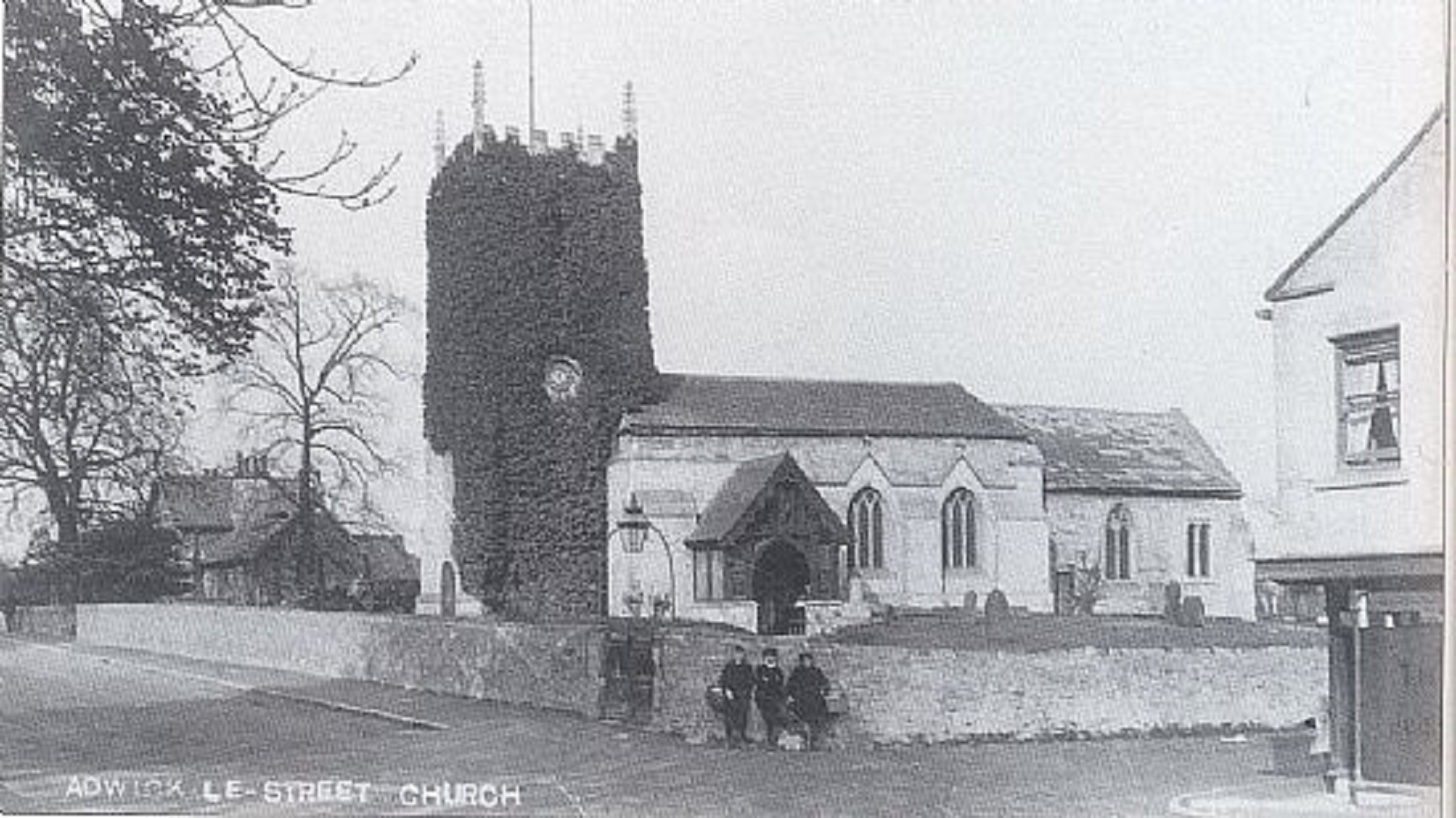
This booklet explores the origins of the church of St. Lawrence, Adwick-le-Street, and of the families associated with it; those of high social status and power, the Washingtons and FitzWilliams, and those of their tenants, as recorded in a number of medieval deeds, which are included herein. The link between the Washington families of Adwick and that of President George Washington is suggested, and summarised in the form of a genealogical table. This booklet is illustrated with photographs and maps of Adwick-le-Street which will hopefully impart to any reader a sense of times past, and of the people of them, that, though having gone before us, are not forgotten.
Psalm 145:4:
This verse speaks to the idea of honouring and remembering the faith, wisdom, and actions of those who have gone before us, passing down their legacy to the next generation.
“One generation shall commend your works to another, and shall declare your mighty acts”.
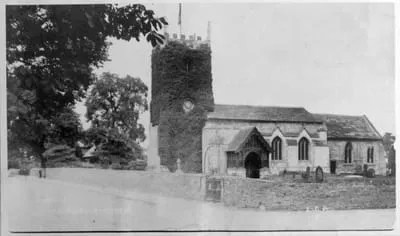
The church of Adwick-le-Street is dedicated to St. Lawrence, one of seven deacons charged to give aid to the poor by Pope Sixtus II, who were martyred during the persecution of Emperor Valerian in 258 A.D.
THE PARISH OF ADWICK-LE-STREET, ST. LAWRENCE.
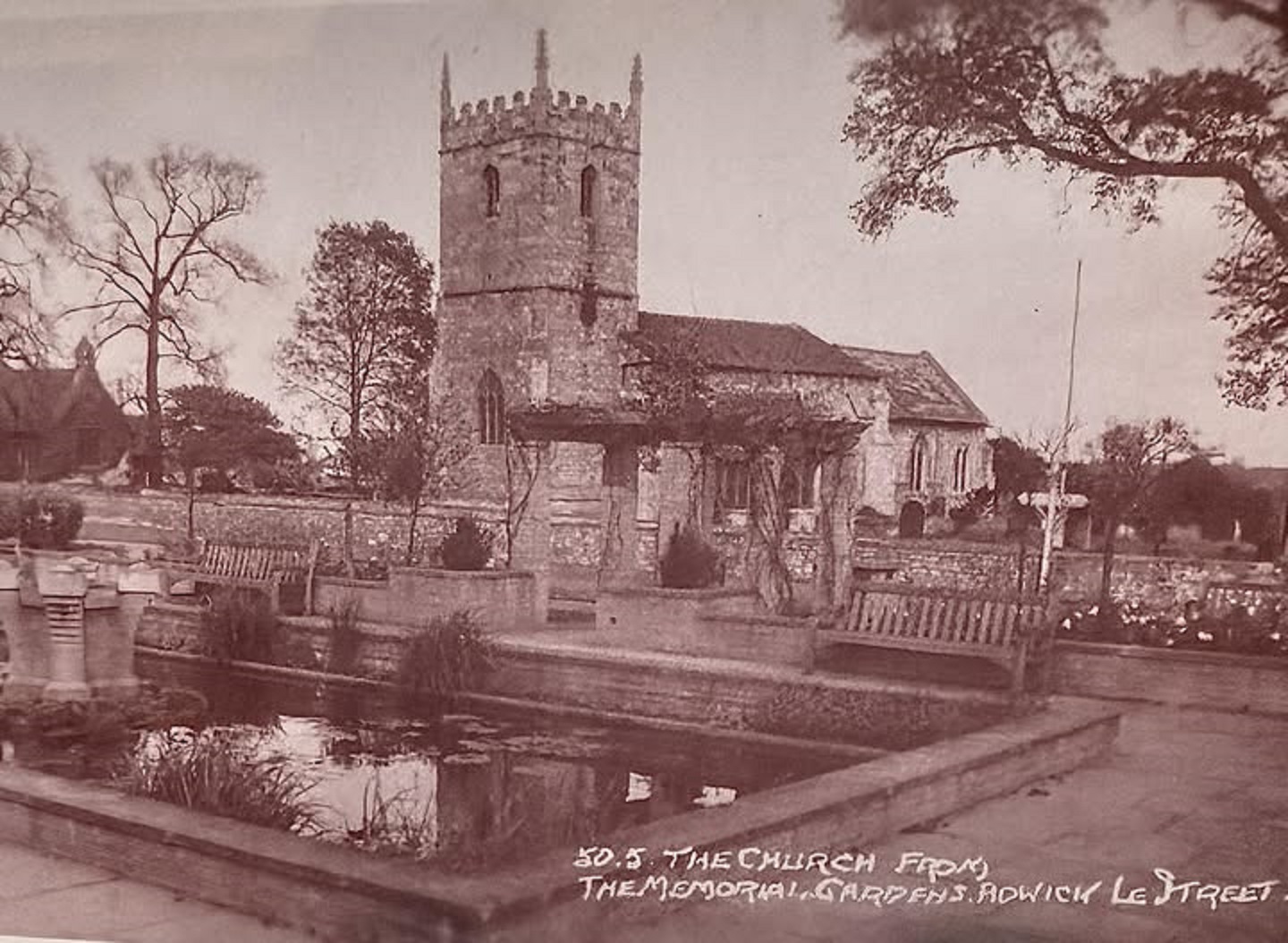
Joseph Hunter,* in “South Yorkshire”, p. 352, 1828, hypothesised as to the origins of the name of Adwick-le-Street: “The prefix Ad is said by Gibson to be nothing more than the Saxon æt (apud/near). Wick is a fortified enclosure, or perhaps simply a small collection of tenements, vicus. The addition “le Street” distinguishes it from Adwick on the Dearne. The Street is the Roman highway from Doncaster to Castleford which runs near this village, and forms for a mile and a half of its course the boundary between this parish and that of Brodsworth”. This hypothesis of the prefix was shared by Norrisson Cavendish Scatcherd, who also expanded on the origin of “street”: “As to the ‘Street’ having anciently been a military road, it is proved in various ways. The Saxon word, says Drake, apparently comes from stratum, which in Pliny signifies a street or paved highway. “Wherever, he adds, “we meet with a road called ‘Street,’ or any town or village said to lie upon the street, for instance, Aithwick-on-the-Street (Adwick-le-Street), by Doncaster, we may easily judge that a Roman road was at or near it”. (The History of Morley, in the West-riding of Yorkshire, p. 98, 1894).
This is not the only theory: The name “Adwick” likely comes from Old English, with Adwick meaning the farmstead of a man named Adda. The fortified enclosure may have referred to the fort erected by Nigel Fossard at Castle Hill, in Hangthwaite, adjacent to Adwick, after the Norman Conquest of 1066. It may be reasonable to suggest that Fossard’s fort was built upon an earlier Saxon earthwork, the fortified enclosure of Hadda, perhaps. The Old High German name Hadda derives from hadu, meaning “battle” (S.L. Uckelman, ed. The Dictionary of Medieval Names from European Sources, 2015). Certainly, before 1066 Adewic, Hadewic (folio 320r, Great Domesday Book) was held by such Anglo-Saxon thegns as Gluniairnn, Oswulf, who also had lands in Barnburgh, etc.; Alsige, who also had lands in Brierley, etc.; and Swein, whose lands in Adwick were bought by the last Saxon Archbishop of York, Ealdred,* after King Edward’s death on January 5, 1066. (Exchequer, Domesday Book, i. 371 v.). Swein was probably he who had pre-Conquest land in (1) South Loftus; a Domesday holder there being Nigel Fossard. (305r Great Domesday Book). (2) South Bramwith, with Oswulf and Alsige; a Domesday holder being Fulk de Lisours. (3) South Elmsall, with Alsige and Gluniairnn. (315v Great Domesday Book). (4) South Kirkby, with Alsige and Gluniairnn. (315v Great Domesday Book). None of the Anglo-Saxons associated with Adwick-le-Street and vicinity lived there, nor did their Norman successors, Roger de Busli, and his subfeudarories, Fulc de Lisoures in Adwick, and Nigel Fossard, holder of Hangthwaite and Marr.
South Kirkby’s Domesday name was Cherchebi/Chirchebi, strongly suggesting the presence of an Anglo-Saxon church.
“Hadda or Hædda, who has left his name at Headingley, is stated to have been the first Danish chieftain who divided this part of England among his followers, and who, after swaying his sceptre over his new dominions for thirty-five years, was killed in the reign of Edward the Elder, 901. It is more probable, however, that the first occupant was an Angle and not a Dane. The use of the word “ing” gives colour to this supposition, as it was an O.E. and not a Danish term”. (William Smith, ed., Old Yorkshire, p. 189, 1891).
Mr. Smith was alluding to the Battle of Wednesfield/Tettenhall, which took place in 901/902, after the death of King Alfred. The Anglo Saxon Chronicle, 901 A.D., records: “Lastly, in the same year, king Alfred departed out of this world; that immoveable pillar of the Western Saxons, that man full of justice, bold in arms, learned in speech, and, above all other things, imbued with the divine instructions”. “He was buried becomingly and with kingly honour in the royal city of Winchester, in the church of St Peter, prince of the apostles”. His son, Edward the Elder, succeeded him, but was challenged for the throne by his cousin, Æthelwold, son of Æthelred, Alfred’s eldest brother, who launched a failed revolt with support from Northumbrian Danes.
Ealdred seems to have been of West Saxon origin, and had been a monk at Winchester. He was associated with Earl Godwine of Wessex, who is believed to have been a descendant of the said Æthelred. In 1050, he played a part in reconciling Swein Godwinson with King Edward, after Swein had killed his cousin, Earl Beorn. He was Bishop of Worcester in 1046, and, in 1049, with men fron Gloucestershire and Herefordshire, opposed a band of Welsh and Irish raiders who were plundering the countryside. (Anglo Saxon Chronicle, version D). Ealdred may have fought in these battles, the chronicler noting that Bishop Leofgar of Hereford had so done, when fighting the Welsh in 1056, “exchanging his spiritual weapons for his spear and sword”.
He was the Archbishop of York from 1061, and had risen to political prominence by 1066, when King Harold (Godwinson), who he most likely crowned, left the spoils he had taken at Stamford Bridge in Ealdred’s care, before marching south to Hastings. On Harold’s defeat, Ealdred initially supported the claims of Edgar Aetheling (cousin of King Edward), to the English throne, before siding with William, crowning him king at Westminster on Christmas Day, 1066.
Under William, he gave lands to churches, and used some of them to create prebends, as at Southwell. He completed the refectory and dormitory at Beverley, also building refectories at York. He also had built a new presbytery at Beverly beside the old church, dedicating it to St John the Evangelist. He redecorated the whole church with paintings, and placed a new pulpit in the choir made of bronze, silver, and gold. William I confirmed to St. John of Beverley all the lands held in king Edward’s time and those given by Archbishop Ealdred. (Historians of the Church of York, vol. ii., pp. 350-3). He was an advocate of church reform, admiring the discipline of the church he had observed on a visit to Cologne, ibid. p. 345, which Folcard (Life of St. John of Beverley), admired, and dedicated this work to:
“Ealdred, his lord in Christ”
The king’s biographer, William of Poitiers, described Ealdred as “acquitatum valde amans aeve maturus, sapiens, bonus, eloquens”, that is, “he is very fond of tranquility, mature, wise, good, and eloquent”. He died on September 11, 1069, in York.
In Yorkshire, many estates belonged to the Archbishopric, as the clerk often inserted the words: “Hoc manerium fuit et est Archiepiscopi Eboracensis”, this manor was and is that of the Archbishop of York. In the case of Ealdred’s lands in Adwick-le-Street, it is clear that they had been obtained through purchase, as recorded in the clamores of the West Riding, i. 373v. (“Clamores” refers to disputes, claims, or complaints recorded regarding land ownership and right). “Terram Suen de Hadeuuic dicunt Aldred archiepiscopum emisse post mortem E. R. et eam quietam habuisse” – they say, the men of the wapentake, that Aldred the archbishop bought the lands of Swein at Adwick after the death of king Edward, and held them without question. Although the exact nature of the complaint is not recorded, it would have concerned the next feudal owner of this land claiming the boundaries of his antecessor (Ealdred). The Domesday (sub) tenant was Fulk de Lisours who held of Roger de Busli; and the foundation of the church was doubtless due to the Lisours family. (Yorkshire Archaeological Society, Record Series, vol. 85, p. 1, 1933). Fulk was also Roger’s tenant in Sprotborough. Nigel Fossard also had lands in Adwick (Hangthwaite) under the same lord. “Osgotcros Wapentac: In Adewic (Adwick-le-Street, there are two bovates for geld. The soke is in Marra (Marr). Now, Nigel has one plough there. It was worth five shillings; now, five shillings. (Domesday Book for Yorkshire, p. 70, 1896).
A prayer almost certainly read by Ealdred in York Minster:
“Eala, God, þurh þīn ēag, we biddan.
Wēlsetta þū eallum ūserum, and weorþige þīn heofonrīce.
Gief us þin grēd, and bēoþ ālīesed fram eallum yfelum”.
“Hail, God, through Your eye, we pray.
You are the guide of all, and we honor Your heavenly kingdom
Grant us Your grace, and deliver us from all evil”.
“Ay-ah-lah, God, thurkh theen ay-ag, weh bid-dahn
wayl-sett-ah thoo ah-lum oo-ser-um, and way-or-thi-geh theen hee-oh-von-ree-keh
yeef us theen grehd, and bee-awth ah-lee-eh-sed fram al-lum yeh-feh-lum”.
A connection to Hampole Priory:
1. Godric de Clairfait.
1.1. William de Clairfait, kept the keep (mota) of Tickhill Castle, as the King’s Constable (“Curia Regis 16, m. 2”). He married (1) Avicia de Tanai. They founded Hampole Priory, a house of Cistercian nuns, by 1156, the date of an ordination of Pope Adrian respecting it. After Avicia’s death, William married (2) Aubrey, dau. of Robert de Lisours, witnessed in “a grant of lands in Billingley and elsewhere by Fulk de Lisoriis and Aubrey (de Lacy) his wife and Robert their son … Aubrey, daughter of the aforesaid Robert de Lisoriis confirmed this gift in this charter, adding to that a bovate of land in Oldcotes, near Blyth, … for the love of God, and for her soul and for the souls of her ancestors, William de Clarofagio, her husband, consenting”. (William Paley Baildon, ‘Baildon and the Baildons; a history of a Yorkshire manor and family, vol. 1. p. 349). Aubrey, dau. of Robert de Lisours, was the widow of (1) Richard FitzEustace, Constable of Chester. (Dugdale Monasticon V, Kirkstall Abbey, Yorkshire VI, Historia Laceiorum, p. 534). (2) Geoffrey de Cauz, son of Robert de Cauz and Isabel, daughter of Robert de Ferrers, Earl of Derby, and his wife, Hawise. (Domesday Descendants, p. 374). She supposedly m. a fourth time to William FitzGodric.
*Joseph Hunter (Unitarian Minister, antiquarian, and deputy keeper pf public records), suggested that William de Clairfait and *William FitzGodric were the same man, and “that the full description of one her husbands was, Willielmus de Clarofagio filius Godrici”. By this account, Aubrey was suggested as the mother of William FitzWilliam. (Joseph Hunter, South Yorkshire, vols. 1. and 2.; pp, 332-33, 1828). Edward Augustus Freeman, regius professor of modern history at Oxford, in “Norman People”, 1867-1879, p. 244, suggested that William de Clairfait took his name from Clerfai (Clarfay, Clarfaiy), near Avesnes, Flanders, and mentions a “Godric de Clarfai” living temp. Henry I. (1100-1135). His son, William, is first noted in 1142, by John, Prior of Hagulstad, as having escaped from Randolph, earl of Chester, to Tickhill Castle. This suggests that William was born by 1120.
1.1. Sybilla de Clairfait, m. Ralph de Tilli, seneschal of Conisborough. Carta Radulphi de Tilli: “Roger, Archbishop of York, confirms for the nuns of Hampole the charters and instruments of the patrons of the church of Adwick; namely, of William de Clairefait, and Avicia de Tanai his wife, and Albreda de Lisours, concerning the churches of Adwick and Melton. And beyond the aforesaid churches, he also confirms the site of the place at Hampole (etc.), from the donation of William de Clairefait and Avicia his wife, and of William Paynel, and of their other patrons. Witness: Robert the Dean”. Roger was archbishop in 1154.
1.2.1. Ralph de Tilly.
1.2.2. Roger de Tilly. Ralph and Roger de Tilly were benefactors of Hampole Priory. (Mon. Angl. vol. 1. p. 831). The armorial bearing of FitzWilliams, lozengée argent and gules, was also used by the Tillis, differenced only by a canton. The FitzWilliams, of Adwick, surrounded it with a blue border.
Thus, Adwick-le-Street, St. Lawrence, was recorded as an established church between 1154 and 1156. Whether an earlier church existed anterior to this is not known as fact, but is very probable. There was an earlier Anglo-Saxon community associated with Adwick-le-Street, who might be expected to have worshipped in a primitive wooden- framed building, “that would doubtless be destroyed by the depopulating and desolating Norsemen, but the site would long be hallowed by the burial ground, ‘God’s acre’, and kept fresh in the memory of the Anglo-Saxon settlers”. (Henry Barber, Furness and Cartmel notes, p. 131, 1896). Given that Archbishop Ealdred purchased the land on which St. Lawrence was built, and his practice of conferring his land on existing churches, or having religious buildings placed on them, there is a posibility that Ealdred commissioned the building of St. Lawrence between 1067 and his death on September 11, 1069; a supposition supported by some antiquarian writers who decribed architectural features of St. Lawrence as “early Norman”, as follows.
An early deed concerning the parish of Adwick: Grant: By Randolph, the master, and Cristiana, the prioress of the nunnery of Hanepol to William, son of William, son of Fulk de Havic, a ½ a. meadow in the meadows of Scelehale (Skellow) near the way called Rodegate, subject to an annual rent of 1d. to the nunnery. Witnesses; Roger, parson of Ausc’ (Askern), William, parson of Burc’ (Burghwallis), William son of Henry de Avic, William son of Richard de Avic, Robert de Sancto Paulo, Thomas his brother (or son), and others, ca. 1180. (Barnsley Archives, SY560/F/1/1). The Sancto Paulo family are associated with Owston, and the family of Richard Rolle (Rowley). (See: A History of Owston, with notices of Richard Rolle and Robin Hood.
LISOURS AND THE DE AVICS
1. Fulc de Lisours. In 1086, lands in Balby and Loversall were soke of the Manor of Hexthorpe, held by Nigel Fossard. Fulc de Lisours held two bovates of that manor in Loversall. (V.C.H., Yorks, 2., pp. 228, 294).
1.1. Robert de Lisours, b. ca. 1095, m. Albreda, the widow of Henry de Laci, Lord of Pontefract, and had one daughter only, who was thus half sister ex parte matrix to the last of the Lacis, and who lived to be his heir, in 1193, as well as the heir of the paternal line; she being Albreda de Lisours:
1.1.1. Albreda de Lisours, b. ca. 1125-30, living in 1200. (E.Y.C., 3, pp. 199, 236). She is mentioned on a charter (1080-1085) of Mabel,* wife of Otes de Tilli, as “domine Albrede de Lisurs”, who held land in Balby and Loversall, probably as inheritance from her father. Albreda de Lisours, b. ca. 1120, m. William FitzGodric (de Clairfait), becoming step-mother of Sybilla de Clairfait, who m. Ralph de Tilli; they the founders of Hampole Priory, in existence between 1154-1156, in the parish of Adwick.
William FitzRaven, Sheriff of Wakefield (1148-59), married a daughter of Hugh de Boseville, from Beuzeville-la-Giffard, Normandy, who held land in Harthill, Yorks. Their daughter, *Mabel FitzRaven (born at Hatfield, circa 1120) married Otho de Tilly, probably of Calvados, Tilly-sur-Seules, Normandy, a tenant of the Honour of Warenne in Barnbrough, Bilham, and elsewhere. Their daughter, Dyonesia de Tilly, married Henry de Novo Mercato (Neufmarche/Newmarche). Their son, Henry came of age in 1172 and died in 1178. He is recorded a holding an interest in Barnburgh (Farrar, E.Y.C., Honour of Warrene, extra series, vol. 6, p. 154, 1949).
The Ralf de Tilly who married Sybil, daughter of Avicia de Tanai and William de Clairfait was probably a son of Otho de Tilly’s brother, Ralph, whose two sons, Ralf and Roger, confirmed gifts of Avicia de Tanai to Hampole: ‘cartas Radulphi de Tilli et Rogeri fratris ejus, confirm. donationes Aviciae aviae suae et Sibillae de Clarefait’.
TILLY
1. … de Tilly.
1.1. Otho/Otes de Tilly, m. Mabel FitzRaven.
1.2. Ralph de Tilly, seneschal of Conisborough.
1.2.1. Ralph de Tilly, m. Sybil (daughter of Avicia de Tanai and William de Clairfait), and step-daughter of Albreda de Lisours; “domine Albrede de Lisurs”; thus, by Mr. Hunter’s supposition, step-sister of William FitzWilliam.
Burton, in the Monasticon Eboracense, has given an alphabetical list of the places where the lands of this monastery lay, with the names of the respective donors. These were: The church of Adwyk or Athewyk given by Albrede de Lisures, and afterwards appropriated; with free warren in Adwyk: the grants of both were confirmed by Ralph, son of Ralph de Tilli, and Roger, his brother, by Sibilla de Clarefait, daughter of William de Clarefait and Avice de Tani, his wife. Free warren in Brampton, near Doncaster. The mill, together with the church of Bretewell, and three oxgangs of land. A moiety of the town of Clayton, held by a rent of the Vescy family. The town of Hanepole, with free warren. A messuage and one oxgang of land in Marr, given by John Bossevill. The church and mills of Melton, by Avicia de Tanai and Sibilla de Claresai. An annuity of a pound from Plomtree, near Scroby.
Burton, from a Register of Deeds of the Metham family gives the following account of the situation and remains of Hampole in his time, 1758: ‘This nunnery stood in a pleasant vale lying east and west, in a fine country, near to the high-road leading from Wakefield to Doncaster. At present there is an old hall, which seems either to have been part of the priory, or to have been built out of its ruins, on the north side of the village, wherein is an old bow window on the south side, on the top of which are four escutcheons in stone; in one are two hands in chief, two birds in bass, and a crown or heart in the middle; in another a fess between three escallops; and in a third five fusils in fess; the fourth defaced. The Chapel stood on the north side of the hall, betwixt that and the little beck; and the ground is now called Chapel Green”.
LISOURS cont.
1.1.1.1. William FitzWilliam, b. ca. 1150.
1.2. William de Havic, son of Fulc de Havic (Fulc de Lisours).
1.2.1. William de Havic.
1.3. Henry de Avic.
1.3.1. William de Avic.
1.4. Richard de Avic.
1.4.1. William de Avic.
Anglo-Saxon association with Adwick-le-Street pre-dated the “Conquest” period by 300 – 400 years.
The small Anglo Saxon cemetry at Adwick-le-Street is situated near a former Roman road, Ermine Street, and although it is not clear to what degree such roads were still in use during A.D. 650-850, many probably remained viable routes of travel and trade. The cemetry at Adwick-le-Street was one of many small cemeteries (with under 50 burials) scattered throughout northern England, encountered close to a Roman road network. It was excavated at the site of North Ridge Community School, Adwick-le-Street, in 2007, and is unique in that it is the only substantial burial site of A.D. 650-850 ever found in South Yorkshire. The remains of 37 individuals in plain earth graves* were recovered from the site, which covered an area of ca. 500 m. 2. All but one burial was orientated S.W. – N.E, that is, of a west-east direction, with the long axis aligned from west to east and in which the body is interred with the head to the west.
This was a strict Christian observance, which suggests that those buried were Christians.
The excavators thought that they had reached the full extent of the site in all directions, but this does not preclude their being additional (nearby) burials, cemetries or buildings, which, if of wood, would be difficult to detect. The use of stones in burials had earlier origins, and was used at Adwick-le-Street, where on person was buried with a large limestone block over his body, and several other stones by his head, radiocarbon dated to the 7th-8th centuries. Such head-support-stones are sometimes referred to as “pillow stones”, and were also found in cemetries such as Kellington, N. Yorkshire, and Fillingham, Lincolnshire. Quartz pebbles were found in several graves, as at Kellington, and small stones were placed in the mouths of the deceased in Fillingham. That these burials were in plain earth graves is not conclusive, as many coffins were constructed using small wooden dowels, so that the entire coffin would decay without trace. (Sarah Semple, Howard Williams, Anglo-Saxon Studies in Archaeology and History, xcix, 2007).
Kellington is on the present-day A19 road, 15 miles from Doncaster, and 20 miles from York, which is parallel to and east of the Great North Road (Ermine Street). Fillingham, as Adwick-le-Street, is situated near Ermine Street. As with Adwick-le-Street, there was an Anglo-Saxon presence before 1066: “Outside the City (Lincoln) and this Royal Borough the following Clergy were former holders of land: Godric the Deacon in Fillingham and Waddingham; his holding in Fillingham had been held by Ernwin the Priest under the Queen (Edith) and had become the King’s”. (Lincolnshire Notes & Queries, vol. 5, p. 55, 1898). “In Fillingham Godric the deacon had two bovates of land rateable to gelt: the land is three bovates. Ernwin the priest held it under the Queen. It is now the King’s. Roger the Pictavien obtained it without sezin being properly delivered to him, (but) Anschitil (now) holds it. Two sokemen and one bordar have there three oxen in annual value in King Edward’s time was, and it now 4s.”. (Domesday Book). Fillingham is a later Anglo-Saxon site (A.D. 850-1066) than Adwick-le-Street.
Stefan Brink, Neil Price, The Viking World, 2008, a synopsis: A Scandinavian was buried in the existing graveyard. Her grave goods included a non-matching pair of oval brooches, dating to the late 9th century. A small copper alloy bowl, probably made in the Celtic west was placed at her feet. Isotope analysis of her teeth indicated she originated from the Trondheim area of Norway. As there is no evidence of Scandinavian settlements or burials in this locality, she probably represented the first-generation of Scandinavians.
The following maps place Adwick-le Street in its geographical context. The second map shows Adwick Hall and Windmill Baulk Lane leading from it to the present Great North Road (Ermine Street):
ARCHBISHOP OF YORK, ROBERT HOLGATE AND ADWICK-LE- STREET, ST. LAWRENCE
Robert Holgate, head of the Chantry Commissin for Yorkshire, lord President of the North, 1538-1550, etc., claimed that his (contrived) marriage at the age of 68 years to a “gentilwoman”, Barbara Wentworth, was a legal one by “Godes lawes and the Kinges”. The banns were published at Bishopthorpe and Adwick, the bride’s parish, Christmas week, 1549, and they were married at Bishopthorpe on January 15th following. Robert Parkyn, curate of Adwick-le-Street, recorded that Barbara had been married in her childhood to a young “gentilman”, Anthony Norman of Arksey. A nullity suit was brought by Barbara against her husband, at the Chancery Court of York, May 2-4, 1549, undoubtedly “financed” by Holgate. Barbara’s uncles, Thomas and Christopher Wentworth, and her brother, Thomas, and Richard Binks of Adwick, testified that a marriage had been sanctified in the church of Adwick 18 years previously (1531), when Barbara was aged 5 and Anthony was aged 7. They had afterwards lived together in her father’s house until 5 or 6 years ago (1544-5). She declared that she could never have loved Anthony, and the marriage had not been consummated. On the other hand, “the lowe pepill thereaboutes” considered them married in “the face of the church”. A view strongly shared by Robert Parkyn. In cannon law, childhood marriages were null unless consented to at the age of discretion, the girls at 12 and the boys at 14 years of age. A servant, Thomas Cavell, testified that he had seen Anthony kiss Barbara, but, on questioning, it was after he had “been fourth of the towne”; the implication was inebriation. Barbara was the daughter of Roger Wentworth of Hamthwaite, Adwick-le Street; a younger son of Wentworth of Elmsall.
In order to prove his Protestantism to the sceptical Duke of Northumberland, in 1550, aged 68, the Archbishop took a bride. This was a year after an Act of Parliament removed the duty of celibacy from the English clergy. But when Queen Mary came to the throne in 1553 and returned England to Catholicism, Holgate was sent to the Tower, and stripped of his post for breaking his vow of celibacy. He paid £1,000 for his “crimes”, and was set free in January 1555, to die November following in London.
The manor of Hamthwaite/Handthwaite is mentioned among the manors held of the honour of Tickhill, and it extended over lands in the vicinity of Hampole and Adwick. It formed part of the two knight’s fees held of the honour by William FitzWilliam, of Sprotborough. But it was subsequently held by Windham, the lord of Bentley.
In the reign of Edward VI., it was the residence of Roger Wentworth, whose Will of 1551 requests to be buried in the church of Adwick.
He gives all his interest in his farmhold at Handthwaite to John Wentworth, of London, his second son, paying yearly to Richard, William, and John, his brothers, 33s. 4d. each. He gives legacies to his sister, lady Wentworth, and to Elizabeth, and Ann FitzWilliam, if they will be ruled by his executors. The residue of his goods he gives to his children, that is to say, his two daughters Ann and Alice, and his four sons, William, John senior,* John junior, and Richard. He makes his brother, Thomas Wentworth, executor.
Roger Wentworth – bur. Adwick 1551.
*John Wentworth senior – bur. Adwick 1556.
ROBERT PARKYN, CURATE OF ST LAWRENCE, ADWICK-LE-STREET
(Parkyn, Robert, (d 1570), Curate of Adwick Le Street, MS Life of Christ 1548-54, Oxford University: Bodleian Library, Special Collections). There is no record of his origins, although a nephew, who died in Skellow in 1572, might suggest that it was a local one. He was in orders in 1541, and became curate of Adwick-le-Street in 1542. He copied prose works supposedly written by Richard Rolle, and prayers in verse written by Thomas Moore. He composed the “Brief Rule”, a work devoted to the contemplative life, in which he states that those who would come “unto perfection” must “detest and abhorre all heresies and scismes, strongly styckinge and humbly submittinge him selffe unto the Catholique Chirche, for who se ever goeth from the catholike churche, yea, thowghe seyme to lyffe never so virtuusly, yet ar thay parttide and devidyde from god and the company of sanctis” (pp. 67-8).
PRAYERS IN VERSE
For Ready Response to the Gospel of the Passion
Good Lord, give us Your grace not to read or hear this Gospel of Your bitter Passion with our eyes and our ears in manner of a pastime, but that it may with compassion so sink into our hearts that it may stretch to the everlasting profit of our souls.
For a Happy Death
Good Lord, give me the grace so to spend my life that when the day of my death shall come, though I feel pain in my body, I may feel comfort in soul and – with faithful hope of Your mercy, in due love towards You and charity towards the world – I may, through Your grace, depart hence into Your glory.
Robert Parkyn had witnessed the abolishment of the feasts of the Virgin, including the harvest celebration of the Assumption, and the well-attended Jesus Mass on Friday. He was shocked that “Christ’s body and blood” were no longer worshipped. People stayed away from the new services, and priests, perhaps including Parkyn, tried to make the communion as much like a mass as they could, chanting in English as if it were Latin, kissing the altar, and ringing a sacring bell.
It was at this time (1546-1552) that the medieval preaching cross in the churchyard of St. Lawrence was decimated.
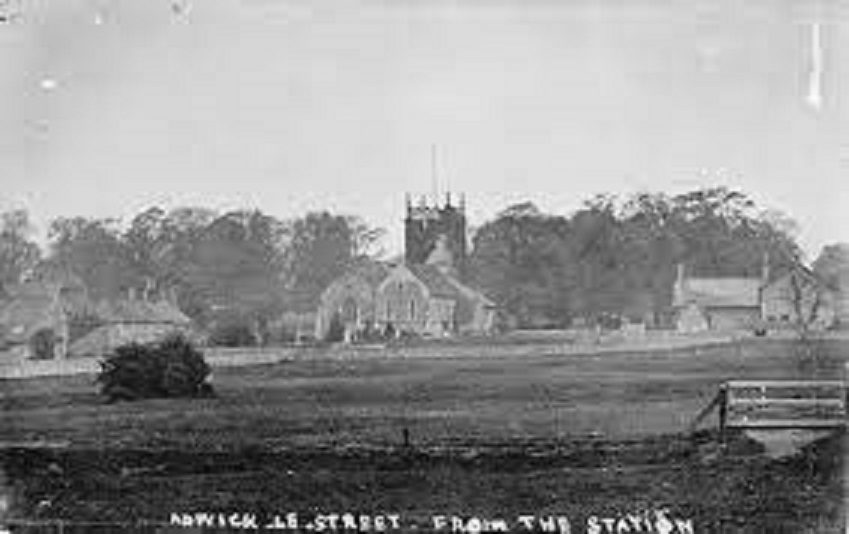
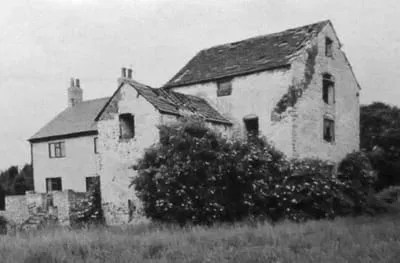
ADWICK MILL
Robert Parkyn, despite his persuasions, weathered the storm of the Protestant reign of Elizabeth I, and remained curate of St. Lawrence until his death in 1570, no doubt by being pragmatic. Above all he despised those who considered: “it was leaffull for prestes to marie women usynge tham as other wiffes, which was very pleasauntt to many, for they were maryede in veray deyde both bischoppes and other inferiowres beynge so blynbide with carnall concupiscens that tahy prechide and tawghtt the people openly that it was lawfull so to do by gods law, and senactyde the same”. He explained the Northern uprising of 1549 as being for the “maintennance of Christ Churche”… and against “heretikes in the sowthe”.
Robert Parkyn dated his Will March 16, 1568/9, describing himself as: “in good prosperitie of body”, though in fact he had only a week to live . The inquisition post mortem gives his date of death as March 23 in that year; the Adwick parish register confirms this with an entry giving March 24, as his date of burial. His Will does not revert to Catholic phraseology concerning the Virgin and the Saints.
He bequeathed his soul to Almighty God, and requested to be buried in the churchyard of St. Lawrence “nigh and before the south queere doore of the said churche”.
He made bequests to the poor, to each priest present at his funeral; to the village schoolmaster and parish clerk, George Milner, who later took orders and became parish priest, as recorded in Grindal’s Visitation of April 1575.
His chief beneficiary was his brother Edward’s son, Robert, who he envisaged to be a future priest, leaving him a Vulgate, and an annuity of 40 s. a year, to be brought up in “virtue and learning”. Robert did not achieve his uncle’s wish, dying young in May 1572, at Skellow; his sister, Elizabeth, being his heir. (P.R.O., C142/160/63). Robert Parkyn left £3 owed to him by Leonard West of Burghwallis toward the building of the steeple at Adwick. He left his household goods, large quantities of linen, bedding, and silver to his Ambler nieces and nephews. He evidently slept in a feather bed, used silver spoons, and burned coals in his earth. (See A. G. Dickens, Reformation Studies, pp. 278-9, 1982). Robert Parkyn was an avid collector and reader of books:
“The Will of this Robert Parkyn is dated March 16, 1568/9. He gives to his nephew Robert Perkyn, “his great chist bound with yren, six of his best silver spoynes whereof one hath an antique face pictured thereupon, also the holle Bible book in Latin, and Dionysius Carthusianus his work upon the Bible in seven large volumes: also another fair book called Opera Divi Hilarii; a great book, namely, Concordantia Biblia, and also another fair printed book called Epitome Omnium Operum divi Aurelii Augustini.” If the nephew die young, the books are to be sold, and the proceeds given to the poor of Owston. To Mr. Hudson the dean of Doncaster he gives a great thick written book in parchment, which beginneth thus : ‘Incipit Tractatus Moralis de Vitiis Capitalibus.’ To the vicar of Brodsworth, Sir Robert Skoley, he gives a printed book called Sermones Jodoci Chichtovei, and to Sir William Watson, curate of Melton-on-the-Hill, ‘a written book profitable and easy to find sentences of the Bible by letters,’ with other three written books in boards, which he likes best. To Mr. James Washington, Mr. Calvin’s book in print, and to Mr. Leonard Wray the English Bible of a large volume. To his godson Francis Arthington he gives John Harding his Chronicle in print. (Memoirs Illustrative of the History and Antiquities of the Ciy of York, p. 16, 1947). Mr. Calvin’s book had been given to him by James Washington, which, probably unread, was only returned after Robert’s death.
THE CHAUNTERYE OF SEYNT KATHERYNE IN THE PARYSSHE CHURCHE OF ATHEWYKE BY THE STRETE (In the Lady Chapel).
“Peter Skott, incumbent there. Of the foundacion of Richard Cusworthe, as apperyth by wrytyng, having no date, made aboute xxv yeres paste, as is reputed, to the entente to pray for the soule of the founder and all Cristen soules, and to do divine service in the quere. The same chauntery is within the sayd churche. The necessitie is to pray for the soules departed, and to mynistre to the parochians there when nede shall requiere. There is no landes, ten. solde ne alyenated syns the statute. Goodes, ornamentes and plate pertenyng to the same, as apperyth by inventory, viz:- goodes valued at £5. 10s, plate. (The Certificates of the Commissioners Appointed to Survey Chantries, 1546).
Peter Skott – vicar of Adwick, 1526.
There may have been an altar to St. Katherine/Catherine, and, as a rule, an image of the saint to which the altar was dedicated stood near, and generally to the north of it. St. Katherine was was the daughter of the governor of Alexandria, Egypt, and, according to tradition, was martyred around 305 A.D. She was highly educated, and when Emperor Maxentius began persecuting Christians, she openly challenged him. Her immediate fate was to be made to debate with fifty scholars in defence of her faith. They could not defeat her rhetoricall, and, consequentially, she was tortured and martyred. She was a popular saint throughout the Middle Ages, and, as “Katherine the Wise”, was the patron saint of scholars. Her feast day was commemorated annually on November 25th. The church of Loversall was dedicated to her her; built before 1207 by the Fossard family.
DODSWORTH’S CHURCH NOTES, JULY 10,1621
Adwick-le-Street:
North Quyer window.
“God and the blessed Trynity. Preserve Cusworth and Brokylsbye”. On another window: Orate pro anima Ricardi Cusworth et Alicie, uxoris ejus, et proanimabus parentum suorum, anno Domini mdxxvi:
“Pray for the soul of Richard Cusworth and Alice, his wife, and for the souls of their parents, in the year of the Lord 1526”.
The window inscription is explained by the Will of Richard Cusworth, dated 1521, in which he requests to be buried in his father’s sepulchre in the church of Adwick. He gives lands in Clayton, Thorpe, and Bentley, to his son-in-law Robert Brokylsby, and directs that a priest shall sing for his soul in the church of Adwick. In Bishop Holgate’s return, a chantry of St. Catherine in this church is mentioned, founded by Richard Cusworth; the annual value: £5. 10s. Will, proved at York, March 29,, 1526; to be buried at Adwick. Richard Cusworthe left every scholar of his reading school 2d.
Masculy ar. and gu. a border az.- Fitzwilliam. Ar. a cheif gu. a bend az. Quarterly checquy az. and or, cum border gu. – Warren – with ar. a cross engrailed gu.
Richard Cusworth, bur. Adwick 1521, in father’s sepulchre.
North Quyer.
In the north-east corner of this chapel is another altar tomb, less ornamented than the one last described. It has the arms of Wray: Az. on a cheif or 3 martletts, gules, and this inscription:
“Here lies Leonardus Wray, gentleman, and Ursula, his wife, daughter of Thomas Vicars of Scausbie, who died in the faith of Christ on the twenty-third day of August in the year of our Lord 1590. They had sons, Christopher, Philip, Leonard, Robert, and daughters, Frances,* Elizabeth, Margaret, and Mary”. He was a younger brother of Sir Christopher Wray, Chief Justice of King’s Bench. His Will was proved at York on February 3, 1590-1. His eldest son, Christopher, was of Cusworth. See the pedigree in Hunter’s South Yorkshire, 1, 349.
Leonard Wray, bur. Adwick 1590.
A monument having quarterly, masculy in a border (Fitzwilliam), 2. a fesse entre 3 mollets perced (Passlew).
“Here lies Johannes FitzWilliam, esquire, and Amisia, his wife, daughter and one of the heirs of Robert Passelew and Elizabeth, his wife, daughter of Thomas del Hay and heir of Peter del Hay. The said Amisia died on the 8th day of July in the year of our Lord 1477, and the aforementioned Johannes died in the year of our Lord 1470. May God be merciful to their souls”.
On a stone. Masculy, ar. and gu. a border az. – Fitzwilliam. “Here lies John FitzWilliam who died in the year of our Lord 1412”.
On a stone. “Here lies William Adam of Adwick, who died on the fifteenth day of January in the year of Our Lord 1599”. There is a Will at York of William Adames, of Adwick, gentleman, proved on February 6,, 1599-1600.
WASHINGTON
The Washington monument under the arch in the quyer.
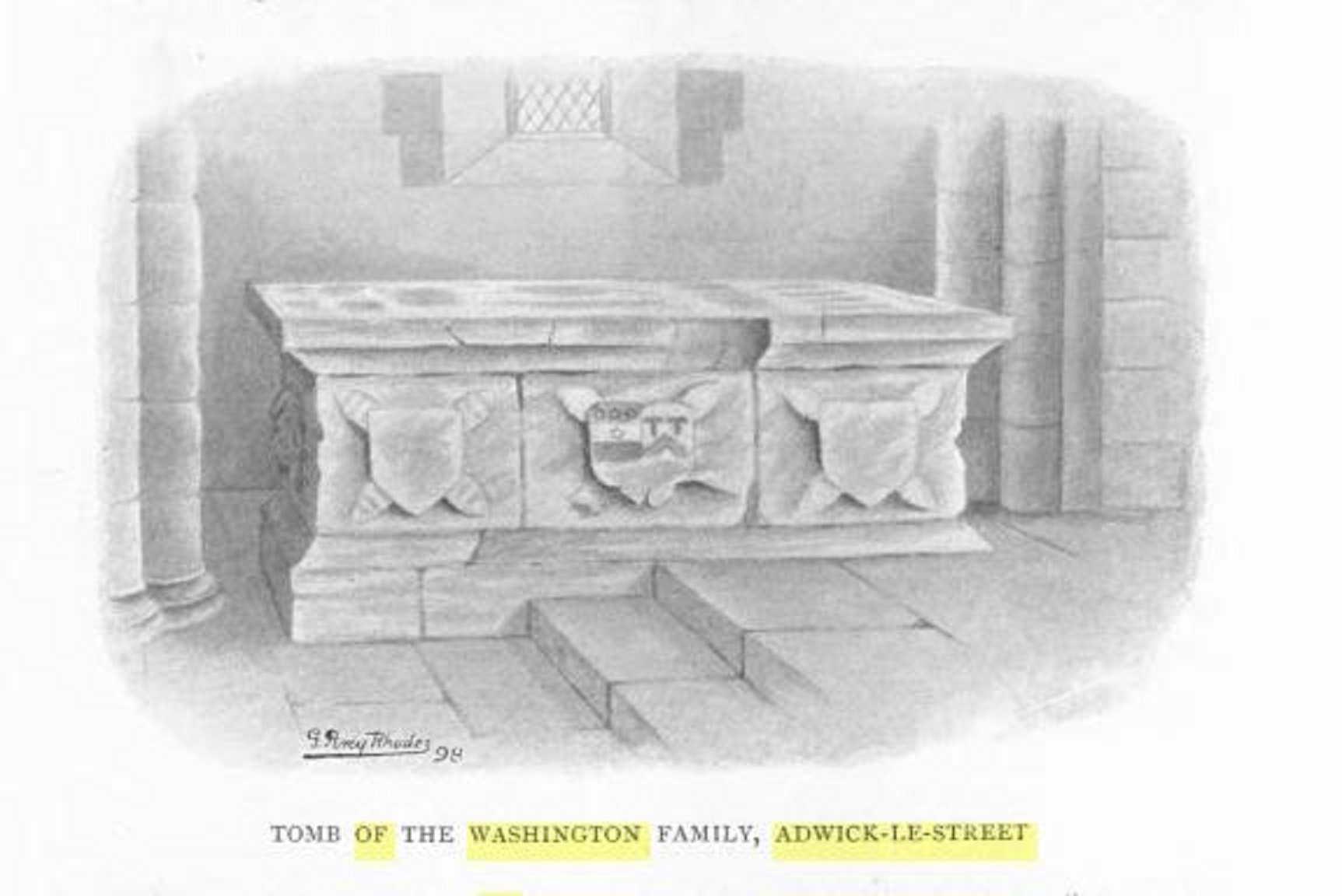
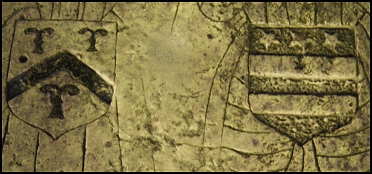
Top of monument: James and wife, Margaret, in Elizabethan costume. Near the head of James Washington, the coat of arms of Washington; near the head of Margaret, the coat of arms of Anlaby: argent, a chevron between 3 chess rooks. On one side of the tomb are the Washington and Anlaby arms impailed, on the other side, the Washingto arms only.
Washington, of Adwick-le- Street: Argent, two bars, and in chief three mullets gules. (John Wade, the Coats of Arms of the Nobility and Gentry of Yorkshire, 1911).
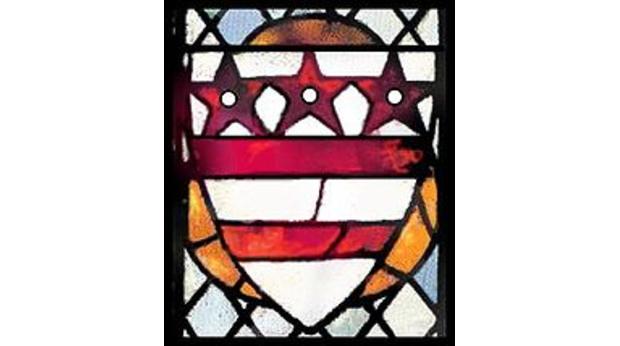
(Note, as follows: The arms of Robert de Wessington of Carnforth, Westmorland, born ca. 1330: two bars, in chief three mullets. Lawrence Washington, born ca. 1500 in Trewitfield, juxta Carnforth/Warton, ancestor of President George Washington: Argent two bars Gules, in chief three mullets of the second, that is, three red stars over two horizontal red bars. John de Wessington, prior of Durham in 1416, recorded on a window Selby Abbey: Argent, two bars and in chief three mullets pierced, gules.
The sharing of this coat of arms by families of the same name (who were of close geographical association) absolutely proves that they were the same family. Their relationships are explored hereinafter. The origin of the arms is suggested here:
“A Kendal group: The Lancasters, the ancient barons of Kendal gave argent two bars gules, on a canton of the second a lion passant guardant or. The following list comes from West’s Furness:Broughton of Broughton, the same arms but the canton charged with a cross or. Bardsey of Bardsey, the same, but the canton charge with a maunch argent. Preston of Preston Patrick, the same, on the canton a cinquefoil or. Kirkby of Kirkby, the same, on the canton a cross moline or. Lovick of Lovick, the same, but, instead of the canton, on a chief argent three mullets gules. Mr. West writes, “these were the ancient and honourable Furness families, who by their arms claimed connection and alliance with the barons of Kendal”. Copeland also bore argent two bars and a canton gules, over all a garter sable. (Cumberland and Westmorland Antiquarian and Archaeological Society, p. 314, 1874).
See as follows: Pardon to John Washington for the trespass committee by him in marrying Alina, wife of William of Lancaster, deceased, who held of the king in chief; and Alina for the trespass in marrying the said John, without the king’s licence.
Description of the Washington monument continued:
12 children are represented by 12 small figures, with their names over their head.1. Philip, 2. Bartholomew, 3. Richard (3rd. son), 4. Francis, 5. John, 6. Martin, 7. Leonard*.8, Frances, 9 Marie, 10. Lucy, 11. Katherine, 12 Jane.
Inscription around the edge of the tomb:
“Here lie James Washington esquire of Adwyke on the street and Margaret his wife daughter of John Anlabye, esquire, who were the parents of seven sons and five daughters”.
Beside the figure of James: “died at the age of 45 years in 1580”.
Beside the figure of Margaret: “died at the age of 36 years in 1579”.
ANCESTRY OF THE WASHINGTON FAMILY OF ADWICK-LE-STREET AND PRESIDENT GEORGE WASHINGTON
By way of introduction, the family of Wahington were closely associated with one of Ducket, of Grayrigg, describe in this antiquarian account: Joseph Nicolson, Richard Burn, The History and Antiquities of the Counties of Westmorland, p. 111, 1777:
“This manor of Grayrigg, like as the reft, belonged to the barons of Kendal, and was granted by William de Lancastre the first in marriage with his daughter Agnes, to Alexander de Windefore, fon and heir of William de Windesore.The faid Alexander had a fon William de Windefore, who was a juror on several inquifitions poft mortem in the reign of king Edward the first. Which William had a fon Alexander, who levied a fine of the manors of Grayrigg and Morland in the 11 Ed. 2. This last Alexander had a fon William de Windefore, who was knight of the shire for Westmorland in the 28 Ed. 3. and was sheriff of Cumberland in the 41ft and 42d of the fame king. By the inquifition poft mortem of Joan de Coupland aforesaid in the 49 Ed. 3. he appears to have held of the said Joan the manors of Heversham, Morland, and Grayrigg. Which William had a daughter and heir Margery, who in the reign of king Richard the second was married to John Ducket esquire, son of Hugh, fon of Richard, fon of William, fon of Richard Ducket of Fillingham in the county of Lincoln efquire; and hence came the Duckets to the manor of Grayrigg and other poffeffions in Westmorland, who enjoyed the fame for 12 generations following, with this peculiar felicity, that none of the iffue male, poffeffors of the family eftate, was ever in ward, every ancestor living until his heir was above 21 years of age”.
(Richard Washington, of Grayrigg, Westmorland. Letters of Administration were granted by Thomas, Archbishop of Canterbury, on January 23, 1538/9, to Richard Wasshyngton of the estate of his late wife Jane Washington alias Bowlande. (Tyler’s Quarterly, p. 160, 1924). Richard Washington was the great-nephew of Thomas Washington* (Wessington), who had married Anne, sister of Richard Ducket of Grayrigg*, to whom Richard Washington alienated the manor of Docker (juxta Grayrigg) in 1543. Richard Duckett was the son of a namesake and Eleanor, daughter of William Harrington of Kendal. *Thomas Washington was the great-uncle of Lawrence Washington, ancestor of President George Washington, see as follows).
The Duckets, Stricklands, and Washingtons in the context of Grayrigg, from Records Relating To the Barony of Kendale, vol. 1., Titus Wilson and Son, publishers, 1923.
In 1366, Thomas de Stirkeland, knt., enfeoffed Thomas de Seynesbury, vicar of Kendal, Walter de Welle, parson of Lowther, and William de Wechyngton of his lands and tenements in Quynfell, Grarig and Lamberig. And by deed dated on Thursday next after Easter, 40 Edw. III, the feoffees granted the premises to Sir Thomas for life.
In 1398, letter of attorney by John Darell and Richard Feldon authorized Thomas de Burgham to receive seisin of the manors of Heveresham, Morland, Dilacre, Holme and Burton and of all the lands and tenements held by Marjory Duket in the said places and in Grayrig, except certain lands etc., held by Richard Duket, of the grant of the said Marjory in Grayrig; the said premises having been granted by the said Marjory to the said Darell and Feldon and to Robert de Louthre. Dated at Middilham, 6 October, 22 Richard 11; Anct. Deeds, B. 4081. In 1487, General pardon to Richard Dukett alias Doket of Grayrig in Kendale, alias Richard Doket of Greyrig, esquire, for offences committed before 13 December; Cal. Pat. R. 1487, p. 197. In 1526, an award was made by John Lowther, knt., Gerves Strykeland, Thomas Seyton, and Thomas Bellyngham, esquires, arbitrators between Walter Strykeland of Sythsergh, knt., and Rolland Thornborough of Hampysfell, esq., and *Richard Dukket of Grayrige, esq., in a dispute concerning pasture ground which Walter and Rowland claimed to be parcel of their lordship of Whynfell and their inheritance, and Richard claimed the same to belong to the lordship of Grayrige and his inheritance. In 1567, Walter Strickeland of Siserghe, esq., grants to Anthony Duckett of Grayerigg, esq., messuages and tenements in Grayrigge, yearly value 36s. 9d., in exchange for Duckett’s messuages and tenements in Whinfell, in the tenure of Martyn Sunsin, Thomas Newebie, Richard Peareson and Thomas Braken, of the yearly value of 36s. 8d. Witnesses: Alan Bellyngham, Thomas Strykland, Waltar Chambar, Robert Byndlos, Anthony Garnett, William Benson and Rycharde Bowskell. Deed at Sizergh.
The Manor of Grayrigge was held by queen as of her manor of Kendall.
The Washingtons relationship to the Stricklands, Carnforth and Warton, from: A History of the County of Lancaster, vol. 8, published by Victoria County History, 1914:
“Chrenefbrde, Dom. Bk.; Carneford, 1212; Kerneford, 1261. The township of Carnforth lies on the south bank of the River Keer, from which it derives its name, and which divides it from the main portion of the parish of Warton, then flowing into Morecambe Bay. The Brus moiety of Carnforth was held by the Stricklands of Sizergh, by one of whom it was given to Robert de Washington, who had married Joan, daughter of William de Strickland. The Washingtons were farmers of the other moiety and thus by one title or the other held the whole manor”.
In 1312, Robert de Washington (Sr.) and Joan his wife settled messuages and lands in Carnforth on their son Robert and Agnes his wife: Final Conc. ii, 14. After Robert’s death in 1324 it was found that he and Joan his wife were jointly seised of a moiety of the manor of Carnforth by grant of Walter de Strickland; it was held of the king as of the earldom of Lancaster by the twenty-fourth part of a knight’s fee and 2½d. for castle ward. The moiety was worth in easements, &c., 6d. only, because it had been wasted by the Scots; in demesne were 40 acres of arable land, 6 acres of meadow and the moiety of a water mill. Three tenants at will rendered 7s. 6d. a year. Joan survived her husband. The heir was their son Robert Washington, aged twenty-eight; Inq. p.m. 18 Edw. II, no. 26; Cal. Close, 1323–7, p. 249. Robert de Washington exchanged half an acre of land with Ingram de Gynes and Christiana his wife. The piece he received was in Little Bondcroft near his house; Duchy of Lanc. Dep. Hen. VIII, xxvi, L 1.
In 1357, Nicholas son of Thomas Brown of Carnforth demanded against John son of Robert de Washington a messuage and land in Carnforth; Duchy of Lanc. Assize R. 6, pt. ii, m. 1 d. – John de Washington and Joan his wife in 1382 made a settlement of lands in Carnforth and other places, the remainder being to the right heirs of Joan; Final Conc. ii, 14.
Robert de Washington (Sr.) was a tenant in the Thweng part in 1301; ibid, i, 214. A rental at Levens Hall, dated about 1385, shows that a later Robert Washington held the manor of Carnforth at farm for 10 marks a year. Robert’s daughter and heir had married Edmund Lawrence, and the later descents have been given in the account of Ashton in Lancaster. A John son of Robert Washington of Carnforth occurs in 1403; Towneley MS. HH, no. 1553.
About the year 1320 it was recorded that Carnforth had anciently belonged to the parish of Bolton-le-Sands until the interdict of England (1208), when it had been transferred to that of Warton, doubtless by Gilbert Fitz Reinfred the chief lord and at that time an active supporter and favourite of the king; Lancs. Inq. and Extents (Rec. Soc. Lancs. and Ches.), ii, 41).
There have been many attempts to trace the ancestry of Laurence Washington of Sulgrave, Northants (the ancestor of President George Washington), which are unconvincing, and tend to be an amalgamation of those named Washington in Lancaster, without discerning their seperate branches. The following genealogical table attempts to do this:
WASHINGTON – a suggested genealogy:
1…
1.1. John de Wessington, born ca. 1260. In 1293, Alice late the wife of John del Lyth demises to John de Wessington and Godyth his wife, for seven years, land, meadow, wood and the tenants with their tenements which she held of William son of John de Stirkland for a term of ten years, to hold for 10s. yearly rent. Dated at Martinmas, 21 Edward I; Cal. of Anct. Deeds, A. 8795. 1300–15: Thomas son of William de Stirkeland Ketel confirms to John de Wessington and Elizabeth his wife his land in Little Loukedale and Sible Croft in the vill of Stirkeland Ketle; Add. MS. 32106, n. 1416. In ca.1320: Grant by William son of John de Stirkelande Ketel to John de Wessington of a certain messuage with a “heyneghinge” called Halleheved with 30 acres of his land in Stirkeland Ketel. (Hoghton evidences, Add. MS. 32109, f. 14b).
1.1.1. Roger de Wessington, born ca. 1290.
1.1.1.1. Roger de Wessington, b. ca. 1320.
1.1.1.2. John de Wessington, born ca. 1320. 1345: Roger de Wesington demises for 30 years to John de Wesington, his brother, a messuage in the hamlet of Asthauyt, which William son of Adam formerly held at farm from John de Wesington, the grantor’s father in the said hamlet in the vill of Stricland Kettyl, to hold for 16s. yearly; the tenant to make 10 roods of wall and ditch yearly until the whole be fully enclosed; Anct. Deeds, A. 8974. 1363: Pardon to John Washington for the trespass committee by him in marrying Alina, wife of William of Lancaster, deceased, who held of the king in chief; and Alina for the trespass in marrying the said John, without the king’s licence.
Thus “by their arms claimed connection and alliance with the barons of Kendal”.
1.1.1.2.1. John de Wessington, born ca. 1350. 1390–95: John de Wessington holds ½a. land called Witriddyng in Stirkeland Ketel for ½d. yearly; ib.
1.1.1.2.1.1. William de Wessington, born ca. 1380.
1.1.1.2.1.1.1. John de Wessington, born ca. 1410.
1.1.1.2.1.1.1.1. William de Wessington, born ca. 1440. 1461: Thomas Dokwra conveys to William Wesshyngton, son of John Wesshyngton, and Mary daughter of Nicholas Layburn, his wife, two tenements in the vill of Stirkeland Ketell held at farm by Thomas Halhed, and 3 tenements in Stavely Godmound in the same vill, held at farm by William Noble, John Noble and William Jopson in severalty, and one tenement in Croke in the tenure of John Godmound, late belonging to William Wesshyngton, father of the said John Wesshyngton, which the said Thomas Dokwra had of the feoffment of Robert Colynson, to hold to the said William Wesshyngton, son of John Wesshyngton, and Mary his wife and the heirs of William. (Trans. C. and W. A. Soc., N.S. XIV, 79. (Strickland Ketel, in Records Relating To the Barony of Kendale, vol. 1, ed. William Farrer, John F. Curwen).
1.2. Robert de Wessington, born ca. 1260, died in 1324. As above given, in 1312, Robert de Washington (Sr.) and Joan his wife settled messuages and lands in Carnforth on their son Robert and Agnes his wife. Joan was the daughter of William de Strickland, and sister of Walter de Strickland.
1.2.1. Robert de Wessington, born in 1296, per father’s inquest.
1.2.2. William de Wassyngton, second son, born ca. 1300.
To repeat: In 1333, by deed dated at Sirithherd on Sunday next after Easter, 7 Edw: III. Walter de Stirkeland granted to John de Stirkeland, his son, inter alia all his lands and tenements in Grarigg and Lamberigg. In 1366, Thomas de Stirkeland, knt., enfeoffed Thomas de Seynesbury, vicar of Kendal, Walter de Welle, parson of Lowther, and William de Wechyngton of his lands and tenements in Quynfell, Grarig and Lamberig. And by deed dated on Thursday next after Easter, 40 Edw. III, the feoffees granted the premises to Sir Thomas for life.
1.2.2.1. William de Wassyngton.
1.2.2.1.1. Thomas de Wassyngton. William de Wassyngton to Thomas son of William his son: grant of a tenement in Priest Hutton: (Lancs). 1373-1374. (Nat. Arch., DL 25/3453). Thomas Wassynton. Property in Hutton (in Warton), Lancashire. The document mentions: Thomas Washington (Wassynton), of Priest Hutton. Aug 5, 1396. (Nat. Arch., DL 25/1018/786).
1.2.2.2. Robert de Wessington of Carnforth, born ca. 1330. William son of Nicholas le Schiphird to Robert de Wessington: Grant of his land, etc. in the township of Bolton-le-Sands: (Lancs). 1375. (Nat. Arch., DL 25/669). Alice de Burgh daughter of John de Burgh of Bolton to Robert to Wessington of Carnforth: Grant of one-third of a tenement in the town of Bolton, which she had in dower from John son of Thomas le Birkeheved, her late husband: (Lancs). Feb 27, 1381. (Nat. Arch., DL 25/416). Carnforth is ca. 1 mile S. of Warton, which is ca. 1 mile S. of Tewitfield. Thomas de Calveholm to Robert de Wessyngton: Release of his right to land in Bolton-le-Sands, Lancs. June 22, 1388. (Nat. Arch., DL 25/673
1.2.2.2.1. John de Wassyngton, first son, born ca. 1360. Notorial instrument witnessing that Joan late the wife of John de Wassyngton of Warton has granted to John de Wassyngton, her son, tenements in Hutton, Dalton and Over Kellet, etc.: (Lanc). July 10, 1408. (Nat. Arch., DL 25/1090).
(1.2.2.2.2. *Edmund Washington, second son. Edmund son of (Robert) de Wassyngton. Sealed at Bolton-le-Sands, Lancashire; Property in Bolton-le-Sands, Lancashire. Seal Design: Design: shield of arms: two bars, in chief three mullets. Seal Note: Robert Washington on seal. Edmund son of Robert de Wassyngton to John, son of Robert de Wassyngton, and Thomas de Burgh of Dalton: Grant concerning lands in Bolton-le-Sands (Bolton in Lonsdale): Lancs. May 5, 1401. (Nat. Arch., DL 25/689/546).
1.2.2.2.1.1. John de Wassyngton of Tewitfield, juxta Carnforth/Warton, born ca. 1390, died in 1423.
1.2.2.2.1.1.1. Robert Washington, born ca. 1420, died December 7, 1483, in Warton.
1.2.2.2.1.1.1.1. Robert Washington, born ca. 1450, died September 6, 1528, in Warton. He married Elizabeth Whitfield (Westfield).
1.2.2.2.1.1.1.1.1. John Washington of Whitfield (first son of Robert), born ca. 1475, married Margaret, daughter of Robert Kitson, and sister of Sir Thomas Kitson, Alderman of London. Robert Kitson was the son of Robert Kitson of Warton.
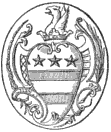
1.2.2.2.1.1.1.1.1.1. Lawrence Washington, born ca. 1500 in Trewitfield, juxta Carnforth/Warton. Charter – Feoffment: (1) Lawrence Washyngton of Soulgrave, gent. To (2) Sir Robert Tyrwhyt of Ketelbye, Kt. Of all (1)’s lands, meadows & pastures lying in or above the 2 closes of (2) at Muscott. 1563. (Northamptonshire Archives Service, Th 1324). Seal with raven’s head, cadency mark & initials “L W”. The private seal of George Washington displayed a gryphon rather than a raven.
George Washington, Last Will and Testament of George Washington, of Mount Vernon, p. 44, 1926:
“The branch of the family to which our (George) Washington immediately belongs sprang from Laurence Washington, Esquire, of Gray’s Inn, son of John Washington, of Warton, in Lancashire. This Laurence Washington was for some time mayor of Northampton, and on the dissolution of the priories by Henry VIII. he received, in 1538, a grant of the manor of Sulgrave, in Northamptonshire, with other lands in the vicinity, all confiscated property formerly belonging to the monastery of St. Andrew’s. (Washington Irving, Life of George Washington, vol. 1.). Inqest taken at Rothewell in Co. Northt 24th day of August, 26 Eliz. (1584) before Arthur Broke Esq. Escheator, after the death of Laurence Washington gent., by the oath of Henry Moore, William Craddocke &c. &c. Jurors, who say that Laurence Washington was seised in fee of the Manor of Sulgrave with the appurtenances to the Monastery of St. Andrew in the town of Northampton, lately belonging; also of all the messuages, lands &c. in Sulgrave & Woodford to the same Monastery belonging; also of one close of land &c. Here follows a long list of lands in various places. Laurence Washington (father) died on the 19th day of February now last past; Robert Washington his son & heir was aged 40 years & more at the time of taking this Inquisition”.
WASHINGTON TOMB ARMORIAL IN ST. LAWRENCE CHURCH
WASHINGTON WINDOW SELBY ABBEY
.2.2.2.1.1.1.1.2. Robert Washington (second son of the Robert who died in 1528), born ca. 1475.
1.2.2.2.1.1.1.1.2.1. Richard Washington,* cousin of Lawrence Washington, born ca. 1500 in Trewitfield, juxta Carnforth/Warton, ancestor of President George Washinton. He was born ca. 1505, in Kendal, Westmoreland, 5 miles S.W. of Grayrigg, and ca. 12 miles N. of Warton. He levied a fine on the Manor of Docker, county Westmoreland, 30 Henry VIII. (1538). His Will was dated June 26, 1553. He died January 2, 1554/5. By his wife, Ann Lund, he had issue:
1.2.2.2.1.1.1.2.1.1. James Washington, born in 1535, buried at St. Lawrence, Adwick-le-Street in 1579. Bargain & Sale. (1) Francis Windham of Norwich, esq. (2) Jas. Weshington of Adwicke by Street, Yorks., esq. For £155 (1) to (2) all messuages, lands, pastures etc. with appurts. in Langthwait, Bentlay, Arkesey & Adwick by Street in occ. of Richd. Atkinson. (2) to pay 2/6d. p.a. to (1) as lord of Bentlay manor & 4d. fine for every non-appearance of (2) in the manor court after due warning. Aug. 1, 1574. (Notts. Arch., DD/N/196/2).
1.2.2.2.1.1.1.1.3. John Washington; perhaps the Prior of Durham.
1.2.2.2.1.1.1.2. Thomas Washington, married Anne, sister of Richard Ducket Sr. of Grayrigg. *Richard Washington alienated the manor of Docker (juxta Grayrigg) in 1543, to Richard Ducket Jr.). 1469: Thomas Washington of Kendal, uncle (great-uncle) of Lawrence Washington of Sulgrave, by deed of gift conveyed to his son William, all his property in Stricklandgate and Stramongate, as well as his lands in a number of Westmorland villages. 1508: At agreement made August 25,, 24 Henry VII (1508) between Thomas Hesketh, “squier,” and Thomas Wesshyngton of Hallhede, “gentilman,” touching the claim of Thomas Wessheton to grave peats in a several close of the said Thomas Hesketh in Brenderyg. Witnesses: Ric. Dukett of Grayryg, the elder, “squier,” Ric. Hesketh, “gentilman lerned in the lawe,” Rouland Philipson. Transactions C. and W. A. and A. Soc., N.S. XV, 193. 1516: Inquest taken at Kirkby in Kendal October 23, 8 Henry VIII (1516), before Geoffrey Middilton, esquire, escheator. The jury say that: Thomas Wasshyngton on the day he died was seised of the manor of Hulhede, except one messuage, 60 acres of land, 6 acres meadow, 20 acres pasture, 10 acres wood in Croke late parcel of the said manor, of the yearly value of 66s. 8d. whereof Edmund Chamer, chaplain, and Gilbert Godmond then were seised in their demesne as of fee to the use of Anne late the wife of the said Thos Wasshyngton, who still lives, for term of her life and after her death to use of said Thos. Wasshyngton and his heirs. Thomas Wasshyngton died 10 August, 7 Henry VIII (1515), and Katherine, aged 10, Elizabeth, aged 8, Margaret, aged 3, and Joan, aged 2 years, are his daughters and nearest heirs. (Chanc. Inq. post mortem, ser. ii, vol. 31, n. 84). 1527: Richard Duckett (Jr.) of Grayrigg is bound in £40 to Ewan Gilpyne, William Carus, gentlemen, Walter Chamor and Miles Bek, yeomen, to make no claim to the tenant right of the demesne of Haulhede Hall. (Trans. C. and W. A. Soc., N.S. XIV, 80).
“Last Will and Testament of George Washington”, cont.
“But at what period the family became residents of the south of Yorkshire, I know not. The earliest notice which I possess is that of an Inquisition, taken at Doncaster in A.D. 1557 where we find James Washington associated with Thomas Wentworth de Woodhouse, John Holmes and Richard Barnard, Esqs., in a commission for the Queen, when it was found that the manor of Adwick-leStreet was sometimes held by John FitzWilliam, afterwards, by F. Telford, and now by James Washington Esq. (Dodsworth’s MSS., Bodl. Bib. Oxon.).
That the two branches, viz., that south of the River Trent, and that of Adwick-le-Street, are of the ancient line, seated in the bishoprick of Durham, is rendered more than probable by their heraldic ensigns, viz., Arg. two bars and three mullets in chief, gules, with the usual marks of difference. Those of Adwick-le-Street are the same, with a crescent arg. for difference. (The Historical Magazine, and Notes and Queries, p. 83, 1859).
A John Wessington was prior of Durham cathedral priory in 1416. (Nat. Arch., E 135/1/2).
The Washington Window in Selby Abbey is original fourteenth century glass, and contains the armorial bearings of the Washington family. It is situated in the south clerestory window of the choir. When Glover (the Herald) visited Selby in 1584-5 he described the escutcheon as ‘Argent, two bars and in chief three mullets pierced, gules’. The 14th century Washington coat of arms contains three stars above red and white stripes, and is one of the first known representations of the stars and stripes later used for the American flag. The window commemorates John Wessington, Prior of Durham (1416-1446).
WASHINGTONS OF ADWICK-LE- STREET continued:
1. James Washington. In 1553, James Washington and his father, Richard, bought (the reversionary lease) of the site and demesne lands of the Priory of Hampole, from John, Duke of Northumberland. By a deed of 1555, James Washington sold half of these interests to John Holmes of Owston. Feoffment. James Washington of Grayrigg, co. Westmoreland, gent., to John Holmes of Owston. Reciting a bargain and sale of Dec. 31, 1553, whereby John, Duke of Northumberland, sold to Washington and his father, Richard, the manor of Armthorpe, formerly held by Hampole Priory. Moiety of the manor of Armthorpe; to be held from the Queen, the chief Lord, for service of 1/20 of a knight’s fee and 24s.1½d annual rent. Dec. 12, 1555. (Donc. Arch., CD/109). Holmes v Shepparde. Plaintiffs: Francis Holmes, Esq. Defendants: Jennett Shepparde and John Shepparde. Subject: Claim under an assignment of lease, as heir to reversion. A messuage, land, and buildings in Hampall, Yorkshire, held by John Holmes, deceased, plaintiff’s father, and one James Washington, as tenant in common. After July 5, 1557. (C 2/Eliz/H4/58).
1.1. Richard Washington. Quitclaim: (1) *Richard Washington of Adwick le Street, gent. (2) Leonard Wray of Adwick, gent. A manor house with garden, orchard, fishery, dovecote, tofts and crofts lying in or adjacent to the demesne, and pasture, meadow, woods and coppices in Adwick, now in the tenure of Leonard Wray, and also 1 cottage, 1 croft, and 1 rod of land in the aforesaid demesne, now in the tenure of James Wrathe. July 23, 1588. (Donc. Arch., DD/DC/D/934). In this sense of quitclaim, Richard Washington was transferirng his legal interest in this property and land to Leonard Wray.
Richard Washington, 3rd son, baptised in 1556, married Mary, daughter of Thomas Wombwell. He was Treasurer of lame soldiers in 1624, and was buried in Adwick on September 20, 1634. He had two sons, Darcy Washington, baptised in Adwick on February 11, 1590, who preceded his younger brother, Richard, to University College Oxford. The latter was baptised at Adwick on October 10, 1602, and became a Bachelor of Divinity in 1634, and the Provost of Trinity College, Dublin, in 1640. He was buried at St Dunstan’s (in-the-west), London, in 1651, his administrator being his brother, Darcy, who had succeeded his father at Adwick in 1634. He had married Ann, daughter of Mathew Wentworth of Bretton, and styled himself as “of Hampole”. He and two of his sons took a prominent part on the Royalist side in the Civil War. One of them, James Washington, recovered his father’s sequestered estate, and married Elizabeth, daughter of William Copely of Sprotborough. His brother, Richard, was buried in the chancel of St. Lawrence.
Richard Washington, bur. Adwick 1634.
Richard Washington, bur. Adwick, grandson of the above noted.
Edward Miller, History and antiquities of Doncaster and its vicinity, p. 288, 1804:
This village, (about three miles northwards of Doncaster) from its name, is on the old Roman way or road into Scotland. The hall or mansion was built by Richard Washington, Esq. who resided in it, in the year 1673. He was owner, not only of a good estate here, but of nearly all the land extending from this village to Doncaster bridge. Part of the family yet remain, but are much reduced. In the year 1756, Anthony Eyre, Esq. father of the present Anthony Hardolph Eyre, of Grove, M. P. for Nottinghamshire, possessed the house and estate. They were afterwards the property of Charles Duncombe, Esq. who sold them to Mr. Thomas Bradford, a member of the corporation of Doncaster. He divided the estate, and sold the house with a part of the land to the present possessor, George Wroughton, Esq. lieutenant-colonel of the 3d West York militia, who has made great improvements both in the land, the houses, and gardens.
By a late survey of this parish, there are 280 inhabitants, 1416 acres of land, 300 acres of grass, 1116 acres of arable. The management of the land here, is much the same as what has already been described in this neighbourhood. The farmers, however, would find the advantage of paying more attention to the breed of their sheep.
Much hath been done, but more remains yet to be done. Exclusive of the value of their flesh and wool, sheep are the greatest improvers of land of any other animal. They bite closer, and destroy all kinds of weeds, except thistles and nettles. They tread the ground in a gradual, but continual manner, by which they fasten the earth, and do not break the swarth, or bruise the plant in wet soils: thus, the superfluous water is pressed out during wet weather; and, in dry weather, the drought is thereby prevented from getting in.
In addition to the land here, belonging to George Wroughton, Esq. Mr. Alderman Dunhill, of Doncaster, has 300 acres in this parish. Thomas FitzWilliam gave 9s. per annum, and one half of a certain measure (windell) of white peas, out of the lands here, to the priory of Monk Bretton. Ralph Haket gave two oxgangs of land here, with tofts, crofts, and a mediety of the mill, together with Ralph, the miller, and Hugh, brother of Thomas, with all their families and cattle to the said priory. Burt. monas. p. 92. Ann Savile, daughter of John Savile, of Methley, Esq. purchased the rectory of this place, and settled it in the hands of trustees, for the use of the church for ever. (Burt. p. 264).
(“Mrs. Ann Saville, of Methley, purchased it at the cost of £900, and settled it upon the church for ever. The Rev. Joshua Brook, being then incumbent, and having his income considerably enlarged by the addition of the rectory, built at his own cost the present parsonage house. The rectory is now worth £364 per annum”. (William White, pub., History, Gazetteer and Directory of the West-Riding, p. 153, 1838). Equivalent to £44,000 in 2025.
This church has lately been repaired and new seated. At present it is kept clean, and has a decent appearance. The parish register begins October 25, 1547, 1st of Edward VI. Baptisms. Among the most remarkable, are, John, son of Robert Arthington, baptised Aug. 27, 1548, afterwards six more of his children; John, son of James Washington, Esq. Aug. 10, 1562; afterwards five more of his children, which are followed by entries of the families of Ward, Bosvile, Stanhope, Shores, of Hampshall, and four children of Anthony Eyre, Esq. of Adwick.
Burials:
The principal are:
Darcy Washington, Esq. Sept. 25, 1658.
Elizabeth, daughter of the above, Feb. 8, 1667.
James, son of Richard Washington, Esq. March 15, 1668.
William Adams, Esq. of Hampshall, Feb. 6, 1672.
Elizabeth Washington, widow, April 4, 1722.
Grace Washington, widow, June 26, 1733.
Edward Radcliffe, Aug. 23, 1763.
Monuments:
In the chancel are two old monuments of the altar form, of the family of Washington, with their arms, viz. two bars, and three small mullets in chief gules.
Hic jacet Leonardus Washington, Armiger, who died 3d day of August, 1590.
Hic jacet Ricardus Washington, Armiger, de Adwick, obiit An. Etatis suæ 39, Anno Dom. 1678.
Among others on the floor, the inscriptions nearly obliterated, is the following:
Here lies the body of Mr. Godfrey Washington, third son of James Washington, of Adwick on the street, Esq. who lived to about the age of seventy. He was beloved of all that knew him, and at his death equally lamented. He was a faithful friend, and died a bachelor, 15th of December, 1709.
Darcy Washington, Esq. bur. Adwick 1658.
Elizabeth Washington, bur, Adwick 1667.
James Washington, bur. Adwick 1668.
WOODLANDS
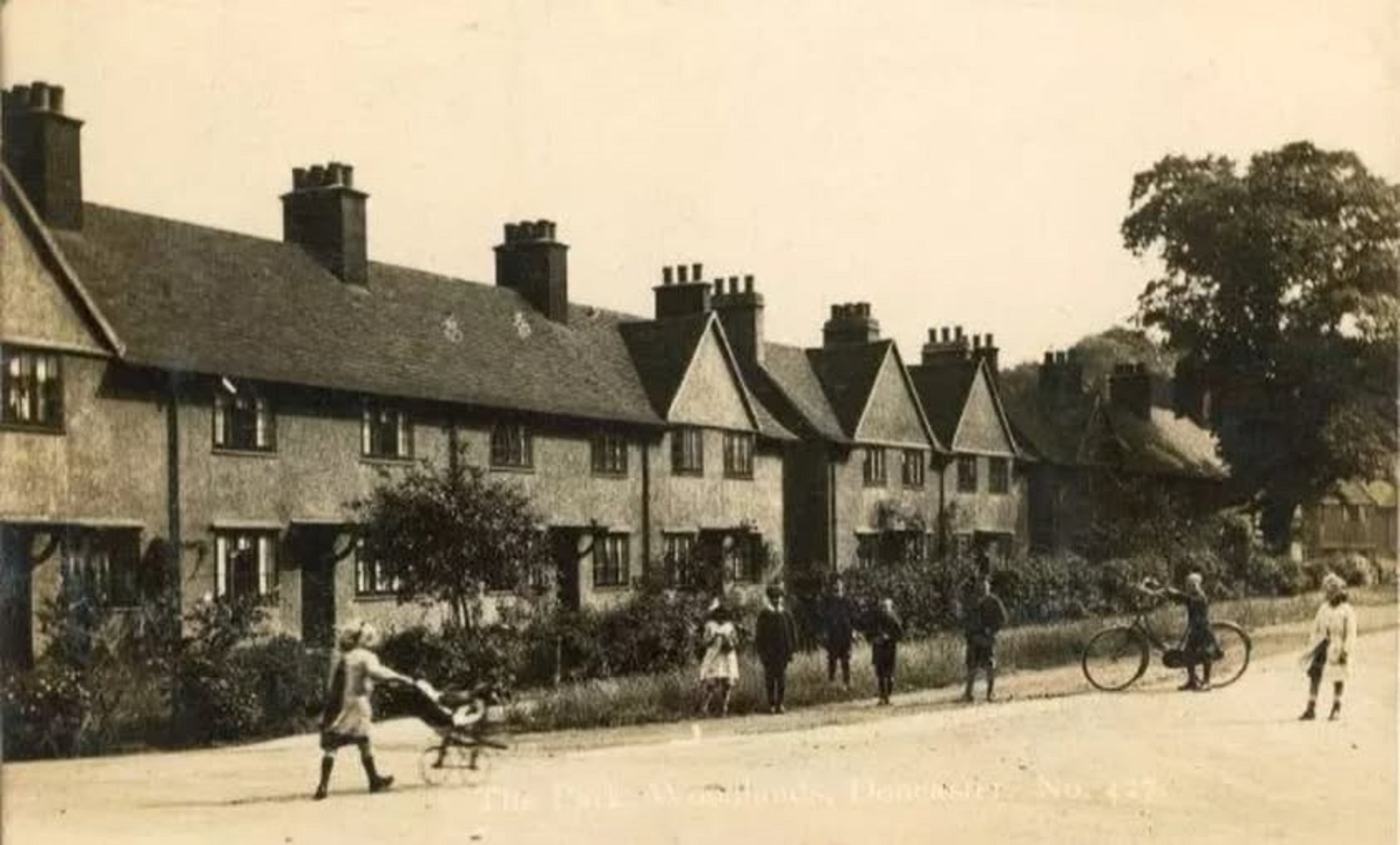
This mansion, in the parish of Adwick, was built by the before-mentioned Thomas Bradford, who sold it, with a small quantity of adjoining land, to its present possessor, Christopher Waterton, Esq. This gentleman has considerably advanced the value of this estate, by the purchase of more land of Sir George Cooke, Bart. together with a small wood near the mansion, known by the name of Hanging Wood. Probably it took this name from being a notorious haunt for robbers, particularly of the famous highwayman Nevison; of whom the following anecdote is related:
Near this wood, he met the steward of Sir George Cooke, of Wheatley, Bart. travelled with him some way on the road, and then clapping a pistol to his breast, unloaded him of all the money he had received from the tenants, wished him a good night, and desired him to present his compliments to his master, and inform him that the name of the person who robbed him was Nevison.
THE PARK WOODLANDS
Hunter’s “South Yorkshire”, 1828:
Catalogue of the Rectors of Adwick-le-Street:
Joshua Brooke, instituted July 29, 1682, on the presenration of John Saville of Methley, He enjoyed the kiving 40 years, as appears by his monumental inscrption in the church, He died in 1720.
Jonathon Beighton, instituted January 2, 1721, on the presentation of Henry Savile, a minor, with the consent of his mother and guardian, Mary Savile. He is styled vicar in his monumental inscrption, as are his successors, Leech and Bache. Mr. Beighton died much lamented July 14, 1731, aged 35.
Joseph Leech, instituted September 13, 1731, on the presentation of John Finch, esq., and Elizabeth his wife.
Sharington Bache, instituted November 13, 1736, on the same presentation, and held the living till his death, March 10, 1772, aged 72. he was buried in the church.
William Hedges, M.A. He had also the rectory of Thribergh, where he died May 7, 1811, aged 92.
Henry Stephen Milner, D.D, 1811,the present incumbent of Adwick and Thribergh.
Mr. Brooke’s monument is thus inscribed:
Here lies the most reverend man Joshua Brooke. In his pastoral office (for about forty years) he applied diligence to his appropriate duties. He was serious yet approachable, cheerful without frivolity, modest with the highest honors of literature, desired by all who knew him. He died on the 12th day of August, in the year of our Lord 1720, aged 73.
There are also memorials of Thomas Harrison, 1680, Richard Moore, 1788, and Richard Hall, 1793, all curates at this place. Elizabeth, widow of Joshua Brooke, 1723, aged 58, and others of the family. Mary, wife of Jonathan Beighton. Catherine, daughter of William Mainwaring. Ann, widow of Rev. John Denton, rector of Ashstead in Surrey, mother of Mrs. G. Wroughton, 1799. Turner, Mottershead, Walker, Stephenson, Jenkinson, and Bayley.
A New and Complete History of the County of York 171, 1831: Adwick-le-Street is situate four miles from Doncaster, and has a population of three hundred and forty-six persons. The manor is the property of George Wroughton, Esq. whose mansion is situate near the church.The entire parish contains four hundred and eighty six inhabitants. The benefice is a vicarage in the gift of J. Fullerton, Esq. and is valued in the Liber regis at £4. 13s. 4d. The ancient church (dedicated to St. Lawrence) of this parish, consisted of a nave and chancel only, a tower, and north aisle. The principal entrance in the south side has the circular arch and cylindrical columns which prevailed in the architecture of the twelfth century.
In the north aisle of the chancel are three ancient tombs:
One has the effigy of a man, his head resting on a pillow, which is carved lozengée. A small part of the inscription remains, viz. ” Hic jacet Jacobus”. A large tomb of freestone, the upper surface of which is elaborately carved, having in the centre the arms of FitzWilliam, within a border, quartering those of Passlew, a fess between three mullets pierced, and at each corner the arms of FitzWilliam and Passlew. It is to the memory of John FitzWilliam, Esq. who died in 1470, and Amicia, his wife, who died in 1477.
In the north-east corner of this chapel is another altar tomb, less ornamented than the one last described, to the memory of Leonard Wray, who died in 1590.
Under an arch, between the north aisle and chancel, is a large altar tomb to the memory of an early Washington. The sides are decorated with shields of arms of Washington and Anlaby. The tomb is of freestone, covered by a marble slab, on which are traced the effigies of a man and woman and twelve smaller figures. He is represented in a hat and ruff, with his sword.
Samuel Lewis, “Topographical Dictionary”, 1835: Adwick-le-Street (St, Lawrence), a parish, in the Northern Division of the wapentake of Strafforth and Tickhill, West Riding of the county of York, containing 536 inhabitants, of which number, 382 are in the township of Adwick-le-Street, 4 miles (N. W. by N.) from Doncaster. The living is a rectory, in the archdeaconry and diocese of York, valued in the king’s books at £4. 13.4.; present net income, £364; patron, T. Fullerton, Esq. This place is said to derive the adjunct to its name from its situation on a Roman road. Here is a free school, with an endowment of £10 per annum, bequeathed by the Rev. William Hedges, a late incumbent, for the education of children. “Object: Teaching 10 poor children in reading and writing in one course of annual schooling”. (Great Britain Committee of Education, p.251, 1850).
Charles William Hatfield, Historical Notices of Doncaster, Ancient and Modern Hostelries, p. 98, 1870: “A spring of pure water, in this parish, is in great repute for healing sore eyes“.
History, gazetteer, and directory of the West-riding of Yorkshire, vol 2, 153, 1838: Adwick-le-Street is a pleasant village, on an eastern declivity, near the site of the Roman road from York to Doncaster, 4 miles N.N.W. of the latter town. It is watered by a rivulet that flows eastward to the Don, and bounds the fertile plain which extends to the Humber, Ouse, and Trent. The parish comprises the townships of Adwick-le-Street and Hampole, the former having 382 inhabitants, and 1614 acres, including roads, plantations, and drains, belonging to several freeholders, the largest of whom are the trustees of the late Peter Thellusson, owners of the Red House and other estates; Mrs. Diana Wroughton, lady of the manor, and owner of Adwick Hall, an ancient mansion, occupied as a boarding school; and the executors of the late Robert Waterton, owners of the Woodlands, a neat mansion, in a romantic dell, embowered in extensive woods and plantations, among which are several small lakes.
The church, dedicated to St. Lawrence, is a neat structure, with a nave, chancel, north aisle, and tower, and has several ancient altar tombs, in memory of the FitzWilliam, Washington, and other families, some of them richly carved. Albrede de Lisureo gave the rectory of this church to Hampole Nunnery; but after the dissolution of that monastery, Ann Saville, of Methley, purchased it at the cost of £900, and settled it upon the church for ever. The Rev. Joshua Brook, being then incumbent, and having his income considerably enlarged by the addition of the rectory, built at his own cost the present parsonage house. The rectory is now worth £364 per annum, though only valued as a vicarage in the King’s books at £4. 13s. 4d. J. Fullerton, Esq. is the patron, and the Rev. Henry Stephen Milner, L.L.D., is the incumbent. The school, rebuilt about two years ago, is endowed with the dividends of £350, three per cent. reduced annuities, bequeathed in 1811 by the Rev. Wm. Hedges, the late rector, who also left £200 of the same stock for the poor of Adwick and Thribergh parishes, in trust with the rectors for the time being; but both livings are now held by Dr. Milner. The poor of Adwick have the following yearly rent charges :-viz. 20s. left by Wm. Adams, in 1593, out of Howfield close, in Owston; 10s. 6d. out of a farm at Pigburn; 13s. 4d. out of Hooton Pagnell tithes; and 13s. 4d. out of land in Scawsby, left by Thomas Cartwright, alias Vicars.
Hampole, a small village and townsnip, 6 miles N.W. of Doncaster, has 154 inhabitants, and about 1200 acres; of which 130 are in woods and plantations. Lord Randlesham, and the other trustees of the late Peter Thellusson, Esq., are owners of the soil and lords of the manor, which is tithe-free, from its being the demense of the Prory of Nuns, which was founded here (by 1152), by Wm. de Clairfait and Alicia, his wife. Speed estimated its yearly income at £83. 6s. 11d. In 1540, the last prioress and about 14 nuns surrendered the house, and received pensions amounting to £10 per annum. Some remains of the priory, chiefly converted into two cottages, are still to be seen at the foot of the declivity below the villag
The London Gazette, part 1, p. 424, 1840: To be sold, pursuant to Decree of the High Court of Chancery, made in a cause Chadwick versus Marriott, with the approbation of Lord Henley, one of the Masters of this Honourable Court. A freehold estate, situate at Adwick-le-street, adjoining the Great North-road, four miles north of the town of Doncaster, in the west riding of Yorkshire, comprising a homestead, cottage, blacksmith’s shop, butcher’s shop, large barn, and other buildings, in the village of Adwick-le-street, together with several closes, pieces, or parcels of arable, meadow, and pasture land, containing altogether about 64 a. in the occupation of Mr. Richard Marriott.
FORESTERS ARMS
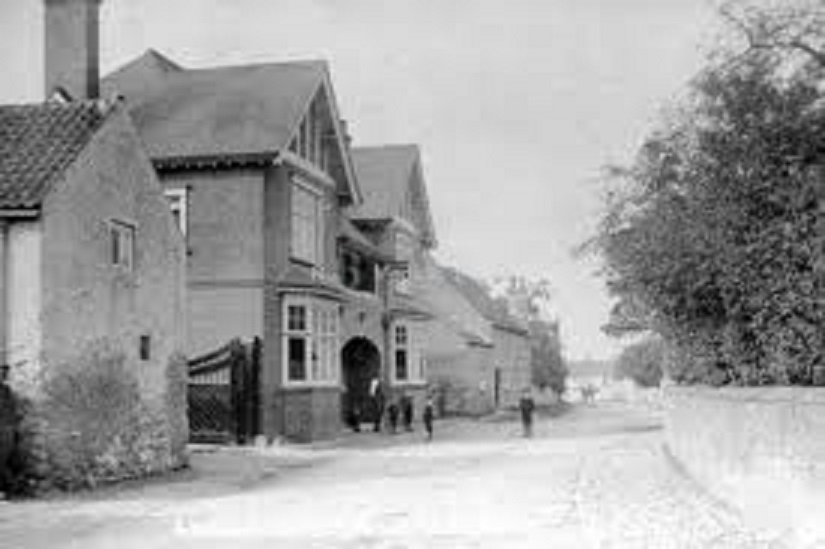
There is no municipal record of a public house receiving a licence in Adwick-le-Street before 1827, at which date the House of Commons (Sessional Papers, vol. 72, p. 158, 1901), records that the Adwick-le-Street Poor Man’s Friendly Society was first established, and met in the Forester’s Arms until 1912. There are also no archival, gazeteer, or estate accounts showing the existence of a publiv house in Adwick-le-Street before 1827.
ADWICK MILL LANE
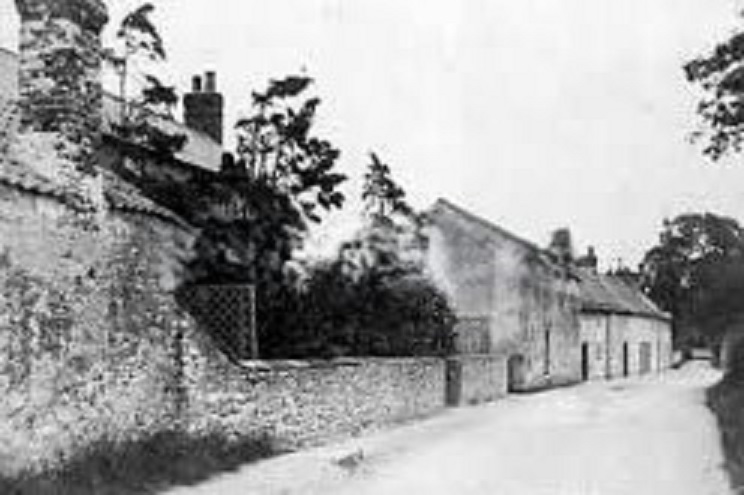
Townsend’s Gazeteer, 1852: Adwick-le-street, a pleasant village 4 miles N.N.W. of Doncaster, is near the line of the Roman road which led to York. Its township contains 342 souls and 1530 acres; but its parish includes Hampole township, which has 138 souls and 1420 acres. The soil belongs to the trustees of the late Peter Thellusson, Esq., and many smaller owners. The Church (St. Lawrence,) is a neat structure, containing several ancient monuments; and a chapel, which has lately been restored by Mrs. White, of Doncaster, one of the heirs of the Wroughton family, to whom it belonged as lords of the manor. The rectory (now council offices) has 8 a. of glebe, a neat residence, and £442. 4s. a year in lieu of tithes. J. Fullerton, Esq., is patron, and the Rev. T. M. Symonds, incumbent. The school has an endowment of about £11 per annum, and the poor have several benefactions.
Occupations:
John Askham, miller.
George Atkinson, William Bailey, George Spurr, butchers.
Joseph Bottomley, parish clerk.
John Butler, T Varley, tailors.
Edward Clark, victualer, Forester’s Arms.
Thomas Clark, blacksmith.
Mrs Elmsall, and W. and M. de C., esquires, Woodlands.
Eliz. Guest, and Ray M., shopkeepers.
Richard Ibeson, surgeon.
Sarah Priestley, victualer, Red House.
Thomas Spencer, schoolmaster.
Robert Symonds, Thomas Martyn M.A., rectory.
Wm. Workman, high constable.
Farmers:
John Atkinson.
Thomas Atkinson.
Thomas Dunhill.
William Marriot.
Shoemakers.
Joseph Auty.
John Lister.
Thomas Lorriman.
ADWICK HALL
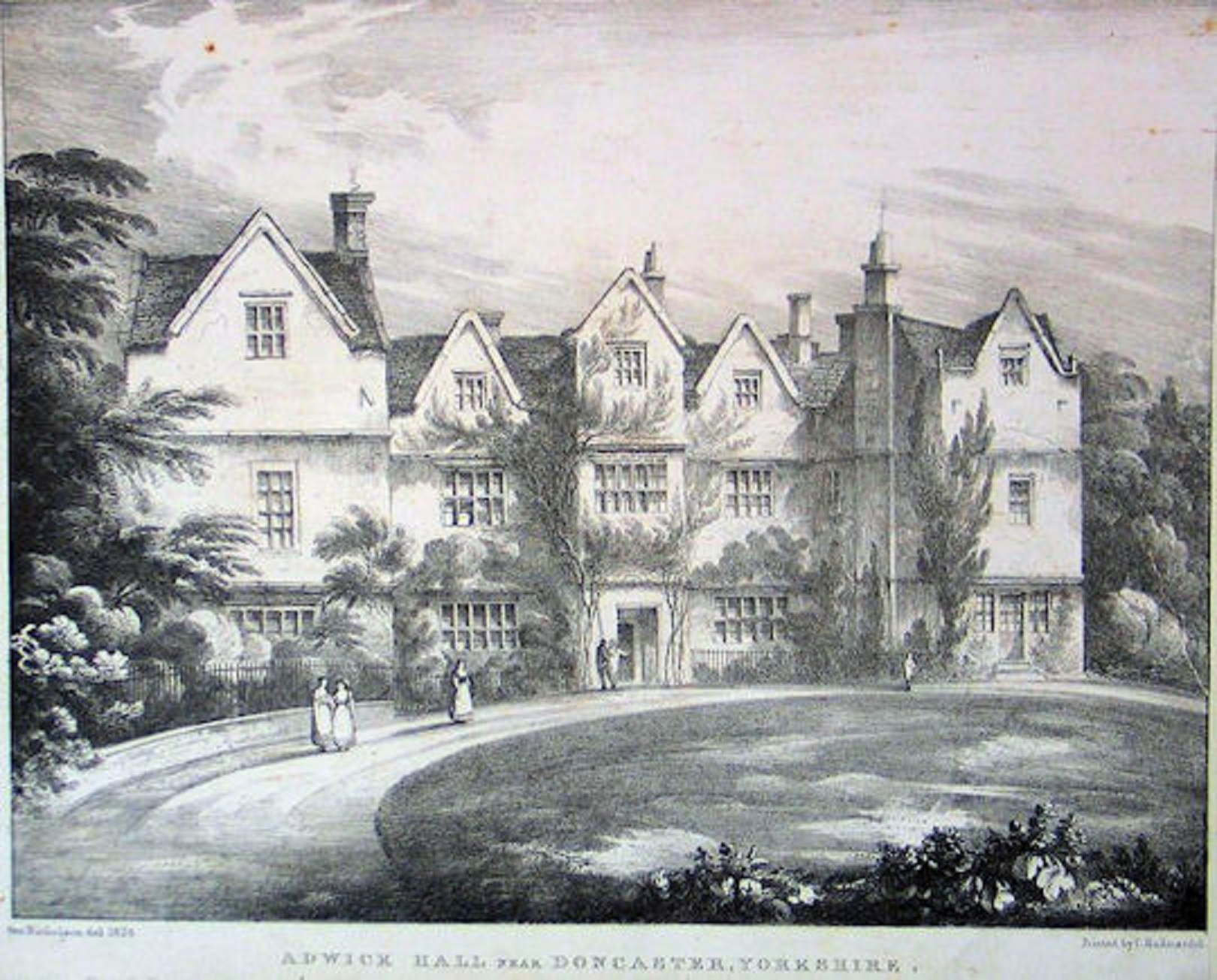
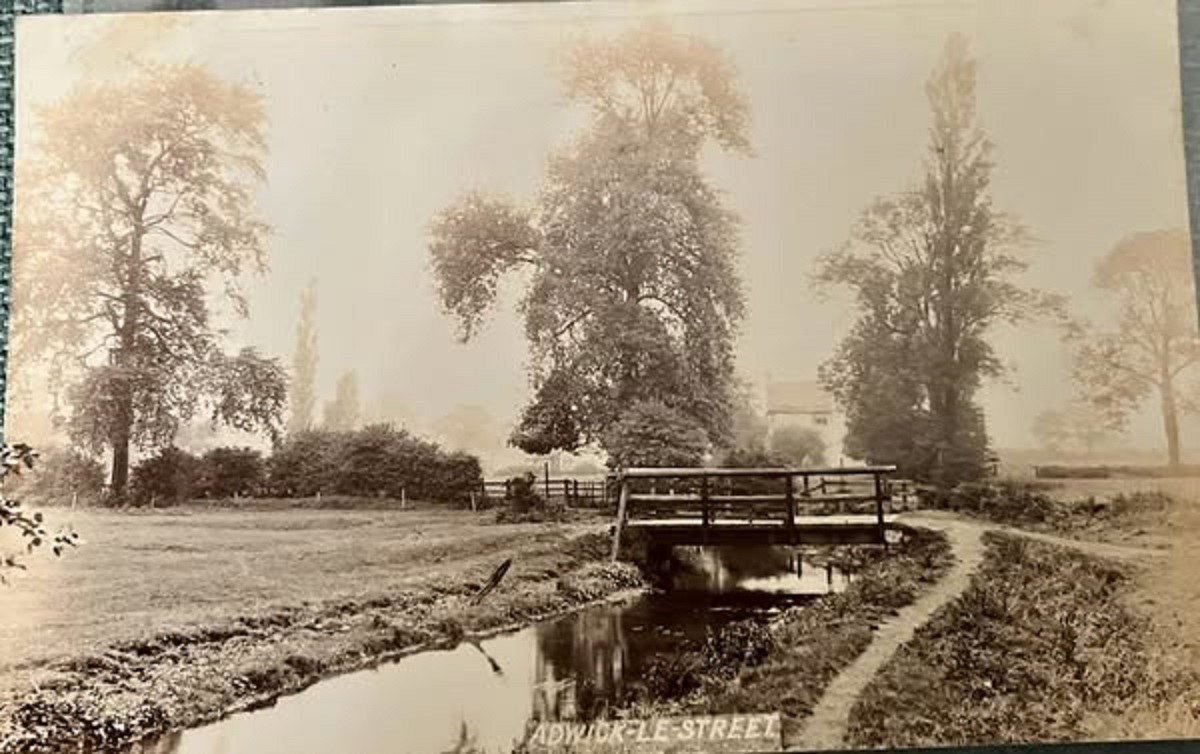
MILL AND STREAM
The Church Builder, p. 171, 171 1862:
St. Lawrence’s, Adwick-le-Street, Diocese, York. Architect, Mr. Teale. Accommodation, 240, all free. The old pews have given place to neat open stalls; the ceiling has been removed, and an open carved oak roof substituted. The western gallery has been taken down, and the tower arch opened, by which change much additional room has been obtained. A stained glass window has been placed at the east end, and a new font has been presented by Mr. A. Smith. As frequently happens, a great part of the present renovation consists of an undoing of the work done by the “renovators” of ninety years ago. Reopened June 19, 1862.
The Builder, vol. 33, p. 536, 1875:
Adwick-le-Street. During the last few weeks considerable alterations and improvements have been made to the church at Adwick-le-Street, the principal portion of the cost being defrayed by Mr. Thomas Walker, of Woodlands. Through this gentleman’s liberality a new south front of stone has been built, and a new porch erected, the latter being constructed of stone, oak, and glass.
This work has been carried out under the superintendence of Mr. W. M. Teulon, of London, by Mr. A. Clark, builder, of Adwick-le-Street. Additional interest has been added to the church by the insertion of two stained-glass windows, the work of Messrs. Ward & Hughes. The church floor has also been newly laid with tiles. The nave has been covered with plain, the chancel with plain and encaustic, and the reredos with glazed tiles. The cost has been about 800l
(Church “alterations” were not confined to the very distant past: The Sheffield Diocesan Advisory Committee was involved in a project at the Lady Chapel, which included the removal of two original lancet windows in the east wall and substituting for them a new three-light copy of a fourteenth century window by way of memorial. (Report of the Committee at the Annual Meeting, issues 62-66, p. 23, 1938).
The Builder, vol. 34, p. 747, 1876: New Farm Buildings near Doncaster. New farm buildings have lately been erected at Woodlands, Adwick-le-street, near Doncaster. The buildings are erected with old stone, resulting from the demolition of former buildings; the door and window jambs and arches being of red brick, as well as some horizontal bands; the roofs covered with slate. There are three foldyards, two of which are covered, and the other open. The cost of these buildings will be £1,986. The designs for the buildings have been prepared, and the works superintended, by Mr. W. M. Teulon, architect, London; and executed, the general works by Mr. Alexander Clark, builder, of Adwick; and the cottages by Mr. Roberts, carpenter, of Adwick, and Mr. Fisher, of Carcroft.
Bloom’s Heraldry in the Churches of the West Riding, June 19th, 1892: Hatchment in north chapel. Quarterly 1. and iv. gu. a bordure or. charged with eight mullets of six points arg., on a canton of the last a lion ramp. gu. (White, of Doncaster); ii.. and iii.. vert. a lion ramp. or. (O’Farrell) imp. sa. two bars and in chief three cinqfoils arg. (Denton, of Ashstead). Esquire’s helmet mantled arg. and gu., an ostrich ppr. (White), ii,. on a wreath or. and sa. a greyhound courant arg. (O’Farrell).
On a mural monument, north wall of north chapel, to John White, of Doncaster, who d. Aug. 16th, 1834, aged 76. He was son of Col. John White, of Lower Brook Street, London; and Elizabeth, dau. and h. of Major General O’Farrell, Governor of Minorca; also of Matilda White, his relict, dau. of the Rev. Thomas Denton, Rector of Ashstead, Surrey, d. April 1st, 1834, aged 90.
On a tablet in the chancel, inscribed as follows: Sacred to the memory of Joseph Edward Greaves Elmsall, Esq., of Woodlands, in this parish, who departed this life July 5th, 1851, aged 59. He held the rank of Major in the army, and served the campaign of 1815 with the 1st Dragoon Guards, and was present in the action of Quatre Bras and the Battle of Waterloo. He was also Lieutenant Colonel of the Ist West Yorkshire Yeomanry Cavalry, and a Magistrate for the West Riding.
Arms (carved). Quarted, two bars betw. ten elm leaves (Elmsall); an eagle displayed (Greaves); a chev, betw. three fleur-de-lis (Clay); three martlets (Lawson); two chevronels betw. three trefoils (Cardonnel); two bars (Hylton). Crests, i.. an elm tree entwined round the trunk with a vine fruited ppr. (Elmsall), ii., on a mount a stag trippant in the mouth a slip of oak (Greaves). Motto, Amicta Vitibus Ulmo (clad with vines the elm).
On a silver flagon:
This flagon was a legacy left by the late Mrs. Leach, of Ackworth, grand-daughter of the late John Savile, Esq., of Thryberg, to the Parish Church of Adwick, and he d. 1st of May, 1757. Arms: in a lozenge, tinctured by lines, arg. on a bend sa. three owls of the field (Savile).
Ella S. Armitage, A Key to English Antiquities, p. 208, 1897:
Adwick-le-Street; St. Lawrence. The name le-Street marks the proximity of Adwick to the Roman road from Doncaster to Castleford, the Ermyn Street. The church was given to the nuns of Hampole by Albreda, lady of Sprotborough. It has remains of Norman work which look earlier than Albreda’s time. The S. doorway is early Norman, with rude cushion capitals. The S. wall of the chancel is evidently Norman, as it contains traces of two former Norman windows and a door with a segmental arch; it also preserves the very interesting Norman sedilia, (with two seats only), and a square-headed piscina. The E. wall of the chancel presents some good examples of E. E. (early English, 1190-1250) buttresses, both the long and the short kind; the round window in the gable is probably E. E. It matches the one in the N. chantry, which is an interesting piece of E. E. work, preserving several of its lancet windows. The E. window of the chancel is modern, but the square window on the S. wall with double shoulder headed lights appears to be an E. E. insertion, though much restored.
There is a small arch inserted in the tower wall, which may very possibly belong to the piscina of the N. chantry. The roof of the chancel is ancient, and might be Dec. (1290-1350). In Perp. times (1335-1530), the tower was added, the N. aisle thrown out, and the chancel arch built; a botchy half arch, worthy of Perp. work, joins it to the chantry wall. The nave roof is a Perp. tie-beam roof. The S. wall of the nave has been rebuilt recently and the porch added; the windows are all modern, while those in the N. wall are Perp. Under the tower is a stone with an in-cut cross fleury, and there are three altar tombs in the chantry to the Washington family; the oldest, dated 1579, is to “Dominus Jacobus Washington, armiger, de Adwycke,” and has rude intaglios of the knight, his wife, and 12 children. On his breast he bears a shield with the stars and stripes, which are also figured on the shields round the tomb, and on the two other tombs.
GENEALOGIES RELATING TO ADWICK-LE-STREET
1. Fulk de Lisours.
1.1. Robert de Lisours.
1.1.1. Albreda de Lisours, born ca. 1120, m. (2) William FitzGodric (de Clarfait). By Avicia he had a dau., who married Ralph de Tilli, having sons, Ralph and Roger de Tilli, benefactors of Hampole Priory. (Mon. Angl. vol. 1. p. 831). The armorial bearing of FitzWilliams, lozengée argent and gules, was also used by the Tillis, differenced only by a canton. The FitzWilliams, of Adwick, surrounded it with a blue border.
(To repeat, Sir William FitzWilliam, of Sprotborough may have been a son of a brother of Robert de Lisoures, as heretofore given; a William de Avic (Adwick).
1.1.1. Sir William FitzWilliam, of Sprotborough, died Feb. 23, 1224, supposedly married (1) Ela, dau. of Hameline Plantagenet, builder of Conisbrough Castle, natural brother to King Henry Il. and Earl of Surrey, in right of his wife, Isabel, dau. of William de Warren, Earl of Surrey. (2) Matilda. It is not known by which wife he had issue, but the armorial shield of the later FitzWilliams in St Lawrence’s Church, Adwick-le-Street, as extant in 1621, displayed the arms of Warren, indicative of intermarriage (whether true or not). 1.1.1.1. Sir Thomas FitzWilliam, m. Agnes, dau. of Roger Bertram, baron of Mitford, in Northumberland, 1187-1242. Roger Bertram grants to him his manor of Stainton in frank marriage with Agnes his daughter, and 50 shillings rent in Gretam to him and their joint heirs. The three sisters of Agnes were married to the families of Darcy, Roos, and Vere, conferring political alliances to their family. Agnes survived her husband, for William FitzWilliam, her son, granted the manor of Plumtree to her in dower. The prior and convent of Blythe granted to Thomas FitzWilliam a daily mass, and for the soul of his father and mother, ancestors and successors; and for this purpose a particular monk was to be assigned. This grant must have been made to him between 1238 and 1253. (Thomas FitzWilliam and Agnes Bertram had issue: daughters, (1) Albreda, to whom her father granted 12 bovates and 10 acres in Darrington on her marriage with Richard Walleis. (2) Agnes, who, in a charter of 44 Henry III. (1259) is described as “Damicellam Agnetem filiam Dni Tho. fil. Wil. Dni de Emmeley”, by which she grants to Sir Roger Bertram all her manors and lands of Hangthwaite, Adwick, Shippens, and Stotfold. There is another charter by which William FitzThomas, her eldest brother, grants to Agnes, wife of William de Lisours, all land which he had of the grant of Agnes his mother in Plumtree). 1.1.1.1.1. Sir William FitzThomas, married (1) Agnes. There have been several conjectures as to her parentage, which cannot be substantiated. He was seised of four Knight’s fees in the honour of Pontefract, viz. one in Darrington, and three of Lisours, in Sprotburgh, Cadeby, and Adwick. *An amount of land deemed sufficient to support a knight, in return for him providing military service to his overlord.
1.1.1.1.1.1. William FitzWilliam, married Isabella (probably Deincourt). In 1325, there was a fine between him, quer., and Edmund Deincourt, and Edmund, parson of the church of Plumtree, deforciant, of the manor of Plumtree with the appurtenances, whereby it was settled on William, remainder to John his son, remainder to Thomas brother of John, remainder to Joan, Agnes, and Isabel, his sisters. William FitzWilliam died by 1342, when Isabel, his relict, presented a clerk to the church of Sprotborough. In 1347, she presented to Emley. Her Will was made on Friday the feast of St. James the Apostle, 1348. She desires to be buried in the chapel of St. Thomas the Martyr in the church of Sprotborough, next to her husband. She mentions John her son, with Joan his wife, and John, William, and Elizabeth, his childre
Confirmation of grants: Given in the year A.D. 1300, a translation:
“William the, son of William lord of Sprotborough, greetings. Know that I have examined the charters and grants of my ancestors to the nuns of Hanepole, firstly, the charter of Aubrey de Lisours, testifying that she gave them the church of Athewik; also the charter of John, Constable of Chester, son of the said Aubrey, confirming this donation. Moreover, I have examined the charter of William, the son of William, son and heir of Aubrey de Lisours, which confirmed the gift of his mother to the the church of Athewyk, at the annual rent of twenty shillings, from which the said nuns were to buy olive oil, so that one lamp was constantly burning night and day for *Matilda, his former wife. I have also examined the confirmation of Thomas the son of William, testifying that the same Thomas confirms the gift of Aubrey de Lisours, his grandmother, and William his father. I have also examined the charter of William, the son of Thomas, lord of Sprotborough, my father, testifying that the same William confirms to the nuns of Hanepol thirty shillings of rent from Athewyk. Witnesses, lords, John de Eland, Roger de Newmarche, Thomas de Metham”.
1.1.1.1.1.1.1. Sir John FitzWilliam, married Joan, daughter of Sir Adam Reresby, lord of Thribergh, in right of his mother. John FitzWilliam had a short enjoyment of the family estates. He died in the great pestilence of 1349. His inquisition p. m. was taken in 1350, by which he was found to have died seised of the manors of Darrington, Emley, and Sprotborough, with certain rents in Wentbridge, Wombwell, and Dalton.
RERESBY
1. Sir Adam Reresby, Knt. by Anne, daughter of Sir Andrew Beke.
1.1. Elizabeth Reresby, married Sir William Green, of Newby, Lincs.
1.2. Alexander Reresby, married Amarilla, daughter of … Omfields.
1.2.1. Ralph Reresby, married Margery, sister and heir of Ralph Normanville, lord of Thribergh.
1.2.1.1. Sir Adam de Reresby, lord of Thribergh.
1.2.1.1.1. Ralph Reresby, married Dorothy, daughter of Thomas Bradborne, of Bradborne, Esquire.
1.2.1.1.1.1. Sir Thomas Reresby, married Cecily, daughter and co-heir of Richard Gotham, of Brimsforth, near Rotherham, Esquire. Grant. (1) Margery d. of John Smyht of Conisburgh. (2) Wm. Clarell of Aldwerk. (1) to (2) a toft in Adwik. Witn.: Thos. de Reresby and John Saywell, kts., Jas. Clarel. At Adwik, Mon. before St. John Baptist, 42 Edw.III., June 19, 1368. (Notts Arch., DD/FJ/1/194/45).
1.2.1.1.1.1.1. Sir Thomas Reresby, married Lucia, daughter of John Sheffield, Esquire.
1.2.1.1.1.1.1.1. Sir Thomas Reresby, died in 1439, identity of wife uncertain.
1.2.1.1.1.1.1.1.1. Ralph Reresby, Esquire, died on June 1, 1466, married Agnes, daughter of Sir John Stapleton, of Wighill, com. Ebor.
1.2.1.1.1.1.1.1.1.1. Ralph Reresby, died in 1530, married Margaret, daughter of Richard FitzWilliam, of Aldwarke, near Thribergh, as follows. Fitzwilliam v Reresby. Plaintiffs: William FitzWilliam, knight. Defendants: Rauf Reresby and John Anne, feoffees to uses. Subject: The manor of Adwick, and messuages and land there, the reversion of which was bought of William FitzWilliam, of Sprotborough. Yorkshire. 1515-1518. (C 1/408/7). Lease (counterpart) (1) Sir Wm. FitzWilliam. (2) Rich. Fletcher of Bentley, his servant. (1) to (2) manor of Athewyk, excepting wards, marriages, mines, etc.; for 20 years, £22 p.a. Sig. and seal of (2). Feb. 8, 28 Hen. VIII. (1535). (Notts. Arch., DD/FJ/7/36/11).
Ralph Reresby and John Anne bought the reversionay lease of the manor of Adwick from Sir William FitzWilliam between 1515-1518.
Sir William FitzWilliam granted the reversionary lease of the manor of Adwick to Richard Fletcher, of Bentley, his servant, in 1535, the lease expiring in 1555.
1.2.1.1.1.1.1.1.1.1.1. Elizabeth Reresby, married John Bosvile of Newhall.
1.2.1.1.1.1.1.1.1.1.2. Isabella Reresby, married Robert Eure of Belton, Lincs., son-in-law of Margaret FitzWilliam, the sister of Sir Thomas FitzWilliam , who married Lucy, daughter of John Nevill, Marquis of Montacute, and Elizabeth FitzWilliam, who married her kinsman, John FitzWilliam, who died in 1498, and made Lucy Nevill his executrix.
1.2.1.1.1.1.1.1.1.1.3. Thomas Reresby, of Thribergh, Esquire, married Elizabeth, daughter of John Fulnetby (of Fulnetby, Lincs., Esquire), and Joan, daughter of Thomas Tours. Joan was the sister of Elizabeth Tours, who married Gerard Sothill, the son of Joan FitzWilliam and Henry Sothill; she the daughter of Sir William FitzWilliam, and Maud, daughter of Sir Ralph, 1st lord Cromwell of Tattershall.
(By 1316, a paramount part of Adwick manor was supposedly “sold” to several families, including those of “Johannes de Tours”, and “Johannes de Tybbetoft”. (Kirby’s Inquest of Knights’ fees, or the Nomina Villarum For Yorkshire, published by the Surtees Society, 1867, p. 366). The de Tours family were from Cabourn., Lincs.. Robert de Tours to Ralph, Earl of Chester and Lincoln: Grant of land in Cabourn, Lincs. 1217-1232. (DL 25/3124). Apparently, a lesser part of Adwick manor was retained by the FitzWilliams. A certain caution is required when considering designations of “ownership”, as land was often leased to others for a fixed (reversionary) term. It may be that John de Tours and John de Tybbetoft were leasees of the FitzWilliams. John de Tours is not subsequently noted as “owning” a substantial amount of land in Adwick. In 1335, John de Tours and Agnes his wife v. Margaret, Prioress of Hampol, touching an acre of land in Athewyk which they claim as their right. (De Banco, Trin. 9 Edw. III. m. 222 d.).
FITZWILLIAM cont.
1.1.1.1.1.1.1.1. John FitzWilliam, 1327–1382: “Receipt, Idonea, Prioress of Hanepoll has received from John FitzWilliam, 10 shillings of her farm in Plumtree juxta Scroby, called Oilsilum. At Hanepole, on the Feast of St Andrew, November 30, 1369”. Sir John FitzWilliam, knight, presented a clerk to the church of Sprotborough. He held the family estates till 1382. In 9 Richard II., 1385, Elizabeth, his widow, appealed in the king’s bench for the death of her husband, against one Roger Spark, a servant of John Aske, Richard Hudson, of Hemingborough, and John Aske, of Ousethorpe. Her allegation was, that Spark slew her husband, that Hudson was present, aiding and abetting, and that Aske received them on the same day
(John FitzWilliam and Elizabeth had issue: Joan, who married Thomas, son and heir of Miles de Stapleton, as given in a covenant of 1373. Ann, wife of sir Henry Hastings, and Isabel of Sir Bryan Thornhill; also a younger son, named Richard, who is probably the Richard FitzWilliam, of Sprotborough, who by his Will, made at the Abbey of Meaux on Sept. 3, 1398, requested be buried in the church of St. Mary at Sprotborough, to which he left five marks to buy two candlesticks).1.1.1.1.1.1.1.1.1. Sir William FitzWilliam, married (bef. 1377), Maud, daughter of Sir Ralph, 1st lord Cromwell of Tattershal, and Maud Bernake. The FitzWilliams became heirs to the Cromwell estates on failure of the male line of Cromwell. Sir William FitzWilliam and Maud had issue, two daughters: Joan, who married Sir Henry Sothill, Esquire, and Elizabeth, who married Sir Robert Rockley. Joan FitzWilliam and Henry Sothill had issue: Gerard Sothill.
Copy of a deeds concerning the manor of Brinkhill, Lincs. (1) Feoffment from Matilda who was wife of Ralph de Cromwell late lord of Tattershall to William de Cromwell her son and Margaret his wife of the manor of Brinkhill and lands in Brinkhill, Fulletby and Thorpe next Wainfleet, etc. Witnesses: John de Copuldyke, Thomas Dymmoke, knights, William de Skipwith, John de Thymelby, Thomas Toures, William Newcomen of Saltfleetby, John de Kyghlay of Salmonby. Given at Tattershall Castle 20 Sept. 2 Henry IV., 1401. (West Yorkshire Archive Service, WYL230/247).
“John de Bernak had married Joan, the daughter of John Marmion, of Wintringham, by whom he had issue two sons, John and William, and a daughter and eventually sole heiress, Matilda, who married Ralph, second Baron Cromwell. Joan, the widow of John de Bernak, married, as her second husband, John de Folvill, but died before 1361, when it was found that Matilda, the wife of Ralph de Cromwell, was heir to a manor she held in dower.
Close Roll, 35 Edw. III. [1361], m. 7. – “To our escheator in Co. Norfolk greeting. Whereas by Inquisition &c. it was found that Joan, who was the wife of John de Folevill, deceased, held a manor in Bokenham, &c., of us in chief by knt. service for the term of her life in the name of dower after the death of John Bernak, formerly her husband, as of the inheritance of William Bernak son and heir of the said John Bernak, which same William while he was under age and in our custody died, when Matilda, sister of the said William Bernak, and daughter of the said John Bernak, whom Ralph de Crumwell married, became next heir of the same William, and is of full age, we command you to seize the said lands for homage and fealty.” Matilda Cromwell, having succeeded to some of the Norfolk property on the death of her brother, and to the rest on the death of her mother, obtained the castle and manor of Tattershall, and the manor of Tumby, on the death of John de Kirton in 1367, and the manor of Driby on the death of her uncle, Robert de Bernak, in 1386.
William FitzWilliam, of Sprotborough, left by his Will his manor of Cromwell to John FitzWilliam, son of Ralph FitzWilliam, Captain of Salvaterra, in France. (Associated Architectural Societies, vol. 13, pt. 1, p. 120, 1895).
1.1.1.1.1.1.1.1.1.1. Sir John FitzWilliam, born July 25, 1377 , m. a dau. of Sir Henry Greene of Drayton, and Matilda Mauduit. (Calendar of Inquisitions Post Mortem, vol. 11, Edward III, pp. 452-468, 1935). The inquisition after his death was taken in 6 Henry V., 1418, when he was found to have died seised of the manors of Emley, Sprotborough, aud Plumtree, and to have left John his son and heir. He also had sons, Nicholas, from whom issued the FitzWilliams, of Adwick le Street; Ralph, the captain of Salva Terra, ancestor of Hugh FitzWilliam, claimant of Sprotborough in the reign of Elizabeth; Robert, from whom issued the FitzWilliams of Bentley.
1.1.1.1.1.1.1.1.1.1.1. Sir John FitzWilliam, born August 15, 1397 in Sprotborough, married Margaret, daughter of Thomas Clarell, of Aldwark. His inheritance was short-lived, for when at Rouen with king Henry V., he died in 1421, only three years after his father’s death. He was buried in the church of Sprotborough, where he had a monument.
1.1.1.1.1.1.1.1.1.1.1.1. John FitzWilliam, died in 1470, m. Amicia, who died in 1477; both sepultra Adwick. John FitzWilliam directed that “a chantry shall be endowed at Adwick, where Margery (Margaret Clarell) his mother lieth interred”.
CLARELL
1. Thomas Clarell, lord of Sutton, m. Agnes, dau. of Wiliam Walleis of Burghwallis.
1.1. Thomas Clarell.
1.1.1. Sir William Clarell, married Elizabeth de Reigate. Lease (1) Wm. Clarell. (2) Wm. Cartewright and wife Emma. (1) to (2) a toft in Adwik for 40 years, 4s. p.a.; (2) to find a man to do 1 day’s reaping per annum, and to do suit at Adwik court twice yearly. 42 Edw. III. July 15, 1368. (Nottinghamshire Archives, DD/FJ/7/36/10).
1.1.1.1. Thomas Clarell, died May 1, 1442, m. Matilda, dau. Sir Nicholas Montgomery, of Cubley.
1.1.1.1.1. Margaret Clarell, married Sir John FitzWilliam. She was the sister of Elizabeth Clarell, who m. Sir Richard FitzWilliam.
FITZWILLIAM cont.
1.1.1.1.1.1.1.1.1.1.1.2. Nicholas FitzWilliam of Adwick-le-Street. (William Brown, ed. Yorkshire Deeds, vol. 3, 1922, op cit., 366, 381). A younger son of Sir John FitzWilliam, of Sprotborough, and the founder of the family of FitzWilliam of Adwick. He is said to have married Margery, daughter and co heir of John Tansley, of Tansley, co. Notts. In 1459, he had a license from the Archbishop of York to make an oratory in his house at Adwick, that is, a chapel licensed for private use. He must have died soon after this, as the same register contains a commission, dated on the 29th of August, in the following year, to veil Margery, widow of Nicholas FitzWilliam. And on the 2nd of July, 1474, dame Margery FitzWilliam, of Atwyk, widow, made her Will, which was proved at York on the 3rd of November, in the same year.
She desires to be buried in the chancel of the church of St. Lawrence, at Adwick, before the image of St. Lawrence. For her mortuary, she leaves a horse of the value of 40s., with her saddle and bridle. She also gives the sum of 100 marks to be spent in services for her soul within the chapel of the Church of St. Lawrence, by William Gilliott, chaplain, at the discretion of John FitzWilliam, her son. (Testamenta Eboracensia: Or, Wills Registered at York, p. 154, 1855).
1.1.1.1.1.1.1.1.1.1.1.2.1. John FitzWilliam,* m. Elizabeth FitzWilliam. John FitzWilliam, of Adwick, who made his Will on Dec. 22, 1497, and died January 4, 1498. After providing for his soul and his servants, he gives lands to “John FitzWilliam, the younger, cousin and heir apparent”; the residue of his estate to his lady, Dame Lucy FitzWilliam, whom he makes executrix. He directs that a chantry shall be endowed out of them at Adwick, where Margery his mother lieth interred, at the expense of 240 marks. It was found, on inquisition p. m. that he died seised of the manors of Adwick and Warren Hall, and also of Potter Newton in co. York, and of the manor of Hayton, and lands in Nottinghamshire, and that John FitzWilliam his grandson and heir was then aged 9. The said Lucy was the sister-in-law of his wife.
1.1.1.1.1.1.1.1.1.1.1.2.1.1. John FitzWilliam.
1.1.1.1.1.1.1.1.1.1.1.2.1.1.1. John FitzWilliam, married Ann FitzWilliam*.
Fitzwilliam v Langton. Plaintiffs: John FitzWilliam, grandson and heir of John FitzWilliam. Defendants: Elizabeth Langton, of York, widow. Subject: Detention of deeds relating to the manor of Adwick and lands there and in Doncaster. Yorkshire, before September 25, 1512. (C 1/310/53). The last John FitzWilliam died September 25, 1512, leaving a daughter, named Anne, who was aged 2 years 5 months and 2 days, at the time of his inquisition, Nov. 9. She died Sep. 9, 1515, when all the issue of the FitzWilliams of Adwick became extinct, as William FitzWilliam, of Sprotborough, was found to be her cousin, and next heir to the FitzWilliam lands in Adwick. Fitzwilliam v Reresby. William FitzWilliam, knight. Defendants: Rauf Reresby and John Anne, feoffees to uses. Subject: The manor of Adwick, and messuages and land there, the reversion of which was bought of William Fitzwilliam, of Sprotborough. Yorkshire. 1515-1518. (C 1/408/7). Lease (counterpart). (1) Sir Wm. FitzWilliam. (2) Rich. Fletcher of Bentley, his servant. (1) to (2) manor of Athewyk, excepting wards, marriages, mines, etc.; for 20 years, £22 p.a. Sig. and seal of (2). Feb. 8, 28 Hen. VIII. (1535) (Notts. Arch.DD/FJ/7/36/11).
1.1.1.1.1.1.1.1.1.1.1.3. Ralph FitzWilliam.
1.1.1.1.1.1.1.1.1.1.1.3.1. John FitzWilliam, “the younger”.
1.1.1.1.1.1.1.1.1.2. Edmund FitzWilliam. Grant. Jas. Cresagur. Adam Coterall, parson of Thriburgh, Gilbert Attewell, parson of Romerche. Thos. de Harlingthon. Wm. Bramley, chaplain. (2) Thos. Clarell and wife Matilda. (1) and (2) in tail manor of Addwicke. Witn.: Edmund FitzWilliam, Rob. de Morthon, John de Arderne, etc. At Addwike, Wed. before St. James Apostle, 1 Hen. IV. July 21, 1400. (Nott. Arch., DD/FJ/1/194/17).
1.1.1.1.1.1.1.1.1.2.1. Sir Richard FitzWilliam, d. 1478., married Elizabeth Clarell, daughter of Thomas Clarell. Grant. (1) Thos. Chaumbyr of Rotherham. (2) Eliz. FitzWilliam of Aldewerk, widow. (1) to (2) all lands, etc., in Addewyke he inherited from Alice, d. and heir of Hugh Spencer. Thurs. before Palm Sunday, 12 Hen. VII. March 16, 1497. (Notts. Arch., DD/FJ/1/194/54). Grant. (1) Rich. Moundevell of Addewike. (2) Rich. FitzWilliam, kt. (1) to (2) a toft in Addewike. Witn.: Wm. Thomson, bailiff of Adwick, Alex. Shepeshanke, John Ingerame, etc. At Addewike, Sun. after Assumption, 7 Edw. IV. Aug. 16, 1467. (Notts. Arch., DD/FJ/1/194/53).
1.1.1.1.1.1.1.1.1.2.1.1. Sir Thomas FitzWilliam, 1448-1495, married *Lucy, daughter of John Nevill, Marquis of Montacute.
1.1.1.1.1.1.1.1.1.2.1.1.1. *Ann FitzWilliam, married John FitzWilliam.
1.1.1.1.1.1.1.1.1.2.1.2. *Elizabeth FitWilliam, married *John FitzWilliam.
ADWICK-LE-STREET MEDIEVAL DEEDS
Psalm 145:4:
This verse speaks to the idea of honouring and remembering the faith, wisdom, and actions of those who have gone before us, passing down their legacy to the next generation.
“One generation shall commend your works to another, and shall declare your mighty acts”.
- Quitclaim: William son of Henry de Athewick to his eldest son, Ralph. His right by the death of Walter de Gray in all the manor in which he enfeoffed Walter by charter. Witnesses: Sir John de Everingham, his brother Robert, Henry de Kerkeby, sheriff of Yorkshire, Ralph de Bye, Geoffrey de Kirkeby, Richard de Daneport, Manric de Fetherstan and Walter de Sutton, clerks. Given at Ferrybridge. (Donc. Arch., CD/370). (A FitzWilliam estate record).
- Deed of gift. William de Langethwayt, kt., son of Hugh de Langethwayt, to his son, Hugh de Langethawyt. All his lands and rents in co. Yorks., viz. the manor of Langthwaite; all his lands and rents in Adwick le Street; all his lands and rents in Doncaster, Wheatley, and Sprotborough; all his rent in Dikislandis; all his rent in Selby; all his land and rent in Bardilby, Houum [?Holme]; all his rent in Bridesale; all his rent from the heirs of Hervey de Goldetorp’ and from Adam de Tornehirst. For £60. Witnesses: Sir Adam de Heueringham, his brother, Sir John, Sir Adam de Novo mercato, Sir Robert Vely, all kts., William de Awic, Michael de Awic, Ralph de Awic, William de Tumbeholme, Henry de Scauceby, Alan peder of Adwick le Street, Otto de Awic and many others. Given at Lincoln, 8 Apr. 1260. (Donc. Arch., CWM/130).
William son of Ralph de Langethuat to William son of William le Reeve of Adwick: Grant of half an acre in Adwick: Yorkshire West Riding. 13th century. (National Archives, E 210/5791). - Lease: Hugh de Langthewait, son and heir of Sir William de Langthewait, to Sir Robert de Everingham, then rector of the church of Berkyn. The manor of Langthwaite with all appurtenances; all his land in Adwick le Street; all his land and rent in Doncaster between Chesewold Bridge and the mills bridge; all his land and rent in Wheatley; ½ mark annual rent in Sprotborough which is owed by Sir William FitzThomas. For term of life. Annual rent of 19s. 8d., of which 5s. 4d. to the chief lord of the fee, Peter de Mallo Lacu, 13s. 4d. to the Abbot of St. Mary’s, York, 1s. to Sir Stephen le Waleis, lord of Bourk; and suit of court to the Court of Sir Peter de Mallo Lacu at Doncaster. Witnesses: Sir William FitzThomas, Sir John de Romundby, Sir Roger FitzThomas, Sir Richard de Romundby, kts., Sir William de Veyley, rector of Owston, Sir Henry de Normanton. Henry, chaplain of Adwick le Street, Ralph de Langthewait, Thomas de Scauceby, William de Newesum, Henry de Rockeleye, Adam de Langthewait, Adam Maldut and many others. Given at Langthwaite, 2 Ides of Mar 1276. (Doncaster Arch., CWM/131).
From Nottinghamshire Archives: - Lease. (1) Rob. de Rainberg. (2) Wm. de Nortfolk of Addewik. (1) to (2) ½ bovate in Addewik, for 16 years, 3s 6d p.a. Witn.: Ingeram, jun., of Addewik, Wm. le Loverid of Addewik, etc. Michaelmas. Sept. 29, 1298. (DD/FJ/7/36/1).
- Lease. (1) Hen. de Stodfald, living in Addewick. (2) Rob. de Rayneberg of Addewick. (1) to (2) all land and meadow pertaining to 1 bovate Wm. Dun formerly held in Helbecholm in Addewick, for 10 years from Martinmas 1307. Witn.: Wm. le Loverd, Ralph s. of Nich., Wm. de Herlington, etc., ca. 1307. (DD/FJ/7/36/5).
- Lease and counterpart. (1) Rob. de Rayneberg. (2) Ralph de Baggelay and s. Wm. (1) to (2) £4 0s 4d p.a. from various tenants in Addewick, for 10½ years, from Lady Day 1308. Witn.: Wm. le Vavasur, Rich. Bastard, Wm. called Le Loverd, Wm. de Paris, etc. (c. 1308). (DD/FJ/7/36/2-3).
- Lease. (1) Rob. de Rayneberg. (2) Rob. the tailor of Addewyk and wife Ydonea his wife. (1) to (2) a toft in Addewyk, for 12 years from Whit. 1315, 4s p.a. Witn.: Wm. called le Loverd, Nich. s. of Ralph, etc. c.1315. (DD/FJ/7/36/4).
- Demise. (1) Thos. Clarell of Aldewerk. (2) Rich. s. Eliz. de Morelay of Addewyk. (1) to (2) ½ a bovate and a meadow in Addewyk that John de Barevill late held of Wm. Clarell, and for life of (1), 8s 6d p.a. At Aldewerk, St. John Evangelist, 7 Edw. III., Dec. 27, 1333. (DD/FJ/7/36/6).
- Lease (1) Wm. Clarell. (2) Wm. Cartewright and wife Emma. 1) to (2) a toft in Adwik for 40 years, 4s. p.a.; (2) to find a man to do 1 day’s reaping per annum, and to do suit at Adwik court twice yearly. 42 Edw. III., July 15, 1368. (DD/FJ/7/36/10).
LATER DEEDS AND WILLS
Memoirs Illustrative of the History and Antiquities of the County of York, p. 116, 1847:
I pass on to a few testators of this great county living at a more recent period, of whom we learn by the light which their wills afford us, that they were lovers of books and manuscripts; and the first name which I fall upon is that of Robert Parkyn, who was curate of the church of Adwick-le-Street, in the beginning of the reign of Elizabeth. He is to be reckoned not only among the book-collectors but among the writers of Yorkshire … He was the author of a large poetical paraphrase of the gospel history; in which he may seem to have imitated Richard the Hermit of Hampole, who two centuries before employed himself in the same kind of composition close to the place where Parkyn lived. The MS. of this work, apparently in the author’s own handwriting, was in the library of the late Mr. Heber; and Drake speaks of another MS. of Parkyn, containing historical matter which in his time was in the library of Sir Brian Cooke at Wheatley.
- Quitclaim. John Haitfield, son and heir of Thomas, to Richard Cusseworth, of Adwick le Street. 2 closes called “le haytfeld’ stokkyng” near a ditch called “le smalholme” on the N. and “le Northwode” on the S., which Richard has by gift of John. July 8, 1510. (Donc. Arch., CD/329).
- Quitclaim. (1) James Crokesbanke of Tilts. (2) William Adam, son and heir of William Adam, formerly of Adwick le Street, deceased. 1 messuage with buildings, 60 acres of land, 2 acres of meadow in Adwick, previously held by William Adam, deceased. October 30, 1558. (Donc. Arch., DD/DC/D/921).
- Lease for 1 life. (1) Robert Ruston of Skellow, yeoman. 2. Joan FitzWilliam widow of William FitzWilliam. 1 messuage, 1 croft, 43 acres of land and 1 meadow in Adwick le Street, now occupied by John Baxter, gent. On the death of (2) the land is to revert to (1), as laid down in a charter dated 20 February 1560 of John. Gyfforde of Northall, Middlesex, gent, Francis. Frobysser, esq, formerly of Doncaster, Edward Hawlley, formerly of Stotfold, now deceased. Given at Skellow. June 28, 1572. (Donc. Arch., DD/DC/D/924).
- Quitclaim. (1) James Weshington of Adwick le Street, esq. (2) Leonard Wray of Adwick, gent. 1 mansion house or capital messuage, garden, orchard, fishing rights, dovecote, with the tofts and crofts adjacent to or in the demesne, formerly in the tenure or occupation of Roger Allot. May 23, 1580. (Donc. Arch., DD/DC/D/926).
- Quitclaim. (1) Richard Washington of Adwick le Street, gent. (2) Leonard Wray of Adwick, gent. A manor house with garden, orchard, fishery, dovecote, tofts and crofts lying in or adjacent to the demesne, and pasture, meadow, woods and coppices in Adwick, now in the tenure of Leonard Wray, and also 1 cottage, 1 croft and 1 rod of land in the aforesaid demesne, now in the tenure of James Wrathe. July 23, 1588 . (Donc. Arch., DD/DC/D/934).
- Adame v Royston. Plaintiffs: William Adame. Defendants: Elizabeth Royston and William Royston and William Willson. Subject: property in Adwick, Yorkshire. 1592. (C 8/35/11).
- Quitclaim. (1) Elizabeth Royston of Adwick le Street, widow and William Royston of Bentley, yeoman. (2) William Adams of Adwick. A messuage, a croft, 43 acres of arable land.2 closes of pasture, and 1 acre of fields belonging to the same messuage in Adwick le Street. November 7, 1598. (Donc. Arch., DD/DC/D/943).
- Jenney, Edmund: Two parts of the manor of Barnbrough; a messuage called The Nether Hall in Barnbrough and land in Barnbrough and Hortlington; the manor of Tiltes alias Tilso; the manor of Mosley and land in Mosley and Whitley; a messuage and land in Little Houghton; an oxgang in Bolton on Dearne; three messuages, a cottage and land in Womersley; a messuage and land in Adwick-le-Street; two messuages and land in Bramwith, Bratwhitt and Pigburne; and six closes in Mosse. 1599. (E 367/1142).
1625-40. Hauley v Younge. Plaintiffs: George Hauley. Defendants: Thomas Younge and Jane Younge his wife. Subject: property in Adwick le Street, Yorkshire. 1625-1640. (C 3/404/116). - Driffield v Firth. Plaintiff: Ordre Driffield, widow. Defendants: John Firth. Subject: personal estate of Julian Daniell, widow, Adwick le Street. 1693. (C 8/353/158).
- Washington v Liddell. Plaintiffs: Robert Washington (son and heir of Joseph Washington late of Middle Temple, London, esq deceased), and Mary Washington (only daughter of Joseph Washington), infants by Robert Arthur of London, merchant their next friend. Defendants: George Liddell, gent (executor of Joseph Washington). Subject: property in Bentley, Adwick, Cusworth, etc, Yorkshire, the estate of Joseph Washington. 1695. (C 5/196/41).
1713-16. Cooke v Copley. Plaintiffs: Sir George Cooke baronet, of Adwick le Street, Yorkshire. Defendants: Edward Copley esq. Subject: Repayment of £1000 borrowed by Edward Copley esq, of Batley, Yorkshire, the defendant’s late father, from Bryan Cooke, deceased, the plaintiff’s late uncle on a mortgage: mentions Henry Cooke. 1713-1716. (C 6/390/81).
1723-25. Probate of Elizabeth Wombwell, widow, of Adwick le Street, Yorks 1723 – 1725. - Deed and papers relating to the purchase of the manors of Adwick le Street and Hangthwaite, Yorkshire by Anthony Eyre from George Cooke in 1733. (Nottingham University Library, Ey 177-183).
- Will of Joseph Leech, Clerk of Adwick le Street, October 23, 1736.
- Probate of Will of Anthony Eyre of Adwick in the Street, 1749.
- Probate of Christopher Waterton of Adwick le Street, November 22, 1809
- Probate of Hannah Coward, Widow of Adwick le Street, Yorkshire. Proved in the Court of York, October 12, 1810.
- Probate of William Hobson, Miller of Adwick-le-Street, May 5, 1826.
- Probate of Elizabeth Ramsden, widow of Adwick le Street, July 12, 1827.
ADWICK-LE-STREET (ST. LAWRENCE) CHARITIES
Parliamentary Papers: 1850-1908, vol. 64, p. 105.
The following is the Report on the Charities of this Parish, dated January 27, 1827.
The Reverend William Hedges, late vicar of Adwick, who died in 1811, by his Will bequeathed the rector of Thirbergh and the vicar of Adwick-in-the-street, and their successors, £200, at three percent to apply the dividends thereof on Christmas-day, yearly, in moieties to and among such poor persons of the parishes of Adwick-le-Street and Thirbergh, as the rector and vicar, and churchwardens of the parishes, should consider proper objects: and he gave to the said rector and vicar, and their successors, £350, like stock, in trust, to apply the dividends thereof in paying teacher, to be appointed by the vicar and churchwardens of Adwick, for constantly teaching in reading and writing, in one course of annual schooling, ten poor children of that parish, boys and girls, of equal or unequal number, at the discretion of the vicar and churchwardens. The stock was transferred in 1812 to the Rev. Henry Milner, LL.D., rector of Thirbergh, and vicar of Adwick, and the dividends are applied in due proportions for the purposes and in the manner directed by the Will.
The dividends on the sum of 3501., amounting to 91. 12. 4d. ann. are remitted through Messrs. Glyn, Mills, Currie & Co., to the account of the Rector of Adwick-le-Street with Beckett’s Bank at Doncaster, and are paid over by the rector to the schoolmaster of the national school. The dividends on the sum of 2007. aré remitted through the same agency to the account of “The vicars and churchwardens of Thrybergh and Adwick-le-Street,” with the same bank, and 21. 15s., being half the amount, is distributed in the parish of Adwick with the other dole Charities.
Administration of Dole Charities. Owing to the absence of the late rector it was not easy to obtain any particulars as to the method of distribution of the charities. It appears to have been left almost entirely in the rector’s hands until last year, and the Dole in rough and informal accounts kept by him give no details of the administration, and only show that the total amount was given “to the sick and needy.” It was said, however, that the money, or part of it, was sometimes given to the clothing club of the parish, and exception was taken to this on the ground that well-to-do persons subscribed to the club, and that as the distribution of the benefits of the club was made in proportion to the amount of the subscriptions, these persons would derive more advantage from the charitable donations than the poorer members.
About a year previous to the Inquiry the rector’s administration of the charities appears to have been called in question by certain residents in the parish. The charge of mal-administration was, it appears, afterwards admitted to have been founded on a misapprehension, but one result of the agitation was that the rector refused to have anything to do with the distribution for the year 1893, and insisted that it should be undertaken by the churchwardens. This was accordingly done, and for last year a detailed note appears in the account book showing the names of the persons who received a share of the doles and the amount given to each. From this list it appears that the money was divided among 17 persons, in sums varying from 2s. 6d. to 10s. It was stated that the churchwardens had selected the persons whom they thought most in need, and those who had the largest families, but Mr. Alfred Clark appeared to be giving expression to a view shared by other persons present at the Inquiry in protesting against one or two of the names on the list as being persons not really in need of assistance. The case to which attention was specially called was that of Mr. J. Newsome, the village blacksmith and postmaster, who was said to be in good circumstances, and had received a dole of 5s. Mr. Newsome, who was present at the Inquiry, spoke in his own behalf, and defended the action of the churchwardens on the ground of the largeness of his family.
The following is an extract containing all the references to the Charities of this Parish to be found in the General Digest 1873-5:
The Inquiry was held in the National School. Among those who were present were Mr. J. H. Smith, churchwarden, Mr. Alfred Clark, overseer, Mr. William Willis, schoolmaster and assistant overseer, Mr. Amos Shaw and Mr. James Bolland, exchurchwardens, Mr. James Peace, and Mr. J. Newsome. There has recently been a change of incumbents, and the new rector had not yet come into residence, although the former rector had left the parish some time previously.
In December 1885, the sum of 550l. Reduced 3 per cent. Annuities, representing the two sums mentioned in the Report of 1827, was standing in the names of the Rev. Arthur Fullerton, formerly rector of Thrybergh, and the Rev. Thomas Martin Symonds, formerly rector of Adwick, both of whom were then dead.
Mrs. Augusta Fullerton, the executrix of the survivor of the stockholders, having consented to the transfer of this sum to the Official Trustees of Charitable Funds, the transfer was effected on the 15th December 1886, under an Order of the Charity Commissioners dated the 7th of the same month. The Official Trustees now hold the same amount of New Consols, of which sum £350 represents the educational endowment for Adwick-le-Street and £100, the endowment for the poor of the same parish, the remaining £100 being held in trust for the poor of the parish of Thrybergh.
Mary Brooks’s Charity.
Mary Brooks, by her Will dated the 23rd December 1871, and proved with one codicil, dated the 2nd May 1872, at Chester, on the 13th November 1873, bequeathed “The legacy of 100l. to the rector and church wardens for the time being of Ardwick-le-Street to be invested, “and the income arising therefrom to be annually distributed on the 5th day of January in every year amongst 20 poor persons to be selected by the rector and churchwardens for the time being from the population for the time being of Adwick-le-Street aforesaid, and this gift to be held as in remembrance of my son Walter Stovis Brooks deceased.
By the codicil, the testatrix after reciting the above legacy, directed as follows: “Now I wish and direct the said rector “and churchwardens to distribute annually the income arising from the said legacy amongst such and so many poor persons of Adwick-le-Street as they may in their “absolute discretion from year to year select without being limited to any number”. The legacy, amounting after deduction of duty to 901., was, on the 28th June 1876, invested in the purchase of 821. 4 per Cent. Debenture Stock of the Manchester, Sheffield, and Lincolnshire Railway, in the names of the Rev. Thomas B. Hinde, rector of Adwick, Robert Atkinson, and Alexander Clark.
On the 5th November 1888, the Rev. Charles Ramsey Garnett-Botfield, rector of Adwick-le-Street; Frederick Pierson Spalton, of Adwick, farmer; John Henry Smith, of Adwick, farmer, are the present holders. The value of the 821. stock at the mean market price of the 7th April 1894 was about £1197. (£16,500 in 2025 terms).
The annual interest of this fund, amounting, before deduction of income tax, to 31. 138. 9d., has by custom been distributed among poor widows, or occasionally widowers. It appears to have been formerly administered by the stock-holders. Mr. Alfred Clark said that he had for several years distributed the income of the fund with his father, the above-mentioned Alexander Clark, and it was then given to six or seven poor people, widows or widowers, in sums of about 10s. each.
ADWICK-LE-STREET, WESLEYAN CHAPEL
Adwick-le-Street, in the Doncaster Circuit: ” On Sunday, Sept. 30th, a neat little Chapel in this village was opened by the Rev. T. Rowe, and the Rev. J. Rayner. The ground on which it stands was kindly given by a friend. The Chapel cost about £100, fifty pounds of which were raised by subscription, and by the Collections at the opening”. The Wesleyan Methodist Magazine, vol. 7, p. 45, 1828.
A new Wesleyan chapel was opened by the Thursday in last week. It has been built by Messrs. Clark, of Adwick, and has cost about £400. It is in the Gothic style of architecture, and is built of Conisborough bricks, with stone facings, and the woodwork internally is of pitch pine. There is accommodation for 140 worshippers. (The Building News and Engineering Journal, vol. 52, p. 219, 1887).
“A unique harvest festival has just been held in the hamlet Schoolroom, at Hampole, Doncaster I. Circuit. The room is used for Divine service by the Church of England, the Wesleyans, and the Primitive Methodists. This being so, the Rev. E. De Courcy Ireland, the Rector of Adwick-le-Street, in which parish Hampole is located, has suggested that we should all unite in a harvest festival service. This was accordingly held on Thursdat evening, October 16. The Reverend E. De Courcy Ireland read the prayers. Mr. Walters (Wesleyan) the lessons, and the sermon was preached by the Reverend A. Ward. The schoolroom was packed and the service was influential for good. A collection was taken on behalf of the funds of the Doncaster Infirmary”. (The Primitive methodist World, October 1898).
Place of worship: Wesleyan. Parish or place: Adwick le Street. Date erected, consecrated or licensed: 1827. Religious denomination: Wesleyan Methodist. Informant: Thomas Dickin, Superintendent Minister. Estimated attendance on Sunday 30 March 1851: morning 15, afternoon 14, evening 37. 1851. (Nat. Arch., HO 129/510/78)
JAMES ABSON
Was born July 6th, 1814, at Adwickle-Street, a small village about four miles from Doncaster. It cannot be said that his parents were strictly pious, although they regularly attended the church in the parish where they resided. In early life their son James was sober and thoughtful, and, had he had the advantages of a pious training, the probability is that he would have consecrated his youthful energies to the service of the Redeemer. At the age of 24 he removed from his native village to the town of Stockport, and shortly afterwards became the subject of converting grace, and united himself to our society at Portwood. Of the genuineness of his conversion he gave abundant evidence in his attachment to the house of God, his love to the brethren, and the consistency of his deportment before the world. As a proof of the high esteem in which he was held by the church, we may state that in less than two years after he had joined our society he was appointed to the office of leader, and so long as his health permitted him he continued to discharge his duties faithfully. For many years he was actively engaged in our school, both as a teacher and superintendent. During the past three or four years he suffered much from a bronchial affection. Throughout the whole of his affliction, however, he never murmured, but bore with meekness and resignation the dispensations of Divine Providence. The writer of this memoir and other friends often visited him, and, whilst conversing and praying with him, felt his chamber to be a privileged place. In death he was triumphant. On the morning of his decease his wife said to him, “James, is Christ precious?” He replied, “Yes, precious; very precious!” These were the last words he ever spake; in another hour his happy soul entered the realms of light. He died December 24th, 1860. His death was improved in Portwood Chapel on Sabbath evening, January 6th, 1861, to a large and attentive congregation, by the Rev. A. R. Pearson, from Prov. xiv. 32, “The righteous hath hope in his death.” (The Methodist New Connexion Magazine and Evangelical Repository, 1861).
REV. JOHN STEPHENSON, PRESIDENT OF CONFERENCE
Certainly, a large proportion of our ministers, and especially those who have risen to distinguished positions in the Connexion, are of village origin. Most of Mr. Stephenson’s predecessors in the chair of the Conference have come from villages. Such productive fields should never be neglected. Adwick-le-Street, near Doncaster, was the village in which the President was born, on May 10, 1832. He inherited from both his parents more than ordinary strength of mind. His mother, a woman remarkable for shrewd, practical common-sense, sought to train her children in the way they should go, and to her influence he is especially indebted.
Educational advantages at Adwick-le-Street in those days were of the most meagre character. The village schoolmaster did not occupy that position because of fitness for it, but because he was a cripple, and unable to perform manual labour. To this specimen of a village school in the “good old days,” the future President went a few years, his parents being unable to afford him anything better
He had a conscious change of heart in childhood. In his Presidential address he said, “I first came to a consciousness of religion when a very little child. Some of you may be staggered to know that it was when I was between four and five years of age. I remember very distinctly and vividly my conscious acceptance with God, the warmth of my love to God, and my desire to glorify God in some little way. But at that time people did not believe in the conversion of little children, and I was soon left to sin and the devil. Soon I lost the religion I had got; but though I lost the love of God, I never lost the fear of God. That was a sheet-anchor by which I held fast to the truth all through the early days of boyhood.”
He grew up a mischievous, frolicsome youth, and for his years was unrivalled in the several field-games and other sports of which he was passionately fond. But to use his own words, “whilst he could dance all night, he felt himself a sinner all day.” At the age of seventeen he experienced a change of heart, the reality of which has always been beyond doubt. He declares that the old love of sport and all worldly pleasures entirely left him. “Old things had passed away, and all things had become new.”
Two years after his conversion his name was put on the preachers’ plan. As a local preacher he had an open door, and saw many converted – sometimes seven or eight at a service. After three years of earnest and successful toil in that capacity he entered the ranks of the regular ministry. His first circuit was Market Rasen, his ministry commencing in 1855, he being then twenty-three years of age. His first efforts were anything but promising. He lacked self-confidence, and from sheer nervousness frequently failed in the town pulpit. The town officials went to the quarterly meeting bent on “sending the young man home.” They called him “a duffer,” and other things far from complimentary. In the villages he had been more successful, and the representatives from the country had discovered in him the making of a man, and were loud in his praise. They won the day, and the future President was not sent home.
The President’s ministry has now extended over thirty-eight years, during which long term, spent chiefly in Hull and Grimsby, he has rendered the Connexion loyal, earnest, and eminently successful service. And, although he has elected to remain in circuit work, rather than take a Connexional office, he has become widely and honourably known, both in our own and other denominations. (The Primitive Methodist Magazine, 1894
ADWICK-LE-STREET (ST. LAWRENCE) “RESTORATIONS”.
Nineteenth Century and After – vol. 22, p. 237, 1887:
The present, however, has so many instances of neglect to offer, that it is useless to quote hundreds from the past. To preserve an object is against trade interests. Canon Raine says, with justice, that he does not believe there are six architects in England who would not pull down York Minster, and profess to build up one as good, if not better, from their own designs. A Yorkshire magistrate, speaking three years ago, said that what he liked was the sort of scenery people could feel in their pockets, and the same view holds good in regard to art. What is the percentage, and what is the cash value of the improvement? are the only questions to be considered. Even the owners of monuments themselves rarely show the smallest interest in them, and it is left to a few clergymen, a very few architects, and a sprinkling of laymen, to work on behalf of their preservation.
Watch a church in process of restoration. The patron is very likely an absentee, and knows nothing of what is going on. The clergyman has delegated his authority to the architect, the architect in turn to the clerk of the works, who throws the responsibility on the local mason, who carts out gravestones and monuments, roodscreens, slabs, brasses and fonts into any vacant corner he can find. Many of them are broken up, many taken away and sold, and when the church is again opened, the records of the forefathers of the hamlet are gone. An occasional complaint comes from the aggrieved descendant, which is treated with contempt, and it is probable that a diligent hunt will enable him to discover his ancestor’s gravestone among the vicarage drains, or serving as a stile in a neighbouring field. No one who has not taken the trouble to inquire into them can conceive of the strange freaks of which parochial authorities are capable. In a Shropshire church a former vicar, before he erected a new font, buried the old one several feet deep in the earth as a foundation for the new monument to rest on. In another church the old Norman font was thrown aside into the belfry tower to make room for the modern production of an ecclesiastical upholsterer. The base was lost, but the remainder was removed to a place of safety and ultimately, on the representations of an aggrieved parishioner, reinstated in the church by the side of its vulgar successor. In another church a very fine alabaster monument did not fit into a restored recess, and four or five effigies of kneeling children were cut out by the Procrustean architect, and now lie in an outhouse.
Unfortunately no society can exist and do good work without encouragement, and it is difficult to obtain it from an apathetic public. They are inclined to pass by on the other side and to say, Let the dead bury their dead and also look after their own monuments. The State has already too much upon its hands, and cannot add to its other irons the supervision of all that is interesting in art and architecture.
William Thomas Vincent, In Search of Gravestones Old and Curious, p. 66, 1896:
From one cause or another it is pretty certain that for every old gravestone now to be seen twenty or more have disappeared. In Gough’s “Sepulchral Monuments of Great Britain” many instances are given of the wanton and wholesale destruction of church and churchyard memorials, even late in the eighteenth century. In some cases the church officers, as already stated, gave public notice prior to removal of gravestones, in order that persons claiming an interest in the remains might repair and restore them; but more frequently the stones were cleared away and destroyed, or put somewhere out of sight without observation. Sometimes this was the act of the Rector; at other times individuals, exercising rights of ownership, have done the disgraceful work, and occasionally the whole of the parishioners have been implicated. Gough says that the inhabitants of Letheringham in Suffolk, being under the necessity of putting their church into decent order, chose to rebuild it, and sold the whole fabric, monuments and all, to the building contractor, who beat the stones to powder, and sold as much at three shillings a pound.
ADWICK-LE-STREET STATION
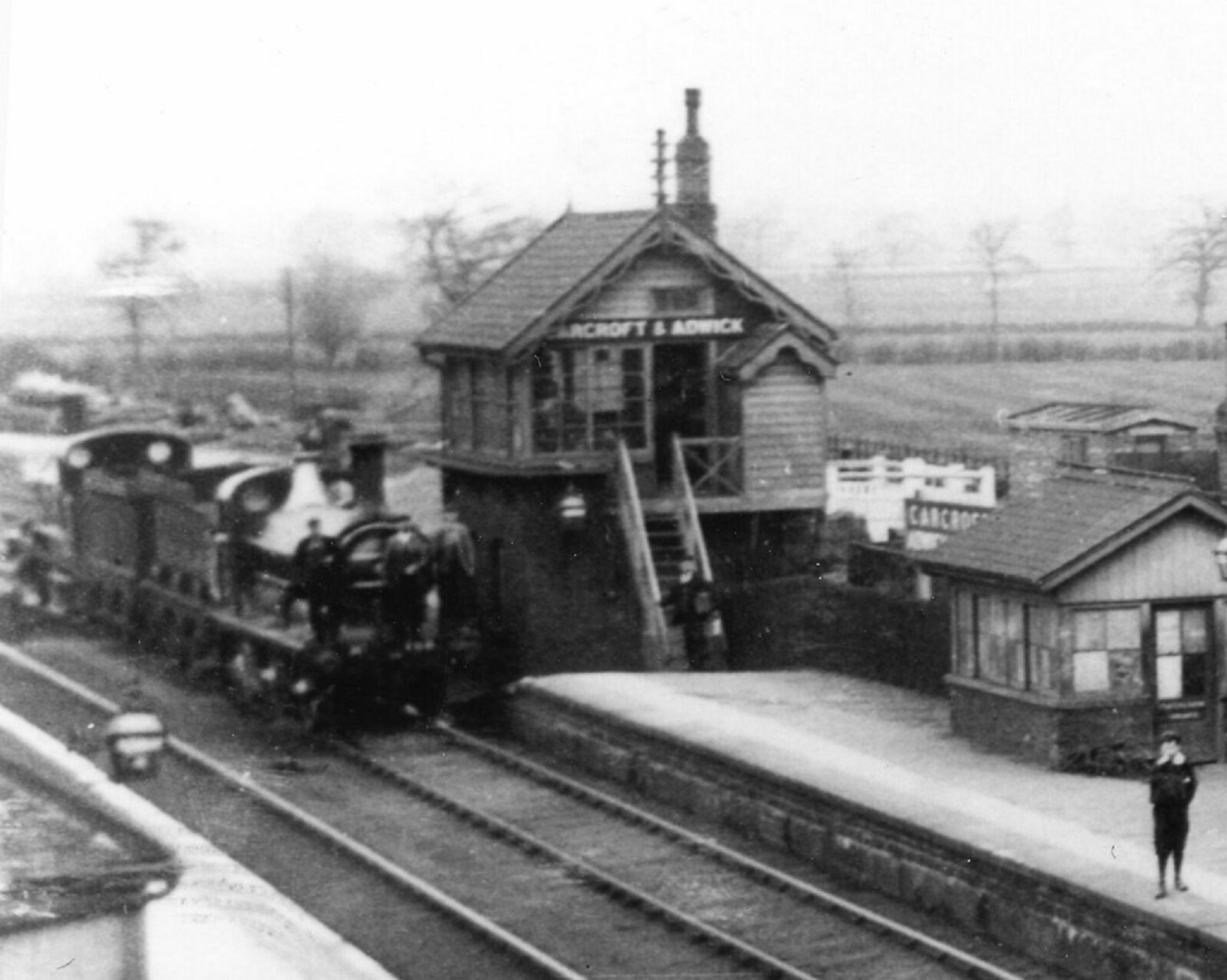
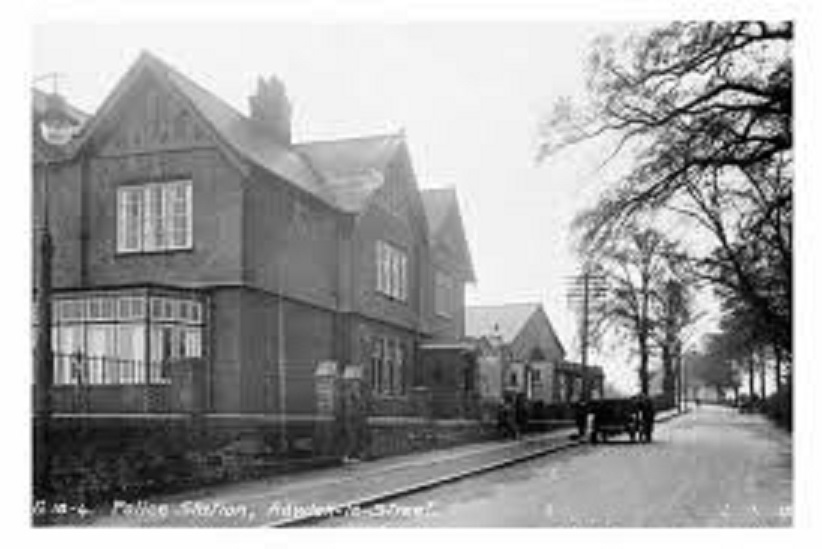
ADWICK -LE- STYREET POLICE STATION
To all:
“The Lord watches over you —
the Lord is your shade at your right hand;
the sun will not harm you by day,
nor the moon by night.
The Lord will keep you from all harm —
he will watch over your life;
the Lord will watch over your coming and going
both now and forevermore.” (Psalm 121:1-8).
by m stanhope, copyright given to Lorann Vallance, 2026.


 Walter FitzGilbert de Hamilton