
Edward Brantley, who settled in Virginia in 1667, was of a well-to-do social circle, recorded here: Samuel Elbridge, merchant of Bristol. Dying intestate, adm. requested by Thomas Moore who m. the relict. Security: George Moore (first-cousin of Thomas Moore); and Mr. (Edward) Brantlie, June 21, 1665, p. 10.
He was:
(1) a person (designated “Mr.”) of high social standing, on par with the Moore family of Bristol, which, themselves, were intermarried into the elite merchant class of that city.
(2) He was almost certainly involved in the Bristol-Virginia tobacco trade, as the Moores.
(3) He was almost certainly of some familial connection to the Moores, as it an integral part of the social environment of his time was that “security” was the reserved province of “kin”.
1. William Brantley (b. ca. 1510), deceased by 1580, the date of his widow’s probate. He was Bailiff of Evesham in or before 1558, the date of Sir Philip Hobby’s death. “Henry Dingley confirmed the bailiffs being the chief rulers and governors of the town under the queen. He spoke of being present at a court holden within the town, when one William Brantley was chosen bailiff; and that he then heard Sir Philip Hobby say, that he could choose the common crier; to whom Brantley answered, that he should not, for that he was bailiff; and if he might not choose the common crier according to their ancient custom, he would disfranchise himself, and would not be bailiff. Whereupon Sir Philip seeing that Brantley would not permit him to choose the crier, asked him whom he would choose, to whom Brantley answered, one Bickerstaff. Whereupon Sir Philip said, “Thou hast chosen the man that I would have chosen.” (Henry Alworth Merewether, The History of the Boroughs and Municipal Corporations of the United Kingdom, vol. 2., p. 1423, 1835).
William Brantley m. Margaret …, b. ca. 1515.The will of Margaret Brantley “of the parish of All Saints Evesham in the diocese of Worcester”, proved Sept. 8. 1580, gave notice of a number of daughters, five sons, and one grandson:
(1) Robert Brantley, “whom I make constitute and ordain this day by me my sole executor for my last will and testament”; husband of Margery …
(2) “Robert, son of Robert Brantley my son“.
1.1. Robert Brantley, the first named son in the Will of his mother, and her sole executor, by the convention of this time, was almost certainly her eldest son, and, thus, was b. ca. 1542. He m. Margery …
1.1.1. Robert Brantley, b. ca. 1566, alderman, m. “Jone Goodriche, spinster”, on Oct. 16, 1589, in St. Mary, Cheltenham, 15 mls fr. Evesham, dau. of Robert Goodriche, whose family are recorded in Cheltenham Manorial Court records, as tenants of the Norwoods.
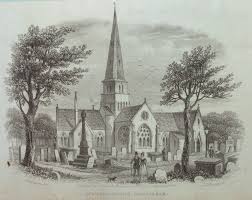
Joan Goodriche was almost certainly closely related to John Godriche:
1. John Goodrich, 1616-1698, by deposition.
1.1. Capt. John Goodrich, Will pr. Jan. 13, 1695, m. Anne, dau. of Edward Bechinoe; the relict of Robert Kae, whose estate appraisal was by John Brantley (the son of Edward Brantley*).
1.1.1. John Goodrich Jr. The Newport Parish, IOW Co., Vestry Book, Feb. 12, 1727, shows John Goodrich as a neighbour of Edward and James Brantley, sons of Phillip Brantley, son of Edward Brantley Sr. Edward Brantley, son of Phillip, appraised the estate of Richard Norwood (Oct. 25, 1731), great-great grandson of Henry Norwood, lord of Cheltenham Manor.
What is witnessed here is the principle of “continuation of associations” within kinship groups. Centuries of associations in England were repeated in Virginia; of necessity. In the bleak harshness of a Virginia winter, individuals strove to survive by calling on the combined strength of their kin.
Robert Brantley’s Will was dated to 1609, and mentions:
“Johanne my wife”. (“Jone Goodriche“).
“son Thomas”, b. ca. 1590.
“son Robert”,* b, ca. 1591, d. 1659. His Will would have been dated no later than 1656, as 90% of Wills at this time were dated within three years of their probate. His Will was probated in the Prerogative Court of Canterbury (P.C.C.), which acted on behalf of the Court for Probate of Wills, which exercised sole probate jurisdiction in England from 1653 to 1659.
“son John”, b. ca. 1592.
“son Phillip”, b. ca. 1593.
“daughter Eleanor” (eldest daughter).
1.1.1.1. *Robert Brantley, “of the parish of All Saints in the town of Evesham”, Will probated April 10, 1659, naming:
Wife, Johan.
Sons:
Edward.
Robert (d.v.p).
James.
Phillip.
John.
Daughter, Ellinor.
Robert was deceased at the date of probate, per codicil. Edward is his eldest son and executor, and inherits his father’s tenements and appurtanances in Evesham, with such devolving in the case of his decease to his brothers, in turn.
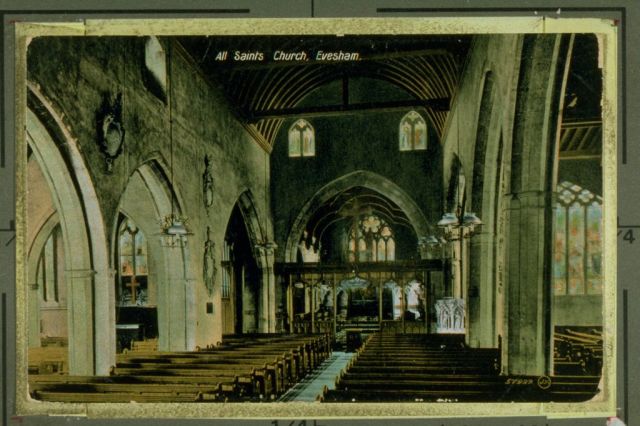
1.1.1.1.1. Mr. Edward Brantley, b. ca. 1620, d. 1688, in Virginia, who almost certainly named his sons after his brothers.
He was not the headright of John Seward in 1638.
He is first recorded in Virginia in 1667, when he bought 675 ac. in IOW Co., from Francic Hobbs, the father-in-law of John Harris, son of Thomas Harris, d. 1672, witnessed by Thomas Moore. This land adjoined that of Francis England, who m. Joyce Moore, great-niece of the said Thomas Moore.
Edward Brantley’s land in Virginia was also bordered to the W. by that of Thomas Blake, cousin of the said Thomas Harris; and to the E. by the lands of the said Thomas Harris, which devolved to his sons, Thomas and John.
Thomas Harris, Will recorded Nov. 13, 1672. Security John Newman* and Edward Brantley. (AP: 29). *Brother of Alice, second wife of Thomas Harris.
1.1.1.1.1.1. Edward Brantley.
1.1.1.1.1.2. Phillip Brantley Sr., m. Joyce Lewis, daughter of Thomas Lewis and Rebecca George (d. June 6, 1677), cousin of Eleanor George, first wife of Thomas Harris, d. 1672.
1.1.1.1.1.2.1. Edward Brantley.*
1.1.1.1.1.2.1.1. John Brantley, married the relict of Thomas Harris, d. 1629/30. Thomas Harris, 290 acs., IOW Co; N. side of Maherin Riv., & on both sides of Herbert’s Br; adj. *Edward Brantley and William Simmons’ line. March 24, 1725, p. 440.
1.1.1.1.1.3. James Brantley.
1.1.1.1.1.4. John Brantley.
DISAMBIGUATION
There was more than one Brantley family of Bengeworth/Evesham, and undoubtedly of the same stock. Robert Brantley, alderman, was not synonomous with Robert Brantly, yeoman: Tickeridge v Staples. Plaintiffs: Thomas Tickeridge, younger son of Thomas Tickeridge, son and executor of Nicholas Tickeridge, gent. Defendants: Robert Brantly, yeoman, Edward Brantly, his son. 1607. (STAC 8/283/22). “Robert Brantly, yeoman” (probably he born in Evesham in 1646) deceased in 1621, his Will naming his son Edward, and Edward’s wife, Joanne.
This Edward Brantly may have been he who whose headright was claimed by John Seward in IOW, in 1638. He was a kinsman of the Edward who deceased in 1688 in Virginia; and being of yeoman background may well have been indentured to John Seward in 1638 in Virginia.
He was probably he who m. Anne Graveston, on August 1, 1610, in Evesham.
The Brantleys that held civic office were substantially of a higher rung of society. William Brantley, as bailiff, was the chief administrative officer of a district, with power to execute writs and make arrests.
by m stanhope, copyright B.T. Shannon, 2022


 Walter FitzGilbert de Hamilton