
The armorial bearing claimed by the Tayloe family of Rosegill was alluded to in the William and Mary College Quarterly Historical Magazine, vol. 11, 1903: Tayloe of Bisley: William Tayloe, Esq. of Chalford Bottom, Sheriff of Gloucester, 1742, same arms as Taylow, vert, a sword erect or, betw. two lions ramp. addorsed erm.
William Tayloe,* Sheriff, is identified thus:
“Below the Chalford-Hyde road stood an ancient mill which became known as Tayloe’s Mill. It later passed to Thomas Tayloe, clothier (d. 1667), by his marriage to Margery Hone, and it then passed in direct line to William Tayloe (d. 1735) (Rudd, Bisley with Lypiatt, 327-9), William, d. 1749 (Glos. R.O., D 745/M 6, presentments 1736), and *William (d. 1773). Before 1558 it was leased by Princess Elizabeth to Robert Hone ( E 310/14/51 f. 33), and in 1566 a new lease was granted to Robert, Isabel his wife, and William his son. William obtained a lease for the lives of himself, his wife Sarah, and son Robert in 1583 (E 310/14/53 f. 59). (VCH Gloucestershire: A P Baggs, A R J Jurica and W J Sheils, ‘Bisley: Economic history’, in A History of the County of Gloucester: vol. 11, Bisley and Longtree Hundreds, ed. N M Herbert and R B Pugh (London, 1976), pp. 20-30).
HONE
1. Robert Hone, b. ca. 1500, m. Isabel … Hone v Reynold. Plaintiffs: Robert Hone. Defendants: James Reynold (Reynell), Margaret, his wife, John Tukfyld, and Agnes, his wife. Subject: Detention of deeds relating to a messuage and land in Pinhoe, claimed by the female defendants in right of John Page, their great-grandfather, deceased. Devon. 1533-1538. (C 1/829/1-5).
1.1. William Hone, b. ca. 1525, m. Sarah …
1.1.1. Robert Hone, b. ca. 1550, is evidenced here: Robt. Hone, father of Wm. Hone. v. Wm. Elbridge and Sarah his wife, Edward Bromwich: Right and title to the payment of a heriot on the demise of William Hone for premises in Chawlford, in the parish of Bisley (Gloucester), parcel of Bisley Manor. (The names and possessions of Thos. Aldworth, of Bristol, merchant, and Margaret Collye, widow, are mentioned). Gloucester. 1589. (National Archives (N.A.), E 134/31Eliz/Trin1).
1.1.1.1. William Hone, b. ca. 1575.
1.1.1.1.1. Margery Hone, b. ca. 1600, m. Thomas Tayloe.
One of the earliest recorded ancestors of these Tayloes is Richard Teylowe, juror for the inquisition of Joan, widow of Roger Vynour, on August 1, 1420; these associations being repeated at a later date (as hereinafter given), an example of the ‘continuation of association’ which was the backbone of the English kinship system.
THE EARLY TAYLOWS
NEWLAND
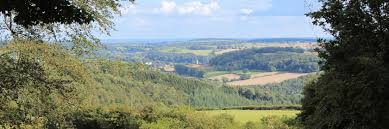
The earliest recorded Tayloes were tenants in Newland, Gloucestershire. The following précis is taken from VCH Gloucestershire, ibid., vol. 5, Bledisloe Hundred, St. Briavels Hundred, the Forest of Dean, pp. 195-231.
Newland is a village situated on the east side of the river Wye, on the Gloucestershire/Wales border, and was, thus, conveniently placed for the Bristol trade. It is situated ca. 30 miles W. of Bisley. Newland manor was the nucleus of a parish consisting of a number of outlying village. It was made out of clearing woodland from the Forest of Dean. It was called Welinton in 1220 (Bk. of Fees, i. 308; Rot. Litt. Claus. (Rec. Com.), i. 393. 413. 469), and was described as the ‘new land of Welinton’ in 1232 and 1247, (at. R. 1225-32, 477; Cal. Pat. 1232-47, 510), but later it was called simply Newland (Nova Terra). Newland manor formed part of a royal estate, including also St. Briavels castle and manor and the profits of the Forest, that was farmed by the constables of St. Briavels in the 13th and 14th centuries (Cf. Pat. R. 1225-32, 477; Rot. Hund. (Rec. Com.), i. 176; Cal. Close, 1341-3, 153), and was later held on lease under the Crown. (St. Briavels, manors.) In the Middle Ages the principal inhabitants of Newland were members of the Joce family and their successors, who in the 14th and 15th centuries received chief rents from several hundred houses and plots of land in Newland village, Clearwell, Coleford, Whitecliff, Highmeadow, Bream, Mork, and other places in Newland and St. Briavels parishes. (N.L.W., Dunraven MSS. 339; Glos. R.O., D 1677/GG 1225). Robert Greyndour (d. 1443) was jointly enfeoffed of the estate with his wife Joan, who married, before 1455, John Barre. John died in 1483 and Joan in 1484, when the Clearwell estate passed to Robert’s heir Alice, the wife of Thomas Baynham. The earliest surviving house in Newland village appears to be the Old School House, on the west side of the churchyard, formerly housing a grammar school founded by Edward Bell, Its earlier, north-south, range is apparently the building that was under construction for the school in 1576. The parish was said to have ca. 250 households in 1563, (Bodl. MS. Rawl. C. 790, f. 28). In 1600, Newland parish contained eight or more victualling houses, presumably scattered through its constituent villages, including Coleford. (B.L. Harl. MS. 4131, f. 553).
1. William Teylew, b. ca. 1320.
1.1. Richard Teylow, b. ca. 1350.
1.1.1. John Taylew, b. ca. 1380.
1.1.1.1. Richard Taylew, b. ca. 1410.
1.1.1.1.1. John Taylow, b. ca. 1440, fl. 1516.
1.1.1.1.1.1. Thomas Teylowe, clothier, b. ca. 1470, Mayor of Gloucester, in 1520. Lakynton v Taylowe. Plaintiffs: Raff Lakynton. Defendants: Thomas Taylowe. Subject: Detention of deeds relating to a messuage and land in Down Hatherley and Longford.* Gloucestershire. 1518-1529, (N.A., C 1/536/14). *10 miles N. if Bisley/Stroud.
1.1.2. William Taylew.
These Taylows were clearly associated with lands near (variously) “Heyemedwe” (High Meadow), Heyemedewe, Heymedue, etc., and with neighbours, Dolle/Dulle, Ely, Halle, More, et al. A central feature of the English kinship system was that neighbours involved in the same land transactions were invariably intermarried, so, although the wives of these Taylows cannot be known in any exact sense, it is a ‘known unknown’ that they would have been of these families.
The Taylows are recorded thus:
1352. William Teylew. Newland. Gift. (1) Richard Ketford son of Walter Ketford of Newland. (2) John Dol and wife Joan of Newland. Piece of land and marsh adjoining situated above the spring called the “Morewall” and formerly belonging to John Chep, land and marsh lying between lands of William Ketford, John Werlaw and that formerly belonging to William Borch’, chaplain, spring called the Morewall, and king’s highway leading from “Heyemedwe” (High Meadow) to church of All Saints in Newland. To hold of chief lord of fee, for usual services. Warranty against all mortaLS. Witnesses: John Ketford, Walter Rogger, William Perkyn, Robert Wyntar, William Teylow, and others. Easter day, 1352. (G.A., D2244/43).
1375. William Teylow. The Vigil of All Saints, 49 Edw. III. Grant by John, son and heir of Robert Wynter of le Heyemedewe to John Yawan of Lydeneye of all his lands and tenements &c. within the parish of Newland (Nova terra). Witnesses:- John Joce, John Ketford, William Hope, William Teylow, Roger Bolyniop. (G.A., D1677/GG/102).
1415. Richard Teylew. Grant by John Hope of Heymedwe to Richard Norton of Staunton, Walter Dulle, John Rogger, William Ely, and William Kere, of all his lands and tenements within the parishes of Newlond and Stannton in the forest of Dene as sufficiently named in other writings To hold of the chief lord of the fees &c. Witnesses:- James More, Henry Hyewet, Richd. Teylow, John Burch, Walter Halle. 1415. (G.A, D1677/GG/164).
1423. Richard Taylew, and his son, John. Staunton. Quitclaim. (1) William Byrch chaplain of Newland and John Eton. (2) Richard Teylow and son John. Two pieces of land in parish of Staunton which (1) had by gift and feoffment of John Burch and were fully described in deed of feoffment. Reserving annual rent of 4d. to (1). Given at Newland. Witnesses: Walter Dulle, John Rogger, John Ocle, William Ely, John Halle, and others. 1423. (G.A., D2244/99).
1427. Richard Taylew. Newland and Staunton. Gift: (1) Robert Beynam esquire, grandson and heir of John son of John Ketford. (2) John Halle of Newland in the forest of Dean. Messuage called Smythhowse in High Meadow in parish of Newland and two acres of land there, with one acre of meadow and piece of land called “Colhowsefelde” in parish of Staunton. Messuage being situated in breadth between lands of (1) and John Walker and in length from king’s highway leading from Coleford to Newland to highway leading from the other side. Two acres of land lying in breadth between lands of John Roger and Thomas More and in length from garden of (2) to highway leading to Newland church. Acre of meadow lying between lands of Richard Teylow and (2) and highway leading to Newland church. Aforesaid piece of land lies in breadth between land formerly belonging to John Borche and highway leading from High Meadow to Newland church, in length from land of John Wyrale to land of Richard Teylow. To hold of chief lords of fees, paying (1) 5s. silver annually at Michaelmas for all services, and heriot when due. Power of distraint in default of payment. Given at Newland. Witnesses: Richard Bolyngeop, John Walker, Richard Teylow, Thomas Halle, Richard Dolle, and others. 1427. (G.A., D2244/111).
1428. Richard Taylowe, and his son, William. Grant by Robert Beynham, esq., to Richard Teylowe and William his son, of 3 parcels of land lying in Newlond and Stanton, in length and breadth between land and grove of Richard, lord of Stantone, land held by James More, land of Richard Bolingeop, land and grive of the said Richard Teylowe and the way leading from Heymedue towards Stantone and land of William Smyth. To hold of the grantor by the service of 5s. 8d., with power of distress. Witnesses:- Thos. Balle, Willm. Hamond, James More, John Walker, Thos. More. At Newlonde. 1428. (G.A., D1677/GG/186).
1433. John Taillour, and his son, Richard. Grant by Thomas Adams of Thornbury, co. Gloucester, to John Hamonde of Newelond, co. Gloucester, of All those land and tenements, rents &c. which he (the grantor) had by feoffment of Joan, daughter and heir of Nicholas Hampine in the said county. Witnesses:- John Ely, William Kyrie, John Taillour, Richard Teylow, John Hall. 1433. (G.A., D1677/GG/2040).
1435. Richard Taylew. Grant. (1) Hugo Cromhale and Walter Smart of Great Dean. Richard Teylow of Newland. (2) Walter Mon of Newnham. A messuage and garden in Newnham between a messuage of John Stok of Bristol merchant, and messuage formerly belonging to John Stauke of Newnham. Property recently in gift and fee of Richard Boghton of Newnham. 1435. (G.A., D2957/215/1).
1437. Richard Teylewe. Grant by Richard Teylewe and Thomas Nortone of Newlond and James More of Stanton in the Forest of Dene, co. Gloucester, to John Halle of Heymedwe, of a parcel of land lying in Newlonde in a place called Lytylgrenewey, in length from land late of John Smith at one head and land of John Etone at the other head, and in breadth between land late of John Roger on one side and land of Thomsett on the other; which said parcel of land the grantors lately had by feoffment of the said John Rogger. Rent, 1d. Witnesses:- John Etone, Thos. More, Richard Etone, John Walker, Richard More. 1437. (G.A.,D1677/GG).
1456. Richard Teylow. Staunton. Gift. (1) John Hall of High Meadow in parish of Newland. (2) Richard Moore. Piece of land at High Meadow in parish of Staunton called “Colhowsehyll”, lying in breadth between land of Richard Eton and highway leading from High Meadow to Churchend and stretching in length from land of heirs of Richard Teylow to land of John Wyrale.Witnesses: Richard Eton, Thomas Moore, John Walker, William Walker, Thomas Hall, and others 1456. (G.A., D2244/147).
1481. John Teylow. Newland. Warrant of attorney. (1) Henry George of High Meadow in parish of Newland. (2) John Teylow. (3) Richard Norton, chaplain, and Richard Hamonde. Power to (2) to deliver to (3) seisin of meadow at Churchend situated between tenement and garden of St. Mary, land and grove of Thomas Ely called “Keryys hylle”, land and grove of heirs of Robert Greyndour called “le Balles” and highway called Redbrook Way. 1481. (G.A., D2244/196).
1501. John Taylow. Quit-claim by John Taylow of Hymedo to Henry Hall of the same place, of and in all those rents, services &c., reversions, heriots and reliefs when they should happen, which the said John had in the parish of Newlond Witnesses:- John Mathew, Richd, Bolynjop, William Bond, Wilm Whytson, Thos. George. 1501. (G.A., D1677/GG/300).
1501. John Taylow. Testimony of William Yawan, John Teylowe, and John Smith, wevers, of Newlond, in the presence of Sir Richard Nortone, Sir Thos. Apkes, priests of the church of Newlond, Richard Bolynyope, and Richard Dulle, yemen, that John Mathewe senr. of Hyemedowe on his death bed called the said witnesses and desired them to testify that he the said John Mathewe would not ne hit was hys will that his brethren Richard Mathewe and Phelipe Mathewe should have the rent of 18d. yearly in Colfurd called Boldyrent. Seals. 1501. (G.A., D1677/GG/298).
1516. John Teylowe. Grant. John Whytson and Alice Whytson, daughter and heir of William Whytson, to Henry Hall of High Meadow (in Newland). A messuage with garden adjoining and a parcel of waste land of the land of John Teylowe annexed, in High Meadow (in breadth between the tenement and garden of John Smyth and land of John Teylow and the road from Colford towards the church of All Saints of Newland on all sides. Quitrent of 12d and heriot to Alexander Beynam, kt. Witnesses: W: Peter ap John, John Hygyns, William Dull, John Mathew, Richard Buffard. 1516. (East Sussex and Brighton and Hove Record Office (ESBHRO), SAS/G24/29).
1516. John Teylowe. Demise by feoffees. John Mathewe of High Meadow, Richard Bufford, John Seymore and Richard Wenlok to Henry Hall of High Meadow. A croft of land and pasture in Newland within the Forest of Dean (in breadth between the road from High Meadow towards Staunton and the gore of John Teylowe called the Dyngyll Pytte on one side and the grove of John Bunyop and HH’s land called Shitwiche on the other side; in length from John Teylowe’s grove called Byrtesgrove otherwise the Dyngyll Grove and the Toofyldes Grove to the land of James Moore vicar of Newland)), which the grantors had jointly with other lands and tenements by grant and feoffment of John Teylowe, 30 May 1515. 1516. (ESBHRO, SAS/G24/25).
THE TAYLOES OF ROSEGILL, VIRGINIA
1. Thomas Tayloe. PROB 11/99/87. Will of Thomas Tayloe of Stroud, Gloucestershire, probated Feb. 9, 1602: mentions son Robert and Thomas, and Bisley. (C 8/23/149),
1.1. Robert Tayloe. Tayloe v Arundell. Plaintiffs: Robert Tayloe. Defendants: Richard Arundell. Subject: property in Stroud, Gloucestershire. 1624. (N.A., C 8/30/104). “In 1608, 133 men engaged in various branches of the cloth industry were listed as opposed to 38 employed in other trades and 31 in agriculture (Smith, Men and Armour, 289-90, 292-5). The cloth-workers recorded in 1608 were 19 clothiers, 76 weavers, 33 fullers, and 3 dyers. (ibid.). The highest mill on the Frome in Stroud parish, Dark Mill, was included in the property comprising a house called the Bourne, 2 fulling-mills, and 2 grist-mills which Sir Henry Poole of Sapperton leased to John Sewell in 1597. Sir Henry’s son Henry sold it in 1622 to Roger Fowler, clothier”. (V.C.H. vol xi, pp. 119-132). The Arrundels and Fowlers were mill owners and clothiers, and business associates of the Tayloes, and, as such, may have been in some way related, as many business relationships of this time were based on familial ones. Records are often partial, and countless associations of unknown siblings are unrecorded.
1.1.1. Sarah Tayloe. Manor of Netheridge in Quedgeley with other lands and land called Home Close, Little Meadow, Broadmeade, Witecrofte field, Rownomfield near Lower Tuffley, land in Suffield, Swindlefield, Westoll als. Westiefield als. Great and Little Westlands; messuage called Waynebridge House, lands called Bootney; Barelands field and Soxell near Whaddon Bridge. Land in Whaddons hill; Swindhill, Nashfield, land in Waterwells, land called Chenshcroft, Wymperfield; land in the Plock, land called the Floodyates. With marriage settlement between Gyles Hancox* of Daglingworth and Sarah Tayloe of Bisley, 1651. (G.A., D123/T14). “Henry, 7th Baron Berkeley sold Daglingworth to Henry Poole of Sapperton in 1602. Poole, a former MP and high sheriff for the county who was knighted in 1603,93 had inherited extensive estates in the locality to which he had already added the manor of Pinbury, purchased in 1585. He further extended his influence in the area with the purchaseof the Seven Hundreds of Cirencester shortly before his death in 1616, when he was succeeded by his eldest son Henry. (VCH, Gloucestershire: vol. xvi, ‘Daglingworth’). “By 1542, the estate (of Cirencester Abbey) comprised a messuage, toft, and three yardlands called ‘the abbot’s lands’, which were let to John Haines for 9s. a year, and common of pasture for 300 sheep, let with land in Minety to Edward Fabion for £3 a year. The estate was granted in 1551 to Henry Hodgekins of Hayles, but was subsequently acquired by the tenants. It was sold by Thomas Westropp alias Haines in 1658 to *Giles Hancox, who absorbed it into his large estate. (ibid).
Theyer v Tayloe. Plaintiffs: John Theyer. Defendants: Robert Tayloe and Thomas Tayloe. Subject: property in Upton St Leonard, Gloucestershire. 1651. (N.A.,C 8/116/197). It would seem that Thomas outlived his brother, who is not recorded after 1651.
1.2. Thomas Tayloe, b. ca. 1590, d. 1667. Tayloe v Fowler. Plaintiffs: Robert Tayloe and Thomas Tayloe. Defendants: Jasper Fowler and Arthur Fowler. Subject: money, Gloucestershire. 1623. (N.A., C 8/23/149).
Browne v Stringer. Plaintiff: John Browne esq, alderman of the city of Gloucester. Defendant: Henry Stringer of Oxford gent and Thomas Tayloe. Subject: concening a life estate of Henry Stringer in the office of constable of the castle of Gloucester, Gloucestershire. 1632. (N.A., C 2/ChasI/B1/31).
Rich v Masters. Plaintiffs: Anne Rich, widow, Samuel Rich and Matthew Coates. Defendants: Sir William Masters kt, William Poole clerk, William Poole, Richard Poole, Edward Combe alias Baldwyne and … Tayloe. Subject: property in Rendcombe, North Cerney and Woodmancote, Gloucestershire. 1649. (N.A., C 10/3/128).
Vyner v Tayloe. Plaintiffs: Richard Vyner. Defendants: Thomas Tayloe. Place or subject: property in Bisley, Gloucestershire. 1653. (N.A., C 7/353/12).
Tayloe v Seacole. Plaintiffs: Thomas Tayloe. Defendants: John Seacole and Robert Seacole. Place or subject: property in Cirencester, Gloucestershire. 1657. (C 7/426/109).
St Leger v Waller. Plaintiffs: Henry St Leger. Defendants: Gabriel Beck, George Lynne, William Lynne and Thomas Tayloe. Subject: personal estate of the deceased William Poole, of Gloucestershire. 1660. (N.A., C 6/145/166).
Tayloe v Morse. Plaintiffs: Thomas Tayloe. Defendants: Mary Baker, … Morse, and others. Place or subject: personal estate of William Tomes, Tibberton, Gloucestershire. 1669. (N.A., C 7/348/13). The Will of William Tomes, Baker of Cirencester, Gloucestershire, was probated on July 12, 1641, naming daus: Elizabeth, Margaret, and Katherine. Williams’s probable nephews are recordedhere: Mathews v Tomes. Plaintiffs: Richard Mathews. Defendants: William Tomes, William Tomes, Thomas Tomes, and John Tomes. Subject: property in Sherborne, Gloucestershire. 1656. (N.A., C 8/312/66)
1.2.1. John Tayloe, b. ca. 1620. Halliday v Tayloe. Plaintiffs: Richard Halliday. Defendants: John Tayloe alias John Tayler and Richard Mathews. Subject: money matters, Gloucestershire. 1675. (N.A., C 10/115/69). There is a generation missing in the account of the descendency of Tayloe’s Mill, supra., and it can be reasonably assumed that a son of this John Tayloe was the father or grandfather of William Tayloe (d. 1735), the inheritor of the mill.
1.2.1.1. William Tayloe, b. ca. 1645, d. 1710. There are no English records that support the notion that the William Tayloe who died, intestate, in Richmond Co., in 1710, was a nephew of a first William Tayloe of Virginia, nor are there any substantial Virginia ones. William Tayloe m. Ann Corbin, d. 1694; dau. of Henry Corbin and Alice Eltonhead, sister of Gawin Corbin, who m. Catherine (b. March 4, 1679, at Rosegill, Middlesex Co.), dau of Ralph Wormley.
1.2.1.1.1. John Tayloe, m. Elizabeth (Gwynn) Lyde.
THE CONNECTION TO BRISTOL
Richard Jones, of Stowey, near Chew Magna, Somerset. Wil proved June 2, 1692. “To my daughter Lady Elizabeth Hart, £300, and to her husband, Sir Richard Hart, £20. My daughter in law Lady Elizabeth Jones, £20. My daughter in law Mrs Mary Jones, £20. My son in law William Lyde, £20. My grand son Mr Richard Jones, £20. Mr James Chiswell, Vicar of Stowey, £5. My grandson Mr William Lyde, £300, & to his wife £20. To her sister Elizabeth Lyde, £300. My grandchildren Henry Pennell, William Hart, William Jones, & Elizabeth Jones, & my great grandchildren Lucy & Elizabeth Pelham, £300 each at 21, if now under age. The £300 given to my daughter Hart to be employed in putting her son William’s life after hers into her farm of Nash House, if he die, then for her son Henry. All my manor of Stowey to my grandson William Jones for 99 years, the remainder to Joseph Langton, of Newton Park, esq., & his heirs. Lands in Compton Magna. Messuage which I purchased of Lislebone Long, esq., called A. Tenement in Overweare to William Hart. £3,000 to be employed in such uses as I in my life time shall by writing appoint. In default of this, then to such charitable uses as they shall think fit. Joseph Langton, esq., Arthur Hart, of Bristol, Merchant, & Cornelius Lyde, of Stanton Drew, gent., Exors, & to each £50. (Abstracts of Somersetshire Wills, vol. 2, p. 53, 1888).
Cornelius Lyde’s son, James, bapt. June 6, 1671, was a Bristol merchant; another son, Lionel Lyde, bapt. Feb. 28, 1682, was Mayor of Bristol, and who spent some time in Virginia. The salient point is that the Tayloe would have at least known of the Lyde family, and it is doubtless significant that John Tayloe established an ironworks in King George County in 1721, which he named “Bristol”. Stanton Drew is 40 miles S. from Bisley on the main Bristol Channel coast road, and 7 miles S. of Bristol on the same road.
Cornelius Lyde, 1641-1717, per sep. mon., was also the father of Stephen Lyde, bapt. June 9, 1681, in Stanton Drew, who m. Elizabeth, dau. of David Gwynn of Essex Co. and Katherine, b. March 16, 1664, in in Northumberland Co., dau. of Samuel Griffin. Elizabeth (Gwynn) Lyde m. (2) the said John Tayloe.
CONNECTIONS IN VIRGINIA
Collections of the Virginia Historical Society, vols. 1-2, pp. 54-55, 1882. Letters of Governor Spotswood:
This Winter hath [been] fatal to three Gent’n of her Maj’t’s Council here, who all dyed in little more than a Mo., and the number of Councillors falling thereby under nine, I have in their place, (according to ye power given me in my Commission,) called to y’t Board Mr. Nathaniel Harrison, Mr. Mann Page,* and Mr. Robert Porteus,** who are all men of good parts, loyal and honest principles, and of plentiful Estates.
*Mann Page, only surviving child of Matthew and Mary (Mann) Page, and grand-son of Col. John Page, of county Middlesex, Eng., first of the family in Virginia (born 1627; died at Williamsburg, Va., Jan., 1692), was born in 1691; died Jan. 24, 1730; built the Rosewell” mansion; married first, in 1712, Judith, (aged 17,) daughter of Ralph Wormley, Secretary of Virginia, (by whom he had surviving issue; Ralph died unmarried, and Maria, married Wm. Randolph, of “Tuckahoe”; secondly, in 1718, Judith, (aged 23,) daughter of Robert King” Carter, by whom he had issue; Mann, married Alice Grymes, (their eldest son John, Gov. of Va., etc.) John, married Jane Byrd, of “Westover”; Robert, married Sarah Walker.
**He was a native of Gloucester county, Petsworth parish (25 miles from Bisley), of which Edward Porteus was an early vestryman. He was, it is believed, the father of the learned Beilby Porteus, bishop of London, Lucy Grymes, “a favorite niece of Bishop Porteus,” says Gen. R. E. Lee, in his memoir of his father, prefixed to the “Campaigns in the Southern Department,” married Henry Lee, of “Leesylvania” and was his (the biographer’s) grandmother.
Although the accepted association of the surname Tayloe is Taylor/Tayler, this is not necessarily the case, and a consideration of names such as William de Taylewe (Plea Rolls, 1258), and, at a more remote time, the de Talous of Normandy, might be relevant.
by m stanhope, copyright B.T. Shannon 2022


 Walter FitzGilbert de Hamilton